Summary Outline –
The right door choices can improve energy efficiency, enhance security, provide better soundproofing, and significantly impact your home’s overall value.
This comprehensive guide explores the various categories of home doors, examining their unique characteristics, benefits, and ideal applications. You’ll discover how different materials, styles, and features can transform your living environment while meeting your practical needs.
Whether you’re seeking enhanced security, improved aesthetics, or better functionality, understanding your door options empowers you to create spaces that truly work for your lifestyle.

-
Quick scroll to first topic about this home doors guide … or review summary content

Content Summary
section directory1st Door Review: [view section]
… this extensive “home doors guide” offers detailed information on selecting and installing home doors. In the first section, we explore exterior home doors for your entryway, sides, and back of the house. We analyze types, materials, and styles to help you make the best choice.
2nd Door Review: [view section]
… the second section explores the interior of the home, reviewing the various types of interior doors available based on design, material, and style.
3rd Door Review: [view section]
… you’ll find a dedicated section all about patio and deck access doors. We cover everything from sliding and French doors to multi-open options, helping you choose the perfect fit to connect your indoor and outdoor spaces.
4th Door Review: [view section]
… the fourth step is installing both exterior and interior doors. You can follow a step-by-step guide for DIY door installation or learn when it’s best to hire a professional.
5th Door Review: [view section]
… finally, the fifth section covers the finishing touches. This includes choosing door hardware like knobs, handles, and entry systems, all to match your door style and personal taste.
first “home doors guide” idea

copyright image by 123rf.com
Door Tip 1: Exterior Home Doors
Notes:
-
Exterior doors are your home’s first line of defense, protecting against harsh weather, potential intruders, and unnecessary energy loss. These essential barriers must strike the perfect balance between durability, security, and curb appeal, all while standing up to daily wear and tear and the ever-changing demands of each season.
Choosing the right exterior door is more than just a practical decision—it can dramatically influence your home’s safety, energy efficiency, and overall visual appeal.
Below, we review the various types of exterior doors, exploring the materials they are crafted from and the wide range of styles they come in, so you can make an informed decision that complements both your needs and your home’s aesthetic.
-
Quick scroll to supporting notes …
-
-
1st: Types of Exterior Home Doors
Exterior doors play a critical role in defining the character, functionality, and security of your home. They are not merely entry points but also serve as aesthetic statements, contribute to energy efficiency, and provide essential protection.
Choosing the right type of door for different exterior locations can enhance your home’s value and cater to your specific needs. Below, we explore the various types of exterior doors available, detailing their purpose, benefits, and best use cases.
[ view images/summary table: exterior home doors]
-
Entry Doors or Front Doors[ view]
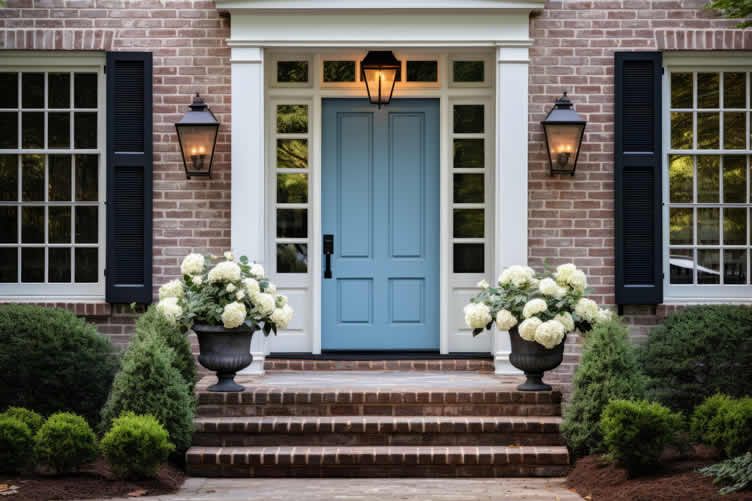
Entry doors, often the focal point of a home’s exterior, are designed to create a strong first impression while ensuring durability and security. Available in a wide range of materials, including solid wood, steel, and fiberglass, these doors are built to withstand the elements while adding curb appeal.
Many entry doors feature customizable options such as decorative glass panels, vibrant paint choices, and intricate hardware. Their primary purpose is to welcome guests, enhance the home’s architectural style, and protect against unauthorized access.
High-quality entry doors also contribute to improved insulation, ensuring energy efficiency year-round.
-
Back Doors[ view]
Back doors are essential for connecting interior living spaces to outdoor areas such as patios, decks, or gardens. These doors are often designed to facilitate easy movement between indoor and outdoor environments while maintaining security and privacy.
Sliding glass doors, French doors, and traditional single-hinged designs are popular options for back doors. Many of these designs incorporate large glass panels to maximize natural light and provide expansive views of the backyard.
Modern back doors are also built with weather-resistant materials to withstand prolonged exposure to outdoor conditions.
-
Side Doors[ view]
Side doors are typically located in less prominent areas of the home, such as garages, utility rooms, or secondary entrances. These doors provide convenient access to spaces like mudrooms, laundry areas, or side yards, offering practicality and efficiency.
While often simpler in design, side doors still need to meet high standards for durability and security. Weatherproofing and insulated materials are important features for side doors, particularly in regions with extreme weather conditions.
Due to their functional purpose, they may not include elaborate designs but should still complement the home’s overall aesthetic.
-
Storm Doors[ view]
Storm doors are installed in front of exterior entry doors to provide an additional barrier against the elements. These doors are particularly valuable in regions with harsh weather conditions, such as heavy rain, snow, or high winds.
Featuring glass or screen panels, storm doors not only protect the primary door but also improve energy efficiency by reducing drafts and heat loss.
Many storm doors come with interchangeable panels that allow homeowners to switch between glass and screen options, offering flexibility for different seasons. They also extend the lifespan of the main door by shielding it from environmental damage.
-
Screen Doors[ view]
Screen doors are designed to improve airflow and natural lighting while keeping insects and debris out. Usually installed with a lightweight aluminum or wooden frame and a fine mesh screen, these doors are commonly used during warmer months when natural ventilation is desirable.
Screen doors can be placed in front of entry doors, side doors, or back doors to provide added functionality without obstructing views or access. Many modern options include retractable screens or additional decorative elements, blending practicality with subtle design features that enhance the home.
-
Security Doors[ view]
For homeowners prioritizing safety, security doors are specially engineered to offer maximum protection at entry points. These doors are constructed using robust materials such as reinforced steel or wrought iron and often integrate tamper-proof locks, deadbolts, and advanced locking mechanisms.
Security doors can be styled to match the home’s aesthetic while maintaining high functionality, proving that safety doesn’t have to compromise design. Security doors are ideal for front or back entrances in urban or high-risk areas, offering peace of mind while enhancing your home’s overall security profile.
-
Other Types of Exterior Doors[ see below]
Beyond the more commonly used types, there are niche exterior door options that cater to specific needs. Bi-fold or accordion-style doors, for example, are increasingly popular for modern homes looking to create seamless indoor-outdoor connections.
Dutch doors, divided horizontally into two sections, offer charm and versatility by allowing the top half to open independently. Barn-style doors are also gaining ground in rustic and farmhouse-inspired homes, offering character and functionality in various use cases.
Each of these options provides unique opportunities to enhance your home’s personality and usability, depending on your preferences and architectural style.
Sourcing & Citations:
- U.S. Department of Energy. “Energy Saver Guide.”https://www.energy.gov/energysaver
- National Association of Home Builders. “Choosing the Right Exterior Doors.” https://www.nahb.org
- Home Depot. “Exterior Doors Buying Guide.”https://www.homedepot.com
- Fine Homebuilding. “Evaluating Exterior Door Materials and Types".https://www.finehomebuilding.com
Type of Door Purpose Features Best Use Cases Entry Doors Create a strong first impression, ensure security Customizable materials like wood, steel, fiberglass; decorative glass panels; energy-efficient Front entrances; enhancing curb appeal; improving insulation Back Doors Connect indoor spaces to outdoor areas Sliding glass, French, or single-hinged designs; large glass panels for natural light Access to patios, decks, or gardens; maximize outdoor views Side Doors Provide practical access to secondary areas Durable and weatherproof materials; simple designs Garages, utility rooms, side yards Storm Doors Protect against harsh weather conditions Interchangeable glass and screen panels; improved energy efficiency Front or back entrances in regions with extreme weather Screen Doors Improve airflow while keeping insects out Lightweight frames with fine mesh screen; retractable options available Warmer months; entry points where ventilation is needed Security Doors Maximize security at critical entry points Reinforced steel or iron; tamper-proof locks; advanced mechanisms Urban or high-risk areas; front or back entrances Other Types Cater to unique architectural styles and preferences Bi-fold, Dutch, or barn-style designs offering charm and functionality Modern homes, rustic settings; enhancing aesthetic character 

copyright image by 123rf.com
[ view diagram: exterior door anatomy ]
[ youtube: 6 Critical Exterior Door Components and Tips ]

-
-
2nd: Types of Materials for Exterior Doors
When it comes to choosing materials for exterior doors, homeowners are often faced with an overwhelming number of options, each with distinct benefits and considerations. The material choice not only influences the door’s aesthetic appeal but also its durability, energy efficiency, maintenance, and functionality.
To help you make an informed decision, this guide explores the most common materials used for exterior doors, with a breakdown of their pros and cons, energy efficiency, and best applications for entry, side, and back doors.
[ view summary table: exterior door material type]
-
Fiberglass Doors[ view]
Fiberglass is one of the most popular materials for exterior doors due to its versatility and low-maintenance qualities. These doors are highly durable, resisting warping, denting, and cracking, which makes them an excellent long-term investment.
Fiberglass doors are also energy-efficient, often filled with insulating cores that reduce heat transfer and help lower energy bills.
The aesthetic possibilities with fiberglass are vast, as the material can mimic the appearance of natural wood while offering superior resistance to moisture and weather-related damage.
However, while fiberglass doors tend to cost more upfront than basic steel options, their longevity and minimal upkeep requirements help offset this initial expense over time.
For entryways, fiberglass is ideal because it delivers the right balance of elegance and functionality, making a great first impression. It is also well-suited for side and back doors where durability and weather resistance are critical.
Pros:
- Durability:
Fiberglass doors are resistant to warping, denting, cracking, and other common issues, ensuring they maintain their integrity over time. - Low Maintenance:
These doors require minimal upkeep, offering long-term convenience for homeowners. - Energy Efficiency:
Many fiberglass doors feature insulating cores, which reduce heat transfer and contribute to lower energy bills. - Aesthetic Flexibility:
Fiberglass can replicate the look of natural wood, providing a high-end appearance without the vulnerabilities of real wood. - Weather Resistance:
They offer superior performance in resisting moisture and other weather-related damage, making them ideal for various climates. - Longevity:
The robust construction of fiberglass doors ensures an extended lifespan, making them a worthwhile long-term investment.
Cons:
- Higher Upfront Cost:
Fiberglass doors are typically more expensive upfront compared to basic steel options. - Limited Repair Options:
While durable, damage to fiberglass may be harder to repair compared to other materials. - Less Authentic Wood Feel:
Although fiberglass can mimic wood’s appearance, it may not replicate the exact texture and warmth of natural wood for discerning homeowners.
- Durability:
-
Steel Doors[ view]
Steel doors offer some of the strongest and most secure options for exterior use. Known for their durability, steel doors are an attractive choice for homeowners seeking a sturdy barrier against potential security concerns.
They are also budget-friendly compared to other durable materials and are available in a range of colors and finishes to complement any home style.
When it comes to energy efficiency, many steel doors are equipped with insulating cores, which help maintain a home’s internal temperature. However, steel doors are prone to denting and may show scratches or rust over time if not properly maintained.
Steel is an excellent material for both side and back doors where functionality and security are priorities. For the main entry, it can add a sleek and modern touch but may require periodic maintenance to ensure a polished, rust-free look.
Pros:
- High Security:
Steel doors offer exceptional strength, making them a reliable option for deterring potential break-ins. - Durability:
Resistant to warping, cracking, and general wear, steel doors are built to withstand daily use and harsh weather conditions. - Affordable:
Compared to other durable door materials, steel doors are budget-friendly, offering great value for their longevity and quality. - Energy Efficiency:
Many steel doors include insulating cores, which help regulate indoor temperatures and reduce energy costs. - Variety of Styles:
Available in a range of colors, finishes, and designs, steel doors can complement various home aesthetics, from modern to traditional.
Cons:
- Prone to Dents:
Despite their strength, steel doors can dent under heavy impact, which might require professional repair. - Susceptible to Rust:
Without proper care and maintenance, steel doors may develop rust over time, particularly in humid or coastal environments. - Scratches Show Easily:
Surface scratches can leave the steel exposed, potentially leading to rust if not addressed promptly. - Limited Design Flexibility:
Compared to materials like wood, steel doors may have fewer customization options in terms of intricate designs or ornate details. - Maintenance Requirements:
To maintain their sleek appearance and prevent rust, periodic cleaning and occasional repainting may be necessary.
- High Security:
-
Wood Doors[ view]
Wood doors are celebrated for their timeless beauty and unmatched ability to create a warm, inviting entryway. Their natural texture and grain patterns provide a classic aesthetic that complements various home designs.
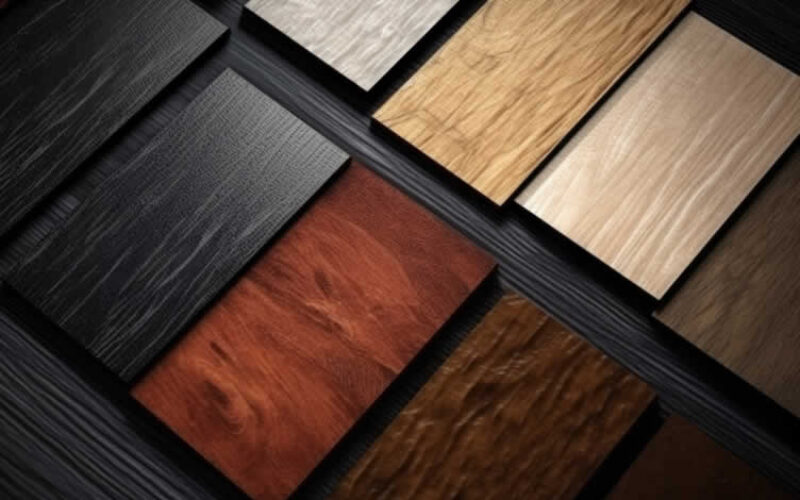
Additionally, wood doors are highly customizable with options for stains, intricate carvings, and sizes, allowing homeowners to craft a unique look.
However, wood doors require regular maintenance to prevent deterioration. Exposure to moisture can lead to warping or rotting, making it essential for these doors to be properly sealed and protected.
While wood is not as energy-efficient as other materials, adding weatherstripping and insulation can improve its thermal performance.
For entryways, wood doors are a stunning choice, lending an immediate visual impact and a sense of craftsmanship. They can also be used for side and back doors, particularly in covered or shaded areas where exposure to weather is less intense.
Pros:
- Timeless Beauty:
Wood doors feature natural textures and grain patterns that enhance the aesthetic appeal of any home. - Customizable:
They can be tailored with stains, paints, carvings, or unique designs to suit personal preferences and complement various architectural styles. - Warm and Inviting:
Wood provides a sense of craftsmanship and a welcoming atmosphere, making it an ideal choice for entryways. - Durable:
With proper maintenance, wood doors can last for decades, adding long-term value to your home. - Versatile Use:
Suitable for entryways, side doors, and back doors, especially in places with limited weather exposure.
Cons:
- High Maintenance:
Regular sealing, painting, or staining is required to protect against moisture, warping, and rotting. - Cost:
Often more expensive than alternative materials like fiberglass or steel, especially for custom designs. - Susceptible to Weather Damage:
Prolonged exposure to moisture, sunlight, and temperature fluctuations can deteriorate wood over time without proper protection. - Energy Efficiency:
Wood is not as naturally insulating as other materials, requiring added features like weatherstripping and insulation for improved thermal performance. - Weight:
Solid wood doors can be heavy, which may require sturdier hardware and hinges for proper installation.
- Timeless Beauty:
-
Aluminum and Vinyl Doors[ view]
Aluminum and vinyl doors are frequently found in patio and storm door applications. Lightweight and low-maintenance, these materials are widely chosen for their affordability and resilience in varied weather conditions.
Aluminum doors, in particular, resist rust and provide a sleek, modern appearance, while vinyl doors offer excellent insulation and are available in a variety of finishes.
Energy efficiency is another hallmark of these materials, with vinyl having the edge due to its superior insulating properties.
However, both aluminum and vinyl are less durable than heavier materials like steel or fiberglass, making them better suited for secondary applications rather than main entry doors.
These materials perform best as patio doors, storm doors, or even side and back doors where exposure to the elements is limited, and lighter-duty service is sufficient.
Pros of Aluminum Doors:
- Rust Resistance:
Aluminum doors naturally resist rust, making them suitable for humid or damp environments. - Modern Aesthetic:
Their sleek, minimalist design appeals to modern and contemporary styles. - Lightweight:
Easy to install and operate due to their lighter weight. - Durable Finish Options:
Available in various finishes that resist fading and corrosion.
Cons of Aluminum Doors:
- Lower Insulation:
Offers less energy efficiency compared to vinyl, leading to potential heat or cooling loss. - Reduced Durability:
Can dent or scratch more easily compared to sturdier materials like steel or fiberglass. - Limited Noise Reduction:
Provides less soundproofing due to its lightweight nature.
Pros of Vinyl Doors:
- Superior Insulation:
Exceptional energy efficiency helps reduce heating and cooling costs. - Various Finishes:
Available in a wide range of colors and textures to match different home styles. - Low Maintenance:
Resistant to peeling, chipping, and fading, requiring minimal upkeep. - Affordability:
Budget-friendly while still offering solid performance.
Pros of Vinyl Doors:
- Less Durable:
Prone to cracking in extreme temperatures and offers less strength compared to heavy-duty materials. - Design Constraints:
Limited ability to modify or repaint, potentially restricting customization. - Susceptible to Warping:
Prolonged exposure to extreme heat may cause vinyl to warp over time.
Both aluminum and vinyl doors excel in secondary applications like patio, storm, or side doors, offering a blend of affordability and functional benefits that cater to less demanding use cases.
- Rust Resistance:
-
Fire Doors[ view]
Fire doors are a crucial choice for enhancing safety and meeting building code requirements in residential and commercial spaces.
Constructed from fire-resistant materials such as steel, solid wood, or composite cores, fire doors are designed to slow the spread of fire and smoke, providing valuable time for occupants to evacuate and for emergency responders to arrive.
These doors often feature seals and self-closing mechanisms that offer additional protection during a fire event. Fire doors are available in various designs and finishes, ensuring they blend seamlessly with your home’s aesthetic without compromising safety.
Installing fire doors in areas like garages or between living areas can significantly enhance the overall security and functionality of your home.
Pros:
- Enhanced Safety:
Fire doors are specifically designed to slow the spread of fire and smoke, providing critical time for evacuation and emergency response. - Compliance with Building Codes:
Installing fire doors helps meet safety regulations in both residential and commercial spaces, ensuring legal compliance. - Variety of Designs:
Available in diverse finishes and styles, fire doors can seamlessly integrate with your home’s aesthetic without sacrificing safety. - Improved Functionality:
Features like self-closing mechanisms and smoke seals contribute to added convenience and protection. - Durable Materials:
Constructed with fire-resistant materials such as steel, solid wood, or composite cores, these doors are both robust and long-lasting. - Reduced Damage:
By containing fire and smoke, fire doors can minimize damages to property during a fire incident, protecting your investment.
Cons:
- Higher Initial Cost:
Fire doors tend to be more expensive than standard interior doors, which could impact overall renovation budgets. - Regular Maintenance:
To ensure effectiveness, fire doors require routine inspections and maintenance, such as checking seals and hinges. - Heavier Weight:
The robust materials used in fire door construction make them heavier, which might require sturdier frames and hardware. - Limited Customization:
While available in various styles, fire doors may offer fewer design and customization options compared to non-fire-rated doors. - Installation Complexity:
Proper installation by professionals is often necessary to meet safety standards, which could add to costs and time.
By weighing these pros and cons, you can make an informed decision about incorporating fire doors into your home or building to improve safety and functionality.
- Enhanced Safety:
-
Other Materials
Some homeowners explore other materials like glass, composite, or hybrid options that combine features from multiple materials.
Glass doors, for instance, enhance aesthetics and allow for natural light, but they offer less privacy and security unless reinforced or paired with other materials. Composite doors combine the practical benefits of materials like wood and fiberglass, offering an eco-friendly and performance-driven alternative.
These options are typically used in complement with other materials to balance appearance, security, and energy performance.
References:
Material Pros Cons Best Applications Fiberglass – Durable and resistant to warping, denting, cracking
– Low-maintenance
– Energy-efficient with insulating cores
– Mimics natural wood appearance
– Excellent weather resistance
– Long-lasting– Higher upfront cost
– Limited repair options
– Less authentic wood textureEntryways, side, and back doors Steel – High security
– Durable and resistant to wear
– Affordable
– Energy-efficient with insulating cores
– Available in various styles– Prone to dents
– Susceptible to rust with poor maintenance
– Scratches show easily
– Limited design flexibility
– Maintenance required to prevent rustSide and back doors, modern main entries Wood – Timeless beauty with natural textures and grains
– Highly customizable
– Warm and inviting aesthetic
– Durable with proper maintenance
– Versatile for different spaces– High maintenance needed
– Can warp, rot, or deteriorate without protection
– More expensive
– Less energy-efficient
– Heavy, requiring substantial hardwareEntryways, side, and back doors (preferably covered) Aluminum – Rust-resistant
– Sleek, modern aesthetics
– Lightweight and easy to install
– Durable finishes available– Lower insulation compared to vinyl
– Can dent or scratch easily
– Limited noise reductionPatio and storm doors; side/back doors with lighter use Vinyl – Superior insulation
– Affordable and budget-friendly
– Available in various finishes
– Low maintenance– Less durable (prone to cracking in extreme temperatures)
– Limited customization
– Susceptible to warping from heatPatio and storm doors; side/back doors with lighter use Fire Doors – Enhanced safety with fire-resistant materials
– Meets building code compliance
– Durable features like smoke seals and self-closing systems
– Available in diverse finishes
– Minimizes fire and smoke damage– Higher initial cost
– Requires regular inspections
– Heavier weight
– Fewer design options
– Professional installation recommendedGarages, living areas requiring safety upgrades 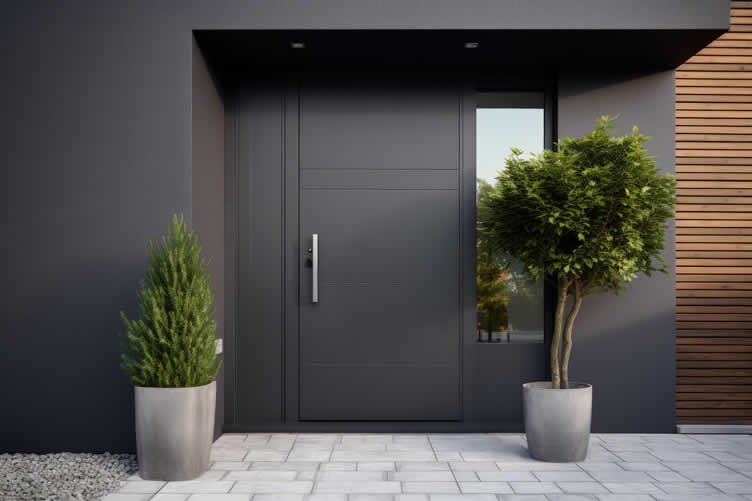
AI generated image by 123rf.com
[ view images: exterior door material types]
[ youtube: Wood vs Fiberglass vs Steel Exterior Doors]
-
-
3rd: Exterior Door Styling
Choosing the right exterior door style is essential for enhancing your home’s curb appeal while complementing its architectural design. Your door is often the first feature guests notice, so selecting a style that harmonizes with the overall aesthetics and character of your home is key.
By understanding the various door styles available, you can find an option that aligns with both your home’s architecture and your personal taste, contributing to a lasting first impression.
[ view images/summary table: exterior door styling]
-
Traditional Homes
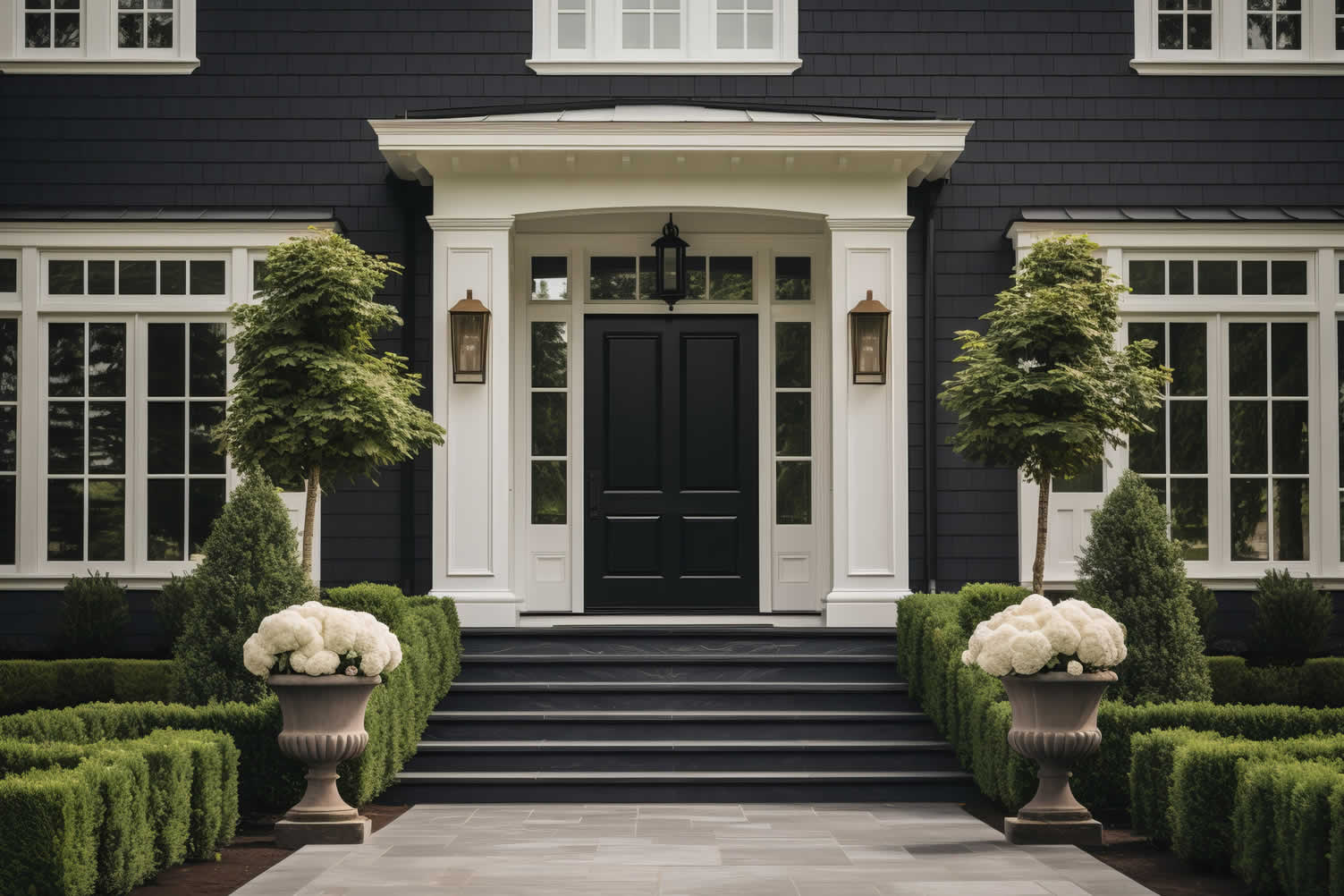
For classic Colonial, Georgian, or Federal-style homes, a door that showcases symmetry and timeless elegance is ideal. Paneled wood doors with detailed moldings are popular choices, often painted in bold, welcoming colors such as red, navy blue, or black.
Many traditional doors feature transom or sidelight windows, allowing natural light to enhance your entryway while maintaining the refined appearance associated with traditional architecture.
-
Modern and Contemporary Homes
Modern and contemporary homes call for clean lines and minimalist designs. For these architectural styles, exterior doors with large, uninterrupted glass panels or smooth metallic finishes create a sleek and sophisticated look.
These door styles often incorporate materials like frosted glass, steel, or fiberglass, providing a blend of functionality and striking visual appeal. The focus is on simplicity and innovations that emphasize openness and natural lighting.
-
Craftsman-style Homes
Craftsman-style homes emphasize handcrafted details and natural materials. The ideal door for this type of home typically combines stained wood with glass inserts that echo the home’s unique craftsmanship.
These doors often feature intricate grid patterns on glass panes, earthy wood tones, and visible joinery that showcases the artisanal quality synonymous with Craftsman architecture. Sturdy yet inviting, these doors balance aesthetics with durability.
-
Victorian and Gothic Revival Homes
Victorian and Gothic Revival homes present an opportunity to experiment with ornate and intricate exterior door designs. These homes often feature solid wood doors adorned with decorative carvings, stained glass accents, or iron scrollwork.
A cohesive color selection, such as deep green or burgundy, enhances the dramatic and historical aura of the home. Arched doorways or Gothic-inspired decorative windows further amplify the architectural authenticity of the home’s exterior.
-
Farmhouse and Rustic Homes
For farmhouse-style or rustic homes, exterior doors should evoke a sense of warmth and simplicity. Solid wood doors with natural finishes, barn-door-style designs, or distressed textures pair beautifully with these home styles.
Glass panes with shutters or wrought-iron detailing can add functionality and charm. Opting for neutral or earthy tones enhances the nostalgic, approachable aesthetic of a farmhouse door.
-
Mediterranean and Spanish Revival Homes
Mediterranean and Spanish Revival homes favor bold, vibrantly styled exterior doors that can include arched designs or intricately carved wood with wrought iron accents.
Bright colors such as cobalt blue, terracotta, or vibrant yellow often add richness to the entrance, in keeping with the warm, inviting feel of this architectural style. For added authenticity, use heavy wood materials and embellishments that echo Old World charm.
-
Mid-Century Modern Homes
With an emphasis on geometric shapes and clean simplicity, Mid-Century Modern homes typically feature exterior doors that showcase bold colors combined with simple, rectangular patterns or inset glass detailing.
Smooth surfaces and materials like fiberglass or wood veneer are common for these homes, providing an understated yet impactful aesthetic that aligns with the design’s timeless appeal.
Referencing:
Home Style Key Features Recommended Door Elements Color Suggestions Traditional Homes Symmetry, timeless elegance Paneled wood, moldings, transom or sidelight windows Bold colors like red, navy blue, and black Modern and Contemporary Homes Clean lines, minimalist design Large glass panels, metallic finishes, frosted glass Neutral or monochromatic tones Craftsman-style Homes Handcrafted details, natural materials Stained wood, glass inserts with grid patterns Earthy wood tones Victorian and Gothic Revival Homes Ornate and intricate designs Carved wood, stained glass, iron scrollwork Deep green, burgundy Farmhouse and Rustic Homes Warmth, simplicity Solid wood, barn-style, distressed textures Neutral or earthy tones Mediterranean and Spanish Revival Homes Bold, vibrant accents Arched designs, carved wood, wrought iron Cobalt blue, terracotta, vibrant yellow Mid-Century Modern Homes Geometric shapes, clean simplicity Bold colors, rectangular patterns, inset glass Bright, bold tones 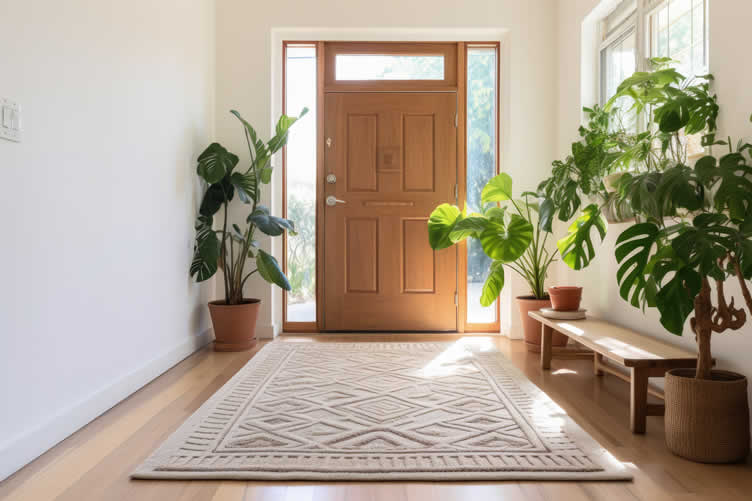
copyright image by 123rf.com
[ pinterest: exterior door designs ]
[ youtube: Exterior Doors Style Collection ]
-
-
-
ideas to view and compare from the information discussed above
exterior home doorsexterior door hingesexterior door lock set
Scroll up to directory … or scroll to next section about selecting interior doors …


Download this PDF for a concise summary of all you need to know about …?








Are there any other interesting topics that might have been overlooked but could offer valuable insights …?


… view our home remodeling guides and steps

second “photo remodeling” idea
AI generated image by 123rf.com
Door Tip 2: Home Interior Doors
Notes:
-
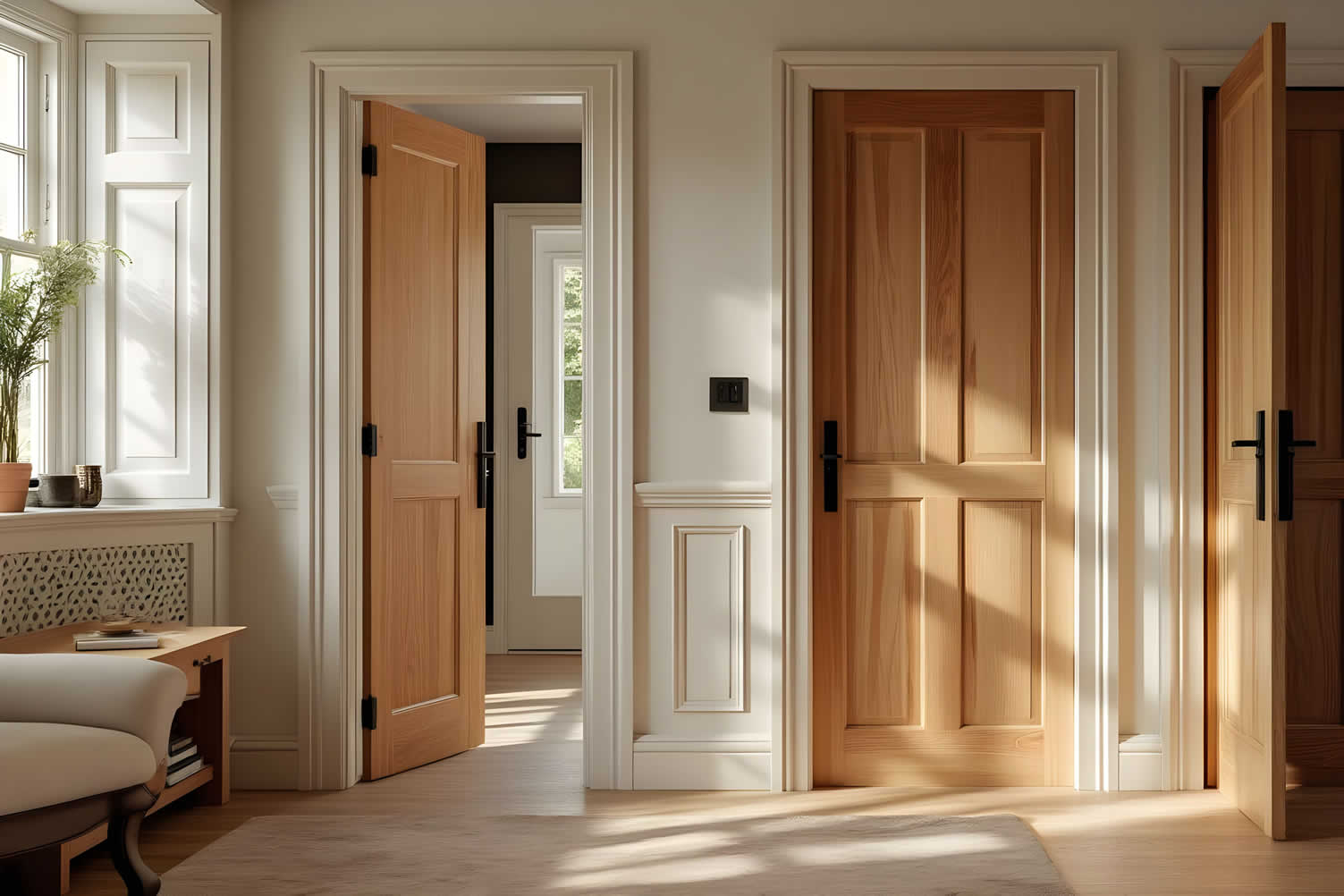
Interior doors define living spaces, provide privacy, and contribute significantly to your home’s aesthetic character. These doors handle daily use while supporting various functional needs including sound dampening, light control, and space division.
The wonderful diversity of interior door styles—from classic panel designs to sleek modern options—empowers homeowners to truly express their personal taste, ensuring their home feels uniquely their own, all while perfectly addressing the specific requirements of each individual room.
Below, we’ll explore the varying types, materials, and styling options available.
-
Quick scroll to supporting notes …
-
-
1st: Types of Interior Home Doors Available
Interior doors are more than functional necessities; they are integral design elements that can elevate the aesthetics, ambiance, and practicality of your home.
Whether you are remodeling, building new, or simply updating your space, understanding the various types of interior doors available is essential for making choices that perfectly complement your needs and style preferences.
Below, we explore a range of interior door options, addressing their unique characteristics and ideal applications.
[ view summary table: interior door types]
-
Hinged Doors[ view]
Hinged doors, the standard choice for most homes, are attached to a door frame by hinges, allowing them to swing open or closed. They are versatile and can be used in bedrooms, bathrooms, and closets.
Hinged doors come in a variety of materials, such as solid wood, MDF, or glass panels, they can be tailored to complement any interior design style. Hinged doors also offer functional benefits, providing privacy, noise reduction, and insulation between rooms.
For a modern touch, consider sleek panel designs or frosted glass inserts to allow light to flow while maintaining privacy. On the other hand, traditionalists may appreciate the charm of raised panel doors or intricate detailing.
Hinged doors are easy to install and maintain, making them an ideal option for both new construction and renovation projects. To ensure long-lasting durability, pay attention to the quality of the hinges and hardware, opting for finishes that match your home’s decor.
Whether you’re updating a single room or rethinking your entire interior space, hinged doors can elevate your home’s style and functionality while staying budget-friendly.
-
Panel Doors[ view]
Panel doors are a classic option that features raised or recessed panels, typically made of wood or composite materials.
Available in single, double, or multi-panel configurations, these doors are known for their rich textures and versatility, fitting seamlessly into both vintage and modern design schemes.
Six-panel doors represent the most common configuration, offering classic proportions that complement various architectural styles. Four-panel and two-panel variations provide simpler aesthetics suitable for contemporary or transitional decor themes.
Raised panel doors create dimensional shadows that add elegance to formal spaces like dining rooms and master bedrooms. The elevated panels catch light differently throughout the day, providing subtle visual interest.
These doors typically require solid wood construction to achieve proper panel definition, making them more expensive but also more durable.
Flat panel doors offer clean lines suitable for modern and minimalist interiors. The recessed panels create subtle definition without overwhelming contemporary design schemes.
These doors can be manufactured from various materials including wood, medium-density fiberboard, or composite materials, providing options across different budget ranges.
-
Flush Doors[ view]
Flush doors are all about clean lines and simplicity. They feature smooth, flat surfaces without any ornate detailing, making them a preferred choice for minimalist designs or spaces with a modern edge.
Their simple profile allows them to virtually disappear into wall surfaces, creating seamless visual flow between rooms. They are often constructed from engineered wood products such as MDF or plywood, which keep them lightweight and budget-friendly, and are perfect for contemporary homes
Hollow core flush doors offer lightweight, affordable solutions for interior applications where sound dampening isn’t critical.
These doors feature wooden frames with cardboard or composite honeycomb cores, making them suitable for closets, pantries, and secondary bedrooms. Their light weight reduces stress on hinges and door frames.
Solid core flush doors provide enhanced sound dampening and fire resistance, making them appropriate for master bedrooms, home offices, and other spaces requiring privacy.
The solid core construction also provides better security and durability, though at higher cost and weight compared to hollow core alternatives.
-
French Doors[ view]
French doors, often chosen for their elegance and sophistication, consist of double doors with glass panels. These doors are ideal for spaces where you want to maintain separation while allowing natural light to flow through.
Interior French doors feature glass panels that allow natural light transmission between rooms while maintaining physical separation.
These doors create elegant transitions between spaces such as living and dining rooms, home offices, and master bedroom suites. The glass panels can be clear, frosted, or decorative depending on privacy requirements.
Traditional French doors feature true divided lights with individual glass panes separated by wooden mullions. Simulated divided light options provide similar aesthetics with easier maintenance, using snap-in grilles over single glass panels. This construction reduces cleaning time while maintaining classic appearance.
Double French doors create dramatic openings that enhance formal entertaining areas. When both doors open, they provide wide passage for furniture movement and gathering flow.
Single French doors offer similar aesthetic benefits in smaller spaces or where one side must remain stationary.
-
Pocket Doors[ view]
Pocket doors are a fantastic solution for maximizing space in small areas. These sliding doors retract into an existing wall, making them an excellent choice for bathrooms, pantries, or connecting spaces where floor area is minimal.
This design proves invaluable in tight quarters where traditional door swings would interfere with furniture arrangement or traffic flow.
Installation requires planning during construction or major renovation phases, as pocket door frames must be built into wall structures. The wall cavity must accommodate the door’s full width, and special framing prevents interference with electrical or plumbing systems. Professional installation ensures proper alignment and smooth operation.
Hardware quality significantly impacts pocket door performance and longevity. Premium track systems feature ball-bearing rollers and adjustable hangers that maintain smooth operation even with heavy doors.
Soft-close mechanisms prevent slamming while privacy locks provide security when needed.
-
Sliding Doors[ view]
Sliding doors operate along a track and are often used as closet doors or room dividers. They take up no additional space when opened, making them ideal for tight quarters or areas where traditional hinged doors are impractical.
Available in a variety of finishes and materials, sliding doors can also add contemporary flair to your home’s interiors.
These doors come in various styles, ranging from sleek, glass-paneled designs that maximize natural light to rustic, barn-style doors that add a touch of charm and character.
When selecting interior sliding doors, it’s important to consider both the functionality and aesthetic appeal they bring to your space. Sliding doors work well in tight spaces like closets, bathrooms, or pantries, but they can also serve as statement pieces in open floor plans.
For a customized look, opt for materials and finishes that complement your decor, such as frosted glass for privacy or natural wood for warmth.
Installation of sliding doors can be straightforward with prefabricated kits or advanced with custom-built options. Regardless of your choice, proper alignment and smooth gliding mechanisms are key to ensuring long-term usability.
To elevate the design, consider hardware like modern handles or decorative track systems, which can add a touch of sophistication. With the right selection, interior sliding doors can be both a functional upgrade and a stylish accent to your home.
-
Bi-Fold Doors[ view]
Bi-fold doors maximize space efficiency by folding against themselves rather than swinging into room areas.
This space-saving design makes them particularly valuable in smaller homes or rooms with limited floor space. They’re commonly used for closets, laundry rooms, and pantries where full door swing would interfere with furniture placement.
Two-panel bi-fold doors work well for standard closet openings, providing full access while requiring minimal clearance space.
Four-panel systems accommodate wider openings such as walk-in closets or room dividers. The folding mechanism requires quality hardware to ensure smooth operation and long-term durability.
Maintenance considerations include regular lubrication of pivot points and track systems. The multiple moving parts require more attention than traditional hinged doors, but proper care ensures years of reliable operation. Quality bi-fold doors feature adjustable hardware that allows for fine-tuning as buildings settle over time.
-
Barn Doors[ view]
Barn doors have surged in popularity due to their mix of rustic charm and space-saving capabilities. These surface-mounted, sliding doors offer both function and style, working well in settings with tight spaces or as a bold, decorative feature.
Their rustic aesthetic adds character to farmhouse, industrial, and eclectic interior designs. The exposed hardware becomes a decorative element that contributes to the overall design scheme.
Traditional barn doors feature vertical planks with diagonal or horizontal bracing, creating authentic rural appeal. Contemporary interpretations include sleek panels, glass inserts, or mixed materials that adapt the concept to modern spaces.
The door style can be customized to complement existing interior themes while maintaining the functional sliding operation.
Hardware selection significantly impacts both functionality and appearance. Heavy-duty track systems support substantial door weights while maintaining smooth operation.
Decorative hardware finishes including black iron, brushed steel, or antique bronze coordinate with other interior elements to create cohesive design schemes.
-
Louvered Doors[ view]
Interior louvered doors are a popular choice for spaces where ventilation and airflow are essential without compromising privacy. Their slatted design allows air to circulate freely between rooms, making them ideal for closets, laundry rooms, or utility spaces.
Louvered doors can also bring a unique design element to your home, combining functionality with a distinctive aesthetic appeal.
These doors are available in various materials, including solid wood, composite wood, and MDF, catering to a range of budgets and design preferences.
Solid wood louvered doors offer a timeless, traditional look and superior durability, while composite options provide affordability and low maintenance.
Whether painted or stained, louvered doors can be customized to fit your home’s specific style, from classic to contemporary.
For homeowners tackling DIY projects, consider prefabricated louvered panels that can simplify installation.
Proper cleaning and maintenance are essential for louvered doors to avoid dust accumulation in the slats, ensuring they remain a stylish and functional part of your space.
If you’re looking to enhance both form and function in your home’s interior, louvered doors are an excellent option.
-
Glass Doors[ view]
Glass doors are a sophisticated addition to any home, offering a perfect balance of elegance and practicality. These doors are not only visually appealing but also allow natural light to flow effortlessly between rooms, creating a brighter and more open atmosphere.
They are available in a wide range of styles, including frosted, clear, and textured glass, to suit various design preferences and privacy needs.
For a modern look, consider frameless glass doors, which provide a sleek and minimalist appearance, while framed options can add a touch of traditional charm.
Whether you’re renovating or simply upgrading your interiors, glass doors can enhance the aesthetic appeal of your space while maintaining functionality. They work particularly well in areas like offices, dining rooms, or pantries, where visibility and light are desirable.
Keep in mind that tempered glass is an excellent option for durability and safety, especially in homes with children. With the right care and occasional cleaning, these doors will remain a stunning focal point for years to come.
-
Accordion Doors[ view]
Accordion doors are practical and efficient, folding in sections along a track. They are ideal for dividing spaces or enclosing closets in areas where a conventional door might not fit.
This style is typically chosen for functionality over design but can come in various finishes to complement your interiors.
Made from materials like wood, vinyl, or composite, accordion doors come in a variety of finishes and styles to complement your decor while providing functionality. They work wonderfully for closets, room dividers, or pantry entrances, offering versatility without compromising on style.
Additionally, some models feature soundproofing and insulation properties, making them a practical and attractive choice for busy households.
Easy to install and maintain, interior accordion doors are a budget-friendly way to add convenience and aesthetic appeal to your living spaces.
-
Specialty and Custom Doors[ view]
For homeowners seeking something truly unique or tailored to their spaces, specialty or custom doors are an excellent choice. From doors with intricate carvings to contemporary materials like metal or sustainable options like reclaimed wood, custom doors allow for complete personalization.
These options cater to specific aesthetic goals, functional needs, or unique design challenges, creating a one-of-a-kind statement for your home.
For those seeking to maximize light flow between rooms while maintaining privacy, frosted or etched glass panels are a popular choice. These options strike a perfect balance between openness and discretion, making them ideal for home offices, living rooms, or dining areas.
Pocket doors are another space-saving solution, seamlessly disappearing into the wall to create an open floor plan when needed or closing off spaces for a cozier atmosphere.
Customizable finishes, such as paints, stains, or laminates, allow you to match your doors with your existing decor or create a bold statement. Panel configurations, from traditional six-panel doors to minimalist flat designs, provide flexibility to suit any aesthetic.
Additionally, hardware like decorative handles or hidden hinges can offer an added layer of sophistication.
With specialty and custom doors, you have the opportunity to craft a living space that reflects your personality while adding both beauty and value to your home.
References:
- National Association of Home Builders, Guidelines on Doors and Windows
- "The Complete Guide to Interior Door Types", Home Improvement Experts Journal.
- "Choosing the Right Door for Your Space," Architectural Digest.
Door Type Key Features Ideal Applications Hinged Doors Standard swing mechanism, available in solid wood, MDF, or glass; versatile and easy to install. Bedrooms, bathrooms, closets; complements any design style with options for privacy and noise reduction. Panel Doors Features raised or recessed panels; configurations include single, double, or multi-panel; highly customizable. Formal spaces like dining rooms and bedrooms; fits both classic and modern aesthetics. Flush Doors Minimalistic smooth surfaces, available in hollow-core or solid-core variants; lightweight and budget-friendly options. Closets, secondary bedrooms, modern spaces; ideal for achieving clean, seamless looks. French Doors Elegant glass-paneled double doors; allows natural light flow while maintaining separation. Living rooms, dining rooms, home offices; adds sophistication to transitions between spaces. Pocket Doors Space-saving sliding doors that retract into wall cavities; requires special installation. Bathrooms, pantries, connecting spaces; ideal for tight areas where floor space is limited. Sliding Doors Operates along a track; customizable with materials like wood or frosted glass for various styles. Closets, bathrooms, pantries; can serve as statement pieces in open floor plans. Bi-Fold Doors Space-efficient folding design; commonly used for closets and laundry areas. Small homes, walk-in closets, room dividers; perfect for areas with limited clearance requirements. Barn Doors Rustic sliding doors with exposed hardware; offers a blend of charm and functionality. Farmhouse or industrial-themed spaces, tight areas; decorative focal points in any room. Louvered Doors Slatted design for ventilation and airflow; available in solid wood, composite, or MDF materials. Closets, laundry rooms, utility spaces; combines function with unique style. Glass Doors Available in frosted, clear, or textured options; enhances light flow and creates open atmosphere. Offices, dining rooms, pantries; maintains modern aesthetics while offering functionality. Accordion Doors Folding section design; practical and affordable with soundproofing options. Closets, room dividers; suitable for compact spaces with limited traditional door options. Specialty & Custom Doors Tailored designs with materials like reclaimed wood, metal, or etched glass; fully customizable. Unique spaces, high-design areas; offers one-of-a-kind statements for personalized homes. 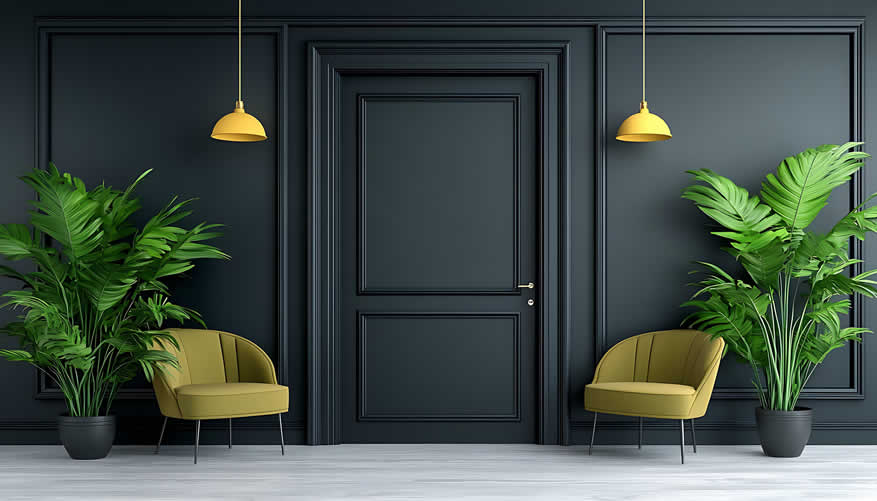
copyright image by 123rf.com
[ pinterest: interior door types ]
[ youtube: Types of Interior Doors ]
-
-
2nd: Materials for Interior Home Doors
Selecting the right material for your interior doors is vital for both functionality and style. The material of a door not only impacts its appearance but also determines its durability, sound insulation, and maintenance requirements.
Below, we break down several common materials used for interior doors, including their best use cases, advantages, and considerations to ensure you make an informed decision for your home.
[ view summary table: interior door materials]
-
Solid Wood Doors[ view]
Solid wood doors are a classic and timeless option for interior spaces, offering natural beauty and authenticity that complements various home styles. These doors are typically crafted from hardwoods such as oak, maple, or cherry, although softwoods like pine are also common.
Solid wood doors work best in areas where high sound insulation, durability, and aesthetics are priorities, such as bedrooms, offices, or formal living spaces.
Solid wood doors are highly durable and can be sanded or repainted over time, making them a long-term investment. They provide excellent insulation against noise and temperature fluctuations.
However, they tend to be more expensive compared to other materials and may be prone to warping in high-humidity areas if not properly sealed. The weight of solid wood doors also requires sturdy hinges and frames for support.
Pros:
- Durability:
Solid wood doors are built to last and can withstand significant wear and tear over time. - Aesthetic Appeal:
They offer a timeless and natural look that complements a variety of home decor styles. - Customizable:
These doors can be sanded, painted, or stained to match your preferred design or color scheme. - Insulation:
Provide excellent insulation against noise and temperature changes, enhancing comfort and energy efficiency. - Value Addition:
Solid wood doors can increase the overall value of your home due to their high-quality and desirable appearance.
Cons:
- Price:
They are generally more expensive compared to doors made from other materials. - Weight:
The heavier construction requires sturdy frames and hinges, which may lead to higher installation costs. - Maintenance:
Without proper sealing, they can be prone to warping or damage in humid or damp environments. - Vulnerability to Scratches:
While durable, the surface can still be scratched, potentially requiring periodic refinishing to maintain their appearance. - Environmental Sensitivity:
Changes in temperature and humidity can cause expansion or contraction, impacting the fit over time.
- Durability:
-
Hollow-Core Doors[ view]
Hollow-core doors are a budget-friendly alternative to solid wood doors and are lightweight in construction. These doors feature a wood or fiberboard outer layer with a core made of cardboard or another lightweight material.
They are ideal for areas where cost is a major consideration, such as utility rooms, guest rooms, or secondary spaces.
Hollow-core doors are an economical and versatile choice and are easy to install because of their lightweight design. They are widely available in various finishes and styles to match different decor themes.
While affordable, hollow-core doors lack the soundproofing and durability of solid wood options, and they may not hold up as well to heavy use or impact over time.
Pros
- Affordability:
Hollow-core doors are budget-friendly, making them an excellent choice for cost-conscious homeowners. - Lightweight Design:
Their lightweight construction makes them easy to handle and install, particularly for DIY projects. - Variety of Styles:
Available in numerous finishes and designs, they can complement a wide range of home decor themes. - Readily Available:
Hollow-core doors are widely available at most home improvement stores, offering convenience and accessibility.
Cons
- Lack of Durability:
These doors are less sturdy than solid wood options and can be prone to damage from heavy use or impact. - Limited Soundproofing:
Due to their hollow construction, they offer minimal sound insulation, which might not be ideal for private or noisy spaces. - Lower Longevity:
Over time, they may show wear and tear more quickly compared to solid-core or solid wood doors. - Reduced Customization:
Hollow-core doors are not as easily modified, making options like trimming or resizing more challenging.
- Affordability:
-
Solid-Core Doors[ view]
Solid-core doors are built with a mixture of wood and synthetic materials, giving them a construction that mimics the durability of solid wood but at a more affordable price.
These doors are an excellent choice for spaces that require enhanced soundproofing and durability, such as home offices, media rooms, or shared living areas.
This material delivers better sound insulation compared to hollow-core options while maintaining a more budget-conscious price point than solid wood. Solid-core doors are heavy, creating a sense of sturdiness and quality.
However, like solid wood doors, they require robust framing and hinges, and their composition may make them slightly more susceptible to moisture damage than fully natural wood.
Pros:
- Superior Soundproofing:
Excellent at reducing noise transmission, making them ideal for home offices, bedrooms, and media rooms. - Sturdy and Durable:
Provides a substantial, high-quality feel compared to hollow-core doors. - Affordable Alternative:
Offers comparable durability and sound insulation to solid wood doors at a lower price point. - Aesthetic Appeal:
Available in a range of finishes and styles to suit various design preferences.
Cons:
- Heavier Weight:
Requires robust framing and heavy-duty hinges to support their weight. - Potential Moisture Sensitivity:
While durable, their engineered composition may make them more prone to moisture damage than solid wood. - Installation Challenges:
The added weight can make them harder to handle and install, especially for DIYers. - Costlier Than Hollow-Core Options:
While more affordable than solid wood, they are more expensive than hollow-core alternatives.
- Superior Soundproofing:
-
MDF (Medium-Density Fiberboard) Doors[ view]
MDF doors are made from engineered wood fibers, creating a smooth and uniform material that is easy to work with.
These doors are well-suited for modern or contemporary spaces due to their clean and consistent surface, which is perfect for painting or custom designs. They are a popular choice for high-traffic areas such as hallways, closets, or bathrooms.
MDF doors do not warp, crack, or expand as natural wood does, making them especially reliable in environments with fluctuating temperatures. They are also highly customizable and available in numerous styles and profiles.
However, MDF is less durable than solid wood or solid-core materials and can be vulnerable to moisture, which makes them unsuitable for bathrooms or laundry rooms without proper sealing.
Pros:
- Affordability:
MDF doors are budget-friendly, offering a cost-effective alternative to solid wood without sacrificing style. - Smooth Surface:
Their smooth and uniform surface is ideal for painting, allowing for easy customization to match any decor. - Stability:
Unlike natural wood, MDF does not warp, crack, or expand under temperature changes, ensuring long-term reliability. - Design Versatility:
They come in a wide range of styles and profiles, making it easy to find the perfect fit for your home’s aesthetic. - Eco-Friendly:
MDF often uses recycled wood fibers, making it a more environmentally conscious choice.
Cons:
- Moisture Sensitivity:
MDF can absorb moisture if not properly sealed, leading to swelling and damage, which makes it less suitable for high-humidity areas like bathrooms or laundry rooms. - Lower Durability:
While stable, MDF is less durable than solid wood or solid-core doors and is more prone to dents and scratches. - Weight:
MDF doors can be heavy, which may require stronger hinges and hardware for proper installation. - Limited Longevity:
Compared to solid wood, MDF doors may have a shorter lifespan, particularly in areas with heavy use or exposure to moisture.
- Affordability:
-
Glass Doors[ view]
Interior glass doors are an elegant and contemporary option that can dramatically transform a space. These doors are ideal for rooms where you want to maximize light and maintain an open feel, such as home offices, dining rooms, or walk-in closets.
The glass may be frosted, etched, or clear, depending on the level of privacy desired.
Glass doors create a striking aesthetic and allow light to flow between rooms, enhancing the sense of openness in a home. They are low maintenance and resistant to warping or cracking under normal conditions.
A key consideration is that they provide less sound insulation and privacy compared to other materials and can be fragile unless reinforced or tempered.
Pros:
- Enhanced Natural Light:
Glass doors allow light to pass through, brightening interior spaces and creating a more open and inviting atmosphere. - Stylish and Modern Design:
They add a sleek, contemporary look that complements various decor styles. - Versatility:
Available in different finishes (frosted, etched, or clear) to suit privacy and aesthetic preferences. - Low Maintenance:
Easy to clean and resistant to common issues like warping or cracking under normal conditions. - Visual Connection:
Helps connect spaces visually while maintaining a sense of separation.
Cons:
- Reduced Privacy:
Depending on the finish, glass doors may not provide the same level of privacy as solid doors. - Lower Sound Insulation:
They offer less noise reduction compared to wood or other solid materials. - Fragility:
Standard glass can be more prone to breakage, although tempered or reinforced options are more durable. - Cost:
High-quality glass doors can be more expensive than traditional wood doors. - Fingerprints and Smudges:
Clear glass surfaces can show fingerprints and smudges more easily, requiring regular cleaning.
- Enhanced Natural Light:
-
Metal Doors[ view]
Metal doors, often made of aluminum or steel, are increasingly used in contemporary interior design for their sleek appearance and industrial-inspired aesthetic. These doors are suitable for spaces such as lofts, home offices, or spaces where a modern and minimalistic style is desired.
Doors made from metal are highly durable and resistant to wear and tear. They require minimal maintenance and are often recyclable, appealing to environmentally-conscious homeowners.
However, metal doors can feel cold or impersonal in certain settings, and they may require specialized finishes to prevent tarnishing or corrosion.
Pros:
- Durability: Metal doors are highly resistant to wear and tear, ensuring a long lifespan even in high-traffic areas.
- Minimal Maintenance: They require little upkeep, saving time and effort for busy homeowners.
- Industrial Aesthetic: Their sleek, modern look complements contemporary and industrial design styles.
- Environmentally Friendly: Many metal doors are recyclable, making them a sustainable choice for eco-conscious individuals.
- Fire Resistance: Metal doors often provide enhanced safety with fire-resistant properties.
Cons:
- Cold Appearance: The rigid and industrial feel of metal doors can make spaces appear less warm or inviting.
- Cost: High-quality metal doors can come with a significant price tag compared to other materials.
- Corrosion Risk: Without proper finishes or treatments, metal doors can be prone to tarnishing or rust in humid environments.
- Weight: Metal doors can be heavy, possibly requiring reinforced framing or professional installation.
- Limited Design Flexibility: While stylish, designs may be less versatile compared to wood or glass options.
References:
- Smith, Amanda. “Interior Door Materials 101.” Home Design Trends Monthly.
- James, Robert. “Best Doors for Modern Homes.” DIY Home Improvement Magazine.
- Architectural Wood Institute. “Guide to Solid Wood Construction.”
- Green, Emily. “Sustainable Choices for Home Renovations.” Eco-Friendly Living Journal.
Material Pros Cons Best Use Cases Solid Wood – Highly durable
– Excellent insulation
– Timeless aesthetic
– Customizable
– Adds home value– Expensive
– Heavy, requires sturdy hinges
– Prone to warping in humidity
– Maintenance neededBedrooms, offices, formal living spaces Hollow-Core – Affordable
– Lightweight
– Wide variety of styles
– Easy installation– Less durable
– Limited soundproofing
– Shorter lifespan
– Minimal customizationUtility rooms, guest rooms, secondary spaces Solid-Core – Excellent soundproofing
– Sturdy and durable
– Affordable alternative to solid wood
– Wide stylistic options– Heavy, requires strong framing
– Can be moisture-sensitive
– Harder to installHome offices, media rooms, shared living areas MDF – Budget-friendly
– Smooth surface for painting
– Stable, resists warping/cracking
– Customizable with styles/profiles
– Eco-friendly– Sensitive to moisture
– Less durable than solid wood
– Heavy
– Shorter lifespanHallways, closets, interior doors in controlled environments Glass – Enhances natural light
– Modern and stylish
– Versatile finishes
– Low maintenance
– Visual connection between spaces– Reduced privacy
– Minimal sound insulation
– Fragility (unless reinforced)
– Higher cost
– Shows fingerprints easilyHome offices, dining rooms, walk-in closets Metal – Extremely durable
– Low maintenance
– Sleek, industrial aesthetic
– Eco-friendly
– Fire-resistant– Cold/industrial appearance
– Expensive
– Risk of corrosion
– Heavy, needs reinforcement
– Less design flexibilityLofts, home offices, modern or industrial-style interiors 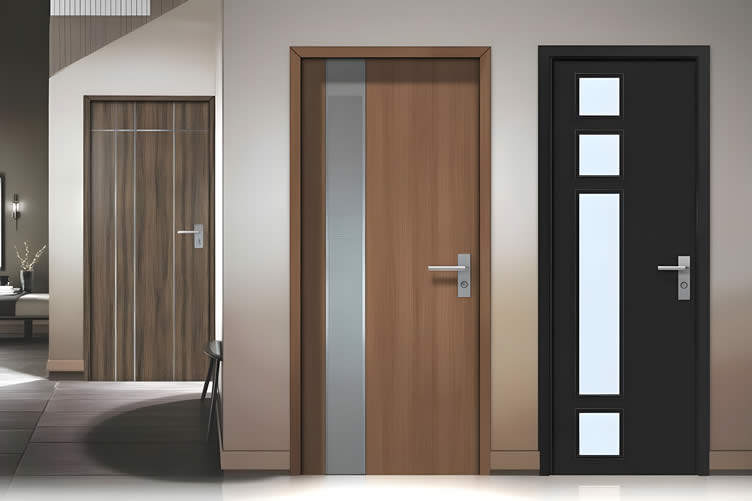
AI generated image by 123rf.com
-
-
3rd: Types of Interior Home Door Styling
When it comes to enhancing your home’s interior, choosing the right door style is a crucial yet often overlooked aspect of design. Beyond their functional purpose, interior doors contribute significantly to the aesthetic flow and architectural harmony of a home.
The right door style should reflect your personal taste, complement the existing decor, and align with your home’s overall design theme. Below, we explore some popular types of interior door styles and how they can elevate the appeal of your living spaces.
[ view images/summary table: interior door styling]
-
Classic Panel Doors[ view]
Panel doors are a timeless choice and are well-suited to a variety of interior styles, including traditional, colonial, and transitional designs. These doors are characterized by their rectangular or square panels, which can range from simple to intricate designs.
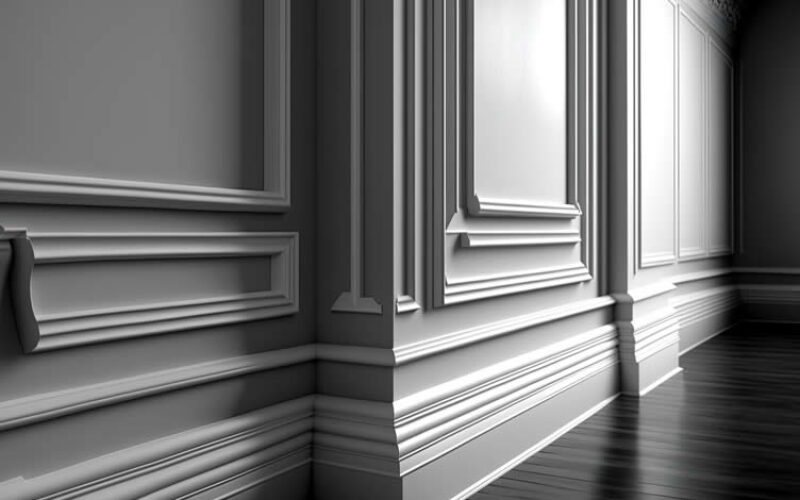
Crafted from wood or composite materials, panel doors offer a clean, sophisticated look that works well with elegant trim and molding.
Homeowners can choose from two-, four-, or six-panel configurations to create visual interest while maintaining a consistent aesthetic throughout the home.
-
Barn Doors[ view]
For those inspired by farmhouse or rustic interiors, barn doors provide an eye-catching yet functional solution. Sliding along a track rather than swinging open, barn doors are practical for saving space and adding a distinct character to rooms.
Whether crafted from reclaimed wood for a natural, weathered look or finished with a contemporary paint color for a modern twist, barn doors make a bold statement.
They are a versatile choice for spaces such as bedrooms, kitchens, or even as pantry doors.
-
French Doors[ view]
French doors bring a sense of elegance and openness to interiors, making them ideal for spaces that benefit from natural light.
With their glass panels set within a wooden or metal framework, French doors are perfect for connecting living spaces while maintaining a sense of division.
Often used for home offices, dining rooms, or entryways to patios, these doors suit a variety of styles, including classic, eclectic, and modern designs. Frosted or etched glass can add a layer of privacy while retaining their airy, luminous quality.
-
Flush Slab Doors[ view]
If your home has a minimalist or contemporary design, flush slab doors are an excellent choice. These doors feature a smooth, flat surface without any raised panels or decorative elements, creating a streamlined and modern appearance.
Constructed from materials such as MDF, solid wood, or veneer, flush slab doors are often painted or stained in neutral tones for a clean, understated look. Their simplicity makes them highly adaptable and easy to integrate into any room.
-
Louvered Doors[ view]
Louvered doors are prized for their aesthetic charm and practicality. Featuring horizontal slats, these doors allow for better airflow between rooms, making them ideal for laundry rooms, closets, or utility spaces.
They blend effortlessly into coastal, tropical, or casual interior themes, evoking a relaxed and breezy ambiance.
Additionally, louvered designs can be customized with different materials, stains, and finishes to match personal preferences and room decor.
-
Pocket Doors[ view]
Pocket doors are a stylish, space-saving solution that seamlessly disappear into a wall cavity when opened. They are an ideal option for rooms where a traditional swinging door is impractical, such as small bathrooms or tight hallways.
Available in a range of materials and finishes, pocket doors can suit transitional, modern, or even vintage-inspired homes. Their ability to provide privacy while maximizing usable space makes them a popular choice for contemporary renovations.
-
Glass or Frosted Glass Doors[ see below]
For a blend of modernity and practicality, glass or frosted glass doors provide transparency, light, and aesthetic appeal. Clear glass doors create a sense of openness and connection between spaces, perfect for modern or industrial interiors.
Frosted glass, on the other hand, offers privacy while maintaining a sleek and airy aesthetic. These doors are often used for home offices, bathrooms, or spaces where light flow is desired without compromising seclusion.
Sourcing and Citation:
- Architectural Digest. “The Best Interior Door Styles for Every Home Type.” Retrieved from www.architecturaldigest.com.
- House Beautiful. “Interior Doors That Make a Statement.” Published February 2023.
- Thompson, Jessica. “Designing for Flow and Functionality with Interior Doors.” Modern Home Journal.
- International Woodwork Association. “Guide to Door Materials and Styles.”
Door Style Description Best For Key Features Classic Panel Doors Timeless doors with rectangular or square panels, available in simple to intricate designs. Traditional, colonial, and transitional styles. Crafted from wood or composites; available in multiple panel configurations. Barn Doors Sliding doors offering rustic or modern charm, saving space and adding character. Farmhouse, rustic, or modern interiors. Can be made from reclaimed wood or painted for a contemporary look. French Doors Glass-paneled doors adding elegance and openness while maintaining division. Home offices, dining rooms, or patios. Glass options include clear, frosted, or etched; suit classic to modern styles. Flush Slab Doors Sleek, smooth-surfaced doors with a minimalist design. Contemporary or modern homes. Constructed from MDF, solid wood, or veneer; painted or stained in neutral tones. Louvered Doors Doors with horizontal slats allowing better airflow between rooms. Closets, laundry rooms, or utility spaces. Evoke a relaxed ambiance, customizable with different finishes and materials. Pocket Doors Space-saving doors that slide into wall cavities for seamless functionality. Small bathrooms, tight hallways, or space-conscious renovations. Available in various materials and finishes; maximize usable space. Glass or Frosted Glass Doors Doors made of glass offering light, transparency, and privacy. Home offices, bathrooms, or industrial interiors. Use clear glass for openness or frosted glass for privacy and style. 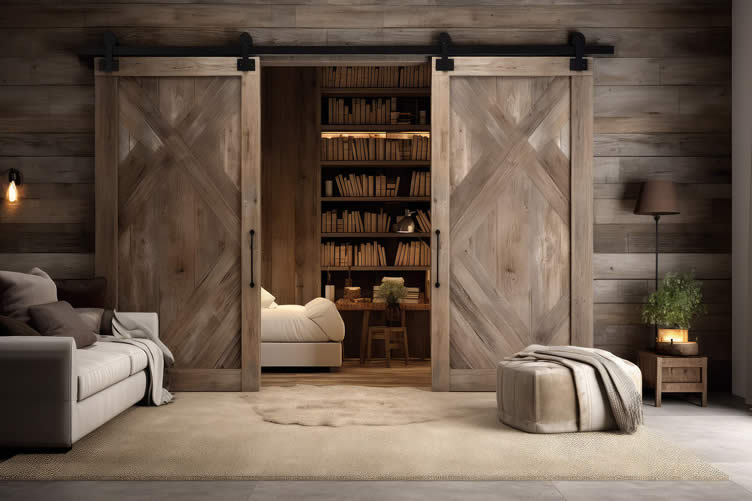
copyright image by 123rf.com
[ pinterest: how to choose interior door ]
[ youtube: Hollow Core Door Vs. Solid Core Doors ]
-
-
-
ideas to view and compare from the information discussed above
Scroll up to directory … or scroll to next section about patio/deck access doors …

Tackling home upgrades and fulfilling all your home improvement needs …

… save this curated directory of ideas for future reference.





Download this PDF for a concise summary of all you need to know about …?









Budgeting Worksheet For Costing Home Remodeling and Home Improvement Decisions
 File Type (excel)

May We Suggest Other Photo Remodeling Ideas About
“Eco-Living and Sustainability …” (new win)



third “photo remodeling” idea
copyright image by 123rf.com
Door Tip 3: Choosing the Perfect Patio/Deck Access Doors
Notes:
-
Selecting the right patio or deck access doors can truly enhance your home by connecting your indoor and outdoor spaces and defining its style, functionality, and energy efficiency. The perfect doors create a seamless flow, blending interior comforts with exterior beauty.
When choosing, it’s important to consider both the door types and their features. Options range from space-saving sliding glass doors that welcome light to elegant French doors that add sophistication.
Look for features like energy-efficient glass, secure locks, and custom finishes to meet your design preferences and practical needs. A thoughtful selection will enhance your home’s style and value while creating an inviting outdoor connection.
-
Quick scroll to supporting notes …
-
-
1st: Primary Types of Patio/Deck Access Doors
Your patio or deck access door plays a vital role in connecting your indoor space with the outdoors, providing functionality, style, and a seamless transition.
Whether you’re designing a new outdoor area or upgrading an existing one, choosing the right type of door can make a world of difference in terms of aesthetics, space utilization, and efficiency.
Below, we detail the primary types of patio and deck access doors, their features, and the unique benefits they bring to your home.
[ view images/summary table: patio/deck door types]
-
Sliding Patio Doors[ view]
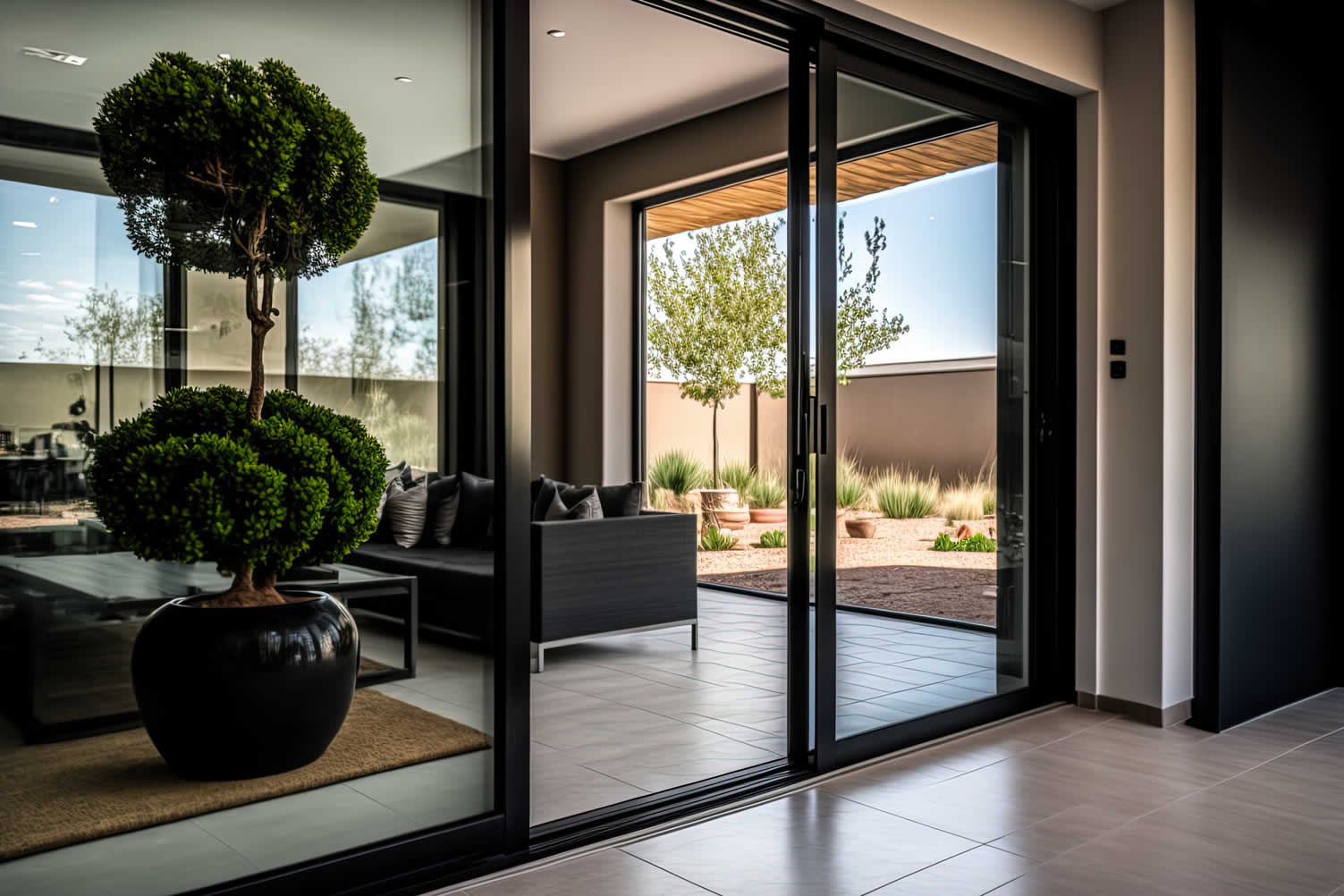
Sliding patio doors are a popular choice for homeowners who value space efficiency and an unobstructed view of the outdoors. These doors consist of large glass panels that move horizontally along a track, allowing you to open and close them with minimal effort.
Their sleek design makes them ideal for modern or minimalist homes. Sliding doors are also renowned for allowing natural light to flood into your space, creating a bright and inviting atmosphere that blurs the line between inside and outside.
Additionally, their compact functionality means no swing clearance is required, making them an excellent option for smaller patios or decks.
-
French Doors[ view]
French doors, characterized by their double-door design that swings open from the center, exude elegance and traditional charm. Perfect for adding a touch of sophistication, French doors suit a variety of design styles, from classic to contemporary.
Homeowners appreciate their ability to create a grand entryway while offering functionality and ease of use. French doors typically include glass inserts, which not only enhance the look of the doors but also maximize the flow of natural light.
These are ideal for larger decks or patios where space for the inward or outward swing is not a concern.
-
Folding (Bifold) Doors[ view]
Folding, or bifold, doors are an excellent option when you want to achieve a seamless indoor-outdoor flow with extensive opening options.
These doors consist of multiple panels joined by hinges that fold and stack neatly to one or both sides. They are a highly versatile choice, enabling homeowners to open up the full width of a doorway for ultimate connectivity to the outdoors.
Perfect for entertaining, bifold doors create a stunning transition between spaces and allow for efficient ventilation. Their contemporary design and practicality make them a sought-after choice for modern homes with expansive patio spaces.
-
Multi-Slide Doors[ view]
Multi-slide doors elevate the sliding-door concept by integrating several panels into a track system. These panels slide in sequence, with some designs allowing them to stack neatly or even disappear into a hidden pocket within the wall.
This innovation offers an unparalleled sense of openness and sophistication, making them ideal for panoramic views. Multi-slide doors are perfect for homeowners desiring a state-of-the-art solution that creates the illusion of merging the indoors and outdoors.
Their precision engineering ensures durability and smooth operation, providing a modern, luxurious feel to your home.
-
Single or Double Hinged Doors[ view]
Single or double hinged doors are a practical yet stylish choice for smaller patios or side deck entrances. These doors function similarly to standard entry doors, swinging either inward or outward depending on your preference and space availability.
Single hinged doors provide a classic and understated option for tight spaces, while double hinged doors deliver a more impactful look suitable for medium-sized entrances.
Homeowners appreciate the variety of materials and design options available, making it easy to match them to the overall architecture of the home.
-
Moving Glass Wall Systems (Liftslide/Panel Doors)[ view]
For a truly dramatic and contemporary aesthetic, moving glass wall systems offer the ultimate in design innovation. These systems feature large, precision-engineered glass panels that can lift, slide, or vanish into a hidden compartment, effectively eliminating any barriers between indoors and outdoors.
They are engineered for very large openings, making them perfect for luxurious homes that focus on creating expansive, breathtaking views.
Moving glass wall systems enhance not only the look of your space but also the lifestyle, offering cutting-edge performance for those who desire an unparalleled blend of functionality and elegance.
-
Other Considerations
When selecting a patio or deck access door, it’s crucial to evaluate your specific needs, including the size of the space, your budget, and the aesthetics you aim to achieve. Energy efficiency, material quality, and security features should also factor into your decision-making process.
Whether you’re looking for something sleek and modern or timeless and classic, there is a door type to suit every taste and requirement.
By understanding and comparing these options, you can make an informed choice that enhances the functionality, comfort, and visual appeal of your home while ensuring seamless access to your outdoor living spaces.
References:
- National Association of Home Builders. "Selecting Patio Doors to Maximize Light and Style." www.nahb.org
- International Woodwork Association. "Guide to Door Materials and Styles."
- Modern Home Journal Staff. "Connecting Indoor and Outdoor Spaces with Modern Door Solutions." Modern Home Journal.
Door Type Key Features Best For Benefits Sliding Patio Doors Large glass panels, horizontal sliding track Modern or minimalist homes, smaller patios Space-efficient, natural light, unobstructed views French Doors Double-door design, swings open from center Classic to contemporary styles, larger patios Elegant aesthetic, maximizes light flow, ease of use Folding (Bifold) Doors Multiple hinged panels, fold and stack to sides Modern homes, expansive patio spaces Ultimate indoor-outdoor connectivity, efficient ventilation Multi-Slide Doors Multiple panels, stacks or disappears into wall Homes with panoramic views Luxurious, seamless openness, precision design Single or Double Hinged Doors Standard swinging mechanism, variety of materials Smaller patios or side deck entrances Versatile design options, practical for tight spaces Moving Glass Wall Systems Large, engineered panels, lift and slide or vanish Luxurious, expansive openings Dramatic design, cutting-edge functionality, barrier-free views 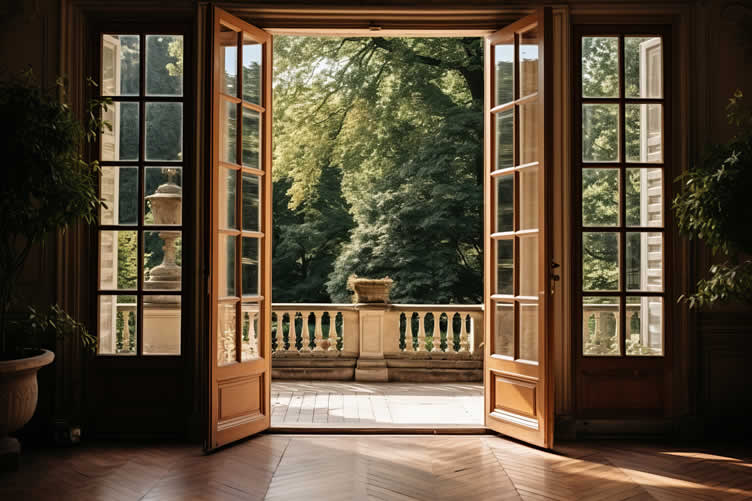
AI generated image by 123rf.com
[ pinterest: types of patio doors ]
[ youtube: Sliding Door vs French Door: Best Option ]
-
-
2nd: Patio Door Featured Options
Patio doors play a crucial role in connecting your indoor and outdoor spaces while contributing to the overall functionality, comfort, and aesthetic of your home.
With a wide array of customizable options available, selecting the right patio door can elevate your living space, offering both style and performance.
Whether you’re seeking improved energy efficiency, tailored designs, or durable materials, understanding your options is essential to making the best choice for your home.
[ view images/summary table: featured options]
-
Customization for Swing Directions
One of the most notable customization options for patio doors is the ability to choose between inward or outward swings. This feature allows homeowners to tailor the door’s functionality to meet their spatial needs.
For homes with limited indoor space or patios that demand a streamlined design, outward-swinging doors provide an ideal solution.
Conversely, inward-swinging doors work well in situations where outdoor space may be constrained, offering a seamless and convenient operation within the home.
Ensuring the swing direction aligns with your lifestyle and spatial requirements is key to achieving a functional and aesthetically pleasing design.
-
Various Frame Material Options
Patio door frames significantly influence both the longevity and appearance of your doors. Multiple frame materials are available to suit different design preferences and budget considerations.
- Vinyl frames offer a cost-effective and low-maintenance solution, making them ideal for homeowners seeking durability without sacrificing affordability.
- Aluminum frames, known for their sleek and modern look, provide exceptional strength and are particularly suited to contemporary homes.
- Wood frames, valued for their timeless elegance and warm aesthetic, offer natural beauty that complements traditional or rustic designs.
- Composite and fiberglass frames combine innovative design and durability, offering resistance to weathering while maintaining stylistic flexibility.
Selecting the right frame material ensures your patio doors perform well over time and enhance the overall design of your home.
-
Built-in Screens and Energy-Efficient Glass Options
Many patio doors now come equipped with advanced features, such as built-in screens and energy-efficient glass, to enhance their practicality and comfort.
Built-in screens provide a functional solution for allowing fresh air into your home while keeping pests outside.
These screens are often retractable, blending seamlessly into the door design when not in use. Energy-efficient glass options are another essential feature, offering improved insulation to regulate indoor temperatures and reduce energy costs.
Coated glass technologies, such as Low-E (low emissivity) glass, minimize heat transfer and prevent harmful UV rays from fading interior furnishings, providing homeowners with long-term energy savings and added protection.
These modern enhancements make patio doors not only visually appealing but also highly practical for everyday living.
References:
- National Association of Home Builders. "Selecting Patio Doors to Maximize Light and Style." www.nahb.org.
- International Woodwork Association. "Guide to Door Materials and Styles."
- Modern Home Journal Staff. "Connecting Indoor and Outdoor Spaces with Modern Door Solutions." Modern Home Journal.
Feature Details Benefits Customization for Swing Directions Choose between inward or outward swings to tailor the door’s functionality based on spatial needs. Optimizes space usage and ensures seamless integration with your interior or exterior layout. Frame Material Options Available in vinyl, aluminum, wood, composite, and fiberglass, catering to a range of design styles and budgets. Enhances durability, aesthetic appeal, and overall performance, complementing your home’s design. Built-in Screens Retractable screens integrated into the door function, allowing airflow while keeping pests out. Provides convenience, fresh air, and protection in a sleek, unobtrusive design. Energy-Efficient Glass Options Features like Low-E glass deliver improved insulation, reduce energy costs, and protect against harmful UV rays. Boosts energy efficiency, maintains comfortable indoor temperatures, and prevents damage to furnishings. 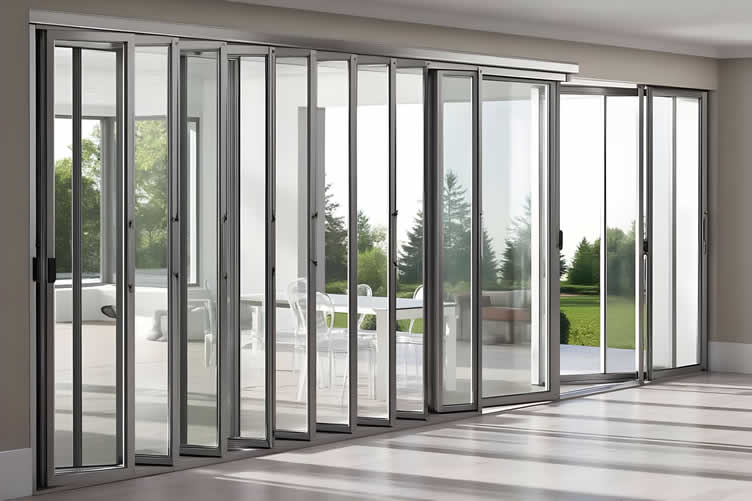
AI generated image by 123rf.com
[ youtube search: choosing right patio door ]
[ youtube: The Panoramic Patio Door System ]
-
-
-
ideas to view and compare from the information discussed above
patio door screen meshpatio door security barpatio door blinds
Scroll up to directory … or scroll to next section about home door installation …
SHARE IT ..! Someone in your network might benefit from this insightful home doors guide. Feel free to share it on Facebook, X (formally Twitter), LinkedIn, or Pinterest!


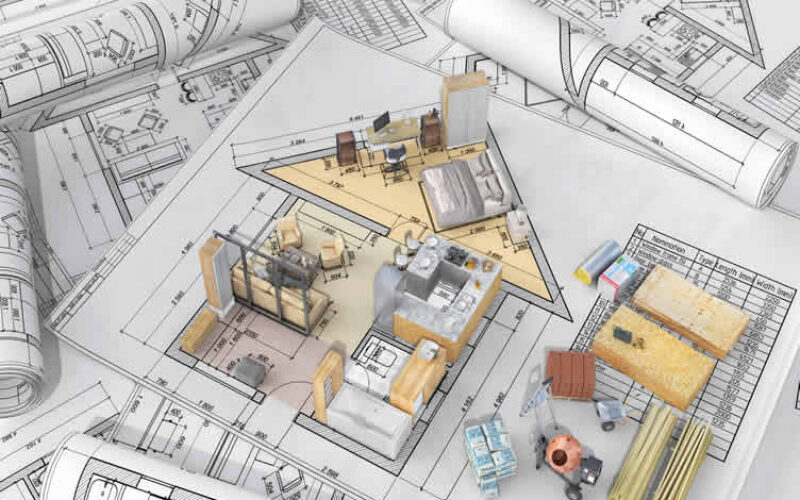
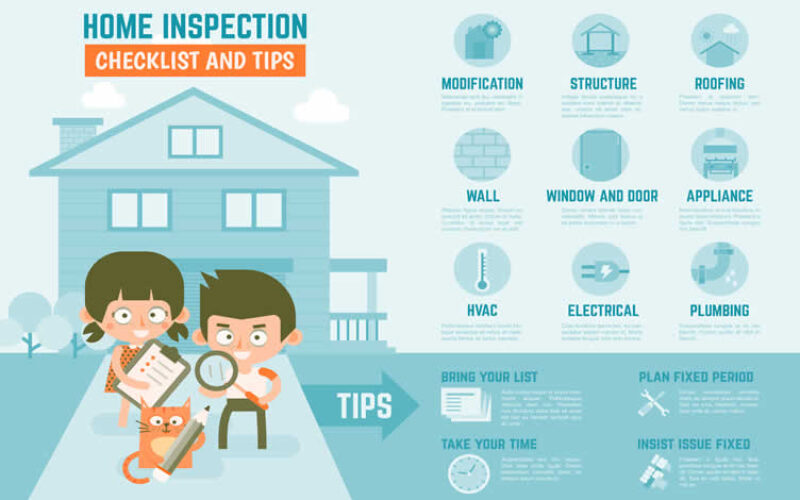

Outline the specific requirements needed for making …
… key home improvement and remodeling decisions
fourth “photo remodeling” idea
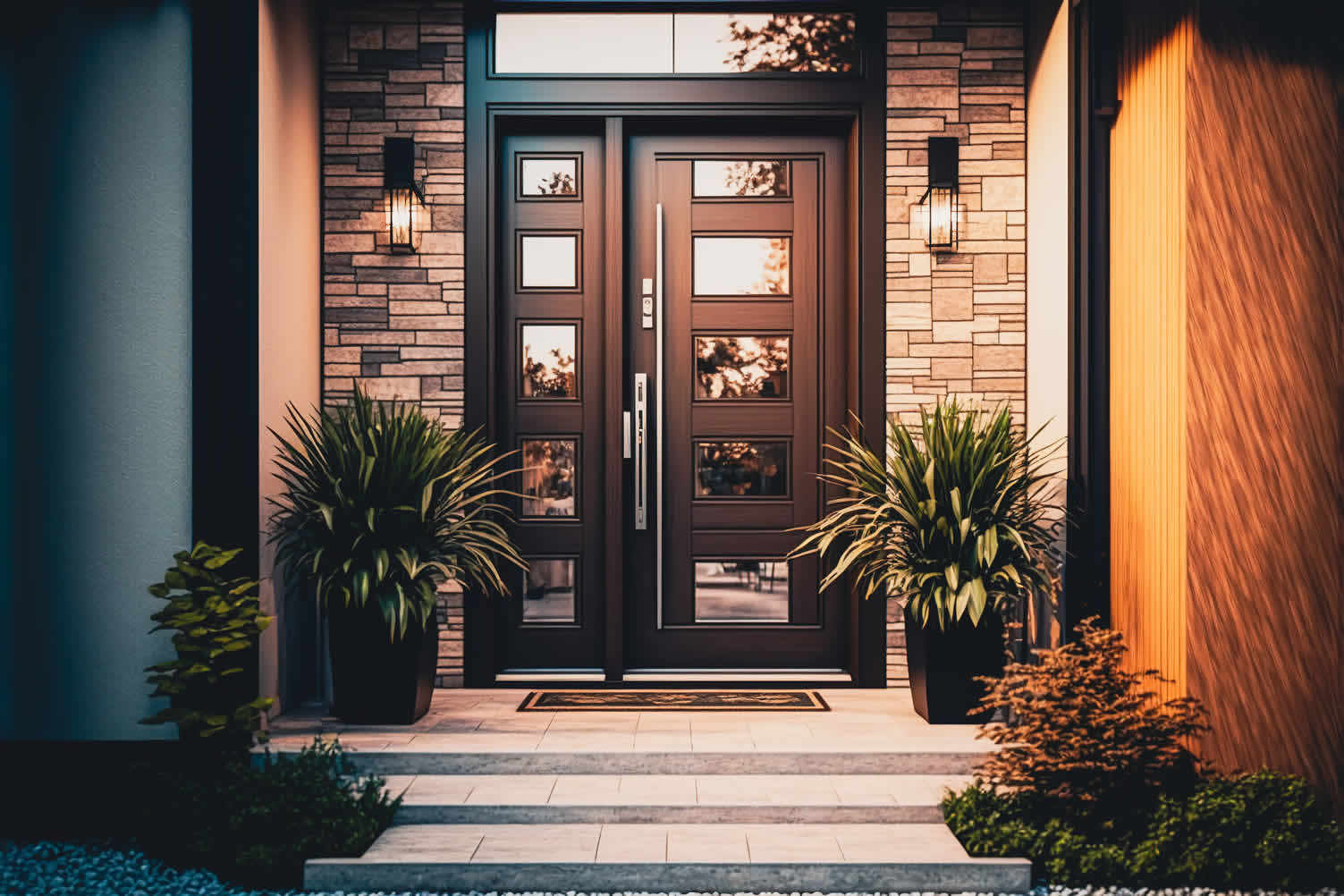
AI generated image by 123rf.com
Door Tip 4: Step-by-Step Door Installation Guide
Notes:
-
Upgrading or replacing the doors in your home can significantly elevate both its functionality and aesthetic appeal. Whether you’re enhancing your exterior entryway for improved curb appeal or refreshing your interior spaces with stylish, new doors, the process can seem daunting.
Fortunately, with the right tools, guidance, and a bit of patience, a door installation project can be a rewarding DIY endeavor. However, if you’re short on time or prefer to leave it to the experts, reaching out to a reliable professional ensures a hassle-free and high-quality outcome.
This guide will take you through a step-by-step process to install both exterior and interior doors, catered to various skill levels. From gathering the necessary tools to ensuring precise measurements, you’ll find everything you need to get started with confidence.
And for those who value convenience and perfection, we’ll also discuss how professional installation services can save time and deliver impeccable results.
Whether you’re a seasoned DIYer or new to home improvement, this resource is designed to help you create a space that fits both your vision and lifestyle.
-
Quick scroll to supporting notes …
-
-
1st: Step-by-Step Installation
… of home exterior doors
Upgrading or replacing exterior doors can significantly enhance your home’s aesthetic appeal, energy efficiency, and security.
Installing an exterior door may seem like a complex task, but with the right guidance and careful attention to detail, it can be accomplished effectively.
Below is a step-by-step guide to ensure a successful installation, whether you’re a seasoned DIYer or someone tackling this type of project for the first time.
[ view summary table: exterior door installation]
-
Preparing for the Installation[ sample view]
Before installing any type of exterior door, it is essential to start with proper preparation. This involves taking accurate measurements of the door opening, including width, height, and depth. Ensuring your new door matches these dimensions is critical for seamless installation.
Additionally, ensure you have the necessary tools and materials on hand, such as shims, a level, a drill, screws, sealant, and insulation.
Remove the existing door and frame carefully, paying attention to any surrounding materials that may need repairs or adjustments. Check for rot or damage in the sub-floor or framing, as this can compromise the stability of the new door.
Repairing a clean, level, and damage-free surface is key to ensuring the door fits securely and operates smoothly.
Summary Steps:
- Take Accurate Measurements
Measure the door opening’s width, height, and depth to ensure the new door will fit seamlessly. - Check the New Door Dimensions
Confirm that your new door matches the measured dimensions for proper installation. - Gather Necessary Tools and Materials
Prepare tools and materials such as shims, a level, a drill, screws, sealant, and insulation. - Carefully Remove the Existing Door and Frame
Remove the old door and frame with caution, being mindful of surrounding materials that may need repairs or adjustments. - Inspect for Damage
Check the sub-floor and framing for rot or structural issues. Address any damage to prevent compromising door stability. - Prepare the Surface
Ensure the installation area is clean, level, and free of damage to achieve a secure and smooth-fitting door.
- Take Accurate Measurements
-
Installing a Standard Pre-Hung Door[ sample view]
A pre-hung exterior door comes with its frame already attached, making it one of the most straightforward options for installation. Begin by applying flashing tape to the rough opening to prevent moisture penetration.
Next, carefully set the door and frame into the opening, using a level to ensure it is plumb and square. Insert shims between the frame and the wall for adjustments, paying close attention to the alignment of the door to prevent uneven gaps.
Once the door is properly aligned, secure the frame with screws through the pre-drilled holes. Insulate any gaps around the frame with low-expanding foam to improve energy efficiency while avoiding overfilling, which could warp the frame.
Finally, apply exterior-grade caulk to seal around the perimeter, ensuring a weather-tight installation.
Summary Steps:
- Prepare the Rough Opening
Apply flashing tape to the rough opening to prevent moisture from seeping into the structure. - Position the Door and Frame
Carefully set the pre-hung door and its frame into the opening. Use a level to ensure it is plumb and square. - Adjust with Shims
Insert shims between the frame and the wall to fine-tune the alignment. Ensure the door is properly aligned to avoid uneven gaps. - Secure the Frame
Use screws to secure the frame through the pre-drilled holes, ensuring the door remains properly aligned. - Insulate the Gaps
Fill any gaps between the frame and the wall with low-expanding foam. Avoid overfilling to prevent warping the frame. - Seal the Perimeter
Apply exterior-grade caulk around the perimeter of the door frame to ensure a weather-tight seal and protect the installation from the elements.
- Prepare the Rough Opening
-
Installing French Doors[ sample view]
French doors, often selected for their elegance and ability to bring natural light indoors, require special attention during installation. Begin by assembling the door frame according to the manufacturer’s instructions.
Similar to a standard door, flashing tape should be applied to protect the opening from moisture. Once the frame is in place and securely fastened, position the door panels into their respective hinges.
Ensure both panels of the French door are properly aligned and adjust as necessary using the hinges and hardware. Test the doors by opening and closing them to check for smooth operation and tight seals.
Insulate and seal around the frame as you would a standard door, taking extra care to seal the joint between the two door panels for optimal weatherproofing.
Summary Steps:
- Assemble the Door Frame
Follow the manufacturer’s instructions to assemble the door frame. - Apply Flashing Tape
Use flashing tape to protect the opening from moisture, just as you would with a standard door installation. - Secure the Frame
Position the frame into the doorway and fasten it securely. - Attach Door Panels
Place the door panels into their respective hinges. - Align the Panels
Ensure both door panels are properly aligned. Use the hinges and hardware to adjust as necessary. - Test the Doors
Open and close the doors to ensure smooth operation and tight seals. - Seal the Frame
Insulate and seal around the door frame, paying extra attention to the joint between the two panels for optimal weatherproofing.
- Assemble the Door Frame
-
Installing Sliding Glass Patio Doors[ sample view]
Sliding glass doors are an excellent choice for connecting indoor and outdoor spaces, providing a modern and functional design. To begin installation, assemble the sliding door frame if it is not pre-assembled.
Position the frame into the rough opening, ensuring it is level and square. Use shims and a level to make necessary adjustments before fastening the frame in place.
Once the frame is secured, carefully lift and insert the stationary glass panel into its designated track, followed by the sliding glass panel. Adjust the rollers on the sliding panel if needed to ensure smooth movement.
Finalize the installation by insulating gaps around the frame and applying a continuous bead of caulk on the exterior for weatherproofing. Test the doors to ensure an airtight seal and proper operation.
Summary Steps:
- Prepare the Frame
- Assemble the sliding door frame if it is not pre-assembled.
- Position the Frame
- Place the frame into the rough opening. Use shims and a level to ensure it is level and square.
- Secure the Frame
- Adjust as needed with shims to ensure proper alignment, then fasten the frame securely in place.
- Insert the Stationary Glass Panel
- Lift and insert the stationary glass panel carefully into its designated track.
- Install the Sliding Glass Panel
- Insert the sliding glass panel into its track and adjust the rollers to ensure smooth movement.
- Weatherproof the Frame
- Insulate any gaps around the frame and apply a continuous bead of caulk along the exterior for weatherproofing.
- Test the Doors
- Check the sliding doors to confirm an airtight seal and smooth, proper operation.
- Prepare the Frame
-
Finishing Touches and Safety Checks[ sample view]
After installing any exterior door, perform a thorough inspection to ensure all components are secure and correctly aligned. Test the door’s operation multiple times, checking for issues such as sticking, uneven gaps, or misalignment.
Secure any hardware, including locks and handles, to enhance both functionality and security. For ultimate protection against the elements, verify that all sealing materials are applied consistently and effectively.
Painting or staining your new exterior door, if required, is recommended to match your home’s design and provide long-term durability. Opt for finishes that are weather-resistant and compatible with the door material.
Proper installation of exterior doors not only improves your home’s curb appeal but also enhances energy efficiency and ensures safety for your household.
With patient preparation and attention to detail, this project can be a rewarding and cost-effective upgrade to any home.
Summary Steps:
- Perform a Thorough Inspection
- Check that all components are secure and correctly aligned.
- Test the door’s operation multiple times to identify any issues like sticking, uneven gaps, or misalignment.
- Verify Hardware Installation
- Ensure locks, handles, and other hardware are securely fastened.
- Confirm proper functionality to enhance security and ease of use.
- Apply Sealing Materials
- Inspect all sealing materials to ensure they are applied consistently and effectively.
- This step is crucial for protecting against the elements and maintaining energy efficiency.
- Paint or Stain the Door (if needed)
- Choose weather-resistant finishes compatible with your door material.
- Match the design to your home’s aesthetic and enhance durability.
- Enjoy the Benefits of Proper Installation
- Appreciate the improved curb appeal, energy efficiency, and added safety.
- Take pride in this rewarding and cost-effective home upgrade.
- Perform a Thorough Inspection
References:
- Carol, H. (2023). Complete Guide to Door Installation. The Home Improvement Press.
- National Association of Home Builders (NAHB). (2023). Best Practices for Exterior Door Installation.
- Energy Star. (2023). Improving Home Energy Efficiency with Proper Door Installation.
Step Description Key Tips Preparation Measure the door opening (width, height, depth) and confirm the new door matches these dimensions. Ensure tools like shims, a level, screws, sealant, and insulation are ready before starting. Removing the Old Door Carefully remove the old door and frame, paying attention to any surrounding materials needing repair. Check for sub-floor or framing damage and address any issues to ensure stability. Installing a Standard Pre-Hung Door Set the door and frame into the opening, adjust with shims, and secure the frame with screws. Use flashing tape for moisture protection and seal gaps with insulation and caulk for energy efficiency. Installing French Doors Assemble and secure the frame, align both door panels, and test for smooth operation. Ensure proper weatherproofing by sealing around the frame and between the door panels. Installing Sliding Glass Doors Position the frame, insert the stationary panel, and attach the sliding panel, adjusting for smooth movement. Seal gaps with insulation and apply caulk for a weather-tight finish. Finishing Touches Inspect alignment, hardware, and sealing materials. Paint or stain the door if needed. Use weather-resistant finishes to enhance durability and match the home’s aesthetic. 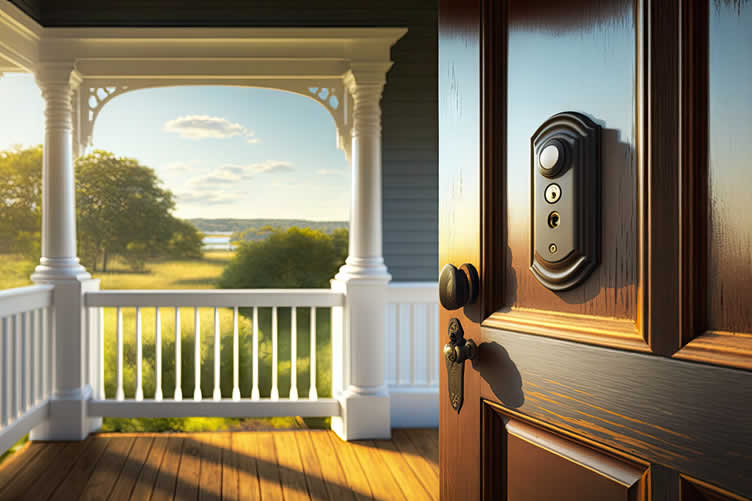
copyright image by 123rf.com
[ pinterest: exterior door installation ]
[ youtube: exterior door install ]
-
-
2nd: Step-by-Step Installation
… of home interior doors
Installing interior doors is an excellent way to refresh your home’s appearance and functionality, whether you’re replacing old doors or embarking on a new build. Proper installation ensures not only a beautiful finish but also long-lasting performance.
Below is a comprehensive guide for installing various types of home interior doors, tailored to fit your project needs and skill level.
[ view summary table: interior door installation]
-
Preparing for the Installation[ sample view]
Before beginning the installation process, assess the doorway where the door will be installed to ensure accurate measurements and plan accordingly.
Check that all required tools and materials are on hand, including a level, measuring tape, shims, screws, a screwdriver or drill, and wood filler or caulk, if needed.
Taking the time to prepare well prevents common mistakes and ensures a smoother installation process.
Summary Steps:
- Assess the Doorway
Measure the doorway where the door will be installed to ensure accurate dimensions and plan appropriately for the installation. - Gather Tools and Materials
Ensure you have all required items on hand, including:- Level
- Measuring tape
- Shims
- Screws
- Screwdriver or drill
- Wood filler or caulk (if needed)
- Prepare Thoroughly
Take the time to double-check measurements and tools to prevent common errors, setting the stage for a smoother and more efficient installation process.
- Assess the Doorway
-
Installing Pre-Hung Interior Doors[ sample view]
Pre-hung doors are a convenient option as they come with the door already attached to a frame. To begin, ensure the rough opening is clean and clear of debris.
Carefully position the pre-hung door frame into the rough opening, checking with a level to confirm the frame is plumb and evenly aligned. Once aligned, secure the frame by driving screws through the hinge-side jamb into the studs of the wall.
Use shims to adjust for gaps or unevenness, ensuring the door swings correctly and closes without resistance. After securing the screws, fill any gaps between the frame and wall with insulation or caulk to improve energy efficiency and reduce sound transmission.
Finally, attach casing or trim for a polished, professional look.
Summary Steps:
- Prepare the Opening
Ensure the rough opening is clean and free of debris before starting. - Position the Door Frame
Place the pre-hung door frame into the rough opening carefully, making sure it is properly aligned. - Check Alignment
Use a level to confirm that the frame is plumb (vertically straight) and evenly aligned. - Secure the Frame
Attach the frame by driving screws through the hinge-side jamb into the wall studs. - Adjust with Shims
Use shims to fill gaps or fix uneven areas, ensuring the door swings smoothly and closes properly. - Seal the Gaps
Fill any spaces between the frame and the wall with insulation or caulk to improve energy efficiency and minimize sound transmission. - Add Finishing Touches
Attach casing or trim around the door frame for a polished and professional appearance.
- Prepare the Opening
-
Installing Slab Interior Doors[ sample view]
Installing a slab door requires a bit more customization but allows for greater flexibility in style and design.
Begin by measuring the door opening and trimming the slab door to fit, if necessary. Mark and install the locations for hinges, ensuring that they are level and evenly spaced.
Precisely chisel or route mortises for the hinges to ensure a flush fit. Once the hinges are attached, mount the door onto the hinge pins within the frame. Test its swing and adjust as needed by tightening or loosening the screws on the hinges.
Then, mark and cut for the doorknob and latch, using a hole saw for precise drilling. Finally, attach the hardware securely and test the door’s functionality.
Summary Steps:
- Measure the Door Opening
Measure the dimensions of the door frame and trim the slab door to fit, if necessary. - Mark and Install Hinge Locations
Mark the positions for the hinges on the door and the frame, ensuring they are level and evenly spaced. - Chisel or Route Mortises for Hinges
Use a chisel or router to create precise mortises for the hinges, allowing them to fit flush with the surface. - Attach Hinges to the Door
Securely attach the hinges to the door using screws. - Mount the Door onto the Frame
Align the hinges with the hinge pins on the frame and mount the door. Test its swing and adjust as needed by tightening or loosening the screws on the hinges. - Mark and Drill for the Doorknob and Latch
Measure and mark the locations for the doorknob and latch. Use a hole saw to drill precise holes. - Attach Hardware
Securely install the doorknob, latch, and any other hardware components. - Test Functionality
Open and close the door to ensure it swings smoothly, aligns properly, and operates as intended. Make any necessary adjustments.
- Measure the Door Opening
-
Installing Bifold Closet Doors[ sample view]
Bifold doors are a space-saving solution often used for closets. Start by measuring the track length and cutting it to fit the opening, if required.
Mount the track securely onto the top of the doorframe using screws and align it properly. Next, align the door panels and install the pivot pins and guides by following the manufacturer’s specifications.
Insert the pivot pins into the floor brackets and track, carefully adjusting the height and alignment to ensure smooth operation.
Once the panels are secured, test the doors to confirm that they open and close effortlessly. Fine adjustments can be made via the pivot pins or floor brackets.
Summary Steps:
- Measure and Cut the Track
Measure the track length and cut it to fit the door opening, if necessary. - Secure the Track
Mount the track firmly onto the top of the doorframe using screws, ensuring proper alignment. - Align Door Panels
Position the door panels and install the pivot pins and guides according to the manufacturer’s instructions. - Insert Pivot Pins
Place the pivot pins into the floor brackets and the overhead track, adjusting the height and alignment to allow smooth movement. - Test the Doors
Open and close the doors to ensure smooth operation and proper function. - Make Final Adjustments
Adjust the pivot pins or floor brackets as needed for optimal alignment and performance.
- Measure and Cut the Track
-
Installing Pocket Doors[ sample view]
For pocket doors, proper preparation is essential for a successful installation.
First, inspect the pocket door cavity or opening, ensuring it is clear and properly installed to support the sliding track. Mount the metal track securely to the top framework of the cavity or rough opening.
Attach the hanger rollers to the top of the door. Then, carefully lift the door and hang it from the rollers on the track. Adjust as needed to ensure the door slides smoothly and closes completely.
Install door guides at the bottom of the frame to maintain alignment during operation. Finally, attach the handle or recessed pull and inspect for any gaps or misalignments.
Summary Steps:
- Inspect the Cavity or Opening
Ensure the pocket door cavity or rough opening is clear and properly installed to support the sliding track. - Mount the Sliding Track
Securely attach the metal track to the top framework of the cavity or opening. - Attach Hanger Rollers
Fix the hanger rollers to the top of the door. - Hang the Door on the Track
Carefully lift the door and hang it from the rollers on the track. Adjust to ensure smooth sliding and proper closure. - Install Door Guides
Secure door guides at the bottom of the frame to maintain alignment during operation. - Attach Handle or Recessed Pull
Mount the handle or recessed pull to the door. - Final Inspection
Check for gaps, misalignments, or any irregularities and make necessary adjustments for smooth functionality.
- Inspect the Cavity or Opening
-
Post-Installation Tips[ sample view]
After installation, check each door for smooth operation, ensuring they open, close, and latch properly. Make minor adjustments to hinges, tracks, or hardware as needed.
Apply weatherstripping, caulk, or seals where necessary to minimize sound transmission and drafts. A coat of paint or stain can add the finishing touch, protecting the door and complementing your interior design.
Summary Steps:
- Check Door Operation:
Ensure each door opens, closes, and latches smoothly. - Make Adjustments:
Address any issues with hinges, tracks, or hardware for proper functionality. - Apply Sealing Materials:
Add weatherstripping, caulk, or seals to minimize drafts and sound transmission. - Finish with Paint or Stain:
Protect the door and enhance its appearance by applying a coat of paint or stain to match your interior design.
- Check Door Operation:
References and Sources:
- Carol, H. Complete Guide to Door Installation. The Home Improvement Press.
- National Association of Home Builders (NAHB). Best Practices for Door Installation.
- Energy Star. Improving Home Energy Efficiency with Proper Door Installation.
- Smith, R. Interior Doors: Styles and Installation Techniques. Doors of America Journal.
- Consult the manufacturer’s manual for specific instructions and recommendations tailored to your selected door model.
Installation Type Key Steps Tools/Materials Needed Additional Tips Pre-Hung Interior Doors - Prepare the opening
- Position and align the door frame
- Secure frame with screws and adjust using shims
- Seal gaps and attach trim
- Level
- Measuring tape
- Screws
- Shims
- Caulk or insulation
Check alignment frequently and ensure smooth door swing. Slab Interior Doors - Measure and trim the door
- Mark and install hinge locations
- Chisel or route mortises
- Attach hinges, mount door, and add hardware
- Chisel/router
- Screws
- Hole saw
- Measuring tape
- Screwdriver or drill
Double-check measurements before cutting or drilling. Bifold Closet Doors - Measure and cut the track
- Secure the track
- Install and align door panels
- Test doors and make final adjustments
- Screws
- Screwdriver or drill
- Measuring tape
Follow manufacturer guidelines carefully for smooth operation. Pocket Doors - Inspect cavity and mount the track
- Attach hanger rollers and hang the door
- Install door guides
- Attach handle and inspect for gaps
- Hanger rollers
- Metal track
- Door guides
- Screwdriver or drill
Ensure cavity is clear before mounting the track. 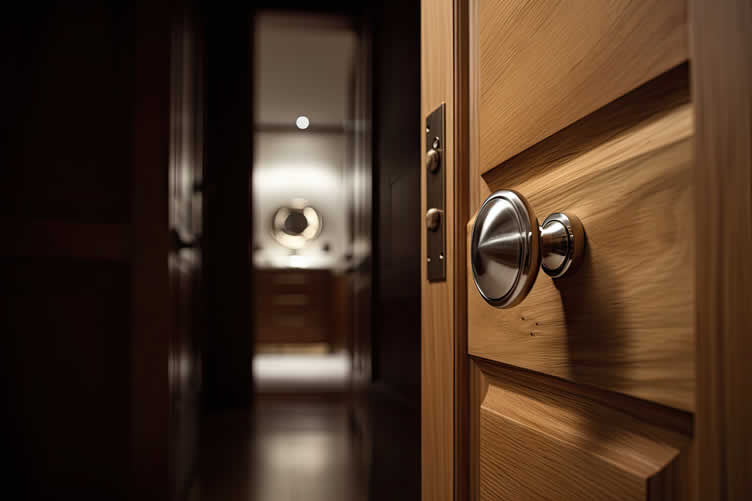
copyright image by 123rf.com
[ pinterest: interior door installation ]
[ youtube: How To Install Interior Doors ]
-
-
3rd: Find Professional Help
… for installation of exterior and interior doors
Installing doors, whether exterior or interior, plays a crucial role in your home’s functionality, energy efficiency, and aesthetic appeal.
While DIY enthusiasts may feel tempted to take on such projects themselves, hiring a professional door installer ensures precision, longevity, and compliance with industry best practices.
Given the importance of proper installation for security and performance, understanding why professional help is beneficial is worth exploring.
[ view summary table: why professional help]
-
Expertise and Precision
Professional door installers bring years of experience and technical expertise to the job, ensuring each door is fitted with precision. Doors that are improperly installed can lead to gaps, drafts, and eventual wear, compromising energy efficiency and security.
Professionals understand the nuances of aligning hinges, sealing thresholds, and installing weatherstripping to create a flawless fit that enhances both functional performance and the overall look of your home.
They are also adept at working with various door types, materials, and designs, which guarantees a result that meets your specific requirements and satisfaction.
-
Compliance with Building Codes and Standards
Compliance is a critical, often overlooked factor in door installation. Professionals are trained to follow local building codes and regulations to ensure all installations meet safety and efficiency standards.
This includes adhering to fire safety regulations, proper insulation for energy savings, and ensuring that exterior doors provide adequate security. Installing doors without this expertise risks violations, potential fines, and even insurance issues down the line.
By hiring an expert, you ensure the job is done right and in full compliance with local standards.
-
Saving Time and Minimizing Errors
Installing doors can be a time-intensive process for individuals without the necessary experience. Missteps, such as incorrect measurements, improper alignment, or failure to secure fittings correctly, can waste valuable time and resources.
Professional installers streamline the process, avoiding these common pitfalls while delivering seamless results. Their familiarity with tools and techniques means they can complete the job efficiently, saving you time and potential frustration.
-
Long-Term Cost Benefits
Though hiring a professional involves an upfront expense, it can save you money over time. Poorly installed doors may require frequent adjustments or early replacement, increasing your overall costs.
Professional installations, on the other hand, are completed with quality and durability in mind, which reduces the likelihood of future repairs or energy losses from drafts and leaks.
Additionally, many professional installers offer warranties for their work, giving you peace of mind should any issues arise post-installation.
-
Proper Tools and Techniques
Door installation requires specialized tools and techniques that the average homeowner may not have on hand. From specific measurements to sealants and leveling tools, professionals come equipped with everything necessary to ensure a precise and effective installation.
Their trained eyes can quickly identify potential challenges during the process and address them proactively, something that even advanced DIYers may miss. For particularly intricate door styles, such as sliding glass or pivot doors, professional expertise is indispensable to achieve an ideal outcome.
-
Enhancing Energy Efficiency and Security
For exterior doors, energy efficiency and security are among the top priorities. A professional installer ensures there are no air leaks, which can significantly decrease your home’s energy bills and maintain a comfortable indoor temperature throughout the year.
Advanced materials, insulation techniques, and double-checking every seal are standard practices for professionals. Additionally, experts are skilled at ensuring locks, knobs, and other security mechanisms are installed correctly to maximize safety and protection for your home.
LetsRenovate has partnered with HomeAdvisor™, a renowned provider of highly-rated, carefully-vetted local door installation contractors. Start your search here by entering your zip code to find local professionals.
References:
- Carol, H. Complete Guide to Door Installation. The Home Improvement Press.
- National Association of Home Builders (NAHB). Best Practices for Door Installation.
- Energy Star. Improving Home Energy Efficiency with Proper Door Installation.
- Smith, R. Interior Doors: Styles and Installation Techniques. Doors of America Journal.
Key Benefits Description Outcome Expertise and Precision Professionals ensure accurate installation, preventing gaps, drafts, and improper alignment. They are skilled with all types of doors and materials. Flawless fit, enhanced functionality, and aesthetic appeal. Code Compliance Installers follow local building codes, including regulations for safety, insulation, and security. Legal installation, avoiding fines and ensuring safety and efficiency. Time and Error Savings Professionals avoid common DIY mistakes like incorrect measurements, ensuring quick and seamless installation. Efficient process, saving time and resources. Long-Term Cost Benefits Proper installation minimizes future repairs, reduces energy bills, and often comes with a warranty. Durability, cost savings, and added peace of mind. Tools and Techniques Specialized tools and techniques ensure precision, particularly for complex door designs like sliding or pivot doors. Optimal results with professional-grade expertise. Energy Efficiency and Security Professionals close air leaks and correctly install locks and seals for maximum energy savings and security. Reduced energy bills and enhanced home protection. 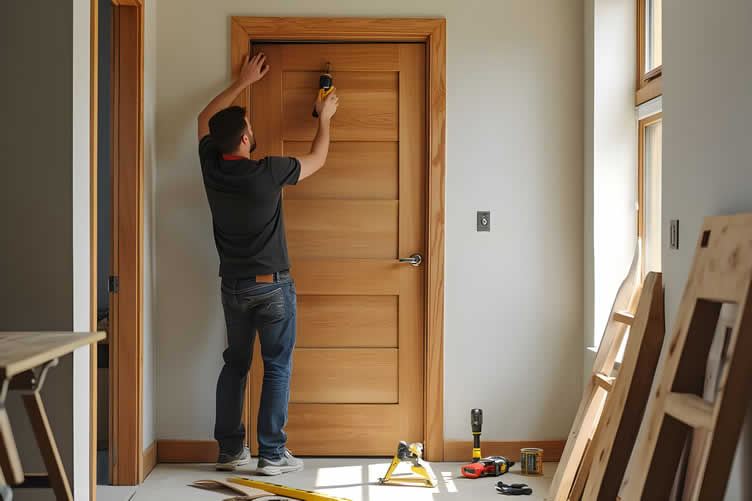
copyright image by 123rf.com
But Wait!
Before starting your search and evaluation of outdoor kitchen contractors, it is highly recommended to download and use this evaluation worksheet.
This resource will help you objectively rank and assess potential contractors, considering essential factors such as pricing, licensing, and referral information.

Evaluation Sheet
File Type: -
-
-
ideas to view and compare from the information discussed above
book: building code illustrateddoor installation kitdoor installation tools
Scroll up to directory … or scroll to next section about door knobs and handles…

Easily determine the dimensions you need for any home remodeling project …
… ensuring functionality, visual appeal, and compliance with building codes.



Download this PDF for a concise summary of all you need to know about …?





Calendar For:
Home Maintenance
File Type:
… view illustration “becoming a bank”
Find Door Services Doors Sliding Doors Garage Doors Hardware, Locks top-rated, pre-screened local contractors FREE: download contractor selection enter zip code – powered by HomeAdvisor ™
Quick Contractor Guides selecting negotiating working with inspecting

fifth and last “photo remodeling” idea
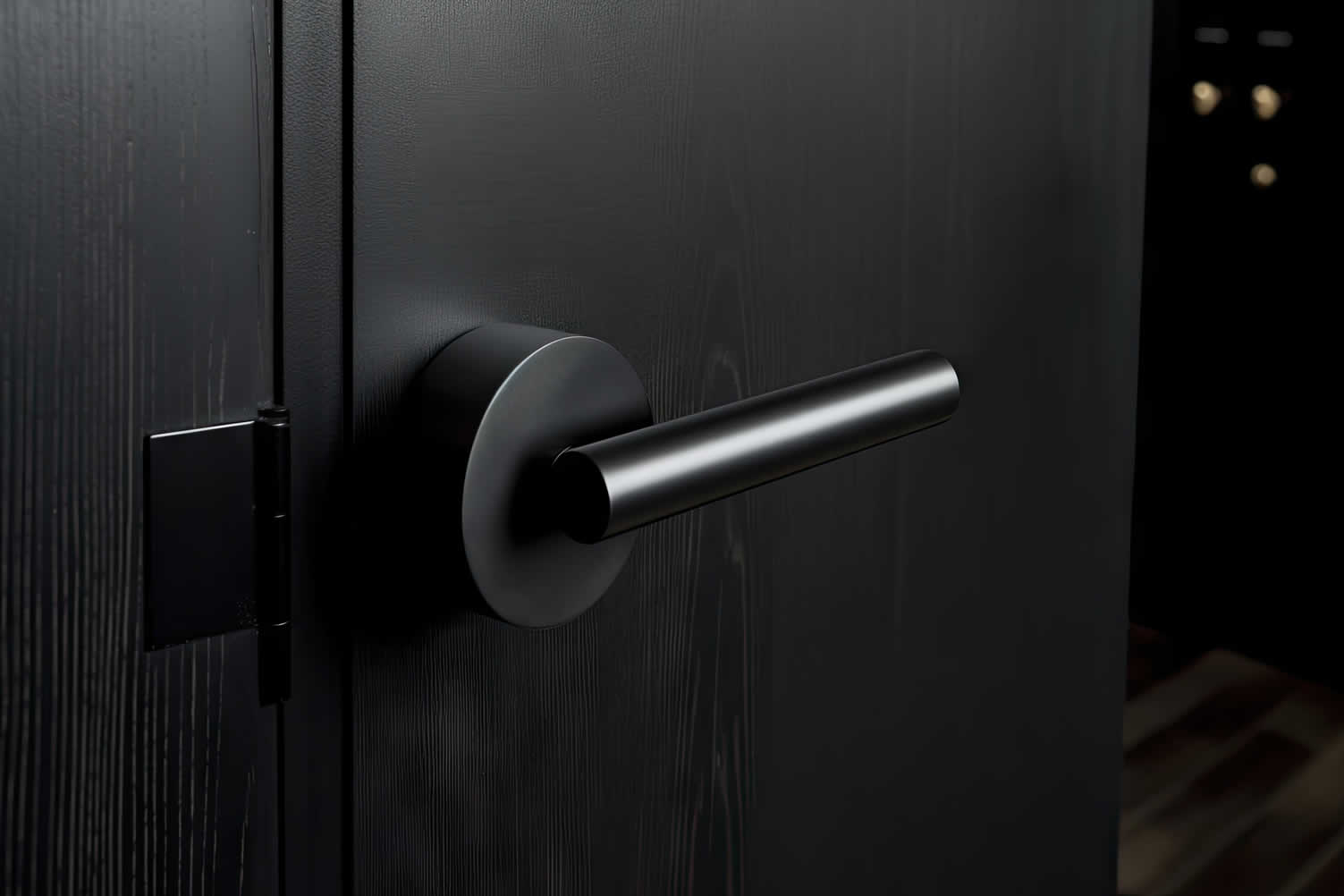

copyright image by 123rf.com
Door Tip 5: Deciding Door Knobs and Handles
Notes:
-
Selecting the right door knobs and handles for your home is a subtle yet impactful way to enhance both design and functionality. These essential hardware pieces are more than just practical components; they serve as defining accents for your home’s style and ambiance.
Whether you’re updating your entryway for a warm welcome or redesigning your interior doors to align with your decor vision, choosing the right knobs and handles can make a significant difference in both aesthetics and usability.
With so many options available, finding the perfect fit for your home’s exterior and interior doors can feel overwhelming.
From traditional designs to modern innovations like smart locks, it’s important to consider factors such as style, material, functionality, and security.
Whether you’re looking for timeless elegance, contemporary convenience, or family-friendly features, the right door hardware can enhance your home’s value and meet your unique needs.
-
Quick scroll to supporting notes …
-
-
1st: Finding the Right Door Knobs and Handles
… for home exterior doors
Selecting the perfect door knobs and handles for your home’s exterior is an essential aspect of both security and style. Exterior door hardware not only plays a critical role in protecting your home but also contributes to its overall aesthetic appeal.
Choosing the right option requires careful consideration of factors such as durability, design compatibility, ease of use, and security features.
This guide explores the variety of exterior door knobs and handles available, helping you make an informed decision that enhances both the functionality and visual charm of your home.
[ view images/summary table: exterior door knobs/handles/locks]
-
Traditional Round Door Knobs
Round door knobs are a classic choice that has been a staple in home design for decades. These knobs are known for their timeless appeal and ease of installation, making them a favored option for homeowners seeking simplicity.
Modern iterations often come equipped with advanced locking systems for added security while maintaining their familiar appearance. Round door knobs are versatile enough to complement a wide range of exterior styles, from traditional to transitional homes.
However, they may not be ideal for individuals with limited hand mobility, as their smooth surface can sometimes be difficult to grip.
-
Lever Handles
Lever handles offer a more ergonomic alternative to traditional knobs, designed for effortless operation. They are especially popular among families and individuals who prefer hardware that is accessible and practical.
Lever handles come in a variety of finishes and designs, ranging from sleek, modern aesthetics to rustic, vintage-inspired styles. This versatility ensures that you can find an option that harmonizes with the architectural style of your home.
Additionally, lever handles are a smart choice for front doors that are frequently used, due to their user-friendly design, which is both functional and visually appealing.
-
Handlesets
Handlesets are a sophisticated option for exterior doors, offering an elevated aesthetic that exudes elegance. These typically include a decorative handle paired with a thumb latch and a separate deadbolt for top-tier security.
Handlesets are available in single-cylinder and double-cylinder configurations, depending on your security needs. They often feature intricate details and high-quality materials, which make them a favorite for front entrances that aim to leave a lasting first impression.
Whether you prefer traditional designs with ornate details or sleek, minimalist styles, there is a wide variety of handlesets to suit your vision.
-
Keyless Entry Handles and Smart Locks
For modern homes, keyless entry handles and smart locks are revolutionizing what exterior door hardware can achieve. These high-tech options provide unmatched convenience, security, and innovation.
Many models offer features like keypad entry, smartphone app integration, and even biometric access. This eliminates the need for traditional keys while enhancing both security and convenience.
Smart locks and keyless systems are ideal for tech-savvy individuals who value functionality, as well as families seeking enhanced monitoring and control over their home’s entry points. These options blend seamlessly with contemporary and transitional home designs.
-
Factors to Consider When Selecting Exterior Door Hardware
When choosing door knobs or handles for your home exterior, it is essential to evaluate materials, finishes, and weather resistance.
Hardware made from durable materials such as stainless steel, brass, or bronze ensures longevity, while weather-resistant finishes prevent wear and tear from exposure to the elements.
Security should also be a top priority—investing in locks that meet or exceed the ANSI (American National Standards Institute) security standards is crucial. Additionally, consider how the chosen hardware complements your home’s architecture and entryway design, creating a cohesive and inviting appearance.
Selecting the right exterior door knobs and handles is about merging practicality with aesthetics. The options discussed above cater to a range of styles, security needs, and design preferences, empowering you to enhance your home’s curb appeal while ensuring it remains secure and functional.
By investing in quality hardware and keeping these considerations in mind, you can confidently refresh your home’s entrance and elevate its overall character.
References:
- American National Standards Institute (ANSI) guidelines, www.ansi.org
- Home Improvement Research Institute, "Trends in Door Hardware Selection,"
- Trusted Design Journal, "Enhancing Entryway Aesthetics,"
Type Features Design/Style Best For Traditional Round Door Knobs Timeless appeal; easy to install; advanced locking systems Versatile, complements traditional to transitional styles Classic designs, general use, and simplicity seekers Lever Handles Ergonomic and accessible; variety of finishes and designs From sleek modern to rustic vintage-inspired looks Frequent use by families; individuals preferring ease-of-use Handlesets Decorative handle with thumb latch; high-quality materials Elegant, intricate, or minimalist options Making a strong first impression; elevated aesthetics Keyless Entry Handles and Smart Locks Keypad entry, smartphone integration, biometric access Seamless with contemporary and transitional designs Tech-savvy individuals; families wanting advanced security 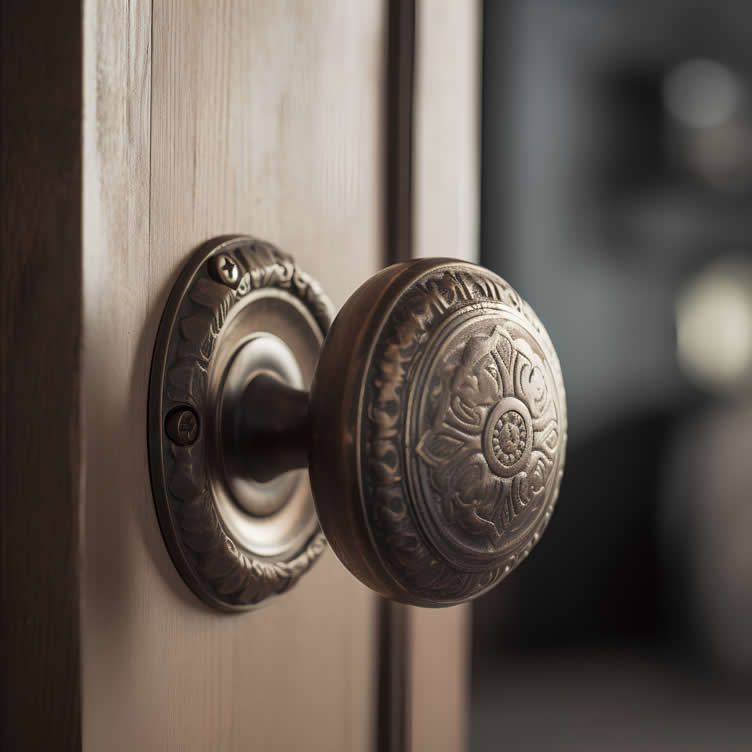
AI generated image by 123rf.com
[ pinterest: selecting door knob and level ]
[ youtube: Doorknob Installation Secrets From A Pro (How To) ]
-
-
2nd: Finding the Right Door Knobs and Handles
… for home interior doors
Interior door knobs and handles may seem like small details in the grand scope of home design, but they play an essential role in both functionality and aesthetics. Choosing the right hardware is a blend of practicality, style, and personalization that can significantly enhance a home’s interior.
From modern minimalism to classic charm, the variety of options available ensures there’s a perfect fit for every homeowner’s preference and design vision.
[ view images/summary table: door knob and handle styles]
-
Understanding Door Functionality and Placement
Selecting the appropriate knob or handle begins with understanding the function of the door it will accompany. Interior doors serve various purposes, such as dividing rooms, providing privacy, or enhancing design continuity throughout a space.
Bedroom and bathroom doors often require privacy locks, making privacy door knobs an ideal choice. Closet doors, on the other hand, may only require passage knobs or handles without the need for locks.
Additionally, understanding placement helps determine whether lever handles or traditional round knobs may feel more intuitive and accessible for daily use.
-
Classic Round Door Knobs[ view]
Round door knobs are one of the most common and versatile options for interior doors. They complement a range of design aesthetics, from traditional to transitional, and are often available in a variety of finishes such as polished brass, brushed nickel, or matte black.
These knobs are well-suited for homes aiming to retain a timeless look, and when paired with matching backplates, they can also provide a subtle decorative element.
One important aspect when selecting round knobs is ensuring they are easy to grip and turn for all household members.
-
Lever Handles for Accessibility and Style[ view]
Lever handles have gained popularity for their practicality and contemporary appeal. Unlike traditional round knobs, levers offer a sleek and modern profile and are particularly beneficial for homes with young children, elderly individuals, or anyone with mobility challenges, as they require less grip strength to operate.
Levers are available in several shapes, including straight lines for a minimalist design or curved styles for a softer, more classic look. Finishes like satin chrome or oil-rubbed bronze can further add to the aesthetic dimensions of the space while ensuring durability.
-
Glass and Crystal Knobs for Elegance[ view]
For homeowners looking to add a touch of elegance to their interior doors, glass or crystal knobs are an excellent choice. These knobs bring a refined, vintage charm to spaces and can serve as a statement piece in dining rooms or master bedroom doors.
Quality craftsmanship is important when selecting glass or crystal knobs to ensure they are resistant to chips or scratches over time. Many are paired with metal bases or antique finishes, enhancing their timeless appeal.
-
Minimalist Handles for Modern Spaces[ view]
Clean lines and understated hardware have become a staple in modern and minimalist home designs. Door handles with slim, streamlined profiles offer a functional yet stylish addition to a contemporary aesthetic.
Matte finishes, such as black or stainless steel, are particularly popular as they blend seamlessly with neutral palettes.
Opting for a concealed fix design can further enhance the door’s simplicity by eliminating visible screws for a cleaner look.
-
Considering Finishes and Durability[ view]
The finish of a door knob or handle contributes substantially to the overall style and feel of a room while also impacting its durability. Satin and brushed finishes are ideal for high-traffic interiors as they are more resistant to showing fingerprints or wear.
Shiny finishes, like polished brass or chrome, can exude sophistication but may require more upkeep to maintain their appearance.
It is crucial to select high-quality finishes that can withstand daily use while complementing other fixtures in the home, such as lighting or cabinet hardware.
-
Matching the Hardware to Your Design Vision[ see below]
For a cohesive look, interior door hardware should harmonize with the overall design theme of the home. For example, farmhouse styles may pair well with weathered natural finishes, while mid-century modern homes often favor simple, functional designs with metallic accents.
Consider coordinating knobs and handles with other elements, such as trim, furniture, and decor, to create a unified and polished appearance throughout your living spaces.
References:
- Home Depot Design Center, "How to Choose the Right Door Knobs and Levers," www.homedepot.com
- National Association of Home Builders, "Interior Door Hardware Trends," 2023 Annual Report
- Trusted Design Journal, "Modern Hardware Solutions for Every Home,"
- Architectural Digest, "Elevate Your Home with Stylish Door Hardware,"
Hardware Type Features Design Style Recommended Finishes Round Door Knobs Versatile, timeless design, easy to pair with most styles Traditional, Transitional Polished Brass, Brushed Nickel, Matte Black Lever Handles Accessible, sleek, modern profile, user-friendly for all ages Modern, Classic Satin Chrome, Oil-Rubbed Bronze Glass and Crystal Knobs Elegant, vintage charm, works as a statement piece Vintage, Refined Antique Finishes, Metal Bases Minimalist Handles Clean lines, understated, ideal for modern interiors Minimalist, Contemporary Matte Black, Stainless Steel 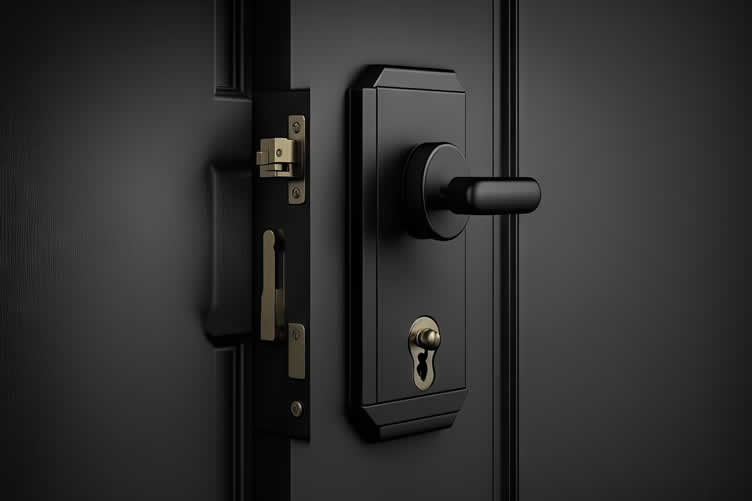
copyright image by 123rf.com
-
-
-
Conclusion:
… choosing the right doors for your home
Choosing the right doors for your home means finding a balance between style, function, budget, and maintenance. Your local climate is a major factor; humid areas need moisture-resistant doors, while places with extreme temperatures require materials that won’t warp or split.
Your security needs also play a part. You might want maximum protection or a door that balances safety with style. Energy-efficient doors are a smart investment, as they can lower your heating and cooling bills and keep your home comfortable year-round.
Maintaining a consistent style creates a harmonious feel throughout your home, though you can still choose different doors based on each room’s needs. Consulting a professional can help you sort through the options and ensure your new doors meet building codes and perform well for years to come.
-
ideas to view and compare from the information discussed above
- What comments can you share about
this home doors guide and styles for your home?
Scroll up to directory … or scroll to more home structural-related topics …
Are there any other interesting topics that might have been overlooked but could offer valuable insights …?



… home remodeling – improvement – repair
… view our sharing links below for a quick "share the knowledge"
Cover image credit: home doors guide by 123rf.com
end of post … please share it!
 |
did you find this home doors guide analysis helpful? If so, please share the article with your friends and family! |
Nice pic idea? Leave us a quick comment below.
And please share this pic idea within your social networks.