Quick Answer:
LED strip lighting has evolved from a novelty accent into a precision design and functional lighting tool. Choosing the right strip comes down to light quality (CRI, color temperature), strip type (COB, tunable white, RGB), voltage (12V vs. 24V), IP rating, and installation channel—not brand alone. This guide covers every factor needed to make the right decision.
That shift in purpose changes how you should shop for it. Brand recognition matters far less than specification knowledge. The right LED strip for under-cabinet task lighting differs meaningfully from the right strip for a cove application, and both differ from what you would choose for a staircase.
Getting those specifications wrong means living with hot spots, color that looks off, or a control system that frustrates rather than simplifies.
This guide addresses that challenge directly. It covers the main strip types, what buyers are actually looking for, how to select the right specification for your space, the best real-world applications, and the installation fundamentals that separate a professional-quality result from one that disappoints within a year.
- post content … analysis/ LED strip lighting

first “LED strip lighting” idea
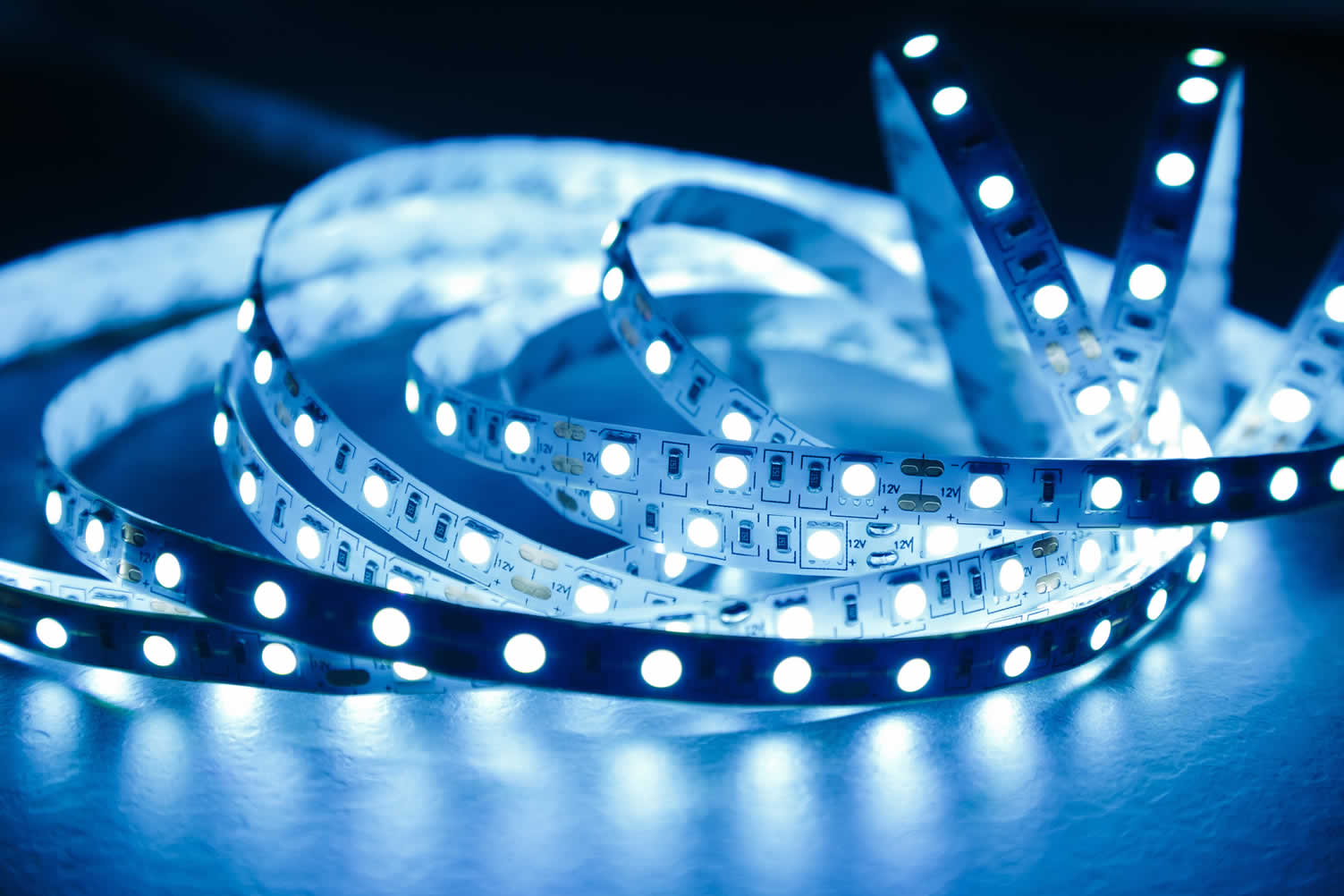

copyright image by 123rf.com
Section 1: Main LED Strip Types
Notes:
-
The LED strip market offers a surprisingly broad variety of products, each tailored to specific needs and environments. From subtle accent lighting to robust outdoor solutions, understanding the distinctions between LED strip types is essential to selecting the right fit for your project.
Choosing the wrong type can lead to inefficiencies, additional replacement costs, and an unsatisfactory lighting experience. By familiarizing yourself with the main types of LED strips, you can ensure your lighting system performs as desired while maintaining a professional and polished appearance.
Understanding LED Strip Light Types
Each category of LED strip light offers unique features that address different lighting needs. Whether you’re looking for high brightness, seamless design, adjustable color temperatures, or moisture protection, there is an LED strip type designed specifically for your purpose.
Below, we explore the most common types of LED strips and their ideal applications, allowing you to make an informed decision when selecting your lighting solution.

-
SMD 2835 – Standard White Strips[ view]
SMD 2835 LED strips are a versatile and cost-effective option for those seeking basic white lighting. These strips have efficient heat dissipation and provide bright, even illumination while consuming less energy.
They are frequently used in residential spaces, under-cabinet lighting, and accentuating architectural features. Their compact size and simple installation make them ideal for projects requiring straightforward white light solutions.
-
SMD 5050 – High-Output and RGB[ view]
SMD 5050 LED strips are known for their high brightness and versatility. Each LED diode can combine red, green, and blue light, allowing for the creation of nearly any color.
These strips are perfect for dynamic environments where customizable lighting effects are desired, such as in entertainment spaces or retail displays. Additionally, high-output white light versions of SMD 5050 are available for projects requiring intense levels of illumination.
-
COB – Chip-on-Board (Dotless)[ view]
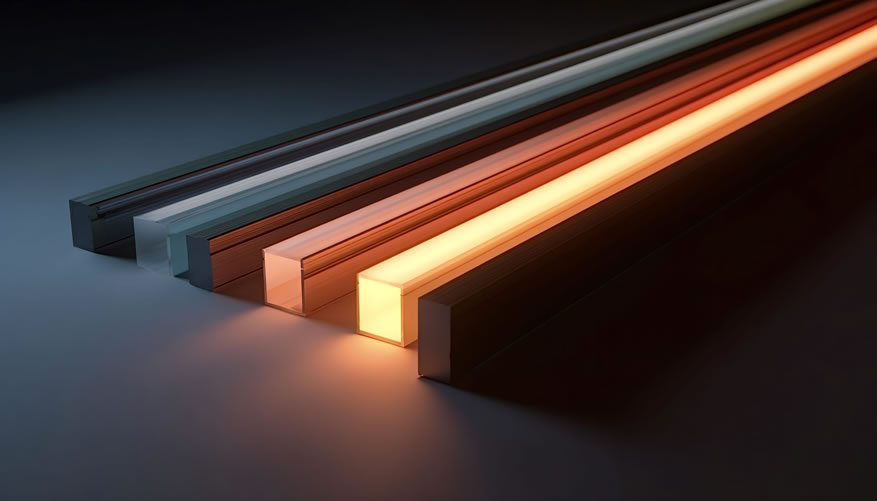
COB (Chip-on-Board) LED strips provide a seamless, dot-free appearance by packing LED chips closely together on the strip.
This results in smoother, more uniform lighting, making COB strips an excellent choice for applications where aesthetics are critical, such as on display shelves or in luxury interiors. They are also highly efficient and offer excellent light output with minimal heat production.
-
Tunable White[ view]
Tunable white LED strips allow users to adjust color temperatures to suit the mood or purpose of a space. These strips typically range from warm white (2700K) to cool white (6500K), providing unmatched flexibility for settings such as offices, kitchens, or living rooms.
By enabling users to customize the light temperature, tunable white strips help create tailored lighting environments and enhance comfort.
-
IP Ratings – Moisture Protection[ view]
Every LED strip carries an Ingress Protection (IP) rating that indicates its resistance to moisture and dust. Choosing the correct rating for the environment is not optional—it is a safety and longevity requirement.
- IP20:
Dry indoor use only—coves, cabinets, closets - IP44:
Splash-resistant—bathrooms outside the shower zone, covered outdoor areas - IP65:
Silicone-coated, dust-tight, and water-jet resistant—kitchens, wet bars, outdoor covered installations - IP67/IP68:
Fully sealed for submersible applications—pool edges, fountains, outdoor water features
- IP20:
-
12V vs. 24V Systems[ view]
The choice between a 12V and 24V LED strip is determined by the project’s power requirements and strip lengths.
While 12V systems are common for shorter installations due to their lower voltage drop, 24V systems are preferred for longer runs, as they reduce current loss and maintain consistent brightness over extended distances.
Understanding voltage requirements is crucial for achieving efficient and high-quality lighting.
More Supporting Information
(view sample images, summary table, and side note – or scroll to next topic)
LED Strip Type Description Applications SMD 2835 – Standard White Strips Versatile, cost-effective, and energy-efficient with efficient heat dissipation. Provides bright, even white light. Residential spaces, under-cabinet lighting, and accentuating architectural features. SMD 5050 – High-Output and RGB High brightness and versatile; combines red, green, and blue for customizable colors. Also available in white versions for intense illumination. Entertainment spaces, retail displays, and projects requiring customizable or high-output illumination. COB – Chip-on-Board (Dotless) Dot-free lighting with closely packed LED chips for a smooth and uniform appearance. Offers high efficiency and minimal heat production. Display shelves, luxury interiors, and applications where aesthetics are critical. Tunable White Adjustable color temperatures ranging from warm white to cool white, providing flexible lighting environments. Offices, kitchens, living rooms, and areas requiring tailored lighting for comfort and mood-setting. IP Ratings – Moisture Protection Ingress Protection ratings to indicate resistance to moisture and dust.
IP20 for dry indoor use, IP44 for splash-resistance, IP65 for water-jet resistance, and IP67/IP68 for fully sealed submersible applications.
Indoor spaces, covered outdoor areas, kitchens, bathrooms, pool edges, fountains, and wet areas. 12V vs. 24V Systems 12V suitable for shorter installations due to lower voltage drop. 24V preferred for longer runs to reduce current loss and maintain brightness. Projects with varying power requirements and strip lengths. 
Why Choose LED Strip Lighting?
With the rising costs of electricity, finding ways to save energy has become increasingly important for households everywhere.
LED strip lighting is a smart and efficient choice for illuminating your home, offering exceptional longevity and energy savings compared to traditional lighting.

By incorporating this comprehensive guide, you’ll not only learn how to maximize the benefits of LED lighting but also discover additional strategies to reduce your electricity costs and create a sustainable, comfortable living environment.
view ideas: Managing Rising Electricity Costs(new win)


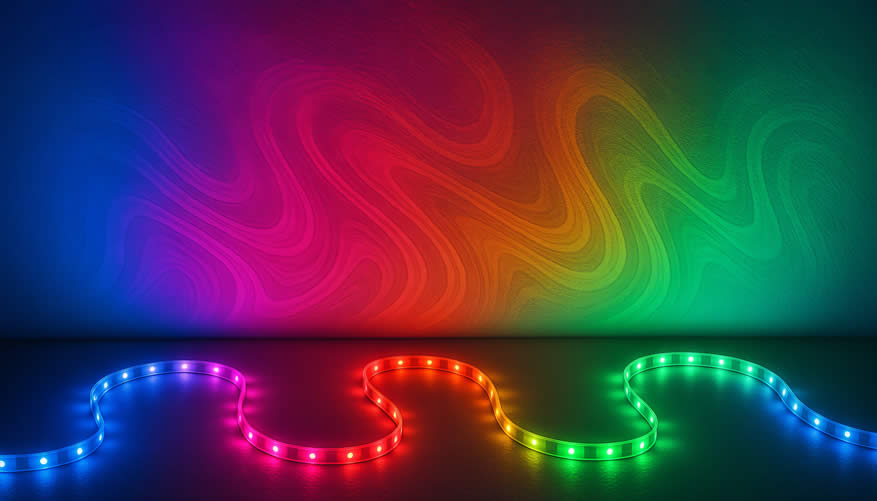
copyright image by 123rf.com
-

Scroll up to directory … or scroll to next section about: what users are seeking …


second “photo remodeling” idea
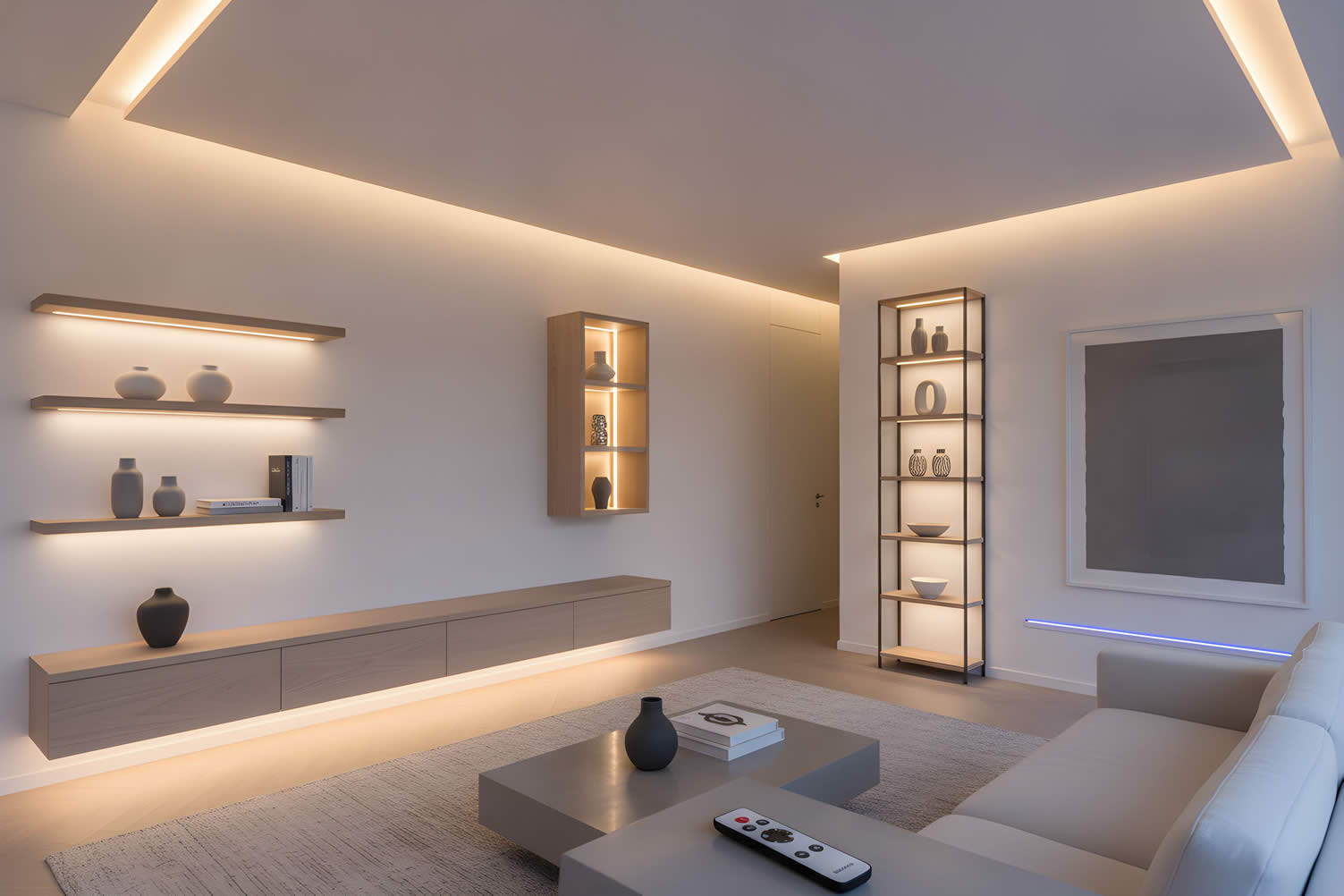
AI generated image by 123rf.com
Section 2: What Users Are Seeking in LED Strip Lighting
Notes:
-
The priorities of LED strip lighting buyers have evolved significantly in recent years. While vibrant, decorative lighting effects remain popular in certain situations, the primary demand has shifted toward practical, high-quality illumination solutions.
Today’s consumers prioritize lighting that not only enhances their spaces but also performs reliably, integrates seamlessly with modern systems, and requires minimal maintenance.
What people consistently seek now is accurate, smooth, and controllable light that adapts to their needs while offering long-term durability.
Buyers expect LED strips to be versatile enough to meet both functional and aesthetic requirements, ensuring they can achieve the desired atmosphere while maintaining energy efficiency.
Below, we explore the key aspects that modern users value most when selecting LED strip lighting solutions.
-
Functional, Concealed Illumination[ view]
Consumers increasingly look for LED strips that can provide functional light in both residential and commercial settings.
Whether it’s under-cabinet task lighting, accent illumination for architectural features, or ambient lighting for comfortable spaces, discreet installation has become a top priority.
Concealed lighting not only improves the room’s appearance by eliminating visible light sources but also creates a clean, polished look.
-
Quality Light Output[ view]
High-quality luminous output is one of the most critical factors for buyers. LED strips need to deliver consistent brightness and accurate color temperatures to suit specific areas and applications.
Whether the goal is warm, inviting light for a home or bright, neutral illumination for a workspace, buyers expect LED strips to offer flicker-free performance and excellent color rendering index (CRI) levels to showcase true colors effectively.
CRI and color temperature to consider:
- CRI 80–89:
Acceptable for general ambient lighting in low-visibility areas - CRI 90+:
Required for kitchens, bathrooms, retail, artwork, and any space where color accuracy matters - 2700K:
Warm white—residential living spaces, bedrooms, hospitality - 3000K:
Slightly crisper warm white—kitchens, dining areas - 4000K:
Neutral white—offices, workspaces, bathrooms - 5000–6500K:
Cool daylight—garages, workshops, task-intensive commercial environments
- CRI 80–89:
-
Energy Efficiency and Longevity[ view]
Energy-efficient lighting is not just an environmental consideration—it also appeals to users’ budgetary concerns. Buyers look for LED strips that consume minimal energy yet deliver maximum output, ensuring cost-effective operation over time.
Furthermore, durability and long lifespan are paramount, with high-quality LED strips designed to last for years while reducing maintenance and replacement costs.
A practical example: a 20-foot under-cabinet run using halogen puck lights draws approximately 150 watts, while an equivalent LED tape installation draws around 28 watts.
At an electricity rate of $0.30 per kWh with 8 hours of daily use, that difference translates to approximately $107 in annual savings—per installation (LED Guys, 2026). Quality strips rated at 50,000 hours last more than 17 years at 8 hours per day, making them a long-term investment rather than a consumable.
-
Smart Control and Dimming Capabilities[ view]
With the rise of smart home technology, users now expect their LED strip lighting to integrate seamlessly with advanced control systems. Smart features, such as app-based management, voice control compatibility, and custom lighting schedules, are at the forefront of consumer expectations.
The ability to dim or adjust lighting levels effortlessly adds flexibility and enhances the overall user experience.
Capabilities include:
- Voice assistant integration (Alexa, Google Home, Siri)
- App-based scheduling and scene presets
- Motion sensor activation—ideal for stairs, pantries, and secondary zones
- Circadian-rhythm programming: brighter and cooler in the morning, warmer and dimmer in the evening
- Compatibility with Lutron, Zigbee, DMX512, and Bluetooth mesh systems
-
Adaptability and Customization
Modern users value LED strips that can adapt to a variety of scenarios and be customized to suit their unique needs. This includes options for different lengths, adhesive or mounting solutions, and waterproofing for outdoor or moisture-prone environments.
The ability to tailor their lighting system ensures that buyers can create personalized, highly functional lighting designs.
More Supporting Information
(view sample images, summary table, and side note – or scroll to next topic)
Key Aspect Description Examples/Details Functional, Concealed Illumination LED strips should provide efficient lighting for residential and commercial settings while prioritizing discreet installation.
Concealed lighting enhances appearance by hiding sources and creating a polished look.
Applications include under-cabinet task lighting, architectural accent lighting, and ambient lighting for comfortable spaces. Quality Light Output High luminous output with consistent brightness and accurate color temperatures.
Buyers value flicker-free performance and high CRI levels for true color rendering.
CRI 80–89 for ambient lighting; CRI 90+ for high-accuracy areas like kitchens, retail, or artwork.
Color temperatures range from 2700K (warm white) to 6500K (cool daylight).
Energy Efficiency and Longevity Energy-efficient LED strips reduce electricity costs and offer long lifespans, making them a budget-friendly and sustainable choice for users. Example: A 20-ft halogen installation consumes ~150 watts vs. an LED installation consuming ~28 watts, saving ~$107 annually at $0.30/kWh with 8 hours/day usage. Smart Control and Dimming Capabilities Consumers expect seamless integration with smart systems, including app-based management, voice controls, and advanced dimming capabilities. Features include Alexa/Google Home integration, app-based scheduling, motion sensor activation, and compatibility with systems like Lutron and Zigbee. Adaptability and Customization Buyers seek LED strips that can be customized with options like adjustable lengths, various mounting solutions, and waterproofing for outdoor use. Tailored lighting systems allow personalized designs for diverse environments, ensuring functionality and aesthetics. The Importance of Layered Lighting
Creating a well-lit home starts with understanding how to layer lighting for both function and aesthetics.
LED strip lighting is a versatile option that adds depth and ambiance to your overall design.
Paired with ceiling fixtures, task lighting, and accent lights, strip lighting can highlight architectural features, set the mood, and illuminate key areas.
Thoughtful planning of your lighting layers ensures a warm, welcoming, and practical living space.
view ideas: Guide to Home Lighting(new win)

copyright image by 123rf.com
-
Scroll up to directory … or scroll to next section about: best applications …

Tackling home upgrades and fulfilling all your home improvement needs …

… save this curated directory of ideas for future reference.

May We Suggest Other Photo Remodeling Ideas About
“Other Home Structural Projects to Consider …” (new win)


third “photo remodeling” idea
AI generated image by 123rf.com
Section 3: Best Applications
Notes:
-
LED strip lighting reaches its maximum potential when used to address specific functional or aesthetic challenges rather than for purely decorative purposes. Its versatile nature enables it to enhance spaces by eliminating unwanted shadows, adding ambient depth, improving safety, and defining architectural features.
By carefully selecting the appropriate type of LED strips, you can achieve professional-quality illumination that meets both practical and design goals.
The following segments highlight the best applications for LED strip lighting and provide guidance on how to properly use it in each scenario.
These recommendations are rooted in expertise and focus on solving real-world lighting challenges to create spaces that are both functional and visually cohesive.
-
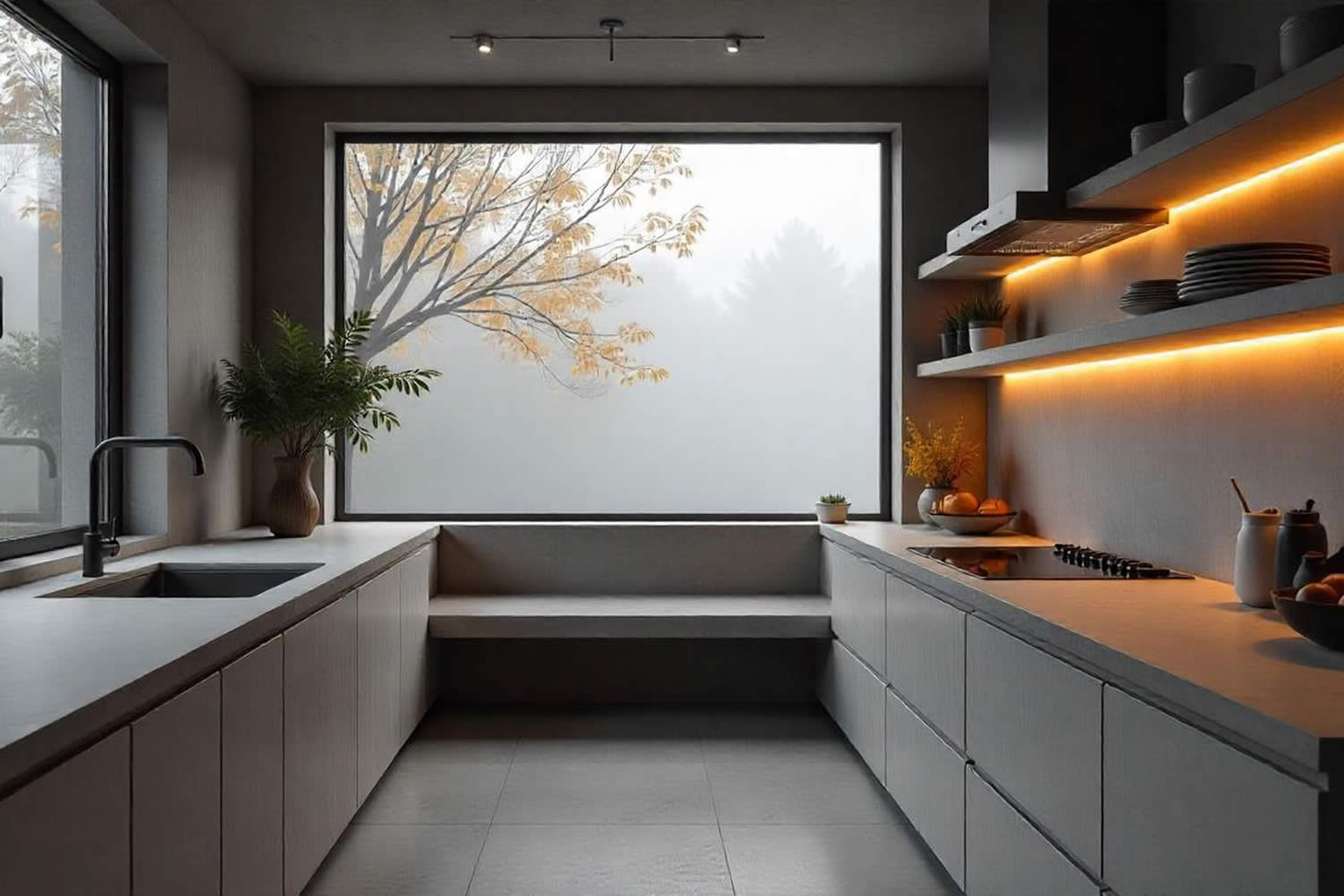
Under-Cabinet Kitchen Lighting[ view]
Under-cabinet kitchen lighting is one of the most effective uses of LED strips, offering task lighting that enhances both functionality and aesthetics. Properly installed LED strips provide uniform illumination across countertops, reducing shadows and making food preparation safer and easier.
For the best results, opt for high CRI (90+), mid-range to professional-grade LED strips with a color temperature of 2700K to 4000K, depending on the ambiance you wish to create.
Install the strips near the cabinet front lip with an aluminum channel and diffuser to ensure even light distribution and eliminate hotspots.
Summary
- Mount strips at the front third of the cabinet base to project light toward the countertop work zone
- COB strips eliminate hot spot reflections on polished stone; high-density SMD strips (120 LEDs/m) perform adequately behind frosted diffusers
- Specify 3,500K to 4,000K color temperature for task-accurate kitchen lighting; 2,700K to 3,000K for flattering bathroom vanity light
- CRI 90+ is the minimum; CRI 95 improves how food colors and skin tones render under the light
-
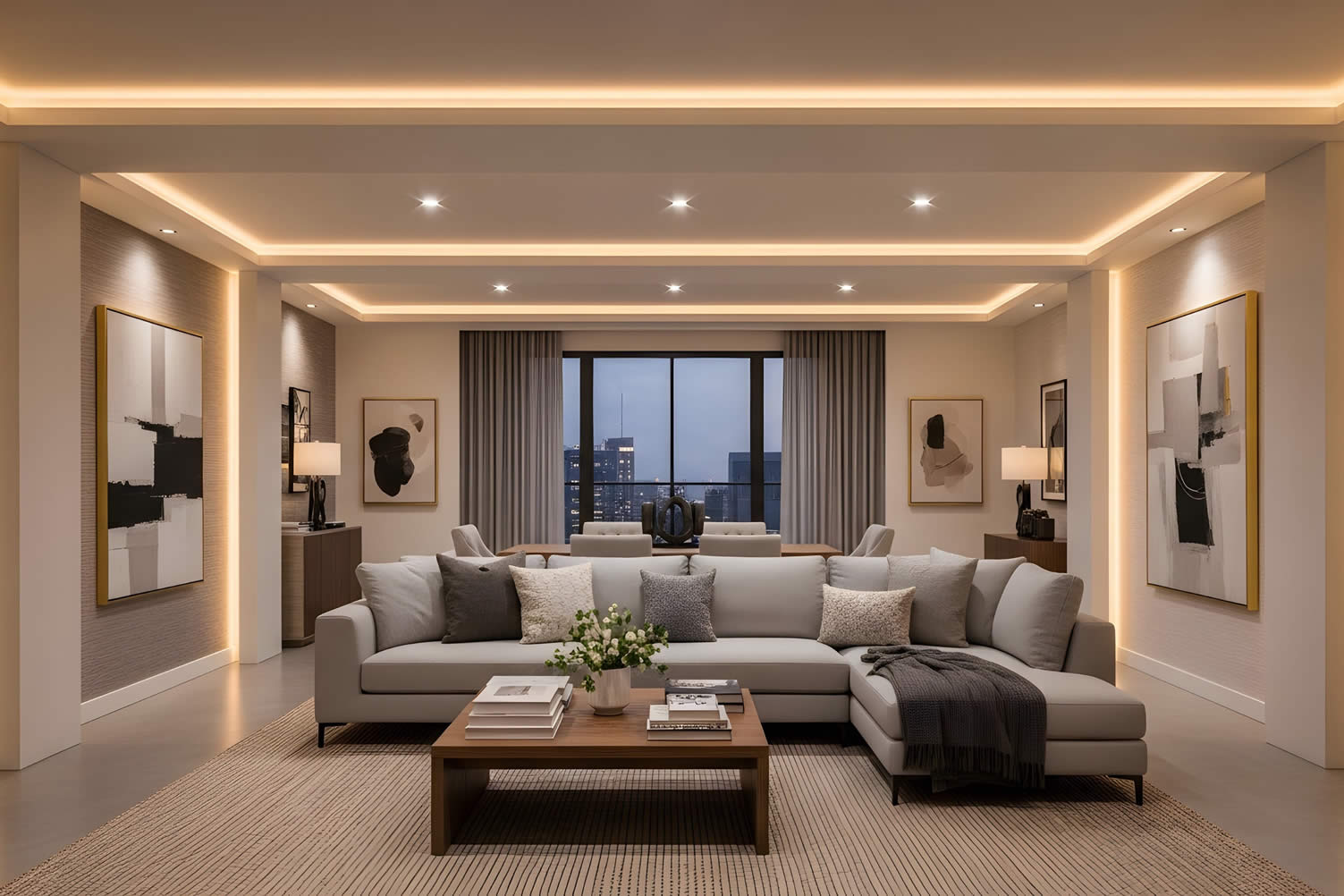
Cove and Indirect Ceiling Lighting[ view]
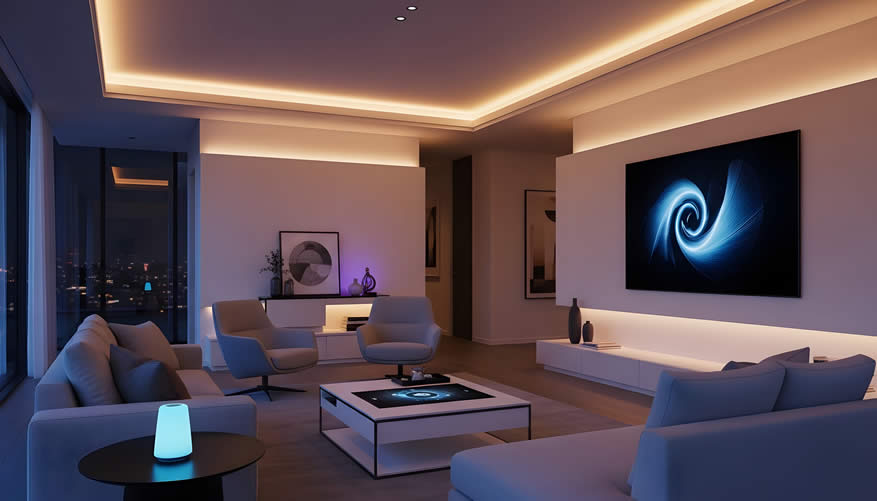
Cove lighting transforms ordinary spaces into elegant, inviting environments by creating soft, indirect illumination. LED strips installed in coves or tray ceilings emphasize architectural features while providing ambient light that elevates the room’s mood.
Use tunable white or RGBW LED strips to achieve dynamic lighting effects tailored to different occasions. A professional-grade LED strip with SDCM 3-step color consistency ensures a clean, uniform glow, while pairing it with dimmable drivers provides flexibility in brightness levels.
Summary
- COB strips are the standard specification for all cove applications—the 180-degree beam ensures even wash across ceiling and wall surfaces without scalloping or uneven gradients
- Luminous flux requirements: up to 1,000 lm/m for accent and furniture ambient lighting; up to 2,000 lm/m for room ambient lighting; up to 3,000 lm/m for cove-as-primary-source general lighting
- Place strips within the cove so emitted light reaches the reflective surface directly; lighter wall and ceiling colors amplify output and reach
- Dimming is essential—cove lighting used for general illumination requires the flexibility to drop low for evening ambiance
-
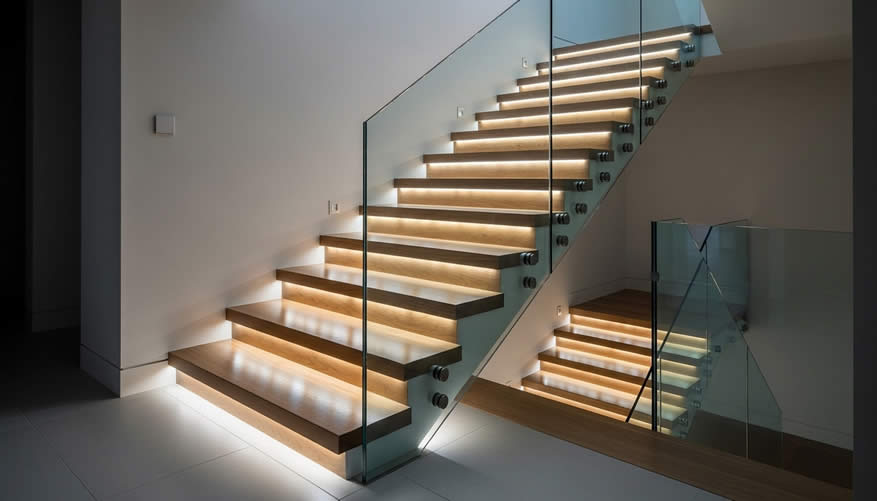
Stair and Step Lighting[ view]
LED strip lighting enhances staircases by improving visibility and safety while adding a design-forward touch. Install the strips along the underside of stair treads or handrails to achieve a modern look.
Choose LED strips with durable, high-density designs and opt for motion-activated dimming controls for convenience and energy efficiency. Ensure proper installation with aluminum channels and diffusers to protect the strips and provide consistent illumination.
Summary
- Mount strips beneath tread overhangs or inside stringer channels to illuminate each step without producing glare from below or above
- IP-rated strips (IP65 minimum) provide additional durability in high-traffic locations subject to cleaning
- Motion-sensor integration transforms staircase strips into practical safety lighting that activates automatically after dark
- Warm white (2,700K to 3,000K) maintains a residential character; neutral white (4,000K) improves step definition in commercial or contemporary settings
-
Mirror and Bathroom Vanity Lighting[ view]
Mirrors illuminated by LED strips create an even, flattering light ideal for grooming and makeup application. Position LED strips around or behind mirrors for shadow-free lighting with a high CRI of 90 or above to ensure true-to-life color rendering.
Waterproof or IP-rated LED strips are recommended for bathroom installations to ensure longevity in humid environments. Select a color temperature between 3000K and 4500K for a crisp, natural appearance.
Summary
- Rear-mounted strips create a halo effect around mirror frames, reducing harsh shadows and providing even facial illumination
- Specify high-CRI strips (90+) to ensure accurate color rendering for grooming and makeup application
- Tunable white strips—switchable between warm and cool color temperatures—allow the same fixture to function for relaxed evening use and accurate daytime grooming
- Waterproof-rated strips (IP44 or higher) are required within splash zones defined by local electrical codes
-
Architectural Millwork and Built-In Shelving[ view]
Highlighting architectural millwork, such as crown moldings or built-in shelving, is another excellent application of LED strips. Whether installed within grooves or recessed trims, LED lighting accentuates details and creates visual intrigue.
Use COB or high-density LED strips with aluminum channels for seamless, professional-grade lighting effects. Dimmer switches or smart lighting controls can further enhance convenience and design flexibility.
Summary
- Interior shelving strips draw attention to displayed objects while providing ambient fill light
- Flexible COB or high-density SMD strips navigate the interior geometry of built-ins without creating visible hot spots between individual chips
- Recessed aluminum channels set flush with shelf fronts or undersides produce the cleanest, most architectural result
- Consider motion or door-activated switching for wardrobe and cabinet interiors to add practical utility
-
Outdoor Landscape and Pool-Adjacent Applications[ view]
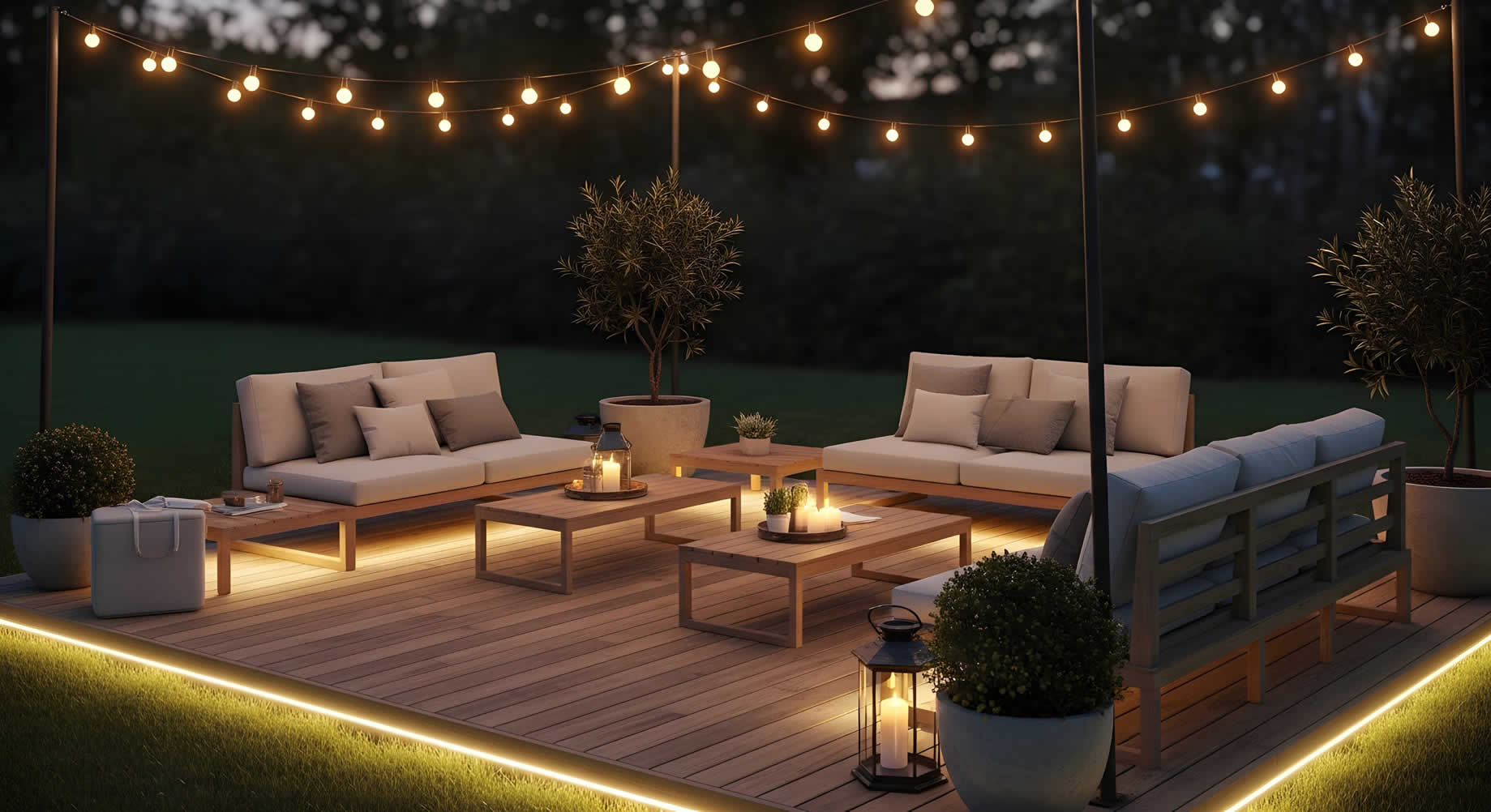
Outdoor spaces can be enriched with LED strip lighting to highlight pathways, define edges, and draw attention to landscaping elements. Use waterproof LED strips with high IP ratings (IP65 or higher) for durability against moisture, dust, and UV exposure.
For pool-adjacent applications, ensure the strips are installed within protective coverings and positioned to prevent direct water exposure while still delivering a soft glow around the area.
Warm white or RGBW options can add character and charm to outdoor settings.
Summary
- Use weatherproof LED strips with high IP ratings (IP65 or higher) to withstand exposure to moisture, dust, and debris in outdoor environments.
- Opt for low-voltage LED systems for enhanced safety in pool-adjacent areas where water exposure is likely.
- Choose RGB or color-changing LED strips to create dynamic lighting effects, enhancing the ambiance around gardens, patios, or pools.
- Install motion-sensor or dusk-to-dawn lighting for pathways and landscapes to increase safety and energy efficiency.
- Incorporate flexible LED strips to accentuate architectural features, pergolas, or water features in outdoor spaces.
- Ensure UV-resistant coatings or housings to maintain durability and prevent discoloration under prolonged sunlight exposure.
- Use dimmable LED strips to set the right mood for evening gatherings or relaxing by the pool.
-
Other Applications
Beyond these common scenarios, LED strip lighting can be used creatively in other applications such as home offices, closets, or art displays. For these specialized uses, consider the environment’s specific lighting demands and prioritize features like adjustability, color precision, and ease of installation.
Whether functional or decorative, always prioritize high-quality LED strips to ensure durability and optimal performance over time.
More Supporting Information
(view sample images, summary table, and side note – or scroll to next topic)
Application Details Recommendations Under-Cabinet Kitchen Lighting Under-cabinet kitchen lighting enhances functionality and aesthetics by providing uniform illumination across countertops, reducing shadows, and improving safety during food preparation. Use high CRI LED strips (90+), 2700K-4000K color temperature, and install with aluminum channels and diffusers to distribute light evenly.
Position near the cabinet front lip.
Cove and Indirect Ceiling Lighting Cove lighting creates soft, indirect illumination for a more elegant and inviting environment while emphasizing architectural features. Specify COB strips for even lighting, with luminous flux of up to 3000 lm/m depending on use.
Use dimmable drivers and position strips to project light onto reflective surfaces.
Stair and Step Lighting Enhances visibility and safety on staircases while adding a modern aesthetic by lighting stair treads or handrails. Install IP65-rated high-density strips under tread overhangs or in stringer channels, with motion-activated dimming controls for practical and energy-efficient lighting. Mirror and Bathroom Vanity Lighting Even, flattering light for grooming and makeup application, positioned around or behind mirrors to eliminate shadows. Use CRI 90+ LED strips with 3000K-4500K color temperature.
Select waterproof strips for bathroom use and consider tunable white strips for adjustable lighting.
Architectural Millwork and Shelving Highlights crown moldings, built-in shelving, and architectural details to create visual intrigue and seamless lighting effects. Install COB or high-density strips with aluminum channels.
Use motion or door-activated switches for added convenience in wardrobes or cabinets.
Outdoor Landscape and Pool-Adjacent Applications Adds charm and safety to outdoor spaces by highlighting pathways, landscaping, and pool areas with durable and weatherproof LED strips. Use IP65 or higher-rated LED strips for outdoor use.
Incorporate motion-sensors for energy efficiency and opt for RGB/CCT strips for dynamic effects in gardens or patios.
Other Applications LED strip lighting can also be used creatively in spaces like home offices, closets, or art displays to enhance functionality and visual appeal. Prioritize high-quality LED strips for durability, adjustability, and color precision.
Tailor the selection to meet specific lighting demands of the environment.
Automate Your LED Lighting Setup
As you install LED strip lighting throughout your home, integrating it with a central home automation hub can transform your living space.
This connection allows you to control your lighting effortlessly—turning it on or off, dimming it, adjusting colors, and even scheduling lighting changes to suit your routine.

With this setup, you’ll enjoy a seamless, customizable lighting experience that enhances your comfort and convenience while ensuring your home feels warm and welcoming at all times.
view ideas: Home Automation 101(new win)
copyright image by 123rf.com
-
Scroll up to directory … or scroll to next section about: how to choose …
SHARE IT ..! Someone in your network might benefit from this insightful post about using LED strip lighting for home illumination. Feel free to share it on Facebook, X (formally Twitter), LinkedIn, or Pinterest!


… home remodeling and improvement

fourth “photo remodeling” idea
copyright image by 123rf.com
Section 4: How to Choose the Right LED Strip Lighting
Notes:
-
Choosing the right LED strip lighting system requires thoughtful consideration of the specific needs of your application and the space where it will be installed. Each environment comes with distinct requirements, and choosing an LED strip based purely on price can lead to compromises in function, durability, or aesthetic.
Taking time to evaluate your installation location and understanding how each product caters to that space will help ensure a more tailored lighting solution that is both practical and visually appealing.
Begin by assessing the purpose of the lighting—whether it’s for ambient, task, or accent lighting—and take note of environmental factors such as exposure to moisture, temperature fluctuations, or the need for energy efficiency.
From there, align your product choices to the specific functional requirements and desired outcomes.
-
Assessing Your Space[ view]
The first step in selecting the correct LED strip lighting is to evaluate the space in which it will be installed. Indoor applications often differ greatly from outdoor ones in terms of protection requirements, brightness needs, and mounting constraints.
For instance, outdoor installations typically require waterproof or weather-resistant strips with appropriate IP (Ingress Protection) ratings, while indoor spaces might prioritize a sleek aesthetic and seamless integration.
Take measurements of the area to determine the necessary strip length, and consider whether there’s access to power sources or the need for battery-operated solutions.
Summary space allocation:
- Define the primary purpose: ambient, task, accent, or architectural
- Measure total run length and identify driver placement locations
- Determine whether the strip will be visible or fully concealed
- Note surface material: polished stone and lacquered finishes require COB strips to avoid visible dot reflections
- Assess moisture exposure and select the appropriate IP rating
- Identify whether color temperature flexibility (tunable white) is needed
-
Selecting Strip Type by Use Case[ view]
LED strip lighting options are specifically designed to meet various use cases. Accent lighting often requires flexible, low-lumen strips to highlight architectural features or artwork subtly.
On the other hand, task lighting, such as under-cabinet kitchen lighting, necessitates high-lumen strips with even light distribution to illuminate work surfaces adequately.
RGB or tunable white LED strips might be better suited for creating dynamic lighting effects in entertainment areas, allowing users to change colors or temperatures based on mood or occasion.
Summary strip use type:
- Under-cabinet task lighting:
SMD 2835 or COB, CRI 90+, 3000K–4000K, IP65, 24V - Cove or indirect ambient lighting:
COB for smooth output, 2700K–3000K, IP20 for interior - Stair and step lighting:
SMD 2835 or COB, motion-triggered control, IP44 for covered outdoor stairs - Mirror and vanity lighting:
COB or high-density SMD, CRI 95+, tunable white, IP44 minimum - Color accent and entertainment:
RGBW, app-controlled, paired with Bluetooth or Zigbee controller
- Under-cabinet task lighting:
-
Selecting Color Temperature and CRI[ view]
Color temperature, measured in Kelvin, plays a crucial role in the mood and functionality of your lighting. Warm whites (2700K–3000K) work best for cozy, relaxing environments, while cooler whites (4000K–5000K) are more suited for task-heavy or industrial-oriented spaces.
Additionally, ensure the LED strips have a high Color Rendering Index (CRI) of at least 90, as this ensures accurate color rendering, making objects appear vibrant and true to life under the lighting.
Summary color temperature and CRI:
- 2,700K to 3,000K:
Warm, relaxing; ideal for bedrooms, living rooms, and residential coves - 3,500K to 4,000K:
Neutral to cool white; best for kitchens, offices, and task-focused areas - 5,000K to 6,500K:
Daylight to cool; suited to commercial environments, studios, and spaces requiring high visual alertness - Specify CRI 90+ for all living and working environments; CRI 95+ for retail, galleries, design studios, and photography
- 2,700K to 3,000K:
-
Understanding 12V vs. 24V Systems[ view]
It’s essential to choose the correct voltage for your system, with 12V and 24V being the most common options. The 12V systems are suitable for shorter runs and lower power requirements, while 24V systems handle longer runs more efficiently with less voltage drop.
Verify the voltage compatibility of your power supply with the LED strip to optimize efficiency and prevent issues such as overheating or flickering.
Summary V systems:
- 12V:
Standard for most domestic applications; practical for runs up to approximately 5 meters from a single feed - 24V:
Preferred for commercial use and longer runs; reduces voltage drop across extended installations - Both are SELV-classified and safe for residential and commercial use under standard electrical codes
- Driver sizing formula: (W/m × total run length) + 10% buffer = minimum driver wattage required
- 12V:
-
Evaluating Control Options[ view]
LED strip lighting control comes in many forms, from simple wall dimmers to smart control systems compatible with voice assistants and apps. Consider whether you need basic brightness adjustments, color-changing options, or advanced programmable scenes.
Popular systems like Zigbee, Bluetooth mesh, and Wi-Fi-enabled controllers allow for greater customization and integration with existing smart home ecosystems.
Summary controls:
- Basic on/off:
Suitable only for utility areas where ambiance and scheduling are not priorities - Manual dimmer wall switch:
Requires compatible dimmable driver; provides simple brightness control - Wireless smart controls:
Casambi, Lutron, or native smart home platforms allow scene setting, scheduling, and remote operation - Confirm compatibility between strip, driver, and controller before purchasing—mismatched components produce flickering or non-functional dimming
- Basic on/off:
-
Choosing Installation Channels[ view]
Proper installation channels or housings provide a finished and professional appearance while improving heat dissipation and extending the lifespan of the strips.
Select aluminum channels with diffusers for areas requiring even light diffusion and enhanced durability, such as commercial spaces or under-cabinet lighting. Adhesive-backed channels may be suitable for temporary or easy-to-mount solutions.
Summary channels:
- Surface-mounted aluminum channels:
Quickest installation; suitable for retrofits to existing surfaces - Recessed channels:
Flush, seamless finish; requires routing or cutting into the substrate during construction or renovation - Corner channels:
Designed for 45-degree or 90-degree transitions in millwork and cabinetry - Diffuser selection matters:
frosted (translucent) diffusers allow higher light transmission while partially concealing LEDs; opal (milky white) diffusers provide the most uniform light and best LED concealment at a modest reduction in output
- Surface-mounted aluminum channels:
-
Budget Considerations Across Price Tiers
While budget is a determining factor for many, it is vital to balance cost with quality. Lower-priced LED strips may lack durability, brightness consistency, or advanced features, which could lead to replacement expenses over time.
Premium-grade strips, while initially more expensive, offer longer lifespans, better heat management, and features like higher CRI or tunable color temperatures.
When planning your budget, factor in not only the cost of the strips but also the accessories like power supplies, controllers, and mounting channels.
Summary price tiers:
- Entry-level:
CRI 70–80, standard density, 12V, minimal color consistency control—suitable for concealed ambient applications with low visibility requirements - Mid-range:
CRI 80–90, high density or COB, 24V, UL-listed driver—suitable for most residential functional applications - Professional-grade:
CRI 90–95+, COB or RGBW, tunable white, SDCM 3-step color consistency, 24V, aluminum channel installation—required for kitchens, retail, healthcare, and premium residential
- Entry-level:
More Supporting Information
(view sample images, summary table, and side note – or scroll to next topic)
How to Choose
(from the summary table below)
Category Details Specifications Environment/Application Choosing the Right LED Strip Lighting Requires evaluating the lighting purpose and space-specific needs for optimal results. Consider ambient, task, or accent lighting; check for durability, aesthetic factors, and energy efficiency. Any indoor or outdoor environment where tailored lighting solutions are needed. Assessing Your Space Evaluate the space, note environmental factors, measure run length, and check for visibility and power sources. Waterproof strips with IP ratings for outdoor use; smooth COB strips for polished surfaces. Indoor spaces (aesthetic integration), outdoor areas (weather resistance). Strip Type by Use Case Different strip types cater to accent, task, or dynamic lighting needs. High-lumen, CRI 90+ COB strips for tasks; RGBW strips for entertainment; motion-control for stairs. Under-cabinet in kitchens, stairs, mirrors, or entertainment areas. Color Temperature & CRI Match Kelvin ratings with the mood or function of the space. Use higher CRI for true-to-life colors. 2,700K–3,000K (warm, relaxing), 4,000K–5,000K (neutral/task); CRI 90+ preferred. Residential, commercial, galleries, or workspaces where light quality is key. Voltage Systems Choose between 12V and 24V, depending on power requirements and run lengths. 12V for shorter runs; 24V for longer runs to reduce voltage drop and optimize performance. Residential and commercial spaces requiring specific voltage system compatibility. Control Options Choose between simple on/off switches, dimmers, or advanced smart controls. Casambi, Zigbee, or Lutron systems allow programming and scene settings. Smart homes, entertainment spaces, or utility areas. Installation Channels Provide a professional finish and increase heat dissipation while extending strip lifespan. Aluminum or recessed channels with frosted/opal diffusers for durability and even light output. Under cabinets, architectural spaces, or retrofits requiring professional integration. Budget Considerations Balance cost with quality for long-term efficiency and durability. Entry-level (CRI 70–80), Mid-range (CRI 80–90), Professional-grade (CRI 90–95+). Low-budget, functional residential, or premium commercial installations. 5 Signs Your Home Needs
LED strip lighting is quickly transforming the way we illuminate our spaces, offering versatile, energy-efficient solutions for both functional and decorative purposes.
These innovative lights are perfect for enhancing kitchen countertops, creating mood lighting in entertainment areas, and even adding a sophisticated outdoor ambiance.
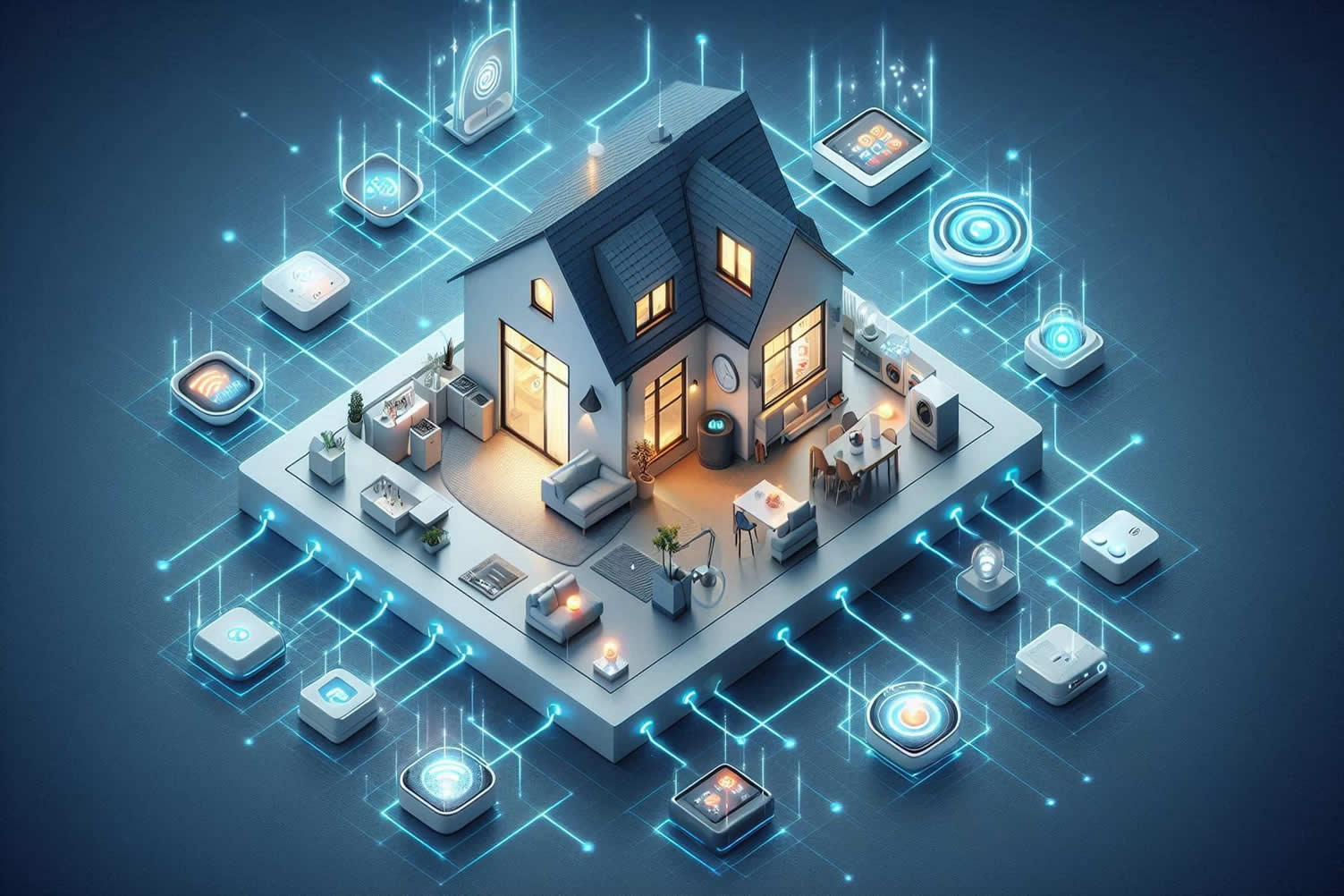
As homes evolve to accommodate advanced technologies like direct wiring to LED strips, home automation and electric vehicle charging stations, upgrading electrical systems to meet these futuristic needs becomes essential.
view ideas: an Electrical Wiring Upgrade(new win)
copyright image by 123rf.com
-
Scroll up to directory … or scroll to next section about: planning ahead…

Outline the specific requirements needed for making …

… key home improvement and remodeling decisions

Budgeting Worksheet For Costing Home Remodeling and Home Improvement Decisions
 File Type (excel)
Find Electrical Services Electricians Lighting Design Fans Generators Electronics Home Security top-rated, pre-screened local contractors FREE: download contractor selection enter zip code – powered by HomeAdvisor ™
Quick Contractor Guides selecting negotiating working with inspecting

fifth “photo remodeling” idea

copyright image by 123rf.com
Section 5: Planning Ahead
Notes:
-
The quality of an LED strip lighting installation is often determined less by the LED product itself and more by the planning, preparation, and attention to detail during installation. Key problems, such as mismatched drivers or poorly prepped surfaces, can lead to malfunctioning systems, uneven illumination, or premature failure.
By following essential best practices, you can achieve a clean, professional, and long-lasting lighting setup.
Two of the most common causes of failure in LED strip projects are underpowered or poorly matched drivers and insufficient surface preparation before adhering the strips. Fortunately, both issues are entirely preventable with the correct planning and execution.
Taking the time to understand power requirements, measure accurately, and prepare surfaces properly can make the difference between a durable and seamless result versus one prone to issues.
Below, we break down the essentials of LED strip lighting installation to guide you through the process step by step.
-
Pre-Installation Planning[ view]
Proper planning is the foundation of a successful installation. Before beginning, identify the purpose of the lighting—accent, task, or ambient illumination—as this influences your choices in brightness, color temperature, and strip type.
Assess the installation environment for factors such as accessibility, heat dissipation, and airflow, which can affect performance and longevity.
Additionally, ensure the selected LED strip is compatible with the desired control system, such as dimmers or smart home integrations.
Summary
- Confirm channel selection, diffuser type, and power supply location before purchasing strips—these decisions affect strip specification
- Map all cut points: LED strips can only be cut at designated intervals (every 10 to 50 mm for COB; every 25 to 100 mm for SMD); cutting between marked points damages the circuit
- For multi-strip runs, specify strips from the same production batch and SDCM ≤3 color binning to ensure consistent color across the full installation
- Confirm IP rating requirements: IP20 for dry interiors; IP65 for splash exposure; IP67 for submersion-risk locations
-
Take Proper Measurements[ view]
Measure the areas where the LED strips will be installed with precise attention to detail. Note any corners, gaps, or irregular shapes that may require flexible segments or connectors.
Detailed planning of the layout ensures minimal waste, maximizes illumination, and prevents interruptions caused by poor placement. Make diagrams if necessary to visualize where drivers, connectors, and power supplies will be located.
Summary
- Measure total linear run length, then add 5 to 10 percent for waste at cut points and corners
- For cove installations, calculate lumen-per-meter requirements based on room volume and intended light level before selecting strip wattage
- Mark power supply location before finalizing strip layout—longer 24V runs allow more flexibility in driver placement than 12V systems
-
Wiring and Power Supply[ view]
Matching the LED strip to a suitable driver is critical to electrical efficiency and safety. Calculate the total wattage of the strips, factoring in a 20-25% buffer to prevent overloading the driver.
Use appropriately rated wires for the voltage and verify connections are secure to avoid flickering or short circuits. If the layout is extensive, consider using multiple power supplies to avoid voltage drop in longer runs.
Summary
- Calculate driver wattage: multiply W/m by total run length, then add 10 percent buffer (Example: 9.6 W/m × 8 m = 76.8 W; minimum driver capacity = 85 W)
- Never pair a driver with a capacity smaller than the strip’s maximum power draw—undersizing creates heat buildup and fire risk
- For dimmable installations, confirm compatibility between the LED strip, driver, and dimmer control before purchasing; incompatible components produce flickering or no dimming response
- Run low-voltage wiring away from mains electrical cables where possible to avoid interference with smart control signals
-
Diffusers and Finishing[ view]
Diffusers are essential to achieve even, professional-looking lighting while protecting the LED strips from dust and physical damage. Recessed aluminum channels or surface-mount profiles combined with diffusers can eliminate harsh glare and evenly spread the light for a polished aesthetic.
Choose a diffuser type that complements the desired lighting effect, whether it’s soft glow or high brightness.
Summary
- Frosted (translucent) diffusers maintain higher light output while partially concealing individual LED chips; best for task lighting applications
- Opal (milky white) diffusers produce the most uniform light distribution and the best LED concealment; accept a modest reduction in output in exchange for a more refined appearance
- End caps seal aluminum channel terminations, creating a finished appearance and preventing dust ingress
- For recessed applications, ensure the channel sits flush with the surrounding surface before adhering or fastening permanently
-
Common Installation Mistakes to Avoid
One of the most frequent mistakes is applying LED strips to surfaces without first cleaning and prepping them. Dust or grease can weaken adhesive bonds, causing the strips to peel over time.
Avoid bending LED strips excessively as it may damage internal circuits. Additionally, ensure that electrical connections are properly insulated to reduce the risk of short circuits or accidental shocks.
Summary
- Running a driver at 100% capacity (causes overheating and early failure)
- Cutting the strip between designated cut marks (destroys the circuit)
- Relying on stock adhesive for downward-facing or high-humidity installations
- Mixing strips from different production batches without checking color consistency (look for SDCM 3-step or tighter)
- Skipping the test run before final adhesion
-
Maintenance Considerations
Routine maintenance extends the lifespan of LED strips. Inspect them periodically for dust accumulation, loosened connections, or adhesive detachment.
Keep power supplies in well-ventilated areas to prevent overheating. If a section of the strip fails, ensure you have spare strips and connectors for efficient replacements.
Summary
- Quality COB strips rated to 50,000+ L70 hours rarely require early replacement; regular surface cleaning with a dry or slightly damp cloth maintains output
- If sections of a long run begin to show reduced brightness or color shift, replace the entire run rather than individual sections—partial replacement creates visible inconsistencies
- Inspect adhesive backing on any strips not housed in aluminum channels annually; re-secure or replace sections showing signs of lifting before they fall and damage the strip or wiring
-
Professional vs. DIY Considerations
While many LED strip installations can be performed by a confident DIY enthusiast, certain projects, such as those involving complex wiring or custom architectural installations, may benefit from professional expertise.
Electricians or lighting specialists can provide precision, handle compliance with safety codes, and ensure the system integrates seamlessly with other electrical components, offering peace of mind and enhanced results.
- Research Local Experts:
Start by searching for contractors in your area with experience in driveway installation and positive reviews. - Request Recommendations:
Ask friends, family, or neighbors who have had successful driveway installations for referrals. - Check Credentials:
Ensure the contractor is licensed, insured, and certified to operate in your region. - Read Reviews and Testimonials:
Look for online reviews or request customer references to gauge satisfaction levels. - Request Multiple Quotes:
Compare quotes to evaluate pricing, services offered, and project timelines. - Inspect Past Projects:
Review photos or visit completed driveway installations to assess quality and workmanship. - Ask Questions:
Discuss materials, warranties, drainage solutions, and long-term maintenance before signing a contract.
By taking these steps, you can confidently hire a reliable driveway contractor who will transform your outdoor space while ensuring the project is completed to the highest standards.
LetsRenovate has partnered with HomeAdvisor (Angi)™, a renowned provider of highly-rated, carefully-vetted local lighting contractors. Start your search here by choosing the type of contractor you need and entering your zip code to find local professionals.
More Supporting Information
(view summary table, and side note – or scroll to conclusion)
Aspect Details Summary Pre-Installation Planning Proper planning ensures a successful LED strip installation. Determine the purpose of the lighting (accent, task, or ambient) and assess the environment for factors like accessibility, heat dissipation, and airflow. Ensure compatibility with the desired control system (e.g., dimmers or smart home integrations). Confirm channel, diffuser type, and power supply location. Identify cut points carefully, ensure consistent color by selecting strips from the same production batch, and check IP rating requirements for different environments. Wiring and Power Supply Calculate total wattage and add a 20-25% buffer to avoid overloading the driver. Secure connections and use appropriate wires to prevent flickering or short circuits. For extensive layouts, multiple power supplies may be needed to reduce voltage drop. Calculate required driver wattage accurately. Avoid undersized drivers, confirm compatibility between LED strips, drivers, and dimmers, and minimize interference by separating low-voltage and mains cables. Diffusers and Finishing Diffusers enhance aesthetics, protect LED strips, and diffuse light evenly. Pair aluminum channels with frost or opal diffusers to achieve the desired lighting effect, whether a soft glow or high brightness. Ensure a flush installation for recessed applications. Frosted diffusers maintain light output while reducing glare, while opal diffusers provide uniform illumination. End caps protect channels, and correct placement ensures professional results. Common Installation Mistakes Poor surface preparation weakens adhesive, while excessive bending damages circuits. Short circuits can result from uninsulated connections. Test the system before final installation to identify potential issues. Avoid overloading drivers, cutting strips improperly, or relying on original adhesive in challenging environments. Use strips from the same batch to maintain color consistency. Maintenance Considerations Regular inspection ensures longevity. Check for dust, loosened connections, or adhesive issues. Store power supplies in ventilated areas, and replace damaged sections promptly to maintain quality. Clean surfaces routinely, replace entire runs if brightness reduces, and inspect adhesive backing annually for non-channeled strips. Professional vs. DIY Considerations DIY enthusiasts can handle simple installations, but electricians or specialists ensure compliance with safety codes, handle complex wiring, and deliver professional results. This is ideal for larger or customized projects. Consider professional help for complex or large-scale installations to ensure precision, safety, and integration with existing systems. Installing LED Strip Lights
Installing LED strip lights is an enjoyable and rewarding DIY project, but having the right tools is key to a smooth, professional result.
Stock up on essentials like a tape measure for precise measurements, scissors or a utility knife for cutting strips, and a soldering kit or connectors for joining sections.

A voltage tester keeps everything safe, while wire strippers and electrical tape ensure clean, secure wiring.
With these basics on hand, your installation will be efficient and hassle-free.
view ideas: Complete DIY Tool Guide(new win)
copyright image by 123rf.com
But Wait!
Before searching for electrical and lighting contractors, we recommend downloading this evaluation worksheet.
Use it to objectively rank and compare potential contractors based on key factors like pricing, licensing, and references.

Evaluation Sheet
File Type: -
Scroll up to directory … or scroll to next section about: planning ahead…
Easily determine the dimensions you need for any home remodeling project …
… ensuring functionality, visual appeal, and compliance with building codes.
sixth and last “photo remodeling” idea

AI generated image by 123rf.com
Section 6: Frequently Asked Questions
Notes:
-
-
What is the difference between 12V and 24V LED strip lighting?
Both voltages are standard for LED strips, but 24V systems handle longer runs without visible dimming at the far end.
Voltage drop causes brightness to fall over distance in 12V systems, making them impractical for runs beyond about 16 feet. For most residential installations over that length, 24V is the better choice.
-
What CRI rating should I look for in kitchen LED strip lighting?
For kitchen countertop illumination, select strips with a CRI of 90 or above. This ensures that food, surfaces, and finishes appear with accurate, natural color.
Budget strips at CRI 70–80 can look flat or unflattering in task-oriented environments. For premium kitchens or retail food displays, CRI 95+ is recommended.
-
What does an IP rating mean for LED strips, and which do I need for a bathroom?
The IP (Ingress Protection) rating indicates resistance to moisture and dust. For bathrooms outside the shower zone, IP44 (splash-resistant) is the minimum requirement.
Inside or directly adjacent to the shower enclosure, IP65 or higher is required. Never install IP20-rated strips in wet or humid environments.
-
What is a COB LED strip, and when should I choose it over a standard strip?
COB (Chip-on-Board) strips mount chips in a continuous line directly on the board, producing a smooth, dotless glow without visible hotspots.
Choose COB strips for any application where the strip or the illuminated surface will be partially visible—cove channels, open shelving, mirror surrounds, or architectural details where scalloping from individual chips would be distracting.
-
What is tunable white LED strip lighting, and who needs it?
Tunable white strips contain both warm and cool white chips, allowing color temperature to shift from 2700K to 6500K under a single controller.
They are the right choice for spaces used throughout the day—kitchens, home offices, bedrooms—where shifting from alert, cool morning light to relaxed warm evening light supports comfort and circadian health.
-
Can I install LED strip lighting myself, or do I need an electrician?
Plug-in LED strip installations on accessible surfaces are suitable for DIY. Hardwired systems, new electrical circuits, outdoor wiring, or any work requiring permits should be handled by a licensed electrician.
Unpermitted electrical work can void homeowner’s insurance and create legal liability on property resale.
-
Why do LED strips fail or peel off the surface over time?
The two most common causes are inadequate surface preparation (oil, dust, or moisture prevents adhesive bonding) and relying on stock adhesive for downward-facing or high-humidity installations.
The solution is to clean surfaces thoroughly with isopropyl alcohol before installation and to use aluminum channel with mechanical mounting clips rather than adhesive alone for overhead or wet-area applications.
Question Answer What is the difference between 12V and 24V LED strip lighting? Both voltages are standard for LED strips, but 24V systems handle longer runs without visible dimming at the far end.
Voltage drop causes brightness to fall over distance in 12V systems, making them impractical for runs beyond about 16 feet.
For most residential installations over that length, 24V is the better choice.
What CRI rating should I look for in kitchen LED strip lighting? For kitchen countertop illumination, select strips with a CRI of 90 or above. This ensures that food, surfaces, and finishes appear with accurate, natural color.
Budget strips at CRI 70–80 can look flat or unflattering in task-oriented environments. For premium kitchens or retail food displays, CRI 95+ is recommended.
What does an IP rating mean for LED strips, and which do I need for a bathroom? The IP (Ingress Protection) rating indicates resistance to moisture and dust. For bathrooms outside the shower zone, IP44 (splash-resistant) is the minimum requirement.
Inside or directly adjacent to the shower enclosure, IP65 or higher is required. Never install IP20-rated strips in wet or humid environments.
What is a COB LED strip, and when should I choose it over a standard strip? COB (Chip-on-Board) strips mount chips in a continuous line directly on the board, producing a smooth, dotless glow without visible hotspots.
Choose COB strips for any application where the strip or the illuminated surface will be partially visible—cove channels, open shelving, mirror surrounds, or architectural details where scalloping from individual chips would be distracting.
What is tunable white LED strip lighting, and who needs it? Tunable white strips contain both warm and cool white chips, allowing color temperature to shift from 2700K to 6500K under a single controller.
They are the right choice for spaces used throughout the day—kitchens, home offices, bedrooms—where shifting from alert, cool morning light to relaxed warm evening light supports comfort and circadian health.
Can I install LED strip lighting myself, or do I need an electrician? Plug-in LED strip installations on accessible surfaces are suitable for DIY. Hardwired systems, new electrical circuits, outdoor wiring, or any work requiring permits should be handled by a licensed electrician.
Unpermitted electrical work can void homeowner’s insurance and create legal liability on property resale.
Why do LED strips fail or peel off the surface over time? The two most common causes are inadequate surface preparation (oil, dust, or moisture prevents adhesive bonding) and relying on stock adhesive for downward-facing or high-humidity installations.
The solution is to clean surfaces thoroughly with isopropyl alcohol before installation and to use aluminum channel with mechanical mounting clips rather than adhesive alone for overhead or wet-area applications.
-
-
Conclusion:
… building light that lasts
Well-executed LED strip lighting disappears into the architecture—a soft cove wash, purposeful under-cabinet illumination, a staircase that feels safe and considered. None of these outcomes happen by accident; they follow directly from specification decisions made before a single strip is unrolled.
Choosing the right chip technology, matching color temperature and CRI to function, sizing voltage and driver correctly, and selecting aluminum channels that protect both strip and light quality—these are the decisions that separate lasting results from frustrating ones.
Budget alternatives cut corners on exactly these specs: lower CRI, inconsistent binning, inadequate PCB copper weight, and adhesive that fails in warm or humid environments.
Quality components and careful installation planning pay returns across a decade or more of daily use. Start with the application, work backward to the specification, and you’ll build lighting that performs as beautifully as it looks.
References
- LED Guys (Jorge). The Complete Guide to LED Strip Lights in 2026. Updated May 2026. https://www.ledguyservice.com/the-complete-guide-to-led-strip-lights-in-2026
- HitLights. 2026 Lighting Trends: Smart, Personalized & Architectural Lighting Design. 2026. https://hitlights.com/blogs/premium-led-strip-lighting/2026-lighting-trends
- Simple Lighting. Modern Kitchen Lighting Ideas with Downlights and LED Strips in 2026. 2026. https://www.simplelighting.co.uk/blogs/guides/modern-kitchen-lighting-ideas-with-downlights-and-led-strips-in-2026
- KingOrnan. LED Aluminium Profile Guide 2025. Updated 2025. https://kingornan.com/led-aluminium-profile-guide-2022/
- Mingxue Lighting. (2026). COB vs CSP vs SMD LED strip lights: Complete technical buying guide for B2B lighting professionals (2026). Mingxueled.com. https://www.mingxueled.com/news/cob-vs-csp-vs-smd-led-strip-lights-complete-technical-buying-guide-for-b2b-lighting-professionals-2026/
- Ledrise. (n.d.). A comprehensive guide to cove lighting with LED strips. Ledrise.eu. https://www.ledrise.eu/blog/cove-lighting/
- U.S. Department of Energy – LED Lighting [https://www.energy.gov]
- National Electrical Code (NEC) Safety Standards
- Lighting Industry Association Guidelines (LIA)
-
ideas to view and compare from the information discussed above
book: electrical wiringwiring toolsled strip electrical connectors
- What comments can you share about
LED strip lighting that you have installed?
Scroll up to directory … or scroll to down to conclusion and references …
Scroll up to directory … or scroll to more home remodeling-related topics …

Calendar For:
Home Maintenance
File Type:


… view our sharing links below for a quick "share the knowledge"
Cover image credit: LED strip lighting by 123rf.com
end of post … please share it!
 |
did you find the review of LED strip lighting helpful? If so, please share the article with your friends and family! |
Nice pic idea? Leave us a quick comment below.
And please share this pic idea within your social networks.