Summary Outline –
Home venting systems—most homeowners walk past these features every single day without giving them so much as a second thought.
But these unassuming fixtures are quietly performing some of the most important work in your home—diligently protecting your indoor air quality, managing moisture levels, and ensuring that all your essential household systems are running safely and efficiently.
Knowing what each of these vents does, and learning how to keep them in good working order, is a simple step that can help you avoid some surprisingly costly repairs in the future.
Every home relies on a complex network of venting systems, each designed to perform a specific function. Here’s a helpful guide to help you identify the different vents on your own house and understand why each one matters.
- post content … analysis/ home venting systems

first “home venting systems” idea

copyright image by 123rf.com
Section 1: Plumbing Stack Vents: What You Should Know
Notes:
-
Quick answer:
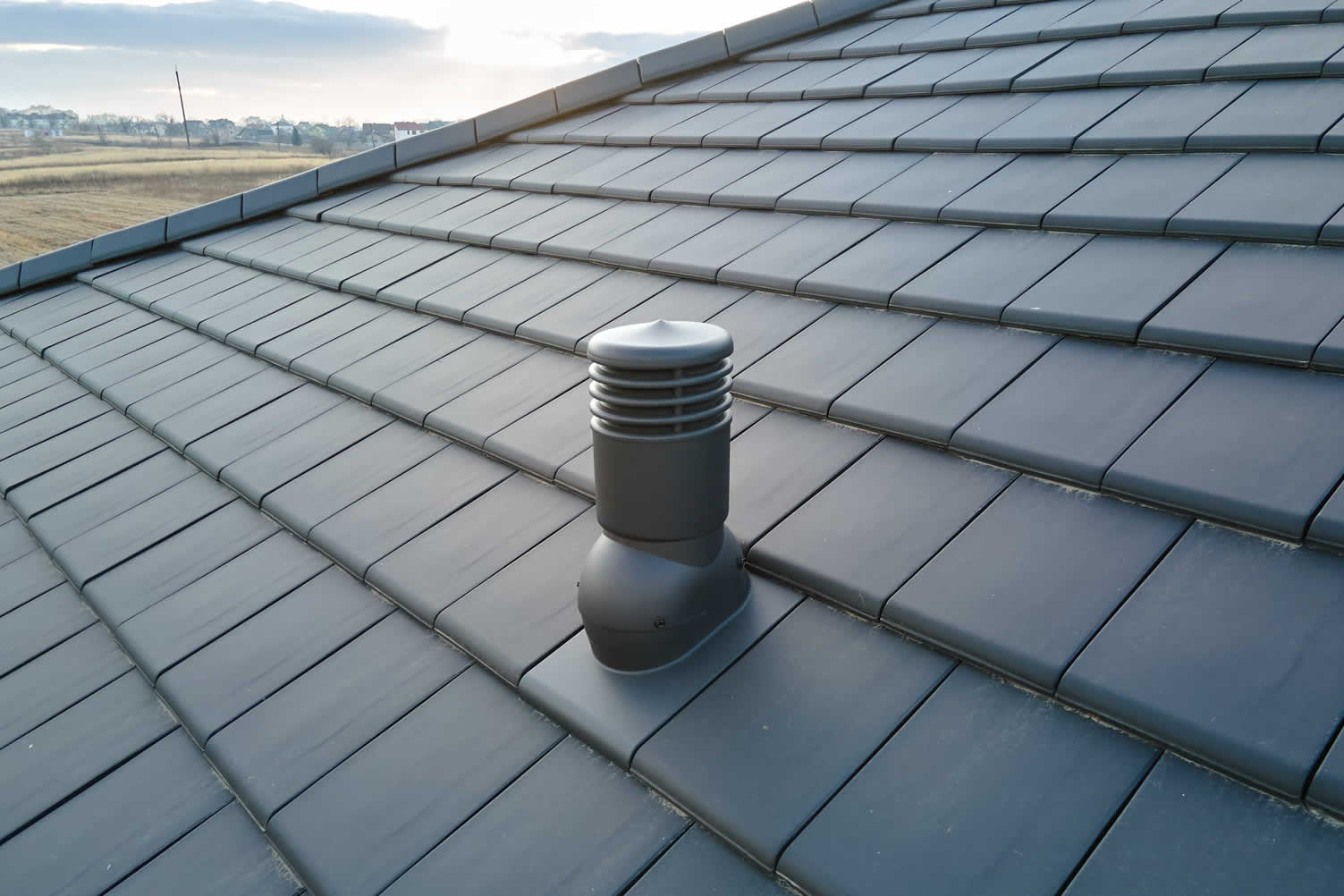
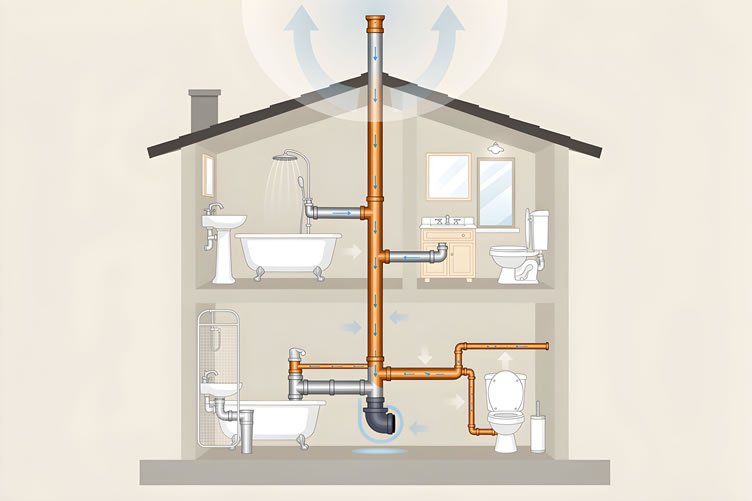
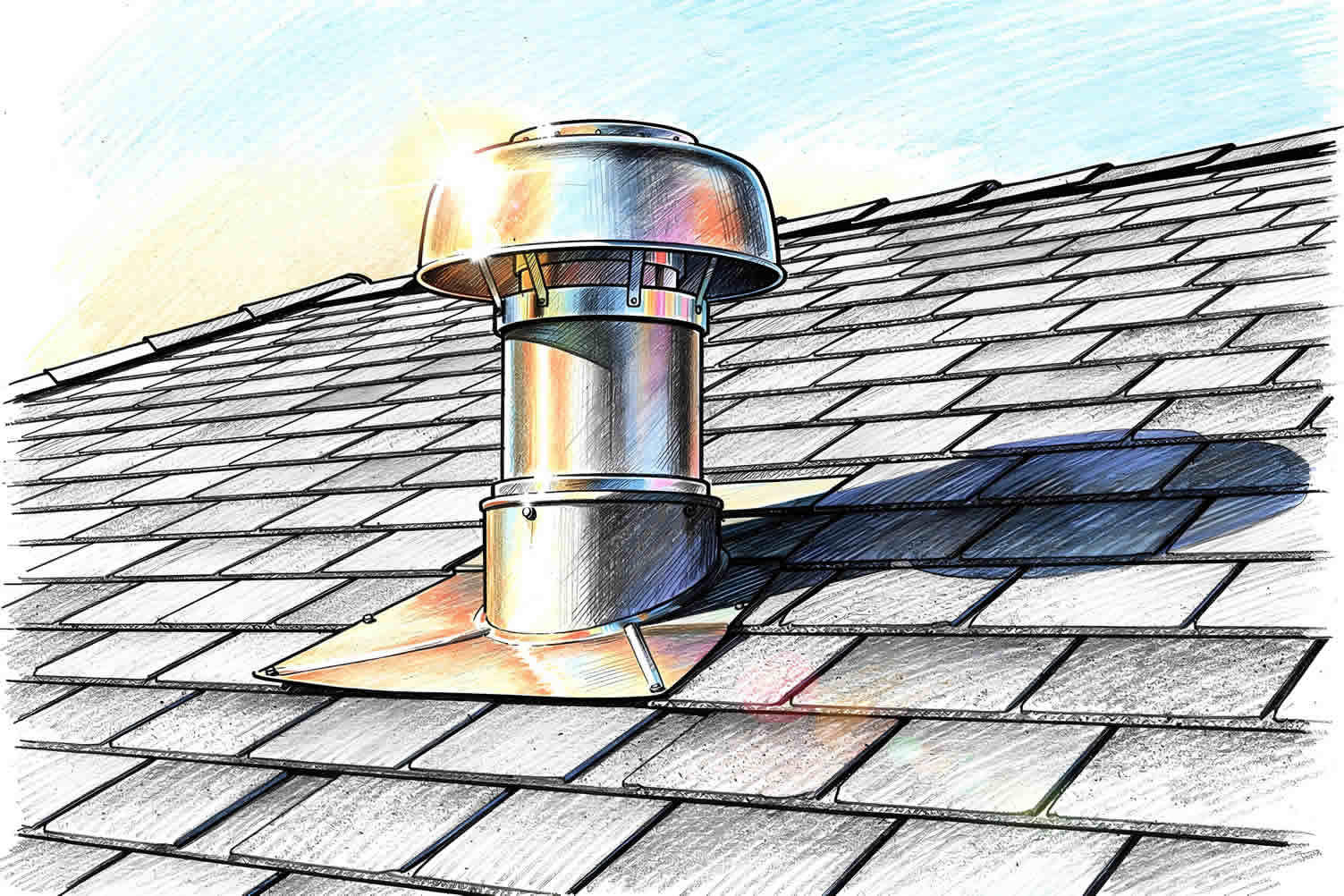
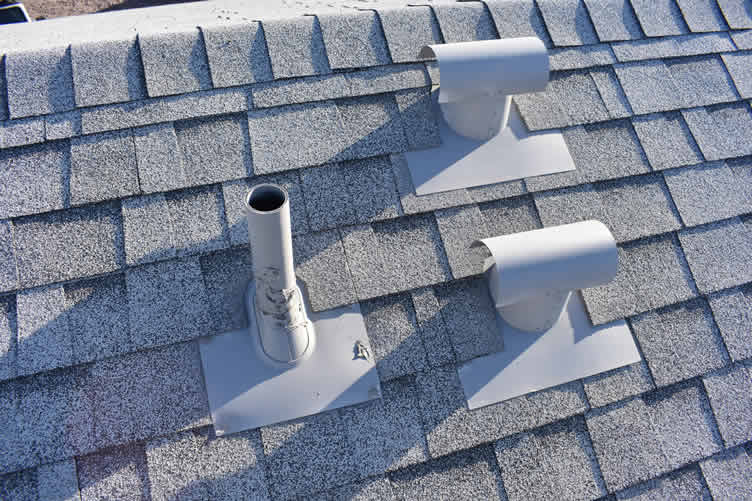
A plumbing stack vent is a vertical pipe that runs from your drain system up through the roof. It lets sewer gases escape safely outdoors and allows air into the drain lines so water flows smoothly through sinks, tubs, and toilets. Without it, drains slow down and harmful gases can enter your home.
[ view diagram: plumbing vent system ]
[ images: plumbing vent pipe ]
While you might worry about leaky faucets or clogged drains, the vertical pipe running through your roof often goes unnoticed.
This pipe, your plumbing stack vent, is a critical part of your home’s drainage system. Knowing how it works and how to maintain it can help you avoid unpleasant and expensive problems.
Plumbing stack vents are vertical pipes that allow your home’s drain system to "breathe." You might hear two terms: the vent stack is the entire vertical pipe from the main drain line to the roof, while the stack vent is the part of that pipe above the highest drain.
Plumbers often use these terms interchangeably, as they both form the core of the drain-waste-vent (DWV) system.

-
What Do Plumbing Stack Vents Do?[ view]
A plumbing stack vent serves two essential functions simultaneously. First, it acts as an air pressure regulator, drawing fresh air into the drain system so that water moves freely through pipes rather than sitting stagnant.
Second, it channels sewer gases—including hydrogen sulfide, which produces a rotten egg odor, and methane, which can cause headaches and dizziness—safely out through the roof and away from your living spaces.
To understand why air pressure matters, consider what happens when water drains. Moving water creates a vacuum behind it.
Without a vent admitting replacement air, that vacuum slows drainage and can siphon the water out of your P-traps—the curved pipe sections under sinks and behind toilets that hold a small reservoir of water to block sewer gases. When a P-trap dries out, there is nothing to stop those gases from traveling back up through the pipes and into your home.
It is also worth knowing the distinction between a vent stack and a stack vent. The vent stack is the full vertical pipe that runs alongside your drain stack from the lower floors up through the roof.
The stack vent is the uppermost section of that same pipe—the final few feet above the highest drain connection where gases exit to the outdoors. Both sections work together as one continuous venting path.
-
How to Maintain Your Plumbing Stack Vents
Routine maintenance is straightforward and does not require specialized tools in most cases. Inspect the roof vent opening at least twice a year—and again after major storms or freeze events—to check for leaves, bird nests, ice, or other debris that can partially or fully block the pipe.
Even a small blockage at the opening is enough to disrupt air flow throughout the entire drain system. From indoors, pay attention to the sounds and behavior of your drains.
Gurgling noises when water exits a sink or tub, slow drainage across multiple fixtures, or bubbling in the toilet bowl when another drain runs are all early indicators that airflow through the vent may be restricted.
Catching these signals early, before a minor restriction becomes a full blockage, keeps repair costs manageable. Keeping drain strainers on all sinks and avoiding flushing anything other than waste and toilet paper also reduces the load on the entire stack system.
-
When to Call a Professional Plumber for Vent Issues
Some situations call for expert hands rather than a homeowner’s DIY effort. Contact a licensed plumber if sewer odors persist inside the house after checking that all fixture traps are holding water, if multiple drains are slow or gurgling at the same time, or if water is backing up into lower-level fixtures.
These patterns typically point to a blockage or damage deeper in the vent or drain stack—not something a plunger or roof-level debris removal will resolve.
You should also call a professional if your vent pipe appears cracked, corroded, or damaged after roof work or a severe freeze.
Metal vent pipes, particularly older cast iron or galvanized steel, are susceptible to corrosion over time, especially if the protective cap has been lost and rainwater has entered the pipe (NuFlow Midwest, 2018). A cracked vent releases sewer gases inside wall cavities—a health risk that warrants prompt attention.
-
Other Key Information About Plumbing Stack Vents
Modern plumbing stacks are typically constructed from PVC pipe, which is lightweight, durable, and resistant to corrosion. Older homes often feature cast iron stacks, which are heavier but effective at dampening drain noise.
Main residential soil stacks are required by most local plumbing codes to measure at least three inches in diameter, and the vent pipe must extend a minimum of six inches above the roof-line. to ensure proper gas dispersal and prevent backflow in heavy rain.
Material condition matters, particularly in homes built before the 1980s. If your home still has a galvanized steel or aging cast iron vent stack showing signs of corrosion, a professional camera inspection can identify internal damage before it becomes a full failure.
Trenchless pipe lining is one modern repair option that seals cracks from the inside without requiring major demolition.
- Quick scroll to summary content …
Topic Description Key Points What is a Plumbing Stack Vent? A vertical pipe running from the drain system through the roof that allows sewer gases to escape outdoors and fresh air into drain lines, ensuring smooth water flow. Prevents slow drains and harmful gases from entering the home. Functions of Plumbing Stack Vents Acts as an air pressure regulator and channels sewer gases safely outside. – Fresh air aids water flow.
– Prevents sewer gases like hydrogen sulfide and methane from entering homes.Maintenance Tips Inspect the roof vent opening twice a year and monitor indoor drain behavior for signs of blockage. – Check for debris or damage.
– Avoid flushing non-degradable items.When to Call a Professional Persistent odors, multiple slow drains, or visible pipe damage may require expert attention. – Licensed plumbers handle deeper blockages or pipe corrosion.
– Cracked vents pose serious health risks.Other Information Modern plumbing stacks use PVC, while older homes may have outdated materials like cast iron or galvanized steel. – PVC is lightweight and durable.
– Trenchless pipe lining can repair older stacks.

copyright image by 123rf.com
-
Revolutionizing Home Water Use
Your home’s plumbing plays a crucial role in maintaining proper ventilation and preventing the buildup of sewer gases.
A well-designed vent exhaust system ensures smooth plumbing flow and keeps your living space free from unpleasant odors.
Pair this essential system with a modern smart toilet to elevate your bathroom experience.
These innovative toilets not only conserve water but also offer advanced features such as analyzing vital health signs through bodily discharge and releasing preventive vapors to maintain freshness.
Together, they create a functional and health-conscious solution for your home.
view ideas: Rise of Smart Toilets(new win)


Scroll up to directory … or scroll to next section about home venting systems …

… remodeling decisions

second “photo remodeling” idea
AI generated image by 123rf.com
Section 2: Essential Guide to Bath Fan and Range Hood Vents
Notes:
-
Quick answer:
Bath fan vents and range hood vents are exhaust systems designed to move humid air, odors, and contaminants out of your home. Bath fans protect bathrooms from moisture and mold, while range hoods capture cooking grease, smoke, and odors.
Both systems should always terminate outside the building envelope—never into an attic or wall cavity.
[ view diagram: bathroom vent pipe ]
[ view diagram: range hood vent pipe ]
Two of the most hardworking exhaust systems in any home operate almost invisibly—until something goes wrong.
Bath fan vents and kitchen range hood vents each serve a distinct protective role: one guards your bathroom against moisture damage and mold, while the other keeps your kitchen air clean and your home safe from grease-related fire hazards.
Understanding how each system works, and how to keep it in good shape, goes a long way toward protecting your home and your investment.
Both systems move air through ductwork that terminates outside the building. That exterior termination point—whether through a roof cap, wall cap, or eave vent—should always include a damper that opens during fan operation and closes when the fan is off, blocking back-drafts, pests, and outside air from entering.
-
What Do Bath Fan Vents Do?
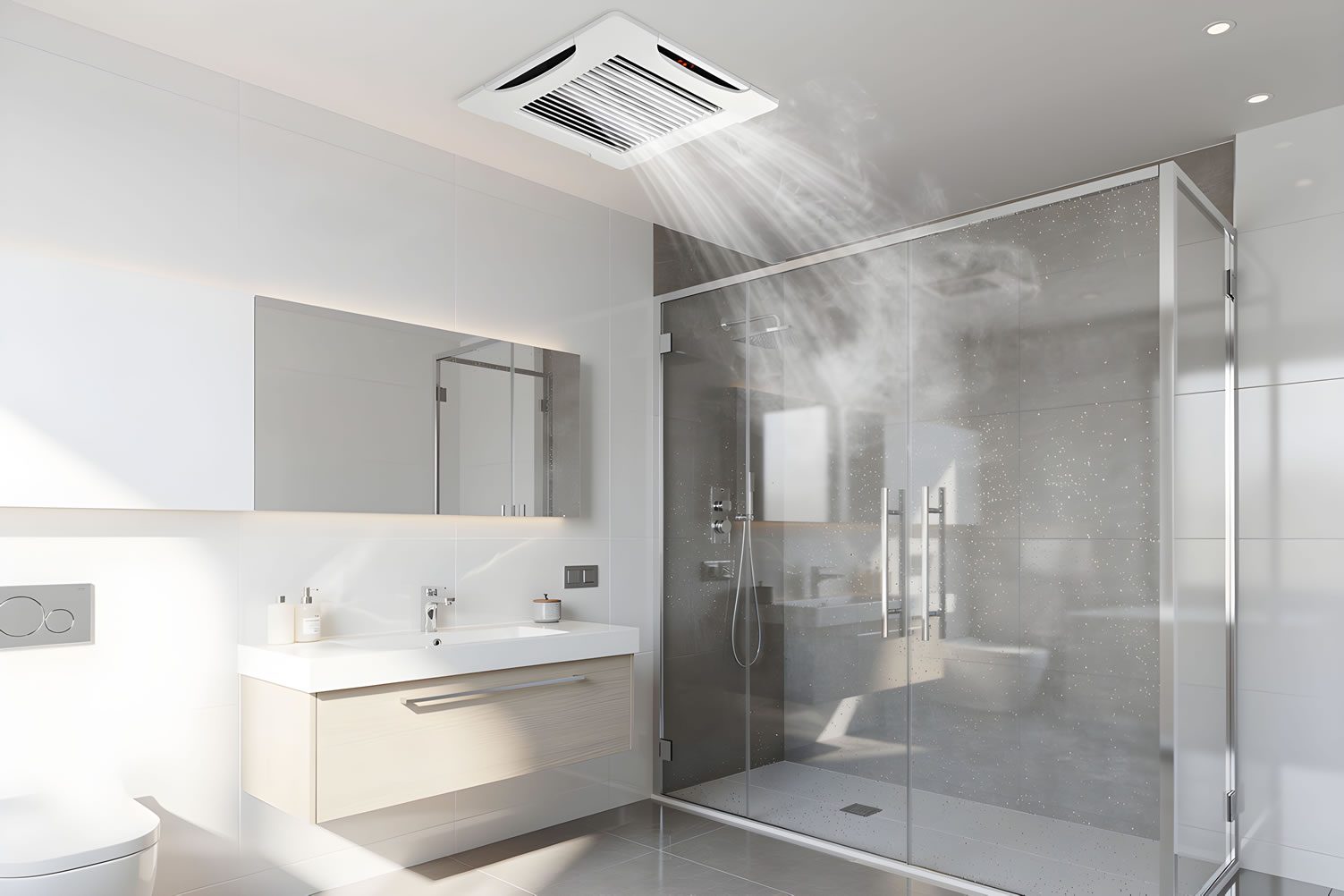
A bath fan vent pulls humid, moisture-laden air out of the bathroom and exhausts it outdoors through an insulated duct. This function is critical.
Without adequate ventilation, steam from showers and baths creates persistent humidity that encourages mold growth, damages drywall and paint, and can compromise structural wood over time.
Bath fans are typically ceiling-mounted, though in-line fan systems—where the motor sits within the duct run rather than at the ceiling—are also common. Roof and wall caps include dampers to prevent cold air, birds, and other intrusions.
According to the Home Ventilating Institute (HVI), an internationally respected nonprofit that has administered certified ventilation product ratings since 1955, bath fans may be configured for continuous or intermittent operation depending on your home’s ventilation code requirements.
-
What Do Range Hood Vents Do?
A kitchen range hood captures smoke, steam, cooking odors, and airborne grease directly above the cooking surface and exhausts them outside or filters and recirculates the air, depending on the model.
Ducted range hoods are the most effective option—they expel contaminated air through ductwork to an exterior termination point. Ductless range hoods, while simpler to install, recirculate air through charcoal filters that require regular replacement to remain effective.
Grease accumulation is the central concern with range hoods. Left unaddressed, built-up grease reduces airflow, strains the motor, causes lingering odors, and—most critically—creates a fire hazard.
Routine maintenance is not just a performance issue; it is a safety issue.
-
Maintenance Steps for Bath Fan Vents
The Home Ventilating Institute recommends cleaning bathroom exhaust fans at least once a year, while Re-Bath and other home maintenance authorities suggest every six months for optimal performance.
Follow these steps:
- Turn off power to the fan at the circuit breaker—do not rely on the wall switch alone.
- Remove the grille or cover by gently pulling it down and releasing the mounting tabs or squeezing the retention wires.
- Wash the grille in warm water with a mild detergent, rinse thoroughly, and dry completely before reinstalling.
- Using a vacuum with a brush attachment, remove dust and debris from the fan blades, motor housing, and surrounding cavity.
- Wipe the fan body with a cloth lightly dampened with mild detergent, then dry with a clean cloth.
- Reattach the grille, restore power, and run the fan to confirm proper operation.
- Inspect the exterior vent cap to confirm the damper opens freely during operation and closes completely when the fan is off. Clear any blockages such as lint, debris, or bird nests.
Never use solvents or harsh chemicals when cleaning a bath fan, and never allow water to contact the motor, lamp holder, or electrical connections.
-
Maintenance Steps for Range Hood Vents
According to XO Appliance, a recommended maintenance schedule for range hoods includes weekly exterior wipe-downs, monthly filter cleaning, and a deep clean of fan components every three to six months.
Here are the key steps:
- Turn off power to the range hood before accessing any internal components.
- Remove the grease filters and soak them in hot water with dish soap or baking soda. Scrub with a soft-bristle brush, rinse thoroughly, and allow to air dry completely before reinstalling. Many aluminum mesh filters are also dishwasher-safe—check your manufacturer’s guide.
- Wipe down the exterior hood surfaces with a non-abrasive kitchen degreaser. For stainless steel finishes, always wipe in the direction of the grain using a soft microfiber cloth to avoid scratching.
- Remove the fan cover and wipe fan blades with a cloth or sponge soaked in degreaser. For stubborn buildup, use a soft-bristled brush with warm, soapy water. Dry all surfaces before reassembly.
- Wipe interior hood walls with a degreasing solution, reaching into corners and crevices where grease tends to collect.
- For ductless range hoods, replace charcoal filters every three to six months depending on cooking frequency—these cannot be cleaned and must be replaced entirely.
- Inspect ductwork for blockages, grease accumulation, or signs of leakage, and confirm that the exterior vent cap opens and closes properly.
-
When to Call a Professional for Your Exhaust System
Many maintenance tasks are well within reach of a confident homeowner, but certain conditions call for a licensed technician or HVAC professional.
Seek professional help when:
- The circuit breaker trips repeatedly when the fan or hood is in use, which may indicate an underlying electrical issue.
- The fan motor makes unusual noises, runs weakly, or fails to spin despite a clear fan cavity and clean filters.
- The motor or capacitor requires replacement—these are not straightforward DIY repairs.
- The control board, touch panel, or electrical controls are unresponsive after a hard reset.
- Ductwork requires rerouting, reconfiguring, or repair due to blockage, disconnection, or improper installation.
- Persistent moisture problems in the bathroom suggest the duct may be disconnected, improperly sloped, or inadequately insulated in a cold climate.
- You are uncomfortable working around electrical components at any point in the process.
-
Other Key Information About Ventilation Systems
A few additional points are worth keeping in mind as you care for these systems. Both bath fans and range hoods must always vent to the exterior of the building—never into an attic, crawl space, or wall cavity. Exhausting moist or greasy air into enclosed spaces creates serious moisture and fire risks.
Duct insulation matters in colder climates. Uninsulated bath fan ducts in unconditioned spaces can allow warm, humid exhaust air to condense inside the duct, leading to drips back into the fan housing or mold growth within the duct itself. Where ducts pass through unconditioned areas, insulated flex duct or rigid duct with an insulating wrap is recommended.
For bath fans, the HVI Certification Program provides an independent, standardized rating system for ventilating products tested by third-party labs.
Choosing an HVI-certified fan offers confidence that the product will deliver the airflow performance its specifications claim. The institute notes that not listed equals not certified—a useful standard when selecting a replacement unit.
Range hoods have a typical service life of 10 to 15 years, according to CleaDeep. Signs that a hood may be nearing the end of its useful life include increasing operational noise, reduced suction even after cleaning, frequent mechanical issues, and persistent cooking odors that the hood cannot clear.
If repair costs approach or exceed 50 percent of a new unit’s price, replacement is generally the more cost-effective path.
A practical routine for both systems is to inspect them twice a year—spring and fall work well—cleaning all accessible components and verifying strong airflow at the exterior termination.
For bath fans, the priority is moisture control. For kitchen hoods, it is grease control and fire prevention.
- Quick scroll to summary content …
System Function Key Features Maintenance Tips Bath Fan Vents Bath fans remove humid, moisture-laden air from the bathroom and exhaust it outdoors. This prevents persistent humidity which encourages mold growth, damages drywall and paint, and can compromise structural wood over time. Typically ceiling-mounted; may include in-line fan systems. Exterior termination points, such as roof or wall caps, include dampers to block back-drafts, pests, and outdoor air. Clean once a year or as recommended. Turn off power to the fan before cleaning. Wash grille, vacuum fan blades, and wipe the fan body. Check exterior vent caps for blockages and ensure proper operation. Range Hood Vents Range hoods capture smoke, steam, cooking odors, and grease, and exhaust contaminated air outside or recirculate filtered air, depending on the model. Ducted hoods are most effective; they expel air to an external termination point. Ductless hoods filter and recirculate air but require routine filter replacement. Exterior vent caps should include functional dampers. Clean regularly based on use. Turn off power before maintenance. Wash grease filters, wipe the exterior and interior surfaces, and replace charcoal filters for ductless systems. Inspect ductwork for blockages. Additional Tips Always vent to the building exterior to prevent moisture and fire risks. Use insulated ductwork in cold climates to avoid condensation. Bath fans should prioritize mold prevention, while range hoods focus on grease control and fire safety. For significant issues or repairs, consult a professional. 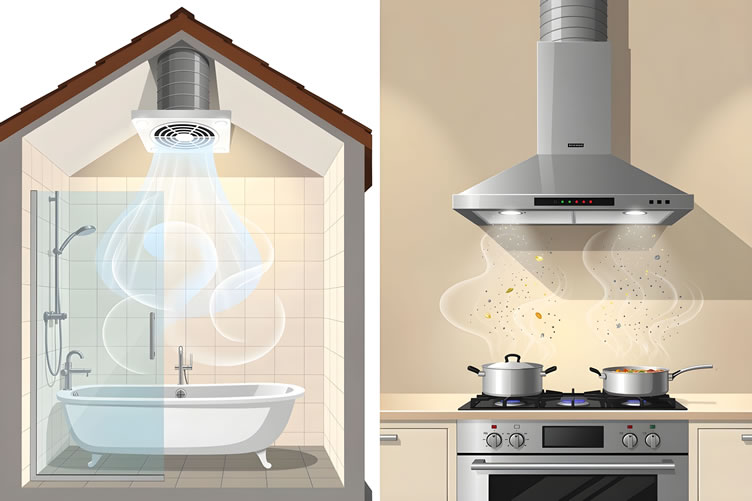
copyright image by 123rf.com
-
Ultimate Guide to Better Health
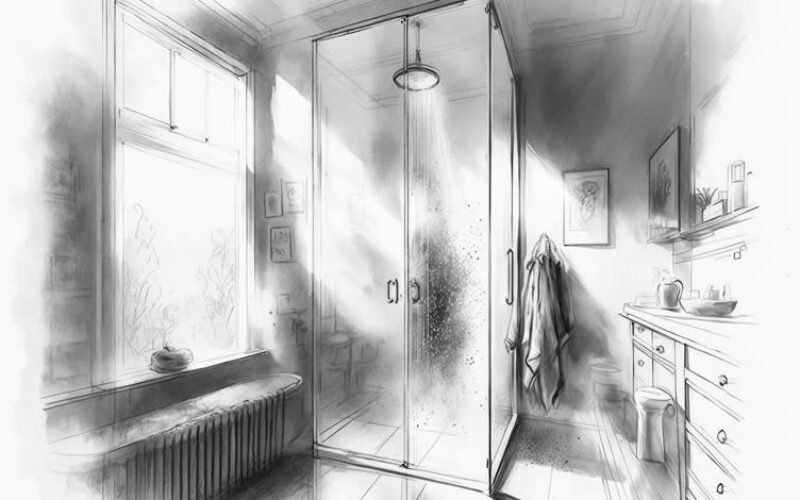
A steam shower is an excellent addition to any home, offering both relaxation and therapeutic benefits.
By using steam showers regularly, you can improve circulation, reduce stress, and promote healthier skin as the steam opens pores and removes impurities.
However, to fully enjoy these benefits, it’s crucial to install a properly sized bathroom vent to exhaust the steam effectively.
This prevents unwanted moisture buildup, protecting your bathroom from potential issues such as mildew and mold, ensuring a long-lasting, healthy environment.
view ideas: Benefits of a Steam Shower(new win)
Scroll up to directory … or scroll to next section about home venting systems …

Tackling home upgrades and fulfilling all your home improvement needs …

… save this curated directory of ideas for future reference.

May We Suggest Other Photo Remodeling Ideas About
“Home Exterior Situations …” (new win)


third “photo remodeling” idea
AI generated image by 123rf.com
Section 3: Attic Exhaust Vents: What and How to Maintain
Notes:
-
Quick Answer:
Attic exhaust vents are roof-mounted openings that release trapped hot, humid air from your attic. They work alongside intake vents to create a balanced airflow system. Properly maintained exhaust vents protect your roof structure, reduce energy costs, and prevent moisture damage year-round.
[ view diagram: attic ventilation ]
[ images: attic exhaust vents ]
Your attic quietly takes on a lot. During summer, attic temperatures can climb to 150°F or higher without adequate ventilation—forcing your air conditioning system to work harder and accelerating shingle wear.
Attic exhaust vents solve this by allowing heat and moisture to escape before they cause lasting damage.
These vents function as the "exhaust side" of a balanced ventilation system. Fresh air enters low through soffit or eave intake vents, rises naturally as it warms, and exits high through exhaust vents near or at the roof peak.
When this airflow path is clear and properly sized, your attic stays drier, cooler, and far less prone to structural problems.
-
Common Types of Attic Exhaust Vents
There are five primary types of attic exhaust vents used in residential roofing:
- Ridge Vents:
Run continuously along the peak of the roof and are among the most widely installed exhaust options. Their low profile integrates cleanly with the roof-line. and allows hot air to escape evenly across the full length of the ridge. - Box Vents:
(Also called static vents or roof louvers) are fixed openings cut into the roof deck. They rely on natural airflow and convection to exhaust attic air, and multiple units are typically required to achieve adequate coverage. - Off-Ridge Vents:
These vents look like long, rectangular boxes and are installed near the primary ridge line. They function similarly to box vents and are perfect for complex roof designs where ridge space is limited. - Hip Vents:
These are low-profile vents that look just like ridge vents but are designed to fit the angled hips of a roof. They’re mainly used on hip-style roofs that don’t have a long, horizontal ridge. - Gable Vents:
Louvered openings installed in the triangular end walls of the attic. They can supplement other vent types but should not be mixed with ridge vents in the same attic space, as doing so can short-circuit airflow. - Cupola Vents:
These small, decorative, tower-like structures sit on the roof’s peak and also serve as functional vents with built-in louvers for airflow. - Turbine Vents:
Wind-powered mechanical vents that spin to actively pull heat and moisture out of the attic. When wind is absent, they function similarly to static vents. - Powered Attic Fans:
These fans use electric or solar power to forcibly exhaust attic air. They offer higher airflow capacity and often include thermostat or humidistat controls for automated operation.
- Ridge Vents:
-
How Do Attic Exhaust Vents Work?
Most passive exhaust vents—ridge vents, box vents, and gable vents—operate on the principle of convection.
Hot air naturally rises. As warm, moisture-laden air accumulates near the attic ceiling, it finds the path of least resistance upward and out through exhaust openings near the roof peak. Cooler, drier air simultaneously enters through intake vents at the soffit or eave level, sustaining a continuous airflow cycle.
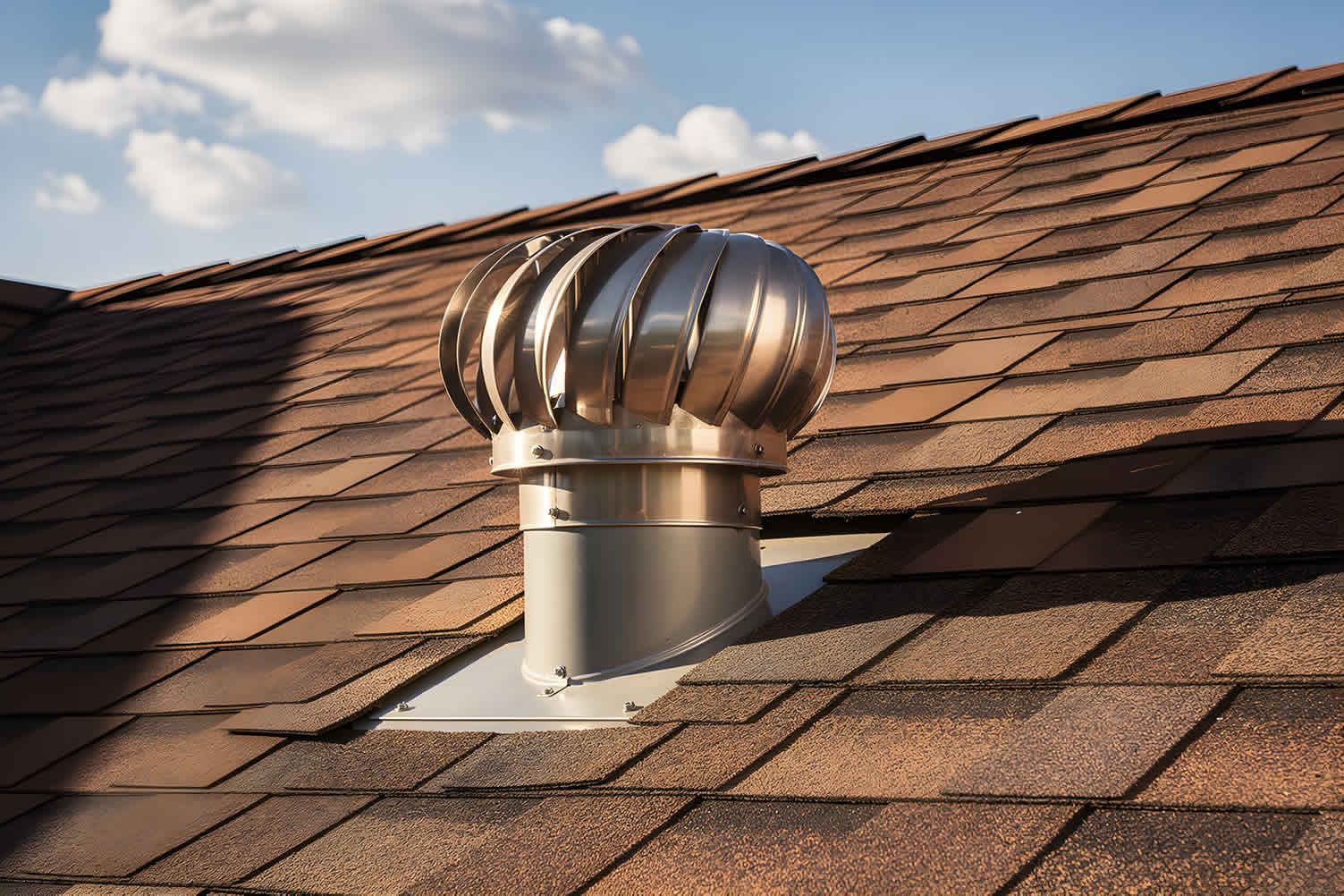
Turbine vents add a mechanical element to this process. Wind causes the turbine to spin, creating a low-pressure zone that draws attic air outward more actively than convection alone.
Powered fans take this further by using motors to exhaust large volumes of air regardless of wind conditions—particularly useful in climates with extreme summer heat.
According to the Western States Roofing Contractors Association (WSRCA), a properly designed attic ventilation system should be split evenly: 50% intake and 50% exhaust.
When intake is insufficient, exhaust vents cannot work effectively and may actually draw air—and with it, rain, snow, or debris—back into the attic. If the system is not balanced, no amount of exhaust ventilation will fully compensate.
-
Maintenance Steps
Routine maintenance keeps your attic exhaust vents performing reliably and extends the life of your roof system. Work through these steps at least once a year, ideally in early spring and after major storms.
Inspect each vent for visible damage: cracked housings, missing or lifted shingles around the vent base, corrosion, or loose fasteners. Any breach in the vent’s seal creates an entry point for water and pests.
Clear all vent openings of debris—leaves, twigs, bird or wasp nests, and accumulated dirt can restrict airflow significantly.
From inside the attic, confirm that insulation has not been pushed up against soffit vents or rafter baffles; this is one of the most common—and most preventable—causes of ventilation failure, according to ENERGY STAR.
Look for warning signs inside the attic itself: moisture stains on the roof deck or rafters, damp or compressed insulation, rust on metal fasteners, and any sign of mold or mildew.
These are indicators that exhaust ventilation is not keeping pace with moisture levels. If your home uses powered attic fans, periodically check the motor, wiring, thermostat settings, and any humidistat controls to confirm the unit is operating within its designed parameters.
-
Good Practice
A well-maintained attic ventilation system delivers three measurable benefits: lower cooling costs, reduced risk of moisture-related damage such as mold and wood rot, and a longer-lasting roof.
Shingles exposed to excessive heat from a poorly ventilated attic can blister, curl, and fail years ahead of schedule.
If your attic shows persistent moisture problems, you notice ice dams forming at the eaves in winter, or your energy bills seem disproportionately high, a professional inspection is worth scheduling.
A qualified roofing contractor can assess your current vent configuration, check airflow ratios, and recommend targeted improvements.
-
Other Key Information
Proper attic ventilation does more than just keep you comfortable. In the summer, it pushes out hot air, which reduces the strain on your air conditioning and lowers energy bills.
In the winter, it helps prevent ice dams by keeping the attic cold and dry, which can force water under shingles and into your home. As ENERGY STAR notes, ventilation works best with proper insulation and air sealing.
Over time, balanced attic ventilation also protects your roof and shingles from premature aging and damage caused by heat and moisture.
If you’re unsure about your attic’s ventilation, a qualified roofing professional can assess its size, check the balance between intake and exhaust, and recommend a solution suited for your home and climate.
For most homeowners, a professional inspection every few years is the best way to ensure the system works correctly.
- Quick scroll to summary content …
Attic Ventilation
(from the summary table below)
Topic Details Additional Notes What Are Attic Exhaust Vents? Attic exhaust vents are roof-mounted openings that release hot, humid air from the attic.
They work with intake vents to create a balanced airflow system, protecting the roof, reducing energy costs, and preventing moisture damage.
Essential for maintaining a cooler, drier attic and prolonging roof life. Common Types Various options include ridge vents, box vents, off-ridge vents, hip vents, gable vents, cupola vents, turbine vents, and powered attic fans.
Each type has specific applications depending on roof design and ventilation needs.
Ridge vents are among the most widely installed due to their efficiency and seamless integration. How They Work Most operate via convection as hot air rises and exits through vents near the roof peak.
Cooler air enters through intake vents, creating a continuous cycle. Turbine vents and powered fans actively enhance airflow.
A 50/50 balance between intake and exhaust is crucial for optimal performance. Maintenance Steps Inspect vents annually, clear debris, ensure insulation does not obstruct airflow, and check for moisture signs or vent damage.
For powered fans, verify motor and control functionality.
Regular maintenance ensures a reliable ventilation system, preventing damage and inefficiencies. Good Practice Maintain a clear airflow path and avoid mixing exhaust vent types in the same attic space. Use matching systems for efficient ventilation. Checking intake vents is often the key to resolving ventilation issues. Additional Benefits Proper ventilation reduces cooling costs in summer, prevents ice dams in winter, and extends the roof’s lifespan by preventing structural deterioration from heat and moisture cycles. Seek professional assessments if unsure about the effectiveness of your system. 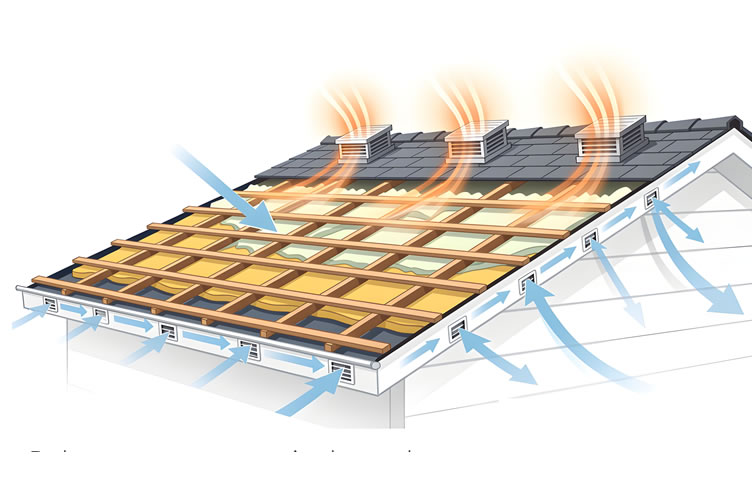
copyright image by 123rf.com
-
Unlock the Hidden Potential
Maybe it’s time to take a closer look at your attic and unlock its hidden potential.
With the right renovation, this often-overlooked area can be transformed into a cozy home office, a much-needed spare bedroom for guests, or even an inspiring observatory for stargazing.
Not only does re-purposing your attic elevate the functionality of your home, but it also adds significant value to your property.
Whether you’re aiming for a practical upgrade or a creative retreat, the possibilities are endless with a little imagination and planning.
view ideas: what’s need for attic renovation(new win)

Scroll up to directory … or scroll to next section about home venting systems …

Outline the specific requirements needed for making …

… key home improvement and remodeling decisions
fourth “photo remodeling” idea
AI generated image by 123rf.com
Section 4: Dryer and Furnace/Water-Heater Vents
Notes:
-
Quick answer:
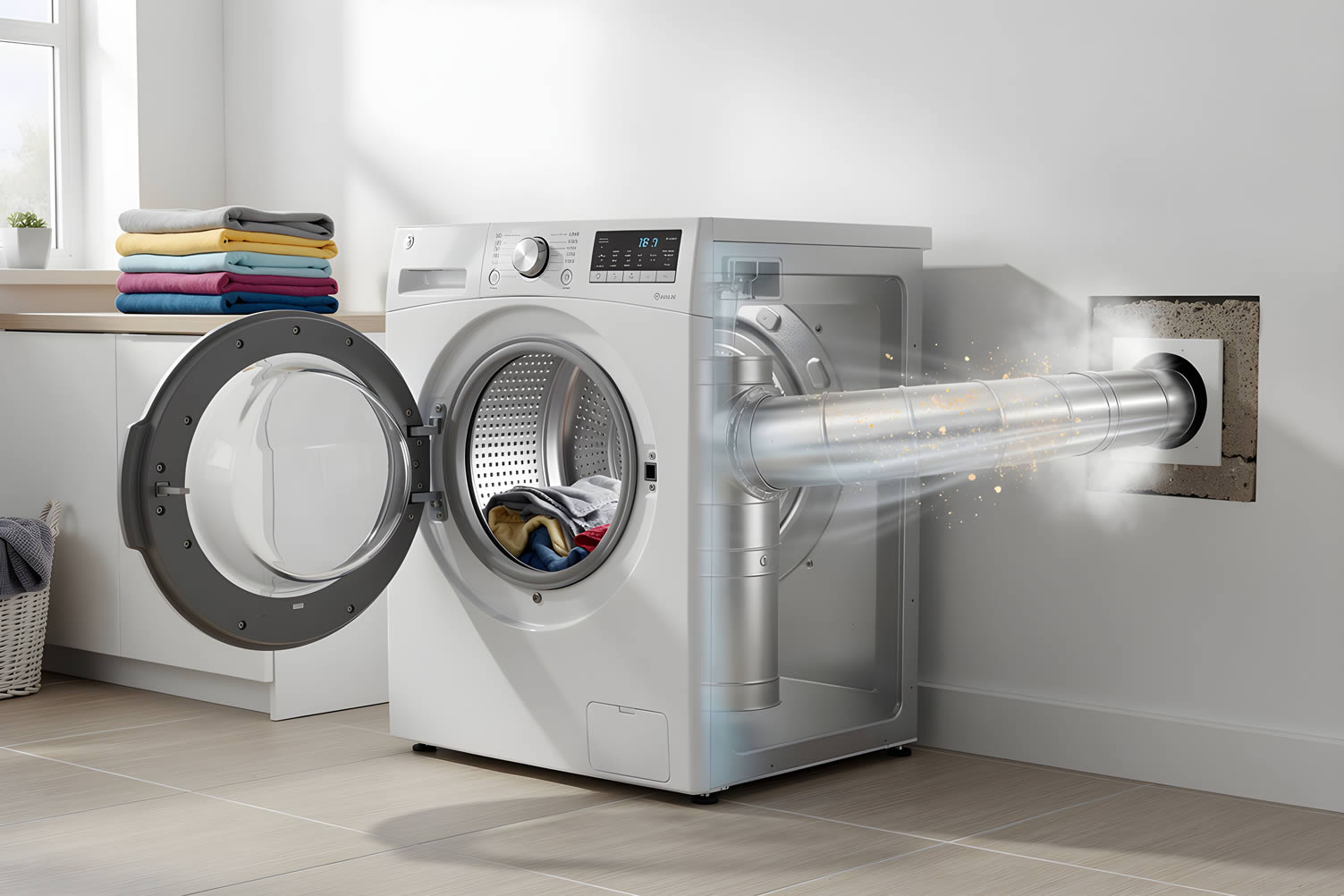
Dryer vents move hot, lint-laden air from your clothes dryer to the outdoors through metal ducting and a capped exterior outlet.
Furnace and water-heater vents remove combustion byproducts—including carbon monoxide—from gas-fired appliances through flue pipes, mechanical venting, or sealed direct-vent systems. Both require regular maintenance to protect your home and family.
[ view diagram: dryer ventilation ]
[ view diagram: furnace/water-heater ventilation ]
Every home depends on a network of vents working quietly behind the walls to keep things safe and running smoothly. Two of the most important—yet most overlooked—are dryer vents and combustion vents for furnaces and water heaters.
Understanding how each system works, and how to care for it, can protect your home from serious hazards and keep your appliances performing at their best.
These two vent types serve very different purposes. Dryer vents are designed to move heat, moisture, and lint-laden air out of the home.
Furnace and water-heater vents, on the other hand, carry dangerous combustion byproducts—including carbon monoxide—safely outside. Both deserve regular attention, though the stakes with combustion venting are considerably higher.
-
Dryer Vents
A clothes dryer generates significant heat and moisture during every cycle. According to the International Association of Certified Home Inspectors (InterNACHI), a single heavy garment load can contain more than a gallon of water, all of which becomes airborne vapor that must exit through the exhaust duct.
That duct—your dryer vent—channels this warm, lint-carrying air from the back of the appliance, through the wall or floor, and out to the home’s exterior.
Per the International Residential Code (IRC Section M1502), dryer exhaust ducts must be constructed of rigid metal with smooth interior surfaces, a minimum thickness of 0.016 inches, and joints oriented in the direction of airflow.
The maximum allowable duct length is 35 feet, reduced by 5 feet for each 90-degree bend and 2.5 feet for each 45-degree bend. The duct must terminate outdoors—never in an attic, crawlspace, or garage—at least 3 feet from any building opening, and must be fitted with a back-draft damper.
Screens are not permitted at the termination point, as they trap lint and restrict airflow.
The vent cap on the roof or exterior wall should open freely when the dryer operates and seal shut when it does not. Roof-mounted terminations deserve extra attention, since the vertical run is longer and harder to inspect.
-
Furnace and Water-Heater Vents
Gas furnaces and water heaters produce combustion byproducts—primarily flue gases and carbon monoxide—that must be expelled from the home continuously and completely. The type of venting system used depends on the appliance’s design and efficiency rating.
Natural-draft systems (often called B-vent or Category I) rely on the buoyancy of hot flue gases, which can exceed 400°F, to rise vertically through heavy-gauge galvanized steel pipe and exit above the roof-line. These systems draw combustion air from inside the home.
Power-vent systems (Category IV) use an electric blower to push lower-temperature exhaust gases—typically around 100°F—through PVC or CPVC piping that can run horizontally to an exterior wall, offering more installation flexibility.
Direct-vent systems draw combustion air from the outdoors through a dedicated intake pipe and exhaust gases through a separate pipe, using a sealed, two-pipe or coaxial arrangement.
This design eliminates the risk of indoor air being consumed for combustion and significantly reduces back-drafting risk.
Back-drafting—the reversal of exhaust gases back into the living space—is one of the most serious venting failures possible. It can expose occupants to carbon monoxide, a colorless, odorless gas that can be fatal at elevated concentrations.
-
Maintenance Steps for Both
Dryer vent maintenance starts with cleaning the lint screen before every load. The full vent duct should be inspected and cleaned at least once a year, or every six months in households with heavy laundry use.
During inspection, check for crushed hose sections, sharp bends, disconnected joints, and blocked or stuck exterior caps. Warning signs that the vent needs attention include longer drying times, a dryer that runs unusually hot, or visible lint accumulation near the appliance.
For furnace and water-heater vents, visually inspect all accessible vent pipe sections for rust, corrosion, sagging, or loose joints.
Confirm that exterior vent caps are free of bird nests, debris, ice, or snow—especially after winter. Signs of venting trouble include soot deposits near the appliance, unusual odors, pilot light issues, or moisture collecting around the unit.
Any suspected blockage or back-drafting should be addressed immediately by a qualified HVAC technician or licensed plumber.
-
Safety Focus
The distinction between these two vent types matters enormously from a safety standpoint. Dryer vent cleaning is largely a routine homeowner task, yet the National Fire Protection Association (NFPA) and the Consumer Product Safety Commission (CPSC) report approximately 15,000 home fires each year attributed to improper lint cleanup and dryer maintenance.
Combustion vent problems, however, involve carbon monoxide risk and should never be treated as simple cleaning jobs. Install carbon monoxide detectors on every level of your home, and replace batteries annually.
-
Other Information
Local building codes govern both types of venting and may be stricter than national minimums—always verify requirements with your local authority before making changes.
Heat pump water heaters do not require combustion venting, since they produce no flue gases. For any combustion appliance, professional installation and periodic inspection by a licensed technician are strongly recommended.
When in doubt, consult a certified home inspector or HVAC professional rather than guessing at compliance.
- Quick scroll to summary content …
Dryer and Furnace/Water Heating Ventilation
(from the summary table below)
Type Purpose Key Features Maintenance Dryer Vents Move heat, moisture, and lint-laden air from the dryer to the outdoors. • Constructed of rigid metal with smooth interior surfaces.
• Maximum length of 35 feet, reduced by bends.
• Must terminate outdoors at least 3 feet from any building opening.
• Requires a back-draft damper; screens are not permitted.
• Roof-mounted vents need extra attention.• Clean lint screen before each load.
• Inspect and clean the full vent at least yearly.
• Check for crushed sections, blockages, or stuck caps.
• Warning signs include longer drying times and visible lint buildup near the dryer.Furnace and Water-Heater Vents Expel combustion byproducts, including flue gases and carbon monoxide, from gas-fired appliances. • Natural-draft vents (B-vent) use buoyancy of hot gases through galvanized steel pipe.
• Power-vent systems use electric blowers to push cooler gases through PVC or CPVC pipes.
• Direct-vent systems use sealed two-pipe or coaxial designs to eliminate back-drafting risks.• Inspect vent pipes for rust, corrosion, and loose joints.
• Confirm exterior vent caps are free of nests, debris, ice, or snow.
• Signs of issues include soot deposits, unusual odors, or moisture around units.
• Address any suspected back-drafting immediately with a professional.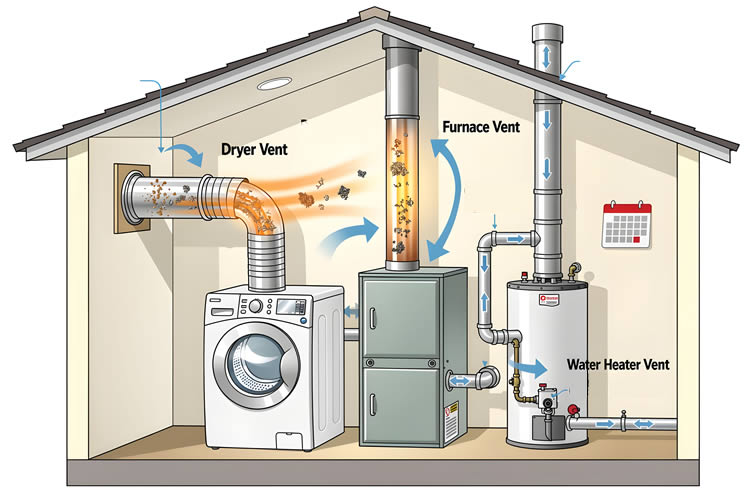
copyright image by 123rf.com
-
Upgrade for Efficiency and Ease
Are your laundry appliances starting to show their age?
It might be the perfect time to consider replacing them with modern, energy-efficient models.
Updated appliances not only save you money on energy bills but also improve performance, handling larger loads with ease and reducing the aggravation caused by breakdowns or inefficiencies.
Make the switch to save time, energy, and valuable resources, while enjoying the benefits of smoother, more reliable laundry days.
view ideas: Choosing Laundry Appliances(new win)

Scroll up to directory … or scroll to next section about home venting systems …

Download this PDF for a concise summary of everything you need to know about …?
Find Venting Services Ducts & Vents Insulation Plumbing Issues Drain Clearing Roofing Water Heaters top-rated, pre-screened local contractors FREE: download contractor selection enter zip code – powered by HomeAdvisor ™
Quick Contractor Guides selecting negotiating working with inspecting

fifth “photo remodeling” idea


AI generated image by 123rf.com
Section 5: Frequently Asked Questions: Home Venting
Notes:
-
Proper exhaust and ventilation systems are essential for maintaining a safe, comfortable, and energy-efficient home. These systems help regulate indoor air quality by removing moisture, odors, and harmful gases, ensuring a healthier living environment.
However, understanding their functionality and maintenance can raise many questions for homeowners.
To help, we’ve compiled a review of common questions and answers about exhaust and ventilation pipes and systems, providing you with practical insights to keep your home in peak condition.
-
Quick scroll to supporting notes …
-
-
1st: FAQs: Plumbing Vents
Here are some common questions homeowners have about plumbing vents.
Understanding the answers to these FAQs can help you maintain an efficient and safe plumbing system in your home.
-
What is the difference between a vent stack and a stack vent?
A vent stack is the full vertical pipe that runs from the drain system up through the roof, allowing air in and sewer gases out.
A stack vent is specifically the uppermost portion of that pipe—the last few feet above the highest drain connection where gases exit the building. Both terms refer to parts of the same continuous venting system.
-
How do I know if my plumbing stack vent is blocked?
The most common signs include slow drainage in multiple fixtures at the same time, gurgling or glugging sounds from drains, foul sewer-like odors inside the home, and toilets that bubble when nearby sinks drain.
A blockage affecting only one drain is more likely a localized clog, while symptoms across multiple fixtures suggest a vent issue.
-
Can I clear a blocked vent stack myself?
If the blockage is at the opening of the vent pipe on the roof and it is safe to access, removing visible debris by hand or with a garden hose may resolve the issue.
However, blockages deeper in the vent line, frozen pipes, or any situation involving damaged pipe sections should be handled by a licensed plumber.
-
How often should plumbing vent pipes be inspected?
Inspecting the roof vent opening twice a year—typically in spring and fall—is a practical habit.
Additional checks after major storms, heavy snowfall, or any roofing work are also advisable, as these events can introduce debris or cause physical damage to the exposed pipe section.
-
Are sewer gases from a blocked vent dangerous?
Yes. Sewer gas contains hydrogen sulfide, which smells like rotten eggs and can cause sinus irritation, headaches, and dizziness with prolonged exposure.
It also contains methane, which is odorless but can cause similar symptoms and is flammable in high concentrations. Persistent sewer odors inside the home should be investigated promptly.
-
-
2nd: FAQs: Bathroom and Range Hood Vents
Understanding how your bathroom and kitchen vents work is key to keeping your home’s air fresh and healthy.
Here are some common questions we get about their function and upkeep.
-
How often should I clean my bathroom exhaust fan?
The Home Ventilating Institute recommends cleaning a bathroom exhaust fan at least once a year. Many home maintenance experts, including Re-Bath, suggest every six months, particularly in households with heavy shower use.
More frequent cleaning helps maintain airflow efficiency and prevents moisture-related damage.
-
What is the difference between a ducted and a ductless range hood?
A ducted range hood draws cooking air through ductwork and exhausts it directly outside, making it the most effective option for removing grease, smoke, and odors.
A ductless range hood recirculates air through charcoal filters instead of venting outside. Ductless hoods are easier to install but require regular filter replacement—typically every three to six months—and are less effective at removing heat and moisture.
-
How do I know if my bath fan vent is working properly?
With the fan running, hold a sheet of tissue paper near the grille. If the fan is drawing adequate airflow, the tissue will be pulled toward the vent.
You can also step outside and confirm that the exterior vent cap opens when the fan operates and closes when it is off.
Weak suction, excessive noise, or visible moisture near the fan housing are signs the system may need cleaning, duct inspection, or professional service.
-
Can grease buildup in a range hood be a fire hazard?
Yes. Grease accumulation on filters, fan blades, and interior hood surfaces is a documented fire risk. Ignited grease can spread rapidly through ductwork to other parts of the home.
Cleaning filters monthly and deep-cleaning the hood interior every three to six months significantly reduces this risk.
-
When should I replace my range hood instead of repairing it?
According to CleaDeep, range hoods typically last 10 to 15 years. Replacement is generally the better choice when the hood is over 10 years old with recurring mechanical failures, when repair costs exceed 50 percent of a new unit’s price, or when your cooking habits or kitchen layout have changed and the existing hood no longer provides adequate ventilation.
-
Do bath fan ducts need to be insulated?
In unconditioned spaces such as attics, insulating the duct is strongly recommended—particularly in cold climates.
Without insulation, warm, humid exhaust air can condense inside the duct and drip back into the fan housing or promote mold growth within the duct run. Insulated flex duct or rigid duct with an insulating wrap addresses this issue effectively.
-
-
3rd: FAQs: Attic Exhaust Vents
Attic exhaust vents are crucial for maintaining proper airflow and preventing moisture buildup in your home.
Here are some frequently asked questions to help you understand their importance and functionality.
-
What is the purpose of attic exhaust vents?
Attic exhaust vents release hot, humid air trapped in your attic space. They work alongside intake vents to maintain continuous airflow, which helps regulate attic temperature, prevent moisture buildup, and reduce strain on your HVAC system.
-
How many exhaust vents does my attic need?
The U.S. Federal Housing Authority recommends a minimum of one square foot of total ventilation for every 300 square feet of attic floor space, divided equally between intake and exhaust vents.
The right number of individual vents depends on your vent type and attic size.
-
Can I mix different types of attic exhaust vents?
Generally, no. Mixing incompatible exhaust vents—such as ridge vents and powered fans in the same attic—can cause short-circuiting that reduces overall ventilation effectiveness.
Always consult a roofing professional before combining vent types.
-
How often should attic exhaust vents be inspected?
Inspect your vents at least once a year, ideally in spring or fall. Additional checks after major storms are also advisable, since high winds and falling debris can damage vent housings or dislodge shingles around the vent openings.
-
What are the signs of poor attic ventilation?
Common warning signs include moisture stains or mildew in the attic, ice dams forming along roof edges in winter, unusually high cooling bills in summer, and premature curling or blistering of roof shingles.
-
-
4th: FAQs: Dryer and Furnace Vents
Proper maintenance and understanding of dryer and furnace vents are essential to ensure safety, efficiency, and the longevity of your appliances.
The following FAQs address common concerns and provide helpful solutions for maintaining these vital home systems.
-
How often should I clean my dryer vent?
Clean your dryer vent at least once a year. Households with heavy dryer use, multiple family members, or pets should clean it every six months. Clean the lint screen before every load as a baseline practice.
-
What are the signs of a blocked dryer vent?
Common signs include clothes taking longer to dry, the dryer running unusually hot to the touch, lint accumulating around the appliance or exterior cap, and a burning smell during operation.
Any of these signals that the vent needs inspection and cleaning.
-
Can I use a plastic or vinyl dryer duct?
No. Vinyl and plastic dryer ducts are no longer code-compliant under the International Mechanical Code and International Residential Code.
They are a fire hazard and may void your appliance’s warranty. Use UL2158A-listed metal duct—either rigid or semi-rigid aluminum.
-
What is back-drafting, and why is it dangerous?
Back-drafting occurs when combustion gases from a furnace or water heater reverse direction and flow back into the living space instead of exiting through the vent.
It can result in carbon monoxide accumulation indoors. Back-drafting is typically caused by a blocked vent, a disconnected flue pipe, or depressurization of the home.
-
Do I need a professional to inspect my furnace or water-heater vent?
Yes. While homeowners can perform basic visual checks for visible rust, corrosion, or debris at exterior terminations, combustion vent systems should be inspected annually by a qualified HVAC technician or licensed plumber.
Combustion venting is safety-critical and should not be treated as a routine DIY task.
-
What type of venting does a high-efficiency furnace use?
High-efficiency condensing furnaces typically use PVC plastic pipe for venting, because their exhaust temperatures are much lower than those of standard-efficiency units.
These vents often exit horizontally near the home’s foundation and should be checked regularly for blockages from snow, ice, or debris.
-
-
5th: Summary Table
Category Question Answer Plumbing Vents What is the difference between a vent stack and a stack vent? A vent stack is the full vertical pipe that runs from the drain system up through the roof, allowing air in and sewer gases out.
A stack vent is specifically the uppermost portion of that pipe—the last few feet above the highest drain connection where gases exit the building.
Both terms refer to parts of the same continuous venting system.
Plumbing Vents How do I know if my plumbing stack vent is blocked? The most common signs include slow drainage in multiple fixtures at the same time, gurgling or glugging sounds from drains, foul sewer-like odors inside the home, and toilets that bubble when nearby sinks drain.
A blockage affecting only one drain is more likely a localized clog, while symptoms across multiple fixtures suggest a vent issue.
Plumbing Vents Can I clear a blocked vent stack myself? If the blockage is at the opening of the vent pipe on the roof and it is safe to access, removing visible debris by hand or with a garden hose may resolve the issue.
However, blockages deeper in the vent line, frozen pipes, or any situation involving damaged pipe sections should be handled by a licensed plumber.
Bathroom and Range Hood Vents How often should I clean my bathroom exhaust fan? The Home Ventilating Institute recommends cleaning a bathroom exhaust fan at least once a year.
Many home maintenance experts, including Re-Bath, suggest every six months, particularly in households with heavy shower use.
More frequent cleaning helps maintain airflow efficiency and prevents moisture-related damage.
Bathroom and Range Hood Vents What is the difference between a ducted and a ductless range hood? A ducted range hood draws cooking air through ductwork and exhausts it directly outside, making it the most effective option for removing grease, smoke, and odors.
A ductless range hood recirculates air through charcoal filters instead of venting outside.
Ductless hoods are easier to install but require regular filter replacement—typically every three to six months—and are less effective at removing heat and moisture.
Attic Exhaust Vents What is the purpose of attic exhaust vents? Attic exhaust vents release hot, humid air trapped in your attic space.
They work alongside intake vents to maintain continuous airflow, which helps regulate attic temperature, prevent moisture buildup, and reduce strain on your HVAC system.
Attic Exhaust Vents How many exhaust vents does my attic need? The U.S. Federal Housing Authority recommends a minimum of one square foot of total ventilation for every 300 square feet of attic floor space, divided equally between intake and exhaust vents.
The right number of individual vents depends on your vent type and attic size.
Dryer and Furnace Vents How often should I clean my dryer vent? Clean your dryer vent at least once a year. Households with heavy dryer use, multiple family members, or pets should clean it every six months.
Clean the lint screen before every load as a baseline practice.
Dryer and Furnace Vents What are the signs of a blocked dryer vent? Common signs include clothes taking longer to dry, the dryer running unusually hot to the touch, lint accumulating around the appliance or exterior cap, and a burning smell during operation.
Any of these signals that the vent needs inspection and cleaning.

AI generated image by 123rf.com
Clean, Ventilated Air
Exhaust fans in your kitchen, bathroom, attic, and HVAC system do a wonderful job of keeping your home healthy and safe.
By removing moisture, odors, and pollutants, they prevent mold and keep your indoor air clean.
If you want to take your home’s air quality to the next level, a centralized ventilation system is a gentle upgrade.

It works hand-in-hand with your existing fans to draw in fresh outdoor air, filter it, and distribute it throughout your rooms.
This continuous cycle reduces allergens and pollutants, helping your family breathe easier in a healthier, happier home.
view ideas: Combating Indoor Air Pollution(new win)
-
-
Scroll up to section directory … or scroll section about home venting systems …
SHARE IT ..! Someone in your network might benefit from this insightful post about home venting systems. Feel free to share it on Facebook, X (formally Twitter), LinkedIn, or Pinterest!


Easily determine the dimensions you need for any home remodeling project …
… ensuring functionality, visual appeal, and compliance with building codes.

Budgeting Worksheet For Costing Home Remodeling and Home Improvement Decisions
 File Type (excel)
Download this PDF for a concise summary of everything you need to know about …?
sixth “photo remodeling” idea
AI generated image by 123rf.com
Section 6: Finding Professional Help
… for exhaust vent maintenance and repairs
Notes:
-
Maintaining and repairing home exhaust vents often requires professional help to ensure safety, efficiency, and compliance with local building codes.
Depending on the specific venting system and its issues, you may need to hire experts like HVAC specialists, plumbers, or roof professionals. Here’s how each type of professional brings value:
-
How Professionals Bring Value:
-
HVAC Specialists
- Inspect and repair heating, cooling, and ventilation systems.
- Ensure proper airflow and alignment of exhaust vents to prevent blockages or inefficiencies.
- Install high-efficiency venting systems with precision, ensuring safety.
-
Plumbers
- Address venting issues related to water heaters or other plumbing appliances.
- Repair or replace blocked or corroded vent pipes.
- Ensure that gas appliance vents meet safety standards to prevent gas leaks.
-
Roof Professionals
- Repair or replace roof vent structures and flashing to prevent leaks.
- Address issues with attic ventilation to avoid moisture buildup or ice dams.
- Ensure roof vents are secure and weatherproof.
-
General Contractors
- Coordinate repairs that involve multiple systems, such as integrating ventilation with remodeling or construction.
- Provide insights on updating old venting systems to meet modern efficiency standards.
-
-
How to Determine Which Professional to Hire:
-
Identify the Vent Type
Examine whether the issue involves HVAC systems, plumbing appliances, or roof vents. This will narrow down the type of expert needed.
-
Assess the Problem
Is it a structural issue, a blockage, or a system failure? Structural or roof-related problems often require roof professionals, while system-specific failures typically need HVAC or plumbing specialists.
-
Consult Your Appliances’ Documentation
Check manuals or installation guides to determine the nature of venting requirements and recommended maintenance practices.
-
Evaluate Licenses and Certifications
Ensure that the contractor you hire is licensed, insured, and certified to work on the specific system in question.
-
-
Finding the Right Professional:
-
Ask for Referrals
- Seek recommendations from friends, family, or neighbors who have had similar work done.
-
Research Online
- Look for reviews and ratings on trusted platforms and ensure the contractor has experience in the specific service you need.
-
Verify Credentials
- Ask for proof of licensing, insurance, and relevant certifications before hiring.
-
Get Multiple Quotes
- Obtain estimates from at least three professionals to compare pricing, timelines, and expertise.
Relying on skilled professionals ensures that your home’s exhaust vents function safely and efficiently, giving you peace of mind and protecting your investment in the long term.
-
LetsRenovate has partnered with HomeAdvisor (Angi)™, a renowned provider of highly-rated, carefully-vetted local ventilation contractors. Start your search here by choosing the type of service you need and entering your zip code to find local professionals.
Professional Type Expertise Services Provided Key Value HVAC Specialists Heating, cooling, and ventilation systems. Ensures proper airflow and vent alignment. Inspect and repair systems, prevent blockages, install high-efficiency venting systems. Improved safety, precision installations, enhanced system efficiency. Plumbers Venting issues for water heaters and plumbing appliances. Ensures gas appliance safety. Repair/replace blocked or corroded vent pipes, ensure gas vents meet standards. Prevents gas leaks, maintains reliable venting for plumbing systems. Roof Professionals Roof venting and ventilation structures. Addresses attic and moisture issues. Repair/replace roof vents, ensure weatherproofing, prevent moisture buildup. Enhanced durability and weatherproofing for roof vents. General Contractors Coordination of multiple systems, oversee remodeling/construction integration. Update old systems, integrate ventilation into modern designs. Ensures modern efficiency and cohesive remodeling results. Steps to Hire Identify the vent issue, structural or system-related problems, refer to appliance documentation. Verify licenses/certifications, ask referrals, research online, and gather multiple quotes. Find the most suitable professional for safe and efficient vent maintenance. 
copyright image by 123rf.com
But Wait!
Before reaching out to ventilation exhaust contractors, we recommend downloading and using our evaluation worksheet.
This handy resource will help you objectively compare contractors based on key factors like pricing, licensing, and referrals.

Evaluation Sheet
File Type: -
-
Conclusion:
… keep your vents clear, keep your home safe
Home venting systems don’t demand much attention—but when they’re neglected, the consequences can range from mold growth and moisture damage to fire hazards and poor indoor air quality.
A simple seasonal walk-around to check each vent type is all it takes to stay ahead of problems before they start.
Not sure what you’re looking at or whether your vents are working as they should? A licensed home inspector or roofing professional can assess your system and recommend any repairs or upgrades.
References
- American Home Shield — Learn About Plumbing Vents — https://www.ahs.com/home-matters/repair-maintenance/learn-about-plumbing-vents/
- John’s Sewer & Drain Cleaning — Symptoms of a Clogged Drain Vent Pipe — https://johnsewer.com/symptoms-of-a-clogged-drain-vent-pipe/
- Re-Bath — Bathroom Exhaust Fan Maintenance & Cleaning Tips — https://www.rebath.com/blog/bathroom-exhaust-fan-maintenance-cleaning-tips/
- Green Building Advisor — Venting Bathroom Exhaust Air — https://www.greenbuildingadvisor.com/article/venting-bathroom-exhaust-air
- The Home Depot — How to Clean a Dryer Vent — https://www.homedepot.com/c/ah/how-to-clean-a-dryer-vent/9ba683603be9fa5395fab90104093975
- Pacific Northwest National Laboratory (BASC) — Direct Vent Equipment — https://basc.pnnl.gov/resource-guides/direct-vent-equipment
- Energy Star — About Attic Ventilation — https://www.energystar.gov/saveathome/seal_insulate/do-it-yourself-guide/about-attic-ventilation
- Roofmaxx — Roof Ventilation — https://roofmaxx.com/learning-hub/roof-ventilation/
-
ideas to view and compare from the information discussed above
- What comments can you share about
the home venting systems?
Scroll up to directory … or scroll to more home exterior related topics …

Calendar For:
Home Maintenance
File Type:
… view our sharing links below for a quick "share the knowledge"
Cover image credit: home venting systems by 123rf.com
end of post … please share it!
 |
did you find the review of the types of driveway material helpful? If so, please share the article with your friends and family! |
Nice pic idea? Leave us a quick comment below.
And please share this pic idea within your social networks.