Summary Outline –
Lighting is one of the most powerful tools in home design, yet it’s often an afterthought in renovations or new builds. A thoughtful home lighting guide that helps formulate a plan does more than just illuminate a room; it shapes our experience of the space, enhances functionality, and creates a welcoming atmosphere.
Whether you’re embarking on a major remodel or simply looking to refresh your living space, understanding how to plan and layer light can completely transform your home.
This guide will walk you through the fundamentals of a successful home lighting design. You will learn how to layer different types of light, select the right fixtures for each room, and implement techniques that bring both beauty and practicality to your kitchen, bathroom, living room, and bedroom.
With these insights, you can craft a space that is not only well-lit but also perfectly tailored to your lifestyle.

-
Quick scroll to first topic about home lighting guide … or review summary content

Content Summary
section directory1st Lighting Review: [view section]
… before we explore suggested lighting layers for each room, let’s first review the principles of lighting design. These include functionality, the use of ambient, task, and accent lighting to create depth and adaptability, balance and distinction, color temperature, and other key factors that ensure a visually appealing environment.
2nd Lighting Review: [view section]
… we’ll start with the kitchen, often the heart of the home, where lighting is crucial for its many uses. Good kitchen lighting should brighten work areas, eliminating shadows, while also creating a warm and welcoming space for guests.
3rd Lighting Review: [view section]
… bathroom lighting requires a thoughtful blend of function, safety, and ambiance. Because of the moisture, it’s vital that all fixtures are damp- or wet-rated. The most important light is at the vanity, where tasks like shaving or applying makeup demand clear, even illumination.
4th Lighting Review: [view section]
… your living room is a central hub for relaxing and entertaining, so its lighting should be flexible enough to suit various activities. A successful design creates a cozy, inviting atmosphere that you can easily adjust. The key is to balance natural light during the day with a layered lighting plan for the evening.
5th Lighting Review: [view section]
… The bedroom should be a peaceful sanctuary for rest. Its lighting design should support this by creating a soft, warm, and calming environment conducive to sleep. This means using gentle lighting and avoiding bright overhead lights or blue light, which can disrupt your natural sleep cycle.
6th Lighting Review: [view section]
… when it comes to perfecting the ambiance and functionality of other rooms in your home, lighting plays a crucial role. Different areas of the house have unique lighting needs, and reviewing these spaces with careful consideration of advanced lighting techniques can transform your living experience.
first “home lighting guide” idea
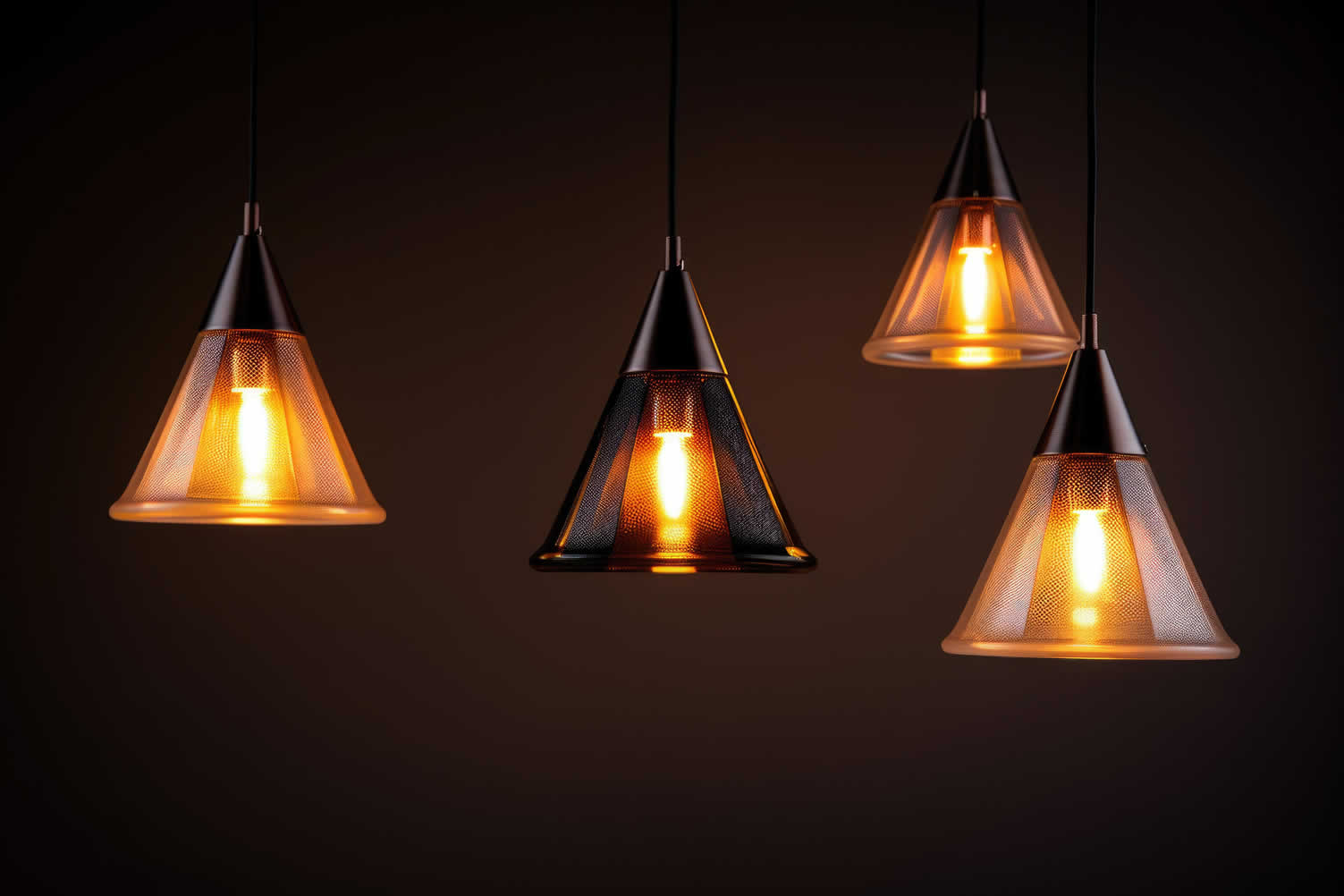

copyright image by 123rf.com
Lighting Tip 1: Mastering the Principles of Lighting Design
Notes:
-
Before you dive into the exciting world of home lighting design, take a moment to truly understand the fundamental principles of lighting itself.
It’s crucial to grasp the basics of how light behaves and interacts within a space, and particularly, to recognize the immense and often understated role that natural light plays in your home’s overall illumination and aesthetic.
Considering these elements first will lay a strong foundation for a harmonious and effective lighting setup for every room in the home.
-
Quick scroll to supporting notes …
-
-
1st: Key Principles of Home Lighting Design
Lighting is one of the most powerful tools in shaping the mood, functionality, and aesthetics of your home. When thoughtfully designed, it transforms living spaces, making them not only more beautiful but also highly practical.
To achieve this, it’s essential to consider the key principles that form the foundation of effective lighting design.
These principles guide everything from room functionality to energy efficiency, ensuring a harmonious and visually appealing environment. Here are the key principles of home lighting design:
[ view summary table: lighting principles ]
- Functionality:
Evaluate how each space will be used and ensure the lighting supports the room’s primary activities, such as cooking, reading, or relaxing. - Layered Lighting:
Combine ambient, task, and accent lighting to create depth and adaptability for different needs and moods. - Balance and Distribution:
Distribute light evenly throughout the room to eliminate shadows and dark corners, ensuring a cohesive flow. - Color Temperature:
Choose the appropriate color temperature (warm or cool) to complement the room’s purpose and design aesthetic. - Light Quality:
Opt for high-quality light sources that reduce glare and flickering, enhancing comfort and usability. - Control and Flexibility:
Incorporate dimmers, smart lighting, or adjustable fixtures to allow customization for various settings and preferences. - Scale and Proportion:
Select fixtures that fit the scale of the room and the overall design, avoiding lighting that feels overpowering or too minimal. - Visual Comfort:
Focus on minimizing glare while ensuring adequate brightness for each area, balancing practicality with gentle illumination. - Highlighting Features:
Use accent lighting to emphasize architectural details, artwork, or focal points, adding character and dimension to the room. - Sustainability:
Select energy-efficient options, such as LEDs, to reduce environmental impact and minimize electricity costs.
By adhering to these principles, you’ll create a lighting plan that enhances your home’s functionality, highlights its beauty, and supports your lifestyle in a sustainable and thoughtful way.
References:
Principle Description Key Benefit Functionality Evaluate the primary activities of each space and ensure the lighting supports them. Enhances practicality for tasks like cooking, reading, or relaxing. Layered Lighting Combine ambient, task, and accent lighting for depth and adaptability. Allows for flexible use and mood setting. Balance and Distribution Ensure even light distribution to avoid shadows and maintain flow. Creates a cohesive and harmonious space. Color Temperature Choose warm or cool lighting to match the room’s purpose and style. Enhances aesthetic appeal and functional comfort. Light Quality Use high-quality light sources to reduce glare and flicker. Improves comfort and usability of the space. Control and Flexibility Include dimmers, smart lighting, or adjustable fixtures for customization. Adapts lighting to various settings and preferences. Scale and Proportion Select fixtures that fit the room’s scale and design. Maintains visual balance and avoids excessive clutter or minimalism. Visual Comfort Minimize glare while providing adequate brightness for functionality. Balances practicality with gentle illumination. Highlighting Features Use accent lighting to showcase architectural details or focal points. Adds character and depth to the design. Sustainability Choose energy-efficient options like LEDs to save energy. Reduces costs and environmental impact. 

[ view diagram: principles of home lighting design]
[ youtube: Lighting Design 101]

- Functionality:
-
2nd: More About the "Foundational Principles"
Lighting plays an integral role in home design by influencing not only how a space looks but also how it feels and functions.
A thoughtfully designed lighting plan can elevate your home’s aesthetic appeal, provide necessary illumination for various tasks, and create a comforting atmosphere tailored to your daily life.
To achieve this balance, it’s essential to understand the foundational principles of home lighting and how to apply them effectively in your space.
[ view summary table: more about principles ]
-
Principles of Layering Light
Layering light is the cornerstone of any well-designed lighting scheme. It involves combining multiple types of lighting across different levels to achieve optimal visual comfort and flexibility.
Each layer serves a distinct purpose.
-
Ambient lighting acts as the base, providing overall illumination.
-
Task lighting focuses on specific areas where functionality is needed, such as reading or cooking.
-
Accent lighting, on the other hand, highlights architectural features, artwork, or decor elements, adding depth and character to a room.
A successful lighting plan seamlessly integrates all three layers, ensuring a space is both practical and visually engaging.
-
-
Using Distinct Types of Lighting
To create an effective lighting scheme, it’s important to understand the roles of ambient, task, and accent lighting.
-
Ambient lighting ensures that rooms are safely navigable and generally well-lit. It is usually achieved through ceiling fixtures like chandeliers, recessed lights, or even natural light sources.
-
Task lighting supports activities that require precision by delivering focused illumination, such as under-cabinet lights in the kitchen or desk lamps in a home office.
-
Accent lighting adds drama and style by drawing attention to design elements—think wall sconces, LED strips for shelving, or directional spotlights that highlight a gallery wall.
The right combination of these lighting types can transform an ordinary room into a dynamic and multi-functional space while increasing its aesthetic appeal.
-
-
Understanding Color Temperature
Color temperature is a key consideration in lighting design, which determines the color of light emitted by a fixture. Measured in Kelvin (K), color temperature can range from warm (2,700–3,000 K) to neutral (3,500–4,000 K) to cool (5,000–6,500 K).
-
Warmer temperatures, resembling candlelight or early sunrise, create a cozy, inviting atmosphere suitable for living rooms or bedrooms.
-
Neutral white light offers balance and clarity, ideal for kitchens or bathrooms where tasks are performed.
-
Cooler tones are generally used in workspaces or garages, as they enhance focus and visibility.
To better understand how color temperature influences the ambiance, consider how warm light evokes feelings of relaxation, while cool light fosters alertness and precision.
Use light source illustrations or samples to identify the perfect temperature for each room based on your lifestyle and preferences.
-
-
The Importance of Lumens
Lumens measure the brightness of a lighting fixture, which directly impacts its effectiveness in a specific space. Unlike wattage, which measures energy consumption, lumens indicate how much light a bulb emits.
For instance, a living room may benefit from a central pendant light offering around 1,500 lumens, supplemented by floor lamps or table lamps with outputs between 400-800 lumens each, creating a balanced and flexible environment.
Understanding lumens enables you to choose lighting solutions optimized for both functionality and ambiance in every area of your home while avoiding spaces that feel too dim or excessively bright.
-
Additional Factors in Lighting Design
Successful lighting design goes beyond the basic layering and technical specifications. It also considers elements like dimmability, fixture placement, and light diffusion.
Dimmable fixtures allow you to control the intensity of light, adapting it for different times of day or occasions. Proper placement of lights avoids shadows or overexposure, ensuring functionality remains uncompromised.
Additionally, fixtures that diffuse light evenly, such as frosted bulbs or shades, help maintain a soft, inviting glow, reducing stark contrasts.
Smart lighting systems also play an emerging role in modern homes, offering convenience with features like wireless app control, scheduling, and energy efficiency. When layered effectively, these advanced solutions bring both sophistication and sustainability to a lighting design.
-
Lighting Plan For Each Room
Because every room serves a different purpose, each has unique lighting needs. A good lighting plan considers these functional and design differences to ensure each space is both beautiful and practical.
From the bustling kitchen to the serene bedroom, a layered approach is essential. Let’s explore how to apply these lighting principles to the main rooms in your home, including tips for choosing and placing fixtures.
References:
Lighting Principle Description Key Tips Layering Light Combining ambient, task, and accent lighting to balance visual comfort and practicality. Integrate all three layers seamlessly for functionality and style. Types of Lighting Ambient provides overall illumination, task supports specific activities, and accent enhances design elements. Use ambient for navigation, task for precision, and accent for highlighting decor. Color Temperature Determines the color of light emitted, ranging from warm (2,700–3,000 K) to cool (5,000–6,500 K). Choose warm for relaxation, neutral for balance, and cool for focus or workspaces. Lumens Measure of brightness, impacting a fixture’s effectiveness in a space. Select appropriate lumens for each room to enhance functionality and ambiance. Additional Design Factors Includes dimmability, fixture placement, and light diffusion for refined lighting schemes. Consider smart lighting for flexibility and incorporate even light diffusion. [ pinterest: home lighting trends ]
[ youtube: It’s All About LIGHTING! ]
-
-
3rd: Natural Lighting and Your Home Lighting Plan
Designing a home lighting plan that prioritizes natural light is one of the most effective ways to create a bright, inviting, and energy-efficient living environment.
Natural lighting provides a myriad of benefits, including reduced energy consumption, enhanced mood and productivity, and the ability to showcase the true beauty of architectural and decor elements within a home.
Every room, from the kitchen to the bathroom, can be enhanced by purposeful strategies to incorporate sunlight into the space’s design.
Below, we explore how integrating natural light into your living spaces can elevate your home’s functionality and aesthetic appeal, while also improving overall well-being.
[ view summary table: about natural lighting ]
-
The Role of Natural Lighting in Kitchen Spaces
The kitchen, often referred to as the heart of the home, can be instantly transformed by maximizing daylight. Incorporating architectural features such as energy-efficient windows allows sunlight to flood the space, reducing dependency on artificial lighting during the day.
Skylights and solar tubes are excellent additions that channel natural light into the kitchen, especially for spaces with limited wall window options.
Reflective surfaces, such as mirrored backsplashes or light-colored countertops, can amplify the reach of natural light, making tight or dimly lit kitchens appear larger and more open.
This not only promotes a more welcoming environment but also provides a functional benefit by improving visibility for cooking and meal preparation tasks.
-
Natural Lighting for Bathrooms
Bathrooms, though often smaller in size, greatly benefit from well-thought-out lighting plans that incorporate natural light. Energy-efficient frosted glass windows or clerestory windows can allow daylight to stream in while maintaining privacy.
Similarly, using strategically placed mirrors can reflect and diffuse sunlight across the room, brightening shadowy corners and creating a spa-like atmosphere.
Natural light in bathrooms also facilitates a practical purpose, enhancing visibility for detailed tasks such as grooming or makeup application while providing a calming environment to start or end the day.
-
Living Spaces and Open Floor Plans
Common living areas such as the living room or dining room offer considerable opportunities for utilizing natural light to create a comfortable and visually appealing ambiance.
Large, energy-efficient picture windows or sliding glass doors can serve as focal points for these spaces while inviting an abundance of daylight.
Open floor plans are especially effective at encouraging the flow of natural light from one area to another. By minimizing interior walls and barriers, sunlight can penetrate further into the home, lending a cohesive and airy feel to the overall design.
Decor elements such as metallic finishes, light-colored rugs, and glass furniture can further reflect and amplify natural light, ensuring every inch of the space feels luminous and inviting.
-
Enhancing Bedrooms with Natural Light
Bedrooms benefit from thoughtful natural lighting integration by promoting a healthy sleep-wake cycle.
Expansive windows with blackout capabilities, such as energy-efficient double-glazed designs, provide the flexibility of allowing morning light in while also ensuring privacy and comfort at night.
Incorporating sheer curtains or using light-filtering blinds can soften the intensity of the sunlight while maintaining the benefit of illuminating the space during the day.
Solar tubes can also bring in natural light to windowless bedrooms or areas, ensuring even compact spaces have access to the energizing effects of daylight.
-
The Health Benefits of Natural Lighting
Beyond its aesthetic advantages, natural light offers significant health benefits that make it an essential element of any home design. Sunlight exposure plays a critical role in regulating the body’s circadian rhythm, improving sleep quality and overall mood.
Studies have shown that increased access to natural light can boost productivity, reduce stress levels, and even enhance mental health by promoting vitamin D production.
By incorporating sunlight into indoor environments, homeowners can create spaces that foster wellness and comfort for the entire family.
References:
Space Natural Lighting Solutions Benefits Kitchen Energy-efficient windows, skylights, solar tubes, reflective surfaces (e.g., mirrored backsplashes, light countertops) Reduces dependency on artificial lighting, improves visibility for tasks, creates an open and welcoming environment Bathroom Frosted/clerestory windows, strategically placed mirrors Ensures privacy while allowing natural light, brightens shadowed areas, and enhances functionality for grooming or self-care tasks Living Spaces Large picture windows, sliding glass doors, open floor plans, reflective decor (e.g., metallic finishes, glass furniture) Creates a bright, airy ambiance; enables sunlight to flow freely; enhances overall comfort and aesthetic appeal Bedrooms Expansive windows with blackout capabilities, sheer curtains, solar tubes Promotes a healthy sleep-wake cycle, offers flexibility between light and privacy, enhances wellness General Design Tips Low-E energy-efficient windows, solar tubes, open-concept layouts, reflective surfaces Optimizes natural light distribution, reduces energy consumption, improves aesthetics, and supports sustainable living 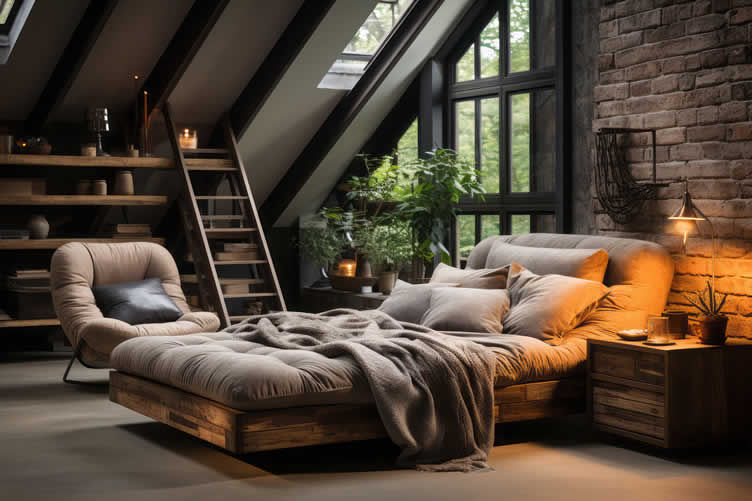
copyright image by 123rf.com
[ view diagram: increasing natural light in home ]
[ youtube: how to increase natural light in house]
-
-
-
ideas to view and compare from the information discussed above
book: home lighting designlight switch coversmart switches for lights
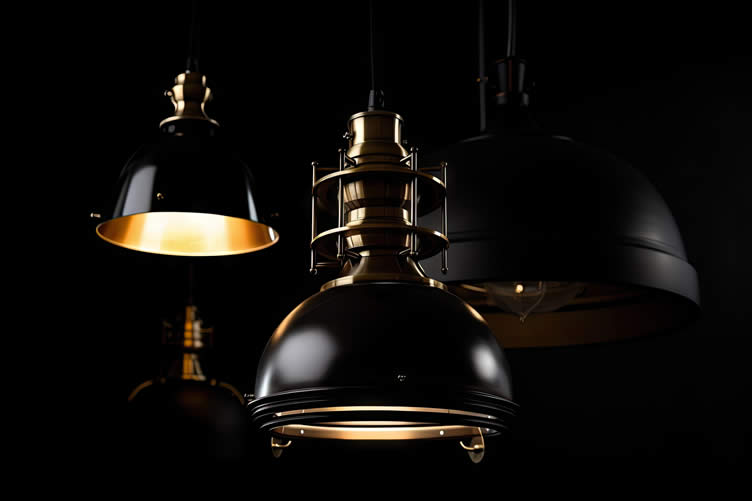
Scroll up to directory … or scroll to next section about this home lighting guide …



… remodeling decisions


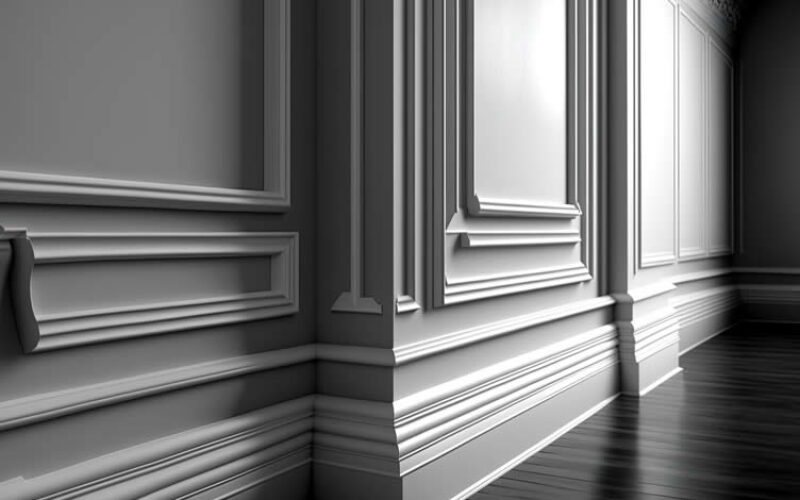

second “photo remodeling” idea
copyright image by 123rf.com
Lighting Tip 2: Kitchen Lighting
Notes:
-
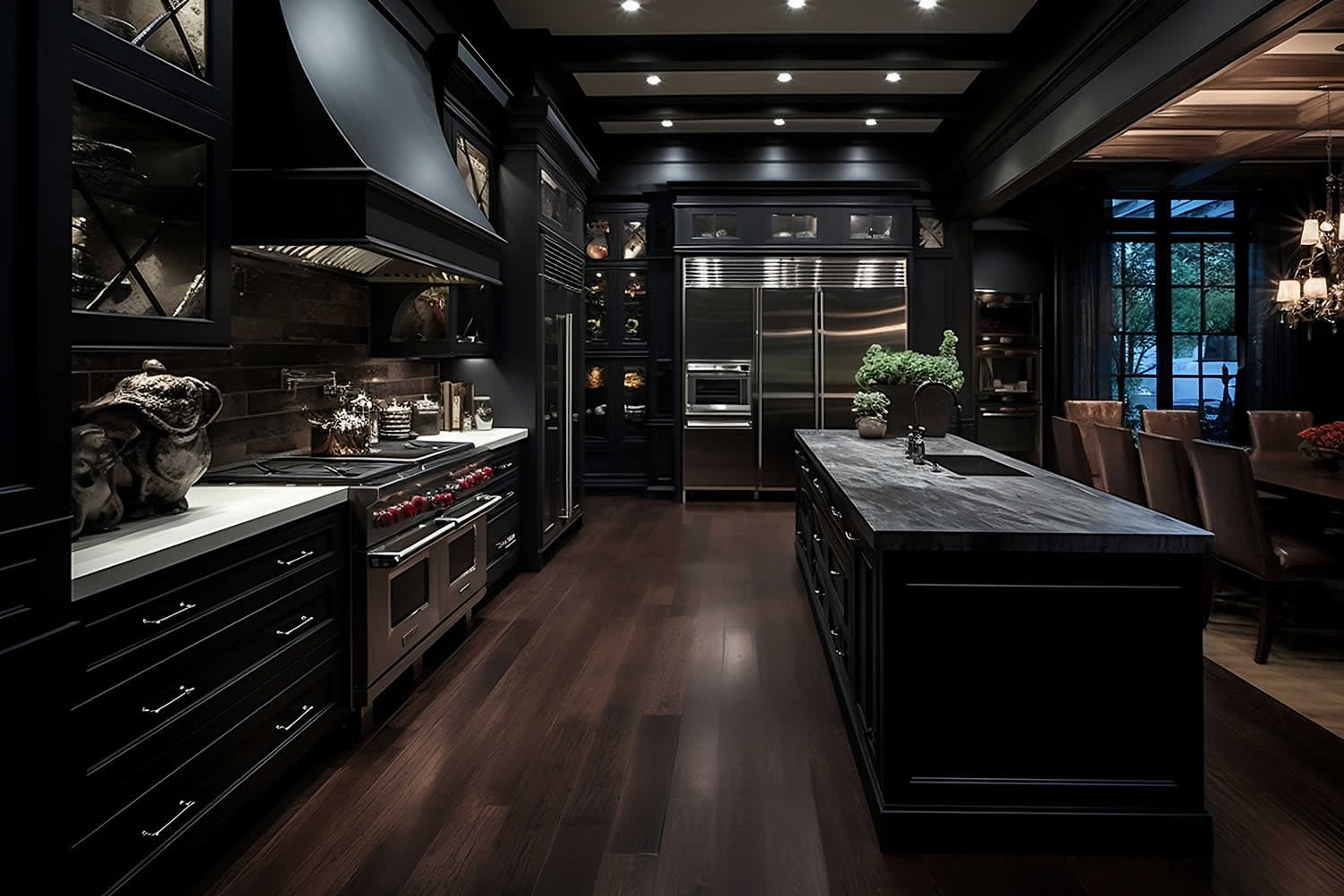
The kitchen is arguably the most multi-functional room in the home, serving as a space for cooking, dining, and socializing. Its lighting plan must be equally versatile. Effective kitchen lighting addresses the challenges of eliminating shadows in work areas while creating an inviting atmosphere for guests.
A layered approach combines bright, functional light for food preparation with softer, warmer light for dining and entertaining. As seen in kitchens designed by Studio McGee, layering is essential for a space that is both a workhorse and a showpiece.
-
Quick scroll to supporting notes …
-
-
1st: Kitchen Lighting Types
Lighting in the kitchen is an essential aspect of functional and aesthetic design. By carefully selecting and layering different types of light fixtures throughout the space, you can create an environment that is both practical for cooking and inviting for social gatherings.
Below, we will explore the various lighting types and their applications in detail, providing guidance to help you choose fixtures that enhance your kitchen’s style and functionality.
[ view summary table: types kitchen lighting ]
-
Ceiling Lighting Fixtures
Ceiling-mounted lighting serves as the foundational layer of illumination in any kitchen. Common types include recessed lighting, flush-mount fixtures, and pendant lights.
- Recessed lighting, often installed directly into the ceiling in a grid-like pattern, provides even and unobtrusive general illumination across the space.
- Flush-mount fixtures are ideal for kitchens with lower ceilings, offering a compact yet stylish solution to broadly distribute light.
- Pendant lights, on the other hand, bring a decorative flair while focusing light directly downward, often used in clusters over kitchen islands or larger open spaces.
Combining these options thoughtfully creates a well-lit and balanced atmosphere, suitable for both cooking and entertaining.
-
Wall Lighting Fixtures
Wall sconces and swing-arm fixtures are excellent for adding layers of ambient light and visual interest to the kitchen. Wall sconces can frame architectural features or be mounted near open shelving to offer soft illumination while enhancing the room’s design.
Similarly, swing-arm fixtures provide adjustable lighting, making them a practical choice for illuminating specific areas such as a breakfast nook or accent walls.
Both options work particularly well in smaller kitchens, where space-saving solutions are needed without sacrificing style or functionality.
-
Task Lighting for Work Areas
Task lighting is critical in ensuring that work areas, such as countertops, cooking stations, and sinks, are well-lit for safety and precision.
-
For countertops, under-cabinet LED strips or puck lights provide bright, focused illumination, eliminating shadows and making ingredients and tools easily visible.
-
Range hood lighting is indispensable for the cooking station, often integrated within the appliance to illuminate the stovetop evenly.
-
Pendant lighting can also be installed directly above sinks for focused light that enhances visibility when washing up.
For additional prep spaces, consider portable task lamps or integrated lighting that adapts to your needs.
-
-
Kitchen Island Lighting Fixtures
The kitchen island often serves as a multi-functional hub for cooking, dining, and even working. Stylish pendant lights are a standout choice to illuminate this area effectively.
Depending on the island’s size, a series of two to three pendant lights provide even light distribution while adding a design-forward touch.
For a more contemporary approach, linear suspension lights—sleek fixtures that stretch across the length of the island—offer clean, uninterrupted illumination.
Adjustable dimmer switches can enhance flexibility, allowing for brighter light during meal prep and subtle, ambient lighting during social gatherings.
-
Lighting for the Kitchen Dining Area
For kitchen dining areas, the lighting should be soft and welcoming, creating an intimate atmosphere conducive to meals and conversations.
Chandeliers or drum-shaped pendant lights centered above the dining table often act as functional yet statement-making focal points. Fixtures with frosted or fabric shades help diffuse light, preventing harsh glare and creating a cozy ambiance.
Additionally, dimmable options are ideal for adjusting light intensity to suit various occasions, from casual family breakfasts to evening dinner parties.
-
Floor Lighting Fixtures
While less common, floor lighting can offer innovative solutions for enhancing kitchen aesthetics and safety.
Toe-kick lighting, installed beneath lower cabinetry, provides a subtle glow that not only highlights flooring materials like tile or hardwood but also increases visibility at night.
Portable floor lamps can be positioned in larger kitchens to add a decorative and flexible light source.
These fixtures are particularly useful in open-concept kitchens, where adjoining living spaces benefit from having adaptable lighting options that can be moved or reoriented as needed.
References:
Lighting Type Features Applications Examples Ceiling Lighting Provides general illumination; includes recessed lighting, flush-mount fixtures, and pendant lights. Ideal for evenly lighting large areas; pendant lights often used over islands or open spaces for decorative flair. Recessed lighting, flush-mount lights, decorative pendants. Wall Lighting Adds ambient light and visual interest; includes wall sconces and swing-arm fixtures. Enhances architectural features; useful for compact kitchens or as accents near shelving or breakfast nooks. Wall sconces, adjustable swing-arm fixtures. Task Lighting Focuses on specific work areas for safety and precision; often LED strips, puck lights, or integrated fixtures. Used for countertops, cooking stations, sinks, and prep spaces. Under-cabinet LED lights, range hood lighting, pendant lights above sinks. Kitchen Island Lighting Stylish and functional illumination; includes pendants or linear suspension lights. Perfect for multi-functional spaces like cooking, dining, or working; adjustable options enhance versatility. Pendant lights, linear suspension fixtures with dimmer switches. Dining Area Lighting Creates a soft, inviting atmosphere; often features dimmable options for versatility. Centered above dining tables for meal and conversation settings. Chandeliers, drum-shaped pendants, frosted or fabric-shaded fixtures. Floor Lighting Innovative solutions for aesthetics and safety; includes toe-kick lighting or portable floor lamps. Highlights flooring materials and improves visibility, especially in open-concept kitchens. Toe-kick LED lights, portable decorative floor lamps. 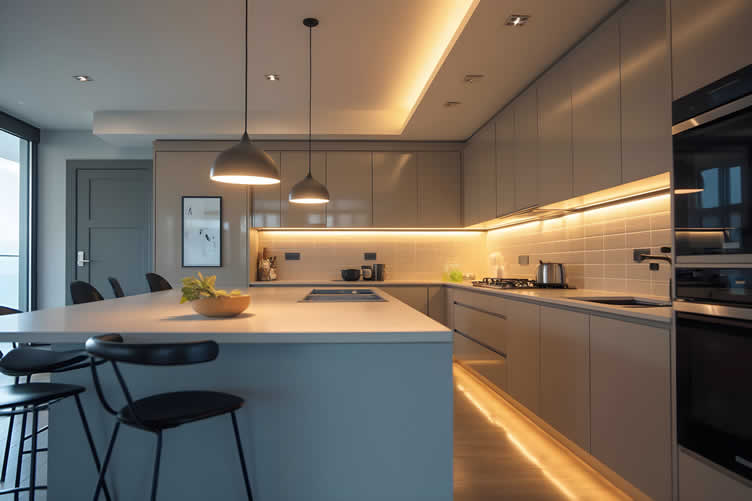
AI generated image by 123rf.com
Kitchen Ambient Lighting
google imageschandeliers view samples ceiling flush mounts view samples semi-mounts view samples sconces view samples recessed lighting view samples track lighting view samples Kitchen Task Lighting
google imagesdirectional recessed view samples pendant lighting view samples under cabinet view samples range hood lights view samples Kitchen Accent Lighting
google imagestrack lighting view samples rail lighting view samples above cabinet view samples floor lighting view samples tape and extrusion view samples -
-
2nd: Kitchen Lighting Color and Lumens
Proper lighting is crucial in this space, not only to ensure safety and practicality but also to create an inviting ambiance. From food preparation to entertaining guests, the lighting design should address both task-specific and aesthetic needs.
Understanding kitchen lighting color temperatures and lumen recommendations is essential to crafting a space that is both efficient and visually appealing. Below, we’ll explore the key aspects of kitchen lighting to help you make informed decisions.
[ view summary table: color and lumens ]
-
Types of Color Temperature for the Kitchen
Color temperature, measured in Kelvins (K), plays a significant role in determining the mood and functionality of your kitchen lighting.
-
Warmer color temperatures, typically from 2700K to 3000K, produce a soft yellowish light, ideal for creating a cozy and welcoming atmosphere in dining or entertainment areas within the kitchen.
-
On the other hand, neutral white light, ranging from 3500K to 4100K, balances warmth and brightness, making it an excellent choice for overall ambient lighting that feels natural and complements various design styles.
-
For task areas such as countertops and cooking zones, a cooler color temperature (around 5000K to 6500K) is preferable. Cool white or daylight-like lighting provides sharp clarity, ensuring that you can see details clearly while chopping vegetables or following recipes.
Blending color temperatures within a kitchen can help define different zones, offering both aesthetic variety and functional benefits in this multi-purpose space.
-
-
Recommended Lumens for the Kitchen
Lumens measure the brightness of light, and the appropriate amount is critical for creating a well-lit kitchen environment.
For general ambient lighting, a kitchen typically requires 5,000 to 10,000 lumens, depending on the size of the space. Larger kitchens with open layouts or darker finishes may necessitate higher lumen levels to eliminate shadows and provide an even distribution of light.
Task lighting, particularly for work areas like the sink, stove, or island, should be significantly brighter to enhance visibility. These zones should have lighting that provides an additional 450 lumens per square foot to ensure safe and precise work.
Layering your lighting with a mix of ambient, task, and accent lighting can help you achieve the perfect luminescence for every kitchen activity.
-
Additional Lighting Considerations
Beyond color temperature and lumens, several other factors can influence the success of your kitchen lighting design. Dimmable fixtures are a flexible choice, allowing you to adjust the brightness levels throughout the day.
For instance, brighter light can be used during meal prep, while softer light can create a more relaxed atmosphere for casual dining or evening gatherings.
Energy efficiency is another vital aspect, with LED lights being the most cost-effective and long-lasting option. They consume significantly less electricity compared to traditional incandescent bulbs and are available in a variety of color temperatures and brightness levels.
Carefully choosing fixtures that complement the kitchen’s style is equally important; pendant lights, recessed lighting, and under-cabinet fixtures all serve distinct purposes and can enhance the overall look of the space.
Proper placement of lights also ensures functionality and aesthetics. Task lights should be positioned directly above work zones to eliminate shadows, while accent lighting can highlight architectural elements or decorative features.
Additionally, under-cabinet lighting can reduce countertop shadows created by overhead lights, ensuring a bright workspace.
Sources and Citations
Aspect Description Recommendations Color Temperature Measured in Kelvins (K), it determines the mood and functionality of lighting. – Warm (2700K-3000K): Cozy, ideal for dining/entertainment areas.
– Neutral (3500K-4100K): Ambient, natural feel.
– Cool (5000K-6500K): Sharp clarity for task zones.Lumens Measures the brightness of light, critical for proper illumination in kitchens. – Ambient lighting: 5,000 to 10,000 lumens.
– Task lighting (work zones): 450 lumens per square foot.Additional Considerations Factors that enhance functionality, aesthetics, and energy efficiency. – Dimmable fixtures for adjustable brightness.
– LED lights for energy efficiency and longevity.
– Proper placement reduces shadows.
– Stylish fixtures (e.g., pendants, under-cabinet) enhance décor.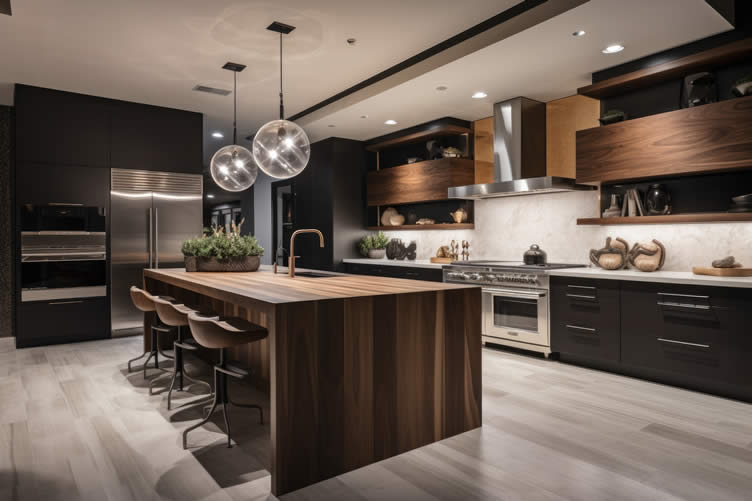
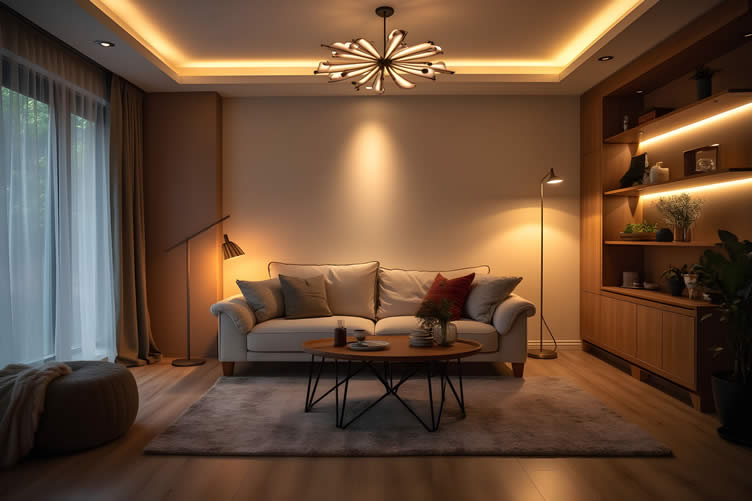
copyright image by 123rf.com
-
-
3rd: Lighting Placement and Spacing by Zone
Lighting plays a crucial role in the functionality and ambiance of a kitchen. Thoughtful placement and appropriate spacing of lighting create a balanced environment that enhances visibility, reduces shadows, and highlights key areas.
A well-lit kitchen is essential for preparing meals, ensuring safety, and elevating the aesthetic appeal of the space.
To achieve optimal results, it is important to address each kitchen zone individually while adhering to expert guidelines for light positioning and spacing.
[ view summary table: placement and spacing ]
-
Task Lighting for Countertops and Workspaces
Countertops serve as the heart of kitchen activity, requiring focused and evenly distributed lighting. Under-cabinet lighting is ideal for this zone, as it provides task lighting directly where food preparation takes place.
Install lighting fixtures close to the front edge of cabinetry, ensuring light washes down across the countertop while minimizing shadows. Spacing between fixtures or LED strips should be consistent, ideally no more than 12 inches apart for an even spread of illumination.
This setup ensures that the entire countertop area is bright and practical for detailed tasks like chopping, measuring, and reading recipes.
-
Overhead Lighting for General Illumination
For overall kitchen brightness, well-placed overhead lighting is fundamental. Recessed lights evenly distributed across the ceiling are a popular option, as they provide widespread illumination without cluttering the space.
Lights should be spaced approximately 4 to 6 feet apart, with placement tailored according to the size and layout of the kitchen. Incorporate dimmer controls to allow for adjustable brightness levels that can suit different tasks or moods.
Ensuring that these ceiling fixtures are properly aligned and staggered avoids areas of excess brightness or shadow.
-
Island and Peninsula Lighting
Kitchen islands and peninsulas often have dual functions as food prep spaces, dining areas, or social hubs. Pendant lights are a favored choice for these zones, offering both function and style.
Place pendants approximately 30 to 36 inches above the countertop surface to provide sufficient task lighting while allowing unobstructed views.
The spacing between pendants should be evenly distributed, typically around 24 to 30 inches apart for a harmonious effect. Depending on the length of the island or peninsula, use two or three pendants to ensure consistent light coverage.
-
Accent Lighting for Cabinets and Display Areas
Accent lighting adds depth, visual interest, and functionality to cabinets and display areas. Integrated LED strip lighting can be installed within glass-front cabinets or along open shelving to illuminate items like fine china, glassware, or decorative pieces.
Ensure the spacing between LEDs provides uniform brightness without creating harsh spots of light. Additionally, toe-kick lighting under base cabinets adds a subtle yet impactful accent that improves nighttime visibility in the kitchen.
-
Special Considerations for Sink Areas
Since sinks serve as both prep and cleaning zones, proper lighting is essential here. A recessed or directional light directly above the sink ensures focused illumination for washing and rinsing without creating shadows.
For optimal placement, position fixtures 12 to 18 inches in front of the sink and align them centrally to cast light evenly over the entire area. Pairing this task-specific lighting with general kitchen illumination ensures the sink zone is well-lit for all activities.
Properly designed lighting in a kitchen is not just about placement and spacing but about creating a layered effect that combines task, ambient, and accent lighting.
By addressing the unique requirements of each zone, homeowners can achieve a kitchen space that is efficient, safe, and aesthetically pleasing.
References:
Kitchen Zone Lighting Type Placement and Spacing Purpose Countertops and Workspaces Under-Cabinet Lighting – Fixtures close to the front edge of cabinetry
– Spacing no more than 12 inches apartProvides focused lighting for tasks like chopping, measuring, and reading recipes. General Kitchen Area Recessed Ceiling Lights – Spaced 4 to 6 feet apart
– Adjustable brightness via dimmer controlsEnsures overall brightness and eliminates excessive shadows or overly bright spots. Island and Peninsula Pendant Lights – Placed 30 to 36 inches above countertop
– Spacing of 24 to 30 inches between pendantsOffers task lighting and aesthetic appeal for food prep, dining, and social functions. Cabinets and Display Areas Accent Lighting – Integrated LEDs in glass-front cabinets or shelves
– Consistent spacing for uniform brightnessAdds depth and highlights decorative pieces while improving nighttime visibility. Sink Area Recessed or Directional Lighting – Positioned 12 to 18 inches in front of the sink
– Aligned centrally above the sinkProvides focused illumination for washing and rinsing tasks without creating shadows. 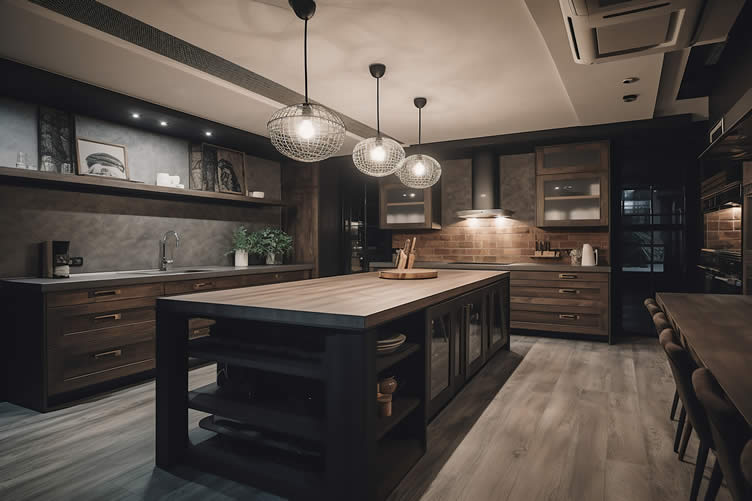
copyright image by 123rf.com
[ view diagram: kitchen lighting plan/layout ]
[ pinterest: kitchen lighting ]
[ youtube: Dining & Kitchen LIGHTING Do’s and Don’ts! ]
-
-
-
ideas to view and compare from the information discussed above
Scroll up to directory … or scroll to next section about this home lighting guide …

Tackling home upgrades and fulfilling all your home improvement needs …

… save this curated directory of ideas for future reference.




Download this PDF for a concise summary of all you need to know about …?




May We Suggest Other Photo Remodeling Ideas About
“Lighting It Up …” (new win)



third “photo remodeling” idea
copyright image by 123rf.com
Lighting Tip 3: Bathroom Lighting
Notes:
-
Bathroom lighting requires a careful balance of functionality, safety, and ambiance. Given the presence of moisture, all fixtures must be damp- or wet-rated for safety.
The most critical lighting in a bathroom is at the vanity, where tasks like shaving and applying makeup require clear, even illumination. Poorly placed lights can create unflattering shadows on the face, a common issue seen in many homes.
-
Quick scroll to supporting notes …
-
-
1st: Bathroom Lighting Types
Proper lighting is a key element in bathroom design, combining functionality with aesthetic appeal to create a space that is both practical and welcoming. Ensuring the right balance of light depends on understanding the various types of lighting available for different bathroom areas and their unique functions.
Below are detailed descriptions of lighting fixture types ideal for ceilings, walls, mirrors, task areas, and even flooring.
[ view summary table: bathroom lighting types ]
-
Lighting Fixtures for the Ceiling
Ceiling lighting is pivotal in setting the overall tone of the bathroom.
-
Recessed lighting, often referred to as can or pot lights, is a popular choice for modern bathrooms thanks to its clean, unobtrusive design. These fixtures provide even ambient lighting and can be strategically installed to illuminate key areas of the room.
-
For bathrooms with higher ceilings, pendant lights or small chandeliers offer a decorative element while maintaining sufficient illumination.
It’s essential to choose damp-rated fixtures for these applications to ensure safety in a moisture-rich environment. Additionally, integrated LED lights in ceiling panels provide an energy-efficient and modern solution for soft, diffused lighting throughout the bathroom.
-
-
Lighting Types for the Vanity
When it comes to vanity lighting, choosing the right type can elevate both functionality and aesthetics.
-
Overhead lighting, such as flush-mounted fixtures or small chandeliers, provides general illumination while adding a touch of elegance to the space.
-
Pendant lights are another stylish option, offering a modern design element while casting focused light downwards.
For an energy-efficient and customizable solution, consider LED fixtures with adjustable brightness and color temperature, ensuring you always have the ideal light for every scenario.
Combining multiple types of lighting can further enhance the ambiance and usability of your vanity area.
-
-
Lighting Fixtures for the Walls
Wall-mounted lighting fixtures contribute significantly to the ambiance and functionality of a bathroom.
-
Sconces are among the most common choices, typically installed on either side of a mirror for symmetry and balanced illumination.
-
Swing-arm wall lights, offering adjustable positioning, are another functional choice for variable lighting needs.
When selecting wall fixtures, consider those with frosted or diffused glass shades to reduce glare and create a soft, calming glow. Wall lights with a metallic or matte finish can also serve as a stylish accent to complement the bathroom’s decor.
-
-
Lighting Types for the Mirror
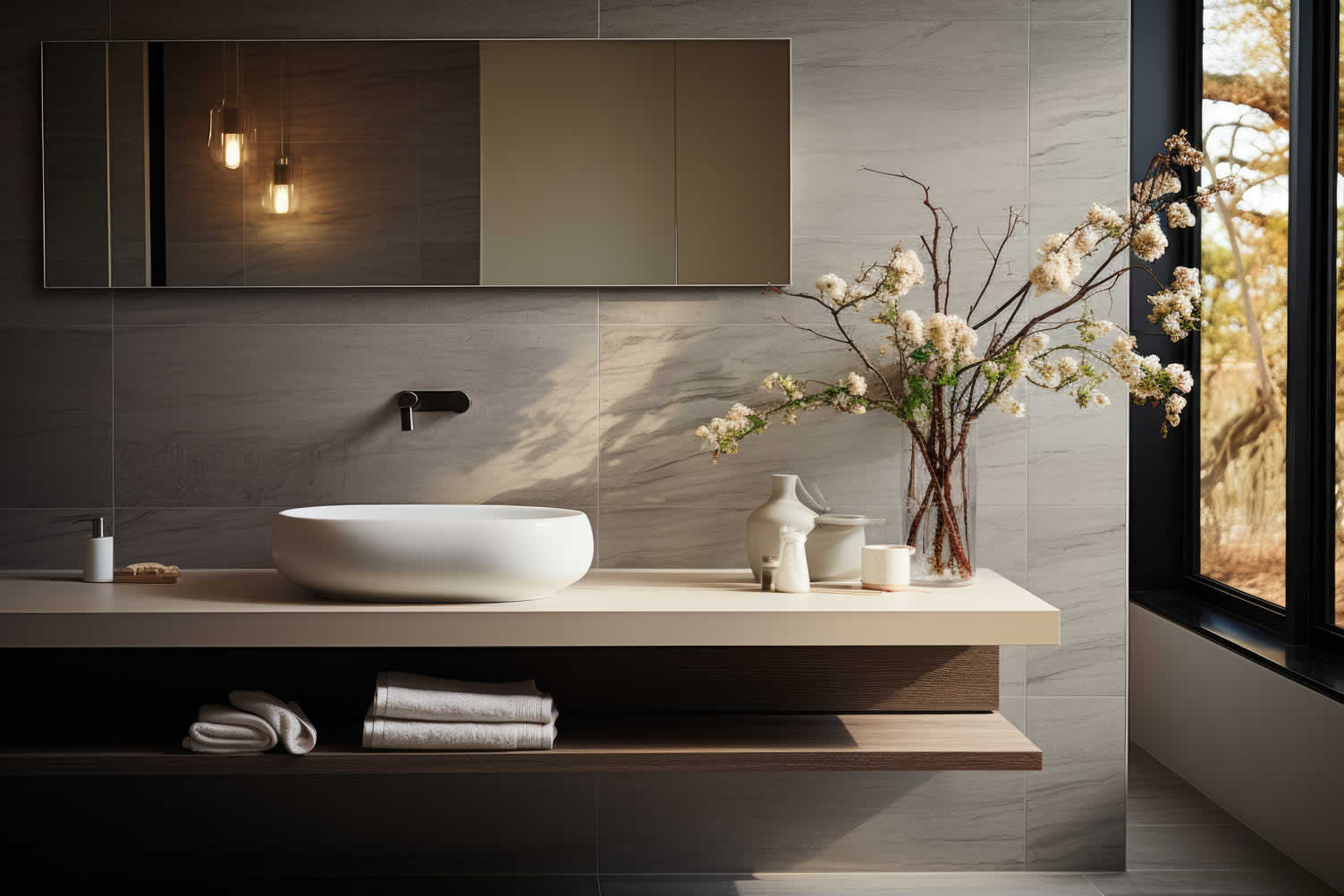
Mirror lighting is crucial for activities like grooming and makeup application, making it one of the most vital aspects of bathroom illumination. Integrated LED mirror lights are a sleek option, providing bright yet evenly distributed light with minimal shadowing.
Backlit mirrors serve as another innovative choice, enhancing the mirror’s aesthetic appeal while offering soft, ambient light.
If separate fixtures are preferred, vertical strip lights installed along the sides of the mirror deliver optimal clarity, as they eliminate shadows and provide even light coverage across the face.
-
Lighting Fixtures for Task Areas
Task lighting ensures that specific functional areas of the bathroom are well-lit for safety and utility.
-
For the shower, recessed lighting with a wet rating is essential to withstand exposure to water. Fixtures with adjustable angles can help direct light exactly where it is needed.
-
Over bathtubs, consider gentle pendant lights or ceiling-mounted fixtures rated for damp conditions to provide a relaxing ambiance.
-
Task lighting around the toilet area can be as simple as a small ceiling light or wall-mounted sconce to illuminate the space discretely.
-
For added utility, LED strip lighting installed under shelves or cabinets can illuminate organizational zones and other functional areas, ensuring no detail is overlooked.
-
-
Lighting Fixtures for the Floor
Floor lighting in bathrooms is often overlooked, but it can elevate both the functionality and mood of the space.
Low-profile LED strip lights or recessed floor fixtures can be installed along pathways or under cabinets to provide subtle navigation lighting in darker hours.
These lights are not only energy-efficient but also add a touch of luxury by creating a layered lighting effect.
Motion-activated options are particularly helpful for nighttime use. Materials used in floor lighting fixtures should be highly durable and designed to endure regular cleaning, moisture, and contact with water.
References:
Lighting Type Features Ideal Usage Recommendations Ceiling Lighting Recessed lights, pendant lights, small chandeliers, LED integrated panels Ambient lighting for the overall space Damp-rated fixtures for moisture resistance, especially in modern designs Vanity Lighting Overhead fixtures, pendant lights, adjustable LED options Task lighting for grooming and makeup application Combine fixtures for balanced illumination; opt for dimmable LED lights Wall Lighting Sconces, swing-arm wall lights, frosted or diffused glass shades Ambiance and lateral lighting near mirrors Focus on symmetry and reduced glare; metallic finishes for style Mirror Lighting Integrated LED mirrors, backlit mirrors, vertical strip lights Optimal lighting without shadows for grooming Consider evenly distributed light sources for clarity Task Lighting Wet-rated recessed lights, pendant lights, LED strips Specific areas like showers, bathtubs, and toilets Include adjustable fixtures or motion-activated options Floor Lighting LED strip lights, recessed floor fixtures, motion-activated lighting Navigation and layered lighting effects Durable, moisture-resistant materials; ideal for luxury accents 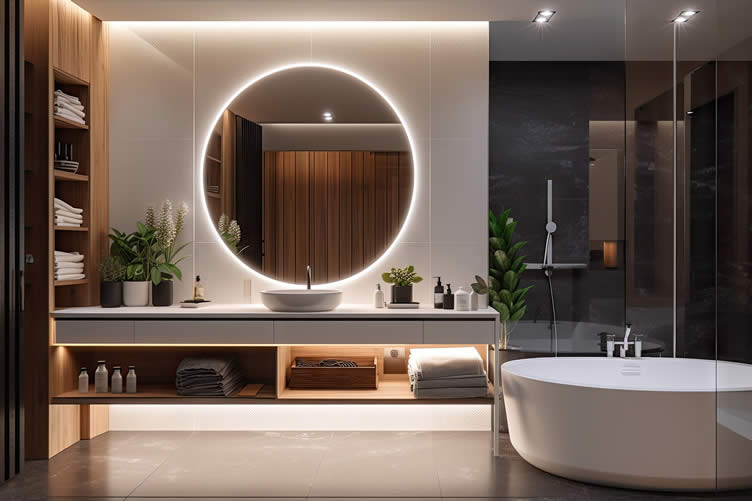
copyright image by 123rf.com
-
-
2nd: Bathroom Lighting Color and Lumens
Choosing the right color temperature and determining the appropriate lumens ensures an inviting atmosphere while fulfilling the bathroom’s unique needs, such as grooming, makeup application, and relaxation.
This section provides expert insights and guidance to help you make informed decisions on bathroom lighting design.
[ view summary table: color and lumens ]
-
Color Temperature for Bathroom Lighting
Color temperature is an essential element when selecting bathroom lighting as it affects both the ambiance and usability of the space. Measured in Kelvins (K), color temperature determines the light’s appearance, ranging from warm to cool tones.
For bathrooms, a neutral to cool white light is typically recommended. A color temperature between 3000K and 4000K strikes an ideal balance, offering a crisp, clean light that mimics natural daylight.
This range promotes clarity, making daily tasks like shaving, skincare, and makeup application easier and more precise.
For areas such as vanity mirrors, cooler light between 4000K and 5000K is preferred, as it closely resembles daylight and renders skin tones more accurately.
However, in areas meant for relaxation, such as around bathtubs or shower spaces, opting for warmer light closer to 2700K-3000K can create a more soothing and spa-like ambiance.
-
Determining the Right Amount of Lumens
Lumens measure the brightness of light, and choosing the proper amount is critical for ensuring adequate illumination throughout the bathroom. On average, bathrooms require approximately 70-100 lumens per square foot to achieve functional lighting.
For instance, a small 40-square-foot bathroom may need 2800 to 4000 total lumens, while larger bathrooms might require upwards of 5000 lumens to maintain sufficient lighting across all sections.
Dividing these lumens across task lighting, ambient lighting, and accent fixtures ensures an even distribution and avoids shadows or glare.
Task lighting above a vanity or sink area generally demands higher brightness, often requiring around 1600 lumens per fixture to ensure clarity.
On the other hand, ambient overhead lighting may supply a softer illumination of around 1000-2000 lumens, depending on the size of the room.
Always consider dimmable lighting solutions to offer flexibility in brightness levels, transitioning seamlessly between functional and calming settings.
-
Additional Considerations for Bathroom Lighting
When designing a bathroom lighting plan, understanding placement, layering, and fixture selection is equally important. Optimal placement minimizes shadows and enhances visibility.
For instance, wall-mounted lights flanking a vanity mirror provide even lighting across the face, reducing harsh shadows caused by overhead fixtures alone.
Layering light sources, such as combining recessed ceiling lights with decorative sconces and under-cabinet lighting, creates a balanced and inviting environment.
Additionally, ensure that all fixtures used in wet or damp zones adhere to safety standards, such as IP rating specifications.
Incorporate LED lighting to promote energy efficiency and reduce long-term costs without sacrificing brightness or color quality.
LEDs, particularly those with a CRI (Color Rendering Index) above 90, offer superior light quality, ensuring the fine details of colors and textures are accurately rendered within the bathroom space.
Sourcing and Citations
Aspect Recommendation Details Color Temperature 3000K – 4000K Neutral to cool white light for functional tasks like makeup application and grooming. For relaxing areas (bathtub/shower), opt for warmer tones (2700K – 3000K).
Lumens 70-100 lumens per sq. ft. Small bathrooms (~40 sq. ft.): 2800-4000 lumens.
Large bathrooms require 5000+ lumens.Task lighting (e.g., vanity): 1600 lumens per fixture.
Ambient lighting: 1000-2000 lumens.
Lighting Placement Even distribution Wall-mounted lights flanking mirrors minimize shadows. Layer light sources with recessed lights, sconces, and under-cabinet lighting.
Fixture Selection Safety & Quality Use fixtures with appropriate IP ratings for wet/damp zones. Opt for LEDs with CRI above 90 for accurate color rendering and energy efficiency.
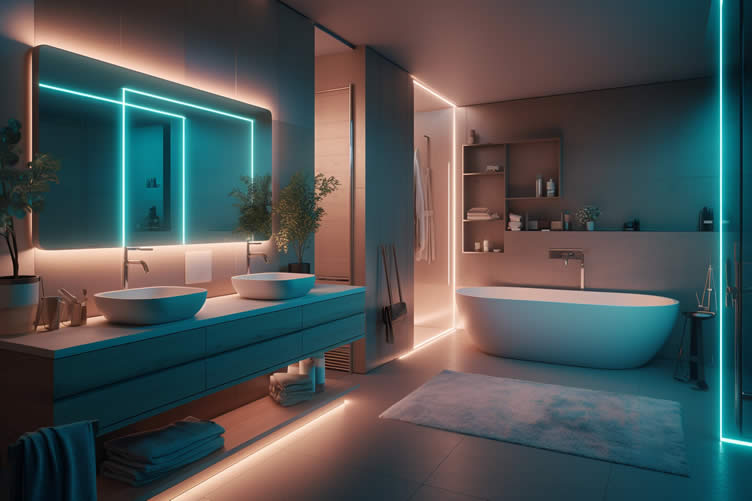
copyright image by 123rf.com
-
-
3rd: Lighting Placement and Spacing by Zone
Understanding the ideal placement and spacing of light fixtures in different zones of the bathroom ensures balanced illumination, prevents shadows, and enhances the overall aesthetic.
Below, we outline the key considerations for optimizing bathroom lighting placement and spacing by zone, adhering to expert guidelines and industry standards.
[ view summary table: placement and spacing ]
-
Vanity Zone
The vanity area is often the most used and requires focused, even lighting suitable for grooming tasks such as shaving or applying makeup.
The recommended placement for vanity lighting is at eye level on either side of the mirror, approximately 36 to 40 inches apart to reduce shadows on the face.
For larger mirrors, side-mounted vertical fixtures should extend at least 28 inches in height, starting 66 inches above the floor.
If space constraints prevent side lighting, an over-mirror fixture should be installed 75 to 80 inches from the floor and extend across the width of the mirror for uniform illumination.
Brightness levels should align with a color temperature of 3000K to 4000K for natural color rendering.
-
Shower and Bath Zone
The shower and bath area requires light fixtures designed for damp environments and compliant with UL Wet or Damp rating standards.
To avoid glare while still providing sufficient light for safety and visibility, recessed lighting is an ideal choice.
Fixtures should be installed directly above the center of the shower or tub, ensuring a spacing of 36 inches or more between any adjacent overhead lights to avoid overlapping light beams.
LED options with a color temperature of 2700K to 3000K are often recommended for this zone, balancing a calm ambiance with functional lighting.
-
General Ambient Zone
Ambient lighting serves as the foundation for creating a balanced and inviting bathroom space. Ceiling-mounted fixtures, such as flush mounts or semi-flush pendants, should be centered in the room for even light distribution.
These fixtures should be spaced a minimum of six feet apart in larger bathrooms to prevent overly concentrated light in one area.
For smaller bathrooms, one central fixture may suffice. To complement ambient sources, wall sconces or cove lighting can provide additional softness and depth while reducing harsh contrasts.
Dimmers are highly encouraged, as they offer adjustable brightness to suit different times of day and user preferences.
-
Toilet Zone
Lighting in the toilet zone is often overlooked but critical for safety and convenience. A simple recessed or surface-mounted fixture works well in this area, positioned directly above the toilet at a height of 7 to 8 feet from the floor.
Spacing of at least three feet from adjacent lights creates adequate yet focused illumination, avoiding intense brightness.
Using a color temperature between 2700K and 3000K is suggested to maintain consistency with the overall bathroom ambiance.
-
Final Considerations
When planning bathroom lighting placement and spacing, always consider layering light for added functionality and appeal. Combining task, ambient, accent, and decorative lighting allows for a dynamic design that caters to various moods and practical needs.
Ensure all fixtures comply with local electrical building codes, including the National Electric Code (NEC), and use GFCI-protected circuits in moisture-prone zones.
Additionally, consider energy-efficient LED options with high color rendering index (CRI) ratings to enhance visual clarity while minimizing energy consumption.
References:
Bathroom Zone Lighting Recommendations Spacing & Placement Additional Notes Vanity Zone Side-mounted or over-mirror lighting with 3000K-4000K color temperature. Side fixtures 36-40 inches apart at eye level, or over-mirror 75-80 inches from floor. Ensures even lighting for grooming tasks; avoid shadows on the face. Shower and Bath Zone Recessed or UL-rated damp/wet fixtures with 2700K-3000K color temperature. Install directly over the center of the shower or tub, spaced 36 inches from adjacent lights. Provides glare-free, safe lighting for wet areas. General Ambient Zone Ceiling-mounted fixtures or cove lighting; dimmers encouraged. Center fixtures for even light distribution; space six feet apart in large bathrooms. Creates a balanced, inviting atmosphere; use layered lighting. Toilet Zone Recessed or surface-mounted fixtures with 2700K-3000K color temperature. Position directly above the toilet, 7-8 feet high, with three feet spacing from nearby lights. Focuses light for safety and convenience; maintains bathroom ambiance. 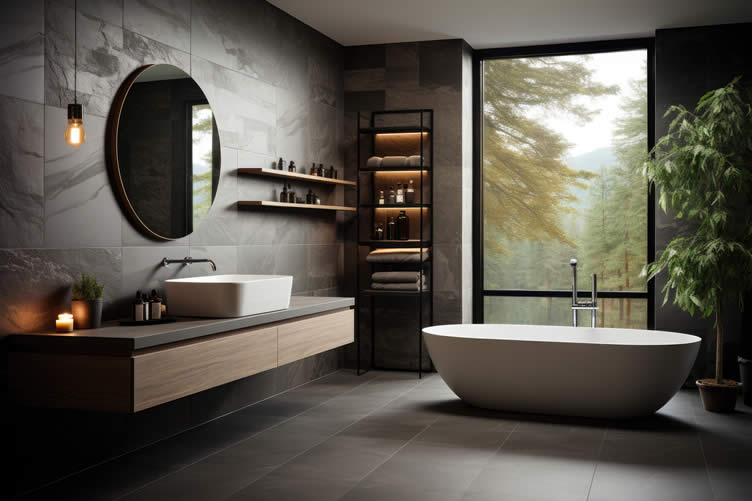
copyright image by 123rf.com
[ view diagram: bathroom lighting plan/layout ]
[ pinterest: bathroom lighting ]
[ youtube: How to Choose Bathroom Lighting ]
-
-
-
ideas to view and compare from the information discussed above
Scroll up to directory … or scroll to next section about this home lighting guide …
SHARE IT ..! Someone in your network might benefit from this insightful home lighting guide. Feel free to share it on Facebook, X (formally Twitter), LinkedIn, or Pinterest!



Budgeting Worksheet For Costing Home Remodeling and Home Improvement Decisions
 File Type (excel)
Are there any other interesting topics that might have been overlooked but could offer valuable insights …?



fourth “photo remodeling” idea
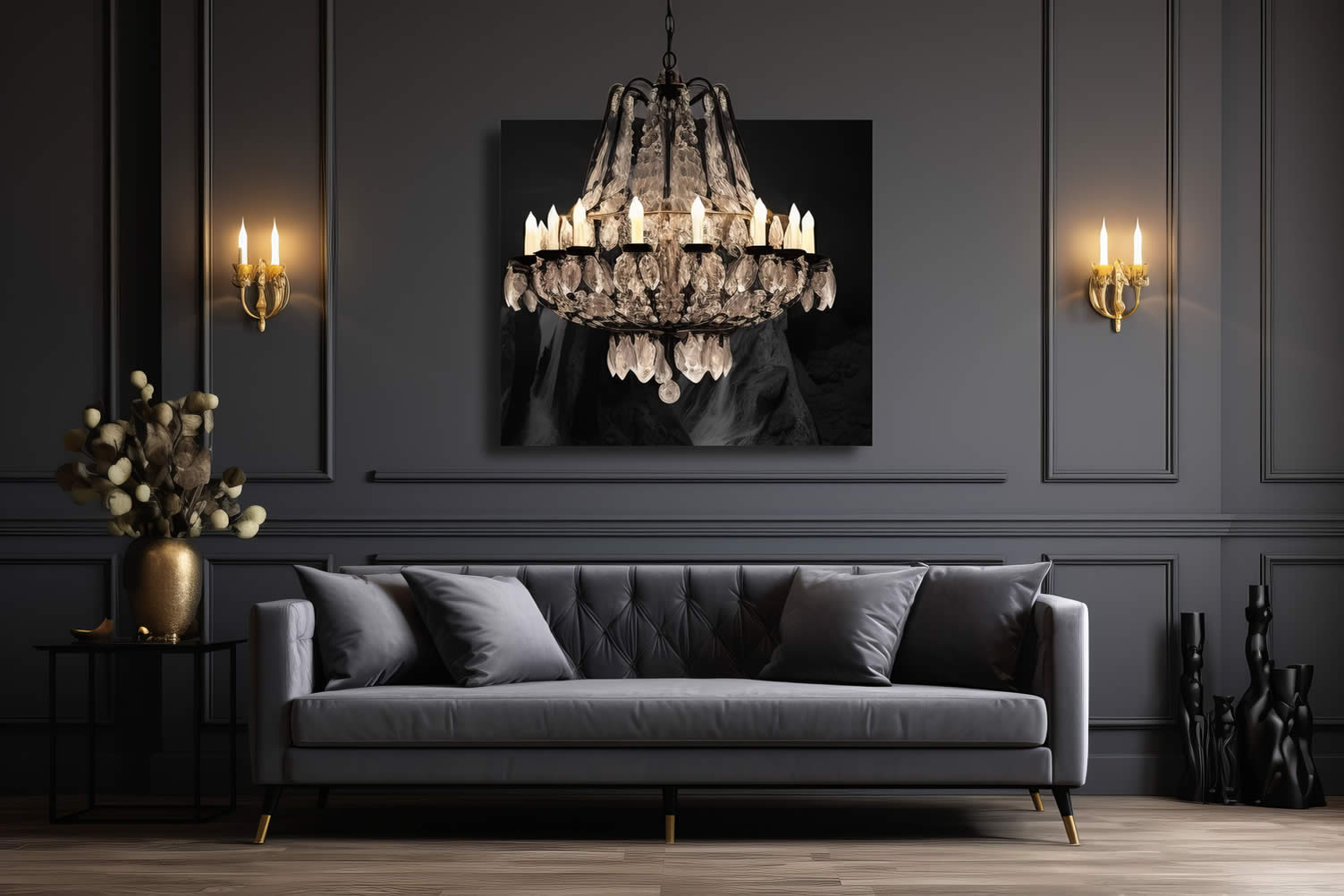
copyright image by 123rf.com
Lighting Tip 4: Living Room Lighting
Notes:
-
The living room is a central gathering space for relaxation and entertainment, and its lighting should be flexible enough to accommodate a wide range of activities.
The goal is to create a cozy, inviting atmosphere that can be easily adjusted. Balancing natural light during the day with a layered artificial lighting plan for the evening is key to a successful living room design.
-
Quick scroll to supporting notes …
-
-
1st: Living Room Lighting Types
Lighting is one of the most significant elements in designing a living room that is comfortable, functional, and visually appealing. Thoughtfully chosen lighting not only enhances the aesthetics of the space but also ensures practical illumination for various activities.
Here, we’ll explore the different types of lighting fixtures and their roles in creating a harmonious living room. Each lighting option serves a unique purpose, working both individually and in combination to transform the room.
[ view summary table: types lighting ]
-
Ceiling Lighting Fixtures
Ceiling lighting is the primary layer of illumination in any living room, providing functional task lighting and setting the tone. Chandeliers, pendants, and flush mounts are popular choices for overhead lighting.
-
Chandeliers create a focal point with their elegance and can enhance the room’s overall aesthetic.
-
Meanwhile, pendant lighting offers a modern alternative, perfect for minimalist or industrial-style interiors.
-
For lower ceiling heights, flush or semi-flush mounts provide adequate lighting without overwhelming the space.
Incorporating dimmer switches with ceiling fixtures allows the brightness to be adjusted, creating a versatile ambiance suitable for both daytime use and evening relaxation.
-
-
Wall Lighting Fixtures
Wall sconces and picture lights are essential for introducing softer ambient lighting or drawing attention to specific features.
-
Sconces can flank bookshelves, mirrors, or artwork to create a sense of symmetry and warmth.
-
Adjustable swing-arm sconces work well near reading nooks or seating areas, offering targeted lighting without additional floor or table fixtures.
-
If you have featured artwork or photographs on display, picture lights can highlight these pieces effectively, adding a curated and personalized touch to the living room design.
-
-
Sitting Area Lighting
The sitting area is often the heart of a living room, and its lighting should cater to both comfort and functionality.
Table lamps are classic additions to end tables or sideboards, offering focused lighting tailored to seated activities like reading or socializing. Look for lamps with adjustable light levels, allowing easy customization depending on the mood or time of day.
For a contemporary approach, arc floor lamps can extend light directly over the area, providing a unique visual statement while ensuring sufficient illumination.
-
Entertainment Center Lighting
Specialized lighting around the entertainment center not only enhances the viewing experience but also prevents eyestrain.
-
LED strip lighting installed behind or around a television creates a soft, diffused glow that reduces harsh contrasts in the dark.
-
Cabinet lighting, such as small puck lights within media units, adds a layer of visual interest and makes it easier to access stored items.
-
When highlighting shelves or decor around the entertainment space, discreet recessed lights or track lighting can further elevate the design.
-
-
Floor Lighting
Floor lamps are versatile and practical, offering flexible lighting solutions that can be moved to suit the room’s layout.
-
Torchière floor lamps, designed to direct light upward, provide excellent ambient illumination, especially in larger rooms.
-
For task lighting, reading floor lamps with adjustable arms can be placed near armchairs or sofas.
Styles range from traditional to contemporary, ensuring there’s a design to suit every aesthetic. Floor lamps are ideal for creating a layered lighting effect, especially when combined with ceiling fixtures and table lamps.
-
-
Adjoining Hallway Lighting
When the living room connects to an adjoining hallway, it’s important to extend the lighting design to maintain consistency and flow between spaces.
Recessed lighting in the hallway ceiling can provide subtle yet effective illumination. For a more sophisticated touch, wall-mounted sconces add visual interest and create a cohesive look with the living room’s design.
Multi-functional fixtures that tie into a smart home lighting system are particularly useful, offering seamless control over brightness and timings for the hall and living space.
-
Additional Lighting Considerations
Accent lighting plays an often-overlooked role in creating ambiance through unexpected sources. LED strips under floating shelves or embedded within architectural details can draw attention to unique features like textured walls or decorative moldings.
Candles and portable lanterns offer an intimate, inviting glow, perfect for cozy evenings. Incorporating natural light through sheer curtains or strategically placed mirrors near windows ensures an added layer of brightness while maintaining an open and airy feel.
References:
Lighting Type Features Purpose Examples Ceiling Lighting Fixtures Primary source of illumination; adjustable brightness with dimmers Provides general lighting and sets the room’s tone Chandeliers, pendant lights, flush mounts Wall Lighting Fixtures Ambient lighting; highlights specific features Creates symmetry and warmth; showcases artwork Wall sconces, picture lights, swing-arm sconces Sitting Area Lighting Customizable lighting; combines functionality and decor Illuminates reading, socializing, or focused tasks Table lamps, arc floor lamps Entertainment Center Lighting Enhances viewing experience; reduces eyestrain Adds visual interest and accessibility LED strip lights, cabinet lights, recessed lights Floor Lighting Flexible and movable; wide variety of styles Creates layers of light; supports ambient and task lighting Torchière lamps, reading lamps Adjoining Hallway Lighting Maintains consistency between spaces Unifies design and ensures flow of lighting Recessed lights, wall sconces Accent Lighting Subtle and unexpected glow; integrates natural light Highlights architectural details and decor elements LED strips, candles, portable lanterns 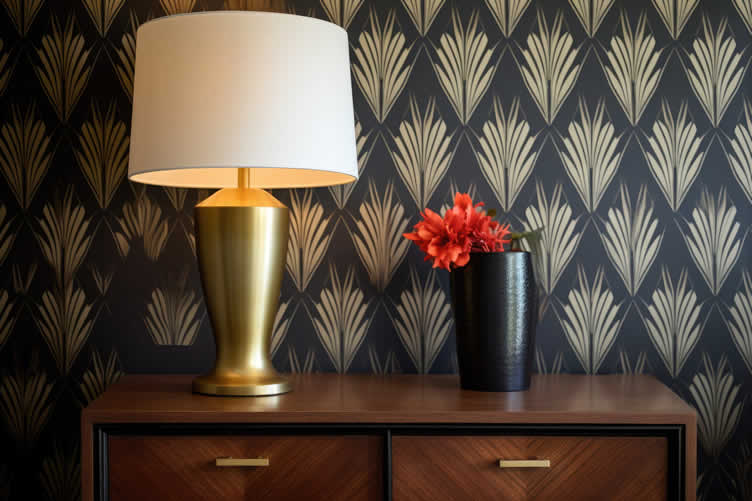
copyright image by 123rf.com
Living Room Ambient Lighting
google imageschandeliers view samples ceiling Flush Mounts view samples cove Lighting view samples semi-mounts view samples sconces view samples recessed lighting view samples track lighting view samples Living Room Task Lighting
google imagesdesk lamps view samples floor lamps view samples pendant lights view samples swing-arm lamps view samples table lamps view samples wall sconces view samples Living Room Accent Lighting
google imagestrack lighting view samples picture lighting view samples above cabinet view samples floor lighting view samples tape and extrusion view samples -
-
2nd: Living Room Color and Lumens
Two critical components of living room lighting are the color temperature and the amount of lumens, as these factors significantly influence the ambiance and usability of the space.
An adjoining hallway, which often serves as an extension of the living room, also demands careful consideration to ensure cohesive and practical lighting.
Below, we explore key aspects of these factors to guide you in creating a harmonious and visually inviting living space.
[ view summary table: colors and lumens ]
-
Types of Color Temperature for the Living Room
Color temperature is measured in kelvins (K) and plays a vital role in the mood and feel of your living room.
Warm white light, ranging between 2,700K and 3,000K, is a popular choice as it promotes a cozy and welcoming atmosphere. This temperature is ideal for softening shadows and creating a comfort-driven environment suitable for relaxation.
For a slightly brighter and more energetic ambiance, warm-neutral light between 3,000K and 3,500K can be incorporated. This range complements modern and transitional decor styles, offering an inviting yet vibrant glow.
Cooler tones, beyond 4,000K, are generally avoided in living rooms as they may feel sterile and detract from the intimacy of the space.
-
Amount of Lumens for the Living Room
Lumens indicate the brightness of a light source and directly affect the functionality of your living room lighting.
For general lighting, such as ceiling fixtures or recessed lights, aim for an output of 1,500 to 3,000 lumens to provide ample illumination without overwhelming the room.
Layered lighting, including task lights and accent lights, plays a critical role in enhancing usability and aesthetics.
Task lighting near reading areas or workspaces should deliver around 500 to 1,000 lumens for focused illumination, while accent lighting around artwork or architectural features can range between 200 and 400 lumens to subtly highlight areas of interest.
Balancing general, task, and accent lighting ensures a versatile and comfortable living room atmosphere that adapts to various activities.
-
Color Temperature and Lumens for the Adjoining Hallway
When designing lighting for a hallway adjacent to the living room, cohesion is key. A color temperature between 2,700K and 3,000K, consistent with the living room, helps maintain a harmonious flow between the spaces.
Brightness, however, should be slightly lower to create a soft transition without overpowering the adjoining room. Hallway lighting should output 800 to 1,500 lumens, depending on the hallway’s size and layout.
Incorporating subtle wall sconces or recessed fixtures can create a warm, inviting pathway while adding depth and dimension to an otherwise functional space.
Introducing dimmable options allows you to adjust the ambiance according to the time of day or occasion, ensuring flexibility.
-
Other Considerations for Living Room and Hallway Lighting
Several additional factors influence the effectiveness of lighting in these areas. The height of the ceiling, wall colors, and placement of furniture often dictate the type and intensity of lighting needed.
High ceilings, for instance, may require brighter fixtures or pendants to adequately illuminate the space, while darker wall tones can absorb light and necessitate higher lumen output.
Smart lighting systems are increasingly popular for living rooms and adjoining hallways as they allow homeowners to customize brightness and color temperature based on their needs.
Additionally, using energy-efficient LED lighting ensures long-lasting performance while reducing energy costs, aligning with modern sustainability goals.
References:
Lighting Aspect Description Recommended Range Additional Tips Color Temperature (Living Room) Defines the mood and feel of the space, measured in kelvins (K). Warm White (2,700K–3,000K); Warm-Neutral (3,000K–3,500K) Avoid cooler tones above 4,000K for a cozier ambiance. Lumens (Living Room) Indicates brightness and affects functionality. General Lighting: 1,500–3,000 lumens; Task Lighting: 500–1,000 lumens; Accent Lighting: 200–400 lumens Layer different lighting types to adapt to various activities. Color Temperature (Hallway) Ensures cohesion with the living room by maintaining a consistent ambiance. Warm White (2,700K–3,000K) Maintain harmony with the living room’s lighting tone. Lumens (Hallway) Provides adequate yet softer illumination for the space. 800–1,500 lumens Use recessed fixtures or wall sconces for depth and dimension. Other Considerations Factors like ceiling height, wall colors, and furniture placement influence lighting needs. Varies by space Energy-efficient LED lighting and smart systems enhance flexibility and efficiency. 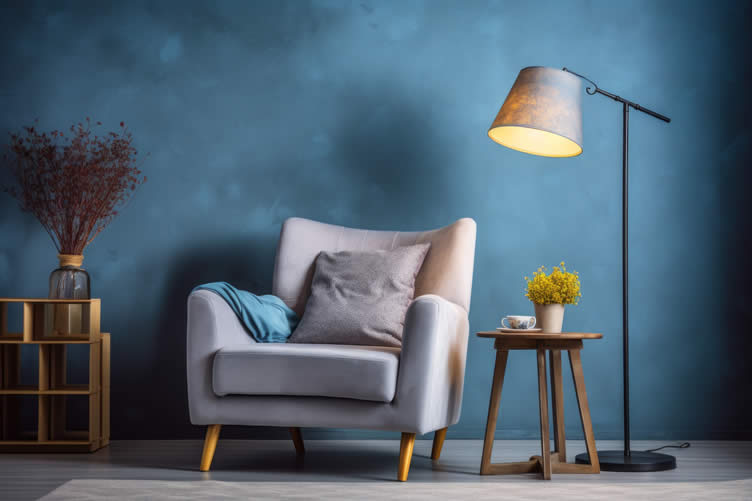
copyright image by 123rf.com
-
-
3rd: Lighting Placement and Spacing by Zone
Strategic placement and correct spacing ensure the layering of light across different zones, balancing task, accent, and ambient lighting to enhance the room’s usability and aesthetics.
This guide provides an in-depth exploration of lighting placement and spacing by zone to help you design a well-lit living room. For adjoining hallways, thoughtful lighting can seamlessly connect spaces while maintaining a cohesive look.
[ view summary table: placement and spacing ]
-
General Ambient Lighting
Ambient lighting serves as the foundational layer for any living room, providing overall illumination to ensure the space feels welcoming and evenly lit.
For optimal placement, a central ceiling fixture—such as a chandelier, flush mount, or pendant light—should be positioned at the room’s midpoint. This ensures even light distribution across the entire space, minimizing shadows.
Spacing considerations come into play when using recessed lights to supplement the central fixture. These should be placed approximately 4 to 6 feet apart, depending on ceiling height and lamp type, to maintain consistent brightness without creating gaps.
Dimmer switches can add flexibility, allowing you to adjust the light levels for various moods and activities.
-
Seating Area Lighting
The seating zone often serves as the heart of the living room, used for conversation, relaxation, or watching TV. Proper lighting placement here focuses on creating intimacy and functionality without glare.
Table lamps or floor lamps positioned at either end of a sofa provide task lighting for reading or other focused activities.
Ensure the lampshade bottoms are seated eye-level while seated to effectively distribute light and reduce direct exposure to the bulb.
If overhead lighting is desired, suspended pendant lights or adjustable sconce lights can complement the seating arrangement. Space these light sources evenly to avoid overloading one side of the area while keeping a comfortable diffused glow.
-
Entertainment Zone Lighting
If your living room includes a media or entertainment zone, lighting here should be designed to reduce screen glare and avoid harsh contrasts. LED strips or backlighting behind the television provide an ambient glow that reduces eye strain during screen time.
Placing floor lamps or low-wattage accent lights on adjacent walls can help maintain balance, ensuring the contrast between a bright screen and the rest of the room isn’t overly stark.
Avoid placing overhead lights directly above or in front of the screen to prevent reflections. Dimmer capabilities in this area are particularly helpful for creating an optimal experience during movies or shows.
-
Shelving and Artwork Lighting
Accent lighting brings depth and focus to architectural features like shelves or wall art in your living room. Install LED tape lighting or small recessed spotlights to highlight shelving units without overwhelming the space.
Position the lights at a 30-degree angle to the artwork or shelving to minimize glare and shadows. Spacing between lights depends on the size of the display; for multiple pieces of art, evenly distribute the light fixtures for consistent illumination.
Consider color rendering index (CRI) in bulbs for this area, ensuring accurate illumination of artwork tones.
-
Adjoining Hallway Lighting
For hallways adjacent to the living room, lighting plays a crucial role in tying spaces together. Wall sconces positioned at least 6 feet apart along the corridor walls provide gentle, even light without over-cluttering the space.
Ceiling-mounted lighting, such as flush mounts or track lighting, can also complement hallway accents. If the hallway opens directly into the living room, coordinate the lighting style and bulb type to maintain a harmonious flow.
Adjoining hallways benefit from brighter, inviting lighting to contrast with the typically dimmer or ambient living room areas.
References:
Zone Lighting Type Placement Spacing/Considerations General Ambient Lighting Ceiling Fixture, Recessed Lights Central fixture at room’s midpoint Recessed lights spaced 4-6 ft apart; use dimmer switches for flexibility. Seating Area Lighting Table Lamps, Floor Lamps, Pendant Lights Table/floor lamps at either end of the sofa; pendant or sconces above seating Keep lampshades at seated eye level; evenly space light sources for balance. Entertainment Zone Lighting LED Strips, Floor Lamps, Accent Lights LED strips behind TV; floor lamps or accent lights on adjacent walls Avoid overhead lights near the screen; use dimmers to reduce glare and contrast. Shelving & Artwork Lighting LED Tape Lighting, Recessed Spotlights Lights positioned at a 30-degree angle to artwork or shelves Evenly distribute lights; use high CRI bulbs for accurate color rendering. Adjoining Hallway Lighting Wall Sconces, Ceiling Lights Sconces at least 6 ft apart; ceiling-mounted lights for hallways Coordinate styles and bulbs with the living room for a cohesive look. 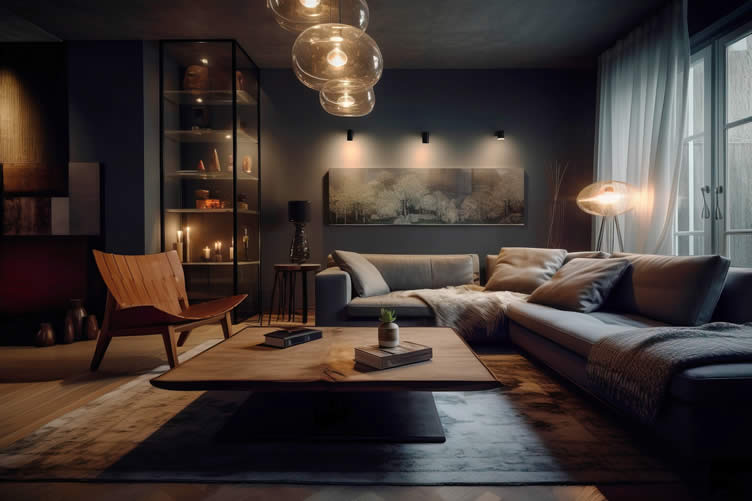
copyright image by 123rf.com
[ view diagram: living room lighting plan/layout ]
[ pinterest: living room lighting ]
[ youtube: Lighting Ideas For Living Room ]
-
-
-
ideas to view and compare from the information discussed above
Scroll up to directory … or scroll to next section about this home lighting guide …

Outline the specific requirements needed for making …
… key home improvement and remodeling decisions
Download this PDF for a concise summary of all you need to know about …?

fifth “photo remodeling” idea
copyright image by 123rf.com
Lighting Tip 5: Bedroom Lighting
Notes:
-
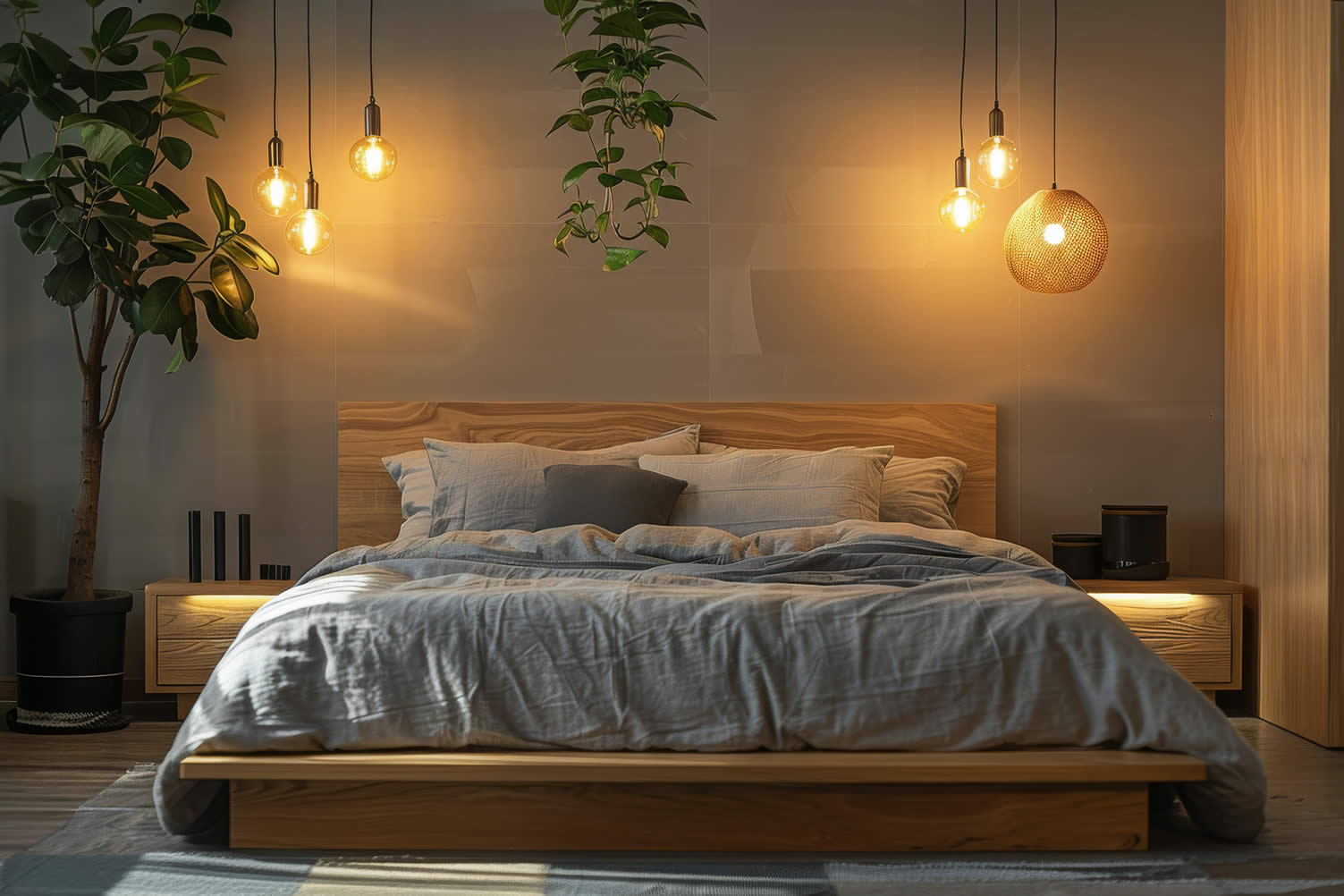
The bedroom should be a sanctuary for rest and relaxation, and the lighting design should support this purpose. The primary goal is to create a soft, warm, and calming environment that promotes sleep.
This means minimizing harsh overhead light and avoiding exposure to blue light, which can interfere with the body’s natural sleep cycle.
-
Quick scroll to supporting notes …
-
-
1st: Bedroom Lighting Types
The right lighting can completely transform the look and functionality of a bedroom, setting the mood, enhancing comfort, and providing practical solutions for everyday tasks.
Each lighting fixture serves a distinct purpose and, when layered thoughtfully, creates a cohesive and inviting atmosphere tailored to individual needs.
Below, we’ll explore various lighting types suited for the bedroom and adjoining spaces to create both aesthetic and functional perfection.
[ view summary table: bedroom lighting types ]
-
Ceiling Lighting Fixtures
Ceiling lighting acts as the primary source of illumination in most bedrooms and plays a crucial role in defining the room’s ambiance.
Chandeliers bring an elegant, focal point to more traditionally styled bedrooms, while flush and semi-flush mounts provide a sleek, minimalist option for spaces where height or simplicity is key.
For those seeking versatility, dimmable recessed lights are an excellent choice, allowing users to adjust brightness levels according to their needs.
They work well in contemporary designs and can be complemented with other fixtures to enhance the layered lighting approach.
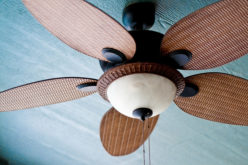
And don’t forget that a ceiling fan for the bedroom with lighting attached server two dual functions.
One, it provides the right ambient lighting to light up the bedroom, and 2nd, it provides air circulation to keep bedroom temperature that enhances comfort and sleep.
-
Wall Lighting Fixtures
Wall-mounted lights offer both decorative appeal and practical functionality. Adjustable swing-arm sconces are a popular choice for providing targeted lighting for nighttime reading, particularly when installed near the bed.
For a touch of sophistication, wall washers create subtle, ambient lighting that highlights artwork, architectural details, or even textured wall finishes.
Stylish uplights or directional wall lights can also visually expand a smaller bedroom, creating the illusion of more space and depth.
-
Lighting for the Bedding Area and Sitting Area
The bedding area often demands adaptable and intimate lighting solutions. Bedside table lamps continue to be a timeless option, coming in countless designs to match any decor style.
Many modern bedrooms, however, are leaning toward pendant lights on either side of the bed for a clean, contemporary look that frees up valuable surface space.
For sitting areas, floor lamps with sculptural designs can provide statement pieces that double as functional lighting.
Adjustable task lighting for seating can enhance comfort for reading or working, while softer lampshades diffuse light to create an inviting space to relax.
-
Floor Lighting Fixtures
Floor lighting makes an understated yet impactful contribution to a bedroom’s overall design.
Arc lamps work perfectly for corner spaces or alongside lounge chairs in large bedrooms, striking a balance between functionality and aesthetic appeal.
Conversely, uplighting floor fixtures can discreetly emphasize architectural features, such as a dramatic headboard, crown molding, or textured walls, while also providing a cozy glow.
For children’s bedrooms, night-lights or low-floor fixtures may enhance safety and create a soothing bedtime setting.
-
Lighting for Adjoining Hallways
If your bedroom adjoins a hallway, lighting can ensure this transitional area receives equal design consideration.
Recessed lights combined with motion sensors are practical and energy-efficient, while wall sconces with frosted glass shades add elegance and provide gentle, ambient light for nighttime navigation.
For hallways styled in contemporary designs, LED strip lighting beneath baseboards or crown molding can create a sleek, modern effect.
This type of consideration ties the lighting design of the bedroom seamlessly into surrounding spaces, enhancing the flow of the entire home.
-
Lighting for Secondary Bedrooms
While secondary bedrooms may not share the grandeur or decorative emphasis of a primary suite, they deserve functional yet appealing lighting concepts.
Ceiling fixtures, such as flush mounts or simple pendant lights, provide general illumination without overwhelming smaller rooms. Add bedside lamps or subtle wall-mounted sconces to personalize the space while maintaining practicality.
These fixtures provide guests or children with everything they need for comfort, ensuring that functionality remains at the forefront of design.
-
Other Considerations in Bedroom Lighting
Aside from standard fixture placements, other elements like smart lighting systems can elevate the bedroom’s practicality and ambiance. Smart bulbs with color-tuning features allow users to adjust brightness or hues to match their mood.
Integrating voice or remote-controlled dimmers ensures convenience, particularly for homeowners who want a modern, tech-savvy solution.
Additionally, prioritizing eco-friendly options, such as LED fixtures, not only reduces energy consumption but also aligns your home lighting practices with sustainable living principles.
References:
Lighting Type Features Ideal Use Ceiling Lighting Fixtures Dimmable recessed lights, chandeliers, flush and semi-flush mounts, ceiling fans General illumination, ambiance, air circulation, and functional versatility Wall Lighting Fixtures Swing-arm sconces, wall washers, uplights Task lighting, ambient lighting, enhancing wall textures or artwork Lighting for Bedding and Sitting Areas Bedside table lamps, pendant lights, adjustable task lamps Reading, relaxation, or enhancing decor near beds and seating areas Floor Lighting Fixtures Arc lamps, uplighting floor fixtures, night-lights Accentuating architectural features, providing cozy glow, safety lighting for children Lighting for Adjoining Hallways Recessed lights with motion sensors, LED strips, wall sconces Seamless transition from bedroom to hallway, energy efficiency Secondary Bedroom Lighting Flush mounts, pendant lights, bedside lamps, wall sconces Functional yet simple lighting for smaller rooms or guest spaces Other Considerations Smart lighting systems, eco-friendly LED fixtures Modern convenience, energy savings, sustainable living 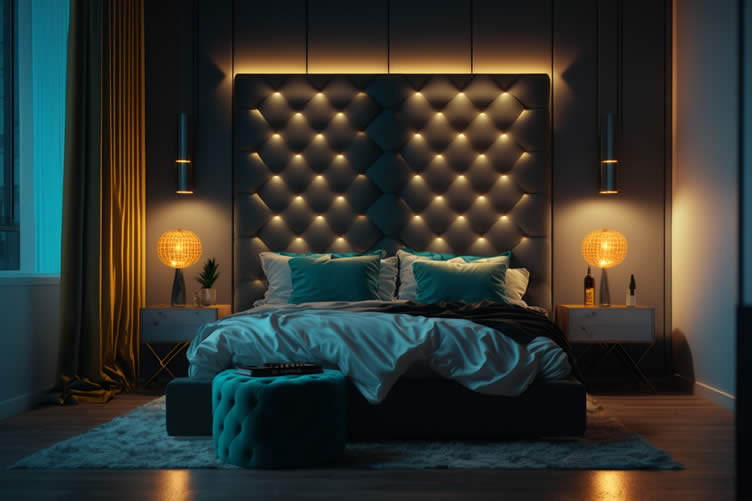
copyright image by 123rf.com
Bedroom Ambient Lighting
google imageschandeliers view samples flush mounts view samples semi-mounts view samples sconces view samples recessed lighting view samples Bedroom Task Lighting
google imagesbedroom rail view samples pendant lighting view samples table lamps view samples floor lamps view samples wall reading lamp view samples Bedroom Ambient Lighting
google imagesaccent lighting ideas view samples RGB corner lamp view samples < mood lighting view samples -
-
2nd: Bedroom Lighting Color and Lumens
Proper bedroom lighting is essential for creating a space that is both functional and relaxing. The color temperature and lumens you choose will directly impact the atmosphere of the room, the quality of lighting for various activities, and your overall comfort.
Understanding how to select the right combination ensures a harmonious balance of aesthetics and practicality. Below, you’ll find an in-depth look at color temperature and lumens for bedrooms, adjoining spaces like hallways, and more.
[ view summary table: color and lumens ]
-
Color Temperature Options for the Bedroom
Color temperature, measured in Kelvin (K), determines how warm or cool the light feels. For bedrooms, warmer tones are typically preferred as they promote relaxation and a cozy environment.
A color temperature within the range of 2700K to 3000K is ideal for bedroom lighting. These warmer light sources mimic the golden hues of early morning or late afternoon sunlight, helping to create a calm and soothing atmosphere.
If you use your bedroom as a multi-functional space, incorporating layers of light at varying temperatures can enhance the room’s versatility.
For instance, task lighting (e.g., reading lamps) can benefit from slightly cooler temperatures around 3000K to 3500K to provide clarity without creating strain on the eyes.
However, it’s best to avoid overly blue or cool lighting (above 4000K) in the bedroom, as it may disrupt the body’s natural circadian rhythm by mimicking daylight.
-
Recommended Lumens for Bedroom Lighting
Lumens measure the total light output of a fixture, reflecting its brightness. Bedrooms typically benefit from a total lumen output of approximately 2,000 to 4,000 lumens, depending on the room’s size and layout.
To create the best ambiance, this total should be distributed across different light sources, such as ambient, task, and accent lighting.
For ambient light, a ceiling fixture or recessed lights offering around 1,500 to 2,500 lumens are sufficient to illuminate the space evenly.
Task lighting near beds or vanities should provide between 300 to 500 lumens for optimal visibility.
Accent lighting, such as LED strips or decorative fixtures, can range from 100 to 300 lumens, adding subtle highlights without overwhelming the primary lighting. Balancing all these layers ensures the room feels well-lit but not overpowered.
-
Color Temperature and Lumens for the Adjoining Hallway
Adjoining spaces like hallways often serve as transitional areas, and their lighting should complement that of the bedroom.
For hallways, a neutral white light with a color temperature of 3000K to 3500K works well, maintaining a balance between soft warmth and crisp brightness. This range avoids jarring contrasts when moving between the bedroom and other parts of the home.
When it comes to lumens, hallways require sufficient brightness to ensure safety while navigating the area. A lumen range of 1,200 to 2,000 is appropriate depending on the width and length of the space.
Wall sconces, flush mounts, or recessed lighting fixtures are common choices that evenly distribute light, preventing shadows and enhancing the overall visibility.
References:
Lighting Aspect Recommended Values Key Considerations Color Temperature (Bedroom) 2700K to 3000K Promotes relaxation with warm tones; for task lighting, use 3000K to 3500K for better clarity. Lumens (Bedroom) 2,000 to 4,000 lumens total Distribute across ambient (1,500-2,500 lumens), task (300-500 lumens), and accent lighting (100-300 lumens). Color Temperature (Hallway) 3000K to 3500K Balances warmth and brightness; complements bedroom lighting to avoid contrast. Lumens (Hallway) 1,200 to 2,000 lumens Ensures sufficient brightness for safety and visibility, with even distribution. Additional Features Smart and dimmable lighting, LED options Smart systems allow for adjustment; LEDs provide energy efficiency and long-lasting performance. 
copyright image by 123rf.com
-
-
3rd: Lighting Placement and Spacing by Zone
When designing bedroom lighting, proper placement and spacing are crucial to achieving both functionality and ambiance. A well-designed lighting layout not only enhances the atmosphere but also ensures that every corner of the space is well-lit according to its specific purpose.
By dividing the bedroom into zones, you can create a harmonious blending of light sources that supports comfort, practicality, and style.
Below, we explore optimal lighting placement and spacing strategies for each zone of the bedroom, ensuring you create a well-balanced and inviting space.
[ view summary table: lighting and placement ]
-
Bedside Zone
The bedside area often serves as a multi-functional space, used for reading, relaxing, or resting. Task lighting is essential here to reduce eye strain and provide sufficient illumination for these activities.
Table lamps or wall-mounted sconces should be positioned around 20 to 22 inches above the mattress level when mounted, ensuring the light is both soft and concentrated without being intrusive.
If using pendant lighting on either side of the bed, maintain equal spacing from the edges of the headboard, typically 12 to 16 inches. This not only creates symmetry but also ensures balanced lighting throughout the area.
-
Dressing Zone
The dressing zone requires ample illumination to accurately portray colors and details, making it easier to coordinate outfits or apply makeup.
For this area, consider installing vertical lighting fixtures on either side of a mirror rather than overhead lights, as side lighting minimizes shadows on the face.
Vertical lights should be spaced evenly, about 28 to 30 inches apart or placed at eye level for the most effective results.
Additionally, if the dressing area includes recessed ceiling lights, ensure a spacing of approximately 36 to 42 inches between fixtures to maintain consistent coverage throughout the zone.
-
General Ambient Lighting Zone
The primary lighting in a bedroom comes from the ambient fixtures, which set a soft, even glow throughout the space.
Recessed lighting works well in most bedrooms and should be spaced at intervals of approximately 4 to 6 feet, depending on fixture size and ceiling height.
For larger rooms, consider adding a chandelier or central flush-mount ceiling light to act as a focal point.
When positioning these fixtures, make sure they are centered within the room or aligned with a major design element such as the bed or seating area to ensure proportional balance.
-
Reading or Sitting Zone
If your bedroom includes a designated reading nook or sitting area, zone-specific lighting can make the space cozy and functional.
Floor or table lamps with adjustable heads are excellent choices and should be placed at a height between 48 and 60 inches from the floor, allowing for focused, directional light.
For recessed lighting in this area, keep the spacing consistent with ambient lighting recommendations but add a dimmer function for controlling the intensity based on activity and mood.
-
Walkways and Peripheral Zones
The pathways surrounding the bed, closets, or entry points require sufficient light to ensure safety and easy navigation.
Recessed or track lights work well in these areas and should be spaced about 4 to 6 feet apart for even distribution along the walkways.
When installing lighting near closets, position fixtures so that they face into the storage space, preventing shadows that could obscure visibility. These subtle but essential lighting adjustments ensure the peripheral zones are safe and user-friendly.
For professional guidance, always consult a licensed lighting designer or electrician before installation to ensure adherence to safety regulations and optimal functionality.
Thoughtfully planned lighting can transform your bedroom into a sanctuary that balances aesthetic appeal with everyday usability.
References:
Bedroom Zone Lighting Purpose Placement & Spacing Recommendations Bedside Zone Task lighting for reading, relaxing, and resting – Table lamps or wall sconces positioned 20–22 inches above mattress level
– Pendant lights spaced 12–16 inches from the edges of the headboardDressing Zone Ample lighting for accurate color rendering and makeup application – Vertical lighting on mirror sides, spaced 28–30 inches apart
– Recessed ceiling lights spaced 36–42 inches apartGeneral Ambient Zone Soft, even light across the entire room – Recessed lighting spaced 4–6 feet apart
– Chandeliers or flush-mount fixtures centered in the room for balanceReading/Sitting Zone Focused, cozy lighting for reading or relaxation – Floor or table lamps with adjustable heads placed 48–60 inches from the floor
– Recessed lighting consistent with ambient spacing, preferably with dimmersWalkways & Peripheral Zones Ensure safety and ease of navigation – Recessed or track lights spaced 4–6 feet apart
– Closet lighting directed into storage spaces to avoid shadows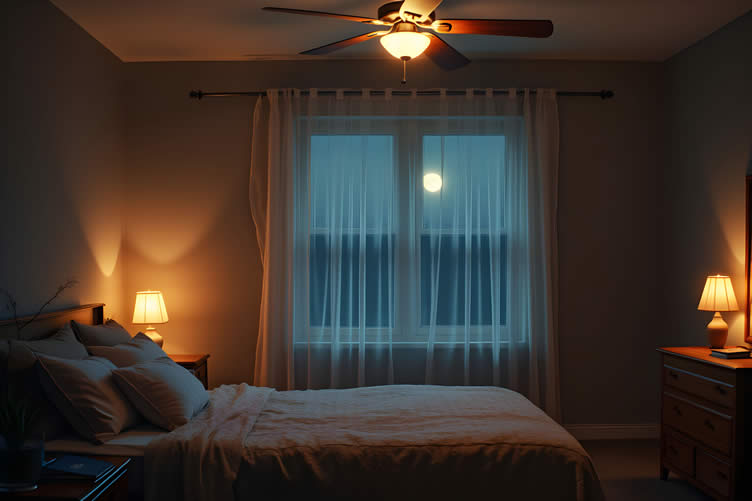
AI generated image by 123rf.com
[ view diagram: bedroom lighting plan/layout ]
[ pinterest: bedroom lighting ]
[ youtube: Small Bedroom Lighting Designs ]
-
-
-
ideas to view and compare from the information discussed above
bedroom light fixtureautomatic blackout blindsbedroom night light
Scroll up to directory … or scroll to next section about this home lighting guide …

Easily determine the dimensions you need for any home remodeling project …
… ensuring functionality, visual appeal, and compliance with building codes.





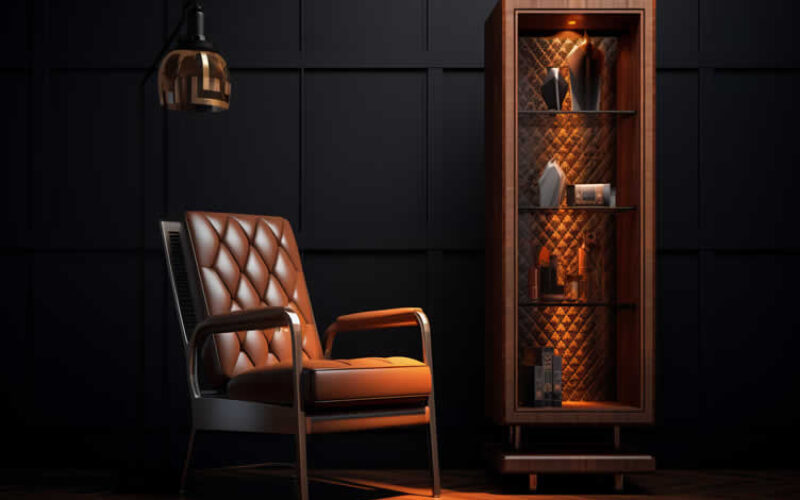
Find Electrical Services Electricians Lighting Design Fans Generators Electronics Home Security top-rated, pre-screened local contractors FREE: download contractor selection enter zip code – powered by HomeAdvisor ™
Quick Contractor Guides selecting negotiating working with inspecting

sixth and last “photo remodeling” idea
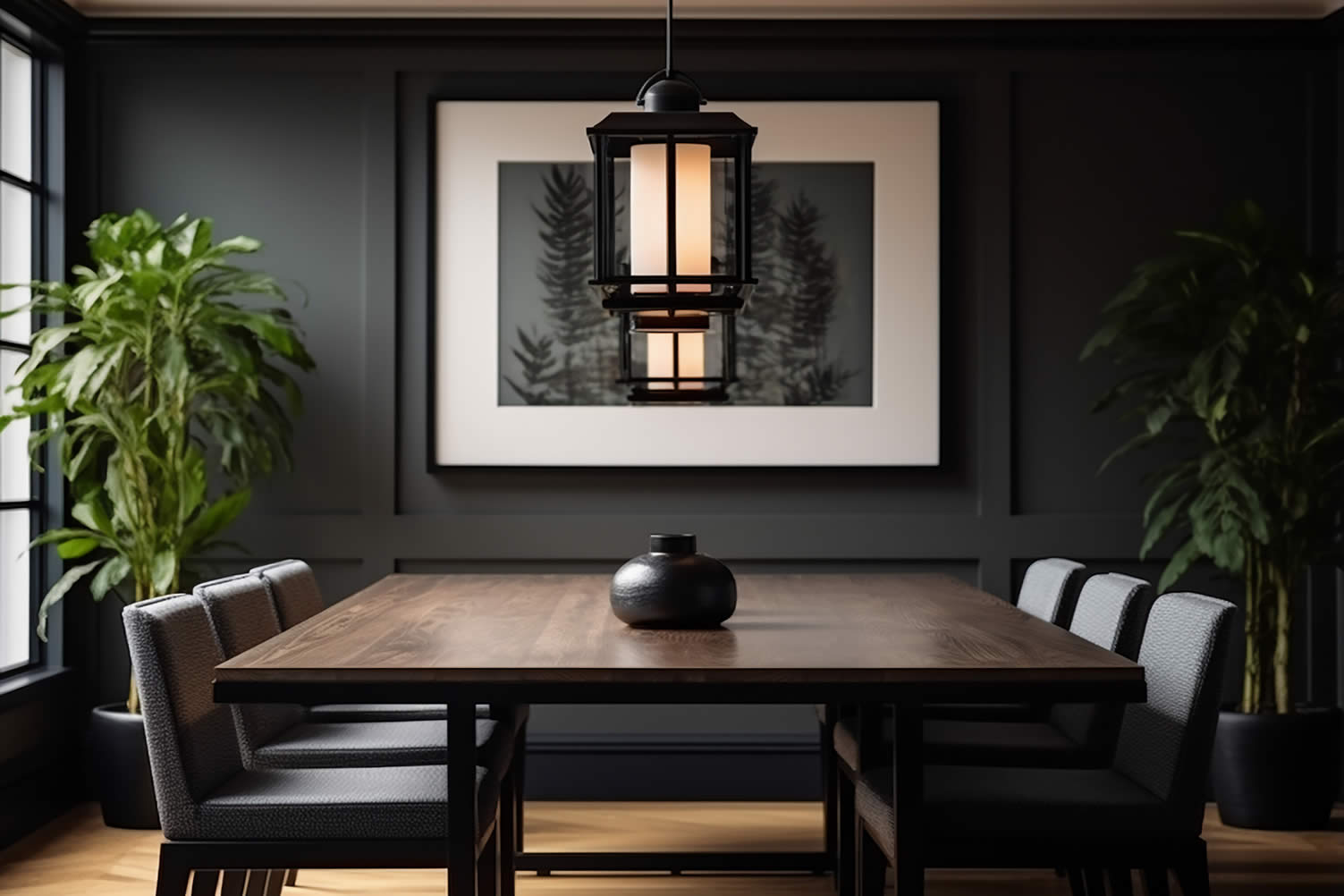

copyright image by 123rf.com
Lighting Tip 6: Thoughtful Lighting for Other Rooms
… and exploring advanced techniques
Notes:
-
When it comes to perfecting the ambiance and functionality of other rooms in your home, lighting plays a crucial role.
Different areas of the house have unique lighting needs, and reviewing these spaces with careful consideration of advanced lighting techniques can transform your living experience.
Additionally, pairing the right lighting types with professional expertise—such as consultation with a lighting expert or electrician for complex wiring setups—ensures both safety and style.
Let’s explore how to illuminate each part of your home effectively while maximizing its potential.
-
Quick scroll to supporting notes …
-
-
1st: Other Room Lighting Types
Lighting serves as both a practical necessity and a design element, shaping the ambiance and functionality of a home. Each room demands unique lighting considerations to ensure the space is both aesthetically pleasing and functional for daily activities.
Below, we’ll explore advanced lighting solutions tailored for various rooms in the home, complete with recommended color temperatures and lumen ranges to meet specific needs, and highlight fixture options that make the most of each space.
[ view summary table: other room lighting types ]
-
Dining Room Lighting
The dining room serves as a gathering place for meals and celebrations, requiring a mix of ambient warmth and focused task lighting.
Chandeliers are the centerpiece for most dining rooms, offering both functional and decorative elements. Choose a chandelier with a dimmer switch to adjust the light intensity based on the occasion.
Pendant lights centered above the table also provide a modern, streamlined alternative.
The ideal color temperature for dining areas is 2700K to 3000K, fostering a warm and inviting atmosphere. Aim for a brightness level of 3000-4000 lumens to sufficiently illuminate the dining table and surrounding space without feeling overly harsh.
-
Closets and Pantries Lighting
Closets and pantries are often overlooked in home lighting design but deserve careful attention to ensure visibility and usability.
LED strip lights installed under shelving or above doorways can provide targeted illumination for darker corners. Alternatively, recessed puck lights are effective for smaller closets or tight pantry spaces.
A cool white color temperature of 3500K to 4100K is ideal, offering clarity while highlighting textures and colors of clothing or pantry items.
Opt for brightness levels around 500-1000 lumens, depending on the size of the space, to achieve an adequate but not overwhelming level of light.
-
Home Office Lighting
A home office demands highly functional lighting that reduces eye strain and fosters productivity. Layered lighting approaches work best here, combining overhead lights such as flush mounts with desk lamps designed for task-specific illumination.
Adjustable desk lamps with warm-to-cool dimming options are ideal for adapting to various times of day and task types.
A neutral white color temperature of 4000K to 4500K creates a balanced working environment, while lumen levels around 3000-5000 ensure ample brightness without glare for computer work and reading.
-
Home Entryway Lighting
The entryway is the first impression of your home, combining style with functionality. For an elegant yet practical lighting design, consider statement pendant lights or semi-flush ceiling fixtures as the focal point.
Motion-activated lighting or smart light systems can enhance convenience and energy efficiency in this high-traffic area.
A warm white color temperature of 2700K to 3000K is welcoming while maintaining soothing tones, and approximately 1500-3000 lumens will create sufficient light for safe navigation, even during evening hours.
-
Hallway Lighting
Adjoining hallways often connect critical parts of a home and should feel bright and inviting without being overpowering. Recessed lights spaced evenly along the corridor are a subtle and effective choice for maintaining consistent illumination.
For a decorative yet functional approach, wall sconces can add character without creating harsh shadows. Use a soft white color temperature of 3000K to 3500K to balance comfort with visibility, and aim for a lumen range between 2000-4000 throughout the space.
-
Laundry Room and Mudroom Lighting
Laundry rooms and mudrooms demand practical lighting solutions capable of handling tasks like sorting clothes or cleaning.
Flush-mount ceiling fixtures work well to provide overall brightness, while under-cabinet or shelf lighting can illuminate work surfaces directly. Choose LEDs for their energy efficiency and longevity in these utility spaces.
A cool white temperature range of 4100K to 5000K ensures crisp, clear light for detailed tasks, complemented by brightness levels of 4000-6000 lumens for adequate visibility.
-
Other Specialized Rooms and Considerations
For other areas such as garages, basements, or sunrooms, lighting should focus on enhancing visibility while maintaining energy efficiency.
For garages, high-output LED panels rated at 5000-6000K provide bright and uniform coverage.
Basements benefit from layered lighting, combining recessed fixtures with portable lamps to balance ambient and task lighting at 3500K to 4100K.
Sunrooms, by contrast, should leverage dimmable ceiling fans with integrated lights for flexible illumination options, aligning with natural light at a cooler temperature range of 4000K to 5000K.
References:
Room Recommended Lighting Fixtures Color Temperature (K) Brightness (Lumens) Dining Room Chandeliers with dimmers, Pendant lights 2700K-3000K 3000-4000 lumens Bedroom Closets & Pantries LED strip lights, Recessed puck lights 3500K-4100K 500-1000 lumens Home Office Flush mounts, Adjustable desk lamps 4000K-4500K 3000-5000 lumens Home Entryway Statement pendant lights, Semi-flush fixtures 2700K-3000K 1500-3000 lumens Hallway Recessed lights, Wall sconces 3000K-3500K 2000-4000 lumens Laundry Room & Mudroom Flush-mount fixtures, Under-cabinet lighting 4100K-5000K 4000-6000 lumens Specialized Rooms (Garage, Basement, Sunroom) LED panels, Recessed fixtures, Dimmable ceiling fans 3500K-6000K Varies by use 
copyright image by 123rf.com
-
-
2nd: Advanced Lighting Techniques
Lighting is more than just illuminating a space; it is an art and a science that can transform your home into a dynamic, functional, and visually captivating environment.
With advancements in technology and design innovation, homeowners now have access to a plethora of sophisticated lighting techniques that elevate the overall experience of their living spaces.
Advanced lighting goes beyond the basics—it integrates energy efficiency, modern aesthetics, and technological convenience, providing solutions tailored to your lifestyle and architectural design.
Below, we explore several cutting-edge lighting techniques to help you optimize your home’s atmosphere and functionality.
[ view summary table: lighting techniques ]
-
Smart Lighting Integrated into a Home Automation Hub
Smart lighting has revolutionized modern living by offering effortless customization, energy efficiency, and seamless integration into your daily routine.
By connecting smart lighting fixtures to a home automation hub, you can control the brightness, color temperatures, and even the timing of your lights from a smartphone, tablet, or voice-activated assistant.
Imagine setting a soft, warm glow for dinner parties with a simple voice command or scheduling your lights to mimic natural sunlight throughout the day.
Integrated smart systems, such as Zigbee- or Z-Wave-enabled devices, also allow homeowners to synchronize lighting with other smart home features, such as security systems, blinds, and thermostats, delivering a cohesive and intelligent home environment.
-
LED Lighting for Energy Savings
One of the most impactful advancements in lighting technology is the rise of LED lighting, offering unparalleled energy efficiency and durability.
LED lights consume up to 75% less energy compared to traditional incandescent bulbs, making them an eco-friendly and cost-effective option for any home.
Additionally, high-quality LED lights boast a lifespan of up to 20 years, drastically reducing replacement costs and waste.
For homeowners transitioning toward a greener lifestyle, investing in LED lighting solutions can also qualify for energy-efficiency tax credits or rebates, depending on your location.
Beyond energy savings, LEDs emit significantly less heat, improving room comfort and minimizing the risk of overheating fixtures.
-
LED Lighting with Dimmer Capabilities
Adding dimmer functionalities to your LED lighting system allows for greater control and personalization, making your home ready to adapt to any occasion or mood.
Dimmable LED lights enable you to smoothly adjust brightness levels, creating a soft ambiance for relaxation or vibrant lighting for productive tasks.
This feature is especially valuable in multipurpose spaces like living rooms, where lighting needs might vary throughout the day.
With the right dimmer switches or smart dimming systems, you can even optimize energy usage since dimmed LEDs use less electricity.
Consult with a lighting professional to ensure compatibility between your chosen LED systems and dimmer controls for optimal performance.
-
Integrated Lighting Styles into Your Home’s Décor and Architecture
Advanced lighting is more than functional—it becomes a defining feature of your home’s interior and exterior design. Integrating lighting elements with your décor and architecture requires thoughtful planning and execution to create a harmonious aesthetic.
For instance, recessed lighting or cove lighting can highlight architectural details like vaulted ceilings or crown molding, adding depth and dimension to your spaces.
Pendant lights or statement chandeliers not only provide illumination but also serve as focal points, complementing various décor styles from minimalist to industrial.
For exterior architecture, uplighting and accent lighting can enhance your home’s façade and landscaping, creating stunning visual effects while improving safety and curb appeal.
-
Other Innovative Approaches to Lighting Design
The possibilities with advanced lighting techniques extend beyond traditional ideas. Tunable lighting systems allow you to adjust both brightness and color temperatures to match your circadian rhythm, promoting wellness and better sleep.
Integrated RGB lighting has gained traction for homeowners seeking to add pops of creative color, whether to highlight an entertainment zone or enhance themed décor.
Additionally, motion-sensor lighting in hallways and bathrooms provides convenience and safety, especially at night. Exploring these advanced options allows you to refine every detail of your home’s lighting design, ensuring that functionality and style seamlessly align.
By incorporating these advanced lighting techniques, homeowners can achieve a thoughtfully designed, energy-efficient, and technologically forward home that enhances both aesthetics and everyday living.
Whether you’re building a new home or upgrading an existing space, professional guidance from lighting experts can help you customize solutions tailored to your unique needs and style preferences.
References:
Lighting Technique Description Benefits Smart Lighting Seamlessly integrates into a home automation hub, allowing control over brightness, color temperatures, and timing through devices like smartphones or voice assistants. Customization, energy efficiency, convenience, and synchronization with other smart home systems. LED Lighting Uses energy-efficient LED bulbs that consume significantly less power and have a lifespan of up to 20 years. Cost-effective, eco-friendly, long-lasting, and reduces heat emissions. Dimmable LED Lighting Allows brightness adjustments for setting the desired ambiance across various spaces. Enhanced control, energy savings, and adaptability to multi-purpose environments. Integrated Lighting Styles Blends lighting with the home’s décor and architecture, such as recessed or cove lighting for design highlights. Enhanced aesthetic appeal, depth, and dimension for both interior and exterior spaces. Other Innovative Lighting Includes tunable lighting for circadian rhythm alignment, RGB creative lighting, and motion-sensor lighting for convenience. Promotes wellness, adds creative flair, and improves safety and functionality. 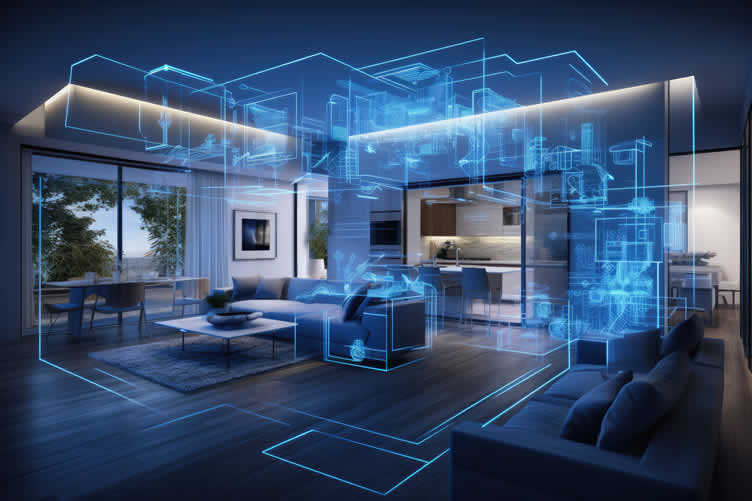
copyright image by 123rf.com
-
-
3rd: Finding and Using Professional Lighting Experts
When it comes to transforming your home with the perfect lighting, partnering with a professional lighting expert or electrician can make all the difference.
From crafting a design that accentuates your living spaces to ensuring that all wiring is safely installed, experienced professionals play an invaluable role in bringing your vision to life.
Not only do they offer technical knowledge, but their expertise can also prevent costly mistakes and enhance the overall functionality and style of your home.
[ view summary table: finding experts ]
-
Why Consider an Experienced Lighting Expert/Electrician?
Lighting designs involve more than simply installing fixtures; they require precise planning, balancing aesthetics, and functionality while ensuring safety.
Experienced lighting experts are trained to assess your home’s layout and provide solutions tailored to your unique needs.
By understanding how light interacts with spaces, they can recommend the best solutions, whether you aim to create a cozy ambiance in your living room or add energy-efficient task lighting in a kitchen.
Professional electricians, on the other hand, ensure that the electrical infrastructure behind your lighting is both efficient and safe. Improper wiring can not only result in underperforming lights but can also pose significant safety hazards, including potential fire risks.
An electrician understands the technical intricacies of wiring, such as appropriate circuit loads, grounding, and adherence to building codes. This ensures any lighting installation is not only functional but also compliant with local regulations.
-
Elevating Homes Through Expertise
A professional lighting expert has advanced knowledge of the latest trends and technologies in the industry.
From energy-efficient LED solutions to smart home integrations, they can guide you through an array of options, helping you choose upgrades that are both stylish and cost-effective.
Modern lighting shifts frequently, with innovations like tunable light temperatures or app-controlled systems offering new levels of customization.
Navigating these choices can be overwhelming without professional guidance, but an expert ensures your choices align with your lifestyle and aesthetic preferences.
Electricians also play a critical role in future-proofing your home with sustainable electrical plans.
Whether that involves installing dimmers for energy conservation, updating old wiring to handle modern demands, or setting up smart systems to improve convenience, their comprehensive approach enhances both functionality and resale value.
-
The Added Value of Professional Guidance
Beyond technical expertise, professionals provide peace of mind. They are equipped with the necessary certifications and licenses to ensure your project meets stringent safety standards.
Many electricians and lighting specialists also stay up-to-date with industry advancements, offering cutting-edge solutions that not only enhance your home’s beauty but also optimize energy use.
Additionally, their work is insured, providing a safety net should any complications arise during or after installation.
Hiring qualified professionals saves you time, eliminates the stress of navigating complex electrical plans, and ensures the final result not only meets but exceeds your expectations.
-
Citing Trustworthy Sources
For further reading on the importance of professional lighting design and electrical safety, consider resources such as the National Electrical Contractors Association (necanet.org) and the Illuminating Engineering Society (ies.org).
Both organizations provide invaluable insights into best practices, energy efficiency, and cutting-edge lighting solutions.
Plus, don’t hesitate to seek customer testimonials or reviews when selecting a trusted professional for your home project, as personal experiences can provide clarity on service quality and reliability.
By turning to experienced lighting experts and certified electricians, you ensure that your home’s lighting not only illuminates but elevates your space flawlessly and safely.
LetsRenovate has partnered with HomeAdvisor™, a renowned provider of highly-rated, carefully-vetted local lighting contractors. Start your search here by entering your zip code to find local professionals.
Expertise Benefits Additional Insights Lighting Experts – Craft lighting designs tailored to your space
– Recommend energy-efficient and stylish solutions
– Provide knowledge of latest trends and technologies– Guidance on smart home integrations
– Expertise in creating ambiance and functionality
– Access to cutting-edge lighting optionsProfessional Electricians – Ensure safe and compliant installations
– Prevent costly wiring mistakes
– Future-proof homes with sustainable electrical plans– Address complex wiring needs
– Update old systems for modern demands
– Installation of energy-conserving dimmers and smart systemsShared Value – Enhance safety and functionality
– Increase resale value of the home
– Save time and reduce stress– Peace of mind with licensed and insured professionals
– Adherence to safety and building codes
– Optimized energy use through expert recommendations
copyright image by 123rf.com
But Wait!
Before you start looking for lighting design and electrical contractors, we recommend downloading our evaluation worksheet.
This resource will help you objectively rank and assess potential contractors by comparing important factors like pricing, licensing, and referrals.

Evaluation Sheet
File Type: -
-
-
Conclusion:
… craft your dream space
A well-planned home lighting design is transformative. By combining ambient, task, and accent lighting, you can create functional, efficient, and inviting spaces.
Each room offers a chance to use light to enhance its purpose and showcase your style. From the bright kitchen to the serene bedroom, thoughtful lighting can improve daily life.
Experiment with fixtures, color temperatures, and controls to personalize your plan. Assess each room’s needs and layer your lighting accordingly. With these principles, you can design a home perfectly lit for every moment.
Resource Citations:
- Architectural Digest, for various examples of high-end lighting design.
- The Home Depot, "How to Design a Kitchen Lighting Layout."
- Houzz, "The 5 Layers of a Well-Lit Kitchen."
- This Old House, "A Lesson in Bathroom Lighting."
- Rejuvenation, "Bathroom Lighting: The Complete Guide."
- IKEA, "Making the Most of Your Living Room Lighting."
- Philips Lighting, "Residential Lighting Plan."
- Studio McGee, for various examples of layered lighting design.
-
ideas to view and compare from the information discussed above
- What comments can you share about this
home lighting guide …?
Scroll up to directory … or scroll to more home structural-related topics …
… view our home remodeling guides and steps



Download this PDF for a concise summary of all you need to know about …?




Calendar For:
Home Maintenance
File Type:
view illustration “becoming a bank”
… view our sharing links below for a quick "share the knowledge"
Cover image credit: home lighting guide by 123rf.com
end of post … please share it!
 |
did you find this home lighting guide analysis helpful? If so, please share the article with your friends and family! |
Nice pic idea? Leave us a quick comment below.
And please share this pic idea within your social networks.