Summary Outline –
Hummingbirds bring unparalleled joy and wonder to any outdoor space. These remarkable birds, no bigger than your thumb, possess an energy and grace that captivates observers of all ages.
Beyond their entertainment value, attracting hummingbirds to your backyard creates opportunities for education, photography, and developing a deeper connection with nature.
Creating a hummingbird-friendly environment requires understanding their unique needs and behaviors. From selecting the right flowers to maintaining proper feeding stations, every detail matters when it comes to drawing these delicate visitors to your garden.
The rewards, however, far exceed the effort invested in creating their perfect habitat.
- post content … analysis/ world of hummingbirds
- 1st: Understanding Hummingbirds: Nature’s Marvels
- 2nd: Hummingbird’s Diet and Feeding Habits
- 3rd: Attracting Hummingbirds to Your Backyard
- 4th: Maintaining a Hummingbird-Friendly Environment
- 5th: The Behavior of Hummingbirds
- 6th: Setting Up a Landscaping Plan
- conclusion
- other yard n’ garden topics

-
- —— begin first topic ——
-
1st Section: Understanding Hummingbirds: Nature’s Marvels
Hummingbirds are among the most fascinating creatures on Earth. Their vibrant plumage, tiny size, and unique adaptations make them a wonder of the natural world.
To truly appreciate these enchanting birds, it’s important to understand their incredible physical characteristics, behaviors, and ecological significance.
Below, we explore key aspects of hummingbirds, from their extraordinary flight to their unparalleled metabolism, providing a complete understanding of what makes them so remarkable.
[ view summary table: understanding hummingbirds ]
-
Tiny Size
Hummingbirds are the smallest birds in the world, with some species measuring as little as 3 inches long and weighing less than a dime. Their diminutive size is what allows them to hover so close to flowers, yet it also makes them particularly vulnerable to predators and environmental changes.
Their small size also means they rely on an efficient physical structure, such as light but durable bones and specially adapted muscles, to support their rapid and energy-intensive behaviors.
-
Unique Flight
Hummingbirds are the only birds capable of true hovering flight. They achieve this through a ball-and-socket joint at the shoulder, allowing their wings to rotate in all directions.
This unique capability enables them to fly not only forward but also backward and sideways—a skill critical for feeding from flowers and avoiding danger.
Their wingbeat speed can range from 50 to 80 beats per second, depending on the species, which translates into an audible hum often heard when they are nearby. These incredible aerodynamics are supported by nearly 30% of their body mass dedicated to flight muscles.
-
Hovering Flight:
Hummingbirds are among the few birds capable of sustained hovering, thanks to their rapid wingbeats (up to 70 times per second, and even faster during dives).This allows them to feed with precision from flowers and feeders, accessing nectar deep within tubular blooms that other birds cannot reach.
-
Agile Maneuvering:
Their ability to fly forwards, backwards, sideways, and even upside down enables them to move efficiently among flowers and quickly retreat from danger or competition at feeding sites. -
High Energy Demand:
Because hovering is extremely energy-intensive, hummingbirds must feed almost constantly—consuming up to twice their body weight in nectar and insects daily.Their flight muscles are fueled by rapidly metabolizing sugars from nectar, which they convert into energy with remarkable efficiency.
-
Visual Precision:
Hummingbirds use visual cues to steer and approach flowers, relying on their unique flight control to stop abruptly and feed, even in dense vegetation or while catching insects mid-air.
-
-
Incredible Metabolism
To fuel their energy-intensive lifestyle, hummingbirds possess the highest metabolism of any warm-blooded animal. Their metabolic rate is about ten times higher than many other birds, requiring almost constant feeding to maintain their energy levels.
While resting, their heart rate can reach 225 beats per minute, but during flight, it can soar to over 1,200 beats per minute.
At night, to conserve energy, some hummingbirds enter a state called torpor, where their metabolism slows by as much as 95%.
-
Migration Feats
Despite their small size, many hummingbirds are long-distance migratory travelers. The ruby-throated hummingbird, for example, undertakes an incredible non-stop 500-mile flight across the Gulf of Mexico during migration.
Guided by innate mechanisms and environmental cues like daylight changes and temperature, their migration journeys exemplify their endurance and adaptability.
-
Exceptional Senses
Hummingbirds rely heavily on their senses to survive and thrive. Their vision is particularly acute, allowing them to see UV light, which enhances their ability to detect colorful, nectar-rich flowers.
Additionally, their sense of memory is astonishing—they can recall individual flowers and feeding stations, often returning to the same spots year after year.
-
Specialized Diet
Nectar is a primary source of energy for hummingbirds, but it’s not their sole source of sustenance. To meet the nutritional demands of their rapid metabolism, they also consume small insects and arachnids for protein.
Their long, specialized beaks and extendable tongues make them perfectly adapted to feed from tubular flowers, ensuring efficient nectar extraction.
-
Diverse Distribution
Hummingbirds are exclusively native to the Americas, with a wide distribution across North, Central, and South America.
Over 300 species can be found, from the northernmost tips of Alaska during migration to the southernmost regions of Patagonia.
They thrive in diverse habitats, from dense rainforests to urban gardens, showcasing their adaptability to a variety of climates and environments.
-
Other Fascinating Traits
Hummingbirds not only captivate with their speed and agility but also with their iridescent plumage. Their feathers do not contain pigments; instead, they reflect light in a way that makes their colors appear to shimmer and change.
Additionally, hummingbirds are fiercely territorial, guarding their food sources aggressively from competitors.
- https://www.perkypet.com/articles/hummingbird-aerodynamics
- https://www.birdwatchingdaily.com/beginners/birding-faq/the-secret-lives-of-hummingbirds/
- https://southwest.audubon.org/conservation/fun-facts-about-hummingbirds
- https://www.anthony-lujan.com/blog/why-hummingbirds-can-fly-backward-understanding-their-unique-flight-mechanics
- https://www.scienceofbirds.com/blog/hummingbirds
- https://www.hopkinsmedicine.org/news/articles/2018/10/fueling-the-hummingbirds-extreme-biology
- https://www.hfsp.org/hfsp-news/how-hummingbirds-control-flight-video
- https://nationalzoo.si.edu/migratory-birds/hummingbirds
Aspect Description Tiny Size Among the smallest birds, some weigh less than a dime, optimized for rapid and precise movements. Flight Capable of hovering and flying backward, with wingbeat speeds up to 80 beats per second. Metabolism One of the highest metabolic rates in the animal kingdom, requiring constant energy intake. Migration Undertake long migrations, with some flying 500 miles non-stop during seasonal journeys. Senses Acute vision for UV light and impressive memory for revisiting feeding sites. Diet Primarily nectar but supplemented with insects and arachnids for protein intake. Distribution Found exclusively in the Americas, with over 300 species in diverse habitats. Unique Features Iridescent plumage and fiercely territorial behavior enhance their mystique. 
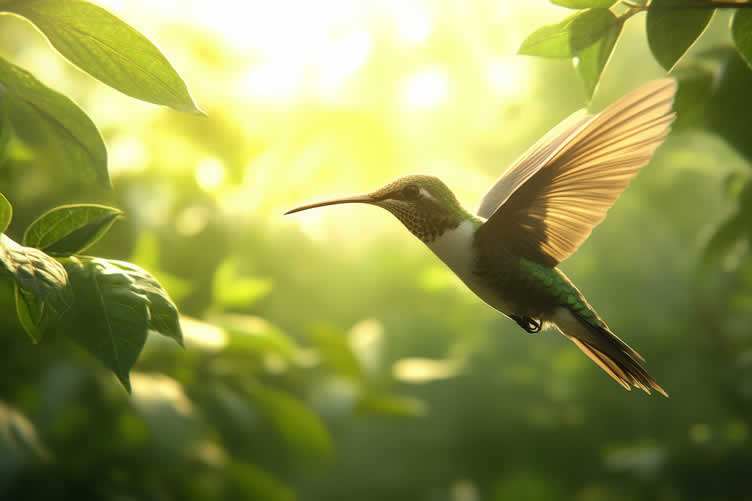
copyright image by 123rf.com
[ view diagram: hummingbird anatomy ]
[ images: hummingbird pics ]
-
Scroll up to directory … or scroll to next section reviewing the world of hummingbirds …


-
-
2nd Section: Hummingbird’s Diet and Feeding Habits
Hummingbirds are remarkable creatures, not only for their vibrant plumage and rapid wingbeats, but also for their specialized diet and unique feeding behaviors.
Their survival and high-energy lifestyle require a meticulously balanced diet that fuels their exceptional metabolic needs.
By understanding their feeding habits and dietary preferences, we gain greater insight into how these tiny birds thrive in diverse environments. This knowledge is crucial for conservation efforts and ensuring that their habitat continues to support their unique nutritional demands.
[ view summary table: diet and feeding habits ]
-
Nectar – The Primary Energy Source
For most hummingbirds, nectar serves as the foundation of their diet. Harvested from flowers, nectar provides a rich source of sugars, including glucose, fructose, and sucrose, which are vital for energy production.
The high sugar content is essential, as hummingbirds use tremendous energy during flight, especially when hovering to feed.
They consume nectar from a variety of flowering plants, often favoring those with tubular blossoms that match their long, specialized bills.
Interestingly, hummingbirds also play an important role in pollination during this process, serving as vital agents in the reproduction of many plant species.
-
Supplementing with Protein – The Role of Small Arthropods
While nectar fuels their high-speed metabolism, it does not fulfill the hummingbird’s requirement for essential amino acids and nutrients. To meet these additional needs, hummingbirds actively hunt small insects, spiders, and other arthropods.
These protein-rich foods are critical for muscle development, feather production, and overall health. Hummingbirds are skilled hunters, catching insects mid-air or gleaning them from leaves and flowers.
This behavior underscores their adaptability and their ability to maintain dietary balance in various ecosystems.
-
Feeding Habits and Behavioral Patterns
Hummingbirds are remarkably intentional feeders, often revisiting reliable food sources they have memorized with their impressive spatial memory.
They prefer to feed multiple times a day due to their rapid metabolism, with some species consuming nearly half their body weight in nectar daily.
Additionally, many hummingbirds are fiercely territorial and will defend valuable feeding sites from competitors, ensuring consistent access to resources.
Their feeding preferences may also shift seasonally or vary based on the availability of floral nectar and insect populations.
Hummingbirds exhibit unique adaptations that enhance feeding efficiency, such as specialized tongues that allow them to extract nectar rapidly. Their tongues have a split, fringed design that unfurls to draw in liquid through capillary action.
-
Seasonal and Environmental Influences on Diet
Seasonal changes and migratory patterns influence hummingbird diets significantly. During breeding season, their protein consumption often increases to support reproduction and rearing young.
Similarly, migratory species may alter their eating habits as they travel, taking advantage of regional floral blooms and insect populations.
Conservation of habitats with diverse food sources is vital to sustaining these tiny birds year-round, as any disruptions in their feeding cycle could have far-reaching implications on their health and survival.
Nutritional Component Description Nectar The primary source of energy; rich in sugars to support their rapid metabolism and high-energy lifestyle. Protein Sourced from insects, spiders, and small arthropods; critical for muscle development and overall nutrition. Feeding Patterns Multiple quick feedings daily; territorial behavior ensures consistent access to food sources. Seasonal Variations Diet shifts depending on breeding, migration, or resource availability during environmental transitions. 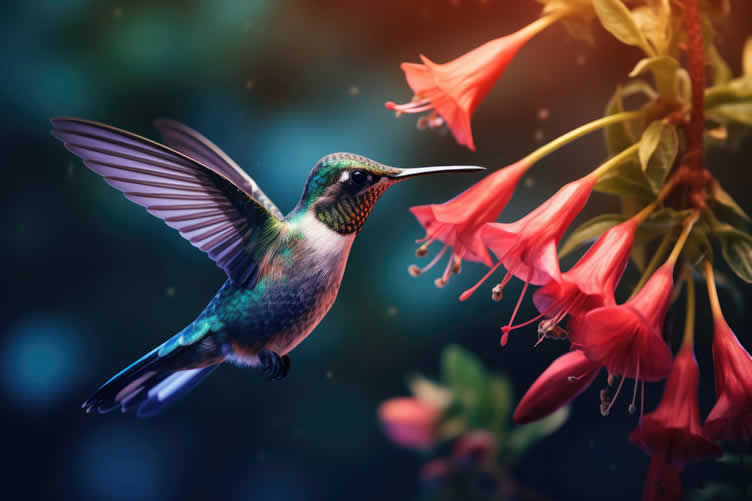
copyright image by 123rf.com
Sunny Perennial Pics
Part-Sun Perennials
viewing amazon-
Scroll up to directory … or scroll to next section reviewing the world of hummingbirds …
-
-
3rd Section: Attracting Hummingbirds to Your Backyard
Transforming your backyard into a haven for hummingbirds can be a deeply rewarding experience. These mesmerizing creatures with their iridescent feathers and quick movements bring beauty and vibrancy to any garden.
By providing the right resources and environment, you can attract hummingbirds and help support their needs throughout the season. Below, we explore key strategies to create a hummingbird-friendly space, focusing on flowers, feeders, water sources, shelter, and other enticing features.
- In-Section scroll to “attracting hummingbird” components …
- 1st: planting the right flowers
- 2nd: hummingbird feeders
- 3rd: add water sources
- 4th: use bright colors
- 5th: offer shelter and nesting sites
- 6th: other considerations
- view table summary
- next topic: maintaining hummingbird environment
-
Planting the Right Flowers
Planting the right flowers is a wonderful way to invite hummingbirds into your garden while providing them with essential nourishment. By selecting blooms that meet their unique needs, you can create a welcoming haven for these enchanting creatures.
Below, you’ll find helpful guidance on choosing the best plants to attract and support hummingbirds.
- Color Preferences
- Hummingbirds show strong preferences for tubular flowers in red, orange, and pink colors.
- They will visit flowers in other hues if the nectar quality is high.
- Native Plants
- Native plants support local ecosystems and require less maintenance than exotic species.
- Top native plant choices by region include:
- Eastern Regions:
Trumpet vine, cardinal flower, and bee balm. - Western Regions:
Penstemon, salvia, and Indian paintbrush.
- Eastern Regions:
- These plants produce abundant nectar and bloom over extended periods, ensuring a consistent food source throughout the hummingbird season.
- Creating Succession Blooms
- Significantly extends the attraction period by offering nectar from spring through fall:
- Early Spring:
Flowers like flowering quince and redbud provide nourishment for arriving migrants. - Late Summer:
Bloomers like cardinal flower and jewelweed support birds preparing for migration.
- Early Spring:
- Significantly extends the attraction period by offering nectar from spring through fall:
- Strategic Planting
- Ensures your garden remains attractive throughout the season.
- Flower Placement Tips
- Group similar plants to create more visible displays, attracting hummingbirds from greater distances.
- Position flowers at different heights to provide multiple feeding levels:
- Accommodates various hummingbird behaviors.
- Reduces competition among visiting birds.
Sample Plant List for Hummingbirds
google imagesPlant Name Bloom Time Sun/Shade Notes Coral Honeysuckle March–July Sun/Part Shade Native, tubular flowers Cardinal Flower July–October Sun/Part Shade Prefers moist soil Bee Balm (Monarda) June–September Sun/Part Shade Attracts insects too Penstemon Spring–Summer Sun Drought-tolerant Salvia Spring–Fall Sun Many varieties Fuchsia Late Spring–Fall Shade/Partial Good for containers Firecracker Plant Summer–Fall Sun Loved by many species Liatris August–November Sun/Part Shade Tall spikes, late bloom - https://www.fs.usda.gov/wildflowers/pollinators/documents/HummingbirdBrochures/HummingbirdGuideKS-NE.pdf
- https://www.fs.usda.gov/wildflowers/pollinators/documents/HummingbirdBrochures/HummingbirdGuideCA.pdf
- https://gardenforwildlife.com/collections/native-plants-for-hummingbirds
- https://www.humanegardener.com/10-favorite-plants-for-hummingbirds/
- https://www.gardeningknowhow.com/garden-how-to/beneficial/flowers-and-plants-for-hummingbirds
- https://www.gardeningknowhow.com/garden-how-to/beneficial/flowers-and-plants-for-hummingbirds
- https://www.reddit.com/r/gardening/comments/1fj4ahw/what_plants_draw_the_hummingbirds_to_your_yard/
- https://www.chickadeegardens.com/2022/03/gardening-for-hummingbirds.html

- Color Preferences
-
Hummingbird Feeders
Hummingbird feeders are an excellent addition to your backyard, providing a reliable source of food when natural blooms are scarce, especially during colder months or dry seasons.
Not only do they attract these vibrant, fascinating birds to your space, but they also give you the opportunity to observe their incredible speed and agility up close.
With a little care and attention, you can create a welcoming environment that provides these remarkable creatures with the nourishment they need to thrive.
Below, we’ll explore simple steps to successfully set up a hummingbird feeder and make it a delightful haven for these visitors.
- Choose the Right Feeders
- Opt for feeders with bright red components, as this color strongly attracts hummingbirds and signals a food source.
- Avoid feeders with yellow accents, which tend to attract bees and wasps.
- Optimal Feeder Placement
- Position feeders 4 to 6 feet above ground level, near natural perching spots.
- Keep feeders away from areas where cats or other predators might hide.
- Space multiple feeders at least 8 feet apart to reduce territorial disputes and allow more birds to feed simultaneously.
- Nectar Recipe
- Combine one part white granulated sugar with four parts water.
- Boil the water, add sugar, and stir until fully dissolved.
- Allow the mixture to cool completely before filling feeders.
- Never use honey, artificial sweeteners, or red food coloring, as these can harm hummingbirds.
- Feeder Maintenance
- Clean feeders every three to four days in mild weather or daily in hot conditions when nectar ferments quickly.
- Use a solution of one part white vinegar to four parts water for cleaning, followed by thorough rinsing.
- Replace nectar regularly, even if feeders aren’t empty, to avoid serving stale nectar, which can make hummingbirds sick.
- Choose the Right Feeders
-
Add Water Sources
Providing fresh water is an essential way to attract hummingbirds and ensure their well-being. While nectar feeders are a popular choice for drawing these tiny birds to your yard, offering a reliable source of clean water enhances their habitat and meets their hydration and bathing needs.
Below are some tips on how to create an inviting water source for these fascinating creatures.
- Shallow Water Sources
- These birds prefer shallow water sources with gentle movement, as still water doesn’t catch their attention as effectively.
- Traditional birdbaths often prove too deep, but adding stones or branches creates appropriate shallow areas.
- Misters and Drippers
- Misters and drippers create irresistible water features for hummingbirds.
- The sound and movement of dripping water attract birds from considerable distances.
- Fine misting systems allow them to fly through water droplets for bathing.
- Solar-Powered Fountains
- Solar-powered fountains provide continuous water movement without requiring electrical connections.
- They maintain the gentle movement that hummingbirds find appealing.
- Placement of Water Sources
- Water placement should complement feeding areas without creating conflicts.
- Position water sources near natural perching spots for easy access.
- Ensure clear flight paths for quick escapes, as hummingbirds prefer good visibility and multiple escape routes while drinking or bathing.
- Shallow Water Sources
-
Use Bright Colors
Bright, vibrant colors play a crucial role in catching the attention of hummingbirds and making your backyard an inviting haven for these tiny creatures.
Known for their attraction to red, orange, and other vivid hues, hummingbirds are naturally drawn to areas where these colors are prominent.
By incorporating bright tones into your garden, you can create a lively and welcoming space that encourages repeated visits from these delightful birds.
- Attract with Warm Tones
- Bright, warm colors such as red, orange, and pink are highly appealing to hummingbirds.
- Incorporate these hues into your garden to entice them.
- Colorful Flower Choices
- Choose flowers in vibrant shades to naturally draw hummingbirds.
- Decorative Additions
- Use accents like gazing balls or garden art with these colors.
- Select or paint feeding stations in warm tones to increase visibility.
- Avoid Camouflage
- Avoid using colors that blend into the environment.
- Subtle or muted tones may not be as noticeable to passing hummingbirds.
- Attract with Warm Tones
-
Offer Shelter and Nesting Sites
Creating a welcoming environment for hummingbirds involves more than just providing food and vibrant colors. Offering shelter and safe nesting sites is essential to making your backyard a comfortable and secure space for these delicate creatures.
By incorporating the right elements, you can give hummingbirds a place to rest, raise their young, and return to year after year.
- Shelter is Essential
- Create a safe and inviting space for hummingbirds.
- Plant shrubs, small trees, or dense bushes to provide hiding spots from predators and protection from harsh elements.
- Nesting Site Options
- Incorporate plants like willow, oak, or birch to serve as potential nesting sites.
- Position shelters at varying heights to accommodate different hummingbird habits.
- Allow Space for Flight
- Ensure enough open space around shelters to allow for easy flight and movement.
- Avoid Nest Disturbance
- Refrain from disturbing active nests, as doing so may cause birds to abandon their young.
- Shelter is Essential
-
Other Considerations
To create the ultimate hummingbird refuge, avoid using pesticides or harmful chemicals in your garden, as these can contaminate their food sources and harm the birds.
Ensure your backyard has a variety of nectar sources and maintain a clean, vibrant environment throughout the season. Providing a consistent, safe space ensures that hummingbirds will return year after year.
Key Strategy Summary Planting the Right Flowers Choose tubular flowers in red, orange, and pink colors for their high appeal to hummingbirds. Native plants, such as trumpet vine and bee balm in eastern regions or penstemon and salvia in western regions, offer abundant nectar and support local ecosystems.
Plan for succession blooms to provide nectar from spring through fall, and place flowers at varying heights to accommodate different hummingbird behaviors.
Hummingbird Feeders Select feeders with red components to attract hummingbirds, and avoid yellow accents that attract bees. Place feeders 4-6 feet above the ground in predator-safe areas.
Use a nectar recipe of one part sugar to four parts water and clean feeders regularly to prevent contamination.
Adding Water Sources Offer shallow water sources or use misters, drippers, and solar-powered fountains to create gentle movement that attracts hummingbirds. Place water sources near perching spots and ensure clear flight paths for safety and easy access.
Using Bright Colors Use warm tones like red, orange, and pink to catch the attention of hummingbirds. Incorporate these colors in flowers, decorative items, and feeders while avoiding muted or camouflaging hues.
Shelter and Nesting Sites Plant shrubs, small trees, or dense bushes to provide hiding spots and nesting opportunities. Incorporate plants like willow or birch and offer shelters at varying heights.
Maintain open spaces for flight and avoid disturbing active nests to ensure the birds feel secure.
Other Considerations Avoid pesticides to prevent contaminating food sources. Maintain a clean, vibrant environment to ensure hummingbirds feel safe and well-supported throughout the season.
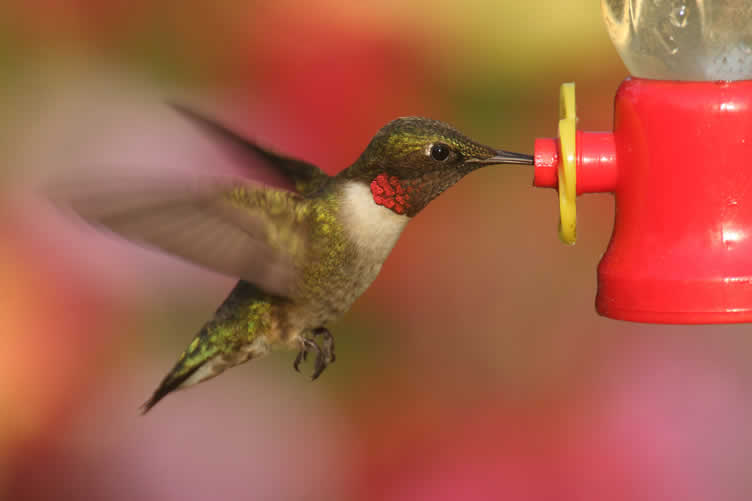
copyright image by 123rf.com
[ pinterest: attracting hummingbirds ]
[ youtube: How to Make Hummingbird Nectar Recipe ]
-
Scroll up to directory … or scroll to next section reviewing the world of hummingbirds …
-
4th Section: Maintaining a Hummingbird-Friendly Environment
Sustaining an attractive hummingbird habitat requires ongoing attention to seasonal changes, potential threats, and environmental health.
Successful backyard habitats evolve with the needs of visiting birds while maintaining safe, chemical-free environments that support their wellbeing throughout the active season.
- Quick scroll to “maintaining environment” components …
- 1st: seasonal care
- 2nd: pest and predator control
- 3rd: avoiding harmful chemicals
- view table summary
- next topic: The Behavior of Hummingbirds
-
Seasonal Care
Maintaining a hummingbird-friendly environment throughout the year requires attention to the unique needs of each season. Below is a breakdown of seasonal tasks to ensure a welcoming and nourishing habitat.
- Spring Preparation
Begin preparations before hummingbirds arrive to ensure food sources are ready for early migrants.- Clean and refill feeders regularly.
- Prune dead material from flowering plants to encourage healthy growth.
- Check that water features are functioning properly and are accessible.
- Plant or encourage early-blooming flowers, such as:
- Flowering quince
- Azaleas
- These flowers provide crucial nectar for birds arriving after long migrations.
- Summer Maintenance
Focus on consistent care and providing ample resources during the hummingbirds’ active season.- Deadhead spent flowers to promote continued blooming and additional nectar availability.
- Maintain a regular feeder cleaning schedule to avoid spoilage or bacteria growth.
- Ensure water sources remain fresh and accessible at all times.
- Pay special attention during hot weather:
- Nectar spoils more quickly in the heat and may need to be replaced more often.
- Water evaporates rapidly and must be replenished frequently.
- Fall Activities
Support birds preparing for migration with continued nourishment:- Keep feeding up to two weeks after you last spot hummingbirds in your area, as stragglers and late migrants rely on these resources.
- Allow some flowers in your garden to go to seed — this fosters natural food sources for insects that hummingbirds eat for protein.
- Winter Preparation
Tasks vary depending on your location:- Northern Areas:
Store feeder equipment and use the winter months to plan and improve next year’s hummingbird garden. - Southern Regions:
Maintain feeders year-round to support resident hummingbird populations or winter visitors from the north.
- Northern Areas:
By tailoring your efforts to each season, you can nurture a thriving environment that supports the wellbeing of hummingbirds throughout the year.
- Spring Preparation
-
Pest and Predator Control
Protecting hummingbirds from common backyard threats requires vigilance and appropriate protective measures. Cats represent the most significant predator threat, killing billions of birds annually.
- Protect Hummingbirds from Cats
- Keep pet cats indoors or in enclosed outdoor areas to prevent hunting.
- Use motion-activated sprinklers to discourage neighborhood cats from entering areas frequented by hummingbirds.
- Prevent Window Strikes
- Apply window decals, hang ribbons, or install screens to make glass surfaces more visible to birds.
- Position feeders very close to windows (within 3 feet) or far away (beyond 10 feet) to minimize collision risks.
- Address Competition from Ants and Wasps
- Install ant moats filled with water to create barriers that prevent ants from reaching feeders.
- Use feeders with bee guards or built-in barriers to allow hummingbird access while excluding larger insects.
- Mitigate Praying Mantis Risks
- Praying mantises occasionally capture hummingbirds near feeders, though this is rare.
- If mantises are spotted near feeding areas, gently relocate them to other parts of the garden where they can help control pest insects without posing a threat to hummingbirds.
- Protect Hummingbirds from Cats
-
Avoiding Harmful Chemicals
Chemical pesticides, herbicides, and fungicides pose serious threats to hummingbirds and their food sources. These substances can poison birds directly or eliminate the insects they depend on for protein.
Organic gardening practices create safer environments while still maintaining attractive landscapes.
- Integrated Pest Management
- Opt for natural alternatives to chemical treatments, such as integrated pest management techniques.
- Encourage beneficial insects like ladybugs and lacewings to naturally control pest populations.
- Plant Native Flowers and Shrubs
- Include native plants in your garden to support a thriving ecosystem.
- Native flowers provide natural nectar sources while also attracting small insects, offering a balanced diet for hummingbirds.
- Avoid Harsh Fertilizers
- Refrain from using harsh fertilizers, as they can change soil and plant chemistry.
- These changes can indirectly impact the health of nectar-producing blooms, reducing their benefit to hummingbirds.
- Create a Pesticide-Free Habitat
- Foster a diverse, pesticide-free environment to ensure a safe oasis for hummingbirds.
- Promote harmony with nature by cultivating a space that supports both pollinators and the wider ecosystem.
- Integrated Pest Management
Category Details Seasonal Care Spring Preparation:
Prepare before hummingbirds arrive by cleaning feeders, pruning plants, checking water features, and planting early-blooming flowers (e.g., flowering quince, azaleas).Summer Maintenance:
Deadhead flowers, clean feeders regularly, ensure fresh water, and replace nectar more frequently during hot weather.Fall Activities:
Continue feeding migratory hummingbirds and allow some flowers to go to seed to support insects they eat.Winter Preparation:
Northern areas should store equipment and plan for next year, while southern regions maintain feeders year-round for residents or winter visitors.Pest and Predator Control Protect from cats:
Keep cats indoors or use enclosed outdoor areas; install motion-activated sprinklers.Prevent window strikes:
Add decals, ribbons, or screens to windows and place feeders either close (within 3 feet) or far from windows (beyond 10 feet).Address insect competition:
Use ant moats and feeders with bee guards.Manage praying mantis risks:
Relocate mantises if they pose a threat near feeders.Avoiding Harmful Chemicals Integrated Pest Management:
Use natural methods like encouraging beneficial insects to control pests.Plant Native Flowers and Shrubs:
Incorporate native plants to provide nectar and attract insects for a balanced hummingbird diet.Avoid Harsh Fertilizers:
Avoid chemicals that harm soil chemistry and nectar-producing flowers.Create a Pesticide-Free Habitat:
Cultivate a diverse, chemical-free garden to support both pollinators and the broader ecosystem.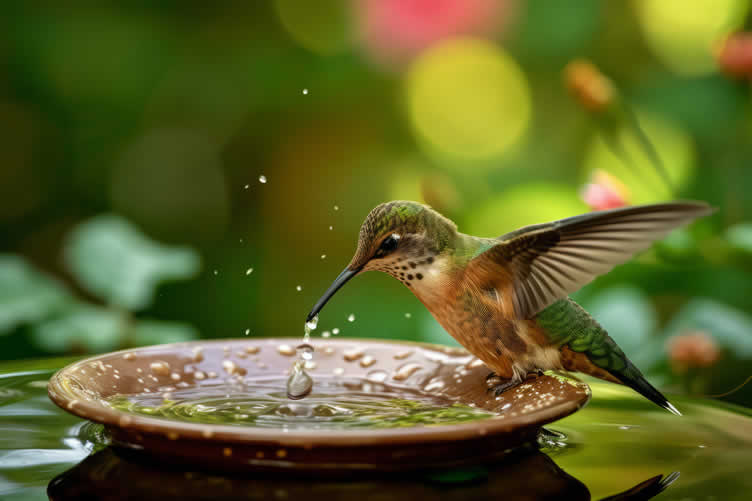
copyright image by 123rf.com
-
Scroll up to directory … or scroll to next section reviewing the world of hummingbirds …
-
5th Section: The Behavior of Hummingbirds
Hummingbirds exhibit a fascinating array of behaviors that underline their adaptability, intelligence, and unique biological traits. These tiny yet powerful birds have evolved to master their environments in ways that continue to intrigue ornithologists and bird enthusiasts alike.
From their aerial precision to their social habits, understanding the behaviors of hummingbirds offers deep insights into their survival strategies and their relationships with the ecosystems they inhabit.
Below, we will explore some of the most remarkable aspects of hummingbird behavior.
[ view summary table: behavior of hummingbirds ]
-
Hovering Mid-Air
One of the defining characteristics of hummingbirds is their ability to hover mid-air with effortless grace. This is made possible by their unique wing structure, which rotates in a figure-eight motion, allowing them to generate lift on both the upward and downward strokes.
With wings beating as fast as 50 to 80 times per second depending on the species, they can remain stationary in front of flowers or feeders to sip nectar.
This hovering ability is not only crucial for their feeding habits but also highlights their incredible energy efficiency, as they must consume nectar almost continuously to fuel their rapid metabolic rates.
-
Territorial Protection
Hummingbirds are known to be fiercely territorial, often defending their feeding grounds against other birds and intruding rivals.
Males, in particular, exhibit aggressive behavior by chasing away threats from their chosen perches through aerial displays and vocalization.
Territorial boundaries are essential for ensuring access to food sources such as nectar-rich flowers, sap, and insects. While their small size may suggest vulnerability, their determination and agility allow them to maintain dominance over their territories, securing resources critical for their survival.
-
Incredible Speed and Precision
Hummingbirds are among the fastest flying birds relative to size, with some species capable of reaching speeds over 30 miles per hour in a straight line and more than 50 miles per hour during courtship dives.
Their precision in navigating intricate flight paths is attributed to their highly developed motor control and exceptional vision.
This speed and accuracy allow them to swiftly evade predators as well as locate and feed on blooms within densely forested habitats.
Research has shown that their brains are uniquely adapted to process rapid visual inputs, enabling them to make split-second decisions mid-flight.
-
Perching
While hummingbirds are synonymous with dynamic flight, perching is also an integral part of their daily behaviors. After expending vast amounts of energy during their active foraging sessions, they frequently rest on tree branches, twigs, or wires.
During these moments of rest, hummingbirds conserve energy, digest food, and sometimes take short naps.
Additionally, perching offers them an observational advantage for monitoring their surroundings, including their territories and nearby rivals.
-
Courtship
Courtship displays in hummingbirds are elaborate and highly specialized. Male hummingbirds perform dramatic aerial dives, intricate flight patterns, and vibrant vocalizations to attract females.
These displays not only demonstrate the male’s fitness but also showcase the physical and genetic qualities that female hummingbirds seek in potential mates.
Some species also rely on their iridescent plumage to create captivating optical effects that heighten the appeal of their courtship rituals. The combination of skill, stamina, and visual allure during these courtship behaviors underscores the complexity of their mating strategies.
-
Other Remarkable Behaviors
Beyond their well-documented activities, hummingbirds exhibit a range of other fascinating behaviors.
For example, some species demonstrate an amazing memory, recalling specific locations of flowers and feeders even after migrating thousands of miles.
They also exhibit cooperative behaviors, such as tolerating other species near food sources when resources are abundant.
Additionally, their ability to enter a torpor-like state during cold nights helps them conserve energy, further emphasizing their adaptability in changing conditions.
Behavior Description Hovering Mid-Air The ability to sustain a stationary position in mid-air using rapid wing movement in a figure-eight motion to aid in feeding. Territorial Protection Defending feeding areas through aerial displays and vocalization to secure resources. Speed and Precision Flight capabilities with remarkable speed, agility, and accuracy, including courtship dives over 50 mph. Perching Resting between activities to conserve energy, monitor surroundings, and digest food. Courtship Performing intricate and energetic displays to attract mates, often highlighted by iridescent plumage. Other Behaviors Exhibiting memory retention, cooperative feeding habits, and adaptability to environmental changes through torpor. 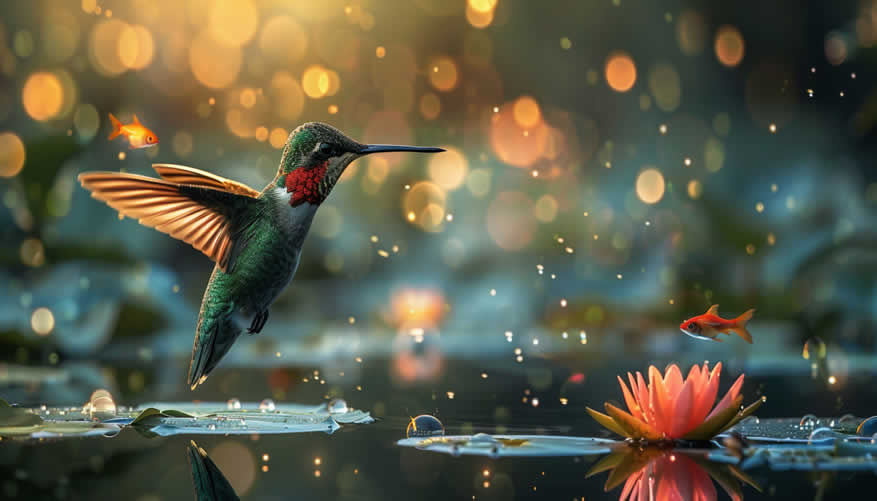
copyright image by 123rf.com
[ youtube: Hummingbird Facts And More ]
[ youtube: How Hummingbirds Feed & Fight ]
-
Scroll up to directory … or scroll to next section reviewing the world of hummingbirds …
-
-
6th Section: Setting Up a Landscaping Plan
… for personal enjoyment
Creating a landscaping plan that brings you joy begins with envisioning how you want to use your outdoor space and the feelings you want it to evoke.
Start by assessing the size and layout of your yard, then consider adding elements that reflect your personality and fulfill your desires. Maybe you dream of a quiet corner with a bench surrounded by fragrant flowers for peaceful moments, or perhaps you prefer an open area perfect for hosting gatherings with friends and family.
Think about the plants and features that make you happy. Including seasonal blooms, a small water fountain for soothing natural sounds, or a vegetable garden for fresh, homegrown produce can bring both beauty and function to your space.
Be sure to incorporate pathways, seating, and shaded areas to make your yard more inviting and accessible. Ultimately, designing with your preferences and daily habits in mind ensures that your landscaping becomes more than just an outdoor area—it becomes a cherished retreat that nurtures your well-being.
-
Getting Help with Your Landscaping Plan
Planning a landscape that balances beauty, functionality, and sensory appeal can feel overwhelming, but you don’t have to do it alone. Seeking guidance from a professional landscaper or garden designer can provide valuable insights tailored to your specific space and needs.
These experts can help you choose the right plants for your climate, design layouts that maximize both aesthetics and usability, and incorporate features that align with your vision.
If a professional isn’t in your budget, consider visiting local garden centers or community gardening groups, where you can find knowledgeable staff and like-minded enthusiasts eager to share advice.
Remember, creating your dream garden is a process, and it’s okay to take it one step at a time with a little help along the way.
LetsRenovate has partnered with HomeAdvisor™, a renowned provider of highly-rated, carefully-vetted local landscape contractors. Start your search here by entering your zip code to find local professionals.
copyright image by 123rf.com
But Wait!
Before beginning your search for landscape contractors, be sure to download and use this comprehensive evaluation worksheet.
This valuable tool is designed to help you objectively compare and rank contractors, taking into account key factors like pricing, licensing, and referrals.

Evaluation Sheet
File Type:
-
Scroll up to directory … or scroll to conclusion …
-
-
Conclusion
Hummingbirds are truly extraordinary creatures, captivating us with their agility, resilience, and unique behaviors. From their rapid flying and precise feeding habits to their stunning courtship displays, every aspect of their lives is a testament to their remarkable abilities.
By observing and understanding their needs, we can foster a nurturing environment that supports these incredible birds, ensuring they continue to grace our world with their beauty and vitality.
-
Quick scroll to more yard n’ garden ideas …
-
ideas to view and compare from the photo above
- What comments can you share about
attracting hummingbirds to your backyard?

addressing the world of hummingbirds and other yard n’ garden needs …

… grab this directory of ideas for future use



Download this PDF for a concise summary of all you need to know about …?


Budgeting Worksheet For Costing Home Remodeling and Home Improvement Decisions
 File Type (excel)


SHARE IT ..! You might have someone in your social network who could find this informative post about the world of hummingbirds valuable. Feel free to share it on Facebook, X (formally Twitter), LinkedIn, or Pinterest!


Download this PDF for a concise summary of all you need to know about …?
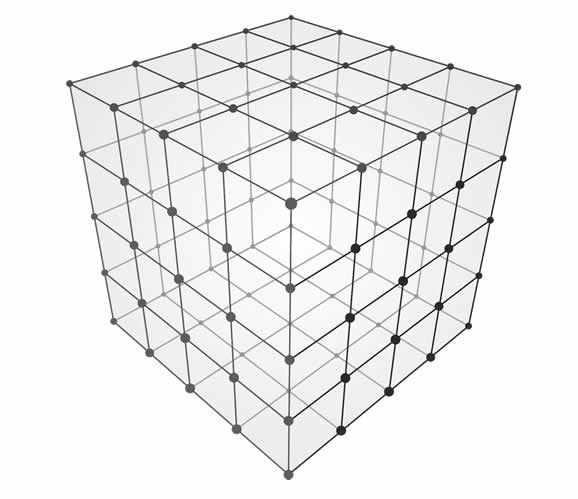
get the size dimensions for any home remodeling project …
… for functionality, aesthetics, and adhering to building codes


Calendar For:
Home Maintenance
File Type:
… remodeling decisions

Find Landscaping/Maintenance Landscape Design Landscape Maintenance Pest Control Sprinkler Systems Tree & Shrubs Water Features top-rated, pre-screened local contractors FREE: download contractor selection enter zip code – powered by HomeAdvisor ™
Quick Contractor Guides selecting negotiating working with inspecting

Cover image credit: world of hummingbirds by 123rf.com
end of post … please share it!
 |
did you find hummingbird analysis helpful? If so, please share the article with your friends and family! |
Nice pic idea? Leave us a quick comment below.
And please share this pic idea within your social networks.