Summary Outline –
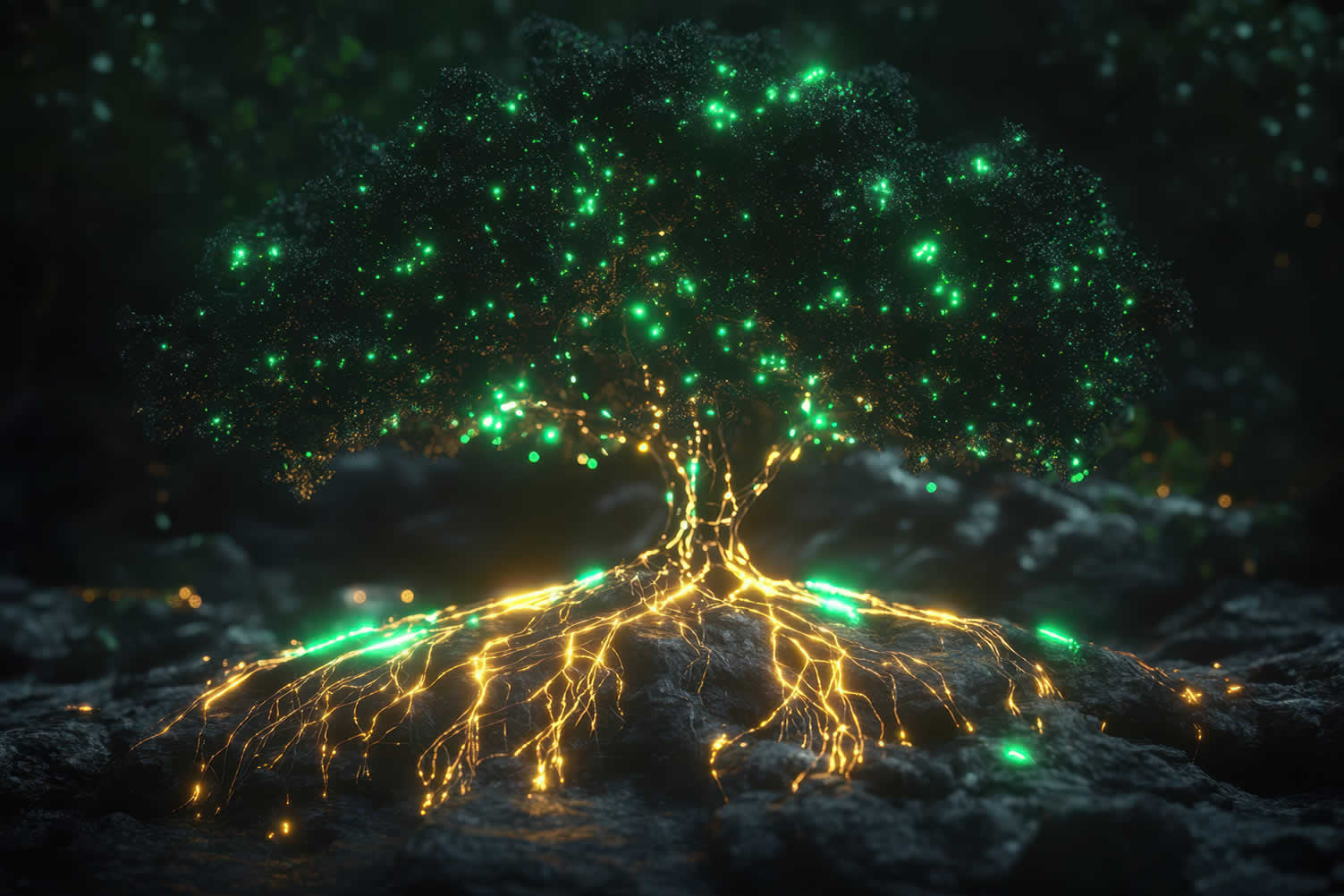
The mycorrhizal network is not fiction or folklore. Scientists have documented these fungal highways in forests, grasslands, and home gardens around the world.
Research shows that when one plant faces drought stress or pest attack, connected neighbors can respond by activating their own defenses before danger arrives.
Nutrients flow from established trees to vulnerable seedlings, and carbon moves between species that would otherwise compete for the same sunlight and water. Understanding how these networks function can change the way you think about planting, composting, and caring for your landscape.
This guide explores the biological foundations of mycorrhizae, the architecture of different network types, the economic exchanges that sustain them, and their ecological significance.
Whether you are planning a vegetable bed or restoring a woodland edge, recognizing the role of mycorrhizal net

-
Quick scroll to first topic about mycorrhizal network … or review summary content

Content Summary
section directory1st Section Review: [view section]
… the first concept to explore is the biological foundation of the mycorrhizal network, where underground tree and plant roots connect with fungi to create a web for plant communication, resource exchange, and management.
2nd Section Review: [view section]
… the second section explores the hidden language of plants, focusing on how mycorrhizal networks enable underground communication through a shared signaling system. Fascinating research shows that part of this communication includes warning signals against pests and pathogen invasions.
3rd Section Review: [view section]
… while the most robust mycorrhizal networks are found in forests, trees and plants in our own gardens and landscapes can form similar—though smaller—networks to create shared connections.
4th Section Review: [view section]
… the fourth section explains how to support your trees and other landscape plants through the mycorrhizal network. This can be achieved through smart landscaping by designing your space to foster the growth and health of the mycorrhizal network, creating a stronger overall ecosystem.
first “mycorrhizal network” idea

copyright image by 123rf.com
Section 1: Understanding The Biological Foundations Of Mycorrhizae
Notes:
-
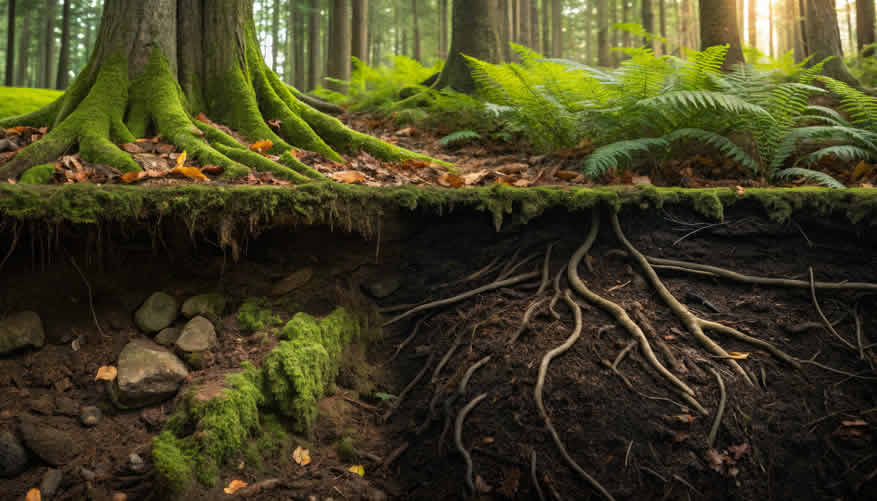
Mycorrhizae are partnerships between plant roots and fungi, named from the Greek words for "fungus root." This ancient relationship, dating back over 400 million years, played a key role in helping early plants colonize land.
In this symbiotic bond, plants provide carbon from photosynthesis, while the fungi supply essential nutrients and water that plant roots can’t easily access on their own.
Fungi are masters at extracting nutrients. Their tiny threads can penetrate small soil pores and break down organic matter that plant roots cannot reach. In return, fungi can receive up to 20% of a plant’s carbon, demonstrating the mutual benefits of this partnership.
When one fungus connects to multiple plants, it forms a common mycorrhizal network, linking many plants into a shared resource pool. These networks expand naturally as fungi seek nutrients and partners, changing how plants access resources and share information about their surroundings.
-
Quick scroll to supporting notes …
-
-
1st: Defining the Common Mycorrhizal Network
… and its biological components
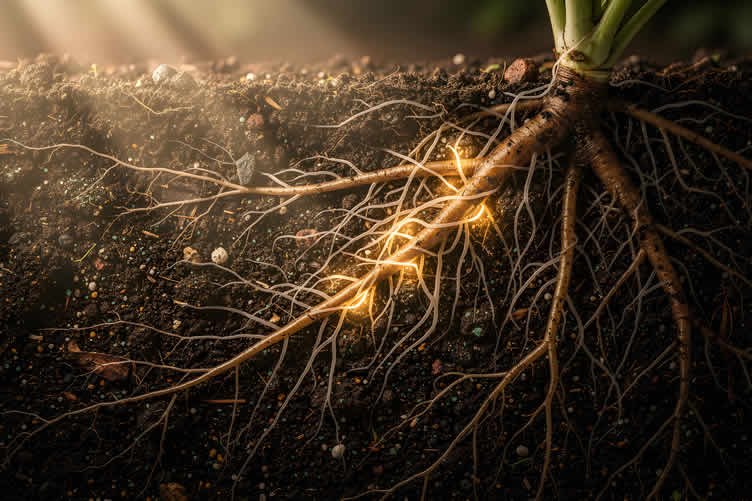
The common mycorrhizal network (CMN) represents one of nature’s most ingenious underground collaborations, fostering interconnectedness between fungi and plants.
This intricate system allows for the transfer of nutrients, water, and biochemical signals, effectively creating a dynamic communication web beneath the soil surface.
AI generated image by 123rf.com

Unlike conventional networks constructed by human design, the CMN emerges organically as fungal hyphae form natural bridges between plant roots, supporting ecosystems in ways that have evolved over millions of years.
Understanding its biological components and architectural dynamics provides invaluable insights into ecological health, biodiversity, and sustainable agricultural practices.
-
Arbuscular Mycorrhizal Systems
Arbuscular mycorrhizal (AM) fungi, part of the phylum Glomeromycota, are among the most ancient and widespread contributors to CMNs. These fungi penetrate the root cortex of host plants, forming specialized structures called arbuscules.
These microscopic, tree-like formations facilitate a highly efficient exchange of resources. The plant benefits by absorbing essential nutrients, such as phosphorus and nitrogen, which the AM fungi extract from the soil. Meanwhile, the fungi receive carbohydrates produced through the plant’s photosynthesis.
The architecture of arbuscular mycorrhizal systems underscores their efficiency. Arbuscules are finely tuned to maximize surface area for nutrient exchange with plant cells without causing harm.
This symbiotic balance is a hallmark of AM fungi and highlights the extraordinary adaptability of these organisms.
Studies, including those by Smith and Read (2008), have emphasized that nearly 80% of terrestrial plants rely on arbuscular mycorrhizal associations, underscoring their ecological significance.
-
Ectomycorrhizal Systems
Ectomycorrhizal (EM) systems, in contrast, involve fungi that envelop plant roots with a dense sheath or mantle and extend a network of hyphae into the surrounding soil.
Unlike AM fungi, EM fungi do not penetrate root cells; instead, they establish their connections within the extracellular spaces of the root’s epidermis and cortex, forming what is known as the Hartig net. This adaptation is common among many tree species in temperate and boreal forests, such as oaks, pines, and birches.
The EM structure functions as a vast extension of the root system, improving nutrient absorption, especially in nutrient-poor soils. It is particularly effective at accessing nitrogen and other mineral nutrients that are locked within organic matter.
Research has shown that ectomycorrhizal networks can span extensive distances, linking tree roots and creating interspecies cooperation. This functionality enhances forest resilience and promotes long-term sustainability, as outlined in the work of Suzanne Simard and colleagues (Simard et al., 1997).
Discuss other elements of the network that include the following [Ericoid Mycorrhizae, Orchid Mycorrhizae]. Start with title followed by an introduction and then illustrate these components
-
Other Elements of Mycorrhizal Networks
Mycorrhizal networks are intricate systems that connect diverse plant species through symbiotic relationships between fungi and plant roots.
Beyond ectomycorrhizal associations, other key types of mycorrhizae play an essential role in maintaining ecosystem health and resilience. This sub-note explores Ericoid Mycorrhizae and Orchid Mycorrhizae, highlighting their unique functions and contributions within these networks.
-
Ericoid Mycorrhizae
- Host Plants & Habitat:
Primarily associated with Ericaceae family plants like heathers and blueberries, thriving in nutrient-poor, acidic soils. - Functionality:
Helps plants access critical nutrients, such as nitrogen and phosphorus, while enhancing growth in challenging environments, including alpine and heath ecosystems. - Unique Feature:
Breaks down complex organic compounds, boosting nutrient availability in low-fertility soils and contributing to soil stability and plant resilience.
- Host Plants & Habitat:
-
Orchid Mycorrhizae
- Host Plants & Functionality:
Exclusively partnered with orchids, these fungi supply essential nutrients to germinating orchid seeds, which lack their own reserves. This relationship is vital for the early development and, in some species, continues throughout their lifecycle. - Unique Impact:
By enabling the successful germination and growth of orchids, these fungi play a critical role in preserving biodiversity, supporting the survival of rare and unique orchid species in diverse habitats.
- Host Plants & Functionality:
These additional components of mycorrhizal networks underscore the adaptability and complexity of plant-fungal relationships, ensuring the survival and prosperity of ecosystems in diverse environmental conditions.
-
-
The Interplay Between Fungi and Plants Within CMNs
Beyond their individual associations, mycorrhizal fungi form extensive underground networks, sometimes referred to as the "wood wide web."
These networks facilitate communication and resource sharing among plants, enhancing ecosystem connectivity and resilience. Through mycorrhizal networks, plants can share carbon, nitrogen, and water, improving the survival of seedlings and strengthening the overall health of plant communities.
Such interactions highlight the central roles of mycorrhizae in fostering biodiversity, regulating biogeochemical cycles, and supporting ecosystem stability in the face of environmental challenges.
Further research on mycorrhizal networks can uncover innovative applications in agriculture, forestry, and ecological restoration, ensuring the sustainable coexistence of human activities with natural systems.
- Quick scroll to note summary content …
Defining Mycorrhizal Network
(from the summary table below)
Component Description Functions Significance Common Mycorrhizal Network (CMN) The CMN is a natural underground system connecting fungi and plant roots through fungal hyphae. It facilitates the transfer of nutrients, water, and biochemical signals, creating a communication network. Supports dynamic interactions between fungi and plants, enhances nutrient and water efficiency, and fosters mutualistic relationships. Provides insights into ecological health, biodiversity, and sustainable practices in agriculture and forestry. Arbuscular Mycorrhizal Systems Part of the phylum Glomeromycota, these fungi penetrate the root cortex of plants, forming arbuscules that maximize resource exchange. Facilitates absorption of phosphorus and nitrogen by plants while receiving carbohydrates produced through photosynthesis. Supports nearly 80% of terrestrial plants, contributing to ecosystem reliability and nutrient cycling. Ectomycorrhizal Systems Fungi form a sheath around plant roots and create a network within the extracellular spaces, known as the Hartig net. Enhances nutrient absorption, particularly in nutrient-poor soils, and fosters interspecies cooperation among trees in forests. Promotes forest resilience, long-term sustainability, and ecosystem stability, particularly in temperate and boreal forests. Ericoid Mycorrhizae Symbionts of Ericaceae family plants, thriving in acidic, nutrient-poor soils such as those in alpine and heath ecosystems. Breaks down organic compounds to improve nutrient availability, aiding plant growth in challenging environments. Contributes to soil stability, ecosystem functioning, and the survival of plants in extreme conditions. Orchid Mycorrhizae Fungi partnered with orchids, providing essential nutrients to germinating seeds that lack their own reserves. Supports the early development of orchids and, in some cases, continues to support them throughout their lifecycle. Ensures the survival and biodiversity of rare orchid species, playing a critical role in unique ecological niches. 

copyright image by 123rf.com
Beauty and Diversity of Maple Trees
Maple trees are loved for their stunning foliage and versatility, making them a top choice for any landscape.
With over 100 species, they offer a variety of colors, shapes, and sizes to suit different climates and styles.
From the fiery autumn hues of the Sugar Maple to the delicate, ornamental leaves of the Japanese Maple, these trees bring beauty year-round.
Whether for shade, vibrant seasonal color, or a striking focal point, maple trees combine elegance with practicality.
view ideas: types of maple trees(new win)
-
Scroll up to section directory … or scroll to next supporting note …
-
-
2nd: The Economic Exchange
… of soil nutrients, carbon, and water
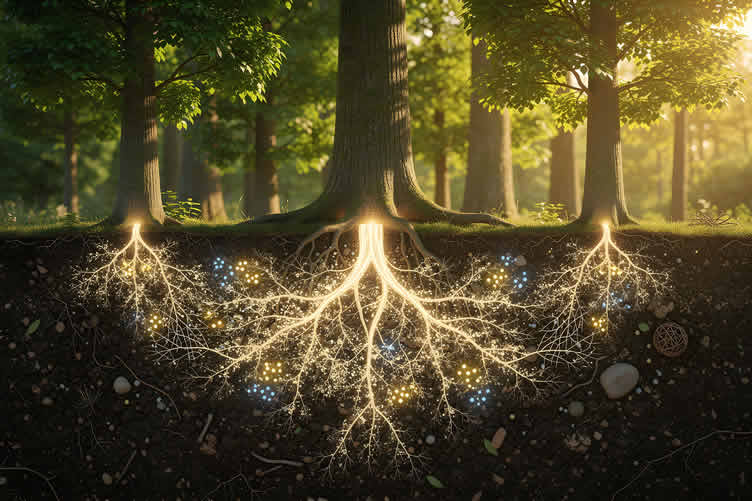
Healthy soil ecosystems depend on complex interactions between organisms, nutrients, and carbon.
Among these, the mycorrhizal networks formed between plants and fungi play an essential role in enabling nutrient cycles that sustain plant growth and ecological balance.
AI generated image by 123rf.com
This mutually beneficial relationship operates on intricate mechanisms of reciprocal exchange, where plants provide carbon to their fungal partners in return for critical nutrients like phosphorus and nitrogen.
Understanding this exchange not only highlights the importance of these networks but also underscores their significance in maintaining agricultural productivity and forest health.
-
How Mycorrhizal Networks Facilitate Nutrient Exchange
Mycorrhizal networks are instrumental in ensuring nutrient availability in soils that might otherwise limit plant growth. Through these symbiotic partnerships, plants supply carbon compounds—derived from photosynthesis—to the fungi.
The fungi, in turn, use their enzymatic capabilities to access nutrients locked within soil particles and organic matter. Phosphorus, a vital nutrient for plants, is a key component of this exchange. Although phosphorus is abundant in most soils, it often remains unavailable to plants due to its strong binding properties to soil particles.
Mycorrhizal fungi overcome this barrier by secreting enzymes and acids that release phosphorus from minerals and organic material. Once liberated, this phosphorus is transported through fungal hyphae directly to plant roots, enabling efficient absorption and utilization.
Nitrogen, another crucial nutrient for plant development, is also transported via mycorrhizal fungi. Ectomycorrhizal fungi excel at breaking down complex organic nitrogen sources, such as decomposing leaf litter and wood.
These fungi convert organic nitrogen into plant-available forms, effectively recycling nutrients that would otherwise remain trapped within decaying material. This process is particularly important in forest ecosystems, where nitrogen availability often serves as a limiting factor for tree growth.
-
The Role of Carbon in Mycorrhizal Networks
The movement of carbon within these networks is a more intricate process that continues to be a focus of scientific investigation. Research utilizing isotopic markers—both radioactive and stable—has revealed that carbon can flow from one plant to another via shared fungal connections.
This phenomenon is especially notable when robust, photosynthesizing plants are connected to seedlings struggling in shaded environments or to species that rely entirely on fungal partners for their carbon needs, such as mycoheterotrophic plants.
While the mechanisms behind this carbon exchange remain under debate, with some researchers suggesting it represents intentional sharing and others viewing it as passive leakage from fungal metabolic processes, the evidence for such carbon flows is well established.
These exchanges may play a critical role in supporting ecosystem resilience, ensuring that vulnerable plants can survive in challenging conditions through the shared resources facilitated by fungal networks.
-
During Periods of Drought
When water becomes scarce, plants with access to deeper soil layers or moisture-rich microsites transfer water to their neighbors through fungal hyphae. This redistribution minimizes drought-induced stress, allowing vulnerable seedlings and understory plants to survive periods of reduced rainfall.
The fungal network not only aids in water absorption during periods of drought but also helps regulate water distribution during times of abundance. By transferring water between connected plants, even among species, the mycorrhizal network promotes resilience and stability within plant communities.
This mechanism is essential in maintaining growth and productivity during fluctuating environmental conditions, ensuring long-term ecological balance.
-
Collaborative Nutrient Sharing and Beyond
Beyond providing nutrients and water, mycorrhizal networks exhibit remarkable inter-plant cooperation. Through the fungal mycelium, plants can exchange resources, allowing weaker or younger plants to benefit from the surplus nutrients of more established vegetation.
This altruistic system stabilizes ecosystems by reducing competition and promoting cooperative growth among plant species.
-
Enhanced Seedling Survival Near Established Trees
The resource-sharing capabilities of mycorrhizal networks provide essential support for seedlings, especially in forest ecosystems. Research shows that young plants growing near mature trees often fare better than those in open gaps.
This phenomenon occurs because mycorrhizal connections between established trees and seedlings serve as a safety net. The network supplies vital resources such as water and nutrients to emerging plants, reducing early mortality rates and ensuring long-term forest regeneration.
Research on mycorrhizal interactions continues to shed light on these fundamental ecological processes, offering new opportunities for innovation in land management and conservation strategies.
Protecting and enhancing these natural systems is vital for sustaining life on Earth. Their role in facilitating the movement of carbon and nutrients underscores an intricate web of connectivity that supports the resilience and productivity of our planet’s ecosystems.
-
- Quick scroll to note summary content …
Aspect Description Key Processes The Economic Exchange of Soil Nutrients, Carbon, and Water Healthy soil ecosystems rely on interactions between organisms, nutrients, and carbon. Mycorrhizal networks between plants and fungi play a critical role in nutrient cycling, supporting plant growth and ecological balance. This reciprocal relationship involves plants providing carbon to fungi in exchange for nutrients like phosphorus and nitrogen. Plants provide carbon compounds; fungi release critical nutrients such as phosphorus and nitrogen back to plants. How Mycorrhizal Networks Facilitate Nutrient Exchange Mycorrhizal fungi enhance nutrient availability in soils, breaking down locked nutrients like phosphorus and organic nitrogen that are otherwise inaccessible to plants. Through enzymatic activity, fungi liberate and transport nutrients to plant roots efficiently. Fungi secrete enzymes to release phosphorus; fungi break down organic nitrogen and recycle it for plant use. The Role of Carbon in Mycorrhizal Networks Carbon flows between plants through fungal networks, supporting plants in shaded or nutrient-poor environments. The exchange can either be intentional resource sharing or passive leakage from fungal activity. This carbon redistribution promotes ecosystem resilience and stability. Carbon transfer between plants through fungal connections; notable in supporting vulnerable or stressed plants. During Periods of Drought Mycorrhizal networks assist plants during droughts by redistributing water between plants from moisture-rich to dry areas. This adaptation minimizes stress and ensures survival in fluctuating environmental conditions, enhancing ecosystem resilience. Water transferred through fungal hyphae during scarcity; fungi regulate water distribution for plant stability. Collaborative Nutrient Sharing and Beyond The resource-sharing nature of mycorrhizal networks strengthens ecosystems. Weak plants benefit from the surplus resources of established plants, reducing competition and fostering growth. Seedlings near mature trees experience increased survival rates due to nutrient and water support. Plants share resources through fungal networks; seedlings supported by established trees. 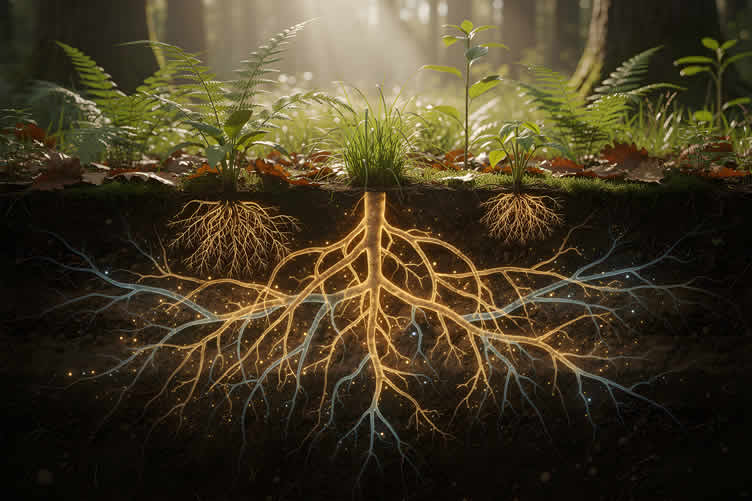
AI generated image by 123rf.com
What’s In Your Soil
Beneath our feet lies an intricate ecosystem that forms the foundation of all life on land—soil.
More than just “dirt,” soil is a dynamic world teeming with microorganisms, minerals, and organic matter. This blend works together to support plant growth, regulate water, and recycle essential nutrients.
Healthy soil creates a thriving environment for our gardens and forests, promoting resilience and biodiversity.
By nurturing the soil’s delicate balance, we can ensure its vitality and ability to sustain life for future generations.
view ideas: the fascinating world of soil(new win)
-
Scroll up to section directory … or scroll to next supporting note …
-
-
3rd: The Ecological Roles of Mycorrhizal Networks
Mycorrhizal networks, often referred to as common mycorrhizal networks (CMNs), are one of the most profound examples of symbiosis in nature.
These underground systems form a dynamic and intricate web of fungal structures that connect the roots of multiple plants, creating a cooperative interface for resource sharing, communication, and survival strategies.
AI generated image by 123rf.com
Mycorrhizal networks play pivotal roles in supporting ecological stability and biodiversity, influencing plant health, soil quality, and overall ecosystem resilience.
Understanding these roles is essential not only for advancing ecological research but also for developing sustainable solutions for agriculture, forestry, and land management.
-
Seedling Survival and Connectivity
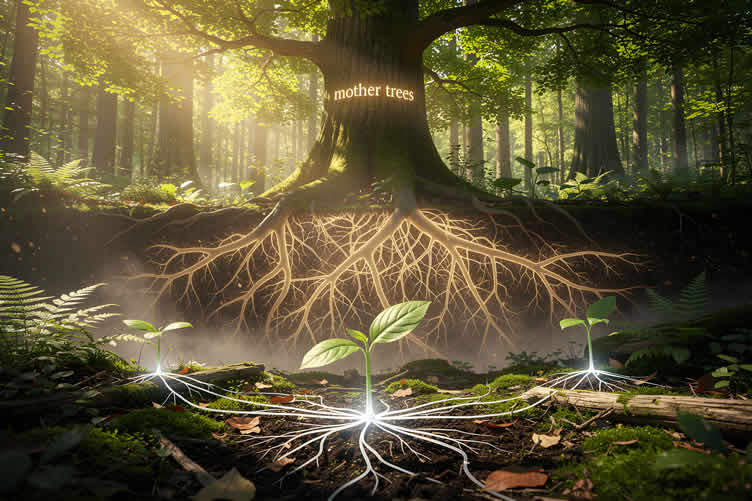
Mycorrhizal networks significantly enhance the survival and growth of young plants by creating vital links between seedlings and mature "hub" or "mother" trees.
These established trees act as central nodes within the network, supplying seedlings with essential resources such as water, carbon, and nutrients. This mutualistic relationship boosts the performance of young plants, particularly in resource-limited environments.
For example, research has shown that seedlings connected to mother trees through CMNs exhibit improved access to phosphorus and nitrogen, accelerating their early development.
Additionally, this connectivity increases the resilience of plant communities, enabling them to better withstand environmental stresses such as drought and soil degradation. Scientific studies, including those by Simard et al. (1997), highlight the significance of these networks in sustaining forest ecosystems.
-
Soil Structure and Microbial Ecology
Mycorrhizal networks contribute to the enrichment and maintenance of soil health by promoting soil structure and aggregation. The fungal hyphae that form these networks secrete glomalin, a glycoprotein that aids in the aggregation of soil particles, thus improving nutrient and water retention.
Through this process, CMNs support a diverse and thriving microbial ecosystem within the soil. These networks also act as functional highways for other soil organisms, such as bacteria, facilitating their movement and dispersal.
This synergy between fungi and bacteria fosters extensive nutrient cycling, which is critical for maintaining soil fertility. These findings are substantiated by studies from organizations such as the Soil Science Society of America, emphasizing the direct impact of mycorrhizal activity on soil productivity and ecosystem functionality.
-
Plant Community Dynamics
The influence of CMNs extends beyond individual plants, shaping the interactions within entire plant communities. Mycorrhizal networks mediate resource sharing and facilitate cooperation by redistributing nutrients and water across connected plants.
This collaboration allows less competitive species to access resources otherwise unavailable to them, promoting biodiversity within the ecosystem. However, CMNs can also intensify competition by redirecting resources preferentially or amplifying allelopathic effects, where certain plants release compounds through fungal channels to suppress competitors.
Understanding these dynamics offers practical insights into managing plant communities, whether for conservation efforts, agricultural productivity, or forest regeneration, as detailed in studies such as Bever et al. (2010).
-
Broader Impacts on Ecosystem Resilience
Ultimately, mycorrhizal networks reinforce the resilience and adaptive capacity of ecosystems. These underground systems serve as a buffer during periods of stress, such as climate fluctuations, severe weather events, or anthropogenic disturbances.
They create interconnected frameworks that enhance community stability while offering solutions for carbon sequestration—a critical component in mitigating climate change.
Research continues to unravel the extent of their ecological roles, providing a roadmap for integrating these natural systems into sustainable land use practices.
Investments in protecting and leveraging mycorrhizal networks are essential for the preservation of biodiversity and the long-term health of terrestrial ecosystems.
By recognizing the universal value of these underground networks, scientists, conservationists, and land managers can better harness the natural resilience of Earth’s ecosystems to address contemporary environmental challenges.
- Quick scroll to note summary content …
Topic Description Ecological Benefits Supporting Research Mycorrhizal Networks Dynamic fungal structures connecting plant roots, allowing resource sharing, communication, and survival strategies. Enhances ecological stability, improves plant health, and supports ecosystem resilience. Critical for advancing research in sustainable agriculture, forestry, and land management. Seedling Survival and Connectivity Links between seedlings and mature trees through the network help seedlings access water, nutrients, and carbon. Boosts growth, resilience, and survival of young plants, aiding in resource-limited environments. Research by Simard et al. (1997) highlights their importance in supporting forest ecosystems. Soil Structure and Microbial Ecology Fungal hyphae promote soil aggregation and secrete glomalin, enhancing soil health and nutrient retention. Improves soil productivity, supports microbial ecosystems, and aids nutrient cycling. Backed by studies from the Soil Science Society of America. Plant Community Dynamics Facilitates nutrient redistribution and cooperation, promoting biodiversity within the ecosystem. Enhances weaker species’ access to resources while influencing competition and biodiversity. Detailed in studies by Bever et al. (2010). Broader Ecosystem Resilience Networks buffer environmental stress, creating frameworks for stability and aiding in carbon sequestration. Promotes climate change mitigation and long-term terrestrial ecosystem health. Ongoing research emphasizes integration into sustainable land use practices. 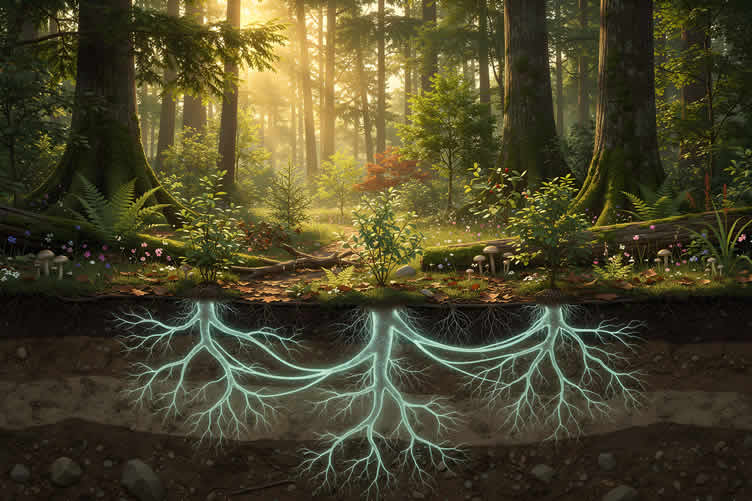
AI generated image by 123rf.com
From Forest to Furniture:
Trees are vital to our ecosystem, providing oxygen, capturing carbon, and supporting wildlife. They also supply timber for essential resources like wood tables.
Sustainably sourced timber is carefully harvested to protect ecosystems, then dried, milled, and crafted by artisans into functional, beautiful furniture.
This process showcases wood’s natural beauty, versatility, and timeless appeal, ideal for creating warm, inviting spaces.
view ideas: transforming trees into tables(new win)
Scroll up to main directory … or scroll to next section about hidden language …
ideas to view and compare from the information discussed above
-
-


Understanding the need of a mycorrhizal network for your garden and fulfilling all your home improvement needs …

… save this curated directory of ideas for future reference.




… remodeling decisions


Download this PDF for a concise summary of everything you need to know about …?

second “photo remodeling” idea

AI generated image by 123rf.com
Section 2: The Hidden Language Of Plants:
… how mycorrhizal networks enable underground communication
Notes:
-
Have you ever wondered how a forest seems to act as one living entity, responding to threats and changes as if connected by an invisible nervous system? The answer lies beneath your feet, in an intricate web of fungal threads that link plant roots across entire ecosystems.
These mycorrhizal networks do more than transport water and nutrients—they serve as underground communication lines, allowing plants to warn neighbors of danger, share resources, and even compete for dominance.
Understanding how plants communicate through these fungal highways reveals a sophisticated natural system that challenges our traditional view of plants as isolated individuals.
Instead, we find a community bound together by biochemical conversations, where survival often depends on staying connected to the network.
-
Quick scroll to supporting notes …
-
-
1st: Understanding The Foundations
… of mycorrhizal communication networks
Mycorrhizal associations form when fungal hyphae colonize plant roots, creating a mutually beneficial relationship that has existed for over 400 million years.
The plant supplies the fungus with carbohydrates produced through photosynthesis, while the fungus extends the plant’s reach into the soil, accessing water and minerals beyond the root zone.
What makes these partnerships remarkable is their interconnectivity. A single fungal network can link dozens or even hundreds of plants from different species, creating what researchers call a "common mycorrhizal network."
AI generated image by 123rf.com
These networks transform individual plants into participants in a larger communication system, where information flows as readily as nutrients.
The implications of this connectivity extend far beyond simple resource sharing. Plants linked through mycorrhizal networks can detect and respond to events happening to their neighbors, effectively expanding their sensory awareness beyond their own root systems.
This underground internet of fungi enables plants to behave in ways that seem almost intelligent, coordinating responses across entire plant communities.
-
The Physical Architecture Of Underground Fungal Pathways
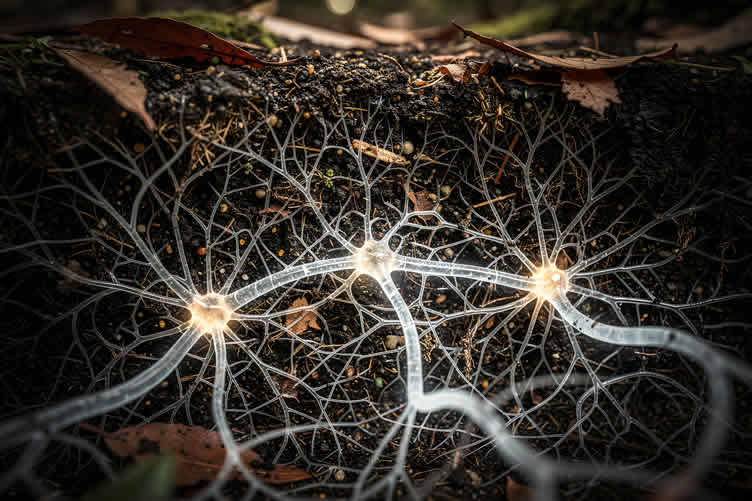
Fungal hyphae are thread-like structures thinner than human hair, yet they possess remarkable strength and flexibility. These microscopic filaments branch and spread through soil pores, forming dense networks that can extend several meters from their host plant.
When hyphae from one plant encounter those connected to another, they often fuse, creating continuous pathways between previously separate root systems.
The architecture of these networks varies depending on soil conditions, plant species, and fungal partners involved.
In forest soils, a single teaspoon can contain several miles of hyphae, creating an extraordinarily dense web of potential communication channels. This physical infrastructure provides the foundation for biochemical signaling between plants.
Research has shown that these fungal bridges maintain their integrity over long periods, creating stable communication networks that persist across growing seasons.
The durability of these connections allows plants to develop long-term relationships with their neighbors, building communities that respond collectively to environmental challenges.
-
Community Resilience
Large, well-established trees—often called "hub trees" or "mother trees"—maintain extensive fungal connections that link them to younger plants across wide areas.
These hub trees can transfer both nutrients and warning signals to seedlings and saplings, improving survival rates for the next generation.
Research in Douglas fir forests has revealed that older trees recognize their own offspring through the mycorrhizal network and may preferentially support them with both nutrients and defensive signals.
This kin recognition suggests a level of sophistication in plant communication that challenges traditional assumptions about plant behavior.
-
Biochemical Signaling And Information Transfer
The movement of chemical signals through mycorrhizal networks operates through several mechanisms. Stress-related compounds, including amino acids, plant hormones, and specialized signaling molecules, can travel along fungal hyphae from one plant’s roots to another’s.
When these compounds reach a connected plant, root receptors detect them and trigger internal responses.
Scientists have identified specific compounds that serve as alarm signals, including jasmonic acid and salicylic acid—both critical players in plant defense pathways.
These molecules can move through the fungal network at rates that allow neighboring plants to prepare defenses before a threat reaches them, providing a crucial early warning system.
The selectivity of this communication system remains an active area of research. Evidence suggests that not all signals pass equally through mycorrhizal networks, and plants may have some control over what information they share or receive.
This selectivity could allow plants to communicate preferentially with certain neighbors while limiting information flow to potential competitors.
- Quick scroll to note summary content …
Concept Description Significance Mycorrhizal Communication Networks Mycorrhizal associations are mutualistic relationships formed between fungal hyphae and plant roots. The plant provides carbohydrates to the fungus, while the fungus extends the plant’s ability to access water and minerals. These networks connect multiple plants, facilitating nutrient and information exchange. These networks create an interconnected web that enhances plant survival, allows for resource sharing, and facilitates communication beyond individual root systems. Physical Architecture of Fungal Pathways Fungal hyphae are microscopic, thread-like structures that form dense networks in soil, often fusing to connect separate plants. These networks are influenced by environmental conditions and are extraordinarily durable, persisting across growing seasons. The physical structure underpins biochemical signaling and enables long-term community stability, ensuring collective resilience against environmental challenges. Community Resilience Hub trees, or “mother trees,” maintain extensive fungal links to younger plants, transferring nutrients and signals. These trees recognize kin and preferentially support offspring, fostering a community built on mutual aid. This kin recognition supports survival rates in younger plants, creating a stable and resilient plant community structure. Biochemical Signaling Compounds like jasmonic acid and salicylic acid travel through fungal hyphae, acting as alarm signals. These signals trigger defense responses in connected plants, often preparing them for potential threats. The selective transmission of signals enables plants to communicate strategically, improving their collective ability to respond to stress and ensure survival. 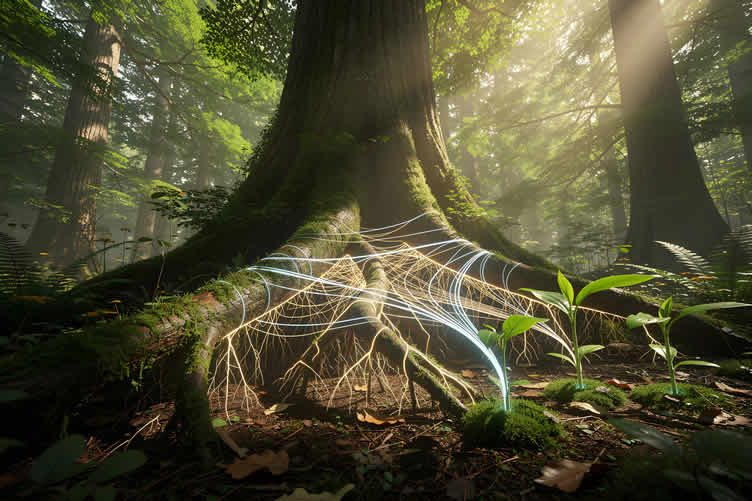
AI generated image by 123rf.com
Trees as Essential Havens for Birds
Trees play a vital role in supporting bird populations, offering them food, shelter, and nesting sites throughout the year.
Birds rely on trees for protection from predators, a safe space to raise their young, and access to insects, fruits, and seeds as key food sources.
By creating a backyard filled with trees and native plants, you can attract a variety of bird species, enriching your outdoor space with their beauty and song while promoting a harmonious relationship with nature.
view ideas: hey birdie, birdie(new win)
-
Scroll up to section directory … or scroll to next supporting note …
-
-
2nd: The Sentinel Effect: Warning Systems
… against pests and pathogens
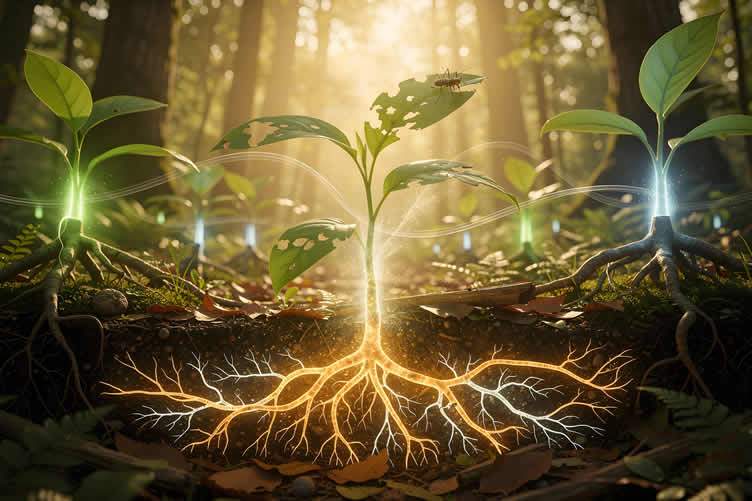
Mycorrhizal networks, the underground fungal systems connecting plants, are increasingly recognized for their role in plant communication and cooperation.
Acting as an organic "internet," these networks transmit crucial biochemical signals between connected plants, especially during times of stress.
AI generated image by 123rf.com
One of the most fascinating aspects of this relationship is the capacity of plants to send early-warning signals of threats, such as pest infestations or pathogen attacks, enabling their neighbors to activate protective defenses.
This adaptive communication highlights the sophistication of plant behavior and the critical role mycorrhizal networks play in maintaining ecosystem resilience.
-
Early Warning Signals and Response Mechanisms
When a plant experiences an external threat, such as an insect attack or a pathogen infection, it can release chemical "alarm" signals into the shared mycorrhizal network.
These signals are transmitted through the fungal hyphae to neighboring plants, triggering a cascade of defensive responses. This process is not merely reactive but is part of an intricate system that allows plants to prime their defenses before stress arrives.
For example, a plant under attack might activate the salicylic acid or jasmonic acid pathways, two key biochemical routes involved in plant defense. Once alerted, neighboring plants begin up-regulating these same defense genes, even before experiencing direct stress.
This priming effect enables them to produce defensive chemicals, such as secondary metabolites, that can deter potential herbivores or pathogens and improve overall resistance. This proactive defense strategy exemplifies how interconnected plants use their shared resources to enhance survival.
-
Example of Defense Warning in Action
One well-documented example is the interaction observed in broad beans (Vicia faba). When one plant becomes infested with aphids, it sends alarm signals through the mycorrhizal network to nearby, unaffected plants.
These neighboring plants respond by producing volatile organic compounds to improve their chances of survival. These volatiles serve a dual purpose.
Firstly, they act as aphid repellents, discouraging further infestations. Secondly, they attract natural aphid predators, such as parasitic wasps, which help reduce the pest population.
Thus, this network-driven communication not only protects individual plants but enhances overall ecosystem health.
-
Tactical Advantages of Mycorrhizal Networks
The ability to share information through mycorrhizal networks offers plants a remarkable evolutionary advantage. By priming their defenses preemptively, connected plants can conserve energy compared to activating full defenses post-threat, making the process more efficient.
Mycorrhizal networks also allow plants to selectively share information, directing valuable resources and warnings toward cooperative neighbors rather than competitors. This nuanced communication underscores the tactical nature of these systems.
Research continues to explore the breadth of this phenomenon. For instance, scientists are studying whether plant species exhibit preferences for what types of signals they respond to or how factors such as environmental stress, soil health, or fungal species diversity affect these communication pathways.
Increasing our understanding of these systems has far-reaching implications, particularly for agriculture. Harnessing the benefits of mycorrhizal networks could lead to more sustainable pest management strategies that reduce chemical pesticide use and foster natural defense mechanisms.
-
Mycorrhizal Networks and a Cooperative Future
By unveiling the capability of plants to "speak" through fungal networks, we gain a more profound appreciation for the balance and interdependence within ecosystems.
The alarm-and-defense tactics facilitated by mycorrhizal networks highlight a natural form of cooperation that helps maintain biodiversity, reduces crop losses, and promotes environmental stability.
Continued exploration into this area promises to unlock new pathways for supporting plant health and ensuring food security in the face of a changing climate.
Reference materials for this discussion include findings from studies published in journals such as Nature Ecology & Evolution and Frontiers in Plant Science, offering authoritative and insightful contributions to our collective knowledge of ecologically integrated plant defense systems.
- Quick scroll to note summary content …
Topic Description Examples Applications The Sentinel Effect Mycorrhizal networks act as organic “internet” systems, enabling plants to communicate and share biochemical signals during stress conditions like pest infestations and pathogen attacks. This communication allows plants to initiate protective defenses preemptively, showcasing the sophistication of plant behavior. Broad beans (Vicia faba) use these networks to signal neighboring plants about aphid infestations. Neighboring plants respond by producing volatile compounds that repel aphids and attract predators like parasitic wasps. Highlights ecosystem resilience, fostering natural pest management systems, promoting sustainable agriculture, and reducing reliance on chemical pesticides. Early Warning Signals and Defense Mechanisms Plants release chemical “alarm signals” via mycorrhizal networks during external threats. These signals activate defensive responses, priming neighboring plants for stress and enhancing their ability to resist herbivores or pathogens through increased secondary metabolite production. When attacked, plants activate salicylic acid or jasmonic acid pathways, amplifying protective measures in neighboring plants even before direct exposure to stress. Improves energy efficiency in plant defense, minimizes resource expenditure post-threat, and supports overall ecosystem communication and health. Tactical Advantages Mycorrhizal networks enable targeted sharing of resources and information, providing selective benefits to cooperative plants rather than competitors. These systems exemplify the strategic behavior of interconnected plants. Research studies reveal variations in plant responses based on environmental stress, soil health, and fungal diversity, showcasing the adaptive nature of these networks. Potential for sustainable pest control strategies, offering promising solutions for agriculture and biodiversity conservation. A Cooperative Future Mycorrhizal networks emphasize interdependence in ecosystems by supporting biodiversity and reducing crop losses. Their alarm-and-defense mechanisms promote environmental stability and align with sustainable agricultural practices. Studies in journals like Nature Ecology & Evolution illustrate how interconnected plant defense systems operate effectively within ecosystems. Advances sustainable agriculture, highlights the importance of biodiversity, and underpins food security amid climate change challenges. 
AI generated image by 123rf.com
Pests Invading Your Home?
Keeping pests out of your home starts with prevention. Seal cracks and gaps around windows, doors, and the foundation to block entry points.
Keep your home clean and free of food crumbs or standing water, which can attract pests.
Natural deterrents like peppermint oil or vinegar can repel pests without harsh chemicals. For targeted solutions, use traps or eco-friendly pest control products.
Regularly check for signs of infestation and act quickly to address issues, keeping your home safe, clean, and comfortable.
view ideas: identifying/resolving pest invasion(new win)
-
Scroll up to section directory … or scroll to next supporting note …
-
-
3rd: The Dark Side Of Connectivity:
… growth suppression and allelochemicals
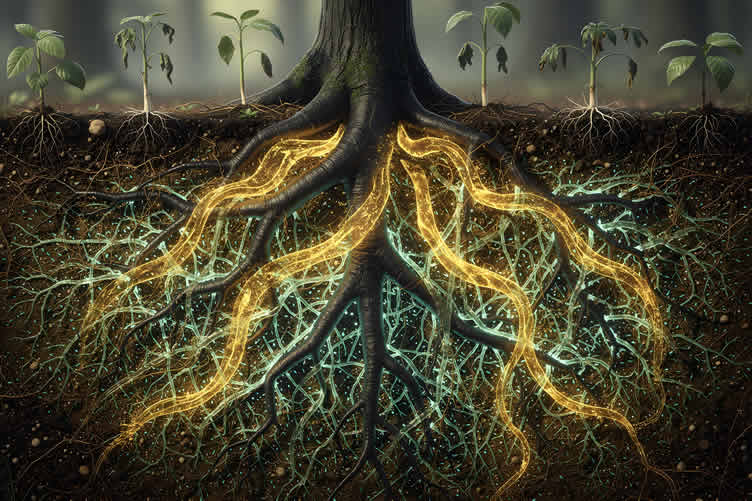
Mycorrhizal networks facilitate cooperation, but they also enable competition through chemical warfare.
Some plants release allelochemicals—compounds that inhibit the growth of neighboring plants—and these substances can travel through fungal hyphae to target specific competitors.
This targeted delivery system proves far more effective than simply releasing chemicals into the soil, where they would disperse randomly.
AI generated image by 123rf.com
Black walnut trees exemplify this strategy, producing juglone, a potent growth inhibitor that moves through mycorrhizal networks to suppress competing vegetation.
Similarly, invasive plant species sometimes exploit existing mycorrhizal networks to deliver growth-suppressing compounds to native plants, giving invaders a competitive advantage.
-
Allelochemicals and Their Targeted Movement
Allelochemicals, which are growth-suppressing chemical compounds, can move through mycorrhizal hyphae, reaching specific neighboring plants.
Research has shown that mycorrhizal networks can transport substances like phenolic acids and hydroxycinnamic acids, which inhibit root growth and reduce resource uptake in nearby plants.
This targeted delivery system can give certain plants a competitive advantage, allowing them to dominate the shared resources of their environment. For instance, some trees and shrubs use allelochemicals to out-compete understory plants, ensuring better access to light, water, and nutrients.
Unlike direct chemical exudation, where the compounds diffuse into the immediate soil environment, using mycorrhizal hyphae as a transport medium increases the precision and efficiency of allelopathic interactions.
Consequently, this targeted suppressive mechanism demonstrates that mycorrhizal networks are not always a universal equalizer but instead a nuanced facilitator of both cooperation and conflict within plant ecosystems.
-
Competition Through Herbicidal Compounds
Herbicidal compounds can also be channeled through mycorrhizal networks to suppress the growth of competing plants.
Studies have identified instances where dominant species establish a competitive edge by transmitting such toxins via fungal connections, effectively curbing the proliferation of neighboring flora.
The production and movement of these compounds often correlate with environmental stresses, such as drought conditions or depleted soil nutrients, where competition for resources is heightened.
This competitive tactic showcases the adaptive capabilities of plants utilizing mycorrhizal networks not just as passive nutrient pathways but as strategic conduits for ecological dominance.
For example, black walnut trees are notorious for secreting juglone, a compound that inhibits the growth of many plant species within its vicinity.
Mycorrhizal fungi are believed to enhance the dissemination of such compounds, extending their reach beyond the immediate root zone of the source plant.
-
Dual Nature of Mycorrhizal Networks
The dual nature of mycorrhizal networks—serving both mutualistic and competitive ends—adds layers of complexity to their role in plant ecology.
The very same mycorrhizal connections that support nutrient-sharing between plants can also be exploited to suppress competition. This duality underscores the intricate balance of cooperation and competition that underpins natural ecosystems.
Understanding these dynamics helps researchers better model plant interactions and informs sustainable agricultural practices, forest management, and biodiversity conservation efforts.
Incorporating knowledge of allelopathic tactics into land management can pave the way for more resilient ecological systems that address both cooperative and antagonistic plant behaviors.
- Quick scroll to note summary content …
Topic Description Examples Mycorrhizal Networks and Competition Mycorrhizal networks facilitate cooperation but also foster competition through chemical warfare. Some plants release allelochemicals—compounds that suppress the growth of neighboring plants—using fungal hyphae to deliver these substances to specific targets, enhancing their competitive edge. Black walnut trees produce juglone, a potent growth inhibitor, delivered via fungal networks to suppress competing vegetation. Allelochemicals and Targeted Movement Allelochemicals, such as phenolic acids and hydroxycinnamic acids, move through fungal hyphae to inhibit root growth and resource uptake in nearby plants. This precise transport system ensures efficient allelopathic interactions, allowing dominant plants to access shared resources. Certain trees and shrubs use allelochemicals to out-compete understory plants, improving access to light, water, and nutrients. Competition Through Herbicidal Compounds Herbicidal compounds can be delivered through fungal networks to suppress the growth of competitors. This adaptive strategy intensifies under environmental stresses like drought or nutrient depletion, solidifying dominant plants’ ecological advantage. Black walnut trees secrete juglone through mycorrhizal networks, extending its suppressive effects beyond their immediate root zone. Dual Nature of Mycorrhizal Networks Mycorrhizal networks serve both mutualistic and competitive roles, balancing cooperation and conflict in ecosystems. This dynamic reveals the intricate interactions that shape plant ecology. By exploiting these networks, invasive species can gain an advantage, delivering growth-suppressing compounds to native plants. 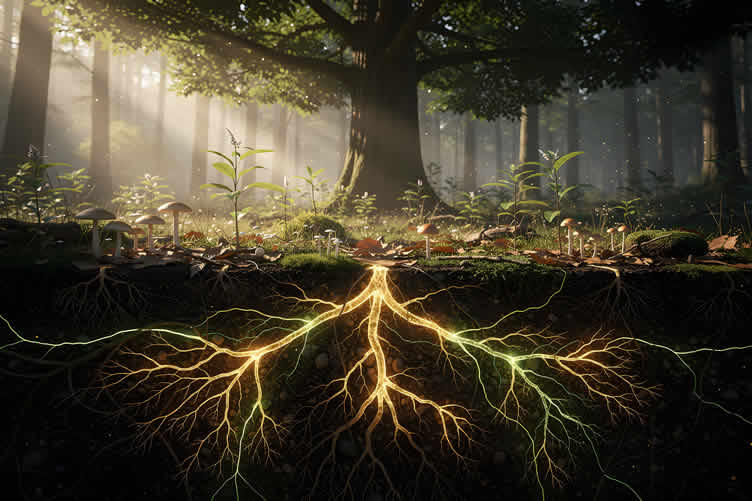
AI generated image by 123rf.com
Harmful Food Ingredients
Ensuring your family’s health begins with what’s on their plates. Many processed foods contain additives, artificial chemicals, and other unsafe ingredients that can pose long-term risks.
To protect your family, prioritize whole foods like fresh fruits, vegetables, and lean proteins.
It’s also wise to read ingredient labels carefully to avoid substances like high-fructose corn syrup, trans fats, and synthetic preservatives.
By making informed choices, you can create a safer, healthier diet for your household.
view ideas: hidden health risks at home(new win)
-
Scroll up to section directory … or scroll to next supporting note …
-
-
4th: Ecological Implications Of The Shared Signaling System
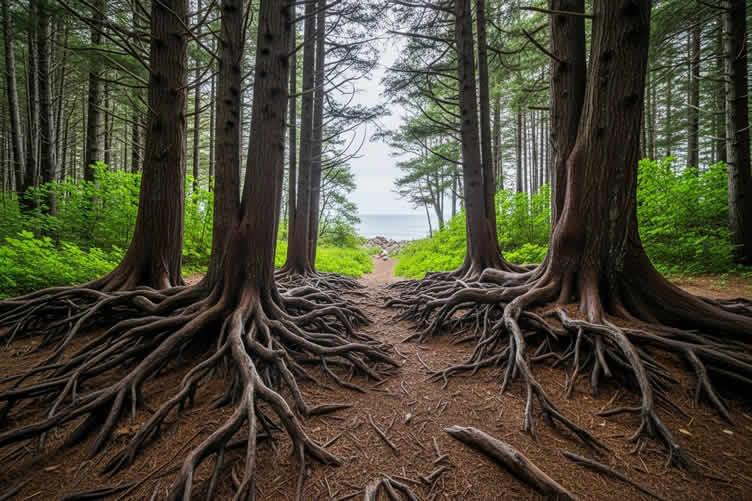
Mycorrhizal communication networks fundamentally alter how we understand plant communities.
Rather than viewing plants as individuals competing solely for light, water, and nutrients, we recognize them as participants in an interconnected system where information sharing influences survival, growth, and reproductive success.
These networks may help explain observed patterns in plant diversity and forest structure.
copyright image by 123rf.com
Communities with well-developed mycorrhizal networks often show greater stability and resistance to environmental stresses compared to areas where these connections are disrupted.
Agricultural practices that preserve soil fungal communities could potentially enhance crop resilience without chemical inputs.
The climate change implications are particularly significant. As environmental conditions shift, the ability of plant communities to communicate and coordinate responses through mycorrhizal networks may determine which ecosystems adapt successfully.
Protecting these underground networks could prove as important as preserving aboveground biodiversity.
-
Future Directions in Interspecies Communication Research
Current research is exploring several key questions about mycorrhizal communication. Scientists are identifying the full range of compounds that travel through these networks and learning how plants control the information they send and receive.
With advanced imaging, researchers can now watch signals move through living fungal networks in real time, offering new insights into how plants communicate.
We still have much to learn about the specificity of this signaling. Can plants tell the difference between signals from various neighbors? Does a signal’s meaning change based on its source or concentration?
Answering these questions could reveal if plant communication has a complexity similar to animal nervous systems.
This research has enormous potential for agriculture. Breeding programs could select crop varieties that communicate more effectively, leading to more resilient farming systems.
Managing cover crops and rotations to foster beneficial fungal connections might reduce the need for pesticides while boosting yields.
-
Cultivating Connection in Our Gardens and Ecosystems
The discovery of plant communication through mycorrhizal networks changes our relationship with the natural world.
Every garden, forest, and field hosts invisible conversations beneath the surface, where plants share warnings, resources, and even competitive signals through their fungal partners.
Protecting these communication networks means rethinking some common practices. Excessive tilling can destroy the fungal hyphae that form these pathways.
Chemical fungicides may eliminate beneficial mycorrhizal partners along with pathogens. Reducing plant diversity can also weaken these networks by limiting the variety of fungal species.
Gardeners and land managers can support these underground systems by minimizing soil disturbance, maintaining diverse plantings, and avoiding unnecessary chemicals.
Adding mycorrhizal inoculants when planting can also help establish these connections more quickly. These practices recognize that healthy plants rely on healthy fungal partnerships.
As research reveals the sophistication of plant communication, our appreciation for the intelligence in natural systems deepens.
The mycorrhizal networks under our feet are the result of millions of years of evolution, creating a communication infrastructure that rivals our own in complexity.
By learning from and protecting these systems, we can cultivate more resilient ecosystems and gardens that thrive on cooperation.
- Quick scroll to note summary content …
Topic Description Implications Recommendations Ecological Implications Mycorrhizal communication networks redefine plant communities as interconnected systems rather than isolated competitors. These networks influence survival, growth, and reproductive success. Well-developed networks improve plant diversity, forest stability, and resistance to environmental stress. Preservation could enhance crop resilience and ecosystem adaptation under climate change. Preserve soil fungal communities through reduced tilling, chemical minimization, and planting diverse species to support underground networks. Future Research Directions Studies focus on compounds transported via fungal networks, the specificity of signaling, and the control plants exert over these communications. Understanding signaling mechanisms may reveal plant communication complexities akin to nervous systems and improve agricultural practices. Select crop varieties with effective communication capabilities, manage cover crops to foster beneficial fungi, and use reduced pesticides to enhance yields. Practical Applications Gardens, forests, and fields contain concealed communication networks where plants share resources and warnings through fungal pathways. Rethinking land management to protect these networks enables healthier ecosystems and reduces reliance on chemicals. Avoid over-tilling, minimize fungicides, maintain plant diversity, and use mycorrhizal inoculants during planting to strengthen fungal partnerships. 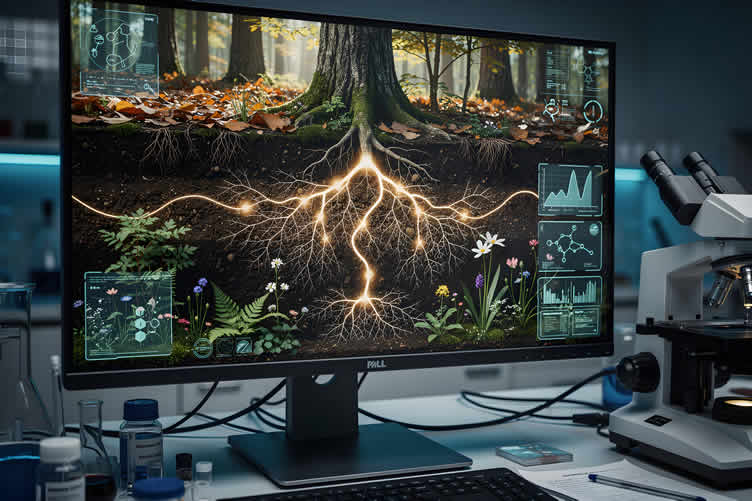
AI generated image by 123rf.com
Playing Your Part
Adopting eco-living practices improves your lifestyle and helps protect trees and the environment.
Simple actions like reducing energy use, avoiding single-use plastics, and using sustainable materials for home projects can lower your carbon footprint.
Supporting tree-planting initiatives and maintaining greenery in your yard also promotes cleaner air and healthier ecosystems.
By making mindful choices, you help preserve nature for future generations.
view ideas: eco-friendly living(new win)
-
-
-
ideas to view and compare from the information discussed above
book: eco friending livingeco friendly toothbrusheco friendly toothpaste
Scroll up to main directory … or scroll to next section about how garden trees communicate …

Outline the specific requirements needed for designing a "mycorrhizal network" garden …
… and all other key home improvement and remodeling decisions




Are there any other interesting topics that might have been overlooked but could offer valuable insights …?





May We Suggest Other Photo Remodeling Ideas About
“your own "network" at home …” (new win)



third “photo remodeling” idea

AI generated image by 123rf.com
Section 3: How Garden Trees Communicate
Notes:
-
Have you ever wondered if the trees in your garden might be quietly conversing beneath your feet? While it may sound like something from a fantasy novel, garden trees really do communicate with each other through intricate underground networks.
These connections, formed by fungal partners in the soil, allow trees to share nutrients, send warning signals about pests, and even influence the growth of their neighbors.
While garden networks tend to be smaller and more fragmented than their forest counterparts, they operate on the same principles.
If the soil is continuous and conditions are favorable, the trees in your yard can link up with those in neighboring properties, creating a shared web that extends well beyond the boundaries of any single lot.
This guide explores the science behind botanical communication, the factors that help or hinder network formation in gardens, and practical steps you can take to support a thriving mycorrhizal web right outside your door.
-
Quick scroll to supporting notes …
-
-
1st: Do Garden Trees Actually Link Up in the CMN?
Trees are often seen as solitary beings, growing independently in gardens or yards, separated by property lines or pathways. However, beneath the surface of the soil, a hidden world of communication and collaboration exists.
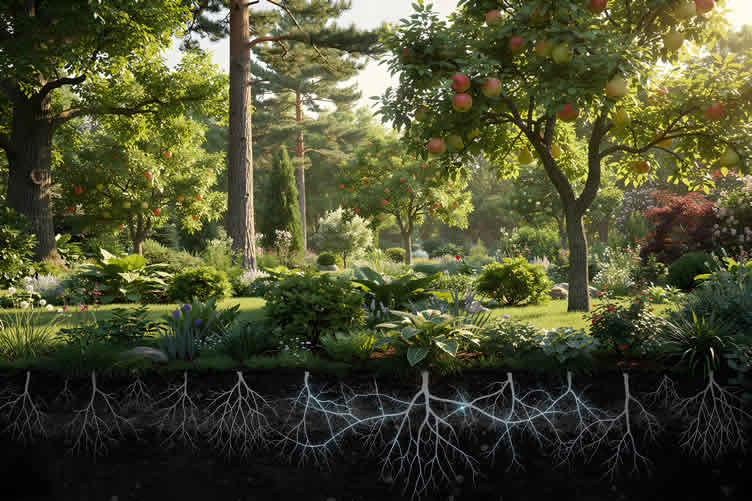
Garden trees, much like those in forests, engage in a process of forming mycorrhizal networks—an extraordinary mutual relationship between tree roots and fungi in the soil.
AI generated image by 123rf.com
These underground fungal networks are sometimes referred to as the "wood-wide web," allowing trees to share resources, signals, and even warnings to promote survival and resilience.
Understanding how garden trees connect through mycorrhizal networks can help homeowners and gardeners foster healthier, more collaborative landscapes.
Below, we explore the science behind these fascinating systems and examine whether and how common garden trees can link up beneath the soil.
-
Are Garden Trees Part of Mycorrhizal Networks?
Yes, most common garden trees can integrate into mycorrhizal networks under the right circumstances. Oaks, pines, maples, fruit trees, and numerous ornamental species are among the types that naturally form associations with mycorrhizal fungi.
While much of the research confirming these networks originates in forest ecosystems, garden landscapes with diverse species and contiguous soil conditions can support similar connections.
When trees and shrubs share compatible fungi and soil conditions are uninterrupted by barriers like compacted soil, synthetic grass, or concrete structures, they are likely to form a single, cohesive network.
This not only helps individual plants thrive but also fosters an interconnected landscape that improves soil health, water retention, and biodiversity.
-
Limitations and Factors That May Impact Network Formation
Several factors can either support or inhibit the formation of mycorrhizal networks in a garden:
- Soil Continuity:
Mycorrhizal fungi require pathways to spread. Dense barriers, such as plastic liners, structures, or tilled soil, can interrupt fungal growth and block connections between tree roots within a garden. - Fungal Compatibility:
For trees to interconnect via fungi, the mycorrhizal species present in the soil must be compatible with the specific tree species. - Ectomycorrhizal fungi, for example, form partnerships with many hardwoods, such as oaks and pines, while arbuscular mycorrhizal fungi work with a broader range of plants, including vegetables, ornamentals, and certain fruit trees.
- Disturbance:
Activities such as over-fertilizing, frequent tilling, or using fungicides can disrupt existing mycorrhizal networks, diminishing their ability to link trees and shrubs effectively. - Tree Spacing and Diversity:
Gardens with a higher density and variety of trees and plants are more likely to support robust mycorrhizal networks, as dense plantings increase the opportunities for fungal connections.
- Soil Continuity:
- Quick scroll to note summary content …
Topic Description Key Factors Introduction to Mycorrhizal Networks Trees can link up below the soil through mycorrhizal networks, which are symbiotic relationships between tree roots and fungi. These networks, also called the “wood-wide web,” allow resource sharing, communication, and increased resilience among trees. Understanding these networks fosters healthier landscapes by improving soil health, water retention, and biodiversity. Participation of Garden Trees Most common garden trees, such as oaks, pines, maples, and fruit trees, can integrate into mycorrhizal networks if conditions permit. Research has demonstrated that diverse species and uninterrupted soil foster such connections, creating an interconnected garden ecosystem. Beneficial fungi and uninterrupted soil are critical elements for successful network formation. Limitations to Network Formation Several factors can prevent the development of mycorrhizal networks, including compacted soil or barriers, non-compatible fungi, frequent soil disturbances, and the use of fungicides. Dense plant spacing and plant diversity enhance fungal connections, while barriers and disturbances inhibit them. 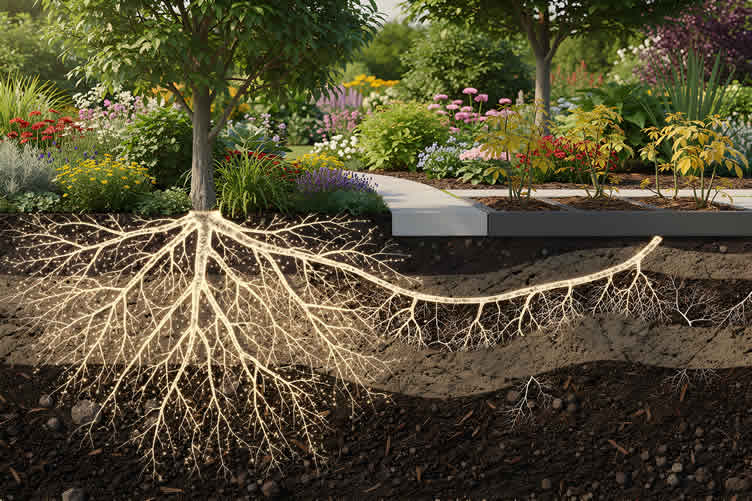
AI generated image by 123rf.com
Your Leaf Cleanup Tolerance
When selecting trees for your garden, it’s important to consider how much leaf cleanup you are willing to manage.
Some of the most beloved and visually striking trees, like maple or oak, are notorious for their abundant leaf drop, particularly in the fall. While they provide magnificent shade and seasonal beauty, they do demand a bit more maintenance.
On the other hand, trees like evergreen species offer year-round greenery with minimal shedding, making them a lower-maintenance option.
Balancing aesthetics with practicality allows you to enjoy your garden while keeping cleanup efforts manageable.
view ideas: the messiest trees(new win)
-
Scroll up to section directory … or scroll to next supporting note …
-
-
2nd: Factors That Help Mycorrhizal Networks Form in Yards
Mycorrhizal networks are essential underground systems that contribute to the health and vitality of plants, enabling efficient nutrient exchange and fostering biodiversity in home gardens.

AI generated image by 123rf.com
For gardeners aiming to enhance their yards and encourage ecological harmony, understanding the factors that promote the formation of these networks can significantly impact plant growth, soil health, and overall garden resilience.
By creating favorable conditions and reducing practices that hinder fungal connections, homeowners can support these natural systems, transforming their yard into a thriving ecosystem.
-
The Role of Undisturbed Soil and Mulch
A stable mycorrhizal network thrives best in undisturbed or minimally tilled soil. Frequent tilling or mechanical disturbance disrupts fungal mycelium, severing critical pathways that connect plants.
Leaving leaf litter and applying a layer of organic mulch can protect the soil surface, prevent erosion, and maintain a moisture-rich environment that promotes stable fungal growth.
These practices create long-lived fungal connections that intertwine beneath the garden’s surface, enabling nutrient exchange across different plants and even supporting neighboring trees and shrubs.
Studies have shown that undisturbed soil covered with organic material can enhance the longevity of mycorrhizal associations and foster biodiversity in fungal populations, ultimately leading to healthier root systems.
-
Benefits of Mixed Plantings
Gardens rich in plant diversity are more likely to develop extensive fungal networks. Incorporating a mix of trees, shrubs, perennials, and other vegetation provides mycorrhizal fungi with an array of hosts to connect.
For example, large deciduous trees paired with flowering shrubs or herbaceous perennials create opportunities for fungi to form symbiotic relationships, as each plant offers unique nutrients and environments.
Avoiding the use of broad-spectrum fungicides is equally crucial, as these chemicals kill beneficial fungi and limit their ability to colonize plant roots.
Research indicates that gardens with diverse plant systems exhibit a more extensive and resilient fungal web, extending beyond individual yards and promoting cooperation between plants over large areas.
-
Connections Beyond Individual Gardens
Mycorrhizal networks are not constrained by property lines and can extend far beyond an individual yard. These underground fungal webs often link neighboring lots, especially in communities where gardens and green spaces are abundant.
Practices such as reducing chemical use, encouraging native plantings, and maintaining continuity among green areas enable fungi to connect broader ecosystems. Homeowners who prioritize biodiversity in their plantings contribute to community-wide ecological stability.
Recent ecological studies, such as those by Simard et al. (1997), highlight how mycorrhizal fungi support nutrient sharing between trees of varying species, reinforcing the importance of collective planting strategies that bridge environmental gaps.
-
Promoting A Healthier Mycorrhizal Web In Your Neighborhood
Connect with your neighbors. Mycorrhizal networks don’t respect property lines, and the health of your yard is intimately connected to the landscapes around you.
Encourage your community to adopt soil-friendly practices, share knowledge about native plants, and work together to create green corridors that support underground networks across entire neighborhoods.
By fostering conditions conducive to robust mycorrhizal networks, gardeners can enrich their soil, improve plant health, and form an ecosystem that extends beyond the garden itself.
These practices bridge the gap between scientific knowledge and practical application, empowering homeowners to design living landscapes that are both functional and sustainable.
- Quick scroll to note summary content …
Factors Key Practices Benefits Undisturbed Soil and Mulch Minimize tilling and mechanical disturbance. Leave leaf litter and apply organic mulch to protect the soil surface and maintain moisture. Promotes stable fungal growth, prevents erosion, enhances soil biodiversity, and fosters longevity in mycorrhizal associations. Mixed Plantings Use diverse vegetation such as trees, shrubs, and perennials. Avoid broad-spectrum fungicides to protect mycorrhizal fungi. Encourages extensive and resilient fungal networks, supports nutrient exchange across plant species, and improves ecosystem health. Connections Beyond Individual Gardens Reduce chemical use, plant native species, and maintain continuity among green spaces within communities. Supports broader ecological stability, links neighboring lots, and enhances collective nutrient sharing through fungal networks. Community Collaboration Engage with neighbors to share knowledge and create green corridors for supporting underground networks. Strengthens soil health, improves plant vitality, and develops sustainable ecosystems beyond individual properties. 
AI generated image by 123rf.com
Ornamental Grasses for Soil Health
Ornamental grasses are not just visually appealing; they also support soil health.
Their perennial root systems deliver carbon to mycorrhizal fungi, enhancing nutrient absorption, drought resistance, and soil vitality.
Additionally, they improve nutrient cycles, prevent erosion, stabilize soil, and create wildlife habitats, making them a sustainable choice for any outdoor space.
view ideas: enhancing spaces with ornamental grasses(new win)
-
Scroll up to section directory … or scroll to next supporting note …
-
-
3rd: Differences Between Garden and Forest
… mycorrhizal networks
Mycorrhizal networks, often referred to as the “wood wide web,” play an essential role in facilitating nutrient exchange, supporting plant health, and fostering biodiversity.
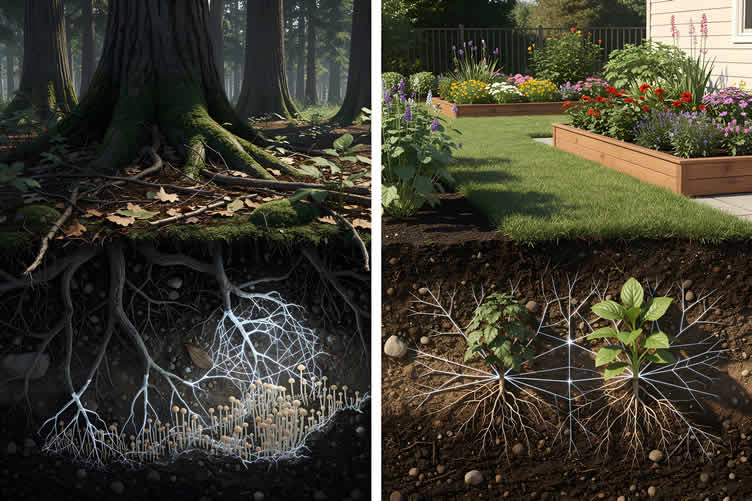
AI generated image by 123rf.com
While these underground fungal networks operate similarly regardless of their location, the environments in which they exist—forests and residential gardens—shape their structure, functionality, and longevity in distinct ways.
Understanding these differences is critical for gardeners aiming to nurture resilient and thriving soil ecosystems on their own properties.
-
The Persistence and Density of Mycorrhizal Networks in Forests
Forests provide unparalleled conditions for the development of dense and enduring mycorrhizal networks. These ecosystems are characterized by minimal soil disturbance, extensive root systems, and an uninterrupted canopy that spans vast areas.
Over time, the fungal networks in forests become intricately connected, supporting symbiotic relationships between fungi and diverse plant species.
One key factor contributing to the complexity of forest networks is the stability of the soil. With infrequent disturbances caused by human activity, the fungal systems have the opportunity to grow undisturbed for decades or even centuries.
The abundance of long-lived tree species further enhances this continuity, allowing fungal hyphae to integrate expansive root systems into a cohesive network. This creates an intricate web that not only facilitates nutrient and resource exchange across significant distances but also reinforces the overall resilience of the forest ecosystem.
-
The Fragmentation of Mycorrhizal Networks in Managed Gardens
By contrast, residential gardens present unique challenges to the establishment of long-lasting and widespread fungal networks. Factors such as frequent soil disturbance, construction activities, and high variability in vegetation type and density often lead to patchier and more localized networks.
Activities like digging, edging, turf installation, and compaction associated with garden maintenance can fragment mycorrhizal systems, effectively resetting them periodically.
Unlike forests, where a myriad of wild plants and fungi evolve together over generations, gardens often feature non-native and hybrid plant species that may not form relationships with local fungi.
Additionally, the smaller plot sizes and less dense planting typical of gardens limit the potential for expansive underground interactions.
Despite these hurdles, gardeners who adopt sustainable practices—such as minimizing soil disturbance and planting native species—can encourage the re-establishment of functional networks, albeit on a smaller and more localized scale.
-
Differences Reflect the Impact of Human Influence
Ultimately, the primary distinction between forest and garden mycorrhizal networks lies in the degree of human intervention. The relatively undisturbed soils of forests allow networks to flourish uninterrupted for centuries, building robust systems that serve as the backbone of forest ecology.
Gardens, however, exist within human-modified landscapes that often disrupt natural processes, resulting in networks that are less interconnected and more prone to fragmentation.
Recognizing these differences equips gardeners with the knowledge needed to mitigate challenges and foster healthier, more sustainable soil ecosystems in their residential spaces.
By understanding the environmental factors that shape mycorrhizal networks in forests and gardens, individuals can make informed decisions to improve the vitality of their own plant communities.
With careful stewardship, even small suburban plots can support dynamic underground networks that enhance biodiversity, nutrient cycling, and plant health.
- Quick scroll to note summary content …
Aspect Forests Residential Gardens Key Influences Persistence and Density Dense and enduring mycorrhizal networks due to minimal soil disturbance, extensive root systems, and stable conditions. Patchy and localized networks due to frequent soil disturbance, construction activities, and variability in vegetation type and density. Low human activity allows fungal systems to grow uninterrupted for centuries; frequent human intervention disrupts systems in gardens. Plant-Fungal Relationships Fungal networks support symbiotic relationships with a wide range of wild plants and long-lived tree species. Fungal networks are more limited in scope due to non-native or hybrid plant species that may not form relationships with local fungi. Forest biodiversity promotes integration of expansive root systems; garden plants often lack these natural adaptations with local fungi. Environmental Stability Uninterrupted canopy and stability promote intricate, cohesive underground networks spanning large areas. Smaller plot sizes and compact terrain restrict potential for expansive underground network formation. Forest ecosystems thrive on stability, while garden environments are shaped by human modification and variability. Impacts of Human Influence Minimal human interference allows natural processes to facilitate robust and resilient mycorrhizal systems. Significant human intervention leads to fragmentation and periodic resetting of fungal systems. Human activity in gardens disrupts natural growth cycles, while forests remain largely untouched and self-sustaining. 
copyright image by 123rf.com
Wildlife Haven
Depending on your location and backyard size, you can cultivate a forest-like environment to attract wildlife.
Incorporating native plants, water sources, and shelter can make your space inviting for creatures like owls, turtles, and birds.
This not only enhances your yard’s beauty but also supports local ecosystems, creating a safe haven for wildlife and a lively outdoor retreat for you.
view ideas: how to invite, control, … wildlife(new win)
-
-
-
ideas to view and compare from the information discussed above
Scroll up to main directory … or scroll to next section about supporting your trees …

Easily determine the dimensions you need for any home remodeling project …
… ensuring functionality, visual appeal, and compliance with building codes.
SHARE IT ..! Someone in your network might benefit from this insightful post about the mycorrhizal network and how it can work in your garden. Feel free to share it on Facebook, X (formally Twitter), LinkedIn, or Pinterest!



Budgeting Worksheet For Costing Landscaping Upgrades and Other Home Improvement Decisions
 File Type (excel)


fourth “photo remodeling” idea

AI generated image by 123rf.com
Section 4: Supporting Your Trees Through Mycorrhizal Networks
Notes:
-
Every homeowner wants thriving trees that provide shade and beauty for years to come. However, well-meaning yard work—like tilling, over-fertilizing, or clearing fallen leaves—can disrupt a vital underground partner: mycorrhizal fungi.
These beneficial fungi form a remarkable partnership with tree roots. Their thread-like hyphae extend into the soil, vastly expanding a tree’s ability to absorb water and nutrients. In return, trees provide the fungi with sugars from photosynthesis. This symbiotic relationship has sustained forests for millions of years and is just as essential in our own yards.
Protecting these fungal networks transforms routine yard work into strategic care. When homeowners treat soil as a living habitat, prioritize organic matter, and embrace diversity, their trees respond with deeper roots, better drought tolerance, and greater resistance to pests and disease.
The following strategies offer practical ways to support this underground ecosystem while maintaining an attractive landscape.
-
Quick scroll to supporting notes …
-
-
1st: Smart Landscaping for Healthy Mycorrhizal Networks
Mycorrhizal networks are the hidden lifeline of healthy gardens, connecting plant roots to a complex underground ecosystem that promotes nutrient exchange, disease resistance, and overall vitality.
These networks, formed by fungi symbiotically intertwined with root systems, are essential for creating resilient, thriving landscapes that mirror natural ecosystems.

AI generated image by 123rf.com
Supporting these vital connections requires a thoughtful, informed approach to landscaping and garden maintenance.
By understanding the needs of mycorrhizal fungi and adopting practices that foster their growth, you can build a more sustainable, flourishing environment in your own yard.
-
Minimizing Soil Disturbance To Preserve Fungal Hyphae
Fungal hyphae are extraordinarily delicate structures, easily severed by digging, tilling, or heavy equipment. Each time soil is turned or compacted, countless hyphal connections break, forcing the network to regenerate from scratch.
This explains why newly planted trees often struggle despite careful attention—their mycorrhizal partners were destroyed during site preparation.
Protecting established fungal networks begins with limiting unnecessary soil disturbance within tree root zones. The majority of a tree’s absorptive roots occupy the top twelve inches of soil and extend well beyond the drip line, so disturbance anywhere within this area affects fungal vitality.
Avoid rototilling beds around trees, driving or parking vehicles near trunks, or allowing repeated foot traffic across root zones. When installing garden features or utilities near trees, hand-dig carefully or use specialized equipment that minimizes compaction and root damage.
Compaction deserves particular attention because it creates cascading problems for both roots and fungi. Compressed soil particles reduce pore space, limiting oxygen availability and water infiltration. Mycorrhizal fungi require adequate oxygen to metabolize and grow, and compacted soils essentially suffocate them.
If compaction has already occurred, consider aerating affected areas using a soil probe or auger, then backfilling with compost to restore pore space without disturbing the broader root system.
This targeted approach offers improvement without wholesale disruption.
-
Nourishing Fungal Networks With Organic Matter and Mulch
Forest floors naturally nourish mycorrhizal networks with layers of leaves, twigs, bark, and plant debris. These layers decompose slowly, releasing nutrients, maintaining moisture, and stabilizing temperature—ideal conditions for fungal growth and the broader soil food web.
Homeowners can mimic this by applying organic mulches such as wood chips, shredded leaves, aged compost, or well-rotted manure.
Each offers unique benefits: wood chips provide long-term structure and gradual fungal nourishment, shredded leaves decompose quickly to enrich soil, and compost or manure add nutrients but should be used sparingly to avoid excessive nitrogen.
Spread mulch 2-4 inches deep, keeping it a few inches away from tree trunks to prevent rot. Extend coverage toward the drip line to feed roots while suppressing weeds, moderating soil temperature, and reducing erosion—all of which support tree health.
Avoid clearing all fallen leaves in autumn. While tidy yards look appealing, bare soil beneath trees removes vital food sources for fungi and soil organisms.
Instead, leave a light layer of leaves or shred them with a mower if needed. This simple practice mimics nature, nourishing fungal networks through winter and spring.
-
Rethinking Fertilization To Encourage Fungal Colonization
Conventional fertilization programs often work against mycorrhizal partnerships. High-phosphorus products, including many synthetic lawn fertilizers and bone meal, can actually suppress fungal colonization.
When plants receive abundant phosphorus directly, they reduce investment in mycorrhizal relationships, weakening the very system that would help them access nutrients during stress or drought.
This dynamic creates a counterproductive cycle. Homeowners apply fertilizer to boost plant health, inadvertently discouraging mycorrhizal partnerships, which then necessitates more fertilizer as plants lose their fungal support system.
Breaking this cycle requires embracing a more ecological approach that prioritizes soil biology over chemical inputs.
Focus fertilization efforts on building soil organic matter and supporting microbial activity rather than delivering isolated nutrients. Compost, well-aged manure, and organic fertilizers derived from plant or animal sources release nutrients gradually while feeding soil organisms.
These materials improve soil structure, increase water-holding capacity, and create conditions where mycorrhizal networks thrive.
When supplemental nutrients are necessary, choose formulations with balanced N-P-K ratios and lower phosphorus levels. Apply them judiciously, targeting areas with demonstrated deficiencies rather than broadcasting across entire properties.
Soil testing offers valuable guidance, revealing which nutrients genuinely need supplementation and which are already adequate. This precision approach supports plant health while maintaining conditions that encourage strong mycorrhizal colonization.
-
Protecting Fungal Networks From Chemical Disruption
Pesticides and fungicides pose a threat to mycorrhizal partnerships. Broad-spectrum lawn treatments, systemic insecticides, and fungicides targeting plant diseases can harm beneficial fungi, disrupting colonization and network function.
Research from Lebanon Turf shows some fungicides suppress mycorrhizal activity for weeks, disconnecting plants from their underground support during that time.
This doesn’t mean abandoning pest and disease management but adopting an integrated approach that considers soil biology.
Start with cultural practices to reduce pest and disease pressure: proper watering, choosing plants suited to site conditions, ensuring adequate spacing for air circulation, and removing diseased material. These methods often prevent issues, reducing the need for chemicals.
When chemicals are necessary, use the narrowest effective products and apply them as spot treatments rather than broadcast sprays. Avoid routine preventive spraying, which needlessly exposes beneficial organisms.
Organic options like neem oil, insecticidal soaps, Bacillus thuringiensis, and beneficial nematodes often pose less risk to mycorrhizal fungi while effectively managing pests.
Lawn care practices also play a role, as conventional management often involves frequent use of fertilizers, herbicides, and pesticides.
Reduce lawn areas in favor of mulched beds, groundcovers, or meadows that require fewer inputs. For lawns, adopt organic methods that build soil health instead of relying on synthetic chemicals.
-
Cultivate a Garden That Respects Nature’s Balance
Creating a garden that supports mycorrhizal networks isn’t just about specific actions—it’s about adopting a mindset that sees soil, fungi, plants, and the atmosphere as interconnected components of a larger system.
By minimizing soil disruption, feeding the soil with organic materials, and limiting synthetic inputs, you can rebuild and sustain the fungal networks that quietly shape the health of your garden.
These practices, rooted in ecological wisdom, are a pathway to vibrant, low-maintenance landscapes that reflect the resilience of nature itself.
- Quick scroll to note summary content …
Topic Description Key Practices Smart Landscaping for Healthy Mycorrhizal Networks Mycorrhizal networks are vital underground ecosystems connecting plant roots and fungi, enabling nutrient exchange, disease resistance, and robust landscapes. Thoughtful landscaping promotes these connections for greater ecological balance. Limit soil disturbance, apply organic mulch, avoid high-phosphorus fertilizers, protect fungal networks from pesticides, and reduce synthetic inputs. Minimizing Soil Disturbance Fungal hyphae are delicate and easily damaged by soil compaction and tilling, leading to disruptions in mycorrhizal networks and plant struggles. Disturb soil minimally, avoid heavy machinery in tree root zones, conserve pore space, and aerate compacted soils using organic techniques. Nourishing Fungal Networks Organic matter and mulch mimic natural forest layers, nourishing mycorrhizal fungi, maintaining moisture, and stabilizing temperature. Use wood chips, shredded leaves, and compost; maintain mulch layers 2-4 inches deep; leave a light layer of leaves to nourish fungal networks in winter. Rethinking Fertilization Conventional fertilizers high in phosphorus can inhibit mycorrhizal fungi, weakening plant-fungal relationships crucial for stress resistance and nutrient uptake. Opt for compost, organic fertilizers, and balanced N-P-K formulations with low phosphorus; conduct soil testing to apply nutrients judiciously. Protecting Fungal Networks from Chemicals Pesticides, fungicides, and broad-spectrum lawn treatments harm mycorrhizal fungi and disconnect plants from underground support systems. Adopt integrated pest management, use organic options like neem oil or insecticidal soaps, reduce lawn areas, and cultivate naturalized spaces. 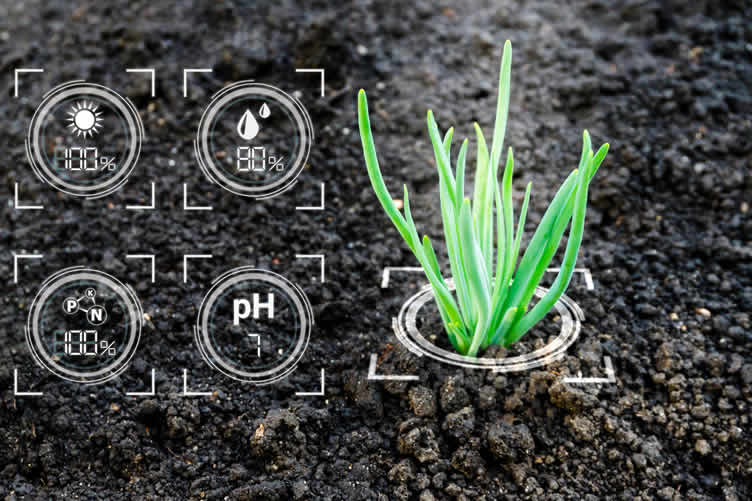
copyright image by 123rf.com
Healthy Soil with Composting
Composting is a great way to support the mycorrhizal network in your soil.
Adding organic compost introduces nutrients and microorganisms that improve soil structure, fertility, water retention, and aeration—creating the perfect environment for mycorrhizal fungi.
These fungi form a symbiotic relationship with plant roots, boosting nutrient uptake and overall plant health.
By composting regularly, you reduce waste while promoting a resilient, interconnected soil ecosystem.
view ideas: utilizing a garden compost(new win)
-
Scroll up to section directory … or scroll to next supporting note …
-
-
2nd: Yard Landscaping and Planting
… to support healthy mycorrhizal networks
A thriving garden is built on invisible yet essential relationships, especially between plants and mycorrhizal fungi.
These symbiotic fungi form networks that connect plant roots, enhancing nutrient uptake, improving soil structure, and fortifying plants against environmental stress.
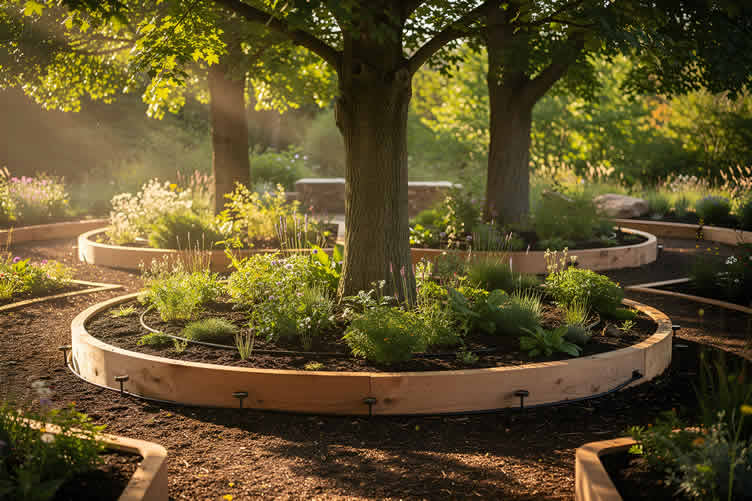
AI generated image by 123rf.com
By focusing on landscaping and planting strategies that nurture these fungal networks, you can create a resilient, self-sustaining garden ecosystem.
Below, we explore three key approaches to landscape and planting design that prioritize the health and function of mycorrhizal networks while enhancing the beauty and productivity of your yard.
-
Design Beds with Tree Health in Mind
Landscape design decisions profoundly affect mycorrhizal network development and tree vitality. Traditional approaches often isolate trees in small mulch rings surrounded by lawn, leaving most of the root zone in turf that receives frequent mowing, fertilization, and chemical treatments.
This configuration undermines tree health by subjecting root zones to compaction, competition, and chemical exposure.
Expanding mulched beds outward from trees creates more favorable conditions for root and fungal growth. Extend beds to the drip line at minimum, and consider going farther when aesthetically feasible.
These expanded areas allow tree roots to spread into undisturbed, organically enriched soil where mycorrhizal networks can flourish without competition or disruption from turf management.
Instead of leaving mulch bare, incorporate compatible understory plantings into these beds. Native woodland wildflowers, ferns, and shade-tolerant perennials create layered plantings that enhance root presence and network connectivity. This transforms isolated trees into resilient mini-forest ecosystems.
Adding mycorrhiza-friendly plants—such as native species, perennials, shrubs, and non-brassica vegetables—further supports an interconnected fungal network. These plants work with trees to establish a shared mycorrhizal system, improving nutrient distribution and promoting healthy soil.
Hardscape placement also matters. Patios, walkways, and driveways placed over root zones cause immediate damage during installation and ongoing problems through compaction and limited gas exchange.
When planning new hardscape features, site them away from tree root zones, or use permeable materials that allow air and water movement. If pathways must cross root zones, consider elevated boardwalks or steppers spaced to minimize soil contact rather than continuous pavement that seals soil completely.
-
Encourage Plant Diversity and Continuous Roots
Monoculture landscapes—whether expansive lawns or beds filled with a single species—limit mycorrhizal network development. Diverse plantings, by contrast, support more extensive and resilient fungal communities.
Different plant species host different fungal strains, and these strains can interconnect to form robust networks that benefit all participants.
Creating diverse plantings need not mean abandoning design cohesion or aesthetic appeal. Mixing trees, shrubs, perennials, and groundcovers in thoughtfully arranged beds provides both visual interest and ecological function.
Native plants deserve special consideration, as they typically form strong mycorrhizal partnerships and support broader ecosystem health through relationships with native insects and wildlife.
Groundcovers merit particular attention for their role in maintaining living root presence year-round. Bare soil between trees or in garden beds represents missed opportunity—space where fungal networks could be feeding and growing but instead lie dormant or degraded.
Evergreen groundcovers like wild ginger, native sedges, or creeping phlox keep roots active through winter, sustaining mycorrhizal fungi when deciduous plants go dormant. Even in vegetable gardens, where annual crops dominate, consider planting cover crops during off-seasons to maintain root activity and fungal partnerships.
This diversity principle extends to plant families as well. Most trees, shrubs, perennials, and many vegetables form mycorrhizal partnerships, but notable exceptions exist.
Brassicas (cabbage family), beets, spinach, and a few other crops are non-mycorrhizal, neither forming partnerships themselves nor contributing to network development. While these plants certainly have their place, balancing them with mycorrhizal species ensures continuous network vitality.
-
Use Mycorrhizal Inoculants Wisely
Mycorrhizal inoculants—products containing spores or propagules of beneficial fungi—can help establish or restore fungal networks, particularly in disturbed soils or new plantings. However, their effectiveness depends entirely on proper application.
Simply broadcasting inoculant across soil surface rarely achieves good results, as fungi must contact living root tips to colonize effectively.
For new plantings, apply inoculant directly to roots or in the planting hole where root-fungus contact is assured. Dust bare-root trees and shrubs with powdered inoculant before planting, or mix granular products into backfill soil. This direct inoculation gives fungi immediate access to roots as they begin growing into surrounding soil.
Established trees present more challenge, as their fine roots occupy vast soil volumes often far from the trunk. Several application methods can work.
Core aerating around the drip line and applying granular inoculant into holes provides some benefit, though coverage remains limited. Liquid inoculants applied through deep-root watering systems can reach more extensive root zones.
Top-dressing inoculant around the drip line and watering deeply may also help, particularly when combined with organic mulch application that creates favorable conditions for fungal growth.
Inoculants work best when soil conditions support fungal establishment. Compacted, chemically treated, or excessively disturbed soils may benefit less from inoculation until underlying problems are addressed.
Think of inoculants as one tool within a broader soil-building strategy rather than a silver bullet that compensates for poor soil management.
-
Thoughtful Steps for a Resilient Garden
Supporting a healthy mycorrhizal network takes an intentional effort, but the rewards are vast and lasting. Landscape designs that consider the needs of trees and their fungal partners, encourage biodiversity, and maintain continuity through living roots not only boost ecological health but also bring practical benefits.
Gardens become more resilient to stress, soil fertility improves, and plants thrive with less chemical intervention. Incorporating practices such as mycorrhizal inoculation wisely complements these strategies and extends their impact.
These methods demonstrate that crafting a fungal-friendly garden is ultimately about nurturing natural partnerships. By aligning your landscaping and planting approaches with the needs of mycorrhizal fungi, you can create a flourishing, harmonious space that reflects the true power of the natural world.
- Quick scroll to note summary content …
Approach Description Key Benefits Design Beds with Tree Health in Mind Expanding mulched beds outward from trees to the drip line or further to reduce turf competition and encourage mycorrhizal growth. Incorporates understory plantings like native wildflowers and shade-tolerant perennials. Supports root and fungal networks, creates healthier soil, reduces tree stress, and forms interconnected forest-like ecosystems. Encourage Plant Diversity and Continuous Roots Use of diverse plantings, such as trees, shrubs, perennials, groundcovers, and cover crops, to maintain year-round root presence and support fungal networks. Focus on native plants and avoiding reliance on monocultures. Creates robust fungal networks, sustains biodiversity, improves soil health, and enhances garden resilience and aesthetic appeal. Use Mycorrhizal Inoculants Wisely Application of mycorrhizal inoculants directly to roots, through planting holes, aeration methods, root watering systems, or top-dressing to establish fungal networks, especially in disturbed soils. Improves fungal colonization, supports plant-mycorrhizal relationships, and complements soil-building efforts for ecological balance. 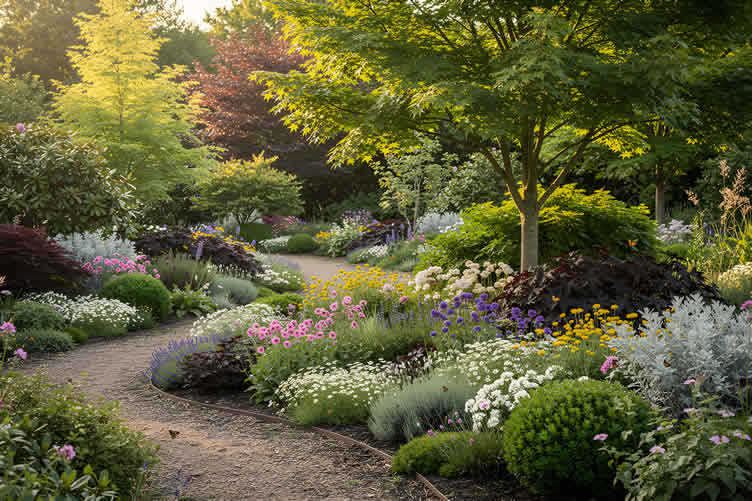
AI generated image by 123rf.com
Thriving Backyard Mycorrhizal Network
To cultivate a thriving mycorrhizal network in your backyard, include a mix of perennial and annual plants.
Perennials, with their lasting root systems, create a stable environment for fungi to thrive, while annuals provide seasonal color and enrich the soil as they cycle out.
Planting these alongside trees and shrubs improves soil health and fosters beneficial root-fungi connections.
By understanding the roles of perennials and annuals, you can plan plantings that support natural harmony and ecological balance.
view ideas: perennial and annual flower plantings(new win)
Sunny Perennial Pics
Part-Sun Perennials
viewing amazon-
Scroll up to section directory … or scroll to next supporting note …
-
-
3rd: Sustaining Tree Health
… through holistic soil stewardship
Supporting mycorrhizal networks goes beyond isolated tactics—it’s a shift in how homeowners approach landscape management. Instead of treating soil as something to control with inputs, this approach views it as a living ecosystem vital to plant health when nurtured properly.
The benefits extend beyond individual tree health. Strong mycorrhizal networks improve landscape resilience, helping plants withstand drought, resist disease, and recover from stress.
They reduce the need for external inputs, cutting maintenance costs and environmental impact. These networks also support broader soil food webs, fostering ecosystems that function with remarkable self-sufficiency.
Regenerating degraded soil biology takes time. Networks fragmented by conventional practices won’t recover overnight, but even small changes yield noticeable improvements within a growing season or two, with benefits compounding as fungal communities mature.
Homeowners can start by observing their property. Identify unnecessary soil disturbance, areas for expanded mulch beds, or opportunities to increase plant diversity. Simple steps—leaving leaf litter, reducing lawn fertilization, planting native groundcovers—set the stage for a more sustainable landscape.
Mycorrhizal networks remind us that healthy landscapes depend on unseen relationships. By working with these ancient partnerships, homeowners cultivate thriving trees and ecosystems rooted in vibrant, interconnected communities.
- Quick scroll to note summary content …
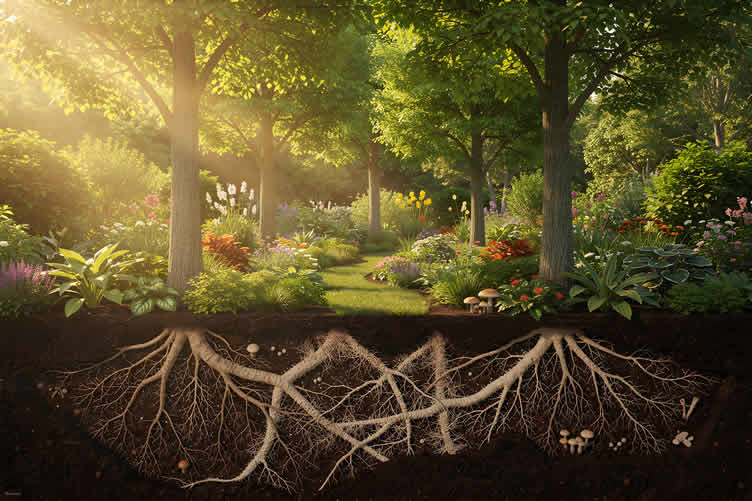
AI generated image by 123rf.com
Know About Tree Health
Caring for the trees in your backyard goes beyond simple watering and pruning—it requires an understanding of their needs and the environment they thrive in.
Healthy trees depend on proper soil quality, adequate sunlight, and sufficient space to grow both above and below ground.
It’s essential to monitor for signs of stress, such as discoloration, weak branches, or early leaf shedding, which may indicate pests, diseases, or nutrient deficiencies.
Regular mulching, appropriate watering, and seasonal inspections can nurture your trees, ensuring they remain strong and vibrant for years to come.
view ideas: 5 tree care investments(new win)
Cultivating Healthy Landscapes with Expert Help
Creating and sustaining a thriving mycorrhizal network in your landscape can feel like a daunting task, especially if you’re unfamiliar with the science behind these vital underground systems.
Mycorrhizal fungi form mutually beneficial relationships with plant roots, enhancing nutrient absorption, improving soil health, and boosting plant resilience.
By hiring an experienced landscape contractor, you can ensure that these intricate networks are built and maintained effectively, fostering a sustainable and beautiful outdoor space tailored to your property.
-
What an Experienced Landscape Contractor Can Offer:
- Expert Soil Analysis:
Evaluating soil composition and health to determine the best starting point for promoting mycorrhizal activity. - Native Plant Recommendations:
Choosing plant species that naturally thrive with local fungi, enhancing biodiversity and ensuring long-term success. - Sustainable Practices:
Implementing eco-friendly methods such as minimizing soil disruption and using organic materials to nurture fungal systems. - Customized Mulch Plans:
Designing mulch applications to maintain optimal moisture and foster fungal habitats. - Ongoing Maintenance Guidance:
Providing advice or services to keep your mycorrhizal network and overall landscape thriving over time. - Integrated Ecosystem Approach:
Ensuring your landscape supports interconnected plant and wildlife systems that benefit the environment.
Finding an experienced landscaper begins with research. Look for professionals with certifications in sustainable landscape practices or ecology-related expertise.
Customer reviews, before-and-after project photos, and references can provide valuable insight into their skills and commitment to quality.
Additionally, seek out contractors who understand the importance of working with natural systems rather than against them, ensuring your outdoor space flourishes through thoughtful, science-backed methods.
- Expert Soil Analysis:
LetsRenovate has partnered with HomeAdvisor™, a renowned provider of highly-rated, carefully-vetted local landscape contractors. Start your search here by choosing the type of contractor you need and entering your zip code to find local professionals.
Aspect Description Benefits Holistic Soil Stewardship Shifting perspective to treat soil as a living ecosystem by fostering mycorrhizal networks through practices like reducing disturbance, applying organic mulch, limiting synthetic inputs, and increasing plant diversity. Improves soil structure, plant resilience, and landscape sustainability while reducing maintenance costs and ecological impact. Regenerating Degraded Soil Implementing small changes such as observing the property, reducing unnecessary soil disturbance, expanding mulch beds, and adding native groundcovers to rebuild fragmented fungal networks. Yields noticeable improvements in soil health and plant vigor within a growing season or two, with long-term benefits as networks mature. Role of Landscape Contractors Engaging professionals to analyze soil health, recommend native plants, implement eco-friendly practices, customize mulch plans, and provide ongoing guidance for maintaining mycorrhizal networks. Ensures sustainable and tailored landscape management, supporting interconnected ecosystems and fostering long-term environmental benefits. Finding the Right Contractor Researching certified professionals with expertise in sustainable practices and ecology, evaluating their reviews, project photos, and commitment to science-based methods. Guarantees a thriving outdoor space by aligning management strategies with natural ecosystem dynamics. 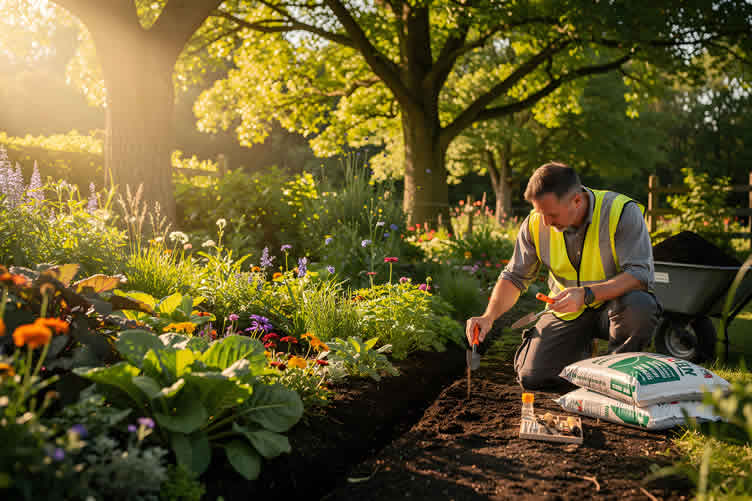
AI generated image by 123rf.com
But Wait!
Before searching for landscape contractors who can support mycorrhizal networks, download and use this evaluation worksheet.
This tool helps you objectively assess contractors based on key factors like pricing, licensing, and referrals.

Evaluation Sheet
File Type:
-
-
Conclusion:
… moving forward with mycorrhizal network research and practice
The science of mycorrhizal networks is still developing. Researchers are studying how intentional resource flows are, how networks favor certain partners, and when their effects are significant in real ecosystems.
While field studies are more challenging than lab experiments, they are crucial for understanding how these networks function in complex, natural environments.
For land managers—whether tending a garden, park, or forest—the evidence is clear enough to guide practice. Mycorrhizal networks connect plants, moving nutrients and signals. To support them, reduce soil disturbance, avoid fungicides, add organic matter, and plant diverse species with compatible fungal partners. These practices also promote soil health, biodiversity, and ecosystem resilience.
As research progresses, we’re discovering more roles for mycorrhizal networks, such as carbon sequestration, soil aggregation, and microbial dispersal.
These findings highlight the importance of considering below-ground systems when managing landscapes. Mycorrhizal networks are not passive but dynamic systems shaping plant success and ecosystem health in ways we’re just beginning to understand.
Resource Citations
- Wikipedia contributors. "Mycorrhizal network." Wikipedia, The Free Encyclopedia.
https://en.wikipedia.org/… - National Center for Biotechnology Information. "Mycorrhizal networks facilitate tree communication, learning, and memory." PMC.
https://pmc.ncbi.nlm.nih.gov/… - National Center for Biotechnology Information. "Common mycorrhizal networks and their effect on the bargaining power of plants." PMC.
https://pmc.ncbi.nlm.nih.gov/… - National Forest Foundation. "The Underground Mycorrhizal Network." National Forests.
https://www.nationalforests.org/… - Society for the Protection of Underground Networks. "Mycorrhizal Fungi." SPUN.
https://www.spun.earth/… - Harvard Arnold Arboretum. "Food, Poison, and Espionage: Mycorrhizal Networks in Action." Arnold Stories.
https://arboretum/… - Urban Worm Company. "Magical Mycorrhizae: Nature’s Underground Network."
https://companionableness/… - Botanic Garden Wales. (2022). "Growing with Mycorrhizal Fungi."
https://botanicals/… - Anderson Seed and Garden. "Mycorrhiza: The Ancient Fungus That Helps Your Plants Absorb Water & Nutrients."
https://andersonseedandgarden.com/… - Gardeners’ World. "Mycorrhizal Fungi."
https://www.gardenersworld.com/… - Plant Revolution. "Why You Need Mycorrhizal in Your Garden."
https://plantrevolution.com/… - Babikova, Z., Gilbert, L., Bruce, T. J., Birkett, M., Caulfield, J. C., Woodcock, C., Pickett, J. A., & Johnson, D. (2013). Underground signals carried through common mycelial networks warn neighbouring plants of aphid attack. Ecology Letters, 16(7), 835-843.
- Simard, S. W., Perry, D. A., Jones, M. D., Myrold, D. D., Durall, D. M., & Molina, R. (1997). Net transfer of carbon between ectomycorrhizal tree species in the field. Nature, 388(6642), 579-582.
- Barto, E. K., Hilker, M., Müller, F., Mohney, B. K., Weidenhamer, J. D., & Rillig, M. C. (2011). The fungal fast lane: Common mycorrhizal networks extend bioactive zones of allelochemicals in soils. PLoS ONE, 6(11), e27195.
- Wikipedia contributors. "Mycorrhizal network." Wikipedia, The Free Encyclopedia.
-
ideas to view and compare from the information discussed above
- What comments can you share about
understanding of the mycorrhizal network?
Scroll up to main directory … or scroll to more yard n’ garden-related topics …






Download this PDF for a concise summary of everything you need to know about …?




Calendar For:
Home Maintenance
File Type:


… view our sharing links below for a quick "share the knowledge"
Find Landscaping/Maintenance Landscape Design Landscape Maintenance Pest Control Sprinkler Systems Tree & Shrubs Water Features top-rated, pre-screened local contractors FREE: download contractor selection enter zip code – powered by HomeAdvisor ™
Quick Contractor Guides selecting negotiating working with inspecting

Cover image credit: mycorrhizal network by 123rf.com
end of post … please share it!
 |
did you find this review of the mycorrhizal network helpful? If so, please share the article with your friends and family! |
Nice pic idea? Leave us a quick comment below.
And please share this pic idea within your social networks.
Amazon Affiliate Disclosure: LetsRenovate.com is a participant in the Amazon Services LLC Associates Program, an affiliate advertising program designed to provide a means for sites to earn advertising fees by advertising and linking to Amazon.com. The commission earnings are used to defray our cost of operation.
View our FTC Disclosure for other affiliate information.