Summary Outline –
Xeriscaping offers a nurturing approach to landscape design that works in harmony with the local environment. By focusing on water conservation and drought-tolerant features, this method transforms thirsty lawns into resilient, vibrant sanctuaries.
You can enjoy a stunning yard that requires far less maintenance, giving you more time to relax in your newly upgraded home oasis. Embracing a water-wise garden allows you to craft a customized space tailored to your unique aesthetic preferences.
Using a thoughtful mix of native plants, organic mulches, and strategic stone pathways, your outdoor area becomes a welcoming retreat for both your family and local pollinators.
- post content … analysis/ xeriscaping ideas
- 1st: Understanding Xeriscaping
- 2nd: Planting Ideas for Xeriscaping
- 3rd: Layout Ideas for Xeriscaping
- 4th: A Beginner’s Guide to Xeriscaping
- 5th: Best Plant-Style Mix for a Stunning Xeriscape
- 6th: Sketching a Xeriscape Plan for a Front Yard
- 7th: Sketching a Xeriscape Plan for the Backyard
- 8th: Sketching a Xeriscape Plan for a Small Side Yard
- 9th: Why You Should Hire a Landscape Contractor
- conclusion
- other yard n’ garden topics

-
- —— begin first topic ——
-
1st Section: Understanding Xeriscaping
Xeriscaping is a landscaping approach focused on reducing or eliminating the need for extra watering.
While it started in drought-prone areas, this idea has become popular with homeowners seeking affordable and environmentally friendly garden solutions.
At its heart, xeriscaping replaces thirsty turf with a careful selection of durable plants and other textures. By designing a yard that thrives on natural rainfall, you can lower your utility bills and cultivate a deeper connection with the environment.
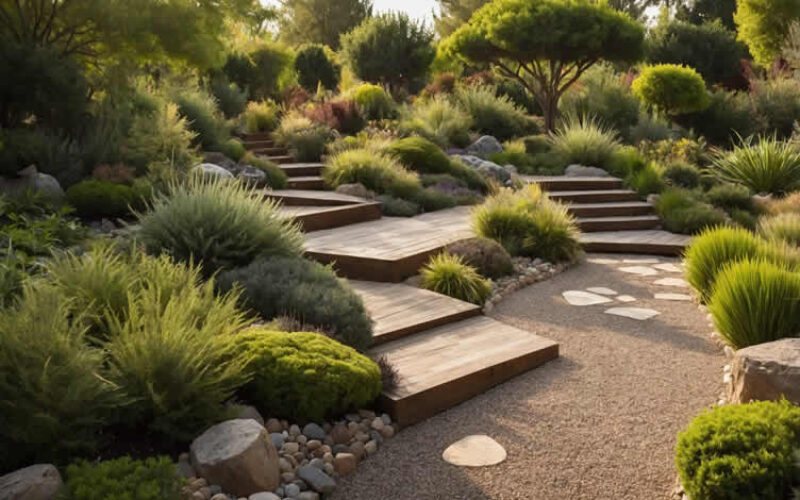
copyright image by 123rf.com

Whether you live in a dry climate or just want to be more eco-conscious, xeriscaping blends beauty and function to suit any style.
This method combines hardy plants with creative hardscaping—like stone paths or gravel beds—to create a balanced, sustainable, and beautiful outdoor space that also supports your local ecosystem.
Ready to give it a try? Here are a few core design ideas to get you started on your xeriscaping journey:
-
Replace Part of the Lawn with Gravel, Stone, or Pavers
Traditional lawns require extensive watering, mowing, and upkeep, making them inefficient for xeriscaping goals. By substituting portions of your lawn with gravel, decorative stone, or permeable pavers, you can significantly cut down on water usage and create a striking aesthetic.
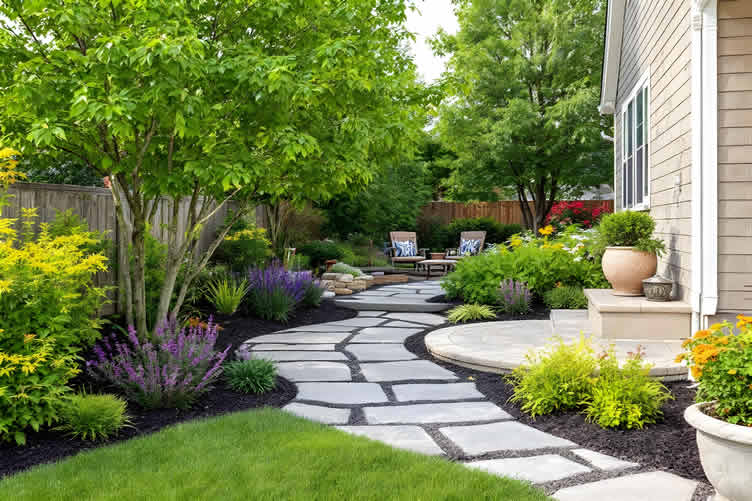
For instance, pathways made from flagstone or crushed granite not only reduce water dependency but also add a defined structure and elegance to your landscape design.
These hardscaping elements provide versatility while promoting better water infiltration, helping the soil retain moisture and encouraging a thriving ecosystem.
-
Use Mulch Heavily Around Beds
Mulching is a simple yet effective tool widely recognized for its benefits in xeriscaping. Apply a generous layer of organic or inorganic mulch around plant beds to suppress weed growth, reduce soil evaporation, and keep roots cool during heatwaves.
Consider materials like wood chips, bark, or pea gravel, depending on the visual impact you want to achieve.
Mulch not only conserves water but also enriches soil health over time if you opt for organic types, making it an essential step in maintaining a moisture-rich environment without over-watering.
-
Group Plants by Water Needs
Plant placement is one of the most critical components of xeriscaping. To maximize efficiency, group plants according to their water requirements, a principle known as hydro-zoning.
For instance, locate drought-tolerant species like lavender, sage, or succulents in the same area, while positioning thirstier plants close to each other where irrigation can be more targeted.
This practice not only simplifies watering schedules but also ensures that all plants receive the care they need without overburdening natural resources.
-
Add Drip Irrigation or Soaker Hoses
Efficient water delivery systems make a considerable difference in xeriscaped gardens. By installing drip irrigation or soaker hoses, you ensure that water is directed precisely to plant roots, minimizing waste caused by evaporation or overspray.
These systems are especially beneficial for clusters of thirstier plants or for areas with less rainfall.
Over time, you’ll notice reduced water bills and healthier plants, as the consistent moisture improves root development without drowning the soil.
-
Build Focal Points for Intentional Design
To prevent xeriscaped yards from appearing sparse or barren, incorporate focal points that elevate your outdoor space’s aesthetic appeal.
Creating a gravel courtyard with a seating nook, integrating a stepping-stone pathway, or adding large sculptural plants like agave can make your yard feel intentional and visually interesting.
These design features serve as anchors, giving the space a sense of unity and purpose while encouraging its use as an outdoor living area.
-
Promote Sustainability with Diverse Elements
Xeriscaping thrives on the balance between form and function. Beyond plants and hardscape, consider adding rain barrels to collect natural rainfall for irrigation or incorporating native plants that support local wildlife such as bees, butterflies, and birds.
Native species adapt better to the local climate and require significantly less maintenance, supporting efforts to mimic natural ecosystems. Additionally, consider layering textures and heights to create visual depth while ensuring proper shading for soil and smaller plants beneath.
By blending these thoughtful design practices, xeriscaping transforms outdoor spaces into sustainable, visually engaging environments that require less water and maintenance while fostering harmony with nature.
This forward-thinking approach allows homeowners to craft unique, enduring landscapes that reflect their personal style while contributing positively to the planet.
For further guidance, consult local horticultural experts or refer to research provided by environmental organizations like WaterWise and the Environmental Protection Agency (EPA) for best practices and regional plant recommendations.
- Quick scroll to section content …
Aspect Description Details Understanding Xeriscaping Definition and Purpose Xeriscaping is a landscaping method designed to reduce or eliminate extra watering needs. It replaces traditional lawns with drought-tolerant plants and hardscapes, blending beauty and sustainability. Core Design Ideas Replace Lawn with Hardscape Substitute parts of the lawn with gravel, stone, or pavers to lower water usage. Options like flagstone pathways enhance aesthetics while promoting water infiltration and soil health. Conserving Water Heavy Use of Mulch Applying organic or inorganic mulch suppresses weeds, retains moisture, and protects roots. Materials like wood chips or pea gravel offer both functional and visual benefits. Plant Grouping Hydro-zoning. Group plants by water needs to optimize irrigation. Drought-tolerant plants like lavender and succulents should be placed separately from thirstier species for efficient care. Efficient Irrigation Drip Irrigation Systems like drip irrigation or soaker hoses direct water to roots, reducing waste and promoting healthier plant growth. Ideal for areas with variable rainfall or clustered plants. Design Enhancements Use Focal Points Features like seating nooks, stepping-stone pathways, or sculptural plants add visual interest, making xeriscaped yards feel cohesive and inviting. Sustainability Promote Diverse Elements Add features like rain barrels and native plants to support local wildlife and ecosystems. Layer textures and heights to create depth and mimic natural environments. 

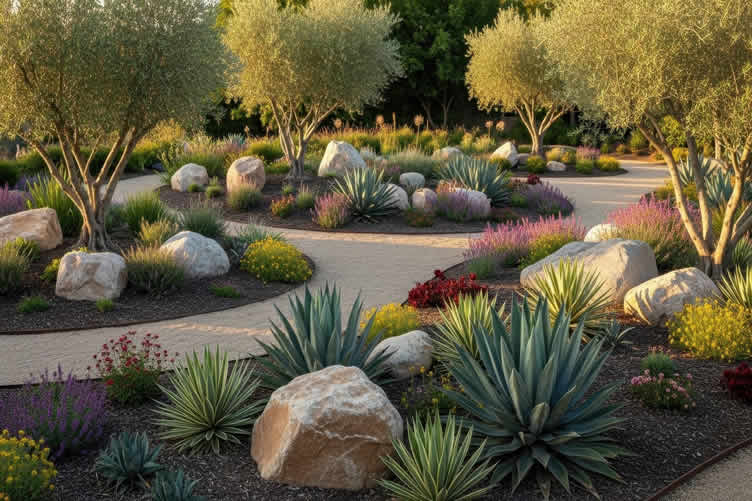
copyright image by 123rf.com
Just What You Dreamed Of
A well-designed landscape is more than just a visual treat; it boosts the function, value, and ambiance of your outdoor area.
Elevating your landscape’s aesthetics can turn a simple yard into a peaceful escape or a welcoming entertainment space.
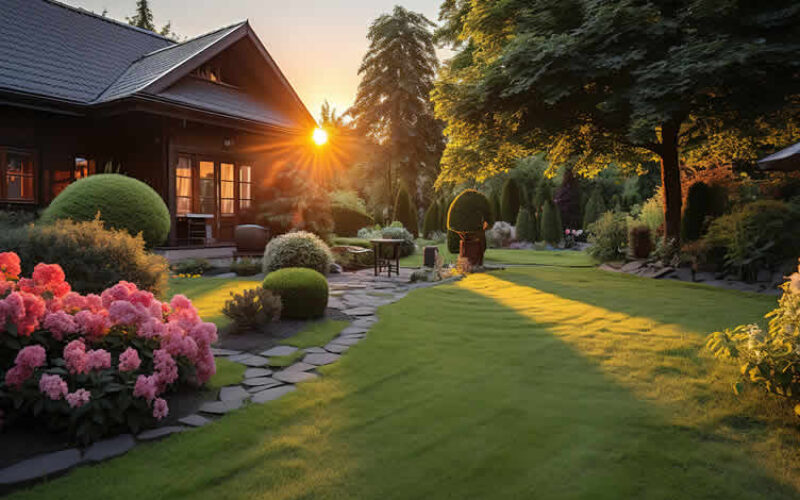
Incorporating thoughtful design elements like varied plant textures, harmonious colors, and a purposeful layout creates a space that reflects your style while blending with the natural environment.
An enhanced landscape not only improves curb appeal but also offers a serene and enjoyable space for years to come.
view ideas: elevating your landscape aesthetics(new win)
Garden Tools
viewing amazon
-
Scroll up to directory … or scroll to next section about planting ideas …

-

-
-
2nd Section: Planting Ideas for Xeriscaping
Xeriscaping is a landscaping method designed to minimize water usage while maintaining a functional and aesthetically pleasing outdoor space.
By carefully selecting plants and arranging them thoughtfully, you can create a sustainable yard that not only conserves water but also supports local ecosystems.
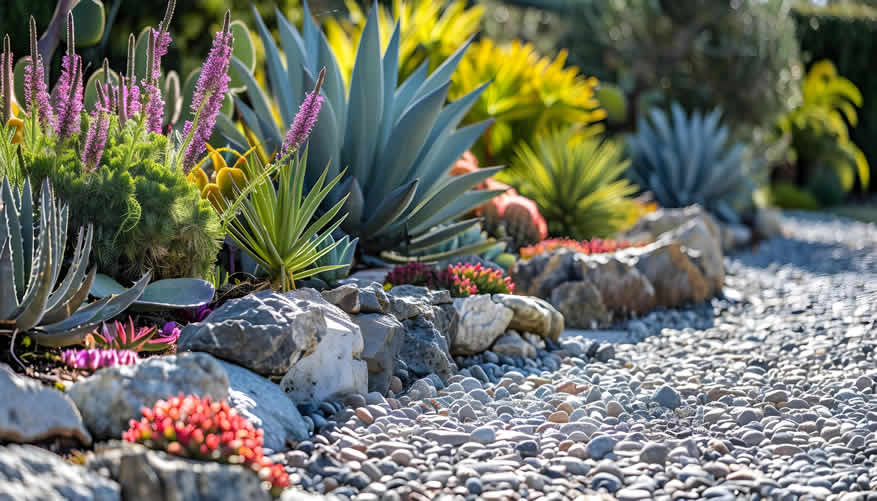
copyright image by 123rf.com
The key to successful xeriscaping lies in understanding your climate and soil, choosing plants that thrive in arid conditions, and incorporating design elements that reduce water dependency.
For homeowners seeking to adopt xeriscaping, the process doesn’t mean sacrificing beauty for practicality. It’s entirely possible to build a vibrant, stunning landscape filled with texture, color, and dimension, even in regions with limited rainfall.
Below are expert tips and planting concepts to transform your outdoor space into a water-wise haven.
-
Use Native Plants Suited to Your Climate
Native plants are an essential consideration in any xeriscaping project. Because they are already adapted to the local environment and climate, they generally require less water, pest control, and maintenance once established.
For instance, in dry regions of the Southwest, plants like desert marigold or globe mallow can thrive with minimal care. Native species not only perform well but also contribute to the health of local ecosystems by attracting pollinators like bees and butterflies.
The Environmental Protection Agency (EPA) and local agricultural extension offices provide excellent resources for identifying native plant species specific to your area.
-
Add Drought-Tolerant Perennials
When selecting plants for xeriscaping, drought-tolerant perennials such as lavender, yarrow, sedum, sage, and coneflowers are outstanding choices. These hardy varieties are known for their ability to withstand dry spells and still maintain their vibrant blooms and foliage.
Lavender, for example, not only offers aromatic beauty but also repels certain pests, making it a practical addition to nearly any xeriscape.
Including ornamental grasses such as blue fescue or feather reed grass can further enhance texture and movement in the landscape.
-
Mix in Succulents and Agave for Texture
Succulents and agave exemplify modern landscaping trends while providing exceptional drought tolerance. Their striking shapes, bold textures, and low-maintenance needs make them ideal focal points for xeriscaped gardens.
Varieties like echeveria, aloe, and hardy sedum bring contemporary design appeal and are well-suited to a minimalist aesthetic. These plants store water in their leaves, allowing them to thrive in hot, dry climates while requiring little ongoing irrigation.
-
Use Groundcovers to Reduce Bare Soil
Groundcovers like creeping thyme, ice plant, or low-growing sedum can be used to fill gaps in your landscape, reducing erosion, maintaining soil moisture, and limiting weed growth. These spreading plants contribute to a full, lush look even in areas where grass may not thrive.
Groundcovers also protect bare soil from sun exposure, which can help minimize water evaporation—an essential aspect of xeriscaping. Ensure groundcovers are planted densely to achieve a unified and efficient result.
-
Incorporate Flowering Species for Color
Though xeriscaping often prioritizes functionality, incorporating flowering species ensures that your landscape remains visually dynamic and supports pollinators.
Plants like black-eyed susans, blanket flowers, and Russian sage offer bursts of color while thriving in dry conditions. These species draw in bees, butterflies, and other beneficial insects, adding life and movement to your yard.
A thoughtful arrangement of perennials and annuals ensures color variation throughout the year, enhancing your garden’s overall appeal.
-
Ornamental Grasses
Ornamental grasses are an excellent addition to any xeriscape garden, providing texture, movement, and resilience in dry climates. Varieties like blue fescue, feather reed grass, and purple fountain grass are low-maintenance and require minimal water once established.
These grasses introduce dynamic shapes and colors, adding a calming, natural sway to your landscape. Their drought tolerance makes them ideal for water-conscious gardens, where they work well with flowering plants or as standalone features.
By incorporating ornamental grasses, you can create a visually engaging garden that needs less water and upkeep while maintaining its charm all year.
-
Combine Water Efficiency with Biodiversity
A well-planned xeriscape is not only water-efficient but also rich in biodiversity. Avoid over-planting a single species and instead mix native plants, perennials, succulents, and groundcovers to mimic natural ecosystems.
Planting in zones based on water needs (known as hydro-zoning.) can also optimize efficiency; grouping plants with similar irrigation requirements ensures resources are not wasted.
For anyone unsure of how to organize hydro-zones, resources from specialists like WaterWise or the USDA’s gardening guides can serve as valuable references.
Whether you’re looking for bold textures, colorful blooms, or low-maintenance solutions, a water-efficient landscape offers unparalleled potential for sustainability and creativity.
For additional support, consult landscape designers or your local nursery to ensure your xeriscaping project meets your region’s unique environmental conditions.
- Quick scroll to summary content …
Topic Description Examples/Recommendations Use Native Plants Suited to Your Climate Native plants are adapted to the local environment and require less water, pest control, and maintenance. They support local ecosystems by attracting pollinators. Desert marigold, globe mallow. Check resources like the EPA or local agricultural offices for native plant suggestions. Add Drought-Tolerant Perennials These plants withstand dry spells and maintain vibrant blooms and foliage, offering both beauty and practicality for xeriscaping. Lavender, yarrow, sage, sedum, coneflowers, ornamental grasses (e.g., blue fescue, feather reed grass). Mix in Succulents and Agave for Texture Succulents and agave thrive in hot, dry climates, providing bold textures and low-maintenance needs, ideal for minimalist designs. Echeveria, aloe, hardy sedum. Perfect focal points for modern xeriscaped gardens. Use Groundcovers to Reduce Bare Soil Groundcovers minimize erosion, retain soil moisture, limit weed growth, and reduce water evaporation, contributing to efficient xeriscaping. Creeping thyme, ice plant, low-growing sedum. Plant densely for unified coverage. Incorporate Flowering Species for Color Flowering plants provide visual appeal and support pollinators, ensuring a dynamic and lively landscape. Black-eyed susans, blanket flowers, Russian sage. Ensure seasonal color variation with a mix of perennials and annuals. Use Ornamental Grasses Ornamental grasses add texture, movement, and color to xeriscapes. They are drought-tolerant, low-maintenance, and blend well with other plants or as standalone features. Blue fescue, feather reed grass, purple fountain grass Combine Water Efficiency with Biodiversity Mix various plant types and arrange hydro-zones based on water needs to create a water-efficient yet biodiverse environment. Native plants, perennials, succulents, groundcovers. Resources like WaterWise or USDA guides can assist with planning. 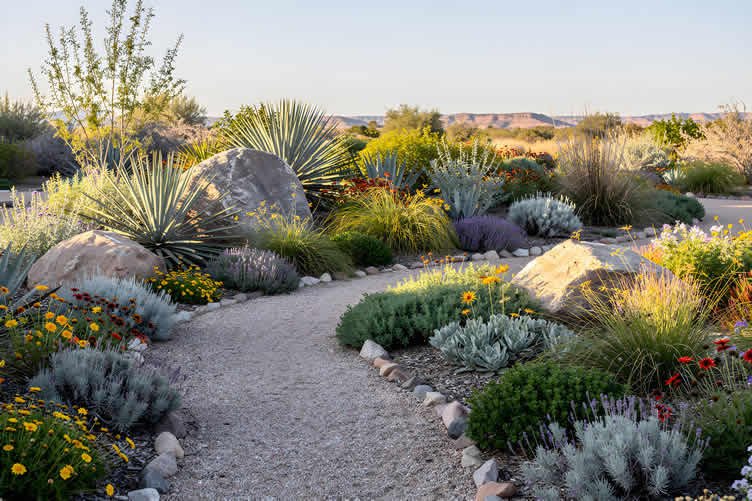
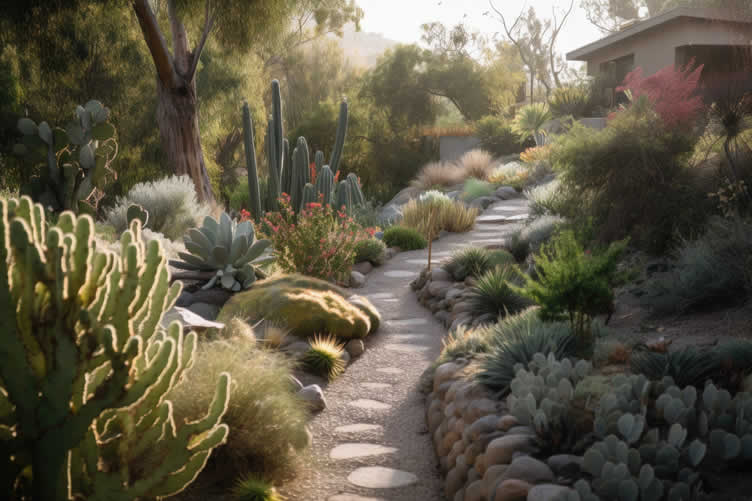
AI generated image by 123rf.com
Enhancing Xeriscape Gardens
Ornamental grasses are an ideal choice for xeriscape gardens due to their low water requirements and ability to thrive in arid conditions.
These grasses, such as blue fescue or feather reed grass, offer year-round visual interest with their delicate forms, waving blades, and seasonal plumes.

Additionally, they require minimal maintenance and help control soil erosion, making them both practical and aesthetically pleasing for sustainable landscaping.
view ideas: ornamental grasses in landscape design(new win)
-
Scroll up to directory … or scroll to next section: layout xeriscaping ideas…
-
-

Tackling garden xeriscaping ideas and fulfilling all your home improvement needs …

… save this curated directory of ideas for future reference.


-
-
3rd Section: Layout Ideas for Xeriscaping
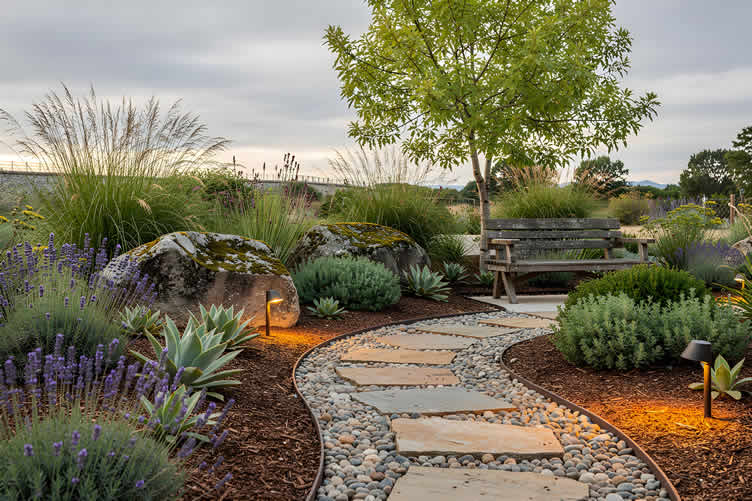
Creating a beautiful, water-efficient xeriscape begins with thoughtful planning and design. By understanding the specific characteristics of your yard and the conditions in your region, you can craft a landscape that is visually stunning, sustainable, and functional.
An effective xeriscape integrates elements that reduce water usage while maintaining aesthetic appeal and providing outdoor living spaces that enhance your home’s value.
AI generated image by 123rf.com
Below, we’ll explore tested techniques and layout ideas to help you transform your yard into a masterpiece of both style and sustainability.
The following layout ideas address common goals for homeowners, including making the most of sunny slopes, incorporating low-water plants, and designing multi-functional spaces for relaxation, gardening, and enjoyment.
These expert tips ensure that your xeriscaping project is tailored to your unique space while remaining low maintenance and cost-effective.
-
Rock Gardens for Sunny Slopes or Dry Corners[ view]
One of the most striking ways to incorporate xeriscaping is by designing a rock garden on a sunny slope or in a dry corner of your yard.
Rock gardens create visual interest through the use of natural stones, drought-resistant plants like succulents, and creative layering techniques that emphasize texture and depth. These gardens thrive in sunlight and require minimal watering, making them ideal for areas where traditional turf or high-maintenance gardens would struggle.
Consider using native plants such as sedum, agave, or hens-and-chicks to complement the natural beauty of the stones while promoting local biodiversity.
Adding mulch around plants can further retain moisture and prevent weeds, enhancing the overall efficiency of your rock garden.
-
Simple Borders with Ornamental Grasses and Shrubs[ view]
To frame your xeriscape and add structure, consider incorporating a border of ornamental grasses and drought-tolerant shrubs. This approach not only creates definition and flow in your landscape but also minimizes water demand.
Varieties such as blue fescue, little bluestem, or ruby grass pair beautifully with low-water shrubs like lavender or dwarf yaupon holly. These plants thrive with little irrigation and provide seasonal color, texture, and movement for year-round interest.
Additionally, strategically placing shrubs along fences or property lines can offer privacy and support biodiversity by creating habitats for local wildlife.
-
Usable Outdoor Living Spaces[ view]
Transform part of your yard into a cherished outdoor retreat by including a functional patio, deck, or bench area in your xeriscape. These spaces can replace traditional turf, reducing water usage and lawn maintenance while adding practical living areas for entertaining or relaxation.
Materials like flagstone, pavers, or gravel are excellent low-maintenance choices for patios, and they complement xeriscaping’s natural aesthetic.
Enhance the space with shade trees or pergolas for sun protection, and style the area with weather-resistant furniture to encourage regular use. Surround these areas with low-water plants or decorative pots to seamlessly integrate them into the landscape.
-
Raised Beds or Containers for Edible Zones[ view]
If you’re drawn to the idea of growing your own herbs and vegetables but want to control water usage, raised beds or containers are excellent options. These methods offer versatility, aesthetics, and precise control over soil and irrigation, making them perfect for regions with water restrictions.
Raised beds can be crafted from sustainable materials like reclaimed wood or stone and positioned to maximize sunlight exposure in your yard.
Similarly, decorative containers can be filled with nutrient-rich soil to grow rosemary, thyme, basil, or even vegetables like tomatoes and peppers.
Drip irrigation systems or self-watering pots can further ensure that your edible garden remains water-efficient and thriving.
-
Functional Paths with Minimal Maintenance[ view]
Pathways are an essential component of any xeriscape, as they connect the various elements of your yard while defining spaces and reducing maintenance. Choose durable and water-permeable materials like stone, decomposed granite, or stepping stones for your paths.
These surfaces are both practical and visually appealing, providing an enduring solution that requires little upkeep.
Use winding paths to create a sense of curiosity and exploration, leading visitors through distinct areas of your xeriscape. Filling the spaces between stones with drought-tolerant ground covers, such as creeping thyme or sedum, can add a soft touch and reduce weed growth.
-
Additional Design Considerations[ view]
Beyond these ideas, consider customizing your xeriscape to reflect your personal style and the specific conditions of your yard. Seasonal blooms, native wildflowers, rock boulders, and eco-friendly features like rain barrels can further enhance the sustainability and beauty of your landscape.
Always consult local resources, such as extension services or certified landscape designers, to ensure that your xeriscaping choices align with regional conditions and water-smart practices.
Whether you prefer modern, minimalist layouts or lush and whimsical garden designs, xeriscaping provides endless possibilities to craft a yard that is as functional as it is beautiful.
By implementing these layout ideas, you can design a personalized, eco-conscious yard that not only conserves water but also elevates the aesthetic and usability of your outdoor spaces.
Start small or go all-in, and enjoy the rewards of a low-maintenance, visually stunning xeriscape that reflects both your values and creativity. Your sustainable garden awaits!
- Quick scroll to summary content …
Layout Ideas Description Key Benefits Rock Gardens for Sunny Slopes or Dry Corners Design a rock garden in areas where turf struggles, using natural stones and drought-resistant plants like succulents. Creative layering enhances texture and depth while retaining moisture with mulch. Low water usage, low maintenance, visual interest, promotes local biodiversity. Simple Borders with Ornamental Grasses and Shrubs Frame your xeriscape with ornamental grasses and low-water shrubs like lavender. Strategic placement creates structure and privacy while reducing water demand. Seasonal color, texture, movement, supports biodiversity, minimal irrigation. Usable Outdoor Living Spaces Replace turf with functional areas such as patios or decks made from flagstone or gravel. Enhance with shade trees, pergolas, and weather-resistant furniture for relaxation or entertainment. Reduced lawn maintenance, practical living spaces, water-efficient, aesthetic integration. Raised Beds or Containers for Edible Zones Use raised beds or containers for growing herbs and vegetables, with control over irrigation and soil. Utilize sustainable materials and consider drip irrigation for water efficiency. Water-efficient, versatile, aesthetic, supports home gardening in restricted water zones. Functional Paths with Minimal Maintenance Create durable and permeable pathways with materials like decomposed granite or stepping stones. Add drought-tolerant ground covers to soften the design and minimize weed growth. Connects spaces, low maintenance, water-permeable, reduces weeds, aesthetic appeal. 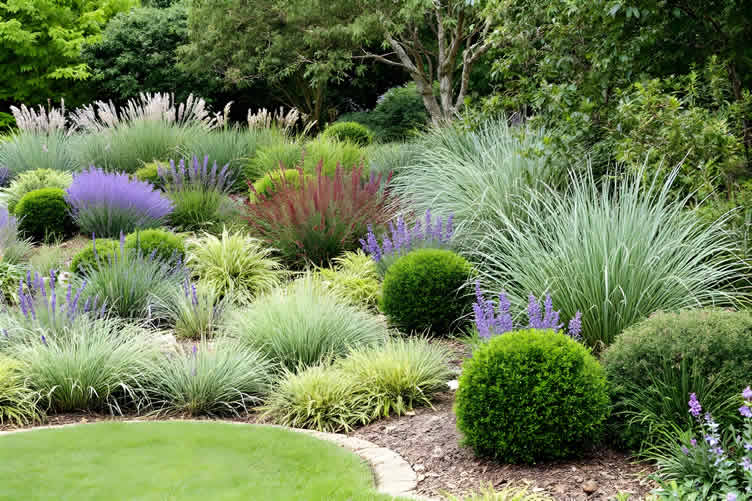
AI generated image by 123rf.com
Raised Bed for Vegetables and Herbs
Adding a raised bed for vegetables and herbs to your xeriscape garden offers both practicality and charm. This feature creates a dedicated space for growing fresh produce, promoting healthy eating and sustainability.
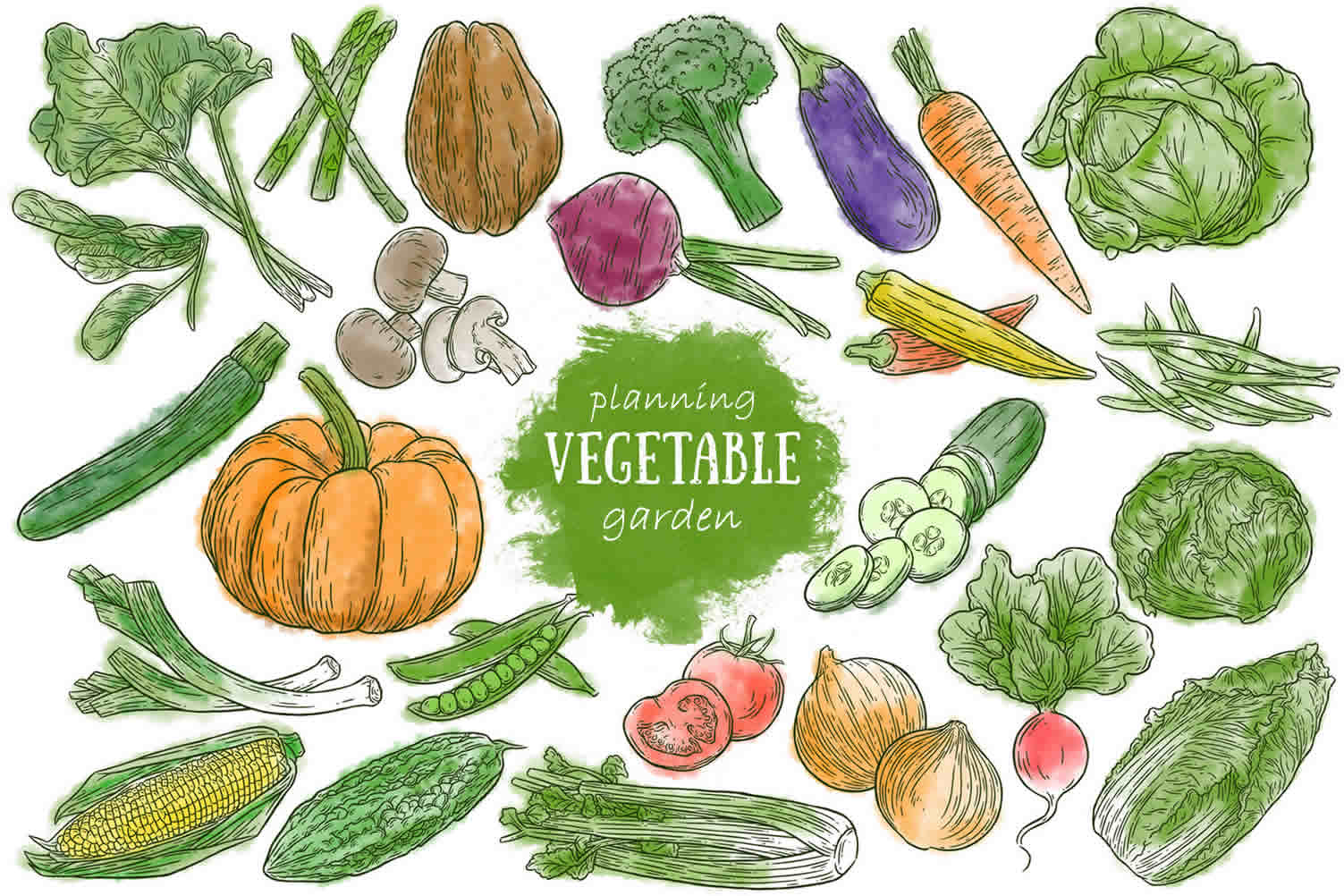
With the use of collected rainwater or an efficient drip irrigation system, the raised bed is easy to maintain, even in arid conditions.
Not only does it enhance the functionality of your garden, but it also introduces vibrant greenery and fragrance, making the space more inviting and purposeful.
view ideas: grow your own vegetables(new win)
-
Scroll up to directory … or scroll to next section for a beginners guide …
-
-

Download this PDF for a concise summary of everything you need to know about …?


-
-
4th Section: A Beginner’s Guide to Xeriscaping
… starting small for big impact
Xeriscaping is an excellent way to create a sustainable, water-efficient garden that aligns with your aesthetic and environmental goals.
For beginners, embarking on a xeriscaping project may seem daunting, but with a clear plan and small steps, it can be an incredibly rewarding experience.
The best way to start is by focusing on manageable areas of your yard and incorporating foundational elements that set the stage for long-term success.
AI generated image by 123rf.com
This guide outlines a beginner-friendly plan for xeriscaping, helping you take the first steps toward a more eco-conscious and low-maintenance outdoor space.
By following these tips, you’ll transform your yard one step at a time while conserving water and improving its beauty and functionality.
-
Step 1: Assess Your Yard’s Needs and Conditions
Before making any changes, take time to evaluate your yard’s current layout, soil type, and sun exposure. Identify areas that receive the most sunlight and spots prone to excessive water use.
This information will guide your plant selection and design choices, ensuring that you work with the natural characteristics of your space.
-
Step 2: Start with a Small Focus Area
Begin your xeriscaping efforts in one manageable section, such as a front yard border, a garden bed, or a patio corner.
This localized approach allows you to experiment and gain confidence without overwhelming yourself. Once you see success in a smaller area, you can gradually expand the project.
-
Step 3: Choose Native and Drought-Tolerant Plants
Opt for plants that thrive in your region’s climate and require minimal water. Popular choices include succulents, lavender, sage, or ornamental grasses.
These plants not only conserve water but also add texture, color, and visual interest to your landscape.
-
Step 4: Incorporate Mulch for Moisture Retention
Adding mulch around your plants is a simple yet effective way to retain soil moisture and reduce weed growth. Organic options such as wood chips or bark are particularly beneficial and add a polished look to your garden.
-
Step 5: Use Decorative Hardscaping Elements
Strategically integrating hardscaping elements like gravel pathways, stone borders, or raised beds can enhance your xeriscape’s aesthetic and minimize areas that require watering.
Hardscaping creates definition while maintaining a low-maintenance environment.
-
Step 6: Install Efficient Irrigation Systems
If your area needs irrigation, consider installing a drip irrigation system.
These systems deliver water directly to the roots, reducing waste and promoting healthy plant growth. Pair this with strategic watering schedules to further conserve water.
-
Step 7: Monitor and Adjust Over Time
After implementing your starter xeriscape plan, observe how it evolves over the seasons. Adjustments may be required based on plant health and water use.
This continuous refinement ensures that your yard remains both sustainable and beautiful year-round.
By following this step-by-step starter plan, you can dive into xeriscaping with confidence, transforming your outdoor space into a more sustainable, stylish, and functional yard.
Your xeriscaping journey has just begun!
- Quick scroll to summary content …
Step Description Key Actions Step 1 Assess Your Yard’s Needs and Conditions Evaluate the yard’s layout, soil type, and sun exposure. Identify areas with high sunlight and spots prone to excessive water use. Step 2 Start with a Small Focus Area Begin in a manageable section like a yard border or garden bed to experiment, build confidence, and then gradually expand. Step 3 Choose Native and Drought-Tolerant Plants Select plants such as succulents, lavender, sage, or ornamental grasses that are water-efficient and suit your region’s climate. Step 4 Incorporate Mulch for Moisture Retention Use organic mulch materials like wood chips to retain soil moisture, reduce weed growth, and enhance the garden’s appearance. Step 5 Use Decorative Hardscaping Elements Add pathways, stone borders, or raised beds to enhance aesthetics and minimize watering requirements. Step 6 Install Efficient Irrigation Systems Set up a drip irrigation system for effective water delivery to plant roots, and pair it with optimized watering schedules. Step 7 Monitor and Adjust Over Time Observe the xeriscape’s performance over seasons, refine watering and care as needed to maintain sustainability and beauty. 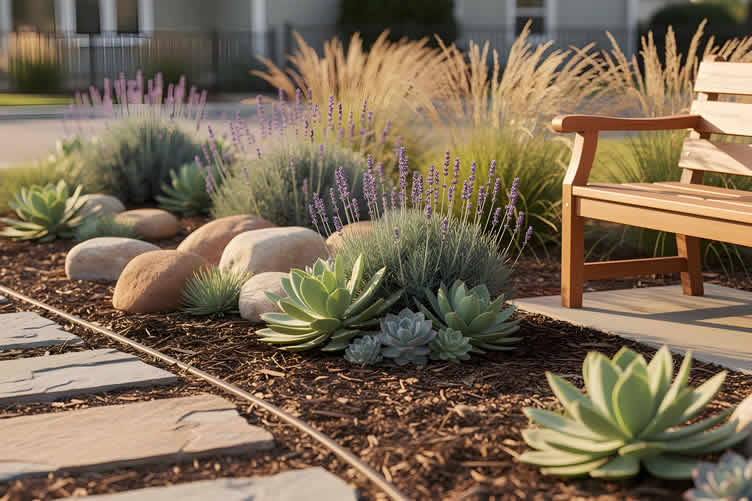
AI generated image by 123rf.com
When It Is Hot and Dry
A smart automated irrigation system is essential for maintaining a lush xeriscape garden, even in arid conditions.
While low-water plants require minimal water, they still need hydration during dry spells.
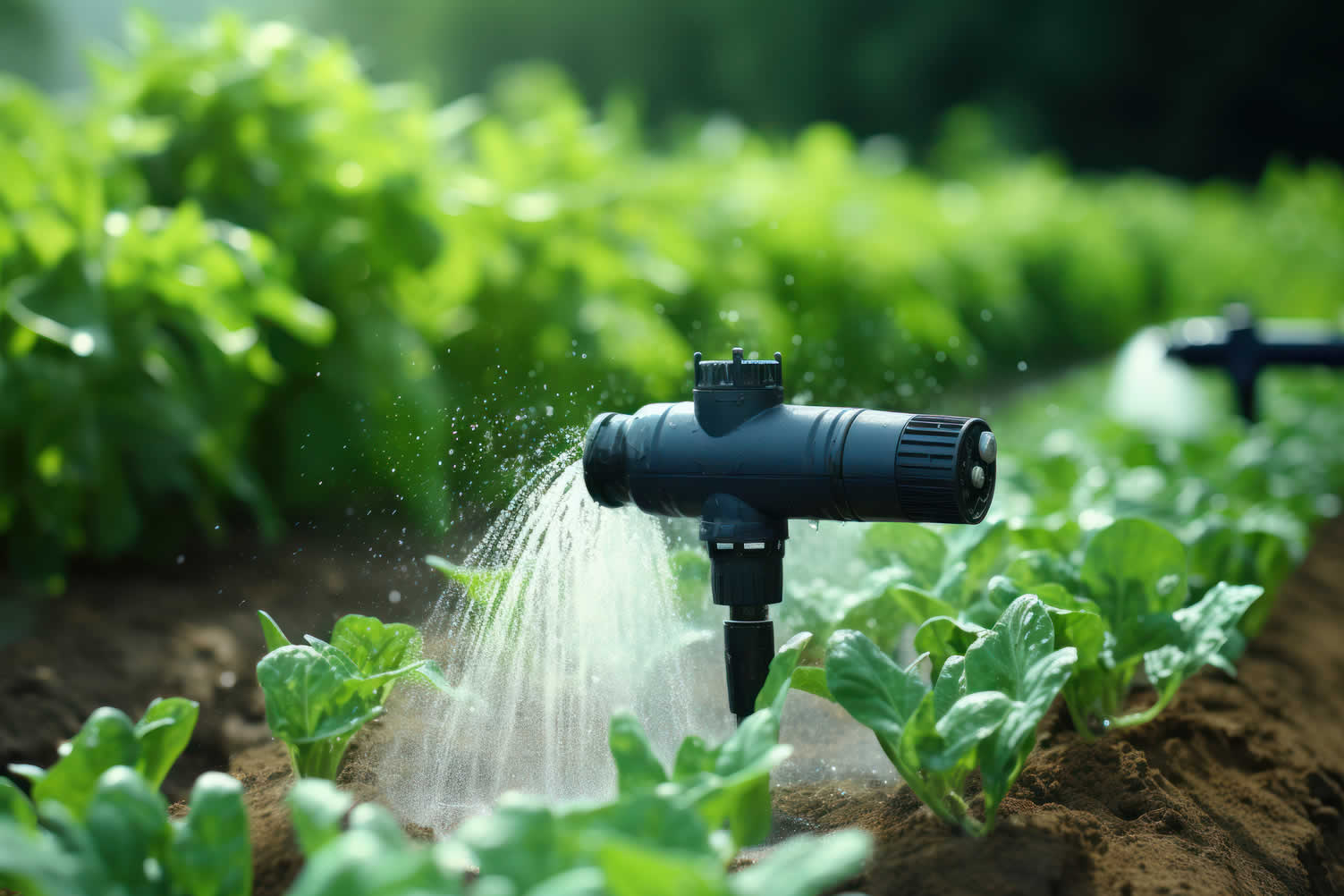
These systems use drip irrigation, sprays, and soil moisture monitors to deliver water only when needed.
This targeted approach conserves water while ensuring your plants, including any vegetables and flowers, remain vibrant year-round, regardless of heat or drought.
view ideas: underground automated irrigation system(new win)
-
Scroll up to directory … or scroll to next section: plant selection mix …
-
-



-
-
5th Section: Best Plant-Style Mix for a Stunning Xeriscape
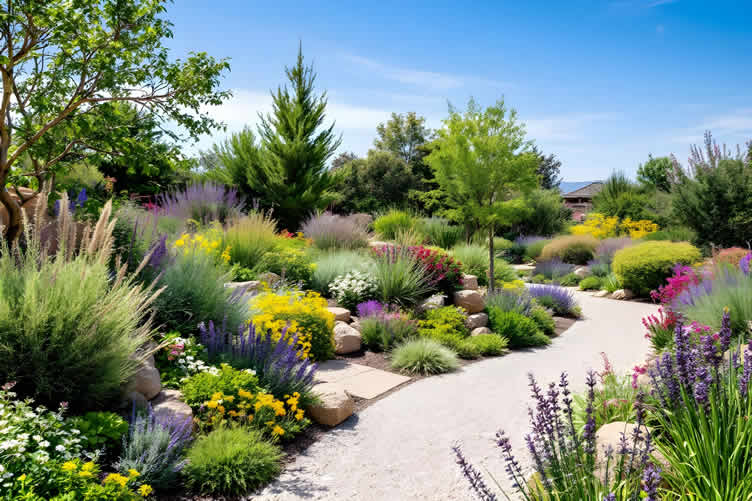
Creating the perfect plant-style mix is key to achieving a xeriscape that is both visually appealing and environmentally friendly.
A balanced design incorporates layers and textures, ensuring your yard feels lush and complete without excessive water consumption.
AI generated image by 123rf.com
By combining groundcovers, shrubs, and striking focal points, you can create a harmonious and low-maintenance outdoor space while supporting biodiversity and conserving resources.
Below, we’ll guide you through some essential plant-style combinations that work well in xeriscaping.
-
Layer 1: Low-Growing Groundcovers
Groundcovers are the foundation of any xeriscape. They help suppress weeds, conserve soil moisture, and add texture to your design.
Consider plants like creeping thyme, blue fescue, or sedum varieties for a hardy, drought-resistant base.
These plants spread easily and offer a carpet-like effect in areas that might otherwise feel bare. Many groundcovers also bloom seasonally, adding a subtle yet vibrant touch of color to your yard.
-
Layer 2: Mid-Height Shrubs and Grasses
To add depth and variety, integrate mid-height shrubs or ornamental grasses into your xeriscape.
Options like sagebrush, lavender, or Mexican feather grass bring color, movement, and structure to your design.
These plants thrive with minimal water, are easy to maintain, and provide visual interest throughout the seasons.
Additionally, their mid-level height bridges the gap between groundcovers and taller focal plants, creating a cohesive and layered appearance.
-
Layer 3: Standout Focal Plants
Focal plants are the final layer of your xeriscape and serve as eye-catching centerpieces that anchor the design.
For a bold statement, opt for drought-tolerant choices like agave, yucca, or a sculptural tree such as the desert willow.
These plants emphasize the xeriscape’s architectural beauty and can draw attention to specific areas of your outdoor space. Many of these options also attract pollinators, supporting local ecosystems while enhancing your garden.
By carefully selecting and layering these plant types, your xeriscape can become a dynamic and thriving environment that combines function with style.
- Quick scroll to summary content …
Layer Plants Description Layer 1: Low-Growing Groundcovers Creeping thyme, Blue fescue, Sedum varieties Groundcovers help suppress weeds, conserve soil moisture, and add texture to your design. They create a hardy, drought-resistant base with a carpet-like effect, often blooming seasonally for a subtle touch of color. Layer 2: Mid-Height Shrubs and Grasses Sagebrush, Lavender, Mexican feather grass Integrating shrubs or ornamental grasses adds depth and variety. These plants thrive with minimal water, are easy to maintain, and provide structural and aesthetic appeal, bridging the gap between groundcovers and focal plants. Layer 3: Standout Focal Plants Agave, Yucca, Desert willow Focal plants serve as striking centerpieces that anchor the xeriscape. These drought-tolerant plants highlight the architectural beauty of the design while supporting local ecosystems by attracting pollinators. 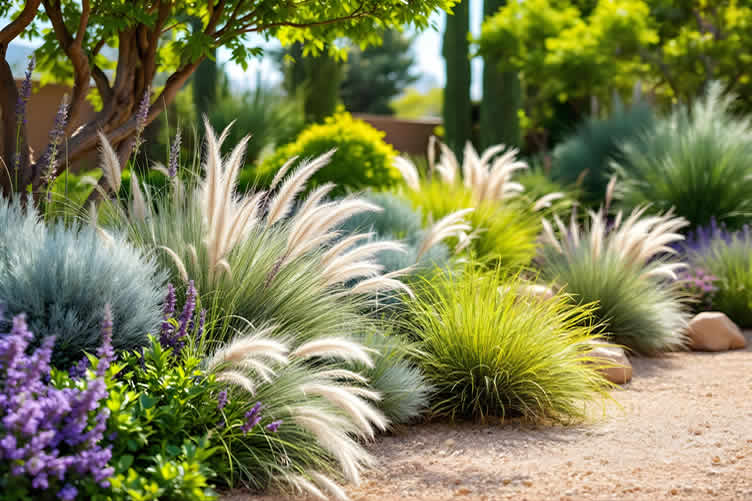
AI generated image by 123rf.com
Focal Points for Xeriscape Gardens
Dedicated beds are a key feature of xeriscape gardens, making them suitable for all climate zones.
These beds can serve as eye-catching focal points, showcasing vibrant and colorful flowers that thrive in low-water environments.
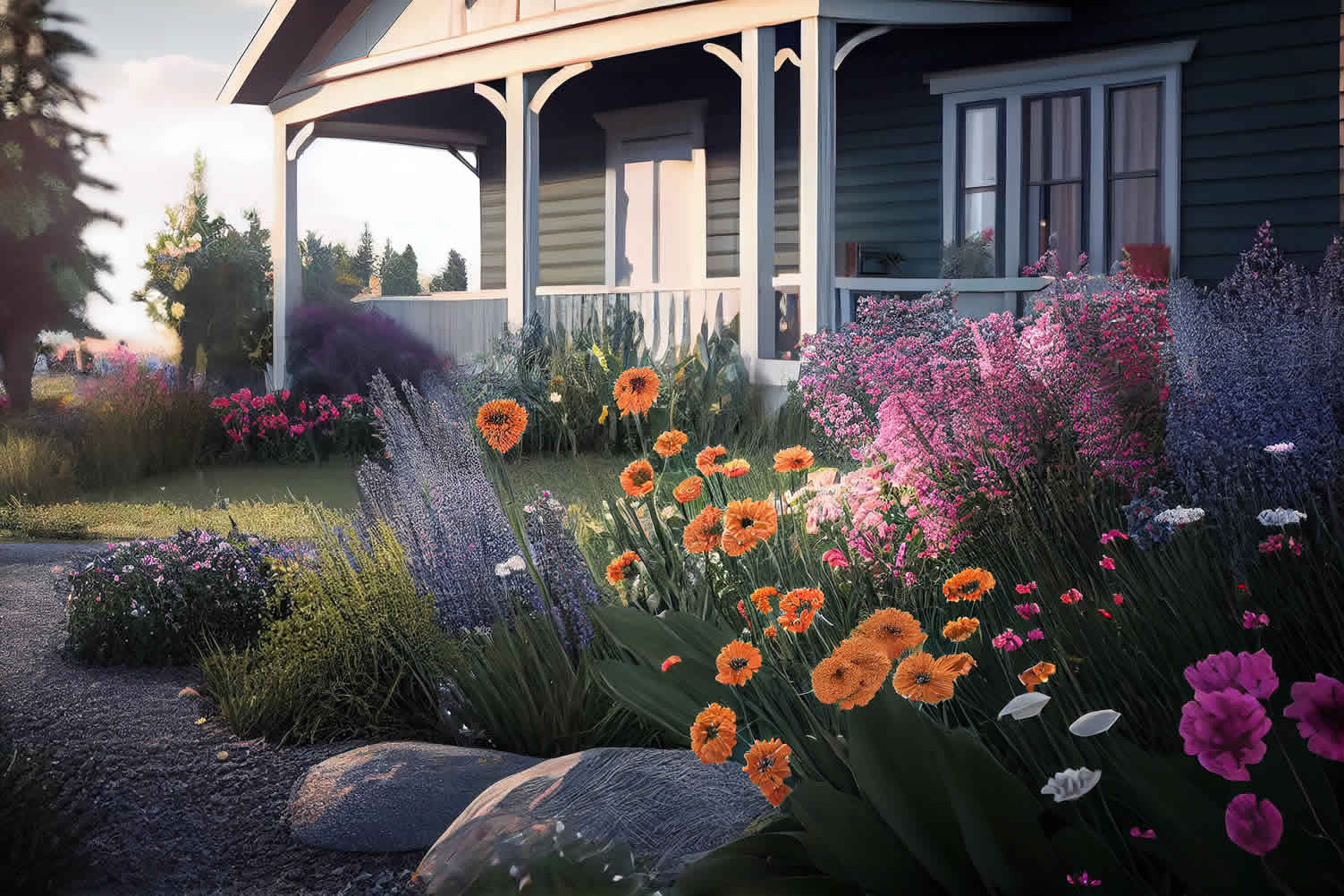
Incorporating drip irrigation systems in these beds ensures efficient water usage, directly targeting the roots of plants while minimizing waste.
This thoughtful approach combines beauty with sustainability, providing a practical solution for creating eco-friendly and aesthetically pleasing garden spaces.
view ideas: stunning garden beds(new win)
-
Scroll up to directory … or scroll to next section: front-yard xeriscaping ideas …
-
-
SHARE IT ..! Someone in your network might benefit from this insightful post about xeriscape ideas. Feel free to share it on Facebook, X (formally Twitter), LinkedIn, or Pinterest!


-
-
6th Section: Sketching a Xeriscape Plan for a Front Yard
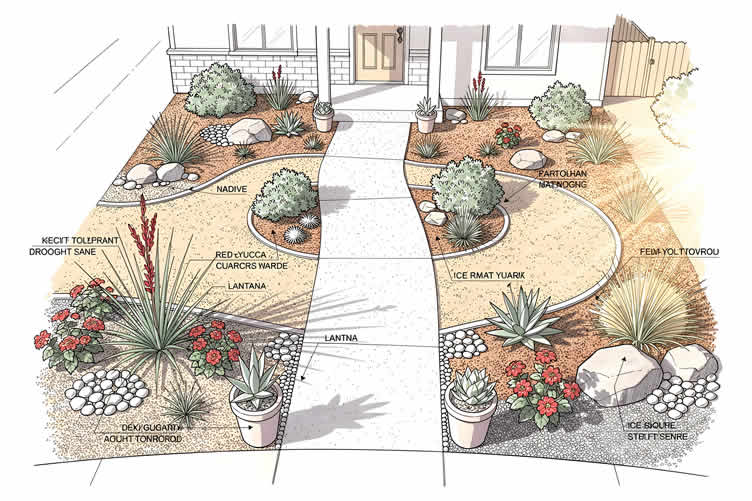
Designing a xeriscape for your front yard begins with careful planning and consideration of the natural elements surrounding your home. Follow these steps to create a practical and visually appealing space:
- Assess the Space
Measure your yard’s dimensions and identify key features such as pathways, driveways, or existing trees. Take note of the sun exposure, slopes, and soil type. This information will guide plant selection and hardscape placement. - Define Functional Areas
Divide the yard into distinct zones. For instance, designate a welcoming entry path, a drought-tolerant planting zone, and decorative features like gravel or rock beds. Use a sketchpad or online design tool to map these out. - Choose Water-Wise Plants
Opt for a mix of native and low-water-use plants with varying heights and textures. Position taller plants such as red yucca or sage near the back or along property borders. Incorporate colorful ground covers like lantana or ice plant in open areas for visual interest. - Plan for Mulch and Hardscapes
Mulched beds help retain moisture and minimize weeds, while decorative gravel or stepping stones create structure and reduce water use. Consider pathways leading to your front door or focal points, using materials like decomposed granite or flagstone for durability and style. - Add Visual Accents
Include a centerpiece, such as a large succulent arrangement or a stunning rock feature, to enhance curb appeal. Accent the design with pottery, garden sculptures, or strategically placed outdoor lighting to highlight the space at night. - Implement Efficient Irrigation
Drip irrigation systems or low-flow emitters can ensure your plants receive water directly to their roots without waste. Group plants with similar water needs to make irrigation more efficient.
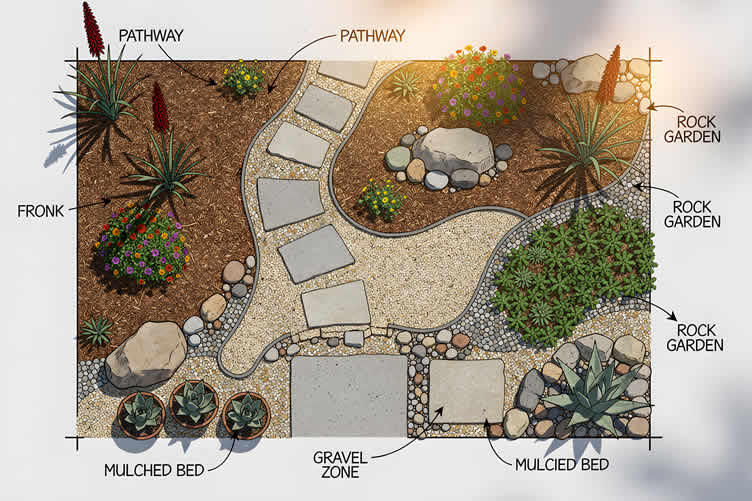
AI generated images by 123rf.com
Sketch out your plan step by step, using your yard’s layout as a guide. By integrating carefully chosen plants, hardscapes, and water-conserving features, you’ll create a front yard that thrives in dry conditions while boosting your home’s curb appeal.
- Quick scroll to summary content …
Step Description Details Assess the Space Measure and observe the yard Determine dimensions, identify pathways, driveways, existing trees, sun exposure, slopes, and soil types to guide plant selection and hardscape placement. Define Functional Areas Divide the space Create zones such as a welcoming entry path, a drought-tolerant planting area, and decorative features like gravel or rock beds. Use design tools to map them. Choose Water-Wise Plants Select appropriate plants Opt for native and low-water-use plants with varying heights and textures. Position taller plants at the back or borders and colorful ground covers in open areas. Plan for Mulch and Hardscapes Integrate structural elements Use mulch for retaining moisture and minimizing weeds. Add decorative gravel, stepping stones, pathways, or durable materials like decomposed granite or flagstone. Add Visual Accents Enhance the design Include a focal point like a succulent arrangement or a rock feature. Use pottery, sculptures, or outdoor lighting to highlight elements and improve curb appeal. Implement Efficient Irrigation Ensure water-saving measures Install drip irrigation systems or low-flow emitters to water plants efficiently. Group plants with similar water needs to optimize irrigation. 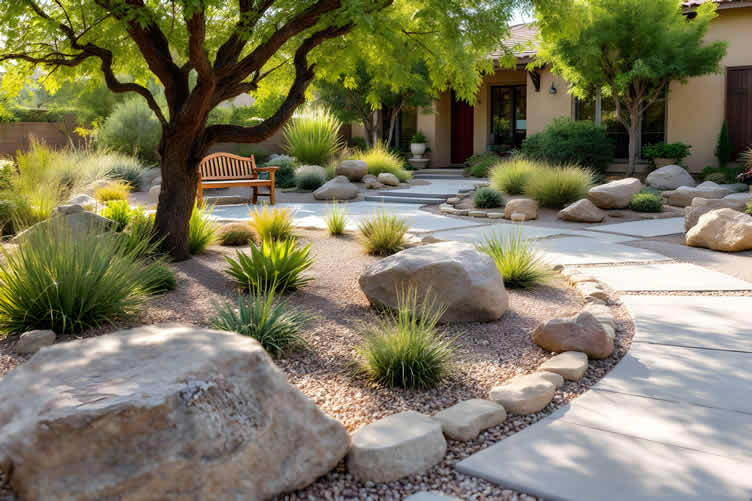
AI generated image by 123rf.com
Attracting Hummingbirds to Your Xeriscape Garden
As you sketch and plan your front yard xeriscape design, consider incorporating plants and features that will attract hummingbirds.
Opt for native flowering plants like salvia, penstemon, or bee balm, as these provide nourishing nectar while thriving in low-water conditions.

Adding bright red or orange blooms, a small water feature, or even a hummingbird feeder can draw these delightful creatures to your garden.
Their presence will not only enhance the beauty of your xeriscape but also contribute to the ecosystem by supporting pollination.
view ideas: hummingbird paradise(new win)
-
Scroll up to directory … or scroll to next section: backyard xeriscaping ideas …
- Assess the Space
-
-
-
7th Section: Sketching a Xeriscape Plan for the Backyard
Designing a xeriscape for your backyard combines practicality with creativity, transforming the space into an eco-friendly retreat. Here’s a step-by-step guide to help you develop a successful plan:
- Assess Your Space
Begin by evaluating the size and shape of your backyard. Note any slopes, shaded areas, or sun-drenched spots, as this will influence plant placement and water zones. Take stock of existing elements like patios, trees, or pathways to determine what can be incorporated into the design. - Zone Your Yard
Divide the backyard into functional zones based on usage and water requirements. For example, designate areas for lounging, dining, or gardening. Ensure you place high-traffic areas closer to the house for convenience. - Choose Drought-Tolerant Plants
Select native or drought-resistant plants that thrive in your climate. Incorporate a mix of textures and colors with options like succulents, ornamental grasses, lavender, and sage. Group plants with similar water needs together to simplify irrigation and ensure optimal growth. - Add Hardscape Elements
Incorporate hardscape features like gravel paths, stone patios, or decomposed granite to minimize water use while defining spaces. Choose permeable materials to allow rainwater to soak into the ground, reducing runoff and water waste. - Install Efficient Irrigation
Use drip irrigation systems to water plants directly at the roots. Include rain barrels or other water-harvesting methods to sustainably collect and distribute water. Consider creating a slight slope or using berms to direct water flow toward thirsty plants. - Layer Mulch for Retention
Spread a layer of organic mulch around plants to retain moisture, suppress weeds, and regulate soil temperature. Mulch also enhances the visual appeal of your xeriscape by adding rich, natural tones. - Create a Focal Point
Introduce a backyard centerpiece, such as a decorative boulder, a drought-tolerant tree, or an artistic water feature designed to recirculate water efficiently. This adds interest and draws attention to your eco-friendly design. - Incorporate Outdoor Living Spaces
Integrate furniture, shade sails, or pergolas into your layout to extend the usability of your backyard. Select durable, weather-resistant materials that complement the natural aesthetics of your xeriscape.
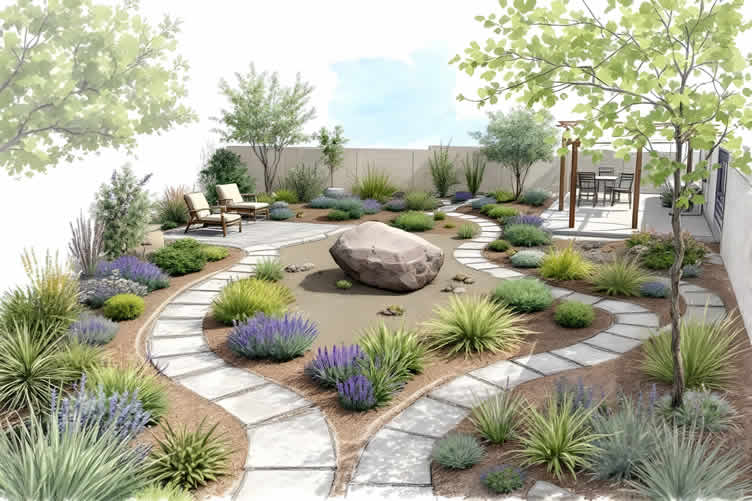
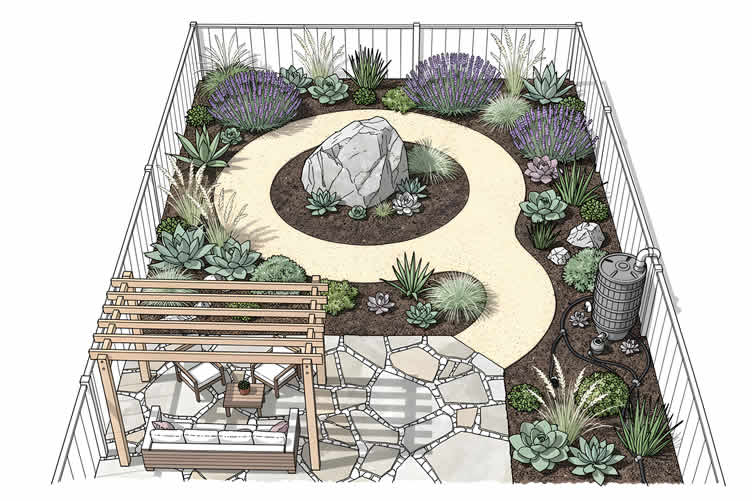
AI generated images by 123rf.com
By following these steps, you’ll create a backyard xeriscape that conserves resources, supports local ecosystems, and provides a beautiful, functional outdoor space for relaxation and entertainment.
Remember, a xeriscape is not just about minimizing water usage—it’s also about maximizing the harmony between your home and nature.
- Quick scroll to summary content …
Step Description Details Assess Your Space Evaluate the layout and existing features of your backyard Consider slopes, shaded areas, sunny spots, patios, trees, and pathways for integrating into the design Zone Your Yard Divide the yard into functional areas Create zones for lounging, dining, gardening, and other uses, placing high-traffic areas closer to the house Choose Drought-Tolerant Plants Select plants suited for your climate Use native or drought-resistant plants like succulents, ornamental grasses, lavender, and sage, grouping them by water needs Add Hardscape Elements Introduce non-plant elements to define spaces Include features such as gravel paths, stone patios, or decomposed granite made of permeable materials to reduce water usage Install Efficient Irrigation Optimize water usage with efficient systems Use drip irrigation, rain barrels, and create slopes or berms to direct and conserve water Layer Mulch for Retention Improve soil and water retention Apply organic mulch to retain moisture, suppress weeds, regulate soil temperature, and enhance aesthetics Create a Focal Point Establish a centerpiece for visual interest Implement features such as decorative boulders, drought-tolerant trees, or artistic water features Incorporate Outdoor Living Spaces Enhance livability with functional additions Add furniture, shade sails, or pergolas that use durable materials and align with xeriscape aesthetics 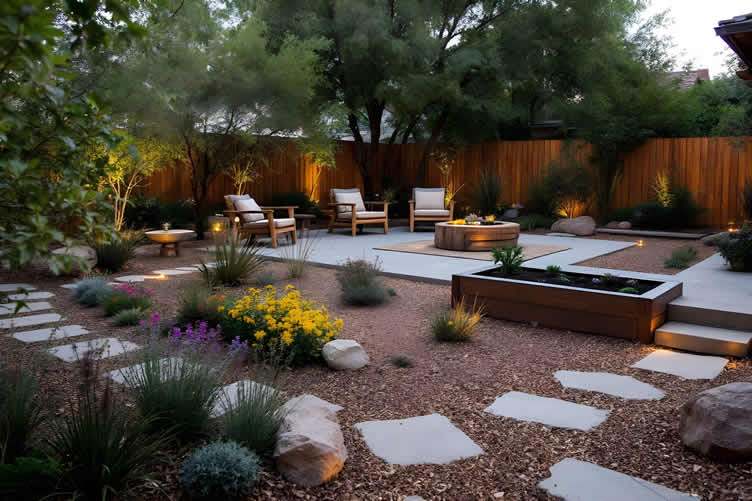
AI generated image by 123rf.com
Xeriscape Backyard Family Play
A xeriscape backyard design offers the perfect balance of function and beauty for a family play zone.
You can incorporate a putting green surrounded by drought-tolerant plants for a water-efficient activity.

For children, a playground with rubber mulch provides a safe, sustainable area. A natural play space with a treehouse can also foster creativity and outdoor exploration.
This combination creates a fun, eco-friendly backyard for the whole family to enjoy.
view ideas: backyard family play zone(new win)
-
Scroll up to directory … or scroll to next section: side-yard xeriscaping ideas …
- Assess Your Space
-
-
-
8th Section: Sketching a Xeriscape Plan for a Small Side Yard
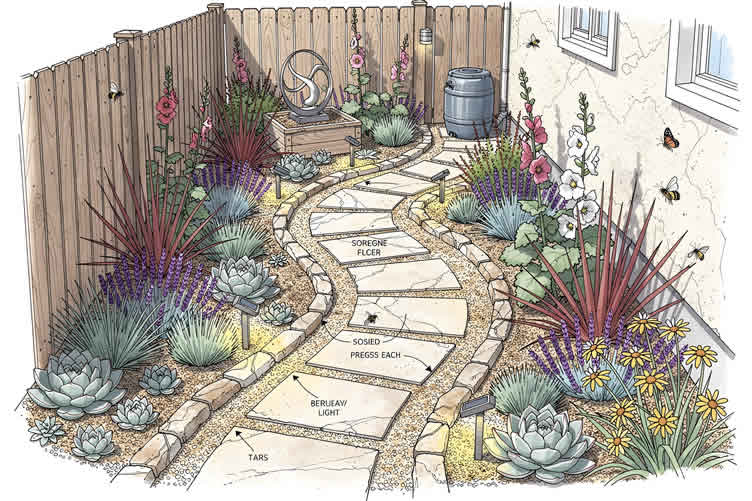
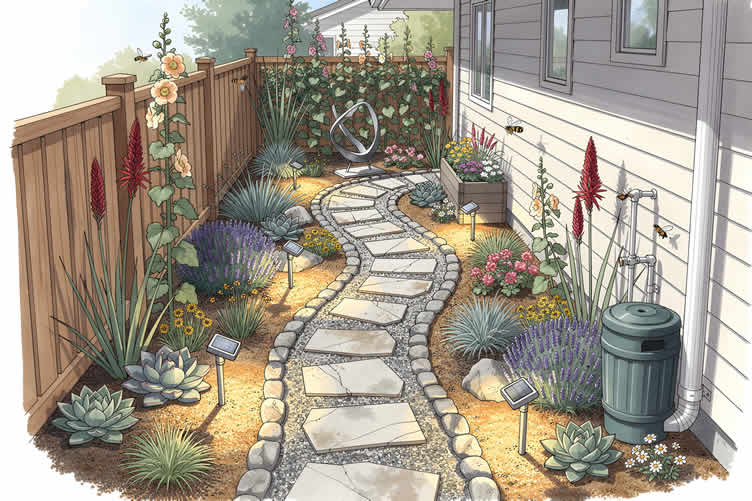
Designing a xeriscape for a small side yard offers an excellent opportunity to maximize limited space while creating a low-maintenance and visually appealing landscape. Here’s a step-by-step approach to crafting your plan:
- Assess the Space
Measure the dimensions of your side yard and take note of elements like walkways, walls, or fences. Consider the amount of sunlight the area receives daily, as this will determine the types of plants that will thrive. - Start with a Pathway
Define a clear and functional pathway that leads through the space, using materials like flagstone, gravel, or permeable pavers. A curved or diagonal path can add a sense of depth, making the narrow space feel larger. - Create Zones
Divide the side yard into zones for planting, decorative accents, or seating. For example:- A central zone with a combination of drought-tolerant plants like succulents or ornamental grasses.
- A corner or focal point for a small feature, such as a boulder or a metal sculpture.
- Layer Plants for Texture
Position taller plants like red yucca or hollyhocks along the edges to create a natural privacy screen. Use medium-height selections like lavender or kangaroo paw in the middle, and groundcovers like blue fescue to fill in gaps. This layering approach brings depth and interest to the design. - Integrate Mulch and Hardscape
Cover exposed soil with mulch options like decomposed granite or pea gravel to enhance moisture retention and reduce erosion. Integrate decorative hardscape elements such as natural stone edging or a small bench for added charm. - Focus on Functionality
Include practical features such as a compact rain barrel or drip irrigation system to manage water efficiently. Ensure the design accommodates drainage to avoid pooling during rain. - Add Finishing Touches
Incorporate accents such as ceramic pots, solar lighting, or a weathered planter box for a personal touch. Select native pollinator plants like milkweed or blackfoot daisy to invite bees and butterflies into your yard.
AI generated image by 123rf.com
With a well-thought-out xeriscape plan, your small side yard can transform into a stunning, eco-friendly retreat that is as functional as it is stylish.
- Quick scroll to summary content …
Step Description Key Elements Assess the Space Measure the dimensions of your side yard, note existing elements, and determine daily sunlight exposure. Dimensions, sunlight levels, walkways, walls, fences Start with a Pathway Define a functional pathway using materials like flagstone, gravel, or pavers to maximize depth and space. Flagstone, gravel, pavers Create Zones Divide the yard into functional zones for plants, decor, and seating to enhance usability. Drought-tolerant plants, decorative accents, seating areas Layer Plants for Texture Position plants by height to create depth with tall, medium, and groundcover selections for visual interest. Red yucca, lavender, blue fescue Integrate Mulch and Hardscape Use mulch for moisture retention and hardscape elements for aesthetic and functional enhancement. Decomposed granite, pea gravel, natural stone, bench Focus on Functionality Include water management features and address drainage to optimize the xeriscape design’s practicality. Rain barrel, drip irrigation, drainage solutions Add Finishing Touches Use accents like pots, lighting, and pollinator plants for a personalized and ecological touch. Ceramic pots, solar lighting, milkweed, blackfoot daisy 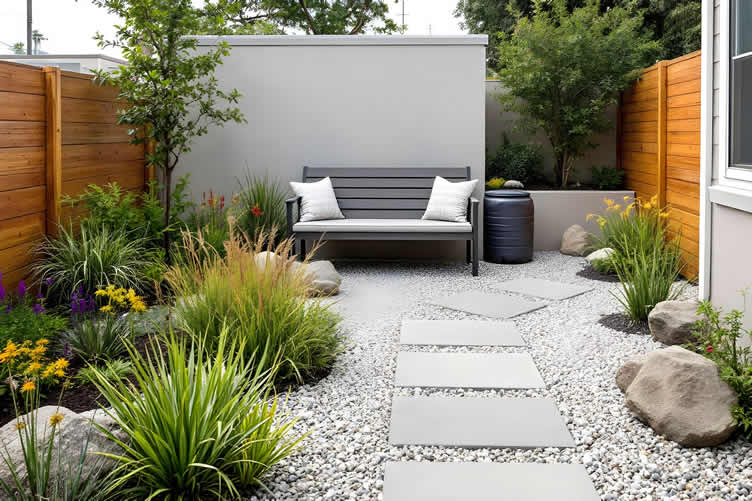
AI generated image by 123rf.com
Maximizing Side Yard Space
Side yards are often narrow and challenging spaces to design, but using decorative containers can transform them into stunning focal points.
These containers not only provide an opportunity to incorporate vibrant plantings but also add height and dimension to a small area.

Choose pots with unique designs or bold colors to enhance the aesthetic while ensuring they complement the overall style of your yard.
By strategically placing these containers, you can create an inviting and visually dynamic space, even in tight quarters.
view ideas: beautiful container gardening(new win)
-
Scroll up to directory … or scroll to next section about hiring landscape contractor …
- Assess the Space
-
-
-
9th Section: Why You Should Hire a Landscape Contractor
… for your xeriscape garden
Creating a beautiful and sustainable Xeriscape garden requires thoughtful planning, design expertise, and knowledge of drought-resistant plants.
While many homeowners may be tempted to tackle this project themselves, hiring a professional landscape contractor can make the process smoother, more efficient, and result in a stunning outdoor space tailored to your specific needs and environment.
A skilled landscape contractor will bring valuable experience to your project, ensuring your Xeriscape garden is both functional and visually appealing. Here’s what an experienced contractor can offer:
- Custom Design Expertise:
They can craft a garden design that optimizes water conservation while remaining aesthetically pleasing, utilizing the natural features of your property. - Plant Selection Knowledge:
Contractors understand which drought-tolerant plants thrive in different climates and soil types, helping you make choices that suit your space. - Efficient Installation:
With professional tools and techniques, they can build your garden quickly and efficiently, saving you time and effort. - Irrigation Solutions:
They can install innovative irrigation systems, such as drip irrigation, that maximize water efficiency without over-watering. - Long-term Sustainability:
Contractors can provide advice on maintaining your garden, ensuring it continues to flourish with minimal upkeep.
By partnering with a professional, you can avoid common mistakes, such as poor plant placement or over-watering., while achieving a polished and sustainable look.
-
How to Find an Experienced Landscape Contractor
Finding the right contractor for your Xeriscape garden project is crucial. Here are some ways to get started:
- Seek Recommendations:
Ask friends, neighbors, or family members for referrals to contractors they’ve worked with and trust. - Research Online:
Visit websites like Houzz or Angie’s List to read reviews and view portfolios of local landscaping professionals. - Check Credentials:
Ensure the contractor is licensed and insured, and inquire about their experience specifically with Xeriscaping. - Request Consultations:
Schedule meetings with a few contractors to discuss your vision and evaluate their approach before making a decision.
By thoroughly vetting your options and utilizing trusted sources, you can find a skilled professional who will bring your dream Xeriscape garden to life.
- Seek Recommendations:
LetsRenovate has partnered with HomeAdvisor™, a renowned provider of highly-rated, carefully-vetted local landscape contractors. Start your search here by choosing the type of contractor you need and entering your zip code to find local professionals.
- Quick scroll to summary content …
Aspect Description Benefits Why Hire an Experienced Landscape Contractor Custom Design Expertise Crafts garden designs optimizing water conservation and utilizing natural property features. Visually appealing and tailored to your specific environment. Plant Selection Knowledge Understands which drought-tolerant plants thrive in various climates and soil types. Ensures suitable plant choices for sustainable growth. Efficient Installation Employs professional tools and techniques for quick, efficient garden setup. Saves time and effort, delivering high-quality results. Irrigation Solutions Installs advanced systems like drip irrigation to maximize water efficiency. Prevents over-watering. while conserving resources. Long-term Sustainability Offers maintenance advice to ensure garden thrives with minimal upkeep. Provides enduring beauty and functionality. How to Find an Experienced Landscape Contractor Seek Recommendations Ask friends, neighbors, or family for reliable contractor referrals. Ensures trust and proven quality from past experiences. Research Online Explore platforms like Houzz or Angie’s List for reviews and portfolios. Gives insight into contractors’ credibility and past work. Check Credentials Verify licensing, insurance, and Xeriscaping experience. Ensures professionalism and expertise for your project. Request Consultations Meet potential contractors to share your vision and discuss their approach. Helps identify the most suitable expert for your project. 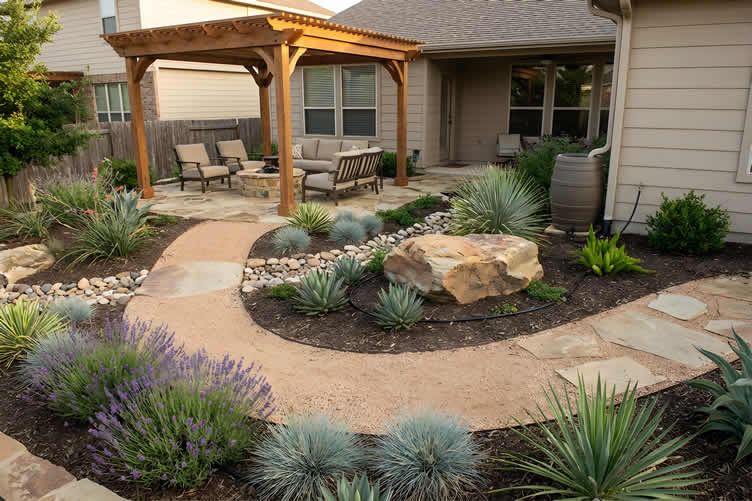
AI generated image by 123rf.com
But Wait!
Ready to start your landscaping project?
Before you begin searching for a contractor, we suggest downloading our free evaluation worksheet.
This helpful guide will walk you through comparing professionals on essential criteria like pricing, licensing, and referrals, ensuring you find the perfect partner for your project.

Evaluation Sheet
File Type:-
Scroll up to directory … or scroll to conclusion and references …
- Custom Design Expertise:
-
-
Conclusion
… embracing a sustainable garden oasis
Transitioning to a water-wise landscape is a wonderful opportunity to unleash your home’s potential and craft a beautiful, sustainable environment. By implementing these expert-recommended strategies, you can significantly reduce your water usage and spend more time enjoying your outdoor sanctuary.
Your new, affordable, and deeply personalized yard will enhance your property value while supporting local ecology. Start small by transforming a single garden bed today, and watch your dream space come to life.
Resource Citations and References
- LawnStarter. (n.d.). Xeriscaping Ideas.
Referenced from https://www.lawnstarter.com/.. - AAF Landscaping. (n.d.). How to Create a Low Water Landscape.
Referenced from https://www.aaflandscaping.com/.. - Proven Winners. (n.d.). Drought Resistant Landscaping.
Referenced from https://www.provenwinners.com/.. - Homes and Gardens. (n.d.). Low Water Garden Design Trend.
Referenced from https://www.homesandgardens.com/... - Martha Stewart. (n.d.). Xeriscaping Ideas.
Referenced from https://www.marthastewart.com/… - Jackson & Perkins. (n.d.). Drought Tolerant Garden Plants.
Referenced from https://www.jacksonandperkins.com/… - Desert Steel. (n.d.). Elevate Your Backyard Oasis with Modern Xeriscaping Ideas.
Referenced from https://desertsteel.net/… - Plantipp. (n.d.). All About Xeriscaping and 7 Drought Tolerant Plants.
Referenced from https://plantipp.eu/… - Lawn Love. (n.d.). Best Xeriscaping Plants.
Referenced from https://lawnlove.com/…
- LawnStarter. (n.d.). Xeriscaping Ideas.
-
Quick scroll to more interior home and decor ideas …
-
ideas to view and compare from the photo above
book: xeriscape gardenbook: xeriscape plant guidexeriscape rocks
- What comments can you share about
your xeriscaping ideas that you have installed?

Calendar For:
Home Maintenance
File Type:

… view our sharing links below for a quick "share the knowledge"

Find Yard n’ Garden Services Landscape Design Landscape Maintenance Sprinkler Systems Water Features Outbuildings Play Equipment Retaining Walls Fences Decks Patio Spas & Hot Tubs Swimming Pools Tree & Shrubs Pest Control Metal Work Steps & Walkways top-rated, pre-screened local contractors FREE: download contractor selection enter zip code – powered by HomeAdvisor ™
Quick Contractor Guides selecting negotiating working with inspecting

Cover image credit: xeriscaping ideas by 123rf.com
end of post … please share it!
 |
did you find these xeriscaping ideas helpful? If so, please share the article with your friends and family! |
Nice pic idea? Leave us a quick comment below.
And please share this pic idea within your social networks.