Summary Outline –
This is where the humble plant stand transforms from a simple accessory into an essential tool for your home sanctuary.
Plant stands are more than just a place to put your plants—they’re the architects of your indoor garden. By letting you play with height, light, and layout, they elevate your plants in ways flat surfaces can’t. Lifting your greenery protects your floors and furniture from water damage and brings your plants to eye level where you can truly appreciate them.
Navigating the world of plant stands can feel overwhelming with so many shapes, sizes, and materials available. To help you cultivate a space that feels both organized and abundant, we’ve broken down the main categories of indoor plant stands.
This guide will walk you through the structural differences and ideal uses for each type, helping you choose what’s best for your decor and your plants’ health.
- post content … analysis/ indoor plant stands

-
- —— begin first topic ——
-
1st Review: Single Pedestal Stands
[ view samples: single pedestal stands ]
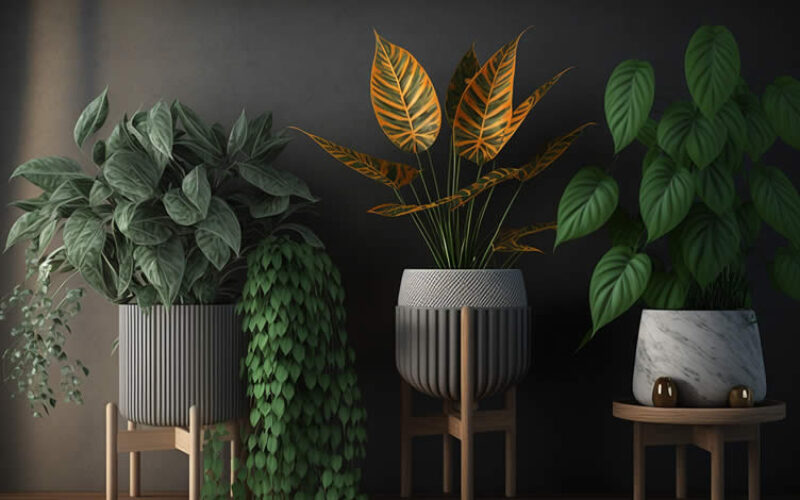
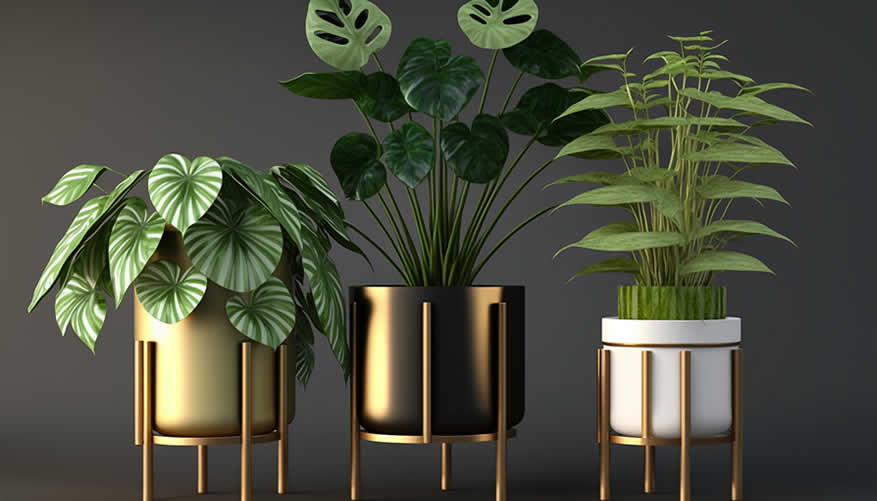
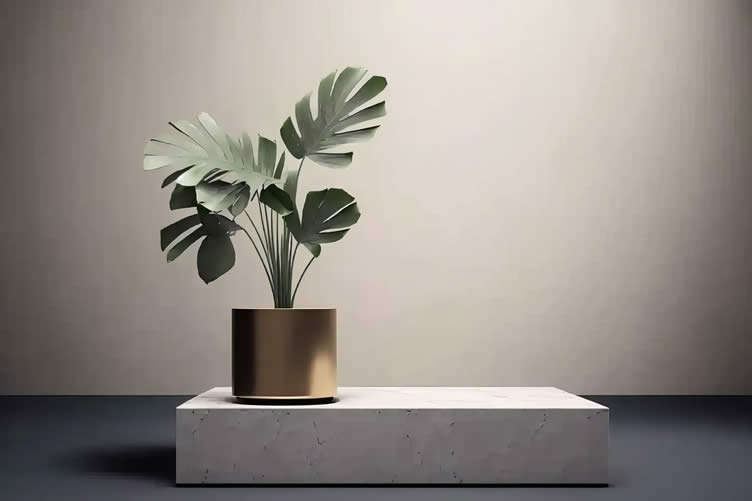
The single pedestal stand is perhaps the most classic and recognizable form of plant support. These units are designed to hold just one pot, making them the perfect choice when you want to create a focal point in a room.
Available in both tall and low variations, pedestal stands act as a stage for your botanical stars.
If you have a sprawling Monstera or a tall Fiddle Leaf Fig that deserves to be the center of attention, a single pedestal stand gives it the prominence it needs without cluttering the visual field.
copyright image by 123rf.com
From a design perspective, these stands are incredibly effective at breaking up the monotony of furniture that sits low to the ground, such as sofas and coffee tables. By introducing a vertical element, you draw the eye upward and add dimension to your living space.
Tall pedestals are particularly useful for trailing plants that need room to drape, while lower pedestals can give a boost to smaller pots that might otherwise get lost on the floor.
When selecting a pedestal, consider the weight of your plant; a heavy ceramic pot will require a sturdy base, often found in wood or metal designs, to ensure stability and safety.
[ view summary table: single pedestal stands ]
-
Best Type of Houseplants for Single Pedestal Stands
- Pothos:
Perfect for trailing down from tall pedestals, its cascading vines create a lush and elegant look. - Snake Plant:
With its upright, architectural leaves, it suits smaller or mid-height pedestals and adds a modern touch. - Fiddle Leaf Fig:
A bold choice for a sturdy pedestal, its large, glossy leaves bring drama and texture to the room. - ZZ Plant:
Ideal for low-light areas, its compact form makes it a great fit for smaller pedestal stands. - Peace Lily:
Known for its graceful white flowers, it pairs beautifully with medium-height pedestals, adding a soft, serene vibe. - Boston Fern:
Perfect for tall pedestals, its lush and feathery fronds create a dynamic visual impact. - Succulents:
When grouped on a cluster of low pedestals, they add charm and variety with minimal care needs. - Philodendron:
A versatile choice that looks striking as it climbs or trails, fitting well on medium to high pedestals. - Rubber Plant:
Its sturdy stalks and glossy leaves make it a great centerpiece for larger pedestals. - Orchids:
With their elegant blooms, orchids add sophistication to smaller pedestal stands.
- Pothos:
Type of Stand Description Houseplant Recommendations Single Pedestal Stands The single pedestal stand is a classic form of plant support designed to hold one pot, making it a great focal point in a room.
These stands are available in tall and low variations, providing flexibility for different types of plants.
They act as a vertical design element, breaking up low-lying furniture and adding dimension to your space.
Consider the stand’s sturdiness to match heavy or light pots for safety.
Pothos: Cascading vines for tall pedestals.
Snake Plant: Upright leaves for mid-height pedestals.
Fiddle Leaf Fig: Bold, glossy leaves for sturdy pedestals.
ZZ Plant: Compact form for low light and small pedestals.
Peace Lily: Graceful white flowers for medium-height pedestals.
Boston Fern: Feathery fronds for tall pedestals.
Succulents: Grouping on low pedestals for charm.
Philodendron: Versatile climbing or trailing option.
Rubber Plant: Sturdy centerpiece for large pedestals.
Orchids: Elegant blooms for smaller pedestals.

copyright image by 123rf.com
[ amazon: single pedestal plant stand ]
[ amazon: single tall plant stand ]
-
Scroll up to directory … or scroll to next section looking at multi-tier/ladder stands …

-
-
2nd Review: Multi-Tier and Ladder Stands
[ view samples: multi-tier stands ]
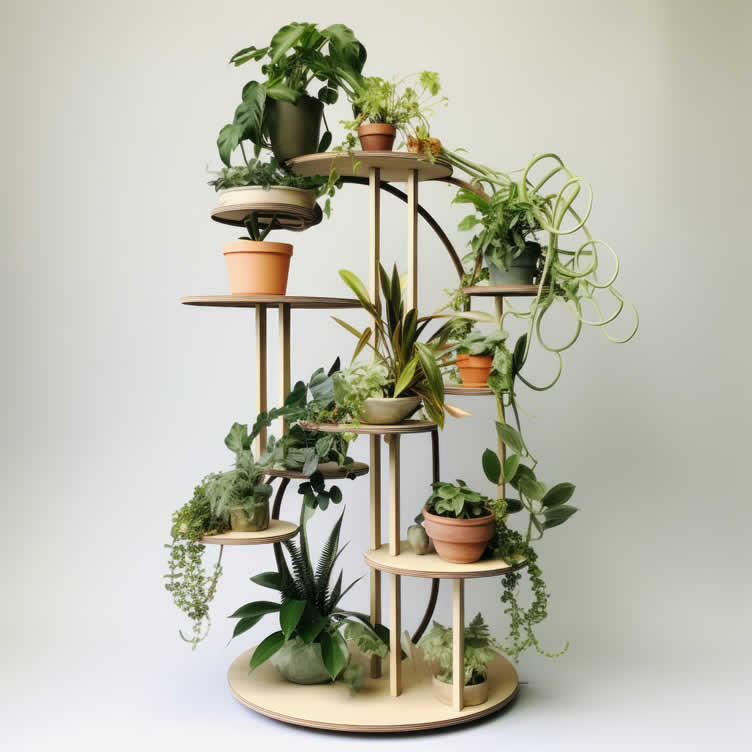
For the plant enthusiast who struggles to stop at just one or two purchases, multi-tier and ladder stands are a game-changer. These stands feature shelf-style or ladder-like designs that stack several plants vertically.
This verticality is a massive benefit for those living in smaller spaces or apartments where floor real estate is precious.
Instead of spreading pots across every available surface, you can consolidate your collection into one cohesive, lush display that creates a "plant wall" effect.
copyright image by 123rf.com
Ladder stands are particularly versatile because they allow for plants of different sizes to coexist happily. You might place larger, heavier pots on the bottom, wider shelves for stability, and reserve the upper, narrower rungs for smaller succulents or trailing vines.
This arrangement not only looks aesthetically pleasing but also ensures that plants on the lower levels are not completely shaded by those above.
By grouping plants together on a multi-tier stand, you also create a micro-climate that can help increase humidity, which is beneficial for tropical varieties that struggle in dry indoor air.
[ view summary table: multi-tier and ladder stands ]
-
Best Type of Houseplants for Tiered Display
- Pothos (Devil’s Ivy):
A versatile trailing plant that cascades beautifully from the upper tiers, adding lush greenery to your display. - Succulents:
Compact and low-maintenance, succulents like echeveria or jade plants are perfect for the narrower upper shelves. - Ferns:
Boston ferns or maidenhair ferns thrive on the lower levels of the stand where humidity is higher and light is softer. - Snake Plants (Sansevieria):
Their upright, architectural leaves work well on mid-tier shelves, adding height and texture to your arrangement. - Spider Plants:
With their striped, arching leaves and baby plantlets, spider plants soften the look of ladder stands when placed on higher or mid-tier rungs. - Peace Lilies:
These elegant plants with glossy leaves and creamy white blooms are ideal for the bottom, wider tiers, where they can command attention. - String of Pearls or String of Hearts:
These hanging plants produce delicate, cascading strands, making them perfect for adding visual interest from the top shelves. - Herbs:
Petite herbs such as basil, thyme, or rosemary can add function as well as beauty to your multi-tiered display. - Parlor Palms:
Small palms bring a touch of tropical flair and fit well in the middle tiers with moderate light. - Calatheas:
Known for their variegated, colorful foliage, calatheas thrive on the bottom tier where they benefit from higher humidity levels.
- Pothos (Devil’s Ivy):
Type of Stand Description Benefit Multi-Tier and Ladder Stands These stands feature shelf-style or ladder-like designs that stack several plants vertically, creating a cohesive, lush display. Ideal for smaller spaces, these stands save floor space and create a “plant wall” effect while helping to maintain a micro-climate for humidity-loving plants. Plant Type Best Placement on Stand Key Characteristics Pothos (Devil’s Ivy) Upper tiers Trailing plant that cascades beautifully, adding lush greenery. Succulents Upper shelves Compact and low-maintenance, ideal for narrow spaces. Ferns Lower levels Thrive in higher humidity and softer light, such as Boston or maidenhair ferns. Snake Plants (Sansevieria) Mid-tier shelves Upright, architectural leaves, adding height and texture. Spider Plants Higher or mid-tier rungs Striped, arching leaves and baby plantlets soften the display look. Peace Lilies Bottom, wider tiers Glossy leaves and creamy white blooms are perfect for commanding attention. String of Pearls or String of Hearts Top shelves Hanging plants with delicate, cascading strands for visual interest. Herbs Multi-tier shelves Petite herbs like basil, thyme, or rosemary add functionality and beauty. Parlor Palms Middle tiers Small palms bring tropical flair and moderate light tolerance. Calatheas Bottom tier Colorful, variegated foliage thrives in higher humidity. 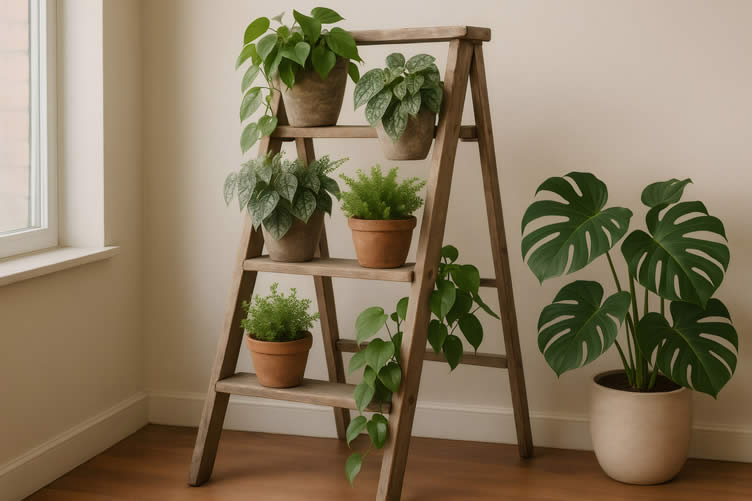
copyright image by 123rf.com
[ amazon: multi-tiered plant stand ]
[ amazon: ladder plant stand ]
-
Scroll up to directory … or scroll to next section reviewing corner stands …
-
-
3rd Review: Corner Stands
[ view samples: corner stands ]
Corners are often the most underutilized spaces in our homes. They can feel dark, empty, or awkward to furnish. Corner plant stands are specifically engineered to solve this problem.
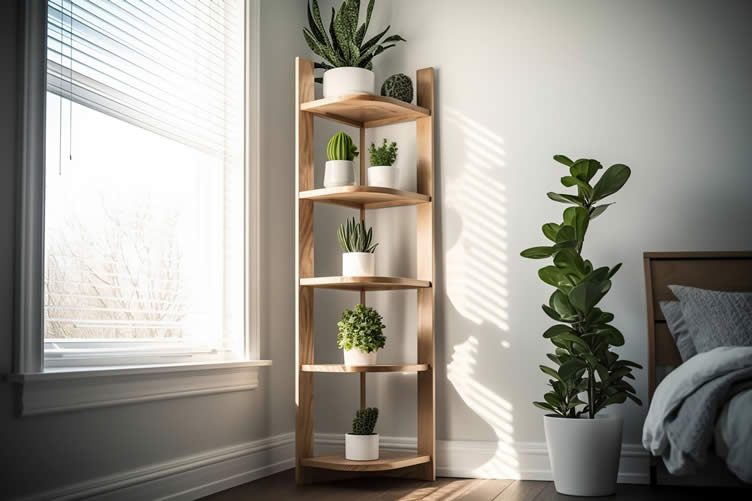
Typically designed with a triangular or curved footprint, these units fit snugly into right angles, allowing you to soften the sharp lines of a room with cascading greenery.
Because they tuck away so neatly, they are excellent for adding life to a room without blocking walkways or circulation paths.
copyright image by 123rf.com
Using a corner stand is a wonderful way to brighten up a dim nook, provided you choose plants that can tolerate lower light levels, such as Snake Plants or ZZ Plants. Alternatively, if you have a corner near a window, these stands maximize that prime sunlight exposure for multiple plants at once.
Many corner stands also feature tiered shelves, combining the space-saving benefits of a corner unit with the vertical storage of a ladder stand. This makes them a powerhouse solution for maximizing greenery in bedrooms, dining areas, or home offices where space is at a premium.
[ view summary table: corner stands ]
-
Best Type of Houseplants to Use in Corners
- Spider Plants:
Perfect for hanging or placing on upper-tier shelves, their cascading leaves add a dynamic touch to any corner stand. - Pothos:
With their trailing vines and forgiving care requirements, Pothos plants thrive on tiered shelves and bring a lush, cascading effect. - Ferns:
Ideal for tiered stands, ferns like the Boston Fern or Maidenhair Fern bring vibrant, textured greenery to compact spaces. - Succulents:
Compact and low-maintenance, succulents can be grouped together to create a stylish, modern display on smaller shelves. - Peace Lilies:
Their elegant flowers and air-purifying qualities make them an excellent choice for adding a touch of sophistication to corner stands. - Calatheas:
Known for their stunning, patterned leaves, Calatheas add a bold design element to any room when displayed prominently. - Snake Plants:
Their upright, architectural growth style is perfect for fitting neatly on lower-tier shelves or the base of a corner stand. - ZZ Plants:
These hardy plants are great for lower light areas and bring a glossy, modern aesthetic to any stand.
- Spider Plants:
Category Details Examples Corner Stands Corners are often underutilized spaces that can feel dark or awkward. Corner plant stands are designed to fit into right angles, soften sharp lines, and provide a place for cascading greenery. They maximize space without obstructing walkways and can brighten dim corners or optimize sunlight in well-lit areas. Many feature tiered shelves for effective vertical storage. Triangular or curved footprint designs, tiered shelves for small spaces in bedrooms, dining areas, or home offices. Low-Light Houseplants Plants that thrive in diffused or minimal lighting are ideal for corners. These plants bring greenery and a visually soft aesthetic while requiring minimal sunlight. Spider Plants, Snake Plants, ZZ Plants, Peace Lilies. Bright Corner Plants Plants that flourish in bright, sunlit corners are excellent for adding vibrancy. Corner stands optimize sunlight exposure for multiple plants at once. Pothos, Ferns (Boston or Maidenhair), Calatheas. Compact and Stylish Plants Small, low-maintenance plants can create stylish and modern displays on corner stands with limited space. Succulents, Peace Lilies, Snake Plants. 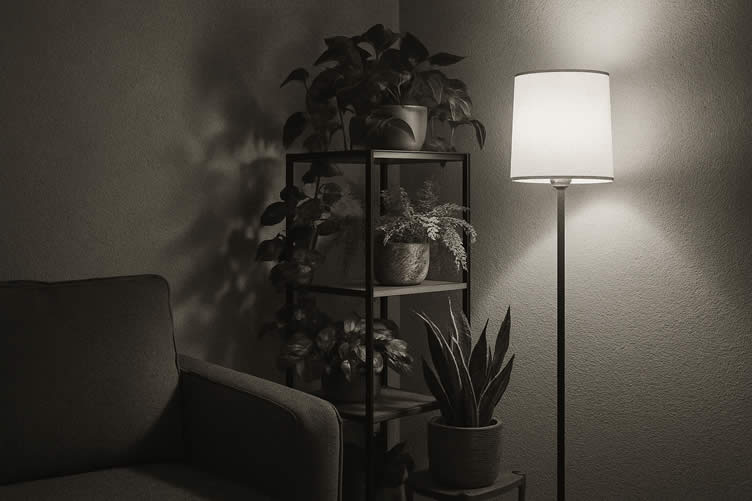
AI generated image by 123rf.com
[ amazon: corner plant stand ]
[ amazon: corner shelf ]
-
Scroll up to directory … or scroll to next section about nesting stands …
-
-
4th Review: Nesting Stands
[ view samples: nesting stands ]
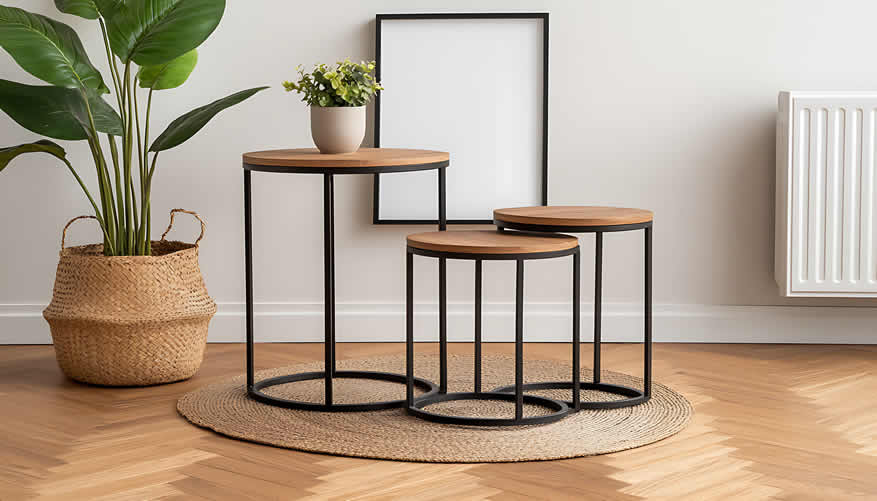
If you love flexibility and rearranging your decor to suit your mood, nesting stands are an ideal choice. These sets typically come with two or more stands of varying heights that are designed to fit—or "nest"—underneath one another when not in use.
However, their true beauty shines when they are pulled apart. You can arrange them in a cluster to create a dynamic, multi-level display that adds depth and interest to a room, or you can separate them to carry a cohesive design theme throughout different parts of your home.
copyright image by 123rf.com
Nesting stands are fantastic for creating vignettes. By grouping three plants at staggered heights, you follow the classic design rule of thirds, which is naturally pleasing to the human eye.
This tiered arrangement also ensures that each plant receives adequate light and air circulation, preventing crowding.
If you ever need to clear floor space for a gathering or an event, the smaller stands can easily tuck back under the largest one, offering a level of adaptability that rigid, single-piece furniture simply cannot match.
[ view summary table: nesting stands ]
-
Best Houseplants for Creating Vignettes
… with staggered heights
- Fiddle Leaf Fig (Ficus lyrata)
Known for its striking, large, glossy leaves, this plant makes an idea centerpiece at the highest tier. Its upright growth habit and bold appearance create an eye-catching focal point. - Snake Plant (Sansevieria trifasciata)
This versatile plant works perfectly in the middle tier of a vignette. Its tall, slim leaves add vertical interest without overpowering the arrangement. - Pothos (Epipremnum aureum)
A low-maintenance trailing plant that’s excellent for the lowest tier. Its cascading vines soften the display and add texture, creating visual balance. - Peace Lily (Spathiphyllum)
A medium-height option with elegant, white blooms that pairs beautifully in the middle tier, adding a touch of sophistication to the vignette. - String of Pearls (Senecio rowleyanus)
Perfect for lower or hanging displays, this succulent’s cascading strings create a playful yet refined aesthetic and bring depth to the arrangement. - ZZ Plant (Zamioculcas zamiifolia)
With its glossy, upright stems, this plant thrives in low light and can serve as a striking addition to the middle or upper tier. - Boston Fern (Nephrolepis exaltata)
An excellent choice for adding volume at lower levels, this lush, textured plant fills gaps and softens the edges of your vignette.
- Fiddle Leaf Fig (Ficus lyrata)
Plant Tier Description Fiddle Leaf Fig (Ficus lyrata) Highest Tier Known for its striking, large, glossy leaves, this plant makes an ideal centerpiece at the highest tier. Its upright growth habit and bold appearance create an eye-catching focal point. Snake Plant (Sansevieria trifasciata) Middle Tier This versatile plant works perfectly in the middle tier of a vignette. Its tall, slim leaves add vertical interest without overpowering the arrangement. Pothos (Epipremnum aureum) Lowest Tier A low-maintenance trailing plant that’s excellent for the lowest tier. Its cascading vines soften the display and add texture, creating visual balance. Peace Lily (Spathiphyllum) Middle Tier A medium-height option with elegant, white blooms that pairs beautifully in the middle tier, adding a touch of sophistication to the vignette. String of Pearls (Senecio rowleyanus) Lower or Hanging Displays Perfect for lower or hanging displays, this succulent’s cascading strings create a playful yet refined aesthetic and bring depth to the arrangement. ZZ Plant (Zamioculcas zamiifolia) Middle or Upper Tier With its glossy, upright stems, this plant thrives in low light and can serve as a striking addition to the middle or upper tier. Boston Fern (Nephrolepis exaltata) Lower Level An excellent choice for adding volume at lower levels, this lush, textured plant fills gaps and softens the edges of your vignette. 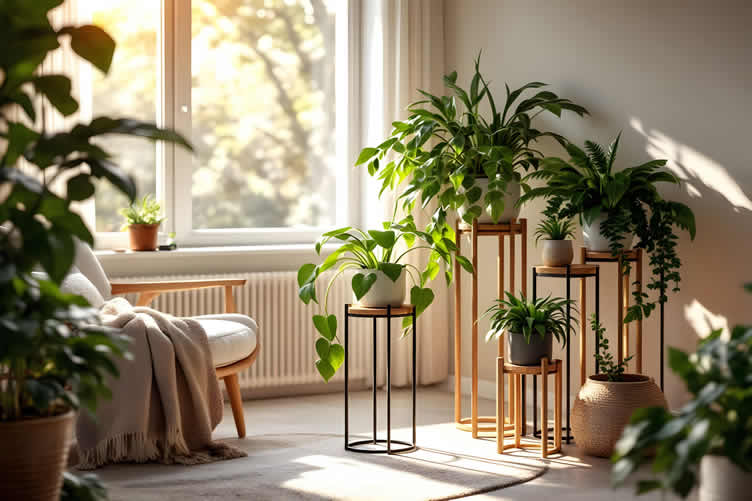
AI generated image by 123rf.com
[ amazon: nesting stand for houseplants ]
[ pinterest: houseplant stands ]
-
Scroll up to directory … or scroll to next section using mounted racks and shelves …
-
-
5th Review: Wall-Mounted Racks and Shelves
[ view samples: wall-mounted racks ]
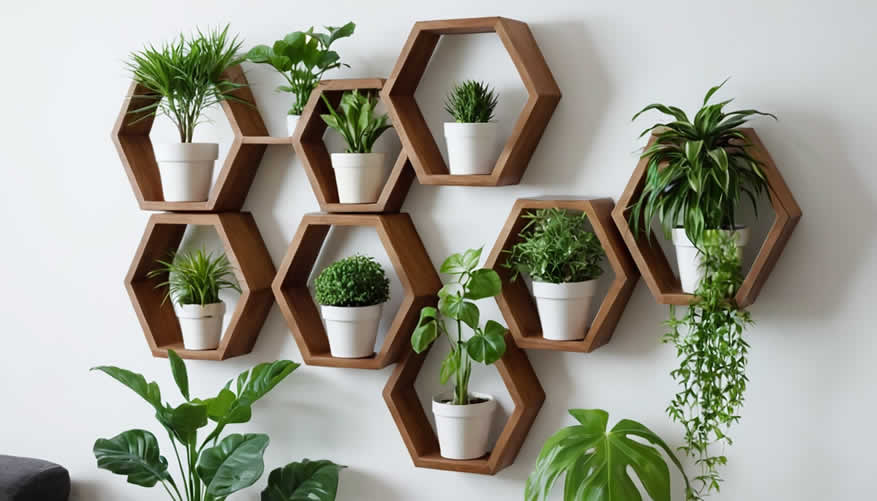
Sometimes the best place for your plants isn’t on the floor at all. Wall-mounted racks, grid panels, and floating shelves offer a brilliant solution for keeping your floor clear while turning your walls into living art.
These structures hold pots off the ground, which is particularly helpful for pet owners who need to keep toxic leaves out of reach of curious cats or dogs.
From small, individual floating shelves to expansive grid systems that can hold multiple pots, wall-mounted options allow you to greenify vertical surfaces in kitchens, bathrooms, and hallways.
copyright image by 123rf.com
Installing wall-mounted shelves near a window can act as a beautiful, natural curtain, filtering light through the leaves and casting intricate shadows into your room. It is essential, however, to consider drainage when using wall-mounted holders.
Since you cannot easily move these heavy installations to the sink for watering, opting for cache pots (decorative pots without holes) with a nursery pot inside, or using reliable saucers, is key to preventing water from dripping down your walls.
[ view summary table: wall-mounted racks/shelves ]
-
Best Massive-Green Houseplants
… for wall-mounted racks and shelves
- Pothos (Epipremnum aureum)
Known for its trailing vines and vibrant green leaves, pothos is an easy-to-care-for houseplant that thrives in a variety of lighting conditions. Its cascading stems create a beautiful visual effect when placed on shelves. - Monstera Deliciosa
The striking, split leaves of the monstera bring a tropical touch to your space. Though it’s a larger plant, smaller versions or younger monstera plants fit nicely on sturdy, wall-mounted shelves. - Philodendron Brasil
With its heart-shaped leaves and unique green and yellow variegation, this climbing philodendron offers a sophisticated look. It’s perfect for cascading over the edge of your shelves to create an effortless lush appeal. - ZZ Plant (Zamioculcas zamiifolia)
If you’re looking for a low-maintenance green plant, the ZZ plant is an excellent choice. Its upright growth pattern and glossy, deep-green leaves give a clean, modern aesthetic to any shelf arrangement. - Fiddle Leaf Fig (Ficus lyrata)
While traditionally known as a floor plant, smaller or dwarf fiddle leaf figs can look stunning on a wide shelf. Their bold leaves add height and drama to your decor. - Bird’s Nest Fern (Asplenium nidus)
With its ruffled, bright-green fronds, the bird’s nest fern adds a striking textural element. It’s a particularly great choice for adding a pop of greenery to smaller spaces on shelves. - Snake Plant (Sansevieria)
The vertical, architectural style of the snake plant offers a unique contrast to sprawling, vining plants. Smaller snake plant varieties are well-suited for shelves and require minimal maintenance.
- Pothos (Epipremnum aureum)
Plant Name Key Features Ideal Placement on Shelves Pothos (Epipremnum aureum) Trailing vines, vibrant green leaves, easy to care for. Creates a cascading effect, suitable for various lighting conditions. Monstera Deliciosa Striking split leaves, tropical appearance. Younger plants fit well on sturdy wall-mounted shelves. Philodendron Brasil Heart-shaped leaves, green and yellow variegation. Perfect for cascading over the edge, adds lush appeal. ZZ Plant (Zamioculcas zamiifolia) Low maintenance, upright growth, glossy deep-green leaves. Clean, modern aesthetic for shelf arrangements. Fiddle Leaf Fig (Ficus lyrata) Bold leaves, dramatic appearance. Smaller or dwarf varieties ideal for wide shelves. Bird’s Nest Fern (Asplenium nidus) Ruffled bright-green fronds, striking texture. Great for adding greenery in smaller spaces on shelves. Snake Plant (Sansevieria) Vertical, architectural style, minimal maintenance. Suited for shelves, contrasts well with vining plants. 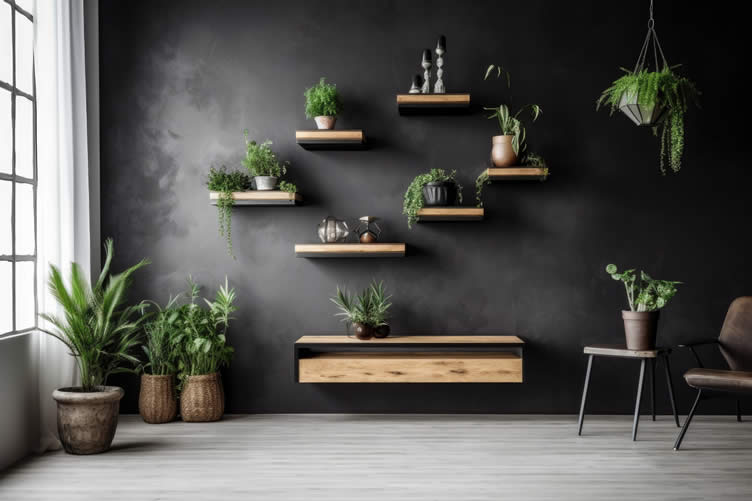
copyright image by 123rf.com
[ amazon: wall-mount racks for houseplants ]
[ pinterest: houseplant display ideas ]
-
Scroll up to directory … or scroll to next section about hanging holders …
-
-
6th Review: Hanging Holders
[ view samples: hanging planters ]
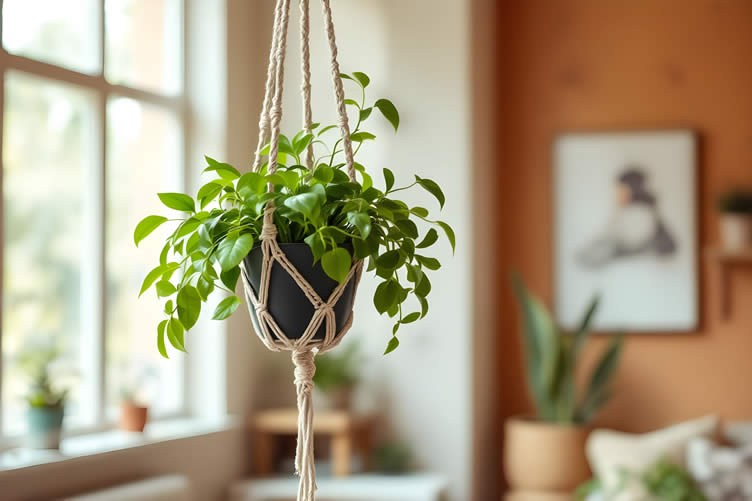
Hanging holders bring a touch of whimsy and bohemian charm to any interior. Whether utilizing ceiling hooks, wall-hung brackets, or macramé slings, these holders suspend your plants in mid-air, drawing the eye upward and making a room feel taller and more spacious.
They are the ultimate solution for trailing plants like Pothos, String of Hearts, or Spider Plants, allowing their vines to cascade freely without touching the ground or getting tangled on furniture.
AI generated image by 123rf.com
Macramé hangers, made from knotted cord or rope, add texture and softness to a room, contrasting beautifully with the sleek lines of modern architecture. Rail systems, often used in kitchens, allow you to hang small pots of herbs right where you need them for cooking.
When installing hanging holders, it is vital to ensure your hardware is anchored correctly to support the weight of wet soil. A heavy watering day can significantly increase the load on a ceiling hook, so safety and structural integrity should always be the priority.
[ view summary table: hanging holders ]
-
Low-Maintenance Houseplants for Hanging Holders
- Pothos (Devil’s Ivy)
A versatile trailing plant that thrives in low light and only needs watering every 1-2 weeks. Its cascading vines make it ideal for hanging holders. - Spider Plant
Recognized for its arching leaves and small offshoots, the spider plant is highly durable and requires minimal water, making it perfect for beginners. - String of Pearls
This eye-catching succulent features bead-like leaves and adds a unique visual flair to any space. It loves bright indirect light and needs very little water. - Air Plants (Tillandsia)
These soil-free plants are perfect for smaller spaces or minimalist designs and only need occasional misting or soaking once a week. - Philodendron
With their heart-shaped leaves and adaptable nature, philodendrons thrive in a variety of light conditions and require infrequent watering. - Hoya (Wax Plant)
Known for their thick, waxy leaves and trailing growth, hoyas are drought-tolerant and can go weeks without water. - Peperomia
Compact and colorful, peperomia plants are easy to care for and prefer light watering. They are a great choice for smaller hanging holders. - String of Hearts
This delicate, trailing plant adds charm to any room with its heart-shaped leaves. It’s low-maintenance and looks stunning in hanging decor.
- Pothos (Devil’s Ivy)
Plant Name Description Requirements Pothos (Devil’s Ivy) A versatile trailing plant with cascading vines, perfect for hanging holders. Thrives in low light; needs watering every 1-2 weeks. Spider Plant Recognized for its arching leaves and small offshoots; highly durable and beginner-friendly. Requires minimal water and is low-maintenance. String of Pearls An eye-catching succulent with bead-like leaves, adding unique visual flair. Loves bright indirect light; needs very little water. Air Plants (Tillandsia) Soil-free plants suitable for smaller spaces or minimalist designs. Require occasional misting or soaking once a week. Philodendron Features heart-shaped leaves and an adaptable nature for various light conditions. Requires infrequent watering and thrives in different environments. Hoya (Wax Plant) Known for thick, waxy leaves and trailing growth; drought-tolerant. Can go weeks without water. Peperomia Compact and colorful with easy-care needs, ideal for smaller hanging holders. Prefers light watering and consistent care. String of Hearts Features delicate, trailing vines with heart-shaped leaves, adding charm to any room. Low-maintenance and thrives in hanging decor setups. 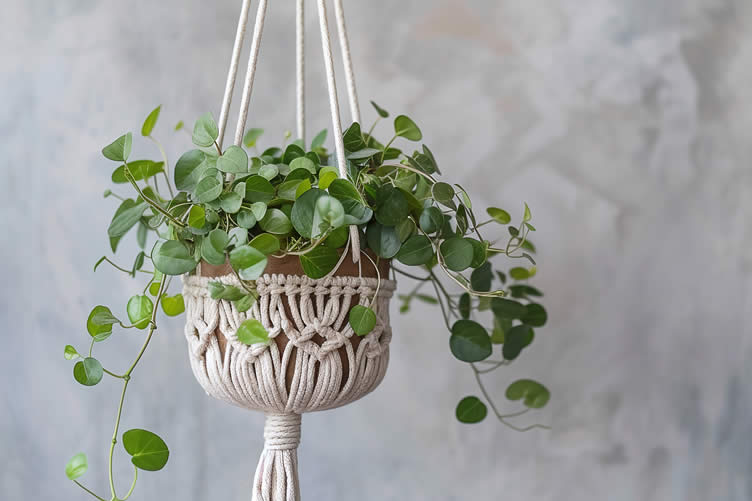
copyright image by 123rf.com
[ amazon: hanging planters for indoor plants ]
[ amazon: macramé plant hanger ]
-
Scroll up to directory … or scroll to next section the use of plant caddies and dollies …
-
-
7th Review: Plant Caddies and Dollies
[ view samples: plant caddy ]
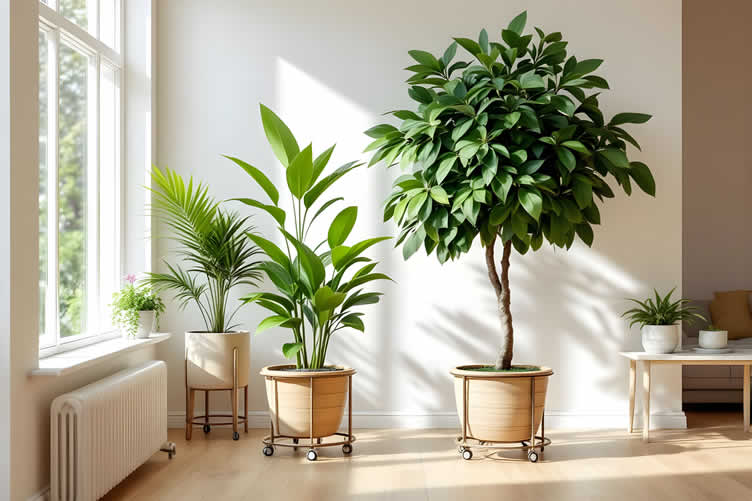
For the dedicated indoor gardener who nurtures large, mature trees like palms or citrus plants, a plant caddy is less of a luxury and more of a necessity. These are low platforms equipped with sturdy wheels or casters, designed to sit underneath heavy pots.
While they might seem utilitarian, modern designs have made them aesthetically pleasing enough to leave in plain sight.
The primary benefit here is mobility. Large pots can be back-breaking to move, but a caddy allows you to effortlessly roll your heavy plants around.
AI generated image by 123rf.com
This mobility is crucial for the health of large plants. It allows you to rotate the plant regularly so that all sides receive equal sunlight, preventing it from leaning or growing lopsided.
It also simplifies the cleaning process, letting you roll the plant aside to sweep or vacuum underneath, or even roll it onto a patio or into a shower for a deep watering and leaf rinse.
By keeping heavy ceramic or concrete pots off the floor, caddies also prevent scratches on hardwood and allow for air flow underneath the pot, reducing the risk of mold growth on your flooring.
[ view summary table: plant caddies and dollies ]
-
Best Indoor Trees for Your Home
- Fiddle Leaf Fig (Ficus lyrata)
Known for its large, glossy leaves and striking presence, the fiddle leaf fig is ideal for bright, open spaces. It thrives in indirect sunlight and requires moderate watering. - Rubber Tree (Ficus elastica)
This low-maintenance tree features shiny green and burgundy leaves. It’s perfect for beginners and does well in indirect light with occasional watering. - Parlor Palm (Chamaedorea elegans)
A timeless choice, the parlor palm adds soft, feathery greenery to any room. It’s tolerant of low light and requires minimal care, making it suitable for darker corners. - Dracaena Marginata
With its striking, spiky foliage, the dracaena marginata is a hardy option that adapts well to various light conditions. It’s also forgiving when it comes to watering schedules. - Bird of Paradise (Strelitzia reginae)
This tropical beauty displays large, banana-like leaves and can even produce vibrant flowers if given enough sunlight. Place it in a well-lit area for optimal growth. - Weeping Fig (Ficus benjamina)
Featuring delicate, arching branches of small leaves, the weeping fig is a classic indoor tree that prefers bright, indirect light and consistent watering. - Money Tree (Pachira aquatica)
Considered a symbol of good luck, the money tree is easy to care for and thrives in medium light. Its braided trunk and lush green foliage make it a unique choice. - Norfolk Island Pine (Araucaria heterophylla)
A festive option that can double as a mini Christmas tree, this tree prefers bright, indirect light and high humidity, making it ideal for well-lit indoor spaces.
- Fiddle Leaf Fig (Ficus lyrata)
Category Description Benefits Plant Caddies and Dollies These are low platforms with wheels or casters designed to support heavy pots for indoor gardening, making it easier to handle large plants like palms or citrus trees. They offer mobility to rotate plants for even sunlight exposure, simplify cleaning, prevent floor scratches, and promote airflow to reduce mold risk. Fiddle Leaf Fig (Ficus lyrata) A popular indoor tree with large, glossy leaves that thrives in indirect sunlight and requires moderate watering. Adds a striking aesthetic to bright, open spaces. Rubber Tree (Ficus elastica) A low-maintenance tree with shiny green and burgundy leaves. It performs well in indirect light with occasional watering. Great for beginners and easy to care for. Parlor Palm (Chamaedorea elegans) A classic indoor palm with soft, feathery greenery that tolerates low light and requires minimal care. Perfect for darker areas and low-maintenance environments. Dracaena Marginata Features striking spiky foliage and adapts to various light conditions. Forgiving about watering schedules. A hardy and versatile indoor tree. Bird of Paradise (Strelitzia reginae) A tropical tree with large, banana-like leaves that thrives in well-lit areas and may produce vibrant flowers. Provides a bold tropical aesthetic with proper care. Weeping Fig (Ficus benjamina) Features delicate, arching branches with small leaves. Prefers bright, indirect light and consistent watering. Offers a classic and elegant indoor tree option. Money Tree (Pachira aquatica) Symbol of good luck with a braided trunk and lush green foliage. Thrives in medium light and is easy to care for. Adds a unique and meaningful element to indoor spaces. Norfolk Island Pine (Araucaria heterophylla) A festive tree suitable for bright, indirect light and high humidity. Ideal for holiday decoration as a mini Christmas tree. Blends festive charm with practicality in well-lit indoor spaces. 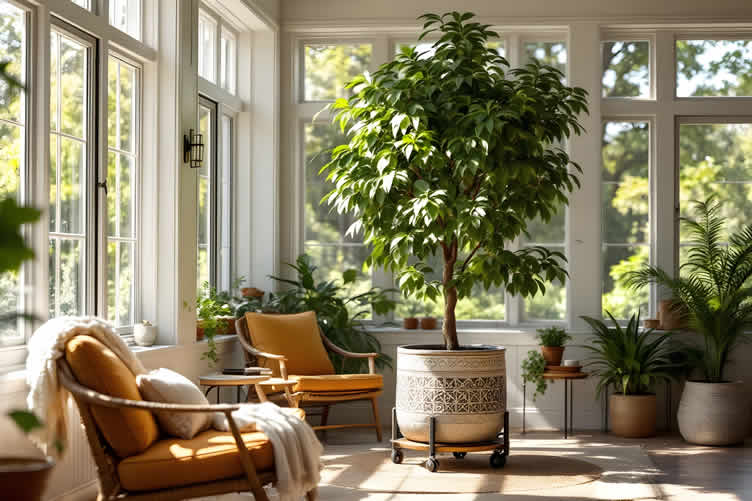
AI generated image by 123rf.com
[ amazon: houseplant caddy ]
[ amazon: indoor house tree planter ]
-
Scroll up to directory … or scroll to next section discussing tabletop and risers …
-
-
8th Review: Tabletop and Windowsill Risers
[ view samples: tabletop containers ]
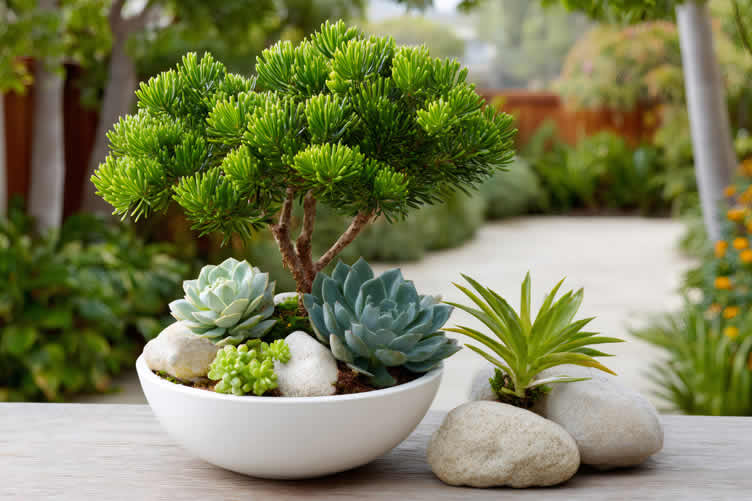
Not every plant stand needs to sit on the floor. Tabletop and windowsill risers are miniature stands or small benches sized perfectly for desktops, kitchen counters, or narrow window ledges.
These compact holders are excellent for smaller botanical treasures like succulents, cacti, or African Violets.
In a crowded window, a small riser can lift a rear row of plants above the front row, ensuring everyone gets their share of the sunshine.
copyright image by 123rf.com
Using risers on a desk or table also protects the furniture surface. By lifting the pot, you prevent moisture rings or scratches from damaging the finish of your wood or laminate surfaces.
Aesthetically, they help to declutter surfaces by organizing small pots into a deliberate arrangement rather than a scattered mess. They add a layer of intentionality to your decor, turning a collection of small pots into a styled vignette.
[ view summary table: tabletop and windowsill risers ]
-
Best Houseplants for Small Pots
- Snake Plant (Sansevieria)
Hardy and low-maintenance, snake plants thrive in small pots and can adapt to various lighting conditions, making them perfect for tabletops or kitchen counters. - Pothos (Epipremnum aureum)
With its cascading vines and vibrant green leaves, pothos adds a lush touch to narrow window ledges or desk spaces. It’s also known for its air-purifying qualities. - Succulents
From echeveria to haworthia, succulents are compact and require minimal watering, making them ideal for small pots on kitchen counters or tables. - Peace Lily (Spathiphyllum)
Known for its delicate white blooms, the peace lily thrives in filtered light and small containers, bringing elegance to any surface. - Herbs (Basil, Rosemary, or Thyme)
Fresh herbs double as decor and a culinary tool, growing well in small pots on kitchen counters with access to sunlight. - Spider Plant (Chlorophytum comosum)
With its arching green-and-white striped leaves, the spider plant is easy to care for and thrives in limited spaces such as narrow window ledges. - African Violet (Saintpaulia)
These small flowering plants bring color and charm to tabletops, thriving in indirect light and small containers. - ZZ Plant (Zamioculcas zamiifolia)
Durable and drought-tolerant, the ZZ plant grows slowly but beautifully in small pots, fitting well in corners or counters with low light. - Baby Rubber Plant (Peperomia obtusifolia)
Compact and vibrant, this plant is perfect for smaller surfaces and requires very little care while adding a pop of green. - Fittonia (Nerve Plant)
Featuring intricate, colorful leaf patterns, fittonia plants are perfect for small pots and thrive on desks, kitchen counters, or even bathroom counters.
- Snake Plant (Sansevieria)
Category Description Examples Tabletop and Windowsill Risers Miniature stands or benches designed for desktops, kitchen counters, or narrow window ledges. They offer practical benefits like lifting pots to ensure plants receive sunlight and protecting surfaces from moisture rings or scratches. They also serve an aesthetic purpose by decluttering and creating intentional arrangements. Compact holders, styled vignettes Best Houseplants for Small Pots Various plants that thrive in small containers, adding beauty, functionality, and a touch of greenery to indoor spaces. These plants are low-maintenance and well-suited for tabletops, counters, or windowsills. Snake Plant, Pothos, Succulents, Peace Lily, Herbs (Basil, Rosemary, Thyme), Spider Plant, African Violet, ZZ Plant, Baby Rubber Plant, Fittonia 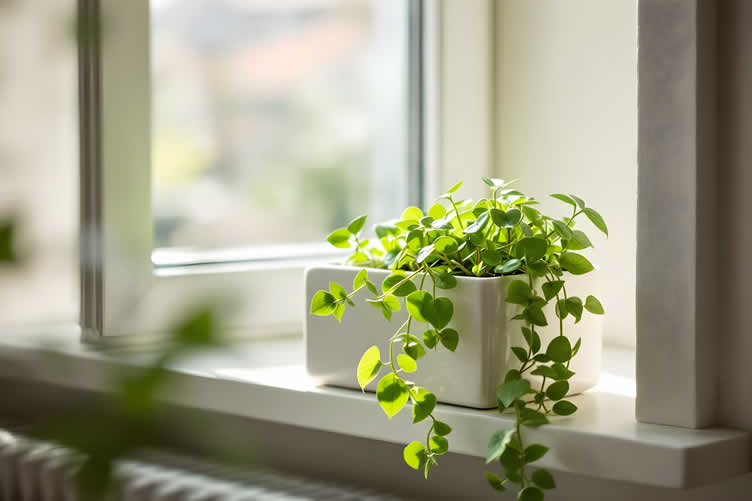
AI generated image by 123rf.com
[ amazon: small tabletop planter ]
[ amazon: indoor window seal planter ]
-
Scroll up to directory … or scroll to next section when to use pot foot and low risers …
-
-
9th Review: Pot Feet and Low Risers
[ view samples: pot feet ]
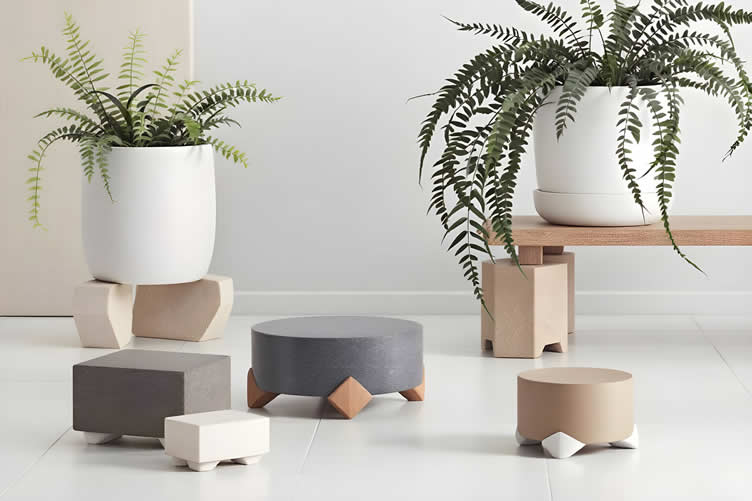
The most subtle of all plant support structures are pot feet and low risers. These are often small, discrete blocks, wedges, or decorative toes that slip underneath a pot to lift it just an inch or so off the floor or shelf.
While they may not offer the dramatic height of a pedestal stand, their function is critical for plant health and home maintenance.
Lifting a pot even slightly off a flat surface drastically improves drainage. It ensures that water can flow freely out of the drainage hole and isn’t trapped against the floor, which can cause root rot in the plant and water stains on your deck or interior flooring.
AI generated image by 123rf.com
Pot feet also promote air circulation around the base of the pot. Indoors, they are particularly useful for placing pots on carpets, preventing the weight of the pot from crushing the fibers and allowing air to reach the damp area underneath.
Though small, they are a mighty tool in the kit of any plant parent who cares about the longevity of their flooring and their ferns alike.
[ view summary table: pot feet and low risers ]
-
Best Indoor Houseplants Safe
… for cats, dogs, and small children
- Areca Palm (Dypsis lutescens)
A beautiful, low-maintenance plant that thrives in bright, indirect light while being non-toxic to pets and children. - Spider Plant (Chlorophytum comosum)
Known for its air-purifying capabilities, this resilient plant is safe and easy to grow, even for beginners. - Parlor Palm (Chamaedorea elegans)
A classic choice for any home, this stylish and pet-friendly palm adds a touch of tropical elegance. - Calathea (Calathea spp.)
With stunning, patterned leaves, Calatheas are non-toxic and perfect for adding a pop of color to your home. - Boston Fern (Nephrolepis exaltata)
A lush, leafy plant that thrives in humid conditions and poses no harm to curious pets or kids. - Bamboo Palm (Chamaedorea seifrizii)
Excellent for purifying air, the Bamboo Palm is a safe and attractive addition to family-friendly spaces. - Prayer Plant (Maranta leuconeura)
Known for its fascinating, patterned leaves that "fold" at night, this plant is both pet-safe and visually unique. - Peperomia (Peperomia spp.)
A compact and versatile plant variety with thick, textured leaves, perfect for small spaces and entirely safe. - Baby Rubber Plant (Peperomia obtusifolia)
This robust and shiny-leafed plant is low-maintenance and gentle for households with children and animals.
- Areca Palm (Dypsis lutescens)
Plant Support Structures Function Benefits Pot Feet and Low Risers Small, discreet blocks, wedges, or toes that lift pots slightly off surfaces. Improves drainage, prevents root rot, protects floors from water stains, allows air circulation under pots, and prevents carpet damage. Houseplant Features Pet/Child Safety Areca Palm (Dypsis lutescens) Beautiful, low-maintenance, thrives in bright indirect light. Non-toxic to pets and children. Spider Plant (Chlorophytum comosum) Air-purifying, resilient, and easy to grow. Safe for pets and children. Parlor Palm (Chamaedorea elegans) Stylish, tropical elegance, classic houseplant. Pet-friendly and safe for children. Calathea (Calathea spp.) Patterned leaves, great for adding color to interiors. Non-toxic to pets and children. Boston Fern (Nephrolepis exaltata) Lush, leafy plant thriving in humid environments. Poses no harm to pets or children. Bamboo Palm (Chamaedorea seifrizii) Air-purifying and aesthetically appealing. Safe for pets and children. Prayer Plant (Maranta leuconeura) Patterned leaves that “fold” at night, visually unique. Pet-safe and child-friendly. Peperomia (Peperomia spp.) Compact, textured leaves, ideal for small spaces. Safe for pets and children. Baby Rubber Plant (Peperomia obtusifolia) Robust, shiny leaves, low maintenance. Safe for households with pets and children. 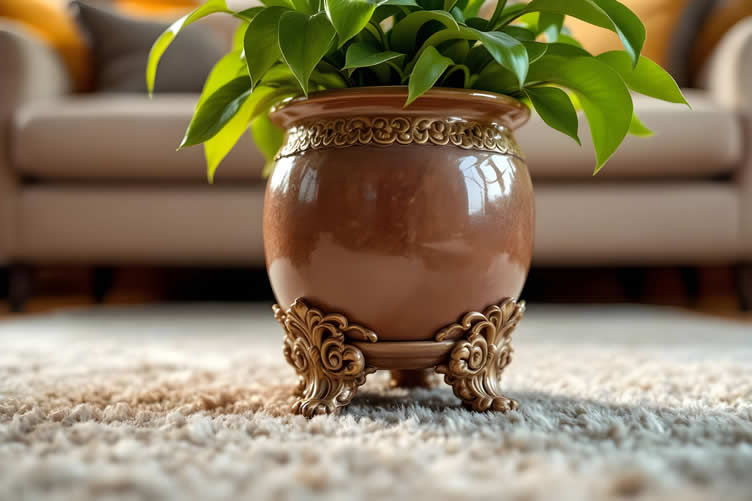
AI generated image by 123rf.com
[ amazon: pot feet for indoor plants ]
[ amazon: self-watering plant pot ]
[ amazon: AI smart pot ]
Best "Pet Friendly" Houseplants
viewing amazon-
Scroll up to directory … or scroll to choosing the right plant stand material …
-
-
10th Review: Choosing the Right Material for Your Home
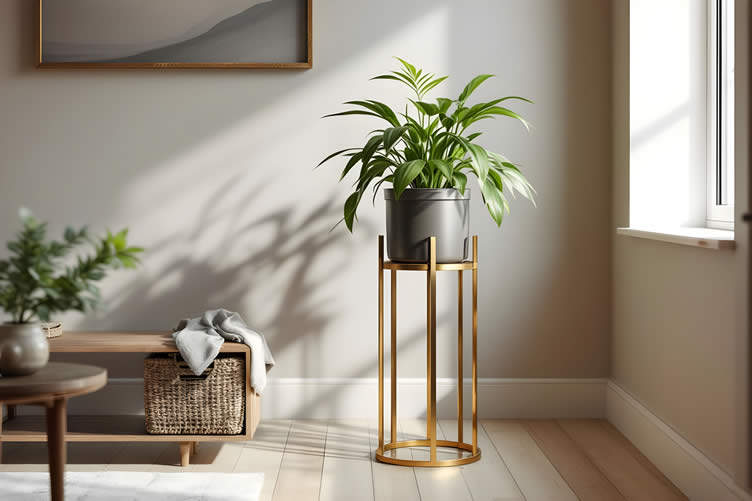
When designing your living space, each element contributes to the overall atmosphere, from wall colors to furnishings.
Even the choice of materials for houseplant holders can have a significant impact on both functionality and aesthetics.
AI generated image by 123rf.com
Selecting the right material is essential not only to complement your home’s decor but also to ensure practicality, durability, and harmony with the specific environment where the holders will be placed.
With the vast variety of materials available, understanding the characteristics and benefits of each option can help you make informed decisions that align with your style and lifestyle needs.
[ view images/summary table: plant stand materials ]
-
Wood
Wood is a timeless material that brings warmth and character to any space. It is a popular choice for plant stands, particularly in mid-century modern designs, including cross-leg and tripod styles. These designs exude a sense of simplicity and elegance while offering sturdy support.
However, wood can be sensitive to moisture, which means it may require sealing or varnishing if placed in areas with high humidity or potential water exposure.
The versatility of wood allows it to complement a variety of home decor styles, ranging from rustic to contemporary, adding a natural and inviting touch wherever it is used.
-
Metal
For those seeking durability and sleek aesthetics, metal is an excellent option. Iron and steel, common materials for plant stands, provide exceptional strength and stability, making them ideal for supporting heavier pots or larger plants.
Metal stands are often finished with powder-coated surfaces to resist rust, enhancing their longevity when used in both indoor and outdoor settings.
Depending on your design preferences, metal offers a versatile range of appearances, from minimalistic industrial styles to intricately ornate designs that can serve as statement pieces. Its refined look adds a layer of sophistication while maintaining practicality.
-
Bamboo
Bamboo is a favored choice for its lightweight nature, sustainability, and natural resistance to moisture. It is particularly suited for spaces like bathrooms or spa-like interiors, where humidity levels might be higher.
With its earthy appeal, bamboo evokes a sense of serenity and can effortlessly blend into eco-conscious or Zen-inspired decor. Its versatility allows for creative designs, often featuring clean lines and organic shapes.
Opting for bamboo reflects a commitment to environmentally friendly materials while adding a textured and calming vibe to your home.
-
Rattan or Wicker
Rattan or wicker plant holders provide a distinctive woven texture that adds depth and visual interest to your interior design. These materials are particularly suited to boho, coastal, or casual decor themes, offering a laid-back yet sophisticated aesthetic.
Lightweight and easy to move, they work best for smaller plants or decorative arrangements. While rattan and wicker stand out for their natural and airy qualities, they are best suited for indoor use or covered outdoor spaces to prevent weather-related wear and tear.
Placing them in living areas, bedrooms, or enclosed porches can amplify their charm and practicality.
-
Ceramic or Concrete
For a more sculptural and modern look, ceramic and concrete are outstanding choices. These materials are solid and stable, making them ideal for fewer, larger plants that require reliable support.
Ceramic plant holders are often glazed, allowing for a variety of colors and patterns that can act as beautiful focal points in any room.
Concrete, on the other hand, brings a raw, minimalist charm to spaces with industrial or contemporary decor styles. Although these materials are on the heavier side, their durability and aesthetic value make them worthwhile investments.
-
Plastic and Resin
Plastic and resin offer practical, budget-friendly solutions that don’t compromise on versatility. These materials are water-proof, easy to clean, and often designed to mimic the appearance of wood or metal.
They are ideal for high-humidity areas like kitchens, bathrooms, or covered patios, where exposure to moisture is inevitable. Their lightweight nature makes them portable, while their affordability ensures accessibility for homeowners tackling multiple projects or varying tastes.
Modern designs in plastic and resin can be unexpectedly stylish, making them an understated yet valuable choice for many homes.
-
Other Materials
Beyond the common choices, there are unique and innovative materials used for houseplant holders, including glass, reclaimed wood, or even mixed-media designs that combine several elements for a customized aesthetic.
These options cater to adventurous decorators seeking one-of-a-kind pieces that make a bold statement. Whether crafted by hand or sourced from artisanal shops, these distinctive holders can elevate your home’s character while showcasing your personal style.
Selecting the perfect material for your plant holders depends on balancing functionality and design with the specific needs of your home. Each option provides unique benefits, and by understanding their characteristics, you can confidently create a harmonious and inspiring space centered on your vision.
From the warm allure of wood to the sleek resilience of metal, the possibilities are vast and exciting, ensuring there’s something to suit every home and every lifestyle.
Material Characteristics Best Uses Considerations Wood Timeless, warm, versatile, adds natural charm Complements rustic to modern decor, suited for indoor use Requires sealing or varnishing in high-humidity areas Metal Durable, sleek, versatile with industrial or ornate designs Ideal for heavy pots and indoor/outdoor use Rust-resistant coating needed for outdoor longevity Bamboo Lightweight, sustainable, moisture-resistant Perfect for bathrooms or spa-like interiors Best for eco-conscious or Zen-inspired decor Rattan or Wicker Woven texture, lightweight, visually appealing Suited for boho, coastal, or casual decor themes Best for indoor or covered outdoor spaces Ceramic or Concrete Solid, stable, sculptural, modern Great for large plants, industrial, or contemporary decor Heavy but highly durable Plastic and Resin Waterproof, easy to clean, budget-friendly High-humidity areas like kitchens and bathrooms Lightweight, sometimes mimics wood or metal Other Materials Unique, customizable, often handcrafted Artisan or statement pieces for adventurous decor Can be less accessible or more expensive 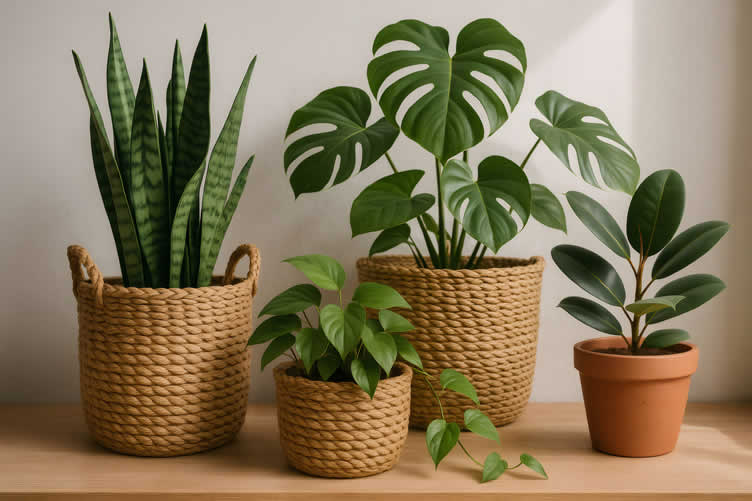
copyright image by 123rf.com
Houseplant Display
google imagesclassical display view samples modern display view samples pedestal display view samples shelf display view samples ladder display view samples hanging display view samples mounted display view samples terrarium display view samples Tips for Displaying and Caring for Houseplants
Indoor houseplants are a wonderful way to bring life, color, and a touch of nature to your home. Whether you’re an experienced plant parent or a beginner looking to brighten up your space, understanding how to display and care for your leafy companions can make all the difference in ensuring they thrive.
Thoughtful placement and proper maintenance not only help them flourish but also enhance your home’s ambiance with their natural charm.
Below, you’ll find useful tips for styling your indoor greenery and keeping them healthy year-round.
-
Displaying Indoor Houseplants with Style
- Leverage Natural Light:
Position plants in areas of your home that match their light needs. For example, ferns thrive in indirect, low light, while succulents love sunny windows. Paying attention to lighting ensures your plants stay vibrant and healthy. - Create Visual Layers:
Use a mix of floor planters, hanging pots, and shelves to add height and dimension to your space. Group plants with varying sizes and leaf shapes to create an eye-catching arrangement that feels dynamic and balanced. - Highlight Corners and Empty Spaces:
Houseplants can refresh underused or overlooked areas of your home. Consider placing tall plants like fiddle leaf figs in empty corners or smaller ones like pothos on side tables or countertops for a touch of greenery. - Choose Complementary Pots:
The right plant holder complements both your home decor and the plant itself. For a modern aesthetic, go with ceramic or metal pots, while natural materials like woven baskets offer a cozy, earthy feel. - Pair Plants with Decorative Accessories:
Enhance your arrangements with tasteful accessories like decorative trays, books, or stones. These additions make your plants feel like intentional decor pieces rather than an afterthought.
- Leverage Natural Light:
-
Caring for Your Indoor Houseplants
- Understand Watering Needs:
Proper watering is crucial for plant health. Overwatering is a common mistake; always check the soil before watering and ensure pots have drainage holes to prevent root rot. Many plants thrive when watered only once the topsoil feels dry to the touch. - Maintain a Consistent Environment:
Protect plants from sudden temperature changes, drafty windows, or HVAC vents, as these can stress them. Aim to keep your space at an even, comfortable temperature suited to their natural habitat. - Feed with Care:
Most houseplants benefit from occasional fertilization, especially during their active growing seasons (spring and summer). Use a plant-specific fertilizer and follow the recommended dosages to provide nutrients without overwhelming their roots. - Prune and Groom Regularly:
Remove dead leaves and spent blooms to encourage growth and keep your plants looking tidy. Dust their leaves occasionally using a damp cloth to ensure they can absorb sunlight efficiently. - Watch for Pests:
Keep an eye out for common indoor plant pests like spider mites, mealybugs, or aphids. If pests appear, wipe them away with a solution of water and dish soap, or use plant-safe insecticides as needed.
- Understand Watering Needs:
-
Final Thoughts
When it comes to showcasing your houseplants, the internet is a treasure trove of ideas and inspiration. From design blogs to social media platforms like Pinterest and Instagram, there’s no shortage of creative displays to explore.
Look for examples that align with your personal style, whether you prefer minimalist arrangements with clean lines or vibrant groupings that add a lush, tropical vibe to your space.
Many online guides also provide step-by-step tutorials on creating unique plant displays, such as hanging planters, re-purposed shelving, or tiered stands. These resources can help you maximize your space while adding dimension and personality to any room.
Don’t forget to seek out tips on lighting requirements, as proper placement ensures your plants stay healthy and thrive in their new display.
With countless virtual resources at your fingertips, you can confidently create stunning arrangements that breathe life into your home.
LetsRenovate has partnered with HomeAdvisor™, a renowned provider of highly-rated, carefully-vetted local decorators. Start your search here by choosing the type of decorator you need and entering your zip code to find local professionals.
Category Details Additional Tips Displaying Indoor Houseplants with Style Leverage natural light by matching plant placement to their light needs. Create visual layers using floor planters, hanging pots, and shelves. Highlight corners and empty spaces, placing tall plants in unused areas or smaller ones on side tables. Choose complementary pots that align with home decor styles and enhance arrangements with decorative accessories like trays or stones. Ensure consistent styling by grouping plants with varying sizes and textures. Incorporate plants into overlooked spaces to add freshness and charm. Caring for Your Indoor Houseplants Understand watering needs; check soil before watering and avoid overwatering. Maintain a consistent environment, avoiding drafts or HVAC vents. Feed plants with care using occasional fertilization and prune regularly to remove dead leaves. Keep leaves dust-free for efficient sunlight absorption, and watch for pests like spider mites or aphids, addressing them promptly. Use plant-specific fertilizers during growing seasons for optimal health, and create a schedule for regular pruning and grooming. Final Thoughts Thoughtful styling and mindful care ensure plants remain healthy and vibrant. Research plant-specific needs and draw inspiration from online resources like design blogs or social platforms. Experiment with creative displays such as hanging planters or tiered stands to transform your living space. Personalize your arrangements to reflect your style, whether minimalist or lush, and adapt designs to maximize available space. 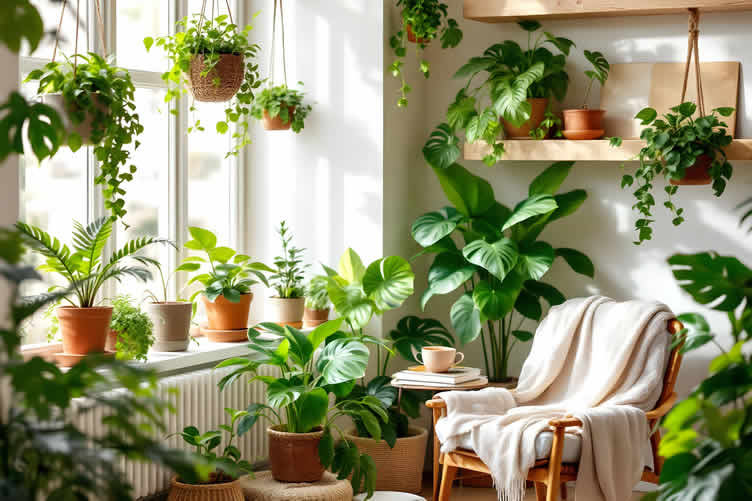
AI generated image by 123rf.com
But Wait!
Before you start looking for decorators or plant arrangement specialists, we highly recommend downloading our evaluation worksheet.
This helpful resource allows you to objectively rank and compare potential contractors by considering important factors like pricing, licensing, and references.

Evaluation Sheet
File Type:
-
Scroll up to directory … or scroll to next section of the AAATERM …
-
-
Conclusion
… creating your personal oasis
Choosing the right plant stand is about finding the balance between functionality for your plants and beauty for your home. By exploring the diverse range of structures—from the space-saving ladder stand to the mobile plant caddy—you can solve common gardening challenges while elevating your interior design.
These stands do more than just hold pots; they create breathable space, improve lighting conditions, and protect your home’s surfaces, all while turning your greenery into a true visual feature.
As you look around your home, consider where a little lift might make a big difference. Perhaps that dark corner is waiting for a tiered stand to bring it to life, or maybe your favorite trailing ivy is ready to graduate to a hanging planter.
Whatever you choose, know that integrating these structures is a step toward a healthier, more organized, and infinitely more stylish indoor garden.
-
Quick scroll to more interior home decor ideas …
-
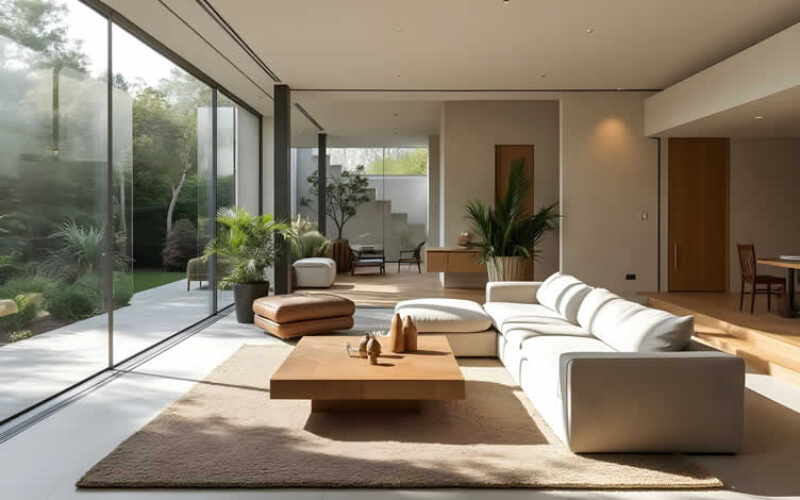
ideas to view and compare from the photo above
book: raising houseplantshouseplant containershouseplant monitor
- What comments can you share about
the type of indoor plant stands you use and display?

addressing indoor plant stands and other home improvement needs …

… grab this directory of ideas for future use




Download this PDF for a concise summary of all you need to know about …?


Budgeting Worksheet For Costing Home Remodeling and Home Improvement Decisions
 File Type (excel)

… remodeling decisions

SHARE IT ..! You might have someone in your social network who could find this informative review of indoor plant stands valuable. Feel free to share it on Facebook, X (formally Twitter), LinkedIn, or Pinterest!



get the size dimensions for any home remodeling project …
… for functionality, aesthetics, and adhering to building codes




… home remodeling – improvement – repair


Calendar For:
Home Maintenance
File Type:
… view illustration “becoming a bank”

Are there any other interesting topics that might have been overlooked but could offer valuable insights …?


… view our sharing links below for a quick "share the knowledge"
Find Interior Design Services Decorators Interior Designers Furniture Painting & Staining top-rated, pre-screened local contractors FREE: download contractor selection enter zip code – powered by HomeAdvisor ™
Quick Contractor Guides selecting negotiating working with inspecting

Cover image credit: indoor plant stands by 123rf.com
end of post … please share it!
 |
did you find this indoor plant stands review helpful? If so, please share the article with your friends and family! |
Nice pic idea? Leave us a quick comment below.
And please share this pic idea within your social networks.