Summary Outline –
Water is life-giving for our gardens, but when it flows uncontrolled around our homes, it becomes a force of destruction that can compromise foundations, ruin landscaping, and turn basements into indoor pools. A proper home drainage system is the unsung hero of property maintenance.
It works silently beneath the surface and along the roof-line to manage the immense volume of water that falls during a storm. Think of it not just as a set of pipes and ditches, but as a circulatory system for your property.
When it functions correctly, it directs water away from sensitive areas and allows it to return to the earth in a way that nourishes rather than destroys. Understanding how this system works is the first step in protecting your investment and ensuring your outdoor space remains a sanctuary, regardless of the weather.
By breaking down the system into its core groups—roof runoff control, ground drainage, soil protection, and safe discharge—you can gain the confidence to maintain your home effectively.
This guide will walk you through these essential elements, helping you create a landscape that coexists harmoniously with the elements.
- post content … analysis/ home drainage system
- 1st:Roof Runoff, Collection, and Removal
- 2nd:Ground and Subsurface Drainage
- 3rd:Surface Drainage and Landscape Shaping
- 4th:Discharge and Protection Points
- 5th:Landscape-Friendly and Sustainable Elements
- 6th:Rain Collection Systems
- 7th:Key Notes for Setting Up and Maintaining
- conclusion
- other exterior-home topics

-
- —— begin first topic ——
-
1st Drainage: Roof Runoff, Collection, and Removal
One of the most critical components of an effective home drainage system begins at the very top of your house—managing roof runoff.
When rain falls, your roof becomes the first line of defense, channeling water away from vulnerable areas of your home.
copyright image by 123rf.com
- Quick scroll to summary content …
(continue read)
However, simply letting rain roll off the roof randomly can lead to structural issues such as foundation erosion, water pooling, or damage to landscaping. To mitigate these risks, a well-designed roof drainage system is essential.
This system ensures that rainwater is collected, directed, and removed efficiently, protecting both your house and the surrounding property from water-related damage.
Below, we examine key elements of a professional roof drainage strategy.
-
Gutters Sized for Local Rainfall and Roof Area
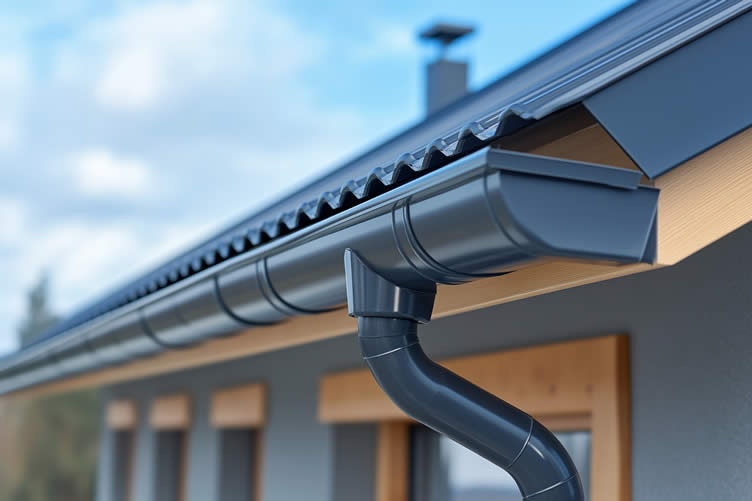
Gutters serve as the primary component of a roof drainage system, tasked with capturing rainwater as it flows off the roof and directing it along a controlled path.
Properly sized gutters are critical; their dimensions need to accommodate both your roof’s total area and the typical rainfall volume in your region. Undersized gutters can overflow during heavy rain, leading to water pooling near the foundation and creating potential damage over time.
A custom-fit system ensures rainwater is effectively collected and lowers the risk of overflow, directing water away from vulnerable areas such as the home’s foundation and landscaping beds.
When choosing gutters, homeowners should prioritize durable materials such as aluminum, copper, or steel, which offer longevity and resistance to wear over time.
-
Downspouts with Elbows and Extensions
Downspouts are the vertical pathways that transport water from the gutters down to the ground level. Properly installed downspouts equipped with elbows and extensions play a crucial role in keeping rainwater from directly spilling near the house.
Extensions route the water several feet away from the property, ensuring it is directed toward designated drainage areas, such as underground pipes, splash blocks, or specific landscaped zones tailored for water management.
Without these features, water exiting the downspouts can erode soil, lead to pooling near your building’s foundation, and potentially cause structural concerns such as basement leaks.
Downspout design and placement must account for both functionality and aesthetics, ensuring they integrate seamlessly into the home’s exterior facade while preventing erosion and water damage.
-
Leaf Guards or Screens (Optional)
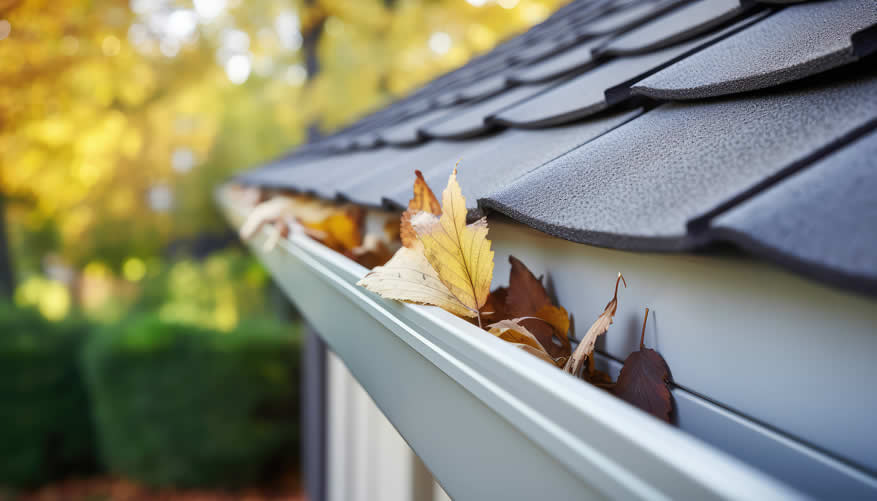
One optional but highly beneficial addition to a roof drainage system is the use of leaf guards or screens. These devices are installed at the top of your gutters to minimize the accumulation of debris such as leaves, twigs, and other blockages.
By preventing clogging, leaf guards ensure that water flows freely through the gutters and into the downspouts, instead of overflowing the system and spilling over walls, fascia boards, and flowerbeds.
While leaf guards may slightly increase the initial cost of a drainage system, they significantly reduce maintenance demands, saving homeowners time and effort.
Additionally, a clean gutter system prolongs the lifespan of the entire drainage network, reducing the risk of early deterioration caused by overflows or prolonged exposure to stagnant debris.
-
Additional Considerations for Roof Drainage Systems
Beyond the core components, other factors such as proper slope adjustment for gutters and regular inspections play an integral role in maintaining an optimized roof drainage system. Ensuring the gutters and downspouts are installed at the correct pitch prevents unwanted water stagnation.
Routine inspections, especially after heavy storms, allow homeowners to identify and address minor issues before they escalate into costly repairs.
Incorporating gutter heating for snowy climates or rainwater collection tanks for eco-conscious homeowners are additional measures that can further enhance the effectiveness and versatility of the system.
By implementing these roof drainage components with care and precision, homeowners can protect their property from water-related damages while maintaining a safe and aesthetic outdoor environment.
Always ensure that installations follow local building codes and consult professional services when necessary to guarantee the durability and performance of the system.
Component Description Purpose Roof Runoff Collection Managing roof runoff is essential to protect the home. A well-designed system channels rainwater from the roof to prevent foundation erosion, water pooling, and landscaping damage. Directs water efficiently away from the building, safeguarding the structure and surrounding property. Gutters Gutters capture rainwater as it flows off the roof and channel it along a controlled path. Proper sizing based on roof area and local rainfall is crucial to prevent overflow. Ensures rainwater is collected effectively and lowers overflow risk, directing water away from foundations and landscaping. Downspouts Vertical pathways equipped with elbows and extensions transport water from gutters to the ground, routing it to designated drainage areas. Prevents erosion and structural damage by directing water several feet away, avoiding pooling near the foundation. Leaf Guards or Screens These optional devices prevent debris like leaves and twigs from clogging gutters, ensuring a free flow of water. Reduces maintenance requirements and prolongs the drainage system’s lifespan by minimizing overflow and stagnation. Additional Considerations Factors such as proper gutter slope, routine inspections, gutter heating, and rainwater collection tanks enhance system longevity and efficiency. Optimizes drainage performance while catering to additional needs like handling snow or conserving water. 

copyright image by 123rf.com
Avoiding Foundation Issues
Keeping water away from your home’s foundation is essential to preserve its structural integrity and prevent costly damage. Excess water pooling near the foundation can lead to soil erosion, cracks, and even basement flooding, jeopardizing the safety and value of your property.
Proper drainage solutions, such as installing downspouts, grading the landscape, and maintaining gutters, help redirect water efficiently, protecting your home from moisture-related issues and ensuring long-term stability.
view file: preventing foundation problems (new win)
Are Leaf Gutter Guards Worth It?
It’s a seasonal chore many homeowners dread: dragging out the ladder, putting on gloves, and scooping out muck. It’s messy, time-consuming, and can even be dangerous.
This is often the moment people start wondering, "Is there a better way?"
Enter the leaf gutter guard. While they promise to save you from this bi-annual headache, are they truly the "set and forget" solution they claim to be?
Let’s explore the pros and cons to help you make the best choice for your home.
[ print summary table: pros/cons gutter guards ]
-
The Benefits of Installing Gutter Guards
For many homeowners, gutter guards are a game-changer. They act as a protective shield, allowing water to flow freely while keeping out the majority of unwanted debris.
-
Reduce Clogs and Overflows
The primary job of a gutter guard is to keep leaves, twigs, and larger debris out. When working correctly, they prevent those stubborn dams that cause water to back up. This is crucial because overflowing gutters can lead to water spilling over the sides, potentially damaging your fascia, siding, and even your home’s foundation.
-
Lower Cleaning Frequency
While they may not eliminate maintenance entirely, high-quality guards significantly reduce how often you need to climb that ladder. For homes with complex roof-lines or multiple stories, this isn’t just a convenience—it’s a major safety improvement.
-
Extend Gutter Life
Debris that sits in your gutters acts like a wet sponge, holding moisture against the metal. This can lead to rust, corrosion, and sagging over time. By keeping that organic muck out, guards help your gutters stay dry and structural for longer.
-
-
Potential Drawbacks to Consider
As helpful as they are, gutter guards aren’t a magic wand. It’s important to have realistic expectations before investing in a system.
-
Upfront Cost
Quality comes at a price. High-end metal or micro-mesh systems, especially those installed by professionals, can be an investment. Some premium "one-piece" systems might even require you to replace your existing gutters entirely, which adds to the initial expense.
-
They Still Need Some TLC
Despite the name, gutter guards are rarely 100% maintenance-free. Fine debris like pine needles, pollen, and shingle granules can sometimes sit on top of the screens. You may still need to brush or rinse them off periodically to ensure water can filter through.
-
Performance Can Vary
Not all guards are created equal. Some testing shows that micro-mesh systems can develop a film of grime over time, which might cause water to sheet over the top during heavy downpours rather than filtering into the gutter.
Additionally, if debris does manage to get inside, cleaning them becomes a bit trickier since you have to work around (or remove) the guards.
-
-
How to Choose the Right Guard for Your Home
Selecting the right system feels less overwhelming when you look at your specific surroundings. It’s all about matching the guard to your environment.
-
Consider Your Trees
Take a look at the trees near your roof. If you are surrounded by broad leaves (like maples or oaks), perforated metal covers or "hooded" surface-tension systems generally work wonders.
However, if you have pine trees dropping needles or trees shedding fine pods, you’ll likely need a high-quality micro-mesh system to catch that finer debris.
-
Assess Your Roof and Rain
If you live in an area with intense storms or have a very large, steep roof, be cautious with "hood" style guards. In heavy rain, the water velocity can sometimes overshoot the gutter opening. In these cases, systems known for handling high water volume are your best bet.
-
Factor in Your Budget and DIY Comfort
If you have a single-story home and are comfortable on a ladder, a mid-range DIY perforated metal guard can offer a fantastic balance of performance and cost.
However, for tall, complex roofs where safety is a concern, investing in a premium, professionally installed system with a strong warranty is often the wiser choice.

-
Topic Description Key Points Considerations Are Leaf Gutter Guards Worth It? Leaf gutter guards aim to eliminate the mess and hassle of cleaning gutters by serving as a barrier against debris. While they promise convenience, their effectiveness depends on proper selection and maintenance. – Reduce clogs and overflows
– Lower cleaning frequency
– Extend gutter lifespan– Upfront cost can be substantial
– Maintenance is still required
– Performance varies based on type and conditionsThe Benefits Properly installed guards reduce maintenance, minimize clogging caused by leaves and debris, and extend the lifespan of gutter systems by preventing rust and corrosion. – Keeps gutters clear of large debris
– Reduces water overflow damage
– Enhances safety by limiting ladder use– High-quality systems offer better protection but cost more
– Not completely maintenance-freeThe Drawbacks Despite their advantages, gutter guards involve upfront expenses and may still require periodic cleaning. Performance can vary based on the type of system and environmental factors. – Premium systems require higher investments
– Fine debris may still need to be cleared
– Heavy rainfall may challenge certain designs– Consider materials and type of guards, such as micro-mesh for finer debris
– Be mindful of installation quality and performance ratingsHow to Choose Selecting a system depends on environmental and home-specific factors, such as surrounding tree types, roof size, rain intensity, and budget. – Match the guard type with tree debris
– Assess roof design and rainfall
– Consider if DIY or professional installation suits you– Pine needles may require micro-mesh
– Flat or steep roofs dictate guard style
– Professional systems offer durability, but at a costFinal Decision The best gutter guard aligns with the homeowner’s unique environment and budget. The right choice helps reduce ladder use and protects the home efficiently. – DIY options are ideal for smaller, simpler roofs
– Professional systems suit large or complex structures
– Cost vs. performance balance matters– Analyze your home’s needs
– Weigh durability and upfront investments
– Aim for less maintenance while ensuring efficacy
copyright image by 123rf.com
-
Scroll up to directory … or scroll to review ground and subsurface drainage …

-
2nd Drainage: Ground and Subsurface Drainage
Once the water leaves your roof and hits the ground, nature’s gravity takes over the heavy lifting. The most fundamental aspect of managing this water is proper grading, which involves carefully shaping the land around your property.
Ideally, the soil and hardscapes—like patios and walkways—directly surrounding your home should always slope gently away from the foundation.
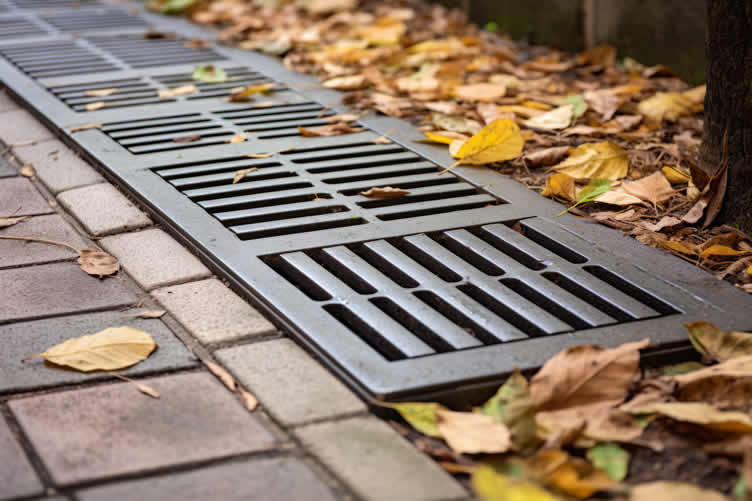
copyright image by 123rf.com
- Quick scroll to summary content …
(continue read)
This simple but vital concept, known as positive drainage, ensures that gravity naturally guides surface water safely into the yard or garden rather than allowing it to seep back toward your basement or crawlspace.
If your lawn unfortunately slopes toward the house, you are essentially inviting rainwater to pool against the structure. Over time, this standing water can saturate the soil and put immense pressure on your home, which is a leading cause of foundation instability and moisture issues.
-
Solid Drain Pipes for Effective Water Management
Solid, non-perforated drain pipes are essential for safely channeling water away from a property without risking leaks or water infiltration into sensitive areas.
These pipes are commonly used to carry water from downspouts, catch basins, or drainage grates to a safe discharge point such as a storm drain, dry well, or a designated outlet further from the home.
Available in a range of sizes, such as 4-inch or 6-inch diameters, the appropriate pipe size depends on the volume of water expected and the scale of the drainage system.
For most residential applications, 4-inch pipes are sufficient; however, for larger properties or areas prone to heavy rainfall, larger pipes may be necessary to accommodate increased flow.
When installing, it is critical to ensure a proper slope to maintain water movement and avoid pooling within the pipe.
-
Perforated Pipes for French Drains and Foundation Systems
Perforated pipes are a foundation of effective drainage systems designed to manage groundwater and prevent water-logging. Widely used in French drains and footing drain systems, these pipes are strategically buried along the perimeter of foundations, low-lying wet zones, or any area prone to water accumulation.
The small perforations in the pipe allow water to seep inside and be redirected away from the property, reducing hydrostatic pressure on the foundation and preventing potential damage to landscaping or structures.
Selecting the correct size of perforated pipe, generally 4 inches in diameter, is vital to ensuring sufficient water collection without compromising the slope and flow rate.
Proper installation includes ensuring the pipe is laid within a trench filled with washed drainage gravel to promote water movement into the perforations while reducing blockages caused by fine soil particles.
-
Washed Drainage Gravel for System Efficiency
Using washed drainage gravel around drainage pipes is a best practice for improving the efficiency and longevity of any drainage system.
The gravel creates void spaces around the pipes, encouraging water to move freely into the pipe perforations while reducing the risk of clogging caused by fine soils or organic debris.
Washed gravel, free from smaller particles, is ideal because it minimizes compaction and retains its permeability over time.
A properly designed drainage bed with a thick layer of gravel ensures optimal performance, preventing water from saturating the surrounding soil and maintaining the intended flow dynamics.
-
Filter Fabric for Added Protection
Filter fabric, also known as geotextile fabric, is an essential component in many drainage designs, especially when long-term durability is a priority.
Wrapping the gravel and perforated pipes with filter fabric prevents fine soil particles from infiltrating the system, protecting against clogs that can compromise water flow.
This addition is particularly important in areas with loose or silty soil, where sediment dispersion can quickly reduce the drainage system’s effectiveness.
By enhancing soil filtration and prolonging system functionality, the use of filter fabric ensures that your home remains safeguarded from water-related issues for years to come.
-
The Importance of Professional Installation and Maintenance
While high-quality materials and correct installation are essential for a reliable drainage system, periodic maintenance is equally crucial.
Regular inspections to identify any pipe blockages, sediment build-up, or vegetation intrusion can significantly extend the life of the system.
It is also important to ensure installations conform to local building codes and environmental guidelines.
Consulting with a professional drainage contractor is highly recommended to ensure that your system is engineered accurately and tailored to the specific needs of your property.
Properly designed and maintained, a drainage system protects your home’s foundation, landscaping, and overall property value, offering both peace of mind and improved functionality.
Drainage Type Description Key Components Installation Considerations Ground and Subsurface Drainage Focuses on utilizing grading and soil slope to direct water away from the foundation, preventing water pooling against the structure and potential instability. Grading, Soil, Hardscapes Ensure positive drainage by sloping ground away from the foundation. Correct lawn slopes are crucial to avoid water pooling at the structure. Solid Drain Pipes Non-perforated pipes used to channel water from structures to a safe discharge point, essential for effective water management. Solid Pipes (e.g., 4-inch or 6-inch), Downspouts, Catch Basins, Storm Drains Adequate pipe size should be chosen based on water volume. Install with proper slope to maintain flow and prevent pooling within pipes. Perforated Pipes Used in systems like French drains to manage groundwater and reduce hydrostatic pressure by redistributing water away from problem areas. Perforated Pipes (e.g., 4-inch), Footing Drains, French Drains Lay pipes in trenches filled with washed drainage gravel, ensuring proper slope. Choose suitable pipe sizes to handle water flow effectively. Washed Drainage Gravel Improves water movement and prevents pipe blockages by creating void spaces around drainage pipes. Washed Gravel, Drainage Bed Use a thick layer of washed gravel to optimize permeability and prevent soil saturation or clogging. Filter Fabric Enhances system durability by preventing fine soil particles from clogging pipes and surrounding drainage gravel. Geotextile Fabric Wrap gravel and perforated pipes with filter fabric, especially for loose or silty soil areas, to maintain flow and system efficiency over time. Professional Installation and Maintenance Ensures proper design, adherence to building codes, and prolonged system functionality through inspection and upkeep. Professional Contractors, Maintenance Tools Schedule regular inspections to prevent blockages and sediment build-up. Consult professionals for precise installations tailored to property needs. 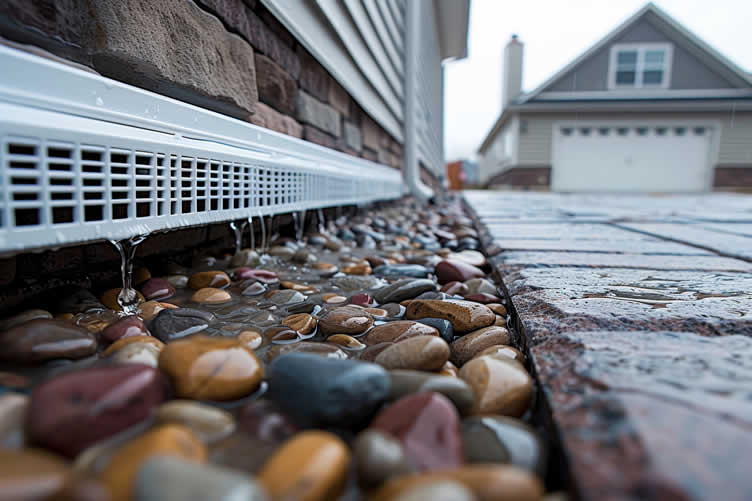
copyright image by 123rf.com
[ diagram: french drain setup diagram ]
[ youtube: Install a French Drain Correctly ]
How to Set Up a Subsurface French Drain
A subsurface French drain is an effective solution for managing excess water around your property, protecting your home’s foundation, landscaping, and overall value.
By installing a well-planned French drain system, you can redirect water away from problematic areas, preventing issues like soil erosion and water pooling.
The process is straightforward, and with the right tools and preparation, it can be completed as a satisfying DIY project or with professional assistance. Below is a step-by-step guide to help you set up a subsurface French drain on your property.
[ view/print summary table: french drain steps ]
-
1. Plan the Route and Outlet
Determine where the water will be directed—this could be toward a drainage ditch, swale, dry well, or other safe discharge points, depending on your property. Ensure the route provides a consistent slope to facilitate proper water flow (a slope of at least 1% is recommended).
Additionally, before digging, be sure to check with local utility companies to avoid damaging underground pipes or cables. Planning ahead ensures a safe and efficient installation.
-
2. Mark and Dig the Trench
Mark the path of the trench using stakes and string or spray paint, keeping it as straight and direct as possible. The trench should be wide enough to accommodate the drainpipe and gravel while maintaining a consistent downward slope across its length.
Typically, the depth of the trench should be around 18-24 inches, with a width of approximately 8-12 inches, but this may vary based on your specific drainage needs.
-
3. Install Fabric and Base Gravel, Then Lay the Pipe
Line the trench with landscape fabric, which will help prevent soil and debris from clogging the drain over time. Add a layer of base gravel (around 3-4 inches thick) at the bottom of the trench.
Use a perforated drainpipe for most situations, but you may choose rigid or solid pipes depending on the intended water flow and soil conditions. Lay the pipe on the base gravel, ensuring it follows the slope to allow proper water movement.
- Lay your perforated drain pipe onto the gravel bed with the holes facing downward, ensuring it follows the downward slope toward the outlet.
- Consider using rigid pipe for easier cleaning and more precise slope control; simply connect the sections with the right fittings and add clean-outs where they’re easy to reach.
- If you’re connecting downspouts or area drains, use solid pipe to carry that water directly to the French drain or your chosen outlet.
-
4. Backfill with Gravel and Wrap the Fabric
Once the pipe is laid, cover it with gravel until it is slightly below ground level. Fold the landscape fabric over the gravel, creating a secure barrier that remains breathable but keeps out soil and debris. This step helps extend the lifespan of the French drain by minimizing clogs.
-
5. Restore the Surface
Cover the trench with your desired surface material, such as soil, sand, turf, mulch, decorative stone, or a combination. Ensure the material is leveled and blends seamlessly with the surrounding area.
At the outlet end of the pipe, decide on an effective drainage solution, such as daylighting the pipe, using a pop-up emitter, or incorporating a dry well to disperse water safely.
-
6. Test and Maintain
Finally, test the system by running water through the drain to ensure it flows smoothly from the inlet to the outlet.
Periodic maintenance is crucial to keep your French drain functioning effectively. Flush the line as needed to clear debris, and inspect for any blockages that could impede water flow.
By following these steps, you can successfully install a subsurface French drain that enhances your property’s drainage system and protects against water-related damage.
Step Description Details 1 Plan the Route and Outlet Determine where the water will be directed, such as a drainage ditch, swale, or dry well. Ensure a consistent slope of at least 1% for proper water flow. Check with local utility companies to avoid damaging underground pipes or cables. 2 Mark and Dig the Trench Use stakes and string or spray paint to mark the trench path. Ensure the trench is 18-24 inches deep and 8-12 inches wide, maintaining a downward slope throughout to facilitate water movement. 3 Install Fabric and Base Gravel, Then Lay the Pipe Line the trench with landscape fabric to prevent soil and debris from clogging the drain. Add a 3-4 inch layer of gravel at the base. Lay perforated pipe with holes downward, ensuring it follows the slope. Rigid pipes and solid pipes can be used depending on drainage needs. 4 Backfill with Gravel and Wrap the Fabric Cover the pipe with gravel until slightly below ground level. Fold the landscape fabric over the gravel to create a barrier that prevents clogs while allowing water to flow through. 5 Restore the Surface Cover the trench with surface materials like soil, turf, mulch, or decorative stone. Ensure the material blends with the surrounding area and accounts for proper drainage at the outlet. 6 Test and Maintain Run water through the system to ensure smooth flow. Perform periodic maintenance, flushing the line to clear debris and inspecting for blockages to maintain optimal functionality. 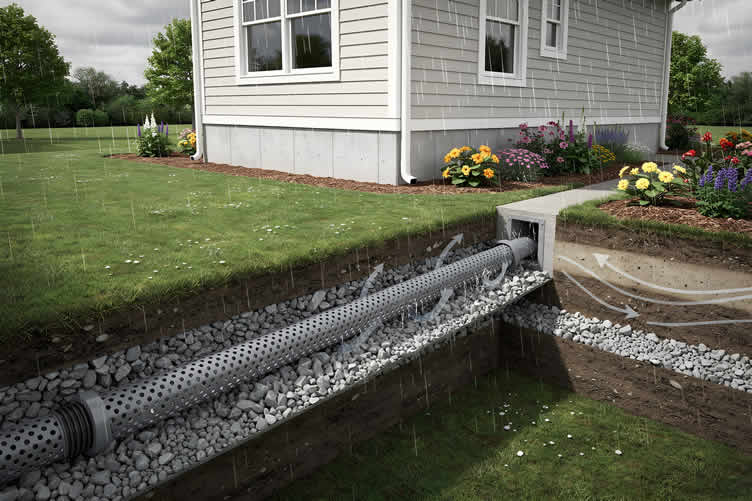
AI generated image by 123rf.com
-
Scroll up to directory … or scroll to landscape shaping for a home drainage system …
-
3rd Drainage: Surface Drainage and Landscape Shaping
Proper surface drainage and thoughtful landscape shaping are essential components of maintaining a well-functioning and visually appealing outdoor space.
These practices help manage excess water efficiently, preventing pooling, erosion, and damage to your property’s foundation or landscaping.

AI generated image by 123rf.com
- Quick scroll to summary content …
- view image samples
- view summary table
(continue read)
By directing water flow away from critical areas and integrating strategic landscape design, you can protect your home’s value while enhancing the aesthetic and usability of your outdoor environment.
Whether you’re addressing storm-water runoff, leveling uneven terrain, or designing a garden that thrives, understanding the principles of surface drainage and landscape shaping will ensure your property remains safe, beautiful, and adaptable to all weather conditions.
-
Grading and Slope Away from the House
Proper grading and slope management are critical in protecting your home from water damage. Finished soil and hardscapes should always slope away from the foundation to leverage gravity’s natural ability to carry water away from your home.
Ideally, the ground should drop approximately one inch per foot within the first six to ten feet from the foundation. This prevents water from pooling against your home, which can lead to foundation damage, basement flooding, and mold issues.
For best results, ensure this slope is maintained during landscaping or home improvement projects, and regularly check for erosion or settling that may compromise the grade over time.
-
Swales for Surface Water Guidance
Swales, shallow grassed channels, are an effective and visually appealing method for guiding surface water across your property.
Designed to blend seamlessly into landscapes, these channels direct water along property lines or between garden beds to a designated drainage point like a rain garden, a drain, or an outfall.
Swales are particularly advantageous because they are easy to maintain and mow, making them both functional and user-friendly. To ensure swales perform optimally, they should be graded correctly and lined with turf or native plants to stabilize the soil.
This not only improves water infiltration but also minimizes erosion while maintaining an aesthetically pleasing appearance.
-
Catch Basins for Low Spots
Catch basins or area drains are critical for mitigating water pooling in low spots around your yard or property. These grated inlets are installed in turf, mulch beds, or other landscapes to collect standing water and connect it to an underground piping system that carries it away.
Catch basins are particularly useful in areas prone to heavy rainfall or where soil drainage is naturally poor. To maximize efficiency, it’s essential to perform routine maintenance by clearing debris from the grates and inspecting for blockages.
By incorporating catch basins, homeowners can prevent water from causing damage to plant roots, structural elements, or surrounding hardscapes.
-
Trench Drains for Hardscape Areas
Trench drains, often referred to as linear drains, are indispensable for managing water along hardscape edges such as driveways, patios, or walkways. These narrow, grated channels intercept surface runoff, or sheet flow, before it has the opportunity to erode soil or overwhelm adjacent landscaping.
Proper placement is key to ensuring trench drains function effectively; positioning them at the base of hardscaped areas or slopes ensures runoff is captured and redirected to an appropriate drainage outlet.
Selecting durable materials, such as concrete or stainless steel for grates, equips trench drains to handle heavy traffic while maintaining their efficiency.
-
Comprehensive Drainage Solutions
Achieving effective water management often requires a combination of these techniques to address the unique needs of your property.
For example, integrating swales to guide water, catch basins in low areas, and trench drains for hardscapes creates a cohesive and efficient drainage system. Additionally, consulting with a professional is invaluable in ensuring that the design complies with local building codes and environmental regulations.
By investing in thoughtful drainage solutions, you protect the structural integrity of your home, extend the life of your landscaping, and enhance the overall value of your property.
-
References
For further information on effective drainage and water management practices, consider exploring resources like the USDA Natural Resources Conservation Service and regional extension programs that provide localized guidance on storm-water solutions.
Topic Description Purpose Surface Drainage and Landscape Shaping Proper surface drainage and thoughtful landscape shaping are critical for managing excess water efficiently, preventing pooling, erosion, and damage to foundations or landscaping. These methods enhance the aesthetic and functionality of outdoor spaces. Protects home value and improves outdoor usability by preventing water-related damage. Grading and Slope Away from the House Finished soil and hardscapes should slope away from the foundation to guide water away effectively, ideally dropping one inch per foot within the first six to ten feet. This prevents issues like foundation damage, flooding, and mold growth. Avoids water pooling around the home, safeguarding property structures and health. Swales for Surface Water Guidance Swales, or shallow grassed channels, guide surface water to designated drainage points like rain gardens or outfalls. These are visually appealing, easy to maintain, and support water infiltration while minimizing erosion. Prevents erosion and improves drainage while maintaining an attractive landscape. Catch Basins for Low Spots Catch basins, installed in low areas, collect standing water and transport it through an underground piping system. Routine maintenance ensures efficient operation and prevents blockages. Eliminates water pooling in problem areas and protects structural elements and plant health. Trench Drains for Hardscape Areas Trench drains, or linear drains, intercept surface runoff along hardscape edges like driveways or patios. Durable materials and proper placement ensure effectiveness and longevity. Manages runoff effectively to avoid erosion and protect adjacent areas. Comprehensive Drainage Solutions Combining techniques like swales, catch basins, and trench drains creates an efficient drainage system tailored to property needs. Consulting professionals ensures compliance with codes and regulations. Protects property, enhances landscaping, and adds long-term value through effective water management. References Resources like the USDA Natural Resources Conservation Service and regional extension programs offer localized guidance on storm-water solutions and drainage practices. Provides valuable information for developing effective drainage strategies. 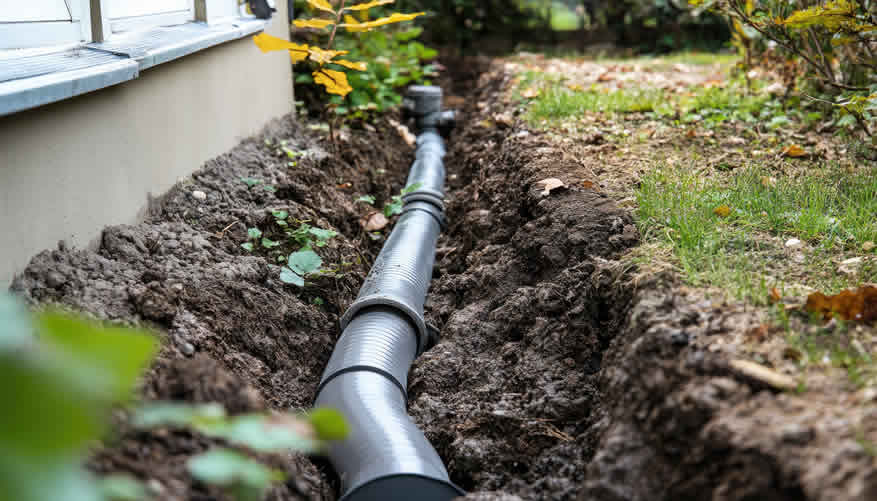
copyright image by 123rf.com
[ youtube: grade around a foundation ]
[ youtube: backyard drainage solutions ]
How to Install a Landscape Trench Drain
Landscape trench drains are an effective and efficient way to manage excess water in your outdoor spaces, preventing erosion, flooding, and water pooling.
By directing water flow away from patios, driveways, or garden areas, trench drains keep your landscape both functional and visually appealing. Below is a step-by-step guide to help you plan and install a landscape trench drain system in your yard.
[ view/print summary table: trench drain steps ]
-
1. Plan Your Layout and Outlet
Before you pick up a shovel, you need a plan. Start by identifying exactly where the water collects—whether it’s along a patio edge, driveway, or garden border.
Next, decide where that water needs to go. This could be a lower point in your lawn, a French drain, or a designated storm outlet.
The key to a functional drain is gravity. You must ensure a continuous fall, or slope, from the high end of the channel to the outlet.
A good rule of thumb is a slope of about 1% to 2% (roughly 1/8 to 1/4 inch per foot). Once you have your path visualized, always call 811 to have underground utilities located before you start digging. Safety comes first!
-
2. Mark and Excavate the Trench
Now it’s time to break ground. Lay your channel sections on the surface exactly where you want them to sit to visualize the line. Mark the outline of the trench and the run for your outlet pipe.
If you are digging in soil or removing pavers, dig a trench that is a few inches wider and deeper than the drain channel itself. This extra space allows for a stable bed of compacted gravel or concrete (usually 2–4 inches underneath and a couple of inches on each side).
If you are installing the drain in existing concrete or asphalt, you will need to cut a strip (typically 10–12 inches wide) along your line, remove the pavement, and then excavate to the required depth.
-
3. Prepare the Base and Assemble the Channel
A drain is only as good as its foundation. Add a base of gravel or lean concrete to the bottom of your trench and compact it thoroughly. This ensures the channel sits solidly and won’t sink over time.
Next, dry-fit your channel sections together. Depending on the manufacturer, these might snap or glue together.
Don’t forget to install the end cap on the "dead end" (the high side) and the outlet fitting on the discharge end. Before moving to the next step, cover the grate opening with tape or plywood to prevent debris or wet concrete from falling inside.
-
4. Set the Slope and Connect the Outlet Pipe
Place your assembled channel into the trench on top of your prepared base. Adjust it until the top of the drain is slightly below or flush with the planned finished grade. Double-check that it is pitched correctly toward the outlet.
Once positioned, connect the outlet to a solid drain pipe (commonly 4-inch PVC or corrugated pipe). Run this pipe through its own sloped trench toward your discharge point.
Use a level or string line to confirm there is a continuous fall away from the channel so water doesn’t get stuck halfway.
-
5. Anchor with Concrete or Backfill
To keep everything in place, you need to lock it in. If your drain is in a driveway or hardscape area, pour concrete around and beneath the channel to create a collar. Tap or vibrate the concrete to remove air pockets and ensure it supports the drain walls.
For lighter-duty landscape edges (like a garden bed), you can backfill around the channel with compacted gravel and soil or paver base.
Whichever method you choose, trowel the surrounding surface so the adjacent pavement or soil is slightly higher than the grate—about 1/8 inch. This slight difference helps water flow naturally into the drain rather than pooling next to it.
-
6. Finish the Surface and Test
Finally, restore the surface around your new drain. Repour any concrete or asphalt, relay your pavers, or regrade the soil and sod so everything meets cleanly at the grate edge.
Once the concrete has cured (if applicable), remove the protective tape from the grate and clean out the inside of the channel. Now for the satisfying part: run a hose over the area to test it.
Watch the water enter the drain and flow freely out of the discharge point. You have successfully reclaimed your yard from the rain!
Steps Description Key Points 1. Plan your layout and outlet Identify areas where water collects, decide the discharge point, and ensure a continuous slope for proper drainage. Always call 811 to locate utilities before digging. Plan path, ensure 1%-2% slope, prioritize safety by locating utilities. 2. Mark and excavate the trench Mark the trench layout and dig slightly wider and deeper than the drain channel for a stable foundation. For hard surfaces, remove pavement and excavate to the required depth. Outline trench, create space for gravel or concrete, account for depth. 3. Prepare the base and assemble the channel Create a compacted base of gravel or lean concrete, dry-fit channel sections, and add end caps and outlet fittings. Protect the drain opening from debris. Stable base, assemble components, prevent debris entry. 4. Set the slope and connect the outlet pipe Place the channel into the trench, ensuring the top aligns with the finished grade and maintains a slope. Connect the outlet pipe and ensure water flows without obstruction. Align drain, ensure slope, connect discharge pipe with fall. 5. Anchor with concrete or backfill Secure the drain with concrete or compacted gravel, depending on the location. Ensure surrounding surfaces are slightly higher to direct water into the drain. Stabilize with concrete or gravel, grade for water flow. 6. Finish the surface and test Restore the surface around the drain, clean the channel, and test the system by running water to ensure proper flow to the discharge point. Restore surface, clean channel, test functionality. 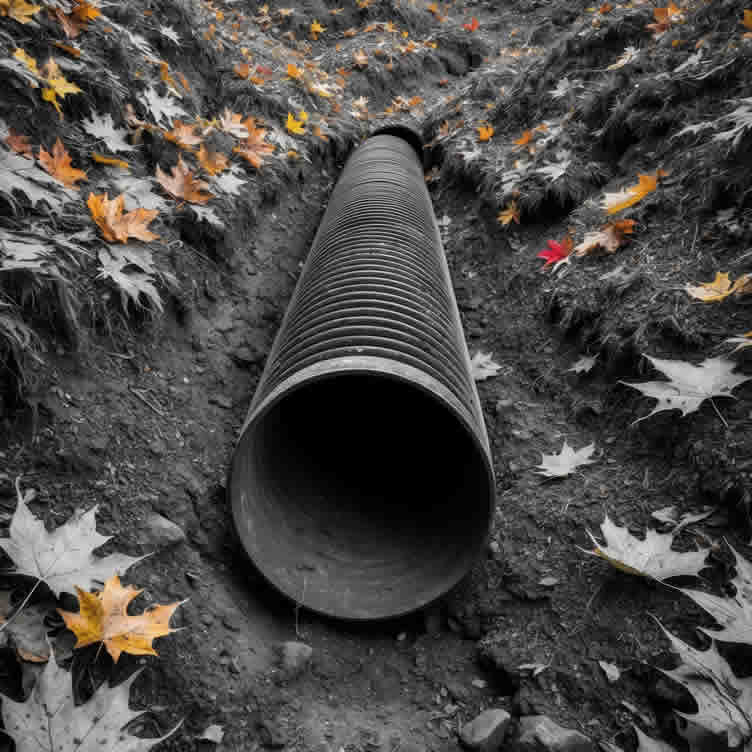
copyright image by 123rf.com
Protecting Your Crawl Space
Crawl space encapsulation plays a vital role in maintaining good foundation drainage by creating a moisture barrier that prevents water and humidity from seeping into the crawl space.
This process involves sealing the crawl space with vapor barriers, insulating materials, and dehumidifiers, which work together to reduce excess moisture and improve overall air quality.
By keeping the crawl space dry, encapsulation helps minimize water-related issues such as wood rot, mold growth, and foundation damage.
When paired with proper drainage solutions, it ensures a stable, healthy home environment and protects the structural integrity of your property.
view file: crawl space encapsulation (new win)
-
Scroll up to directory … or scroll about the use of proper drainage discharge …
-
4th Drainage: Discharge and Protection Points
An essential aspect of any effective home drainage system is the proper management of discharge and protection points.
These components ensure that water exits the system safely, efficiently, and without causing damage to your home, landscaping, or neighboring properties.
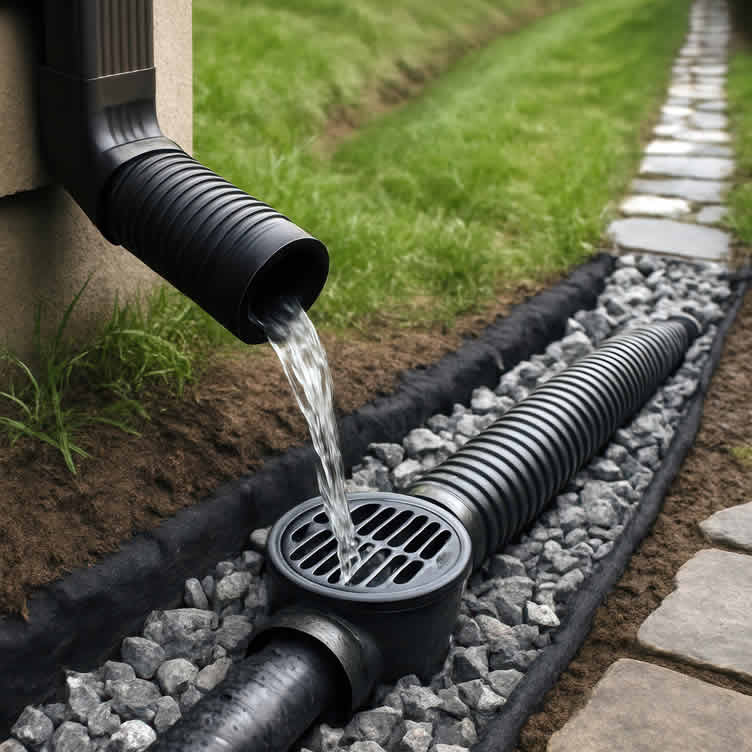
copyright image by 123rf.com
- Quick scroll to summary content …
- view image samples
- view summary table
(continue read)
Proper discharge planning prevents erosion, pooling, and basement flooding while complying with local regulations.
By incorporating well-thought-out discharge and protection mechanisms, homeowners can safeguard their property’s structural integrity and maintain a functional, aesthetically pleasing landscape.
Below are key elements of surface drainage and landscaping shaping that contribute to a robust drainage system.
-
Pop-Up Emitters or Open Outfalls
Pop-up emitters and open outfalls serve as critical points where water exits the drainage system. Positioned strategically, these discharge points allow pipes to daylight onto areas such as lawns, gravel beds, or bioswales, ensuring water is released safely and away from your home’s foundation and those of neighboring structures.
These visible outfalls are designed to mitigate erosion by diffusing water flow and directing it toward absorption zones or municipal storm systems as appropriate.
The placement of these discharge points should always comply with local codes and environmental regulations to prevent unintentional pooling or flooding on adjoining properties.
Professionals often recommend these systems for their effectiveness, low maintenance requirements, and ability to integrate seamlessly within a property’s landscaping.
-
Splash Blocks or Rock “Splash Pads”
Splash blocks or rock splash pads provide reinforcement at water exit points, particularly beneath downspouts or pop-up emitters. By dissipating the water’s energy upon contact, these protective solutions prevent soil erosion and minimize the risk of harmful water runoff.
Situated under drainage outlets, splash blocks and splash pads safeguard surfaces, direct water flow evenly onto lawns or gravel, and help maintain the structural stability of surrounding materials.
Constructed from durable materials such as concrete or weather-resistant stones, these features blend utility with design, ensuring a functional yet visually appealing addition to your property.
-
Sump Pump and Basin (If Needed)
For properties with flat lots or areas below grade where gravity alone cannot guide water to the desired outlet, a sump pump and basin system becomes an essential component.
This solution actively collects and pumps water to a higher location or discharge point, ensuring that low-lying areas do not experience water accumulation. A well-maintained sump pump system is particularly crucial in preventing basement flooding, protecting finished lower levels, and ensuring superior water management.
Homeowners should schedule regular inspections and maintenance for their sump systems to guarantee reliable operation during heavy rainfall or snowmelt events. Additionally, modern sump pumps are equipped with battery backups to provide peace of mind during power outages.
-
Other Considerations for Discharge Management
A tailored approach to discharge planning may also incorporate additional features based on a property’s unique topography, climate, and drainage needs.
French drains with visible ends or integrated bioswales can provide supplementary water management, while rain gardens designed to absorb runoff introduce an eco-friendly solution.
Every design element should take into account potential long-term impacts on the surrounding environment, emphasizing sustainability and effectiveness.
Collaboration with drainage and landscaping professionals ensures that your system accounts for your property’s specific needs and adheres to environmental standards.
Key Element Purpose Description Pop-Up Emitters or Open Outfalls Safe Water Discharge Pop-up emitters and open outfalls serve as points where water exits the drainage system. Strategically positioned, these outfalls release water onto lawns, gravel beds, or bioswales, preventing erosion and protecting foundations. They comply with local regulations and integrate seamlessly into landscaping. Splash Blocks or Rock “Splash Pads” Prevention of Soil Erosion Splash blocks and rock splash pads dissipate water’s energy at exit points, protecting against soil erosion and harmful runoff. They are placed under downspouts or emitters, constructed from durable materials, and combine functionality with aesthetic appeal. Sump Pump and Basin Water Collection and Pumping Sump pumps and basins are essential for properties with low-lying areas or flat lots. They actively pump water to higher discharge points, preventing flooding in basements and maintaining proper water management. Regular maintenance and battery backups ensure reliable operation. Other Features Supplementary Water Management Additional features like French drains, bioswales, and rain gardens provide supplementary water management. These eco-friendly solutions cater to specific topography and climate needs, ensuring sustainability and long-term effectiveness. 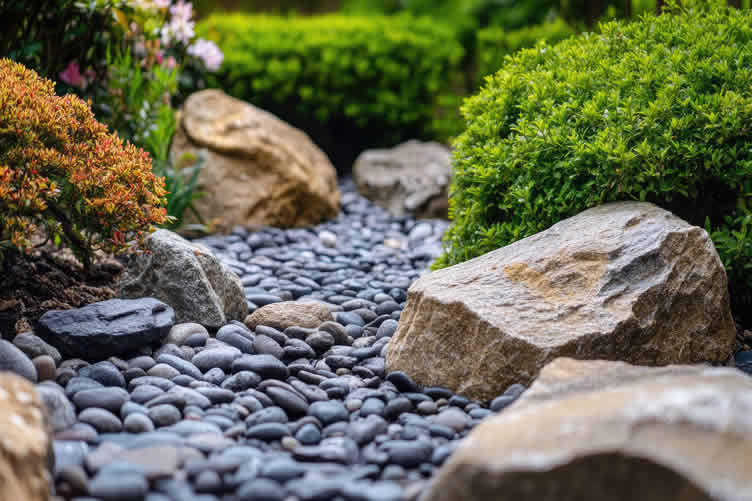
AI generated image by 123rf.com
Using a Pond for Drainage
Using a pond as a landscape drainage discharge outflow is both a functional and visually appealing solution. It allows excess water from drainage systems to be collected and stored, reducing the risk of erosion or flooding in other parts of your yard.
The pond can also be designed to blend seamlessly with your landscape, creating a serene focal point while supporting local wildlife and promoting a balanced ecosystem.
To ensure efficiency, it’s essential to incorporate proper filtration and overflow mechanisms to maintain water quality and prevent overloading during heavy rainfall.
view file: install a backyard pond (new win)
Managing Visible Drainage Discharge Outflows
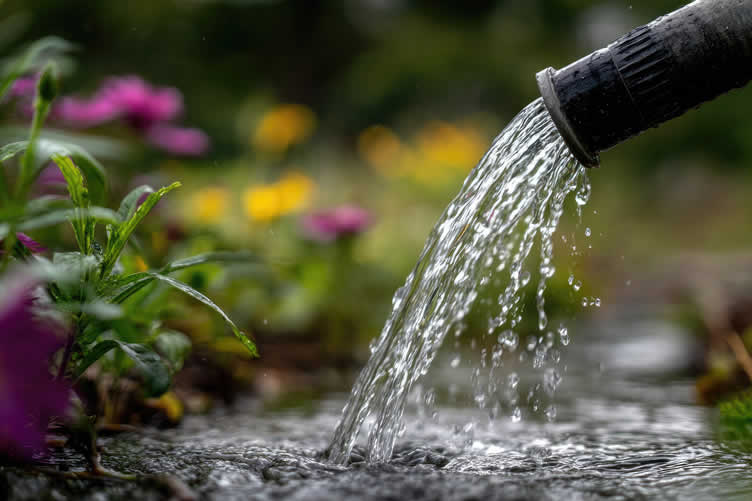
Identifying suitable locations for visible drainage discharge outflows on your property ensures proper water management and protects against erosion and flooding.
Start by assessing areas with natural slopes, as these spots naturally guide water flow away from your home. Look for low-impact zones that can diffuse water safely into absorption areas, such as landscaped beds or permeable surfaces, to minimize runoff.
Alternatively, consider directing discharge toward municipal storm systems if available and permitted.
When positioning these outflows, it’s essential to verify that they comply with local building codes and environmental regulations. Install splash blocks or energy dissipation devices, such as rock-filled basins, to prevent soil erosion at the outlet.
Avoid placing discharge points near property boundaries to reduce the risk of water pooling or flooding neighboring land.
With careful planning and appropriate redirecting of water flow, you can develop an efficient drainage system that effectively manages runoff while preserving your property’s integrity and surrounding areas.
copyright image by 123rf.com
[ amazon: rock gutter splash block ]
[ amazon: pop-up drainage emitter ]
-
Scroll up to directory … or scroll to landscaping elements for a home drainage system …
-
5th Drainage: Landscape-Friendly and Sustainable Elements
Integrating landscape-friendly and sustainable elements into your home drainage system is essential for managing water effectively while enhancing the aesthetic and environmental value of your property.
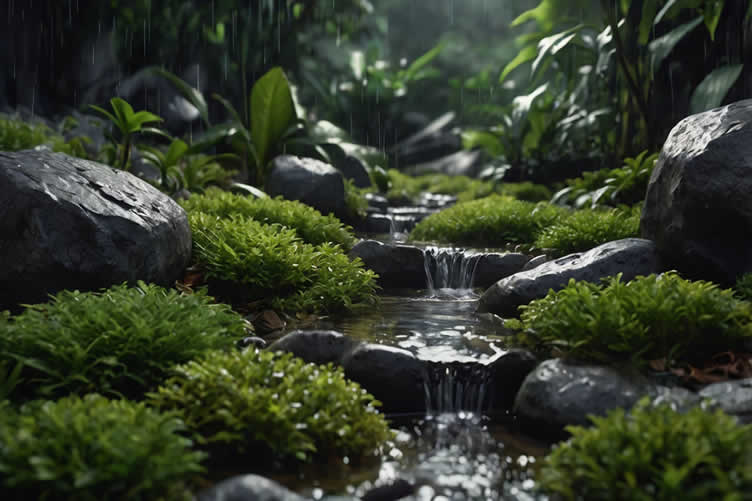
copyright image by 123rf.com
- Quick scroll to summary content …
(continue read)
By incorporating these solutions, you can reduce storm-water runoff, prevent soil erosion, and improve water infiltration, all while supporting a healthy ecosystem.
The following elements are not only practical but also seamlessly blend with your landscape design, ensuring functionality and sustainability go hand in hand.
-
Mulch and Groundcovers
Using mulch and groundcovers is a simple yet powerful way to manage water movement across your property. Mulch acts as a protective barrier, reducing the impact of raindrops on the soil, which minimizes surface crusting and allows water to drain more effectively.
Groundcovers, particularly those chosen for their dense growth and adaptability, slow down runoff, giving soil and drains adequate time to absorb water.
Mulching and applying groundcovers strategically around trees, flower beds, and other vulnerable areas can significantly reduce erosion and improve water retention in the soil.
-
Deep-Rooted Plants, Especially Natives
Deep-rooted plants, particularly native species, are essential for improving soil structure and increasing infiltration rates. The extensive root systems of these plants create channels within the soil, allowing water to penetrate deeply rather than pooling or running off.
These plants also play a critical role in stabilizing slopes, swale banks, and other areas prone to erosion, ensuring long-term soil integrity.
Native plants, specifically, are ideal because they are well-adapted to local conditions, require less maintenance, and support local wildlife, contributing to a balanced and thriving ecosystem.
-
Rain Gardens or Bioswales
Rain gardens and bioswales are innovative and aesthetically pleasing solutions for handling excess water from roofs, driveways, and other hardscapes. These planted depressions are carefully designed to temporarily hold and filter storm-water, allowing it to soak into the ground rather than rushing into storm drains.
Rain gardens can be tailored to suit various sizes and styles, making them versatile options for homeowners. Bioswales, on the other hand, serve as linear channels that direct runoff through vegetation, further promoting absorption and filtration.
Both options not only reduce the strain on municipal drainage systems but also create beautiful, functional garden spaces.
-
Permeable Pavements or Gravel Bands
Replacing traditional impervious surfaces with permeable pavements or gravel bands is another effective way to manage water on your property. Unlike solid concrete or asphalt, permeable materials such as porous pavers, gravel, or permeable concrete allow rainwater to seep through and into the ground.
These can be incorporated into driveways, walkways, or along fence lines to mitigate runoff, prevent pooling, and minimize erosion. Permeable pavements not only enhance water management but also reduce the urban heat island effect by allowing water to cool the surrounding area.
-
Additional Sustainable Elements
Other sustainable elements can also be integrated for maximum effectiveness. Creating swales—shallow trenches designed to slow and capture runoff—or building dry wells to accumulate and disperse water underground can further enhance drainage capabilities.
Adding features such as compost-filter socks at the edge of slopes can reduce the movement of sediments. Each of these methods contributes to a more comprehensive and environmentally responsible approach to water management.
By combining these landscape-friendly and sustainable components, homeowners can create a drainage system that not only protects their property but also enhances air and water quality, biodiversity, and soil health.
Collaborating with experts to design and implement these elements ensures their proper configuration and alignment with local environmental regulations and conditions, leading to a successful, long-lasting solution tailored to your specific home environment.
Sources such as the U.S. Environmental Protection Agency and local water conservation organizations provide further insights into these practices, ensuring their reliable and eco-conscious application.
Element Description Benefits Mulch and Groundcovers Using mulch as a protective barrier and groundcovers for slowing runoff helps manage water movement effectively. Mulch reduces raindrop impact on soil, prevents crusting, and improves drainage. Groundcovers with dense growth slow water flow, giving soil time to absorb water. Reduces erosion, minimizes runoff, and improves water retention in the soil. Deep-Rooted Plants, Especially Natives Plants with deep root systems, particularly natives, enhance soil structure and promote better water infiltration. These roots stabilize slopes and areas prone to erosion. Improves infiltration rates, stabilizes soils, supports local ecosystems, and reduces maintenance. Rain Gardens or Bioswales Planted depressions like rain gardens and linear channels like bioswales are designed to hold and process storm-water These features filter and redirect water into the ground. Reduces strain on drainage systems, enhances groundwater recharge, and creates functional garden spaces. Permeable Pavements or Gravel Bands Surfaces made of porous pavers, gravel, or permeable concrete allow rainwater to seep through rather than running off. Mitigates runoff, prevents pooling, reduces erosion, and lowers urban heat effect. Additional Sustainable Elements Features like swales, dry wells, and compost-filter socks improve water capture, sediment control, and drainage capabilities. Enhances air and water quality, promotes biodiversity, and ensures soil health and sustainability. 
copyright image by 123rf.com
Using Ornamental Grasses in Drainage Areas
Ornamental ground grasses are a versatile and visually appealing solution for managing drainage areas. Their deep root systems stabilize soil, preventing erosion and improving water infiltration, which reduces runoff and promotes groundwater recharge.
Additionally, these grasses can be arranged to create natural barriers that slow water flow, filtering out sediments and pollutants.
With a wide range of textures, colors, and heights to choose from, ornamental grasses can seamlessly enhance the aesthetics of drainage zones while providing an eco-friendly and low-maintenance option for sustainable landscaping.
view file: outdoor spaces with ornamental grasses (new win)
Setting Up Your Rain Garden
Creating a rain garden is a straightforward process that combines functionality with beauty. Here are the essential steps to bring your vision to life:
[ view/print summary table: rain garden setup ]
- Choose the Right Location:
Select a spot in your yard that naturally collects runoff, such as near downspouts or at the bottom of a slope. Ensure the area is at least 10 feet away from your home to prevent water from seeping into the foundation. Look for a place that gets both sun and shade throughout the day to support a variety of plant types. - Test Your Soil:
Evaluate the soil’s drainage capability by performing a simple percolation test. Dig a small hole, fill it with water, and observe how quickly it drains. If it takes more than 24 hours to drain, you may need to amend the soil with sand or organic matter to improve its permeability. - Determine the Size and Depth:
Calculate the size of your rain garden based on the amount of runoff it needs to capture. Aim for an area roughly one-third the size of the surfaces draining into it. The depth should generally be 6 to 12 inches, depending on the volume of water expected. - Design the Garden Shape:
Plan the layout in a shape that complements your landscape, such as an oval, kidney shape, or teardrop. Use garden hoses or landscape paint to outline the area for excavation. - Excavate the Area:
Dig out the outlined section to the determined depth. Slightly slope the sides to help direct the flow of water. If needed, install a berm on the downhill edge of the garden to contain and slow water flow. - Amend the Soil:
Mix the existing soil with sand and compost to create a balanced, well-draining medium that supports plant growth while allowing water to infiltrate effectively. - Plant Selection and Arrangement:
Choose native plants that tolerate both wet and dry conditions. Group plants with similar water and sunlight needs together. Include a mix of grasses, flowers, and shrubs to create layers of height and texture. Arrange taller plants in the center and shorter ones near the edges for a more defined look. - Mulch the Surface:
Add a 2- to 3-inch layer of mulch to protect the soil, reduce weed growth, and improve moisture retention. Avoid using floating mulches like bark that may wash away during heavy rainfall. - Create a Water Path:
Direct runoff from downspouts or other sources into the garden using rocks, channels, or piping. Install overflow mechanisms to ensure excess water is safely diverted during storms. - Maintain Your Rain Garden:
Regularly check for debris, weeds, and soil compaction. Prune plants as needed, replace mulch annually, and monitor drainage performance to keep your rain garden functional and thriving season after season.
Step Description Details Choose the Right Location Select an area to collect runoff. Pick a spot near downspouts or the bottom of a slope, at least 10 feet from your home. Ensure the location gets sun and shade for diverse plant growth. Test Your Soil Evaluate soil drainage. Perform a percolation test by filling a hole with water and observing how quickly it drains. Amend with sand or organic matter if needed. Determine the Size and Depth Calculate runoff capture needs. Make the garden about one-third the size of draining surfaces. Depth should be 6-12 inches based on expected water volume. Design the Garden Shape Plan a complementary layout. Choose shapes like oval or kidney. Mark the area with hoses or paint for excavation. Excavate the Area Prepare the ground for planting. Dig to the required depth with sloped sides. Add a berm at the downhill edge if necessary. Amend the Soil Improve soil quality. Mix the soil with sand and compost for better drainage and plant support. Plant Selection and Arrangement Choose and organize plants. Select native plants that tolerate wet and dry conditions, arranging taller plants in the center and shorter ones near edges. Mulch the Surface Protect the soil. Apply a 2-3 inch mulch layer to retain moisture, reduce weeds, and prevent erosion. Avoid floatable mulches like bark. Create a Water Path Direct runoff into the garden. Use rocks, channels, or piping to guide water. Add overflow systems for excess water during storms. Maintain Your Rain Garden Keep the garden thriving. Regularly remove debris and weeds, replace mulch, and monitor drainage to ensure long-term function. 
copyright image by 123rf.com
-
Scroll up to directory … or scroll to rain harvesting as part of your home drainage system …
-
6th Drainage: Rain Collection Systems
… for optimal water flow and drainage
Rainwater harvesting is an essential practice for enhancing water management at home, benefiting both your household and the environment.
By collecting and storing rainwater, you can reduce your utility costs, conserve natural resources, and prepare for dry seasons or water scarcity.
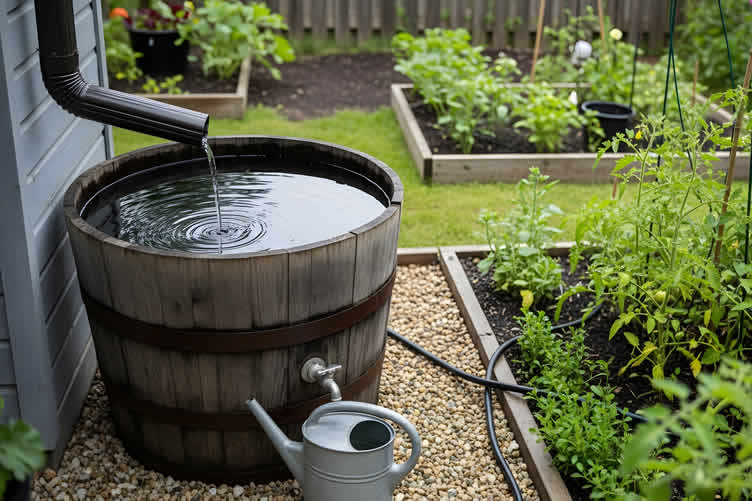
copyright image by 123rf.com
- Quick scroll to summary content …
- view image samples
- view summary table
(continue read)
Well-planned rain collection systems are tailored to your unique needs and property layout, ensuring seamless integration. From storage tanks to cisterns and overflow solutions, each component plays a critical role in maintaining efficiency and sustainability.
This guide explores various rain collection systems designed to help you capture, store, and utilize rainwater effectively.
-
Storage Tanks (Underground)
Underground storage tanks are an excellent choice for homeowners looking to maximize space while maintaining aesthetic appeal. Installed beneath the surface, these tanks are specifically designed to store large volumes of rainwater efficiently.
Ideal for homes with limited yard space or those pursuing a discreet solution, underground tanks provide reliable, temperature-controlled water storage while protecting against UV light and algae growth.
To ensure lasting performance, these tanks require careful planning and professional installation. Selecting durable materials, such as reinforced concrete or polyethylene, protects the tank from ground pressure and other environmental factors.
Routine maintenance is straightforward but essential to prevent sediment buildup and ensure proper water quality.
-
Storage Tanks (Above Ground)
Above-ground storage tanks offer an accessible and cost-effective solution for rain collection. These tanks are available in various sizes, shapes, and materials, making them adaptable to different property layouts and water usage needs.
Typically constructed from polyethylene, fiberglass, or galvanized steel, above-ground tanks provide long-lasting use with proper maintenance.
These tanks are relatively easy to install and are ideal for DIY enthusiasts. Their visibility allows for easier monitoring of water levels and quicker access for cleaning or repairs.
However, it’s important to position the tanks on a sturdy, level surface to ensure stability during operation. For optimal durability, adding UV-resistant materials or protective coatings can prevent long-term wear from sunlight exposure.
-
Rain Barrels
Rain barrels are one of the simplest and most affordable rain collection solutions. Positioned directly beneath downspouts, they are designed to capture runoff from roofs, making them perfect for smaller-scale water needs such as garden irrigation.
Rain barrels are generally made from lightweight yet durable materials, like plastic or recycled polyethylene, and can be easily fitted with spigots for direct water access.
While setup is straightforward, the key to effective use lies in maintaining cleanliness and flow efficiency. Adding a screen or mesh at the top of the barrel prevents debris such as leaves or twigs from entering the container.
Overflow outlets may also be necessary to direct excess water away from foundations and prevent flooding during heavy rainfall.
-
Cisterns
Cisterns are versatile storage systems that offer significant capacity for collecting and preserving rainwater. Available in both above-ground and underground options, cisterns often serve residential needs for irrigation, cleaning, and even potable water when properly filtered and treated.
They are constructed from a variety of materials, including concrete, fiberglass, and plastic, with designs that emphasize durability and long-term performance.
Installing a cistern requires strategic planning to match the system’s size and capacity to your household’s water requirements.
Integrating advanced filtration systems ensures water purity for drinking, while overflow outlets manage surplus rainwater efficiently. Cisterns are a valuable investment, particularly for homeowners living in regions prone to water shortages or droughts.
-
Overflow Outlets (Pond or Other)
Managing overflow is a critical aspect of any rain collection system. Overflow outlets, such as connections to a pond or another water body, act as strategic solutions to redirect excess rainwater safely.
These outlets ensure that your collection system remains functional in the event of heavy rainfall and prevents unintended flooding or damage to your property.
Professionally installed overflow systems can be customized to fit your landscape, offering opportunities to channel water to ponds, rain gardens, or natural drainage areas. This not only minimizes resource waste but also promotes ecological stability by replenishing groundwater levels or supporting local ecosystems.
It is essential to consult with an expert during the design phase to achieve proper alignment with your drainage plan and local water management regulations.
-
Other Considerations
Modern rain collection systems can include innovative features that enhance efficiency and user convenience. Automated filters, smart level indicators, and modular designs make it easier than ever to monitor and maintain your rainwater supply.
Additionally, incorporating first-flush diverters into your system can help eliminate initial runoff contaminants, ensuring high water quality for every use.
For eco-conscious homeowners, integrating green infrastructure such as permeable pavements, vegetative roofs, and rain gardens alongside your rain collection system can further amplify environmental impact.
Local guidelines or incentives may encourage the adoption of such sustainable water practices, making them even more advantageous.
-
Delivering Sustainable Solutions
Investing in a thoughtful rain collection system is not just an environmentally friendly decision—it’s a forward-thinking solution for proactive water management. No matter your project scale, proper storage, drainage, and overflow considerations ensure a system that meets your needs efficiently without compromising quality.
For professional guidance, consult trusted water management resources, such as the American Rainwater Catchment Systems Association (ARCSA) or local environmental agencies, to create a durable and effective system tailored specifically for your home.
System Description Key Features Considerations Storage Tanks (Underground) Underground storage tanks maximize space and maintain aesthetic appeal by being buried below surface level. They are ideal for large-volume storage and protect water against UV light and algae growth. Durable materials like reinforced concrete or polyethylene; temperature-controlled storage; discreet installation. Requires professional installation; careful planning to prevent ground pressure impacts; regular maintenance to avoid sediment buildup. Storage Tanks (Above Ground) Above-ground storage tanks are cost-effective, accessible, and adaptable for different property layouts and water needs. Constructed from polyethylene, fiberglass, or galvanized steel; easy to install; visible for monitoring water levels and maintenance. Must be placed on a sturdy, level surface; UV-resistant coatings or protective materials recommended to prevent wear. Rain Barrels Simple and affordable, these are positioned beneath downspouts to collect roof runoff. Perfect for garden irrigation and smaller-scale water needs. Lightweight, durable materials like recycled polyethylene; easy to set up with spigots for water access. Requires screens or mesh to block debris entry; overflow outlets needed to prevent foundation flooding during heavy rain. Cisterns Cisterns offer high capacity storage for irrigation, cleaning, or potable water with proper filtration and treatment. They can be installed above or below ground. Available in concrete, fiberglass, or plastic materials; designed for durability; supports water filtration and overflow management. Strategic planning needed for size and capacity; advanced filtration ensures water quality; ideal for areas with droughts or water scarcity. Overflow Outlets (Pond or Other) Redirects excess rainwater to ponds, rain gardens, or natural drainage systems to prevent flooding and property damage. Supports ecological stability; replenishes groundwater levels; can be customized to fit landscaping needs. Requires expert consultation for proper alignment and compliance with local regulations. 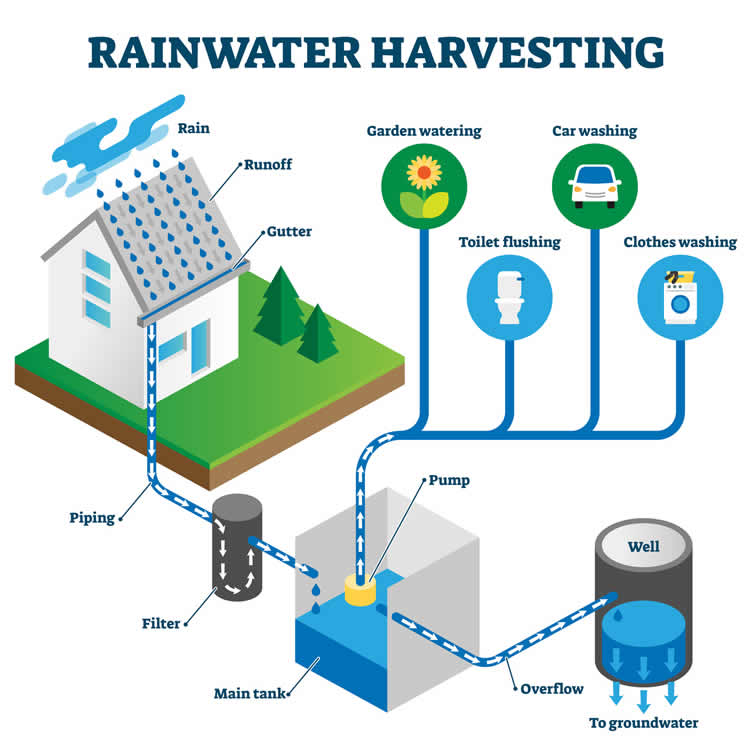
copyright image by 123rf.com
For the Birds
A thoughtfully designed drainage system paired with lush, vibrant landscaping can create the perfect haven for birds in your backyard.
By incorporating native plants, colorful flowers, and ornamental grasses, you not only manage water effectively but also provide food, shelter, and nesting opportunities for feathered visitors.
Adding features like small rocks or a gentle water flow further enhances the appeal, turning your outdoor space into a thriving, bird-friendly oasis, fostering biodiversity and natural beauty.
view file: hey birdie, birdie (new win)
Using Storage Tanks to Collect Rainwater Drainage
Installing storage tanks to collect rainwater drainage is an excellent way to manage excess runoff while offering a variety of practical and environmental benefits.
Rainwater harvesting allows you to store water during storms or heavy rainfall, which can later be used for purposes such as garden irrigation, cleaning tasks, or even non-potable household needs like flushing toilets.
This not only reduces your reliance on municipal water supplies but also helps lower water bills over time.
By effectively managing rainwater through storage tanks, you can prevent water from pooling in areas that may lead to soil erosion or damage to your property.
Additionally, it contributes to sustainability by reducing strain on storm-water systems and conserving natural water resources.
Depending on your needs, tanks come in various sizes and materials, making them adaptable to diverse budgets and project requirements. Incorporating rainwater storage into your home improvement plans is a smart, eco-friendly solution that balances functionality, cost-effectiveness, and environmental stewardship.
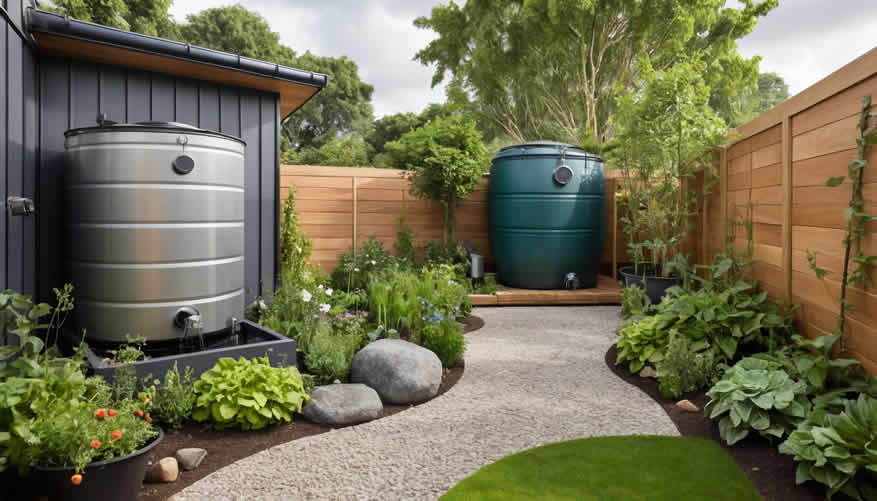
copyright image by 123rf.com
[ amazon: rain barrels ]
[ amazon: rainwater storage tanks ]
-
Scroll up to directory … or scroll to maintaining a home drainage system …
-
7th Drainage: Key Notes for Setting Up and Maintaining
… an effective home drainage system
An effective drainage system is vital for protecting your home and landscape from water damage, erosion, and potential structural issues.

copyright image by 123rf.com
- Quick scroll to summary content …
(continue read)
By understanding core principles and utilizing the right materials and methods, you can ensure your property remains functional and prepared for seasonal challenges.
Below, we address important considerations and actionable insights to help design, implement, and maintain a successful residential drainage system.
-
Best Materials for Residential Drainage Pipes and Gutters
Choosing the right materials for drainage pipes and gutters is critical to ensure durability, functionality, and cost-effectiveness. PVC pipes are a popular choice for residential systems due to their lightweight design, resistance to corrosion, and affordability.
They are highly effective for transporting water while remaining reliable over time. For gutters, aluminum is often favored because it balances strength, weather resistance, and ease of installation. It is also a budget-friendly option suitable for most homeowners.
Copper gutters, while more expensive, provide enhanced longevity and a classic aesthetic appeal, making them an excellent long-term investment. Materials should align with your specific needs, climate conditions, and projected maintenance efforts.
-
Designing Grading and Slope for Yard Drainage
Proper grading is the foundation of an effective drainage system. Your lawn or yard should be sloped away from your home’s foundation at a minimum gradient of 2%, meaning a two-foot slope for every 100 feet of horizontal distance.
This ensures water flows naturally to designated drainage areas instead of pooling near critical structures. Using laser levels or string lines can help measure the slope accurately during installation.
For complex landscapes, consider incorporating terracing, contouring, or retaining walls to redirect water efficiently while enhancing the overall aesthetics. Collaboration with a drainage expert or contractor is highly recommended to prevent miscalculations that could lead to long-term drainage issues.
-
Where to Place Catch Basins and Channel Drains
Strategic placement of catch basins and channel drains ensures water is efficiently collected and funneled away from problem areas. Catch basins should be installed in low-lying sections of your yard or near paved areas where water tends to accumulate, such as driveways or patios.
Channel drains are ideal for flush installations near walkways, garage entrances, or pool decking to prevent standing water.
Both systems need to be connected to a discharge line that directs water to a safe outflow point, like a dry well or municipal storm-water system if one is available. Placement decisions should prioritize mitigating water risks while maintaining the usability and aesthetics of the space.
-
Maintaining Your Home Drainage System
A drainage system is not a "set it and forget it" installation. Like a garden that needs weeding or a car that needs oil, your drainage infrastructure requires regular attention to function correctly. Neglect can lead to clogs, which can cause the very flooding you installed the system to prevent.
Start your maintenance routine at the roof. Inspect your gutters at least twice a year, typically in late spring and late autumn after the leaves have fallen.
Remove debris by hand or with a scoop, and flush the gutters with a hose to ensure water flows freely down the downspouts. If you have leaf guards, brush off any debris sitting on top of the screens.
Next, walk the perimeter of your home and check your downspout extensions and splash blocks. Ensure they haven’t been kicked out of place or buried by overgrown grass.
They need to be firmly attached and pointing away from the foundation. If you have pop-up emitters in the yard, check that the lids can open freely and aren’t sodded over with grass or blocked by mulch.
For subsurface drains, keep an eye on the outlets. If a pipe empties into a ditch or a lower part of the yard, make sure the opening isn’t blocked by animal nests, leaves, or sediment.
Occasionally flushing the system with a high-pressure hose from the catch basin or cleanout point can help clear out any sediment that has settled in the pipes over time.
-
Diagnosing Common Drainage Problems
Even with a good system in place, issues can arise. Learning to read your landscape will help you catch problems early before they become expensive repairs.
The most obvious sign is standing water. If you see puddles forming near your foundation after a rainstorm, it indicates that your grading is poor or your downspouts are not moving water far enough away.
Another common symptom is soil erosion. If you notice channels of bare earth forming in your garden beds or mulch washing onto the sidewalk, you are dealing with uncontrolled sheet flow. This suggests you might need to install a trench drain or add more groundcover plants to stabilize the soil.
Inside the home, a musty smell in the basement or crawlspace is a telltale sign of drainage failure. It means moisture is migrating through the foundation walls.
You might also see efflorescence—a white, powdery mineral deposit—on concrete walls, which indicates that water is evaporating and leaving salts behind. Cracks in the foundation or sticking doors and windows can point to soil shifting due to excessive water saturation or expansion and contraction of clay soils.
If you have a French drain or other subsurface pipe, watch for slow draining catch basins. If water stays in the basin for days after a rain, your pipe may be crushed by tree roots or clogged with sediment. This often requires a professional with a camera snake to diagnose exactly where the blockage is occurring.
A well-planned drainage system is not only a practical necessity but also a valuable investment in protecting your home and property.
Reliable sources such as the U.S. Environmental Protection Agency and certified landscape architects provide valuable guidance to tailor your drainage solutions to your unique needs and environment, ensuring peace of mind and a safeguard against water-related challenges.
Topic Details Key Considerations Setting Up an Effective Drainage System An effective drainage system protects against water damage, erosion, and structural issues. Understanding core principles and utilizing appropriate materials ensure functionality and preparedness for seasonal challenges. Design, implementation, and maintenance are critical to ensuring long-term success and protection of property. Best Materials for Drainage PVC pipes are ideal for their lightweight, corrosion resistance, and affordability. Aluminum is a common choice for gutters due to its strength and weather resistance. Copper gutters, though more costly, offer longevity and aesthetic appeal. Select materials based on climate, budget, and maintenance needs. Grading and Slope Proper grading involves sloping the yard away from foundations with a minimum gradient of 2%. Use tools like laser levels to ensure accuracy. Incorporate terracing or retaining walls for complicated landscapes. Consult professionals to avoid miscalculations that could cause drainage failures. Catch Basins and Channel Drains Place catch basins in low-lying or paved areas and channel drains near walkways or garages. Connect them to discharge lines leading to safe outflow points like dry wells or municipal systems. Ensure placement mitigates water risks while maintaining functionality and aesthetics. Maintaining the Drainage System Regular maintenance prevents clogs and issues. Inspect gutters twice yearly, clean debris, and ensure downspout extensions are properly placed. Check for blockages in subsurface drains and flush systems periodically. Consistent upkeep is vital to avoid flooding and ensure long-term operation. Diagnosing Problems Signs of issues include standing water, soil erosion, basement odors, or efflorescence on walls. Check for blockages or damaged components like crushed pipes or clogged basins. Address problems early with professional assistance if needed to prevent costly repairs. 
copyright image by 123rf.com
To Conceal or Highlight Drainage Systems
Using fencing, hedges, and screens is a practical yet stylish way to conceal or highlight your landscape drainage system.
Wooden or metal fencing can seamlessly blend into your outdoor aesthetic while camouflaging drainage components. Dense hedges provide a natural, lush barrier that enhances privacy and complements the greenery in your yard.
Additionally, decorative screens or trellises can multi-task as both a cover and a design feature by supporting climbing plants for added visual interest. These elements not only manage functionality discreetly but also elevate your landscape’s overall appearance.
view file: fencing, hedges, and screens (new win)
The Importance of Hiring Professional Drainage Experts
When it comes to safeguarding your home and property from water damage, enlisting professional drainage experts is a vital investment.
Properly designed roof drainage and landscaping systems work synergistically to channel water away from your home, reducing the risk of flooding, soil erosion, and foundational damage.
Professionals have the expertise needed to assess your property’s unique needs, taking into account factors like roof pitch, soil type, and local rainfall patterns.
Reliable drainage experts not only install effective systems, but also tailor solutions that integrate seamlessly with your home’s aesthetics and landscaping.
By combining advanced tools and industry knowledge, professionals can ensure your gutters, downspouts, and grading are optimized for peak performance.
Attempting to DIY such critical components can lead to costly mistakes, making professional guidance essential to protect your property’s long-term value. Proactive drainage planning is the foundation of a secure, resilient, and functional home.
LetsRenovate has partnered with HomeAdvisor™, a renowned provider of highly-rated, carefully-vetted local contractors. Start your search here by choosing the type of contractor you need and entering your zip code to find local professionals.

copyright image by 123rf.com
But Wait!
Before starting your search and evaluation of home drainage contractors, it is highly recommended to download and use this evaluation worksheet.
This resource will help you objectively rank and assess potential contractors, considering essential factors such as pricing, licensing, and referral information.

Evaluation Sheet
File Type:
-
Scroll up to directory … or scroll to conclusion and references …
-
Conclusion
… safeguarding your sanctuary for the long haul
Your home is more than just a structure; it is the space where your life unfolds. Protecting it from water damage is one of the most proactive steps you can take to preserve its value and your comfort.
A well-designed drainage system acts as a silent guardian, managing the flow of water so that your garden stays lush without drowning and your foundation remains solid.
By understanding the roles of roof runoff controls, proper grading, and subsurface piping, you move from being a passive observer of your home’s maintenance to an active steward. You don’t need to be a civil engineer to recognize a clogged gutter or a splash block that points the wrong way.
These small acts of care ensure that when the next storm rolls in, you can curl up on the couch with a warm drink, knowing that outside, your home is handling the rain exactly as it should.
Resource Citations:
- Integrity Plumbing Texas. (n.d.). Elements of a Drainage System.
- Nelson Landscaping. (n.d.). Drainage System Design.
- Erosion Management Services. (n.d.). Essential Guide to the Basic Types of Residential Drainage Systems
- Mac 5 Services. (n.d.). How Your Home’s Drainage System Actually Works and Why That Matters.
- Pleasant Plumbers. (n.d.). How Your Drainage System Works: Simple Beginner’s Guide.
- HowStuffWorks. (n.d.). Plumbing Basics.
-
Quick scroll to more interior home and decor ideas …
-
ideas to view and compare from the photo above
- What comments can you share about
home drainage system that you have used?



Tackling home drainage system needs and all other home improvements …

… save this curated directory of ideas for future reference.

… view our home remodeling guides and steps




… remodeling decisions

Download this PDF for a concise summary of what to know about …?






Outline the specific requirements needed for making …
… key home improvement and remodeling decisions
SHARE IT ..! Someone in your network might benefit from this insightful post about setting up a working home drainage system. Feel free to share it on Facebook, X (formally Twitter), LinkedIn, or Pinterest!





Budgeting Worksheet For Costing a Home Drainage System and Other Home Improvement Decisions
 File Type (excel)


Download this PDF for a concise summary of all you need to know about …?

Easily determine the dimensions you need for any home remodeling project …
… ensuring functionality, visual appeal, and compliance with building codes.









Calendar For:
Home Maintenance
File Type:
… view our sharing links below for a quick "share the knowledge"
Find Home Exterior Home Services Garage Doors Roofing Siding Waterproofing top-rated, pre-screened local contractors FREE: download contractor selection enter zip code – powered by HomeAdvisor ™
Quick Contractor Guides selecting negotiating working with inspecting

Cover image credit: home drainage system by 123rf.com
end of post … please share it!
 |
did you find home drainage system analysis helpful? If so, please share the article with your friends and family! |
Nice pic idea? Leave us a quick comment below.
And please share this pic idea within your social networks.