Summary Outline –
The laundry room is often an overlooked corner of the home, performing a vital but mundane function. However, with a little creativity and planning, it can become so much more than just a place to wash and dry clothes.
Whether you have a spacious room that’s ready for a makeover or a small laundry area that could use better organization, you can transform this space into something multi-functional, stylish, and practical.
This guide will help you explore how to optimize your laundry room’s potential, offering combo options and space-saving tips that suit your lifestyle and needs.

-
Quick scroll to first topic about transform your laundry room …

first “transform your laundry room” idea

copyright image by 123rf.com
Laundry Rm Tip 1:Why Consider a Multi-functional Laundry Room?
Notes:
-
Maximizing space is essential for modern homeowners who value functionality and efficiency. A combination laundry room isn’t just practical—it creates a versatile, enjoyable space.
From improving daily routines to boosting resale value, re-imagining your laundry room offers big benefits.
A multi-functional (combo) laundry room saves space by blending functions like storage or utility into one area, solving spatial challenges and adding convenience. Potential buyers will also see your home as well-designed, which could increase its market value.
-
Combo Laundry Room Ideas
A laundry room doesn’t have to serve just one purpose. By thinking creatively and using your space wisely, you can transform your current laundry area into a versatile, multi-functional room.
Whether you’re looking to combine laundry with a mudroom, home office, or storage area, the possibilities are endless.
With the right planning and design, a combo laundry room can save valuable space, enhance efficiency, and even increase the overall functionality of your home.
Below, we’ll explore some smart, innovative ideas to help you redesign your laundry room into a space that not only meets all your laundry needs but also doubles as a practical and stylish hub for other household activities.
-
-
Quick scroll to “combo laundry room” side notes …
-
-
1st: Laundry w/ Mudroom
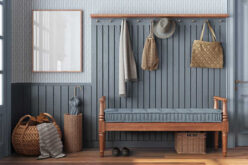
A laundry room is often tucked away and underutilized, but with some thoughtful planning, it can be transformed into a multi-functional space that combines the practicality of a mudroom.
This combination not only saves space but also helps streamline daily routines by providing a designated area for laundry, organization, and entryway storage.
A well-planned combo laundry room/mudroom enhances your home’s functionality while adding a touch of sophistication. With the right approach, you can optimize storage, improve aesthetics, and make the space work seamlessly for your lifestyle.
-
Evaluate and Plan Your Space
The first step to creating a successful combo laundry room/mudroom is evaluating your current layout. Measure the available area and identify how much space you need for both laundry tasks and mudroom elements, such as seating, hooks for coats, and shoe storage.
Consider how the flow of the room works with the rest of your home. Ideally, a mudroom is positioned near an entry point, such as the back door or garage, so it can serve as a transition area for removing shoes and outdoor gear.
If your laundry room doesn’t already occupy this space, assess whether a small renovation or relocation might be feasible to better suit your needs.
-
Prioritize Functionality
A combo laundry room/mudroom must be designed with functionality in mind. Start by separating the space into logical zones where each function—laundry and mudroom duties—has an allocated area. Opt for stackable or compact laundry appliances to save space, leaving more room for mudroom essentials like cubbies, shelving, or a bench.
Durable materials, such as water-resistant flooring, are essential, as they must withstand both laundry-related spills and muddy boots. Install proper ventilation to reduce humidity, especially if your mudroom is frequently exposed to damp conditions.
-
Add Smart Storage Solutions
Efficient storage solutions are crucial to making the most of your multi-functional space. Incorporate built-in cabinets or wall-mounted shelving above your washer and dryer for laundry detergents, cleaning supplies, and other essentials.
For the mudroom area, include storage options like individual cubbies for each family member to keep coats, hats, and shoes organized. A combination of open and concealed storage can offer both accessibility and a clean visual appearance.
Hooks and labeled bins are simple yet effective ways to maintain organization, ensuring that everything in the space has its place.
-
Doggie Washing Station
Including a doggie washing station in your laundry or mudroom can be a game-changer for pet owners. This dedicated area makes it easy to clean muddy paws, bathe your furry friends, and keep the rest of your home mess-free.
A raised tub or a tiled shower station with a handheld sprayer is ideal for minimizing back strain and ensuring convenience.
Non-slip flooring and nearby storage for towels, shampoos, and grooming tools can keep the space functional and tidy. Adding a drain in the station’s design ensures easy cleanup, while features like hooks for leashes and a drying rack enhance usability.
-
Maximize Convenience and Style
Combining a laundry room and mudroom doesn’t mean you have to compromise on style. Select materials and designs that elevate the aesthetics while keeping the room practical.
Opt for countertops above front-loading washers and dryers to create extra workspace for folding clothes. Add a stylish yet functional bench with built-in storage underneath for shoes and bags.
Choosing a cohesive color palette and soft lighting can make the space feel inviting. Neutral tones, paired with durable finishes like quartz countertops and shaker-style cabinets, add both durability and timeless style.
-
Maintain the Space for Long-Term Use
Once the combo laundry room/mudroom is operational, keeping it organized is the key to sustaining its effectiveness over time. Regularly declutter the area and ensure family members use designated spaces for their belongings.
Incorporating easy-to-clean surfaces, such as tile floors and washable rugs, can simplify maintenance. Adding small personal touches, such as a chalkboard for reminders or a row of plants near a window, can make the room more inviting without compromising its utility.
Laundry/Mudroom
resourceslaundry/mudroom views google images mudroom w/ laundry pinterest designer laundry & mudroom ideas youtube 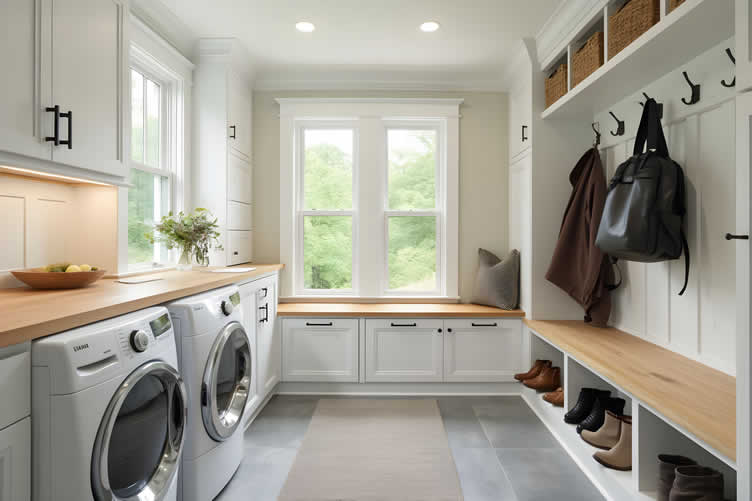
AI generated image by123rf.com

-
-
2nd: Laundry w/ Utility Room
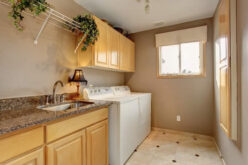
For homeowners wanting to improve functionality, turning a laundry room into a combo laundry/utility room is a smart move. This versatile space combines laundry tasks with other home functions, optimizing space and work flow.
Whether your laundry room is large or small, thoughtful planning can make it both practical and stylish. Here’s how to make the switch while keeping it functional, durable, and attractive.
-
Assess Your Current Laundry Room Layout
Before making any upgrades, it’s crucial to evaluate the existing layout of your laundry room. Determine how much space you have available and identify areas where functionality can be improved.
Take stock of unused vertical or wall space that could be re-purposed for storage or other utility purposes.
Pay attention to water supply lines, electrical outlets, and ventilation, ensuring that the infrastructure supports all potential appliances and uses in your planned combo setup.
-
Incorporate Smart Storage Solutions
To create an efficient combo laundry room/utility room, incorporating ample and versatile storage is key. Overhead cabinets, under-counter drawers, and open shelving can provide plenty of room for storing detergents, cleaning supplies, and other items.
Mount hooks or a pegboard on the wall to neatly hang mops, brooms, and tools, keeping them organized and easy to reach while staying out of the way.
Incorporate a compact closet to store vacuums, carpet cleaners, and other cleaning appliances. Opt for modular storage solutions that can evolve with your family’s changing needs, ensuring flexibility and functionality over time.
Aim for durable, moisture-resistant materials to ensure long-term use in a room where humidity can be an issue.
-
Enhance the Space with Multi-Functional Features
To make the most of your combo room, include features that serve multiple purposes. For example, install a countertop over your washer and dryer to create a folding station.
A deep utility sink can be invaluable for cleaning tasks like rinsing paintbrushes or soaking muddy shoes. If space permits, adding a small workstation or desk can transform the room into a mini-crafting area or home repair spot.
-
Prioritize Durability and Maintenance
Selecting materials that are durable and low-maintenance is critical for a room that will see heavy use. Choose waterproof flooring such as tile or vinyl planks that can handle spills and moisture without damage.
Opt for high-quality finishes on cabinetry and countertops that can withstand frequent cleaning and general wear and tear.
Adequate lighting, both natural and artificial, is also essential to maintain functionality and a welcoming atmosphere. LED recessed lighting can work well to illuminate the space evenly.
-
Add Thoughtful Design Elements
Although utility drives the primary function of this type of room, incorporating thoughtful design touches can elevate its overall atmosphere. Use a soothing color palette to create a calming environment for daily tasks.
Adding plants near natural light sources, framed artwork, or a decorative backsplash can provide visual appeal without compromising the room’s functionality.
Small details, such as labeled storage bins or attractive containers for cleaning supplies, make the room more organized and visually pleasing.
Laundry/Utility Room
resourceslaundry utility room views google images design laundry utility room pinterest laundry room ideas for functional use youtube 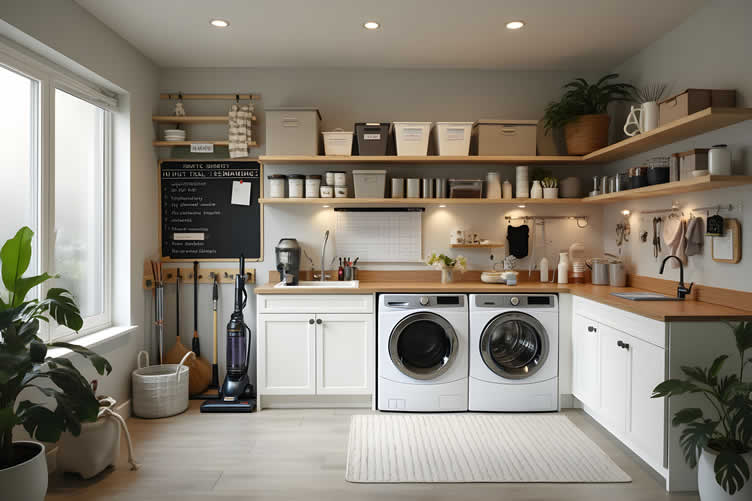
AI generated image by123rf.com
-
-
3rd: Laundry w/ Essential Home Office
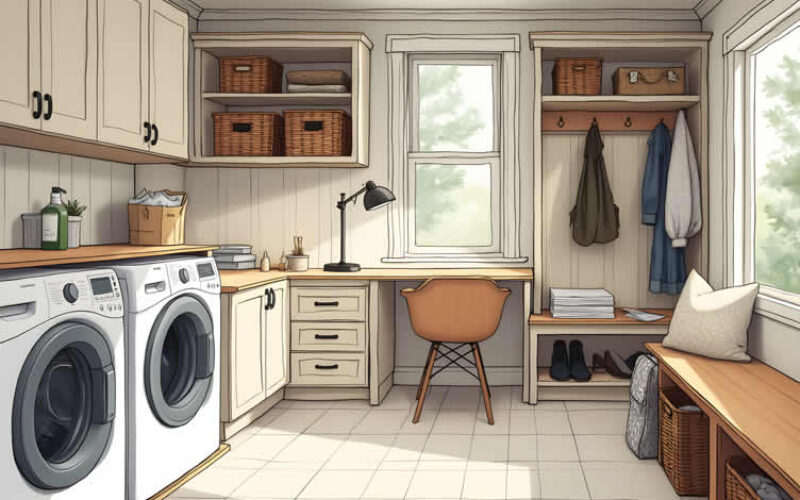
Modern homes demand creative solutions to maximize space and functionality, and combining a laundry room with a home office presents a smart, adaptable way to address both work and household needs.
This multi-purpose design not only optimizes the available space but also creates a centralized hub for family management. By integrating these two distinct functionalities thoughtfully, you can design a space that is productive, efficient, and inviting.
-
Creating a Functional Layout
The key to a successful laundry room/home office combination lies in designing a practical and ergonomic layout. Position your washer, dryer, and laundry essentials on one side of the room, with task-specific zones for folding and organizing clothes.
On the opposite side, establish a home office with a sturdy desk, comfortable seating, and sufficient lighting. Keep the two areas separate but visually cohesive by incorporating complementary design elements, such as matching cabinetry or consistent color schemes.
A functional layout ensures that both tasks can be completed without interference, making daily routines seamless.
-
Prioritizing Storage Solutions
Storage is critical in any multi-use space. Incorporate vertical storage solutions, such as shelves or cabinets, to keep laundry supplies and office essentials organized and out of the way. Pull-out drawers or hidden compartments can provide a sleek, uncluttered look while maintaining practicality.
Consider labeling containers to quickly identify laundry detergents, office supplies, or paperwork, streamlining your work flow in both functions of the room. Thoughtfully designed storage ensures that neither workspace feels cramped or chaotic.
-
Focusing on Lighting and Ambiance
Lighting plays a pivotal role in creating a productive environment. For the laundry side, overhead lighting ensures you can see stains or folds clearly, while task lighting by your workstation reduces eye strain and promotes focus.
Natural lighting, where possible, brings warmth and energy to the space. Opt for a soothing yet refreshing color palette with neutral tones or soft pastels, striking a balance that keeps the room welcoming for both work and household management.
-
Incorporating Technology
Modern technology can help bridge the functional gap between laundry and office tasks. Equip your laundry machines with smart technology that allows you to monitor progress through an app, freeing you to focus on work without frequently checking on cycles.
Similarly, ensure your office side is equipped with high-speed internet, an ergonomic setup, and tools for remote work like a video conferencing setup. Technology integration enhances efficiency, saving you time and effort in managing both responsibilities.
-
Designing for Family-Friendly Use
A hybrid laundry room and home office can also serve well as a family command center. Include a small corkboard or whiteboard to track schedules, chores, or grocery lists, creating a designated area for family communications.
A small seating area where children can do homework while you work or handle laundry further enhances the utility of the room. When designed well, this space can accommodate everyone’s needs while fostering productivity and togetherness.
-
Planning for Long-Term Adaptability
Finally, consider the future when designing this combination space. Choose modular furniture and storage that can adapt as your needs change over time.
For instance, as children grow, the area may shift from a family hub to a quieter home office or even open up for other purposes. By prioritizing flexibility, you ensure the room remains a valuable part of your home for years to come.
By combining smart planning, efficient design, and a focus on usability, a laundry room and home office hybrid offers a tailored solution for modern living.
With attention to organization, technology, and versatility, it’s possible to create a space that works for both professional and household tasks—making life easier, one room at a time.
Laundry/Home Office
resourceshome office laundry room combo google images design laundry room office pinterest create a modern multitasking laundry room youtube 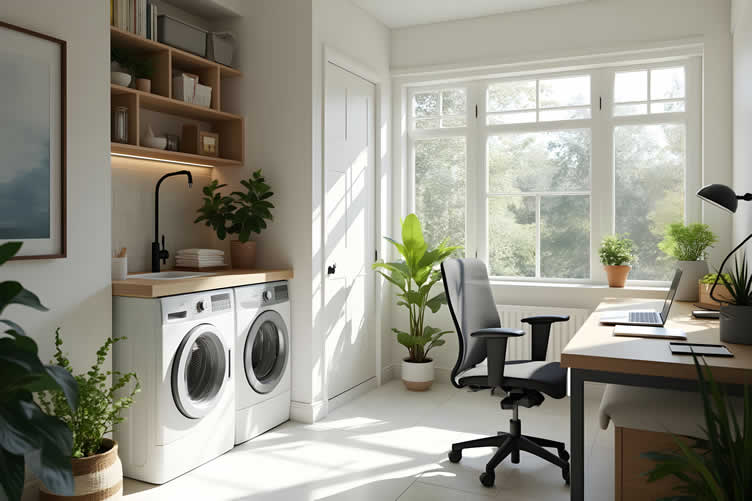
AI generated image by123rf.com
-
-
4th: Laundry w/ Small Spare Bedroom
When space is limited, a multipurpose room can maximize functionality without requiring a full renovation. Turning your laundry room into a combo laundry and spare bedroom is a great way to add guest space without losing practicality.
With smart design choices, you can create a functional, organized, and inviting area. Below, we’ll cover key tips to make this conversion a success.
-
Assess the Space and Plan Layout
The first step in converting your laundry room is to evaluate the space. Measure the area and identify underused spots.
-
Can you use vertical space for storage?
- Is there enough plumbing access for the appliances?
Plan a layout that combines both functions efficiently. Divide the room into zones—one for laundry and one for sleeping or hospitality.
The laundry area should include space for the washer, dryer, folding, and cleaning supplies. The sleeping zone should fit a small bed, futon, or daybed, along with minimal furniture like a nightstand or compact shelving.
Careful planning will make the conversion functional and free of clutter.
-
-
Use Multi-functional Furniture
To make the room serve both purposes seamlessly, choose multi-functional furniture that saves space. A daybed with storage drawers or a murphy bed that folds into the wall works well. Use cabinets or shelves above the washer and dryer for laundry supplies.
Foldable or stackable furniture adds flexibility, like a collapsible drying rack or a fold-out desk for guests. Clean, minimalist decor keeps the room stylish and efficient while maintaining an open, uncluttered feel.
-
Optimize Lighting and Ventilation
Lighting and ventilation are key in any multi-use space, including this conversion. A laundry room needs bright light for tasks like folding and spotting stains, while a bedroom benefits from calming, ambient lighting. Use layered lighting with overhead fixtures for tasks and bedside lamps for a cozy feel.
Ventilation is just as important. Laundry areas create moisture and heat, while bedrooms need comfort and fresh air. Add an exhaust fan for humidity or update windows for better airflow.
For soundproofing, consider insulated curtains or sound-absorbing panels to keep the space quiet when appliances are running.
-
Pay Attention to Decor and Comfort
To make the spare bedroom functional and inviting, focus on decor. Use a neutral color palette that suits both a laundry room and a sleeping space. Add warmth with soft textiles like rugs and throw pillows.
Incorporate practical touches to personalize the space. A fold-away ironing board can double as a desk, and a storage bench can provide seating and extra functionality. The room should feel thoughtfully designed, not an afterthought.
-
Ensure Privacy and Convenience
If you plan to use this room for guests, make sure it offers privacy. A folding screen or a sliding door can help divide the space as needed. Additionally, keep the room stocked with essentials, such as bedding, towels, and toiletries, to ensure your guests feel welcome.
Convenience should also extend to the laundry area. Having laundry essentials easily accessible while keeping them discreetly stored adds to the room’s overall functionality.
Using labeled baskets or bins for sorting and organizing helps maintain order without interrupting the space’s dual purpose.
-
Future-Proof the Space
Lastly, consider how this room might evolve over time. While it may start as a combo laundry room and guest bedroom, planning with flexibility in mind ensures it can adapt to new needs.
Whether as a home office, a children’s playroom, or simply extra storage, the right design choices now can make future transitions seamless.
Laundry/Spare Bedroom
resourceslaundry bedroom combo google images guest bedroom laundry room combo pinterest 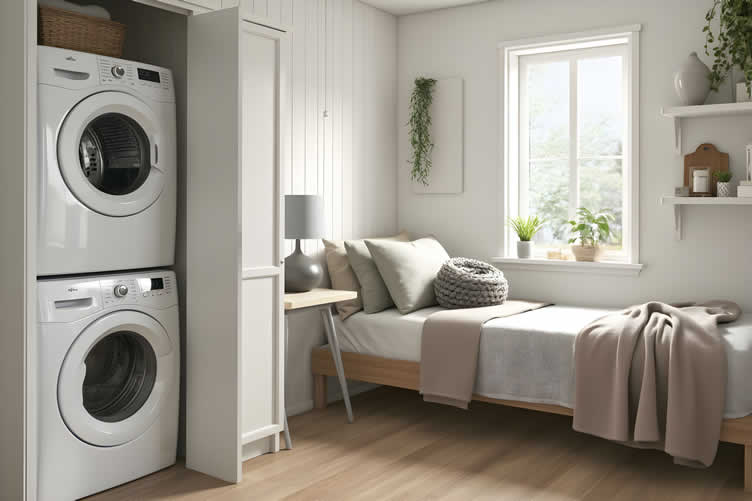
AI generated image by123rf.com
-
-
5th: Laundry w/ Extra Storage Space
Transforming your laundry room into a dual-purpose space with extra storage starts with smart planning and creative solutions. Converting this area to include storage enhances organization and maximizes functionality.
Whether you’re in a small apartment or a larger home, this upgrade makes your space more efficient while keeping it clean and stylish.
-
Assess and Plan Your Space
Start by assessing the size and layout of your laundry room. Knowing its dimensions, wall space, and existing plumbing or electrical setup helps you maximize the area.
Look for unused vertical space or awkward corners that could be used for storage. Sketching a basic plan or consulting a designer can help visualize your goals.
Think about what you need to store—seasonal items, cleaning supplies, or bulk goods are common options. Categorizing these items helps create efficient zones, keeping the space organized and functional while ensuring easy access.
-
Invest in Space-Saving Storage Solutions
Smart storage systems are key to maximizing space. Wall-mounted shelving, adjustable cabinetry, and pull-out racks can add storage without taking up floor space. Closed cabinets keep things tidy, while glass-paneled doors add a sleek touch.
Using the backs of doors is another great way to save space. Over-the-door compartments or slim organizers can hold cleaning supplies or small items, freeing up shelves for larger needs.
Multi-functional furniture like foldable countertops or hideaway ironing boards can blend into the laundry room while adding extra utility.
-
Enhance Lighting and Aesthetics
Good lighting is essential for making a dual-purpose space both attractive and functional. Use bright, energy-efficient LED lights for clear visibility, and add under-cabinet lights or recessed fixtures to avoid shadowed corners.
Stick to a cohesive color palette, with neutral tones creating a clean, inviting look. Reflective surfaces like mirrors or glossy tiles can make the room feel larger and brighter.
Small touches like potted plants or stylish storage baskets enhance both functionality and appeal.
-
Maintenance and Accessibility
Once your transformation is complete, maintaining order is key. Label storage compartments to easily find and replace items.
Use durable, easy-to-clean materials to keep surfaces pristine with minimal effort. Since laundry rooms are prone to humidity, invest in exhaust fans or dehumidifiers to protect items and prevent mold.
Finally, keep the space adaptable. Storage needs change over time, and a flexible setup ensures the room evolves with your household. Prioritizing flexibility makes this space a long-term asset in your home.
-
Make the Change Today
Converting your laundry room into a combo laundry and storage space doesn’t have to be daunting. With thoughtful design, functional storage solutions, and a bit of creativity, you can create a space that serves your household’s needs efficiently and beautifully.
By putting these tips into action, you’ll not only improve the usability of your home but also add a sense of order and style to a commonplace area.
Laundry/Extra Storage
resourceslaundry room with extra storage google images laundry room home storage ideas pinterest super creative laundry room storage ideas youtube 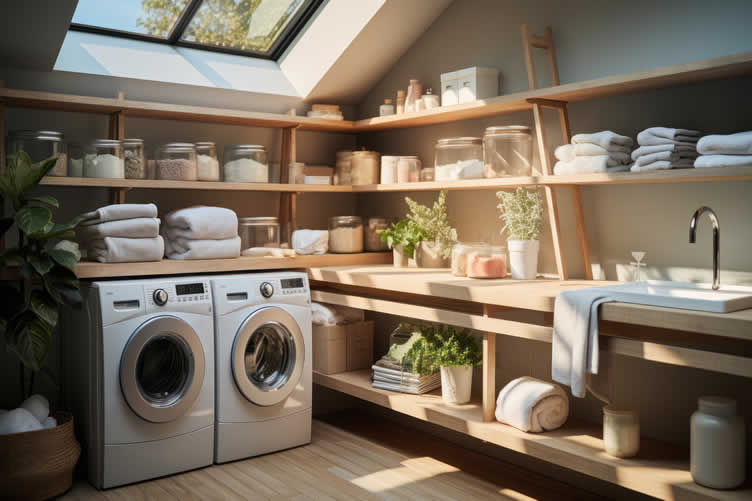
copyright image by 123rf.com
-
-
6th: Laundry w/ Crafts Room or Workshop
Transform your laundry room into a multi-functional space that serves both your laundry needs and doubles as a crafting area or workshop. Modern home designs focus on functionality, making this transformation a great way to add value and make better use of unused space.
Whether you’re a crafter, DIY enthusiast, or just want a more efficient space, this upgrade can meet your needs without costly renovations.
-
Designing for Dual Functionality
The key to turning your laundry room into a combo space is thoughtful design. Start by assessing the current layout of your laundry room and identifying areas that can accommodate additional functionality.
For example, if one side of the room is dominated by your washer and dryer, can the opposite side be dedicated to work surfaces or storage for tools and supplies?
Invest in durable, easy-to-clean countertops to serve as your crafting or workbench area. Look for materials such as laminate or butcher block, which are both aesthetically pleasing and practical for handling wear.
Ensure that the height of the work surface is ergonomic for working on crafts or projects. Integrating modular shelving or cabinetry above the workbench can help keep tools, paints, or crafting supplies organized while maintaining a clutter-free workspace.
-
Boosting Storage Efficiency
Storage is key in a dual-purpose room. To manage laundry needs and crafting or workshop gear, use a mix of closed and open storage.
Closed cabinets can hide items like detergents, while open shelves can display jars, tools, or supplies for easy access. Clear containers are also great for keeping items visible yet tidy.
If space is tight, try vertical storage. Mount pegboards to hang tools or scissors, and use overhead racks for less-used items. Adjustable shelves let you customize storage as your needs change, keeping the space flexible.
-
Improving Lighting and Electrical Access
Good lighting is essential for laundry tasks, crafting, or workshop projects. Upgrade standard overhead lights with brighter LEDs or install task lighting, like under-shelf lights above a workbench. Adjustable desk lamps are great for detailed crafts or repairs.
Make sure your space has enough outlets for your washer, dryer, and any tools or equipment. Surge-protected power strips and extension cords can improve convenience and safety.
Don’t forget proper ventilation, especially if painting, soldering, or using materials that produce fumes.
-
Personalizing the Space
To personalize your combo laundry and crafting space, add practical and creative touches.
Use a color palette that inspires creativity, such as soft pastels, neutrals, or a bold accent wall. Hang corkboards or magnetic boards to track project ideas or to-do lists.
Install hooks or racks for aprons and smocks to keep them handy. Add a comfortable stool or chair that works for crafting or resting during laundry. These small additions make the space both functional and enjoyable.
-
Why This Conversion is Worthwhile
Combining your laundry room with a craft space or workshop boosts your home’s utility and value. This transformation makes daily chores more enjoyable and lets you pursue hobbies or tackle repairs with ease.
Experts say dual-purpose rooms are increasingly popular with homebuyers, making this upgrade a smart investment for your lifestyle and resale value.
Laundry/Crafts Room Views
resourceslaundry room craft room combo google images sewing station in laundry room pinterest 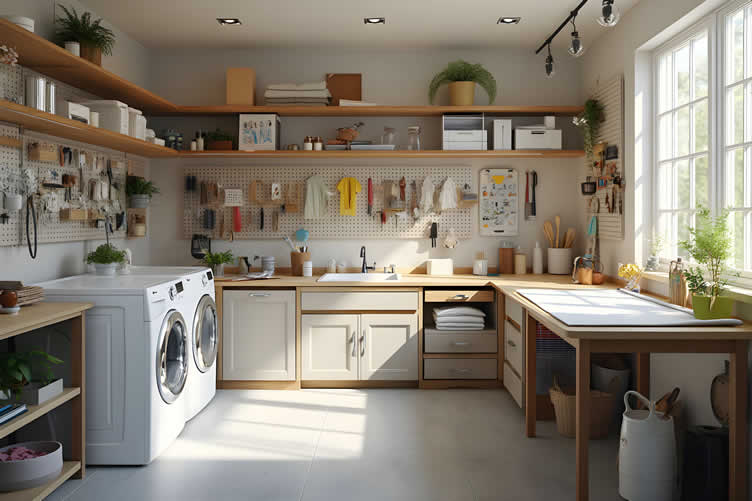
AI generated image by123rf.com
-
-
-
ideas to view and compare from the information discussed above
Scroll up to directory … or scroll to next section about transform your laundry room …

… remodeling decisions


addressing ideas to transform your laundry room and other home improvement needs …

… grab this directory of ideas for future use



… view below for some remodeling ideas and needs



Budgeting Worksheet For Costing Home Remodeling and Home Improvement Decisions
 File Type (excel)
second “photo remodeling” idea
copyright image by 123rf.com
Laundry Rm Tip 2:Doing a Remodel: More Than Just a Utility Space
Notes:
-
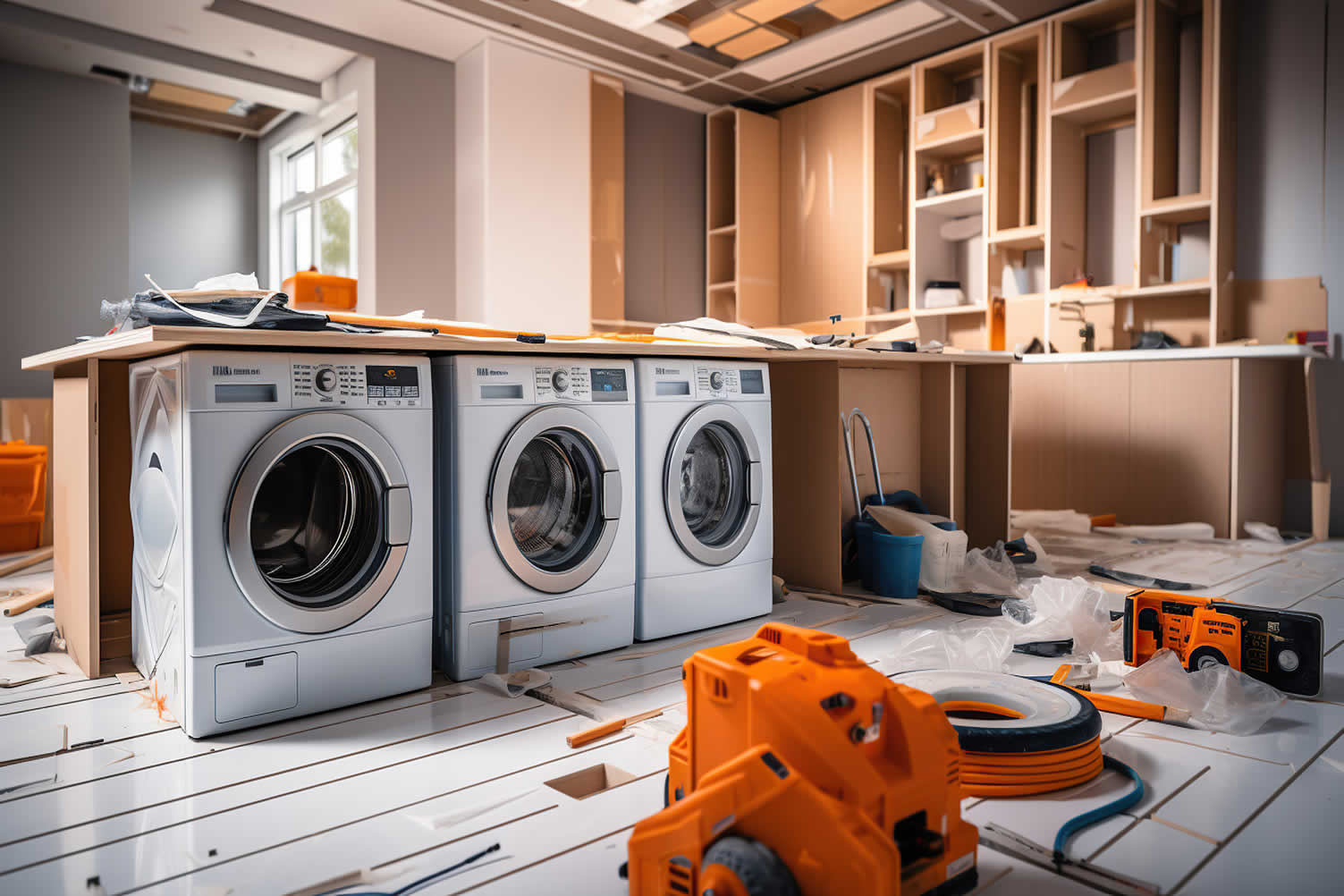
Whether you’re dealing with a cramped, outdated layout or simply want to maximize the potential of your home, a laundry room remodel can transform this often-overlooked area into a hub of utility and organization.
This section explores remodeling ideas to re-imagine your laundry space for utility, efficiency, and added value to your home.
-
Identifying Laundry Room Problems
Before tackling a remodel, it’s essential to identify what’s not working within your current laundry room setup. Problems in laundry room design often stem from limited space, poor work flow, and lack of storage or multi-purpose functionality.
One of the most common complaints is inadequate space for folding clothes, ironing, or organizing laundry essentials. For larger households, bottlenecks can appear when the area is too confined, preventing multiple people from using the space efficiently.
Additionally, laundry rooms that aren’t well-ventilated or are far removed from the central parts of the home can feel disconnected and inconvenient.
These issues highlight the importance of intentional utility space design. The solution often lies in rethinking the placement and purpose of this room altogether, which brings us to three transformative remodel ideas.
-
-
Quick scroll to “remodeling idea” side notes …
-
-
1st: Garage Remodel
When families outgrow traditional utility spaces or seek to optimize the functionality of their homes, the garage often presents an untapped opportunity. Converting a garage into a combination laundry room and multipurpose utility area is a practical and innovative solution.
This remodel can resolve spatial constraints, improve household efficiency, and add overall value to your home. However, transforming your garage into a dual-purpose space requires careful planning and adherence to specific structural and design considerations.
To help you make this change effectively, here are the key factors you need to consider before starting a garage remodel for a combined laundry and utility space.
-
Assessing Space and Ventilation
Before undertaking the remodel, evaluate the dimensions of the garage to ensure that it can comfortably accommodate a laundry setup while retaining any other intended functionalities.
Sizing factors include washing machines, laundry folding stations, storage cabinets, and any additional utilities like a workshop or mudroom. Proper ventilation is essential in creating a functional and comfortable space, especially in garages not initially designed to handle the moisture and heat generated by laundry equipment.
observation note
Integrating a laundry area into the garage allows you to design a multi-functional space. For example, you can include a mudroom area with seating for changing shoes, cubbies for coats, and hooks for backpacks.
Adjacent to this, consider adding cabinetry and countertops to create a functional laundry zone with space for folding clothes, storing detergents, and even housing a utility sink.
One feature that elevates this design is a utility corner equipped with a workbench or crafts table. This transforms the space from a simple laundry setup into a comprehensive home management hub.
Expertise from an HVAC professional may be required to install vents, dehumidifiers, or appropriate air-circulation systems to maintain air quality and protect your appliances.
-
Insulating the Area for Comfort
Garages are often uninsulated, leaving them susceptible to extreme temperature fluctuations. Insulating the walls, ceiling, and even the garage door can greatly enhance the usability of the remodeled space.
Consider using spray foam or rigid foam insulation to ensure energy efficiency and a consistent temperature year-round. This will not only create a more comfortable environment for laundry and utility tasks but also prevent damage to your appliances from extreme cold or heat.
-
Flooring and Waterproofing Considerations
Since garages are typically designed with basic concrete floors, upgrading the flooring surface is an important step in a garage remodel. Epoxy coatings or sealed concrete are durable, water-resistant options that can handle the wear and tear of a combined laundry and utility space.
More premium options like tiled flooring can be used for a polished aesthetic if budget allows. Additionally, waterproofing the space ensures that leaks from laundry machines do not cause long-term damage. Install drainage systems where necessary for extra protection.
-
Plumbing and Electrical Upgrades
One of the most complex aspects of converting a garage is ensuring adequate plumbing and electrical outlets to meet the needs of laundry appliances. Consult a licensed plumber and electrician to install water connections, drainage pipes, and a proper 240-volt outlet for high-capacity machines.
Plan for sufficient lighting by incorporating bright overhead fixtures and task-specific lighting to create a well-lit, functional workspace. Electrical updates may also involve adding energy-efficient outlets and integrating the space with smart home systems for added convenience.
-
Design for Multi-functionality
The beauty of a garage remodel lies in its ability to serve multiple purposes. Plan the space with specific zones for different activities.
For example, designate one area for laundry equipment and storage, while keeping another section open for versatile use such as a mudroom, pet washing station, or hobby space.
Maximizing vertical storage with shelves and wall-mounted hooks can allow you to make full use of the available space without compromising functionality. Thoughtfully chosen cabinetry and worktops can make the area feel cohesive instead of like a traditional garage.
-
Follow Local Building Codes and Permits
Any major home renovation, including garage conversions, is likely subject to building codes and permit requirements in your area. Research local regulations to ensure compliance with zoning laws and safety standards.
For seamless execution, work with a licensed contractor who understands these concerns and can guide you through the process. Securing the proper permits upfront will protect you from legal issues down the line and ensure the remodel meets professional standards.
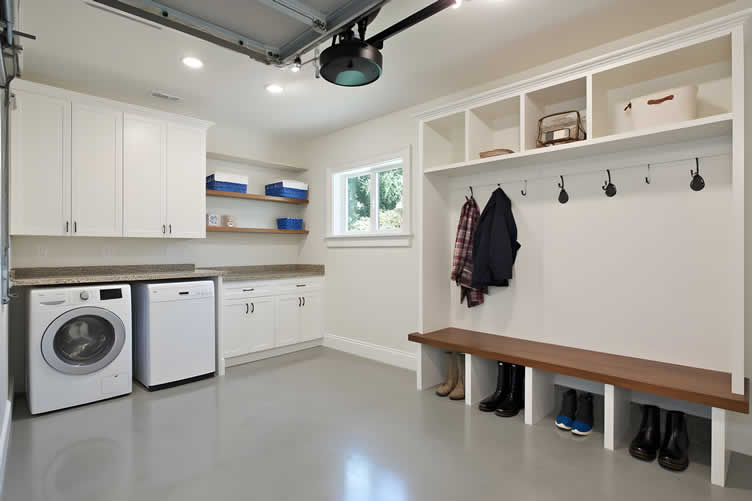
AI generated image by123rf.com
[ view images: garage laundry ideas ]
[ youtube: DIY garage laundry room makeover ]
-
-
2nd: Bathroom Integration
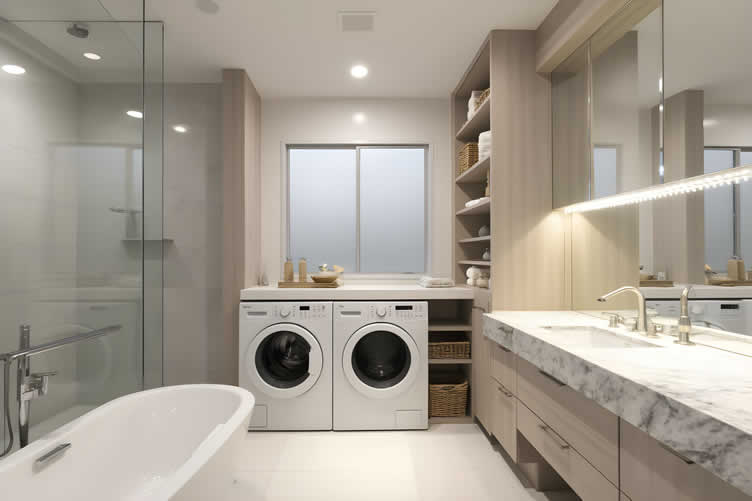
Converting a part of underutilized master or secondary bathroom to include laundry facilities can be a smart and efficient way to optimize your home’s functionality. It’s particularly useful for homeowners with limited space or those seeking convenience.
observation note
By enclosing a washer and dryer behind a cabinet or sliding door, you can achieve a seamless look that doesn’t disrupt the aesthetic of the bathroom.
This setup is particularly beneficial for homeowners who want their laundry appliances closer to bedrooms, saving time and effort when collecting dirty laundry or putting clean clothes away.
However, such a remodel requires meticulous planning to ensure practicality, compliance with building codes, and seamless design integration. Below are key considerations to guide you through the process, ensuring a professional and effective transformation.
-
Understanding Plumbing Requirements
The most critical aspect of integrating laundry facilities into a bathroom is the plumbing configuration. Washing machines require access to both hot and cold water supply lines, along with a proper drainage system to handle wastewater.
It’s important to assess whether your current bathroom plumbing can handle the additional load or if modifications are necessary.
Consulting a licensed plumber is crucial to evaluate pipe capacities, water pressure, and drainage solutions. They can also ensure compliance with local plumbing codes and regulations.
-
Electrical Considerations
Unlike standard bathroom fixtures, laundry appliances such as washing machines and dryers have specific electrical needs. Dryers, in particular, often demand higher voltage outlets (such as 240V), which may not be available in your current bathroom setup.
A professional electrician can determine the feasibility of upgrading your electrical infrastructure and provide guidance on achieving proper circuit protection.
Additionally, incorporating ground fault circuit interrupter (GFCI) outlets, which are required in wet areas to enhance safety, is a non-negotiable aspect of the project.
-
Ventilation and Moisture Management
Adding laundry appliances to a bathroom increases moisture in a space already prone to humidity. Proper ventilation is essential to prevent mold and mildew growth, which can compromise both the structural integrity of the room and your family’s health.
Installing a high-capacity exhaust fan or upgrading your existing ventilation system is a vital step. For dryers, you’ll also need to ensure proper venting to expel hot air and moisture to the exterior of your home, which may require additional ductwork.
-
Space and Design Integration
Optimizing space is another important factor when adding laundry facilities in a bathroom, especially in smaller homes. Stackable washer and dryer units are an excellent space-saving option.
You should allocate enough room to accommodate appliances without disrupting the bathroom’s primary functionality. Consider custom cabinetry or built-in alcoves to seamlessly blend the laundry area into the existing design, maintaining a cohesive and aesthetically pleasing appearance.
-
Permits and Compliance
Before starting any remodeling work, ensure that you obtain the necessary permits. Remodeling projects involving plumbing and electrical modifications, as well as vent systems, almost always require approvals from local building authorities.
Non-compliance can result in fines, delays, or even the requirement to undo completed work. Working with licensed contractors who understand these requirements will help ensure your project adheres to local codes and standards.
-
Budget Planning
A bathroom-to-laundry remodel can vary widely in cost, depending on the scope of work, the condition of your current fixtures, and the appliances you select.
Beyond the obvious costs of materials and labor, you should budget for potential upgrades to plumbing, electrical systems, and ventilation. It’s wise to get detailed estimates from contractors and plan for a contingency fund to cover unexpected expenses.
Remember, cutting corners on essential work can lead to costly repairs or even unsafe conditions in the long run.
-
Long-Term Value
While incorporating laundry facilities into a bathroom requires a significant initial investment, it can enhance your home’s overall functionality and value.
A thoughtfully designed and properly executed remodel can make everyday living more convenient while appealing to future homebuyers seeking efficient, multipurpose spaces.
By prioritizing quality craftsmanship and compliance with building standards, you’re ensuring a project that will stand the test of time.
-
Final Thoughts
Relocating your laundry appliances to a bathroom also opens up the potential to re-purpose your existing laundry room. This space can be converted into a much-needed bedroom, storage room, or even a small home office, depending on your specific needs.
It’s a practical way to optimize square footage while keeping laundry duties centralized near living spaces.
AI generated image by 123rf.com
[ view diagram: bathroom laundry room combo ]
[ youtube: bathroom remodel with integrated laundry ]
-
-
3rd: All-Season Room Addition With a Laundry Space
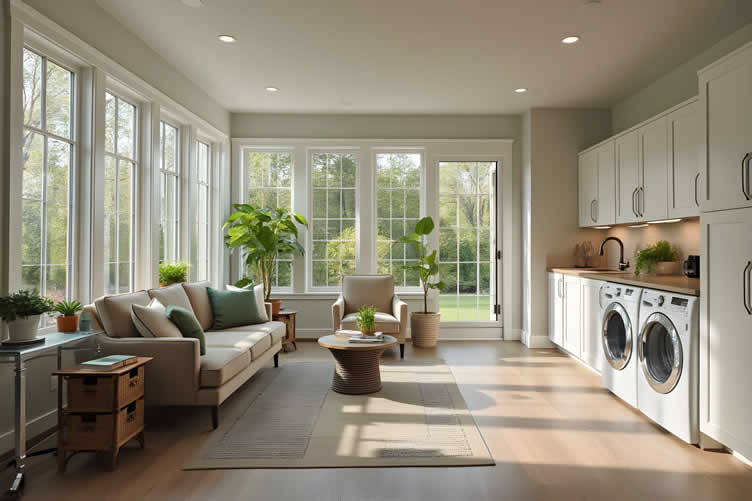
Adding an all-season room to your home that also integrates a functional laundry area is a versatile and modern solution for homeowners looking to expand their living space.
This type of addition not only enhances the overall value of your property but also provides a seamless blend of utility, style, and comfort.
observation note
An all-season room provides the perfect opportunity to craft a bright and functional laundry area. Full-length windows can bring in natural light, creating a visually pleasing and inviting space to tackle chores.
Within this extension, you can include dedicated storage solutions, multiple work surfaces, and even a small seating area or reading nook so the space serves multiple purposes.
However, undertaking such a project requires careful planning, attention to detail, and expertise to ensure you achieve a space that meets your family’s needs while adhering to building standards and best practices.
Below, we’ll guide you through what you need to know to take on this home addition successfully, from initial considerations to the best practices in maximizing the space for year-round comfort and convenience.
-
Planning for the Addition
The first step in creating a combined all-season room and laundry area is identifying your goals and assessing your space requirements. Determine how you want to use this addition beyond its primary function.
For instance, will the all-season room also serve as a family gathering area or a quiet retreat? Consider the size, orientation, and placement to maximize daylight and energy efficiency.
Professional input from architects, builders, and designers is invaluable at this stage. They can help refine your vision and ensure compatibility with your existing structure.
Additionally, checking local zoning laws and building regulations is crucial before breaking ground, as these will determine what is feasible and compliant for your property.
-
Designing for Comfort and Efficiency
Designing an all-season room means thinking beyond aesthetics; comfort and functionality must be prioritized. Invest in high-quality insulation and energy-efficient windows to maintain a comfortable indoor temperature during all seasons.
Heating and cooling systems, such as ductless mini-splits or radiant floor heating, are excellent options for climate control without overhauling your home’s existing systems.
For the laundry area, focus on practical design elements, such as proper ventilation for dryers and durable, moisture-resistant flooring.
Incorporating thoughtful cabinetry, counter space, and even a utility sink can ensure that the laundry area is both efficient and visually integrated within the overall layout of your all-season room.
-
Addressing Electrical and Plumbing Requirements
One of the most complex aspects of combining an all-season room with a laundry space is the need for specialized electrical and plumbing work.
This includes installing adequate power outlets, lighting fixtures, and connections for washers and dryers in compliance with local codes.
Proper drainage, water supply lines, and waterproofing are essential to prevent leaks and moisture buildup that could compromise the structure.
Hiring licensed contractors ensures that the electrical and plumbing systems are designed and installed safely and correctly. Their expertise helps avert costly errors that could arise from improper installations.
-
Selecting Materials that Enhance Durability
The success of any home addition lies in selecting materials that can withstand the demands of daily use while maintaining a refined aesthetic.
For the all-season room, choose weather-resistant materials for windows, doors, and roofing to prevent wear from temperature fluctuations and humidity.
For the laundry area, opt for materials such as ceramic tiles, quartz countertops, and composite shelves that can resist water damage and stains while being easy to clean.
Merging style and practicality helps create a cohesive and long-lasting space.
-
Maximizing Multi-functionality
One of the greatest advantages of a combined all-season room and laundry space is its potential for multi-functionality.
By incorporating flexible furniture, built-in shelving, and open layouts, the room can transition from a laundry hub to a family room, home office, or hobby space.
Thoughtfully planned lighting solutions, such as recessed lighting and dimmers, can further enhance the versatility of the room, allowing you to create distinct atmospheres for different times of day and uses.
-
Final Considerations
This type of remodel is particularly valuable in houses with limited square footage, as the additional room opens up various possibilities for customization.
While this project requires a larger investment, it can significantly enhance both your home’s functionality and value. With the right approach, this addition can become a cherished and highly functional part of your living space for years to come.
AI generated image by 123rf.com
[ view ideas: sunroom laundry room combo ]
[ youtube: DIY laundry room // sunroom makeover ]
-
-
4th: Other Relocating Ideas and Considerations for Laundry
Relocating your laundry facilities is not just about optimizing space but also about enhancing convenience, efficiency, and functionality in your home.
By thinking creatively and purposefully, you can re-imagine how laundry fits into your household’s daily operation while adding value to your living environment.
Below are some innovative solutions and key considerations to help maximize the potential of your laundry area relocation.
-
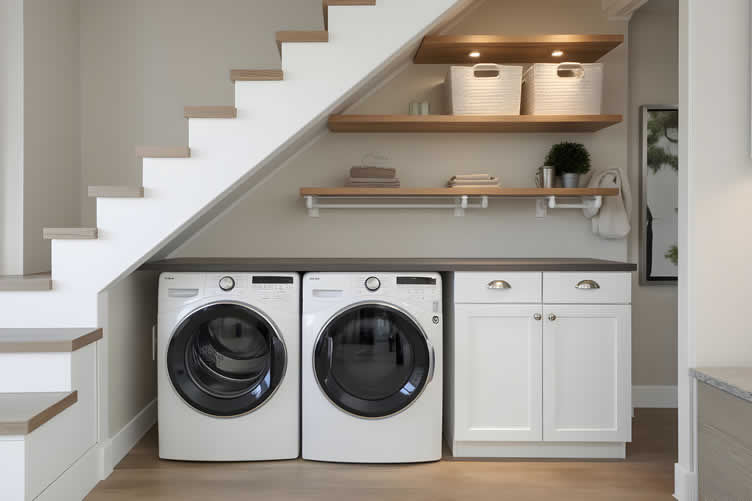
Under-stairs Laundry Nooks
One often-overlooked location for a laundry area is the space beneath a staircase. This compact area can be optimized with clever cabinetry and retractable doors to conceal the laundry machines when not in use.
Utilizing this "dead" space transforms it into a highly functional nook without sacrificing square footage elsewhere in the house. When designing an under-stairs laundry nook, consider the height and depth of the space to ensure that standard appliance dimensions will fit comfortably.
Proper ventilation, waterproof finishes, and soundproofing are also essential for maintaining safety, longevity, and a quieter household.
-
Hallway Closets
For small homes or apartments where square footage is at a premium, converting a hallway closet into a laundry zone can be an efficient solution. Hallway closets typically sit unused or underutilized, making them an excellent candidate for re-purposing.
The key to successfully turning a closet into a laundry space lies in thoughtful planning. Ensure proper plumbing and electrical connections are professionally installed, and consider adding cabinetry or shelving to hold laundry essentials.
Sliding or bi-fold doors can help maintain a neat and unobtrusive appearance, blending seamlessly with the rest of the home.
-
Outdoor Access Points
Positioning the laundry area near an exterior door offers a practical advantage for homes with active households, pets, or outdoor enthusiasts.
Placing the laundry zone near this access point allows for immediate management of outdoor messes, from muddy boots to sandy swimwear, before they are tracked into other areas of the house.
This setup is particularly useful in homes located in rural or coastal areas. Keep in mind the importance of insulation and weatherproofing when placing a laundry space near an exterior door to prevent drafts and maintain energy efficiency.
-
Energy-Efficient Upgrades
When relocating your laundry facilities, it is the perfect time to consider upgrading to energy-efficient appliances and ensuring the area is properly insulated.
Today’s high-efficiency washers and dryers not only reduce water and electricity consumption but also often feature advanced settings to extend the life of your clothes.
Pairing these appliances with proper insulation for walls, pipes, and flooring helps reduce energy costs and maintain consistent temperatures. Additionally, installing LED lighting in your laundry area contributes to a more eco-friendly setup.
These upgrades may require an initial investment, but the long-term savings and environmental benefits make them worthwhile.
-
Other Considerations
Beyond specific locations, there are other general considerations to keep in mind during the process of relocating your laundry facilities. Adequate ventilation is essential to prevent moisture buildup and potential mold issues—installing a functionally efficient exhaust vent is non-negotiable.
Furthermore, consider the layout of your new space for ergonomics and ease of access. Placing appliances at waist height or installing pedestals can reduce strain caused by bending or reaching.
Additionally, integrating aesthetic elements, such as cabinetry that complements the surrounding decor or creative tile choices, can elevate the laundry area from a utility space to a harmonious extension of your home.
AI generated image by 123rf.com
[ view images: under stair laundry room ]
[ view images: hallway closet laundry room ]
-
-
-
ideas to view and compare from the information discussed above
garage standing shelvingbathroom rugshallway closet lighting
Scroll up to directory … or scroll to next section about transform your laundry room …

plan the specifications you need for making …

… key home improvement and remodeling decisions



… view our home remodeling guides and steps



SHARE IT ..! You might have someone in your social network who could find this informative post about combo laundry room ideas valuable. Feel free to share it on Facebook, X (formally Twitter), LinkedIn, or Pinterest!




May We Suggest Other Photo Remodeling Ideas About
“The Latest In Home Remodeling …” (new win)


third “photo remodeling” idea
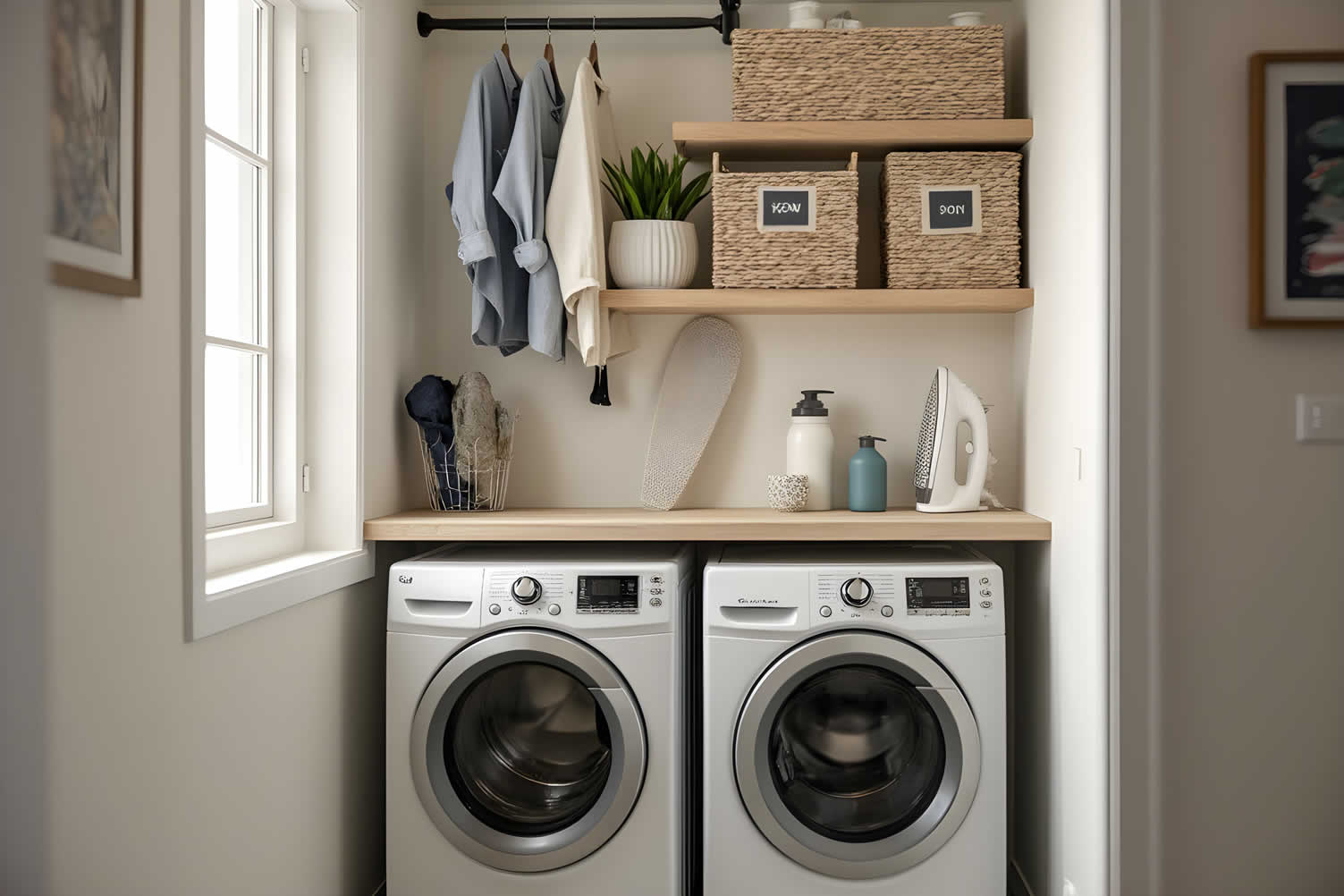
AI generated image by 123rf.com
Laundry Rm Tip 3:Space-Saving Ideas for Small Laundry Areas
Notes:
-
Even if your laundry area isn’t large enough to double as a multi-functional room, there are still plenty of ways to optimize a small space. Clever organization, smart storage solutions, and thoughtful design elements can transform even the tightest spot into a functional, manageable, and inviting area.
Adding features like shelves for detergents, hooks for hanging clothes, or collapsible drying racks can help maximize every inch. A well-organized laundry space can make the chore feel less overwhelming and more efficient.
-
Quick scroll to “space-saving” side notes …
-
-
1st: Stacking Appliances to Maximize Room
When it comes to small laundry rooms, every square inch matters. Stacking appliances, such as washers and dryers, is one of the most effective ways to create a functional and space-efficient setup.
By vertically aligning these essential machines, you can free up valuable floor space for other storage or organizational needs. This small yet impactful adjustment empowers you to turn a cramped laundry area into an efficient and comfortable workspace without sacrificing convenience.
Below, we’ll explore how you can achieve this transformation while enhancing both practicality and design.
-
Preparing for the Stacking Conversion
Before stacking your washer and dryer, it’s essential to ensure they are compatible. Not all machines are designed for vertical alignment, so check the manufacturer’s specifications or opt for stackable models.
Ideally, these units should have front-loading doors to facilitate ease of access. Most appliance brands provide stacking kits, which include the necessary hardware to securely fasten the machines together.
These kits are crucial for ensuring stability during operation and preventing any unforeseen accidents. When purchasing or arranging your appliances, confirm that you have access to a reliable stacking kit and the tools required for installation.
The next consideration is the layout of your laundry space. Assess where the machines will be positioned, keeping in mind proximity to utility connections like water lines, electrical outlets, and ventilation.
Stacked appliances typically require slightly more vertical clearance, so measure your room’s height and account for any cabinet or shelving that could obstruct placement. This step ensures the installation process is smooth and that your machines operate efficiently once stacked.
-
Increasing Functionality in a Stacked Setup
While stacking creates extra space, functionality should be a top priority. One practical way to make the most of your new layout is by incorporating counter space or shelving above or beside the stacked appliances.
For example, a foldable wall-mounted table nearby can act as a convenient surface for folding or sorting laundry. Alternatively, adding floating shelves above the stacked units allows you to store detergents, fabric softeners, and other essentials within arm’s reach.
Accessibility is equally important. If reaching inside the dryer at a higher position might pose a challenge, consider installing a step stool designed for safe use in compact laundry spaces.
Additionally, good lighting around the appliances ensures that the area remains bright and functional, reducing strain when handling laundry tasks.
-
Improving Aesthetics and Organization
A stacked washer and dryer arrangement can open up opportunities to improve the overall aesthetics and organization of your laundry room. Enclose the machines within a cabinet or behind sliding doors to create a seamless, tidy appearance.
By using custom cabinetry or matching the finishes to your home decor, you can disguise the appliances as part of the room’s design. This is especially valuable in smaller homes or apartments where the laundry area may be in a shared or visible space.
You can also use the newfound space for creative storage solutions. Install hooks, pegboards, or pull-out bins for optimized organization. If possible, invest in clear storage containers or labeled jars for laundry essentials, making it easier to find what you need while maintaining a clutter-free environment.
Small details like these contribute to a streamlined, enjoyable work flow and elevate the entire room’s appeal.
-
Additional Considerations for Safety and Maintenance
Safety should never be overlooked when stacking appliances. Be sure the stacked units are properly leveled to prevent vibration or movement during operation.
Regularly inspect connections for issues such as water leaks or lint accumulation in dryer vents, which could lead to operational inefficiencies or hazards. If you are unsure about the installation process, hiring a professional to safely stack the units is a worthwhile investment.
Maintaining your laundry appliances is also vital for their longevity and continued efficiency. Clean the washer’s drum and dryer’s lint trap regularly, as stacked setups can sometimes make these tasks less intuitive.
Taking a proactive approach to maintenance will help you make the most of your investment and extend the lifespan of your machines.
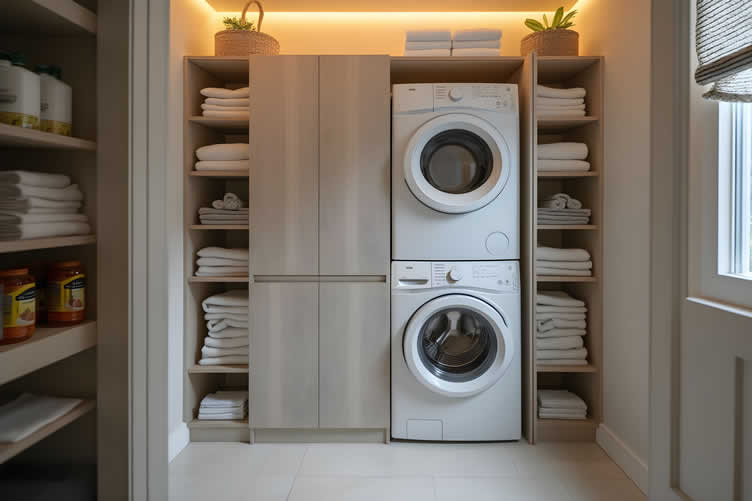
AI generated image by 123rf.com
[ view images: stacked washer dryer laundry room ]
[ youtube: how to use a washer dryer stacking kit ]
-
-
2nd: Purchase Washer w/ Dryer Combo Appliance
Transforming a small laundry room into a functional and efficient space can be challenging, especially when working with limited square footage.
A washer-dryer combo appliance can act as a game-changer for homeowners seeking to maximize efficiency without sacrificing valuable space. Combining washing and drying functionalities into a single unit, these appliances save room while offering modern convenience and advanced features.
Below, we explore how to transition to a washer-dryer combo and ways to make your laundry area more practical without compromising style or usability.
-
Understanding Washer w/ Dryer Combo and Benefits
A washer-dryer combo is an all-in-one machine designed to wash and dry clothes in a single cycle, eliminating the need for separate appliances. These units are typically compact and designed with small spaces in mind, making them perfect for apartments, condos, or smaller homes.
Aside from saving space, they can also contribute to energy efficiency by using less water and electricity than conventional setups. Choosing an Energy Star-certified model can further enhance these savings while reducing your environmental footprint.
Transitioning to a washer-dryer combo is relatively straightforward. Begin by evaluating your current setup to determine if the existing plumbing and electrical systems are compatible.
Many combo appliances require only a standard 120V electrical outlet and access to a water source, which means they can fit seamlessly into spaces previously unsuitable for traditional laundry setups.
It’s important to consult the installation manual provided by the manufacturer or seek professional assistance to ensure proper integration into your home.
-
Designing for Functionality in Small Spaces
When it comes to optimizing your laundry area, layout and organization are key. Start by planning the location of your new washer/dryer unit in a way that maximizes accessibility while allowing for adequate ventilation.
Place the appliance near pre-existing plumbing lines, such as those in a bathroom or kitchen, to simplify installation. Consider incorporating a compact countertop or shelving unit above or beside the combo appliance for additional storage.
These surfaces can be used to hold laundry essentials such as detergent, fabric softeners, and cleaning supplies, keeping everything organized and within reach.
Lighting can also play a crucial role in making a small laundry room feel more spacious and inviting. Install bright, energy-efficient LED lights or under-cabinet fixtures to eliminate shadows and brighten the area.
Additionally, mirrors or reflective surfaces can create the illusion of a larger space, adding depth and openness to the room.
-
Adding Personal Touches for Comfort and Efficiency
Despite their utilitarian purpose, laundry rooms can be designed to exude warmth and personality. Incorporate stylish yet functional elements such as wall-mounted drying racks, decorative storage bins, or a chalkboard wall for jotting down reminders or schedules.
Waterproof and durable flooring, such as vinyl or tile, can make the space easier to clean while offering aesthetic appeal.
To enhance the convenience of your washer-dryer combo appliance, invest in accessories such as a folding station or collapsible hampers. These additions can streamline your laundry routine and make even the smallest spaces feel well-equipped.
For renters or those unable to make permanent modifications, portable rolling carts or adhesive hooks can provide additional storage without requiring installation.
-
Long-Term Maintenance and Care for Optimal Performance
Maintaining your washer-dryer combo is crucial to ensure its longevity and continued efficiency. Regularly clean the lint filter and drum to prevent buildup, which can impact both cleaning and drying performance.
Many models feature self-cleaning functions or cycles tailored to maintain inner components—consult the user manual for specific recommendations. Additionally, avoid overloading the appliance, as it can strain the motor and compromise its energy efficiency.
By following these tips and properly caring for your washer-dryer combo, you can create a laundry space that is not only functional but also tailored to your lifestyle.
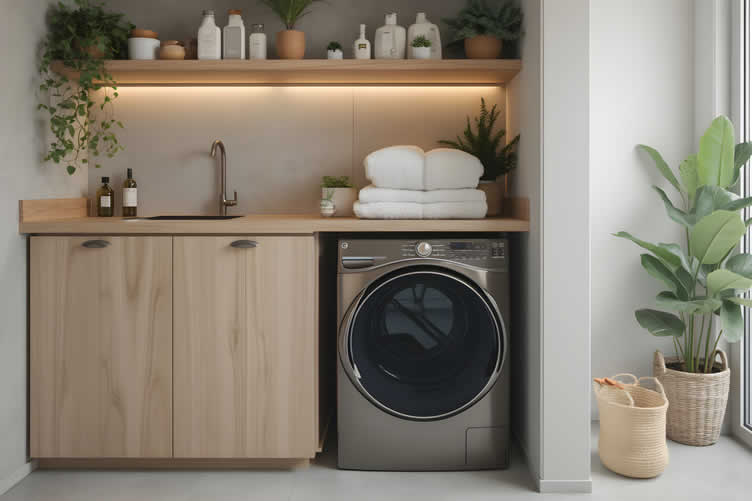
AI generated image by 123rf.com
[ view images: washer dryer combo ]
[ youtube search: best/worst washer dryer combo ]
-
-
3rd: Smart Shelving and Vertical Storage
A small laundry room doesn’t have to mean sacrificing functionality or style. With the right strategies, you can make the most of your limited space by focusing on smart shelving solutions and vertical storage options.
These ideas not only maximize your laundry room’s potential but also create an organized and visually appealing environment. By incorporating these tips, you can transform your compact space into an efficient and user-friendly area.
-
Optimizing Vertical Spaces for Storage
Vertical storage is one of the most effective approaches to saving space in a small laundry room. Instead of relying solely on floor or countertop areas, utilizing the height of your walls allows you to store more items without creating clutter.
Consider installing tall cabinets or open shelving that extend toward the ceiling. This provides ample room for storing detergents, fabric softeners, and laundry baskets.
An especially functional solution is the addition of adjustable shelving. These can accommodate items of varying heights and sizes, making them versatile and ideal for small laundry areas.
Using labeled containers or bins on your vertical shelves further promotes organization and ensures that your supplies remain easily accessible.
If floor space is limited, wall-mounted hanging racks can be a game-changer. They are ideal for air-drying clothes, saving energy while keeping wet laundry from taking up too much room. Look for foldable models to maintain flexibility when the rack is not in use.
-
Incorporating Smart Shelving Systems
Smart shelving systems are designed to blend efficiency with style, ensuring every inch of your laundry room is put to good use. Pull-out shelves can be installed under or beside your washer and dryer.
These slide-out compartments make it easy to access essential items like cleaning supplies without having to reach awkwardly into deeper storage areas.
Additionally, consider open shelving units specifically customized for small spaces. They allow for both functional storage and decorative elements to improve the overall look of your laundry room.
You can place frequently used items in plain sight while reserving the higher shelves for less commonly used supplies. Pairing these with baskets or bins helps maintain a clutter-free aesthetic.
Some shelving systems also incorporate hooks or rods underneath the shelves, perfect for hanging garments or accessories.
-
Multi-Functional Furniture and Compact Solutions
When working with limited space, furniture and fixtures that serve dual purposes can greatly enhance functionality.
For example, a compact folding table mounted to the wall can double as a surface for folding clothes or for temporarily storing laundry. When not in use, it folds away neatly to save space.
Similarly, think about integrating a slim storage cart between your appliances. These narrow carts are specifically designed for small gaps and can accommodate various items, from detergent bottles to dryer sheets.
Since they’re mounted on wheels, they can be effortlessly moved or tucked away as needed.
-
Creating a Clean and User-Friendly Layout
The key to a functional small laundry room lies in designing a layout that prioritizes accessibility and ease of use. Group similar items together so you won’t have to hunt for what you need.
Place heavier items on sturdy lower shelves, while keeping lighter and more regularly used products at eye level.
Using neutral color schemes alongside these space-saving solutions can give the room a more open and airy feel. Lighter colors on walls and cabinetry help create the illusion of more space while also making the room look fresh and clean.
Adding good lighting, such as under-shelf LED strips, further improves visibility and functionality.
By combining vertical storage and smart shelving with a user-friendly design, even small laundry rooms can become efficient and organized. Using every inch of space maximizes functionality while keeping a calming, tidy environment.
Choose durable, high-quality materials to ensure your storage solutions last, making your laundry room a reliable part of your home for years. These tips are rooted in proven interior design principles and innovations for small spaces.
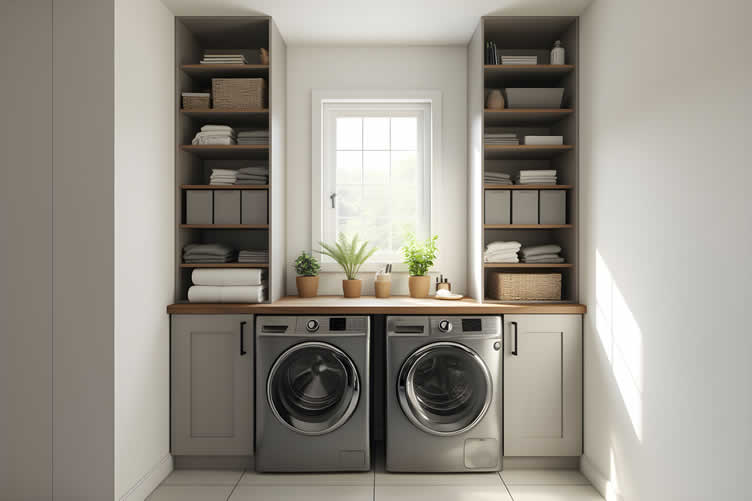
AI generated image by 123rf.com
[ view images: laundry room shelving ideas ]
[ youtube search: laundry room shelves ]
-
-
-
ideas to view and compare from the information discussed above
stacked washer & dryerwasher dryer combolaundry room shelving
Scroll up to directory … or scroll to next section about transform your laundry room …
… transforming your laundry room needs

get the size dimensions for any home remodeling project …
… for functionality, aesthetics, and adhering to building codes




fourth and last “photo remodeling” idea
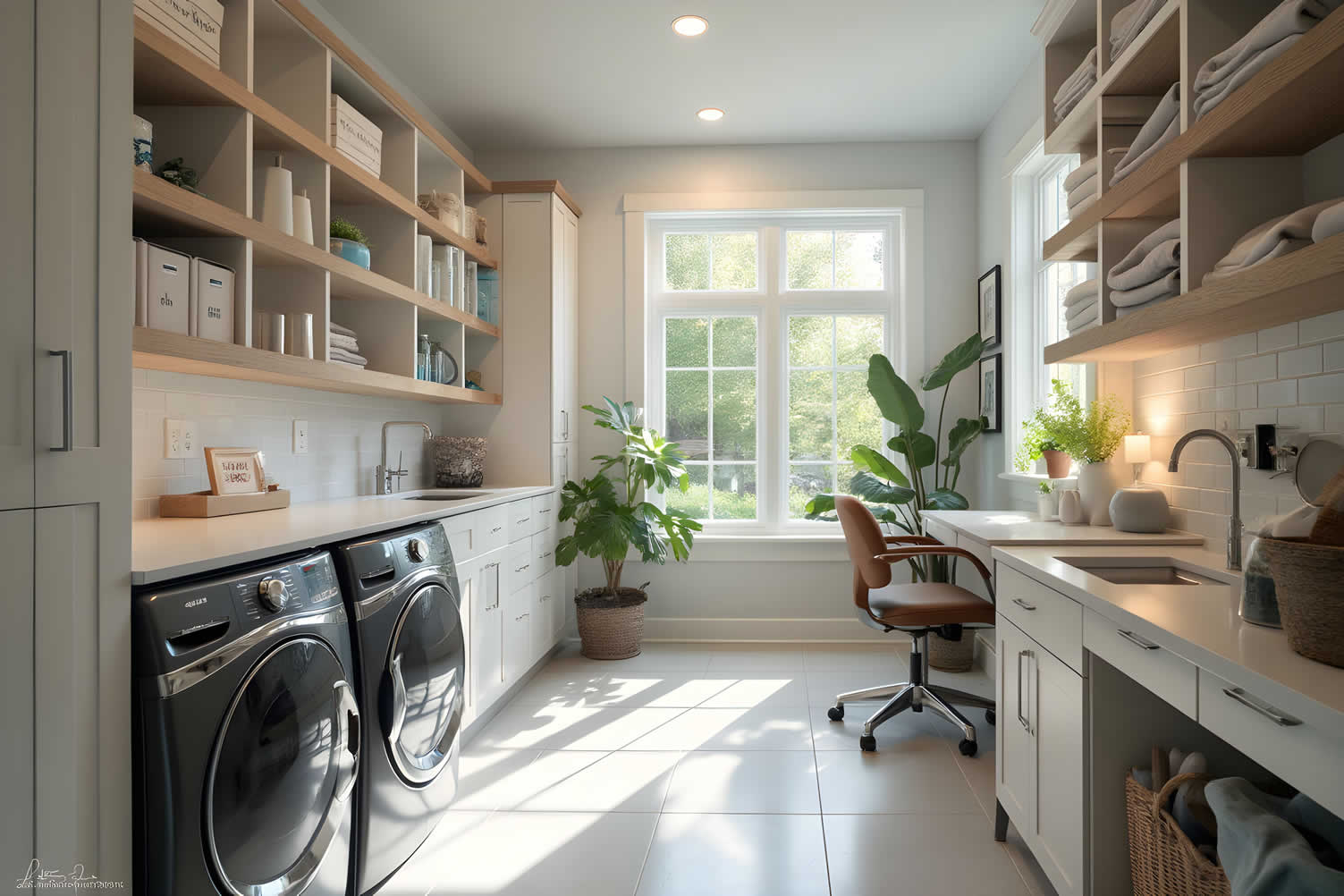

AI generated image by 123rf.com
Laundry Rm Tip 4: Next Steps
Notes:
-
Transforming your laundry room starts with assessing your space and your household’s needs. Consider storage, square footage, and the primary functions you want for the room.
Take note of existing features like shelving, countertops, and lighting to identify areas for improvement. A clear understanding of your space and priorities sets the stage for an efficient redesign.
Finding extra space in your home can feel like solving a puzzle, and the laundry room is often overlooked. With thoughtful planning, this space can serve multiple purposes—like a homework station, craft nook, or play area—while keeping its original function intact.
This guide will help you define your priorities and create a practical, cohesive design to enhance your lifestyle. With the right approach, your laundry room can become a versatile, well-organized space that works harder for you.
-
Quick scroll to topic "next steps" side notes …
-
-
1st: Next Steps to Transform Your Laundry Room
Taking the next steps to transform your laundry room begins with careful planning and thoughtful consideration of your needs.
By reviewing the information below, you’ll gain insights into how to prioritize functionality, optimize the layout, and incorporate creative elements to make the most of this versatile space.
-
Assess Your Needs
Evaluate how you currently use your laundry room and identify any frustrations or inefficiencies. Are you missing adequate storage, counter space, or proper organization?
Could part of the area be re-purposed to accommodate a spare bedroom, home office, or another family need? Understanding your specific needs is the key to designing a space that is both functional and efficient.
-
Measure Your Space
Precise measurements are crucial when planning any updates to your laundry room. Be sure to measure its height, width, and depth to ensure that any storage solutions, shelving, or appliances you choose will fit seamlessly.
Additionally, with thoughtful planning, you may be able to incorporate extra functionality. For example, if your laundry room has enough space, you could transform it into a multi-functional space, such as a mudroom, spare bedroom, home office, or more.
-
Plan Your Layout
When organizing your space, carefully consider the placement of washer and dryer units, storage cabinets, and utility sinks. Think about how the area will accommodate other functions, such as a spare bedroom, craft room, home office, or utility management.
Pay attention to the flow of movement within the space, prioritizing accessibility and ease of use to create a functional and efficient layout.
-
Invest in Multi-Functional Storage
Look for storage solutions that serve multiple purposes to make the most of your space. For example, cabinets with pull-out baskets or hampers are great for keeping laundry or smaller items organized and out of sight.
Wall-mounted organizers can be used to store a variety of items, from cleaning supplies to everyday essentials, without taking up valuable floor space. Foldable drying racks are another smart addition, offering a convenient way to air-dry clothes while being easy to tuck away when not in use.
These thoughtful additions not only maximize space efficiency but also help keep your home tidy and functional.
-
Enhance Lighting
Brighten up the room with proper lighting to make it easier to perform tasks and create a more inviting atmosphere. Consider installing overhead lights for general illumination, under-cabinet lighting to enhance visibility in workspaces, or even adding a small window to let in natural light.
Layering different types of lighting not only improves functionality but also adds warmth and depth to the space, making it more pleasant and practical for everyday use.
-
Add Personal Touches
Once the functional aspects are in place, add decorative touches like cheerful wall art, vibrant plants, or a stylish rug to give the space a warm and inviting feel.
Consider incorporating a pop of color with accessories such as baskets or jars for storage, or hang string lights to add a cozy ambiance. A laundry room doesn’t have to feel purely utilitarian—it can be a space that’s both practical and pleasant to spend time in.
-
Consider a Remodel
If the layout and dimensions of your space don’t allow for a multi-functional laundry room, consider remodeling to relocate it to a more suitable area.
Options include moving the laundry room to the garage (possibly alongside a mudroom), integrating it into a bathroom, utilizing space under the stairs, or building an addition specifically for it. This remodel not only creates a more functional laundry area but also frees up the original space for other purposes, better aligning with your needs.
By following these steps, you can transform your laundry room into a space that’s not only functional but also enjoyable to spend time in.
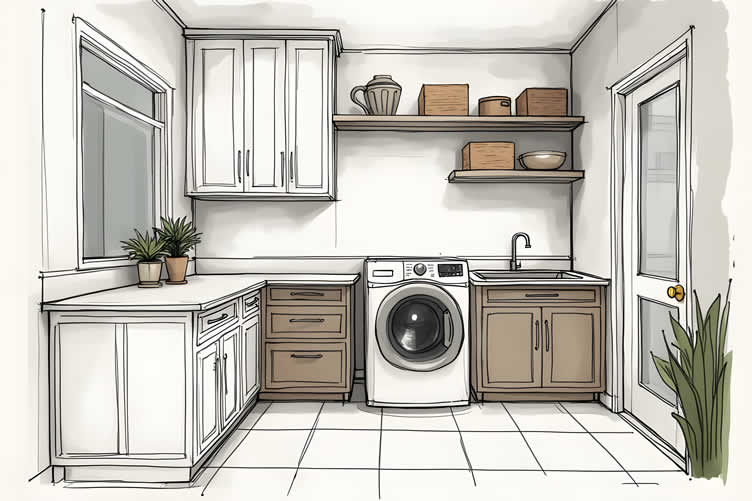
AI generated image by 123rf.com
[ view diagram: plumbing requirements for laundry room ]
[ youtube: Laundry Room Design Ideas That Maximize Space ]
-
-
2nd: Finding Help for Your Laundry Room Integration
Undertaking a laundry room integration or remodel can be a complex process, requiring various specialized skills and expertise.
Hiring professionals can ensure that every aspect of the project is completed efficiently and safely. If your project involves moving plumbing or setting up electrical outlets, it’s essential to consult licensed plumbers and electricians to ensure the work complies with local building codes.
These professionals can properly handle tasks like rerouting water lines, installing drains, or wiring new outlets for your appliances.
To maximize storage and improve organization, consider working with a carpenter or contractor to build custom cabinets and shelves tailored to your space. This ensures optimal use of available areas and creates a polished, functional look.
Additionally, interior designers can provide valuable insights on overall layout, design, and finishes, helping you create a space that is both practical and aesthetically pleasing.
Seeking expertise not only simplifies the process but also guarantees a result that meets your needs and expectations.
LetsRenovate has partnered with HomeAdvisor™, a renowned provider of highly-rated, carefully-vetted local contractors. Start your search here by choosing the type of contractor you need and entering your zip code to find local professionals.

AI generated image by 123rf.com
But Wait!
Before beginning your search for contractors, we highly recommend downloading and using this evaluation worksheet.
This valuable tool allows you to objectively assess and rank potential contractors by considering key factors like pricing, licensing, and referrals.

Evaluation Sheet
File Type:
-
-
FINAL REMARKS
A little creativity can turn a standard laundry area into one of the most versatile spaces in your home. Whether you’re creating a full combo laundry room or simply making the most of a small area, the possibilities are endless.
By optimizing your laundry room for functionality and style, you’ll not only enhance your daily routines but also add lasting value to your home.
Start envisioning the laundry room of your dreams today. From mudrooms to craft zones, every home has room for improvement.
With thoughtful planning and design, you can transform one of the most overlooked spaces in your home into a multi-functional powerhouse.
-
ideas to view and compare from the information discussed above
book: illustrated code booklaundry appliance dollylaundry hamper
- What comments can you share about
how to transform your laundry room?
Scroll up to directory … or scroll to more home utility management-related topics …
view illustration “becoming a bank”


Calendar For:
Home Maintenance
File Type:
… view our sharing links below for a quick "share the knowledge"
Find Laundry Installation Appliances Appliance Install Appliance Repair Electrical Plumbing Issues Drain Clearing top-rated, pre-screened local contractors FREE: download contractor selection enter zip code – powered by HomeAdvisor ™
Quick Contractor Guides selecting negotiating working with inspecting

Cover image credit: transform your laundry room by 123rf.com
end of post … please share it!
 |
did you find how simple renovations can transform your laundry room analysis helpful? If so, please share the article with your friends and family! |
Nice pic idea? Leave us a quick comment below.
And please share this pic idea within your social networks.