Summary Outline –
This guide is designed to walk you through the most popular stone countertops, from the timeless appeal of granite to the modern elegance of quartz. We will explore their distinct styles, installation requirements, and maintenance needs.
By understanding the pros and cons of each option, you can make an informed choice that not only enhances your kitchen’s aesthetic but also fits your lifestyle and budget, helping you craft the dream space you’ve always wanted.
- post content … analysis/ stone kitchen countertops

-
- —— begin first topic ——
-
1st TERM: Granite Kitchen Countertops
Granite countertops are celebrated as a luxurious and durable option for kitchens, combining natural beauty with exceptional functionality.
They have long been a favorite among homeowners due to their versatility, timeless appeal, and ability to elevate the value of any home.
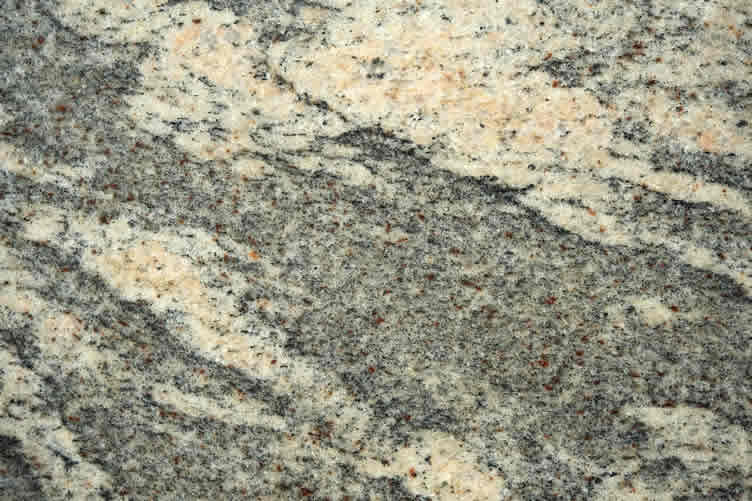
copyright image by 123rf.com
Granite countertops are sourced from natural stone quarries, cut and polished to showcase their stunning patterns and colors.
If you’re considering granite for your kitchen, understanding its style, installation process, maintenance requirements, and the advantages and challenges is key to making an informed decision.
Below, we’ve broken down essential aspects to help guide you through the process.
[ view summary table: granite countertops ]
-
Styles and Appearance[ view samples]
Granite countertops come in an incredible variety of colors and patterns, from deep blacks and gentle grays to vibrant blues and warm reds. The stone’s mineral composition creates unique veining, speckles, and swirls, ensuring that no two countertops are exactly alike.
Whether you prefer a uniform, speckled look or dramatic, flowing veins, there is a granite slab to match your design vision.
Its finish can also be customized, with polished granite offering a glossy, reflective surface and honed or leathered finishes providing a more matte, textured feel.
expanded style breakdown –
- Wide Color Range:
Granite is available in an array of colors, ranging from deep blacks and gentle grays to vibrant blues, warm reds, and even exotic greens or golds. This variety ensures that homeowners can find a color to complement any design theme. - Unique Patterns and Textures:
The natural mineral composition of granite creates distinct veining, speckles, and swirls. Each granite slab is one-of-a-kind, making it a unique centerpiece in your home. Some slabs feature consistent, fine flecks, while others showcase dramatic, flowing veins for a bold statement. - Customizable Finishes
- Polished Finish: Offers a glossy, reflective surface that enhances the color and depth of the stone while providing a sleek, contemporary look.
- Honed Finish: Provides a smooth, matte appearance, ideal for homeowners seeking understated elegance.
- Leathered Finish: Features a textured, tactile surface with a more rustic and natural feel, perfect for adding depth and character.
[ view: types granite finishes ]
- Adaptable Aesthetic Styles:
Granite works beautifully in various design styles, from modern and minimalist to traditional and rustic spaces. It can be incorporated into kitchens, bathrooms, or even outdoor living areas to elevate the overall aesthetic.
- Wide Color Range:
-
Installation
Installing granite countertops is a job best left to professionals. The slabs are extremely heavy and require precise cutting to fit your kitchen’s layout, including cutouts for sinks and cooktops.
Installers will create a template of your cabinets to ensure an exact fit. The process involves transporting the heavy slabs, carefully placing them on the cabinets, leveling them, and seaming them together with a color-matched epoxy. The final step is to seal the surface to protect it from stains.
installation breakdown –
- Assessment and Measurement:
Installers begin by assessing the layout of your kitchen and taking detailed measurements. This step often includes creating a physical template of your cabinets to ensure the granite slab will fit perfectly. - Preparation of Granite Slabs:
Once measurements are complete, the granite slabs are cut precisely to fit your kitchen’s unique design. This includes making cutouts for essential features such as sinks, cooktops, and faucets. - Transportation of Granite:
Granite slabs are extremely heavy, often requiring a team to safely transport them from the supplier to your home. Professionals have the necessary equipment to handle the slabs without causing damage. - Placement and Alignment:
The granite slabs are carefully positioned on top of the cabinets. Installers ensure the slabs are level, making small adjustments as necessary to prevent uneven surfaces. - Seaming and Bonding:
When multiple slabs are required, installers carefully align the seams and bond the slabs together using a color-matched epoxy. This ensures a seamless, polished look that enhances the countertop’s aesthetic. - Surface Sealing:
The final step in the process is sealing the granite. A high-quality sealant is applied to protect the surface from stains, moisture, and daily wear and tear, helping to maintain its natural beauty and durability.
- Assessment and Measurement:
-
Maintenance
To keep granite looking its best, regular maintenance is necessary. Granite is porous, which means it can absorb liquids and stain if not properly sealed.
It’s recommended to seal granite countertops at least once a year, though some high-use kitchens may require more frequent sealing.
Daily cleaning should be done with a pH-neutral cleaner or warm, soapy water. Avoid using harsh or acidic cleaners, as they can damage the sealant and etch the stone’s surface over time.
expanded maintenance summary –
- Seal Regularly:
- Granite is porous and can absorb liquids, leading to stains if not properly sealed.
- Apply a high-quality granite sealant at least once a year.
- For kitchens with high usage or frequent exposure to moisture, consider sealing more frequently.
- Daily Cleaning:
- Use a pH-neutral cleaner or warm, soapy water for regular cleaning.
- Immediately wipe up spills to prevent potential staining.
- Avoid letting liquids or acidic substances sit on the surface for prolonged periods.
- Avoid Harsh Cleaners:
- Do not use bleach, ammonia, vinegar, or any acidic or abrasive cleaners, as they can degrade the sealant and damage the stone.
- Stick to gentle products specifically designed for natural stone to keep granite in its best condition.
- Protect the Surface:
- Use coasters for glasses, especially those containing acidic beverages like wine or citrus juices.
- Always use cutting boards and avoid slicing directly on the granite surface to prevent scratches.
- Place hot pads or trivets under hot pots and pans to avoid thermal damage.
- Check for Damage or Wear:
- Regularly inspect the surface for any signs of wear, dullness, or stains that might indicate the need for resealing.
- Address minor etches or dull spots with specialized granite polish or repair kits.
- Seal Regularly:
-
Pros and Cons
Granite’s biggest advantages are its durability and natural beauty. It is highly resistant to heat and scratches, making it a functional surface for cooking. Its unique patterns and colors offer endless design possibilities.
However, the primary drawback is its porous nature, which requires periodic sealing to prevent staining. The cost can also be a factor, as it is generally more expensive than some other countertop materials.
Additionally, because it is a natural product, the slab you see in the showroom may have slight variations from the one installed in your home.
more detail pros and cons review –
Pros
- Durability:
Granite is incredibly durable and long-lasting, making it ideal for high-traffic kitchens. Its surface can withstand daily wear and tear without losing its shine or structural integrity. - Heat Resistance:
Granite can handle high temperatures, making it a practical choice for cooking areas. You can place hot pots and pans directly on the surface without causing damage. - Scratch Resistance:
Granite is highly resistant to scratches, ensuring it retains its polished look over time, even with regular kitchen use such as chopping or cutting. - Natural Beauty:
Known for its unique patterns and vibrant colors, granite adds natural elegance to your home. Each slab is distinct, offering an exclusive and luxurious touch to your countertops. - Design Variety:
Granite comes in a wide range of hues and textures, enabling homeowners to find the perfect match for their preferred aesthetic style. This versatility makes it suitable for traditional, modern, or eclectic designs.
Cons
- Porosity:
Since granite is porous, it requires regular sealing to prevent moisture or liquids from seeping in, which can cause stains. Proper maintenance is necessary to preserve its appearance and functionality over time. - Higher Cost:
Granite is often more expensive compared to alternative countertop materials like laminate or solid-surface options. The premium cost may strain budgets, especially for larger kitchens or extensive renovations. - Natural Variations:
Due to its natural formation, granite slabs can have slight variations in color and pattern. While this adds uniqueness, it may mean that what you see in a showroom could differ slightly from what is installed in your home. - Weight and Installation Challenges:
Granite is very heavy and often requires professional installation, which adds to the overall cost of the project. Additionally, ensuring proper support for its weight is critical to prevent damage to cabinetry.
- Durability:
Aspect Details Key Points Styles and Appearance Granite countertops offer a wide range of colors and patterns, ensuring no two slabs are alike. The mineral composition creates unique veining, speckles, and swirls. Finishes such as polished, honed, and leathered provide different aesthetic options, catering to diverse design preferences. Granite comes in varied colors like blacks, grays, blues, and reds. It provides customizable finishes such as glossy, matte, or textured. Works well in modern and traditional styles. Installation Installation requires precision and is best handled by professionals. The process involves creating templates, cutting slabs to exact measurements, transporting them, and securing and sealing them to protect against damage. Proper support for the heavy material is crucial. Professional installers ensure a flawless fit and durability. Surface sealing protects against stains. Heavy slabs demand careful handling and placement. Maintenance Granite surfaces require proper care, including regular sealing, daily cleaning with pH-neutral cleaners, and avoidance of harsh cleaners. Protective measures such as coasters, cutting boards, hot pads, and careful inspection for wear are essential to maintaining longevity. Seal annually to prevent stains. Use gentle cleaning products and protect the surface from scratches and heat. Inspect regularly to address wear or damage. Pros Granite is durable and heat-resistant, capable of withstanding daily kitchen use. Its natural beauty and unique patterns add a luxurious appeal, offering a broad range of design versatility suitable for various styles. Highly durable, heat and scratch-resistant, with natural elegance and varied design options. A valuable long-term investment for kitchens. Cons Granite’s porous nature necessitates periodic sealing to avoid stains. It is costlier than alternatives, and due to its heavy weight, professional installation is required. Slight variations in slabs add uniqueness but may differ from showroom samples. Requires sealing and maintenance. Expensive compared to alternatives. Heavy and challenging to install. Showroom slabs might vary from installed pieces. 

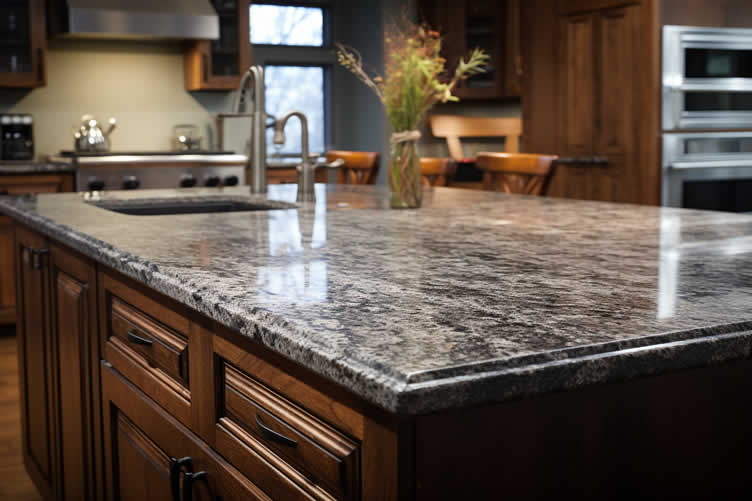
copyright image by 123rf.com
[ view diagram: measuring kitchen countertop ]
[ youtube search: sealing granite countertops ]
-
Scroll up to directory … or scroll to next section reviewing quartz countertops …

-
-
2nd TERM: Quartz Countertops
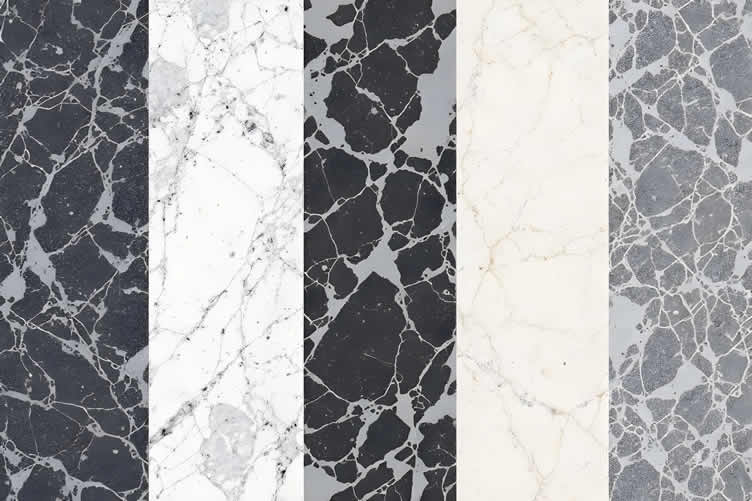
Quartz countertops are a popular choice for modern homes, offering a beautiful and reliable surface for kitchens and bathrooms. They are an engineered stone product, meticulously crafted from about 90-95% ground natural quartz combined with 5-10% polymer resins.
This unique composition results in an exceptionally durable and low-maintenance material, giving you the aesthetic appeal of natural stone but without some of its inherent vulnerabilities, like porosity.
AI generated image by 123rf.com
Because they are man-made, quartz countertops are known for their consistency in color and pattern, and they are available in a vast range of design options, making it easy to find a style that perfectly complements your home.
This blend of beauty, strength, and reliability makes them a sleek and practical choice for any decor.
[ view summary table: quartz countertops ]
-
Styles and Appearance[ view samples]
Because quartz is an engineered product, it offers a wider and more consistent range of colors and patterns than natural stone. You can find quartz in bright whites, deep blacks, and every shade in between.
The patterns can mimic the look of natural stones like marble and granite, or they can feature unique designs with embedded flecks of glass or metallic pieces for a contemporary feel.
This consistency means the sample you choose will be a very close match to the final installed product.
expanded breakdown-
- Extensive Color Options:
Quartz is available in an impressive array of colors, ranging from bright whites and deep blacks to subtle grays and vibrant hues, ensuring you can find the perfect match for your space. - Natural Stone Mimicry:
Quartz patterns can replicate the look of natural stones like marble and granite, offering timeless elegance with the added benefit of low maintenance. - Unique Contemporary Designs:
For those seeking a modern touch, quartz surfaces can include embedded flecks of glass, metallic pieces, or other elements that create truly distinctive designs. - Consistency in Appearance:
Thanks to its engineered nature, quartz provides consistent patterns and colors, ensuring the sample you choose closely resembles the final installed product, eliminating surprises. - Personalized Aesthetics:
With options for both classic and contemporary styles, quartz allows homeowners to personalize their spaces to fit their unique tastes and preferences.
- Extensive Color Options:
-
Installation
Similar to granite, the installation of quartz countertops requires professional expertise. The slabs are heavy and must be cut to precise measurements using specialized equipment. Installers will create a template of your kitchen cabinets to ensure a perfect fit.
The installation process involves setting the slabs, ensuring they are level, and joining any seams with a specially formulated epoxy that matches the countertop’s color.
installation style breakdown –
- Initial Measurements:
Professional installers will begin by taking precise measurements of your kitchen or workspace. This ensures the slabs are cut correctly to fit your cabinetry and layout. - Template Creation:
A detailed template of your cabinets will be made to serve as a guide for cutting the quartz. This step is crucial for achieving a seamless fit, especially in spaces with custom shapes or curves. - Cutting the Quartz Slabs:
The quartz slabs are heavy and require specialized equipment to cut them accurately. This process may include cutting spaces for sinks or stove tops based on your design preferences. - Transporting the Slabs:
Once the quartz is cut, it needs to be carefully transported to avoid cracks or damage. Installers take extra precautions during this step due to the heavy and fragile nature of quartz. - Positioning and Setting:
The slabs are then positioned onto the cabinets, ensuring they are level and aligned properly. Adjustments may be made at this stage to account for any minor irregularities. - Joining the Seams:
Where slabs meet, installers use a color-matched epoxy to join the seams. This creates a smooth, nearly invisible finish, enhancing the countertop’s appearance. - Sealing Edges and Final Checks:
Installers seal the edges for added protection and conduct a thorough inspection to ensure the countertop is properly secured and level.
- Initial Measurements:
-
Maintenance
One of the most significant advantages of quartz is its non-porous nature. Unlike natural stone, quartz does not require sealing to resist stains and bacteria. This makes it incredibly easy to maintain.
For daily cleaning, a soft cloth with warm water and a mild soap is all that’s needed. It’s important to avoid abrasive cleaners and pads, as they can dull the surface.
While quartz is highly durable, it can be damaged by excessive heat, so using trivets for hot pots and pans is recommended.
expanded maintenance summary –
- Non-Porous Advantage:
Quartz is non-porous, meaning it naturally resists stains and bacteria without needing to be sealed like natural stone. This makes it a hygienic and low-maintenance option for busy households. - Simple Daily Cleaning:
For everyday cleaning, use a soft cloth or sponge with warm water and a mild soap. This will effectively remove dirt and maintain the surface’s shine while being gentle on the material. - Avoid Abrasive Cleaners and Pads:
Do not use harsh or abrasive cleaning products, as they can potentially dull the surface over time. Stick to non-abrasive tools to preserve your quartz’s elegant finish. - Protection Against Heat:
While quartz is highly heat-resistant, excessive heat can still cause damage. Always use trivets or heat pads under hot pots and pans to avoid thermal shock that could crack or discolor the surface. - Preventing Impact Damage:
Although quartz is durable, sharp or heavy objects can chip the edges if handled carelessly. Be mindful of dropping heavy kitchen tools or utensils on the surface. - Addressing Tough Stains:
For stubborn stains, gently spot clean with a non-abrasive cleaner and a soft sponge. Avoid using bleach or acidic solutions, as these can harm the surface over time.
- Non-Porous Advantage:
-
Pros and Cons
The main pros of quartz are its durability, low maintenance, and design flexibility. It is resistant to stains, scratches, and bacteria, and it never needs to be sealed.
The wide array of available colors and patterns makes it easy to find a style that fits your kitchen. The primary cons are its lower heat resistance compared to granite and its higher price point.
Also, some people prefer the unique, natural variations found in stones like granite or marble, which engineered quartz cannot perfectly replicate.
more detail pros and cons review –
Pros
- Durability:
Quartz is highly durable, making it resistant to chips, cracks, and other damages that can occur with everyday use in a busy kitchen. - Low Maintenance:
Unlike natural stones, quartz does not require sealing or regular upkeep, making it an easy-to-maintain option for homeowners. - Stain Resistance:
The non-porous nature of quartz ensures it resists stains from common kitchen elements like wine, coffee, or oil spills. - Scratch Resistance:
Quartz is naturally tough and highly resistant to scratching, which is particularly useful for kitchen surfaces. - Bacteria Resistance:
Its non-porous surface prevents the absorption of liquids and inhibits the growth of bacteria, contributing to a hygienic cooking environment. - Design Flexibility:
Available in a vast selection of colors and patterns, it can easily complement any kitchen style, from modern to traditional. - No Sealing Required:
Unlike granite or marble, quartz needs no periodic sealing, simplifying care and maintenance.
Cons
- Lower Heat Resistance:
Compared to granite, quartz is less tolerant of high temperatures. Placing hot pots or pans directly on it can lead to discoloration or damage. - Higher Cost:
Quartz countertops tend to be more expensive than other options, making it a significant investment. - Lacks Natural Variations:
While quartz can mimic the appearance of natural stones, it cannot reproduce the unique, unpredictable variations and veining that make materials like granite or marble one-of-a-kind. - Not Eco-Friendly:
The manufacturing process for engineered quartz involves energy-intensive procedures, which may be a concern for those prioritizing environmentally friendly options.
- Durability:
Type Solution Benefits Quartz Countertops Quartz countertops are an engineered stone product made from about 90-95% ground natural quartz and 5-10% polymer resins. This composition makes them exceptionally durable and low-maintenance, offering the beauty of natural stone without some of its vulnerabilities. Known for their consistency and vast range of design options, quartz countertops have become a popular choice for modern kitchens, providing a sleek and reliable surface that suits a variety of styles. Durable, low-maintenance, resistant to stains and bacteria, available in consistent and customizable designs, offers a modern and sleek appearance. Styles and Appearance Because quartz is an engineered product, it offers a wider and more consistent range of colors and patterns than natural stone. You can find quartz in bright whites, deep blacks, and every shade in between. The patterns can mimic the look of natural stones like marble and granite, or feature unique designs with embedded flecks of glass or metallic pieces for a contemporary feel. Consistency ensures the sample you choose closely matches the final product. Vast color and pattern options, natural stone mimicry, personalized aesthetics with modern and classic styles, consistent appearance. Installation The installation of quartz countertops requires professional expertise. Slabs are heavy and need to be cut to precise measurements using specialized equipment. A detailed template of your kitchen is made, and the quartz is cut, transported, positioned, and joined using color-matched epoxy. Final steps involve sealing edges and ensuring the countertop is level and flawless. Provides a perfect fit, enhances home value, ensures durability, and results in a seamless, professional finish. Maintenance Quartz’s non-porous nature makes it easy to clean without requiring sealing. Warm water, mild soap, and a soft cloth are sufficient for daily cleaning. Avoid abrasive cleaners and pads to preserve the surface. Protection against excessive heat and impact is also recommended to maintain its appearance and integrity. Easy to maintain, resistant to stains and bacteria, hygienic, retains shine, and ensures long-term durability. Pros and Cons Pros include durability, low maintenance, stain and scratch resistance, and vast design flexibility. Cons include lower heat resistance compared to granite, higher cost, and a lack of the natural variations seen in materials like granite or marble. Provides a clean, aesthetically pleasing, and practical surface option but requires consideration of heat protection and cost. 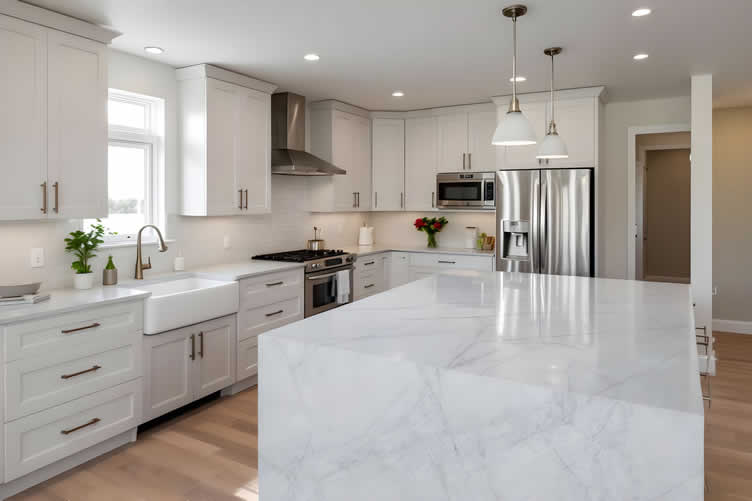
AI generated image by 123rf.com
[ youtube: How Quartz Slabs Are Made ]
[ youtube search: cutting/installing stone countertops ]
-
Scroll up to directory … or scroll to next section understanding marble countertops …
-
-
3rd TERM: Marble Countertops
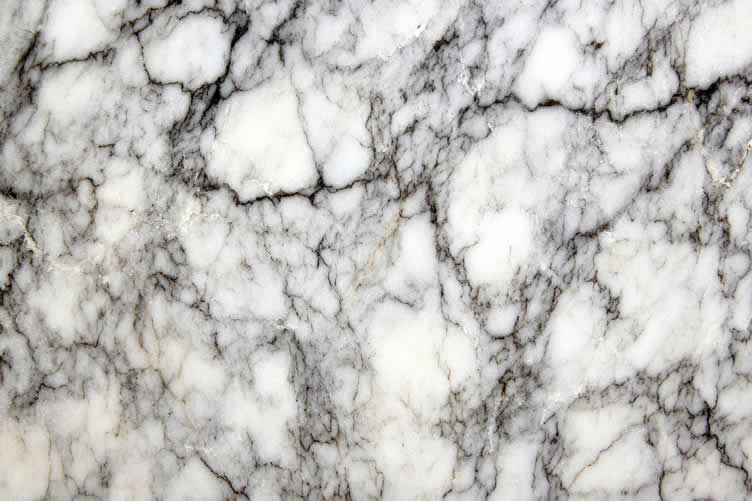
Marble countertops have long been synonymous with luxury and classic elegance, instantly elevating the aesthetic of any home.
For centuries, this exquisite natural stone has been prized for its soft, luminous appearance and distinctive, graceful veining, which adds an unparalleled sense of sophistication.
Each individual slab of marble is truly unique, telling its own story through its intricate, one-of-a-kind patterns, making it a captivating statement piece in any kitchen design.
copyright image by 123rf.com
While its inherent beauty and timeless appeal are undeniable, it’s important to remember that marble is a softer, more porous stone compared to some other materials.
This characteristic means it requires a particularly gentle touch and dedicated care to maintain its pristine condition and ensure its lasting allure in your home.
[ view summary table: marble countertops ]
-
Styles and Appearance[ view samples]
Marble is most famous for its classic white and gray varieties, like Carrara and Calacatta, which feature subtle to bold veining. However, it is also available in other colors, including green, black, pink, and gold.
The veining is what makes each slab of marble unique, with patterns ranging from fine, delicate lines to dramatic, sweeping movements of color.
A polished finish enhances its natural luster, while a honed finish offers a softer, matte look that can help hide etching.
expanded style breakdown –
- Classic White and Gray Varieties:
Marble is best known for its timeless white and gray variations, such as Carrara and Calacatta. These types showcase a range of veining, from subtle lines to bold, dramatic movement, making them popular for elegant and sophisticated designs. - Color Variations:
Beyond the classic options, marble comes in an array of colors, including green, black, pink, and gold. These colors allow for versatile applications, catering to various design preferences and adding unique character to any space. - Unique Veining Patterns:
Each slab of marble is inherently unique due to its veining. Veining patterns vary from fine, delicate lines to sweeping, dramatic flows of color, offering endless possibilities for creating one-of-a-kind surfaces or focal points. - Polished Finish:
A polished finish highlights marble’s natural luster, making its colors and veining more vibrant while giving it a sleek, reflective surface. This finish is ideal for areas where a luxurious, high-end look is desired. - Honed Finish:
A honed finish provides a soft, matte sheen and minimizes the appearance of etching or wear. This finish works well in spaces where durability and subtle elegance are priorities, delivering a more understated aesthetic.
- Classic White and Gray Varieties:
-
Installation
The installation of marble countertops must be handled by experienced professionals. Marble is softer and more prone to scratching or cracking during transport and cutting than harder stones like granite.
Installers will take precise measurements to create a template for your cabinets. The slabs are then carefully cut and placed, with seams meticulously joined using a color-matched adhesive to create a nearly invisible line.
installation breakdown –
- Hire Experienced Professionals:
Marble is a softer and more delicate material compared to other stones like granite. It is prone to scratching, chipping, or cracking if improperly handled. Expert installers have the skills and tools required to manage the material with care. - Take Precise Measurements:
Accurate measurements of the cabinets and intended space are critical. Professionals create a detailed template to serve as a guide for cutting the marble slab to ensure a perfect fit. - Cutting the Marble Slab:
Using the template, the marble slab is carefully cut with specialized tools to match the exact dimensions. This process requires precision to avoid damage to the stone and ensure all edges are clean and smooth. - Transportation and Placement:
The marble slab is transported to your home carefully to prevent any accidental damage. Once on-site, it is precisely positioned on the cabinets to ensure proper alignment and balance. - Joining with Seamless Precision:
Any seams between pieces of marble are joined using a color-matched adhesive. This adhesive helps to create a smooth and nearly invisible line, maintaining the countertop’s aesthetic appeal. - Final Adjustments and Securing:
Once the slab is in position, installers make any necessary adjustments to ensure a secure fit. The marble is then sealed to protect it from stains and damage over time.
- Hire Experienced Professionals:
-
Maintenance
Marble requires more maintenance than other stone countertops. It is porous and can easily stain if spills are not wiped up immediately. It is also susceptible to etching from acidic substances like lemon juice, vinegar, and wine.
To protect the surface, marble countertops should be sealed upon installation and then resealed every few months. Cleaning should be done with a soft cloth and a pH-neutral cleaner specifically designed for stone.
expanded maintenance summary –
- Porous Nature:
Marble is a porous material, meaning it can easily absorb liquids, leading to stains. Spills should be wiped up immediately to prevent permanent discoloration. - Susceptibility to Etching:
Acidic substances such as lemon juice, vinegar, wine, or even certain cleaning products can cause etching, leaving dull spots on the surface. Always avoid contact with harsh or acidic chemicals. - Sealing the Surface:
To protect your marble, seal it during installation and reseal every few months. Regular sealing helps reduce staining and keeps the surface intact. Be sure to use a high-quality marble sealant. - Daily Cleaning Practices:
Use a soft cloth or sponge and a pH-neutral cleaner specifically designed for stone to gently wipe down your marble countertop. Avoid abrasive scrubbers and harsh cleaning agents that could damage the finish. - Immediate Spill Cleanup:
Swiftly clean up any spills, especially from liquids like coffee, wine, or oil, which can penetrate the surface and leave stains. Keeping a soft towel or sponge nearby can help with quick action. - Avoid Heavy Impacts:
Marble can crack or chip under significant force. Refrain from placing heavy objects directly on the surface, and use protective pads or trivets for heavy kitchen appliances.
- Porous Nature:
-
Pros and Cons
The unmatched beauty and elegance of marble are its greatest assets. It adds a timeless and luxurious feel to any kitchen and can increase a home’s value.
However, its softness and porosity are significant drawbacks. It is prone to scratching, chipping, staining, and etching, which means it requires diligent care.
For homeowners who are willing to embrace its natural aging process, or patina, marble can be a beautiful and rewarding choice.
more detail pros and cons review –
Pros
- Timeless Beauty and Elegance:
Marble boasts a natural beauty and sophistication that can instantly elevate the aesthetics of any kitchen. Its unique veining and color variations ensure that no two slabs are the same, offering a bespoke and luxurious feel. - Adds Value to Your Home:
Installing marble countertops can increase the resale value of your home. It is a highly sought-after material, often associated with high-end and premium interiors. - Natural Cooling Properties:
Marble remains cool to the touch, making it an excellent choice for baking enthusiasts or anyone working with dough, as it provides a naturally cool surface. - Variety of Finishes:
Marble can be customized to suit different design aesthetics, with finishes ranging from polished for a glossy, upscale look to honed for a matte, modern appeal.
Cons
- Softness and Susceptibility to Damage:
Marble is a comparatively soft natural stone, making it prone to scratches, chips, and cracks over time, especially in busy kitchen settings. - Porous Nature:
Being porous, marble can absorb liquids and is therefore susceptible to staining from items such as red wine, coffee, or oils if not properly sealed. - Etching Issues:
When exposed to acidic substances like lemon juice or vinegar, marble can etch, leading to dull spots or a worn appearance on the surface. - High Maintenance Requirements:
Marble requires consistent care and maintenance, including regular sealing, to preserve its elegance and durability. Homeowners need to be vigilant to prevent damage and maintain its pristine appearance. - Aging Process (Patina):
Over time, marble develops a patina—a worn-in, aged look that some homeowners find charming, but others may view as undesirable. This characteristic requires a personal appreciation for its evolving appearance.
- Timeless Beauty and Elegance:
Type Solution Benefits Marble Countertops Marble countertops are known for their luxury and classic elegance. They feature unique veining patterns and come in various styles and finishes, such as polished for high-end shine or honed for a matte look. Enhances aesthetic appeal with timeless beauty; offers natural cooling properties ideal for baking; customization with different colors and finishes adds versatile design options. Installation Installation requires experienced professionals to handle the material carefully, ensuring precise measurements, proper cutting, and seamless joining. Final adjustments and sealing are also necessary steps in the process. Ensures a flawless finish and exceptional durability; maintains the countertop’s aesthetic appeal with nearly invisible seams. Maintenance Marble requires regular sealing, immediate cleanup of spills, and daily cleaning with pH-neutral cleaners. Protective practices, such as using pads for heavy objects, can prevent damage. Helps preserve the marble’s pristine condition; prolongs the life and beauty of the countertop; protects against stains, scratches, and etching. Pros Features unmatched beauty and elegance, increases home value, has natural cooling properties, and offers variety in finishes. Provides a sophisticated and timeless upgrade to spaces; functional advantage for cooking and baking tasks. Cons Includes a soft and porous nature, making it prone to staining, scratching, and etching. High maintenance is also required. Requires dedicated care to prevent damage, which some homeowners may find demanding. 
copyright image by 123rf.com
[ youtube search: harvesting stone countertops ]
[ pinterest: types stone countertops ]
-
Scroll up to directory … or scroll to next section looking quartzite countertops …
-
-
4th TERM: Quartzite Countertops
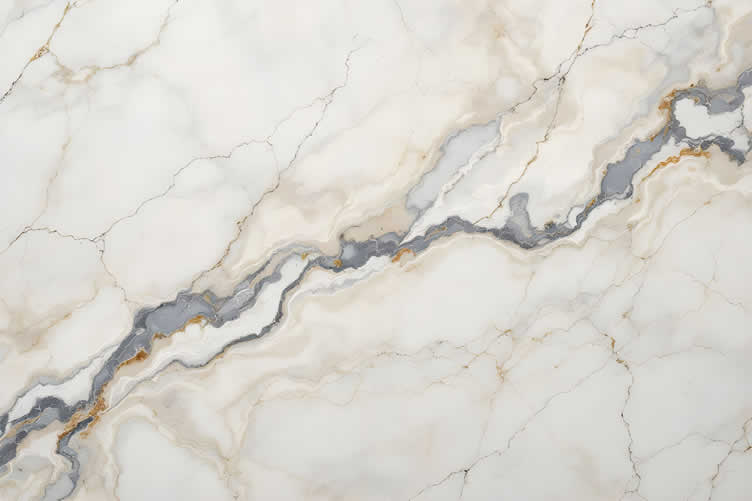
Quartzite offers a beautiful compromise for those who love the elegant aesthetic of marble but need the enhanced durability and resilience typically associated with granite.
It is a natural metamorphic rock, meaning it began its journey as sandstone and was transformed deep within the earth by immense heat and pressure. This natural process imbues the stone with an incredibly hard and resilient composition.
AI generated image by 123rf.com
With its stunning, often marble-like veining and superior strength, quartzite has become a highly popular choice for kitchen countertops, providing homeowners with both sophisticated aesthetic appeal and reliable practical performance.
It truly combines the best of both worlds, offering peace of mind alongside breathtaking beauty.
[ view summary table: quartzite countertops ]
-
Styles and Appearance[ view samples]
Quartzite countertops often resemble marble, with soft white and gray backgrounds and elegant, flowing veins. However, they can also be found in a wider range of colors, including blues, greens, and pinks, depending on the minerals present during their formation.
The patterns are typically more subtle and feathery than those found in some types of granite, giving quartzite a sophisticated and refined look.
expanded style breakdown –
- Marble-Like Aesthetic:
Quartzite countertops are often compared to marble due to their delicate veining and soft, luxurious appearance. They feature hues of white and gray that exude timeless elegance, making them a popular choice for refined and modern interiors. - Variety of Colors:
Quartzite is available in a diverse range of colors, influenced by the minerals present during its formation. Beyond classic whites and grays, homeowners can opt for stunning shades of blue, green, pink, and even gold to add a unique and personalized touch to their spaces. - Subtle and Refined Patterns:
Unlike granite, which can have bold and dramatic patterns, quartzite features more subtle and feathery veining. This gives it a sophisticated and understated look, suitable for spaces that aim for a minimalist or high-end design aesthetic. - Natural Variations:
Each slab of quartzite is uniquely formed, ensuring no two countertops are exactly alike. These natural variations make it an exclusive and distinctive option for any home. - Highly Polished Finish:
Quartzite’s surface can achieve a high level of polish, enhancing its light-reflecting qualities and adding to the luxurious appeal. This polished finish also contributes to its durability and ease of maintenance.
Quartzite countertops merge beauty and functionality, offering endless possibilities for tailoring the look of your kitchen or bathroom to perfectly align with your desired aesthetic.
- Marble-Like Aesthetic:
-
Installation
Installing quartzite is a task for skilled professionals due to its hardness and weight. Cutting and finishing the stone requires specialized diamond blades and tools.
The installation process is similar to that of granite, involving precise templating, careful transportation, and expert placement to ensure a secure and level fit. The seams are carefully joined with epoxy to create a smooth, continuous surface.
installation breakdown –
- Professional Expertise:
Due to quartzite’s exceptional hardness and weight, its installation should only be handled by skilled professionals equipped with the expertise and tools necessary to manage the process effectively. - Specialized Tools:
Cutting and finishing quartzite involve the use of specialized diamond blades and other professional-grade tools. These tools ensure precision and prevent chipping or cracking during the process. - Precise Templating:
Accurate templating is a critical step. Precise measurements are taken to craft templates that guide cutting and placement, ensuring the stone fits perfectly within the designated space. - Careful Transportation:
Given its weight and delicate nature during handling, quartzite must be transported carefully. Professionals use appropriate equipment and handling techniques to avoid damage. - Expert Placement:
The placement process requires expert attention to ensure the surface is level and secure. This includes positioning the slabs accurately and making adjustments as needed. - Seam Joining:
Seams are joined using high-strength epoxy that matches the color of the stone. This ensures a smooth and continuous look, enhancing the aesthetic appeal of the installation. - Finishing Touches:
After installation, the surface is finished to achieve a polished and seamless appearance. Any remaining adjustments or sealing steps are completed to protect the quartzite and prolong its durability.
- Professional Expertise:
-
Maintenance
While quartzite is less porous than marble, it still needs to be sealed to protect against staining. The frequency of sealing depends on the specific slab’s porosity, but it is generally recommended to seal it upon installation and then every one to two years.
Daily cleaning can be done with a mild soap and water. It’s best to avoid abrasive or acidic cleaners that could damage the sealant.
expanded maintenance summary –
- Sealing Regularly:
Quartzite is naturally less porous than marble but still requires sealing to prevent stains and maintain its resilience. It is recommended to seal the quartzite upon installation and reapply sealant every one to two years, depending on the specific slab’s porosity and how frequently the surface is used. - Daily Cleaning Routine:
For everyday cleaning, use a mild soap mixed with water and a soft cloth or sponge. This gentle approach helps preserve both the surface and the sealant without causing damage to its finish. - Avoid Harsh Cleaners:
Refrain from using abrasive or acidic cleaning products, such as vinegar or bleach, as they can degrade the sealant over time, leading to potential staining or etching on the surface. - Spill Management:
Clean spills immediately to avoid potential stains. Even with sealing, letting substances like wine, coffee, or citrus sit on the surface for extended periods can result in discoloration. - Use Protective Measures:
To further safeguard your quartzite, utilize coasters, trivets, and cutting boards. These simple measures can prevent scratches, heat marks, and other potential surface damage. - Periodic Deep Cleaning:
Occasionally, perform a deeper clean by using a stone-safe cleaner specifically formulated for natural stones like quartzite. This ensures the surface remains vibrant and free from residue build-up.
- Sealing Regularly:
-
Pros and Cons
The primary advantages of quartzite are its durability and marble-like appearance. It is resistant to heat, scratches, and UV rays, making it suitable for both indoor and outdoor kitchens.
Its natural beauty is a major draw for homeowners. The main disadvantages are its cost, which is often higher than granite, and the need for sealing.
Also, there can be confusion between quartzite and some softer stones, so it is important to purchase from a reputable supplier.
more detail pros and cons review –
Pros
- Durability:
Quartzite is an extremely hard and durable material, capable of withstanding significant wear and tear. Its resistance to scratches and other forms of damage makes it an ideal choice for high-traffic areas like kitchens. - Heat Resistance:
This stone is highly resistant to heat, meaning hot pots, pans, or spills won’t damage its surface—making it particularly suitable for cooking spaces. - Marble-like Appearance:
Quartzite closely resembles marble with its soft, natural veining and elegant look but offers much greater durability, making it a popular choice for homeowners seeking timeless beauty. - UV Resistance:
Quartzite does not discolor or fade, even when exposed to direct sunlight, which makes it perfect for use in outdoor kitchens, patios, or spaces with large windows. - Natural Beauty:
Every slab of quartzite is unique, with variations in color and pattern, providing a one-of-a-kind focal point in your living space.
Cons
- Higher Cost:
Quartzite is often more expensive than alternatives like granite due to its complexity in quarrying and manufacturing, which may make it less ideal for budget-conscious projects. - Sealing Requirements:
To maintain its beauty and prevent staining, quartzite needs to be sealed regularly. This additional maintenance step can be a downside for some homeowners. - Confusion with Softer Stones:
Some stones sold as quartzite may actually be a mix of softer materials, which can lack the durability true quartzite offers. Therefore, purchasing from a trustworthy and reputable supplier is crucial to ensure you receive genuine, high-quality quartzite.
- Durability:
Type Solution Benefits Quartzite Countertops Quartzite offers a natural stone alternative that combines the aesthetic appeal of marble with the superior durability of granite. It is created through a metamorphic process, transforming sandstone into a resilient material suitable for various applications. Durable and resistant to heat and scratches, quartzite provides a long-lasting, elegant solution for kitchen countertops. It also offers UV resistance, making it ideal for outdoor spaces, and its unique patterns add a personalized aesthetic to any design. Styles and Appearance Quartzite countertops are known for their marble-like appearance with flowing, delicate veining and soft hues, such as whites and grays. Additionally, they are available in a variety of colors, including blues, greens, and pinks, depending on the minerals present. By offering a wide range of colors and subtle patterns, quartzite can complement both modern and minimalist interiors with timeless elegance. Each slab is unique, ensuring a distinctive look for any space. Installation Installing quartzite requires professional expertise due to its hardness and weight. Specialized diamond tools are used to cut and finish the material, followed by careful templating and secure placement. Seams are joined with epoxy to create a smooth and continuous surface. Expert installation ensures a flawless and durable finish, enhancing the countertop’s longevity and functionality. The precision and attention to detail result in a high-end, polished appearance that elevates any kitchen or bathroom. Maintenance Quartzite surfaces need to be sealed upon installation and resealed annually or biennially based on usage. Daily cleaning involves mild soap, water, and non-abrasive tools, while spill management and deep cleaning with stone-safe products are recommended for long-term care. Proper maintenance ensures the beauty and functionality of quartzite surfaces for years. Sealing protects against stains, daily cleaning preserves the finish, and protective measures prevent damage from heat and scratches. Pros and Cons Quartzite offers exceptional durability, heat resistance, UV protection, and a marble-like appearance, but its higher cost and sealing requirements might deter some homeowners. Ensuring authenticity is vital as some materials sold as quartzite may lack the expected hardness and resilience. With its unparalleled durability, timeless beauty, and natural variations, quartzite is a luxurious and practical choice for various spaces. Purchasing from reputable suppliers guarantees a high-quality material worth the investment. 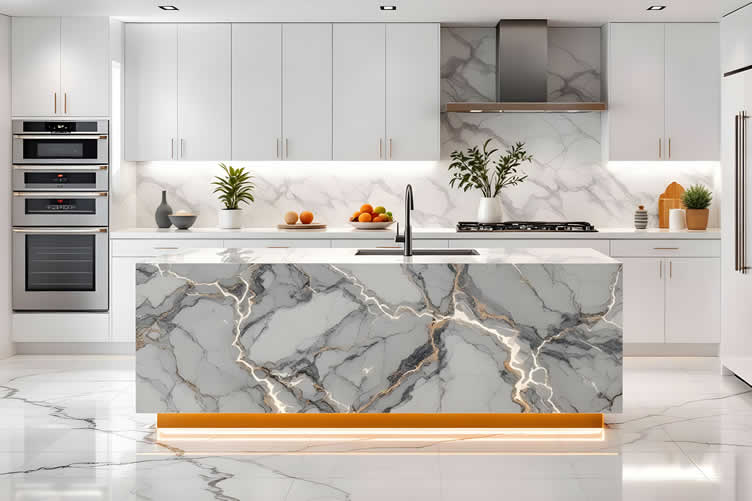
AI generated image by 123rf.com
-
Scroll up to directory … or scroll to next section looking at dolomite countertops …
-
-
5th TERM: Dolomite Countertops
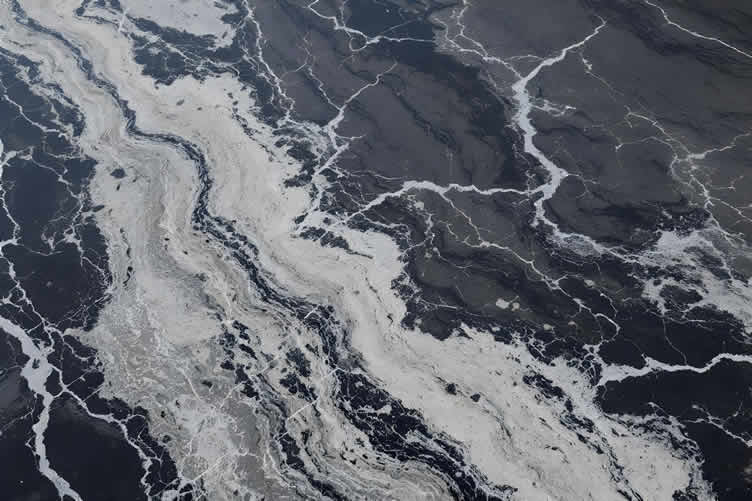
Dolomite is a fascinating natural sedimentary rock that presents a wonderful and stylish alternative for homeowners considering stone countertops. Rather than the more commonly seen marble or granite, dolomite offers a distinct aesthetic and feel that can bring a unique character to your home.
Its appeal truly lies in its distinctive and subtle appearance, which often showcases a beautiful white or gray base.
This base is gracefully adorned with soft, hazy veining, creating a serene and elegant surface that can truly elevate a kitchen or bathroom with its understated charm.
AI generated image by 123rf.com
When it comes to practicalities and everyday use, dolomite holds a unique position among natural stones. It is indeed harder and more durable than the often-praised marble, giving it an edge in terms of resilience against daily wear and tear.
However, it remains softer than granite, which means it occupies a delightful middle ground.
This harmonious balance between impressive durability and inherent natural beauty is precisely what makes dolomite so appealing to many homeowners seeking both elegance and practicality for their cherished living spaces.
[ view summary table: dolomite countertops ]
-
Styles and Appearance[ view samples]
Dolomite countertops typically have a polished, smooth finish that highlights their gentle veining. The colors are generally in the white and gray families, with patterns that are less dramatic than some marbles but more fluid than the speckles of many granites.
This understated elegance makes dolomite a versatile choice that complements both traditional and contemporary kitchen designs. Its cool tones can brighten a space and create a sense of calm sophistication.
expanded style breakdown –
- Polished, Smooth Finish:
Dolomite countertops are typically crafted with a polished surface that enhances their natural beauty. This smooth finish accentuates the stone’s gentle veining and creates a sleek, refined look. - Color Palette:
The colors of dolomite primarily fall within the white and gray families. These neutral tones serve as a timeless base, ideal for many design styles and easy to pair with a range of decor. - Subtle Veining and Patterns:
Compared to marble, dolomite’s veining is less dramatic, while its patterns are more fluid and organic when compared to the speckles found in many granites. This balance offers a versatile option for those seeking understated elegance. - Versatility in Design:
Dolomite’s subtle and sophisticated appearance makes it a versatile choice that complements both traditional and contemporary kitchens. Its adaptability allows it to seamlessly fit into various design styles and aesthetics. - Brightening Effect:
With its cool and light tones, dolomite can brighten up spaces, creating an airy and calm environment. This can be especially beneficial in kitchens that need a touch of openness or serenity. - Sophisticated Appeal:
The understated elegance of dolomite countertops lends a sense of calm sophistication to any space. Whether in a minimalist setting or paired with bold accents, dolomite remains a stylish and timeless choice.
- Polished, Smooth Finish:
-
Installation
The installation of dolomite countertops should be performed by experienced professionals. Although it is a relatively durable stone, it can still be susceptible to chipping or cracking if not handled with care.
The process involves creating a precise template, cutting the slabs to size, and meticulously fitting them onto your cabinetry. Seams are joined with a color-matched epoxy to ensure a clean and seamless look.
installation breakdown –
- Hire Experienced Professionals:
The installation process requires skill and expertise. Professionals ensure that delicate materials like dolomite are handled properly to avoid chipping or cracking during installation. - Create a Precise Template:
A detailed template of your cabinetry is made to ensure the dolomite slabs fit perfectly. This step is critical for achieving an accurate and seamless installation. - Cut the Dolomite Slabs to Size:
Using advanced cutting tools, the slabs are cut according to the specifications of the template. Precision during this stage minimizes the risk of mistakes and ensures edges align correctly. - Prepare the Base Surface:
The cabinetry must be level and sturdy to support the heavy weight of the dolomite. Professionals will inspect and reinforce the base if necessary. - Fit the Slabs Meticulously:
Each slab is carefully laid into place with attention to fit and alignment. Adjustments are made as needed to ensure proper placement. - Join Seams with Color-Matched Epoxy:
Where slabs meet, a color-matched epoxy is used to blend seams seamlessly into the design. This step enhances the countertop’s aesthetic appeal while providing structural stability. - Polish and Seal:
Once in place, the surface is cleaned, polished, and sealed to protect the dolomite from stains and damage, ensuring longevity and a pristine appearance.
- Hire Experienced Professionals:
-
Maintenance
Dolomite is less porous than marble but more porous than granite, so it requires regular maintenance to protect it from stains and etching. It should be sealed upon installation and then resealed periodically, typically once a year.
Spills, especially from acidic substances, should be wiped up quickly. For daily cleaning, use a pH-neutral cleaner or a mixture of warm water and mild dish soap to preserve the sealant and the stone’s finish.
expanded maintenance summary –
- Seal the Surface
- Dolomite should be sealed upon installation to create a protective barrier against stains and etching.
- Resealing is recommended periodically, typically once a year, to maintain this barrier.
- Clean Spills Quickly
- Acidic substances like lemon juice, vinegar, or wine can damage the surface if left unattended.
- Wipe up spills immediately to prevent etching or staining.
- Use Gentle Cleaning Solutions
- For daily cleaning, opt for pH-neutral cleaners or a simple mixture of warm water and mild dish soap.
- Avoid harsh chemicals or abrasive cleaners as they can degrade the sealant and dull the stone’s finish.
- Avoid Extreme Heat
- Use trivets or heat-resistant pads under hot pots and pans to prevent thermal shock or discoloration.
- Utilize Soft Cleaning Tools
- Clean with soft cloths or non-abrasive sponges to preserve the polished appearance of the dolomite.
- Avoid steel wool or rough scrubbers, which can scratch the surface.
- Seal the Surface
-
Pros and Cons
Dolomite’s primary appeal is its marble-like appearance at a often more affordable price point. It is also more resistant to scratches and heat than marble, making it a more practical option for a busy kitchen.
However, it is not as durable as granite or quartzite and is still susceptible to staining and etching from acidic foods and liquids. It requires consistent sealing and careful cleaning to maintain its beauty over time.
more detail pros and cons review –
Pros
- Elegant Appearance:
Dolomite offers a luxurious, marble-like look that enhances the aesthetic appeal of any kitchen or bathroom. Its soft hues and natural veining make it a sophisticated choice for homeowners aiming to elevate their space. - Cost-Effective Alternative:
Compared to traditional marble, dolomite is often more affordable, making it a budget-friendly option for achieving a high-end look without breaking the bank. - Scratch Resistance:
Dolomite is harder and more resistant to scratches than marble, making it a practical choice for surfaces that endure daily wear and tear. - Heat Resistance:
It can withstand high temperatures better than marble, making it suitable for kitchens where hot pans and dishes are frequently placed on surfaces.
Cons
- Less Durable Than Granite or Quartzite:
While dolomite is harder than marble, it is not as durable as other materials like granite or quartzite. This relative softness makes it more prone to chips and nicks in high-traffic areas. - Susceptible to Stains and Etching:
Dolomite can be damaged by acidic substances such as citrus juices, vinegar, or wine. Spills from these need to be cleaned promptly to avoid permanent staining or etching. - Maintenance Requirements:
To preserve its beauty and functionality, dolomite requires consistent sealing and careful cleaning. Neglecting maintenance can lead to damage or a dull appearance over time. - Limited Color Options:
Dolomite typically comes in neutral shades like white and gray, which may not appeal to homeowners seeking bolder or more diverse color palettes.
- Elegant Appearance:
Type Solution Benefits Dolomite Countertops Dolomite is a natural sedimentary rock that offers a stylish alternative to more common stone countertops like marble and granite. It features a distinctive, subtle appearance with a white or gray base and soft, hazy veining. Dolomite is harder and more durable than marble, but softer than granite, striking a balance between resilience and beauty. Dolomite countertops provide a luxurious look with understated elegance, versatility for various design styles, and light tones that brighten spaces. They are more scratch-resistant and durable compared to marble and can withstand higher temperatures, ideal for practical use in kitchens. Styles and Appearance Dolomite countertops typically have a polished, smooth finish to emphasize their beauty. They come in a color palette of white and gray with gentle veining and fluid patterns, creating a sense of calm sophistication suitable for traditional and modern kitchens alike. The stone’s subtle tones and refined patterns make it a versatile choice, allowing it to complement a variety of kitchen designs. The brightening effect of its cool tones creates an airy and serene environment, enhancing its aesthetic appeal. Installation The installation process involves hiring professionals who create precise templates, cut the dolomite slabs to size, prepare the base surface, fit the slabs meticulously, and ensure seamless joining with color-matched epoxy. The surface is polished and sealed to protect it from stains and damage. Expert installation ensures a perfect fit, preserves the integrity of the material, and enhances the countertop’s durability and beauty, contributing to its long-term value in the home. Maintenance Dolomite requires routine care, such as sealing upon installation and periodic resealing. Spills, especially acidic substances, should be cleaned promptly using pH-neutral or mild dish soap solutions. Avoid harsh cleaning tools and use heat-resistant pads to avoid damage. Proper maintenance extends the life of the countertops, preserves their polished finish, and prevents stains and etching. Regular care ensures the dolomite retains its elegance and functionality over time. Pros and Cons Pros include a marble-like elegant appearance, cost-effectiveness, scratch and heat resistance, and sophisticated appeal. Cons involve lower durability compared to granite, susceptibility to stains and etching, and the need for regular maintenance. Dolomite’s luxurious yet practical qualities make it a favorite for many homeowners. With proper care, it offers a timeless and functional solution, though its limitations must be considered to ensure it meets individual needs. 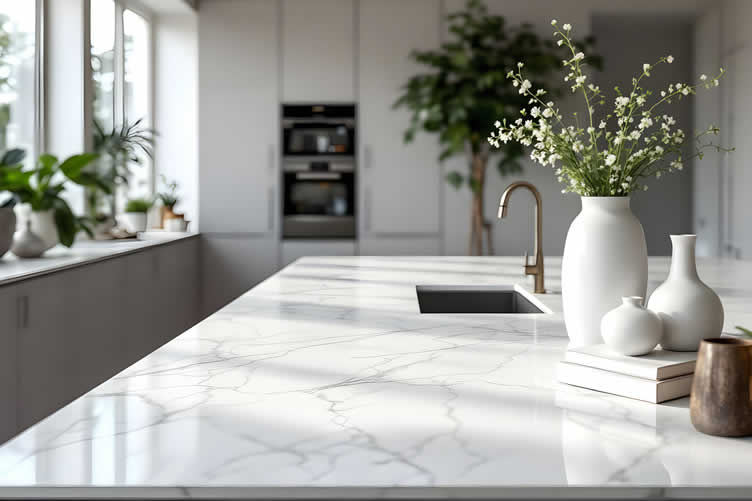
AI generated image by 123rf.com
-
Scroll up to directory … or scroll to next section considering soapstone countertops …
-
-
6th TERM: Soapstone Countertops
Soapstone is a natural stone prized for its unique combination of beauty and practicality, making it a timeless choice for both laboratories and kitchens. Its non-porous surface and chemically inert nature have made it a trusted material for centuries, resisting stains, bacteria, and chemical reactions.
Composed primarily of talc, soapstone is known for its soft, smooth texture that feels almost velvety to the touch, offering a tactile experience that sets it apart from other stones.

AI generated image by 123rf.com
Its distinctive, moody appearance, often characterized by deep, rich hues and subtle veining, makes it a favorite for those seeking a countertop with an organic, understated elegance.
Over time, soapstone develops a natural patina, a soft sheen that tells the story of its use and adds depth and character, making it an ideal choice for individuals who value materials that age gracefully and grow more beautiful with time.
[ view summary table: soapstone countertops ]
-
Styles and Appearance[ view samples]
Soapstone is typically dark gray, green, or black, often with subtle, light-colored veining. When first quarried, it has a lighter gray appearance, but it naturally darkens over time with exposure to oils and use.
Many homeowners choose to accelerate this process by treating the surface with mineral oil, which gives it a rich, dark luster. The look of soapstone is less formal than polished stone, lending a warm, rustic, or historic feel to a kitchen.
expanded style breakdown –
- Color Variety:
Soapstone typically comes in dark gray, green, or black hues, often enhanced with subtle, light-colored veining that adds to its natural beauty. - Initial Appearance:
When first quarried, soapstone has a lighter gray tone, which slowly darkens over time due to exposure to oils and day-to-day use. - Aging Process:
The material develops a natural patina as it ages, giving it a unique, evolving character that homeowners cherish for its individuality. - Mineral Oil Treatment:
Many homeowners prefer to accelerate the darkening process by applying mineral oil. This enhances the soapstone’s surface with a rich, deep luster and highlights its veining. - Aesthetic Appeal:
Soapstone has a softer, less formal appearance compared to polished stones. Its warm, rustic, and historic charm makes it an ideal choice for kitchens with a cozy, inviting atmosphere. - Timeless Design:
The versatile style of soapstone blends seamlessly with various kitchen designs, from traditional and farmhouse to modern and industrial, enhancing its universal appeal.
- Color Variety:
-
Installation
Soapstone is a softer stone, making it easier to cut and shape than harder stones like granite. However, professional installation is still recommended to ensure a proper fit and finish.
Installers can easily fabricate sinks and drainboards directly into the countertop for a seamless design. Because of its softness, care must be taken during installation to avoid scratches or gouges.
installation breakdown –
- Ease of Cutting and Shaping:
Soapstone is a naturally softer material, making it simpler to cut and shape compared to harder stones like granite. This quality provides flexibility during the installation process and makes it well-suited for custom designs. - Recommendation for Professional Installation:
Despite its workability, professional installation is highly recommended. Experts ensure a precise fit, clean edges, and a polished finish, helping to avoid any potential issues that could arise from DIY attempts. - Custom Fabrication Options:
One significant advantage of soapstone is its ability to be fabricated into custom features. Installers can craft integrated sinks, drainboards, or other seamless additions directly into the countertop for a cohesive and stylish look. - Handle With Care During Installation:
Due to its softness, soapstone can be susceptible to scratches or gouges if mishandled. Professional installers are equipped with the tools and experience necessary to handle the material carefully, ensuring its integrity and aesthetic appeal. - Long-Lasting Durability Post-Installation:
When installed correctly, soapstone countertops can last for decades. Proper installation lays the foundation for a durable and beautiful surface that withstands daily use in any kitchen or bathroom.
- Ease of Cutting and Shaping:
-
Maintenance
Soapstone is non-porous, meaning it is naturally resistant to stains and bacteria without the need for sealants. It is also highly resistant to heat and chemicals.
The main maintenance consideration is its softness. Soapstone can scratch and nick easily, though minor scratches can often be buffed out with fine-grit sandpaper and a coat of mineral oil.
Regular application of mineral oil is optional but helps to maintain an even, dark color and enhance its patina.
expanded maintenance summary –
- Non-Porous Surface:
Soapstone is naturally non-porous, making it inherently resistant to stains and bacteria. Unlike other materials, it does not require sealants to maintain its hygienic quality, making it a great option for kitchens, bathrooms, or any other high-use areas in your home. - Heat and Chemical Resistance:
This material is highly resistant to heat and chemicals, making it both functional and durable for a variety of household uses. You can place hot pans directly on its surface without worry, and it stands up well against most household cleaners. - Softness and Susceptibility to Scratches:
Due to its soft nature, soapstone is more prone to scratching or nicking compared to harder materials like granite or quartz. However, these imperfections are typically minor and can add character to its natural patina. - Scratch Repair Options:
Minor scratches are easy to address. They can often be buffed out using fine-grit sandpaper, followed by the application of mineral oil to restore a uniform finish and enhance its color. - Mineral Oil Application (Optional):
While not strictly necessary, applying mineral oil regularly is recommended for those who prefer a darker, even color across the surface. This step not only enhances its rich, natural appearance but also helps to develop a consistent patina over time. - Ongoing Care:
Routine cleaning with mild soap and water is sufficient for day-to-day maintenance. Avoid using abrasive pads or harsh cleaners, as these could damage the surface and alter its texture. With regular care, soapstone can remain a functional and beautiful centerpiece in your home for years to come.
- Non-Porous Surface:
-
Pros and Cons
The biggest advantages of soapstone are its non-porous nature and resistance to heat and stains. It does not require sealing and is easy to clean. Many people also love the warm, aged look it develops.
The main disadvantage is its softness, which makes it prone to scratches and dents. While some see this as part of its charm, others may prefer a more consistently pristine surface.
more detail pros and cons review –
Pros
- Non-Porous Surface:
Soapstone is naturally non-porous, meaning it does not absorb liquids. This makes it resistant to staining and an ideal choice for kitchens and bathrooms where spills are common. - Heat Resistance:
Its heat-resistant properties make soapstone perfect for countertops near stoves or as a surface for placing hot pans directly from the oven without the need for trivets. - No Sealing Required:
Unlike many other countertop materials, soapstone does not require sealing. This reduces maintenance efforts and ensures its natural beauty remains intact with little upkeep. - Ease of Cleaning:
A simple wipe with mild soap and water is all that’s needed to keep soapstone clean, making it a low-effort yet elegant material to maintain. - Timeless Aesthetic:
Many homeowners are drawn to soapstone for its soft, matte texture and the warm, aged patina it develops over time, giving it a charming and unique character.
Cons
- Softness and Durability:
Soapstone is softer than other stones like granite or quartz, which makes it more susceptible to scratches, dents, and chipping over time. - Surface Imperfections:
For some, the scratches and dings that develop on soapstone are seen as a part of its rustic charm. However, others may find it challenging if they prefer surfaces that stay pristine and unmarked. - Limited Color Options:
Soapstone typically comes in shades of gray with subtle veining, which might not suit those seeking a wider variety of colors or patterns. - Higher Cost:
While stunning and resilient in its own way, soapstone can be more expensive than other natural stone options, which could be a consideration for budget-conscious renovators.
- Non-Porous Surface:
Type Solution Benefits Soapstone Countertops Soapstone is a natural stone composed mainly of talc, offering a soft and smooth texture. It evolves over time with use and exposure, developing a unique patina that enhances its charm and character. Many homeowners treat the surface with mineral oil to give it a rich, dark luster. Soapstone is non-porous, resistant to stains, heat, and chemicals, making it both functional and durable. It is easy to clean and maintain, with minor scratches easily buffed out using sandpaper and mineral oil. This timeless material also blends seamlessly with various kitchen styles, providing a warm and inviting aesthetic. Styles and Appearance Soapstone is typically dark gray, green, or black with subtle light-colored veining. It darkens naturally over time but can be accelerated using mineral oil. The softer, less formal appearance creates a rustic and historic ambiance, ideal for kitchens with a cozy atmosphere. Its aesthetic appeal and ability to develop a natural patina over time make soapstone a preferred choice for homeowners. The wide variety of kitchen styles it complements ensures a universal design appeal, from traditional and farmhouse to modern settings. Installation Soapstone is softer than other stones, making it easier to cut and shape. Custom features like integrated sinks and drainboards can be fabricated for a seamless design. Professional installation is recommended to ensure precision and avoid damage during handling. When installed correctly, soapstone countertops boast long-lasting durability and a polished finish. Its customizability allows for more creative designs, while expert handling ensures its integrity and longevity. Maintenance Soapstone’s non-porous surface is resistant to stains and bacteria, requiring no sealants. While minor scratches can occur due to its softness, they are easily repaired with sandpaper and mineral oil. Regular care involves simple cleaning with soap and water. With low maintenance requirements and resistance to heat and chemicals, soapstone remains a practical and hygienic choice. Its aging process enhances its natural beauty, creating an enduring appeal for years to come. Pros and Cons Soapstone is non-porous, heat-resistant, requires no sealing, and is easy to clean. Over time, it develops a warm, aged patina. However, its softness means it is susceptible to scratches and dents, and its limited color options and higher cost might not suit every preference or budget. The material’s durability, ease of maintenance, and timeless aesthetic appeal outweigh its drawbacks for many homeowners. Despite its softness and higher cost, the elegance and functional benefits of soapstone make it a valued material for various spaces. 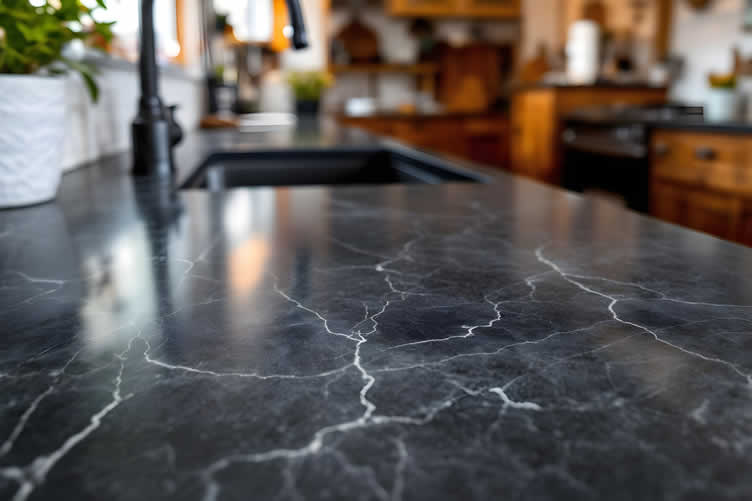
AI generated image by 123rf.com
[ pinterest: soapstone kitchen countertops ]
[ youtube: SOAPSTONE | Your questions answered ]
-
Scroll up to directory … or scroll to next section of why onzx countertops …
-
-
7th TERM: Onyx Countertops
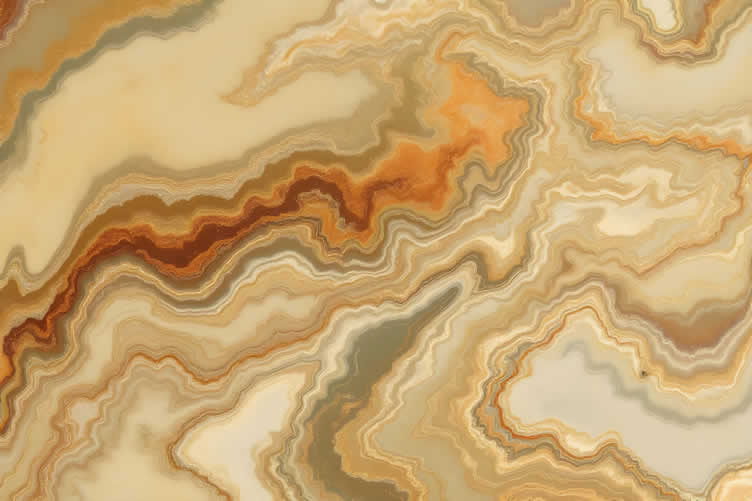
Onyx truly stands out with its incredible palette of colors, offering a wide spectrum that includes inviting shades of gold, serene greens, vibrant reds, calming blues, and earthy browns.
What makes each piece truly unique is the presence of dramatic veining and distinctive banding, which don’t just decorate the surface but often create a captivating, almost three-dimensional effect. This natural artistry gives the stone a remarkable sense of movement and depth, ensuring no two slabs are exactly alike.
AI generated image by 123rf.com
But perhaps its most remarkable and cherished feature is its inherent translucence; unlike many other natural stones, onyx allows light to gently pass through it. This unique quality is often beautifully highlighted by backlighting the countertop, transforming the surface into a stunning, glowing piece of art.
Imagine the soft, ethereal light it casts, creating an incredibly warm and inviting ambiance that elevates your space and truly turns your countertop into a focal point of serene beauty.
[ view summary table: onyx countertops ]
-
Styles and Appearance[ view samples]
Onyx is available in a wide spectrum of colors, including shades of gold, green, red, blue, and brown, with dramatic veining and banding that create a captivating, almost three-dimensional effect.
Its most remarkable feature is its translucence, which allows light to pass through it. This quality is often highlighted by backlighting the countertop, creating a stunning glow that turns the surface into a piece of art.
expanded style breakdown –
- Vivid Color Options:
Onyx comes in a wide array of captivating colors, including shades of gold, green, red, blue, and brown. These hues provide endless opportunities to match various design preferences and aesthetics, making it a versatile choice for distinctive interiors. - Unique Veining and Banding:
This stone is distinguished by its dramatic veining and intricate banding, which create an almost three-dimensional appearance. The natural patterns ensure that each piece of onyx is entirely unique, adding an artistic touch to any space. - Translucent Quality:
One of onyx’s most remarkable features is its translucence. This property allows light to pass through the stone, revealing its intricate patterns and amplifying its stunning beauty. - Backlighting Potential:
The translucent nature of onyx makes it ideal for backlighting. When lit from behind, the stone emits a warm, inviting glow, transforming countertops, wall panels, or decorative accents into breathtaking focal points. This design technique emphasizes onyx’s elegance while creating a luxurious ambiance.
- Vivid Color Options:
-
Installation
Onyx is a fragile and soft stone, making its installation a highly specialized job that requires extreme care. It is prone to scratching, cracking, and chipping, so only experienced professionals should handle it.
Because it is often backlit, the installation may also involve coordinating with an electrician to properly install the lighting system beneath the slab.
installation breakdown –
- Fragile Nature:
Onyx is a delicate and soft natural stone, making it vulnerable to damage during handling and installation. It can easily scratch, crack, or chip, which requires installers to exercise extreme care throughout the process. - Professional Expertise:
Due to its fragile properties, onyx installation should always be entrusted to experienced professionals. Skilled installers understand how to safely manage the material and ensure a flawless result without compromising its integrity. - Backlighting Requirements:
Many applications of onyx incorporate backlighting to showcase its translucent beauty. This often necessitates coordination with a licensed electrician to properly design and install a lighting system beneath the slab, ensuring the light distribution enhances the stone’s unique patterns. - Support and Adhesion:
Special attention is needed regarding the support structure and adhesives used during installation. Onyx requires a strong yet gentle adhesive to prevent cracking or damage while providing the necessary stability. - Sealing and Maintenance:
Once installed, onyx must be sealed with a high-quality stone sealant to protect it from moisture, stains, and etching. This step is vital for longevity and preserving the stone’s pristine appearance.
- Fragile Nature:
-
Maintenance
Onyx is a high-maintenance countertop material. It is very porous and soft, making it highly susceptible to staining, etching, and scratching. It must be sealed regularly and thoroughly.
All spills must be wiped up immediately, and acidic substances should be kept away from the surface. Cleaning should be done with a pH-neutral cleaner. Due to its fragility, it is not
expanded maintenance summary –
- Porous and Soft Nature:
Onyx is highly porous and softer compared to other countertop materials, making it prone to staining, etching, and scratching. Due to these characteristics, extra care should be taken to prevent damage. - Regular Sealing:
To protect onyx from spills and everyday wear, it must be sealed regularly with a high-quality stone sealant. This process helps to maintain its finish and prevent staining and etching. - Immediate Spill Clean-Up:
Spills should be wiped up immediately to avoid permanent staining or damage. Prolonged contact with liquids, especially colored or acidic ones, can penetrate the stone and leave marks. - Avoid Contact with Acidic Substances:
Acidic substances such as citrus juices, vinegar, or cleaning products can cause etching on the delicate surface of onyx. Keep these substances away from the countertop to prevent surface damage. - Use pH-Neutral Cleaners:
Cleaning onyx should be done with a pH-neutral cleaner specifically designed for natural stone. Harsh chemicals and abrasive cleaners can degrade the surface and compromise its integrity over time. - Not Recommended for High-Traffic Kitchens:
Due to its fragility, onyx is not ideal for high-traffic kitchens or areas where heavy use is anticipated. Its susceptibility to wear and tear makes it better suited for low-traffic spaces where its aesthetic appeal can be showcased with minimal risk of damage.
- Porous and Soft Nature:
-
Pros and Cons
The unparalleled, dramatic beauty of onyx is its main selling point. Its translucence and vibrant colors create a breathtaking focal point in any room.
However, its fragility is a significant drawback. It is soft, porous, and prone to damage, making it impractical for most busy kitchens. Its high cost is another consideration.
Onyx is best suited for decorative applications like a bar top, island accent, or bathroom vanity where it will not be subjected to heavy use.
more detail pros and cons review –
Pros
- Stunning Aesthetic Appeal:
Onyx is renowned for its striking, dramatic beauty. Its unique translucence and vibrant colors make it a show-stopping addition to any space, creating an elegant and luxurious atmosphere. - Translucent Properties:
A standout feature of onyx is its ability to transmit light, allowing for creative backlighting options. When illuminated, the stone’s natural veining and hues come alive, adding a dynamic element to your design. - Distinctive & Rare:
Each slab of onyx is one-of-a-kind, ensuring a unique appearance that adds character and exclusivity to your home decor.
Cons
- Fragility and Maintenance Concerns:
Onyx is a soft and porous material, making it highly susceptible to scratches, stains, and etching. It requires delicate care and regular sealing to maintain its integrity and appearance. - Not Suitable for High-Use Areas:
Due to its fragility, onyx is not ideal for areas subject to heavy activity, such as kitchen countertops. Excessive wear and tear can quickly degrade its quality and aesthetic appeal. - High Cost:
Onyx is considered a luxury material, often carrying a higher price tag compared to other natural stones. Its cost can make it less accessible for those working within a strict budget. - Limited Practical Applications:
While visually stunning, onyx works best in low-touch, decorative applications such as bar tops, accent walls, or bathroom vanities where its delicate nature won’t be compromised.
- Stunning Aesthetic Appeal:
Type Solution Benefits Onyx Countertops Onyx countertops are a bold and luxurious choice for homeowners. This exotic natural stone is known for its translucent quality and vibrant, swirling colors. Due to its delicate nature, it is often used in low-traffic areas or as decorative accents. It requires professional installation because of its fragility and is commonly backlit to highlight its unique appearance. Onyx countertops provide unique and dramatic beauty with vivid color options and distinct veining. Its translucence enables creative backlighting, turning it into a functional piece of art. Decorative use allows a luxurious ambiance. Styles and Appearance Onyx is available in vivid colors like gold, green, red, blue, and brown, often featuring dramatic veining and banding. Its translucence is its most remarkable property, allowing light to pass through the stone. It is often backlit to enhance its glow and patterns. Each slab is unique, offering versatility in design and style. Backlighting enhances its elegant translucence, creating a stunning focal point. Its vibrant aesthetic suits luxury applications beautifully. Installation Onyx requires careful handling due to its fragile composition. It must be installed by experts to avoid damage like scratching or chipping. Installation often includes coordinating with electricians for backlighting setups. Proper support and a quality adhesive are critical for stability. Professional installation ensures longevity and showcases the natural beauty of onyx. Backlit setups create artistic highlights, adding a high-end touch to interiors. Maintenance Onyx demands regular care, including sealing with a high-quality stone sealant. Spills should be wiped away immediately, and acidic substances must be avoided. Cleaning requires pH-neutral products, and the stone is unsuitable for high-traffic areas. Maintenance preserves the stone’s aesthetic appeal and longevity. Proper care minimizes staining, etching, and scratching, ensuring it remains a stunning feature in low-traffic spaces. Pros and Cons Onyx offers unique beauty with its stunning translucence, vibrant colors, and one-of-a-kind patterns. However, its fragility, high maintenance, and cost make it impractical for high-use applications. It is best suited for decorative purposes. Its unparalleled elegance elevates the luxury of any space. However, its limitations make it ideal for specific, less demanding applications, ensuring that its visual appeal remains uncompromised. 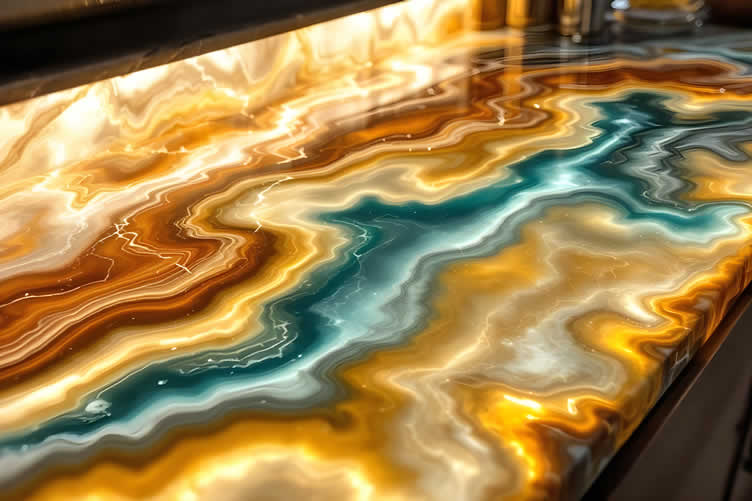
AI generated image by 123rf.com
-
Scroll up to directory … or scroll to next section of other stone kitchen countertops …
-
-
8th TERM: Other Stone Countertop Options
Beyond the most popular choices, there are several other natural stones that can be used for kitchen countertops, each with its own set of characteristics.
Limestone offers a soft, muted appearance similar to marble but is also porous and prone to scratching.
Travertine is known for its porous, pitted texture, which can be filled and honed for a smoother surface, though it remains a relatively soft and high-maintenance option for kitchens.
These stones are less common for countertops due to their respective pros and cons but can be beautiful choices in the right setting.
Here’s a breakdown for a better understanding:
[ view summary table: other stone options ]
- Limestone
- Boasts a soft, muted appearance similar to marble, lending a timeless elegance.
- Porous in nature, making it more prone to scratches and stains.
- Works well in kitchens where aesthetics are prioritized over heavy use.
- Travertine
- Recognized for its distinctive porous, pitted texture, creating a rustic charm.
- Can be filled and honed for a smoother, more polished finish.
- A softer stone that requires regular maintenance to preserve its quality.
Type Solution Benefits Limestone Offers a soft, muted appearance similar to marble. Porous in nature, making it more prone to scratches and stains. Lends timeless elegance and works well in kitchens where aesthetics are prioritized over heavy use. Travertine Known for its distinctive porous and pitted texture, which can be filled and honed for a smoother, polished finish. Requires regular maintenance. Creates a rustic charm and can become a durable surface with proper care. 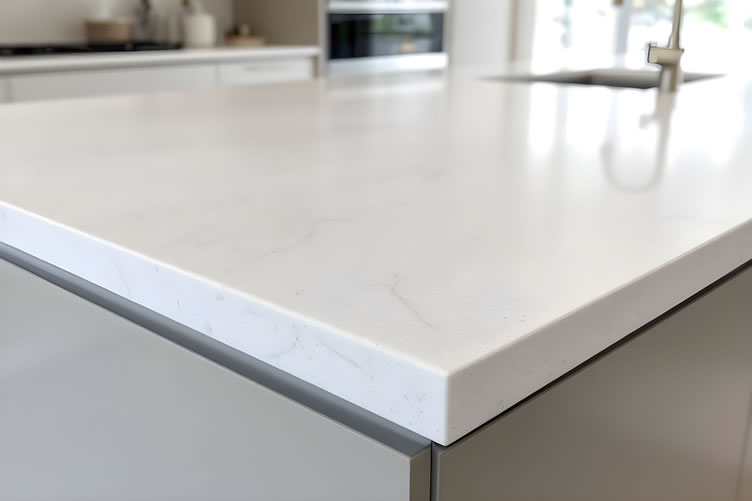
AI generated image by 123rf.com
-
Scroll up to directory … or scroll to next section of seeking professional guidance …
- Limestone
-
9th TERM: The Importance of Professional Guidance
… for stone kitchen countertop installation
Installing a stone kitchen countertop can be one of the most impactful upgrades to a home, enhancing both functionality and overall design.
While some homeowners may consider tackling this as a DIY project, the process involves precision, expertise, and specialized tools that can exceed the scope of a typical home improvement skill set.
Professional advice, accurate measurement, and quality installation are critical for ensuring the countertop not only fits perfectly but is also safe, durable, and visually seamless.
Below are key considerations that highlight the value of working with a professional when undertaking such a project.
[ view summary table: why professional help ]
-
Accurate Measurements and Planning
One of the most crucial steps in countertop installation is obtaining precise measurements. A stone countertop must fit exactly within the designated space, accounting for edges, cutouts for sinks and appliances, and any potential irregularities in the room’s layout.
Professionals use specialized measuring tools and techniques, such as laser templates, to ensure every angle and dimension is correct. Mistakes in this step can lead to costly material wastage or delays, making expert planning indispensable.
-
Cutting and Shaping the Stone
Stone, whether granite, quartz, or marble, is not a material that can be easily or safely cut without proper equipment and training. Professional installers have access to industrial-grade saws, water jets, and grinders designed to shape the stone with precision.
Additionally, intricate cuts, such as those for under-mount sinks or custom edge profiles, require a high level of expertise. Improper cutting can result in cracks, uneven edges, or even irreparable damage to the stone slab.
-
Proper Sealing and Surface Treatment
Sealing a stone countertop is essential to protect its surface from stains, water damage, and daily wear and tear. Different types of stone require specific sealants and techniques to ensure maximum durability without altering the stone’s natural look.
Professionals are trained to understand these differences and will apply the sealant uniformly to guarantee long-lasting protection. For porous stones like marble or travertine, this expertise is particularly crucial to preserving the material’s beauty and functionality.
-
Ensuring the Right Support and Installation
Stone countertops are heavy, and improper support or installation can lead to structural issues. Professional installers will ensure that the underlying cabinetry is reinforced and can bear the weight of the countertop.
They will also secure the stone using the appropriate support brackets, adhesives, and leveling techniques to prevent movement or cracking over time.
Without proper handling, even a minor imbalance during installation can jeopardize the safety and longevity of the countertop.
-
Benefits of Hiring a Professional Installer
By working with a certified professional, homeowners gain peace of mind knowing the job is done correctly the first time, minimizing risks and unnecessary expenses.
The expertise of a professional ensures that every detail—from measurement and material preparation to installation and finishing—is executed to the highest standards.
Even if you’re seeking to save on costs, an installer can also help optimize your budget by guiding you to the right materials, tools, and designs that match your vision without sacrificing quality.
LetsRenovate has partnered with HomeAdvisor™, a renowned provider of highly-rated, carefully-vetted cabinet & countertop contractors. Start your search here by entering your zip code to find local professionals.
Type Solution Benefits Accurate Measurements and Planning Using specialized tools like laser templates to ensure precise measurements, accounting for edges, cutouts, and irregularities in the room layout. Prevents costly material wastage, ensures a perfect fit, and avoids delays in installation. Cutting and Shaping the Stone Utilizing industrial-grade saws, water jets, and grinders to cut and shape stone with precision. Professionals handle intricate cuts for sinks and custom edges. Avoids cracks, uneven edges, and any damage to the stone, resulting in a flawless finish. Proper Sealing and Surface Treatment Applying specific sealants uniformly based on stone type, ensuring durable protection from stains and wear. Preserves the natural beauty and functionality of the surface while enhancing its longevity. Ensuring the Right Support and Installation Reinforcing cabinetry to bear the weight of the stone and using support brackets, adhesives, and leveling techniques for secure installation. Prevents structural issues, cracking, or movement, ensuring safety and extended durability. Benefits of Hiring a Professional Installer Leveraging professional expertise in measurements, material preparation, installation, and budget optimization. Ensures a high-quality result, eliminates unnecessary risks and expenses, and provides peace of mind. 
AI generated image by 123rf.com
But Wait!
Before you start looking for kitchen countertop contractors, we’ve created a helpful evaluation worksheet.
This resource will guide you in comparing potential contractors, focusing on key factors like their pricing, licenses, and references.

Evaluation Sheet
File Type:
-
Scroll up to directory … or scroll to conclusion …
-
-
Conclusion
Selecting the right stone countertop is a balance of aesthetics, functionality, and budget. Whether you are drawn to the rugged durability of granite, the sleek consistency of quartz, the timeless elegance of marble, or the unique character of soapstone, there is a stone countertop to suit your personal style and daily needs.
By considering how you use your kitchen and how much maintenance you are willing to undertake, you can choose a surface that you will love for years to come.
Take your time to explore the options, view slabs in person, and envision how each one will transform your kitchen into the heart of your home.
-
Quick scroll to more kitchen-related ideas …
-
ideas to view and compare from the photo above
book: kitchen remodelingcountertop sealercountertop repair kit
- What comments can you share about the type
stone kitchen countertop that you have installed?

Tackling home upgrades and fulfilling all your home improvement needs …

… save this curated directory of ideas for future reference.



Download this PDF for a concise summary of all you need to know about …?


Outline the specific requirements needed for making …
… key home improvement and remodeling decisions



SHARE IT ..! Someone in your network might benefit from this insightful post about stone kitchen countertops. Feel free to share it on Facebook, X (formally Twitter), LinkedIn, or Pinterest!



Are there any other interesting topics that might have been overlooked but could offer valuable insights …?





Download this PDF for a concise summary of all you need to know about …?
Easily determine the dimensions you need for any home remodeling project …
… ensuring functionality, visual appeal, and compliance with building codes.


Download this PDF for a concise summary of all you need to know about …?

Calendar For:
Home Maintenance
File Type:
… view illustration “becoming a bank”

… view our sharing links below for a quick "share the knowledge"
Find Kitchen Remodeling Services Kitchen Remodeling and Design Cabinets & Countertops Flooring Lighting Design Painting & Staining top-rated, pre-screened local contractors FREE: download contractor selection enter zip code – powered by HomeAdvisor ™
Quick Contractor Guides selecting negotiating working with inspecting

Cover image credit: stone kitchen countertops by 123rf.com
end of post … please share it!
 |
did you find this review of stone kitchen countertops helpful? If so, please share the article with your friends and family! |
Nice pic idea? Leave us a quick comment below.
And please share this pic idea within your social networks.