Summary Outline –
Learning to cook opens doors to healthier eating, significant savings on food costs, and the deep satisfaction that comes from creating something delicious with your own hands.
Whether you’re a college student living independently for the first time, a busy professional tired of takeout, or someone who simply wants to expand their life skills, cooking offers rewards that extend far beyond the dinner table.
The path from kitchen novice to confident home cook follows a logical progression. Rather than diving into complex dishes that require advanced techniques, successful beginners build their skills methodically. They start with simple recipes, learn fundamental cooking methods, and gradually expand their repertoire as their confidence grows.
This comprehensive guide breaks down cooking for beginners into manageable steps, each designed to build upon the previous one.
- post content … analysis/ beginners guide to cooking
- 1st: Start Simple: Mastering Basic Dishes
- 2nd: Follow Recipes and Watch Videos
- 3rd: Learn the Techniques
- 4th: Build Skills Gradually
- 5th: Take a Beginners Course
- 6th: Stock Your Kitchen
- 7th: Build Confidence
- 8th: Additional Tips for Success
- conclusion
- other kitchen-related topics

-
- —— begin first topic ——
-
1st Step: Start Simple: Mastering Basic Dishes
Learning how to cook doesn’t have to feel overwhelming. By starting with simple, foundational dishes, you can build your skills step by step, gaining confidence and understanding along the way.
Mastering basic recipes not only helps you get comfortable in the kitchen but also serves as a springboard for developing more complex cooking techniques in the future.
This section focuses on approachable, beginner-friendly ideas for learning to cook, offering practical advice that caters to those just starting their culinary journeys.
[ view content summary: mastering basic dishes ]
-
Understanding the Importance of Basics
Before you can prepare intricate dishes, it’s essential to master the basics. Simple recipes teach fundamental skills—like boiling, sautéing, and seasoning—that are crucial for every cook.
For instance, learning how to cook rice perfectly or scramble eggs sets the foundation for countless future recipes. Once you understand these essentials, you’ll realize that even seemingly complicated dishes are often just variations of these core methods.
-
The Role of Eggs as a Starting Point
Eggs are one of the most versatile and forgiving ingredients for beginner cooks. Start with something as simple as making perfect scrambled eggs. Focus on heat control and stirring techniques to achieve the desired texture—soft and creamy or firm and fluffy.
Once you’ve mastered scrambled eggs, progress to frying, poaching, or even steaming eggs, as these methods teach you about cooking temperatures and timing, which are critical for more advanced recipes.
-
Mastering Soups and Broths
Soups and broths are beginner-friendly because they allow for flexibility and creativity. A hearty vegetable soup, for example, offers a low-pressure way to combine flavors while practicing knife skills.
You’ll learn to sauté onions and garlic, gauge the right liquid-to-ingredient ratio, and season to taste. Building a homemade broth from scratch teaches patience and imparts a deeper appreciation for the role of flavor layering in cooking.
-
Perfecting Rice and Pasta
Cooking rice and pasta are foundational skills that showcase the importance of timing and precision. Take time to learn the right water-to-grain ratio for rice, and experiment with different varieties like white, brown, and jasmine.
Similarly, cooking pasta al dente introduces you to boiling and testing techniques. Perfecting these staples can easily branch into creating quick meals like fried rice or pasta with simple sauces such as marinara or aglio e olio.
-
The Simplicity of One-Pan Meals
One-pan meals, such as sheet pan dinners or skillet dishes, are excellent for beginners because they minimize complexity and cleanup while teaching essential principles like even cooking and coordinating ingredients.
Practicing with recipes that combine proteins like chicken or salmon with vegetables teaches the basics of seasoning, roasting, and timing as different ingredients cook at varying speeds.
-
When in Doubt, Start With Sandwiches
Sandwiches might not seem like cooking, but they’re a wonderful way to explore balance and flavor combinations.
Building a great sandwich involves selecting ingredients that work well together, from spreads like mayonnaise or mustard to textures like crispy lettuce or melted cheese.
You can also experiment with grilled sandwiches, which introduce you to the concept of heat application in a controlled, simple way.
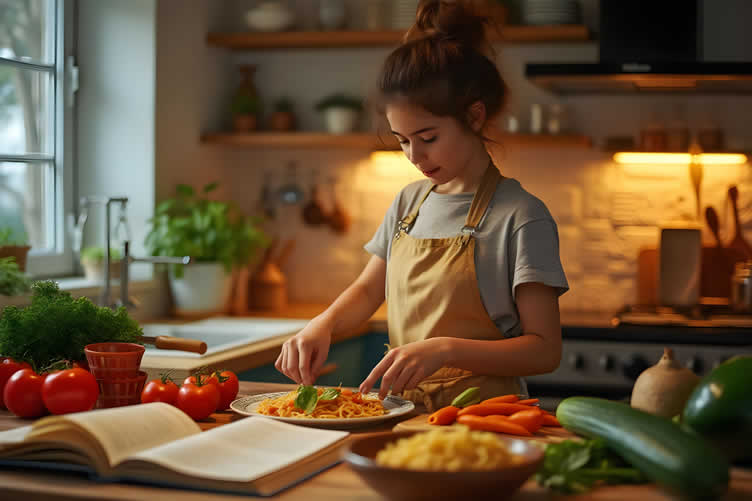
Dish Skill Learned Key Takeaway Scrambled Eggs Heat control, stirring technique Understanding timing and consistency Vegetable Soup Knife skills, flavor layering Combining ingredients for balance Rice/Pasta Precision, boiling processes The importance of ratios and timing One-Pan Meals Temperature management, seasoning Coordinating multiple cooking elements Sandwiches Ingredient pairing, presentation Exploring textures and flavors 
AI generated image by 123rf.com
-
Scroll up to directory … or scroll to next step in the beginners guide to cooking …


-
-
2nd Step: Follow Recipes and Watch Videos
Once you’ve mastered basic kitchen skills like boiling water and controlling heat, the next step to advance your cooking is through following recipes and watching instructional videos.
Recipes and videos serve as your personal guide, offering clear instructions, insights, and methods that can transform a simple dish into something delightful. With patience and practice, you’ll uncover new techniques, ingredients, and styles of cooking that will refine your culinary abilities.
[ view summary table: follow recipes and videos ]
-
Start with Reliable Recipes
Quality recipes are the foundation of good cooking. Begin your journey by sourcing recipes from trusted websites, cookbooks, or chefs who have industry experience or earned credibility.
Look for trusted sources like Bon Appétit, America’s Test Kitchen, or culinary books from renowned chefs such as Julia Child or Yotam Ottolenghi. These resources are carefully vetted, ensuring that measurements, techniques, and instructions are accurate.
Reading a recipe thoroughly before starting is critical. This step ensures you understand the steps involved, preparation time, and required equipment. Misreading or skipping this crucial step can lead to confusion, missed ingredients, and errors in timing later in the process.
Take note of any terminology in the recipe—terms like sauté, broil, or blanch—and familiarize yourself with their meaning if they’re new to you.
-
The Power of Visual Learning Through Videos
Cooking videos offer a dynamic and highly visual form of learning that complements written recipes. They take the guesswork out of tricky cooking techniques like folding batter, making emulsions, or kneading dough.
Platforms such as YouTube, MasterClass, or specialized video series from trusted chefs and culinary schools are excellent resources. Reliable channels like Gordon Ramsay’s or Joshua Weissman’s provide clear visuals and step-by-step processes that make it easy to follow along at your pace.
While watching cooking videos, pay close attention to the chef’s techniques and movements. Observe how they handle their knives, their timing on simmering versus boiling, or how they test for doneness.
Additionally, many videos include valuable tips that aren’t explicitly written in recipes, like how to properly season or substitute ingredients.
-
Practice Makes Perfect
Don’t be discouraged if your initial attempts don’t turn out perfectly. Both recipes and videos are tools for growth, but practice is essential to mastering what they teach.
Start with simple dishes and progress as you build confidence and skill. If a dish doesn’t turn out as expected, reflect on what might have gone wrong—whether it was missing a step, overcooking, or mis-measuring.
Over time, you’ll develop a keen eye for details like texture, aroma, and flavor balance on your own.
-
Trust Your Senses
Although recipes and videos guide you, cooking eventually becomes an intuitive process. Learn to trust your senses by paying attention to what you’re hearing, seeing, tasting, and smelling.
For example, you might hear the quiet bubbling of a simmer or the aroma of garlic as it browns perfectly. With more experience comes the ability to adapt recipes to your preference and move beyond them entirely when you feel ready.
Learning Method Key Actions Benefits Following Recipes Source reliable recipes, read carefully, understand steps and techniques. Builds foundational cooking knowledge and confidence. Watching Videos Observe professional chefs, master visual techniques, practice alongside. Understand complex techniques, develop skills faster with demonstrations. Practicing and Trusting Senses Repeat recipes, adapt as needed, tune into textures, flavors, and aromas. Refines intuition, enhances creativity, and builds expertise over time. 
copyright image by 123rf.com
[ youtube: gordon ramsay channel ]
[ amazon: beginner recipe books ]
-
Scroll up to directory … or scroll to next step in the beginners guide to cooking …
-
-
3rd Step: Learn the Techniques
Mastering cooking techniques is an essential step in becoming a skilled and confident home cook. While recipes provide instructions, understanding the core techniques allows for flexibility, creativity, and adaptation in the kitchen.
Investing time in learning these techniques and practicing them ensures that you aren’t just following recipes—you are developing the skills to make any dish a success.
[ view summary table: learning techniques ]
-
Knife Skills
One of the most fundamental techniques every cook must learn is proper knife skills. From chopping to slicing, the efficiency and precision with which you handle your knife can significantly affect the outcome of your dish.
Begin with understanding how to hold a knife correctly, ensuring a firm and comfortable grip. Practice basic cuts such as dicing, mincing, and julienning with vegetables like onions, carrots, and herbs.
With time, aim for consistency in the size of cuts, as uniformity ensures even cooking. Testing your knife skills through dishes like stir-fries or salads, where precision enhances the texture and presentation, can help solidify this technique.
Start by familiarizing yourself with different types of knives—the chef’s knife, paring knife, and serrated knife are often the most versatile and useful. Practice basic cuts, like dicing, chopping, and julienning, on easy-to-handle ingredients such as carrots, onions, or celery.
-
Sautéing and Pan-Frying
Sautéing and pan-frying are foundational techniques that serve as the gateway to countless recipes. Learning how to heat a pan properly, add the right amount of oil or butter, and monitor temperature are crucial steps.
Practice by cooking proteins such as chicken or tofu and vegetables like peppers or zucchini. Pay attention to changes in texture and color, and strive to achieve a golden-brown sear or a tender finish.
Tasting your results is critical to refining your ability to balance heat, seasoning, and cooking time.
Sautéing involves cooking food quickly in a small amount of fat over relatively high heat. The word comes from the French "sauter," meaning "to jump," referring to how ingredients move in the pan.
Heat your pan first, add oil when it’s hot, then add ingredients. Listen for the immediate sizzle—if you don’t hear it, your pan isn’t hot enough. Keep ingredients moving to prevent burning and ensure even cooking.
-
Boiling and Simmering
Boiling and simmering are techniques used frequently in soups, stews, and pasta dishes. Begin by distinguishing between the two—boiling uses high heat to achieve rolling bubbles, while simmering requires low heat for gentle bubbles.
Practice boiling by cooking pasta or grains, paying attention to timing for optimal texture. For simmering, start with broths or simple sauces, ensuring flavors develop over time. Taste frequently and adjust seasoning throughout the process to deepen your understanding of flavor layering.
-
Roasting
Roasting uses dry heat in an oven to cook food evenly while developing rich, complex flavors through caramelization. Preheat your oven completely before adding food.
Use enough oil to coat ingredients lightly, and don’t overcrowd your pan—this causes steaming instead of roasting. Turn vegetables once during cooking for even browning.
-
Baking Basics
For those interested in baking, understanding fundamental techniques like creaming butter and sugar, kneading dough, and properly measuring ingredients is essential. Baking relies heavily on precision, so learning how to read recipes carefully and measure with accuracy is paramount.
Begin with straightforward recipes such as cookies, muffins, or breads and evaluate your results for texture and taste. Learning techniques such as testing dough elasticity or judging doneness will help you grow more confident in baked goods.
-
Tasting and Adjusting
A crucial skill to develop is tasting and seasoning your dishes as you cook. This involves practicing the delicate art of balancing sweet, salty, sour, and bitter flavors to create a harmonious dish.
Use oils, acids like lemon juice or vinegar, and seasonings to make adjustments based on your palate. Tasting frequently during cooking is essential; this habit not only ensures your dish progresses as desired but also trains your taste buds to understand nuances in flavor.
Salt doesn’t just make food salty—it enhances natural flavors and balances sweetness and acidity. Add salt gradually, tasting as you go. Different salts have varying intensities, so kosher salt measurements don’t directly translate to table salt amounts.
Raw onions taste sharp and pungent, but cooking transforms them into sweet, mellow additions to dishes. Tomatoes become more concentrated and complex as their water evaporates during cooking.
-
Practice and Patience
Becoming proficient in cooking techniques takes practice and patience. Dedicate time regularly to focus on individual techniques, whether it’s mastering the consistency of a sauce or the crispness of sautéed vegetables.
Don’t fear mistakes—they are opportunities to learn and refine your skills. Seek feedback from friends or family when testing your dishes, and note their observations to improve your methods for the future.
Notice how salt brightens flavors, how acid cuts through richness, and how herbs contribute distinct characteristics. Keep notes about successful combinations—these observations become your personal flavor database.
Technique Description Key Tips Knife Skills Essential for efficient and precise chopping, slicing, and dicing to ensure even cooking and enhance texture. Learn proper grip, practice consistent cuts, start with basic vegetables, and familiarize yourself with versatile knives like the chef’s knife and paring knife. Sautéing and Pan-Frying Quick cooking in a small amount of fat over high heat to achieve golden-brown sears and tender finishes. Preheat the pan, add oil when hot, listen for a sizzle, and keep ingredients moving to prevent burning. Boiling and Simmering Techniques for cooking grains, pasta, soups, and sauces, distinguished by the intensity of bubbles. Use high heat for boiling and low heat for simmering. Taste frequently and adjust seasoning for optimal flavor development. Roasting Dry heat cooking in an oven for caramelization and even browning. Preheat the oven, use enough oil, and avoid overcrowding the pan. Turn ingredients for uniform cooking. Baking Basics Relies on precision for tasks like creaming, kneading, and measuring to produce consistent baked goods. Begin with simple recipes, measure accurately, and develop skills in judging dough elasticity and doneness. Tasting and Adjusting Balancing flavors (sweet, salty, sour, and bitter) to create harmonious dishes. Taste frequently during cooking, add seasoning gradually, and observe how cooking transforms ingredients. Practice and Patience Regular focus on improving techniques and learning from mistakes. Dedicate practice time, seek feedback, and maintain a personal flavor database for guidance. 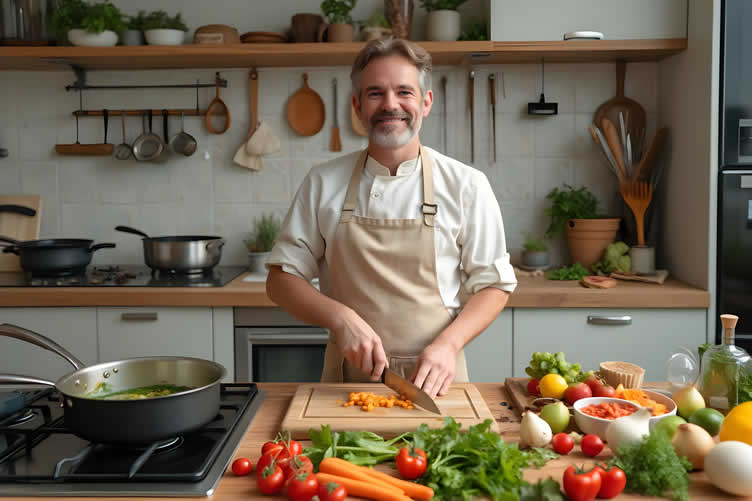
AI generated image by 123rf.com
-
Scroll up to directory … or scroll to next step in the beginners guide to cooking …
-
-
4th Step: Build Skills Gradually
Learning to cook is a rewarding journey, and like any skill, mastering it takes time, patience, and consistent effort. By building your skills gradually, you create a strong foundation of culinary knowledge and techniques that can evolve and grow.
The key is to approach the learning process step by step, ensuring that you develop confidence as you progress. Below are critical aspects of building cooking skills effectively.
[ view summary table: building skills ]
-
Practice Makes Perfect
Cooking is an experiential skill that improves the more you practice it. Beginning with simple recipes allows you to focus on essential processes without feeling overwhelmed.
Practice also builds muscle memory for tasks like chopping, stirring, and seasoning, which are crucial in the kitchen. By repeating certain techniques, they become second nature, allowing you to gain fluency and efficiency.
-
Take Notes and Document Your Journey
Keeping a cooking journal is one of the most underrated steps for improvement. When you try a recipe, record the details—what worked, what didn’t, and any substitutions or modifications you made.
Written observations provide clarity and allow you to learn from past attempts. Whether you prefer a physical notebook or a digital tool, documenting your experiences develops deeper understanding and helps refine your approach.
-
Learn From Failures and Celebrate Successes
Mistakes are a natural part of learning to cook, and they should be embraced rather than feared. Burning bread or accidentally over-salting a dish can teach valuable lessons about timing, temperature, and moderation.
By reflecting on these moments, you can identify how to avoid similar hiccups in the future. Equally, celebrating small victories—like achieving the perfect pancake flip—boosts morale and keeps you motivated.
-
Master Essential Cooking Methods
Before expanding into more complex recipes, focus on understanding basic cooking methods. Core techniques like boiling, sautéing, roasting, grilling, and baking form the backbone of culinary arts.
Knowing when and how to apply these methods ensures well-prepared dishes, no matter the ingredients. Mastery here lays the groundwork for tackling more advanced cooking styles later.
-
Focus on Ingredient Knowledge
Successful cooking isn’t just about technique; it’s also about understanding your ingredients and how they behave. Take the time to familiarize yourself with the seasonal produce, different cuts of meat, various spices, and how they can transform dishes.
Better ingredient knowledge not only boosts the nutritional value of your meals but also teaches you how to adapt recipes creatively.
-
Gradually Incorporate Advanced Techniques
Once you feel confident with the basics, start adding more complex techniques to your repertoire. This might include mastering a soufflé, learning to make homemade pasta, or experimenting with fermentation.
Take these steps slowly, and don’t hesitate to consult cookbooks or instructional videos for guidance. With consistent practice, these advanced methods will become part of your skill set, allowing you to elevate your dishes.
Steps Focus Area Goal Practice Makes Perfect Repetition of basic techniques Build muscle memory and confidence Take Notes Document successes and failures Learn from experiences effectively Learn From Mistakes Understand what went wrong Find areas for improvement Master Basic Methods Focus on boiling, roasting, and sautéing Establish a strong cooking foundation Ingredient Knowledge Learn about produce, spices, and proteins Improve flavor and adaptability Advanced Techniques Gradually explore complex methods Elevate overall cooking expertise 
copyright image by 123rf.com
[ pinterest: building cooking skills ]
[ youtube: Cooking Tips For Kitchen Beginners ]
-
Scroll up to directory … or scroll to next step in the beginners guide to cooking …
-
-
5th Step: Take a Beginners Course
Learning to cook is an empowering and rewarding experience, and enrolling in a beginners course can kick-start your culinary journey with the guidance and structure necessary to succeed. A well-structured course offers an environment where you can develop confidence, enhance essential skills, and cultivate your creativity in the kitchen.
Whether you’re a beginner or someone looking to refine your abilities, a cooking class designed for novices provides a comprehensive, hands-on approach to mastering the fundamentals of food preparation and meal execution.
[ view summary table: taking a cooking course ]
-
Understanding Basic Skills
A beginners course will first focus on teaching fundamental techniques and introducing essential tools. You’ll learn how to handle basic cookware like pots, pans, and utensils, as well as how to use and care for knives properly.
Knife skills, such as proper chopping, slicing, and dicing, are emphasized to ensure safety and efficiency in the kitchen.
Cooking techniques like boiling, sautéing, roasting, and steaming will be introduced, providing you with the foundation needed for most recipes.
Meal preparation becomes approachable as you develop the ability to plan, organize ingredients, and follow a recipe from start to finish—crucial skills to build confidence in any kitchen setting.
-
Hands-On Experience with Immediate Instructor Feedback
One of the most valuable elements of a beginners cooking course is the direct, hands-on experience coupled with immediate feedback from an instructor.
Many courses are conducted in professional-grade kitchens where you’ll learn not only proper techniques but also how to work with equipment you may not typically use at home.
Cooking alongside other beginners fosters collaboration and learning through shared experiences. By preparing dishes with real-time instruction and guidance, you’ll quickly correct mistakes and refine your skills.
The interactive nature of such courses helps solidify lessons learned, making them memorable and practical for everyday use.
-
Spice and Herb Education
Proper seasoning is an art, and understanding how to use spices and herbs can elevate your cooking dramatically. A beginners course covers the basics of seasoning, including the essential roles of salt and pepper, as well as how to combine flavors harmoniously.
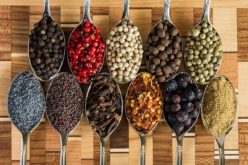
You’ll learn when and how to use different forms of spices—fresh, dried, and whole—to bring depth and complexity to dishes. Techniques such as toasting spices to enhance their aromas and storing them correctly to preserve freshness are often covered.
Developing a broad seasoning knowledge base is a key step in creating flavorful, aromatic meals that delight the palate.
-
Specialized Cooking Techniques
While the primary focus of a beginners course is to establish core skills, many programs introduce specialized cooking techniques to widen your abilities.
You may have the opportunity to explore methods such as marination, braising, and grilling, allowing you to create more complex flavors and textures.
Beginner-level baking, such as learning how to create doughs and simple bread, may also be included. These additional techniques enrich your repertoire, preparing you for more advanced challenges as you progress in your culinary education.
-
Other Benefits of a Beginners Course
Beyond the technical skills and knowledge, a cooking course instills a deeper appreciation for food and the process of its preparation. You’ll gain insights into the importance of fresh, quality ingredients and how to make healthy, balanced meals.
Engaging with a supportive community of learners and chefs can make the entire process enjoyable and inspiring.
The structured and interactive format ensures you come away with not just knowledge but practical experience you can apply in your daily life.
Course Aspect Focus Area Benefits Understanding Basic Skills Cooking wares, knife skills, fundamental techniques, meal preparation Builds a strong foundational knowledge for beginners Hands-On Experience Professional equipment, instructor feedback, collaborative cooking Develops practical skills with real-time guidance Spice and Herb Education Seasoning basics, combination flavors, fresh vs dried Enhances the ability to create flavorful, aromatic dishes Specialized Techniques Marination, braising, grilling, beginner-level baking Introduces expanded skills for more advanced recipes Additional Learning Ingredient quality, balanced meals, food appreciation Encourages healthier eating and a deeper connection to food 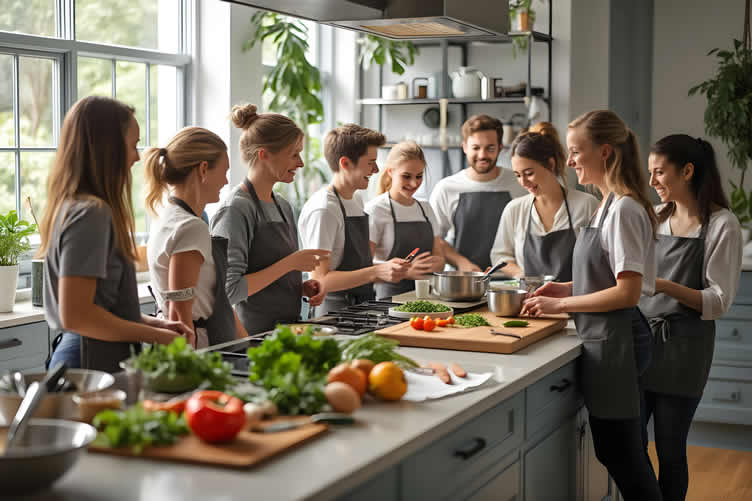
AI generated image by 123rf.com
-
Scroll up to directory … or scroll to next step in the beginners guide to cooking …
-
-
6th Step: Stock Your Kitchen
Learning how to cook begins with preparation, and one of the most important steps in your culinary education is ensuring your kitchen is well-stocked. A thoughtfully equipped kitchen provides the tools, ingredients, and resources to make the cooking process smoother, more efficient, and enjoyable.
Below is a detailed guide to help you stock your kitchen with the essentials so that you’re ready to tackle a variety of recipes with skill and confidence.
[ view summary table: stocking the kitchen ]
-
Essential Knives
A good set of knives is the foundation of any well-equipped kitchen. A chef’s knife is indispensable for most chopping and slicing tasks, while a paring knife works wonders for precision jobs like peeling and trimming.
A serrated bread knife is also essential for effortlessly slicing through baked goods or soft items without crushing their structure.
- Chef’s Knife:
Versatile and ideal for chopping, slicing, and dicing a wide range of ingredients. - Paring Knife:
Perfect for detailed tasks such as peeling, trimming, and intricate slicing. - Serrated Bread Knife:
Designed to cut through bread, cakes, and soft produce without compressing them. - Boning Knife:
Great for separating meat from bones with precision and ease. - Utility Knife:
A mid-sized knife for slicing fruits, vegetables, and smaller cuts of meat. - Santoku Knife:
Excellent for fine slicing, chopping, and creating uniform pieces, particularly in Asian-style cooking. - Carving Knife:
Essential for slicing meats thinly and evenly, perfect for roasts or poultry.
- Chef’s Knife:
-
Cooking Pots and Pans
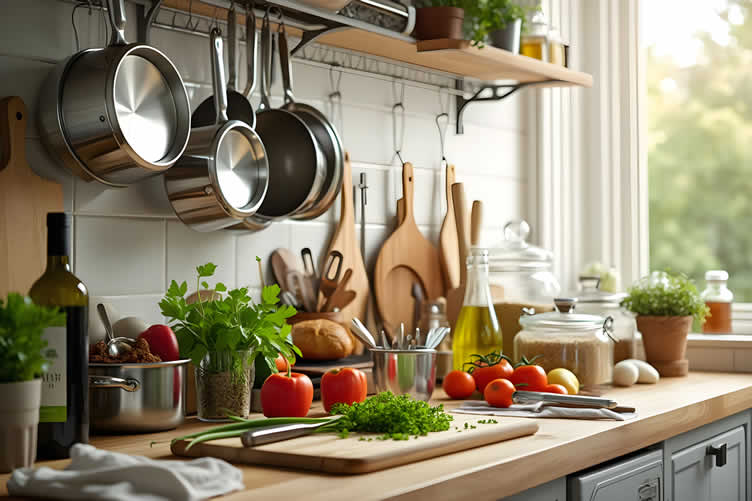
High-quality cookware is another crucial component of a functional kitchen. Start with a medium-sized saucepan for boiling or heating liquids and a large stockpot for soups or stews.
Add a non-stick skillet, which is perfect for frying and sautéing without food sticking to the surface, and a cast-iron skillet for even heat distribution and searing.
A roasting pan is also ideal for preparing dishes like baked meats and vegetables.
- Medium-Sized Saucepan:
A versatile pan ideal for boiling water, making sauces, or reheating soups and stews. - Large Stockpot:
Perfect for cooking soups, stews, or pasta in larger quantities, as well as making homemade stocks. - Non-Stick Skillet:
Excellent for cooking delicate foods like eggs and pancakes, minimizing sticking and ensuring easy cleanup. - Cast-Iron Skillet:
Provides even heat distribution and retains heat well, making it great for searing, frying, and baking. - Roasting Pan:
Ideal for roasting meats, poultry, and vegetables, often with a rack to help promote even cooking. - Sauté Pan:
Features high sides and a flat bottom, which makes it great for sautéing, braising, or simmering dishes with sauces. - Dutch Oven:
A heavy-duty pot made for slow-cooking, braising, or baking hearty meals like casseroles and breads.
- Medium-Sized Saucepan:
-
Measuring Tools
Accurate measurement is key to any recipe’s success. Ensure you have both dry and liquid measuring cups as well as measuring spoons for a variety of measurements.
A digital kitchen scale is highly useful for weighing ingredients, particularly in baking, where precision is critical.
- Dry Measuring Cups:
Perfect for measuring ingredients like flour, sugar, and grains; they ensure accurate portioning for dry ingredients. - Liquid Measuring Cups:
Designed with spouts for easy pouring, these are ideal for measuring liquids like water, milk, and oils. - Measuring Spoons:
Essential for small measurements of both wet and dry ingredients, such as spices, extracts, or baking soda. - Digital Kitchen Scale:
Offers precise weight measurements, especially crucial in baking or when portioning meats and other ingredients.
- Dry Measuring Cups:
-
Cutting Boards and Mixing Bowls
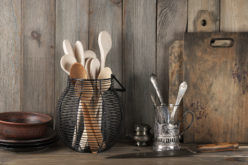
Cutting boards protect your countertops and make prepping ingredients more efficient. Wooden or bamboo boards are gentle on your knives, while plastic cutting boards are easy to clean, especially for raw meats.
Mixing bowls are equally essential, and it’s helpful to have them in different sizes for tasks like whisking, stirring, and tossing ingredients.
- Wooden Cutting Boards:
Durable and gentle on knives, these boards are ideal for slicing bread, fruits, and vegetables. They also add a natural, rustic touch to your kitchen. - Plastic Cutting Boards:
Lightweight and dishwasher-safe, these boards are perfect for handling raw meats and are easy to sanitize, reducing the risk of cross-contamination. - Bamboo Cutting Boards:
Sustainable and harder than traditional wood, bamboo boards resist knife scars and absorb less moisture, making them a hygienic option. - Glass Cutting Boards:
Stylish and easy to clean, these boards resist odors and stains but may dull knives over time. - Stainless Steel Mixing Bowls:
Durable, lightweight, and non-reactive, these are perfect for mixing, whisking, or storing ingredients in the refrigerator. - Glass Mixing Bowls:
Transparent and versatile, glass bowls are ideal for baking and can safely handle hot or cold ingredients. - Ceramic Mixing Bowls:
Beautiful and often decorative, ceramic bowls are sturdy and excellent for serving as well as mixing. - Plastic Mixing Bowls:
Lightweight and shatter-resistant, these are great for everyday mixing tasks and are often dishwasher-safe for easy cleaning.
- Wooden Cutting Boards:
-
Basic Cooking Ingredients
Stocking up on versatile, high-quality ingredients allows you to cook from scratch without hesitation. Essential items include olive oil for cooking and finishing dishes, as well as salt, black pepper, and garlic to build flavor.
Onions serve as a foundational component for countless recipes, while spices like paprika, cumin, and chili powder bring depth.
Stock up on fresh or dried herbs, rice, pasta, dried beans, and grains to ensure you always have the building blocks of complete meals.
- Olive oil
- Salt
- Black pepper
- Garlic
- Onions
- Spices
- Dried or fresh herbs
- Rice
- Pasta
- Dried beans
- Grains
- Other
-
Cooking Liquids
Keeping a selection of cooking liquids handy enhances not only flavor but also convenience. Vinegars, such as white wine vinegar or apple cider vinegar, are great for dressings or deglazing pans.
Cooking wines like sherry or marsala bring richness, while canned broths in chicken, vegetable, or beef varieties provide a quick base for soups, sauces, and stews.
- Vinegars (white wine vinegar, apple cider vinegar, balsamic vinegar)
- Cooking wines (sherry, marsala, red wine, white wine)
- Canned broths (chicken, vegetable, beef)
- Other (soy sauce, coconut milk, fish sauce) **
-
Pantry Dry Goods
Pantry staples form the backbone of many recipes. Ensure a steady supply of flour for baking or thickening, sugar for baking or sweetening, and brown sugar for its caramel-like depth.
Other important dry goods, such as cornmeal or breadcrumbs, round out a well-stocked pantry and expand your possibilities.
- Flour
- Sugar
- Brown sugar
- Baking soda
- Baking powder
- Cornmeal
- Breadcrumbs
- Other (e.g., cocoa powder, oats, or dried pasta)
-
Other Essentials
Finally, fill your kitchen with commonly used items based on your dietary preferences and favorite cuisines. Items like canned tomatoes, soy sauce, nut butters, or specialty condiments add flexibility to your repertoire.
Don’t hesitate to include shelf-stable convenience items like pasta sauces or canned vegetables for quick, stress-free solutions on busy nights.
Category Items Essential Knives - Chef’s Knife – Versatile and ideal for chopping, slicing, and dicing.
- Paring Knife – Great for precision tasks like peeling and trimming.
- Serrated Bread Knife – Cuts bread, cakes, and soft produce effortlessly.
- Boning Knife – Precise for separating meat from bones.
- Utility Knife – Mid-sized, ideal for fruits, vegetables, and smaller meats.
- Santoku Knife – Excellent for fine slicing, particularly in Asian cooking.
- Carving Knife – Thin, even slicing of meats like roasts or poultry.
Cooking Pots and Pans - Medium-Sized Saucepan – For boiling, sauces, or reheating.
- Large Stockpot – Ideal for soups, stews, and pasta.
- Non-Stick Skillet – Great for delicate foods like eggs.
- Cast-Iron Skillet – Even heat distribution for searing, frying, or baking.
- Roasting Pan – Perfect for meats and vegetables.
- Sauté Pan – High sides, used for sautéing and simmering.
- Dutch Oven – Heavy-duty pot for slow-cooking and casseroles.
Measuring Tools - Dry Measuring Cups – For dry ingredients like flour or sugar.
- Liquid Measuring Cups – Ideal for liquids with spouts for pouring.
- Measuring Spoons – For small measurements of spices or extracts.
- Digital Kitchen Scale – Precise weighing, especially in baking.
Cutting Boards and Mixing Bowls - Wooden Cutting Boards – Durable and gentle on knives.
- Plastic Cutting Boards – Easy to clean, ideal for raw meats.
- Bamboo Cutting Boards – Hygienic and resistant to knife scars.
- Glass Cutting Boards – Easy to clean but can dull knives.
- Stainless Steel Mixing Bowls – Lightweight and non-reactive.
- Glass Mixing Bowls – Transparent and versatile for baking.
- Ceramic Mixing Bowls – Decorative and sturdy for serving and mixing.
- Plastic Mixing Bowls – Shatter-resistant, perfect for daily tasks.
Basic Cooking Ingredients - Olive Oil
- Salt and Black Pepper
- Garlic and Onions
- Spices, Dried or Fresh Herbs
- Rice, Pasta, Dried Beans, and Grains
Cooking Liquids - Vinegars (e.g., white wine, apple cider, balsamic)
- Cooking Wines (e.g., sherry, marsala, red or white wine)
- Canned Broths (chicken, vegetable, beef)
- Other (e.g., soy sauce, coconut milk, fish sauce)
Pantry Dry Goods - Flour, Sugar, Brown Sugar
- Baking Soda, Baking Powder
- Cornmeal, Breadcrumbs
- Other (e.g., cocoa powder, oats, dried pasta)
Other Essentials - Canned Tomatoes, Soy Sauce
- Nut Butters, Specialty Condiments
- Convenience Items (e.g., pasta sauces, canned vegetables)
AI generated image by 123rf.com
[ pinterest: must haves for kitchen cooking ]
[ youtube: Must Have Tools In The Kitchen! ]
-
Scroll up to directory … or scroll to next step in the beginners guide to cooking …
-
-
7th Step: Build Confidence
Cooking is an essential skill that not only nourishes the body but also nurtures creativity and independence. For those new to cooking, building confidence in the kitchen can feel overwhelming, yet it is an achievable goal with dedication and the right approach.
This section focuses on empowering you to move past uncertainties, develop a strong foundation, and enjoy the rewarding process of creating delicious meals.
[ view summary table: building confidence ]
-
Start with Simple Recipes
Confidence begins with mastering the basics. Choose recipes that require minimal ingredients and straightforward techniques, such as roasting vegetables, boiling pasta, or making scrambled eggs.
Focus on recipes that align with your current skills while allowing you to gradually incorporate new methods, like sautéing or simmering. Trusting yourself with simple tasks creates a solid foundation for trying more complex dishes down the line.
-
Practice Consistency and Repetition
Repetition is key to becoming comfortable in the kitchen. Prepare the same recipe multiple times to refine your skills and notice small improvements, such as better knife cuts, more balanced seasoning, or perfecting cooking times.
Each time you revisit a dish, you gain familiarity and eliminate hesitation. With consistent practice, what once felt intimidating becomes second nature.
-
Understand the Ingredients
Confidence grows when you understand the products you are working with. Learn about flavor profiles, storage practices, and substitute options for common ingredients.
For example, knowing the difference between fresh herbs like parsley and cilantro or understanding the role of acidic ingredients like vinegar in balancing flavors can elevate your cooking.
The more you learn about ingredients and their versatility, the easier it becomes to experiment while cooking.
-
Experiment and Trust Your Instincts
Once you have mastered foundational techniques, don’t hesitate to experiment. Try swapping spices, adjusting quantities, or combining unexpected flavors. Cooking is as much about intuition as it is about following recipes.
Trust your instincts, rely on your growing knowledge, and give yourself permission to make mistakes. Mistakes are invaluable learning opportunities that contribute significantly to building confidence.
-
Seek Inspiration and Feedback
Draw inspiration from cookbooks, online tutorials, or videos that demonstrate techniques and share ideas. Practice alongside these learning materials to gain hands-on experience.
Document your cooking journey through photos and notes. This record serves as motivation when you feel frustrated and provides evidence of your improving skills. Compare your early attempts at specific recipes with later versions—the improvement will surprise and motivate you.
Additionally, sharing your meals with family or friends provides constructive feedback and encouragement. Positive affirmations from others and your own personal achievements create valuable momentum for your confidence.
-
Join Online Communities
Online cooking communities provide support, inspiration, and problem-solving assistance for cooking for beginners. Join forums, social media groups, or subreddit communities where home cooks share experiences, ask questions, and celebrate successes.
These communities offer encouragement during challenging moments and practical advice from experienced cooks.
Share your cooking attempts with others, regardless of the outcome. Posting photos of your meals, whether successful or not, connects you with other learners and often generates helpful feedback.
Many experienced cooks remember their own beginnings and offer encouragement and practical suggestions.
-
Progress to Advanced Techniques Gradually
Building confidence doesn’t mean you have to rush. Start introducing advanced techniques, such as making homemade sauces, baking bread, or preparing multi-course meals, only when you feel ready.
Approach these challenges with patience and a willingness to learn. Gradual progression ensures that you continue to enjoy the process without feeling overwhelmed or discouraged.
Steps Description Start with Simple Recipes Focus on mastering basic recipes with minimal ingredients and simple techniques, such as roasting vegetables or making scrambled eggs. Build a strong foundation for tackling more complex dishes over time. Practice Consistency and Repetition Repeat recipes to refine skills, improve techniques, and gain familiarity with cooking processes, making tasks feel more natural with each attempt. Understand the Ingredients Learn about flavor profiles, storage practices, and substitutes for common ingredients to enhance your cooking knowledge and creativity. Experiment and Trust Your Instincts Once confident with basics, begin experimenting with flavors, spices, and techniques. Trust your instincts and learn from mistakes to further develop your skills. Seek Inspiration and Feedback Draw inspiration from cookbooks and online resources. Document your progress and share meals with family or friends to receive feedback that boosts confidence and motivation. Join Online Communities Connect with online cooking communities for support, advice, and shared experiences. Sharing your attempts, successful or not, fosters growth and encouragement. Progress to Advanced Techniques Gradually When ready, introduce advanced skills like homemade sauces or baking bread. Approach these challenges with patience, ensuring the process remains enjoyable and fulfilling. 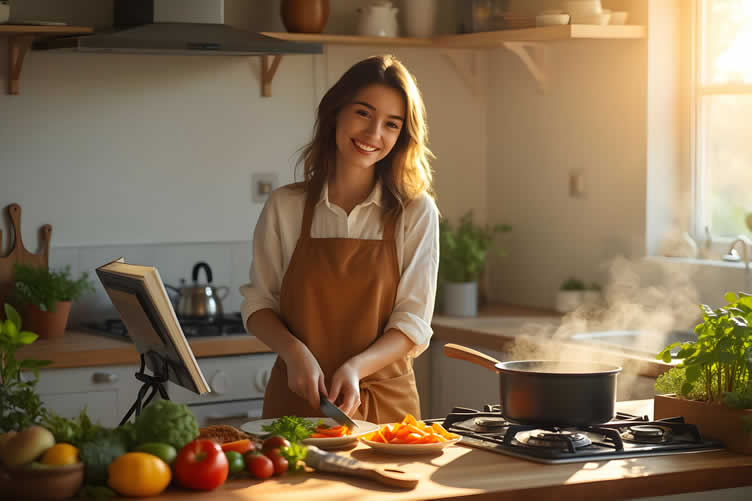
AI generated image by 123rf.com
[ pinterest: recipes around the world ]
[ youtube: 3 Easy One-Pan Chicken Dinners ]
-
Scroll up to directory … or scroll to next step in the beginners guide to cooking …
-
-
8th Step: Additional Tips for Success
Mastering the art of cooking is not only about following recipes but also building effective habits and techniques that simplify and enhance the experience.
The following additional tips are meant to support you on your culinary journey, ensuring that your time in the kitchen is productive, enjoyable, and less overwhelming. These suggestions come from seasoned cooks and professional chefs, offering tried-and-true practices to make your cooking adventures smoother.
[ view summary table: additional tips ]
-
Develop a Systematic Routine
Establishing a consistent and systematic routine in the kitchen can make cooking more efficient and less stressful. This routine could involve organizing your workspace, grouping similar tasks together, or setting up a step-by-step process for each dish.
By having an orderly approach, you can maintain focus and reduce the likelihood of mistakes.
Many professional chefs recommend the "mise en place" method, a French phrase meaning "everything in its place," to prepare all ingredients before cooking begins. This enhances workflow and ensures you have everything at your fingertips once you start.
-
Clean as You Cook
One of the most practical habits to adopt is cleaning as you cook. Instead of letting dirty pots, pans, and utensils pile up, take brief moments to wash or rinse them during downtime, such as while waiting for something to simmer.
This practice minimizes the mess that accumulates during the cooking process and makes post-meal cleanup significantly easier. Clean counters and utensils also provide a safer and more hygienic workspace.
-
Keep a Damp Towel Nearby
A simple yet invaluable tip is to have a damp towel within arm’s reach when cooking. Whether you need to quickly wipe your hands, stabilize a cutting board, or clean up a small spill, a towel can save you time and keep your workspace neat.
Using a damp towel also reduces the risk of cross-contamination when working with raw ingredients by allowing you to clean surfaces immediately.
-
Easy Access to Hot Pads
Safety in the kitchen is paramount, so keeping hot pads or oven mitts readily accessible is essential. Cooking often involves working with hot surfaces, pans, or baking dishes, and having these tools within your reach can prevent accidents and burns.
Make sure hot pads are in a consistent spot so you can grab them quickly when needed.
-
Prepare Ingredients Before Cooking
Preparing and measuring ingredients in advance is a game-changer, especially for intricate recipes or fast-paced cooking methods like stir-frying.
Doing so not only saves time but also reduces the likelihood of errors, such as forgetting an ingredient or miscalculating proportions.
With everything prepped and ready, you can focus fully on executing the recipe and achieving the desired results.
-
Have Good Time Management
Time management is a vital skill in both simple and complex recipes. Start by reading the entire recipe beforehand and planning each step.
Knowing how long tasks will take allows you to multi-task intelligently, such as boiling water while chopping ingredients. Use timers to keep track of simmering or baking times, and avoid distractions to stay focused on the task at hand.
-
Other Tips to Consider
Every cook develops their own unique tips through experience. For example, keeping your knives sharp saves time and reduces effort when chopping, while investing in quality cookware can enhance the outcome of your meals.
Additionally, listening to calming music or podcasts while cooking can create an enjoyable environment that keeps you relaxed and focused.
At its core, cooking is a skill that evolves with practice, patience, and preparation. Adopting these practical tips into your routine will not only help you cook more effectively but also make the process more rewarding.
Tip Description Develop a Systematic Routine Create an orderly approach using methods like “mise en place” to improve workflow. Clean as You Cook Minimize mess and make post-meal cleanup easier by cleaning during downtime. Keep a Damp Towel Nearby Quickly clean surfaces or stabilize tools with a readily accessible towel. Easy Access to Hot Pads Prevent burns and accidents by keeping hot pads or oven mitts within reach. Prepare Ingredients Before Cooking Measure and prep everything in advance to streamline cooking and prevent errors. Have Good Time Management Plan ahead, read recipes thoroughly, and use timers to stay on track. Other Tips Keep knives sharp, use quality cookware, and create a pleasant cooking environment. 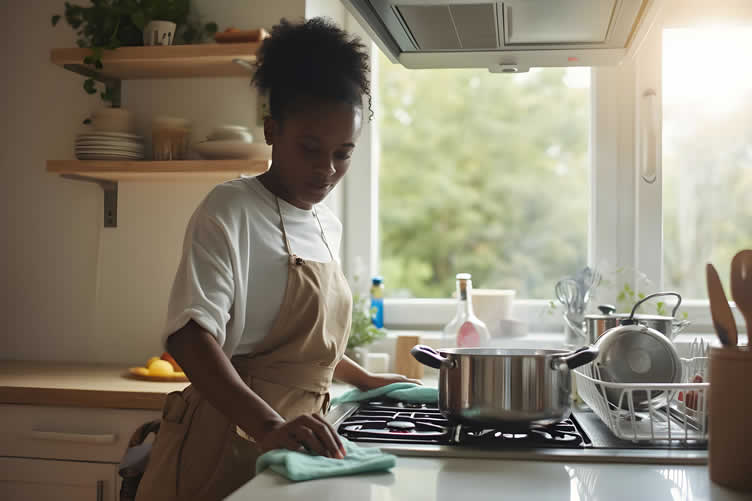
AI generated image by 123rf.com
-
Scroll up to directory … or scroll to conclusion …
-
-
Your Culinary Journey Starts Now
Learning cooking for beginners opens doors to healthier eating, creative expression, and the satisfaction of providing nourishing meals for yourself and others. The skills you develop through patient practice and systematic learning will serve you throughout your life, adapting to changing needs and preferences.
Remember that every expert cook began exactly where you are now—with curiosity, basic equipment, and the willingness to learn. The fundamental cooking techniques you master through simple recipes will expand into sophisticated culinary abilities as your confidence grows.
Start with one simple recipe that appeals to you. Gather the necessary ingredients and equipment, read through the instructions completely, and cook with attention and patience. Document your experience, note what you learned, and plan your next cooking adventure.
The kitchen awaits your exploration. Each meal you prepare builds upon previous experiences, creating a foundation of knowledge and confidence that transforms cooking from a mysterious necessity into an enjoyable creative outlet.
Your culinary journey begins with a single step—take it today.
-
Quick scroll to more kitchen-related ideas …
-
ideas to view and compare from the photo above
- What comments can you share about
TERMPHRASE that you have installed?

addressing how to cook and other home improvement needs …
… grab this directory of ideas for future use


Download this PDF for a concise summary of all you need to know about …?




get the size dimensions for any home remodeling project …
… for functionality, aesthetics, and adhering to building codes

Budgeting Worksheet For Costing Home Remodeling and Home Improvement Decisions
 File Type (excel)


SHARE IT ..! You might have someone in your social network who could find this beginner’s guide to cooking valuable. Feel free to share it on Facebook, X (formally Twitter), LinkedIn, or Pinterest!


Download this PDF for a concise summary of all you need to know about …?




plan the specifications you need for making …
… key home improvement and remodeling decisions


… remodeling decisions


Calendar For:
Home Maintenance
File Type:
… view illustration “becoming a bank”
… view our sharing links below for a quick "share the knowledge"
Find Kitchen Remodeling Services Kitchen Remodeling and Design Cabinets & Countertops Flooring Lighting Design Painting & Staining top-rated, pre-screened local contractors FREE: download contractor selection enter zip code – powered by HomeAdvisor ™
Quick Contractor Guides selecting negotiating working with inspecting

Cover image credit: beginners guide to cooking by 123rf.com
end of post … please share it!
 |
did you find this beginners guide to cooking helpful? If so, please share the article with your friends and family! |
Nice pic idea? Leave us a quick comment below.
And please share this pic idea within your social networks.