Quick Answer:
Portable air filters work best for renters, single rooms, or temporary needs, while whole-house air filtration systems suit homeowners who want consistent air quality across every room. Your choice depends on home size, budget, and how severe your family’s allergy or respiratory concerns are.
The good news is that you have two reliable paths toward cleaner indoor air: portable air filters and whole-house air filtration systems. Each approach has distinct strengths, costs, and limitations, and the right pick depends on your living situation rather than a one-size-fits-all answer.
This guide walks through how indoor air pollutants affect your home, how each filtration option works, and the factors that should guide your final decision.
By the end, you’ll have a clear framework for choosing the system that fits your household.
- post content
- Understanding Indoor Air Quality
- Portable Air Filters: Benefits And Considerations
- Whole-House Air Filtration Systems
- Comparing Cost, Effectiveness, And Installation
- Making Your Decision: Key Factors To Consider
- Clean Air Starts With The Right Choice
- FAQs
- view table:content summary
- view notes:collective tips
- view analysis:Combating Indoor Air Pollution
- view ideas:latest remodeling analysis
Understanding Indoor Air Quality
According to the U.S. EPA (page updated October 2026), most people spend close to 90% of their time indoors, much of it at home. That means the air circulating through your living room, bedrooms, and kitchen matters just as much as the air outside, if not more.
Common indoor pollutants include fine particles like PM2.5 and PM10, pollen, mold spores, pet dander, and volatile organic compounds (VOCs) released by cooking, cleaning products, secondhand smoke, and even building materials or furnishings. These particles accumulate quietly, often without any visible sign until allergy symptoms or respiratory irritation show up.
The EPA notes that reducing or removing pollutant sources and bringing in clean outdoor air through ventilation remain the most effective strategies for improving indoor air quality, with filtration serving as a valuable supplement rather than a complete fix.
Neither portable units nor whole-house systems remove every pollutant on their own, which is why understanding each tool’s role matters before you buy.
-
Why natural ventilation alone often falls short
Modern homes are built to be energy efficient, which often means they’re also tightly sealed. That efficiency keeps conditioned air inside, but it can trap pollutants too.
Filtration systems step in to address the gap that fresh air alone can’t always close, especially in homes with pets, smokers, or family members with asthma.
more info below

Combating Indoor Air Pollution for Better Home Improvement
We tend to associate air pollution primarily with exhaust fumes or industrial emissions, but the truth is, that the air inside our homes can be just as tainted, if not more so.

Portable Air Filters: Benefits And Considerations
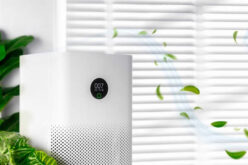
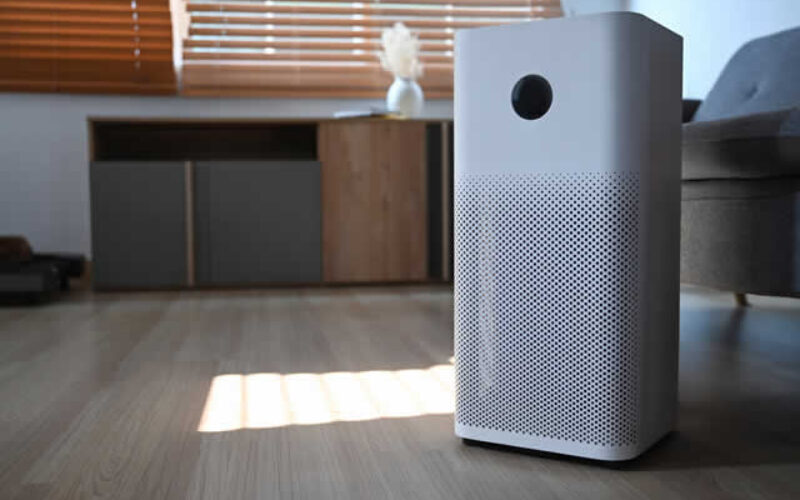
Portable air filters are standalone units you place in a specific room, typically relying on HEPA filtration or multi-stage purification to capture particles as air passes through the device. Many true HEPA filters capture 99.97% of particles as small as 0.3 microns, making them effective for everyday dust, pollen, and pet dander in the room where they’re placed.
The EPA recommends choosing a portable unit with a Clean Air Delivery Rate (CADR) large enough for the room size; a higher CADR means more particles filtered per minute.
For reference, an 8-foot-ceiling room of 200 square feet generally calls for a CADR around 130, while a 400-square-foot room calls for roughly 260. If odors or gases are a concern, look for a unit with an activated carbon filter, since CADR ratings only measure particle removal, not gas filtration.
Portable air filters offer flexibility that whole-house systems can’t match. You can move them from a nursery to a home office, take them along if you rent, and start using one the same day you buy it, with no installation required.
According to Shirley Air’s regional estimate, portable HEPA units commonly cost $150 to $400, making them an accessible entry point for cleaner air.
That flexibility comes with trade-offs. A single unit only treats the room it’s in, so larger or open-concept homes may need several units working together. Shirley Air estimates that a roughly 2,500-square-foot home could require three to four portable units to achieve meaningful coverage throughout.
Filters also need regular replacement, and fan noise, rated in decibels on some packaging, can be noticeable at higher speeds; the EPA compares typical noise levels to a modern refrigerator, around 50 decibels.
-
Who benefits most from a portable air filter?
Choose a portable air filter if you rent your home, need to treat a single bedroom or home office, or want a lower-cost way to test whether filtration makes a noticeable difference before committing to a bigger investment.
more info below
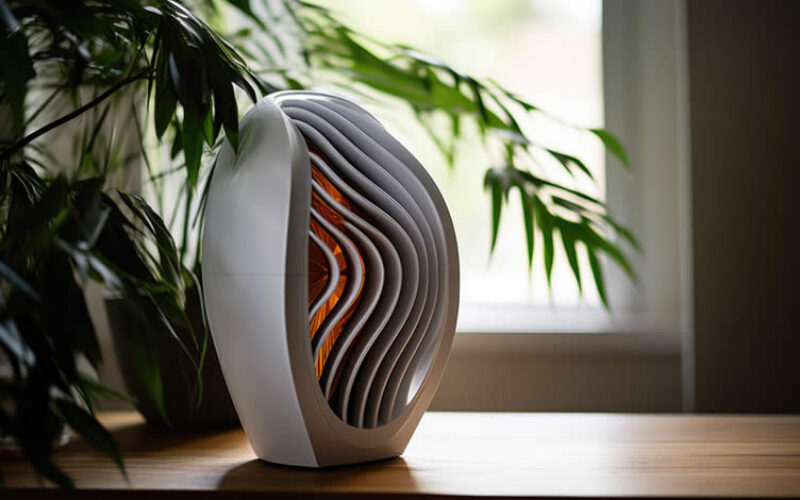
Breathe Easy: A Complete Guide to Air Purifiers for Allergy Relief
Air purifiers and sanitizers offer a promising solution for families struggling with allergies.
Whole-House Air Filtration Systems
Whole-house air filtration systems integrate directly into your home’s HVAC system, filtering air as it circulates through ductwork to every connected room. Rather than treating one space, these systems work continuously in the background whenever your heating or cooling system runs.
The EPA advises selecting a filter rated MERV 13, or as high as your system can accommodate, since MERV 13 and higher filters must demonstrate at least 50% removal efficiency for the smallest particles tested.
Most residential furnace and HVAC systems can handle a MERV 13 filter, though it’s worth confirming with an HVAC technician, since filters that are too restrictive for a system can strain airflow.
The EPA notes that HVAC filters only clean air while the system is actively running, and most systems operate less than 25% of the time during heating and cooling seasons, so run time directly affects how much filtering actually happens.
The main advantage of a whole-house system is consistency. Instead of juggling multiple portable units, one filtration setup addresses the entire home at once, and many owners find the maintenance burden lower over time since there’s only one filter type to track.
Angi reports that extended media filters, which are thicker and often replaced only about once a year according to Shirley Air, run $500 to $1,000 to install, with replacement filters typically under $100.
Whole-house systems do require upfront investment and professional installation in most cases. Angi’s data puts the national average installation cost at $2,610 across more than 21,000 verified projects, though most homeowners spend between $419 and $4,962 depending on the system type, with premium HEPA whole-house setups reaching up to $12,000.
HEPA-level whole-house filtration is uncommon because the dense media can slow airflow and often requires HVAC modification.
-
Who benefits most from a whole-house system?
Choose a whole-house air filtration system if you own your home, have multiple rooms you want to treat consistently, or you’re managing severe allergies or asthma that call for round-the-clock air management rather than room-by-room coverage.
more info below

Maintaining Clean, Ventilated Air For Your Home
With a home ventilation systems – and using other methods such as opening windows – can circulate stale air out by bringing in fresh air from the outside.
Comparing Cost, Effectiveness, And Installation
Cost comparisons between the two options depend heavily on how many rooms you’re treating and how long you plan to stay in your home.
A single portable unit at $150 to $400 is far cheaper upfront than a whole-house system averaging $2,610, but multiple portable units for a larger home can quickly approach whole-house pricing without matching its consistent coverage.
Ongoing costs differ too. Angi reports that standard HVAC filter replacements average $20 nationally, with most homeowners spending $10 to $50, and pleated filters typically need replacing every one to three months, more often with pets, allergies, or smoking in the home.
Extended media filters used in some whole-house systems, by contrast, are often replaced closer to once a year, which can reduce the frequency of maintenance tasks even though each filter costs more.
Effectiveness comes down to coverage and filtration efficiency. Portable units filtering a single room can achieve strong particle removal within that space using true HEPA media, but they leave the rest of the home untreated unless you add more units.
Whole-house systems trade some of that concentrated power for broad, continuous coverage, assuming the HVAC system runs often enough to keep circulating air.
Installation complexity is one of the clearest differentiators. Portable units are ready to use the moment you plug them in, making them ideal for DIY setup.
Whole-house systems other than a simple filter upgrade generally require a licensed HVAC technician, and Angi notes that HVAC labor typically runs $100 to $250 per hour, with permits for system alterations sometimes adding $250 to $400 depending on your local requirements.
Making Your Decision: Key Factors To Consider
Start by assessing your home’s size and layout. A one-bedroom apartment or a single home office has very different filtration needs than a 2,500-square-foot house with an open floor plan, where a whole-house system or multiple portable units may be necessary to achieve full coverage.
Budget plays an equally important role. Choose a portable air filter if you want a lower upfront cost and the flexibility to spend gradually, since you can start with one unit and add more later.
Choose a whole-house system if you’re prepared for a larger initial investment in exchange for lower day-to-day maintenance and consistent coverage across every room.
Household composition matters too. Families managing asthma, severe allergies, or multiple pets may find that continuous whole-home filtration offers more reliable relief than treating one room at a time.
The EPA notes that studies using portable HEPA cleaners have shown small improvements in cardiovascular and respiratory health, along with improvements in one or more allergy or asthma symptoms, though the EPA is careful to note these benefits aren’t always major.
Finally, factor in your living situation. Renters or those planning to move within a few years will generally get more value from a portable unit they can take with them, while homeowners settling in for the long term may find a whole-house system a worthwhile investment that stays with the property and supports resale value.
| Factor | Portable Air Filters | Whole-House Systems | Best For |
|---|---|---|---|
| Typical upfront cost | About $150 to $400 per unit | National average around $2,610; range roughly $419 to $4,962 | Portable fits smaller budgets; whole-house suits long-term homeowners |
| Coverage area | Single room, sized by CADR rating | Entire home through connected HVAC ductwork | Whole-house for multi-room coverage |
| Installation | Plug in and use immediately, no permits | Often requires a licensed HVAC technician and sometimes a permit | Portable for renters and DIY setups |
| Ongoing maintenance | Filter replacement roughly every one to three months | Extended media filters often replaced about once a year | Whole-house for lower maintenance frequency |

Clean Air Starts With The Right Choice
Clean indoor air is an investment in your family’s comfort and long-term health, not a one-time purchase to check off a list. Portable air filters and whole-house air filtration systems each offer a legitimate path toward that goal, and the right choice depends on your home’s size, your budget, and the specific needs of the people living there.
If you’re renting, treating one room, or testing whether filtration makes a difference, a portable air filter is a low-risk place to start.
If you own your home, have multiple rooms to treat, or are managing ongoing allergy or asthma concerns, a whole-house system offers the consistency that room-by-room solutions can’t match.
Whichever path you choose, taking action today moves your household closer to the healthier, more comfortable air everyone deserves.
Frequently Asked Questions
-
How much does a portable air filter typically cost?
Shirley Air’s regional estimate places most portable HEPA units between $150 and $400, with larger or multi-stage units costing more depending on room size and features.
-
How much does a whole-house air purifier installation cost?
Angi reports a national average installation cost of $2,610 across more than 21,000 verified projects, with most homeowners spending between $419 and $4,962 depending on the system type chosen.
-
How often do I need to replace a portable air filter versus a whole-house filter?
Standard HVAC filters generally need replacement every one to three months according to Angi, while extended media filters used in some whole-house systems are often replaced only about once a year, per Shirley Air.
-
Can a portable air filter cover my entire home?
A single portable unit only filters the room it’s placed in. The EPA notes that larger or open-plan homes may need multiple units to achieve meaningful coverage throughout the space.
-
Do I need a professional to install a whole-house air filtration system?
Most whole-house options beyond a simple filter upgrade require a licensed HVAC technician, and Angi notes labor typically costs $100 to $250 per hour, with permits sometimes required for system alterations.
-
What MERV rating should I choose for my HVAC filter?
The EPA recommends MERV 13 or as high as your system can accommodate, since most residential systems can handle MERV 13 if the filter is replaced frequently, though confirming compatibility with an HVAC technician is wise.
-
Will an air filter eliminate mold in my home?
No. The EPA states that air filters and cleaners do not resolve mold problems; the underlying moisture source causing mold growth needs to be fixed directly.
-
Are there risks associated with certain air cleaning devices?
Yes. The EPA advises avoiding ozone-generating devices, since ozone is a lung irritant; some electrostatic precipitators, ionizers, and certain UV or plasma cleaners can emit ozone as a byproduct.
-
Is a portable or whole-house system better for renters?
Portable air filters suit renters best because they require no installation, no permits, and can move with you to a new home, unlike a whole-house system that stays with the property.
| Type | Benefits | Considerations | Cost |
|---|---|---|---|
| Portable Air Filters |
Best for single rooms, renters, or temporary needs. Highly effective for dust, pollen, and pet dander with true HEPA capturing 99.97% of particles as small as 0.3 microns. Offers flexibility, easy setup, and immediate use. Can improve health in specific zones, with low upfront costs. |
Only treats the room where it’s placed, requiring multiple units for larger homes. Filters need regular replacement. Noise levels, especially at higher speeds, may be noticeable. Limited to targeting specific spaces. |
$150 – $400 for a single unit. Replacement filter costs vary, commonly required every few months. No professional installation required. |
| Whole-House Filtration Systems |
Provides consistent coverage across all rooms. Works seamlessly with the HVAC system to filter air throughout the home. Fewer filters to manage compared to multiple portable units. Low maintenance with options for annual filter replacements. |
Higher initial investment. Professional installation typically required. Effectiveness directly tied to how often the HVAC system operates. Dense HEPA filters for whole-home use may require HVAC modifications. |
Installation averages $2,610 nationally. Costs range from $419 to $4,962 for standard systems, with premium HEPA upgrades reaching up to $12,000. Replacement filters cost under $100 annually for some systems. |
Find HVAC Services Air Conditioning Central Heating Ducts & Vents Insulation Thermostats Water Heaters top-rated, pre-screened local contractors FREE: download contractor selection enter zip code – powered by HomeAdvisor ™


Image credit: by envato.com
end of post … please share it!
| more photo remodeling |
Jump Over to Our Photo Analysis Center for Ideas on
"Renovating Home"
|__________________________________________________________|
home remodeling surprise
find out where it might go - new win


Helpful article? Leave us a quick comment below.
And please share this article within your social networks.