Quick Answer:
Clean or replace HVAC air filters roughly every two months and inspect water filters on a schedule set by cartridge type, from every three months for sediment pre-filters to every two to three years for reverse osmosis membranes. Regular care keeps indoor air cleaner, protects drinking water, and extends appliance life.
The good news is that keeping your air and water filters clean is one of the simplest home maintenance tasks you can tackle yourself. With a predictable schedule and the right supplies, you can protect your HVAC system, your plumbing, and the people living under your roof.
This guide walks through why filter maintenance matters, the different types of filters found in a typical home, step-by-step cleaning instructions for both air and water systems, and the common mistakes that cause homeowners to redo the job.
By the end, you’ll have a routine you can stick to all year long.
- post content
- Why Clean Air And Water Filters Matter
- Types Of Home Filters And Schedules
- Tools And Supplies You’ll Need
- How To Clean Air Filters
- How To Clean Water Filters
- Common Mistakes To Avoid
- Build A Filter Care Routine That Sticks
- FAQs
- view table:content summary
- view notes:collective tips
- view analysis:Guide to Air Purifiers for Allergy Relief
- view ideas:latest remodeling analysis
Why Clean Air And Water Filters Matter
Clean filters do more than keep a house tidy. An HVAC air filter traps dust, pollen, and other airborne particles before they recirculate through your vents, which matters most for family members with asthma or allergies.
According to the American Lung Association (2026), properly maintaining a home’s HVAC system and using higher-rated filters can improve indoor air quality, though filtration alone cannot eliminate pollutants the way reducing their source can.
Water filters play a similar protective role. A cartridge that has reached the end of its life can actually become a breeding ground for the bacteria it was originally meant to block, according to England’s Plumbing & Heating (2026). Replacing cartridges on schedule and sanitizing housings annually keeps drinking water tasting clean and free of buildup.
There’s also an equipment angle to consider. A clogged HVAC filter forces the blower to work harder, while a neglected water filter can slow flow and strain fittings. Staying ahead of both tasks protects the appliances themselves and helps avoid premature repairs.

Types Of Home Filters And Schedules
Most homes rely on two filter categories: HVAC air filters and water filters. The HVAC air filter usually sits in the return duct, often at the base of the air handler or behind a return grille, and is typically a rectangular, one-inch-thick panel.
Default filters are generally rated around MERV 8, and the American Lung Association (2026) recommends changing them about every two months, or sooner if the filter looks noticeably dirty compared with a clean sheet of white paper.
Water filters appear in several places throughout the home, including refrigerator dispensers, under-sink carbon blocks, and whole-home cartridge systems.
According to England’s Plumbing & Heating (2026), typical intervals include sediment pre-filters every three to six months, carbon pre-filters every six to twelve months, reverse osmosis membranes every two to three years, whole-house cartridges every three to twelve months, under-sink carbon blocks about every six months, UV lamps annually, and post-carbon polishing filters every six to twelve months.
Homes with hard water, heavy sediment, or high usage often need more frequent changes, and homes on private wells may need to check more often than those on municipal supply.
Manufacturer guidance should always take priority over general timelines. As the EPA (2026) notes, all filters require periodic replacement to function properly, and homeowners should follow the specific recommendations printed on the filter packaging or in the appliance manual.
have you consider air filters
Breathe Easy: A Complete Guide to Air Purifiers for Allergy Relief
Searching for relief from constant sneezing, watery eyes, and breathing difficulties that seem worse indoors?
Tools And Supplies You’ll Need
Gathering supplies before you start keeps the job quick and mess-free. The exact list depends on whether you’re working on an HVAC air filter or a water filtration system, but a few basics apply across the board.
-
Cleaning Supplies
For washable HVAC filters, a soft-bristle brush or vacuum attachment and a sink or hose for rinsing are usually enough. For water filters, keep a soft brush, warm water, and a mild, non-abrasive cleaner on hand for the housing.
England’s Plumbing & Heating (2026) advises against harsh chemicals on plastic components, and recommends a diluted bleach solution or an NSF/ANSI 60-certified sanitizer only when sanitizing housings, never mixed with ammonia-based cleaners or acids.
-
Safety Equipment
Gloves and eye protection are worth having nearby when sanitizing water filter housings, along with good ventilation in the work area. A towel or bucket helps catch any residual water when you open a housing.
-
Optional Tools
A tire gauge is useful for checking reverse osmosis storage tank pressure, and food-grade lubricant helps reseat O-rings smoothly during reinstallation. Keeping a simple maintenance log with replacement dates, pressure readings, and flow notes makes it easier to spot problems early.
How To Clean Air Filters
-
Accessing And Removing The Filter
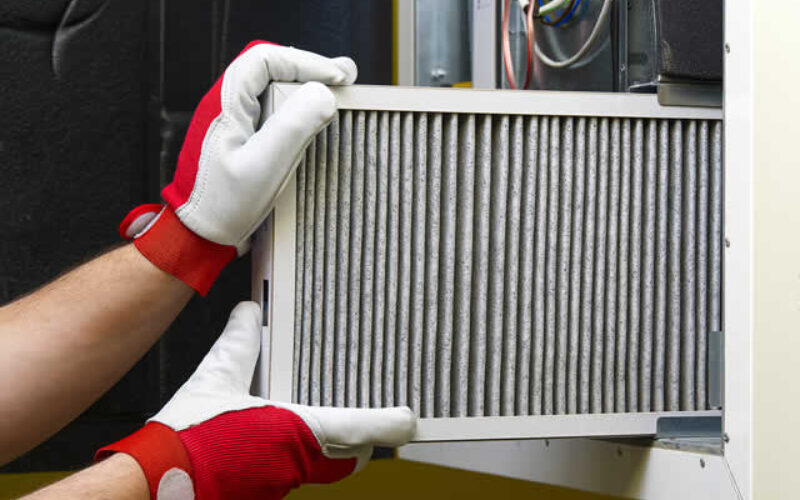
Locate the return duct, which is often near the base of the air handler or behind a wall or ceiling grille, and slide the filter out. Note the airflow arrow printed on the frame, which should point toward the blower, so you can reinstall it correctly later.
-
Inspecting The Filter
Hold the filter up to the light or compare it against a clean sheet of white paper. A filter that looks visibly gray or clogged is due for service. The American Lung Association (2026) suggests checking filters regularly, since a dirty filter restricts airflow and reduces the system’s ability to clean the air.
-
Cleaning Without Damage
Disposable pleated HVAC filters are designed to be replaced, not washed, since rinsing can damage the pleated media and reduce filtering performance.
If your system uses a washable or reusable filter, turn the system off first, then vacuum loose debris or rinse gently with water according to the manufacturer’s instructions, and let the filter dry completely before reinstalling it. Never run the HVAC system without a filter in place, even temporarily.
-
When To Replace Instead Of Clean
Choose replacement over cleaning if your filter is a standard disposable pleated type, if a washable filter’s frame or mesh is torn or warped, or if the filter is visibly worn beyond what a rinse can fix.
For most households, the EPA (2026) recommends upgrading to at least MERV 13 when the system’s fan and filter slot can accommodate it, since higher MERV ratings capture smaller particles more effectively than the standard MERV 8 filter.
How To Clean Water Filters
-
Locating The Filter
Whole-home water filters are typically mounted where the main water line enters the house. Under-sink filters sit in the cabinet below the faucet, while refrigerator filters are usually found inside the fridge compartment or at the base of the unit, depending on the model.
-
Safety Precautions
Before opening any housing, shut off the water supply and relieve pressure by opening the nearest faucet, as recommended by England’s Plumbing & Heating (2026). Have a towel or bucket ready to catch residual water, and put on gloves if you plan to sanitize the housing.
-
Cleaning Steps By Filter Type
Remove the spent cartridge and clean the housing with warm water and a soft brush, avoiding harsh chemicals on plastic parts. Inspect the O-ring and fittings for wear, cracks, or mineral buildup, and flush the lines for a few minutes before installing a fresh cartridge.
Reseat the O-ring with a food-grade lubricant, restore the water supply slowly, and run the tap for several minutes to clear air and any carbon fines. For reverse osmosis systems, change the sediment and carbon pre-filters on schedule to protect the membrane, check the storage tank pressure with a tire gauge, and discard the first tank of water after sanitizing.
Clean the housing at every cartridge change, and sanitize housings and lines annually with a diluted bleach solution or an NSF/ANSI 60-certified sanitizer, rinsing thoroughly until no chlorine smell remains. Refrigerator filters are generally replaced rather than cleaned; follow the appliance’s filter indicator light or owner’s manual for timing.
-
Signs A Filter Needs Replacement
Watch for slower water flow, a change in taste or odor, cloudy or discolored water, visible sediment inside the housing, falling pressure, or leaks at the fittings or O-rings.
According to England’s Plumbing & Heating (2026), a well-maintained whole-home system can last roughly ten to fifteen years overall, even though individual cartridges need far more frequent replacement.
Common Mistakes To Avoid
One of the most frequent errors is using harsh chemicals, abrasive scrubbers, or the wrong cleaning method on a filter material that wasn’t designed for it, which can damage pleats, mesh, or plastic housings. Ignoring manufacturer replacement schedules is another common pitfall; the EPA (2026) is clear that all filters require periodic replacement to function properly, and skipping that schedule lets particles and contaminants build up.
Installing a filter incorrectly after cleaning is also surprisingly common. Reversing the airflow arrow on an HVAC filter or failing to reseat an O-ring properly on a water filter housing can undo all the work you just did, leading to leaks or reduced filtration.
Finally, neglecting a regular maintenance routine altogether, rather than setting reminders or keeping a simple log, tends to be the root cause behind most filter problems homeowners eventually have to call a professional to fix.
For large or complex HVAC systems, or whole-home water setups you’re unsure about, it’s worth consulting a certified HVAC technician or licensed plumber. Manufacturer instructions should always take priority over general guidance like this.
Build A Filter Care Routine That Sticks
Clean air and water filters protect your family’s health, keep your HVAC and plumbing systems running efficiently, and help you avoid costly repairs down the road. The key is consistency: mark your calendar for HVAC filter checks every couple of months, and track water filter cartridges based on the specific intervals your system requires.
Start by checking your current filters today. If they’re overdue, replace or clean them using the steps above, then set a recurring reminder so the next check happens automatically. A little routine maintenance now means cleaner air, safer water, and appliances that last.
FAQs
-
How often should I change my HVAC air filter?
Most homes should change a standard HVAC air filter about every two months, or sooner if it looks visibly dirty compared with a clean sheet of white paper, according to the American Lung Association (2026).
-
What are the signs that a water filter needs to be replaced?
Watch for slower water flow, changes in taste or odor, cloudy or discolored water, visible sediment in the housing, dropping pressure, or leaks at the fittings or O-rings.
-
Should I wash my HVAC filter or replace it?
Disposable pleated HVAC filters are designed to be replaced, not washed, since rinsing can damage the filtering material. Choose a washable filter only if your system is designed for one, and clean it strictly according to the manufacturer’s instructions.
-
What MERV rating should I choose for my HVAC filter?
Choose at least MERV 13 if your system’s fan and filter slot can accommodate it, since the EPA (2026) notes that MERV 13 captures significantly more small particles than the standard MERV 8 filter. Consult an HVAC technician if you’re unsure what your system can handle.
-
Do refrigerator water filters need to be cleaned or just replaced?
Refrigerator filters are generally replaced rather than cleaned. Follow your appliance’s filter indicator light or owner’s manual for the correct replacement timing.
-
How much does it cost to maintain air and water filters?
Costs vary by filter type and system size. The American Lung Association (2026) notes that a standard disposable HVAC filter costs around $12 each; water filter cartridge costs depend on the specific system and should be checked against the manufacturer’s part listing.
-
What happens if I skip filter maintenance?
Skipping maintenance lets dust and particles recirculate through HVAC systems and allows spent water filter cartridges to become a breeding ground for bacteria, according to England’s Plumbing & Heating (2026). It also strains equipment and can shorten its lifespan.
-
Is it safe to use bleach when sanitizing a water filter housing?
A diluted bleach solution or an NSF/ANSI 60-certified sanitizer can be used to sanitize water filter housings once a year, but England’s Plumbing & Heating (2026) warns against ever mixing bleach with ammonia-based cleaners or acids, and recommends ventilating the area and wearing gloves and eye protection.
-
When should I call a professional instead of cleaning the filter myself?
Call a certified HVAC technician for large or complex HVAC systems, or a licensed plumber for whole-home water filtration issues you’re unsure how to handle, such as pressure problems or persistent leaks after reinstalling a cartridge.
home improvement ideas to consider (complete directory – new win):


| Section | Description | Key Details |
|---|---|---|
| Quick Answer | Overview of recommended schedules for cleaning or replacing air and water filters. |
HVAC air filters should be replaced roughly every two months. Water filters vary by type from every three months for sediment pre-filters to every two to three years for reverse osmosis membranes. Regular maintenance ensures cleaner air, better water quality, and longer appliance life. |
| Why Clean Air And Water Filters Matter | Importance of maintaining clean filters for health and system efficiency. |
Clean filters trap dust and allergens, improving indoor air quality, especially for those with asthma. Proper maintenance protects against bacteria buildup in water filters, improves drinking water, and prevents strain on appliances caused by clogged filters. |
| Types Of Home Filters And Schedules | Explanation of different types of filters and their replacement timelines. |
HVAC filters are typically changed every two months. Water filter intervals depend on type: sediment pre-filters, every three to six months; carbon pre-filters, six to twelve months; reverse osmosis membranes, two to three years. Manufacturer guidelines should be prioritized. |
| Tools And Supplies You’ll Need | Required supplies for cleaning air and water filters effectively. |
Key supplies include soft brushes, mild cleaners, gloves, and optional tools like tire gauges and food-grade lubricants for O-rings. Avoid harsh chemicals and ensure proper safety precautions during the cleaning process. |
| How To Clean Air Filters | Step-by-step guidance on maintaining HVAC air filters. |
Locate and remove the filter, inspect for dirt, and clean washable filters with soft brushes and water. Disposable filters should be replaced instead of cleaned. Ensure filters are installed correctly, with airflow arrows pointing in the right direction. |
| How To Clean Water Filters | Instructions for maintaining water filtration systems effectively. |
Shut off the water supply, clean the housing with appropriate tools, and replace cartridges as needed. Check for leaks, reseat O-rings properly, and flush the system to ensure proper functionality. Follow system-specific guidelines. |
| Common Mistakes To Avoid | Common errors made during filter maintenance and how to avoid them. |
Using inappropriate cleaning methods, neglecting replacement schedules, and improper reinstallation are major mistakes. Regular maintenance and adherence to manufacturer instructions minimize issues and protect systems. |
| Build A Filter Care Routine That Sticks | Encouragement to establish a regular maintenance schedule for filters. |
Consistent filter care ensures cleaner air, safer water, and longer-lasting appliances. Mark regular intervals for checkups and replace or clean filters as needed to maintain system efficiency. |

Find HVAC Services Air Conditioning Central Heating Ducts & Vents Insulation Thermostats Water Heaters top-rated, pre-screened local contractors FREE: download contractor selection enter zip code – powered by HomeAdvisor ™


Image credit: clean HVAC air filters by envato.com
end of post … please share it!
| more photo remodeling |
Jump Over to Our Photo Analysis Center for Ideas on
"Renovating Home"
|__________________________________________________________|
home remodeling surprise
find out where it might go - new win


Helpful article? Leave us a quick comment below.
And please share this article within your social networks.