Summary Outline –
July 4th marks a day of great significance for the United States, a holiday imbued with historical weight, cultural evolution, and an enduring sense of patriotism.
And much like the nation itself, the way Americans have celebrated Independence Day has transformed over time. This article takes you on a tricentennial exploration of how July 4th has been observed, focusing on pivotal years that reflect the growth of a nation.
From its revolutionary beginnings in 1776, to the centennial reflections in 1876, the bicentennial grandiosity of 1976, and now the anticipated sesquicentennial in 2026, we will trace this holiday’s fascinating trajectory.
Each era reveals unique aspirations, challenges, and a changing national identity.
- post content … analysis/ July 4th tricentennial journey
- 1st: July 4th, 1776: the birth of a nation
- 2nd: July 4th, 1876: a centennial reflection
- 3rd: July 4th, 1976: the bicentennial celebration of American independence
- 4th: 2026 Sesquicentennial Celebration: 250 Years of Independence
- 5th: celebrating July 4th
- conclusion
- other home decor topics

-
- —— begin first topic ——
-
1st July 4th: July 4th, 1776: The Birth of a Nation
The Fourth of July, 1776, stands as one of the most momentous days in American history, marking the birth of a new nation founded on the principles of liberty, equality, and self-governance.
On this day, the Declaration of Independence was adopted, setting the stage for the creation of the United States of America. The events surrounding this monumental moment provide a vivid glimpse into the determination, vision, and resilience of the colonies that sought to break free from British rule.
From the bustling activity in Philadelphia to the initial celebrations and visionary thoughts of leaders like John Adams, the legacy of July 4th, 1776, reverberates through the centuries.
-
The Declaration of Independence
The Declaration of Independence, drafted primarily by Thomas Jefferson, was a bold statement of intent and ideology. Endorsed by the Second Continental Congress on July 4th, it proclaimed the colonies’ decision to sever ties with Great Britain, articulating the philosophical foundations of unalienable rights—life, liberty, and the pursuit of happiness.
This document not only justified the colonies’ rebellion but also served as a declaration to the world of a new nation’s existence. It was signed initially by key figures like John Hancock, whose bold signature symbolized the confidence and bravery of this unprecedented act.
The Declaration would later galvanize support and eventually inspire democratic movements globally.
-
The Atmosphere in Philadelphia
Philadelphia, the vibrant hub of colonial America, was alive with fervor and anticipation as the Continental Congress convened. Delegates debated fiercely in the chambers of Independence Hall, grappling with the gravity of their decision.
Outside, the atmosphere was electric—merchants, tradespeople, and citizens gathered in streets and taverns, exchanging whispers of hope and speculation. It was a time of both excitement and fear, as the declaration was tantamount to treason against the British Crown.
The ringing of the Liberty Bell (though unverified as precisely on this day) later became an enduring symbol of freedom and unity linked to this atmosphere.
-
The Initial Celebrations
While July 4th, 1776, officially marked American independence, the colonies’ reaction on that very day was relatively muted due to the ongoing war and uncertainty. However, pockets of celebration began to emerge.
Soldiers cheered, church bells rang, and private gatherings toasted to new beginnings. Public readings of the Declaration in city squares were held in the subsequent days, often accompanied by jubilation, bonfires, and the firing of cannons as colonists embraced the realization of their bold vision.
-
John Adams’ Vision
John Adams, one of the most steadfast advocates for American independence, famously predicted in a letter to his wife Abigail that July 2nd—when Congress voted for independence—would be remembered as the grand day of celebration.
While the official adoption on July 4th became the widely recognized date, his vision of how the occasion would be marked was strikingly accurate.
Adams wrote passionately about the future observance of independence, envisioning it as a day of grand festivities including “Pomp and Parade, with Shows, Games, Sports, Guns, Bells, Bonfires, and Illuminations from one End of this Continent to the other.”
His foresight cemented the foundation for how Americans would celebrate the Fourth of July for generations.
-
The First Official Celebrations in 1777
The first anniversary of independence on July 4, 1777, marked the first official celebration of the day on a larger scale. Despite the ongoing Revolutionary War, festivities were observed in several cities, most notably in Philadelphia.
The occasion was commemorated with notable fanfare—a formal dinner for the Continental Congress, parades, military displays, and fireworks that lit up the night sky.
Ships in the harbor displayed decorations, and salutes were fired. This public acknowledgment not only celebrated the young nation’s ideals but also underscored its perseverance during a time of struggle.
The traditions born in 1777 laid the groundwork for the enduring customs of today’s Independence Day celebrations.
Aspect Details Declaration of Independence Adopted July 4, 1776, asserting unalienable rights and declaring independence from Britain. Philadelphia Atmosphere Center of debate and anticipation; citizens eagerly awaited the outcome amid charged emotions. Initial Celebrations Modest celebrations with church bells, cannon fire, and public readings in the days following. John Adams’ Vision Predicted joyous celebrations with parades, bonfires, and illuminations, as it is celebrated today. First Official Celebrations Held on July 4, 1777, with parades, fireworks, and public festivity despite wartime challenges. 
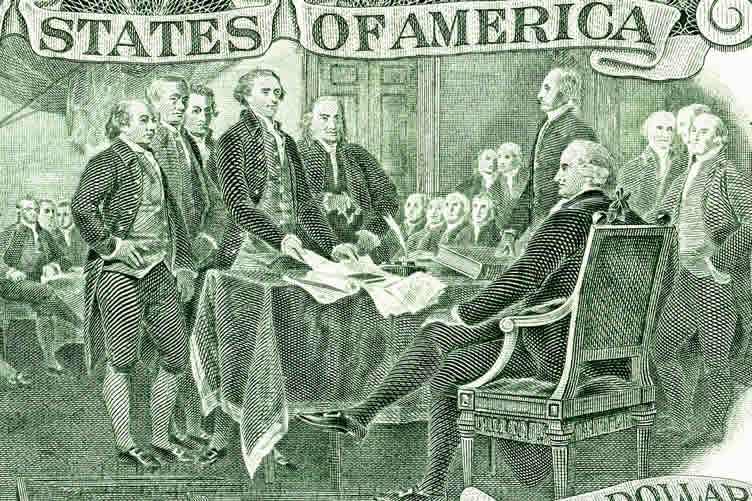
copyright image by 123rf.com
[ view images: signing of the declaration of independence ]
[ youtube: History Of The US Independence Day ]
Key American Inventions (1676–1776)
During this period, most major technological advances in America were adaptations or improvements of European inventions, often tailored to local needs.
However, inventions like the octant, Franklin stove, and lightning rod stand out as original American contributions with lasting impact.
Here are notable inventions and innovations made in America during the period 1676 through 1776, with a focus on those that have clear records or significant influence: sources
- 1717: Swim Fins
- Benjamin Franklin, as a young boy, invented wooden swim fins (worn on the hands) to aid swimming, though these were not widely adopted commercially.
- 1730: Octant (Reflecting Quadrant)
- Thomas Godfrey of Philadelphia invented the octant, a navigational instrument that improved accuracy in sea navigation. This was developed independently at the same time as John Hadley in England.
- 1742: Franklin Stove
- Benjamin Franklin invented an improved stove (later called the Franklin stove or Pennsylvania fireplace) that provided more efficient heating and ventilation for homes. (Note: Some sources list the invention date as 1741 or 1742.)
- 1752: Lightning Rod
- Benjamin Franklin invented the lightning rod, which protected buildings from lightning strikes and became a standard safety feature.
- Mid-1700s: Innovations in Agriculture and Industry
- Colonists adapted and improved tools such as the plow, spinning wheel, and other farming implements, though these were often based on European designs.
- Other Notable Innovations
- Medical and Scientific Research: Colonists such as John Bartram conducted botanical research and documented new plant species.
- Educational Advancements: The establishment of colleges and scientific societies in the colonies fostered research and innovation.
- https://en.wikipedia.org/wiki/Timeline_of_United_States_inventions_(before_1890)
- https://www.pbs.org/wgbh/americanexperience/features/telephone-technology-timeline/
- https://wechronicle.com/colonial-america/exploring-science-and-technology-in-colonial-america-inventions-and-innovations/
Year/Decade Invention/Innovation Inventor/Key Figure 1717 Swim Fins Benjamin Franklin 1730 Octant (Reflecting Quadrant) Thomas Godfrey 1742 Franklin Stove Benjamin Franklin 1752 Lightning Rod Benjamin Franklin 1700s Agricultural Tools (improved) Colonists 1700s Botanical Research John Bartram, others 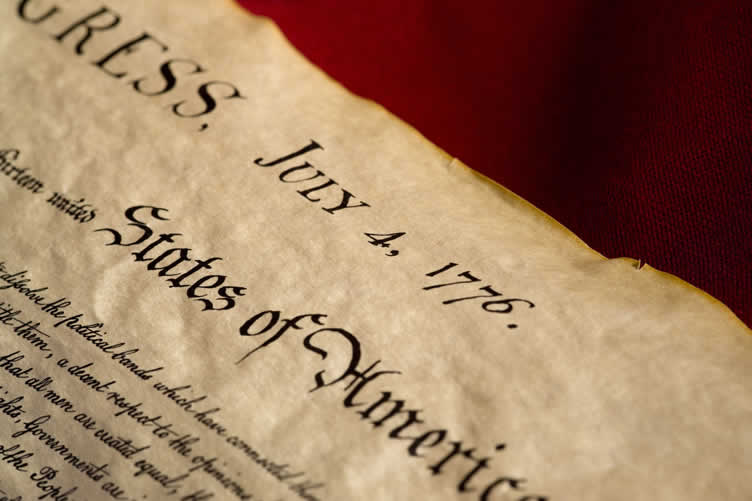
copyright image by 123rf.com
[ youtube: History of Colonization of America ]
[ youtube: Ben Franklin’s Greatest Inventions ]
-
Scroll up to directory … or scroll to next section of the July 4th tricentennial journey …


-
-
2nd July 4th: July 4th, 1876: A Centennial Reflection
By 1876, the United States was at a pivotal moment in its history. One hundred years after declaring independence, the country was simultaneously celebrating its incredible growth and grappling with the deep scars left by the Civil War.
The centennial of the Declaration of Independence offered a unique opportunity for national reflection, unity, and celebration. Across the nation, people gathered to honor the progress and resilience of their country, as well as to reckon with its unresolved challenges.
The Reconstruction era was still ongoing, and questions about equality, citizenship, and rights loomed large.
-
Reconstruction Era Context
The centennial celebration in 1876 occurred against the backdrop of the Reconstruction era. The Civil War had ended just over a decade earlier, but its wounds still shaped the nation.
Freed African Americans sought to exercise their newfound rights, but they faced violent opposition, systemic discrimination, and the rise of Jim Crow laws in the South. The Reconstruction amendments—the 13th, 14th, and 15th—had laid the groundwork for liberty and citizenship for formerly enslaved people, but their promises often went unfulfilled.
Despite this, the centennial gave Americans an occasion to emphasize unity and progress, framing the Civil War not as a fracture but as a necessary trial that strengthened the republic’s democratic ideals.
-
The Centennial Exposition in Philadelphia
Philadelphia, the site of the Declaration of Independence’s signing in 1776, was chosen as the host city for the Centennial Exposition, a world’s fair that showcased American ingenuity, culture, and technological advancements.
Officially opening on May 10, 1876, and running through the fall, the exposition featured exhibits from 37 countries and attracted nearly 10 million visitors—an impressive figure for the time.
The centerpiece of the exposition was Machinery Hall, where awe-struck visitors marveled at cutting-edge inventions such as Alexander Graham Bell’s telephone and the Corliss steam engine.
These breakthroughs symbolized the industrial might and innovation of a young nation striving to assert its dominance on the global stage.
-
Nationwide July 4th Celebrations
While Philadelphia held the grandest festivities, July 4th celebrations erupted across the country. Cities, towns, and rural communities embraced the centennial with parades, fireworks, patriotic songs, and public readings of the Declaration of Independence.
Bells rang out in church towers, and citizens donned red, white, and blue attire, reinforcing the themes of national pride and community.
Even in the Southern states, still recovering from defeat in the Civil War, a sense of participation emerged, although often intertwined with lingering tensions over Reconstruction policies. The centennial celebrations reflected both unity and division, a snapshot of a country striving to heal and reconcile its past.
-
Patriotic Speeches and Reflections
Centennial speeches resonated across the nation, delivered by leaders who emphasized both progress and reflection. Orators gave tribute to the Founding Fathers while imploring citizens to uphold justice and equality as envisioned in the Declaration of Independence.
President Ulysses S. Grant presided over ceremonies in Philadelphia, using the occasion to reflect on national resilience and the cost of freedom. Prominent scholars and clergy also lent their voices, urging Americans to view the centennial as a turning point in national character, civility, and responsibility.
These speeches played a vital role in bridging the past and the future, reminding citizens of their shared heritage while confronting the ongoing work of creating a more perfect union.
-
The Woman’s Suffrage Movement and the Declaration of the Rights of Women
Amid the patriotic celebrations, suffragists used the centennial as a platform to highlight the persistent lack of equality for women.
On July 4th, 1876, Susan B. Anthony and other suffragist leaders presented the "Declaration of the Rights of Women" at Independence Hall, asserting that the principles of liberty and equality enshrined in 1776 had yet to be extended to half the nation’s population.
The document was a pointed reminder that American ideals would remain incomplete until women gained full suffrage and participation in public life. This act of resistance underscored the broader struggles for civil rights during the Reconstruction era and imbued the centennial with a layer of activism and advocacy.
-
Atmosphere and Legacy
The atmosphere of the centennial was one of cautious optimism. While Americans celebrated their progress, they also confronted the fractured path they had traveled and the work that lay ahead.
For many, the centennial was a time for renewal—a chance to dream of a future that fulfilled the promises laid out at the nation’s founding. The legacy of these celebrations was profound. They underscored the importance of unity and innovation while highlighting ongoing struggles for equality and justice.
The centennial served as both a mirror of America’s achievements and a reminder of its imperfections, inspiring future generations to strive for the ideals of liberty and democracy.
Category Details Reconstruction Era Context Post-Civil War America faced lingering divisions amid efforts to rebuild and expand rights. Centennial Exposition in Philadelphia Featured technological marvels like Alexander Graham Bell’s telephone and drew millions. Nationwide July 4th Celebrations Parades, fireworks, and readings of the Declaration reflected national pride. Patriotic Speeches and Reflections Leaders emphasized unity and justice while reflecting on the nation’s trials. Woman’s Suffrage Movement Suffragists presented the Declaration of the Rights of Women at Independence Hall. Atmosphere and Legacy A symbol of progress and challenges, inspiring continued pursuit of American ideals. 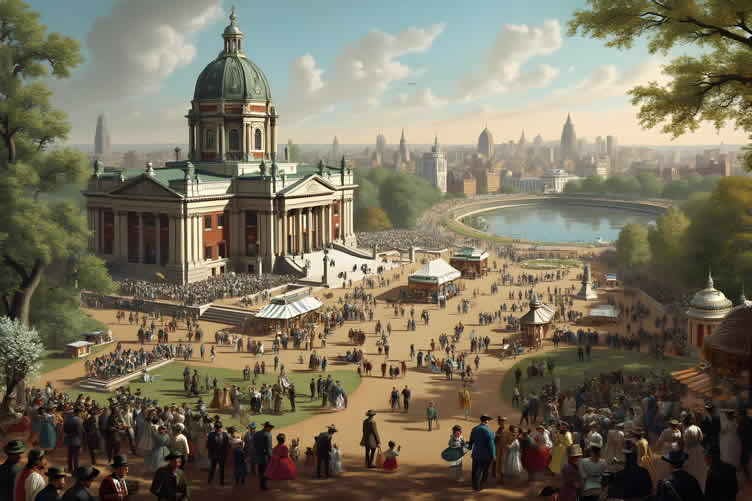
AI generated image by 123rf.com
[ view images: july 4th 1876 ]
[ youtube: Philadelphia 1876 World’s Fair ]
Key American Inventions (1776–1876)
This list highlights some of the most groundbreaking American inventions, covering a remarkable period of innovation from the signing of the Declaration of Independence in 1776 to the Centennial Exposition in 1876.
These inventions not only shaped the course of American history but also left a lasting impact on the world, showcasing the ingenuity and creativity that defined this transformative era: sources
- 1776: Submarine (Turtle)
- David Bushnell’s "Turtle" was the first submarine used in combat, marking a significant advancement in naval warfare.
- 1794: Cotton Gin
- Eli Whitney’s machine revolutionized the cotton industry by efficiently removing seeds from cotton fiber, boosting Southern agriculture.
- 1795: Wheel Cypher (Jefferson Disk)
- Thomas Jefferson invented this encryption device for secure communication.
- 1796: Rumford Fireplace
- Benjamin Thompson (Count Rumford) designed a more efficient fireplace that improved heating and reduced smoke.
- 1797: Interchangeable Parts
- Eli Whitney’s contract for musket manufacturing introduced standardized, interchangeable parts, revolutionizing manufacturing techniques.
- 1803: Spray Gun
- Dr. Alan de Vilbiss invented a device for applying medicine to the nose and mouth, replacing swabs.
- 1805: Amphibious Vehicle
- Oliver Evans demonstrated the "Orukter Amphibolos," a steam-powered vehicle that could operate on land and water.
- 1806: Coffee Pot with Metal Sieve
- Benjamin Thompson (Count Rumford) invented a coffee pot with a strainer to separate grounds.
- 1807: Steamboat (Clermont)
- Robert Fulton’s commercial steamboat enabled reliable two-way river travel, transforming transportation.
- 1813: Armored Warship
- Robert Fulton’s steam-powered warship "Demologos" marked an early step in naval technology.
- 1830: Steam-Powered Locomotive
- The introduction of the steam-powered locomotive revolutionized land transportation and the growth of railroads.
- 1834: Mechanical Reaper
- Cyrus McCormick’s mechanical reaper automated harvesting, greatly increasing agricultural productivity.
- 1837: Telegraph
- Samuel Morse (with others) developed the telegraph, enabling rapid long-distance communication (though sometimes cited as 1844 for the first public demonstration).
- 1839: Vulcanized Rubber
- Charles Goodyear’s vulcanization process made rubber durable and weather-resistant, though his patent was granted in.
- 1846: Sewing Machine
- Elias Howe’s sewing machine revolutionized garment manufacturing and domestic sewing.
- 1849: Safety Pin
- Walter Hunt invented the safety pin, a simple but impactful invention.
- 1856: Bessemer Process
- Although originally developed by Henry Bessemer in England, the process was quickly adopted and improved in the U.S., enabling mass production of steel.
- 1856: Railroad Sleeping Car
- George Pullman’s sleeping cars made long-distance train travel more comfortable.
- 1872: Lubricating Cup
- Elijah McCoy’s invention kept machinery running smoothly and became synonymous with quality (“the real McCoy”).
- 1873: Barbed Wire
- Joseph Glidden’s barbed wire revolutionized fencing and land management.
- 1876: Telephone
- Alexander Graham Bell patented the telephone, transforming global communication.
- https://en.wikipedia.org/wiki/Timeline_of_United_States_inventions_(before_1890)
- https://www.pbs.org/wgbh/americanexperience/features/telephone-technology-timeline/
- https://study.com/academy/lesson/american-industrialization-timeline.html
- https://bookunitsteacher.com/nation_grows/activities_8.htm
- https://www.timetoast.com/timelines/3706
Year/Decade Invention/Innovation Inventor/Key Figure 1776 Submarine (Turtle) David Bushnell 1794 Cotton Gin Eli Whitney 1795 Wheel Cypher (Jefferson Disk) Thomas Jefferson 1796 Rumford Fireplace Benjamin Thompson 1797 Interchangeable Parts Eli Whitney 1803 Spray Gun Alan de Vilbiss 1805 Amphibious Vehicle Oliver Evans 1806 Coffee Pot with Sieve Benjamin Thompson 1807 Steamboat (Clermont) Robert Fulton 1813 Armored Warship Robert Fulton 1830 Steam-Powered Locomotive Multiple, U.S. railroads 1834 Mechanical Reaper Cyrus McCormick 1837/1844 Telegraph Samuel Morse 1839/1844 Vulcanized Rubber Charles Goodyear 1846 Sewing Machine Elias Howe 1849 Safety Pin Walter Hunt 1856 Bessemer Process (Adopted in U.S., Bessemer) 1856 Railroad Sleeping Car George Pullman 1872 Lubricating Cup Elijah McCoy 1873 Barbed Wire Joseph Glidden 1876 Telephone Alexander Graham Bell 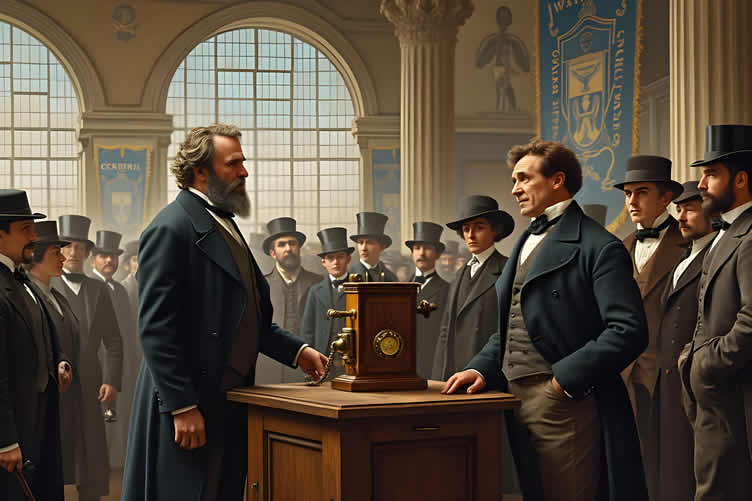
AI generated image by 123rf.com
[ youtube: American Westward Expansion ]
[ youtube: Alexander Graham Bell’s Revolutionary Invention ]
-
Scroll up to directory … or scroll to next section of the July 4th tricentennial journey …
-
-
3rd July 4th: July 4th, 1976: The Bicentennial Celebration
… of American Independence
The United States of America reached a significant milestone on July 4th, 1976, as the nation celebrated 200 years of independence.
Known as the Bicentennial, this historic occasion came at a pivotal moment in American history, characterized by the lingering sentiments of the post-Vietnam era and the Watergate scandal’s recent revelations. Despite these challenges, the Bicentennial prompted a wave of patriotism, unity, and reflection.
Across the country, citizens joined together to honor their heritage, celebrate progress, and reaffirm the values upon which the nation was founded. The festivities ranged from grand international displays to intimate local commemorations, culminating in an unparalleled collective celebration of American identity.
The Bicentennial of 1976 represented more than a simple commemoration of independence. It transformed into a reflection on two centuries of growth, challenges, and triumphs, reminding Americans of their collective strength and resilience while inspiring hope for the future of the nation.
-
Post-Vietnam Era Sentiment
The Bicentennial took place in a post-Vietnam era when the United States was grappling with societal divisions and political disillusionment. The war had left deep wounds, and only a year earlier, the country witnessed the resignation of President Richard Nixon.
Despite these turbulent years, the Bicentennial became a unifying event, offering Americans a chance to heal, reflect, and reconnect with the principles of liberty and democracy.
The milestone encouraged widespread participation across communities, instilling hope and pride in the national narrative.
-
Tall Ships Parade in New York Harbor
One of the most iconic events of the Bicentennial was the "Operation Sail" parade of tall ships in New York Harbor. This awe-inspiring event featured a fleet of historic and modern vessels from around the globe, symbolizing international goodwill and the maritime heritage central to America’s founding.
The majestic ships, including the storied USS Constitution, sailed into the harbor to the delight of millions who gathered to witness the spectacle. The event showcased America’s maritime legacy while reinforcing its connection to the global community.
-
International Participation
The Bicentennial extended beyond American borders, attracting international participation and goodwill. Nations around the world sent congratulatory messages and joined in the celebratory spirit.
Gifts and exhibits from countries such as France, which famously contributed to American independence through the Marquis de Lafayette and the Statue of Liberty, honored the enduring bonds of friendship.
Numerous foreign dignitaries attended events across the United States, underscoring the global significance of the anniversary.
-
July 4th Nationwide Events
From the largest cities to small rural towns, Americans across the country took part in Bicentennial celebrations on July 4th, 1976. Parades, fireworks displays, concerts, and community gatherings created a joyous atmosphere that resonated with the celebratory spirit.
Cities like Philadelphia and Boston, deeply tied to America’s founding, hosted massive events that included readings of the Declaration of Independence and reenactments of revolutionary moments.
-
Renewed Sense of National Pride
The Bicentennial offered a renewed sense of pride in America’s ideals and achievements. The year-long series of events leading up to July 4th helped reignite national unity and inspired citizens to look forward to the country’s future with optimism.
A key focus of the Bicentennial was educating Americans about their shared history, which fostered a deeper appreciation for the struggles and triumphs that shaped the nation.
-
Smithsonian Institution and Historical Reenactments
The Smithsonian Institution played a central role in the Bicentennial by organizing special exhibits dedicated to American history and culture. These exhibits, designed to engage the public, showcased artifacts from the Revolutionary War and chronicled the nation’s growth over two centuries.
Across the country, historical reenactments brought pivotal moments of 1776 to life. These reenactments, held at locations such as Independence Hall, allowed Americans to immerse themselves in the spirit of the era and better understand the sacrifices made by the founders.
-
Other Exhibits and Celebrations
Additional exhibits and celebrations captured the attention of millions. Cities created permanent tributes to the Bicentennial, such as Liberty State Park in New Jersey.
Local communities introduced time capsules and memorials, ensuring the legacy of the celebration endured. The Apollo-Soyuz Test Project space mission, symbolizing cooperation between the U.S. and the Soviet Union, served as a reminder of America’s innovation and leadership on the global stage.
Event or Theme Description Post-Vietnam Era Sentiment Symbol of unity and healing after societal and political challenges. Tall Ships Parade Historic and modern vessels sailed into New York Harbor, celebrating maritime heritage. International Participation Global goodwill and diplomatic participation marked the celebration. Nationwide Celebrations Parades, fireworks, and gatherings occurred across cities and rural towns alike. Renewed National Pride Re-ignition of unity and reflection on American ideals and achievements. Smithsonian and Reenactments Exhibits and reenactments educated Americans on history and revolutionary moments. Other Exhibits and Tributes Permanent memorials, time capsules, and events like the Apollo-Soyuz mission honored progress. 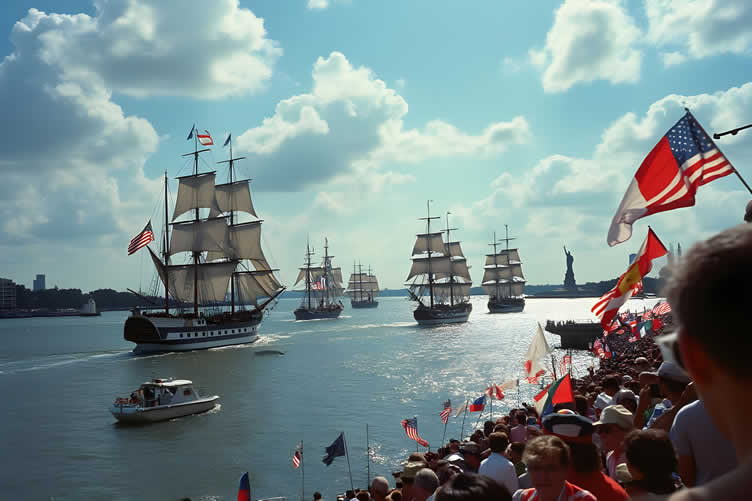
AI generated image by 123rf.com
[ view images: july 4th 1976 ]
[ youtube: Bicentennial Parade of Ships 1976 ]
Key American Inventions (1876–1976)
Explore the most impactful American inventions from 1876 to 1976, a century of innovation that brought us groundbreaking technologies and everyday advancements.
From revolutionary communication tools like the telephone to life-changing household appliances and medical breakthroughs, these inventions transformed modern life and reshaped how we live, work, and connect with one another: sources
- 1877: Phonograph
- Thomas Edison invented the phonograph, enabling sound recording and playback.
- 1879: Electric Light Bulb
- Thomas Edison developed the first commercially practical incandescent electric light bulb.
- 1882: Electric Fan
- Schuyler S. Wheeler invented the electric fan, improving indoor comfort.
- 1885: Adding Machine
- William Seward Burroughs invented the first practical adding machine for business calculations.
- 1886: Coca-Cola
- John Pemberton invented Coca-Cola, a cultural and commercial phenomenon.
- 1888: Kodak Camera
- George Eastman introduced the Kodak camera, making photography accessible to the public.
- 1890: Electric Chair
- The electric chair was developed as a method of execution, reflecting advancements in electrical engineering.
- 1891: Zipper
- Whitcomb Judson invented the zipper (clasp locker), later improved by Gideon Sundback.
- 1893: Motion Pictures
- Thomas Edison’s kinetoscope allowed for the viewing of short films, laying the groundwork for cinema.
- 1895: Safety Razor
- King C. Gillette invented the safety razor with disposable blades.
- 1896: Electric Stove
- The electric stove was introduced, transforming home cooking.
- 1899: Tape Recorder
- Valdemar Poulsen invented the magnetic wire recorder, an early form of tape recorder.
- 1901: Electric Washing Machine
- The first electric washing machine was introduced, revolutionizing household chores.
- 1906: Tungsten Light Bulb
- William Coolidge developed the tungsten filament light bulb, improving efficiency.
- 1911: Air Conditioning
- Willis Carrier invented modern air conditioning, changing architecture and comfort.
- 1914: Traffic Signal
- Garrett Morgan invented the first electric traffic signal, improving road safety.
- 1927: Television
- Philo Farnsworth demonstrated the first fully electronic television system.
- 1933: FM Radio
- Edwin H. Armstrong invented FM radio, improving audio quality.
- 1937: Cellophane Tape
- Richard Drew invented Scotch tape, a staple in homes and offices.
- 1938: Xerography
- Chester Carlson invented the photocopier (xerography), revolutionizing document reproduction.
- 1940: Automatic Dishwasher
- Modern automatic dishwashers became available for home use.
- 1945: Microwave Oven
- Percy Spencer invented the microwave oven while working with radar technology (commercialized in the 1950s).
- 1946: ENIAC (Electronic Computer)
- The first general-purpose electronic computer was built at the University of Pennsylvania.
- 1947: Transistor
- John Bardeen, Walter Brattain, and William Shockley invented the transistor at Bell Labs, revolutionizing electronics.
- 1951: Long-Distance Dialing
- Direct long-distance telephone dialing was introduced in the U.S.
- 1956: Transatlantic Telephone Cable
- The first transatlantic telephone cable was laid, enabling direct voice communication between continents.
- 1963: Pushbutton Telephone
- The pushbutton telephone was introduced, replacing rotary dials.
- 1967: Compact Microwave Oven
- Compact microwave ovens became available for home kitchens.
- 1969: Internet (ARPANET)
- ARPANET, the precursor to the internet, was launched, connecting computers at research institutions.
- 1971: Pocket Calculator
- The first pocket electronic calculator was introduced, making computation portable.
- 1972: Compact Disk (CD)
- The compact disk was developed (though commercialized later), setting the stage for digital audio.
- 1975: Desktop Computer
- The first personal desktop computers became available to hobbyists and businesses.
- 1976: Apple I Computer
- Steve Wozniak and Steve Jobs introduced the Apple I, a milestone in personal computing.
- https://www.smithsonianmag.com/smithsonian-institution/tracing-history-american-invention-from-telegraph-to-apple-I-180955838/
- https://www.timetoast.com/timelines/3706
- http://digfir-published.macmillanusa.com/utap2e/asset/image_html/ch18/tab_18_1.html
- https://www.factmonster.com/math-science/inventions-discoveries/timeline-of-everyday-inventions
- https://iplawusa.com/top-10-american-inventions/
Year/Decade Invention/Innovation Key Figure/Company 1877 Phonograph Thomas Edison 1879 Electric Light Bulb Thomas Edison 1882 Electric Fan Schuyler S. Wheeler 1885 Adding Machine William Seward Burroughs 1886 Coca-Cola John Pemberton 1888 Kodak Camera George Eastman 1890 Electric Chair Multiple 1891 Zipper Whitcomb Judson 1893 Motion Pictures Thomas Edison 1895 Safety Razor King C. Gillette 1896 Electric Stove Multiple 1899 Tape Recorder Valdemar Poulsen 1901 Electric Washing Machine Multiple 1906 Tungsten Light Bulb William Coolidge 1911 Air Conditioning Willis Carrier 1914 Traffic Signal Garrett Morgan 1927 Television Philo Farnsworth 1933 FM Radio Edwin H. Armstrong 1937 Cellophane Tape Richard Drew (3M) 1938 Xerography Chester Carlson 1940 Automatic Dishwasher Multiple 1945 Microwave Oven Percy Spencer 1946 ENIAC (Electronic Computer) University of Pennsylvania 1947 Transistor Bell Labs (Bardeen, Brattain, Shockley) 1951 Long-Distance Dialing AT&T 1956 Transatlantic Telephone Cable Multiple 1963 Pushbutton Telephone AT&T 1967 Compact Microwave Oven Multiple 1969 Internet (ARPANET) DARPA 1971 Pocket Calculator Multiple 1972 Compact Disk (CD) Multiple 1975 Desktop Computer Multiple 1976 Apple I Computer Steve Wozniak, Steve Jobs 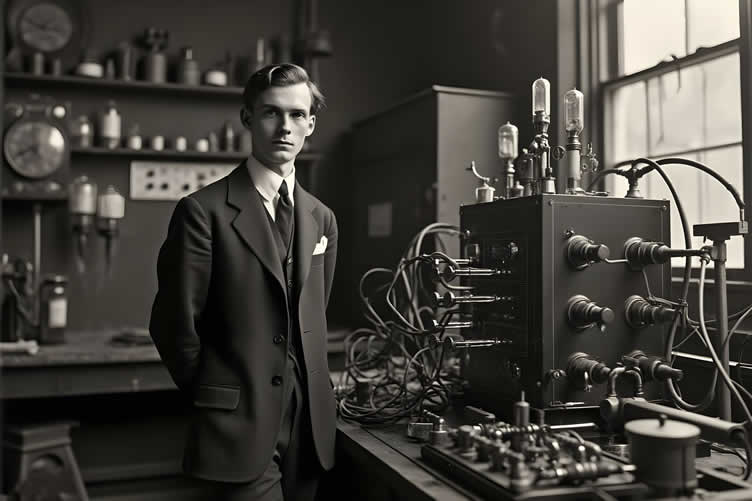
AI generated image by 123rf.com
[ youtube: How We Made the Internet ]
[ youtube: History of Television ]
-
Scroll up to directory … or scroll to next section of the July 4th tricentennial journey …
-
-
4th July 4th: 2026 Sesquicentennial Celebration:
… 250 Years of Independence
The United States will soon commemorate an extraordinary milestone—250 years since the signing of the Declaration of Independence. The Sesquicentennial in 2026 is already shaping up to be an unparalleled celebration that merges historical reverence with innovative progress.
This monumental event will celebrate the nation’s founding ideals, achievements, and the shared vision for a brighter, more inclusive future. Through a harmonious blend of tradition and new advancements, July 4th, 2026 promises to unite Americans while reflecting the diversity and strength that define the nation.
Coordinated efforts from local communities to federal agencies are underway to ensure that the celebrations honor the past while shaping the future.
-
White House Task Force and National Coordination
At the heart of the Sesquicentennial’s success is the commitment of the federal government, spearheaded by the White House Task Force. With a focus on fostering equity, accessibility, and unity, this task force is working tirelessly to ensure a fully coordinated national celebration.
Partnering with governmental departments, state leaders, and private organizations, they are setting the framework for an inclusive and meaningful commemoration.
Efforts focus on developing programs that reflect the nation’s values, ranging from education initiatives to cultural events designed to engage Americans across all demographics.
-
America250 Project
The hallmark of the 250th anniversary is the America250 project, an expansive national initiative designed to inspire reflection on the country’s history and future.
Operating as a collaborative effort between public and private sectors, this project aims to create signature events, educational programs, and digital storytelling platforms that capture the essence of the American experience.
From archival exhibitions to creative projects that highlight voices and stories from underrepresented communities, the America250 project seeks to connect people to the principles of freedom and democracy in innovative ways.
-
Washington, D.C. Festivals Planned
Washington, D.C., the nation’s capital, will serve as the epicenter of the Sesquicentennial celebrations. Plans for July 4th include grand parades, firework displays on the National Mall, and live performances by renowned artists.
Museums such as the Smithsonian Institution are preparing significant exhibitions that highlight milestones in American history.
Events will also include historical reenactments at iconic landmarks, such as the Lincoln Memorial and the Washington Monument, paired with cutting-edge technology to create immersive experiences. An estimated crowd in the millions is expected to gather in the city to honor this historic occasion.
-
State and City Commissions Celebration Planning
All fifty states and countless cities across the nation are forming commissions to tailor the celebrations to their unique histories and communities. These commissions are tasked with planning events that resonate locally, focusing on themes like civil rights, industrial contributions, natural heritage, and cultural significance.
States are organizing forums that engage residents in recounting their stories while preparing parades, concerts, and mentorship initiatives. These celebrations aim to bring people together, blending local pride with national unity.
-
Community Programs Planned
The Sesquicentennial is designed to strengthen community bonds through grassroots participation. Communities are planning localized events that reflect their distinct identities, from storytelling sessions capturing generational tales to volunteer-driven service initiatives aimed at giving back.
Schools across the nation are integrating special curriculums to teach students about the significance of 1776 and beyond. These programs ensure that the celebrations are a living legacy that inspires civic engagement and local pride.
-
Global Participation
The 250th anniversary will extend beyond national borders, engaging international partners and citizens with deep historical ties to the United States.
Plans include diplomatic events held in global U.S. consulates, showcasing cultural exchange programs and international perspectives on American ideals.
Countries with historical alliances or significant contributions to U.S. history are expected to participate in joint celebratory events. By presenting a world united around shared values of democracy and freedom, the Sesquicentennial aims to foster global goodwill.
-
International Fleet Review
One of the most remarkable planned events for the Sesquicentennial is the international fleet review, which will involve naval vessels from nations across the globe gathering in U.S. waters. This event symbolizes a commitment to peace, unity, and shared maritime heritage.
Hosted by the U.S. Navy, the fleet review will be accompanied by air shows featuring advanced aviation technology, as well as historical displays of vintage ships and aircraft. The visual spectacle is expected to inspire awe and gratitude for innovation and collaboration.
-
Technological Integration
Reflecting on the leaps in technology since the bicentennial, the 250th celebration will fully harness digital advancements to create an interactive experience for participants.
From augmented and virtual reality installations that bring the American Revolution to life to live-streamed events accessible from anywhere in the world, technology will bridge distances and ensure inclusivity.
A dedicated Sesquicentennial app will provide a hub for schedules, educational content, and live updates, making every American a participant in the celebration, regardless of physical location.
-
Heritage and Inclusivity
Honoring the cultural heritage of all Americans is a core focus of the Sesquicentennial. From Indigenous peoples to immigrant communities, the celebrations will emphasize an understanding of the historical contributions of diverse groups in shaping the nation.
Programs, exhibitions, and performances will showcase varied cultural traditions, acknowledging the rich mosaic of America. Inclusivity will remain central, ensuring that every citizen feels their story is woven into the fabric of the nation’s history.
Category Key Highlights White House and National Task Force National coordination, equity-focused programs, and accessibility initiatives. America250 Project Educational platforms, digital storytelling, and signature cultural events. Washington, D.C. Celebrations Parades, fireworks, historical reenactments, live performances, Smithsonian exhibitions. State and City Commissions Localized events, parades, and community forums tailored to state and city histories. Community Programs Storytelling sessions, service initiatives, special curriculums in schools. Global Participation Diplomatic celebrations, cultural exchange programs, and joint events with allied nations. International Fleet Review Naval and air shows, global maritime participation, vintage exhibits of ships and aircraft. Technological Integration AR/VR installations, live-streaming events, interactive apps for inclusive participation. Heritage and Inclusivity Celebrations of diverse cultures, acknowledgment of historical contributions, focus on unity. 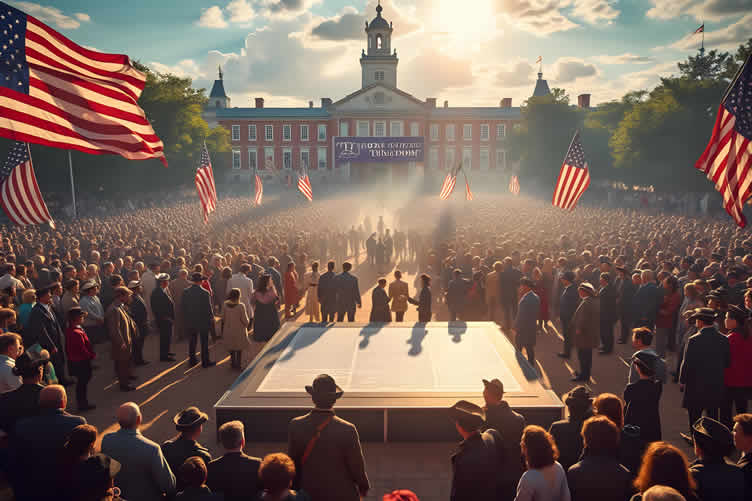
AI generated image by 123rf.com
[ view images: 2026 sesquicentennial celebration ]
[ youtube: Philadelphia plans 2026 celebrations ]
Key American Inventions (1976–2025)
Discover the most significant American inventions from 1976 to 2025, showcasing groundbreaking advancements in technology, digital innovation, and consumer products.
From the rise of personal computers and the internet to breakthroughs in renewable energy and artificial intelligence, these inventions have transformed industries and reshaped how we live, work, and connect with the world around us: sources
- 1976: Word Processing Software
- The Electric Pencil was created for the Altair computer, marking the beginning of digital word processing.
- 1976: Apple I Computer
- Steve Jobs and Steve Wozniak introduced the Apple I, pioneering the personal computer revolution.
- 1977: Apple II Computer
- The Apple II became one of the first highly successful mass-produced personal computers.
- 1980: Post-it Note
- 3M released the Post-it Note, invented by Spencer Silver and Art Fry (though the invention process began earlier, commercialization was in 1980).
- 1981: IBM Personal Computer (PC)
- The IBM PC set the standard for business and home computing.
- 1983: First PC-Compatible Mouse
- Microsoft introduced the first mouse for IBM-compatible PCs.
- 1984: Apple Macintosh
- The Macintosh popularized the graphical user interface and mouse for mainstream users.
- 1989: World Wide Web (Proposal)
- While the web itself was invented by Tim Berners-Lee in Europe, American companies and inventors were instrumental in its commercialization and popularization.
- 1990s: Internet Browser (Netscape Navigator)
- Netscape Navigator made the web accessible to the general public.
- 1994: Digital Camera (Consumer Market)
- The first consumer digital cameras became widely available in the U.S.
- 1995: DVD
- The DVD was introduced, revolutionizing home video and data storage.
- 1998: Google Search Engine
- Larry Page and Sergey Brin launched Google, transforming information retrieval.
- 2001: iPod
- Apple introduced the iPod, changing how people listen to and purchase music.
- 2004: Facebook
- Mark Zuckerberg launched Facebook, reshaping social media.
- 2007: iPhone
- Apple’s iPhone combined phone, internet, and multimedia in one device, launching the smartphone era.
- 2010: iPad
- Apple introduced the iPad, popularizing tablet computing.
- 2012: 3D Printing (Consumer Market)
- Affordable 3D printers became available to consumers, enabling at-home manufacturing.
- 2014: Amazon Echo (Alexa)
- Amazon introduced the Echo, bringing voice assistants into homes.
- 2015: CRISPR Gene Editing (U.S. Labs)
- American researchers advanced CRISPR gene-editing technology for medical and scientific applications.
- 2020s: mRNA Vaccines (COVID-19)
- U.S. companies (Pfizer-BioNTech, Moderna) developed mRNA vaccines, revolutionizing vaccine technology.
- 2020s: Artificial Intelligence (AI) Chatbots and Generative AI
- American companies led the development and deployment of advanced AI chatbots and generative AI tools.
- https://www.factmonster.com/math-science/inventions-discoveries/timeline-of-everyday-inventions
- https://www.popularmechanics.com/technology/g24668233/best-inventions/
- https://stacker.com/stories/retrospective/revolutionary-inventions-year-you-were-born
- https://time.com/3961680/iconic-american-inventions/
Year/Decade Invention/Innovation Key Figure/Company 1976 Word Processing Software Michael Shrayer (Electric Pencil) 1976 Apple I Computer Steve Jobs, Steve Wozniak 1977 Apple II Computer Apple 1980 Post-it Note Spencer Silver, Art Fry (3M) 1981 IBM Personal Computer IBM 1983 PC-Compatible Mouse Microsoft 1984 Apple Macintosh Apple 1990s Netscape Navigator Netscape 1994 Digital Camera (Consumer) Multiple 1995 DVD Multiple 1998 Google Search Engine Google 2001 iPod Apple 2004 Facebook Mark Zuckerberg 2007 iPhone Apple 2010 iPad Apple 2012 3D Printer (Consumer) Multiple 2014 Amazon Echo (Alexa) Amazon 2015 CRISPR Gene Editing (U.S.) Multiple U.S. researchers 2020s mRNA Vaccines Pfizer-BioNTech, Moderna 2020s AI Chatbots/Generative AI OpenAI, Google, others 
AI generated image by 123rf.com
[ youtube: Evolution of Apple ]
[ youtube: How Life Will Look Like In 2050 ]
-
Scroll up to directory … or scroll to next section of the July 4th tricentennial journey …
-
-
5th July 4th: Celebrating July 4th
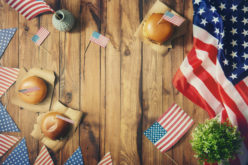
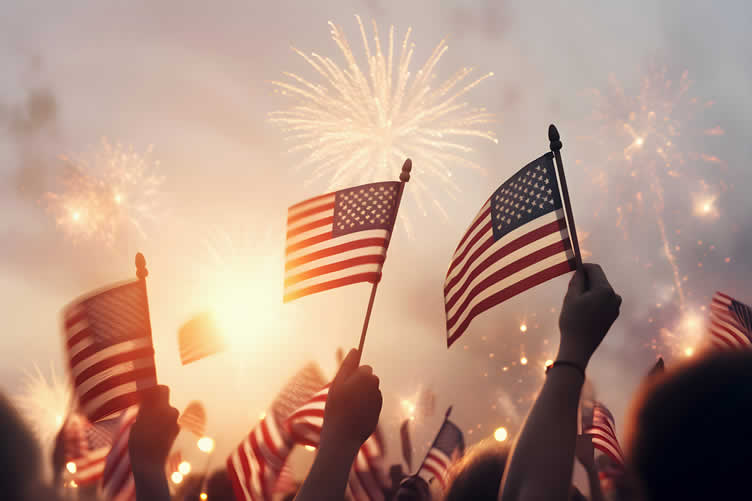
Transforming your home into a festive space is one of the most enjoyable ways to celebrate Independence Day. Incorporate the patriotic color palette of red, white, and blue through flags, banners, and string lights to create a spirited atmosphere.
Tables can be adorned with themed centerpieces featuring stars and stripes, while balloons and streamers add a fun touch to both indoor and outdoor spaces.
Planning events is another wonderful way to gather loved ones and commemorate the holiday. Host a backyard barbecue or picnic with classic American dishes such as burgers, hot dogs, and apple pie.
Engage guests with activities like lawn games, trivia about American history, or a fireworks-viewing party to end the evening in a spectacular way.
By bringing together thoughtful decorations and engaging events, you can create a memorable July 4th celebration that symbolizes national pride and joy.
copyright image by 123rf.com
-
Scroll up to directory … or scroll to conclusion …
-
-
Reflecting on the Evolution of July 4th
From its revolutionary beginnings in 1776, through centennial and bicentennial milestones, and now looking ahead to 2026, July 4th remains a powerful symbol of American identity.
Across the centuries, this holiday has served as a moment not only to celebrate freedom but to reflect on the nation’s growth and the shared values that bind its people together.
As the sesquicentennial approaches, it’s worth remembering how history has shaped this day and imagining how it will continue to unite and inspire future generations.
Independence Day is more than fireworks and parades; it’s a testament to a nation’s resilience, unity, and commitment to the pursuit of liberty and equality.
-
Quick scroll to more interior home and decor ideas …
-
ideas to view and compare from the photo above
book: July 4th historyJuly 4th glassesjuly 4th novelty shirts
- What comments can you share about
your July 4th celebrations and events?

addressing holiday events and other home improvement needs …

… grab this directory of ideas for future use



… remodeling decisions


Download this PDF for a concise summary of all you need to know about …?



SHARE IT ..! You might have someone in your social network who could find this informative post about "July 4th Tricentennial Journey" valuable. Feel free to share it on Facebook, X (formally Twitter), LinkedIn, or Pinterest!



Budgeting Worksheet For Costing Home Remodeling and Home Improvement Decisions
 File Type (excel)


… home remodeling – improvement

get the size dimensions for any home remodeling project …
… for functionality, aesthetics, and adhering to building codes



Download this PDF for a concise summary of all you need to know about …?

Calendar For:
Home Maintenance
File Type:
Find Interior Design Services Decorators Interior Designers Furniture Painting & Staining top-rated, pre-screened local contractors FREE: download contractor selection enter zip code – powered by HomeAdvisor ™
Quick Contractor Guides selecting negotiating working with inspecting

Cover image credit: July 4th tricentennial journey by 123rf.com
end of post … please share it!
 |
did you find this July 4th Tricentennial Journey analysis helpful? If so, please share the article with your friends and family! |
Nice pic idea? Leave us a quick comment below.
And please share this pic idea within your social networks.