Summary Outline –
A breathtaking pool doesn’t just elevate your backyard; it sets the tone for unforgettable gatherings, relaxation, and a space you’ll never want to leave.
Whether you’re building your dream home, renovating your outdoor space, or browsing for inspiration, the right design can turn any outdoor area into a personal haven.
From classic layouts to bold designs, here are seven incredible pool ideas to inspire your own residential oasis. Let’s dive into them!
- post content
- Design Tip 1: Infinity Edge Pools for Seamless Elegance
- Design Tip 2: Natural Lagoon Pools for a Tropical Vibe
- Design Tip 3: Geometric Pools with Sleek Modern Lines
- Design Tip 4: Freeform Pools for a Relaxed, Customizable Look
- Design Tip 5: Plunge Pools for Compact Outdoor Areas
- Design Tip 6: Lap Pools for Fitness and Functionality
- Design Tip 7: Rooftop Pools for Elevated Living

-
Quick scroll to first topic about stunning pool designs …

first “stunning pool designs” idea

copyright image by 123rf.com
Design Tip 1: Infinity Edge Pools for Seamless Elegance
Notes:
-
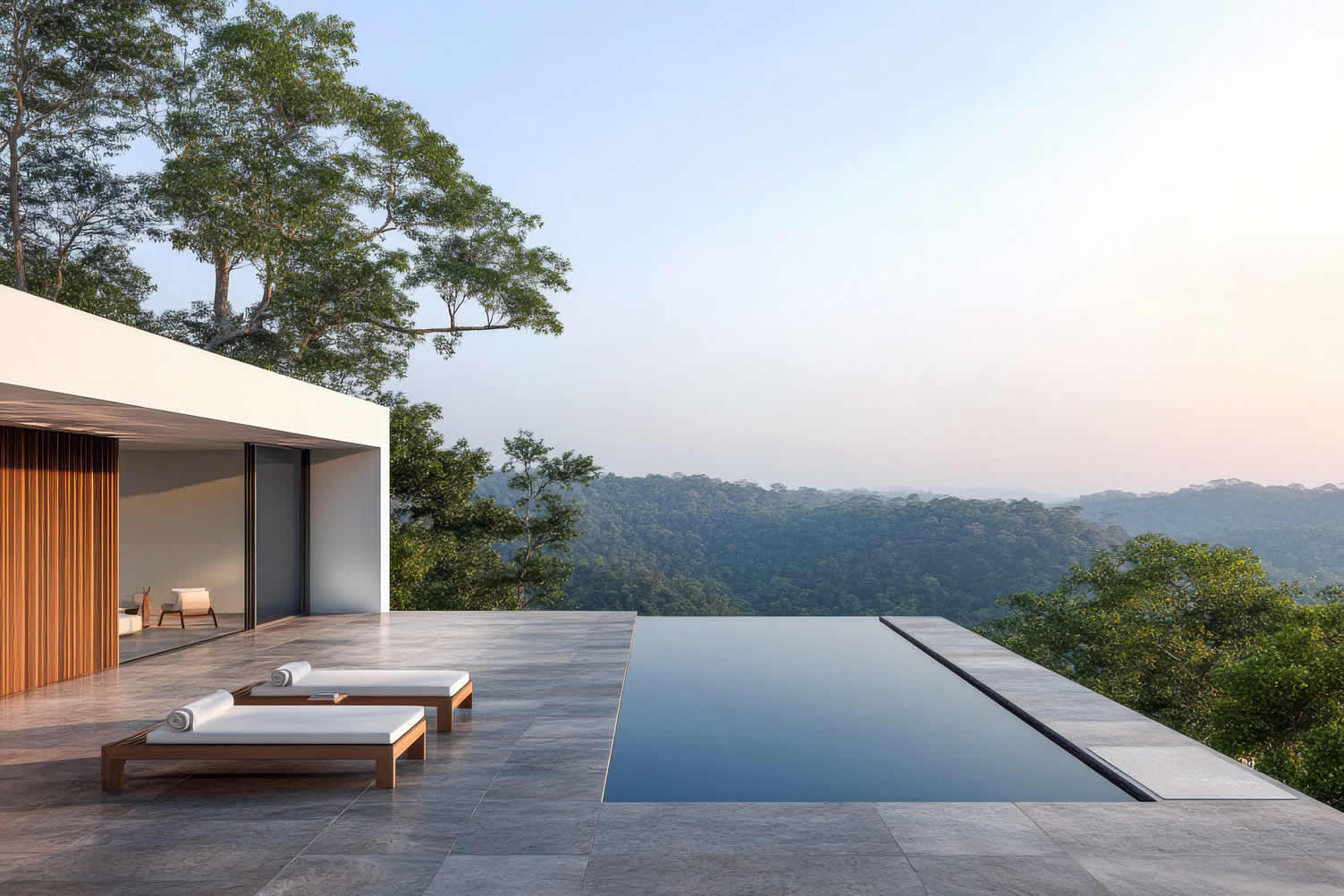
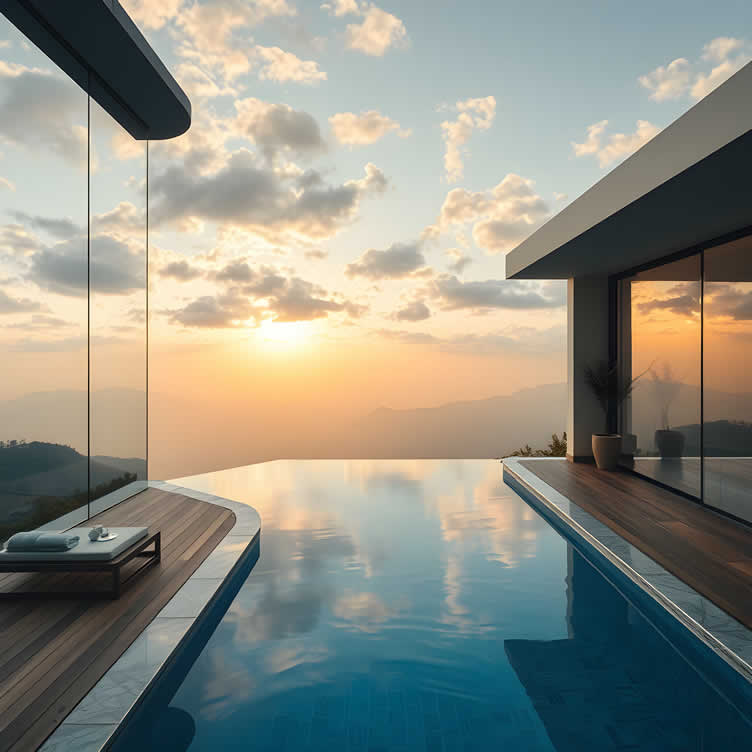
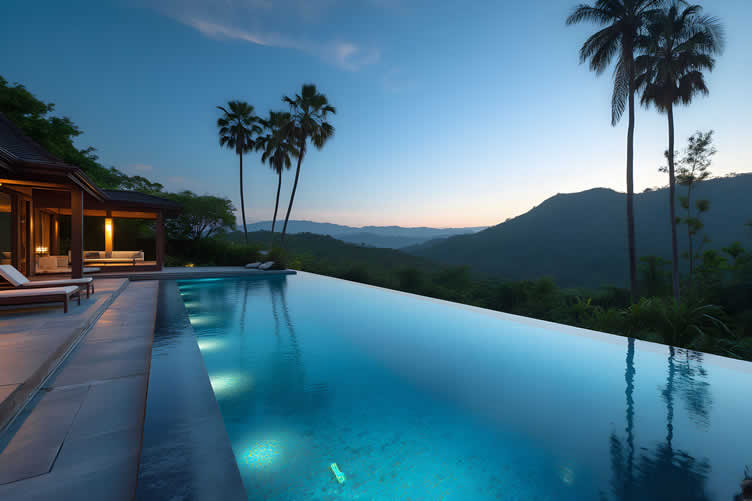
An infinity edge pool, also known as a vanishing edge pool, creates a smooth and seamless flow of water that visually blends with the surrounding landscape. This timeless design is ideal for homeowners with scenic views, whether it’s a lush garden, rolling hills, or a city skyline.
The water appears to overflow on one edge, giving a luxurious and tranquil effect. Best paired with glass railings or minimalistic decor, an infinity pool can provide a statement feature for any modern backyard.
For homeowners looking for a sleek pool design, an infinity edge could be the ultimate showcase of elegance and sophistication.
-
Quick scroll to “some infinity pool” side notes …
-
-
1st: How Infinity Swimming Pools Work
Infinity swimming pools, also known as vanishing edge pools, create a breathtaking visual effect where the water appears to blend seamlessly with the horizon or surrounding landscape.
This optical illusion is achieved through innovative design and engineering, making these pools not only a luxurious addition to a home but also a masterpiece of functionality and aesthetics.
Understanding how infinity pools work can help homeowners decide whether they are a feasible and worthwhile investment for their property.
-
The Design and Mechanics Behind an Infinity Pool
At the heart of an infinity pool’s design is its overflow edge, which is slightly lower than the rest of the pool’s perimeter. Water flows over this edge into a catch basin located below. From the catch basin, water is collected and pumped back into the main pool, creating a continuous circulation system.
This edge design is critical to achieving the seamless effect that infinity pools are known for. Additionally, the alignment of the overflow edge with the surrounding views—such as a sprawling skyline, ocean, or forest—is essential for maximizing the visual impact.
-
Site Requirements for an Infinity Swimming Pool
Building an infinity pool requires careful planning and specific conditions to ensure both functionality and durability. Below are the key factors that homeowners must consider:
-
Landscaping and Terrain
Infinity pools are best suited for properties with a natural slope or elevated terrain. The drop-off height is essential to accentuate the vanishing edge effect.
Flat terrains may require extensive excavation and structural work, which can significantly increase construction costs. Consulting a professional landscaper or structural engineer to assess the feasibility of your property is strongly advised.
-
Structural Integrity
Because water flows over the edge, the construction of an infinity pool places additional structural demands on your property.
Reinforced foundations are often necessary to support the weight of the pool, especially in elevated setups. Proper waterproofing and materials also prevent leaks and ensure long-term structural integrity.
-
Cost and Budget
Infinity pools often rank among the most expensive pool types to install due to their complex design and engineering requirements.
Costs not only include basic pool construction but also expenses for the catch basin system, pumps, filtration, and ongoing maintenance. Homeowners should budget for future operational costs like water usage and electricity for the circulation system.
-
Permits and Regulations
Local building codes and regulations may dictate what is permissible in terms of pool size, height, and positioning.
Often, infinity pools require specific permits, as they can impact neighboring properties or require adjustments due to slope stability. Ensuring compliance with these regulations ahead of construction can save time and avoid costly fines.
-
Water Management and Maintenance
Continuous water flow over the vanishing edge requires efficient water management systems to minimize waste and optimize circulation. Homeowners need a reliable pump and filtration system to handle the constant water movement while keeping the pool clean.
Maintenance services may also need to address potential issues like water evaporation or debris accumulation in the catch basin.
-
-
Is an Infinity Pool Right for Your Backyard?
Infinity pools are an iconic symbol of elegance and luxury, offering unparalleled visual appeal and enhancing property value. However, they require significant upfront costs, careful property assessment, and ongoing maintenance to operate effectively.
To determine if this type of pool is right for your backyard, consult experienced contractors and experts in pool construction. Always prioritize quality and durability in materials, and factor in the unique landscape of your property to achieve the best results.
AI generated image by 123rf.com
[ view images: infinity pool designs ]
[ pinterest: home infinity pool ]

-
-
2nd: Best Size Requirements for an Infinity Pool
Infinity swimming pools, renowned for their elegant visual appeal, offer a seamless blend of exquisite design and functional space. When considering the perfect size for your infinity pool, the goal is to achieve a harmonious balance between aesthetic allure, practicality, and space limitations.
This guide outlines key considerations for determining the best size requirements, along with insights into whether an infinity pool can be implemented in a small backyard.
-
Ideal Dimensions for an Infinity Swimming Pool
The size of an infinity pool will largely depend on the intended usage and available space. For general guidance, a standard infinity pool typically measures between 12 feet (3.7 meters) to 18 feet (5.5 meters) in width and 24 feet (7.3 meters) to 40 feet (12 meters) in length. A pool at this size can accommodate recreational swimming and add visual sophistication to the property.
For lap swimmers or those prioritizing exercise, increasing the length to at least 40 feet is recommended to ensure an uninterrupted swimming experience. On the other hand, homeowners with aesthetic objectives might prefer a smaller design, focusing more on the view provided by the infinity edge.
-
Can an Infinity Pool Work in a Small Backyard?
Yes, infinity pools are highly adaptable and can be constructed in small backyards with the right planning and design. Compact infinity pools, often referred to as plunge pools, can be as small as 10 feet by 12 feet. These options still deliver the iconic vanishing edge effect while using minimal space.
Proper landscaping and the inclusion of surrounding features, such as decks or greenery, can enhance the visual impact of a small infinity pool. Additionally, professional consultation with experienced pool designers is crucial in navigating engineering challenges that might arise with smaller layouts or uneven terrain.
AI generated image by 123rf.com
[ view diagram: how does an infinity pool work ]
[ youtube: INFINITY POOLS DESIGN IDEAS ]
-
-
Scroll up to directory … or scroll to next section about stunning pool designs …


second “photo remodeling” idea
AI generated image by 123rf.com
Design Tip 2: Natural Lagoon Pools for a Tropical Vibe
Notes:
-
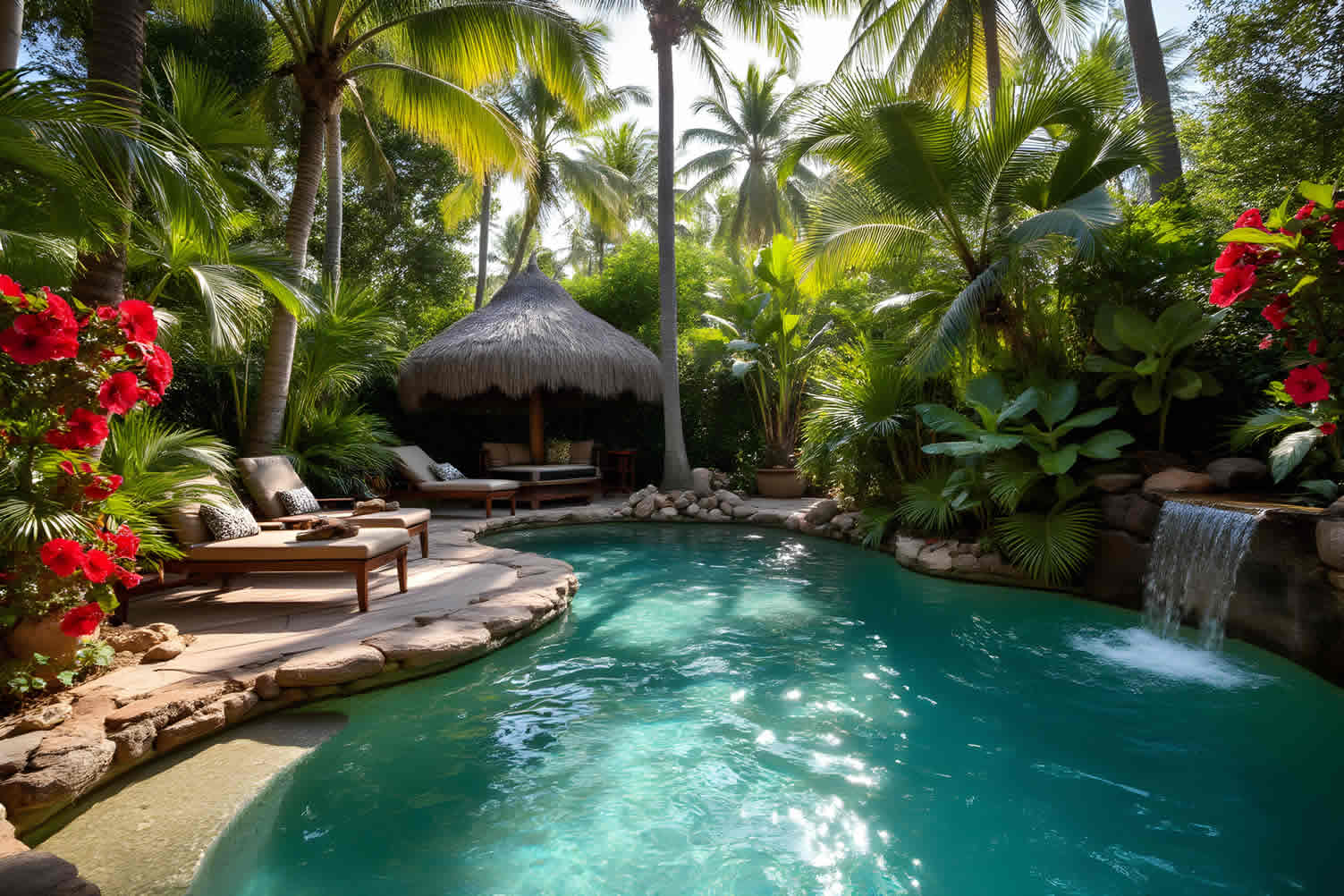
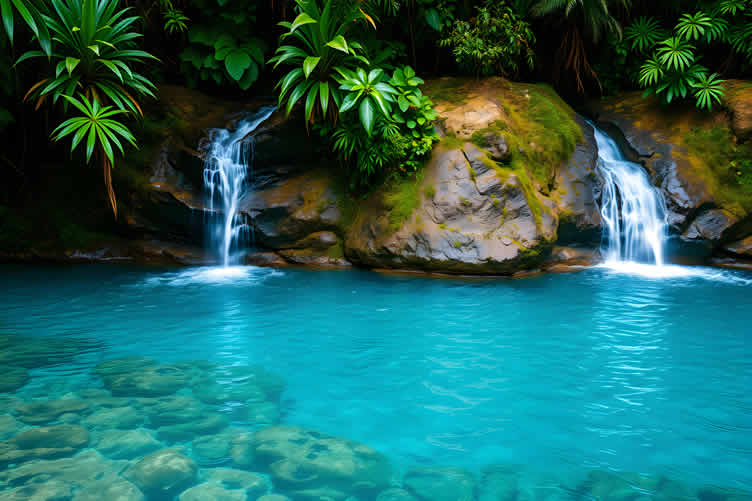
If your goal is to bring the tropics to your backyard, a lagoon-style pool might be perfect for you. These pools blend irregular shapes, natural stones, and lush greenery to mimic the charm of natural water features found in exotic destinations.
Waterfalls, boulders, and lighting elements can further elevate the design, making it feel like a private retreat. Lagoon pools cater to those who want a design that’s just as much about aesthetics as it is about function.
It invites relaxation, bringing the tranquil sounds and sights of nature to the heart of your property.
-
Quick scroll to “natural lagoon pool” side notes …
-
-
1st: Build Requirements for a Natural Lagoon Pool
Designing and constructing a natural lagoon swimming pool requires careful planning to ensure safety, functionality, and aesthetic appeal while maintaining eco-friendly principles.
This section outlines the essential build requirements for such a pool, complete with detailed considerations to help ensure a successful project. Each aspect, from structural elements to filtration systems, serves as a vital component of a sustainable and visually stunning lagoon-style pool.
-
Pool Design and Structural Stability
Structural stability is paramount for any natural lagoon pool. The foundation and walls must withstand environmental factors such as soil conditions and groundwater levels.
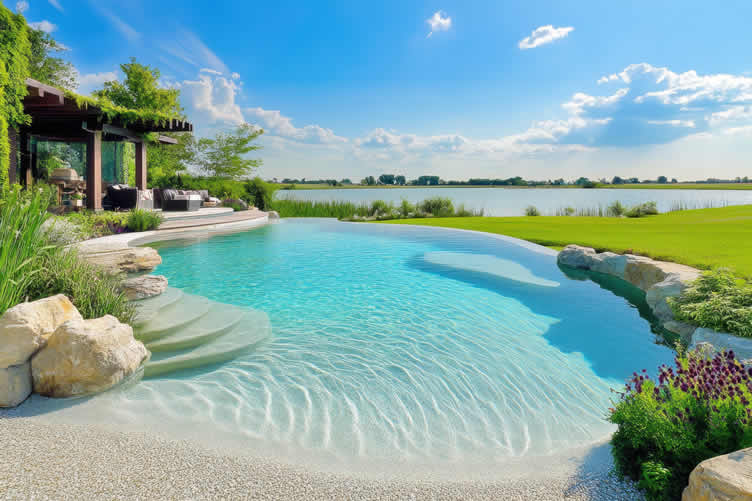
Using reinforced concrete or natural stone ensures durability while blending with the organic aesthetics of the lagoon. Additionally, design features like gradual sloping edges should be incorporated to provide easy entry points and mimic the contours of a natural body of water.
-
Natural Water Filtration System
To maintain clean and healthy water without the use of chemicals, a natural lagoon pool relies on bio-filtration systems. This can include aquatic plants, sand, and gravel beds combined with mechanical skimmers and circulation pumps.
A biological filtration zone, often designed to work as a regeneration area with self-cleansing properties, is crucial for keeping the water clean while supporting ecological balance.
-
Plant Integration and Landscaping
The use of native or lagoon-appropriate plants is essential for both filtration and aesthetic purposes. Aquatic plants like reeds, lilies, and grasses improve water quality by naturally removing impurities while bolstering the pool’s tropical look.
Ensure plants are selected based on regional climate and compatibility with the surrounding environment to achieve a harmonious and low-maintenance landscape.
-
Sustainable Water Management
Efficient water management is a critical consideration during the build process. Installing water recirculation systems ensures minimal water wastage while maintaining adequate oxygen levels.
Rainwater harvesting systems and permeable pool designs that allow natural drainage are excellent ways to reduce water dependency and enhance sustainability.
-
Safety Measures and Accessibility
Safety is an integral part of any lagoon pool design. Incorporating non-slip surfaces, clear water depth markers, and secure boundaries helps prevent accidents, especially for families with children.
Designing for accessibility with ramps or shallow zones accommodates swimmers of all abilities, making the pool truly inclusive and user-friendly.
By adhering to these build requirements, homeowners can create a natural lagoon swimming pool that is not only visually stunning but also safe, sustainable, and environmentally responsible.
Collaboration with experienced professionals, including architects, builders, and ecological consultants, is highly recommended to tailor the design and construction to your specific site conditions and personal preferences.
- Ulrich, H. (2013). Natural Swimming Pools – Sustainable and Chemical-Free. Green Living Press.
- Kraus, T. (2018). Landscaping for Natural Pools. EcoDesign Publishing.
- Fromm, I. (2017). Sustainable Pool Ecosystems. Natural Horizons.
- Green Environmental Research Co. (2015). Water Conservation in Recreational Spaces.
- American Aquatic Safety Standards. (2020). Residential Pool Safety Guidelines.
AI generated image by 123rf.com
[ view images: natural lagoon pool designs ]
[ pinterest: home natural lagoon pool ]
-
-
2nd: Landscaping Tips for a Natural Lagoon
Proper landscaping plays a critical role in enhancing the aesthetic and functional appeal of a natural lagoon swimming pool. Thoughtful design integrates the pool seamlessly into the surrounding environment, creating a tranquil space that mimics the beauty of nature while prioritizing sustainability and low maintenance.
Below are key landscaping tips to consider for your lagoon pool project.
-
Choose Native and Drought-Resistant Plants
Using native plants in your landscaping contributes to a natural look and reduces water usage and maintenance needs. Native species are inherently adapted to the local climate, requiring less irrigation and fertilizers while attracting beneficial wildlife like birds and pollinators.
Complement these with drought-resistant plants to maintain a lush appearance during dry periods. Hardy grasses, succulents, and shrubs can help create an eco-friendly oasis around the pool.
-
Incorporate Natural Stone Elements
Natural stones such as limestone, sandstone, or river rocks can define pathways, edging, or borders around the lagoon pool while blending into the environment. These materials are durable, non-toxic, and provide a timeless aesthetic.
Incorporating a mix of textures and sizes of stones creates a harmonious balance, evoking a sense of being in a natural water feature. If possible, source locally quarried stones to reduce environmental impact.
-
Add Water Features for Visual Interest
Integrating water features into the design of a lagoon pool enhances its visual appeal and creates a soothing ambiance. Features such as waterfalls, bubbling rocks, or natural-looking streams can mimic the tranquility of a natural oasis.
The sound of cascading water not only adds to the sensory experience but also helps mask unwanted noise, fostering a more peaceful environment. For an eco-friendly approach, consider using recirculating water systems and energy-efficient pumps to reduce water and energy consumption.
-
Design a Graded Planting Scheme for Privacy
Privacy can be achieved with a carefully planned grading of plant heights. Taller trees or bushes can be planted on the outer perimeter, with medium-sized shrubs and low ground covers closer to the water.
This layered approach not only shields the pool area from prying eyes but also accentuates the lagoon’s natural ambiance. Bamboo and other fast-growing, non-invasive plants are practical options for screening.
-
Use Mulch and Ground Covers for Soil Stability
To prevent soil erosion and maintain a polished look, employ organic mulch or dense ground covers around the pool area. Mulch improves soil health, retains moisture, and discourages weed growth, while ground covers like creeping thyme or dichondra provide visual continuity.
Each option minimizes the need for chemical treatments, ensuring that the ecosystem around the lagoon remains healthy and sustainable.
-
Install Low-Impact Lighting for Ambiance
Low-impact lighting, such as solar-powered or LED fixtures, can enhance evening ambiance without harming the environment. Strategically place lights along pathways, under trees, and around key features to highlight the pool’s design while maintaining energy efficiency.
Ensure that light intensity is kept low to avoid disrupting local wildlife and to preserve the serene, natural atmosphere of your lagoon pool.
-
Preserve Existing Trees and Vegetation
When planning the landscaping, consider preserving existing trees and foliage where feasible. Mature trees provide shade, reduce the surrounding temperature, and anchor the lagoon into its environment.
Retained vegetation also helps in reducing runoff and preventing soil erosion, making your project eco-conscious from the start.
- National Wildlife Federation. (2018). Gardening for Wildlife Guide.
- Sustainable Landscaping Professionals Network. (2021). Stone Hardscaping for Sustainable Gardens.
- American Landscape Institute. (2019). Privacy Landscaping Techniques.
- Environmental Gardening Association. (2022). Sustainable Soil Care Practices.
- Eco-Design Lighting Solutions. (2023). Energy-Efficient Outdoor Lighting Options.
- Green Infrastructure Alliance. (2020). The Value of Trees in Sustainable Development Projects.
copyright image by 123rf.com
[ view diagram: designing natural lagoon swimming pool ]
[ youtube: Siesta Key Rock Waterfall Pool ]
-
-
Scroll up to directory … or scroll to next section about stunning pool designs …

addressing stunning pool designs and other home improvement needs …

… grab this directory of ideas for future use



May We Suggest Other Photo Remodeling Ideas About
“Exterior Home Needs …” (new win)

third “photo remodeling” idea
AI generated image by 123rf.com
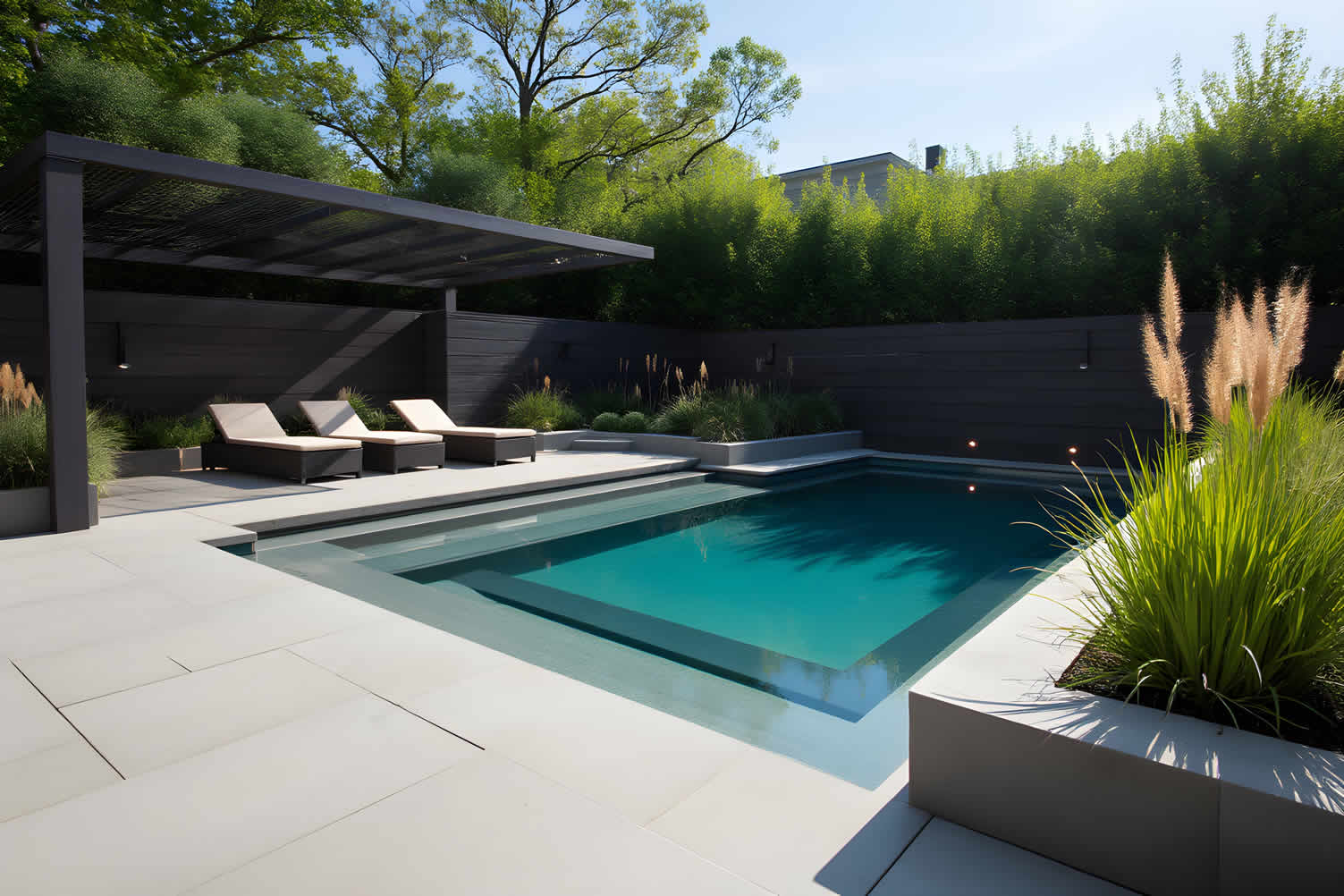
Design Tip 3: Geometric Pools with Sleek Modern Lines
Notes:
-
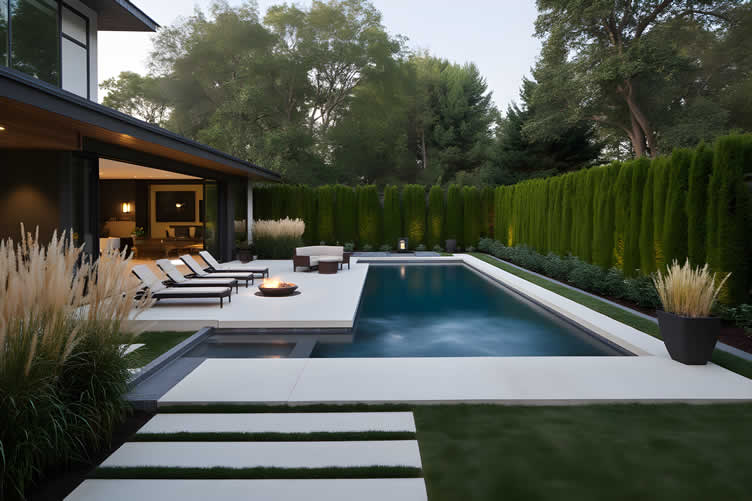
For fans of contemporary design, geometric pools offer a clean and minimalistic aesthetic. With sharp, defined lines, these pools perfectly complement sleek outdoor furniture, linear decking, or minimalist landscaping.
Geometric pools work wonderfully in smaller backyards as their structured layout maximizes usable space. Features like submerged seating or integrated spas can be incorporated to enhance functionality without compromising on style.
This residential new pool design speaks directly to homeowners who appreciate modern, organized spaces.
-
Quick scroll to “geometric pool” side notes …
-
-
1st: About Geometric Swimming Pools
Geometric swimming pools are rising in popularity due to their eye-catching designs and ability to blend functionality with modern aesthetics.
Characterized by clean lines, defined shapes, and symmetry, these pools create a contemporary and minimalist look that complements modern architectural styles.
Whether you’re designing a leisure retreat or looking for a pool that enhances your property’s outdoor space, geometric pools provide a sophisticated solution. Below, we explore key elements to consider, including the shapes, dimensions, and landscaping strategies that contribute to an elegant and modern pool design.
-
Shapes of Geometric Swimming Pools
At the core of a geometric swimming pool is its shape, which typically includes straight edges and angular forms such as rectangles, squares, or even intricate patterns like L-shapes.
These structured and balanced designs not only offer visual appeal but also provide ample functionality for activities like lap swimming and water games.
Rectangular pools, in particular, are a favorite for their versatility and ability to naturally draw attention to clean architectural symmetry.
The geometric design can extend to unique takes, such as adding sharp corners or contrasting straight lines with minor curves, allowing customization while keeping the sleek theme intact.
-
Pool Size for Geometric Design
The size of the pool plays a critical role in achieving the desired geometric look. For a pool to maintain its aesthetic impact, its dimensions should be proportional to the available outdoor space.
For example, a rectangular geometric pool might ideally measure at least 12 feet wide and 24 feet long, which provides enough space for functional use while maintaining elegance.
Larger properties can accommodate extended dimensions, such as 20 feet by 40 feet, allowing for additional features like step-down entries or built-in tanning ledges. Importantly, the size should harmonize with the surrounding area to ensure the pool remains a focal point without overwhelming the space.
-
Landscaping for a Sleek, Modern Look
Landscaping around a geometric swimming pool ties the entire setting together, emphasizing its modern aesthetic. To create a sleek look, opt for minimalistic landscaping that complements the pool’s clean lines.
Incorporate elements like polished concrete, large-format pavers, or elegant decking materials such as natural wood or composite options.
Surround the pool with low-maintenance greenery, such as ornamental grasses, succulents, or neatly trimmed hedges to provide contrast without diverting attention from the pool.
At night, consider adding modern lighting features, such as recessed LED lights or linear strips along pathways, to enhance both safety and ambiance.
Thoughtful landscaping doesn’t just enhance the pool’s elegance—it also integrates it seamlessly into the broader outdoor design while maximizing usability. Focus on creating a balance between open spaces, greenery, and seating areas for a contemporary yet inviting atmosphere.
By incorporating these elements, your geometric swimming pool can become the centerpiece of a modern outdoor environment, offering a unique combination of style, practicality, and serenity.
For further inspiration, consult professional pool designers or landscape architects to tailor the design to your specific preferences and property layout.
AI generated image by 123rf.com
[ view images: geometric pool designs ]
[ pinterest: home geometric pool ]
-
-
2nd: Understand Installation Requirements for a Pool
Installing a swimming pool in your backyard is an exciting project, but it requires careful planning and adherence to specific requirements to ensure safety, functionality, and long-term durability.
Whether you’re considering an in-ground or above-ground pool, understanding the general installation criteria will help you create a safe and enjoyable swimming environment for years to come.
Below are the key factors to consider and guidelines to follow, broken into segments to provide clarity and actionable insights.
-
Site Evaluation and Permits
Before installation begins, it’s essential to evaluate your backyard thoroughly. This includes assessing the soil type, topography, and drainage capabilities of the site. A professional site survey can help identify any potential risks, such as unstable ground or flood-prone areas, which may complicate the installation process.
Additionally, obtaining all necessary permits from your local government or homeowner’s association is a critical step. Regulations vary by region, but typical requirements include compliance with zoning laws, pool fencing codes, and electrical safety standards.
Check with your local building department for specifics to avoid costly delays or fines.
-
Space and Layout Planning
The layout of the pool area is crucial for ensuring adequate space for swimming, lounging, and maintaining safety zones. Ideally, the area should be flat and have sufficient clearance from trees, structures, and underground utilities like gas lines or septic tanks.
Remember to account for space for pool accessories like decks, pumps, and filtration systems. Proper planning will prevent future issues and make ongoing pool maintenance more manageable.
-
Foundation Preparation
A stable foundation is integral to a successful pool installation. For in-ground pools, excavation will be required to create the space for the pool shell, and the soil must be compacted and graded to prevent settling over time.
For above-ground pools, ensure that the surface is level and free of debris or sharp objects. Installing a base material, such as sand or a foam pad, under the pool can prevent liner damage and extend the pool’s lifespan.
-
Electrical and Plumbing Systems
Swimming pools require reliable electrical and plumbing systems to function effectively. A licensed electrician should install all components related to lighting, pumps, and heaters, complying with local electrical codes and using Ground Fault Circuit Interrupters (GFCI) for added safety.
For plumbing, ensure proper placement of pipes and fittings to facilitate the pool’s filtration system and water circulation. Using durable, high-quality materials is critical to minimizing leaks and ensuring long-term reliability.
-
Safety Features and Compliance
Safety should be paramount when installing a swimming pool. Features like fencing, self-latching gates, and pool covers are often mandatory and help reduce accidents, particularly for households with children.
Additionally, installing safety signage, anti-slip surfaces, and pool alarms can further mitigate risks. Always stay updated on local and federal safety regulations, which can guide your pool’s safety setup, as outlined by organizations like the Consumer Product Safety Commission (CPSC) ([www.cpsc.gov](https://www.cpsc.gov)).
-
Environmental Considerations
It’s important to consider how your pool installation affects the environment. Proper drainage systems should be installed to prevent pool water from flooding surrounding areas or contaminating local ground sources.
Sustainable options like energy-efficient pumps and solar-powered heaters can reduce your pool’s carbon footprint. Additionally, using eco-friendly pool chemicals can contribute to the health of both your family and the environment.
By following these key installation requirements, you can create a swimming pool that is not only safe and visually appealing but also fully compliant with legal and environmental standards. Always consult with licensed professionals throughout the process to ensure that every detail is addressed properly.
copyright image by 123rf.com
[ view diagram: installing swimming pool ]
[ youtube: Know Before Building A Pool ]
-
-
Scroll up to directory … or scroll to next section about stunning pool designs …
SHARE IT ..! You might have someone in your social network who could find this informative post about stunning pool designs valuable. Feel free to share it on Facebook, X (formally Twitter), LinkedIn, or Pinterest!


… for any stunning pool designs you would like to discuss

fourth “photo remodeling” idea
AI generated image by 123rf.com
Design Tip 4: Freeform Pools for a Relaxed, Customizable Look
Notes:
-
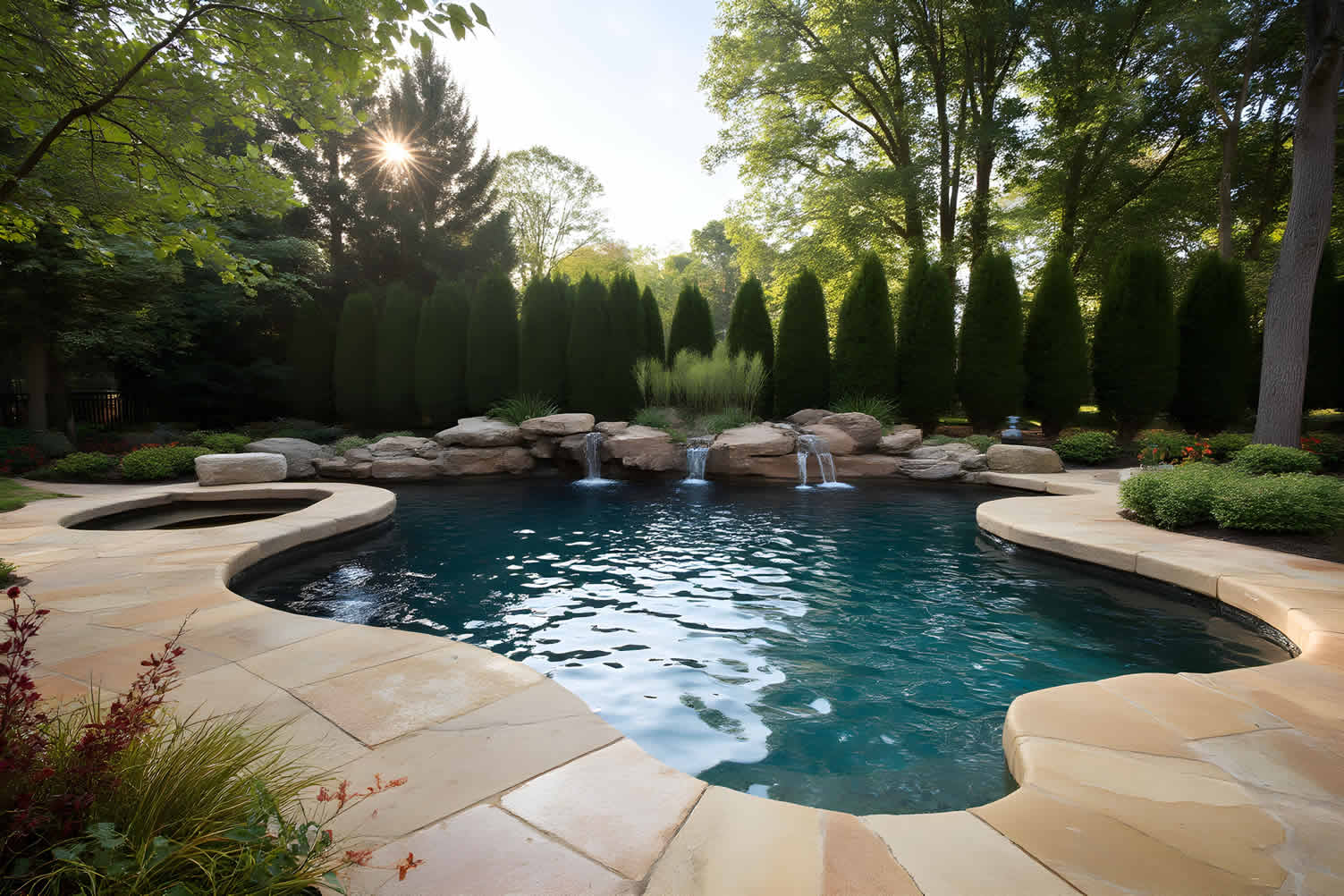
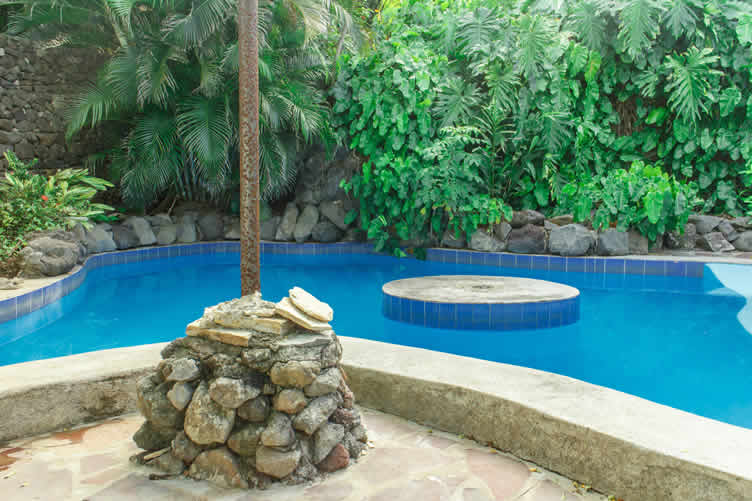
Freeform pools are designed to follow the natural flow of your backyard, seamlessly adapting to your space. They are often irregularly shaped and can be customized with features like grottos, beach entries, or shallow sun shelves.
This versatile option is perfect for families or homeowners who want a pool that reflects their unique creativity.
Adding elements like surrounding rock features or planting beds can amplify its natural ambiance, making it a favorite for entertainers or those striving for a more casual backyard vibe.
-
Quick scroll to “freeform pool” side notes …
-
-
1st: How to Incorporate Freeform Pools
Freeform pools are a timeless choice for creating a serene, natural atmosphere in any outdoor space. Unlike traditional rectangular or geometric pool designs, freeform pools feature flowing, irregular shapes that mimic the contours of nature.
This design approach delivers a highly adaptable solution, blending effortlessly with the surrounding landscape while offering endless customization options to match individual preferences.
Whether you’re aiming to emulate a tropical oasis, an organic woodland retreat, or a sleek, modern aesthetic, freeform pools provide a customizable and versatile foundation for creativity and relaxation.
Below are the key aspects to consider when incorporating a freeform pool into your landscape.
-
Adapting to Your Environment
The beauty of freeform pools lies in their ability to conform to various outdoor settings. Start by assessing your landscape’s natural features—such as slopes, trees, or rock formations—and design the pool to harmonize with these elements.
For example, if your yard includes uneven terrain or prominent landscaping features, a freeform pool can be shaped to follow these contours, minimizing excavation costs and preserving the natural environment.
-
Choosing the Right Materials and Finish
Materials play a significant role in achieving the desired look for your freeform pool. Consider natural stone, textured tiles, or pebble-based finishes to create a cohesive, organic atmosphere. These materials not only enhance the aesthetic appeal but also ensure long-term durability against wear and tear.
A concrete shell is often the go-to choice for freeform designs due to its flexibility in accommodating any shape, but consult with a trusted pool contractor to explore what’s best for your specific vision.
-
Enhancing the Look with Landscaping
To elevate the freeform pool experience, incorporate landscaping elements that reinforce the theme of your design. For instance, lush greenery and palm trees can create a tropical paradise, while desert plants and boulders may lend themselves to a minimalist or natural desert aesthetic.
Adding waterfalls or integrated lighting can further enhance the relaxing ambiance and serve as a focal point during evening hours.
-
Prioritizing Functionality
While freeform pools excel in their visual appeal, functionality should remain a priority. Ensure the pool’s layout includes sufficient space for swimming, lounging, and your other intended activities. For families, incorporating areas with varying depths can cater to children and adults alike.
Additionally, thoughtful placement of features like steps, seating ledges, or even an adjacent spa can help create a design that balances recreational use with aesthetic charm.
-
Consulting an Expert for a Custom Design
Freeform pools are highly customizable, but achieving a cohesive look that suits your needs and property often requires the expertise of a professional. Pool designers and builders specialize in drawing out creative possibilities while adhering to structural and zoning requirements.
Look for licensed contractors with proven experience in freeform pool design, and don’t hesitate to request a portfolio of past projects for inspiration.
-
Eco-friendly Considerations
Finally, sustainable design practices can further enhance the appeal of your freeform pool. By incorporating energy-efficient pump systems, LED lighting, or even a solar-powered heating option, you can minimize the environmental impact of your pool.
Additionally, including a natural filtration system or planting native vegetation around the pool can reduce chemical use while supporting local biodiversity.
The advice and recommendations provided here are grounded in industry best practices and insights from experienced landscaping and pool design professionals. For more information, consult resources like the Association of Pool & Spa Professionals (APSP) or other reputable organizations to ensure trusted guidance tailored to your region and project.
AI generated image by 123rf.com
[ view images: freeform pool designs ]
[ pinterest: home freeform pool ]
-
-
2nd: Types of Swimming Pool Accessories
When installing a swimming pool in your backyard, the right accessories can elevate the overall experience, ensuring safety, comfort, and enjoyment. Choosing appropriate pool accessories caters to both functional and aesthetic purposes while helping you maintain a clean and efficient swimming environment.
Below, we’ve categorized key accessories to consider, so you can create an optimal poolside experience tailored to your family’s needs.
-
Pool Covers
Pool covers play a crucial role in protecting your pool from debris, maintaining water temperature, and enhancing safety, especially for homes with children or pets.
There are several types of pool covers available, including solar covers, which help retain heat, and safety covers, which provide a secure barrier over the pool’s surface.
Investing in a quality pool cover not only reduces maintenance time but also lowers heating costs. Ensure you choose a cover that fits your climate and pool size for maximum effectiveness.
-
Pool Cleaning Equipment
Efficient pool maintenance requires essential cleaning tools such as skimmers, brushes, and vacuum systems. Automated pool cleaners, including robotic, suction-side, and pressure-side models, simplify the chore of removing dirt, algae, and debris.
Additionally, water testing kits are indispensable for monitoring chemical balance and ensuring the water remains safe and clean for swimmers. Proper cleaning equipment is a long-term investment toward the health and longevity of your pool.
-
Pool Safety Features
Safety should be a top priority for any pool owner. Accessories such as pool fences, gates with self-closing hinges, and alarm systems help prevent accidents and provide peace of mind.
For added safety, consider slip-resistant pool decks or handrails for easy entry and exit. These measures are particularly important for households with young children, seniors, or anyone with mobility challenges. Always adhere to local safety regulations when installing these features.
-
Pool Lighting
Pool lighting not only adds ambiance to your outdoor space but also enhances evening visibility and safety. LED underwater lights are energy-efficient and durable, while floating solar lights add a decorative element.
Additionally, installing landscape lighting around the pool creates a cohesive design that encourages nighttime use. Select lighting with high waterproof ratings to ensure long-lasting functionality.
-
Pool Heating Systems
For those who want to extend their swimming season, pool heating systems are vital. Options range from energy-efficient solar heaters to electric or gas-powered heat pumps. Each system has its pros and cons, depending on local climate and energy costs.
Solar heaters are environmentally friendly and cost-effective in sunny regions, whereas gas heaters offer consistent results in colder climates. Consult a professional to identify the best heating solution for your pool.
-
Pool Furniture and Shade Structures
Creating a comfortable poolside area is just as important as the pool itself. Invest in durable, weather-resistant furniture such as lounge chairs, dining sets, and umbrellas.
Shade structures like pergolas, awnings, and retractable canopies provide relief from the sun while enhancing the overall design of your outdoor space. These additions create a relaxing retreat for hosting guests or enjoying quiet leisure time.
-
Pool Entertainment Features
For those looking to create a resort-like atmosphere, consider entertainment-focused accessories like waterfalls, fountains, or poolside speakers.
Floating water toys and games can also add hours of fun for children and adults alike. These features can be customized to your preferences and are ideal for those who enjoy hosting pool parties or family gatherings.
- Association of Pool & Spa Professionals (APSP): Guidelines on Pool Accessories and Safety Features
- U.S. Consumer Product Safety Commission (CPSC): Residential Pool Safety Standards
- Energy.gov: Overview of Pool Heating Options
copyright image by 123rf.com
-
-
Scroll up to directory … or scroll to next section about stunning pool designs …

plan the specifications you need for making …

… key home improvement and remodeling decisions


fifth “photo remodeling” idea
AI generated image by 123rf.com
Design Tip 5: Plunge Pools for Compact Outdoor Areas
Notes:
-
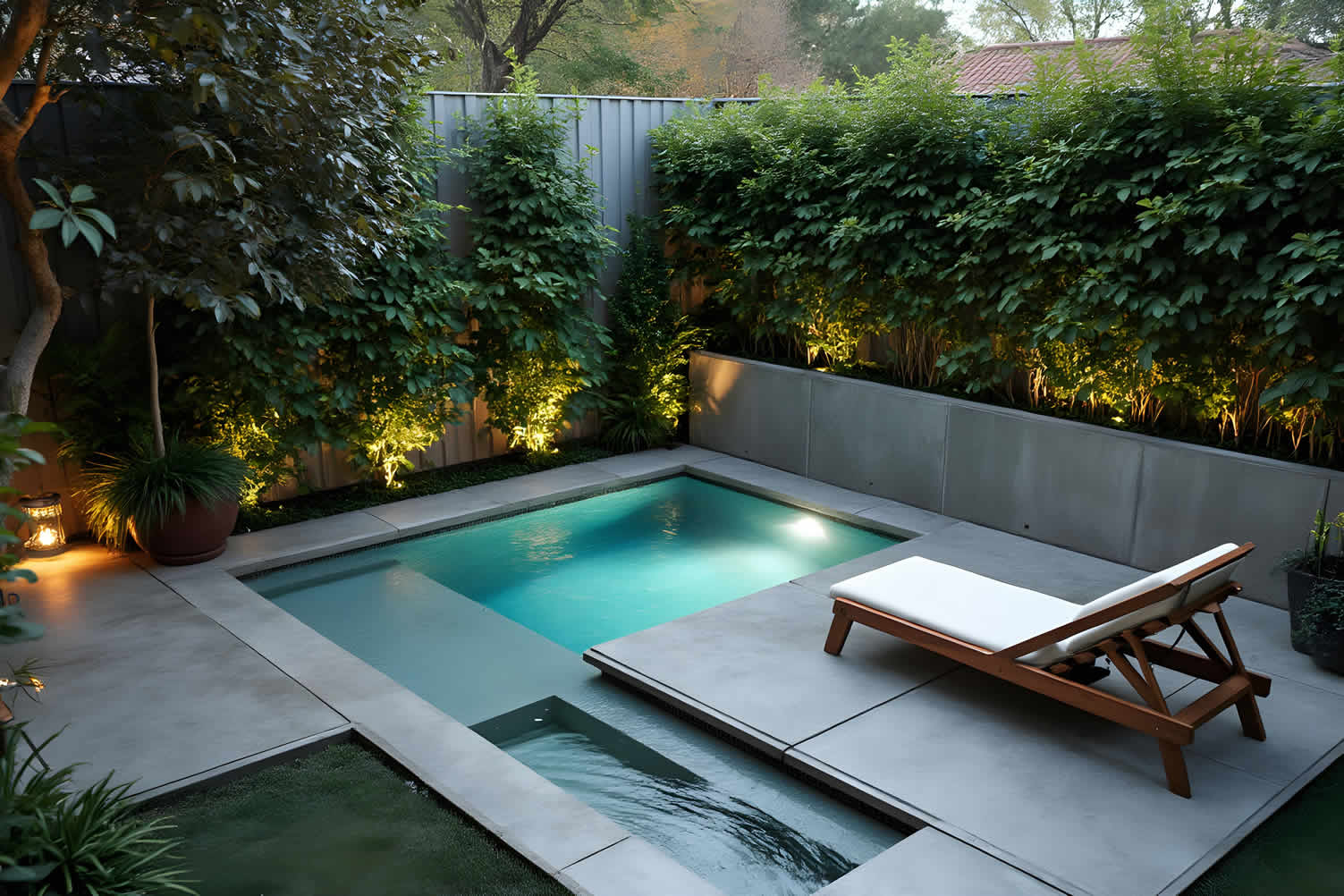
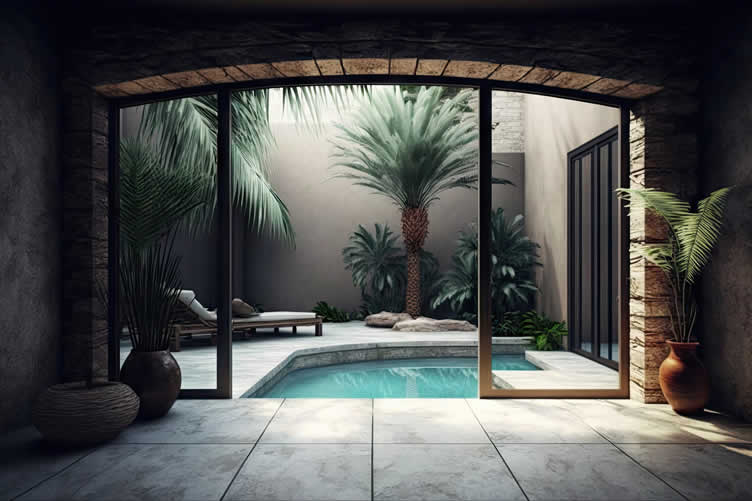
Not every home comes with sprawling outdoor space, but a lack of square footage doesn’t mean you have to forgo a backyard pool. Plunge pools are compact, making them perfect for smaller urban spaces while still providing the perfect opportunity for cooling off or relaxing after a long day.
These pools typically feature sleek finishes and may include amenities like heating systems or hydrotherapy jets to maximize comfort. With creative design touches such as surrounding greenery or waterfall features, a plunge pool can make even the smallest backyard feel luxurious.
-
Quick scroll to “plunge pool” side notes …
-
-
1st: What Are Plunge Pools
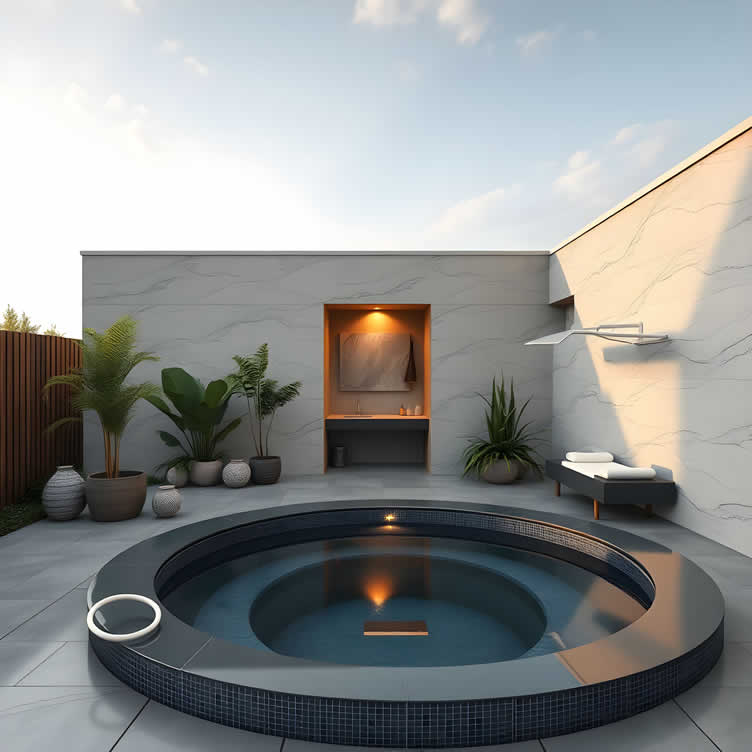
Plunge pools have become an increasingly popular solution for homeowners with limited outdoor space who want to enjoy the benefits of a private pool. Designed for relaxation, cooling off, and gentle exercise, plunge pools offer the luxury of a backyard oasis without the need for extensive land or costly installations.
Unlike traditional full-sized swimming pools, they are specifically tailored to fit compact spaces, making them an ideal choice for urban backyards or areas with restricted layouts.
-
Types and Styles of Plunge Pools
Plunge pools come in a variety of types and styles to suit diverse preferences and outdoor designs. For those seeking elegance and longevity, concrete plunge pools provide a durable, customizable option that can be tailored to specific dimensions and integrated with design elements like mosaic tiles or coping stones.
Alternatively, fiberglass plunge pools are a cost-effective and quick-to-install option, arriving pre-formed in a range of shapes and sizes to fit different spaces seamlessly.
For an eco-friendly option, natural plunge pools are lined with materials that mimic natural water features, integrating plants and filtration systems to maintain clean water with minimal chemical usage.
Plunge pools are also widely adaptable in aesthetics, ranging from minimalist modern designs with clean lines to rustic or nature-inspired looks that complement organic landscaping.
Additionally, they can incorporate features such as built-in seating, heating systems for year-round use, or jets for added therapy benefits.
-
Size Requirements for Small Backyards
One of the biggest advantages of plunge pools is their ability to fit into small and compact outdoor spaces.
Most plunge pools are designed with a smaller footprint, ranging in size from approximately 6 to 13 feet in length and around 4 to 7 feet in width, though these dimensions can vary based on personal preferences and the specific type of pool chosen.
Depths are generally around 4 to 6 feet, providing plenty of water for cooling off or light swimming without requiring excessive excavation or yard space.
Unlike their larger counterparts, plunge pools require less intensive site preparation, making them more accessible for small yards. With careful planning, installation can even include features such as surrounding decks, landscaped edges, or integrated spa elements to maximize the utility and aesthetics of the area.
-
Comparing Plunge Pools with Surround Above-Ground Pools
While both plunge pools and deck-surround above-ground pools are excellent solutions for limited lot sizes, there are key differences between the two.
Plunge pools generally offer a more permanent and visually appealing solution, often increasing property value due to their customizability and integration with landscaping.
Above-ground pools with deck surrounds, conversely, are a more budget-friendly choice, allowing for seasonal use and easier relocation or removal. Above-ground pools are faster to install and typically less expensive upfront, but they may lack the polished appearance and long-term durability of a well-constructed plunge pool.
Additionally, plunge pools often provide greater versatility for features like heated water and hydrotherapy, elevating the overall experience.
Both options can create a functional and enjoyable outdoor space, with the choice ultimately depending on the homeowner’s budget, style preferences, and long-term goals.
-
Why Choose a Plunge Pool?
Plunge pools offer an ideal balance between space efficiency and luxurious functionality. They require less maintenance and water compared to larger pools, making them an environmentally-friendly and cost-conscious choice for modern homes.
Whether you’re seeking a personal retreat in a small backyard or aiming to enhance your outdoor living experience, plunge pools can be a smart and stylish investment.
AI generated image by 123rf.com
[ view images: plunge pool for home ]
[ pinterest: home plunge pool ]
-
-
2nd: Plunge Pool Winter Enjoyment
A plunge pool doesn’t have to be a summer-only feature—it can become your go-to oasis even during the cold winter months with the addition of a heating system.
Converting your plunge pool into a heated pool allows you to maximize its use year-round, providing a cozy retreat for relaxation or low-impact exercise regardless of the season.
To begin this transformation, consider installing an efficient heating solution, such as an electric heat pump, a gas heater, or even solar heating for an eco-friendly option. Each heating system has its benefits, so it’s vital to evaluate factors like installation costs, energy efficiency, and the climate where you live.
Additionally, investing in a high-quality pool cover will help retain heat, reducing energy consumption while keeping your pool warm and pleasant during the colder months.
By integrating heating into your plunge pool setup, you can create a versatile and valuable feature for your home.
Whether it’s a chilly morning swim or a relaxing soak under the stars on a frosty evening, a heated plunge pool offers the perfect combination of comfort and functionality all year long.
copyright image by 123rf.com
[ view diagram: swimming pool plumbing ]
[ youtube: How to Install a Plunge Pool ]
-
Scroll up to directory … or scroll to next section about stunning pool designs …

get the size dimensions for any home remodeling project …
… for functionality, aesthetics, and adhering to building codes
sixth “photo remodeling” idea
AI generated image by 123rf.com
Design Tip 6: Lap Pools for Fitness and Functionality
Notes:
-
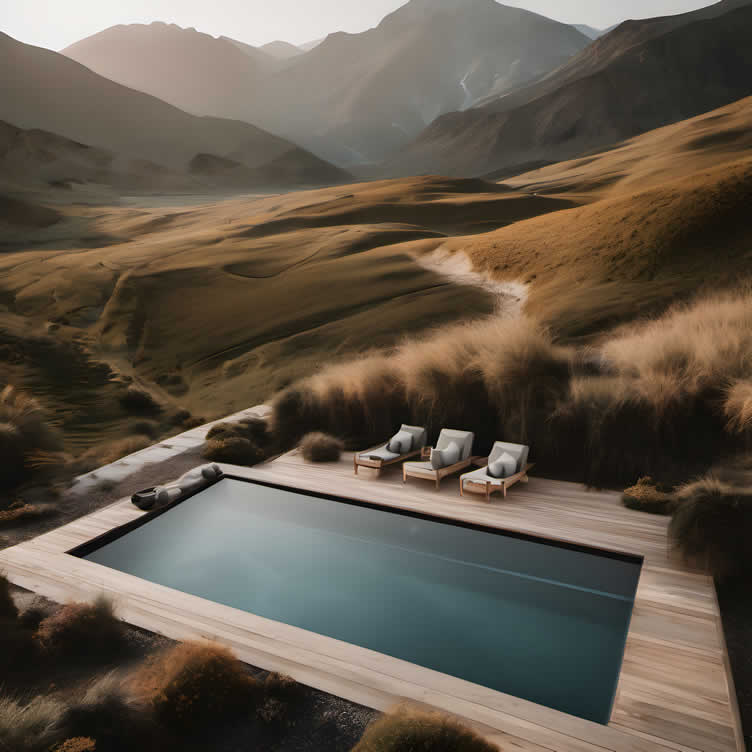
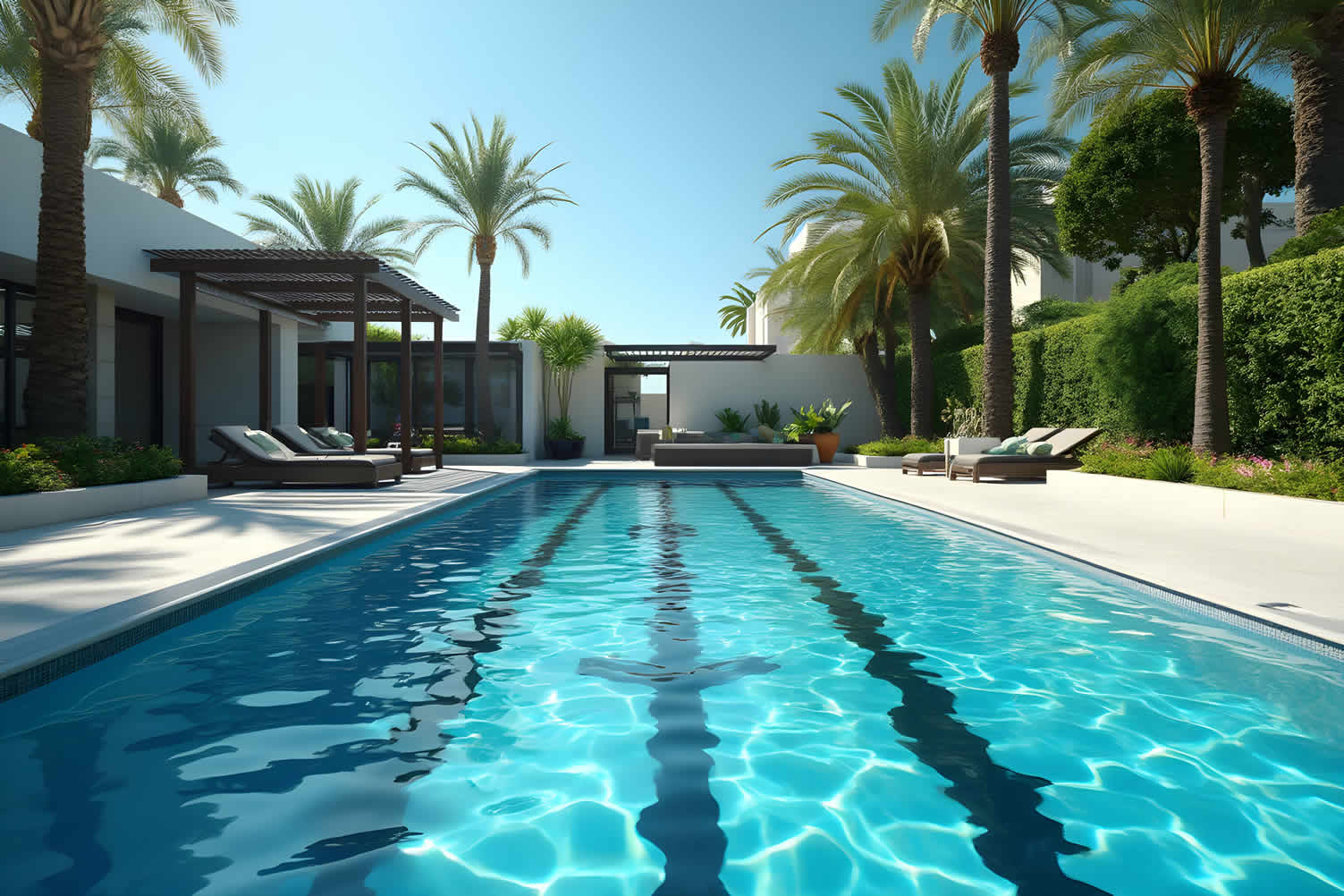
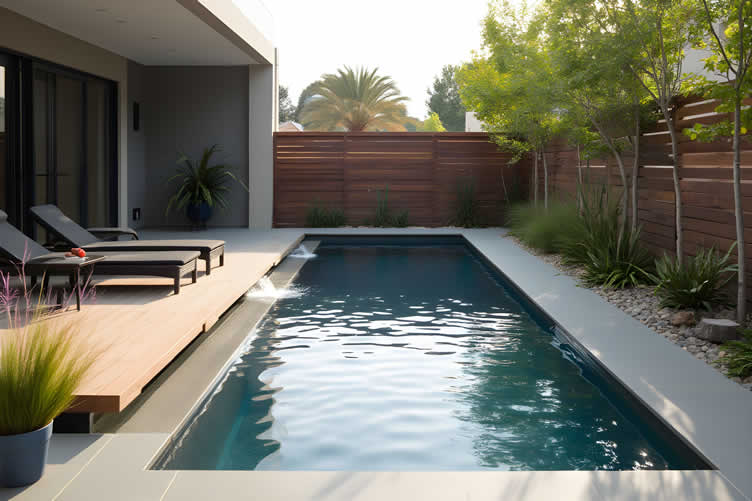
For those who prioritize fitness, lap pools are an excellent addition to any backyard. Sleek and linear, a lap pool is specially designed for swimming laps or water-based exercise. These pools are perfect for health-focused homeowners and can double as stylish statement pieces.
Combined with landscaping and ambient lighting, a lap pool can balance function and style effortlessly. Lap pools are also often narrower, making them an excellent option for properties with limited space.
-
Quick scroll to “lap pool” side notes …
-
-
1st: Lap Pools: What Type?
Lap pools are the quintessential choice for individuals seeking a swimming solution dedicated to fitness, health, and functional use. Whether you’re a professional athlete, a fitness enthusiast, or simply looking for a means of low-impact exercise, lap pools offer a streamlined and efficient way to incorporate swimming into daily routines.
This section explores the types of lap pools available, size and depth requirements, styling tips to complement your landscape, and a comparison of traditional lap pools to stationary swim-current pools to help users make informed decisions.
-
Types of Lap Pools
Lap pools generally fall into two main categories: traditional lap pools and stationary lap pools.
-
Traditional Lap Pools
Traditional lap pools are narrow and elongated, designed specifically for uninterrupted swimming over longer distances. These pools are ideal for individuals who prioritize endurance training, as they allow for natural, continuous movement in one direction.
Traditional lap pools are most suitable for homeowners with enough yard space to accommodate their linear design.
-
Infinity Lap Pools
Combining functionality with luxury, these pools feature an infinity edge, creating a stunning visual effect that blends the water into the horizon.
These are perfect for homeowners seeking aesthetic appeal in addition to fitness functionality.
-
Stationary Lap Pools
Stationary lap pools, also known as swim spas or endless pools, are equipped with a current generator to create resistance that swimmers can swim against without actually moving forward.
This type of pool is an excellent space-saving solution, delivering a challenging workout in an area significantly smaller than a standard lap pool.
Stationary lap pools also tend to be more versatile, as they often feature adjustable current speeds tailored to the swimmer’s ability or exercise regimen.
-
-
Size Requirements for Lap Pools
For traditional lap pools, the ideal size typically ranges from 40 to 75 feet in length and about 8 to 10 feet in width, allowing swimmers to perform full strokes comfortably. However, the dimensions can be adapted to suit your available space, provided the pool maintains its linear design.
On the other hand, stationary lap pools are much smaller, usually measuring around 8 to 12 feet in length and 7 to 9 feet in width, and they can even fit indoors or in compact outdoor areas.
When deciding on pool size, consider factors such as the number of swimmers, how the pool will be used (fitness versus leisure), and space availability. Consulting a pool contractor or designer can ensure you balance functionality with spatial concerns.
-
Depth Requirements for Lap Pools
Lap pools should have a minimum depth of 3.5 feet to ensure sufficient clearance for various strokes like freestyle and breaststroke. For flips and turns or additional versatility, a depth of 4 to 5 feet is recommended.
Deeper pools can also accommodate underwater resistance exercises and aqua-therapy for users interested in multi-functional fitness solutions. Stationary lap pools, meanwhile, often have shallower depths of 3 to 4 feet, meeting the needs of swimmers while maintaining their compact design.
-
Styling the Lap Pool with the Landscape
Integrating a lap pool into your landscape requires careful consideration to ensure harmony between the pool and its surroundings. Use natural elements like stones, plants, or even wooden decking to create a tranquil, cohesive outdoor space.
Raised platforms, surrounding greenery, or waterfalls can add aesthetic appeal and privacy. For stationary lap pools, their compact size provides flexibility to style them as part of a patio, courtyard, or even an indoor exercise area.
Adding LED or submerged pool lighting extends usability into the evening hours while enhancing visual appeal.
Additionally, consider practical features like seating areas, sun shades, or fencing for safety and comfort. Opting for energy-efficient options, such as solar covers or eco-friendly pool heating systems, can further integrate sustainability into the design.
-
Comparing Traditional Lap to Stationary Swim-Current Pools
For users prioritizing open-water simulation and endurance training, traditional lap pools remain unmatched due to their ability to offer uninterrupted swimming across longer distances.
However, they demand significant space and higher construction and maintenance costs. They also typically require substantial water volume, which can be a concern for eco-conscious users.
Alternatively, stationary swim-current pools offer a compact, efficient option for fitness enthusiasts. Though smaller, they can simulate a challenging workout akin to swimming in a large pool by generating adjustable water resistance.
These pools are particularly appealing in urban or limited-space settings, offering affordability, reduced water use, and versatility. Some stationary models even come with additional features like jets or therapeutic options, making them adaptable for diverse needs.
Ultimately, the choice comes down to personal preference, available space, and fitness goals. Whether you opt for a traditional lap pool or a stationary swim-current pool, both options provide an excellent avenue for improving health, building endurance, and enhancing overall well-being.
For further guidance, it’s recommended to consult with professional pool designers or suppliers who can tailor solutions to your specific requirements.
copyright image by 123rf.com
[ view images: lap pool for home ]
[ pinterest: home lap pools ]
-
-
2nd: Fun and Relaxing Items to Elevate Your Pool Experience
A backyard swimming pool is more than just a place to swim—it’s an oasis for relaxation, entertainment, and quality time with loved ones.
Adding the right accessories and features can transform your pool area into a personal resort, enriching your experience while providing additional comfort and enjoyment. Below, we outline some of the top fun and relaxing items to consider for your swimming pool, helping you make the most of your investment.
-
Floating Loungers and Inflatable Chairs
Floating loungers come in a variety of shapes and sizes, offering the ultimate way to relax on the water. Crafted from durable and buoyant materials, these loungers often include features like cup holders, adjustable backrests, and even shade canopies.
Inflatable chairs are perfect for reading, sunbathing, or simply unwinding while staying cool in the water. Many of these products are designed for long-lasting use and comfort.
Always opt for high-quality options from reputable brands to ensure safety and durability, such as SwimWays or Frontgate (SwimWays, 2023).
-
Waterproof Speakers and Pool-Friendly Lights
Adding entertainment features like waterproof speakers brings your favorite music or podcasts poolside without worrying about damages. Pair these with floating pool lights or LED strips to create a soothing or festive ambiance for evening swims.
Bluetooth-enabled speakers such as JBL’s waterproof series offer superior sound quality and easy connectivity. Similarly, pool lights with color-changing options elevate nighttime pool experiences, transforming any gathering into a visually stunning event (Consumer Reports, 2023).
-
Pool Games and Inflatable Toys
Pool games like basketball hoops, volleyball nets, and ring toss games keep both kids and adults entertained for hours. These games encourage physical activity and interactive fun, making them excellent options for family gatherings or parties.
Additionally, inflatable water slides or obstacle courses are great for turning your pool into a mini water park. Opt for products that meet safety standards and are made from eco-friendly, non-toxic materials (American Academy of Pediatrics, 2023).
-
Spa Accessories and Comfort Enhancements
For those who prioritize relaxation, spa-like accessories are a must. Floating drink holders, aromatherapy diffusers, and waterproof neck pillows can take your poolside experience to the next level.
Consider adding a poolside cabana or reclining lounge chairs with plush cushions for ultimate comfort. Products with UV-resistant fabrics and ergonomic designs ensure they stay durable and comfortable over time, aligning with high industry standards.
-
Solar-Powered Pool Cleaners and Covers
For post-fun convenience and care, invest in solar-powered pool cleaners or automatic pool covers. These items not only keep your pool pristine but also save you time and energy in maintenance.
Pool covers can also retain heat and reduce water evaporation, making them an eco-friendly option. Leading brands like Polaris and Dolphin offer reliable equipment supported by user reviews and robust warranties (Pool & Spa News, 2023).
Creating a well-equipped pool area tailored to your lifestyle ensures a perfect blend of fun and relaxation. When making purchases, prioritize proven quality and safety standards to enhance your enjoyment and protect your investment.
copyright image by 123rf.com
-
-
Scroll up to directory … or scroll to next section about stunning pool designs …



Budgeting Worksheet For Costing Home Remodeling and Home Improvement Decisions
 File Type (excel)

Find Pool n’ Ponds Services Swimming Pools Spas & Hot Tubs Water Features Fencing Landscape Design Outbuildings top-rated, pre-screened local contractors FREE: download contractor selection enter zip code – powered by HomeAdvisor ™
Quick Contractor Guides selecting negotiating working with inspecting

seventh and last “photo remodeling” idea

AI generated image by 123rf.com
Design Tip 7: Rooftop Pools for Elevated Living
Notes:
-
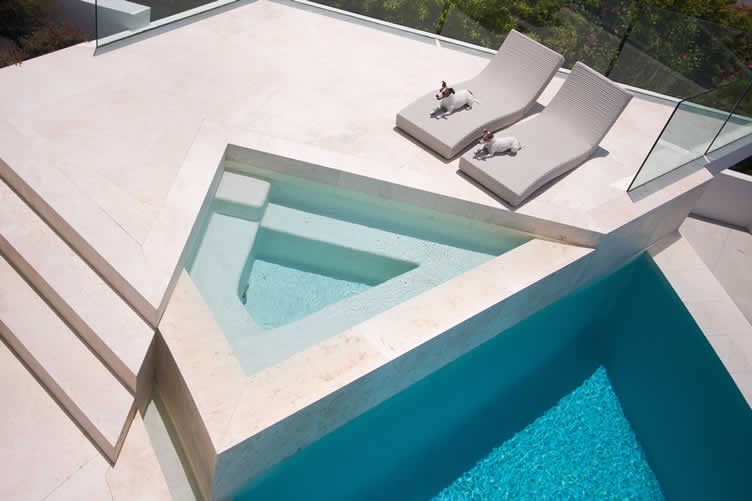
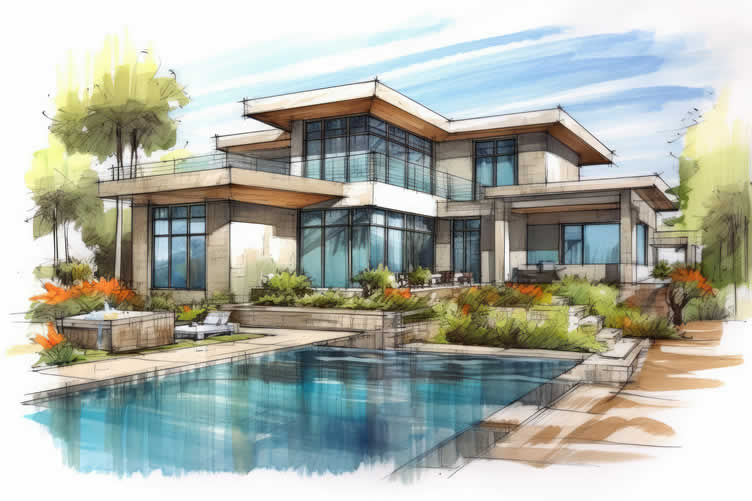
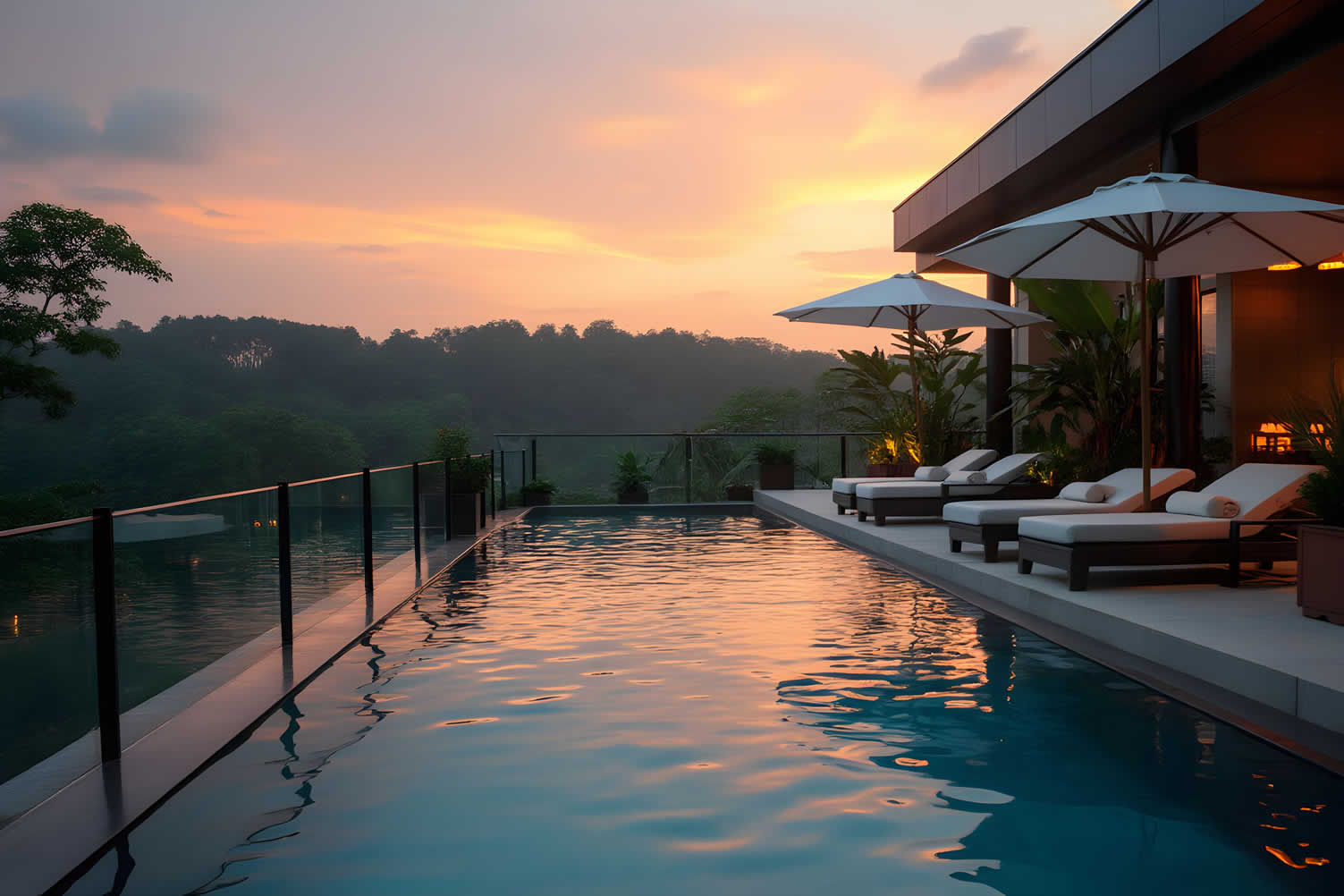
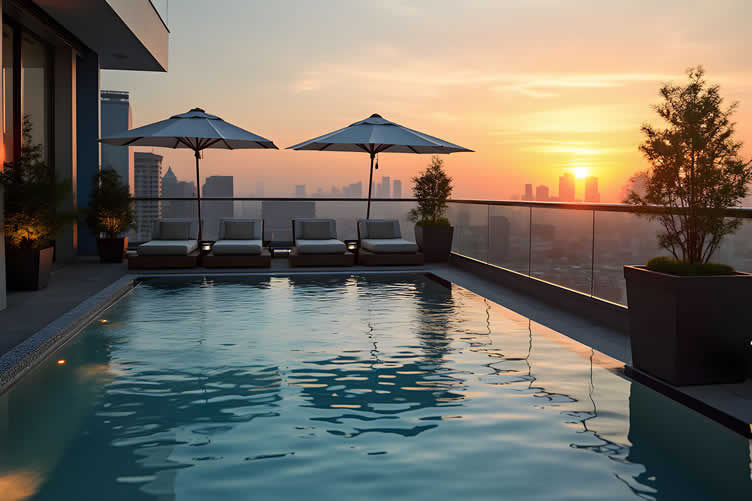
If your backyard options are limited or you’re looking to make a bold design statement, a rooftop pool is unparalleled. These pools offer stunning views, unique appeal, and a sense of exclusivity. Ideal for urban homes, rooftop pools can be designed to maximize space while introducing a resort-like feel to your property.
Glass walls or infinity edges are often incorporated to add a dramatic visual effect. While this design might require additional reinforcements or planning, the end result is a truly unforgettable space for entertainment or relaxation.
-
Quirk scroll to topic "rooftop pool" side notes …
-
-
1st: Special Requirements for Rooftop Pools
Rooftop pools are synonymous with luxury and innovation, offering a unique combination of relaxation, practicality, and stunning views. These pools, often seen in upscale residential and commercial buildings, provide an elevated experience, quite literally, for homeowners and guests alike.
However, installing a rooftop pool involves meticulous planning, structural considerations, and adherence to safety regulations.
This guide will cover the key requirements and considerations for creating a rooftop pool, ensuring an enjoyable and safe experience for all.
-
Structural Requirements for Rooftop Pools
A rooftop pool imposes significant weight on the building, necessitating a robust structural foundation.
The building’s framework must be designed or reinforced to support not only the weight of the water (approximately 8.34 pounds per gallon) but also the pool’s materials, deck, equipment, and possible user loads.
Engineers and architects must calculate the load-bearing capacity of the building, factoring in distributed and concentrated loads to prevent structural stress.
Concrete or steel-framed buildings are often the best candidates for rooftop pools due to their inherent strength. Retrofitting older buildings for a pool may require extensive reconstruction, including the addition of supporting beams or girders to counteract the added weight.
Collaborating with structural engineers and adhering to local zoning codes and safety standards is crucial during this phase (Source).
-
Additional Requirements for Rooftop Pools
Beyond structural considerations, specific design and functional features must be implemented to ensure a safe and seamless rooftop pool experience. A waterproofing system is critical to prevent water leakage, which could cause severe damage to the building.
High-grade materials like reinforced PVC membranes or epoxy coatings are commonly used in pool construction for durability and watertight seals.
Furthermore, drainage systems must be carefully designed to manage overflow or heavy rainfall, preventing water-logging on the rooftop. Accessibility to plumbing, filtration systems, and heating units should also be a priority during the design process.
Smart technology, such as automated filtration monitoring, can help maintain water quality with minimal manual intervention.
-
Building Types Suitable for Rooftop Pools
Rooftop pools are most feasible in mid-rise and high-rise buildings with large, flat roof areas. Luxury apartments, hotels, and condominium complexes often feature these installations to enhance their appeal.
Private homes with modern architectural designs and flat rooftops may also accommodate pools, provided the structure meets specified load requirements.
Renovations in older buildings, particularly those of historical significance, can be challenging and may not always be viable. It is essential to ensure that the cost of retrofitting aligns with the projected benefits and that all construction adheres to local laws and conservation guidelines (Source).
By ensuring the structural integrity and functionality of the design, rooftop pools can transform ordinary spaces into breathtaking havens of leisure and sophistication, meeting both aesthetic and practical needs.
copyright image by 123rf.com
[ view images: rooftop swimming pool for home ]
[ pinterest: rooftop pools ]
-
-
2nd: Finding and Hiring a Swimming Pool Contractor
Choosing the right swimming pool contractor for your backyard project is a critical step in bringing your vision to life. A reputable contractor can help ensure the pool is built to your specifications, meets safety standards, and enhances the aesthetic of your outdoor space.
Here’s what to consider when finding and hiring the best contractor for the job:
-
Research and Referrals
Start by gathering recommendations from friends, family, or neighbors who have had successful pool installations.
Additionally, online reviews and ratings on trusted platforms such as the Better Business Bureau, Houzz, or Google Reviews can provide insights into customer satisfaction and the reliability of contractors in your area. Make a shortlist of potential contractors with strong, verified credentials.
-
Evaluate Credentials
Verify that the contractor holds the necessary licensing, certifications, and insurance required in your state or local jurisdiction.
A professional contractor should also be affiliated with organizations such as the Association of Pool & Spa Professionals (APSP) or other industry-recognized associations, demonstrating their commitment to high standards and industry best practices.
-
Portfolio and Style Compatibility
When selecting a contractor, review their portfolio to ensure their design style aligns with your vision. Look for contractors skilled in creating custom pools that match your backyard’s theme, whether modern, rustic, or tropical.
Pay close attention to their expertise in integrating extra features such as waterfalls, decks, LED lighting, or energy-efficient systems.
-
Transparent Estimates and Contracts
Request detailed quotes from multiple contractors outlining the scope of work, timeline, materials, and costs. Avoid contractors who offer unusually low estimates, as this can signal potential shortcuts in quality.
A reputable contractor will present a clear, itemized contract and openly discuss terms, allowing you to make confident, informed decisions.
-
Effective Communication and Customer Service
Communication is key to a successful project. Look for a contractor who listens to your ideas, offers professional advice, and provides prompt responses to your inquiries. A contractor with excellent customer service will ensure the process is smooth and stress-free.
-
Maintenance and Aftercare
A high-quality contractor doesn’t just build your pool—they also provide guidance on long-term maintenance and aftercare. Ask about warranties, maintenance packages, or any ongoing support services they offer to keep your pool in pristine condition year-round.
Hiring the right swimming pool contractor is an investment in your property and peace of mind. Following these best practices will help ensure you select a professional who can turn your backyard into a beautiful and functional oasis.
LetsRenovate has partnered with HomeAdvisor™, a renowned provider of highly-rated, carefully-vetted local pool contractors. Start your search here by entering your zip code to find local professionals.

copyright image by 123rf.com
But Wait!
Before beginning your search for pool contractors, be sure to download and use this comprehensive evaluation worksheet.
Designed to help you make informed decisions, this tool allows you to objectively compare and rank contractors based on key factors such as pricing, licensing, and referrals.

Evaluation Sheet
File Type: -
-
-
FINAL REMARKS
With so many creative pool designs available, transforming your backyard into a personal oasis has never been easier. From modern and structured to natural and inviting, there’s a design to suit every taste and every space.
Whether you’re envisioning an infinity pool or a cozy plunge design, these ideas can inspire you to take the next step in bringing your dream backyard to life.
Explore the possibilities and create a space that makes every day feel like a vacation. Start crafting your ideal new home pool with expert designers and transform your backyard into something extraordinary today!
-
ideas to view and compare from the information discussed above
- What comments can you share about
stunning pool designs?
Scroll up to directory … or scroll to more yard n’ garden-related topics …
view illustration “becoming a bank”

Calendar For:
Home Maintenance
File Type:


… view our sharing links below for a quick "share the knowledge"
AI generated image: stunning pool designs by 123rf.com
end of post … please share it!
 |
did you find these stunning pool designs analysis helpful? If so, please share the article with your friends and family! |
Nice pic idea? Leave us a quick comment below.
And please share this pic idea within your social networks.