Quick Answer:
The best flowers for a winter garden in colder growing zones are cold-hardy hellebores, pansies and violas, winter jasmine, snowdrops, and ornamental cabbage or kale. Each tolerates freezing temperatures, offers color or texture through the dormant months, and thrives when paired with well-drained soil, proper timing, and a protective layer of mulch.
The trick is picking plants that are genuinely built for cold—not just tough annuals that happen to survive a mild autumn.
This guide walks through the winter flowers that hold up best in chilly climates, how to prepare your beds so they actually thrive, and the care habits that keep them blooming through frost and thaw cycles.
You’ll also find design ideas for pairing winter flowers with evergreens and hardscaping, plus the most common mistakes that trip up even experienced gardeners.
Whether your goal is a few containers by the front door or a full winter flower garden along your foundation beds, the right plant choices paired with smart preparation will keep your curb appeal alive all season long.
- post content
- Best Flowers For A Winter Garden
- Preparing Your Winter Garden Beds
- Caring For Winter Flowers All Season
- Designing A Beautiful Winter Flower Garden
- Common Winter Gardening Mistakes To Avoid
- Growing Color Through Every Season
- FAQs
- view table:content summary
- view notes:collective tips
- view analysis:Understanding Key Landscape Principles
- price/shop:perennial flowers
Best Flowers For A Winter Garden
Five flowering plants consistently perform well through the coldest months, and each brings something different to a winter flower garden—color, fragrance, texture, or simply the reassurance that something is still growing.
-
Hellebores For Blooms In The Coldest, Darkest Weeks[ view]
Hellebores, often called Lenten rose, flower during the shortest and coldest days of the year, with colors ranging from white and cream to pink, purple, and soft yellow.
According to South Carolina Living (undated; accessed Nov 2026), Helleborus x hybridus was even named the Perennial Plant Association’s 2005 Plant of the Year, and it continues to bloom from January or February into spring. Hellebores prefer filtered shade and tolerate dry sites beneath trees, making them ideal for the shadier corners of a yard where little else survives winter.
Helleborus orientalis is hardy in USDA zones 4–9, per D.R. Snell Nursery (undated), and generally prefers partial shade even though it tolerates a wide light range.
-
Pansies And Violas For Reliable Winter Color[ view]
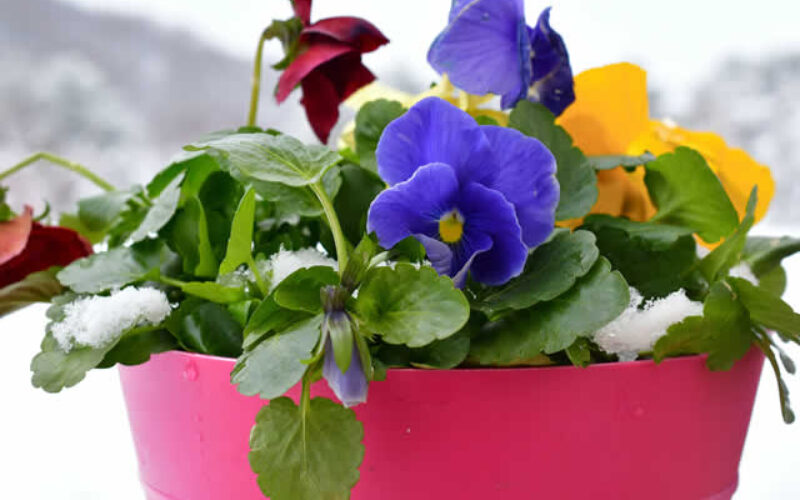
Pansies and violas are widely considered the most dependable annuals for cool-season color. Clemson Cooperative Extension (2025) notes that pansies produce larger flowers while violas bloom more prolifically and need less deadheading; both perform best once temperatures climb above 32°F.
The University of Georgia Extension (2023) adds that healthy pansies can survive temperatures down to the single digits, freezing solid and rebounding once conditions warm.
They thrive in soil temperatures between 45°F and 65°F, so matching planting time to your local soil temperature—rather than a fixed calendar date—is the real key to success.
Pansies are generally hardy across USDA zones 4–9.
-
Winter Jasmine For Early Color, Not Fragrance[ view]
Winter jasmine (Jasminum nudiflorum) is a sprawling deciduous shrub that produces bright yellow flowers from January through February, often before its leaves even emerge.
Per the NC State Extension Gardener Plant Toolbox, this plant is hardy in USDA zones 6–10 and adapts well to poor, clay, or sandy soils in full sun to partial shade. One honest note: despite its reputation, NC State classifies winter jasmine’s flowers as non-fragrant.
If scent is part of your winter garden goals, pair it with a fragrant annual like sweet alyssum, which Clemson Cooperative Extension (2025) describes as a trailing plant with fragrant white, pink, or purple blooms well suited to container edges.
-
Snowdrops For The First Signs Of Spring[ view]
Snowdrops (Galanthus nivalis) are among the earliest bulbs to bloom, often pushing through late-winter soil before anything else stirs. Most guidance recommends planting bulbs from September through mid-October so they establish before the ground freezes.
Snowdrops naturalize well in cool climates and can even be planted directly into lawn areas, giving a winter flower garden an unexpected, delicate accent right when you need it most.
-
Ornamental Cabbage And Kale For Texture And Color[ view]
Ornamental cabbage and kale (Brassica oleracea) aren’t technically flowers, but their ruffled foliage in white, purple, pink, and green is eye-catching enough to function like one.
Clemson Cooperative Extension (2025) highlights them as a staple of fall-through-winter container displays, especially when combined with trailing plants like ivy or sweet alyssum for layered texture.
about landscape planning for the spring

Understanding Key Landscape Principles to Elevate Your Outdoor Space
Tired of looking out your window at a yard that feels scattered, mismatched, or just plain dull? You are not alone.

Preparing Your Winter Garden Beds
Winter flowers reward a little upfront preparation. Getting soil, timing, and mulch right determines whether your plants merely survive or actually thrive through the cold.
-
Soil And Drainage Considerations
Well-drained soil is non-negotiable for most winter-blooming plants. The University of Georgia Extension (2023) recommends raised beds six to ten inches above grade and amending with compost at roughly 25 percent by volume, worked into the top twelve inches of soil.
For pansies specifically, aim for a slightly acidic soil pH between 5.4 and 5.8, and always soil test before amending.
Heavy, wet clay is the most prone to frost heave, so working in compost over several seasons gradually improves structure and drainage, according to PlantWise Gardening Team (undated).
-
Timing Your Planting By Soil Temperature, Not The Calendar
Rather than relying on a fixed date, match planting time to your soil temperature and USDA hardiness zone, based on the USDA 2023 Plant Hardiness Zone Map.
As an example, the University of Georgia Extension (2023) lists pansy planting windows across zones 6b through 8b running from mid-September through early November. Planting too late, once soil temperatures fall below 45°F, results in stunted plants with poor flowering because root growth effectively shuts down.
PlantWise Gardening Team also recommends planting perennials at least six weeks before the ground typically freezes in your area, giving roots time to establish before dormancy.
-
Mulching Strategies For Frost Protection
Mulch timing matters as much as mulch type. PlantWise Gardening Team (undated) advises applying two to four inches of loose mulch—pine straw, shredded hardwood, shredded leaves, or evergreen boughs—only after the top one to two inches of soil has frozen, since mulching too early traps warmth and can invite voles.
The University of Georgia Extension (2023) recommends two to four inches of pine straw specifically during extreme cold snaps, when air temperatures are expected to drop below 20°F for several hours with drying wind, then raking it off once the cold breaks. Fine-textured mulch like pine straw tends to stay in place better than heavier materials.
Caring For Winter Flowers All Season
Once your winter flower garden is planted, ongoing care is lighter than summer gardening but still essential, particularly around watering, cold protection, and grooming.
-
Watering Requirements During Winter Months
Water thoroughly right after planting, then keep soil slightly on the dry side to encourage hardier growth, according to the University of Georgia Extension (2023). Excess moisture lowers soil oxygen and actually slows root development during cold weather.
Containers need extra attention since they freeze harder and faster than in-ground beds; PlantWise Gardening Team suggests grouping pots against a wall, sinking them into a garden bed, or moving them into an unheated garage during the coldest stretches.
-
Protecting Plants From Extreme Cold
Foliage wilting or turning gray-green below 25°F is a normal defense response, not a sign of failure, per the University of Georgia Extension (2023). The real danger comes from frozen soil combined with drying winds, which can kill even cold-hardy plants.
Covering beds with pine straw or frost cloth ahead of a hard freeze traps ground heat and protects roots and crowns. Steady snow cover, when you get it, actually acts as natural insulation, according to PlantWise Gardening Team.
-
Deadheading And Pruning Techniques
Removing frost-damaged and faded flowers prevents seed pod formation and reduces fungal blight risk, while trimming lanky stems encourages fuller, bushier growth, per the University of Georgia Extension (2023).
For winter jasmine, the NC State Extension Gardener Plant Toolbox notes that flowers form on the previous year’s growth, so pruning should happen immediately after blooming ends—never before.
Hellebore foliage that gets singed by dry winter winds should be trimmed back in early spring rather than mid-winter, according to South Carolina Living (undated).
Designing A Beautiful Winter Flower Garden
A winter flower garden looks best when color, structure, and hardscaping work together rather than competing. A few design principles go a long way.
-
Creating Color Contrast With Winter Blooms
Pair bright winter jasmine or pansies against darker evergreen backdrops to make the color pop against an otherwise muted landscape.
Clemson Cooperative Extension (2025) suggests combinations like pansies, ornamental kale, trailing ivy, and purple sweet alyssum, or dwarf snapdragons paired with silver dusty miller for contrast between bloom color and foliage tone.
-
Combining Flowers With Evergreens And Hardscapes
Evergreens like boxwood, holly, and juniper provide year-round structure that winter flowers can play off, according to Country Barn Garden Center (2025). Plants like winterberry and cotoneaster add persistent berries that extend color into the deepest part of winter.
For homeowners thinking about curb appeal, framing winter blooms along a walkway, foundation bed, or stone retaining wall creates a polished, finished look even when most of the yard is dormant.
-
Container Gardening Options For Winter
Containers are an easy way to add winter color to porches and entryways without reworking entire beds. Clemson Cooperative Extension (2025) recommends combining pansies or violas with ornamental kale and a trailing plant like ivy or sweet alyssum for layered texture in a single pot.
Because containers freeze harder than ground soil, group several pots together or move them against a sheltered wall during cold snaps to protect roots.
Common Winter Gardening Mistakes To Avoid
Even well-intentioned gardeners run into a handful of recurring problems when planting for cold weather. Here’s what tends to go wrong.
-
Overwatering In Cold Temperatures
It’s tempting to water on a regular schedule out of habit, but excess moisture in cold soil lowers oxygen levels and slows root growth, per the University of Georgia Extension (2023). Keep soil on the slightly dry side rather than consistently damp once plants are established.
-
Choosing Non-Hardy Varieties
Not every colorful annual is built for freezing weather. Match your flower choice to your USDA hardiness zone using the USDA 2023 Plant Hardiness Zone Map, and double-check a plant’s cold tolerance before committing an entire bed to it. A flower that thrives in zone 8 may struggle or fail entirely in zone 6.
-
Inadequate Soil Preparation
Skipping soil testing or amendment is one of the most common reasons winter flowers underperform.
Compacted, poorly drained soil holds too much moisture around roots during freeze-thaw cycles, increasing the risk of rot and frost heave, according to PlantWise Gardening Team (undated). Taking the time to amend with compost and confirm drainage before planting pays off throughout the season.
Get Your Garden Winter-Ready
Fall is the perfect season to plant hardy winter flowers and spring bulbs, ensuring vibrant blooms when the cold recedes.
Before planting, take time for fall cleanup maintenance to prepare your garden for the coming winter.
Clear away fallen leaves, trim back perennials, and enrich the soil with compost.
These simple steps not only create a tidy, healthy space but also give your new plants the best chance to thrive through winter and burst into life by spring.
view ideas: Fall Yard Cleanup Checklist (new win)

Growing Color Through Every Season
A winter flower garden doesn’t require rare plants or constant intervention—it requires the right choices made at the right time.
Hellebores, pansies and violas, winter jasmine, snowdrops, and ornamental cabbage or kale each bring something different to a cold-season landscape, from deep winter blooms to early spring color.
Pair these plants with well-drained soil, properly timed mulching, and light but consistent care, and your yard can hold onto color and curb appeal long after summer gardens have faded.
Start small if winter gardening is new to you. A few containers by the entryway or one amended bed along the foundation is enough to see what thrives in your specific microclimate before expanding further next season.
-
Collective Tips
Across every winter flower, the same themes repeat: match plant hardiness to your actual USDA zone, prioritize well-drained soil over fast fixes, time mulching to follow the first hard freeze rather than preceding it, and keep watering light once plants are established.
Small, consistent habits matter more than dramatic intervention when the goal is color that lasts through the coldest months.
FAQs
-
What is the best flower for a winter garden in a cold growing zone?
Hellebores and pansies are generally considered the most reliable winter flowers for cold zones, since both tolerate freezing temperatures and still produce blooms through the coldest months.
-
When should I plant winter flowers?
Match planting time to soil temperature rather than a fixed date. Pansies, for example, do best when soil temperatures are between 45°F and 65°F; check your local extension office for guidance specific to your USDA hardiness zone.
-
Is winter jasmine fragrant?
No. Despite its name, winter jasmine’s bright yellow flowers are non-fragrant according to NC State Extension. For scent, pair it with a fragrant annual like sweet alyssum.
-
Can pansies survive a hard freeze?
Yes. Healthy pansies can survive temperatures down to the single digits, sometimes freezing solid and rebounding once conditions warm, according to the University of Georgia Extension.
-
How do I protect winter flowers from extreme cold?
Apply two to four inches of pine straw or frost cloth over beds before a hard freeze, especially when air temperatures are expected to drop below 20°F for several hours with drying wind. Remove the covering once conditions warm.
-
Can winter flowers be grown in containers?
Yes. Pansies, violas, and ornamental kale all do well in containers, but pots freeze harder than garden beds, so group them together or move them to a sheltered spot during the coldest stretches.
-
Are winter garden flowers deer resistant?
Hellebores and winter jasmine are both considered deer resistant, making them a practical choice for yards with regular deer traffic.
-
Should I water winter flowers often?
No. Keep soil slightly on the dry side rather than consistently moist, since excess water in cold soil reduces oxygen and slows root growth.
-
What is the biggest mistake people make with winter gardens?
Choosing non-hardy varieties for their zone and skipping soil preparation are the two most common mistakes. Both lead to stunted growth or plant loss once temperatures drop.
home improvement ideas to consider (complete directory – new win):


| Section | Description | Details |
|---|---|---|
| Quick Answer | The best flowers for winter gardens in cold-hardy zones | Hellebores, pansies and violas, winter jasmine, snowdrops, and ornamental cabbage/kale. These flowers tolerate freezing temperatures, thrive with proper care, and add color and texture to a winter garden. |
| Best Flowers for a Winter Garden | Top-performing flowering plants for winter | Hellebores bloom in the darkest weeks of winter. Pansies and violas are reliable annuals. Winter Jasmine adds yellow color early in the season. Snowdrops are early-blooming bulbs. Ornamental cabbage and kale bring texture and vibrant foliage. |
| Preparing Beds | How to prepare soil and set timing | Well-drained soil is crucial. Use raised beds with compost. Adjust planting based on soil temperatures, not fixed dates. Apply loose mulch only after the soil has frozen for frost protection. |
| Caring for Winter Flowers | Season-long maintenance tips | Water thoroughly after planting but keep the soil slightly dry. Protect plants from extreme cold with mulch or frost cloth. Remove damaged flowers and stems to encourage growth and reduce risk of blight. |
| Designing a Winter Garden | Pairing winter flowers with a landscape | Create contrasts with bright flowers and darker foliage. Add evergreen plants for structure and texture. Use containers for flexible garden options and extra color near entryways. |
| Common Gardening Mistakes | Things to avoid for winter gardening success | Overwatering, choosing non-hardy plant varieties, and insufficient soil preparation can lead to poor growth, root rot, or plant failure. |
| Growing Color Through Every Season | Summary and starting tips | Choosing suitable plants, such as hellebores and pansies, ensures vibrant landscapes through winter. Start with small areas and expand once you’ve observed success in your garden’s unique conditions. |

Find Yard Maintenance Services Lawn Maintenance Sprinkler Systems Pest Control Tree & Shrubs top-rated, pre-screened local contractors FREE: download contractor selection enter zip code – powered by HomeAdvisor ™


Image credit: best flowers for a winter garden by envato.com
end of post … please share it!
Sunny Perennial Pics
Part-Sun Perennials
| more photo remodeling |
Jump Over to Our Photo Analysis Center for Ideas on
"Renovating Home"
|__________________________________________________________|
home remodeling surprise
find out where it might go - new win


Helpful article? Leave us a quick comment below.
And please share this article within your social networks.