Quick Answer:
Proper dryer venting requires rigid metal ductwork routed to an exterior termination point, following IRC Section M1502 guidelines. Improper venting — using plastic duct, exceeding 35-foot run limits, or terminating indoors — causes lint buildup that leads to house fires, higher energy bills, and shortened appliance life.
Homeowners without exterior clearance have three code-compliant alternatives: condensing dryers, heat pump dryers, or combination washer-dryer units.
These are not minor inconveniences—they are warning signs of a venting problem that could escalate into a serious safety hazard. Proper dryer venting is one of the most overlooked, yet consequential, aspects of home maintenance.
The good news is that understanding how your venting system works, and what to do when exterior venting is not an option, puts you firmly in control of both your home’s safety and your appliance’s performance.
- post content
- Why Proper Dryer Venting Is Critical
- Types of Dryer Venting Systems
- How to Install Dryer Venting Correctly
- Solutions When Exterior Venting Is Not Possible
- Maintenance Tips for Long-Term Performance
- Make the Right Choice for Safety and Efficiency
- FAQs
- view table:content summary
- view notes:collective tips
- view analysis:Perfect Home Laundry Appliances For Your Space
- view ideas:latest remodeling analysis
Why Proper Dryer Venting Is Critical
Every time your dryer runs, it expels a powerful combination of hot, moist air and microscopic lint particles. That exhaust must travel efficiently to the outside of your home. When it cannot—because of a clogged duct, incorrect materials, or an improperly routed system—the consequences compound quickly.
According to the National Fire Protection Association, U.S. fire departments responded to an estimated average of 15,970 home structure fires involving clothes dryers annually between 2010 and 2014, resulting in 13 civilian deaths, 444 civilian injuries, and $238 million in direct property damage per year.
Dust, fiber, and lint were the leading items first ignited in those fires. Beyond the fire risk, a restricted vent forces your dryer to work harder and longer to complete each cycle, which drives up energy costs, accelerates component wear, and shortens the overall life of the appliance.
Building codes—specifically the International Residential Code (IRC) and its local adoptions—exist precisely because these outcomes are predictable and preventable.

Types of Dryer Venting Systems
Not all duct materials perform equally, and the wrong choice can turn a routine installation into a code violation or worse.
Rigid metal ducts, typically constructed from 28-gauge galvanized steel, represent the gold standard. Their smooth interior walls allow lint-laden air to move through with minimal resistance, and their non-combustible construction provides meaningful fire resistance if lint does accumulate.
Most building codes, including Florida’s FBC (Mechanical Section 504.4), mandate that dryer exhaust ducts be constructed of smooth, rigid metal with a 4-inch nominal diameter.
Flexible aluminum semi-rigid ducting occupies a middle ground. It is easier to work with in tight spaces and serves well as a short transition connector between the dryer outlet and the main rigid duct run.
A transition duct should not exceed 8 feet and must never be concealed within a wall or ceiling cavity.
Flexible plastic or vinyl ducts are not code-compliant and should be replaced immediately if found in your home. Their ribbed interior surfaces trap lint aggressively, they are easily crushed or kinked, and they provide virtually no fire resistance.
If a lint buildup ignites inside a vinyl duct, the duct itself becomes a fuel source. No savings on materials or installation time justifies that risk.
do you need to update your laundry appliances?

Choosing The Perfect Home Laundry Appliances For Your Space
Few household decisions carry as much day-to-day impact as the appliances you choose for your laundry room.
How to Install Dryer Venting Correctly
A safe, code-compliant dryer vent installation follows a straightforward logic: get the exhaust to the exterior of the building by the shortest, most direct route possible.
Start by planning the duct path before cutting any holes or purchasing materials. The IRC limits the maximum developed length of a dryer exhaust duct to 35 feet from the appliance connection to the exterior termination point.
That allowable length shrinks with every bend in the system—each 45-degree elbow reduces the effective length by 2.5 feet, and each 90-degree elbow reduces it by 5 feet.
A run with two 90-degree bends, for instance, is effectively treated as a 45-foot run even if the physical measurement is only 35 feet, making it non-compliant. Always consult both local code and your dryer’s installation manual, as manufacturer specifications can further restrict maximum duct length.
Seal every duct joint with foil tape or metal clamps. Standard duct tape deteriorates rapidly under heat and humidity and is not an acceptable substitute. Importantly, never use sheet metal screws to secure joints; screw tips that protrude into the duct interior snag lint and initiate clogs.
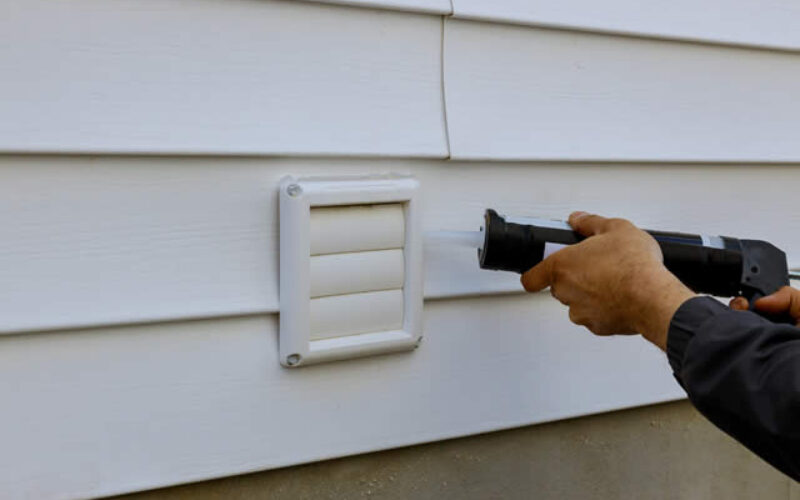
At the exterior termination point, install a metal vent cap equipped with a backdraft damper. The damper prevents cold air, insects, and rodents from entering the duct when the dryer is not running.
Do not install a screen or mesh cover at the termination—screens clog with lint almost immediately and create exactly the airflow restriction they appear to prevent. The vent cap should sit at least 12 inches above the ground and at least 3 feet from any window, door, or ventilated soffit opening.
Solutions When Exterior Venting Is Not Possible
Apartments, condominiums, older homes with concrete slab construction, and laundry rooms positioned deep within a floor plan sometimes make exterior venting impractical or structurally impossible. In these situations, two primary technology categories offer legitimate alternatives.
Condensing dryers eliminate the need for an external duct by drawing moisture out of clothing through a heat exchanger. The resulting condensation collects in an internal reservoir that must be emptied after each cycle, or the unit can be plumbed directly to a drain.
Because no exterior ductwork is required, a condensing dryer can be installed in a closet, under a counter, or virtually anywhere with an electrical connection.
Heat pump dryers take efficiency a step further. Using a closed-loop refrigerant system, heat pump dryers recycle warm air rather than exhausting it, consuming significantly less electricity than both conventional vented dryers and basic condensing models.
The trade-off is drying time: ventless heat pump models typically require 90 to 150 minutes per load compared to 45 to 60 minutes for a standard vented unit. Their higher upfront cost is often offset over time by meaningful reductions in energy consumption.
Before purchasing either type, verify that your local jurisdiction permits ventless dryers. Most codes accept them, but installation requirements vary, and some municipalities have specific provisions under their mechanical code adoption.
to manage outside mud

Top Reasons to Add a Mudroom to Your Home
A mudroom is one of the best investments you can make in your house.
Maintenance Tips for Long-Term Performance
Even a perfectly installed dryer vent system requires consistent maintenance to remain safe and efficient.
Clean the lint trap after every single load—this is non-negotiable. The lint trap catches only a portion of the particulate your dryer generates; the rest travels into the duct system and accumulates over time.
Inspect the exterior vent cover monthly to confirm the damper opens freely and that no debris, bird nesting material, or pest activity is blocking the opening.
The Consumer Product Safety Commission and major dryer manufacturers recommend scheduling a professional dryer duct cleaning at least once per year. Households with large families, pets, or frequent heavy loads—towels, bedding, heavy denim—may benefit from a semi-annual service interval.
A professional cleaning goes well beyond what a homeowner can accomplish from either end of the duct, using specialized rotary brushes and vacuum equipment to clear accumulated lint from the full length of the run.
This single annual service appointment is one of the most cost-effective steps a homeowner can take to reduce fire risk and extend appliance life.
Make the Right Choice for Safety and Efficiency
A properly vented dryer is not a luxury—it is a baseline requirement for a safe home. Whether you are installing a new system from scratch, upgrading an existing one, or evaluating ventless alternatives for a challenging space, the principles are consistent: use the right materials, follow the code, keep the path short and straight, and maintain the system every year without exception.
When exterior venting is genuinely not feasible, condensing and heat pump dryers offer well-engineered, code-recognized solutions. What they are not is a shortcut around compliance.
Any ventless installation should be reviewed against current local building and mechanical codes, and if you have any doubt about the condition or configuration of your existing duct system, a professional inspection is the most protective step you can take today.
Home Venting Systems
ost homeowners walk past their venting systems every day without a second thought.
Yet these unassuming fixtures quietly perform some of the most important work in your home — protecting indoor air quality, managing moisture to prevent mold, and keeping heating and cooling systems running safely.
Regular inspection and maintenance ensures they continue doing their job, contributing to a healthier, more comfortable home.
view ideas: Guide to Every Vent (new win)

Frequently Asked Questions
-
What is the maximum allowed length for a dryer vent duct?
The IRC limits dryer exhaust duct runs to a maximum equivalent length of 35 feet from the dryer to the exterior termination.
Each 90-degree elbow reduces the allowable run by 5 feet, and each 45-degree elbow reduces it by 2.5 feet. Runs exceeding this limit require either a duct booster fan or a shorter rerouted path.
-
Can I use flexible foil duct for my entire dryer vent run?
No. Flexible foil duct (UL 2158A metal type) is permitted only for the short transition between the dryer’s exhaust port and the wall entry point, with a maximum length of 8 feet.
The remainder of the run must use rigid metal duct. Flexible duct concealed within walls or ceilings is a code violation.
-
Is plastic dryer duct safe to use?
Plastic accordion duct is not code-compliant and poses a serious fire risk. It ignites under the heat of dryer exhaust, collapses over time creating blockages, and accumulates lint rapidly in its corrugated interior walls.
Any existing plastic dryer duct should be replaced immediately with rigid metal ductwork.
-
What are my options if I cannot vent my dryer to the outside?
Three ventless options are available: condensing dryers (older technology, largely phased out), heat pump dryers (the current preferred option, offering up to 50% energy savings and fully ventless operation), and combination heat pump washer-dryer units (single-drum systems requiring no exterior vent or 240-volt outlet in some models).
Local building codes may restrict certain options, so verify compliance before purchasing.
-
How often should I have my dryer vent professionally cleaned?
For most households, once a year is sufficient. Increase to twice yearly if you have shedding pets, run more than five loads per week, or have a home built before 2010 with original ductwork still in place.
Signs that cleaning is overdue include longer drying cycles, a burning smell during operation, or a laundry room wall that feels hot to the touch mid-cycle.
-
Do heat pump dryers require a vent or special electrical connection?
Heat pump dryers require no exterior vent. They operate as a closed-loop system that condenses and recycles air internally, draining collected moisture through the washer’s waste line or into a removable tank.
Some models operate on standard 110-volt power; others require a 220-volt outlet. Confirm your unit’s power requirements and consult a licensed electrician if necessary.
home improvement ideas to consider (complete directory – new win):


| Topic | Description | Key Considerations |
|---|---|---|
| Signs of Venting Problems | Your clothes take longer to dry, the laundry room smells musty, or your dryer feels unusually hot to the touch. | These signs indicate a clog or venting issue, which could lead to serious safety risks if unresolved. |
| Importance of Proper Venting | Efficiently expelling hot air and lint prevents fire risks, improves energy efficiency, and extends appliance life. | Building codes mandate the use of specific materials and installation practices to ensure safety. |
| Types of Dryer Vent Systems | Rigid metal ducts are the safest and most efficient, while plastic or vinyl ducts are non-compliant and hazardous. | Flexible ducts should only be used as short connectors and must never be concealed within walls or ceilings. |
| Installation Guidelines | Minimize the duct length and use sealed joints to ensure proper airflow. Never use mesh covers that clog easily. | Follow manufacturer specifications and local building codes for compliance and safety. |
| Ventless Dryer Options | Condensing and heat pump dryers are suitable for spaces where exterior venting is not possible. | Verify local code acceptance as these systems can have unique installation requirements. |
| Maintenance Practices | Clean the lint trap after every load and inspect the exterior vent cover regularly. | Schedule professional cleanings annually or semi-annually for heavy use households. |

Find Laundry Installation Appliances Appliance Install Appliance Repair Electrical Plumbing Issues Drain Clearing top-rated, pre-screened local contractors FREE: download contractor selection enter zip code – powered by HomeAdvisor ™


Image credit: by envato.com
end of post … please share it!
| more photo remodeling |
Jump Over to Our Photo Analysis Center for Ideas on
"Renovating Home"
|__________________________________________________________|
home remodeling surprise
find out where it might go - new win


Helpful article? Leave us a quick comment below.
And please share this article within your social networks.