Summary Outline –
Quick answer:
The best home exercise machines for older adults prioritize safety, low impact, and ease of use. Recumbent bikes, ellipticals, treadmills with safety features, rowing machines, mini steppers, and resistance towers all offer effective workouts that protect joints, reduce fall risk, and support long-term health—without requiring a gym membership.
According to the Centers for Disease Control and Prevention (CDC), adults 65 and older need at least 150 minutes of moderate-intensity activity per week, yet only 14% of that age group met those federal physical activity guidelines in 2022 (CDC, 2024).
The gap isn’t about willpower—it’s about access to equipment that actually fits older bodies and lifestyles. The machines covered in this guide are chosen specifically with that in mind.
Whether you’re managing arthritis, recovering from an injury, or simply looking for a safer way to stay fit at home, there’s a machine on this list that works for you.
- post content … analysis/ home exercise machines for seniors

-
- —— begin first topic ——
-
1st TERM: Recumbent Exercise Bikes
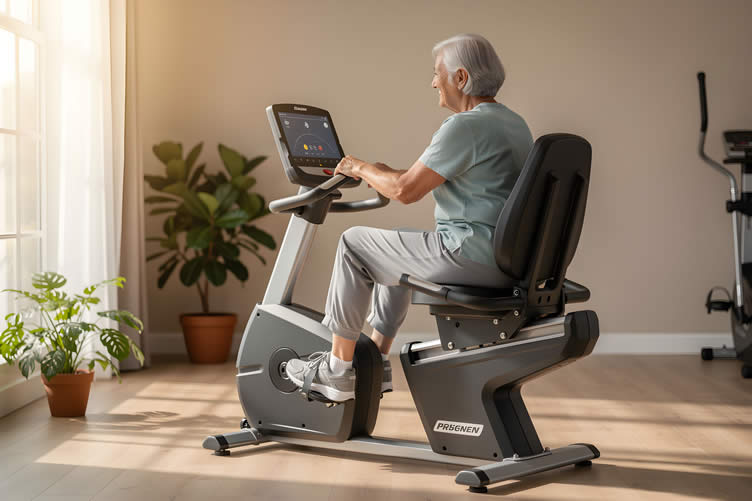
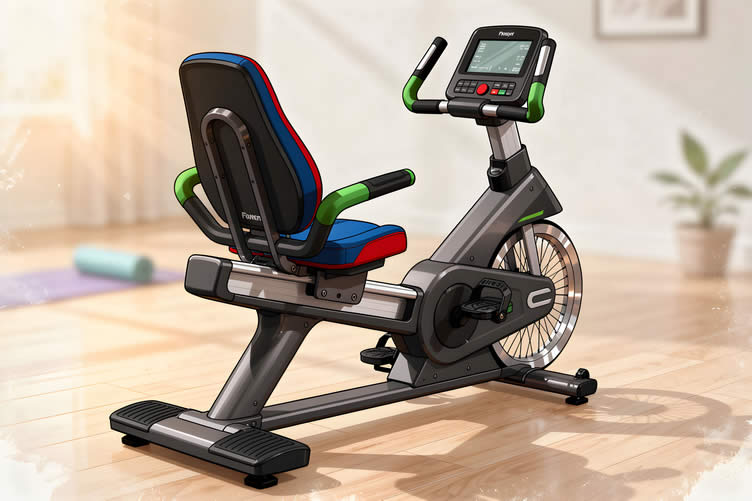
Recumbent bikes are widely regarded as one of the most senior-friendly cardio machines available. The low, reclined seat and full back support allow users to pedal comfortably without placing stress on the hips, knees, or lower back.
Unlike upright bikes, the recumbent position distributes body weight more evenly, which makes longer workout sessions far more manageable—especially for those managing arthritis or post-surgery recovery.
AI generated image by 123rf.com

Many models include heart-rate monitoring built into the handlebars, adjustable resistance levels, and easy-to-read displays with large buttons.
The Schwinn 290 recumbent bike [view] is a frequently recommended option, featuring a lumbar-support backrest, Bluetooth connectivity, and an optional step-through frame for easier entry (Clark, The Senior List, 2025).
Regular use targets the quadriceps, hamstrings, calves, and glutes—muscles essential for balance and everyday activities like standing up from a chair or climbing stairs.
- How It Works:
Pedals positioned out in front of the body (rather than below) allow the rider to push forward while seated in a reclined position, with the back fully supported against a padded rest. - How Elderly Users Benefit:
The step-through frame eliminates the need to swing a leg over a seat; resistance starts very low and increases gradually so users at any fitness level can begin safely. - Pros:
Gentle on joints, easy to enter and exit, back support encourages longer sessions, suitable for a wide range of mobility levels. - Cons:
Larger footprint than upright bikes, less upper-body engagement, can feel repetitive without varied programming.
[ view images: recumbent exercise bike ]
[ view dimensions: bike dimensions ]
[ shop/price: recumbent bike for seniors ]
- Quick scroll to section content …
Feature Description Benefits Drawbacks Recumbent Position Pedals positioned in front of the body, allowing the rider to push forward while seated in a reclined position. The back is fully supported against a padded rest. Distributes body weight more evenly, making longer workout sessions manageable. Especially beneficial for individuals managing arthritis or recovering from surgery. Larger footprint compared to upright bikes. Ease of Access Step-through frame eliminates the need to swing a leg over the seat. Ideal for users with limited mobility; provides safe entry and exit for elderly users. Less upper-body engagement compared to other cardio machines. Adjustable Resistance Resistance levels start very low and can be gradually increased. Catered to all fitness levels, providing a customizable workout experience. Can feel repetitive without varied programming. Additional Features Many models include heart-rate monitoring in the handlebars, easy-to-read displays with large buttons, and lumbar support backrests. Encourages longer sessions while ensuring comfort. Suitable for balance improvement and strengthening muscles used for everyday activities. May occupy significant space in smaller areas. Targeted Muscle Groups Focuses on quadriceps, hamstrings, calves, and glutes. Helps improve balance and supports daily functions like climbing stairs or standing up from a chair. Limited variety in upper-body engagement. 

AI generated image by 123rf.com
Staying Fit After 65: Why It Matters
Staying active as you age is one of the most important steps you can take to maintain your health, strength, and independence.
Regular physical activity helps improve balance, boost energy levels, and reduce the risk of chronic illnesses such as heart disease and arthritis.
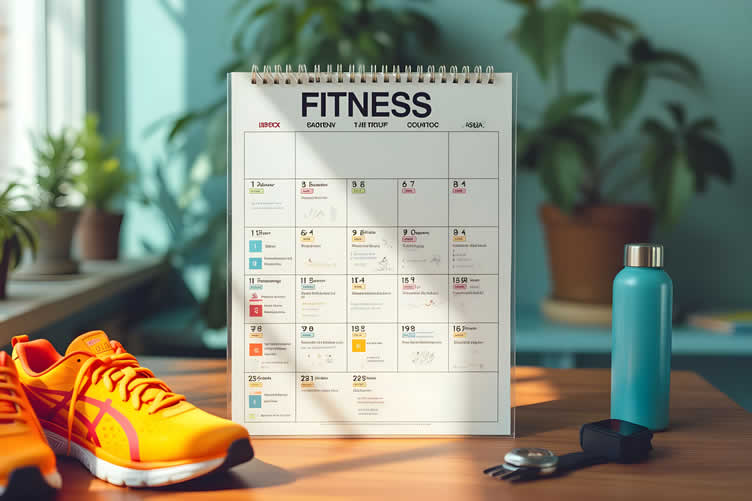
For adults 65 and older, keeping fit isn’t just about staying strong—it’s about enhancing your quality of life and ensuring you can continue doing the things that bring you joy.
With the right tools and guidance, staying active can be safe, enjoyable, and rewarding at any stage of life.
view ideas: Exercise Routines for Better Health(new win)

-
Scroll up to directory … or scroll to next: home exercise machines for seniors …

- How It Works:

Tackling home upgrades and fulfilling all your home improvement needs …
… save this curated directory of ideas for future reference.

-
-
2nd TERM: Elliptical Trainers
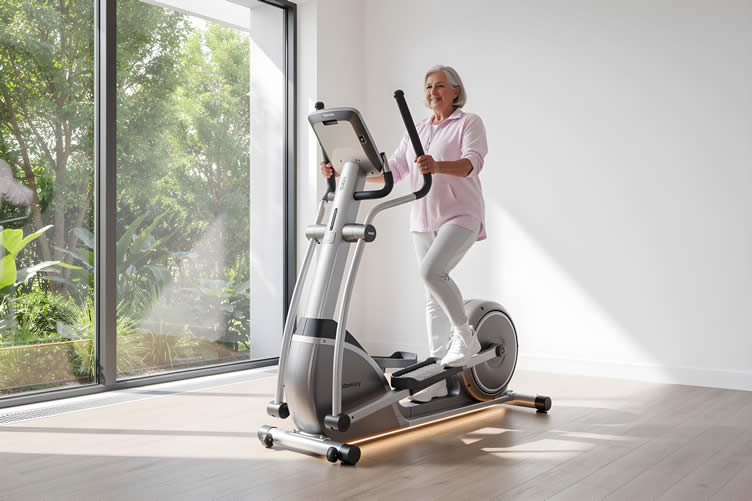
Elliptical trainers deliver a walking and stepping motion that closely mimics natural human gait—but without the pounding impact on joints that comes with outdoor walking or running.
The feet stay on the pedals throughout the movement, which means there’s no moment where the joint absorbs a heavy strike. For seniors with knee or hip sensitivity, this distinction matters enormously.
AI generated image by 123rf.com
Most ellipticals designed for home use include sturdy handrails that double as upper-body levers, meaning users can simultaneously work their arms and legs. Emergency stop buttons are standard, which adds an important layer of safety for anyone who feels unsteady during a workout.
The Sole E25 [view], designed in consultation with physical therapists, features 20 incline levels, pulse monitors, and access to over 3,000 streaming workouts (Clark, The Senior List, 2025).
An elliptical that puts less strain on knees than walking, running, or even biking is especially beneficial for older adults with joint pain or arthritis (RitFit Editorial Team, 2026).
- How It Works:
Two large oval-shaped foot pedals move in an elliptical (oval) path, powered by the user’s legs; movable handlebars extend the motion to engage the upper body simultaneously. - How Elderly Users Benefit:
The continuous gliding motion removes impact stress; handrails improve balance and stability during use; incline and resistance levels can be kept low for gentler sessions. - Pros:
Low joint impact, full-body cardio option, safety handrails included, good for balance practice. - Cons:
Requires standing throughout the workout, some models have a high step-up height that can be challenging, not ideal for users with significant balance impairments.
[ view images: elliptical trainers ]
[ view dimensions: elliptical dimensions ]
[ shop/price: elliptical trainers ]
- Quick scroll to section content …
Feature Description Benefits Drawbacks Elliptical Trainers Elliptical trainers deliver a walking and stepping motion that closely mimics natural human gait—but without the pounding impact on joints that comes with outdoor walking or running.
The feet stay on the pedals throughout the movement, which means there’s no moment where the joint absorbs a heavy strike.
Most ellipticals designed for home use include sturdy handrails that double as upper-body levers.
An elliptical that puts less strain on knees than walking, running, or even biking is especially beneficial for older adults with joint pain or arthritis.
The continuous gliding motion removes impact stress; handrails improve balance and stability during use; incline and resistance levels can be kept low for gentler sessions.
Requires standing throughout the workout, some models have a high step-up height that can be challenging, not ideal for users with significant balance impairments. 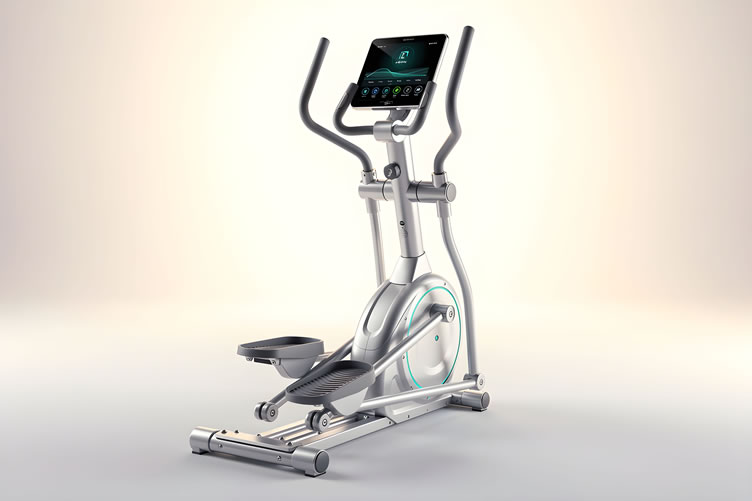
AI generated image by 123rf.com
Importance of a Healthy Diet
While staying active is essential, the foods we consume play an equally important role in our well-being.
Many processed foods found in grocery stores contain hidden health risks, including added sugars, unhealthy fats, and excess sodium, which can contribute to heart disease, diabetes, and hypertension.

Choosing whole, nutrient-dense foods like fresh fruits, vegetables, lean proteins, and whole grains can boost energy levels and enhance the benefits of exercise.
Together, a balanced diet and safe physical activity create the foundation for a healthier lifestyle.
view ideas: Hidden Health Risks(new win)
-
Scroll up to directory … or scroll to next: home exercise machines for seniors …
- How It Works:
-
-
-
3rd TERM: Treadmills with Safety Features
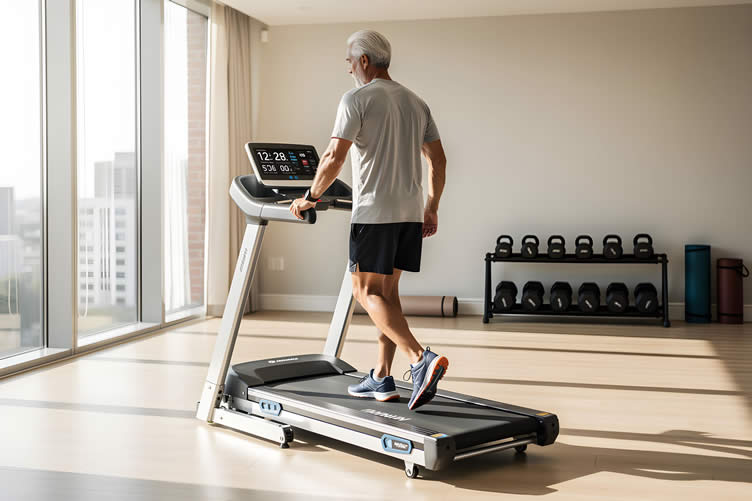
Walking is one of the best exercises available for bone density, cardiovascular health, and mental well-being—and a quality treadmill brings that benefit indoors regardless of weather.
For seniors who are steady on their feet and want a familiar movement pattern, a treadmill with the right safety features is a solid choice.
AI generated image by 123rf.com
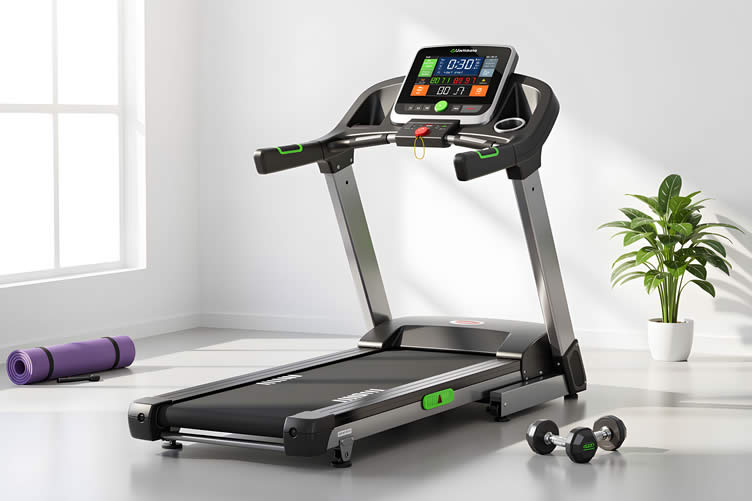
What separates a senior-appropriate treadmill from a standard one comes down to a few critical details: a cushioned deck to absorb shock, long side handrails for continuous support, an emergency stop safety key that attaches to clothing, a low minimum speed, and a low deck height for easy stepping on and off.
The ProForm Carbon Pro 2000 [view], for example, includes shock absorbers, speeds from 0 to 12 mph, 12 incline levels, and a foldable frame for convenient storage (Clark, The Senior List, 2025).
For seniors with more limited mobility, under-desk walking pads offer an even gentler alternative—a lower-profile, slower-speed belt designed for light daily movement while seated or standing at a desk.
- How It Works:
A motorized belt moves at a set speed, prompting the user to walk or jog in place; speed and incline are adjusted via a simple control panel. - How Elderly Users Benefit:
Indoor walking eliminates outdoor hazards like uneven terrain or extreme weather; handrails provide continuous stability; the emergency key stops the belt instantly if the user stumbles. - Pros:
Familiar walking motion, excellent for bone density and heart health, adjustable intensity, great for consistent daily movement. - Cons:
Moving belt increases fall risk compared to stationary machines, more joint impact than ellipticals or bikes, requires more attentiveness during use.
[ view images: treadmills (w/ safety features) ]
[ view dimensions: treadmill dimensions ]
[ shop/price: treadmills for seniors ]
- Quick scroll to section content …
Feature Description Benefits Drawbacks Treadmills with Safety Features Walking is one of the best exercises for bone density, cardiovascular health, and mental well-being.
Quality treadmills bring this benefit indoors regardless of weather, with senior-appropriate treadmills offering features like cushioned decks, long handrails, emergency stop keys, low speeds, and low deck heights for safety and support.
Indoor walking eliminates hazards like uneven terrain or extreme weather.
Handrails provide stability, while the emergency key enhances safety.
Adjustable intensity and familiar walking motion make it excellent for bone density, heart health, and daily movement.
Moving belt increases fall risk compared to stationary machines.
There is more joint impact compared to ellipticals or bikes, and use requires greater attentiveness.
Under-Desk Walking Pads These lower-profile, slower-speed belts are designed for light daily movement while seated or standing at a desk.
The motorized belt moves at a set speed, prompting the user to walk or jog in place; speed and incline are adjustable via a control panel.
Gentle alternative for seniors with limited mobility.
Provides light daily movement without exposure to outdoor elements.
Supports consistent activity and is easy to operate for desk users.
Limited in intensity and range compared to standard treadmills.
Not suitable for higher-intensity workouts or users seeking faster movement.
AI generated image by 123rf.com
AI Home Health Devices
Keeping fit has become more accessible and innovative thanks to the rise of smart home health devices.
These advanced tools are designed to provide personalized support, track your progress, and help you meet your fitness goals from the comfort of your own home.

From smart scales that monitor body composition to wearable fitness trackers and AI-powered exercise equipment, these devices can offer valuable insights into your health.
They’re particularly beneficial for seniors, as they assist in maintaining an active lifestyle while ensuring safety and convenience.
view ideas: Smart Wellness Technology(new win)
-
Scroll up to directory … or scroll to next: home exercise machines for seniors …
- How It Works:
-
SHARE IT ..! Someone in your network might benefit from this insightful post about home exercise machines for seniors. Feel free to share it on Facebook, X (formally Twitter), LinkedIn, or Pinterest!



Download this PDF for a concise summary of everything you need to know about …?

-
-
4th TERM: Rowing Machines (Magnetic Resistance)
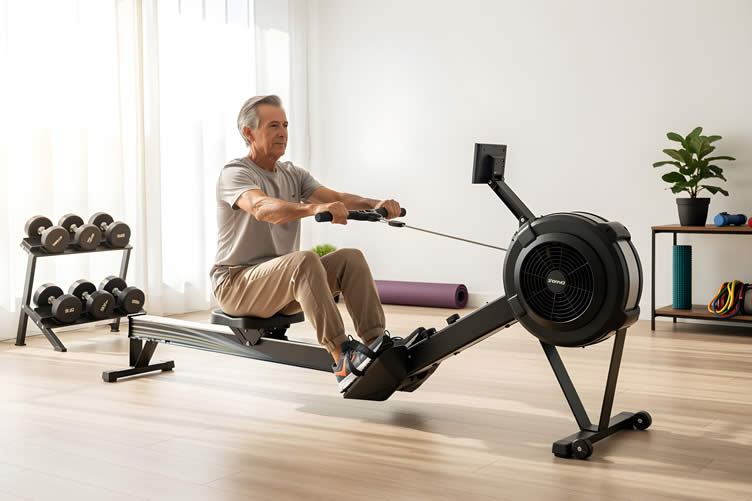
Rowing machines offer something most other cardio machines can’t match: a true full-body workout from a seated position.
A proper rowing stroke engages the legs, core, back, shoulders, and arms in one continuous, fluid movement—which is why indoor rowing activates approximately 85% of the body’s muscles (Home Gym Deals, 2026).
For seniors who want efficient, well-rounded conditioning without the risk of a fall, rowing is a compelling option.
AI generated image by 123rf.com
Among the different resistance types—air, water, and magnetic—magnetic resistance is the most senior-friendly. Magnetic rowers operate quietly, offer predictable and precisely controlled resistance levels, and allow very gradual intensity increases. This makes it much easier to pace yourself and monitor perceived exertion.
The Concept2 RowErg,[view] a popular recommendation, offers a PM5 health monitor, adjustable seat height, and a device holder for guided workouts (Clark, The Senior List, 2025).
The one caveat: proper rowing technique takes practice, and seniors with existing lower back problems should consult a healthcare provider before using a rowing machine.
- How It Works:
The user sits on a sliding seat, places feet on footplates with straps, grips a handle attached to a flywheel via a chain or strap, and pulls through a four-phase stroke—catch, drive, finish, and recovery—while the seat glides back and forth on a rail. - How Elderly Users Benefit:
The fully seated position eliminates fall risk during exercise; magnetic resistance starts very low; the rowing motion moves joints through natural ranges of motion without impact. - Pros:
Full-body cardio and strength in one session, low-impact, excellent for cardiovascular and muscular health, quiet operation with magnetic resistance. - Cons:
Requires good coordination and learning proper technique, not suitable for seniors with acute lower back issues, larger footprint than compact alternatives.
[ view images: rowing machines ]
[ view dimensions: rowing dimensions ]
[ shop/price: rowing machines (magnetic resistance) ]
- Quick scroll to section content …
Feature Details Pros Cons Description Rowing machines provide a full-body workout, engaging legs, core, back, shoulders, and arms in a fluid motion.
This makes rowing an efficient form of exercise, especially for seniors seeking safe and holistic conditioning without the risk of falling.
Full-body cardio and strength, low-impact, beneficial for cardiovascular and muscular health, quiet operation with magnetic resistance. Requires coordination and proper technique.
Not recommended for seniors with acute lower back issues.
Larger overall footprint compared to compact alternatives.
Resistance Type Among air, water, and magnetic resistance options, magnetic resistance stands out as the most senior-friendly.
Magnetic rowers operate quietly with controlled resistance levels, allowing for gradual intensity increases and easy self-pacing.
Quiet and predictable resistance.
Allows gradual and precise intensity adjustments, accommodating individual fitness levels.
None specific to magnetic resistance. How It Works The user sits on a sliding seat, secures their feet on footplates with straps, and grips a handle connected to a flywheel.
Each rowing stroke consists of four phases—catch, drive, finish, and recovery—moving joints through natural ranges of motion.
Seated position eliminates fall risk during exercise.
Encourages natural joint movement without impact. Suitable for a variety of fitness levels.
Users need to learn proper rowing technique for safety and effectiveness. May not suit those with existing back problems. Recommended Model The Concept2 RowErg is a popular recommendation for seniors.
It includes features like a PM5 health monitor, adjustable seat height, and a device holder for interactive workout guidance.
Highly customizable, suitable for seniors.
Helpful features to monitor health and guide workouts.
Proper technique requires practice, and healthcare consultation is advised for individuals with back issues. 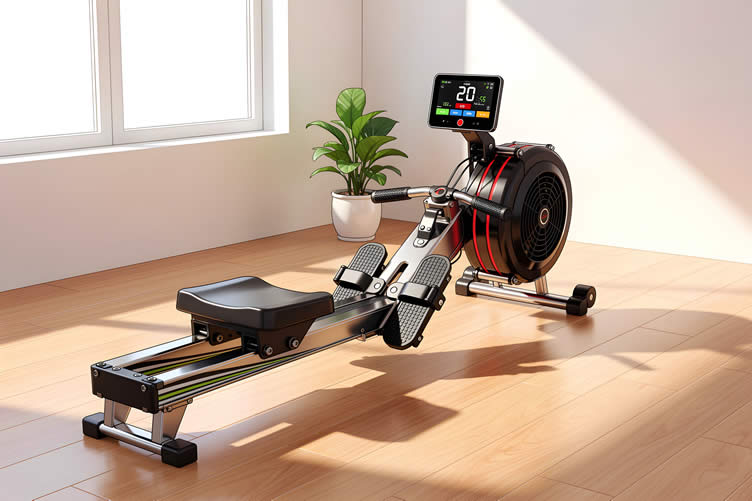
AI generated image by 123rf.com
Prioritizing Your Mental Health
Caring for your mental health is just as important as physical wellness, especially for adults 65+ who may experience increased isolation.
Stay connected by scheduling regular video calls with loved ones, joining online senior communities, or attending local classes and clubs.

Mindfulness practices like meditation or gentle yoga can reduce stress and boost emotional well-being, while hobbies such as gardening, painting, or reading can bring purpose and joy.
Remember, small, consistent steps toward nurturing your mental health can make a meaningful difference in your overall quality of life.
view ideas: The Healing Home(new win)
Houseplant Room Display
google imagesfoliage houseplants living room bathroom sunroom cacti living room bathroom patio terrarium kitchen bathroom bedroom Houseplant Display
google imagesclassical display view samples modern display view samples pedestal display view samples shelf display view samples ladder display view samples hanging display view samples mounted display view samples terrarium display view samples -
Scroll up to directory … or scroll to next: home exercise machines for seniors …
- How It Works:
-
-
-
5th TERM: Mini Steppers and Seated Steppers
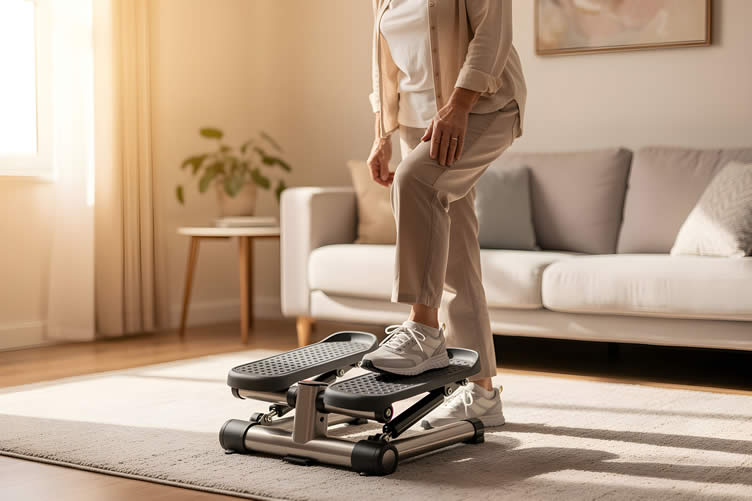
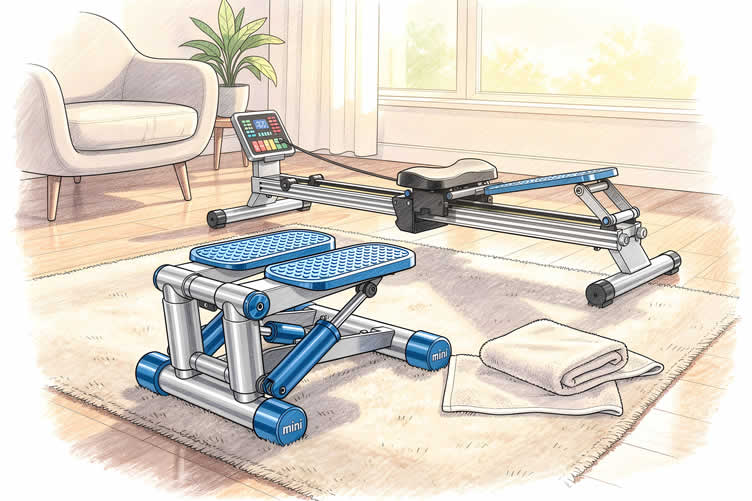
Mini steppers are compact, affordable, and surprisingly effective for light cardio and lower-body conditioning. They simulate a stair-climbing motion in a small footprint—many models sit on the floor and require no power, making them an easy fit for apartments or smaller living spaces.
Seated steppers take this concept further by allowing users to perform the stepping motion while sitting in a chair, which is ideal for those with balance concerns or very limited mobility.
AI generated image by 123rf.com
Both types target the calves, thighs, and glutes with low-stress movement. Many mini steppers also include resistance bands attached to the frame for basic upper-body work.
They won’t replace a full cardio session, but for seniors who are just getting back into movement or need a gentle daily habit, they are a practical starting point.
- How It Works:
Two hydraulic or magnetic pedals move up and down alternately, mimicking the motion of climbing stairs; the user shifts weight between feet to maintain the stepping rhythm. - How Elderly Users Benefit:
Low step height and compact design make the machine easy to approach; seated versions remove balance demands entirely; resistance is typically very light and easy to manage. - Pros:
Very affordable, small footprint, no assembly or power required for most models, suitable for small spaces, good entry point for beginners. - Cons:
Limited resistance range restricts progression, small displays can be difficult to read, less cardiovascular intensity compared to larger machines.
[ view images: mini and seated steppers ]
[ view dimensions: stepper dimensions ]
[ shop/price: mini and seated steppers for seniors ]
- Quick scroll to section content …
Stepper Type Key Features User Benefits Pros and Cons Mini Steppers Compact, affordable, simulate stair-climbing motion, ideal for small spaces, many models require no power, some include resistance bands for upper-body work. Targets calves, thighs, and glutes with low-stress movement; suitable for light cardio and conditioning; good starting point for seniors or beginners. Pros: Affordable, space-saving, no assembly required for most models.
Cons: Limited resistance range, small displays can be hard to read, lower cardiovascular intensity.
Seated Steppers Allows stepping motion while sitting, ideal for users with balance concerns or limited mobility, often feature light resistance for ease of use. Low step height and seated use remove balance demands; encourages gentle movement for seniors or those starting exercise. Pros: Compact design, easy to manage resistance, suitable for those with mobility challenges.
Cons: Limited progression potential, less intense workout compared to larger machines.
AI generated image by 123rf.com
Staying Safe at Home
You may hate to admit it, but once you reach 65 and beyond, it’s essential to be extra cautious around your home.
The risk of slips and falls increases with age, and taking proactive steps to safeguard your space is an act of self-care.

Simple modifications, like installing grab bars in the bathroom, improving lighting in dim areas, and using non-slip mats on floors, can make a world of difference.
These adjustments not only help prevent accidents but also create a home environment where you can feel secure and confident.
view ideas: Home Upgrades for Seniors(new win)
-
Scroll up to directory … or scroll to next: home exercise machines for seniors …
- How It Works:
-
-
-
6th TERM: Home Gyms and Resistance Towers
While cardio machines get most of the attention, strength training is equally important for older adults.
Research published in the Annual Review of Gerontology and Geriatrics confirms that resistance exercise helps prevent sarcopenia—the age-related muscle loss that contributes to weakness, poor posture, and increased fall risk (Law, Clark & Clark, 2016).
Home gyms and resistance towers provide a controlled way to build and maintain that strength without the unpredictability of free weights.
AI generated image by 123rf.com
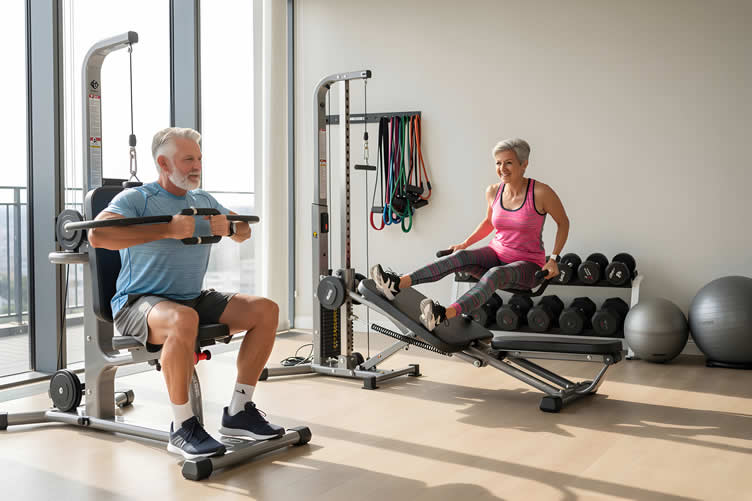
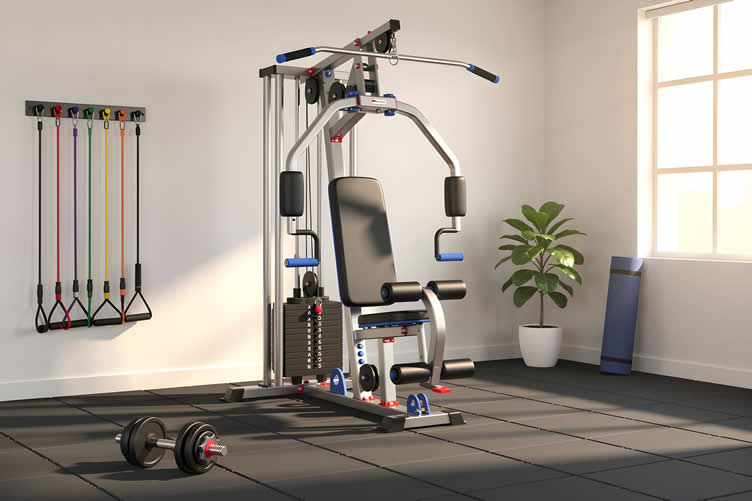
Cable-based home gym stations and resistance towers use a pulley system to guide movement along a fixed path. This guided resistance is particularly safe for seniors because it reduces the risk of dropping a weight or losing control of a movement.
Many exercises—lat pulldowns, seated rows, chest presses, and leg extensions—can be performed seated or in a supported position.
The GDLF Lat Pull-Down Machine [view], available at around $165, is a budget-friendly option that builds back, shoulder, and arm strength from a seated position (Clark, The Senior List, 2025).
- How It Works:
A cable runs through a pulley system connected to a weight stack; the user selects a resistance level using a pin, grips a handle or bar, and pulls or pushes against the cable to work specific muscle groups. - How Elderly Users Benefit:
The fixed cable path guides movement safely; exercises can be performed seated or standing; weight increments are small enough for gradual progression. - Pros:
Multiple exercises in one machine, guided resistance reduces injury risk, supports muscle mass and daily functional strength. - Cons:
Larger and heavier than most other home machines, higher cost, may require professional setup, complex multi-station units can be overwhelming for beginners.
[ view images: home gym for seniors ]
[ view dimensions: gym dimensions ]
[ view dimensions: resistance tower ]
[ view dimensions: tower dimensions ]
[ shop/price: home gym ]
[ shop/price: resistance tower ]
- Quick scroll to section content …
Equipment Description How It Works Benefits and Drawbacks Home Gyms and Resistance Towers Strength training tools that help prevent age-related muscle loss (sarcopenia) by enabling controlled resistance exercises.
Ideal for elderly users to maintain strength and reduce fall risk.
A cable runs through a pulley system connected to a weight stack.
The user selects resistance using a pin, then grips a handle or bar to pull or push, working specific muscle groups.
Benefits: Multiple exercises available, guided resistance reduces injury risk, supports muscle mass and functional strength.
Drawbacks: Large and heavy, higher cost, may require professional setup, and complex for beginners.
GDLF Lat Pull-Down Machine A budget-friendly exercise machine (approx. $165) designed for building back, shoulder, and arm strength from a seated position. The machine uses a cable and pulley system with a weight stack.
Resistance level is adjustable with a pin, allowing safe and guided movements.
Benefits: Enables seated or standing exercises, safe guided movements, small weight increments for gradual progression.
Drawbacks: Size and weight can make the machine cumbersome; setup may require assistance.
AI generated image by 123rf.com
Make Workouts More Enjoyable
A home gym can be a fantastic way to achieve the strength training and fitness you need.
However, it’s no secret that repetitive exercises, whether on a treadmill, rowing machine, recumbent bike, or even using strength equipment, can sometimes feel monotonous.
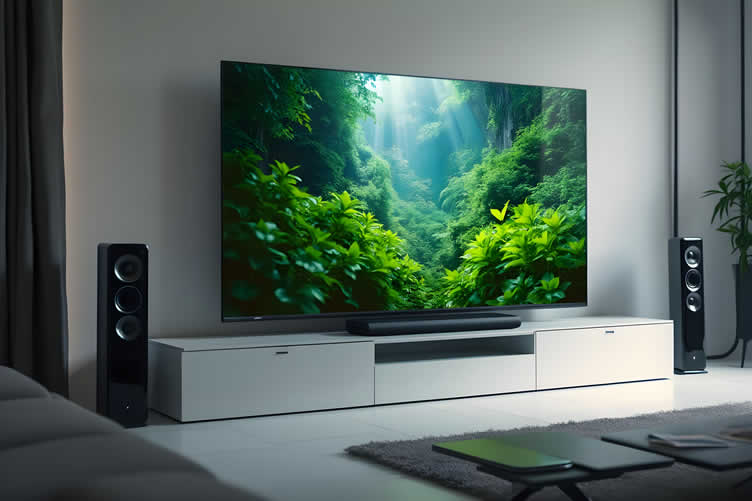
To keep your workout sessions engaging, consider mounting a large TV monitor on the wall.
Watching your favorite programs or even listening to uplifting content while exercising can make the time pass more quickly and smoothly, helping you stay motivated and consistent in your fitness routine.
view ideas: The New Age of TVs(new win)
Gaming and Work Monitors
viewing amazon-
Scroll up to directory … or scroll to next: home exercise machines for seniors …
- How It Works:
-
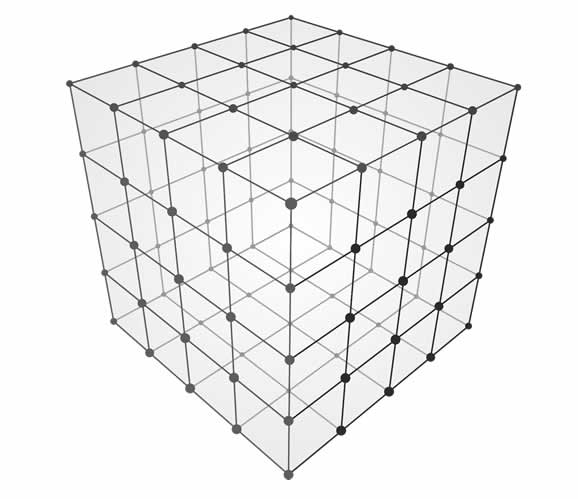
Easily determine the dimensions you need for any home remodeling project …
… ensuring functionality, visual appeal, and compliance with building codes.
Download this PDF for a concise summary of everything you need to know about …?
-
-
7th TERM: Key Features to Look For in 65+ Exercise Machines
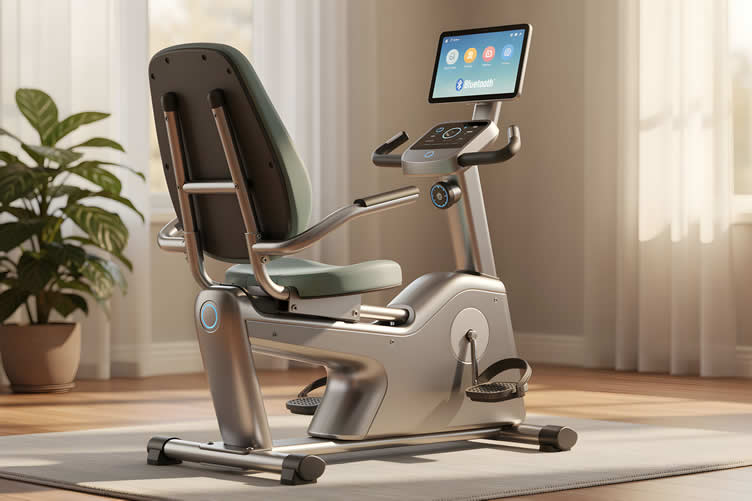
Choosing the right machine comes down to more than brand names or price tags. According to RitFit’s 2026 buying guide, the most important factors to evaluate are safety, ease of use, and how well the machine accommodates changing mobility needs over time.
AI generated image by 123rf.com
Before comparing features like Bluetooth or streaming workouts, confirm that the machine meets these foundational requirements.
A machine that ticks every technology box but is difficult to get on and off safely is the wrong machine.
- Low step-over height — minimizes the need to lift legs high when mounting or dismounting
- Wide, stable base — reduces wobbling during entry, exit, and exercise
- Non-slip pedals and handles — textured surfaces improve grip and reduce accident risk
- Simple resistance controls — large, clearly labeled buttons that don’t require scrolling through complex menus
- Clear, easy-to-read display — large numbers for time, calories, heart rate, and resistance levels
- Emergency stop access — safety keys or large stop buttons within immediate reach
- Adjustable seat and handlebars — accommodates different heights and body types
- Back support — padded seats and backrests for users who need lumbar or postural support
- Adequate floor space around the machine — allows for safe entry, exit, and caregiver assistance if needed
- Quick scroll to section content …
Key Features Description Purpose Low Step-Over Height Minimizes the need to lift legs high when mounting or dismounting. Ensures safer and easier access to the machine. Wide, Stable Base Reduces wobbling during entry, exit, and exercise. Provides stability and prevents accidents. Non-Slip Pedals and Handles Textured surfaces improve grip and reduce accident risk. Enhances safety while using the machine. Simple Resistance Controls Large, clearly labeled buttons that don’t require scrolling through complex menus. Makes customization simple and user-friendly. Clear, Easy-to-Read Display Large numbers display time, calories, heart rate, and resistance levels. Improves readability and ease of use. Emergency Stop Access Safety keys or large stop buttons within immediate reach. Facilitates quick action in case of emergencies. Adjustable Seat and Handlebars Accommodates different heights and body types. Ensures comfort and personalized use. Back Support Padded seats and backrests for users who need lumbar or postural support. Provides additional comfort and support for users. Adequate Floor Space Allows for safe entry, exit, and caregiver assistance if needed. Ensures space for comfortable and safe usage. 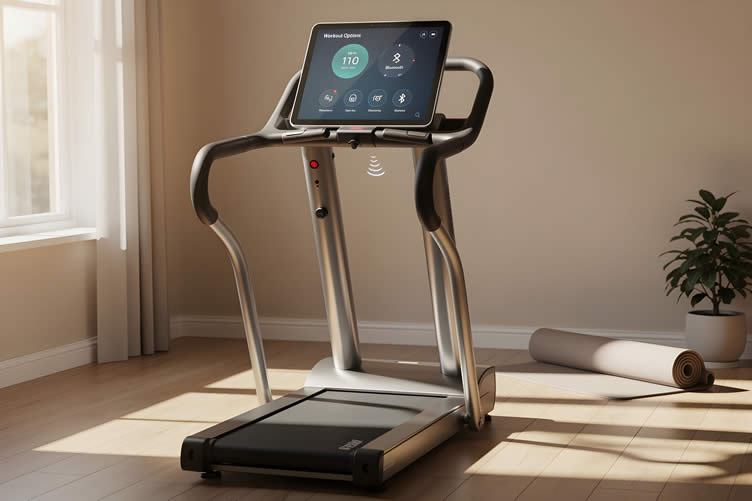
AI generated image by 123rf.com
All-Season Room for Well-Being
An all-season room is a wonderful addition to your home, offering a cozy space to connect with nature all year round, regardless of the weather.
Filled with natural light, it is the perfect spot for gentle exercises like yoga or tai chi, as well as a peaceful retreat for reading and meditating.
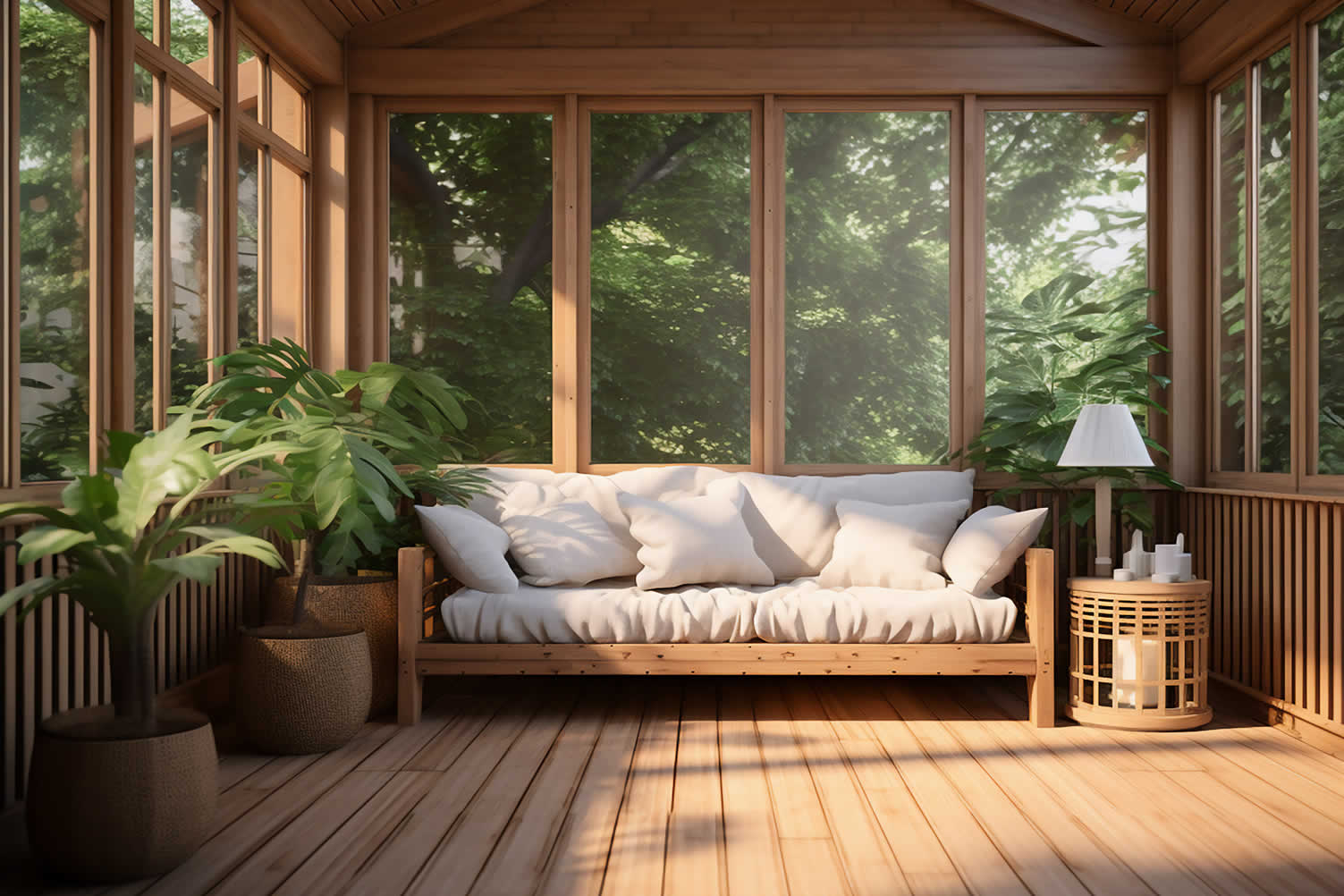
By encouraging both movement and relaxation, this versatile room beautifully supports your overall well-being.
view ideas: From Deck to Dream Room(new win)
Sunroom Ideas
google imagesSunroom Ideas view ideas Conservatory view ideas All Season Room view ideas – deck all season view ideas – porch all season view ideas – garage all season view ideas – kitchen all season view ideas -
Scroll up to directory … or scroll to next: home exercise machines for seniors …
-

Budgeting Worksheet For Costing Home Remodeling and Home Improvement Decisions
 File Type (excel)
-
-
8th TERM: Frequently Asked Questions
When choosing fitness and exercise machines for adults aged 65 and older, common questions arise about usability, safety, and effectiveness.
The following section addresses these frequently asked questions, providing clear and helpful insights to support informed decisions and promote safe, enjoyable exercise routines.
-
What is the best home exercise machine for seniors with joint pain?
Recumbent bikes and elliptical trainers are the best home exercise machines for seniors with joint pain. Both provide low-impact cardiovascular workouts that minimize stress on the knees, hips, and lower back.
The recumbent bike’s seated, back-supported position makes it the most joint-friendly option overall, while the elliptical offers the added benefit of standing cardio without the impact of walking or running.
-
Are rowing machines safe for older adults?
Rowing machines are safe for older adults who have reasonable hip, knee, and back mobility. Because rowing is performed in a seated position and uses magnetic resistance with adjustable difficulty, it carries a low fall risk and suits a range of fitness levels.
Seniors should learn proper rowing technique before increasing resistance to protect the lower back and shoulders.
-
What is the safest exercise machine for elderly people with balance concerns?
The recumbent bike is the safest exercise machine for elderly people with balance concerns. Its fully seated design, back support, and stable frame eliminate the need to maintain standing balance during exercise.
For those seeking strength training, cable-based resistance towers with seated exercise options are also a safe choice.
-
How long should seniors exercise on a home machine each day?
The CDC (December 2025) recommends at least 150 minutes of moderate-intensity aerobic activity per week for adults 65 and older, which averages to about 20–30 minutes most days.
Beginners should start with 10–15 minute sessions and increase duration gradually as fitness improves. Muscle-strengthening activities should be added on at least two days per week.
-
Do seniors really need strength training, or is cardio enough?
Seniors need both cardio and strength training. Cardio supports heart health, weight management, mood, and endurance—but strength training specifically addresses sarcopenia (age-related muscle loss), which affects balance, posture, bone density, and the ability to perform daily tasks.
Resistance towers, cable machines, and resistance bands all provide effective strength training options for home use.
-
What should seniors avoid when buying a home exercise machine?
Seniors should avoid machines that are difficult to mount or dismount, lack handrails or stable support, require fast reactions to adjust settings, or are designed for high-impact movement.
Specifically, RitFit Sports (July 2026) recommends avoiding fast treadmills, high-step ellipticals, heavy free weights without guidance, and unstable balance tools as first choices for older adults.
-
What type of exercise machine is best for improving flexibility and range of motion in seniors?
Stretch trainers or machines designed for flexibility are excellent for improving range of motion in seniors. These machines offer guided stretches that target key muscle groups, helping to maintain flexibility and reduce stiffness.
For a simpler option, some seniors may also benefit from elliptical machines with full-arm movement, as they engage both upper and lower body gently while encouraging joint mobility.
-
Are there any exercise machines suitable for seniors recovering from injuries?
Yes, machines like recumbent bikes, hand cycles, and resistance bands with supports are particularly useful for seniors recovering from injuries. These devices allow for controlled, low-impact movements that can be tailored to individual recovery needs.
Always consult a healthcare professional or physical therapist to ensure that the chosen equipment complements the recovery plan safely.
Question Answer Additional Notes What is the best home exercise machine for seniors with joint pain? Recumbent bikes and elliptical trainers are the best options. They provide low-impact cardiovascular workouts that minimize stress on the knees, hips, and lower back. Recumbent bikes offer back support, while elliptical trainers allow for standing cardio with reduced impact. Focus on low-impact machines with support to avoid joint strain. Are rowing machines safe for older adults? Rowing machines are safe for those with reasonable hip, knee, and back mobility. They allow seated exercise with adjustable difficulty, reducing fall risks and suiting various fitness levels. Proper technique must be learned beforehand to prevent injury. What is the safest exercise machine for elderly people with balance concerns? Recumbent bikes are the safest due to their stable, fully seated design with back support. Cable-based resistance towers with seated options are also safe choices for strength training. Prioritize stability and seated exercise options for balance issues. How long should seniors exercise on a home machine each day? The CDC recommends 150 minutes of moderate-intensity aerobic activity per week (20–30 minutes most days). Beginners should start with 10–15 minutes and increase gradually. Include muscle-strengthening activities at least two days a week. Do seniors really need strength training, or is cardio enough? Seniors need both cardio and strength training. Cardio improves heart health and endurance, while strength training combats age-related muscle loss, enhancing balance, posture, and bone density. Use resistance towers, cable machines, or resistance bands for strength training. What should seniors avoid when buying a home exercise machine? Avoid machines that are difficult to mount or dismount, lack handrails or stable support, or are designed for high-impact movements. Fast treadmills and heavy free weights without guidance are not recommended. Choose equipment that prioritizes safety and ease of use. What type of exercise machine is best for improving flexibility and range of motion in seniors? Stretch trainers or flexibility machines are ideal, offering guided stretches for key muscle groups. Ellipticals with full-arm movement can also help by gently engaging upper and lower body joints. Focus on machines that encourage gradual, guided motion to avoid stiffness. Are there any exercise machines suitable for seniors recovering from injuries? Recumbent bikes, hand cycles, and resistance bands with supports are effective for injury recovery, as they allow controlled, low-impact movements tailored to recovery needs. Consult a healthcare professional before selecting equipment for recovery. 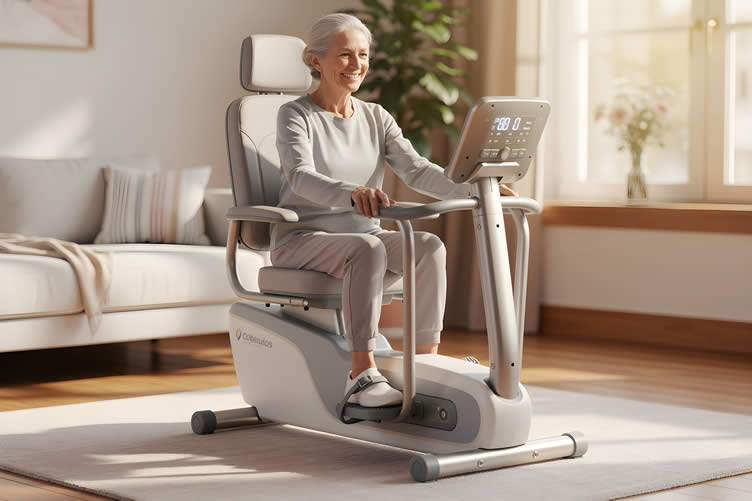
AI generated image by 123rf.com
Creating Your Forever Home
As you enter your golden years, consider how your home can better support your long-term comfort and needs.
If you’re planning to stay put, a few thoughtful renovations can make a significant difference.
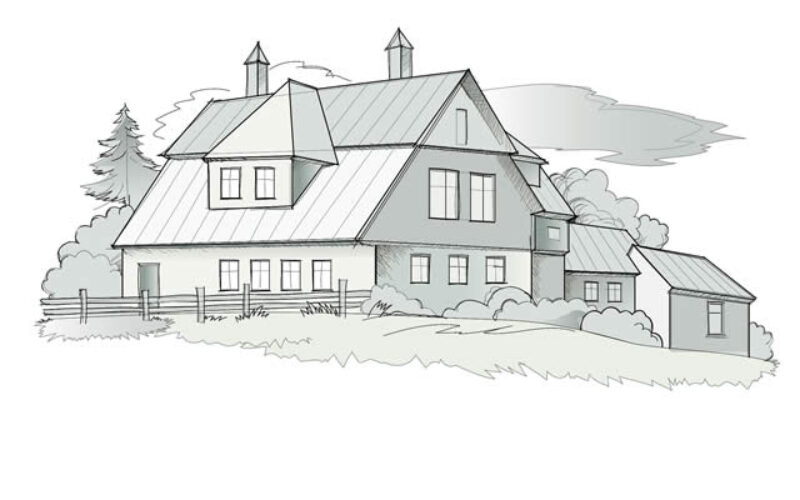
Key modifications include installing grab bars in bathrooms, widening doorways, adding non-slip flooring, and improving lighting throughout.
In the kitchen, pull-out drawers and accessible countertops can simplify daily tasks.
These updates enhance safety while helping you maintain your independence for years to come.
view ideas: 10 Lifelong Investments(new win)
-
Scroll up to directory … or scroll to next: home exercise machines for seniors …
-
-
Quick Contractor Guides selecting negotiating working with inspecting
-
-
9th TERM: Creating A Dedicated Exercise Room
A dedicated fitness and exercise room is one of the most rewarding home improvements you can make for your long-term health.
For adults 65 and older, having a space designed around your specific needs removes the barriers that often make gym visits feel inconvenient or intimidating. Everything you need is right at home, on your schedule, and built around your body.
Think of this room not as a conventional gym but as a personal wellness studio. When designed thoughtfully, it supports strength, balance, mobility, and recovery while remaining a space you actually look forward to using.
Here’s how to set it up right.
-
Layout and Flooring
Start with circulation. According to Fitness Design Group, pathways between machines should provide at least 42–60 inches of clearance to accommodate walkers, canes, and side-by-side assistance.
Leave an open floor zone for stretching, balance work, and light movement—this often becomes the most-used area in the room.
For flooring, choose rubber tile, cork, or high-quality vinyl. These surfaces absorb impact, reduce joint stress, and provide reliable traction. High-contrast transitions between flooring zones help with depth perception, an important safety detail for older adults.
-
Safety and Accessibility Features
Wall-mounted grab bars near the entry, along at least one wall, and throughout the balance area are non-negotiable. Pair these with brighter, even, glare-free lighting—targeting 30–50 foot-candles at 3,500–4,000K with a high color rendering index. This minimizes shadows and supports confident movement throughout the room.
Keep a phone or emergency call button within easy reach, and ensure all doorways are at least 36 inches wide. Sturdy chairs with armrests and a higher seat height (ideally 17–19 inches) give you a stable base for seated exercises and standing-to-sitting transitions.
-
Climate, Air, and Acoustics
Older adults are more sensitive to temperature, so reliable climate control matters. A slightly warmer room with strong ventilation keeps workouts comfortable and prevents fatigue. Humidity should stay between 40–60%, with high-efficiency air filtration.
On the acoustic side, excessive noise and reverberation can be disorienting—especially for those who use hearing aids. Acoustic panels or soft furnishings that achieve an NRC rating of 0.70 or higher will keep the space calm and speech intelligible during classes or instructional videos.
-
Hydration and Convenience
Regular hydration is essential during any workout, and it’s easy to overlook. A dedicated water station or bottle-fill point within or immediately adjacent to the room removes any excuse to skip it.
A small counter or shelf keeps towels, sanitizer, and a basic first-aid kit close by. Open, low shelving or rolling carts work best for storing resistance bands, light dumbbells, balance pads, and exercise balls—keeping everything accessible without bending or reaching overhead.
-
Balance and Functional Training Area
This zone deserves its own dedicated footprint. Equip one wall with a sturdy horizontal handrail and include balance pads or a low-profile foam mat for stability drills.
This setup supports heel-to-toe walking, tandem stance practice, and other fall-prevention exercises that WebMD notes can significantly reduce injury risk in older adults.
Add a step platform with hand support for sit-to-stand repetitions, and anchor resistance bands at multiple heights for gait and mobility training. Positioning this area within clear staff or caregiver sightlines is a smart safety measure.
-
Visual and Motivational Amenities
A mirrored wall does double duty—it makes the room feel larger and helps you self-monitor posture and alignment during exercises.
Mount a television or large display screen at a comfortable eye level for streaming exercise classes, virtual walking trails, or gentle programming.
A large-face clock or digital timer on the wall simplifies interval training without the hassle of a phone. These details turn a functional room into one that genuinely motivates you to show up every day.
-
Other Considerations
Plan for social use. Leaving enough open floor space for four to eight people makes group classes or partner workouts possible, and a small bench or two chairs encourages post-workout conversation—an underrated driver of long-term fitness adherence.
From an equipment standpoint, recumbent bikes, seated cross-trainers, and treadmills with low deck heights and extended side rails work best for low-impact cardio.
Selectorized strength machines with small resistance increments (as fine as 2.5 lbs) allow for gradual, confident progression without joint strain.
Section Details Key Recommendations Layout and Flooring A well-designed layout ensures accessibility and functionality. Open floor areas are prioritized for mobility, stretching, and balance activities. Pathways should have 42–60 inches of clearance. Use rubber, cork, or vinyl flooring for impact absorption and safety. High-contrast zones aid depth perception. Safety and Accessibility Features Safety is central to the design to prevent falls and support independence. Accessibility considerations improve confidence and usability. Install wall-mounted grab bars, ensure 36-inch-wide doorways, and include a phone or emergency button. Use bright, glare-free lighting (30–50 foot-candles). Climate, Air, and Acoustics Maintain a comfortable and calm environment for seniors sensitive to temperature, air quality, and noise. Keep the room slightly warmer with humidity at 40–60%. Use acoustic panels with an NRC rating of 0.70+ to minimize noise and add strong ventilation. Hydration and Convenience Convenience encourages regular hydration and keeps exercise essentials within easy reach. Include a water station or bottle-fill point nearby. Use low shelving or rolling carts for easy storage of light equipment like bands and dumbbells. Balance and Functional Training Area A dedicated area for balance and gait training reduces fall risks while improving stability and mobility. Equip with a sturdy handrail, balance pads, and a foam mat. Include resistance bands anchored at multiple heights for training. Visual and Motivational Amenities Design the space with elements that encourage participation and enhance the workout experience. Add mirrors for posture monitoring, a television for streaming programs, and a visible clock or timer for training intervals. Other Considerations Plan the space to accommodate group activities and long-term fitness adherence with suitable equipment. Leave floor space for 4–8 people. Use recumbent bikes and seated cross-trainers for cardio, and strength machines with small resistance increments for safe progression. 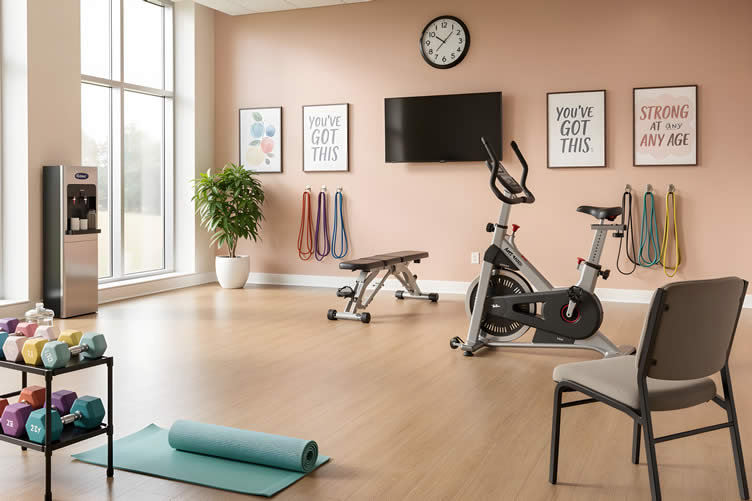
AI generated image by 123rf.com
Health Benefits of a Swimming Pool
While a home gym is a fantastic option, have you considered a backyard or enclosed swimming pool?
Swimming is one of the best workouts for those dealing with joint or muscle pain.

Water’s natural buoyancy reduces strain on the body, enabling low-impact movements that strengthen muscles, improve flexibility, and support cardiovascular health.
Whether you’re swimming laps or trying water-based exercises, a pool offers a soothing environment to stay active without compromising your comfort.
view ideas: Adding In-Ground Swimming Pool(new win)
Using a Professional for Your Personal Fitness Room
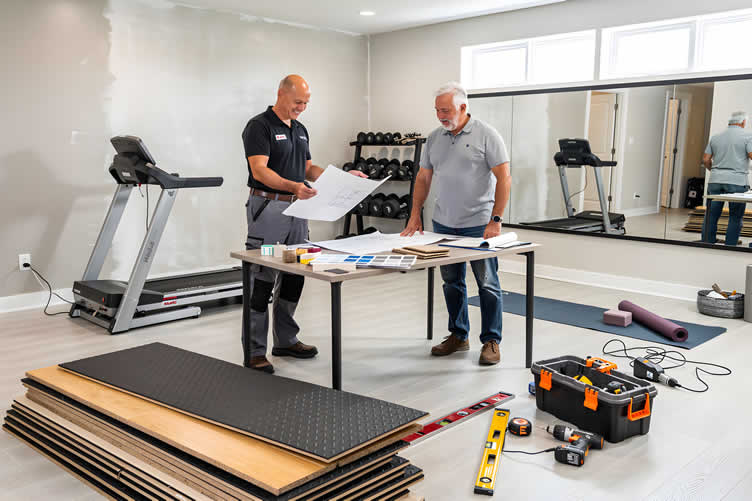
Creating a dedicated fitness space tailored to your unique needs can feel overwhelming, but a professional renovation contractor can help simplify the process.
They bring expertise and experience to ensure your personal fitness room is both functional and inviting. Here’s what a professional contractor can provide and where to find them:
- Custom Design Services:
Contractors can work with you to create a layout that maximizes your available space while accommodating your exercise equipment and personal preferences. - Specialized Equipment Installation:
They ensure the proper installation of flooring, mirrors, ventilation systems, and any specific fitness equipment requiring anchoring or stability. - Electrical and Lighting Solutions:
Contractors can incorporate proper wiring and lighting to enhance safety and provide the right ambiance for your workouts. - Storage Solutions:
They can integrate smart storage options to keep the space organized and clutter-free. - High-Quality Materials:
Professionals can recommend and source durable materials suited for a workout environment. - Compliance with Safety Standards:
They will ensure your space meets relevant building codes and safety regulations.
To find a trusted renovation contractor, consider asking for recommendations from local fitness centers, browsing online directories like Houzz or Angi [view above], or checking reviews for contractors in your community.
Taking the time to work with a professional will help create a fitness room that inspires and supports your wellness goals.
LetsRenovate has partnered with HomeAdvisor (Angi)™, a renowned provider of highly-rated, carefully-vetted local remodeling contractors. Start your search here by choosing the type of remodeling contractor you need and entering your zip code to find local professionals.
AI generated image by 123rf.com
But Wait!
Before searching for and evaluating remodeling contractors, we recommend downloading this evaluation worksheet.
Use it to objectively rank and compare potential contractors based on key factors like pricing, licensing, and referrals.

Evaluation Sheet
File Type:
-
-
Scroll up to directory … or scroll to conclusion and references …
-
-
Conclusion
… moving forward with confidence
Staying active in later years is one of the most powerful things an older adult can do for long-term health, independence, and quality of life.
The right home exercise machine removes the barriers—no gym commute, no bad weather, no intimidating equipment—and replaces them with a safe, simple routine that fits real life.
Start with the machine that best matches your mobility level and any joint or health concerns. For balance, a recumbent bike or seated stepper is a strong first choice. For full-body conditioning, consider a magnetic rowing machine or resistance tower.
And if space or budget is limited, a mini stepper paired with resistance bands can build a surprisingly effective daily habit.
Whatever you choose, start slowly, prioritize consistency over intensity, and consult your healthcare provider before beginning—especially if you have a chronic condition or recent injury.
The goal isn’t perfection. It’s showing up, moving regularly, and building a foundation that keeps you strong and independent for years to come.
References
- Centers for Disease Control and Prevention. (December 4, 2025). Physical Activity Benefits for Adults 65 or Older. https://www.cdc.gov/physical-activity-basics/health-benefits/older-adults.html
- Centers for Disease Control and Prevention. (2024). Characteristics of Older Adults Who Met Federal Physical Activity Guidelines for Americans: United States, 2022. CDC National Health Statistics Reports. https://www.cdc.gov/nchs/data/nhsr/nhsr215.pdf
- RitFit Editorial Team. (July 5, 2026). Best Home Gym Equipment for Seniors in 2026: Safe Buying Guide. RitFit Sports. https://www.ritfitsports.com/blogs/article/best-home-gym-equipment-for-seniors
- Clark, A. (September 17, 2025). Best Exercise Equipment for Seniors in 2026. The Senior List. https://www.theseniorlist.com/exercise/best/
- Solis-Moreira, J. (January 31, 2025). Can the viral mini steppers help you reach your cardio goals? What experts are saying. CNN Health. https://www.cnn.com/2025/01/31/health/ministepper-fitness-craze-wellness
-
Quick scroll to more interior home and decor ideas …
-
ideas to view and compare from the photo above
- What comments can you share about the type of
home exercise machines for seniors that you have used?




Calendar For:
Home Maintenance
File Type:
… view our sharing links below for a quick "share the knowledge"

Cover image credit: home exercise machines for seniors by 123rf.com
end of post … please share it!
 |
did you find this home exercise machines for seniors analysis helpful? If so, please share the article with your friends and family! |
Nice pic idea? Leave us a quick comment below.
And please share this pic idea within your social networks.