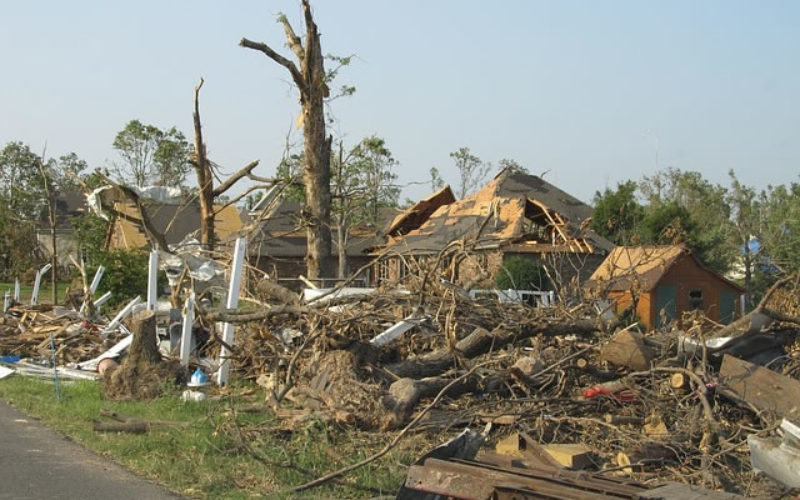
Winds topped out at 210 mph, strong enough to sweep brick homes off of foundations.1
Hackelburg Tornado
Rated an EF-5, the Hackleburg Tornado was one of the most destructive in U.S. history, and was part of a system that caused an estimated $5 billion in damages. Warned that a devastating tornado was on the way, many people escaped certain death and hunkered down as the storm pressed in. That still didn’t save countless numbers of people who might have survived had their sanctuary been located below ground. Mobile homes were expected to be flattened, but as solid structures were obliterated, homeowners may want to consider building storm shelters to ride out future catastrophes.
Storms shelters may seem to be something that people who live in Kansas and other “tornado alley” states need, but any homeowner who doesn’t have problem with the water table on his property may find that adding a storm shelter is the best home renovation project they can tackle. Certainly, if your area is prone to tornadoes or hurricanes, a storm shelter could prove to be a life saver.

Seeking Shelter
Some homes come equipped with “safe rooms” which are essentially above ground shelters designed to withstand the worst weather. After seeing brick homes swept away in Alabama, people may rethink the wisdom of an above ground sanctuary, choosing to go below ground to avoid meeting disaster face to face.
What are some of the particulars of an in-ground storm shelter? For that information, we turned to U.S. Storm Shelters, a Fort Worth, Texas company who builds concrete shelters for its customers.2 A standard shelter is 6’ by 8’ and costs about $3,000. With room for 8 people, the standard shelter has a ceiling height of 6’2” and is constructed with 6,000 PSI concrete and fibermesh. The structure is further reinforced with rebar and has walls that are three inches thick and ceilings and floors that are four inches thick. Weighing 12,600 pounds, this type of unit requires bringing heavy equipment on site to put it in place.
Before the shelter can be installed, workers must dig a hole that is 4 and one-half feet deep in the ground. The top two feet of the shelter is above ground, but placed in a small mound. The company says that construction takes three hours to complete.
Shelter Designs
Larger shelters are also available, offering room for 12 people, weighing 20,000 pounds and costing approximately $5,000. Other manufacturers offers similar sized shelters, some of which can include electrical hook up.
The Federal Emergency Management Administration rates above ground shelters and bestows its FEMA F-5 rating on shelters designed to withstand the worst tornado or hurricane winds possible. Below ground units don’t encounter the same level of wind pressure, thus no rating is needed. In any case, if you are considering a storm shelter, the National Storm Shelter Association offers guidance on what to look for in a shelter and holds it members to its standards as well as to federal, state and local guidelines.3
Your Safety
No storm shelter can absolutely guarantee your protection, but having a unit available may be the best chance you and your loved ones will have in surviving a catastrophic winds, similar to what recently took the lives of hundreds of people in six southeastern states this year.
Besides offering security, a storm shelter may enhance the value of your home. Home buyers living in areas where storm damage is possible may put an added value on a storm shelter when considering purchasing your home.
References
2 U.S. Storm Shelters: Original Concrete Shelter
3 National Storm Shelter Association: Home
| google+ |
No products found.
|__________________________________________________________|
home remodeling surprise
find out where it might go - new win


Helpful article? Leave us a quick comment below.
And please share this article within your social networks.