Quick Answer:
Smart lighting systems—combining connected bulbs, app control, voice commands, occupancy sensors, and automated schedules—can reduce home lighting energy costs by up to 40–50% while delivering hands-free convenience through unified platforms like Matter, Apple HomeKit, Google Home, and Amazon Alexa.
With over 4,000 Matter-certified devices available in 2026, building a fully integrated smart lighting system has never been more accessible.
Smart lighting replaces guesswork with precision. Through a combination of app control, voice commands, automated sensors, and programmable schedules, modern smart lighting systems give homeowners complete command over every bulb in the house—whether they’re sitting on the couch or traveling across the country.
The global smart lighting market was valued at USD 9.86 billion in 2025 and is projected to reach USD 17.38 billion by 2030 (MarketsandMarkets, 2025), a clear signal that this technology has moved well beyond novelty into everyday essential.
- post content
- What Smart Lighting Actually Is
- App-Controlled Lighting Solutions
- Voice Activation and Smart Assistants
- Sensor-Based Automation
- Scheduling and Routine Management
- Circadian Lighting and Your Health
- Integration and Central Management
- Energy Efficiency and Cost Savings
- Getting Started With Smart Lighting
- conclusion: Light That Works the Way You Do
- FAQs
- view table:content summary
- view notes:collective tips
- view analysis:Why Can’t I Sleep? Understanding Sleep
- view ideas:latest remodeling analysis
What Smart Lighting Actually Is
Smart lighting refers to connected lighting systems—LED bulbs, dimmers, switches, and control hubs—that communicate via Wi-Fi, Bluetooth, Zigbee, or Thread protocols. Unlike traditional bulbs that simply respond to a wall switch, smart lights respond to apps, voice, timers, sensors, and even the time of day.
The core components are relatively straightforward: smart bulbs or smart switches, a wireless connection, and a control interface such as an app or voice assistant. Some systems require a central hub; others connect directly to your home’s Wi-Fi network without one.
What separates smart lighting from traditional setups is not just convenience—it’s intelligence. These systems learn, adapt, and respond to real-world conditions, eliminating the need for constant manual adjustment and creating environments that suit how people actually live.

App-Controlled Lighting Solutions

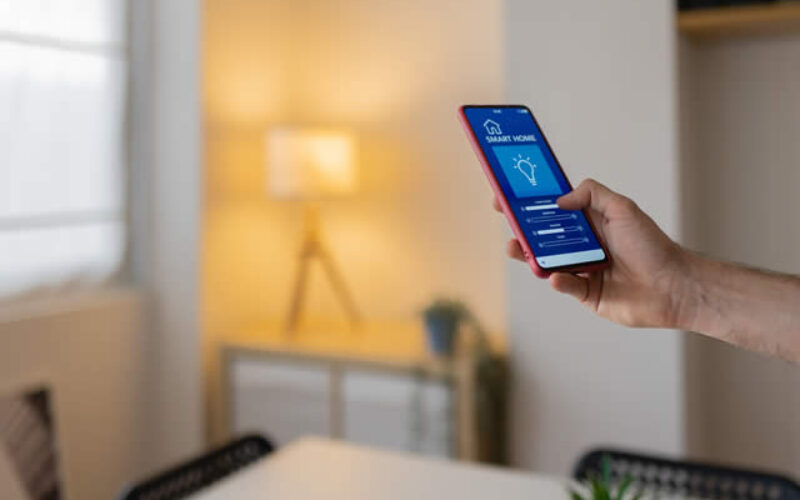
Mobile apps are the most intuitive entry point into smart lighting. Platforms like Philips Hue, LIFX, TP-Link Kasa, and Google Home allow users to control every light in the house from a single smartphone interface, regardless of physical location.
Forgot to turn off the living room lights before leaving for work? A few taps from the parking lot takes care of it.
Beyond simple on/off control, modern apps support custom scenes—preset combinations of brightness and color temperature tailored to different moments of the day.
A "movie night" scene might dim the overhead lights and warm the accent lighting, while a "focus" scene cranks brightness to its peak in the home office.
Multi-room control allows homeowners to manage every zone simultaneously or independently, creating a fully personalized environment without visiting a single switch.
Voice Activation and Smart Assistants
Voice control takes smart lighting a step further by removing the need for a device entirely. Integration with Amazon Alexa, Google Assistant, and Apple’s Siri allows homeowners to control lights through natural spoken commands. "Alexa, turn off all the lights" or "Hey Google, dim the bedroom to 30 percent" are commands that execute instantly, hands-free.
For busy families, parents with their hands full, or individuals with limited mobility, this capability is genuinely transformative. It also reduces friction during daily routines—lights can be adjusted without interrupting cooking, conversations, or bedtime tuck-ins.
The key is choosing smart lighting products that are certified to work with your preferred assistant ecosystem, ensuring reliable, seamless performance.
Sensor-Based Automation
Sensors represent the most autonomous layer of smart lighting—lights that respond to the environment without any human input at all. Occupancy sensors, including passive infrared (PIR) and high-frequency (HF) motion sensors, detect when someone enters or leaves a room and adjust lighting accordingly.
Rooms left empty are turned off automatically, eliminating one of the most common sources of household energy waste.
Daylight harvesting sensors add another dimension by measuring the amount of natural light entering a space and adjusting artificial light output in real time. On a bright afternoon, window-adjacent fixtures dim automatically; as the sun sets, they compensate gradually.
The adoption of photodetectors and presence sensors can lower energy consumption by 20 to 40 percent (GDS Lighting), making sensor-based control one of the highest-impact upgrades a homeowner can make.
Scheduling and Routine Management
Scheduled lighting automation allows homes to operate on a consistent rhythm that aligns with the household’s daily patterns. Morning schedules can trigger lights to gradually brighten before an alarm sounds, easing the transition out of sleep.
Evening modes can automatically dim lights as bedtime approaches, signaling to both adults and children that the day is winding down. Away modes simulate occupancy when no one is home, turning lights on and off at irregular intervals as a security measure.
Geofencing adds an additional layer of intelligence. Using a smartphone’s location data, smart lighting systems can detect when a homeowner is approaching and have the house lit up before the front door opens—or shut everything off automatically the moment the last person leaves.
Circadian Lighting and Your Health
One of the more compelling developments in smart lighting is its alignment with human biology. Circadian lighting—artificial light that mimics the color temperature and intensity shifts of natural daylight—supports the body’s internal clock throughout the day.
According to CEDIA, the Association for Smart Home Professionals, optimum circadian lighting exposure follows a clear pattern: bright, blue-toned light in the morning to promote wakefulness; natural light during the afternoon to sustain energy; and warmer, dimmer tones in the evening to signal the brain that sleep is approaching (CEDIA, August 2025).
Tunable white LED bulbs and dynamic lighting panels make this possible at home without manual adjustment. Programmed schedules can shift color temperature automatically from 6,500K (cool white) in the morning to 2,700K (warm white) by 9 p.m.
The potential benefits are significant: greater sleep quality, better daytime focus, and enhanced mood and energy levels—particularly valuable for remote workers and families spending extended hours indoors.
something of interest below

Why Can’t I Sleep? Understanding Good Sleep and It’s Health Benefits
Struggling to fall asleep is a common issue that affects many people, often leaving them feeling frustrated and exhausted.
Integration and Central Management
One of the most common frustrations in smart home setup is fragmentation—devices from different brands that refuse to communicate with each other. The Matter protocol, developed by the Connectivity Standards Alliance with backing from Apple, Google, Amazon, and Samsung, was designed specifically to solve this problem.
By early 2026, Matter had over 4,000 certified devices and had reached version 1.5, supporting categories from smart bulbs and dimmers to sensors, thermostats, and appliances (Freedompro, 2026).
Matter functions as a common language across ecosystems. A Matter-certified bulb works natively with Amazon Alexa, Google Home, Apple HomeKit, and Samsung SmartThings simultaneously—no complex workarounds required.
For homeowners building a system from scratch, selecting Matter-compatible products from the outset is the most future-proof approach available. It eliminates brand lock-in and makes central management from a single app genuinely achievable.
Energy Efficiency and Cost Savings
The financial case for smart lighting is straightforward. Smart lighting systems reduce overall lighting costs by 35 to 70 percent through a combination of LED efficiency, occupancy-based automation, and daylight harvesting (GDS Lighting). Advanced remote-control calibration alone cuts consumption by up to 25 percent; adding motion and presence sensors brings that figure considerably higher.
Over the lifecycle of a smart lighting system, these savings compound meaningfully. Beyond the household budget, smart lighting supports broader sustainability goals by reducing energy demand and extending the operational life of LED components through intelligent use rather than continuous full-power operation.
Getting Started With Smart Lighting
The most effective approach to adopting smart lighting is to start small and scale deliberately. Choosing a single room—typically the living room or home office—allows homeowners to learn the platform, test integrations, and build confidence before expanding.
Starter kits from brands like Philips Hue, LIFX, and TP-Link Kasa offer bundled bulbs, a hub (where required), and app access at accessible price points.
When selecting products, prioritizing Matter certification ensures compatibility with whatever ecosystem a household already uses and provides flexibility as needs evolve.
For whole-home systems or complex integrations involving motorized blinds, HVAC, and security, professional installation by a certified smart home integrator ensures that every component works together reliably and efficiently.
Light That Works the Way You Do
Smart lighting is not a single product—it’s a layered system that brings together app control, voice commands, sensor intelligence, scheduled automation, and seamless integration into a unified whole.
For busy households, the combined effect is a home that responds to how people actually live: conserving energy when rooms are empty, adjusting for natural light throughout the day, supporting better sleep through circadian-aware schedules, and putting control within reach wherever life takes you.
Home Automation 101
Home automation has revolutionized the way we interact with our living spaces, offering seamless control and enhanced convenience.
From managing lighting and temperature to securing your home with smart locks and cameras, automation simplifies everyday tasks through integrated technology.
This adaptability allows households to personalize their environments in ways that align with their daily rhythms, making life more comfortable, efficient, and secure.
view ideas: Set Up Your Smart Home (new win)

Frequently Asked Questions
-
What is the best smart lighting system for a first-time buyer?
Philips Hue remains a top choice for beginners due to its wide product range, robust app, and compatibility with all major smart home ecosystems.
For a more budget-friendly entry, WiZ and GE Cync offer Matter-compatible bulbs that work with Alexa, Google Home, and Apple HomeKit without requiring a dedicated hub.
-
How much can smart lighting reduce my electricity bill?
According to energy demand modeling research cited by the IEEE Smart Lighting Initiative, smart lighting systems can reduce lighting energy consumption by 40% to 50% compared to conventional setups.
When combined with LED bulbs, which already use 50% to 80% less energy than incandescent alternatives, total savings can be substantial over the course of a year.
-
Do smart lighting devices work without an internet connection?
Most Matter-certified devices support local control, meaning they can operate over your home’s local network even without an active internet connection.
Remote access—controlling your lights while away from home—does require an internet connection and a compatible hub or cloud service.
-
What is the Matter protocol and why does it matter for smart lighting?
Matter is an open interoperability standard developed by Apple, Google, Amazon, and Samsung through the Connectivity Standards Alliance. It allows smart lighting devices from different brands to communicate and work together without compatibility issues.
By early 2026, over 4,000 Matter-certified devices had been released. A Matter-certified bulb can be controlled through multiple ecosystems simultaneously, eliminating the need for separate hubs for each brand.
-
Can smart lighting improve sleep quality?
Yes. Research from the Illuminating Engineering Society and studies following the WELL Building Standard indicate that circadian rhythm lighting—shifting from cool, blue-rich light during the day to warm amber tones in the evening—supports melatonin production, improves sleep quality, and enhances cognitive performance.
Smart lighting systems that automate this color temperature transition can deliver these benefits without any manual adjustment.
-
Do I need a hub to use smart lighting?
Not necessarily. Many modern smart lighting products connect directly to your home Wi-Fi without a dedicated hub. However, some premium systems like Philips Hue use a hub to provide more reliable local control and faster response times.
Matter over Thread devices do require a Thread border router, which is already built into devices such as the Apple HomePod mini, Google Nest Hub (2nd generation), and Amazon Echo (4th generation).
-
How do occupancy sensors work in a smart lighting system?
Occupancy sensors use passive infrared (PIR) technology or ultrasonic detection to identify movement within a room. When motion is detected, the sensor triggers the lights to turn on.
After a user-defined period of inactivity—typically one to five minutes—the lights automatically dim or switch off.
According to research published in The Conversation (2025), this approach can reduce lighting energy use by 20% to 60% depending on the space and system configuration.
home improvement ideas to consider (complete directory – new win):
| Key Feature | Description | Impact |
|---|---|---|
| Smart Lighting Control | Provides precise control using apps, voice commands, sensors, and programmable schedules. Enables homeowners to manage every bulb remotely. | Eliminates common lighting frustrations such as leaving lights on, creating convenience and efficiency. |
| Connected Lighting Systems | Uses LEDs, dimmers, switches, and hubs that communicate via Wi-Fi, Bluetooth, and other protocols. Includes features like app and sensor-based control. | Learns and adapts to real-world conditions, enhancing convenience and creating smart, responsive environments. |
| App-Controlled Solutions | Allows centralized control of home lighting through platforms like Philips Hue and Google Home. Features include custom scenes, multi-room management, and remote access. | Provides personalized lighting experiences and significant energy savings. |
| Voice Activation | Enables hands-free control through smart assistants like Alexa, Google Assistant, and Siri. Supports natural spoken commands for lighting adjustments. | Improves accessibility and convenience for busy individuals and those with limited mobility. |
| Sensor-Based Automation | Includes motion sensors, occupancy detection, and daylight harvesting to automate light adjustment without human input. | Reduces energy waste and lowers consumption by up to 40 percent. |
| Scheduling and Routine Management | Offers automated schedules for morning wake-ups, bedtime routines, and security-enhancing away modes. Incorporates geofencing for location-based control. | Aligns lighting with daily patterns, improving convenience, security, and energy efficiency. |
| Circadian Lighting | Mimics natural daylight patterns with tunable white LED bulbs to improve sleep, focus, and energy levels. | Enhances overall well-being, especially for remote workers and those spending significant time indoors. |
| Integration and Compatibility | Utilizes the Matter protocol to ensure seamless communication between devices from various brands within the same ecosystem. | Minimizes fragmentation, offering smooth and centralized smart home management. |
| Energy Efficiency | Combines LED efficiency, occupancy-based automation, and daylight harvesting to reduce lighting costs by 35 to 70 percent. | Supports sustainability and significant household budget savings. |
| Getting Started | Encourages small-scale adoption with starter kits for specific rooms and professional installation for whole-home systems. | Allows gradual scaling while ensuring compatibility and integration for broader adoption. |

Find Home Network Services Networks/Phone Computers/ Media Home Automation Electrial Wiring Interior Designers Furniture top-rated, pre-screened local contractors FREE: download contractor selection enter zip code – powered by HomeAdvisor ™


Image credit: smart home lighting by envato.com
end of post … please share it!
| more photo remodeling |
Jump Over to Our Photo Analysis Center for Ideas on
"Renovating Home"
|__________________________________________________________|
home remodeling surprise
find out where it might go - new win


Helpful article? Leave us a quick comment below.
And please share this article within your social networks.