Summary Outline:
One of the reasons to purchase a single-family home is to have a landscape that belongs to you for personal use and privacy. This may include a backyard entertainment center with a cooking grill and firepit to enjoy an evening with friends. Or you may be looking for a verdant, sensory garden with flowers, water features and a place to sit and relax.
Regardless what the landscape should be, it all starts with a plan and spec sheet on how you want the landscape to look. If you purchased an older home, the landscape may be already established with only a few changes that need to made. If you purchased a new constructed home, the landscape may be completely open to how is should be designed. And if you live in an existing home, maybe it’s time for new look and function.
So if you are looking to establish or change up the current landscape, let’s begin with these key steps for planning and designing your back, front and side yard landscaping.

-
Quik scroll to first topic about landscaping planning and design …

first “landscape planning and design” idea


copyright image by 123rf.com
Step 1:Start By Mapping Out Your Current Landscape
Notes:
- Your first step, regardless how your current landscape looks like at the moment, is to map out the actual size of your back, front, and side landscape areas. You can use an landscaping app or desktop software to help formate the map – or you can create you own pencil design on paper by drawing it to the exact dimensions.
- Let’s review the steps on mapping out your landscape:
-
1: Gather Mapping Materials:
You will need a measuring tape, a pencil, paper, and a compass. If you want to be more precise, you can also use a laser level or a GPS unit.
-
2: Measure The Property:
Start by measuring the length and width of your property. You can then use these measurements to create a scale drawing of your property on a piece of paper or by using an app or software.
-
3: Mark The Location of Permanent Features:
Once you have a scale drawing of your property, use a pencil to mark the location of any permanent features, such as your house, driveway, walkways, and patios.
- Also note any hills and slopes on the property – where there is full sun and shade – and any boundaries that require privacy such as alone a road or close by neighbors.
-
4: Add Details:
Once you have marked the location of the permanent features, you can start adding in the details, such as the location of trees, shrubs, flowers, and other plants.
-
5: Label Map:
After you have finished mapping out your landscape, be sure to label your map so that you can easily find your way around. You can also add in any notes that you may have about your landscaping plans.
-
- Mapping out your home landscape can be a helpful way to plan your landscaping projects. By taking the time to create a map, you can ensure that your projects are well-planned and executed.
-
Quik scroll to topic side notes about mapping …
-
-
More About Landscape Mapping:
You can find varying apps and software where you can map out preciously the area, ideas, and wants for your landscape. This mapping will be critical for DIY or if you hire landscape contractors. They can use the map as a guideline for pricing out the project based on the budget you have.
If you are not comfortable measuring your property yourself, you can hire a landscaper or surveyor to do it for you. One key thing about mapping is to make sure to scale everything to the correct size so that the landscaping specs can be planned correctly.
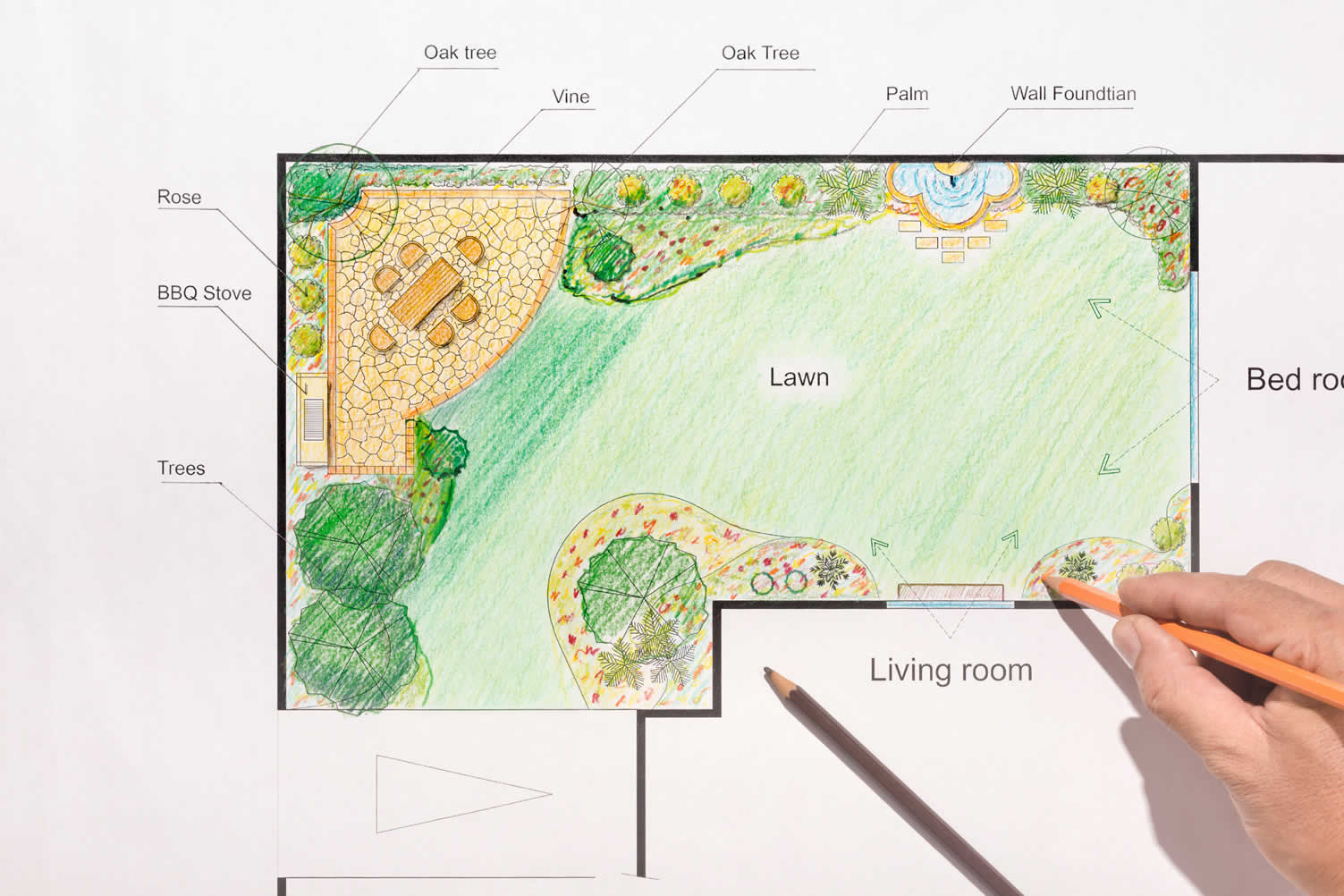
copyright image by 123rf.com
About Landscape Mapping
helpful resourcesMapping Diagram view samples Design Elements view samples Mapping Property info Univ. Wisconsin Planning Guide PDF Free Software Tools info Landscape Design: Drawing Basics youtube Use Google Maps youtube How Design Perfect Landscape youtube
-
-
Quik scroll to next topic about landscape planning and design …
-
ideas to view and compare from the information discussed above
landscape planner notebooklandscape tools kitlandscape gloves
second “photo remodeling” idea

copyright image by 123rf.com
Step 2:Placement of Trees for Shade and Beauty
Notes:
- Now that you have completed the landscape mapping with its current identification and scale of the home, driveway and other permanent placements, we now turn to the trees – both current and any new trees. Trees are an important part of any landscape. They provide shade, beauty, and shelter for birds and other wildlife.
- When choosing new trees (or keeping existing trees) for your yard, it is important to consider the size of the tree, the amount of sunlight the area receives, and the overall shape and care.
-
Using Tress for Landscaping
helpful resourcesLandscaping With Trees view ideas – front yard landscaping view ideas – backyard landscaping view ideas Large Tree Landscaping view ideas – small tree view ideas – privacy tree view ideas – boundary tree view ideas Tree Positioning Diagram view samples – for shade view samples – for privacy view samples About Tree Shading
amazon gardenTree Shading House Ideas images – tree shading diagram images – conifers as wind breakers images How to Create Shade info – tree placement info – shade home but not solar info – plan a windbreaker info Trees for Energy Savings youtube – best shade trees youtube – both trees and solar panels youtube – planting wind breaks youtube - Note, that trees can also become a menace, depending on where they are located. For example, there may be some current trees on the property that are very messy (IE, scrub pines), or require constant cleanup. Removing any existing trees that don’t fit your landscape should become part of your landscape plan.
- Here are some ideas for landscaping with trees:
-
Create a focal point:
A large tree can be a great way to create a focal point in your yard. Choose a tree with interesting bark, flowers, or fruit.
-
Provide shade:
Trees can provide much-needed shade on a hot day. Plant trees near seating areas or walkways to create a shady spot to relax.
-
Screen unsightly views:
If you have an unsightly view from your yard, a tree can be a great way to screen it. Choose a tree that will grow tall and provide privacy.
-
Add privacy:
Trees can also provide privacy from neighbors or passersby. Plant trees along property lines or near windows to create a more private space.
-
Create a windbreak:
Trees can help to block wind and provide a buffer from harsh weather conditions. Plant trees on the north and west sides of your home to help protect it from the wind.
-
Improve air quality:
Trees can help to improve air quality by absorbing pollutants and releasing oxygen. Plant trees near busy streets or other areas with high levels of pollution.
-
Attract wildlife:
Trees can attract a variety of wildlife, including birds, butterflies, and squirrels. Plant trees that provide food and shelter for wildlife.
-
Position Trees Correctly:
Note tree positioning when landscaping with trees. Note the type and size of the tree, and how it may impact the landscape once it matures. Avoid planting large, growing trees near the house or other outside structures where the tree roots could impact the foundation and damage your roof from overhanging branches.
-
-
Quik scroll to topic side notes …
-
-
Types of Trees:
Trees are segmented into one of two groups: 1) deciduous trees; 2) evergreen trees.
Deciduous trees lose their leaves each fall and then grow new leaves in the spring. Evergreen trees keep their leaves year round. You want to landscape your yard with both types of trees.
For example, deciduous trees are perfect for providing shade during the summer and then allowing sunlight to penetrate through during the winter; small ornamental tree are perfect for garden beds and sections; and other specialty-type trees add color in the spring and fall.
Evergreen trees are often used for boundary and privacy, and to decorate an particular area (such as the corner house) where you need full foliage for the full year.
Below are the most common types of trees:
- Deciduous trees:
Deciduous trees lose their leaves in the fall. Some common deciduous trees include maples, oaks, and birches. - Evergreen trees:
Evergreen trees keep their leaves all year round. Some common evergreen trees include pines, firs, and spruces. - Broadleaf trees:
Broadleaf trees have large, flat leaves. Some common broadleaf trees include maples, oaks, and sycamores. - Coniferous trees:
Coniferous trees have needle-like leaves. Some common coniferous trees include pines, firs, and spruces. - Fruit trees:
Fruit trees produce fruit that can be eaten by humans or animals. Some common fruit trees include apples, oranges, and peaches. - Ornamental trees:
Ornamental trees are grown for their beauty, rather than their fruit or other products. Some common ornamental trees include Japanese maples, crabapples, and flowering dogwoods.

copyright image by pixabay.com
- Deciduous trees:
-
-
Quik scroll to next topic about landscape planning and design …
-
ideas to view and compare from the information discussed above
 … grab this directory of ideas
May We Suggest Other Photo Remodeling Ideas About
“Planning and Deciding Yard n’ Garden Ideas …” (new win)



third “photo remodeling” idea

copyright image by 123rf.com
Step 3:Define The Type of Styling Starting With The Front Yard
Notes:
-
Set the Styling:
The front yard landscaping is for appeal; this is part of the landscaping that is open to the neighborhood. So the goal is to create an attractive and functional space that complements the home’s architecture and provides a welcoming first impression for visitors.
- It is with the front yard where you define the styling that will be carried through to the side and back yard areas. Landscape styling is based on your home architecture and style. For example, a traditional home may look best with a formal landscape, while a modern home may look best with a more contemporary landscape.
- Another styling option that must be considers is your growing zone and climate. If you live in a wet, semi-tropical area, you have many options to work with for a stunning landscape. However, if you live in dry, arid area, your landscape style leans to more sand and rock with drought tolerate plantings.
-
Styling Elements:
Key elements that will be part of the landscaping plan include trees – shrubs – flowers – tiered elements – floral foliage – groundcovers – and hardscapes. It is advisable that you check with your local horticultural extension office or a greenhouse nursery on the best types of plantings that grow in your area.
- Likewise, consider the amount of time and effort you are willing to put into maintaining your landscape. The landscape defines who your are and sets the value appeal for the home. Some landscapes, such as a traditional English garden, require a lot of time and care; while others, such as a low-maintenance xeriscape, require very little effort.
-
Quik scroll to front yard styling and design …
-
-
1st:Front Yard Styling:
The styling that your select for the front yard should become the styling theme for the side- and back yard areas. Again, the styling should work with the architectural style of your home, neighborhood, and climate.
The front yard is what the neighbors and other will see. So wow them with a style that is nicely designed and positioned based on your preferences and time to keep it looking nice.
Some key tips include:
- Choose plants that are appropriate for your climate:
Not all plants are created equal. Some plants are more tolerant of heat, while others are more tolerant of cold. It’s important to choose plants that will thrive in the climate zone where you live. - Consider the amount of sunlight your front yard gets:
Some plants need full sun, while others prefer partial shade. Make sure to choose plants that will get the right amount of sunlight for their needs. - Group plants together for a more cohesive look:
Don’t just plant your plants randomly. Group them together in clusters to create a more visually appealing landscape. - Don’t forget about the details:
The little things can make a big difference in the overall look of your landscape. Make sure to pay attention to the details, such as the type of mulch you use, the placement of your plants, and the overall design of your landscape.
copyright image by 123rf.com
Landscaping Ideas
google imagesFront Yard landscaping flower beds trees/shrubs Foundation landscaping flower beds trees/shrubs Around … trees mailbox driveway w/ Trees deciduous ornamental evergreens w/ Shrubs shrubs hedges flowering w/ Flowers annuals perennials combo w/ Foliage ivy ferns ground cover w/ Grasses ornamental mondo liriope Pathways walkways garden paths stone paths Lighting front yard foundation backyard Other Garden Elements
google imagesFencing decorative privacy boundary Irrigation in-ground drip hose Decorative arbors pergolas gazebos Other Elements utility box flag pole window boxes Decor statues sundials gazing balls Ornaments animals gnomes gargoyles - Choose plants that are appropriate for your climate:
-
2nd:Styling the Porch and Home Entry:
Porches vary by the style of your home. You could have a simple porch that leads to the front entry door; or you could have a more elaborate porch the wraps around the the front home.
The goal is to create an inviting surround that welcomes people to your home and the complements your home architectural style. Factors to consider is the porch space, the soil that surrounds the porch area, and whether the porch has full or partial sun.
Landscaping elements you have to work with include:
- Plants:
Trees, shrubs, perennials, annuals, and groundcovers can all be used to add color, texture, and interest to the front porch. Decorative containers and planters can also be used to display flowers, ferns, and other decorative plants. Use the containers sparely so that is doesn’t crowd your porch. - Furniture:
If you have a large or wrap-around porch, you might consider adding comfortable and stylish furniture such as a porch rocker, bench, swing, or other comfortable furniture that matches the style of the home. - Hardscape:
Hardscape refers to non-living elements in a landscape, such as walkways, patios, walls, and fences. Hardscape can be used to define space, add interest, and create a more functional front porch. - Lighting:
Lighting can be used to create a warm and inviting atmosphere on a front porch. You can use overhead lighting, wall lanterns, or other lighting that again compliments the style of the home.
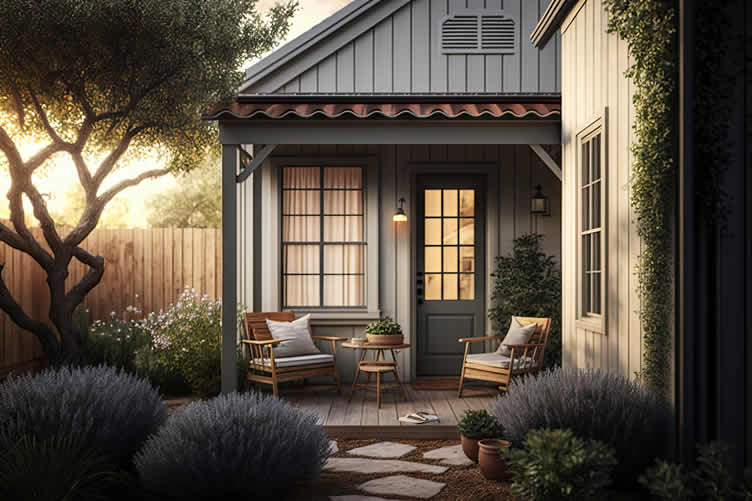
copyright image by 123rf.com
- Plants:
-
3rd:Landscaping Around the Home Perimeter and Foundation:
The home perimeter includes the front part of the home and that wraps around to the side. This part of the landscape defines the character of the home.
You could have a home style with nothing planted or decorated – in other words, you just see a home with the face and the foundation. This is a popular style with many modern homes that use hardscape instead of plantings.
Or you may choose a style by using shrubs to blanket the perimeter accented by decorative trees and flowers. The style you choose depends on the architectural look of the home, the neighborhood, the climate, and your preference.
The key landscaping elements to consider include:
- Shrubs:
Shrubs are a popular planting the blankets the front home perimeter. Shrubs add color, texture, and interest to your landscape. They can be shaped to create borders, screen out unsightly views (such as the foundation), and provide privacy. Shrubs come in a variety of shapes, sizes, and colors, your landscaping needs and style. - Ornamental Trees:
Sometimes a small, ornamental tree or conifer can accent the look of the home perimeter such of corner house tree, entry tree, and something in the middle of the home perimeter. - A well-placed tree can be a great way to create a focal point in your landscape. Make sure to use decorative trees or conifers that grow small – you don’t want a tree that become too big to manage and whose roots can impact the foundation.
- Hardscape:
Hardscape refers to hard structures such as walkways and walls. Hardscape can be used to define space, add interest, and create a more functional look for the home perimeter. - Garden Beds:
You could add around the perimeter a garden bed with decorative flowers, hostas, ferns, groundcover and more. Intermix the plantings with decorative shrubs that stay green during the winter when the garden flowers die off.
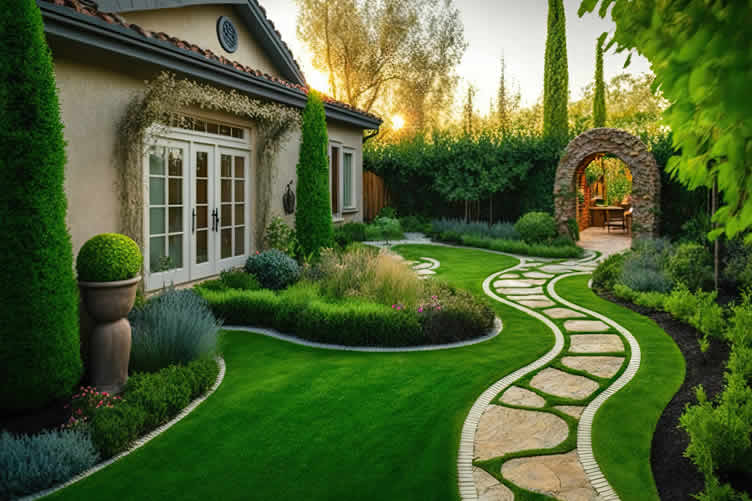
copyright image by 123rf.com
- Shrubs:
-
4th:Exterior Home Accents:
Exterior home accents are decorating elements that add to the landscape and overall appeal. These accents can bring in color, add a decorative touch, or help accent the landscape when adding other landscaping ideas to an area; i.e., mulch or flower bed around the mailbox.
Some of these home accents include the following that may or may not be used:
- Window Boxes:
A window box is a container that is attached to the outside of a window and used to grow plants. Window boxes can be made from a variety of materials, including wood, plastic, and metal. They come in a variety of shapes and sizes, and can be used to grow a variety of plants, including flowers, herbs, and vegetables. - Mailbox – Flag Pole:
Mailboxes are generally required for most homes to receive mail; and some neighborhoods dictate the size and type of mailbox to use. However, if you don’t have neighborhood restrictions, you might want to add a decorative mailbox that can be landscaped. - This also applies for flagpoles. If your neighborhood allows a flagpole, then view some landscaping ideas for flagpole decorating.
- Driveway Islands:
A driveway island is a raised area of land in the middle of a driveway. It can be used for planting flowers, shrubs, or trees, which can add color and texture to your home’s surroundings. - Decorative Fence:
A decorative garden fence is a type of fence that is used to add beauty and interest to a garden. Decorative garden fences can be made from a variety of materials, including wood, metal, and stone. They come in a variety of styles, including picket fences, lattice fences, and wrought iron fences that can add a distinct style to the home. - Exterior Decor:
Exterior decor include decorating items that add to the overall landscape look. These elements include roof decor such as cupolas, finials, and weathervanes; exterior siding decor such as shutters and trim; lighting decor such as post and pole lighting; and landscape elements such as boulders, sundials, and other garden decor. These are optional decorative elements that can be added.
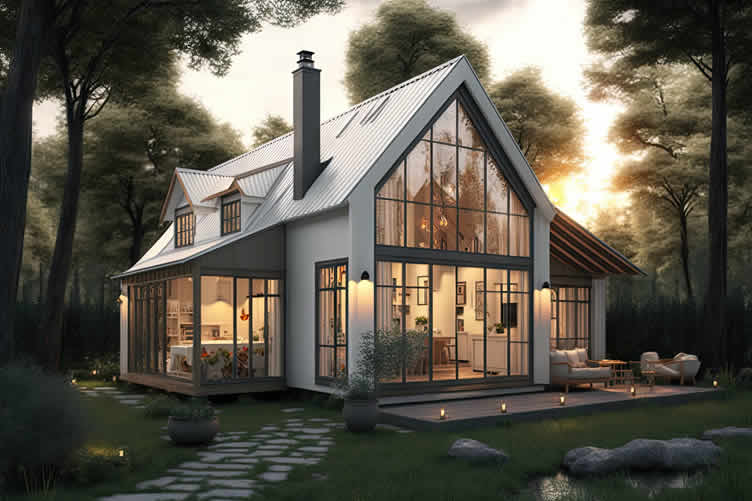
copyright image by 123rf.com
- Window Boxes:
-
-
Quik scroll to next topic about landscape planning and design …
-
ideas to view and compare from the information discussed above
landscaping with trees & shrubslandscaping with stonelandscaping by zone
below for …
landscape design – styling – and implementation

remodeling decisions
fourth “photo remodeling” idea
copyright image by 123rf.com
Step 4:Working On The Backyard
Notes:
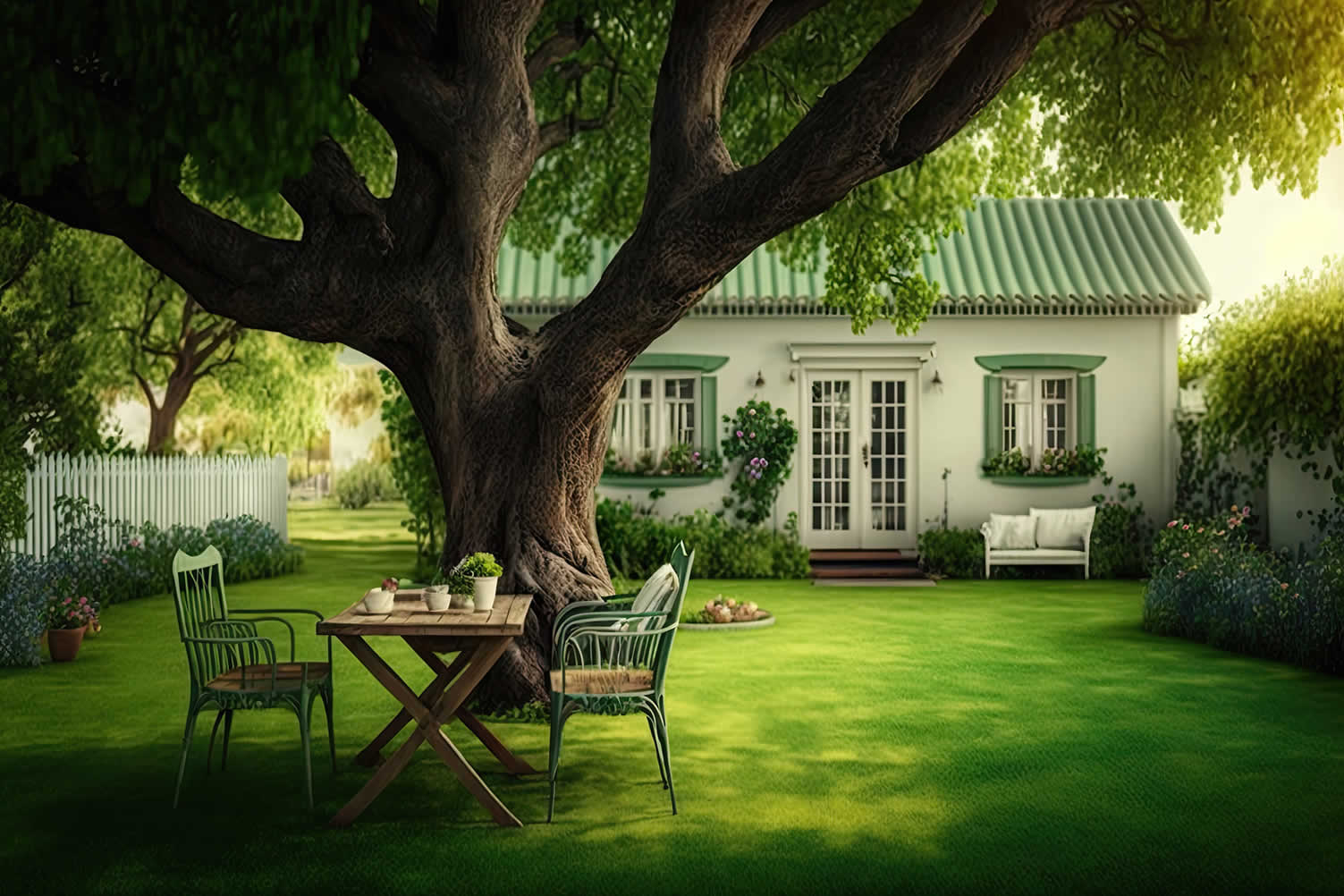
- With the landscape styling decided for the front yard, we can now focus on the backyard – probably the most important area of your total landscape. The backyard is where you will entertain, find privacy, and enjoy moments together with a family playground.
- Backyard landscaping can include anything from planting trees and shrubs to adding patios and walkways.
- There are many different landscaping styles for the backyard that fits your personality and needs. If you have a small backyard, you may want to choose a more minimalist style, while a larger backyard can accommodate a more elaborate design.
-
Quik scroll to backyard planning ideas and notes …
-
-
1st:Deck or Patio:
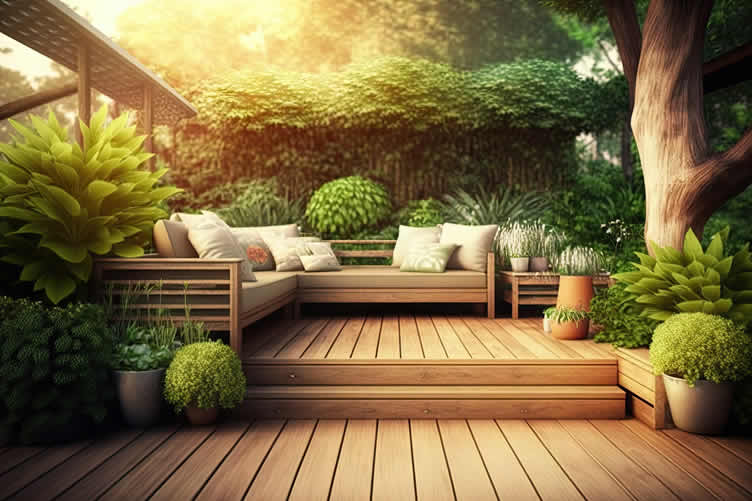
A backyard deck is a raised platform that is built on the ground or attached to the side of a house. Decks are typically made of wood, composite, or concrete, and they can be used for a variety of purposes, such as relaxing, entertaining, and cooking.
Decks can be simple or elaborate depending on the size of the backyard and your budget. They types of decks include:
- single tier
- multi tier
- floating deck
- surround deck
Backyard decks require regular maintenance to keep them looking their best and to extend their lifespan. This includes staining or sealing the wood, cleaning the concrete, and repairing any damage.
Patio, on the other hand, is an outdoor living space that is typically paved or made of concrete. They can be attached to a house or freestanding. Patios can be made from a variety of materials, including concrete, brick, stone, flagstone, gravel, and pavers.
Patios are generally preferred if you are going to have a swimming pool and/or outdoor kitchen. However, you can find homes that have both decks and patios to give you a complete entertainment area.
copyright image by 123rf.com
-
2nd:Backyard Entertainment Area:
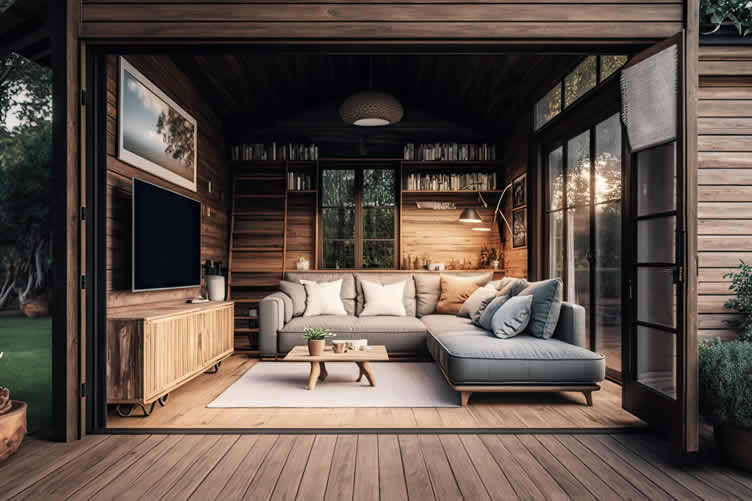
Planning a backyard entertainment area is a great way to enjoy the outdoors and spend time with family and friends. This is where having a functional deck or patio comes into play, along with other features that allow you to entertain as follows:
- sitting around the fire with either a fire pit or fireplace
- grilling or cooking meals with a outdoor cooking station
- enjoying a picnic or meal with dining table and chairs
- having a conversation with comfortable outdoor sofas and chairs
- watching movies by projecting a movie onto a wall or screen in your backyard
The planning goal is to create space where you can entertain with friends and family.
copyright image by 123rf.com
-
3rd:Swimming Pool:
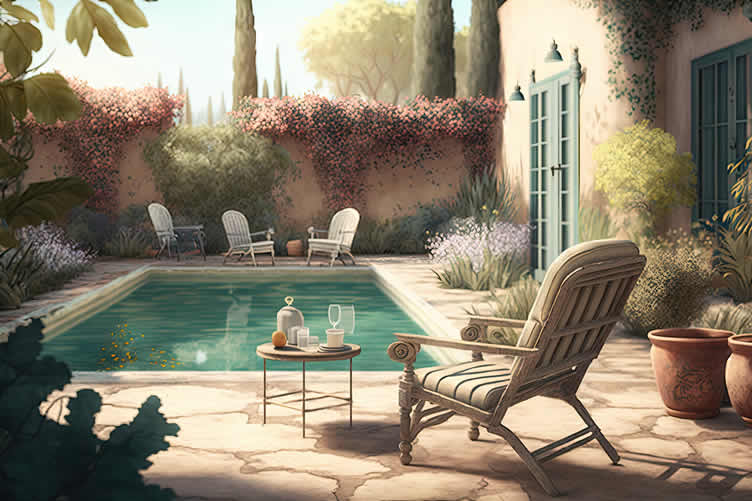
If you and looking for the ultimate backyard entertainment, installing an in- or above-ground swimming pool with all the swimming amenities will offer up enjoyment for years to comes. Again, it depends on the size of backyard and budget.
Note that swimming pools comes with a cost – most notably, pool maintenance and care, water and heating costs, safety fences and mechanisms, and higher homeowner insurance. But pools do come with benefits – such as, relaxing by the pool, getting cooled down, lap exercising, family fun, and entertainment.
Some items you need to consider:
- location of the pool where there is plenty of sun and not near deciduous trees that can cause a constant cleaning-up mess
- size of the pool depending on the number of people using it
- depth of the pool for diving, pool slides, and little kids
- having a conversation with comfortable outdoor sofas and chairs
- features to add such as diving board, slide, hot tub, water fall, and other
copyright image by 123rf.com
Swimming Pool Information
helpful resourcesSwimming Pool Planning Guide information – what to consider information – how much cost for pool information – swimming pool maintenance information Swimming Building Plans illustration – installation diagram illustration – planning diagram illustration – pool landscaping diagram illustration What to Know Before youtube – how much will it cost youtube – types of pools youtube – how swimming pools work youtube Swimming Pool Health Benefits
google imagesHow Mental Health Improves information – 6 mental health benefits information – how to relax in pool information – how to reduce anxiety information Swimming Can Aid Mental Health youtube – relaxation exercises youtube -
4th:Garden Beds:
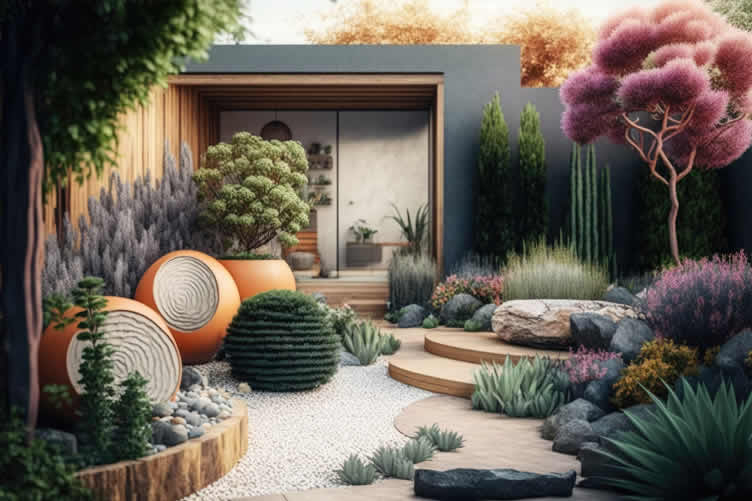
There are two types of garden beds; 1) flower and foliage garden beds; 2) vegetable and berry gardens. The purpose of the bed is to allocate space for enjoyment of color, smell, and taste.
As for flower beds, they can be located in sunny, semi-sunny, and shaded areas – it all depends on what type of floral and shrubs you will be using. Flower beds can be square, round, and in any curvature shape. The beds could be edged with grass, stone, cement or other decorative edging.
You can plan for single and multi-level flower beds; you can also have elevated mound beds. As for decorating the bed, most flower beds are decorated with perennial and annual flowers accented by shrubs, grasses and foliage plants.
As for vegetable and berry garden beds, these beds need to located in sunny spots that get full sun for the duration of the day. Generally these beds are large for the growth and harvest of various vegetables and berries. However, you can use small beds for limited items such as herbs and greens.
Another popular option are planters and other bed containers. Planters are nice to use for spot placement – such as patio or deck decorating – where a display of flowers or herbs can be grown.
copyright image by 123rf.com
Floral Landscaping Diagrams
google imagesperennial flowers view ideas annual flowers view ideas flowering shrubs view ideas flowering trees view ideas ornamental grasses view ideas flowering climbers view ideas flowering herbs view ideas -
5th:Water Features:
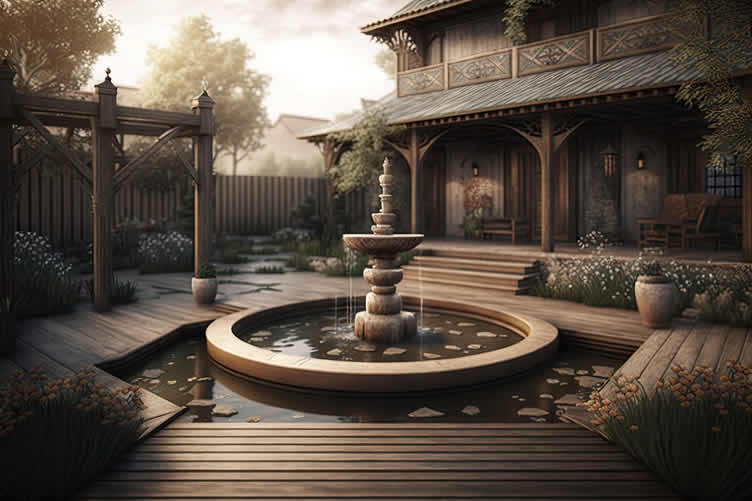
Backyard water features are a great way to add beauty, sound, and movement to your outdoor space. It’s an important sensory garden feature that addresses most of our inner sensors such as sight, sound, touch, and smell, which can help reduce stress and improve the surrounding air quality.
The types of backyard water features to consider in your landscaping plan includes the following. Please note that water features require seasonal maintenance and care:
- Fountains:
Fountains are a classic type of backyard water feature. They come in a variety of shapes, sizes, and styles that can fit your landscape plan. Fountains can be a great way to add a touch of elegance to your backyard. - Waterfalls:
Waterfalls are another popular type of backyard water feature. They can be a great way to add sound and movement to your backyard. Some waterfalls are used to create a stream the snakes through the yard and empties into a pond or other reservoir that pumps the water back to the waterfall. These types of systems improve the air quality by adding moisture to the air. - Water gardens/ponds:
Water gardens are a great way to add a touch of nature to your backyard. They can be a great way to grow water-loving plants and attract wildlife. Water ponds can also be used for fish habitat. - Birdbaths:
Birdbaths are a great way to attract birds to your backyard. Birds can help to control pests and pollinate plants. Birdbaths can also be a beautiful addition to your backyard.
copyright image by 123rf.com
Looking at Waterfalls
helpful resourcesWaterfall Ponds images – waterfall stream images – waterfall diagram images How Build Waterfall Pond info – pond ideas w/ waterfalls info – nature-looking waterfall info Build Pond W/ Waterfall youtube – how not to build waterfall youtube – step-by-step waterfall youtube – pond waterfall maintenance youtube - Fountains:
-
6th:Building Structures:
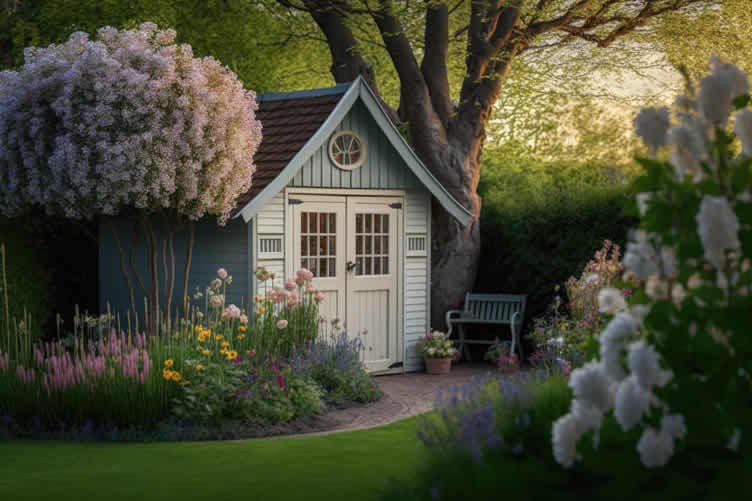
Building structures are permanent buildings or structures that are added to the landscape. Many of these structures can be used for storage, boundary and other elements that can increase the property’s worth. Examples of building structures include:
- Garden Sheds:
sheds are for storing garden equipment, maintenance and other home storage. there are also wood sheds, she-sheds, and other storage related sheds. - Garden Fences:
fencing that can be used for privacy, boundary, or for decorative purposes. - Pergolas and Trellis:
pergolas are for providing shade and for attaching vines that may overgrow the pergolas. Other similar like structures include trellises, arbors, and other vertical gardens. - Gazebos:
gazebos are decorative structures that include a privacy location for sitting or dining. - Greenhouses:
greenhouses for year-round growing and hydroponic gardening. - Summerhouses:
summerhouses or pool houses – an alternative relaxing, shaded are or living quarters for guests with plumbed-in water and electricity. - Other:
other detached from the home building such as barns, carports, workshops, storage sheds, and other.
copyright image by 123rf.com
Types of Garden Fencing
google images for ideasWood wood fence cedar fence bamboo Metal wrought iron steel fence aluminum Vinyl vinyl picket vinyl panel vinyl lattice Composite fencing horizontal stone-like Stone stone wall stone foundation brick fence Chain Link fence chain link privacy lattice chain link Garden Outbuildings and Structures
3rd Party ResourcesSheds garden tools wood Houses guest pool she-shed Green Houses greenhouses summerhouse sunroom Other Structures car ports workshops barns Irrigation in-ground drip hose Decorative arbors pergolas gazebos Other Elements mailbox flag pole window boxes Decor statues sundials gazing balls Ornaments animals gnomes gargoyles - Garden Sheds:
-
7th:Play Area:
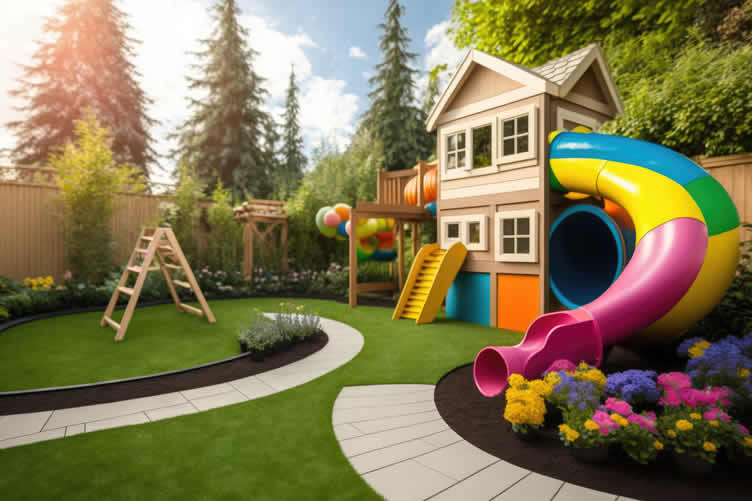
A backyard play area is a great way for the family to have fun and stay active. It can be as simple as a sandbox or swing set, or it can be more elaborate, with a climbing structure, mini golf course, tennis/basketball court, lawn game area and more.
Planning a playground or play area depends on the size on the backyard. If your size is small, you can limit the play area with a sandbox, swing set, and/or trampoline. If the backyard space is big, perhaps something like a playing field or other large playground items.
Suggestions include:
- sand box
- swing set
- tree house
- climbing and play tunnels
- playhouses
- obstacle course
- playing field for lawn games and other games
- golf teeing course
- tennis court – pickle ball court
- basketball court – volleyball
copyright image by 123rf.com
Yard Entertainment Ideas
google imagesFire Fun patio firepit patio fireplace sit around fire Media/Bar Center patio movie patio bar patio bistro Sport Centers tennis court basketball court batting cage Lawn Plan croquet area volleyball area play area Children Center playhouse swing set climbing bars Adult Play putting green target practice cricket Lawn Games
viewing amazon -
8th:Pathway and Bridges:
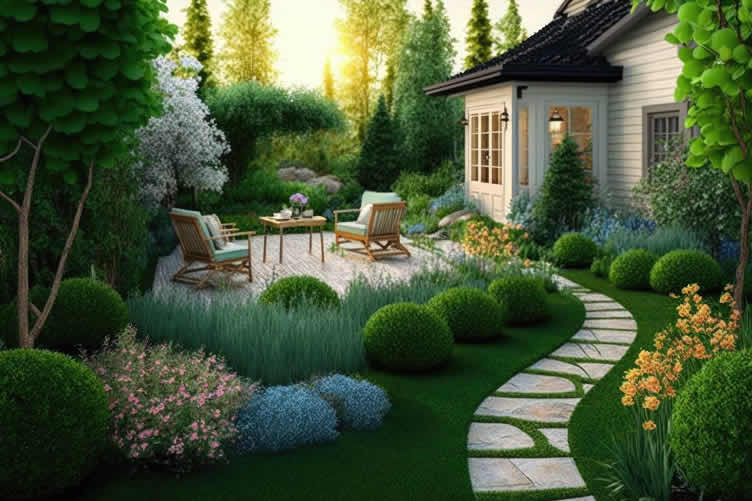
Pathways form three keys landscaping needs: 1) they are decorative in nature and add to the appeal of the landscape; 2) they form a path that can be used to view sections of the yard for sensory purposes; 3) they become necessary for high traffic areas to avoid trampling the grass.
These are simple landscape features to use. Pay particular attention for access points to outbuildings, around to the side and front area of the house, and visiting garden sections such as a pond or bridge that crosses over a stream.
- Gravel pathways:
Gravel pathways are made from small stones or gravel. They are less expensive than paved pathways and can give your garden a more natural look, but they can be difficult to keep clean and can be slippery when wet. - Wooden pathways:
Wooden pathways are made from wood planks or logs. They are a good choice for gardens with a rustic or natural look, but they can be more expensive than other types of pathways and require more maintenance. - Flagstone pathways:
Flagstone pathways are made from large, flat stones. They are a good choice for gardens with a formal or traditional look, but they can be expensive and can be difficult to install. - Brick or concrete pathways: By using forms, you can creative interesting pathway design using brick or concrete.
- Stepping stones:
Stepping stones are small, individual stones that are placed on the ground to create a pathway. They are a good choice for gardens with uneven terrain or for creating a more natural look, but they can be more difficult to walk on than other types of pathways.
copyright image by 123rf.com
- Gravel pathways:
-
-
Quik scroll to next topic about landscape planning and design …
-
ideas to view and compare from the information discussed above
Find Yard n’ Garden Services Landscape Design Sprinkler Systems Metal Work Water Features Gazebos Play Equipment Outbuildings Fences top-rated, pre-screened local contractors FREE: download contractor selection enter zip code – powered by HomeAdvisor ™
Quick Contractor Guides selecting negotiating working with inspecting

fifth “photo remodeling” idea

copyright image by 123rf.com
Step 5:Side Yard Landscaping and Other Elements
Notes:
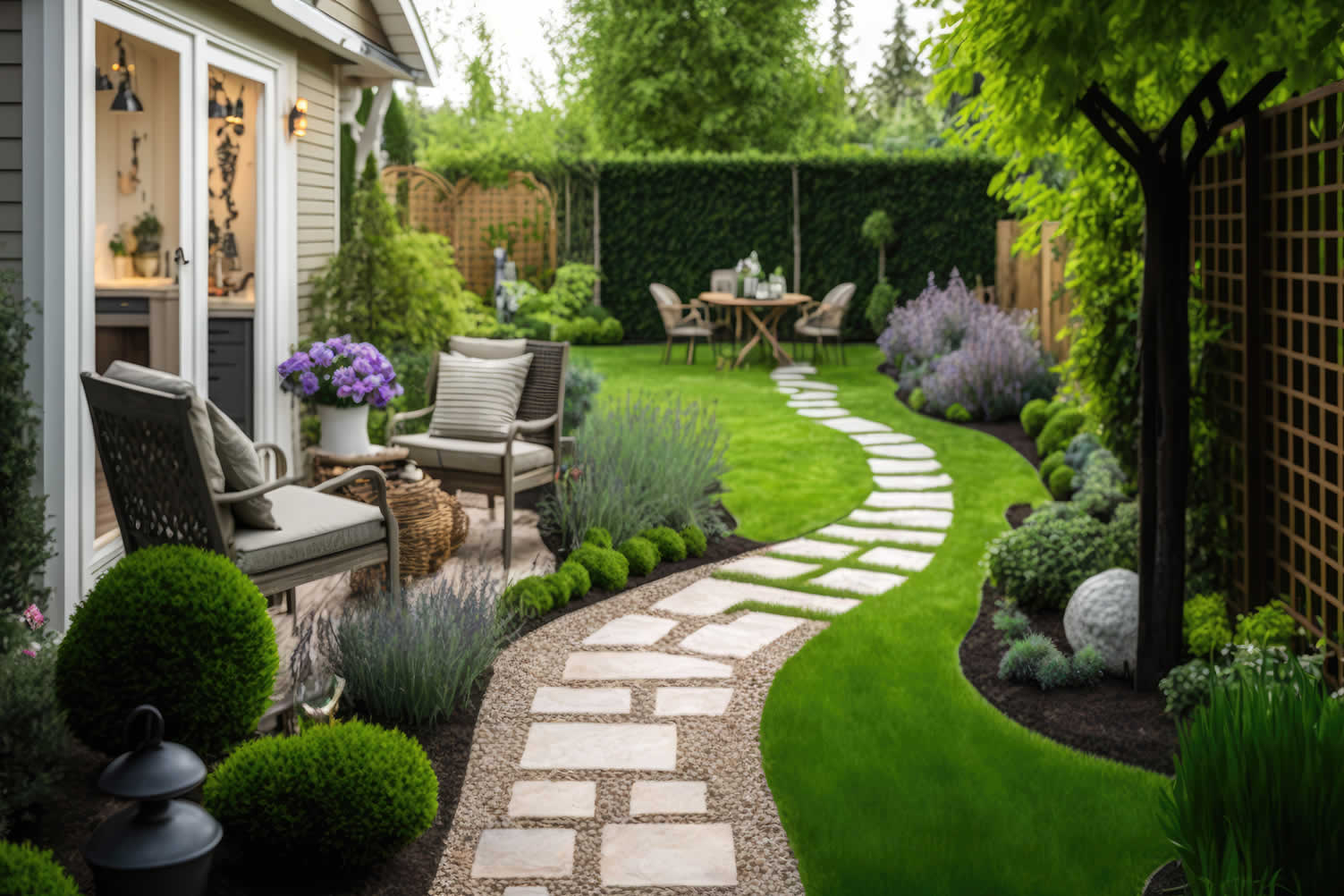
- Side yard landscaping is simply the extension of your front yard landscape. Many homowners will carry the landscape styling around the front to the side area with some varying elements.
- The challenge of the side landscaping is that you may not have enough space to work with, especially if you live in a neighborhood with close-by neighbors. So you may need to be creative in your thinking.
- Most side yard landscaping include the following:
- Create a walkway:
A walkway is a great way to define the space and make it more inviting. You can use concrete, pavers, or even gravel to create a walkway. - Add some plants:
Plants are a great way to add color and interest to your side yard. You can plant flowers, shrubs, or even trees. - Build a small patio or deck.
A patio or deck is a great place to relax and entertain guests. You can build a simple patio out of concrete or pavers, or you can build a more elaborate deck with wood. - Add a water feature:
A water feature is a great way to add sound and movement to your side yard. You can install a fountain, a birdbath, or even a small pond. - Install some lighting:
Lighting is a great way to extend the use of your side yard into the evening hours. You can install solar lights, motion-sensor lights, or even string lights. - Add some art:
Art can add a touch of personality to your side yard. You can hang paintings, sculptures, or even wind chimes.
- Create a walkway:
- That completes the first draft of your landscaping plan for front – back – and side yard. But wait! There are a few more elements to consider:
-
Quik scroll to other landscape elements …
-
-
Landscape Lighting
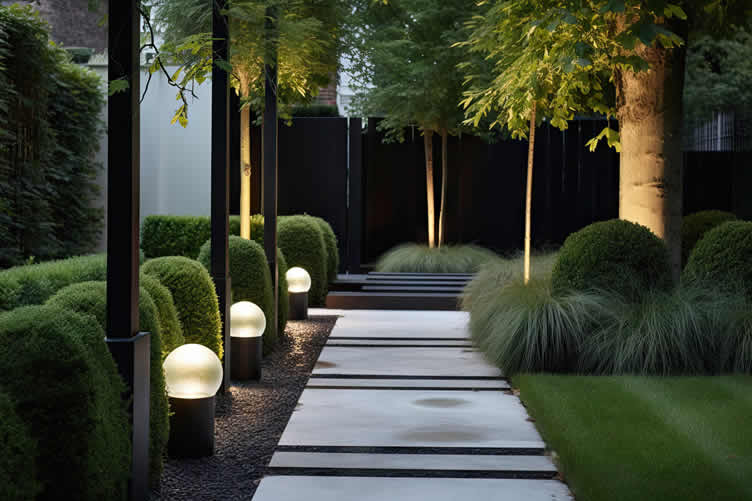
Landscape lighting illuminates outdoor areas for safety, security, and aesthetic purposes. It can be used to highlight features to your landscape, such as trees, shrubs, and walkways, or to create a more inviting and inviting atmosphere.
Finding solutions for outdoor lighting can be tricky, however. It can either be decorative lighting or something more practical, such as security. Whatever your yard calls for, it’s best to know the popular options to integrate into your landscaping plan.
If you need outdoor lighting, whether it’s for added visibility or to scare off raccoons, there’s a fixture for your needs.
copyright image by 123rf.com
-
Smart Irrigation
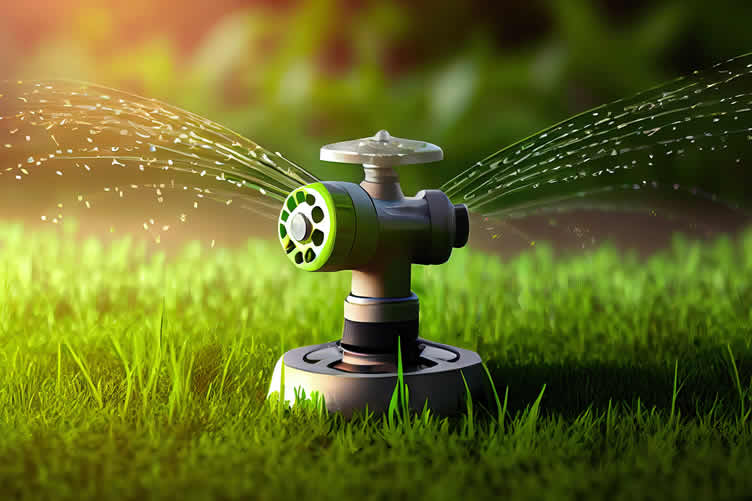
If you are going to invest resources and time into a beautiful landscape, then you must consider smart, automatic irrigation system that uses current forecast and sensors to irrigate key landscaping plants as and when needed. These systems can help save you time, water, and money; and they can also help you to have a healthier lawn and garden.
Smart irrigation systems work by using sensors to measure the moisture content of the soil. The sensors then send this information to the software, which uses it to determine when and for how long to water your lawn and garden.
The system can also take into account other factors, such as the weather forecast, the type of plants you have, and the amount of sunlight your lawn and garden gets.
copyright image by 123rf.com
Smart Irrigation
resource informationAbout Smart Irrigation images – smart irrigation diagram images What Is Smart Irrigation info – supercomputer watering lawn info – how garden sensors work info – is smart gardening working info How Smart Watering Works youtube – understand evapotranspiration youtube – smart systems in review youtube – smart irrigation for trees youtube Irrigation Mapping
resource informationIrrigation Mapping Diagram view images Irrigation Symbols view images How to Measure Yard view info Planning Irrigation System view info Mapping Your Irrigation System youtube Importance of Irrigation Mapping youtube Underground Irrigation System
resource informationUnderground System view images – diagram view images Spray Irrigation Heads view images – comparison chart view images – diagram view images Rotary Sprinkler Heads view images – comparison chart view images – diagram view images -
Sensory Garden
A sensory garden uses elements that stimulate and engage the five basic senses of sight, smell, sound, touch and taste. The garden may use one or a combination of these elements that triggers one or more senses.
Sensory gardens can be a great way to connect with nature and to stimulate the senses. They can be enjoyed by people of all ages and abilities, and they can be a valuable addition to any garden landscape.
So when designing your landscaping plan, incorporate elements that can make your garden capture all of the senses available.

copyright image by 123rf.com
-
-
Quik scroll to next topic about landscape planning and design …
-
ideas to view and compare from the information discussed above
wired landscape lightssolar lightingsmart irrigation systems
view illustration “becoming a bank”
sixty and last “photo remodeling” idea
copyright image by 123rf.com
Step 6:Concluding Remarks: Implementing the Plan
Notes:
- So there you have it! A complete landscaping plan for the front, side, and backyard areas. Refine the plan with elements you want and then share it with a landscape contractor to get a cost estimate and implementation plan. The contractor may also suggest revisions, additions, and changes that will make your plan even better.
- An entire landscape project can be expensive – running to about $20K or more, depending on what you want to do. So break up the project into DIY sections and leave the more complicated sections for the contractor. You can also segment the projects by years – meaning to do one section for the first year, another section for the 2nd year, and so forth. That way you can allocate the funds needed for each section.
- Before you decide on anything at this stage, however, review the 6-step-by-step plan for planning a landscaping renovation for your yard n’ garden.
-
Quik scroll to other planning your project …
-
-
1st:Landscape Step-by-Step Planning:
Planning a yard ‘n garden landscape renovation requires a step-by-step plan that analyzes the numbers, prepares a budget, view ideas and specs, and plans other key items.
The goal is to develop a beautiful and functional landscape within budget and the design specifications. The last thing you want is a final look at a completed landscape that is too expensive and doesn’t meet the objectives you had hoped for.
copyright image by 123rf.com
Step 1: Analyze the NumbersBefore you start any yard n’ garden landscaping – such as a swimming pool, patio kitchen, and other backyard landscaping, run some financial numbers to determine whether the landscaping is a smart investment.
The numbers include the estimated costs, home value assessment, financing costs, and other related calculations.
Review these cost-related issues to remodeling vs. buying a new home.
links to internal page (opens new win)
analyze the numbers estimate the cost of your project get your home value Step 2: Collect IdeasThe 2nd step for planning your landscaping is deciding what you would like to do.
Will it be a –
- installing a swimming pool,
- building a play area with courts, playground, and other,
- redo your landscaping,
- build a deck or patio,
- install an outdoor kitchen and bar,
- start your own farm,
- or something else.
Start collecting ideas by referencing our collection of landscaping analysis: view directory
Step 3: Plan the Needed SpecsStep 3 is sketching your ideas on paper (or digitally) and developing the spec plan.
The spec plan determines what type of yard n’ garden equipment and design considerations that will be needed. It will also contain the product specifications for each landscape element.
You will use the spec plan and architectural design to bid the project out to a contractor.
links to internal page (opens new win)
developing the spec plan sketch remodeling plan design considerations Step 4: Find a ContractorStep 4 is finding and negotiating the contract with a landscape contractor.
Give your landscaping ideas and specs to a contractor for review and bid analysis. Use the local network (aligned with HomeAdvisor) to find the right contractor for your project.
Review guides for contractor selection and negotiation.
links to internal page (opens new win)
search yard n’ garden contractors selecting your contractor checklist contractor negotiations contractor evaluation form Step 5: Financing Your ProjectStep 5 is arranging financing once you selected the contractor and finalized the contract for your project.
Using the equity value in your home is one of the best financing option for landscaping. Start with a home equity line of credit or use the bank equity program.
Other options may include cash-out refinancing, personal savings, and/or financing from home improvement contractors.
links to internal page (opens new win)
financing options getting qualified for financing negotiate rates Step 6: Manage the ProjectStep 6 is where the project begins.
It starts with setting up the work area, removing everything that needs to be replaced, installing electrical and network connections, putting in the final touches, etc.
It also means working with the contractor, managing the project, and getting the landscape project inspected before releasing any funds.
links to internal page (opens new win)
working with the contractor managing remodeling project about a home project inspections find home inspector -
2nd:Finding and Selecting the Landscape Contractor
One of the trusted ways to find landscape services is through referrals from friends and neighbors. They can give you a good overall assessment of their work and commitment.
But sometimes, you may need to use a 3rd party search portal from a respective brand that vets their contractors and where they can supply 2-3 or more landscape designers and contractors that will bid for your project.
LetsRenovate has aligned with HomeAdvisor ™, one of the leading providers of top-rated, pre-screened local contractors. Begin your search here by entering your zip code for local contractor search.
copyright image by 123rf.com
But Wait!
Download first this contractor search and evaluation worksheet to rank and evaluate landscape designers and contractors as it relates to price, experience, time commitment, insurance, references, and their affiliation with professional associations.

File Type:

-
-
Quik scroll more “yard n’ garden” ideas …
-
ideas to view and compare from the information discussed above
- What comments can you share about
your landscape planning and design ideas?


Cover image credit: landscape planning and design by 123rf.com
end of post … please share it!

Nice pic idea? Leave us a quick comment below.
And please share this pic idea within your social networks.