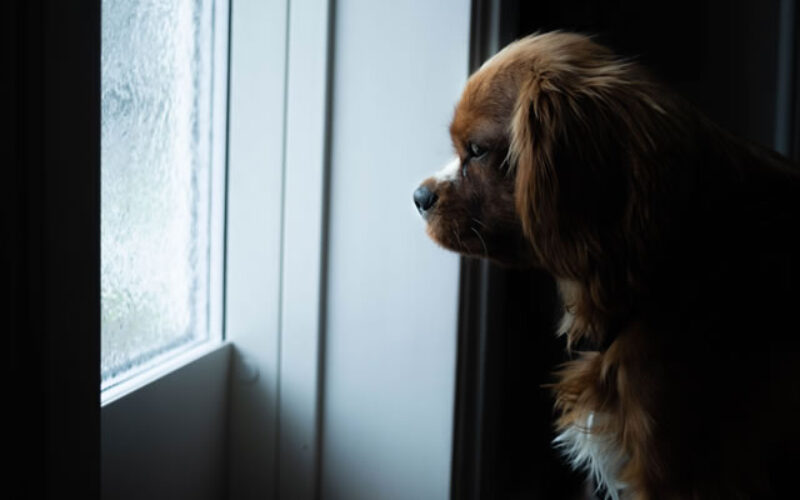
Quick Answer:
Dogs left alone for long periods need a combination of mental stimulation, physical comfort, fresh water, safe entertainment, and gradual training. The right indoor setup—paired with consistent desensitization practice—can transform a stressed, destructive dog into a calm, self-sufficient companion who handles your absence with confidence.
The good news is that with the right indoor setup and some foundational training, your dog can spend extended hours at home in comfort, safety, and reasonable contentment.
Strategic preparation is the answer. A thoughtfully equipped home, paired with consistent routines and appropriate training, allows dogs to self-manage their time during long absences without falling into destructive or anxious behavior.
This guide covers the key items and considerations that make a genuine difference.
- post content
- Understanding Your Dog’s Needs
- Interactive And Puzzle Toys
- Automatic Feeders And Water Systems
- Smart Doggie Doors
- Comfortable Resting Spaces
- Calming Aids And Environmental Enrichment
- Indoor Monitoring Systems
- Building A Routine That Works
- FAQs
- view table:content summary
- view notes:collective tips
- view analysis:Right Outdoor Dog House for Your Pup
- view ideas:latest remodeling analysis
Understanding Your Dog’s Needs

Dogs are deeply social animals, and their behavior when left alone varies significantly based on age, temperament, breed, and daily routine.
Research published in the Journal of the American Veterinary Medical Association estimates that separation anxiety affects between 14% and 20% of the domestic dog population—meaning one in five dogs experiences measurable distress when separated from their owners.
Veterinarians generally recommend that adult dogs not be left alone for more than four to six hours at a stretch, though many owners leave their dogs for up to eight hours on workdays.
Puppies have even shorter thresholds, since they can typically hold their bladder for approximately one hour per month of age.
Understanding where your dog falls on this spectrum helps you choose the right combination of tools and strategies. A high-energy younger dog has very different needs from a calm, older companion who is content to nap the day away.
The goal is not simply to occupy your dog’s time—it is to create an environment where your dog feels secure, physically comfortable, and mentally engaged even in your absence.

Interactive And Puzzle Toys
Mental stimulation is one of the most effective tools for reducing boredom-related anxiety. When a dog’s mind is engaged, the nervous system settles. Puzzle feeders and treat-dispensing toys serve this purpose well, transforming mealtime or snack time into a problem-solving activity that can occupy a dog for extended periods.
According to Happy Staffy Co. (October 2025), chew toys also play a meaningful physiological role: the repetitive action of chewing releases calming endorphins, which naturally reduces stress levels and channels anxious energy into a healthy outlet.
For dogs that chew as a coping mechanism, durable options made from natural rubber or reinforced nylon are the safest choice, as they resist splintering and breaking into potentially dangerous fragments.
Rotating your dog’s toy selection every few days maintains novelty and interest. A dog who sees the same toy every day will lose interest in it quickly, while a toy reintroduced after a week of absence feels new again.
A well-rounded selection might include one long-lasting chew toy, one puzzle or treat-dispensing device, and one comfort item such as a soft plush toy. Together, these address different emotional and behavioral needs throughout a long day at home.
Automatic Feeders And Water Systems
Routine is deeply reassuring to dogs. When mealtimes happen at the same time each day—regardless of whether you are home—your dog experiences a sense of predictability that reduces overall anxiety.
Automatic pet feeders make this possible, dispensing pre-portioned meals on a set schedule with precision you cannot always guarantee manually on a busy workday.
Fresh water access is equally important, and standard water bowls can become stagnant or depleted over a long day. Recirculating pet water fountains keep water aerated and cool, which encourages dogs to drink more consistently—an important consideration for kidney health and general wellbeing.
CNN Underscored (2026) identifies the Enabot Rola Smart Pet Water Fountain as a strong value option at approximately $60, offering continuous filtration at a practical price point. Several other models from brands like Petkit are noted for quiet operation and easy maintenance.
Both automatic feeders and water fountains eliminate one of the most common sources of midday stress for dog owners: wondering whether your dog has eaten or had enough to drink.
Smart Doggie Doors
For dogs with access to a safely enclosed outdoor space, a smart doggie door offers a meaningful degree of independence. Rather than confining your dog entirely to the interior of the home, a smart door allows the dog to step outside for a bathroom break, a stretch, or a period of outdoor rest—and return inside on its own terms.
Modern smart pet doors use microchip or RFID collar technology to recognize your specific dog and deny access to wildlife, stray animals, or unwanted visitors. The SureFlap Microchip Pet Door
Connect, currently rated among the top smart pet doors for 2026 by Smart Home Explorer, retails at approximately $221 and can be monitored and controlled remotely via smartphone. For owners seeking a more premium build with a reinforced weatherproof seal, the Pawport Smart Pet Door offers additional security features starting at $849.
A critical prerequisite for any doggie door is a fully secured outdoor boundary. A fenced yard, properly maintained with no gaps or weak points, is essential before granting your dog outdoor access during unsupervised hours.
If your dog enjoys outdoor time and conditions allow, a weather-appropriate outdoor doghouse provides a shaded or sheltered retreat for dogs who prefer fresh air over indoor lounging during the day.
when going outside
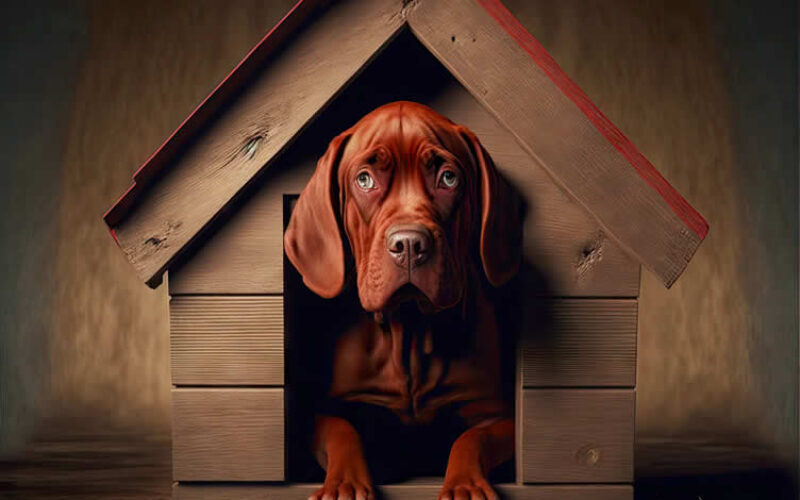
How to Choose the Right Outdoor Dog House for Your Pup
Giving your dog a safe, comfortable place to rest outdoors is one of the kindest things you can do as a pet parent.
Comfortable Resting Spaces
A dog that has no defined place of its own will often struggle to settle during long alone periods. Designating a specific resting area—whether a crate, a dog bed in a corner, or a room your dog gravitates toward naturally—gives the dog a psychological anchor point during your absence.
Quality bedding matters more than many owners realize. Orthopedic memory foam beds provide joint support that is especially valuable for older dogs or larger breeds prone to hip and elbow issues.
Elevated beds improve airflow beneath the dog, which helps with temperature regulation—a practical benefit in warmer climates or during summer months. Familiar scents accelerate settling behavior; placing an item of unwashed clothing near or on the bed can provide meaningful olfactory comfort to a dog that is bonded closely to its owner.
Crates, when introduced through positive reinforcement training rather than used as punishment, become voluntary retreats rather than confinement. Canine behavioral specialists note that properly crate-trained dogs frequently choose to rest in their crate throughout the day, even when the door is left open.
Calming Aids And Environmental Enrichment
The auditory environment inside a home during a quiet, empty day can be surprisingly stimulating for a dog—street noise, passing cars, distant voices, and delivery alerts can all trigger barking or heightened alertness.
White noise machines and calming music playlists address this by providing a consistent sound layer that masks unpredictable external sounds.
YouTube channels dedicated to dog relaxation music, such as Relax My Dog, report reaching millions of dogs globally with extended ambient audio content specifically composed to reduce canine stress responses. Simply leaving a playlist running in the background during your absence can make a measurable difference for sound-sensitive dogs.
Beyond audio, dog-appeasing pheromone (DAP) diffusers release synthetic versions of the calming pheromone naturally produced by nursing mother dogs. These devices plug into a wall outlet and provide continuous environmental support, much like an aromatherapy diffuser but calibrated for canine neurology.
Anxiety wraps and compression vests, such as the widely used ThunderShirt, are another evidence-supported option for dogs with moderate to severe anxiety responses.
Indoor Monitoring Systems
Knowing what is happening at home while you are away provides peace of mind—and in some cases, the ability to intervene before a situation escalates. Pet monitoring cameras have become significantly more capable in recent years.
WIRED’s 2026 roundup of the best pet cameras highlights the Petcube Bites 2 Lite at approximately $70 as a practical entry point, offering 1080p HD video, night vision extending to 30 feet, and a treat-dispensing feature that allows you to reward your dog remotely.
The Furbo 360° Dog Camera adds auto-tracking technology that follows your dog as it moves through the room, ensuring you maintain a clear view without manually adjusting the camera angle.
Two-way audio allows you to speak to your dog through the camera, which can temporarily soothe an anxious dog that responds to your voice. Beyond the camera itself, establishing a relationship with a trusted neighbor who holds a spare key is a practical layer of emergency preparedness.
Knowing that someone can enter your home quickly if your dog becomes distressed, injures itself, or faces any other urgent situation is a safety net no technology fully replaces.
Hey Birdie, Birdie
If your dog spends time indoors, providing entertainment can make a real difference to their well-being.
One delightful option is creating a backyard haven that attracts birds, giving your dog natural visual stimulation.
To draw birds in, place feeders filled with seeds, suet, or nectar suited to local species, and consider adding a bird bath or small water feature.
Native trees, shrubs, or flowers can also provide shelter and food for visiting birds.
Set up a cozy window spot where your dog can safely enjoy the show—a simple setup that sparks curiosity and offers a peaceful pastime for your four-legged friend.
view ideas: Welcome To My Backyard (new win)

Building A Routine That Works
No single item on this list works in isolation. The dogs that handle long daily absences most gracefully are those whose owners have invested in a consistent routine—regular mealtimes, predictable exercise before departures, a familiar and comfortable home environment, and gradual training toward independence.
Start with what your dog needs most: mental stimulation, physical comfort, or environmental calm. Build from there, introducing new items one at a time and observing how your dog responds.
With patience, the right tools, and a thoughtful approach, your dog can learn to spend long hours at home not merely surviving your absence—but resting, playing, and waiting comfortably for your return.
Frequently Asked Questions
-
How long can a dog safely be left alone?
Most adult dogs can manage between four and six hours alone without significant distress, provided they have access to water, enrichment, and a comfortable space. Dogs with existing separation anxiety or those under two years of age often need more structured preparation before they can handle absences of that length comfortably.
-
What are the best indoor items for a dog left alone all day?
A frozen puzzle feeder (such as a stuffed KONG), a lick mat, a snuffle mat, a pet water fountain, an orthopedic dog bed in a calm space, and a pet monitoring camera are the most consistently recommended items by veterinary behaviorists and certified dog trainers for dogs managing long daily absences.
-
Does desensitization training actually work for separation anxiety?
Yes. Systematic desensitization is the gold-standard clinical approach for separation anxiety in dogs, supported by certified trainers and veterinary behaviorists. The process changes the dog’s underlying emotional response to departures—not just their surface behavior—and produces durable results when applied consistently and at the dog’s individual pace.
-
How do I know if my dog has separation anxiety versus boredom?
Separation anxiety typically manifests within the first 30 minutes of your departure and includes vocalization, destructive behavior, inappropriate elimination, or attempts to escape. Boredom-related behavior tends to emerge later in the absence and is less frantic in nature. A pet camera placed before and after your departure can reveal which pattern your dog follows.
-
Can older dogs learn to handle being alone?
Yes. Dogs of any age can benefit from desensitization training and environmental enrichment. Senior dogs may require lower-impact enrichment options—such as snuffle mats rather than high-energy chase toys—and may progress through training at a slower pace, but the underlying principles remain equally effective.
home improvement ideas to consider (complete directory – new win):

| Key Consideration | Description | Examples/Recommendations |
|---|---|---|
| Understanding Your Dog’s Needs | Dogs’ behavior when left alone varies by age, temperament, breed, and routine. Separation anxiety affects 14-20% of dogs. Adult dogs should not be left alone for over four to six hours, while puppies have shorter thresholds measured by their age. | Identify if your dog is high-energy, younger, or older and calm. Tailor strategies accordingly to create a secure and engaging environment. |
| Interactive and Puzzle Toys | Mental stimulation reduces boredom and anxiety. Chew toys can release calming endorphins, while puzzle feeders engage dogs in problem-solving activities. | Durable chew toys made of natural rubber or nylon, rotating toy selection for novelty, and puzzle feeders or treat-dispensing devices are ideal. |
| Automatic Feeders and Water Systems | Consistency in mealtimes and access to fresh water helps reduce anxiety. Automatic feeders ensure timely meals, and water fountains improve hydration. | Consider options like Enabot Rola Smart Pet Water Fountain ($60) or Petkit models for dynamic water systems. |
| Smart Doggie Doors | Provides dogs access to a secured outdoor space for breaks and enrichment. Uses microchip or RFID collar technology for safety. | SureFlap Microchip Pet Door Connect ($221), Pawport Smart Pet Door ($849). Ensure secured fencing for safety before use. |
| Comfortable Resting Spaces | Defined resting areas give dogs a sense of security. Quality bedding improves joint support, airflow, and temperature regulation. | Orthopedic memory foam beds, elevated bedding, and crates with positive reinforcement training are beneficial. |
| Calming Aids and Environmental Enrichment | Reduces sound sensitivities and creates a soothing atmosphere with calming music, white noise, or pheromone diffusers. | Use DAP diffusers, YouTube relaxation music (e.g., Relax My Dog), and products like the ThunderShirt anxiety wrap. |
| Indoor Monitoring Systems | Monitors dog activity remotely, with some allowing interaction or intervention as needed. Emergency preparedness is also essential. | Petcube Bites 2 Lite ($70) or Furbo 360° Dog Camera for advanced tracking. Ensure a trusted neighbor holds a spare key. |
| Building a Routine | A consistent approach with regular meals, exercise, training, and gradual adaptation strengthens your dog’s self-management during absences. | Focus on your dog’s priority needs first—mental engagement, comfort, or calm—then build incrementally with care. |

Find Handyman Services (opens new win) Handyman Carpentry Electrical Plumbing top-rated, pre-screened local contractors FREE: download contractor selection enter zip code – powered by HomeAdvisor ™


Image credit: indoor dog setup by envato.com
end of post … please share it!
| more photo remodeling |
Jump Over to Our Photo Analysis Center for Ideas on
"Renovating Home"
|__________________________________________________________|
home remodeling surprise
find out where it might go - new win


Helpful article? Leave us a quick comment below.
And please share this article within your social networks.