Quick Answer:
Triple-pane windows add a third glass layer, a second gas-filled cavity, and warm-edge spacers, typically costing 20-40% more than comparable double-pane units. They deliver the clearest payoff in cold climates (IECC zones 6-7), noise-heavy areas, or homes with chronic condensation. In milder regions, a high-performance double-pane window often makes more financial sense.
But that promise comes with a real price tag, and the payoff looks different depending on where you live, how your home is built, and how long you plan to stay.
This guide walks you through exactly how triple-pane windows work, what you’ll actually pay compared to double-pane options, and when the upgrade genuinely pays for itself. You’ll also find a practical checklist to help you weigh your own climate, budget, and comfort priorities before you sign a contract.
We’ll lean on current window-industry data and manufacturer specifications rather than guesswork, so you can walk into your next consultation with a window professional feeling confident instead of overwhelmed.
- post content
- Triple-Pane vs Double-Pane: Understanding the Difference
- How Triple-Pane Windows Work: A Cutaway Look
- The Cost Factor: What You’ll Actually Pay
- Energy Savings and Long-Term Value
- When Triple-Pane Windows Make Sense
- Current Window Trends in 2026
- Making Your Decision: Final Considerations
- Choosing the Right Glass for Your Home
- FAQs
- view table:content summary
- view notes:collective tips
- view analysis:window replacement cost guide
- view ideas:latest remodeling analysis
Triple-Pane vs Double-Pane: Understanding the Difference
Double-pane windows use two layers of glass with a sealed, gas-filled cavity between them, usually filled with argon, plus a Low-E coating that reflects radiant heat (ViewLux Windows, 2026). Triple-pane windows add a third glass layer and a second sealed cavity, which substantially improves thermal performance.
Many manufacturers use krypton in the narrower center cavity of a triple-pane unit because it insulates better per inch than argon.
The practical result is a noticeably tighter thermal envelope. A quality Low-E, argon-filled double-pane window typically carries a U-factor between 0.25 and 0.30, while triple-pane units commonly land between 0.15 and 0.20, roughly a 25-40% improvement on that metric, according to the Efficient Windows
Collaborative as cited by ViewLux Windows (2026). Lower U-factors mean less heat escapes through the glass in winter and less heat sneaks in during summer.
Triple-pane construction also tends to improve sound dampening, typically adding about 5-8 points to a window’s Sound Transmission Class rating, and the interior glass surface stays warmer, which reduces condensation and mold risk on cold mornings (ViewLux Windows, 2026).

How Triple-Pane Windows Work: A Cutaway Look
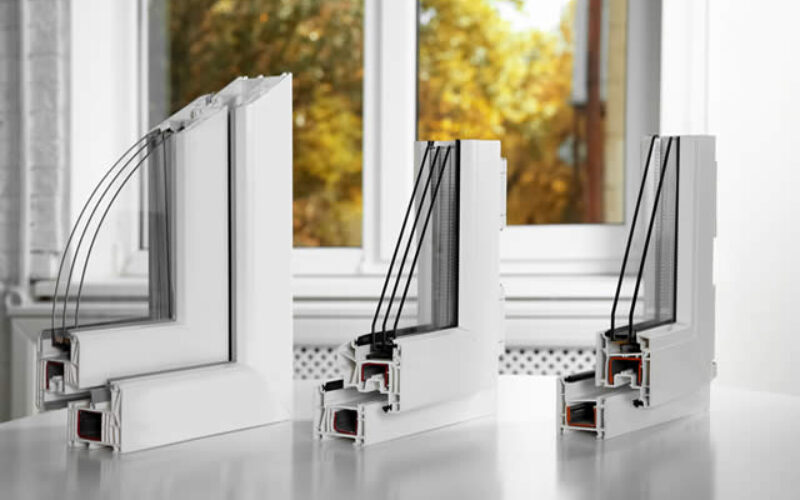
Picture a cutaway slice of a triple-pane window and you’ll see three distinct sheets of glass separated by two sealed chambers, each filled with an insulating gas such as argon or krypton. Those gas fills slow down heat transfer far more effectively than plain air, which is why the cavity width and gas choice matter as much as the glass itself.
Low-E coatings, a microscopically thin metallic layer applied to one or more panes, reflect infrared heat back toward its source while still letting visible light pass through. Because triple-pane windows have three glass surfaces instead of two, manufacturers gain an extra opportunity to apply these coatings, which is one reason triple-pane units often outperform double-pane windows even before accounting for the third pane itself.
At the edges of the glass, warm-edge spacers separate each pane and seal the cavities. Older aluminum spacers conduct heat quickly and create what’s known as a cold bridge, undermining the insulating glass around it.
Warm-edge spacers, typically made from composite or foam materials, reduce that thermal bridging and noticeably improve edge-of-glass performance. A cheap spacer paired with premium glass can erase much of the benefit a third pane is supposed to deliver, so it’s worth asking any installer which spacer system they use before you commit.
more info below

Window Replacement: A Home Improvement Guide
This guide provides valuable insights and expert advice on navigating the window replacement process, ensuring that you make informed decisions for your home.
The Cost Factor: What You’ll Actually Pay
Triple-pane windows typically run about 20-40% more than comparable double-pane units, according to ViewLux Windows (2026), citing Renovation Notes (2026). Where your project lands within that range depends on your region, your installer, the frame material, the coating package, and whether you choose argon or krypton gas fill.
There is encouraging news for new construction and some retrofits: thin triple-pane glass, a lighter-weight design using a slimmer third pane, has shown an incremental material cost of roughly $6 per square foot or less over standard ENERGY STAR-qualified windows in field demonstrations, translating to about $700-$2,400 for a typical 2,400-square-foot wood-framed home (PNNL, 2022).
That’s a meaningfully smaller gap than the premium on traditional, heavier triple-pane replacement windows.
Energy Savings and Long-Term Value
Windows make up roughly 8-10% of a home’s exterior surface area but can be responsible for 30-50% of a home’s heat loss and gain, depending on the source (PNNL, 2022; DOE, 2022). That outsized impact is exactly why window upgrades can move the needle on energy bills.
In controlled testing at the Pacific Northwest National Laboratory’s Lab Homes, thin triple-pane windows saved an average of 12% on heating and 28% on cooling compared to standard double-pane windows over 10-week winter and summer test periods, and reduced outdoor noise by an average of 8-10 decibels, roughly cutting perceived noise in half (PNNL, 2022).
These figures come from lab conditions, so your actual results will vary with your climate, your home’s existing insulation, and your local utility rates.
Payback timelines vary widely and should be treated as climate-dependent rather than guaranteed. According to ViewLux Windows (2026), the clearest energy case for triple-pane windows shows up in IECC climate zones 6 and 7, the coldest parts of the northern United States and most of Canada.
South of those zones, a high-performance double-pane window often delivers better value, and a whole-house swap to triple-pane glass based on energy savings alone can take more than 20 years to pay back in moderate climates.
Choose triple-pane primarily for energy savings if you live somewhere winters are long and heating costs are high; choose high-performance double-pane if your climate is milder and your budget is tighter.
When Triple-Pane Windows Make Sense
Before you request a quote, walk through your own home with a clear checklist in mind. Start with climate: triple-pane windows offer the most value in cold climates where heating dominates your energy bill, particularly IECC zones 6 and 7, while milder regions may see a better return from upgraded double-pane units.
Next, consider your current windows. If your home still has single-pane glass, replace that first, since single-to-double upgrades typically deliver the largest efficiency gain of any window project; triple-pane makes the most sense once your baseline windows are already double-pane and reasonably efficient.
Think honestly about noise. If your home sits near a busy road, airport flight path, or commercial strip, the sound-dampening benefit of a third pane and its extra cavity can be one of the most noticeable everyday improvements you’ll feel, even before you factor in energy savings.
Condensation-prone rooms, bathrooms, kitchens, or basements, also tend to benefit, since the warmer interior glass surface of a triple-pane window reduces the moisture buildup that can lead to mold.
Finally, be realistic about your timeline. If you plan to sell within the next few years, a full triple-pane upgrade may not recoup its cost before you move, whereas if you expect to stay in your home for a decade or more, the cumulative energy and comfort benefits have more time to work in your favor.
One simple test used by installers: walk your home on a cold winter evening and feel each window. The coldest ones, the ones that make you want to pull your sleeves down, are usually your best triple-pane candidates, while the rest may do just fine with a high-performance double-pane replacement.
Current Window Trends in 2026
Triple-pane glazing has moved from niche upgrade to mainstream expectation among high-performance builders. According to Mancino Door & Window (2026), triple-pane systems now lead the market for new high-efficiency installations, frequently paired with advanced Low-E coatings and argon or krypton fills.
-
What other glazing technologies are emerging in 2026?
Thin triple-pane windows are gaining popularity because they meet the proposed ENERGY STAR 7.0 specification without the full weight penalty of traditional triple-pane glass (Clifton Exteriors, 2026).
Electrochromic smart glass, which automatically adjusts its tint based on sunlight, is still being scaled toward typical residential window sizes and currently carries a higher upfront cost (Mancino Door & Window, 2026; Clifton Exteriors, 2026).
Vacuum-insulated glazing and aerogel-infused glass are also emerging, though some of these technologies remain more common in commercial or high-rise applications for now.
-
Are sustainability and smart-home features part of the trend?
Manufacturers are increasingly using recycled aluminum, sustainably sourced wood, and composite materials, with longer window lifespans helping reduce overall waste (Mancino Door & Window, 2026).
Some systems now integrate with home automation platforms, adjusting tint or ventilation sensors based on weather and occupancy, though professional installation remains essential to get the full benefit of these features.
Making Your Decision: Final Considerations
Start by identifying your climate zone and reviewing your current energy bills, then estimate how many more years you expect to stay in your home. These three factors, more than any single product spec, determine whether triple-pane glass is worth it for your household.
Get quotes from multiple manufacturers and installers, since pricing on triple-pane windows varies meaningfully by region, frame material, and installer. Ask every quote for the whole-window NFRC U-factor, SHGC, and condensation resistance rating rather than center-of-glass numbers alone, since frame and spacer losses can make a window perform worse in practice than its glass specs suggest.
Don’t overlook the non-energy benefits in your decision. Improved comfort near windows, quieter interiors, and reduced condensation can matter just as much to your day-to-day life as the dollars saved on utility bills.
A window professional can walk your specific home, assess your frames, and help you decide whether triple-pane glass, upgraded double-pane glass, or a hybrid approach, triple-pane on your coldest or noisiest elevations and high-performance double-pane elsewhere, makes the most sense for your budget and climate.
Choosing the Right Glass for Your Home
Triple-pane windows aren’t a universal upgrade, but they’re far from a gimmick either. For cold-climate homes, noise-exposed properties, and condensation-prone rooms, the extra pane, extra cavity, and warm-edge spacers can deliver real, lasting comfort alongside measurable energy savings.
For milder climates or shorter ownership timelines, a well-specified double-pane window with quality Low-E coatings may serve your home, and your budget, just as well.
Whichever direction you lean, request NFRC-certified performance numbers, ask directly about spacer type and frame reinforcement, and get more than one quote before you decide. A little homework now means a warmer, quieter home for years to come.
Maximizing Functionality in Open Floor Plans
When designing an open floor plan, two key considerations improve both function and appeal. First, invest in high-quality windows that maximize natural light and energy efficiency.
The right number of panes floods the space with light while keeping energy costs down.
Second, create defined zones within the layout to give areas a purpose without losing openness.
Dividers, furniture placement, or rugs can separate spaces while preserving the light and expansive views that make open floor plans so desirable.
view ideas: How To Define Zones (new win)

Frequently Asked Questions
-
What is the main difference between triple-pane and double-pane windows?
Double-pane windows have two glass layers and one gas-filled cavity, while triple-pane windows add a third glass layer and a second cavity, which improves insulation, sound dampening, and condensation resistance (ViewLux Windows, 2026).
-
How much more do triple-pane windows cost than double-pane windows?
Triple-pane windows typically cost about 20-40% more than comparable double-pane units, with the exact premium depending on region, frame material, coatings, and gas fill (ViewLux Windows, 2026; Renovation Notes, 2026).
-
Do triple-pane windows actually lower energy bills?
Lab testing by the Pacific Northwest National Laboratory found thin triple-pane windows saved an average of 12% on heating and 28% on cooling compared to double-pane windows, though real-world results vary by climate and home insulation (PNNL, 2022).
-
How long does it take for triple-pane windows to pay for themselves?
Payback periods vary widely. In cold climates, zones 6 and 7, savings accumulate faster, while moderate-climate homes relying on energy savings alone may see paybacks exceeding 20 years for a full-house swap (ViewLux Windows, 2026).
-
Are triple-pane windows worth it in a mild climate?
Not always. South of the coldest climate zones, a high-performance double-pane window often delivers comparable comfort at a lower cost, making it the more financially sound choice for many moderate-climate homes (ViewLux Windows, 2026).
-
Do triple-pane windows reduce outside noise?
Yes. Triple-pane construction typically adds about 5-8 points to a window’s Sound Transmission Class rating, and lab testing recorded an average noise reduction of 8-10 decibels, roughly halving perceived outdoor noise (ViewLux Windows, 2026; PNNL, 2022).
-
Will I need to reinforce my window frames for triple-pane glass?
Possibly. Traditional triple-pane glass can weigh 25-50% more than double-pane glass, and older wood or vinyl frames sometimes need reinforcement, which can add to your total installation cost (PNNL, 2022; ViewLux Windows, 2026).
-
What should I ask for when comparing window quotes?
Request whole-window NFRC ratings for U-factor, SHGC, and condensation resistance, along with details on spacer type and gas fill, since center-of-glass numbers alone can overstate real-world performance (ViewLux Windows, 2026).
-
Are there alternatives to full triple-pane replacement?
Yes. Many homeowners use a hybrid approach, installing triple-pane windows on cold-exposed or noise-facing elevations and high-performance double-pane windows elsewhere, to balance cost and performance (ViewLux Windows, 2026).
home improvement ideas to consider (complete directory – new win):


- ViewLux Windows, “Triple Pane vs Double Pane Windows” (2026). https://viewluxwindows.com/triple-pane-vs-double-pane/
- Mancino Door & Window, “The Evolution of Window Replacements in the Future” (March 2, 2026). https://www.mdwdoors.com/blog/the-evolution-of-window-replacements-in-the-future/
- Clifton Exteriors, “What’s New in the World of Windows” (last updated June 7, 2026). https://www.cliftonexteriors.com/blog/new-windows-design-trends-technology
- Renovation Notes, “Is Triple Glazing Worth the Cost?” (2026, as cited by ViewLux Windows). https://renovationnotes.com/articles/triple-glazing-worth-the-cost/
| Section Title | Summary | Notable Details |
|---|---|---|
| Triple-Pane vs Double-Pane | Explains the additional layer of glass and gas-filled cavity in triple-pane windows which significantly improves thermal and acoustic performance compared to double-pane windows. | Triple-pane offers a U-factor of 0.15-0.20; double-pane offers 0.25-0.30. Noise reduction adds 5-8 STC points, and condensation prevention is better. |
| How Triple-Pane Windows Work | Describes the layered glass setup with insulating gases and the addition of Low-E coatings for heat reflection and performance improvement. | Uses warm-edge spacers to reduce thermal bridging. Krypton gas performs better in central chambers than argon. |
| The Cost Factor | Details the cost and installation aspects, noting that triple-pane windows typically cost 20-40% more than double-pane units with additional reinforcement costs for older frames. | Thin triple-pane designs reduce weight and costs, narrowing the premium compared to standard double-pane setups. |
| Energy Savings | Identifies triple-pane windows’ energy benefits and their ability to reduce heat loss and noise, with significant energy savings in colder regions. | Test results show 12% heating and 28% cooling savings over double-pane units in controlled conditions. |
| Making the Right Decision | Guides homeowners through assessing their climate, current window setups, noise levels, and long-term plans when considering a triple-pane upgrade. | Key advice includes focusing on cold regions (Zones 6-7), prioritizing single-to-double upgrades first, and factoring in local utility rates. |
| Current Trends | Highlights innovations like thin triple-pane glass, electrochromic smart glass, and sustainability-focused materials in 2026 window trends. | Recycled materials and smart-home integrations are growing, with lightweight triple-pane technologies gaining traction. |
| Final Considerations | Summarizes the key factors for determining if triple-pane windows are worth the investment based on climate, costs, and comfort benefits. | NFRC-certified specs, multiple quotes, and spacer/frame inquiries are recommended before final decisions. |

Find Home Window Services Windows – Install Window Tinting Windows – Cleaning Window Treatments top-rated, pre-screened local contractors FREE: download contractor selection enter zip code – powered by HomeAdvisor ™


Image credit: twiple-pane windows by envato.com
end of post … please share it!
| more photo remodeling |
Jump Over to Our Photo Analysis Center for Ideas on
"Renovating Home"
|__________________________________________________________|
home remodeling surprise
find out where it might go - new win


Helpful article? Leave us a quick comment below.
And please share this article within your social networks.