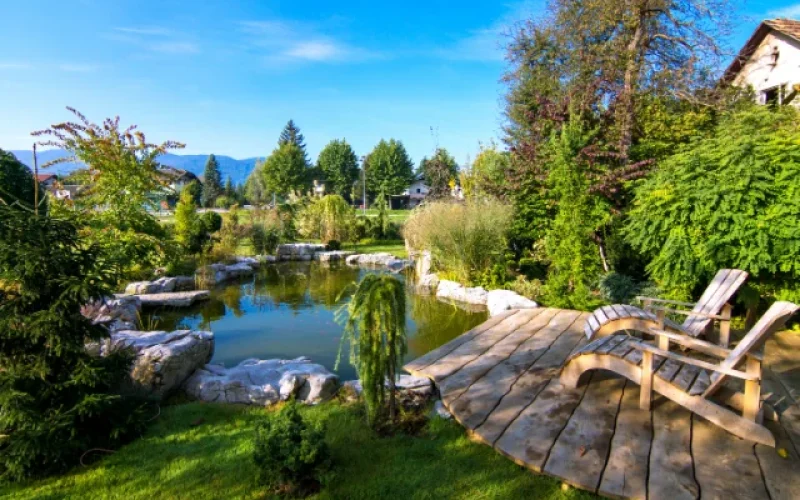

Adding a backyard pond can make an outdoor space feel more peaceful, whether you envision a small water feature surrounded by flowers or a larger pond that becomes the centerpiece of your garden. Unlike a movable fire pit or a new set of patio furniture, a pond permanently alters part of the property and creates responsibilities that continue after the landscaping fills in. Knowing what to consider before adding a backyard pond can prevent homeowners from overlooking important details before excavation begins.
Start With the Way You Use Your Yard
Before deciding where a pond belongs, consider which parts of the backyard already serve an important purpose. A household that regularly eats outside may want to preserve the area around a patio, while someone who uses the yard primarily for gardening could have more flexibility.
Positioning a pond within sight of a kitchen or living room allows the feature to become part of the everyday view. For homeowners seeking a more secluded setting, a quieter corner may make sense if there is a comfortable way to reach and enjoy it. If you enjoy spending quiet mornings outside or relaxing in the garden after a busy day, consider where you would most enjoy sitting near the water.
Look at the Property Before Choosing a Location
Once you know how much space you can comfortably dedicate to water, the physical conditions of the property begin narrowing the possibilities. Slopes and mature trees can complicate excavation, while nearby structures may restrict the workable area. Utility locations and equipment access deserve consideration before a preferred spot turns into a construction plan.
Depending on the size of your pond, installation may require equipment that needs a clear path from the driveway or street to your backyard. A narrow gate or established planting bed could limit that access even when the proposed pond location itself has plenty of room.
Consider How Water Already Moves Through the Yard
After rainfall, a yard can reveal drainage conditions that are easy to overlook during dry weather. Watching where runoff travels and identifying areas that stay wet long after the surrounding lawn dries can provide valuable information before choosing a pond location. Water naturally collects in low-lying areas, but those locations may not offer suitable conditions for a constructed pond.
Persistent puddles may indicate an existing drainage problem that needs attention before excavation begins. A poorly positioned pond can interfere with established drainage patterns, potentially directing excess water toward nearby structures or allowing runoff to carry sediment into the pond. Evaluating these conditions early gives homeowners an opportunity to address drainage concerns and select a location that works with the property’s existing landscape.
Match the Pond’s Scale to the Landscape
With unsuitable locations ruled out, you can start thinking more seriously about the dimensions of the pond. A modest water feature may complement a compact garden, whereas a large pond can become the dominant element in the backyard. Before committing to a particular size, you might outline the proposed pond with a garden hose to see how much space it would occupy.
As the dimensions develop, consider how the shape will relate to the design already established around your home. Curved edges settle naturally into informal garden settings. Properties with strong architectural lines may support a more structured shape, provided the design still leaves enough surrounding space for comfortable movement and landscaping.
Think Beyond the Visible Edge of the Water
Once the location and dimensions begin taking shape, the project moves from landscape planning into the practical details of construction. What happens beneath the waterline matters just as much as the finished edge because excavation conditions and containment materials influence how the pond functions after installation.
Beyond excavation, homeowners need to consider how the pond will retain water and what equipment its design requires. Choosing heavy-duty pond liners can be an important part of larger installations, particularly when the pond’s dimensions and ground conditions place greater demands on the containment materials. Depending on the design, the project may require pumps, filtration equipment, or electrical connections that should factor into the construction plan.
Leave Room for Future Maintenance
Landscaping can make a new pond feel established surprisingly quickly, yet dense growth around every edge can create problems when the feature needs attention. Pumps or other accessible components may eventually require inspection, and routine pond care becomes harder when reaching the water means stepping through delicate plants.
Leaving a few discreet access points around the pond allows homeowners to reach equipment and remove debris without disturbing the surrounding landscape. Depending on the design, ongoing maintenance may involve clearing fallen leaves, monitoring water quality, or cleaning filtration components. Accounting for these tasks during installation can make the pond easier to care for once the surrounding plants mature.
Connect the Pond to the Rest of the Landscape
Once you address the pond’s practical requirements, the surrounding landscape can make the water feature feel like part of the property. Materials already used around patios or garden paths can create visual continuity when they reappear near the pond in smaller amounts. A nearby bench or small seating area can make the pond a place to enjoy your garden, while a simple pathway can connect it to the patio or other outdoor gathering spaces.
Planting can provide the same connection, although mature size matters more than the appearance of a newly installed bed. Vegetation that looks appropriately scaled during the first season may eventually block views or crowd areas needed for access. Leaving selected portions of the water visible can balance a lush setting with the practical need to move comfortably around the feature.
Account for Safety From the Beginning
Before finalizing the design, think about how family members and visitors will move around the water. The appropriate depth and edge treatment may depend partly on who regularly uses the backyard, particularly in households with young children or pets that spend time outdoors. Families with young children should consider whether protective barriers or other safeguards are necessary, since even shallow water can present a drowning hazard. Surfaces around the pond should fit those circumstances as carefully as they fit the visual design.
Local requirements can influence what is possible, especially for projects that reach certain dimensions or depths. Checking applicable rules while the design is still flexible gives you room to make necessary changes before construction commits the property to a particular layout. Safety considerations can then shape the pond naturally instead of becoming awkward additions to an otherwise finished plan.
Create a Pond That Belongs in Your Yard
A backyard pond can look like a natural part of the landscape when its design complements the property and accommodates the way homeowners use their outdoor space. Achieving that result takes more than choosing an attractive shape or surrounding the water with plants. The decisions made before construction influence how well the pond functions and how comfortably it fits into everyday life.
Much of what matters before adding a backyard pond comes down to looking beyond the finished view you have in mind. With thoughtful planning, your backyard pond can become a natural extension of your garden and a feature you enjoy spending time around for years to come.
Image Credentials: By Daniel Vincek, #126249509
|__________________________________________________________|
home remodeling surprise
find out where it might go - new win


Helpful article? Leave us a quick comment below.
And please share this article within your social networks.