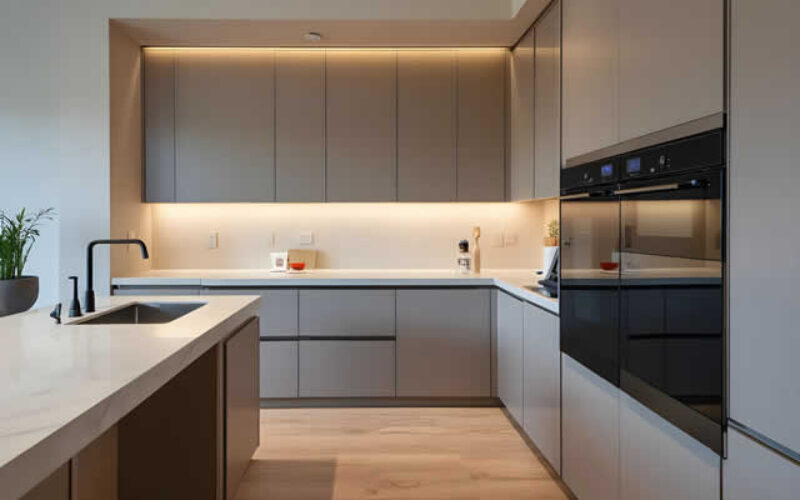
The reality is that these visible appliances, while functional, can make even the most thoughtfully designed kitchen feel cramped and chaotic.
Hidden kitchen appliances represent a transformative approach to kitchen design that addresses this common frustration. By concealing appliances behind custom cabinetry, integrated panels, or cleverly designed storage solutions, homeowners can reclaim their counter space while maintaining full functionality.
This design philosophy has gained remarkable momentum among homeowners who want their kitchens to feel more like intentional living spaces rather than appliance showrooms.
The appeal extends beyond mere aesthetics. Hidden appliances create seamless visual flow, maximize usable space, and allow your kitchen’s architectural features to take center stage.
Whether you’re planning a complete renovation or looking for ways to streamline your current setup, understanding how hidden kitchen appliances work can help you create the organized, peaceful cooking environment you’ve always wanted.
- post content
- The Compelling Benefits of Hidden Kitchen Appliances
- Types of Hidden Kitchen Appliances That Transform Spaces
- Design Considerations for Seamless Integration
- Installation and Maintenance Considerations
- Cost Analysis and Budget Planning
- Creating Your Future Kitchen Vision
- view table:content summary
- view key:collective notes
The Compelling Benefits of Hidden Kitchen Appliances
Space-saving kitchen solutions have become essential as homes trend toward open floor plans and smaller square footage. Hidden appliances address multiple challenges simultaneously, making them an increasingly popular choice for homeowners who value both form and function.
-
Maximizing Counter Real Estate
Counter space is precious currency in any kitchen. When appliances disappear behind cabinet doors or slide into dedicated compartments, suddenly you have room for food preparation, casual dining, or simply the breathing room that makes cooking feel less stressful.
This expanded workspace becomes particularly valuable during meal preparation or when entertaining guests.
-
Creating Visual Harmony
A kitchen filled with visible appliances can feel busy and overwhelming, regardless of how clean or organized it actually is. Hidden appliances allow your kitchen’s design elements—beautiful backsplashes, statement lighting, or architectural details—to become the focal points.
The result is a space that feels intentional and serene rather than cluttered and utilitarian.
-
Improving Functionality Through Organization
When appliances have designated hiding spots, your kitchen naturally becomes more organized. Items have specific homes, making it easier to maintain tidiness and find what you need quickly.
This organizational benefit extends beyond the appliances themselves, creating better overall kitchen workflow.


Types of Hidden Kitchen Appliances That Transform Spaces
The range of appliances that can be concealed has expanded significantly as manufacturers recognize the growing demand for integrated solutions. Each type offers unique benefits and installation considerations that can enhance your kitchen’s functionality.
-
Refrigeration Solutions
Panel-ready refrigerators represent one of the most impactful hidden appliance upgrades. These units accept custom cabinet panels that match your existing cabinetry, creating the illusion of a wall of storage rather than a large appliance dominating the space.
Counter-depth models further enhance this seamless appearance by aligning with surrounding cabinets rather than protruding into walkways.
Under-counter refrigeration adds flexibility for beverage storage, produce, or frequently accessed items without requiring additional floor space. These compact units can be integrated into islands, entertainment areas, or secondary prep zones.
-
Dishwashing Systems
Fully integrated dishwashers disappear completely behind matching cabinet panels, maintaining visual continuity along your cabinet runs. These units often feature controls hidden along the top edge of the door, ensuring no visible buttons or displays interrupt the clean lines of your cabinetry.
Drawer-style dishwashers offer another space-saving approach, particularly useful in smaller kitchens or as secondary units in large spaces. These can be stacked or installed individually, providing flexibility in capacity and placement.
-
Cooking and Heating Appliances
Microwave drawers eliminate the need for counter space or above-range placement, sliding smoothly into base cabinets at whatever height works best for your family. This positioning often proves more ergonomic than traditional mounting locations.
Warming drawers serve dual purposes, providing both food warming capabilities and additional storage for serving pieces or cookware. When integrated into cabinetry, they become virtually invisible until needed.
-
Small Appliance Storage
Appliance garages create dedicated spaces for frequently used items like coffee makers, blenders, or stand mixers. These cabinet compartments can include electrical outlets, allowing appliances to remain plugged in and ready for use while staying hidden when not needed.
Pop-up or lift mechanisms can raise small appliances from concealed compartments to counter level with the touch of a button, combining convenience with the clean aesthetic of hidden storage.
Design Considerations for Seamless Integration
Successfully incorporating hidden kitchen appliances requires thoughtful planning that goes beyond simply choosing which items to conceal. The goal is creating a cohesive design that feels intentional and functions smoothly for your household’s specific needs.
-
Cabinet Integration Planning
Custom cabinetry often provides the most seamless results, as panels can be crafted to match existing finishes exactly. However, many appliance manufacturers now offer panel-ready options that accept standard cabinet doors, making integration more accessible for various budgets and timelines.
Ventilation requirements must be carefully considered, particularly for refrigeration and cooking appliances. Hidden doesn’t mean sealed off—proper airflow ensures appliances function efficiently and have appropriate lifespans.
-
Electrical and Plumbing Coordination
Hidden appliances often require electrical work to ensure outlets are properly positioned within concealment areas. This planning phase is crucial for both functionality and safety. GFCI outlets may be required in certain locations, and circuits should be appropriately sized for the appliances they’ll serve.
Water lines for ice makers, warming drawers with steam functions, or specialized coffee systems need to be routed appropriately during the planning phase. These infrastructure considerations significantly impact both installation complexity and long-term reliability.
-
Workflow and Accessibility
The most beautiful hidden appliances become frustrating if they’re difficult to access or interrupt your cooking flow. Consider how often you use each appliance and position them accordingly. Frequently used items should remain easily accessible, while occasional-use appliances can be placed in less convenient but more concealed locations.

Maximize Functionality: The Ultimate Guide to Kitchen Layouts for Every Cooking Style
When designing a kitchen, maximizing functionality is paramount to creating a space that is both enjoyable to work in and efficient for everyday tasks. The layout of a kitchen plays a crucial role in facilitating smooth workflows, ensuring that essential areas such as cooking, cleaning, and storage are easily accessible.
Installation and Maintenance Considerations
Hidden kitchen appliances require more complex installation than their traditional counterparts, but proper planning ensures smooth operation and longevity. Understanding these requirements helps set realistic expectations and budgets.
-
Professional Installation Requirements
Most hidden appliance installations benefit from professional expertise, particularly those involving electrical work, plumbing connections, or custom cabinetry modifications. Licensed contractors ensure installations meet local codes and manufacturer specifications, protecting both safety and warranty coverage.
Template accuracy becomes crucial when cutting openings for integrated appliances. Measurements must be precise, as corrections can be expensive and time-consuming once cabinetry is modified.
-
Maintenance Access Planning
Hidden appliances still require regular maintenance and occasional repairs. Design installations with service access in mind, ensuring technicians can reach necessary components without dismantling entire cabinet sections. Some appliances offer front-access service, while others may need clearance from sides or back.
Filter changes, cleaning requirements, and routine maintenance should remain reasonably convenient. Appliances that are difficult to maintain often develop problems more quickly, ultimately costing more than the initial space-saving benefits justify.
-
Ventilation and Clearance Requirements
Each appliance type has specific clearance requirements for safe operation. Refrigeration units need adequate ventilation to prevent overheating, while warming drawers require clearance for heat dissipation.
Following manufacturer specifications ensures efficient operation and prevents premature equipment failure.
Cost Analysis and Budget Planning
Hidden kitchen appliances typically involve higher upfront costs than conventional installations, but they can add significant value to your home while improving daily functionality. Understanding the investment helps you make informed decisions about which upgrades provide the best return.
-
Initial Investment Considerations
Panel-ready appliances often cost more than their standard counterparts, and custom panels add additional expense. However, the visual impact and space-saving benefits frequently justify the premium for homeowners planning to stay in their homes long-term.
Installation costs vary significantly based on complexity. Simple appliance garage additions might be relatively affordable, while full kitchen integrations involving multiple hidden appliances can represent substantial investments.
-
Long-term Value Benefits
Hidden appliances often increase home value by creating a more sophisticated, intentional kitchen design. Potential buyers frequently respond positively to kitchens that feel spacious and uncluttered, making this upgrade particularly valuable if you plan to sell within several years.
Energy efficiency can improve with proper integration, as appliances maintain more stable operating temperatures when properly ventilated and positioned. This efficiency can result in lower utility costs over time.
-
Budgeting for Phases
Many homeowners approach hidden appliances in phases, starting with one or two key upgrades and expanding over time. This approach spreads costs while allowing you to evaluate which solutions provide the most benefit for your specific household needs.


Creating Your Future Kitchen Vision
Hidden kitchen appliances represent more than a design trend—they reflect a fundamental shift toward kitchens that prioritize both beauty and functionality. As manufacturing technology continues advancing and integration options expand, these solutions become increasingly accessible for homeowners at various budget levels.
The most successful hidden appliance projects start with honest assessment of your cooking habits, space constraints, and long-term goals. Consider which visible appliances currently frustrate you most and which hidden solutions would provide the greatest daily benefit.
This practical approach ensures your investment improves your actual living experience rather than simply following design trends.
other related articles of interest:
Working with experienced kitchen designers or contractors who understand hidden appliance integration can help you avoid costly mistakes while maximizing the impact of your investment. Their expertise in workflow, building codes, and product selection proves invaluable for creating solutions that work beautifully for years to come.
The future of kitchen design continues moving toward cleaner, more intentional spaces that support the way we actually live and cook. Hidden appliances provide one of the most effective ways to achieve this vision while maintaining all the functionality modern households require.
| Appliance Type | Space Saved | Installation Complexity | Average Cost Premium | Maintenance Access |
|---|---|---|---|---|
| Panel-Ready Refrigerator | Visual integration, counter-depth profile | Moderate | 15-25% | Front and side access |
| Integrated Dishwasher | Seamless cabinet appearance | Low-Moderate | 10-20% | Front access |
| Microwave Drawer | Counter and cabinet space | Moderate | 20-30% | Front access |
| Appliance Garage | Counter clutter elimination | Low | Cabinet cost only | Full access when open |
| Warming Drawer | Multipurpose storage | Moderate | New appliance cost | Front access |
| Under-Counter Refrigeration | Floor space preservation | Moderate-High | Specialty appliance pricing | Front access |
Find Kitchen Remodeling Services Kitchen Remodeling and Design Cabinets & Countertops Flooring Lighting Design Painting & Staining top-rated, pre-screened local contractors FREE: download contractor selection enter zip code – powered by HomeAdvisor ™


Image credit: by 123rf.com
end of post … please share it!
| more photo remodeling |
Jump Over to Our Photo Analysis Center for Ideas on
"Renovating Home"
|__________________________________________________________|
home remodeling surprise
find out where it might go - new win


Helpful article? Leave us a quick comment below.
And please share this article within your social networks.