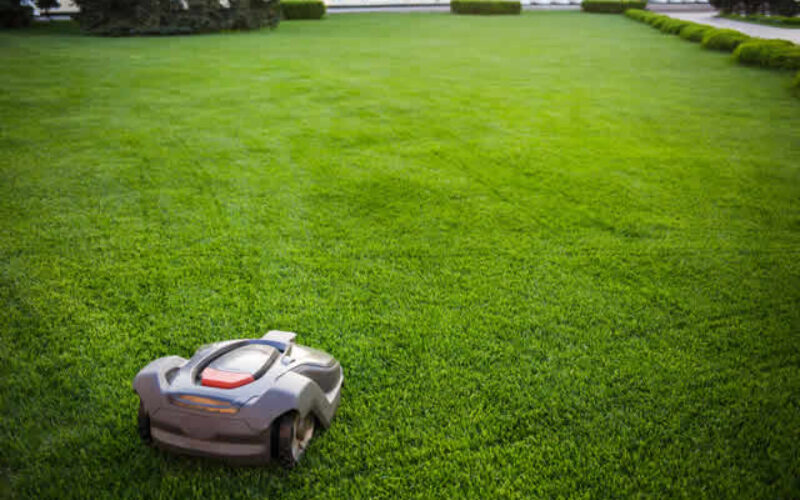
The promise is enticing: set it and forget it, with your lawn kept in impeccable shape without lifting a finger. But can they live up to this promise, especially on hilly terrain, around tricky borders, and among backyard obstacles?
This comprehensive guide addresses the most common questions and concerns about robotic lawn mowers’ true effectiveness.
How Robotic Lawn Mowers Work
Understanding what makes robotic lawn mowers tick helps demystify how these high-tech machines achieve thoughtfully cut grass with little human effort. At their core, these mowers blend compact design with advanced navigation and sensing systems.
Most robotic mowers rely on boundary wires or virtual mapping to define their designated mowing area. These boundaries, whether physical or digital, prevent the mower from wandering outside the intended lawn.
Onboard sensors and smart algorithms adjust the mower’s pattern, ensuring that no patch is left unmowed and that the unit returns to its charging dock automatically when the battery runs low.
Navigation relies on a mixture of sensors. Bump sensors detect contact with objects and initiate a course correction, while more advanced models use GPS or vision-based mapping to optimize their routes.
The cutting system features small, fast-spinning blades positioned beneath the mower’s body. Cutting height is adjustable and the blades’ random movement ensures healthy, even grass and reduced wear on the lawn.

Through this combination of navigation, power management, and sharp, efficient blades, robotic mowers deliver results that closely match traditional mowing with less hands-on effort.

Navigating Hilly Terrain
A key question for homeowners with uneven or sloped yards is whether robotic lawn mowers can maintain performance on hills and inclines. Manufacturers have recognized this concern, and the latest machines are dramatically better equipped than early models.
Capabilities on slopes depend on specific design features. Motor power and battery capacity must be sufficient for climbing without stalling.
Tire design and tread pattern are critical for maintaining grip on damp or uneven ground. Traction control software can adjust speed and direction in response to changes in slope or surface.
Many leading models can maintain stability and cutting performance on gradients of up to 35 percent, with high-end options like the Husqvarna Automower 435X AWD handling inclines up to 70 percent thanks to articulated body designs and four-wheel drive.
Performance on hills can also depend on factors like grass type and soil condition. Steeper slopes may require occasional manual trimming or supplemental mowing where grass density or obstacles challenge the robot’s capabilities.
However, for most residential properties with moderate hills, choosing the right model ensures consistent, dependable mowing.
Edge Cutting Performance
Tidy, well-defined lawn edges present a challenge for any mower, and robotic options are no exception. Performance at the borders depends largely on blade placement, mower form factor, and smart navigation modes.
Some robotic mowers feature specialized “edge mode” programming, directing the mower to trace the perimeter of the yard before returning to its main mowing pattern.
This mode, combined with blades that reach as close as possible to the mower’s outer edge, allows for neat cutting near fences, flowerbeds, and walkways. Examples include models from Worx and Gardena, which excel at edge proximity with their offset cutting discs.
Despite these innovations, the majority of robotic mowers still leave a narrow strip of grass just outside their reach due to safety housings and the positioning of their wheels. For especially crisp borders, periodic use of a manual trimmer or edger remains a recommended supplement.
Design improvements are narrowing this gap, but full edge-to-edge mowing along complex boundaries continues to be a limitation.
Obstacle Avoidance
Yards are rarely obstacle-free, featuring everything from garden beds to patio furniture and stray children’s toys. Robotic mowers approach obstacle avoidance through a blend of sensors tailored for safety and adaptability.
Bump sensors are standard, immediately halting or redirecting the mower if contact is made with a solid object. More sophisticated models add ultrasonic or vision-based sensors, which can detect obstacles at a distance and plan alternative routes before collision occurs. This technology is particularly useful for protecting flowerbeds, small trees, and pet areas.
Performance varies based on object type. Stationary, substantial obstacles like tree trunks or large rocks are reliably navigated, while lightweight, low-profile items like hoses or small toys can occasionally evade detection or be moved rather than avoided.
Regularly clearing the yard of soft or mobile objects maximizes both the mower’s effectiveness and the safety of your property.
Real-World Performance and User Experiences
Insights from real-world users and industry experts reveal the strengths and shortcomings of popular robotic lawn mowers across different yard types. For typical suburban lots up to half an acre, users consistently report that mowing schedules set by the machine allow for a lawn that’s always presentable with minimal intervention.
Regular maintenance remains essential. Cleaning cutting decks, replacing blades, and checking sensors extend the mower’s lifespan and ensure optimal performance. Setup may initially require time for laying boundary wires or programming mapping features, but ongoing operation is nearly maintenance-free.
Problems most often arise from unusual yard layouts, overly narrow passageways, or excessive debris. When issues occur, user guides and manufacturer support offer troubleshooting steps such as adjusting boundary wires, clearing obstructions, or resetting navigation software.
Many owners note that with occasional manual tidying and proactive upkeep, robotic mowers meet or exceed expectations for convenience and reliability.

The Future is Here: Meet Your New Home Robots
The future of home robotics has arrived, transforming the way we live and manage our daily tasks. These advanced technologies are designed to provide vital assistance, whether it’s cleaning, cooking, or offering companionship to those in need.
Benefits and Drawbacks
Robotic lawn mowers bring several clear advantages that make them so attractive. Chief among these are convenience and time savings, as users are freed from the weekly chore of mowing. Automated scheduling means consistently well-groomed grass without effort.
The repeated, light cuts favored by robotic mowers are better for lawn health compared to less frequent, heavy mowing. Many models operate quietly, meaning they can run even in the early hours or late at night.
Drawbacks include the higher upfront cost compared to manual or traditional electric mowers, as well as potential challenges on complex or highly landscaped yards. While theft is uncommon thanks to built-in alarms and GPS tracking, it remains a consideration in areas with frequent foot traffic or lax security.
Most mowers are limited by the size of their battery and area coverage, necessitating careful model selection for larger properties.
Choosing the Right Robotic Lawn Mower
Selecting the best robotic mower requires careful assessment of your property and preferences. Yard size dictates area capacity and battery life, with small lots adequately served by basic models, while larger and sloped terrain demand more robust options. Steep or irregular yards call for models with advanced traction systems and higher incline ratings.
Comparisons of models from Husqvarna, Worx, Robomow, Gardena, and others reveal distinctive strengths. High-capacity mowers like the Husqvarna Automower 450X excel on large properties, while compact options like the Worx Landroid are ideal for smaller, flat lawns.
Review manufacturer guidance, third-party reviews, and user testimonials to match your lawn’s specifics with the machine’s features.
Installation and initial setup vary. Wired boundary systems take a few hours to install but enable precise, reliable operation.
Wireless, app-based mapping requires less physical effort but demands patience during the learning phase. Ongoing support from brands, local dealers, or online communities can aid in smooth onboarding and use.
other related analysis of interest: (new win)
Time to Ditch Gas Mowers and Go Electric Here’s What You Need to Know
Transform Your Outdoor Space with Beautiful Container Gardening
Looking Ahead Trends in Robotic Lawn Care
Robotic lawn mowers demonstrate impressive effectiveness and convenience for the majority of residential properties. Their reliability on moderate hills, ability to cut closely along edges, and safe navigation around obstacles have cemented them as not just a novelty, but a genuinely practical tool for busy homeowners.
Limitations remain, including cutting right up to edges and complex installations in challenging yards, but these are narrowing as technology matures.
Advancements on the horizon include fully wireless navigation powered by artificial intelligence, more precise edge cutting, and deeper integration with smart home systems.
For users seeking more free time and a consistently well-kept lawn, robotic lawn mowers are an increasingly smart investment. Always assess your yard’s unique needs and maintain your device to maximize the impressive potential of this technology.
| Feature | Key Insights | Limitations/Notes |
|---|---|---|
| Navigation | Boundary wires, GPS, sensors optimize route and coverage | Setup time required, initial learning curve |
| Hill Performance | Advanced models manage 35 to 70 percent inclines with traction and power enhancements | Steep, uneven terrain may require manual intervention |
| Edge Cutting | Edge mode, offset blades provide decent border cuts on most models | Most leave a narrow uncut strip, manual edging occasionally necessary |
| Obstacle Avoidance | Bump, ultrasonic, and vision sensors identify and route around obstacles | Struggles with small, lightweight or low-profile items |
| User Experiences | High satisfaction for typical lawns, low maintenance, consistent performance | Complex yards pose greater challenges, requires periodic cleaning |
| Benefits | Convenience, time-saving, consistent look, quiet operation | High upfront cost, limited coverage in large/complex yards |
| Model Selection | Wide range for all property sizes and terrains; expert/peer reviews help guide choice | Installation/setup varies by model and yard type |
| Future Trends | AI navigation, more precise mowing, smart home integration | Technology maturing, basic limitations steadily improving |
|__________________________________________________________|
home remodeling surprise
find out where it might go - new win


Helpful article? Leave us a quick comment below.
And please share this article within your social networks.