Quick Answer:
Light quality—not brightness—determines how well a room actually functions. The right combination of color temperature (measured in Kelvin) and Color Rendering Index (CRI) helps you see true colors, work safely, and feel comfortable. For kitchens and bathrooms, aim for 3500K–4000K with a CRI of 90 or above; for bedrooms and living rooms, 2700K–3000K creates a cozier feel.
Lumens tell you how much light a bulb produces, but they say nothing about how that light makes colors, textures, and faces actually look.
Light quality is shaped by two often-overlooked specifications: color temperature and CRI. Together, they decide whether a room helps you chop vegetables safely, apply makeup accurately, or unwind after a long day.
Understanding these two factors—and how to match them to fixture technology and life stage—turns lighting from an afterthought into one of the most meaningful upgrades you can make at home.
This guide walks through how to choose color temperature room by room, why CRI deserves your attention, which fixture technologies deliver the smoothest light, and how thoughtful lighting supports safety and independence as we age.
- post content
- Color Temperature For Different Rooms
- Why High CRI Matters For Color Accuracy
- Choosing The Right Fixture Technology
- Lighting Strategies For Aging In Place
- conclusion: Strategic Lighting For Better Living
- FAQs
- view table:content summary
- view notes:collective tips
- view analysis:Guide to Home Lighting Design and Layering
- view ideas:latest remodeling analysis
Color Temperature For Different Rooms
Color temperature, measured in Kelvin (K), describes where light falls on the spectrum from cozy amber to crisp white. For rooms where people cook, read, dress, or apply makeup, white light is the better starting point—not colorful RGB options, which are designed for mood, not accuracy.
At 2700K, light takes on a warm, golden quality that feels calming and familiar. This range suits bedrooms, living rooms, and traditional interiors where the goal is comfort rather than precision. Move up to 3000K, and you land on a warm-neutral tone that works beautifully across many living spaces and kitchens, offering a gentle balance between coziness and clarity.
For tasks that demand sharper visual detail, 3500K to 4000K delivers noticeably clearer visibility. Kitchens, closets, workrooms, and many bathrooms benefit from this range, since it reduces shadows and helps you distinguish fine details, whether you’re reading a recipe or matching socks in a drawer.
Choosing the right Kelvin value for each room is one of the simplest ways to make your home work harder for you, without spending a dime more on energy.

Why High CRI Matters For Color Accuracy
Color temperature tells you how warm or cool a light appears, but the Color Rendering Index (CRI) tells you something arguably more important: how faithfully that light reveals true color. Rated on a scale of 0 to 100, CRI measures how accurately colors appear compared to natural daylight.
A CRI of 90 or above is a strong benchmark for kitchens, bathrooms, and any space where color accuracy genuinely matters—from judging whether chicken is fully cooked, to applying makeup that matches your skin tone in person, to appreciating the depth of a favorite painting or the grain in wood cabinetry.
Lower-CRI bulbs can leave colors looking dull, muddy, or subtly wrong, even if the room feels perfectly bright.
Recent research on LED retrofits confirms that color quality, not just efficiency, should guide replacement decisions in both new and refurbished buildings, since fixtures with poor color rendering can undercut the benefits of energy savings by making spaces feel less functional and less pleasant to use (Listowski et al., Energies, 2025).
A related 2025 study in Energies found that maintaining color consistency alongside energy efficiency is achievable with today’s LED technology, meaning homeowners no longer need to choose between saving on their power bill and seeing true color.
something of interest below
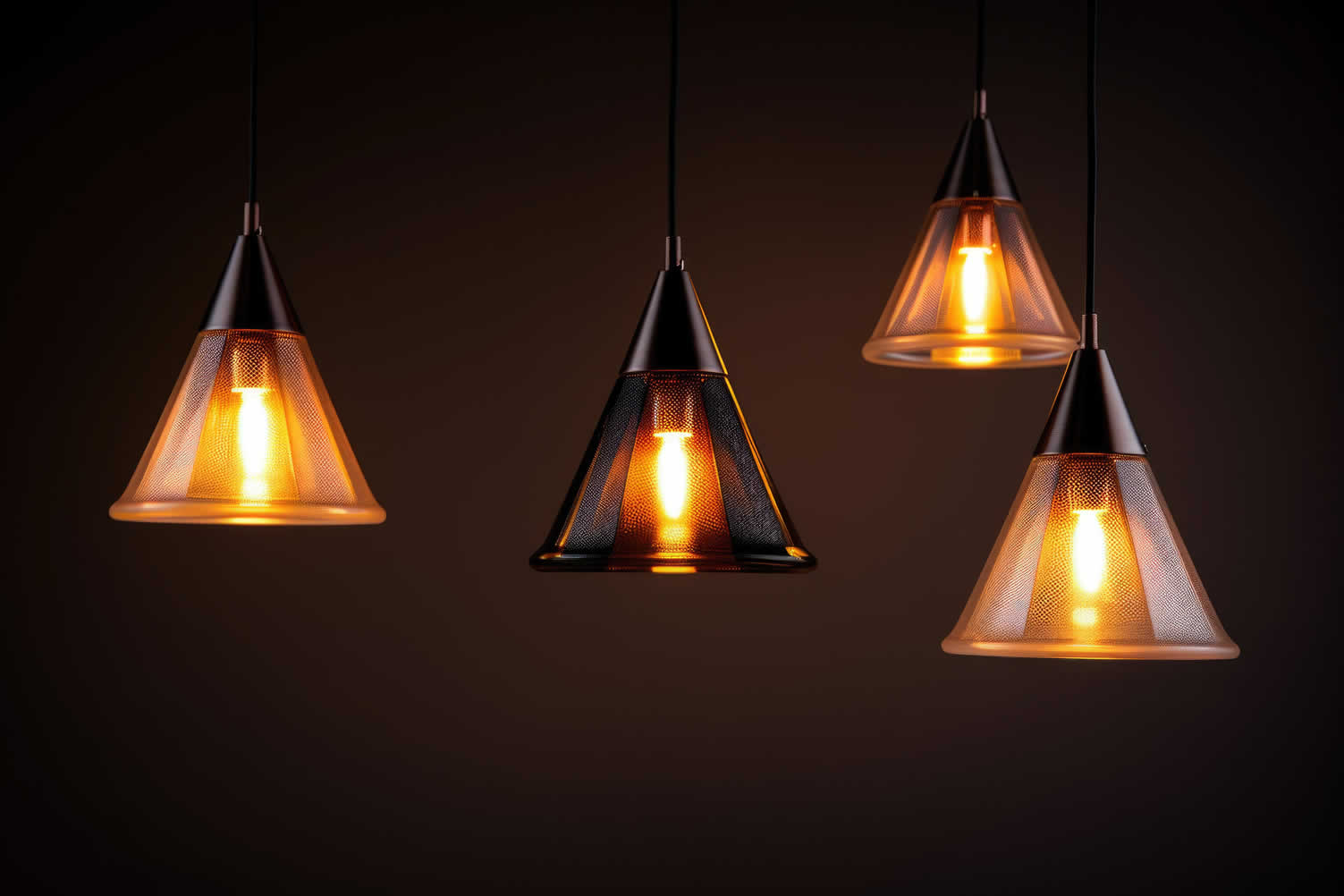
A Guide to Home Lighting Design and Layering
A thoughtful approach to home lighting design and layering can transform a room, highlighting its best features while catering to your daily needs.
Choosing The Right Fixture Technology
Once you’ve settled on a color temperature and CRI target, the fixture technology behind the light determines how evenly and comfortably it’s delivered. Chip-on-Board (COB) LEDs and high-density LED tape are worth prioritizing whenever a fixture, or its reflection, will be visible in the room.
Unlike traditional strip lighting, where individually spaced diodes can create visible “hot spots” or gaps, COB technology packs many small chips tightly onto a single board and coats them with a continuous phosphor layer.
The result is smooth, glare-free illumination with no dotted appearance, along with more efficient heat dissipation, which helps the fixture last longer under everyday use. This makes COB and high-density tape especially well suited to under-cabinet kitchen lighting, vanity mirrors, and any spot where you’ll be looking directly at or near the light source.
If you’re weighing options for a specific fixture, ask a simple question: will I, or a mirror, ever look straight at this light? If so, invest in COB or high-density tape. If the fixture is fully recessed or shielded, a standard high-CRI LED may serve you just as well.
Lighting Strategies For Aging In Place
As eyesight changes with age, lighting stops being a matter of preference and becomes a matter of safety. Vision-reducing eye conditions affect roughly one in three adults by age 65, and impaired vision more than doubles the risk of a fall (HomeWell Care Services, 2026).
With one in four Americans over 65 experiencing a fall each year, the stakes around good lighting are genuinely high.
The most supportive approach uses two distinct lighting strategies at once. During the day and in task areas, brighter, high-CRI lighting should be directed exactly where sharp vision matters most: kitchen countertops, bathroom mirrors, closets, medication labels, stair edges, and reading chairs. This kind of targeted, accurate light helps aging eyes distinguish edges, read fine print, and avoid missteps.
At night, the opposite approach applies. Pathway and hallway lighting should stay warm and dim, guiding movement between bedroom and bathroom without fully waking the body or disrupting sleep.
AARP’s home safety guidance echoes this same idea, recommending ample lighting for safe navigation throughout the home, night-lights in bedrooms and bathrooms, and voice-activated smart lighting that removes the need to fumble for a switch in the dark.
Pairing bright, accurate task lighting with soft, warm nighttime lighting supports both independence and rest, which is exactly what aging in place should feel like.
Strategic Lighting For Better Living
Good lighting rarely announces itself. When it’s working well, you simply stop noticing that anything is wrong—colors look true, tasks feel effortless, and your home feels like it was made for the way you actually live in it.
The path there isn’t about buying the brightest bulb on the shelf. It’s about matching color temperature to each room’s purpose, choosing a CRI of 90 or above wherever accuracy matters, and selecting fixture technology that keeps light smooth and comfortable to look at.
If you’re planning an update, start with the rooms where the stakes are highest: the kitchen, the bathroom, and any hallway or staircase used after dark. Small, intentional changes in these spaces often deliver the most noticeable difference in how safe, capable, and at ease you feel at home.
Decorative LED Bulbs
Selecting the right LED bulbs can feel overwhelming with so many options on the shelves, but understanding a few key factors makes it much simpler.
By considering wattage for energy use, lumens for brightness, color temperature for ambiance, and overall energy efficiency, you’ll ensure the lighting in your space is both functional and enjoyable.
This guide will break down each factor to help you make confident and informed decisions tailored to your needs.
view ideas: Choosing the Right LED Bulbs (new win)

Frequently Asked Questions
-
What is color temperature and why does it matter for home lighting?
Color temperature, measured in Kelvin, describes whether light appears warm and amber or cool and white. It matters because it shapes both mood and function—warmer light feels relaxing, while cooler light supports tasks that require clear detail, such as cooking or reading fine print.
-
What color temperature should I use in my kitchen?
A range of 3000K to 4000K works well for most kitchens. Choose 3000K for a warmer, welcoming feel, or move toward 3500K–4000K over countertops and stoves where clear task visibility is essential for food preparation.
-
What color temperature is best for bedrooms and living rooms?
2700K is the classic choice for bedrooms and living rooms. Its warm, cozy tone supports relaxation and pairs naturally with traditional interior styles.
-
What is CRI, and why should I look for a rating of 90 or above?
CRI, or Color Rendering Index, measures how accurately a light source reveals true color compared to natural daylight. A CRI of 90 or above ensures that food, skin tones, artwork, and wood finishes appear as they truly are, rather than dull or slightly off.
-
What is the difference between COB and SMD LED lighting?
COB (Chip-on-Board) LEDs pack many chips tightly onto one board, producing smooth, glare-free light without visible spots and with better heat management. SMD LEDs place individual chips with gaps between them, which can create visible hot spots but offer more flexibility for color-changing effects.
-
What color temperature is best for bathroom vanity lighting and makeup application?
For vanity areas, 3500K to 4000K paired with a CRI of 90 or above gives the truest reflection of skin tone, which is essential for applying makeup or grooming accurately.
-
How should I light my home for aging in place or low-vision needs?
Use bright, high-CRI task lighting in areas where precise vision matters, such as countertops, mirrors, stair edges, and medication labels. At night, switch to warm, dim pathway lighting to support safe movement without disrupting sleep.
-
Should I use RGB lighting or white light for task-oriented rooms?
White light is the better choice for task-oriented rooms like kitchens, bathrooms, and closets. RGB lighting is designed for mood and color-changing effects, not for the color accuracy that everyday tasks require.
-
How does light color temperature affect sleep and circadian rhythms?
Cooler, bluer light in the evening can interfere with the body’s natural sleep signals, while warmer light supports a smoother wind-down toward rest. Choosing warm, dim lighting for evening hours helps protect healthy circadian rhythms.
-
Is a higher CRI always worth the extra cost?
In spaces where color accuracy affects daily tasks or well-being—kitchens, bathrooms, and areas used by aging eyes—a CRI of 90 or above is generally worth the investment, since it directly improves how safely and comfortably you can see.
home improvement ideas to consider (complete directory – new win):


| Section Title | Description | Key Insights |
|---|---|---|
| Why Light Quality Matters | Light quality influences how well a room functions and impacts comfort, safety, and color accuracy more than brightness alone. | Optimal temperatures include 3500K–4000K for tasks like cooking, and 2700K–3000K for cozy spaces. High CRI (90+) ensures true color representation. |
| Color Temperature for Different Rooms | Color temperature ranges in Kelvin define how light appears, from warm amber tones to crisp white light. | Bedrooms and living rooms benefit from 2700K for warmth. Kitchens and bathrooms require 3500K–4000K for precision and visibility. |
| Why High CRI Matters | CRI (Color Rendering Index) measures how accurately a light source reveals true colors compared to daylight. | A CRI of 90 or higher maintains color quality, crucial for tasks like applying makeup, cooking, and creating a visually pleasant space. |
| Choosing Fixture Technology | Fixture technology affects the evenness and comfort of lighting, especially in visible or reflective areas. | COB LEDs provide smooth, glare-free light with better heat dissipation, while standard LEDs may suffice for recessed or shielded fixtures. |
| Lighting Strategies for Aging | Good lighting supports safety, independence, and comfort as eyesight changes with age. | Bright, high-CRI task lighting aids visibility during the day. Warm, dim lights guide safe movement at night without disturbing sleep patterns. |

| Room Or Need | Recommended Color Temperature | Recommended CRI | Best Fixture Technology |
|---|---|---|---|
| Bedrooms and living rooms | 2700K | 80+ (90+ preferred) | Standard LED, warm-dimming fixtures |
| General kitchens and living spaces | 3000K | 90+ | COB or high-density tape near visible fixtures |
| Kitchen task areas, closets, workrooms, bathrooms | 3500K–4000K | 90+ | COB or high-density tape for under-cabinet and vanity lighting |
| Aging-in-place task areas (countertops, mirrors, stairs) | 3500K–4000K | 90+ | Bright, high-CRI task fixtures |
| Aging-in-place nighttime pathways | 2700K, dimmed | 80+ | Night-lights, voice-activated smart lighting |
Find Electrical Services Electricians Lighting Design Fans Generators Electronics Home Security top-rated, pre-screened local contractors FREE: download contractor selection enter zip code – powered by HomeAdvisor ™


Image credit: light quality by envato.com
end of post … please share it!
| more photo remodeling |
Jump Over to Our Photo Analysis Center for Ideas on
"Renovating Home"
|__________________________________________________________|
home remodeling surprise
find out where it might go - new win


Helpful article? Leave us a quick comment below.
And please share this article within your social networks.