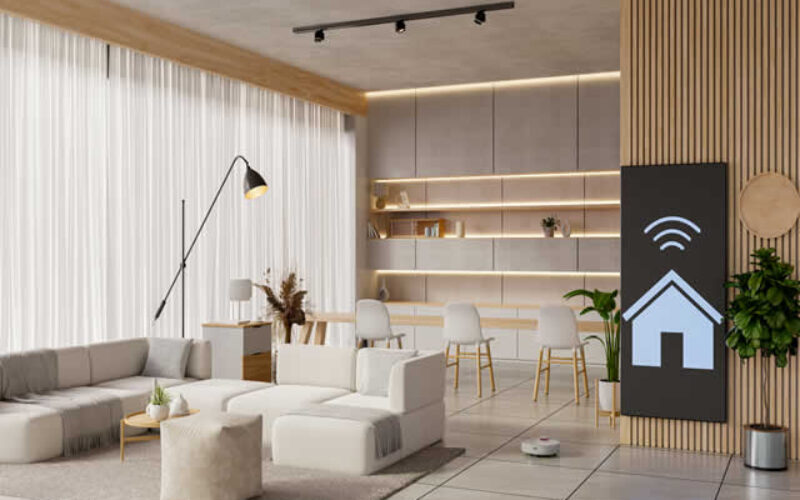
Being able to blend visual appeal with the added comforts that technology brings to a property can make all the difference when turning a house into a true home.
Understanding Smart Home Tech
Modern smart home technology is primarily designed to help homeowners automate many of the elements that help add more efficiency and user-friendliness to their space. This is why so many smart devices and systems are now being designed to be very approachable even for individuals who aren’t very tech-savvy.
But investing in these devices isn’t just about collecting more gadgets for the home. It’s about creating a living space that’s comfortable and convenient, helping to personalize a space even more than just design elements alone.

Smart home technology is now capable of learning from individuals’ habits, anticipating their needs, and simplifying property management.

Blending Design With Function
Most interior designers are familiar with the concept of spatial layouts, particularly when balancing design elements with functional considerations.
This typically involves selecting optimal materials when renovating a space, choosing specific colors, and utilizing the right furniture for each room.
However, with smart technology now playing a major role in how spaces are designed, this adds another variable to consider when designing custom layouts. It’s all about seamless integration that helps residents get the best experience possible when using their technology solutions without losing the overall design vision.
To achieve this balance, contractors and interior designers now have to work closely together from day one to ensure the right solution is in place for the objectives being achieved.
For example, contractors may need to account for infrastructure needs to hide any wiring in specific areas or embed technology displays or interfaces into furniture pieces without impacting a room’s overall aesthetic.
Top Smart Tech Features for Modern Homes
-
Intelligent Lighting Solutions
Modern lighting solutions for homes are now more flexible and tailored to a homeowner’s preferences. For example, instead of a static light switch, individuals can make use of intelligent LED lighting solutions with highly dynamic controls.
These allow residents to completely customize the lighting in any room of their home, including the color, brightness, and temperature, while also creating programmed schedules that change each of these elements based on the time of day or current weather patterns.
-
Temperature Control Systems
Smart thermostats have become a staple in many modern homes, contributing significantly to reduced spending on HVAC-related energy consumption. By learning the daily routines of individuals, such as when they enter and exit, these intelligent control systems can change the temperature settings to avoid running the air conditioner when no one is home.
They can also be used with zoned heating and cooling features, which allow homeowners to set and control the temperature in each room of their home individually.
-
Smart Home Hubs
Voice-driven home assistants, such as Google Home and Alexa, are an incredibly user-friendly design element now being incorporated into many modern homes and devices.
The great thing is that interior designers have numerous options to choose from when customizing the look and feel of these interfaces. This allows them to blend them more seamlessly into specific design aesthetics or even create custom installations on shelves or countertops.
-
Connected Kitchens and Bathrooms
Your kitchen and bathrooms often get the most foot traffic. This is where having smart home integrations can be highly beneficial.
For example, ovens that can be preheated remotely through mobile apps or voice-activated systems, and smart faucets that turn on with a wave of your hand, are great additions that not only offer helpful functionality but can also be easily integrated into modern design schemes.
Keeping Technology Aesthetically Pleasing
While one of the primary focuses when redesigning a home is to look for unique ways to incorporate new elements that add personality to a space, technology inclusions aren’t always easy to blend seamlessly. However, today’s options are manufactured to fit into most custom home designs, featuring multiple finishes, subtle profiles, and adjustable color options.
For example, many wall-mounted TVs can now be customized to resemble picture frames that blend seamlessly into the background with other pieces of art or wall fixtures. Speakers for surround systems can also be built into the ceiling to create a flush finish that doesn’t require large, bulky speakers to take up wall or walking space.
These types of features make it much easier for interior designers to blend technology in a way that resonates with the space and doesn’t make the technology itself the centerpiece.

Advance Your Living Space with Smart Home Automation
This smart home automation guide is designed to help you harness the full potential of innovative gadgets that can streamline daily tasks and improve your living experience. By integrating these technologies into your home, you’ll unlock new levels of convenience, efficiency, and control, making your life simpler and more connected than ever before.
Overcoming Smart Home Design Hurdles
Finding the right balance when integrating smart home options isn’t always that straightforward. Below are some common hurdles designers may need to work around:
-
Aesthetic Balance:
It can be easy to integrate too many technology solutions into a home, which can mean needing to add a variety of distracting displays or speakers. It’s essential to select a solution that not only provides additional conveniences but can also be easily concealed or stored as needed. -
Managing User Experiences:
Adding more intelligence to each room of a home can bring numerous great features, but it can also be challenging to manage that many separate devices. All the technology should be integrated seamlessly without making it difficult for users to get full functionality from the devices.li> -
Data Privacy:
Like all networked tech, smart devices have data implications. Both interior designers and homeowners need to prioritize strong network security and privacy settings to ensure their smart home doesn’t compromise their data integrity.
Get The Most From Your Smart Home Design
With numerous options now available for incorporating technology into homes, it’s essential for interior designers to strike the right balance when integrating it into their design choices.
By leveraging the flexibility of modern technology and working closely with renovation teams, you can ensure that your smart home not only functions the way it should but also enhances the overall aesthetic of your living space.
other related analysis of interest: (new win)
A Beginner’s Guide to Cooking: Easy Steps and Resources
Introduction to Fitness and Exercise Routines for Better Health
Find Interior Design Services Decorators Interior Designers Furniture Painting & Staining top-rated, pre-screened local contractors FREE: download contractor selection enter zip code – powered by HomeAdvisor ™


Image credit: blend interior design with smart home by envato.com
end of post … please share it!
| more photo remodeling |
Jump Over to Our Photo Analysis Center for Ideas on
"Renovating Home"
|__________________________________________________________|
home remodeling surprise
find out where it might go - new win


Helpful article? Leave us a quick comment below.
And please share this article within your social networks.