The short answer is yes—but the full picture is more complicated, and understanding it is the first step to making your efforts count.
The rumor that most recycled materials go straight to landfills is not entirely wrong, but it is not the whole truth either. According to U.S. EPA data cited in a 2025 recycling behavior survey by WM, only about 32% of all material generated in the United States is actually recycled.
That number stings, especially when 77% of Americans report that they recycle regularly. What closes this gap is not apathy—it is a mix of infrastructure challenges, contamination, and a widespread misunderstanding of what the recycling process can actually handle.
The Myth vs. The Reality
The belief that recycling is a performance—a green ritual that ends at the landfill anyway—has grown louder in recent years, and for understandable reasons. Some municipalities do send contaminated loads to disposal.

Some MRF (Materials Recovery Facility) operators, when faced with loads too polluted to sort economically, have no choice but to landfill the whole batch. But this is not the norm for properly sorted materials; it is the consequence of a system strained by contamination and insufficient infrastructure investment.
The more accurate story is a mixed one. Recycling works—but only when the right materials are put in the bin in the right condition. When that happens, recovered commodities move into manufacturing supply chains and become new products.
The challenge is bridging the gap between what people put in the bin and what the system can actually process.

Materials That Make the Cut
Not all recyclables are created equal. Some materials have mature, well-funded recycling markets. Others face significant barriers.
According to new recycling rate estimates released by the U.S. EPA in January 2025—the agency’s first data update in several years—cardboard leads with a recovery rate of 53.5%. Aluminum follows at 36.9%, glass at 41.4%, and steel at 31.2%. Paper sits at 29.6%, while PET plastic bottles reach only 23.2%.
Aluminum is arguably the recycling success story worth knowing. According to the International Aluminum Institute’s 2024 data, 74.5% of all aluminum ever produced globally remains in active use today—a testament to its infinite recyclability.
Recycling aluminum also saves 94% of the carbon emissions and 93% of the energy required to produce new aluminum from raw ore. That single statistic makes rinsing an empty can one of the highest-impact things a household can do.
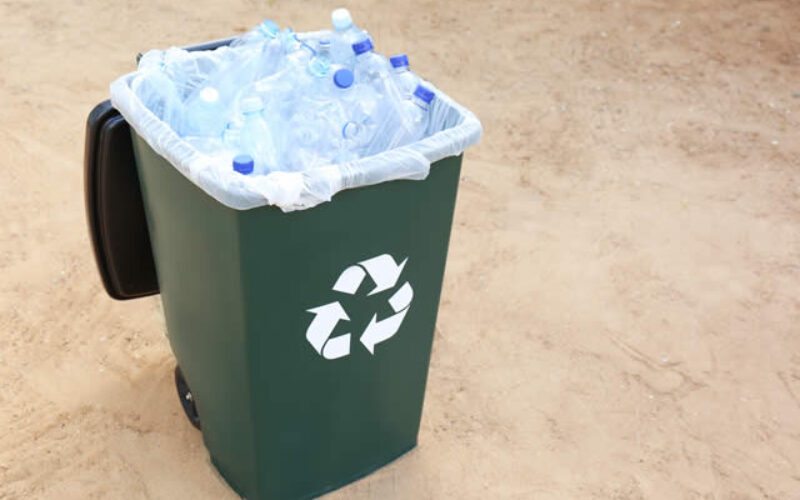
Plastic is the most complicated conversation. The OECD estimates that only 9% of plastic waste was recycled globally. Part of the confusion stems from the recycling symbol—the three-arrow triangle printed on plastic products.
Many people assume it means the item is recyclable. It does not. That symbol identifies the type of plastic resin. Plastics labeled #3 through #7 are often only accepted at limited facilities, and some are not recyclable through any curbside program.
From Curb to Commodity
Understanding the journey your bin takes can reframe how seriously you approach what goes in it. After pickup, materials are transported to a Materials Recovery Facility, commonly called an MRF (pronounced "murph").
Here, recyclables move along conveyor belts, passing through a sequence of mechanical sorters, screens, magnets, optical sensors, and manual inspection stations.
Clean MRFs process materials already separated from household trash, while dirty MRFs accept mixed waste and attempt to extract recyclables from the broader stream—a significantly harder task with higher contamination losses.
Once sorted, materials are compressed into dense bales and sold to commodity buyers: paper mills, glass processors, aluminum smelters, and plastic reclaimers. Those buyers transform the recovered material into feedstock for new packaging, construction materials, and consumer goods.
The system works when materials arrive clean, dry, and correctly sorted. When they do not, the economics break down quickly.
The Contamination Problem
Contamination is the single greatest threat to recycling effectiveness. The contamination rate across U.S. recycling bins runs at approximately 25%, meaning one in four items placed in the average recycling bin cannot actually be recycled. In some areas, that figure exceeds 40%.
This problem has a name: wishcycling. It refers to the habit of placing items in the recycling bin simply hoping they qualify—an optimistic gesture that, in practice, damages entire loads of otherwise recoverable material.
When non-recyclable items—greasy pizza boxes, plastic bags, food-soiled containers, shredded paper, and items made from mixed materials—commingle with clean recyclables, they can contaminate an entire batch.
Processing a contaminated load costs more than it generates in recovered commodities, which is exactly why over 1,000 recycling plants in California alone closed between 2018 and 2025 due to elevated contamination levels.
The financial reality is stark. Recycling is an industry that depends on producing clean, consistent material streams that manufacturers will pay for. Contamination undermines that value at every stage.
understanding eco-living practices

What Is Eco-Living? Your Guide to Sustainable Daily Practices
Eco-friendly living represents a comprehensive approach to reducing your ecological footprint through mindful decisions.
How to Make Your Bin Count
The good news is that better recycling habits are not difficult—they just require a small shift in awareness.
The most impactful thing any household can do is treat recycling as a quality exercise, not just a volume one. A clean, correctly sorted bin is worth far more to the system than a full but contaminated one.
Rinse food and liquid residue from containers before placing them in the bin. Flatten cardboard boxes to maximize space and prevent equipment jams at sorting facilities. Keep plastic bags out of curbside bins entirely—they tangle in sorting machinery and halt operations.
Never place items in the bin based on hope alone. If you are unsure whether something is recyclable in your area, the answer is to check your municipality’s specific guidelines, because recycling programs vary significantly from one community to the next, and what is accepted in one city may not be in another.
Glass bottles and jars are recyclable in most programs but should always be empty and rinsed. Aluminum cans are among the most valuable materials in the bin—always include them. Steel cans follow the same principle.
For paper, the rule is simple: dry and clean paper is recyclable; wet, greasy, or shredded paper is not.
The Difference Your Bin Makes
Recycling is not broken—it is stressed, underfunded, and often undermined by contamination that stems from honest misunderstanding rather than indifference. The gap between what Americans intend to recycle and what actually gets recovered is real, but it is not fixed. Every correctly sorted bin tightens that gap.
Knowing what happens after your bin leaves the curb—the facilities, the sorting, the commodity markets, and the contamination math—transforms recycling from a vague environmental gesture into a precise, informed act.
The materials that get recycled do get recycled. The key is making sure yours qualify.
home improvement ideas to consider (complete directory – new win):

| Topic | Details | Key Statistics |
|---|---|---|
| Overview of Recycling |
While most recyclables are processed, challenges like contamination, limited infrastructure, and unclear recycling guidelines complicate the process. The belief that recycling often leads to landfills is partially true but depends on proper sorting and handling. |
Only 32% of material generated in the U.S. is recycled, despite 77% of Americans claiming to recycle regularly. |
| Materials and Their Recycling Rates |
Materials like cardboard, aluminum, glass, and steel have higher recovery rates due to developed recycling markets. Plastics, however, remain the most difficult to recycle effectively. |
Cardboard recovery rate is 53.5%. Aluminum achieves 74.5% reuse globally, with 94% carbon emission and 93% energy savings compared to new production. Plastic has a global recycling rate of only 9%. |
| The Contamination Problem |
Contamination, caused by placing non-recyclables in bins, undermines the recycling process. Items like greasy containers, plastic bags, and certain types of paper affect entire loads, reducing efficiency and increasing costs. |
U.S. contamination rate is about 25%, going above 40% in some regions. Over 1,000 recycling plants in California alone closed between 2018 and 2025 due to contamination issues. |
| Improving Recycling Habits |
Proper recycling involves rinsing containers, flattening boxes, and checking local guidelines. Certain materials, like glass, aluminum, and steel, should always be clean before placing in the bin, and plastic bags should be kept out entirely. |
Adopting clean and correctly sorted recycling habits improves recovery rates and supports the system’s functionality. |

Find Energy Efficient Services Insulation Windows-Insulation Ducts & Vents Thermostats Solar Installation Skylights Home Automation Generators Home Automation Electrial Wiring Networks/Phone Computers/ Media Home Security Alarms top-rated, pre-screened local contractors FREE: download contractor selection enter zip code – powered by HomeAdvisor ™


Image credit: home recycling by envato.com
end of post … please share it!
| more photo remodeling |
Jump Over to Our Photo Analysis Center for Ideas on
"Renovating Home"
|__________________________________________________________|
home remodeling surprise
find out where it might go - new win


Helpful article? Leave us a quick comment below.
And please share this article within your social networks.