Quick Answer:
A dining area becomes a space you actually use when you match it to your real routines—then upgrade lighting, layout, seating comfort, and storage to support that purpose. Small, intentional changes like a dimmer switch, a rug that defines the space, or refinished chairs can turn a holiday-only room into a daily gathering spot without a full renovation.
A dining area earns its keep when it’s designed around how your household actually lives. That might mean weeknight dinners with the kids, Sunday coffee with a neighbor, or a spot for homework that doubles as a dinner table come evening.
Once you identify that purpose, the right upgrades to layout, lighting, seating, and storage follow naturally.
The good news is that you don’t need a full remodel to make this happen. Thoughtful, targeted changes—some as simple as a new light fixture or a can of paint—can transform a neglected room into the heart of your home.
Here’s where to start.
- post content
- assess your current space
- lighting: the foundation of ambiance
- choose a color palette that works
- furniture and layout optimization
- accessorize with purpose
- create an atmosphere for gathering
- Your Dining Room Awaits
- FAQs
- view table:content summary
- view notes:collective tips
- view ideas:latest remodeling analysis
Assess Your Current Space
Before you buy a single new item, take an honest look at what’s keeping you out of the room. Is the lighting too harsh or too dim? Is the table too big for the space, or too small for how many people actually sit down together? Does the layout make it awkward to pull out a chair or carry a dish to the table?
Think about how your household genuinely uses the space, not how you imagine using it. Count the people who dine there on a typical week. Note whether guests regularly need extra seating, and whether the room also needs to double as a homework station, a wrapping-paper staging area, or a quiet corner for remote work.
Decluttering is often the first and most affordable step—removing items that don’t support the room’s main purpose immediately makes the space feel more usable. From there, set a realistic budget and prioritize the changes that will have the biggest everyday impact.

Lighting: The Foundation of Ambiance
Lighting changes the feel of a dining room more than almost any other single update. A single overhead bulb casts a flat, uninviting glow, while layered lighting—overhead, accent, and task—creates warmth and depth at any hour.
A statement pendant or chandelier centered over the table gives the room a clear focal point and focused illumination exactly where meals happen.
Pair it with a dimmer switch so the space can shift from bright and functional during a weeknight dinner to soft and intimate for evening entertaining. Warm, face-and-food-friendly bulbs are more flattering than harsh white light, and a lamp, sconce, or even candlelight adds a cozy layer once the sun goes down.
During the day, make the most of natural light by keeping windows uncluttered—sunlight alone can make a room feel more inviting without spending a dollar.
-
Quick lighting checklist
Install a dimmer, add a pendant or chandelier above the table, swap harsh bulbs for warm ones, and let natural daylight do some of the work.
Choose a Color Palette That Works
Color sets the emotional tone of a dining room before anyone even sits down. Warm, welcoming hues tend to encourage conversation and comfort, while a neutral base gives you flexibility to swap accessories with the seasons without repainting every few months.
An accent wall behind the table or sideboard is one of the most affordable ways to add personality and depth without overwhelming the whole room.
If a full repaint feels like too much, start with one wall, or layer in color through textiles, artwork, or a bold rug instead. The goal is a palette that feels like your household, not a showroom.
Furniture and Layout Optimization
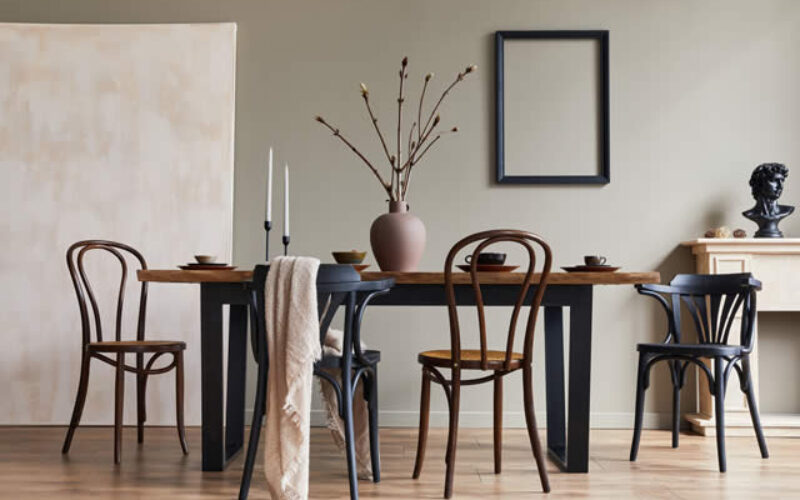
The table should fit the room, not dominate it. If a large table makes a small space feel cramped, consider a round table, a drop-leaf design, or an extendable option that expands only when guests arrive.
Comfort matters just as much as size—chairs that aren’t comfortable for a longer meal often send people straight to the sofa instead. Arrange seating to encourage conversation rather than forcing everyone to face the same direction, and keep walkways clear so no one has to squeeze past a chair to reach the kitchen.
If the table or chairs are structurally sound but visually tired, refinishing a solid-wood tabletop, repainting chair frames, or adding new upholstery can deliver a dramatic update at a fraction of the cost of replacement.
Mixing materials—wood, metal, glass, and upholstered seats—also gives the room a more current, layered look.
| Challenge | Practical Revamp |
|---|---|
| Room feels cramped | Use a round table, smaller footprint, or drop-leaf design |
| Traffic paths are blocked | Keep walkways clear and avoid oversized furniture near entrances |
| Storage is lacking | Add a sideboard, console, baskets, or compact cabinets |
| Room feels disconnected | Use a rug, lighting, and consistent materials to define the zone |

Accessorize with Purpose
A rug large enough that chairs can slide back without catching its edge instantly anchors the dining area, especially in open-concept homes where the space blends into the living room or kitchen.
Layer in curtains or roller shades that let in light rather than heavy drapes that close the room off, and add art, a mirror, or a small gallery wall so the space feels intentional rather than generic.
A sideboard, buffet, or compact cabinet keeps everyday dishes, linens, and serving pieces within reach, which matters more than it sounds—when tableware lives only in the kitchen, the dining room quietly becomes less convenient to use for regular meals.
A few curated statement pieces usually read as more polished than a shelf full of small accessories, so edit before you add.
Create an Atmosphere for Gathering
Once the bones of the room work, small nurturing touches turn a dining area into a place people want to linger. Fresh flowers, a few candles, or simple seasonal décor set a welcoming tone without any real effort.
If the room also needs to host a work or play zone, foldaway storage or a simple screen keeps that function discreet during mealtimes.
Perhaps the most powerful change isn’t a product at all—it’s a habit. Committing to even a few shared meals at the table each week builds a routine that makes the room feel alive, and a clutter-free, inviting space makes that routine far easier to keep.
Your Dining Room Awaits
The best dining-area revamp isn’t about chasing a trend. It’s about creating a space that fits your household’s real routines. When the table is the right size, the chairs are comfortable enough to linger in, the lighting shifts easily from bright to soft, and storage keeps everyday items close at hand, the dining area becomes a place people naturally gather.
You don’t have to tackle every change at once. Start with one or two upgrades—a dimmer switch, a refinished tabletop, a rug that defines the space—and build from there.
Each small, intentional step brings you closer to a room your family will actually want to use, not just admire on the way to somewhere else.
-
Collective Tips
Declutter and clean the room first. Rearrange the layout to improve traffic flow and conversation. Add or refresh an accent wall. Swap lighting or install a dimmer. Refresh chairs with paint, fabric, or new cushions.
Add a rug, curtains, art, and a simple centerpiece. Upgrade storage with a sideboard, shelves, or baskets. Replace or refinish the table only if it no longer fits the room or lifestyle.
Frequently Asked Questions
-
What is the fastest way to make a dining room feel more inviting?
Adding a dimmer switch and swapping harsh overhead bulbs for warmer lighting is one of the quickest, most affordable ways to change the mood of a dining room.
-
How do I choose the right size dining table for a small room?
Measure the room and leave at least three feet of clearance around the table for chairs to pull out comfortably. A round table, drop-leaf design, or extendable table often fits small spaces better than a fixed rectangular one.
-
Do I need to replace my dining table to update the room?
Not necessarily. Refinishing a solid-wood tabletop, repainting the base, or reupholstering seat cushions can refresh the look without the cost of buying new furniture.
-
What lighting works best over a dining table?
A pendant light or chandelier centered above the table, paired with a dimmer switch, provides focused illumination for meals and flexibility for evening entertaining.
-
How can I add storage to a small dining area?
A slim sideboard, wall-mounted shelving, or baskets tucked into an existing nook can hold linens and serving pieces without crowding the room.
-
What color works best for a dining room?
Warm, welcoming tones tend to encourage conversation, while a neutral base offers flexibility to update accessories seasonally without repainting the whole room.
-
How do I make a dining room double as a workspace?
Choose foldaway storage or a simple screen to keep work materials out of sight during mealtimes, and prioritize a table with enough surface area for both uses.
-
What rug size is right for a dining table?
Choose a rug large enough that chairs can slide back from the table without catching on the rug’s edge, typically extending at least 24 inches beyond the table on all sides.
-
How often should I update my dining room decor?
There’s no fixed timeline, but refreshing accessories like centerpieces, textiles, or artwork seasonally keeps the space feeling current without major renovation costs.
home improvement ideas to consider (complete directory – new win):


| Section | Content Overview | Key Insights |
|---|---|---|
| Introduction |
The article emphasizes turning a rarely-used dining room into a functional, inviting space by aligning it with real routines. Small, targeted changes like lighting, seating comfort, and layout optimizations are highlighted as ways to transform the room without requiring a full remodel. |
Simple upgrades can make a visual and functional impact. Consider lighting, layout, comfort, and storage as primary focal points when revamping the space. |
| Assess Current Space |
Begin by understanding what limits your use of the dining room, whether it be poor lighting, an oversized table, awkward layouts, or clutter. Analyze the everyday use, such as seating capacity, dual-purpose functionality, and household habits. |
Declutter first, assess how the space is genuinely used, then make changes with the highest practical impact. |
| Lighting |
Layered lighting (overhead, accent, and task) can dramatically improve the room’s ambiance. Adding a pendant or chandelier over the table, dimmer switches, and warm bulbs creates a functional yet cozy atmosphere. |
Lighting is pivotal in shaping emotions, flexibility between functions, and visual appeal. |
| Color Palette |
Use warm or neutral tones for an inviting vibe. Budget-friendly options include accent walls or adding pops of color through rugs, textiles, or artwork. Establish a palette reflecting your household’s style. |
Color choice directly correlates to mood and flexibility; balance between warm tones and functional neutrality is key. |
| Furniture/Layout |
Choose furniture that fits the space and encourages comfort and usability. Consider round tables or extendable designs for versatility. Upgrade existing furniture by refinishing or reupholstering for a cost-effective refresh. |
The layout should facilitate conversation, optimize walkways, and reflect both style and function. |
| Accessories | Rugs, curated art, streamlined storage solutions, and intentional decorative pieces define the space, making it more practical and visually cohesive. | Purposeful accents support both usability and aesthetic cohesion, encouraging frequent use. |
| Atmosphere |
Small touches like flowers, candles, and seasonal décor create a welcoming vibe. Building routines around shared meals helps foster a lively environment, making the space emotionally significant. |
Atmosphere is made through habits and thoughtful details, not just physical objects. |
| Conclusion |
The goal is to create a space centered on routines, comfort, and practicality. Transform the dining area step-by-step with targeted changes to turn it into the heart of the home. |
Changes can be gradual, starting small with lighting or minor refinements, ultimately leading to a cohesive, well-used space. |
Find Interior Design Services Decorators Interior Designers Furniture Painting & Staining top-rated, pre-screened local contractors FREE: download contractor selection enter zip code – powered by HomeAdvisor ™


Image credit: revamp dining area by envato.com
end of post … please share it!
| more photo remodeling |
Jump Over to Our Photo Analysis Center for Ideas on
"Renovating Home"
|__________________________________________________________|
home remodeling surprise
find out where it might go - new win


Helpful article? Leave us a quick comment below.
And please share this article within your social networks.