Luckily, there are choices you can make to help. Consider these steps for moving towards a more sustainable way of living.
Switch to a Renewable Energy Supplier
Did you know that you can reduce your reliance on fossil fuels without the expense and effort of installing a solar roof? Companies like Verde Energy can supply renewable energy directly to your home at fixed rates.

There is no interruption to your service, and you continue being billed directly from your current utility company, but the energy being delivered to your home is sourced from renewable options, such as solar, hydrogen, and wind rather than pollution-generating fossil fuels.
Get Informed About What You Eat
Did you know that nearly 25% of all greenhouse gas emissions come from the food system? Therefore, making more deliberate choices about what you eat can make a significant impact.
Generally speaking, you can feel good about eating vegetables and fish. Chicken is a bit worse than both, but beef is far and away the worst option to choose if you care about the health of the planet.
To look at the differences more closely, consider beef and peas, which are at opposite ends of the spectrum:
- 1 kg of beef emits 60 kg of greenhouse gases
- 1 kg of peas emits 1 kg of greenhouse gases
Make it a priority to arm yourself with the information for each food group, so you can make responsible decisions when it’s time to eat. Shifting from beef to fish and vegetables can make a real difference for the planet, and in the process, you can reap health benefits.
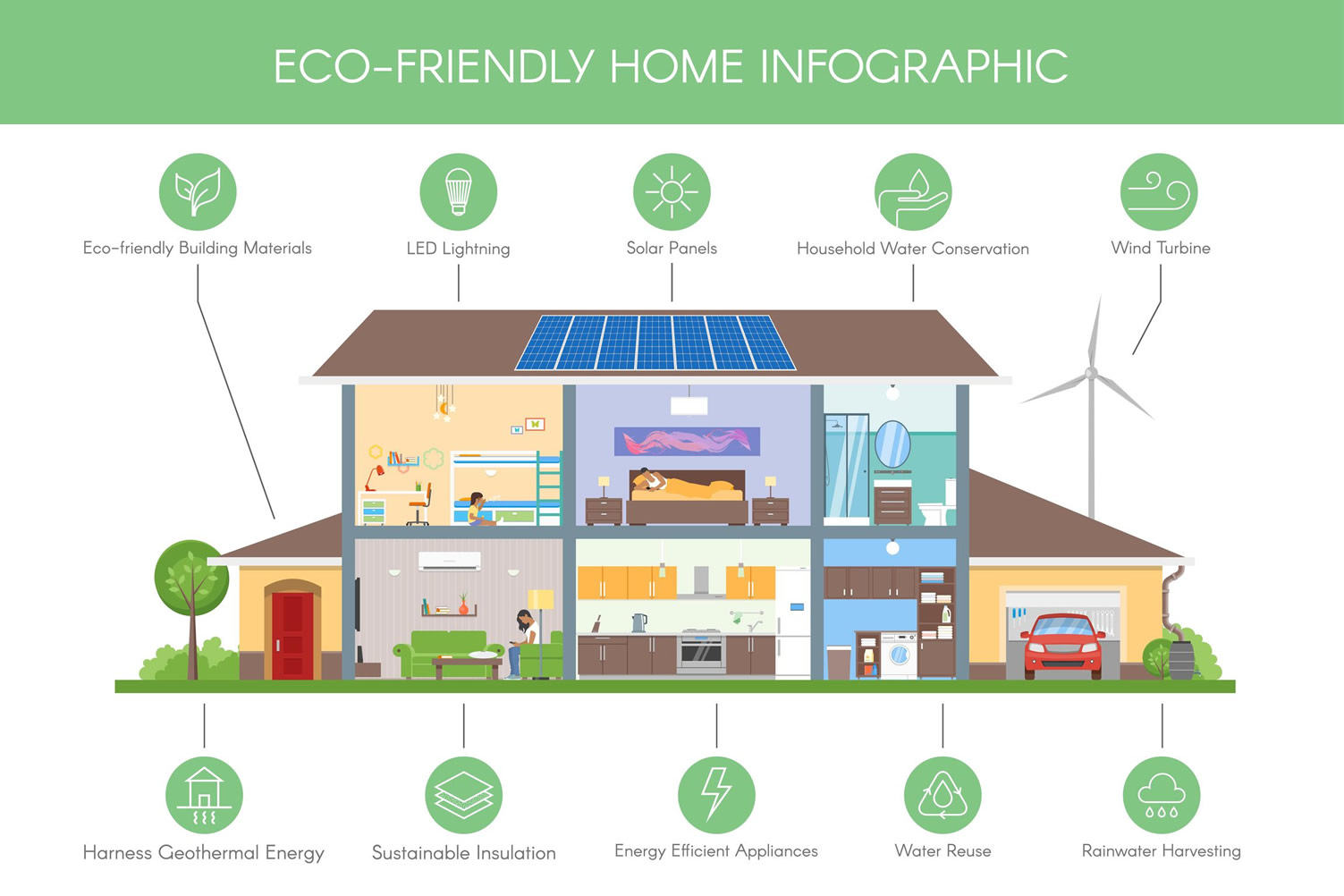
led light bulbshome energy audit tools
some energy saving ideas to consider
Stop Throwing Away Food
Food waste is a global problem, but it is particularly bad in the United States. Americans throw away a startling 30-40% of their food, and consumers and retailers are responsible for nearly a third of this.
While it’s a waste of money to throw away food, the problem is much more than financial. When food is thrown away, it usually ends up in the landfill.
Once there, it breaks down and emits greenhouse gases. Moreover, all the resources spent growing, harvesting, and transporting the food are wasted. These resources include water, energy, land, and fuel.
To help with this problem, try to be more conscious and deliberate about what you buy at the grocery store. Plan your meals, make a grocery list, and limit yourself to the foods on your list. It’s also a good idea to avoid shopping when you are hungry.
other related articles of interest:
Additionally, put thought and effort into storing your food. Air-tight containers can keep food fresh for a longer period of time. The freezer is also a good option since foods can be kept much longer when they are frozen.
Living more sustainably does not involve impossible or difficult choices. The most important step is to be more conscious when you are making decisions.
Switching to a renewable energy supplier and trying to eat more responsibly can reduce your carbon footprint and have a positive impact on the planet.
Find Energy Efficient Services Insulation Windows-Insulation Ducts & Vents Thermostats Roof Installation Skylights Home Automation Generators top-rated, pre-screened local contractors FREE: download contractor selection enter zip code – powered by HomeAdvisor ™

Image credit: steps to help you live more sustainably by Pixabay
end of post … please share it!
|__________________________________________________________|
home remodeling surprise
find out where it might go - new win


Helpful article? Leave us a quick comment below.
And please share this article within your social networks.