On the other hand, electrical work may not show visible results right away, but it is important for the safety and functionality of your home.
A well-functioning electrical system is key to powering your appliances and devices, providing lighting, and ensuring the overall comfort of your home.
- post content
- The Cosmetic DIY Line And Why Electrical Sits On The Other Side
- What The Code Actually Requires – And How Often It Changes
- Modern Home Upgrades Are More Technically Demanding Than They Appear
- The Insurance Problem Most Homeowners Don’t See Coming
- What A Professional Can See That You Can’t
- The Equity Argument For Doing It Right
- view notes:collective tips
- view analysis:the importance of building codes
- view ideas:latest remodeling analysis
The Cosmetic DIY Line And Why Electrical Sits On The Other Side
Most home improvement projects are forgiving in one specific way: you can see your mistakes. Grout a tile crooked and it’s obvious. Install a faucet wrong and it drips. The feedback is immediate, so you fix it before it becomes a real problem – or you just live with something that’s slightly ugly but harmless.
Electrical work breaks that pattern completely. Wire a circuit wrong, and odds are nothing looks different at all. The outlet works. Flip the switch, the lights come on. By every visible sign, the job’s done.
That’s the actual danger, and it’s easy to miss. Reversed polarity, an open neutral, a ground that isn’t connected properly – none of these announce themselves. The outlet still powers your phone charger just fine.
But behind the wall, you could have a shock hazard sitting there, or heat slowly building at a bad connection, with zero visual cue that anything’s wrong. You won’t find out until someone gets shocked touching an appliance, or until it’s already a fire.
So the skill level people assume is needed for "just installing an outlet" doesn’t match what’s actually at stake if it’s done wrong. That gap – low perceived difficulty, high hidden consequence – is exactly why electrical is the one category where "I’ll just look up a YouTube video" stops making sense.

What The Code Actually Requires – And How Often It Changes
The National Electrical Code gets updated every three years. With each update, new requirements are added and old ones are changed or removed. Arc-Fault Circuit Interrupters (AFCIs) and Ground-Fault Circuit Interrupters (GFCIs) are becoming a requirement in more and more rooms because they are more effective at detecting and stopping electrical fires which standard circuit breakers can’t detect at all.
GFCIs are necessary in any wet or outdoor location. This isn’t an option for a handy "This Old House" kind of upgrade; it’s the law in most places, and an amateur electrician following an instructional video that’s five years old won’t be current with the latest codes.
A professional electrician must stay current with these codes and often takes continuing education to do so. The electrician pulling the permit to do a panel upgrade today is going to have the most current information on what is required and where.
Someone following guidance from an in-law who knows a little bit about home wiring is not going to have the same access to that knowledge. For that person, "I didn’t know it was required" won’t cover the liability when the home inspector notices the work or when the insurance company denies the claim for a house fire.
something of interest below

The Need of Building Permits and Codes for Home Renovations
Before you start any renovation project, it’s crucial to understand the importance of obtaining the right renovation permits and adhering to the appropriate renovation building codes.
Modern Home Upgrades Are More Technically Demanding Than They Appear
The electrical needs of the average home upgrade have changed a lot in the last decade. More complex and high-demand technology means easy-to-overload breakers, blown fuses, and in some cases fire risk.
Smart dimmers, video doorbells, and smart switches need the neutral wire that old three-wire switch legs don’t have. EV chargers need an entire new 240-volt circuit of the exact correct amperage most likely a 50-amp or 60-amp circuit that your home’s yet to be overbuilt with.
Home battery backup systems are live in the electrical panel so new high voltage high-amperage circuits absolutely must be safely introduced to the electric system of your home. It’s not just a more complex version of replacing an outlet. It loads amperage and utility coordination.
So even when it’s time for the latest advances to be installed in your home, you can be sure the new systems are perfectly fine with any of your existing ones. This means proper amperage calculations and panel assessment before any new load is added.
When you’re ready to plan for this sort of high-voltage home upgrade, finding a licensed specialist to handle everything like The Wire Guy Electric makes sure you’re enjoying your new technology fast and trouble-free.
The Insurance Problem Most Homeowners Don’t See Coming
Surprisingly, homeowners insurance policies often don’t cover damage caused by unpermitted or unlicensed electrical work. If a fire is determined to have started because of a DIY electrical modification, even one that was visually up to code for years, your insurance company likely has the legal right to deny the claim outright.
Electrical distribution and lighting equipment is a factor in an estimated 67,800 reported home structure fires involving electrical failure or malfunction each year, according to the National Fire Protection Association, causing over $1.3 billion in property damage.
If your home is one of the many in those statistics, and you performed your own work without a permit, you’re going to be stuck with the bill.
This is one of the reasons building permits exist. They’re not a pain in the neck, but a paper trail; a documented bit of proof that licensed work was performed and subsequently inspected. This piece of information covers both your insurance and your home’s future sales price.
What A Professional Can See That You Can’t
Here’s something most homeowners don’t think about: electricians carry thermal cameras for a reason. Heat shows up behind walls long before anything looks wrong on the surface. A wire that’s carrying too much load, a connection that’s slowly working itself loose, a breaker running warmer than it should – you’d never catch any of that just by looking.
The lights turn on fine. Everything "works." Meanwhile there’s a hot spot building behind the drywall that could turn into a real problem down the line.
That’s the piece that makes electrical work different from most other DIY projects. You can test whether something functions. You can’t easily test whether it’s actually safe – and those turn out to be two very different questions.
something of interest below

Understanding Home Electrical Needs and Safety Essentials
Are you a homeowner who wants to understand the ins and outs of home electrical systems, but don’t know where to start?
The Equity Argument For Doing It Right
Unpermitted electrical work poses not only safety risks but also a real estate transaction issue. Upon sale, your electric retrofit will be uncovered by a home inspector and the buyer’s lending institution.
In worst cases (and often with safety considerations), drywall will be cut open to confirm retrofit installation. What you thought would be a savings not getting the proper permits can turn into a negative investment when non-permitted work costs more to expose than it would have to simply hire a licensed electrician in the first place.
Electric retrofitting done with permits and inspected properly becomes part of a home’s documented improvement history. This is not only a safety issue but an important consideration when it comes time to sell your home.
If it’s well-documented, that $15,000 electric vehicle service equipment add becomes a positive for you, the seller and the buyer. Your electrical work becomes part of that list of improvements that get checked on the seller’s disclosure. It adds value to your home.
home improvement ideas to consider (complete directory – new win):


Find Electrical Services Electricians Lighting Design Fans Generators Electronics Home Security top-rated, pre-screened local contractors FREE: download contractor selection enter zip code – powered by HomeAdvisor ™


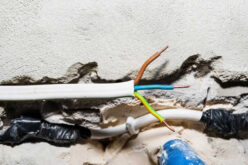
Image credit: DIY electrical work by envato.com
end of post … please share it!
| more photo remodeling |
Jump Over to Our Photo Analysis Center for Ideas on
"Renovating Home"
|__________________________________________________________|
home remodeling surprise
find out where it might go - new win


Helpful article? Leave us a quick comment below.
And please share this article within your social networks.