Quick answer:
Biophilic design—also called wellness design or neuroarchitecture—optimizes physical spaces to support human biological rhythms, mental health, and physical longevity.By weaving natural light, living plants, airflow, and organic materials into your home, you create an environment that actively nurtures well-being rather than simply providing shelter.
The result is subtle but cumulative: disrupted sleep, elevated stress, diminished focus, and a nagging sense that something is missing.
Biophilic design offers a direct answer to that problem. Rooted in the science of how humans respond to their physical environments, this approach—sometimes called neuroarchitecture or wellness design—treats your home as a living system designed to work with your body, not against it.
According to Terrapin Bright Green’s foundational framework, 14 distinct patterns of biophilic design can be applied to the built environment to measurably improve health and well-being.
The International WELL Building Standard v2, published by the International WELL Building Institute (2023), now formally recognizes these principles as benchmarks for healthy building certification.
This post walks through what biophilic design actually means, why the science behind it is compelling, and how you can begin applying its core principles—natural light, indoor greenery, fresh airflow, and natural materials—to your own home.
Whether you are planning a full renovation or simply looking to refresh a single room, the ideas here are practical.
- post content
- Defining Biophilic Design
- The Science Behind Nature and Human Well-Being
- Integrating Natural Light and Airflow
- Incorporating Greenery and Natural Elements
- Designing for Refuge, Prospect, and Connection
- Building a Healthier Home, One Element at a Time
- FAQs
- view table:content summary
- view notes:collective tips
- shop n’ compare:best houseplants
- view ideas:latest remodeling analysis
Defining Biophilic Design
Biophilic design is an approach to architecture and interior design that reconnects building occupants with natural systems, patterns, and processes.
The term draws on the concept of biophilia—the innate human tendency to seek connection with living organisms and the natural world—first articulated by biologist E.O. Wilson and later developed into a comprehensive design philosophy by researcher Stephen Kellert.

Kellert’s work, most recently synthesized in Biophilic Design: The Theory, Science, and Practice of Bringing Buildings to Life (2022), establishes that biophilic design goes well beyond placing a few houseplants on a windowsill.
It is a holistic framework that addresses how light moves through a space, how air circulates, what materials occupy surfaces, and how a room’s layout fosters a psychological sense of refuge, prospect, and connection to the living world outside.
-
What Distinguishes Biophilic Design from Conventional Interior Design
Conventional interior design primarily addresses aesthetics and function. Biophilic design takes those same concerns and adds a third dimension: biological resonance.
A room designed with biophilic principles doesn’t just look appealing—it actively supports the physiological and psychological systems that regulate mood, cognition, and stress response.
The distinction matters because many standard design choices—sealed windows, fluorescent overhead lighting, synthetic surfaces—can quietly undermine well-being even when a space looks polished and modern.
-
The Role of Neuroarchitecture in Shaping Healthy Homes
Neuroarchitecture is the interdisciplinary field that examines how the built environment affects brain function and human behavior.
Research within this field consistently shows that exposure to natural elements—daylight, vegetation, water features, wood grain—activates the parasympathetic nervous system, reduces cortisol levels, and improves attention restoration.
These findings give biophilic design its scientific backbone and explain why the principles translate into measurable health outcomes rather than merely pleasant aesthetics.

The Science Behind Nature and Human Well-Being
Understanding why biophilic design works requires a brief look at human evolutionary history. For the vast majority of human existence, people lived outdoors or in structures that kept them in close contact with natural light, air, and living organisms.
The modern sealed, climate-controlled building is, in evolutionary terms, a very recent development—and the human nervous system has not fully adapted to it.
-
How Nature Exposure Lowers Stress and Improves Cognition
Multiple peer-reviewed studies have documented the measurable effects of nature exposure on the human body and brain. Exposure to natural light has been shown to regulate circadian rhythms, improve sleep quality, and reduce symptoms of depression.
Contact with indoor plants and natural materials has been associated with lower blood pressure and reduced psychological stress.
Attention Restoration Theory, developed by researchers Rachel and Stephen Kaplan, proposes that natural environments restore directed-attention capacity—the cognitive resource most depleted by sustained screen use and high-demand work tasks.
-
What the WELL Building Standard Reveals About Healthy Spaces
The International WELL Building Standard v2 (IWBI, 2023) provides one of the most comprehensive frameworks for evaluating how a building’s design affects occupant health. The standard covers air quality, water, nourishment, light, movement, thermal comfort, sound, materials, mind, and community.
Biophilic design principles intersect with nearly every one of these categories, reinforcing that a nature-connected home is not a luxury—it is a meaningful investment in long-term physical and mental health.
supportive review

How to Integrate Biophilic Design in Your Home Renovation
Biophilic design, a concept that seeks to incorporate the natural world into our built environments, has sparked a revolution in the way we approach home renovations.
Integrating Natural Light and Airflow
Natural light and fresh air are among the most powerful and cost-effective tools available to anyone designing or renovating a home.
They regulate the body’s internal clock, support respiratory health, and create the kind of sensory richness that synthetic environments struggle to replicate.
-
Maximizing Sunlight Exposure Throughout Your Home
Strategic placement of windows is the starting point, but the goal extends beyond simply adding more glass.
Light shelves—horizontal surfaces positioned above eye level on a window’s interior—bounce daylight deeper into a room, reducing dependence on artificial lighting while maintaining a glare-free environment.
Reflective interior surfaces amplify this effect. Skylights and solar tubes can deliver natural light to rooms that lack exterior wall access, such as hallways or interior bathrooms.
From a health perspective, morning light exposure is particularly important. Sunlight in the blue-spectrum range, most abundant in the first hours after sunrise, plays a direct role in suppressing melatonin and setting the body’s circadian clock.
Homes that allow occupants to receive this light—through east-facing bedroom windows or morning-lit kitchen spaces—actively support better sleep patterns and daytime alertness.
-
Enhancing Natural Ventilation for Better Indoor Air Quality
The Environmental Protection Agency has noted that indoor air can be two to five times more polluted than outdoor air, primarily due to the accumulation of volatile organic compounds (VOCs) from building materials, cleaning products, and furnishings.
Cross-ventilation—achieved by positioning operable windows on opposite sides of a room or on different building faces—creates a natural pressure differential that draws stale air out and pulls fresh air in without mechanical assistance.
Beyond air quality, natural ventilation introduces subtle sensory variety: shifting breezes, the scent of outdoor air, and the ambient sounds of the environment outside.
These micro-experiences of the natural world contribute meaningfully to the restorative quality of a space, according to Terrapin Bright Green’s 14 Patterns of Biophilic Design framework.
supportive review

Combating Indoor Air Pollution for Better Home Improvement
Is the air your breathe in your home clean? Or is it stale air that can increase allergies and illness?
Incorporating Greenery and Natural Elements
Living plants and organic materials form the most visually immediate expression of biophilic design. Their presence transforms a room’s character in ways that no paint color or furniture arrangement can fully replicate, and their health benefits are backed by a substantial body of research.
-
The Power of Indoor Plants for Mental and Physical Health
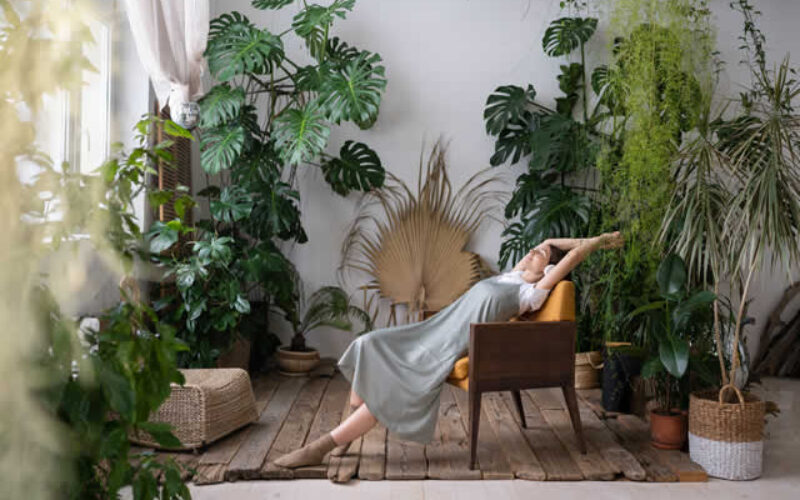
Indoor plants serve multiple functions simultaneously. They absorb carbon dioxide and release oxygen, filter airborne toxins such as benzene and formaldehyde, and introduce dynamic visual texture that changes with growth, season, and light.
Research published in environmental psychology literature consistently links the presence of indoor vegetation to reduced perceived stress, improved mood, and greater reported satisfaction with a living space.
Effective placement matters as much as plant selection. A statement plant—a large-leafed fig or bird of paradise—anchors a corner and introduces scale. Trailing plants positioned at eye level on shelves create a sense of lush layering.
A small herb garden in a kitchen window connects daily cooking activity to a living, growing system. The goal is not to fill every surface but to ensure that some point of living greenery is visible from the spaces where you spend the most time.
-
Utilizing Natural Materials to Ground a Space
Wood, stone, clay, linen, rattan, and bamboo each bring a quality that synthetic materials lack: the visible evidence of natural processes. Wood grain records years of growth.
Stone carries geological history in its texture. These materials do not merely look organic—they respond to light and touch in ways that engage the senses more fully than uniform, manufactured surfaces.
Kellert’s research emphasizes that the use of natural materials contributes to what biophilic design calls "complexity and order"—the layered, fractal-like patterning found throughout the natural world that the human brain finds inherently calming and cognitively stimulating.
A hardwood floor, an exposed stone accent wall, or even natural fiber rugs and linen curtains can introduce this quality into a home without structural renovation.
supportive review
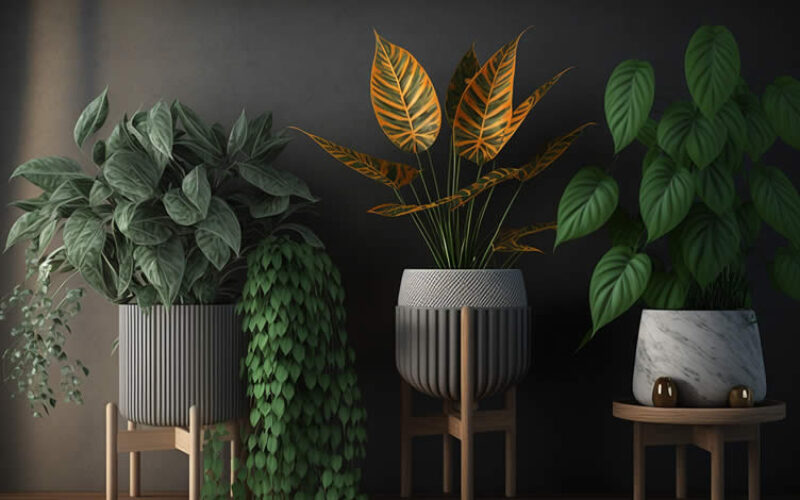
Elevate Your Greenery: The Ultimate Guide to Indoor Plant Stands and Holders
Plant stands are more than just a place to put your plants—they’re the architects of your indoor garden.
Designing for Refuge, Prospect, and Connection
Two of the most psychologically powerful patterns in biophilic design are prospect and refuge—concepts rooted in evolutionary biology. Prospect refers to the ability to survey a wide, open view.
Refuge refers to a partially enclosed space that offers safety and shelter. Homes that incorporate both—an open-plan living area with long sightlines paired with a cozy window seat or reading nook—satisfy deep-seated psychological needs that influence how safe and at ease occupants feel.
-
How Spatial Layout Affects Psychological Safety and Comfort
Open floor plans that connect interior spaces to garden views, courtyards, or even framed landscape artwork create a sense of prospect that reduces anxiety and increases the feeling of spaciousness.
Alcoves, canopied beds, ceiling beams that lower the perceived height of a corner, and built-in seating with high sides all create refuge zones where the nervous system can genuinely decompress.
-
Incorporating Water Features for Sensory Enrichment
The presence of water—even in modest forms—adds a sensory dimension that most homes currently lack. A small indoor fountain, an aquarium, or a reflecting pool visible from a window introduces sound, movement, and reflective light simultaneously.
Terrapin Bright Green identifies "presence of water" as one of the 14 core biophilic patterns, noting its documented effects on reducing stress and increasing feelings of serenity.
supportive review

Creating Your Personal Home Space: Redefine Home Sweet Home
Creating a personal home space dedicated to growth and reflection is essential for fostering a positive mindset and enhancing overall well-being.
Building a Healthier Home, One Element at a Time
Biophilic design is not an all-or-nothing commitment. Every window you uncover, every plant you add, every natural material you choose over a synthetic alternative moves your home incrementally toward an environment that supports your health rather than quietly eroding it.
Start with light. Assess which rooms receive the least natural daylight and identify whether furniture arrangement, window treatments, or reflective surfaces could change that.
Then address air—open windows where possible, add plants that filter indoor pollutants, and consider cross-ventilation in rooms where air tends to feel stale.
From there, introduce natural materials and living greenery in ways that feel authentic to your existing style.
The deeper shift that biophilic design invites is not just aesthetic—it is a reconsideration of what a home is for.
A home designed around human biological needs becomes a genuine source of restoration, not simply a backdrop for daily life. That shift is entirely within reach, and it begins with the next choice you make about your space.
Beauty of Eco-Friendly Living
The beauty of eco-friendly living is its adaptability.
Small, consistent actions—like choosing sustainable decor, using energy-efficient appliances, or adding houseplants—create meaningful environmental benefits over time.
Regardless of your budget or home size, you can design a space that reflects your style and nurtures the planet.
By integrating eco-conscious choices, you can create a home that thrives in harmony with nature and enhances your daily life.
view ideas: sustainable daily practices (new win)

Frequently Asked Questions
-
What is biophilic design in simple terms?
Biophilic design is an approach to home and building design that incorporates natural elements—light, plants, airflow, water, and organic materials—to support human health and well-being.
The core idea is that humans function better in environments connected to the natural world, and that homes can be deliberately designed to provide that connection.
-
What is the difference between biophilic design and neuroarchitecture?
Biophilic design focuses specifically on integrating nature into the built environment. Neuroarchitecture is the broader scientific field that studies how all aspects of a physical space—not only natural elements—affect brain function, behavior, and mental health.
Biophilic design applies many findings from neuroarchitecture research but centers nature connection as its primary design principle.
-
How can I add biophilic design elements to my home without renovating?
Several changes require no structural work. Adding indoor plants, switching to natural fiber textiles, maximizing natural light by removing heavy window treatments, placing a small water feature in a living area, and choosing wood or stone surfaces over synthetic alternatives are all effective starting points.
Even rearranging furniture to face a window or garden view applies biophilic principles.
-
Does biophilic design improve mental health?
Research consistently supports a link between nature-connected environments and improved mental health outcomes.
Studies cited within the WELL Building Standard v2 framework (IWBI, 2023) document associations between natural light exposure, indoor vegetation, and reductions in stress, anxiety, and fatigue.
The effects are cumulative—small changes in a home environment can produce meaningful improvements in mood and cognitive function over time.
-
Is biophilic design expensive to implement?
Cost varies widely depending on the scale of changes. Some elements—opening windows for cross-ventilation, adding houseplants, using natural fiber rugs—involve minimal expense.
Others, such as installing skylights or reconfiguring floor plans for better light penetration, require greater investment.
The WELL Building Standard framework is often applied to commercial buildings with significant budgets, but its core principles scale down readily to residential projects at almost any budget level.
-
What indoor plants are best for biophilic design?
Plants that combine air-purifying properties with visual impact are particularly effective. Peace lilies, pothos, snake plants, and spider plants are low-maintenance options with documented air-filtering qualities.
For visual presence, fiddle-leaf figs, monstera, and bird of paradise introduce scale and dramatic leaf structure. A mix of sizes and leaf shapes creates the layered, complex visual texture that biophilic design aims to replicate.
| Topic | Key Concepts | Scientific Foundations | Practical Applications |
|---|---|---|---|
| The Future of Living with Biophilic Design | Biophilic design focuses on enhancing human well-being by integrating natural light, living plants, airflow, and organic materials into physical spaces. | The concept is based on biophilia and neuroarchitecture, emphasizing the biological need for connection with nature. Research highlights improvements in mental and physical health through nature-connected environments. | Principles like maximizing sunlight exposure, enhancing natural ventilation, including indoor greenery, and utilizing natural materials can be applied to create restorative living environments. |
| Defining Biophilic Design | An approach to reconnect people with nature through architectural and design strategies, inspired by E.O. Wilson’s biophilia term and Stephen Kellert’s design philosophy. | Research identifies biophilic design as a comprehensive framework addressing light flow, air circulation, material selection, and spatial layout’s psychological effects. | Strategies include designing spaces with refuge and prospect elements, arranging furniture to optimize nature views, and integrating organic materials like wood and stone. |
| Health Impacts of Biophilic Design | Natural environments reduce stress, regulate circadian rhythms, and improve focus. Indoor greenery filters toxins, lowers blood pressure, and enhances cognitive function. | Studies document measurable benefits like cortisol level reductions after nature exposure and improved attention restoration through natural patterns. | Practical steps include incorporating large plants, creating herb gardens, and using reflective surfaces to enhance light penetration indoors. |
| Designing for Natural Elements | Key elements include natural light, fresh airflow, greenery, and water features to enrich sensory experience and improve health outcomes. | The WELL Building Standard emphasizes how design factors like air quality, natural light, and material choices enhance health and well-being. | Add skylights, install light shelves, enhance cross-ventilation, arrange restorative spaces for refuge, and include water features like fountains or aquariums. |
| Implementing Biophilic Design | Every small change, from adding plants to using organic materials, moves a space closer to supporting human biological needs. | Cost-effective measures such as adding natural fiber textiles, utilizing natural ventilation, and maximizing window light can have a cumulative positive impact. | Begin with accessible changes like rearranging furniture, integrating houseplants, or using natural rugs and materials without major renovation. |

Find Interior Design Services Decorators Interior Designers Furniture Painting & Staining top-rated, pre-screened local contractors FREE: download contractor selection enter zip code – powered by HomeAdvisor ™


Image credit: interior biophilic design by envato.com
end of post … please share it!
Houseplant Display
| classical display | view samples |
| modern display | view samples |
| pedestal display | view samples |
| shelf display | view samples |
| ladder display | view samples |
| hanging display | view samples |
| mounted display | view samples |
| terrarium display | view samples |
| more photo remodeling |
Jump Over to Our Photo Analysis Center for Ideas on
"Renovating Home"
|__________________________________________________________|
home remodeling surprise
find out where it might go - new win


Helpful article? Leave us a quick comment below.
And please share this article within your social networks.