However, maintaining their beauty and functionality requires consistent attention throughout the year.
Clean ponds and fountains aren’t just about aesthetics—they’re essential for creating healthy ecosystems that support aquatic life, prevent costly equipment damage, and ensure your water features remain the crown jewels of your landscape.
When neglected, these beautiful additions can quickly become breeding grounds for harmful bacteria, sources of unpleasant odors, and expensive repair projects.
Understanding the seasonal needs of your water features and implementing proper pond cleaning and fountain maintenance routines will help you enjoy crystal-clear water, thriving aquatic plants, and the peaceful ambiance these features were designed to provide.
The investment in regular water feature care pays dividends in both visual appeal and long-term functionality.
The Importance of Pond and Fountain Cleanliness
Maintaining clean water features extends far beyond simply keeping them looking attractive. Proper cleanliness affects every aspect of your pond or fountain’s ecosystem, from the microscopic organisms that balance water chemistry to the larger fish and plants that call these features home.
Understanding these interconnected benefits helps emphasize why regular maintenance should be a priority for every water feature owner.
-
Health Benefits for Wildlife and Plants
Clean water provides the foundation for thriving aquatic ecosystems. Fish require adequate oxygen levels and balanced pH to survive, while beneficial bacteria need proper conditions to break down waste and maintain water quality. When debris accumulates and water becomes stagnant, oxygen levels drop dramatically, creating stress for fish and potentially leading to disease outbreaks.
Aquatic plants also depend on clean water to photosynthesize effectively and contribute to the overall ecosystem balance. Excessive algae growth, often caused by poor water quality, can block sunlight from reaching submerged plants, disrupting the natural filtration process these plants provide.
Regular cleaning removes excess nutrients that fuel problematic algae blooms while maintaining the delicate balance that allows beneficial plants to flourish.
-
Aesthetic Appeal and Property Value
First impressions matter, and water features often serve as centerpieces in landscape design.
A sparkling, well-maintained pond or fountain creates a sense of luxury and attention to detail that significantly enhances curb appeal.
Conversely, murky water, visible debris, and algae-covered surfaces detract from the overall beauty of your outdoor space.
Property appraisers consistently note that well-maintained water features add substantial value to homes, while neglected ones can actually decrease property worth. The difference between a pristine water feature and one that’s been neglected can impact buyer perceptions and potentially influence sale prices by thousands of dollars.
-
Preventing Equipment Damage
Water pumps, filters, and other mechanical components work harder when dealing with debris-laden water. Leaves, twigs, and sediment can clog intake screens, strain pump motors, and reduce the efficiency of filtration systems. This increased workload leads to premature wear and potentially expensive repairs or replacements.
Regular cleaning prevents these issues by removing debris before it can damage equipment. Simple maintenance tasks like clearing pump baskets and cleaning filter media can extend equipment life significantly, saving hundreds or even thousands of dollars in replacement costs over time.


Seasonal Cleaning Needs
Each season presents unique challenges and opportunities for water feature maintenance. Understanding these seasonal patterns allows you to anticipate problems before they occur and take proactive steps to keep your pond or fountain in optimal condition year-round.
Seasonal maintenance schedules help ensure no critical tasks are overlooked while maximizing the efficiency of your maintenance efforts.
-
Spring Cleaning
Spring marks the beginning of the most active maintenance season for water features. After months of dormancy, ponds and fountains require thorough cleaning to remove accumulated winter debris and prepare for increased biological activity. This comprehensive spring cleaning sets the foundation for a successful growing season.
Begin by removing leaves, twigs, and other organic matter that settled during winter months. Test water chemistry and make necessary adjustments to pH and alkalinity levels.
This is also the ideal time to divide and replant aquatic plants, clean and inspect all equipment, and gradually reintroduce fish food as water temperatures rise above 50°F.
-
Summer Maintenance
Summer brings the highest biological activity levels, requiring more frequent monitoring and maintenance. Increased temperatures accelerate algae growth and reduce oxygen levels, making regular water testing essential.
Weekly removal of debris and monthly deep cleaning of filters help maintain water quality during this demanding season.
Monitor water levels carefully, as evaporation rates peak during hot summer months. Adding fresh water helps maintain proper chemical balance while preventing pumps from running dry.
Consider installing shade structures or floating plants to reduce water temperature and limit algae growth naturally.
-
Fall Preparation
Autumn maintenance focuses on preparing water features for winter dormancy while managing the challenges of falling leaves. Installing pond nets prevents leaves from accumulating in the water, while regular skimming removes debris before it can decompose and create water quality issues.
Reduce feeding schedules for fish as water temperatures drop, and consider adding beneficial bacteria to help break down organic matter.
This is also an excellent time to perform major equipment maintenance, such as pump overhauls or filter replacements, before winter storage.
-
Winter Care
Winter maintenance varies significantly depending on your climate zone. In areas with mild winters, reduced maintenance schedules may suffice, focusing on debris removal and basic equipment monitoring.
However, regions with freezing temperatures require more extensive preparation to prevent ice damage and maintain minimal water circulation.
Consider installing pond heaters or aerators to maintain open water areas, preventing harmful gas buildup under ice. Reduce or eliminate feeding, and ensure all equipment is properly winterized according to manufacturer specifications.
Steps to Keep Your Pond Clean
Effective pond cleaning requires a systematic approach that addresses water chemistry, debris removal, and biological balance. These interconnected elements work together to create and maintain the healthy ecosystem your pond needs to thrive.
Regular attention to each component prevents small issues from becoming major problems.
-
Regular Water Testing and Balancing
Water chemistry testing should occur weekly during active seasons and monthly during dormant periods. Test for pH levels, ammonia, nitrites, and nitrates using reliable test kits or digital meters. Maintain pH between 7.0 and 8.5 for optimal fish health and biological filter function.
Address chemical imbalances promptly using appropriate water treatments. High ammonia levels indicate inadequate biological filtration, while excessive nitrates suggest overfeeding or inadequate water changes.
Regular partial water changes of 10-15% weekly help maintain stable water chemistry and dilute accumulated waste products.
-
Removing Debris and Sediment
Physical debris removal forms the foundation of effective pond cleaning. Skim surface debris daily during heavy leaf-fall periods, and use pond vacuums monthly to remove accumulated sediment from the bottom. This prevents organic matter from decomposing and creating water quality problems.
Pay special attention to areas around plant roots and under overhanging vegetation where debris tends to accumulate. Installing skimmer boxes or debris baskets can automate much of this process, but manual removal remains necessary for comprehensive cleaning.
-
Controlling Algae Growth
Algae control requires a multi-faceted approach combining biological, mechanical, and chemical methods. Maintain adequate beneficial bacteria populations to compete with algae for nutrients, while ensuring proper plant coverage to shade the water and absorb excess nutrients.
Mechanical filtration removes suspended algae particles, while UV sterilizers eliminate single-cell algae that causes green water. Use algaecides sparingly and only when natural methods prove insufficient, as overuse can disrupt beneficial bacteria populations and create chemical imbalances.
-
Maintaining Proper Filtration
Filtration systems require regular maintenance to function effectively. Clean mechanical filter media weekly during peak season, replacing or rinsing filter pads as needed.
Biological filter media should be cleaned less frequently and only with pond water to preserve beneficial bacteria colonies.
Monitor filter flow rates and pump performance regularly. Reduced flow often indicates clogged media or pump problems that require immediate attention. Backup filtration systems provide insurance against equipment failures during critical periods.
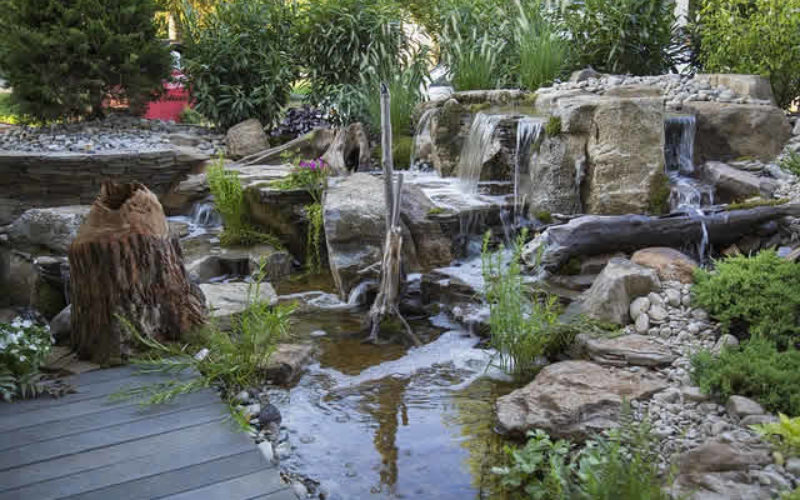
Some Interesting Pond Landscaping Ideas
So you are thinking of putting in a pond for the backyard. Any ideas on what kind of pond? Let’s review some pond landscaping ideas that you can consider
Steps to Keep Your Fountain Clean
Fountain maintenance differs from pond care due to the absence of biological filtration and the presence of recirculating water systems. These differences require specialized approaches to cleaning and maintenance that focus on preventing mineral buildup and ensuring consistent water flow.
Understanding these unique requirements helps maintain fountain beauty and functionality.
-
Routine Cleaning
Empty and scrub fountain basins monthly using mild, non-toxic cleaners that won’t harm surrounding plants or wildlife. Remove all visible debris, algae, and mineral deposits from surfaces, paying special attention to areas around water jets and spillways where buildup commonly occurs.
Inspect and clean water intake screens weekly to prevent clogging. Use soft brushes to remove debris without damaging delicate components. This regular attention prevents small problems from escalating into major maintenance issues.
-
Preventing Mineral Buildup
Hard water creates mineral deposits that can clog jets and create unsightly white residue on fountain surfaces. Use water softeners or distilled water in areas with extremely hard water, and consider installing inline filters to reduce mineral content in recirculating systems.
Clean mineral deposits promptly using appropriate cleaners designed for fountain use. Vinegar solutions work well for light buildup, while commercial lime-scale removers handle heavier deposits. Always rinse thoroughly after cleaning to prevent chemical residue from affecting water quality.
-
Pump Maintenance
Fountain pumps require regular inspection and maintenance to ensure consistent performance. Check pump baskets weekly for debris accumulation, and clean impellers monthly to prevent clogging. Lubricate moving parts according to manufacturer specifications, typically every six months.
Monitor pump performance indicators like flow rate and noise levels. Changes in these parameters often indicate developing problems that require immediate attention. Keep spare parts on hand for quick repairs during peak season.
Professional Help and Maintenance
While many maintenance tasks can be handled by dedicated homeowners, certain situations warrant professional intervention. Complex water chemistry problems, major equipment failures, and seasonal service requirements often benefit from expert knowledge and specialized equipment.
Professional services can also provide valuable peace of mind for busy homeowners.
Professional pond and fountain services offer comprehensive maintenance packages that include regular cleaning, equipment inspection, and seasonal preparation. These services often prove cost-effective for large or complex water features, as professionals can identify and address problems before they become expensive repairs.
Consider professional help for tasks like major equipment overhauls, complex water chemistry adjustments, or when preparing water features for extended absences. Many professionals also offer emergency services for urgent problems that could damage expensive equipment or harm aquatic life.
other related analysis of interest: (new win)
Enjoy Your Water Features Year-Round
Maintaining clean ponds and fountains requires dedication and attention to detail, but the rewards extend far beyond simple aesthetics. These beautiful water features provide peaceful retreats, support local wildlife, and enhance property values when properly maintained. The time and effort invested in regular pond cleaning and fountain maintenance pays dividends in years of trouble-free enjoyment.
Remember that consistency is key to successful water feature care. Regular maintenance prevents small issues from becoming major problems while preserving the natural beauty and functionality these features provide.
Whether you choose to handle maintenance yourself or enlist professional help, the important thing is maintaining a regular schedule that addresses seasonal needs and prevents neglect.
Your pond or fountain represents an investment in your property’s beauty and your family’s enjoyment. By following proper maintenance practices and staying attentive to your water feature’s needs, you’ll ensure these stunning additions continue enhancing your outdoor space for years to come.
| Maintenance Task | Frequency | Season | Benefits |
|---|---|---|---|
| Water Testing | Weekly | Spring/Summer | Prevents fish health issues, maintains water clarity |
| Debris Removal | Daily | Fall | Prevents water quality problems, reduces maintenance |
| Filter Cleaning | Weekly | Spring/Summer | Maintains filtration efficiency, extends equipment life |
| Algae Control | As needed | Summer | Maintains water clarity, prevents oxygen depletion |
| Pump Maintenance | Monthly | Year-round | Prevents equipment failure, ensures consistent flow |
| Fountain Cleaning | Monthly | Year-round | Prevents mineral buildup, maintains aesthetic appeal |
| Professional Service | Seasonal | Spring/Fall | Comprehensive maintenance, problem prevention |
Find Pool n’ Ponds Services Swimming Pools Spas & Hot Tubs Water Features Fencing Landscape Design Outbuildings top-rated, pre-screened local contractors FREE: download contractor selection enter zip code – powered by HomeAdvisor ™


Image credit: pond cleaning by envato.com
end of post … please share it!
| more photo remodeling |
Jump Over to Our Photo Analysis Center for Ideas on
"Renovating Home"
|__________________________________________________________|
home remodeling surprise
find out where it might go - new win


Helpful article? Leave us a quick comment below.
And please share this article within your social networks.