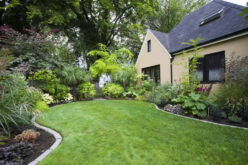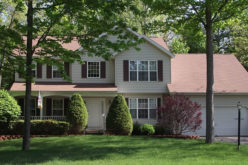
Proportion refers to the size relationship of elements in a landscape. This includes vertical, horizontal, and special relationships.
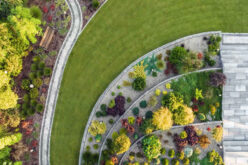
Lines create shape and movement in the landscape. They can be straight, curved, or diagonal and may emphasize or de-emphasize a landscape feature.
Proportion
Proportion is the sizing relationship of landscape elements. It affects how people perceive space and can help define hierarchy. It applies to all scales, from small gardens and patios to entire yards and neighborhoods.
Proportion includes symmetrical and asymmetrical balance. Symmetrical balance involves two identical sides to a design, while asymmetrical balance is achieved through diverse elements and objects that share similar imaginary weights.
Unity is consistent in landscaping and requires attention to detail. It also includes thoughtfully using repetition to avoid monotony. Adding too many unrelated features can make your garden seem cluttered. Properly combining form, line, texture, and color will promote unity.
Scale
The physical size of elements and how they relate to one another determines a landscape’s scale. An element’s scale can either overwhelm or entice a viewer’s eye; for example, a prominent water feature could dominate a small garden but might add character to a public outdoor space.
Unity is how well a landscape design flows together. It can be achieved through several methods, including spatial organization and focal points. Unity can also be created by repeating elements that connect spaces physically.
Balance is the idea that every part of a landscape has equal "visual weight." Balance can be achieved either symmetrically or asymmetrically. Symmetrical balance is used in formal landscapes and often includes geometric patterns in walkways and planting beds. Asymmetrical balance is more informal and uses a variety of plants, colors, and textures with similar forms.

Before you start any yard n’ garden landscaping – such as a swimming pool, patio kitchen, and other backyard landscaping, run some financial numbers to determine whether the landscaping is a smart investment.
The numbers include the estimated costs, home value assessment, financing costs, and other related calculations.
Review these cost-related issues to remodeling vs. buying a new home.
links to internal page (opens new win)
| analyze the numbers | |
| estimate the cost of your project | |
| start assembling a budget | |
| get your home value |
The 2nd step for planning your landscaping is deciding what you would like to do.
Will it be a –
- installing a swimming pool,
- building a play area with courts, playground, and other,
- redo your landscaping,
- build a deck or patio,
- install an outdoor kitchen and bar,
- start your own farm,
- or something else by referencing this extensive landscape planning and design guide.
You can find other yard n’ garden ideas by referencing our landscape analysis and topic directories (opens new win)
| view landscaping "ideas" directory | |
| view latest "topics" for yard ‘n garden | |
Step 3 is sketching your ideas on paper (or digitally) and developing the spec plan.
The spec plan determines what type of yard n’ garden equipment and design considerations that will be needed. It will also contain the product specifications for each landscape element.
You will use the spec plan and architectural design to bid the project out to a contractor.
links to internal page (opens new win)
| developing the spec plan | |
| sketch remodeling plan | |
| design considerations |
Step 4 is finding and negotiating the contract with a landscape contractor.
Give your landscaping ideas and specs to a contractor for review and bid analysis. Use the local network (aligned with HomeAdvisor) to find the right contractor for your project.
Review guides for contractor selection and negotiation.
links to internal page (opens new win)
| search yard n’ garden contractors | |
| selecting your contractor checklist |
| contractor negotiations | |
| contractor evaluation form |
Step 5 is arranging financing once you selected the contractor and finalized the contract for your project.
Using the equity value in your home is one of the best financing option for landscaping. Start with a home equity line of credit or use the bank equity program.
Other options may include cash-out refinancing, personal savings, and/or financing from home improvement contractors.
links to internal page (opens new win)
| financing options | |
| getting qualified for financing | |
| negotiate rates |
Step 6 is where the project begins.
It starts with setting up the work area, removing everything that needs to be replaced, installing electrical and network connections, putting in the final touches, etc.
It also means working with the contractor, managing the project, and getting the landscape project inspected before releasing any funds.
links to internal page (opens new win)
| working with the contractor | |
| managing remodeling project |
| about a home project inspections | |
| find home inspector |
Line
Using natural or imaginary lines in a landscape creates movement and direction. This can be done with geometric (square, circle, and rectangle) and naturalistic themes (curvilinear, meandering lines).
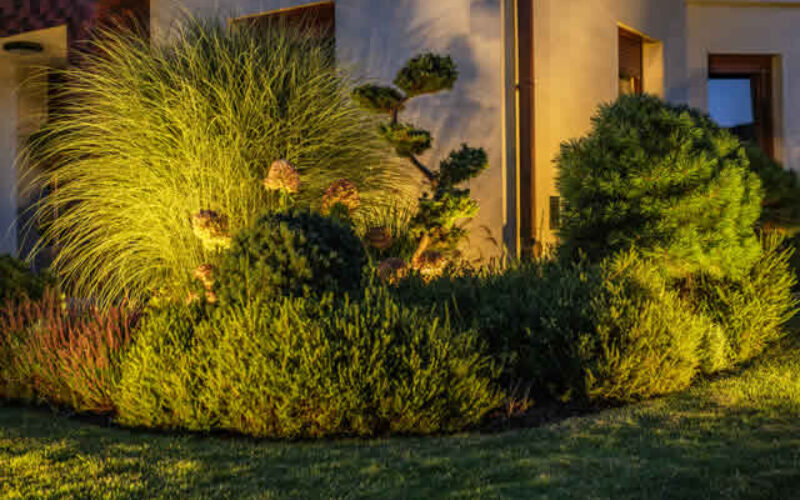
Repetition is an essential element that can help to create sequences and patterns in landscape architecture. However, it is essential to use repetition wisely to avoid monotony and confusion.
Balance is essential to landscape design because it creates equality and unity. It can be achieved through various methods, including using different plants, symmetrical designs, and color contrast. Using these principles can help create a balanced, functional landscape that is beautiful and sustainable.
Form
A landscape is composed of many different elements, and a good design balances the size of these components. Large trees or walls pull attention away from other landscape elements.
Unity is the sense that everything fits together, that all garden areas work well together and link. Interconnection is achieved by features like paths, walkways, and stairs that physically connect areas. Unity can also be accomplished through repetition, such as a repeating pattern of short-high-short or small-medium-large or a regular interval of light-dark or even-odd.
Simplicity is a crucial aspect of unity, but this does not mean bland or spartan! It is essential to use every element sparingly as this can become monotonous.
Texture
Landscape design requires horticultural science, artful composition, and spatial organization. It uses the elements (visual qualities) of line, form, texture, color, and positive and negative space.
Lines are a powerful design element that creates sequences, patterns, and rhythm. Lines are created by placing plants and hardscape features such as paths, driveways, or fences. Curved lines are often used in a landscape to emphasize a focal point, highlight a water feature, or create a sense of movement.
other related articles of interest:
Color
Whether it is the colors of the plants or the lines of the walkways, a landscape’s color scheme affects how comfortable and enjoyable it is to view. Color can make a space feel bigger or smaller and can have an emotional impact on viewers.
Landscape features are most functional for people when they fit the human scale. A significant water feature, for example, can overwhelm a small garden.
Focal points capture attention and help establish direction and a sense of unity in the landscape. The interconnection of spaces helps establish unity by using paths, walkways, and stairs to physically link areas.
Find Yard n’ Garden Services Landscape Design Sprinkler Systems Metal Work Water Features Gazebos Play Equipment Outbuildings Fences top-rated, pre-screened local contractors FREE: download contractor selection enter zip code – powered by HomeAdvisor ™


Image credit: principles of landscape design by envato.com
end of post … please share it!
| more photo remodeling |
Jump Over to Our Photo Analysis Center for Ideas on
"Renovating Home"
|__________________________________________________________|
home remodeling surprise
find out where it might go - new win


Helpful article? Leave us a quick comment below.
And please share this article within your social networks.