
Quick Answer:
Parents can rebuild a pre-teen’s interest in reading by making books easy to reach, reducing how available phones are, and reading alongside their children. A cozy reading spot, a shared phone-charging station outside bedrooms, and a short daily reading routine—paired with parents who visibly read too—are the most effective starting points, according to guidance from the American Academy of Pediatrics and Children and Screens.
Summary Outline –
If this sounds familiar, you’re far from alone. Many parents watch their once book-loving toddlers grow into pre-teens who would rather scroll than read, and it can feel discouraging to witness that shift.
The good news is that this change isn’t permanent, and it doesn’t require a complete home overhaul to reverse.
This guide walks through practical home improvements and family strategies that work together to make reading feel inviting again—without turning it into a battle over screen time.
From creating a reading nook your pre-teen actually wants to use, to establishing phone-free routines the whole family can embrace, you’ll find realistic, achievable steps to help your child rediscover the joy of a good book.
- post content … analysis/ pre-teens reading
- 1st: Why Pre-Teens Drift Toward Screens
- 2nd: Designing A Home That Welcomes Reading
- 3rd: Bedroom Decor That Quietly Invites
- 4th: Family Strategies That Make Reading Stick
- 5th: A Simple Two-Week Starting Plan
- 6th: Overcoming Persistent Challenges
- 7th: Screen Time Rules That Actually Work
- 8th: Frequently Asked Questions
- Smart Home Technology to Manage Screen Time
- conclusion

-
- —— begin first topic ——
-
1st Section: Why Pre-Teens Drift Toward Screens
Understanding why reading habits tend to decline during these years makes it much easier to respond with empathy rather than frustration. When a once-avid reader suddenly leaves books on the shelf, it rarely reflects a lack of interest or ability.
More often, there are everyday pressures and distractions at play, and recognizing them helps you find gentle, practical ways to bring reading back into your family’s routine.

copyright image by 123rf.com

-
The Pull Of Instant Gratification
Digital devices and apps are designed to deliver quick rewards. A notification, a new level, or a stream of short videos offers instant feedback that keeps a child’s attention locked in.
Reading, by contrast, asks for patience—the payoff of a great story builds gradually, chapter by chapter.
For a pre-teen brain accustomed to constant stimulation, that slower pace can feel less appealing at first, even though it offers richer, more lasting satisfaction.
-
Social Pressure And Screen Culture
As children enter the pre-teen years, their social world increasingly exists online. Group chats, games, and social platforms become ways to stay connected with friends, which makes phones feel less like entertainment and more like a social necessity.
Reading, which is often a solitary activity, can seem disconnected from that social pull.
-
The Research On Screen Time And Literacy
Guidance from organizations such as Children and Screens and the American Academy of Pediatrics highlights those accessible reading opportunities, parental modeling, and consistent media boundaries all play a meaningful role in supporting literacy during middle childhood.
Children benefit when boundaries around screen use are set collaboratively, with input from the children themselves, rather than imposed without explanation.
More Supporting Information
(view summary table and useful ideas – or scroll to side note and next topic)
Section Description Insights Why Pre-Teens Drift Toward Screens Pre-teens often leave books behind not due to disinterest or inability but rather due to everyday pressures and distractions.
Recognizing these factors enables empathetic and practical strategies to reintroduce reading.
Understanding external influences makes it easier to address the shift in reading habits effectively. The Pull Of Instant Gratification Digital devices provide instant rewards through notifications, games, and videos, which dominate attention.
Reading demands patience as its rewards develop gradually over time.
Pre-teens, used to constant stimulation, may initially find reading less engaging but can discover its long-lasting satisfaction with encouragement. Social Pressure And Screen Culture Online interactions, including group chats and social platforms, become integral to a pre-teen’s social life.
This can make reading, a solitary activity, feel less relevant or connected to their daily lives.
Balancing social connections and reading helps integrate books into their routine while respecting their need for social belonging. The Research On Screen Time And Literacy Studies emphasize that accessible reading, parental involvement, and clear, collaborative screen time boundaries are key to supporting literacy during middle childhood. Children thrive when media boundaries are set with their input, fostering shared understanding and accountability. 



copyright image by 123rf.com
Adapt Kids In Troubling Environments
In today’s fast-paced world, raising children who are both healthy and mentally adaptable has become a top priority for parents.
This endeavor calls for a holistic approach that balances physical well-being with the nurturing of emotional intelligence and mental resilience.

By providing a supportive environment, encouraging open communication, and fostering habits that promote both body and mind health, parents can help their children thrive amidst life’s challenges while building a strong foundation for their future.
view ideas: Raising Resilient and Healthy Children(new win)

-
Scroll up to directory … or scroll to next section: designing home the welcomes reading …


-
… home remodeling and improvement

-
-
2nd Section: Designing A Home That Welcomes Reading
Pre-teens and early teens often resist anything that feels like it’s "for kids," including the reading nooks and craft corners that worked so well when they were younger.
But the desire to explore, question, and discover doesn’t disappear during these years—it just needs a different kind of invitation. Thoughtful home decor can quietly nudge that curiosity along, without ever feeling like homework.

copyright image by 123rf.com
The good news is that you don’t need a dedicated playroom or a complete renovation to make this happen.
Small, intentional touches in the rooms your family already uses—the living room, hallway, kitchen, and dining area—can transform everyday spaces into quiet invitations to read, wonder, and explore. Below is a room-by-room guide to help you get started.
-
Living Room: Build a Small, Visible Family Library
Instead of tucking every book away in bedrooms, create a shared space where reading can happen alongside everyday life. A book basket beside the sofa or a dedicated section of open shelving works well for this.
Fill it with a genuine mix—novels, comic books, magazines, and illustrated nonfiction—rather than decorative titles chosen only because they match your color scheme.
Reading-environment guidance consistently points to the same two ingredients: varied materials and accessible, comfortable seating. When books are within arm’s reach and the seating invites lingering, picking one up becomes a natural pause in the day rather than a scheduled activity.
-
Hallway: Create a Gallery of Questions and Discoveries
Hallways are often decorated and then forgotten, but they’re ideal for something more interactive: a rotating gallery of your family’s curiosity. A corkboard, magnetic board, or a few attractive frames can hold:
- Children’s sketches and observations
- Photographs from recent outings
- A handwritten book recommendation
- A "What are we wondering?" card
- A map marking the setting of your current family read
The key is to keep this space editable rather than finished. A gallery that changes with your family’s interests—rather than one hung once and left alone—signals that curiosity is ongoing, and that everyone’s contributions matter.
-
Kitchen: Turn a Countertop Into an Edible Exploration Display
The kitchen is already a hands-on space, which makes it a natural home for exploration.
A simple arrangement of a cookbook stand, a small herb planter, and a recipe-card box on an otherwise usable surface can open up new questions without taking over the room. Rotate a simple prompt every week or two:
- "Choose something to cook this weekend."
- "Where does this spice come from?"
- "Which herb smells most like its name?"
Keep the relevant cookbook or gardening book nearby so each question has somewhere to lead. This small addition turns the display into the start of an activity, not just another object to glance at.
-
Window or Garden-Facing Corner: Set Up a Nature-Observation Station
If you have a window seat, sunny corner, or spot overlooking a garden, consider turning it into a simple nature-observation station. A small tray or shelf holding a field guide, a notebook, a few pencils, and a pair of binoculars is often all it takes.
Add a seasonal prompt card—"What birds have we seen?" or "What changed in the garden this week?"—to give the space direction.
This setup translates nature journaling and inquiry-based learning into a small, low-maintenance corner of your home, one that works just as well in autumn as it does in spring.
-
Dining or Family Room: Introduce a Rotating Discovery Table
Rather than dedicating a whole room to exploration, a shallow tray on a console or side table can do the job just as well. The idea is to combine a visual element, a short text, and a simple activity around a single theme.
- Oceans
- Items: Shells, a blue textile, illustrated ocean book
- Activity: Identify a shell or sketch a sea creature
- Architecture
- Items: Building model, city photograph, architecture book
- Activity: Design a house on graph paper
- Gardening
- Items: Seed packets, a small plant, gardening book
- Activity: Plan a container garden
- Travel
- Items: Globe, postcards, atlas
- Activity: Plan an imaginary trip
- Inventions
- Items: Small construction model, inventor biography
- Activity: Sketch a useful invention
Choose one theme at a time, and let your children help curate it—swapping items, suggesting new ones, or deciding when it’s time to move on to the next idea.
These combinations are design proposals meant to spark imagination, not research-tested formulas, so feel free to adapt them to your own family’s interests.
- Oceans
-
Small Changes, Lasting Curiosity
None of these ideas require a major renovation or a big budget. What they do require is a willingness to let your home reflect your family’s questions as much as its style.
A basket of books by the sofa, a rotating tray on the dining table, a corkboard full of half-finished thoughts—these small, flexible touches do more to nurture curiosity than any single "perfect" reading nook ever could.
Start with the room your family already spends the most time in, choose one idea, and see how it shifts the rhythm of your days. Curiosity tends to grow quietly, one small invitation at a time.
More Supporting Information
(view images, summary table and useful ideas – or scroll to side note and next topic)
Home Welcome Reading Design
(from the summary table below)
Room Idea Description Living Room Build a Small, Visible Family Library Create a shared space for reading with a book basket or open shelving.
Include a genuine mix of materials such as novels, comics, magazines, and nonfiction to make books accessible and encourage natural pauses for reading.
Hallway Create a Gallery of Questions and Discoveries Use a corkboard, magnetic board, or frames to display sketches, photos, book recommendations, or curiosity prompts like “What are we wondering?”.
Keep the display changeable to reflect evolving family interests.
Kitchen Turn a Countertop Into an Edible Exploration Display Set up a cookbook stand, herb planter, and a recipe card box on a functional countertop.
Introduce prompts like “Choose something to cook this weekend” and provide related books to turn it into a starting point for exploration.
Window or Garden-Facing Corner Set Up a Nature-Observation Station Transform a window seat or garden-facing spot with a field guide, a notebook, pencils, and binoculars.
Add seasonal prompts such as “What birds have we seen?” to foster nature journaling and observation.
Dining or Family Room Introduce a Rotating Discovery Table Use a shallow tray on a table to display themed combinations like shells with an ocean book and sketch activity, or seed packets with gardening books.
Encourage children to curate and interact with the themes to spark imagination.

AI generated image by 123rf.com
Cooking with Kids: A Lifelong Skill
One valued activity to get your kids off the screen is teaching them how to cook. Not only does this provide a fun, hands-on experience, but it also equips them with a skill set that will prove invaluable in later years.
Challenge them to pick a recipe they’re excited about and guide them through the basics of cooking.

Along the way, they’ll gain confidence, creativity, and an appreciation for the effort that goes into making a meal—an experience that’s far more engaging and rewarding than hours spent on a screen.
view ideas: Beginner’s Guide to Cooking(new win)
-
Scroll up to directory … or scroll to next section: bedroom decor the invites reading …
-
-

Tackling home upgrades and fulfilling all your home improvement needs …

… save this curated directory of ideas for future reference.

-
-
3rd Section: Bedroom Decor That Quietly Invites
… pre-teens to read and explore
A bedroom says a lot about what a child is encouraged to do in it. A desk piled with homework signals study time, and a screen propped on a shelf signals downtime.
But what does a room look like when it gently nudges a pre-teen toward curiosity, like cracking open a new book or getting lost in a map of somewhere they’ve never been?

AI generated image by 123rf.com
The answer isn’t a lecture about screen time or a strict reading schedule taped to the wall. It’s decor. Thoughtful, inviting design can turn an ordinary bedroom into a space where reading and exploring feel natural, not like an assignment.
Here are four ideas to help you create that space, one shelf, corner, or wall at a time.
-
Create a Dedicated Reading Corner
Set reading apart from homework to make it feel like a relaxing and enjoyable activity, not just another task. Here’s how to craft a cozy and inviting reading nook for your child:
- Choose a Comfortable Spot:
Pick an underused corner and furnish it with a cozy armchair, beanbag, or a large floor cushion. - Add Small Comforts:
Include a washable throw and a side table where your child can keep a snack or drink within reach. - Focus on Lighting:
Use an adjustable reading lamp for focused, flicker-free light. Add decorative string lights or a soft lamp for atmosphere without straining their eyes. - Keep Books Accessible:
Place a basket or bin labeled "reading now" for current favorites to stay organized and easy to find. - Invite Personalization:
Allow your pre-teen to pick a framed print or poster for the space. This small personal touch will make the nook feel like their own.
By combining comfort, thoughtful lighting, easy book access, and a touch of individuality, the reading corner becomes a space your child will happily use to relax, focus, and immerse themselves in the joy of reading.
- Choose a Comfortable Spot:
-
Create a "Bookshop" Display, Not Just a Packed Bookcase
Bookshelves with spines facing out are efficient, but they’re not always inviting. Think about how a bookstore displays its new releases: covers facing forward, catching your eye as you walk by. You can borrow that same trick at home.
A short picture ledge or a single shelf is all it takes to display a handful of book covers at a time, while the rest of the collection stays nearby with spines visible and easy to browse. Rotate the display regularly to keep things fresh:
- My Next Adventure:
Highlight a book you’re excited to begin, keeping it prominently visible as a reminder to start your next great read. - Books I Recommend:
Showcase favorites that deserve a re-read or can be shared with others for inspiration. - Things I’m Curious About:
Feature nonfiction titles that align with current interests or spark curiosity for something new. - A Rotating Trio:
Display a graphic novel, a novel, and an illustrated nonfiction book to celebrate the variety in reading and emphasize that all forms are equally valuable.
Positioning books at a child’s eye level and keeping a rotating, visible display are simple ways to make reading materials feel noticeable and approachable, rather than hidden away on a high shelf where they’re easy to forget.
- My Next Adventure:
-
Build a Map Wall With a Usable Atlas Nearby
Educational posters covering every inch of wall space can overwhelm a room rather than enrich it. A better approach is to choose one substantial map and let it anchor the space.
Consider which map matches your child’s interests:
- A world map:
Perfect for a budding traveler or geography enthusiast, it inspires curiosity about the globe. - A local trail or regional map:
Ideal for a kid who loves the outdoors, it connects exploration to their own backyard. - A star chart:
Suited for an aspiring astronomer, it brings the wonders of the night sky into their room. - A fictional map:
From a favorite book series, it fuels the imagination of an avid fantasy reader.
Pair whichever map you choose with a globe or atlas that can actually be picked up, flipped through, and handled—not just admired from across the room. Add a few removable markers or pins to track places mentioned in books, family trip destinations, or spots your child hopes to visit one day.
This is a decor idea meant to connect the wall to an ongoing activity; simply hanging a map won’t spark curiosity on its own; it’s the handling, marking, and returning to it that does the work.
- A world map:
-
Reserve a Shelf for Curiosity
Every pre-teen collects something, even if it’s not obvious at first glance. Interesting stones, seashells, pressed leaves, model airplanes, or postcards from a family trip all have a place on what you might call a "curiosity shelf."
The trick is pairing each object with a reading or exploration companion that invites your child to learn more about what they’ve collected:
- Interesting stones:
Pair with a rock identification guide and a magnifier. - Model aircraft:
Accompany with a book about flight or aviation history. - Pressed leaves:
Combine with a tree guide and a nature journal. - Space model:
Match with an illustrated astronomy book. - Travel postcards:
Partner with an atlas and a story set in that location.
Organizations like the Smithsonian offer collecting activities and nature-journaling resources that pair hands-on objects with further investigation and observation.
This shelf is simply a home-decor way of bringing that same spirit indoors, turning a shelf of trinkets into a small, personal museum that invites a second look.
- Interesting stones:
-
Small Changes, Big Discoveries
None of these ideas require a full renovation or a trip to a specialty store. A reading corner, a rotating book display, a single well-chosen map, and a curiosity shelf can each be introduced on their own, one weekend project at a time.
What they share is a quiet message: this room is a place to wonder, to dig deeper, and to get lost in a good story.
Start with whichever idea feels most natural for your child’s current interests, then let the space evolve as those interests do. The goal isn’t a picture-perfect bedroom.
It’s a room that works quietly in the background, making exploration and reading feel like the easiest, most obvious things to do.
More Supporting Information
(view images, summary table and useful ideas – or scroll to side note and next topic)
Section Description Details Bedroom Purpose for Pre-Teens Encouraging curiosity and exploration through decor A child’s room can subtly promote reading and exploring without strict rules, using thoughtful and inviting design elements to create an engaging environment. Dedicated Reading Corner Creating a comfortable and attractive space for reading An underused corner can become a cozy reading nook with comfortable seating, good lighting, a throw, side table, organized books within reach, and personal decorative touches. Bookshop-Style Display Making books inviting and engaging through display Features book covers forward on a picture ledge or single shelf, with regular rotation to highlight current favorites, recommended reads, or topics of curiosity. Map Wall with Atlas Encouraging exploration and curiosity with maps A single map (world, local, star chart, or fictional) anchors a space with markers/pins for tracking locations, paired with a globe or atlas for learning. Curiosity Shelf Pairing collections with reading and exploration Objects like stones, leaves, or postcards displayed alongside matching books and guides to spark deeper learning, similar to a personal museum of curiosity. Big Picture Fostering a lasting love for exploration Simple, evolving decor updates like reading nooks, book displays, maps, and a curiosity shelf make reading and exploring natural, inviting activities in the room without feeling forced. 
AI generated image by 123rf.com
Child Bedroom Ideas
Creating a child’s bedroom that adapts over time is both a thoughtful and efficient approach, allowing the space to remain functional and inviting through every stage of their development.
By choosing versatile furniture, such as adjustable beds or modular storage, and focusing on adaptable room layouts, you lay a foundation for long-term usability.

Complementing these choices with timeless décor ensures the room reflects their evolving interests, making it a comforting and practical space as they grow.
view ideas: Ideas That Grow With Them(new win)
-
Scroll up to directory … or scroll to next section: reading strategies …
-
-
… home remodeling – improvement – repair
-
-
4th Section: Family Strategies That Make Reading Stick
Changing your home environment is a great starting point, but it works best when it’s paired with intentional family habits. A well-arranged bookshelf or a cozy reading nook can only do so much on its own.
The routines you build around them are what help a love of reading grow. Here’s how to create habits that gently support reading, rather than forcing it, so books feel like a welcome part of everyday family life.
AI generated image by 123rf.com
-
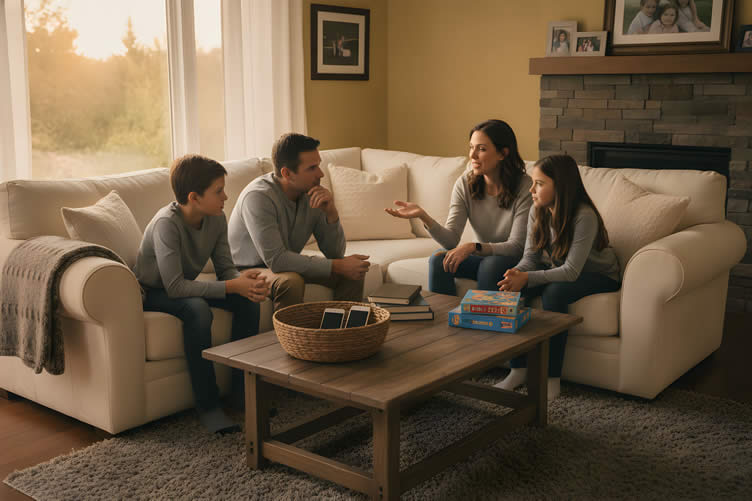
Make It A Family Agreement, Not A Rule For Kids Only
Start a conversation about what phones might be crowding out: sleep, conversation, books, or outdoor time.
From there, agree on a few specific boundaries together, such as no phones at meals, devices parking together during family reading time, or charging outside bedrooms overnight.
Including your pre-teen in setting these rules—and applying them consistently to parents as well—makes the agreement feel collaborative rather than restrictive.
A simple way to open this conversation: "We’re all spending more time looking at phones than we want. Let’s protect a little time for other things we enjoy."
-
Let Them Choose What Counts As Reading
Offer a wide range of options: graphic novels, comics, mysteries, sports books, fantasy, animal stories, magazines, or nonfiction tied to their interests. Avoid making every book selection an adult-approved "worthy" choice.
A librarian can be a valuable resource for matching books to your child’s specific interests, whether that’s gardening, cooking, science, or cycling.
-
Read Alongside Them, Not Just Near Them
Set aside a short, predictable time each day when everyone—including parents—puts devices away and reads. The American Academy of Pediatrics’ parent guidance specifically recommends modeling reading behavior and talking together about what each person is reading.
A workable starting point is ten to fifteen minutes after dinner. This is a starting routine, not a strict quota—end while it still feels manageable, and extend it naturally if the family enjoys it.
-
Keep Shared Reading On The Table
Independent reading doesn’t have to be the only option, even for older children. Offer to read a chapter aloud, take turns reading, or simply sit together with separate books.
Interactive print reading and focused parent-child time without screens remain valuable well into middle childhood.
-
Offer More Than Reading As An Alternative To Screens
Books shouldn’t be the only alternative to a phone. Build an appealing menu of other activities too—drawing, cooking, gardening, building, sports, or time with friends.
Framing an evening as "screen-free" rather than "reading time" leaves room for choice and avoids making reading feel like a consequence.
Family Reading Strategies
(view images, summary table and useful ideas – or scroll to side note and next topic)
Strategy Description Examples Make It A Family Agreement, Not A Rule For Kids Only Encourage a collaborative discussion about limiting phone use and protecting time for other activities like reading, sleep, or conversation.
Set boundaries that apply to both kids and parents.
No phones at meals, parking devices during family reading time, charging phones outside bedrooms overnight. Let Them Choose What Counts As Reading Provide a range of reading options based on individual interests, avoiding the need for every choice to be adult-approved.
Librarians can assist in aligning books with specific topics of interest.
Graphic novels, comics, mysteries, sports books, magazines, or nonfiction tied to hobbies like gardening or science. Read Alongside Them, Not Just Near Them Create a consistent and predictable daily reading time where everyone, including parents, reads together.
Model reading behavior and discuss books with your family.
Ten to fifteen minutes after dinner, reading as a family while putting devices away. Keep Shared Reading On The Table Promote shared reading experiences even for older children by reading aloud, taking turns, or reading separately but together in the same space. Reading a chapter aloud, alternating reading turns, or sitting together with individual books. Offer More Than Reading As An Alternative To Screens Provide a variety of engaging non-screen activities to make screen-free time enjoyable without making reading feel like a chore or consequence. Drawing, cooking, gardening, building, sports, or spending time with friends. 
copyright image by 123rf.com
Designing Study Room Areas
As you ponder ideas to encourage your pre-teens to read, consider the lasting benefits of creating a dedicated study space they can grow into.
Designing a study room specifically for children not only supports their current educational needs but also lays the groundwork for their future development.

A well-planned study area promotes focus, sparks creativity, and boosts productivity, giving them a comfortable, inspiring environment to explore, learn, and thrive.
view ideas: Where Your Children Can Grow(new win)
-
Scroll up to directory … or scroll to next section: simple two-week plan …
-
-
SHARE IT ..! Someone in your network might benefit from this insightful post about getting pre-teens reading again. Feel free to share it on Facebook, X (formally Twitter), LinkedIn, or Pinterest!



Are there any other interesting topics that might have been overlooked but could offer valuable insights …?


-
-
5th Section: A Simple Two-Week Starting Plan
Trying out a new approach to screen-free family time can feel daunting, but treating it as a flexible household experiment rather than a rigid plan makes it more manageable and enjoyable.
Here’s a simple two-week starting plan to guide the process:
- Set Up a Reading Spot and Charging Station
Begin by designating one cozy reading space and one shared charging station for phones, using furniture and materials you already have at home. - Visit the Library Together
Plan a library trip where your child can choose several books that interest them. Ask a librarian for recommendations based on their age or hobbies. - Establish a Daily Reading Period
Agree on one phone-free reading time each day. Start with a short, manageable duration so parents and children can reliably participate together. - Turn Off Background Distractions
During this daily reading period, keep background televisions off and phones parked to create an uninterrupted environment. - Review and Adjust
At the end of the two weeks, sit down as a family to discuss what worked well, such as the timing, location, book choices, or reading together. Use this insight to fine-tune the routine before making additional investments in furniture or implementing stricter rules.
By making small, intentional changes and building on what feels natural, families can gradually create a balanced and enjoyable home environment that invites more quality time away from screens.
More Supporting Information
(view summary table and useful ideas – or scroll to side note and next topic)
Step Action Description 1 Set Up a Reading Spot and Charging Station Designate a cozy reading area and a shared charging station for phones using existing furniture and materials at home. 2 Visit the Library Together Plan a family library trip where children can choose books of interest, while a librarian provides age or hobby-based recommendations. 3 Establish a Daily Reading Period Select a specific phone-free reading time each day with a short duration to ensure consistent participation from parents and children. 4 Turn Off Background Distractions Keep televisions off and phones parked during the reading period to maintain an uninterrupted environment. 5 Review and Adjust At the end of two weeks, discuss as a family what aspects of the routine worked well and fine-tune for improvements before making further changes or investments. 
copyright image by 123rf.com
Escape the Screen
One great way to pull your kids away from their screens is by inviting them to an escape room adventure.
These interactive experiences are not only fun but also mind-enhancing, as they challenge players to solve puzzles, uncover clues, and work as a team to “escape.”

An escape room provides a perfect blend of excitement and intellectual stimulation, offering a shared goal that encourages family bonding.
It’s a stress-relieving, immersive activity that lets you create memories together while giving those digital devices a well-deserved break.
view ideas: Escape Room Activity(new win)
-
Scroll up to directory … or scroll to next section of the AAATERM …
- Set Up a Reading Spot and Charging Station
-
-
-
6th Section: Overcoming Persistent Challenges
When your first plans and strategies don’t ease the resistance, it’s time to reassess and look for deeper solutions. A child’s reading habits are shaped by individual preferences, their environment, and emotional connections.
If hurdles persist, it isn’t a sign of failure. It simply means a more tailored approach may be needed.

copyright image by 123rf.com
The goal is to gently uncover what’s getting in the way and rekindle curiosity, so reading feels enjoyable rather than obligatory.
Below are specialized solutions for tackling deeper reading challenges, with insights into why they work and how to put them into practice.
-
When Reading Resistance Runs Deeper
Some children resist reading because of undiagnosed challenges, such as difficulty focusing, comprehension struggles, or even anxiety about making mistakes. If resistance appears to go beyond preference and becomes a pattern of avoidance, look for signs like frustration during reading sessions or complaints of physical discomfort.
Scheduling an evaluation with a reading specialist or educator might uncover issues related to reading fluency, vision, or processing that can be worked on with appropriate support.
Meanwhile, offering materials in accessible formats can make a substantial difference. Audio books, graphic novels, or interactive e-readers serve as excellent alternatives to traditional paperbacks, reducing pressure while keeping stories engaging.
-
Why Parental Modeling Matters Most
Children are more likely to value reading when they see adults in their life doing it regularly and joyfully. Parental modeling sends an unspoken but clear message about its importance.
Set aside moments where you visibly enjoy reading a book, whether it’s a novel, a cookbook, or a magazine. Share what you’re learning or why a story excites you—it helps create a sense of curiosity and discovery that children want to emulate.
Additionally, consider introducing cozy, shared reading rituals. Introducing a “family reading hour,” where everyone reads their book of choice, transforms reading into a collective activity, not a solitary chore.
Choose books you can share anecdotes from, inspiring interest without assigning mandatory tasks.
-
Fostering Positive Emotional Associations
What feels rewarding is remembered—and pursued. Creating a warm, inviting nook filled with books alongside comfortable seating encourages children to gravitate toward it naturally.
Celebrating small achievements, such as finishing a chapter, builds confidence and intrinsic motivation over time.
You could also incentivize reading by tying it to interests; for example, a budding artist might enjoy stories about famous painters or books with drawing activities.
-
Adapting to Age and Interests
Interests evolve, and so should your selection of reading material. For older children facing resistance, consider genre diversity to help them find their niche—whether that’s science fiction, fantasy, or biographies of inspiring figures.
Younger children might benefit from books that feature familiar characters from their favorite shows or themes that align with their hobbies.
By focusing on the root causes of disinterest and meeting children where they are, parents and caregivers can transform the reading experience from a battleground into a shared joy.
These solutions, grounded in empathy and backed by professional research, demonstrate that it’s never too late to cultivate a love for books.
More Supporting Information
(view summary table and useful ideas – or scroll to side note and next topic)
Challenge Description Solution Insights Persistent Resistance Children may show ongoing resistance due to individual preferences, environmental factors, or emotional barriers. Reassess strategies, uncover underlying causes, and provide tailored approaches to rekindle interest. The goal is to make reading enjoyable rather than obligatory by addressing root causes and preferences. Deeper Reading Challenges Signs such as avoidance, frustration, or discomfort may indicate undiagnosed issues with focus, fluency, or comprehension. Seek evaluations with specialists, use alternative formats like audio books or graphic novels to ease pressure. Accessible formats and professional support can uncover and work on underlying challenges, making stories more engaging. Parental Modeling Children are influenced by seeing adults read joyfully and consistently. Demonstrate enjoyment in reading by openly sharing insights, setting up family reading hours, and discussing stories. Parental involvement fosters curiosity and reinforces the importance of reading as a valued activity. Positive Emotional Associations Rewarding activities are pursued more often, making emotional connections a key factor in fostering reading habits. Create inviting spaces, celebrate small victories, and align reading with children’s interests to build intrinsic motivation. Over time, children associate reading with comfort and achievement, encouraging lasting habits. Adapting to Age and Interests Children’s preferences evolve, requiring thoughtful material selection to cater to their changing interests and age. Introduce genre diversity for older children and books with familiar themes or characters for younger ones. Customizing material based on children’s current interests transforms reading into a joy rather than a task. 
copyright image by 123rf.com
Turning Resistance Into Playtime
Getting everyone onboard with outdoor family time can be a challenge, but creating a backyard play zone tailored to age and skill levels can make all the difference.
By designating spaces for activities like a toddler sandbox, a basketball hoop for teens, or a relaxing seating area for parents, you provide something for everyone.

When each family member feels the space is meant for their enjoyment, resistance naturally fades, and shared moments become the focus.
view ideas: Backyard Family Play Zone(new win)
Sporting
Lawn Games
viewing amazon-
Scroll up to directory … or scroll to next section: screen time rules …
-
-
-
-
7th Section: Screen Time Rules That Actually Work
Screens have become part of nearly every corner of family life, and pre-teens and early teens are spending more time on them than ever.
Too much device use can cut into sleep, pull focus from schoolwork, and crowd out reading time and in-person moments that build social skills.
AI generated image by 123rf.com
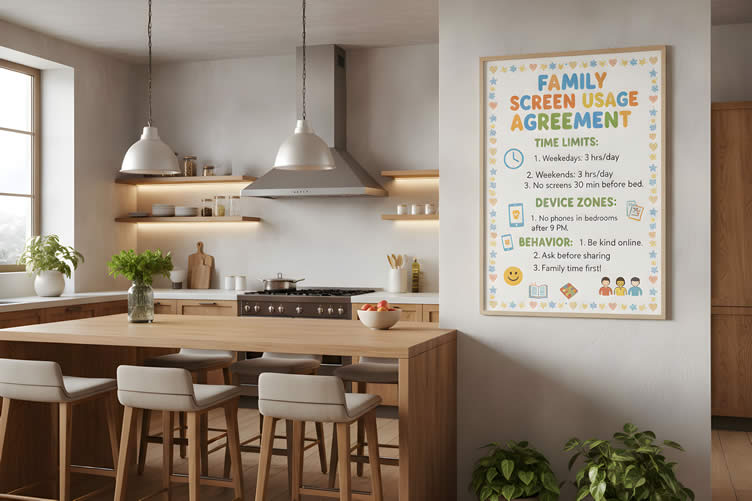
The good news is that healthy digital habits don’t require drastic action. A few clear, consistent rules, created together as a family, can make a lasting difference.
This guide covers why screen time has become such a challenge, how to set boundaries that stick, and practical ways to keep the peace at home while raising a digitally responsible kid.
-
Understanding the Challenge
Today’s apps and social platforms aren’t designed to be put down easily. Features like autoplay, infinite scroll, and constant notifications are built to keep young users engaged for as long as possible, which makes self-regulation genuinely difficult, even for adults.
For children, the effects can show up in several ways. Screens competing with sleep, reading, physical activity, time with friends, and hobbies can quietly push those essentials aside if families don’t set intentional limits.
Rather than fixating on a single "safe" number of hours, it’s more useful to look at whether screen use is crowding out the things that support a child’s wellbeing—rest, movement, connection, and creativity.
-
Setting Clear Boundaries
The most effective screen time rules tend to be simple, visible, and applied to the whole household, not just the kids.
- Create screen-free zones:
Bedrooms and the dining table are good places to start. Phones can park outside bedrooms overnight at a shared charging station, with a separate alarm clock doing the wake-up duty instead. - Protect mealtimes:
Keeping meals phone-free—for parents as well as children—turns dinner back into a space for actual conversation. - Build in a wind-down hour:
Stopping recreational screens about an hour before bedtime and replacing that time with reading, talking, or another quiet activity can noticeably improve sleep quality. - Lead by example:
Kids notice when the rules only apply to them. Setting your own phone aside during family time and bedtime routines does more to reinforce the message than any lecture.
- Create screen-free zones:
-
Practical Rules and Strategies
A few concrete habits can take the guesswork out of daily screen decisions:
- Use one screen at a time:
Discourage scrolling while watching TV or leaving videos running in the background. - Silence notifications during homework and bedtime:
Scheduling Focus or Do Not Disturb modes removes the temptation to check every ping. - Require permission for new apps, purchases, and accounts:
Parental controls can help manage downloads, spending, and contacts without constant hovering. - Set recreational screen windows:
Instead of unlimited daytime access, built around your family’s actual routine rather than an assumed universal limit. - Keep alternatives within reach:
Books, art supplies, games, and outdoor gear should be just as accessible as the tablet, with screen-free activities scheduled in regularly.
It also helps to involve your teen directly. Writing a short family agreement together—covering when, where, and how devices can be used—gives kids a sense of ownership and makes the rules easier to accept.
- Use one screen at a time:
-
Age-Appropriate Guidelines
A ten-year-old and a fifteen-year-old need different levels of oversight, and rules should shift as kids demonstrate responsibility. Pre-teens generally benefit from more structure and closer supervision, while early teens are ready for a bit more independence paired with ongoing check-ins.
Rather than applying a rigid, one-size-fits-all policy, think of screen time rules as a living agreement. Revisit them as your child matures, and adjust based on how well they’re managing the freedom they’ve already been given.
-
Open Communication and Monitoring
Rules work best when paired with honest conversation. Rather than only restricting access, talk with your child about what they enjoy online, who they’re interacting with, and whether anything they’ve encountered felt upsetting or uncomfortable.
These check-ins don’t need to feel like interrogations. A relaxed, non-judgmental tone makes kids more likely to come to you if something goes wrong, whether that’s a mean comment, an uncomfortable message, or simple peer pressure around what app everyone else is using.
Reviewing device reports together, rather than relying solely on restrictions, also opens the door to adjusting the plan as needed.
-
Addressing Resistance and Staying Consistent
Push-back is part of the process. Expect some grumbling when you introduce new boundaries, and resist the urge to cave the first time your teen protests.
Consistency is what makes rules effective over time. That said, consistency doesn’t mean rigidity—if a particular rule isn’t working, it’s fine to adjust the details while keeping the core principles intact.
Celebrating small wins, like a week of phone-free dinners or an evening spent reading instead of scrolling, reinforces the behavior you want to see more of.
If the full list above feels like a lot to tackle at once, start small. Begin with just three rules: phone-free meals, overnight charging outside bedrooms, and a screen-free hour before bed. Once those routines feel established, you can layer in additional boundaries.
More Supporting Information
(view images, summary table and useful ideas – or scroll to side note and next topic)
Screen Time Rules
(from the summary table below)
Section Description Details Understanding the Challenge Explains why screen time is difficult to regulate Apps and platforms include features like autoplay, infinite scroll, and notifications that keep users, including children, engaged for long periods. This impacts sleep, physical activity, hobbies, and socialization if limits are not intentionally set. Setting Clear Boundaries Outlines foundational rules for screen use Recommends creating screen-free zones, such as bedrooms and dining areas, using shared charging stations, protecting mealtimes, introducing a wind-down hour before bed, and leading by example to reinforce rules. Practical Rules and Strategies Provides actionable methods for managing screen use Suggestions include using one screen at a time, silencing notifications during focus times, requiring approval for new apps, setting recreational screen schedules, and keeping alternative activities accessible. Age-Appropriate Guidelines Highlights the need for rules to evolve with age Pre-teens benefit from structured rules with close supervision, while older teens can handle greater independence with regular check-ins. Adapting the guidelines ensures they remain effective as the child matures. Open Communication and Monitoring Encourages dialogue and collaboration Advises discussing online interests and experiences with children openly. Reviewing device reports together fosters trust and provides opportunities to adjust rules while monitoring without over-restricting. Addressing Resistance and Consistency Deals with push-back and effective implementation Encourages staying consistent with rules despite initial resistance while adjusting them when needed. Suggests celebrating small wins, starting with a few key rules, and gradually building on the established routines. 
copyright image by 123rf.com
Navigating Screen Usage Challenges
For parents of pre-teens in public or private schools, the growing reliance on screens for social interaction can create friction.
Balancing academic needs with family values around screen time often sparks resistance from kids who feel left out without constant access.

Homeschooling families may face less peer pressure but still need to foster healthy digital habits.
Homeschool tactics, such as offline group projects, regular outdoor activities, and in-person peer groups, can help reduce resistance while keeping screen use in check.
view ideas: Create A Play Homeschool Room(new win)
-
Scroll up to directory … or scroll to next section: FAQs …
-
-
… remodeling decisions
-
-
8th Section: Frequently Asked Questions
-
What is the best age to start encouraging independent reading in pre-teens?
There’s no strict age requirement, but middle childhood through the pre-teen years is an effective window because children are developing independent interests and can take ownership of book choices. The key is consistency rather than a specific starting age.
-
How much does it cost to create a reading-friendly home?
Very little, in most cases. A reading spot can be created using furniture you already own, paired with a lamp and a basket of books. Library visits provide free access to a wide range of titles, making this one of the most budget-friendly home improvements available.
-
How long should daily family reading time last?
A realistic starting point is ten to fifteen minutes after dinner. This is meant to be a manageable routine rather than a strict quota, and families can extend the time naturally as it becomes an enjoyable habit.
-
What if my pre-teen refuses to give up their phone for reading time?
Involve your child in setting the boundaries rather than imposing them. Framing phone-free time as a shared family agreement—one that applies to parents too—tends to reduce resistance compared to rules that single out children.
-
Are graphic novels and comics considered "real" reading?
Yes. Graphic novels, comics, and magazines all count as valuable reading material, especially for building engagement. The goal is to foster a genuine interest in reading, and allowing your child to choose formats they enjoy supports that goal more effectively than restricting them to traditional novels.
-
Should phones be banned from bedrooms entirely?
Charging phones outside bedrooms overnight is a widely recommended practice that supports better sleep and reduces nighttime screen use. If your child currently uses their phone as an alarm clock, introducing a separate alarm clock makes this transition easier.
-
What should I do if my child seems uninterested in reading no matter what I try?
Distinguish between disinterest and difficulty. Ask your child directly whether it’s hard to find something good to read, hard to concentrate, or hard to read the words. If reading consistently feels effortful, consider discussing the pattern with their teacher.
-
Can a reading routine coexist with other screen-free family activities?
Absolutely, and it should. Building a varied menu of alternatives—drawing, cooking, sports, or time with friends—alongside reading prevents books from feeling like the only "approved" substitute for screen time, which can reduce resistance.
More Supporting Information
(view summary table and useful ideas – or scroll to side note and next topic)
Question Answer What is the best age to start encouraging independent reading in pre-teens? There’s no strict age requirement, but middle childhood through the pre-teen years is an effective window because children are developing independent interests and can take ownership of book choices. The key is consistency rather than a specific starting age. How much does it cost to create a reading-friendly home? Very little, in most cases. A reading spot can be created using furniture you already own, paired with a lamp and a basket of books. Library visits provide free access to a wide range of titles, making this one of the most budget-friendly home improvements available. How long should daily family reading time last? A realistic starting point is ten to fifteen minutes after dinner. This is meant to be a manageable routine rather than a strict quota, and families can extend the time naturally as it becomes an enjoyable habit. What if my pre-teen refuses to give up their phone for reading time? Involve your child in setting the boundaries rather than imposing them. Framing phone-free time as a shared family agreement—one that applies to parents too—tends to reduce resistance compared to rules that single out children. Are graphic novels and comics considered “real” reading? Yes. Graphic novels, comics, and magazines all count as valuable reading material, especially for building engagement. The goal is to foster a genuine interest in reading, and allowing your child to choose formats they enjoy supports that goal more effectively than restricting them to traditional novels. Should phones be banned from bedrooms entirely? Charging phones outside bedrooms overnight is a widely recommended practice that supports better sleep and reduces nighttime screen use. If your child currently uses their phone as an alarm clock, introducing a separate alarm clock makes this transition easier. What should I do if my child seems uninterested in reading no matter what I try? Distinguish between disinterest and difficulty. Ask your child directly whether it’s hard to find something good to read, hard to concentrate, or hard to read the words. If reading consistently feels effortful, consider discussing the pattern with their teacher. Can a reading routine coexist with other screen-free family activities? Absolutely, and it should. Building a varied menu of alternatives—drawing, cooking, sports, or time with friends—alongside reading prevents books from feeling like the only “approved” substitute for screen time, which can reduce resistance. 
AI generated image by 123rf.com
Expanding Horizons in the Late Teens
As teens move into their late adolescence, their curiosity and critical thinking often reach new heights.
To channel that growth toward “expansive learning,” challenge them to set up a podcast station at home.

Encourage them to pick a topic they’re passionate about, one that sparks interest and gets their friends to listen and contribute.
Along the way, they’ll sharpen their communication and technical skills and learn how collaboration and idea exchange work.
view ideas: Home Podcasting Station(new win)
-
Scroll up to directory … or scroll to next section: using smart techology …
-
-

Budgeting Worksheet For Costing Home Remodeling and Home Improvement Decisions
 File Type (excel)
-
-
9th Section: Smart Home Technology to Manage Screen Time
Did you know that advanced smart home technology with a central hub can do more than automate your lights and thermostat? It can also help you manage teen screen time and media device access, promoting healthier habits for your children.
By setting simple rules and integrating devices through a central hub connected to a cloud server, you can track, monitor, and control screen time efficiently—no matter where your child is.
Let’s explore how it works and the key benefits of professional installation.
- Centralized Control:
A smart home technologist can integrate all smart devices into one central hub, simplifying management and allowing you to create unified screen time rules across multiple devices. - Cloud-based Monitoring:
With a hub connected to a cloud server, professionals ensure you can monitor and adjust rules remotely, even when you’re away from home. - Tailored Setup:
Every family is unique, and a professional installation can customize settings for individual users, including device time limits, app restrictions, and access schedules for each child. - Automated Rules:
Experts can program automatic shut-offs or notifications when screen time exceeds designated limits, reducing the need for manual intervention. - Enhanced Security:
Professional installers focus on protecting your network and personal data, ensuring that your family’s screen time controls are secure and reliable.
-
Finding the Right Smart Home Automation Contractor
When considering a professional for your home automation needs, keep the following in mind:
- Experience Matters:
Look for contractors with a strong track record in smart home technology and experience specifically in screen time management solutions. - Certifications and Training:
Choose a contractor with certifications from reputable smart home brands, as this indicates specialized knowledge and skills. - Customer Reviews:
Read online reviews or ask for references to gauge customer satisfaction and project quality. - Tailored Consultations:
Seek out professionals who offer an initial consultation to understand your family’s needs and recommend personalized solutions. - Post-Installation Support:
Ensure the contractor provides aftercare services, such as troubleshooting and updates, to keep your system running smoothly.
With the right expertise, smart home automation can simplify your life and positively impact your family’s digital habits, fostering a healthier, more balanced environment for everyone.
- Experience Matters:
LetsRenovate has partnered with HomeAdvisor (Angi)™, a renowned provider of highly-rated, carefully-vetted local contractors. Start your search here by choosing the type of decorator you need to instill the reading tactics for your pre-teen. Simply enter your zip code to find local professionals.
More Supporting Information
(view images, summary table and useful ideas – or scroll to side note and conclusion)
Topic Details Key Benefits Centralized Control A professional smart home technologist integrates all devices into one central hub, which simplifies management and ensures unified screen time rules across multiple devices. Streamline device management, create consistent screen time policies. Cloud-based Monitoring Professionally connected hubs utilize cloud servers to track and adjust rules remotely, enabling real-time control regardless of location. Monitor and manage screen usage remotely, even away from home. Tailored Setup Custom configurations designed for unique family needs, including individual time limits, app restrictions, and access schedules. Personalized control over screen time for each child, suited to family routines. Automated Rules Professionals program automatic shut-offs or notifications when limits are exceeded, reducing manual management efforts. Effortless enforcement of screen time limits, promoting healthier habits. Enhanced Security Installers focus on network and data protection, ensuring reliable and safe family screen time management. Peace of mind with secure and dependable systems in place. Benefits of Professional Installation A professional installer can integrate smart devices into one centralized hub, customizing settings such as time limits, app restrictions, and access schedules for each user while ensuring robust security and remote access. – Simplifies screen time rule management across devices
– Customizes family-specific needs
– Secures network and personal dataFinding a Smart Home Automation Contractor When choosing a contractor, important factors include experience, industry certifications, customer feedback, tailored consultations, and post-installation support to ensure system reliability and effective use. – Expert knowledge and personalized advice
– Support for troubleshooting and updates post-installation
AI generated image by 123rf.com
Smarter Screen Time Management
Fortunately, the latest smart home technology allows you to leverage IoT to bring all your smart and screen devices under one central hub, connected seamlessly to a cloud server.
This setup lets you monitor, analyze, and manage screen usage at home with ease.

If excessive screen time becomes a concern for your children, you can take swift action to disable or limit access, ensuring their safety and promoting healthier habits—all with just a few taps or with AI controls.
view ideas: IoT for Family Management(new win)
-
Scroll up to directory … or scroll to conclusion and references …
- Centralized Control:
-
-
Conclusion
… start small and build from there
Rebuilding a pre-teen’s relationship with reading doesn’t require a dramatic lifestyle overhaul or an expensive home renovation.
The most meaningful investment isn’t cabinetry or new furniture—it’s time and access: a library visit, a comfortable existing seat re-purposed into a reading nook, and a family routine where parents visibly set their phones aside too.
Start with just one change. Set up a reading spot this weekend, establish a shared charging station, or commit to fifteen phone-free minutes after dinner.
Small, consistent steps—paired with patience and genuine curiosity about what your child enjoys—can gradually turn screen time into story time.
References
- American Academy of Pediatrics, HealthyChildren.org — Guidance on screen time, reading habits, and parental modeling for school-age children, 2024–2025.
- Children and Screens — Research and guidance on screen time, literacy development, and media boundaries in middle childhood, 2024–2025.
- BBC — Reporting on reducing smartphone use in families and establishing shared device boundaries, 2024–2025.
- Chalk Academy — Practical guidance on book accessibility, rotating displays, and interest-led reading selection for children, 2024–2025.
-
Quick scroll to more interior home and decor ideas …
- What comments can you share about
your success to get your pre-teens reading again?

Calendar For:
Home Maintenance
File Type:
… view our sharing links below for a quick "share the knowledge"
Find Interior Design Services Decorators Interior Designers Furniture Painting & Staining top-rated, pre-screened local contractors FREE: download contractor selection enter zip code – powered by HomeAdvisor ™
Quick Contractor Guides selecting negotiating working with inspecting

Cover image credit: pre-teens reading by 123rf.com
end of post … please share it!
 |
did you find pre-teens reading analysis helpful? If so, please share the article with your friends and family! |
Nice pic idea? Leave us a quick comment below.
And please share this pic idea within your social networks.