Summary Outline –
Quick Answer:
Upgrade your home’s electrical wiring when it shows safety warning signs—sparks, burning smells, warm outlets, or repeated breaker trips—when it contains obsolete materials like knob-and-tube or aluminum branch-circuit wiring, or when your household’s electrical load has outgrown the original system design.A licensed electrician should evaluate any of these conditions before they escalate into emergencies.
A home electrical wiring upgrade becomes necessary when your system displays active safety warnings, fails to meet your household’s electrical load, or relies on wiring methods long considered obsolete. These aren’t cosmetic concerns.
According to the Electrical Safety Foundation International (ESFI), home electrical fires account for an estimated 51,000 fires each year, nearly 500 deaths, more than 1,400 injuries, and $1.3 billion in property damage annually. The underlying cause in many of these cases: aging, overloaded, or deteriorated wiring.
This guide walks through five critical indicators that it’s time to call a licensed electrician. Whether your home is decades old or you’re simply adding new appliances and technology, understanding when to act—and what to look for—can protect your home, your investment, and the people inside it.
- post content … analysis/ electrical wiring upgrade

first “electrical wiring upgrade” idea

AI generated image by 123rf.com
Section 1: Urgent Warning Signs
Notes:
-
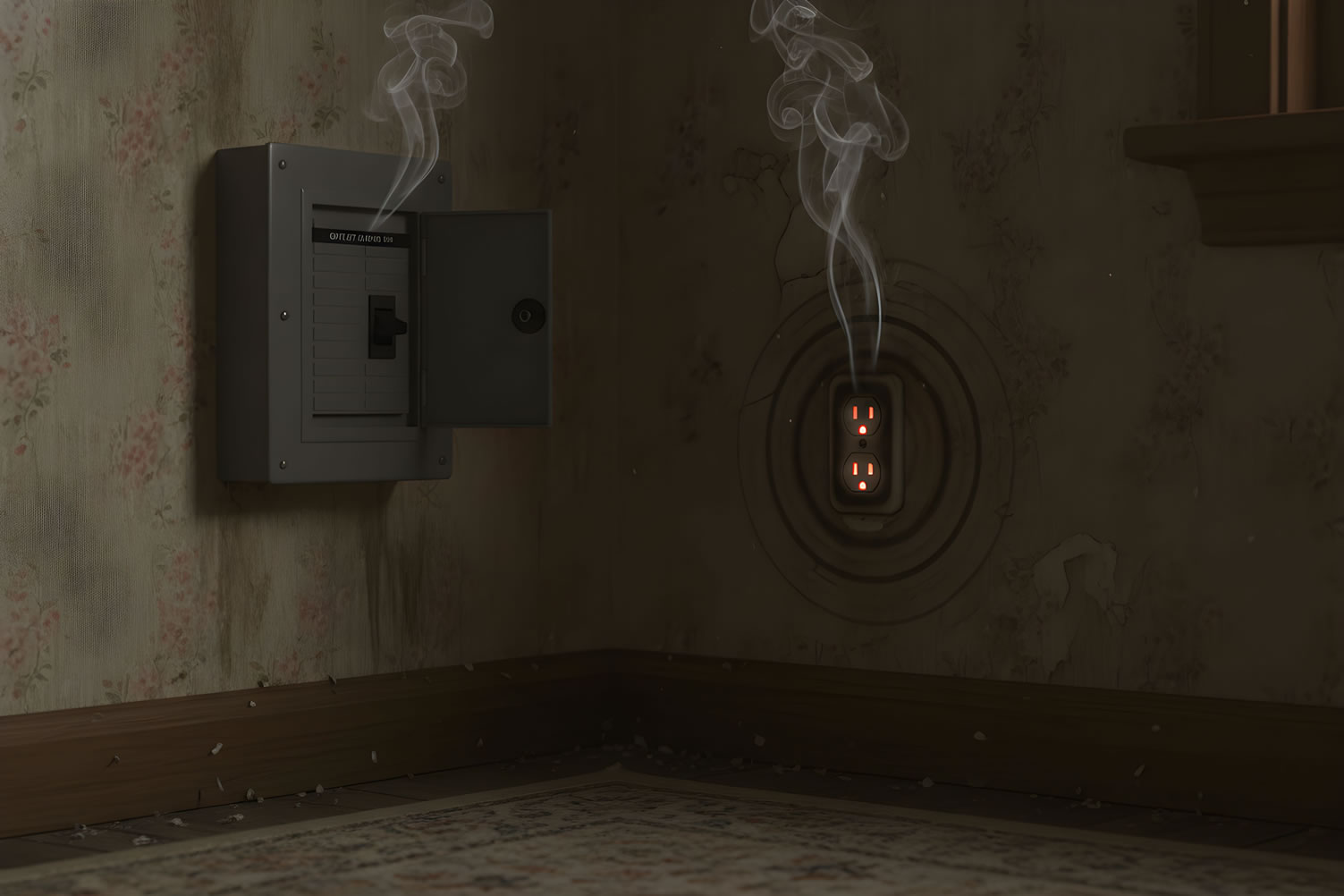
Your electrical system communicates when something is wrong. The signals are physical, sensory, and often easy to miss until they’re impossible to ignore. Warm outlets, repeated breaker trips, or the faint smell of burning plastic are not quirks of an older home—they are warning signs of a system under stress.
These symptoms point to potential fire hazards, shock risks, and circuit failures that require immediate evaluation by a licensed electrician. Dismissing them as minor inconveniences can escalate a manageable repair into an emergency. The sooner a professional assesses the situation, the better the outcome for your home and everyone in it.
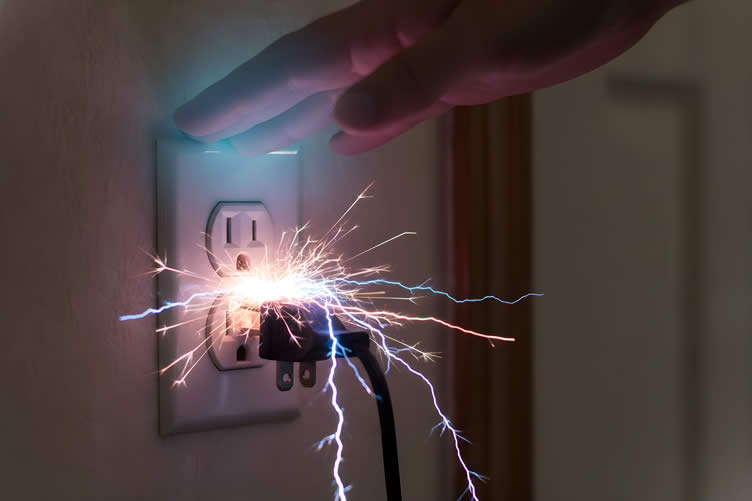
If you ever notice active arcing, sparking, smoke, or a strong burning odor, do not attempt to troubleshoot it yourself. Turn off power at the main disconnect only if it is safe to reach, leave the building immediately, and contact emergency services or a licensed electrician.

-
Breakers Trip Repeatedly or Fuses Blow Often
An occasional breaker trip when running multiple high-draw appliances simultaneously is normal. Frequent tripping—especially on the same circuit, or across multiple circuits without a clear explanation—is not.
It signals that the circuit is being asked to carry more current than it was designed for. Over time, this repeated stress degrades wiring insulation and increases the risk of arcing and fire.
A licensed electrician can perform a load calculation to identify whether the issue lies with the circuit, the panel, or the overall service capacity.
-
Outlets, Switches, or Cover Plates Feel Warm or Show Discoloration
Electrical components should be cool to the touch during normal operation. A warm outlet cover or a switch plate with brown or black discoloration is a clear sign of excessive heat—typically caused by a loose connection, an overloaded circuit, or deteriorating wiring behind the wall.
According to the U.S. Consumer Product Safety Commission (CPSC), electrical receptacles alone are involved in approximately 5,300 residential fires each year.
Discoloration around an outlet is often the visible result of electrical arcing, which can ignite surrounding materials long before any visible flame appears.
-
Burning Smell or Hot Insulation Odor
A burning smell near an outlet, panel, or switch is among the most serious warning signs a home can produce. The odor typically comes from overheating wire insulation—a condition that can precede a fire inside a wall cavity where it may go undetected for some time.
Any persistent burning odor warrants an immediate call to a licensed electrician, not a wait-and-see approach.
-
Sparks, Buzzing, Crackling, or Shock Sensations
Unusual sounds coming from a panel, outlet, or switch—buzzing, crackling, or sizzling—indicate electrical arcing. The ESFI reports that arcing faults cause more than 28,000 home fires annually, resulting in over $700 million in property damage.
Sparks when plugging in a device, or a tingling sensation when touching an appliance, switch, or outlet, point to grounding failures or wiring faults that require professional diagnosis without delay.
-
Lights Dim or Flicker When Appliances Turn On
A momentary dip in light intensity when a large appliance—like an air conditioner, refrigerator, or washing machine—starts up may seem like a minor annoyance. In reality, it signals that the circuit or panel lacks the capacity to handle the startup surge without affecting voltage across the rest of the system.
Persistent flickering, especially in multiple rooms, suggests a broader wiring or service capacity issue that a professional load evaluation can pinpoint.
-
Loose-Fitting Plugs or Intermittent Outlet Failure
Outlets that no longer grip plugs securely, or that deliver power inconsistently, typically have worn internal contacts or loose connections at the terminal. A loose connection generates heat, and heat in a confined junction box or inside a wall is a fire risk.
Outlets that fail intermittently can also indicate a deeper wiring problem along the circuit—not just a faulty receptacle—making professional inspection the appropriate response rather than a simple outlet swap.
More Supporting Information
(view sample images, summary table, and side note – or scroll to next topic)
Warning Sign Description Potential Hazard Warm Outlets, Repeated Breaker Trips, or Burning Plastic Smell These signs indicate that the electrical system is under stress. Issues such as warm outlets, tripped breakers, or faint burning smells hint at critical underlying problems. Risk of fire, electric shocks, and system failures requiring immediate evaluation by a licensed electrician. Breakers Trip Repeatedly or Fuses Blow Often Frequent breaker trips or blown fuses, especially on the same circuit or multiple circuits without explanation, indicate that the circuit is overloaded beyond its capacity. Degraded wiring insulation, electrical arcing, and increased fire risk. Professional evaluation of circuit load or service capacity is necessary. Warm Outlets, Switches, or Discolored Cover Plates Electrical components should remain cool. Warm or discolored outlet covers indicate excessive heat from loose connections, circuit overloads, or degraded wiring. Possible fire hazards from arcing or overheating, contributing to residential fires according to annual safety statistics. Burning Smell or Hot Insulation Odor A persistent burning odor near an electrical outlet, panel, or switch suggests overheating wire insulation, which could lead to undetected fires. Serious fire risk requiring immediate attention from a licensed electrician. Delay can exacerbate hidden hazards. Sparks, Buzzing, Crackling, or Shock Sensations Unusual noises or sensations like buzzing, sizzling, or shocks indicate electrical arcing, grounding failures, or wiring faults. High risk of property damage due to arcing faults, shocks, and potential home fires. Immediate professional inspection is critical. Lights Dim or Flicker When Appliances Turn On Dim or flickering lights when a large appliance starts suggests insufficient circuit or panel capacity to handle startup surges. Broader system capacity issues that could impact electrical safety. Requires professional load evaluation to prevent future hazards. Loose-Fitting Plugs or Intermittent Outlet Failure Outlets with loose internal contacts or intermittent power delivery point to worn connections or underlying circuit problems. Fire risks from heat generated by poor connections, which can escalate if left unaddressed. Professional inspection is recommended over simple DIY fixes. 
Protecting Your Family
Ensuring your family’s safety begins with understanding the dangers posed by house fires and taking proactive measures to mitigate them.
Simple steps like installing smoke detectors, creating a fire escape plan, and keeping fire extinguishers accessible can make a significant difference during an emergency.

By staying prepared and informed, you empower your loved ones with the tools and knowledge needed to stay safe from this potentially devastating threat.
view ideas: House Fire: Essential Safety Tips(new win)


copyright image by 123rf.com
-


Scroll up to directory … or scroll to next section: undertaking an electrical wiring upgrade …


second “photo remodeling” idea
AI generated image by 123rf.com
Section 2: Age and Wiring Materials
Notes:
-
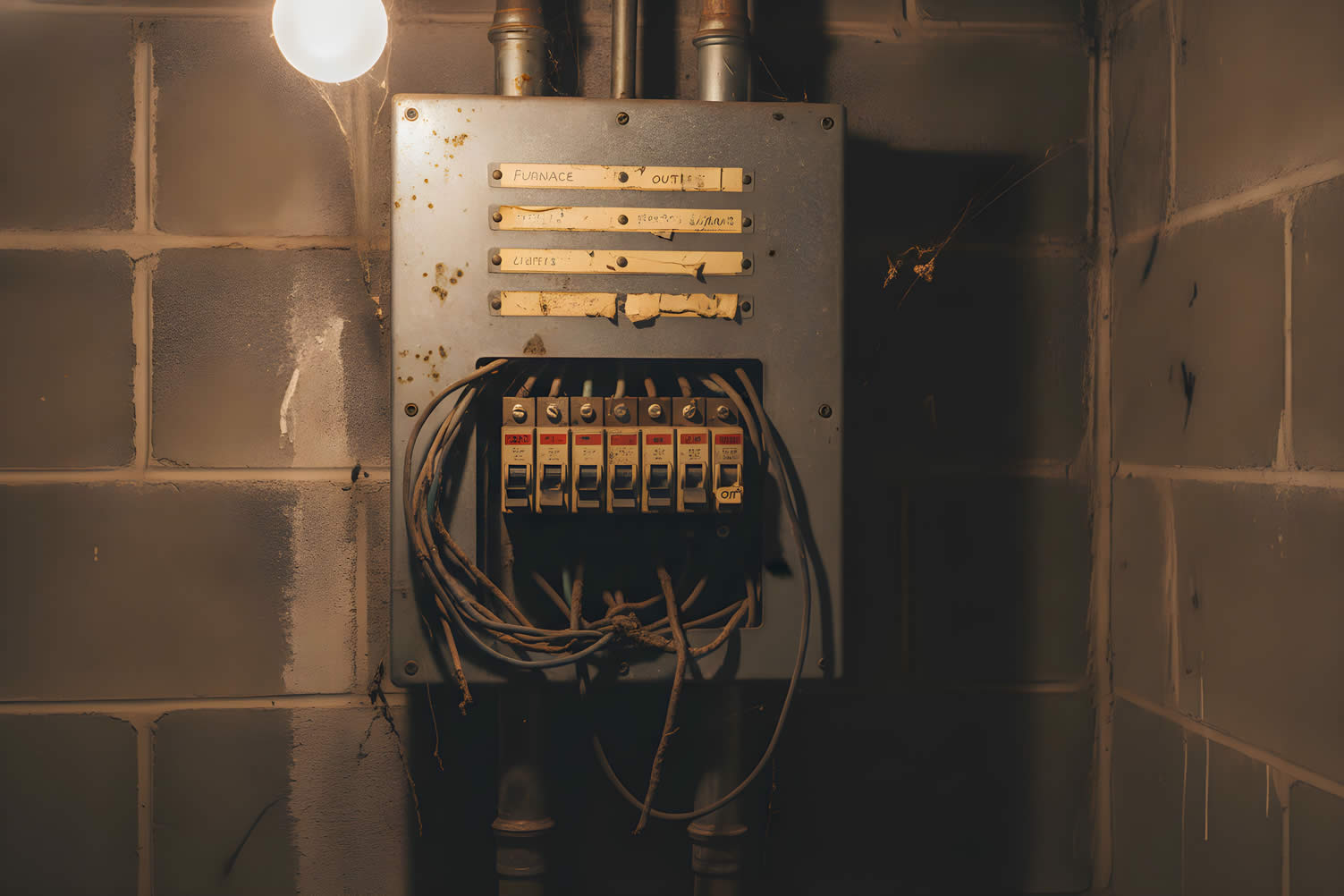
The age of a home often tells an experienced electrician a great deal before they inspect a single outlet. Electrical systems installed decades ago were designed around the appliance loads of their era—a fraction of what modern households require.
More importantly, some older wiring materials carry safety liabilities that are independent of load capacity.
Understanding what type of wiring exists in your home—and when it was last evaluated—is foundational to assessing risk.
Age alone does not confirm that wiring is unsafe, but it does establish the need for a professional inspection, particularly when records are incomplete or previous renovations may have introduced inconsistencies.
-
Homes 40+ Years Old Require Professional Evaluation
The CPSC and ESFI both recommend professional electrical inspections for homes 40 years old or older, and for homes 10 or more years old that have undergone major renovations or gained significant new appliances.
An electrical panel has a functional lifespan of approximately 30 to 40 years, according to Lehmann Electrical.
A home that has never had its system formally reviewed since original construction—or since a prior sale—may be operating with components well past their reliable service life.
-
Knob-and-Tube Wiring: A Safety Liability
Knob-and-tube (KAT) wiring was the residential standard from roughly the 1880s through the 1930s. It consists of single insulated conductors run through ceramic knobs and porcelain tubes.
The system has no ground wire, which means it cannot support modern grounded appliances safely. Its rubber and cloth insulation becomes brittle with age and can crack or crumble when disturbed.
Critically, knob-and-tube wiring was not designed to be enclosed in insulation—a common condition in today’s better-insulated homes—which creates dangerous heat retention.
Homes with confirmed knob-and-tube wiring require professional assessment and typically a full or partial rewire.
-
Cloth-Insulated Cable and Fuse Panels
Homes from the 1940s through the 1960s often contain wiring wrapped in cloth-braided insulation rather than modern thermoplastic sheathing. Cloth insulation degrades significantly over time, becoming brittle and prone to cracking.
When insulation fails, bare conductors are exposed—creating both shock and fire hazards. Fuse panels from the same era present their own concerns: unlike circuit breakers, blown fuses must be replaced rather than reset, and the wrong fuse size is easily installed, eliminating over-current protection entirely.
Modern circuit breakers provide more precise, reliable protection and a service life of 30 to 40 years under normal conditions.
-
Ungrounded Two-Prong Outlets
Two-prong outlets indicate an ungrounded electrical system. Without a ground wire, there is no safe path for fault current to travel in the event of a short circuit—increasing the risk of electrical shock to anyone who contacts a faulty appliance or device.
Ungrounded systems also lack compatibility with modern electronics and appliances that depend on grounding for proper, safe operation.
Replacing two-prong outlets with three-prong receptacles without running a proper ground wire is not a code-compliant repair and does not resolve the underlying safety issue.
-
Aluminum Branch-Circuit Wiring Needs Professional Assessment
Aluminum wiring was used in some residential construction during the mid-1960s through the mid-1970s as a less expensive alternative to copper. It remains a recognized safety concern because aluminum expands and contracts at a different rate than the copper terminals and devices it connects to.
Over time, this movement loosens connections at outlets, switches, and junction points—creating resistance, heat, and ultimately fire risk.
Aluminum branch-circuit wiring requires assessment by a licensed electrician and approved remediation methods, not casual repairs or like-for-like replacement with standard copper devices.
More Supporting Information
(view sample images, summary table, and side note – or scroll to next topic)
Age and Wiring Materials
(from the summary table below)
Category Description Key Concerns Age and Wiring Materials The age of a home provides clues about its electrical system, including design limitations based on past appliance loads and potential safety liabilities of older materials. Older wiring materials may be unsafe; professional inspection is critical for homes 40+ years old or 10+ years old with major renovations or new appliances. Knob-and-Tube Wiring A wiring system standard from the 1880s to 1930s, using single insulated conductors with no ground wire, unsuitable for modern appliances. The lack of grounding, heat retention due to added insulation, and aging components make this wiring a significant safety risk requiring professional assessment. Cloth-Insulated Cable and Fuse Panels Used from the 1940s to the 1960s, cloth-braided insulation degrades over time, along with outdated fuse panels. Degraded insulation exposes conductors, leading to shock and fire risks. Fuse panels lack precision and require replacement with modern circuit breakers. Ungrounded Two-Prong Outlets Indicates an ungrounded system that lacks compatibility with modern electronics and appliances requiring proper grounding. Absence of a safe fault current path increases shock risk. Replacing outlets without grounding does not resolve safety issues. Aluminum Branch-Circuit Wiring Used during the mid-1960s to mid-1970s as a cost-effective alternative to copper, aluminum wiring poses long-term safety concerns. Expansion and contraction loosen connections over time, resulting in heat buildup and fire risk. Requires professional assessment and remediation. The Journey of Electricity
Electricity is generated through a variety of methods, each relying on different energy sources.
Traditional methods involve burning fossil fuels like coal, natural gas, or oil to produce steam, which drives turbines connected to generators.
Renewables, such as solar panels and wind turbines, harness natural forces like sunlight and wind to produce electricity cleanly.

Additionally, hydropower utilizes flowing water, and nuclear reactors rely on splitting atoms to generate energy.
These diverse approaches highlight the intricate systems that reliably power our lives while emphasizing the need for sustainable practices to protect our planet.
view ideas: Mystery Behind Your Home’s Power(new win)
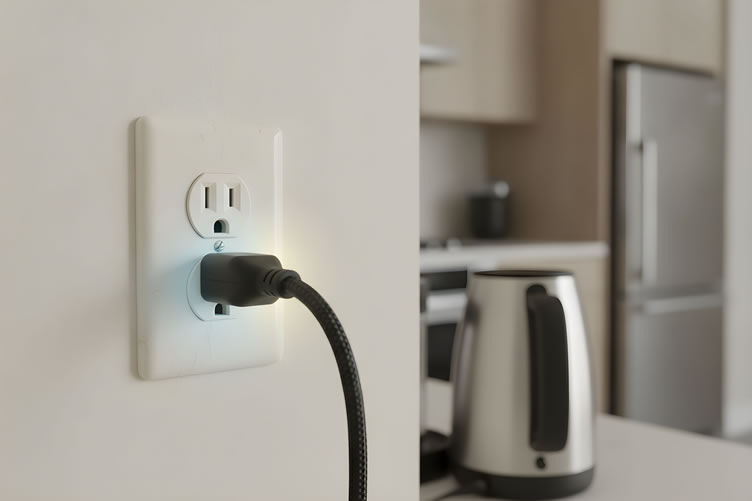
copyright image by 123rf.com
-
Scroll up to directory … or scroll to next section: undertaking an electrical wiring upgrade …
May We Suggest Other Photo Remodeling Ideas About
“Other Home Upgrades to Consider …” (new win)


third “photo remodeling” idea
AI generated image by 123rf.com
Section 3: When Capacity Is Inadequate
Notes:
-
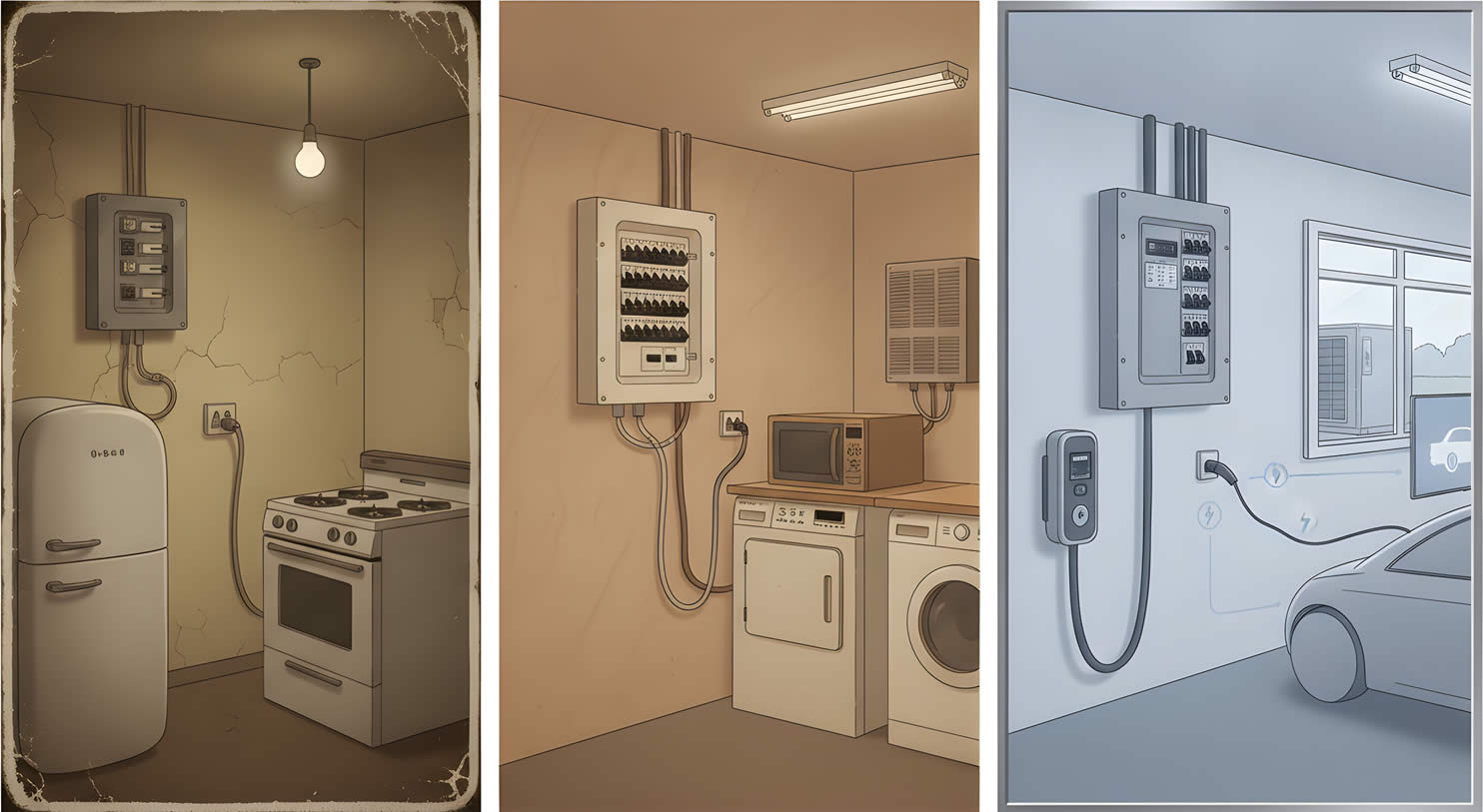
A system that shows no visible damage can still be dangerously undersized for the demands placed on it. Older electrical services were engineered for a world with far fewer high-draw appliances—no central air conditioning, no electric dryers, no induction ranges, no EV chargers.
That gap between original design capacity and present-day demand creates real safety problems. Overloaded circuits force wiring to carry more current than it was rated for, generating heat over time and accelerating insulation degradation.
This is a slow process, often invisible, and one that increases fire risk progressively rather than triggering a single obvious failure.
-
Insufficient Panel Capacity for Modern Appliances
Most homes built before 1960 were wired for 60-amp service. Homes built from 1960 to roughly 2000 often have 100-amp panels, which were considered adequate at the time. Since 2015, newly constructed homes have been built with 200-amp service as the standard minimum.
A 100-amp panel struggles to safely support modern households running multiple large appliances simultaneously—let alone an electric vehicle charger or a heat pump.
An electrician performing a formal load calculation can determine whether your current panel capacity matches your actual electrical demand, and what upgrade is appropriate.
-
Growing Energy Demands in Contemporary Households
The contrast between a mid-century electrical load and today’s is striking. A typical pre-1970s home with 60-amp service might have powered basic lighting, a refrigerator, and a small television.
A modern household runs multiple computers, large-screen televisions, central HVAC systems, electric dryers, dishwashers, and an expanding range of always-on smart devices—often simultaneously.
Common triggers for an upgrade evaluation include the addition of a heat pump, induction range, electric water heater, hot tub, workshop equipment, a finished basement, an accessory dwelling unit, or a home office with significant equipment loads.
Heavy reliance on extension cords and power strips to compensate for too few outlets is another reliable indicator that the system was not designed for current use patterns.
-
Safe Upgrade Paths Versus Unsafe Shortcuts
Simply installing a larger breaker to stop a circuit from tripping is not a safe solution. Over-current protection—whether a breaker or a fuse—is sized for the wiring it protects, not the equipment connected to it.
Bypassing that protection by upsizing a breaker without upgrading the conductors removes a critical safety mechanism. The correct approach is a load calculation followed by properly sized circuit additions, panel work, or service upgrades as the assessment dictates.
An electrician should perform a formal load calculation and inspect the service, panel, branch circuits, grounding, and bonding.
More Supporting Information
(view sample images, summary table, and side note – or scroll to next topic)
Capacity Is Inadequate
(from the summary table below)
Topic Description Key Details When Capacity Is Inadequate A system that shows no visible damage can still be dangerously undersized for modern energy demands. Older electrical services were designed for fewer appliances, creating safety risks through overloaded circuits and progressive insulation degradation, which increases fire hazards. Insufficient Panel Capacity for Modern Appliances Older homes were not built for modern electrical demands. Pre-1960 homes often had 60-amp service, 1960-2000 homes commonly had 100-amp panels, while 200-amp became the standard post-2015. A 100-amp panel may be inadequate for modern appliances and devices. Growing Energy Demands in Contemporary Households Energy usage has increased significantly compared to mid-20th century homes. Today’s homes handle multiple high-draw devices such as HVAC systems, electric dryers, dishwashers, and smart devices. Common triggers for upgrades include the addition of equipment like heat pumps, EV chargers, or home office setups. Safe Upgrade Paths Versus Unsafe Shortcuts Proper upgrades ensure safety and avoid risks associated with incorrect solutions. Simply upsizing a breaker without upgrading conductors is unsafe. An electrician should perform formal load calculations and inspections to determine required upgrades, ensuring all components match modern demand. Electricity Bills Increasing?
Rising electricity bills can be a source of stress for many households, but understanding the reasons behind these increases can help you regain control.
Factors such as higher energy consumption, fluctuating fuel costs, seasonal changes, and outdated appliances can all contribute to heightened costs.

By identifying the main drivers of your energy expenses, you can take proactive steps—such as improving energy efficiency, upgrading to more sustainable systems, or adjusting your usage habits—to ease the burden on your budget both today and in the future.
view ideas: Managing Rising Electricity Costs(new win)

copyright image by 123rf.com
-
Scroll up to directory … or scroll to next section: undertaking an electrical wiring upgrade …
SHARE IT ..! Someone in your network might benefit from this insightful post about undertaking a home electrical wiring upgrade. Feel free to share it on Facebook, X (formally Twitter), LinkedIn, or Pinterest!


fourth “photo remodeling” idea
copyright image by 123rf.com
Section 4: Advanced Home Automation Needs
Notes:
-
Modern home technology has moved well beyond what earlier electrical systems were designed to support. EV chargers, smart home infrastructure, whole-home generators, and energy management systems all place structured, sustained demands on a home’s electrical capacity.
Trying to run advanced technology through an outdated electrical system is not just inefficient—it can be unsafe.
Planning your electrical infrastructure alongside your technology upgrades prevents costly retrofitting and avoids the frustration of discovering that your panel cannot support the equipment you’ve invested in.
-
EV Charging Station Requirements
A Level 2 home EV charger—the practical standard for residential charging—requires a dedicated 240-volt circuit and draws between 15 and 80 amps depending on the model, according to Qmerit.
For an 80-amp charger, the National Electrical Code’s continuous load rule (which limits a circuit’s sustained draw to 80% of its rated capacity) requires a 100-amp breaker on a dedicated circuit.
A standard 100-amp residential panel may not have the available capacity to support EV charging on top of normal household loads—particularly in homes with electric appliances, HVAC systems, and other high-draw equipment.
An electrician should conduct a formal load calculation before any EV charger installation to determine whether a panel upgrade is necessary. DIY installation is not appropriate given the voltage levels, continuous load demands, and code compliance requirements involved.
-
Smart Home Technology Integration
Smart home systems—including connected thermostats, security infrastructure, motorized blinds, whole-home audio, and advanced lighting controls—require a stable, properly grounded electrical system to function reliably and safely.
These systems are sensitive to voltage irregularities, ground faults, and inconsistent power delivery. An aging or undersized electrical system that struggles with basic loads will undermine smart home performance and potentially damage connected equipment.
If you are investing in home automation or preparing for solar integration, a professional electrical assessment should precede—not follow—those installations.
-
Smart Home Wiring
Smart home wiring is the backbone of any advanced home automation system, ensuring that all devices communicate seamlessly and operate efficiently. Proper wiring supports consistent power supply and reliable connectivity for smart lights, thermostats, security cameras, and other interconnected devices.
It’s essential to plan for structured wiring to accommodate both current needs and future expansions, incorporating robust network cables, power distribution panels, and backup systems.
For optimal results, working with a licensed electrician familiar with smart home technologies will help prevent issues caused by wiring interference or insufficient capacity.
Investing in quality wiring upfront ensures your smart home system performs smoothly, adapts to new innovations, and remains a reliable foundation for years to come.
-
Whole-Home Surge Protection and Dedicated Circuits
The 2023 NEC expanded requirements for whole-home surge protective devices, and for good reason: smart home hubs, network equipment, automation controllers, and smart panels represent a significant investment that a power surge can destroy in a fraction of a second.
A surge protective device installed at the service equipment is a foundational upgrade for any home with meaningful automation infrastructure.
Dedicated circuits for reliability-critical equipment—network racks, AV systems, refrigerators, sump pumps, HVAC controls, and EV charging—prevent one device’s demand from affecting another’s performance and reduce the risk of overloaded shared circuits.
-
Planning the Network and Electrical Infrastructure Together
For any open-wall project or renovation, provisions that cost relatively little to install during construction become expensive retrofits later. Installing empty conduit from the electrical and network hub to the attic, basement, garage, exterior, and key rooms creates a pathway for future cable runs without demolition.
Adding a neutral conductor to every switch box supports virtually any smart switch or dimmer available today—and those that will be available in the future.
A smart electrical panel or circuit-level energy monitor enables automation systems to measure and respond to household loads—temporarily reducing EV charging when the dryer, heat pump, and oven are running simultaneously, rather than requiring an oversized service to accommodate every load at peak draw.
More Supporting Information
(view sample images, summary table, and side note – or scroll to next topic)
Category Description Considerations Advanced Home Automation Modern home technology includes EV chargers, smart home systems, whole-home generators, and energy management solutions, requiring robust electrical capacities. Plan electrical infrastructure during technology upgrades to avoid inefficiencies, safety risks, and costly retrofits. EV Charging Station Requirements A Level 2 home EV charger requires a 240-volt circuit and can draw up to 80 amps, needing a 100-amp breaker to ensure compliance with electrical code. Conduct a formal load calculation to determine the need for a panel upgrade. DIY installations are not suitable due to safety and compliance risks. Smart Home Technology Integration Connected systems like thermostats, security, audio, and lighting require a stable electrical system to prevent power irregularities or equipment damage. A professional electrical assessment is necessary before installations to ensure reliability and safety. Smart Home Wiring Proper wiring ensures seamless communication and efficient operation for smart devices while accommodating future expansions. Plan for structured wiring with robust network cables and backup systems. Use licensed electricians for optimal results. Whole-Home Surge Protection Surge protective devices safeguard smart systems and valuable equipment from power surges that could cause irreparable damage. Install surge protectors and dedicated circuits for reliability-critical equipment to minimize risks and ensure performance. Network and Electrical Infrastructure Preplanning infrastructure during renovations allows for easy future upgrades, reducing long-term costs and disruptions. Install conduit pathways for future cable runs, add neutral conductors for switch boxes, and use smart panels to enable load management. Home Automation and Family Management
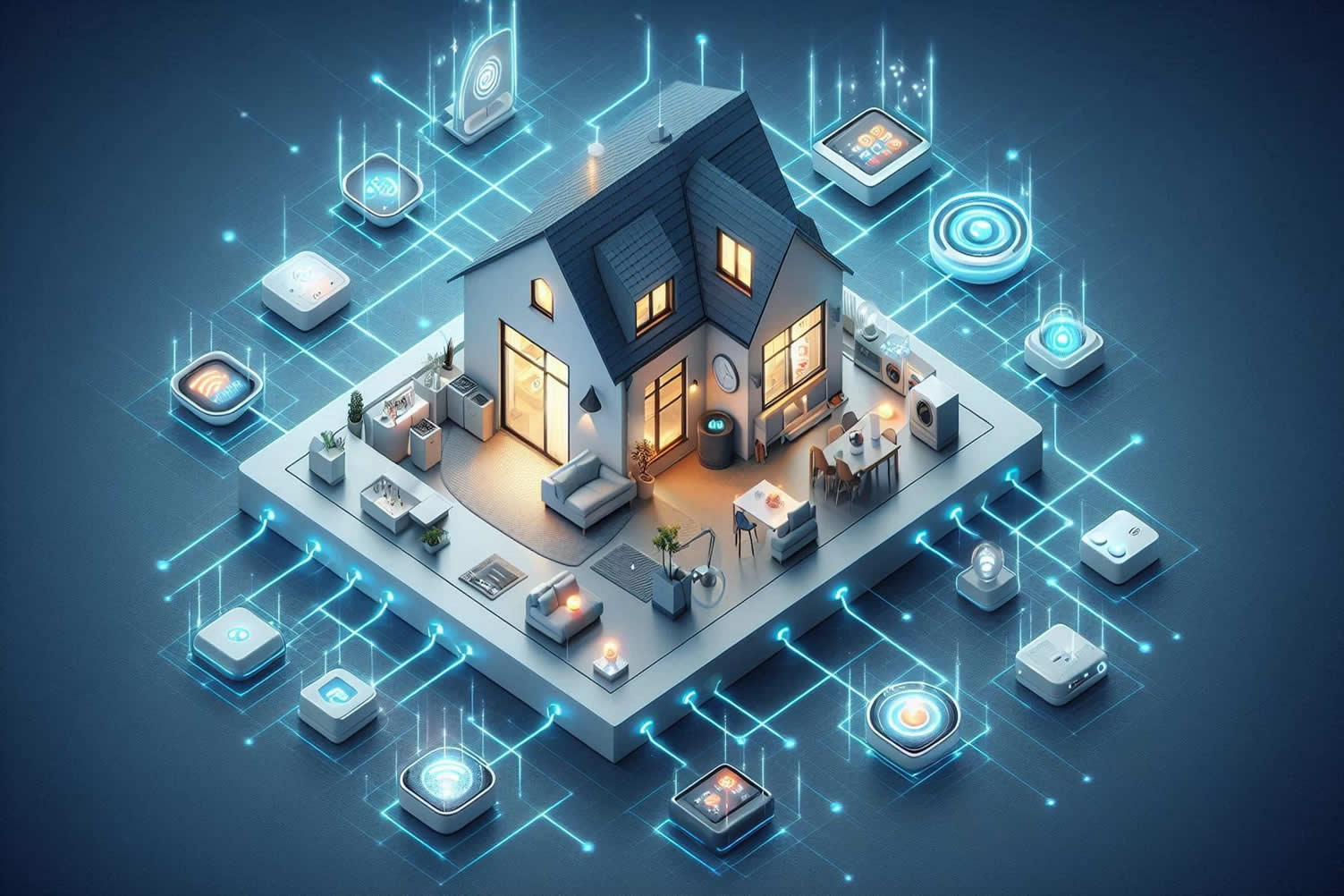
The Home IoT ecosystem has transformed daily routines by bringing convenience, safety, and efficiency into our homes.
From smart thermostats that optimize energy usage to voice-controlled assistants that manage tasks and schedules, this technology simplifies life while promoting sustainability.
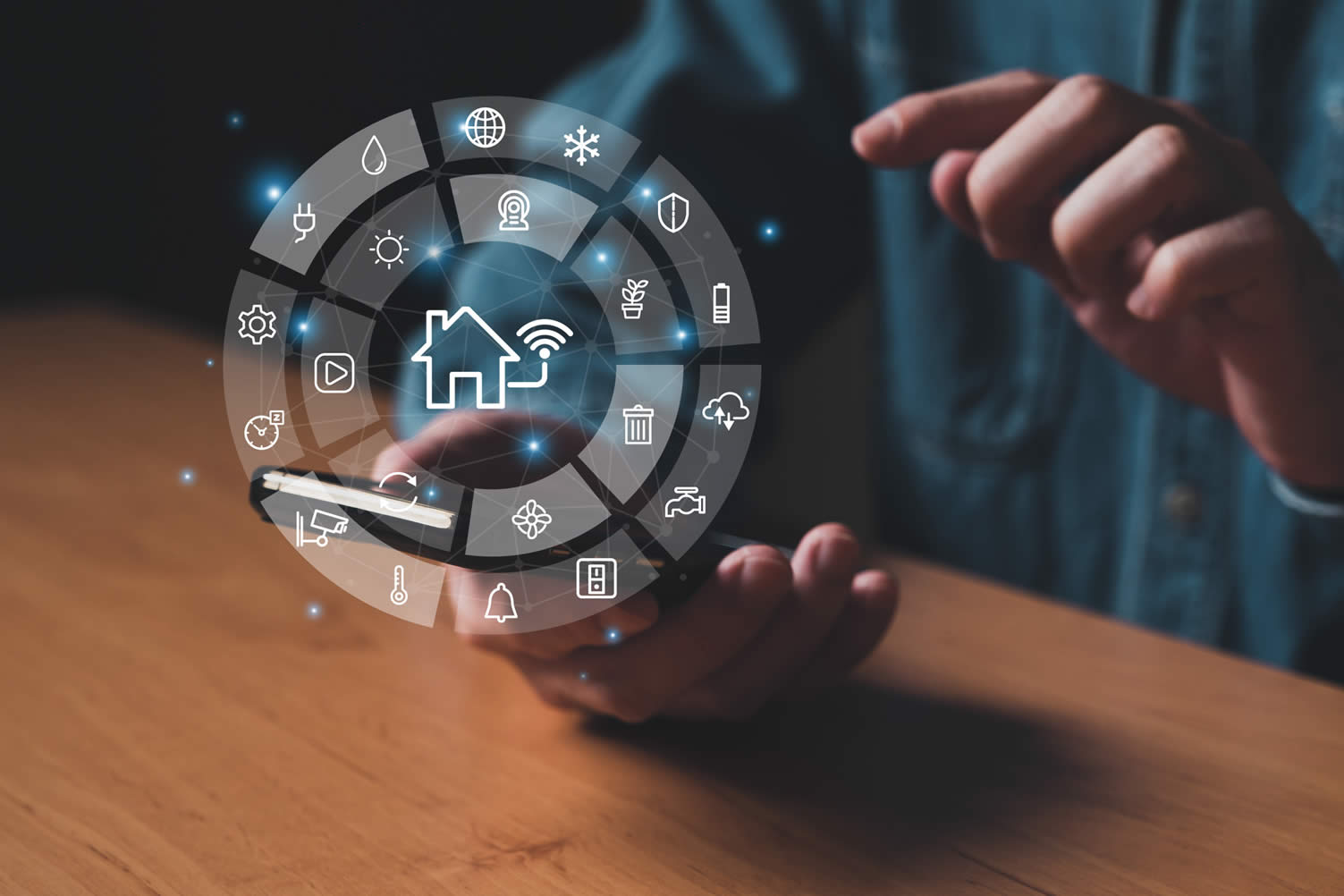
Additionally, advanced security features like smart locks and camera systems provide peace of mind with real-time monitoring and alerts.
By integrating seamlessly into our lives, Home IoT devices empower us to create smarter, more connected living spaces tailored to our needs.
view ideas: Home IoT in Daily Life(new win)
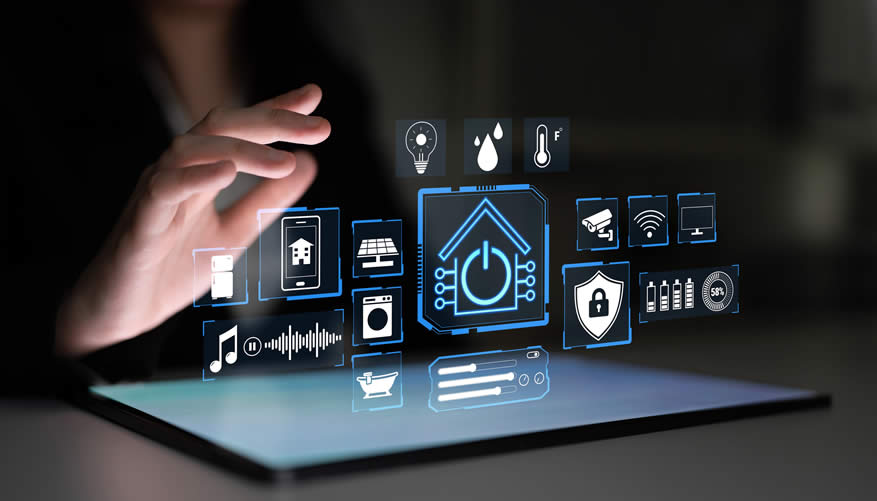
copyright image by 123rf.com
-
Scroll up to directory … or scroll to next section: undertaking an electrical wiring upgrade …
Find Driveway/Walkway Services Driveways Walkways Steps Concrete top-rated, pre-screened local contractors FREE: download contractor selection enter zip code – powered by HomeAdvisor ™
Quick Contractor Guides selecting negotiating working with inspecting

fifth and final “photo remodeling” idea

AI generated image by 123rf.com
Section 5: Planning Ahead
Notes:
-
Reactive electrical repairs cost more and cause more disruption than planned upgrades.
Scheduling a professional inspection before a major renovation, a new appliance installation, or an EV charger addition allows you to address capacity needs, safety deficiencies, and code compliance in a single, coordinated scope of work.
Strategic planning also gives you the opportunity to compare licensed contractors, obtain multiple written estimates, understand permit requirements, and budget for the project on your own timeline—rather than under the pressure of an emergency.
-
Schedule a Professional Inspection First
A licensed electrician can inspect a residential panel and assess overall system condition in 15 to 30 minutes for a basic evaluation, or more thoroughly during a formal pre-renovation or pre-purchase inspection.
Ask for a written assessment that clearly separates immediate safety repairs, recommended capacity improvements, and optional modernization items. This documentation is also valuable for insurance purposes, home sales disclosures, and permit applications.
For any home that is 40 or more years old, has an unknown electrical history, or is undergoing significant renovation, a formal inspection should be treated as a non-negotiable first step.
Depending on the inspection findings, the scope of work may include:
- Adding dedicated circuits for high-demand appliances.
- Replacing deteriorated, ungrounded, or outdated wiring.
- Upgrading the service panel or increasing overall capacity.
- Installing grounded outlets and additional receptacles where needed.
- Adding GFCI and AFCI protection as required by local electrical code.
- Correcting grounding, bonding, overloaded circuits, and unsafe panel or wiring connections.
-
Budget and Select a Licensed Contractor
Panel upgrade costs vary based on service size, home complexity, local labor rates, and permit fees. According to Lehmann Electrical’s 2025 pricing guide, the most common upgrade—from 100 to 200 amps—averages $1,300 to $3,000.
Full-service panel replacement averages approximately $1,341 for straightforward installations, with more complex projects reaching $4,000 or more.
A full home rewire, when required for knob-and-tube or widespread aluminum wiring, carries a higher cost that varies significantly with home size and accessibility.
Obtain at least three quotes from locally licensed electrical contractors, verify that each contractor carries liability insurance and is properly bonded, and confirm that all work will be permitted and inspected through your local jurisdiction.
No legitimate electrical upgrade should bypass the permit and inspection process—that step is your final layer of protection confirming the work meets current code.
LetsRenovate has partnered with HomeAdvisor (Angi)™, a renowned provider of highly-rated, carefully-vetted local contractors. Start your search here by choosing the type of contractor you need and entering your zip code to find local professionals.
More Supporting Information
(view summary table and side note – or scroll to conclusion)
Topic Description Details Plan Ahead Proactive planning is cost-effective and reduces disruption. Scheduling a professional inspection before major renovations or appliance installations allows capacity needs, safety deficiencies, and code compliance to be addressed within a coordinated scope. Planning also enables comparing contractors, obtaining estimates, understanding permits, and budgeting without emergency time pressure. Schedule a Professional Inspection First A licensed electrician’s inspection provides clarity on system condition. Inspections, lasting 15-30 minutes for basic evaluations or longer for formal inspections, result in a written assessment detailing safety repairs, capacity improvements, and modernization options. This step is crucial for older homes, significant renovations, or unknown electrical histories and provides documentation for insurance, disclosures, and permits. Scope of Work Inspection findings define the necessary upgrades and repairs. The scope may include adding circuits for appliances, upgrading service panels, installing grounded outlets, adding GFCI/AFCI protection, replacing unsafe wiring, or correcting grounding and overloaded circuits. Budget and Select a Licensed Contractor Costs vary based on scope, home complexity, and regional rates. Panel upgrades average $1,300 to $3,000 for common types, with complex projects reaching $4,000+, and full rewires varying widely. Obtain three quotes from licensed, insured contractors, and ensure all work is permitted and inspected, as it guarantees compliance with current electrical codes. Your Home’s Electrical System
Understanding the home electrical system that powers our lives is about more than just knowing how to change a light bulb or reset a breaker.
It’s about feeling empowered to make smarter, safer decisions for your household.

Your electrical system is the backbone of your home, helping to provide comfort, convenience, and security.
By learning the basics—like how circuits work or the importance of proper maintenance—you can take meaningful steps toward ensuring the safety and efficiency of your home’s electrical network.
view ideas: Understanding Home Electrical Needs(new win)

copyright image by 123rf.com
But Wait!
Before starting your search and evaluation of outdoor kitchen contractors, it is highly recommended to download and use this evaluation worksheet.
This resource will help you objectively rank and assess potential contractors, considering essential factors such as pricing, licensing, and referral information.

Evaluation Sheet
File Type:
-
-
Conclusion:
… protect what matters most
Your electrical system is not background infrastructure—it is the foundation on which your household runs. Ignored warning signs, outdated wiring materials, undersized panels, and unplanned technology additions all compound into a risk profile that grows quietly over time.
The five factors covered in this guide—urgent physical warning signs, age and wiring materials, inadequate capacity, advanced technology demands, and proactive planning—represent the full picture of when a home electrical wiring upgrade becomes not just advisable, but necessary.
Each one, taken seriously, can prevent the kind of outcome that 51,000 families face every year.
Contact a licensed electrical contractor for a comprehensive evaluation of your home’s electrical safety, capacity, and compliance. A written inspection report gives you clarity, a clear action plan, and the documentation needed to move forward with confidence.
References
- Electrical Safety Foundation International (ESFI). Home Electrical Fires. esfi.org/home-electrical-fires/
- Stafford Home Service. Electrical Wiring Upgrades Guide 2025. staffordhomeservice.com/blog/electrical-wiring-upgrades-guide-2025
- Charleston Electric & Air. Top Signs Your Home’s Wiring Needs Immediate Attention. charleston-electric.com/blog/2025/september/top-signs-your-home-s-wiring-needs-immediate-att/ (September 2025)
- Lehmann Electrical & Design. How Much to Upgrade Electrical Panel? 2025 Pricing Guide & Timeline. lehmannelectrical.com/how-much-to-upgrade-electrical-panel-2025-price-guide-timeline/
- Qmerit. How Many Amps Are Required for a Level 2 EV Charging Station? qmerit.com/blog/how-many-amps-are-required-for-a-level-2-charging-station/
-
ideas to view and compare from the information discussed above
book: electrical wiringelectrical wiring testingelectrical tools
- What comments can you share about updating your home
with an electrical wiring upgrade?
Scroll up to directory … or scroll to more home structural topics …

Calendar For:
Home Maintenance
File Type:

… view our sharing links below for a quick "share the knowledge"

Cover image credit: electrical wiring upgrade by 123rf.com
end of post … please share it!
 |
did you find this review of why electrical wiring upgrade helpful? If so, please share the article with your friends and family! |
Nice pic idea? Leave us a quick comment below.
And please share this pic idea within your social networks.