Summary Outline –
Wind chimes gently swaying in the breeze can transform a simple backyard into a serene escape, a place where the stresses of the outside world melt away to the harmonious sounds of nature.
These beautiful ornaments do more than just decorate our spaces; they create an ambiance of peace and relaxation that can soothe the soul.
Whether you’re a garden enthusiast, a nature lover, or simply someone looking to enhance your outdoor living area, understanding the world of wind chimes can help you add a magical touch to your backyard.

-
Quick scroll to first topic about garden wind chimes …

first “garden wind chimes” idea


AI generated image by 123rf.com
Chime Tip 1: Introduction to Wind Chimes
Notes:
-
Wind chimes are a type of percussion instrument that produces sound when they are moved by the breeze. Typically, they consist of tubes, rods, bells, or other objects made from various materials such as metal, wood, glass, or bamboo.
These elements are suspended from a platform and collide gently when nudged by the wind, creating melodious or harmonic sounds. The sounds and tones vary greatly depending on the material, length, thickness, and design of the components used.
Traditionally, wind chimes have been used for many purposes beyond mere decoration. In ancient civilizations, they played roles in rituals and ceremonies, acting as symbols of good luck and protection against evil spirits.
In gardening and landscaping today, they add an auditory element to the visual beauty of outdoor spaces, creating a multi-sensory experience that encourages relaxation and mindfulness.
-
Quick scroll to “understanding wind chimes” side notes …
-
-
1st: The Whispers of History and Culture
The use of wind chimes dates back to ancient civilizations, reflecting a rich history that spans cultures and continents.
Initially, they were created by the peoples of South East Asia, around 3000 BC, and they were primarily used in agriculture as a scarecrow to deter birds and pests from crops. However, their purpose quickly evolved beyond the practical, to encompass the spiritual and aesthetic.
-
Starting With China
In ancient China, around 1100 BC, wind chimes became an integral part of Feng Shui, the art of harmonizing individuals with their surrounding environment. Crafted from bronze, these chimes were believed to attract positive energy and ward off evil spirits, featuring in temples, homes, and royal palaces.
The soothing sounds of wind chimes were considered a medium for invoking tranquility and promoting a balance between the physical and spiritual world.
-
On To Ancient Rome
Meanwhile, in ancient Rome, wind chimes, known as tintinnabulum, adorned villas and gardens, serving as a status symbol and a charm against misfortune. Throughout history, the use and significance of wind chimes have diversified across cultures, embodying both decorative and spiritual roles.
-
In Current Times
In current times, wind chimes have proliferated worldwide as a popular element of outdoor and indoor décor. Their evolution has seen them become more varied in terms of materials, shapes, and sizes, each offering a unique sound character and aesthetic appeal. \
From their practical beginnings to their modern-day decorative and spiritual uses, wind chimes continue to enchant and soothe the human spirit with their melodies, proving that the simplest instruments can hold a profound place in human culture and history.

copyright image by 123rf.com
[ view images: backyard wind chimes]
[ youtube: origins of wind chimes]

-
-
2nd: The Science and Art of Sound
The entrancing melodies of wind chimes resonate not just through air but through the realms of science and art.
At the heart of this enchanting harmony lies the physics of sound and vibration. Each chime, depending on its material, shape, and size, vibrates at specific frequencies when struck by the wind, producing distinct tones.
Metal chimes yield bright, clear notes, while bamboo offers deeper, softer sounds, illustrating how material influences timbre.
This interplay of elements forms the art of sound in wind chimes. Musicians and sound therapists often explore this art, harnessing the chimes’ sonic landscape to evoke emotions and foster a sense of calm.
The strategic placement of chimes, informed by Feng Shui and acoustic principles, can optimize the flow of energy and sound through spaces, creating environments that support wellbeing and relaxation.
Through this fusion of science and art, wind chimes continue to be a captivating, melodious bridge between the elemental forces of nature and the intricate design of human creativity.

copyright image by 123rf.com
[ view diagram: wind chime sound ]
[ youtube: music theory 101: wind chimes ]
-
3rd: A Symphony In the Garden
In the symphony of the garden, wind chimes play the role of the lead instrument, their melodies harmonizing with the natural soundscape to create an orchestra of tranquility.
Just as a composer arranges notes to evoke emotions, the careful selection and placement of wind chimes in a garden can enhance the beauty and atmosphere of outdoor spaces.
When wind stirs, it breathes life into these chimes, each note a delicate touch upon the canvas of silence, blending with the rustle of leaves, the soft buzz of insects, and the distant chirp of birds.
This orchestration transforms the garden into a sanctuary, where each gust of wind conducts a unique performance, inviting us to pause and listen, to immerse ourselves in the ephemeral beauty of the moment.
Thus, wind chimes become not merely decorative items but vital contributors to the garden’s ambiance, their melodies an invitation to a deeper connection with nature’s rhythm.

copyright image by 123rf.com
[ view diagram: different wind chime sounds ]
[ youtube: relaxing wind chime sounds ]
-
-
ideas to view and compare from the information discussed above
Scroll up to directory … or scroll to next section about garden decor using chimes …

second “photo remodeling” idea

copyright image by 123rf.com
Chime Tip 2: Types of Wind Chimes
Notes:
-
When selecting a wind chime, you’ll discover a vast variety of materials and sounds to consider, each offering its unique tone and aesthetic.
From metal to wood and bamboo, and even glass or ceramic, the choice of material not only influences the sound quality but also the durability and appearance of the wind chime.
It’s fascinating to explore the different tones and harmonies each material produces, allowing for a personalized touch to your outdoor or indoor space.
-
Quick scroll to “types of wind chimes” side notes …
-
-
1st: Metal Wind Chimes
Metal wind chimes are renowned for their durability and the wide range of tones they can produce, from deep, resonant gongs to light, tinkling sounds. These chimes are made from various metals, including aluminum, steel, copper, and brass, each bringing its unique sound quality to the ensemble.
The versatility and strength of metal make it a favored material for wind chimes intended to withstand diverse weather conditions while providing beautiful melodies for years to come.
-
Types of Metal Chimes
Metal wind chimes come in a variety of materials including aluminum, copper, steel, and brass. Each metal produces a unique sound — aluminum chimes are known for their bright, clear tones, copper chimes offer a warmer, mellower sound, while brass and steel chimes resonate with deep, vibrant echoes.
-
Why Metal Is a Good Choice
Metal wind chimes stand out for their longevity and resistance to the elements. Unlike wood, metal does not rot or require frequent treatment, making them a low-maintenance option for year-round outdoor decor.
Their reflective surfaces add a dynamic visual element to garden spaces, sparkling under the sun and casting moving shadows. Metal chimes also serve practical purposes, such as scaring away birds from freshly sown seeds or ripe fruits.
-
The Symphonic Sounds Metal Makes
Metal wind chimes are celebrated for their exceptional range of sound, capable of producing everything from deep, soul-stirring tones to light, airy melodies that dance with the wind. The type of metal used plays a significant role in determining the chime’s sound profile.
Aluminum chimes, for example, are known for their clear, bright tones that carry well across distances, making them a popular choice for open spaces. Copper and brass, on the other hand, tend to produce warmer, richer sounds that resonate deeply, creating a soothing auditory experience.
The thickness and length of the metal tubes also affect the sound, with longer tubes generating lower tones and shorter tubes offering higher pitches. This variety allows enthusiasts to select chimes that not only match their aesthetic preferences but also create the desired sonic atmosphere in their outdoor or indoor spaces.
-
Durability and Weather Resistance
One of the primary reasons metal is an excellent choice for wind chimes is its durability and resistance to weather conditions. Metal chimes can endure rain, wind, and sun exposure without significant damage.
Materials like aluminum and stainless steel are particularly resistant to rust and corrosion, making them ideal for long-term outdoor use. This resilience ensures that the chimes maintain their aesthetic appeal and sound quality over time, making them a worthwhile investment for any garden or outdoor area.
-
Best Placement in the Landscape
To maximize their sonic and visual impact, metal wind chimes should be placed where they can interact with both light and wind. Hanging them in open areas, free from obstructions, ensures their tones can be fully appreciated.
Locations like the corner of a yard, from a tall tree, or beside a backyard deck are ideal. Besides, their striking look makes them fitting adornments for modern architectural designs, where they can complement the clean lines and materials of contemporary homes.

copyright image by 123rf.com
[ youtube: theta chimes super giant wind chime ]
[amazon: metal wind chimes ]
-
-
2nd: Wooden Wind Chimes
Wooden wind chimes bring a unique essence and beauty to any space, connecting the man-made environment to the natural world through their soft, melodic sounds.
Crafted from various types of wood, each with its distinct characteristics, these chimes integrate seamlessly into outdoor and indoor environments, offering not just visual appeal but a harmonious auditory experience as well.
-
Types of Wood Used in Chimes
Aside from the commonly used bamboo, other woods like cedar, redwood, and pine are popular choices for crafting wind chimes.
These woods are not only durable, capable of withstanding outdoor elements, but they also possess natural oils that help resist pests and decay, ensuring the longevity of the chime’s beauty and sound quality.
-
Why Wood Is a Good Choice
Wood is a renewable resource, making wooden wind chimes an eco-friendly option for those looking to minimize their environmental footprint. The material’s natural variance in grain and color ensures that each chime is a unique piece of art.
Additionally, wood’s ability to absorb and resonate sound produces a range of deep, comforting tones that metal chimes cannot replicate.
-
The Symphonic Sounds Wood Makes
Wooden wind chimes are known for their soft, soothing tones that mimic the sounds of the natural world. The depth and warmth of the sound vary depending on the type of wood, the cut, and the finish, creating a symphony of sounds that can evoke the calm of a forest clearing or the gentle whisper of a mountain stream.
-
Best Placement in the Landscape
To fully appreciate the gentle melodies of wooden chimes, they should be placed in areas where they can catch a light to moderate breeze, such as near a garden path or under the eave of a porch.
Sheltered areas that prevent direct exposure to harsh weather conditions will preserve their sound and appearance. The natural aesthetic of wooden chimes makes them a perfect match for gardens, patios, or anywhere one desires to add a touch of serene beauty.

AI generated image by 123rf.com
[ view images: cedar wood chimes ]
[amazon: wooden wind chimes ]
-
-
3rd: Glass Wind Chimes
Glass wind chimes bring a unique aesthetic and auditory experience to outdoor spaces. Unlike their metal counterparts, glass chimes offer a delicate, crystalline sound that blends harmoniously with the tranquil ambiance of a serene garden.
Their transparency and variety of colors can catch the sunlight in dazzling ways, creating visual spectacles that enhance the overall garden aesthetic.
-
Types of Glass Chimes
Glass wind chimes come in various shapes, sizes, and colors, ranging from clear, iridescent pieces to vibrant, stained glass designs. Some are crafted from recycled glass, appealing to eco-conscious decorators, while others feature hand-blown glass pieces that add a touch of artisan craftsmanship to the landscape.
-
Why Glass Is a Good Choice
Opting for glass wind chimes can elevate the aesthetic elegance of a space with their refined appearance and subtle play of light. They are particularly resistant to sunlight fading, ensuring their colors remain bright and vibrant over time.
Glass chimes are also versatile in style, capable of complementing both traditional and contemporary garden designs with equal grace.
-
The Symphonic Sounds Glass Makes
The sounds emitted by glass wind chimes are gentle and tinkling, reminiscent of a babbling brook or the soft chime of ice in a glass. This quality makes them ideal for creating a peaceful, relaxing atmosphere in a garden or patio area.
They can softly accentuate the sound of the wind, without overwhelming it, providing a perfect backdrop for meditation or quiet contemplation.
-
Best Placement in the Landscape
To capitalize on their visual and auditory qualities, glass wind chimes should be placed in areas where they can catch the light—near a window, under a pergola, or in a lightly shaded area that gets periods of sunlight throughout the day.
They should be hung where they can chime gently in the breeze but protected from strong winds to avoid damage. Their placement should also consider the viewing angles from inside the home or seating areas in the garden to maximize enjoyment of their beauty and sound.

AI generated image by 123rf.com
[ view images: glass wind chimes ]
[amazon: glass wind chimes ]
-
-
4th: Bamboo Wind Chimes
Bamboo wind chimes are a timeless addition to any outdoor or indoor space, celebrated not only for their rustic, aesthetic appeal but also for the soothing, melodious sounds they produce.
Crafted from one of the most renewable resources on the planet, bamboo chimes bring a piece of nature’s tranquility right to your doorstep.
-
Types of Bamboo Chimes
There are various types of bamboo wind chimes available, ranging from single rods to intricate designs combining multiple lengths and sizes of bamboo to create diverse melodies.
Some feature additional embellishments like carved animals or beads, while others maintain a minimalist elegance that highlights the natural beauty of the bamboo. The choice of a bamboo wind chime can depend on the type of sound desired and the visual appeal to match home or garden decor.
-
Why Bamboo is a Good Choice
Bamboo is celebrated for its environmental sustainability, rapid growth, and durable qualities. Its natural aesthetic brings a warm, organic texture to any setting, making bamboo chimes a perfect choice for eco-conscious individuals looking to add a touch of eco-friendly decor.
The material’s resilience to weather conditions ensures a long-lasting presence in your garden or patio, with the sound maturing over time to produce richer, deeper tones.
-
The Symphonic Sounds of Bamboo Chimes
The sounds produced by bamboo wind chimes are deeply resonant and earthy, often compared to the peaceful, gentle rustle of leaves in a breezy forest. This symphonic quality can help reduce stress and promote relaxation, making them an ideal backdrop for meditation or simply unwinding after a long day.
The density and size of the bamboo tubes significantly influence the tone and volume of the chimes, allowing for a customizable soundscape that fits personal preferences for outdoor acoustics.
-
Best Placement in the Landscape
To achieve the full auditory and visual benefits, best placement of bamboo wind chimes is crucial. They thrive in areas where they can sway freely with the breeze, yet are safeguarded from harsh, potentially damaging winds. Ideal locations include under the eaves of a roof, in a garden nook, or near an entranceway where they can greet visitors with their calming tones.
Hanging bamboo chimes near a window allows their soothing sounds to drift indoors, creating a serene atmosphere throughout the home. Ensuring they are positioned to avoid constant, direct sunlight can also preserve their natural appearance and extend their lifespan.

copyright image by 123rf.com
[ youtube: bamboo chime sounds ]
[amazon: bamboo wind chimes ]
-
-
-
ideas to view and compare from the information discussed above
Scroll up to directory … or scroll to next section about garden decor using chimes …
 … grab this directory of ideas



SHARE IT ..! You might have someone in your social network who could find this review of wind chimes valuable. Feel free to share it on Facebook, Twitter, LinkedIn, or Pinterest!


May We Suggest Other Photo Remodeling Ideas About
“Home Decor Ideas …” (new win)


third “photo remodeling” idea

AI generated image by 123rf.com
Chime Tip 3: Landscaping With Wind Chimes
Notes:
-
Landscaping with wind chimes introduces a unique auditory dimension to garden design, merging the aesthetic beauty of nature with the enchanting harmony of sound.
Just as the colors and textures of plants enhance the visual appeal of a garden, the soothing sounds of wind chimes add a melody to the air, creating a multi-sensory experience. This blend of sight and sound enriches the outdoor environment, making it more inviting and serene.
-
Strategic Placement for Harmonious Sounds
The key to effectively integrating wind chimes into your landscape is strategic placement. Consider hanging chimes near seating areas where you can enjoy their melodies up close or in areas where breezes are common to maximize their musical potential. The goal is to position them in spots where their sounds can be appreciated without overwhelming the senses, thus creating a balanced soundscape.
Likewise, hang your chimes in areas where they can catch the breeze but are protected from harsh weather conditions. Regular maintenance ensures your chimes continue to enchant for years to come. For metal and wood chimes, occasional treatments or cleanings can preserve their beauty and sound quality.
-
Material and Tone Selection
Choosing the right materials and tones of wind chimes is crucial for enhancing your garden’s ambiance. Bamboo or wooden chimes offer soft, mellow tones that harmonize with nature, making them perfect for quiet, reflective spaces.
Metal chimes, on the other hand, produce clearer, more resonant sounds that can add a lively atmosphere to your garden. Select chimes that complement the mood you wish to cultivate in your outdoor space.
-
Combining with Plant Arrangements
Wind chimes can also be thoughtfully combined with plant arrangements to accentuate their beauty and sound. Consider placing taller chimes amidst low-lying flowers to add vertical interest or hanging smaller chimes from tree branches for a natural, integrated look.
The movement of plants in the wind, juxtaposed with the gentle clinking of chimes, creates a dynamic visual and auditory display.
-
Creating Zones of Tranquility
For those seeking to create a tranquil retreat, clustering wind chimes in specific areas of the garden can define zones of tranquility. Surround these zones with lush plantings, water features, and comfortable seating to establish an oasis where one can retreat, listen, and find peace.
This approach not only enhances the garden’s aesthetic but also its therapeutic qualities.
Through thoughtful selection, placement, and pairing with nature, wind chimes can transform any garden into a harmonious sanctuary. Their melodies invite us to slow down, listen, and connect with the ambient rhythms of nature, making our outdoor spaces not just seen but heard.
-
-
Quick scroll to “using chimes in landscaping” side notes …
-
-
1st: Decorating Tips
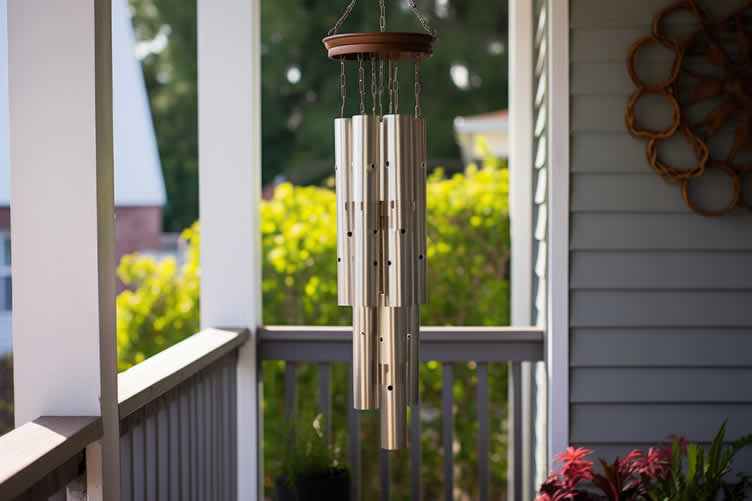
Wind chimes not only bring soothing sounds to your outdoor spaces but also act as charming decorative elements that enhance the aesthetic appeal of your home.
Integrating wind chimes into your decor isn’t just about hanging them randomly; it involves thoughtful placement and selection to complement your living space’s theme and ambiance.
-
Positioning for Harmonic Interplay
Placing wind chimes near windows, patios, or gardens where breezes are frequent can create a constant melodic backdrop. Consider the acoustics of your space—areas that naturally channel wind will amplify the chimes’ sounds, providing a serene auditory experience. For a subtle effect, position them further away from seating areas.
-
Thematic Decoration
Choose wind chimes that align with the theme of your outdoor decor. For beach-themed areas, seashell and bamboo chimes add a nautical touch, while sleek, metal chimes suit modern, minimalist spaces. ‘
Seasonal decorations can be enhanced with wind chimes featuring elements like leaves for autumn or bright colors for summer vibes.
-
Visual Harmony
Visual harmony can be achieved by matching the color and material of your wind chimes with your outdoor furniture and accessories. A cohesive look can be attained by pairing the material of the chimes, such as copper or wood, with similar tones found in your garden tools, planters, or textiles.
Decorating with wind chimes allows for a blend of visual beauty and audial tranquility, transforming your space into a soothing oasis. By considering their placement, theme, and visual harmony with your existing decor, you can enhance the overall sensory experience of your home.
copyright image by 123rf.com
[ pinterest: decorating with wind chimes ]
[ youtube: creative wind chimes ideas ]
-
-
2nd: Landscaping for a Sensory Garden
In creating a sensory garden, incorporating wind chimes can significantly enhance the auditory experience, adding a tactile layer that complements the garden’s visual and olfactory elements.
Positioning chimes of various materials and tones throughout the garden can create a soundscape that evolves with the wind, encouraging visitors to move through the space and explore.
Each type of chime, whether bamboo, metal, or glass, has its unique sound profile that can stimulate different emotions and memories, enriching the sensory experience.
For a sensory garden aimed at therapeutic benefits, carefully select chimes for their calming or stimulating sounds, depending on the intended effect. The strategic placement near pathways or benches invites pause and reflection, making the garden not only a feast for the eyes and nose but also a concert for the ears.

AI generated image by 123rf.com
[ pinterest: landscape sensory garden ]
[ youtube: giant chimes in sensory garden ]
-
3rd: Landscaping for a Feng Shui Garden
In the context of a Feng Shui garden, wind chimes are much more than decorative items; they are tools for balancing energy and creating a flow of positive chi. According to Feng Shui principles, the gentle sounds of wind chimes help to attract good fortune while protecting against negative energy.
Metal chimes, in particular, are valued for their ability to promote clarity, precision, and positive adjustment in life areas impacted by their placement.
When landscaping for Feng Shui, consider hanging wind chimes near the garden’s entrance to welcome positivity and deter unwelcome energies.
The material of the wind chime should correspond with the garden zone’s elemental association—metal chimes in the west to enhance creativity and children’s luck, bamboo or wooden chimes in the east for health and family harmony, and ceramic or glass chimes in the northeast for knowledge and personal growth.
Placement is key; chimes should hang where they can catch the breeze but not in direct alignment with doors or seating areas to avoid energy disruption.
By integrating wind chimes thoughtfully within a Feng Shui garden, you not only enhance its beauty but also its capacity to be a nurturing, harmonious space that positively influences the well-being of those who enter.

AI generated image by 123rf.com
[ pinterest: landscape feng shui garden ]
[ youtube: use wind chimes in feng shui ]
-
4th: Landscaping for a Water Oasis Garden
In a water oasis garden, where the tranquil sounds of moving water define the atmosphere, the addition of wind chimes can create an enchanting auditory experience. The symbiosis between water and chimes introduces a multi-sensory dimension that enhances the garden’s serene ambiance.
For such settings, choosing wind chimes that mimic the soft, melodic tones akin to water droplets or gentle rain can complement the water features, whether it be a small pond, fountain, or waterfall.
Selecting chimes made from materials that resonate with the water element can also contribute to the overall balance and aesthetic of the garden. Glass or crystal chimes, for instance, can reflect sunlight and cast beautiful light patterns on the water’s surface, further integrating the elements of light, sound, and water.
When placed near a water feature, but not over it, to avoid overwhelming the natural sounds, the wind chimes should be strategically positioned to catch the breeze, thus offering a gentle, melodic accompaniment to the water’s flow.
Additionally, considering the symbolic significance of water in many cultures as a source of life and renewal, wind chimes in a water oasis garden can also be seen as harbingers of clarity, purity, and emotional calm.
They serve not only as a decorative aspect but also as an auditory enhancement that complements the gentle sounds of water, creating a sanctuary for relaxation, reflection, and rejuvenation.

AI generated image by 123rf.com
[ pinterest: landscape water oasis garden ]
[ youtube: water fountains with wind chimes ]
-
5th: Landscaping for a Symphonic Garden
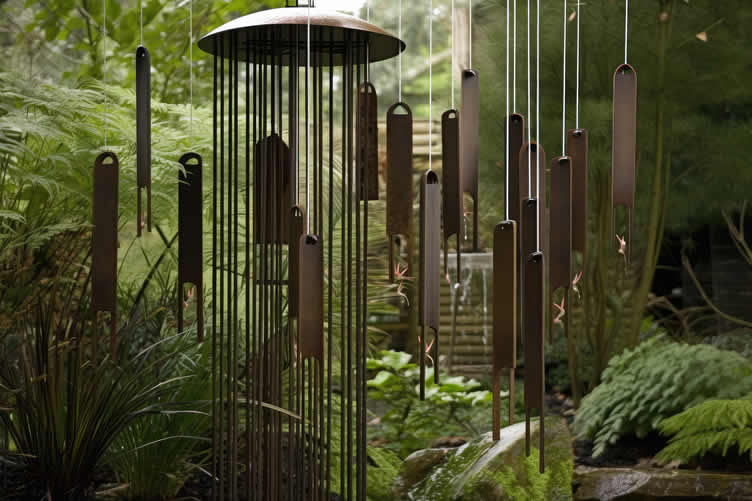
In a symphonic garden, where the objective is to create a rich tapestry of sounds through landscaping, wind chimes play a vital role in orchestrating a dynamic and harmonious outdoor environment.
This garden type thrives on the diversity of musical notes, rhythms, and intensities, with wind chimes acting as the instrumentalists of nature’s symphony. Selecting a variety of chimes that produce a wide range of tones – from deep, resonant bass notes to light, shimmering trebles – allows for a complex auditory experience that evolves with the wind’s tempo.
Materials play a critical role in the symphonic garden’s soundscape. Metal chimes, such as those made from aluminum, bronze, or copper, offer clear, bright tones that can sing through the air, piercing the ambient noise with musical clarity.
Wooden or bamboo chimes contribute with a softer, earthier sound that blends more naturally with the garden’s rustling leaves and wildlife, providing a grounding, calming effect. Incorporating chimes with tubes of varying lengths and thicknesses can further enrich the garden’s acoustic layers, enabling a captivating auditory experience that shifts and changes throughout the day and across seasons.
Positioning is as crucial in a symphonic garden as in any musical composition. Placing chimes at different elevations, near reflective surfaces, and in varying proximities to one another can affect how their sounds interact, creating moments of crescendo, harmony, and counterpoint as breezes move through the space.
The thoughtful arrangement of wind chimes, alongside the natural sounds of birds, insects, and rustling foliage, establishes a living symphony that invites visitors to pause, listen, and immerse themselves in the garden’s ephemeral music.
AI generated image by 123rf.com
[ images: symphonic garden ideas ]
[ youtube: natures melody symphony wind chimes ]
-
-
ideas to view and compare from the information discussed above
book: feng shui landscapingsensory garden decorpatio water fountain
Scroll up to directory … or scroll to next section about garden decor using chimes …
making home improvement decisions



fourth “photo remodeling” idea

AI generated image by 123rf.com
Chime Tip 4: Other Wind Decor
Notes:
-
In addition to the melodic beauty of wind chimes, incorporating other wind decorative items and catchers into your landscape can amplify the overall aesthetic and sensory experience.
These elements not only embellish the outdoor space with their visual appeal but also harmonize with the sound of wind chimes, creating an immersive natural symphony and dynamic visual spectacle.
-
Wind Spinners
These dynamic sculptures rotate with the breeze, creating mesmerizing patterns and reflecting light in captivating ways. When paired with wind chimes, spinners add a visual dimension to the auditory experience.
Placing them in garden beds or along pathways where they can catch the light and spin freely, enhances the enchantment of your outdoor area.
[ view ideas: wind spinners ]
-
Wind Flags and Banners
Known for their vibrant colors and flowing movement, wind flags and banners add a touch of whimsy and movement to any garden. They can be themed to match seasons, holidays, or personal interests.
Strategically placing them near wind chimes allows the gentle movement and soft rustling sounds to complement the chime’s auditory charm.
[ view ideas: wind flags and banners ]
-
Windsocks
Traditionally used to gauge wind direction and speed, windsocks have evolved into decorative elements featuring a wide range of designs, from colorful patterns to thematic motifs.
Hanging windsocks in close proximity to wind chimes ensures that both catch the breeze similarly, allowing them to function cohesively within the landscape to provide visual cues of the wind’s movement alongside the gentle sounds of chimes.
[ view ideas: wind socks ]
-
Wind Catchers
These traditional architectural elements are designed to catch and direct breezes into buildings, providing natural ventilation and cooling. In a garden setting, wind catchers can serve a dual purpose.
They become both a focal point of aesthetic interest and a functional element in creating a pleasant micro-climate. By incorporating them near areas where people gather, such as seating areas or patios, wind catchers can enhance the comfort of outdoor living spaces.
Their distinctive shapes and designs also add an architectural element that complements the natural beauty of the surrounding landscape.
[ view ideas: wind catchers ]
-
-
Quick scroll to “DYI and maintenance” side notes …
-
-
1st: DIY Wind Chimes
Creating your own wind chimes is a rewarding and creative endeavor that allows you to personalize your outdoor or indoor spaces with unique sounds and designs. Homemade wind chimes can be crafted from a variety of materials, each offering its own distinct tone and aesthetic.
By choosing to DIY, you not only get to inject a bit of your personality into the project but also possibly re-purpose materials in an environmentally friendly way. Whether you’re a seasoned craftsman or a DIY novice, there are wind chime projects that will match your skill level and taste.
-
Glass Wind Chimes
Made from re-purposed glass bottles, beads, or even broken crockery, glass wind chimes produce a crisp, melodious sound. They catch the light beautifully, creating shimmering reflections that can dazzle when hung in a sunny spot.
Safety should be a priority when working with glass; ensuring all edges are smoothly sanded down is essential.
-
Metal Wind Chimes
For those who prefer a deeper, resonant sound, metal wind chimes are an ideal choice. You can use old silverware, metal tubes, or even recycled keys to create your chimes.
The length and thickness of the metal pieces will affect the pitch and sound, so experimenting with different configurations can be part of the fun.
-
Bamboo Wind Chimes
Bamboo offers a softer, more organic sound compared to glass or metal. These wind chimes give a rustic, natural look and are perfect for a garden setting. Using different lengths of bamboo sticks, one can easily create a melodic scale that is soothing and gentle on the ears.
By selecting a type that aligns with your preferences and gathering some basic materials, you can begin crafting a beautiful and unique set of wind chimes. Not only will they serve as a delightful decorative piece, but they’ll also bring the serene sounds of nature closer to you.

copyright image by envato.com
[ pinterest: DIY wind chimes ]
[ youtube: search: DIY chimes ]
-
-
2nd: Wind Chime Maintenance and Replacement
Regular maintenance is key to preserving the beauty and melodious sounds of your wind chimes. For metal chimes, use a damp cloth to wipe away any dirt or rust, and apply a suitable metal protector if necessary to prevent future corrosion.
Wooden chimes may require occasional sanding and the application of wood oil or varnish to maintain their appearance and durability. Additionally, checking and replacing any worn or frayed strings can prevent your chimes from breaking and falling.
Knowing when to replace your wind chime depends on several factors, including the extent of wear and tear, and whether repairs are feasible or cost-effective. If the chime’s sound has significantly deteriorated or if it has sustained irreparable damage, it might be time to consider replacement.
However, slight imperfections or a single broken string often only require simple repairs. Ultimately, the decision to repair or replace should balance sentimental value, cost, and the desire to retain the chime’s original tone and beauty.

copyright image by 123rf.com
[ pinterest: maintaining wind chimes ]
[ youtube: restoring wind chimes ]
-
-
FINAL REMARKS
Wind chimes bring much more to a space than just decoration. They invite calm, offer a symphony for the senses, and connect us with the elements in a profound way. Whether you choose to purchase a finely crafted chime or create one with your own hands, the addition of a wind chime to your backyard is sure to bring joy and tranquility.
We’d love to hear from you! Share your wind chime stories in the comments below. Have you found a particular type of wind chime that resonates beautifully in your space? Or perhaps you’ve tackled a DIY wind chime project?
For those looking to explore more about wind chimes or to find the perfect chime for their backyard, we encourage you to visit our site. Discover the diverse styles and sounds that can help make your garden truly sing.
-
ideas to view and compare from the information discussed above
- What comments can you share about
using chimes in your landscape setting?
Scroll up to directory … or scroll to more yard n’ garden topics …

Calendar For:
Home Maintenance
File Type: 
below for …
landscape setup

Find Landscaping Decor Landscape Design Sprinkler Systems Metal Work Water Features top-rated, pre-screened local contractors FREE: download contractor selection enter zip code – powered by HomeAdvisor ™
Quick Contractor Guides selecting negotiating working with inspecting

Cover image credit: garden wind chimes by 123rf.com
end of post … please share it!
 |
did you find this garden wind chimes analysis helpful? If so, please share the article with your friends and family! |
Nice pic idea? Leave us a quick comment below.
And please share this pic idea within your social networks.