Whether you’re hanging festive lights, trimming hedges, or using a leaf blower, selecting the correct outdoor extension cord is essential for safety and performance.
To find the right cord, you need to match it to the power demands of your equipment and the distance from your outlet. Key factors like gauge, amperage, and length all play a crucial role.
This guide will walk you through everything you need to know to select the safest and most effective outdoor extension cord, ensuring your projects run smoothly and without risk.
Understanding Gauge, Amps, and Length
Choosing the right extension cord involves understanding a few key technical terms: gauge, amps, and length. Each of these elements works together to ensure that your tools receive a steady and safe supply of electricity.
An incorrectly matched cord can lead to overheating or insufficient power, so it’s important to grasp how these three factors interact. We will explore what gauge means, how to match amperage to your tools, and why the length of the cord matters so much.
-
Gauge (AWG) Explained
The gauge of an extension cord, indicated by its American Wire Gauge (AWG) number, refers to the thickness of the wires inside. It might seem counterintuitive, but a lower gauge number signifies a thicker wire.
For example, a 10-gauge cord has thicker wires than a 16-gauge cord. Thicker wires can carry more electrical current safely over longer distances without overheating.
For light-duty tasks close to an outlet, a higher gauge like 16 or 18 AWG may be sufficient. For powerful equipment or long distances, a lower gauge, such as 12 or 10 AWG, is necessary to handle the increased power demand and prevent a dangerous drop in voltage.
-
Matching Amps to Equipment
Every electrical device has an amperage (amp) rating, which indicates how much electrical current it needs to operate. You can usually find this information on the tool’s nameplate or in its user manual.
Your extension cord must have an amp rating that is equal to or greater than the amp rating of the equipment you plan to use. Using a cord with a lower amp rating than your tool requires can cause the cord to overheat, creating a serious fire risk and potentially damaging the tool’s motor.
Always check the amp rating on both your device and the extension cord to ensure a safe match.
-
Length Considerations
The length of an extension cord is just as important as its gauge and amp rating. As electricity travels through a wire, it loses some of its power due to resistance, a phenomenon known as voltage drop. The longer the cord, the greater the voltage drop.
This can starve your equipment of the power it needs, causing it to run inefficiently or even burn out its motor. To compensate for this, longer cords need thicker wires (a lower gauge) to deliver adequate power.
A 100-foot cord, for example, will need a lower gauge than a 25-foot cord to power the same tool safely and effectively.
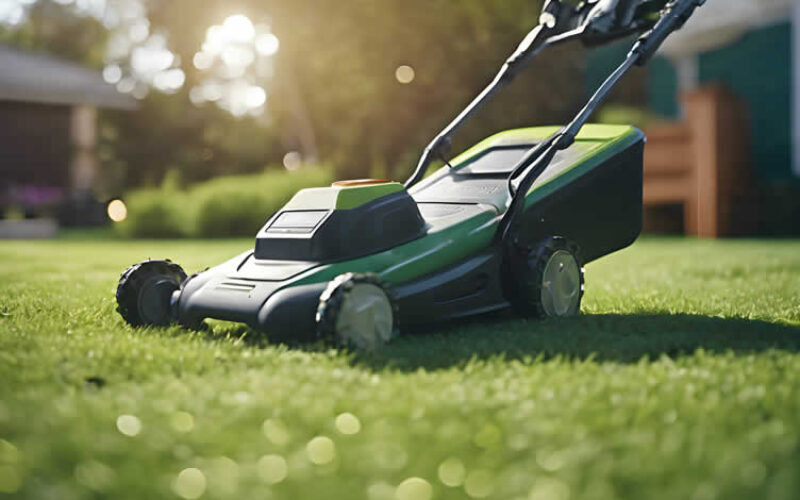
Time to Ditch Gas Mowers and Go Electric Here’s What You Need to Know
When it comes to maintaining a pristine lawn, homeowners often face the decision between electric mowers and gas mowers. Each option has its own set of advantages and disadvantages, making it essential to consider factors such as environmental impact, maintenance, power, and convenience.

Choosing the Right Cord for Outdoor Lighting
When setting up patio lights, holiday displays, or garden accents, selecting the appropriate outdoor extension cord ensures both safety and a beautiful glow.
For most light-duty outdoor lighting, which typically draws low amperage, a 16-gauge extension cord is often suitable for distances up to 100 feet. This gauge can handle the power needs of string lights and small fixtures without issue.
If you are connecting multiple strings of lights or using more powerful floodlights, it is wise to step up to a 14-gauge cord. A thicker 14-gauge wire provides an extra margin of safety and prevents voltage drop, ensuring your lights remain bright and consistent, especially over longer distances.
Always use a cord specifically rated for outdoor use, as it will have the necessary insulation to withstand moisture, sunlight, and temperature changes.
Selecting Cords for Leaf Blowers and Lawn Equipment
Leaf blowers, hedge trimmers, and electric lawn mowers are powerful tools that demand more electricity than simple lighting.
These devices typically draw between 10 and 15 amps, so choosing an extension cord with the right gauge is critical for both performance and safety. An undersized cord can overheat and cause the tool’s motor to work harder, shortening its lifespan.
For most lawn equipment drawing up to 15 amps, a 14-gauge extension cord is adequate for distances up to 50 feet. If you need to work further from an outlet, between 50 and 100 feet, you should upgrade to a 12-gauge cord.
This lower gauge will handle the power draw over the increased distance without a significant voltage drop. For heavy-duty tools or distances exceeding 100 feet, a 10-gauge cord is the safest choice to ensure your equipment receives the consistent power it needs to operate at its best.
Safety and Best Practices
Using outdoor extension cords safely involves more than just picking the right gauge and length. Following established best practices can protect you, your home, and your equipment from electrical hazards.
It’s important to understand the significance of outdoor ratings, why you should never connect multiple cords together, and how to use helpful tools to verify your choices. These simple habits will ensure your outdoor projects are completed without any electrical mishaps.
-
Outdoor Ratings and Grounded Plugs
Only use extension cords that are specifically rated for outdoor use. These cords are built to endure the elements, with durable insulation that protects against moisture, UV rays from the sun, and extreme temperatures.
Look for a "W" on the cord’s jacket, which indicates it is approved for outdoor conditions. Additionally, always choose a cord with a three-prong, grounded plug for any tools that require it.
The third prong provides a path for electricity to travel to the ground in case of a fault, significantly reducing the risk of electric shock.
-
Avoiding Cord Chains
It might be tempting to connect two or more shorter extension cords together to reach a distant spot, but this practice, known as "daisy-chaining," is dangerous. Each connection point introduces a potential failure point where moisture can enter or a loose connection can cause overheating.
Chaining cords also increases the total resistance, leading to a greater voltage drop that can damage your tools. Instead of linking multiple cords, always use a single extension cord that is the appropriate length and gauge for the job.
-
Using Voltage Drop Calculators
For very long distances or when you are powering particularly sensitive or high-amperage equipment, it can be helpful to confirm your cord choice. Online voltage drop calculators are free and easy-to-use tools that allow you to input the cord length, gauge, and amperage of your device.
The calculator will then tell you the expected voltage drop. A drop of more than 5% can be detrimental to your tools. Using one of these calculators provides an extra layer of assurance that you have selected the safest and most efficient cord for your needs.


Your Guide to Safe Power Outdoors
By taking the time to match an extension cord’s gauge and length to your equipment’s power requirements, you can work with confidence, knowing your setup is both safe and efficient.
Remember that a lower gauge number means a thicker wire, and longer distances require a lower gauge to prevent power loss. For everything from delicate string lights to powerful lawn mowers, the right outdoor extension cord makes all the difference.
Before your next project, take a moment to inspect your equipment’s amp rating and measure the distance from the outlet. With this information in hand, you will be well-equipped to choose a cord that not only gets the job done but also protects your valuable tools and keeps your home safe from electrical hazards.
other related analysis of interest: (new win)
The Messiest Trees: Why Some Species Turn Fall Cleanup Into a Major Chore
| Type | Solution | Benefits |
|---|---|---|
| Outdoor Lighting | Use a 16-gauge extension cord for light-duty lighting up to 100 feet, or upgrade to a 14-gauge cord for multiple strings or more powerful lights. | Ensures safe power delivery, prevents voltage drop, and keeps lights bright and consistent while withstanding outdoor conditions. |
| Lawn Equipment | Choose a 14-gauge cord for distances up to 50 feet and a 12-gauge cord for 50 to 100 feet. For heavy-duty tools or longer distances, use a 10-gauge cord. | Provides sufficient power to operate tools effectively, prevents overheating, and ensures the longevity of equipment motors. |
| Safety Practices | Use outdoor-rated cords with “W” markings, avoid chaining cords together, and use tools like voltage drop calculators to verify your choices. | Minimizes fire and shock risks, maintains stable power supply, and ensures safe and efficient operation of tools and appliances. |

| Gauge (AWG) | Max Amps (up to) | Max Length | Ideal Use Examples |
|---|---|---|---|
| 18 | 5-7 | 25 ft | Small lamps, chargers |
| 16 | 10 | 50–100 ft | Fans, light fixtures, patio lights |
| 14 | 15 | 50–100 ft | Medium-duty tools, exterior lights, hedge trimmers |
| 12 | 20 | 100 ft | Leaf blowers, lawn mowers, heavy-duty equipment |
| 10 | 30 | 100+ ft | Industrial, high-powered tools, compressors |
Find Electrical Services Electricians Lighting Design Fans Generators Electronics Home Security top-rated, pre-screened local contractors FREE: download contractor selection enter zip code – powered by HomeAdvisor ™


Image credit: outdoor extension cord by envato.com
end of post … please share it!
|__________________________________________________________|
home remodeling surprise
find out where it might go - new win


Helpful article? Leave us a quick comment below.
And please share this article within your social networks.