Instead of adding to the deforestation of tropical regions, green alternatives have become readily available, allowing both manufacturers and designers to create products that are not only functional but also high in levels of sustainability.
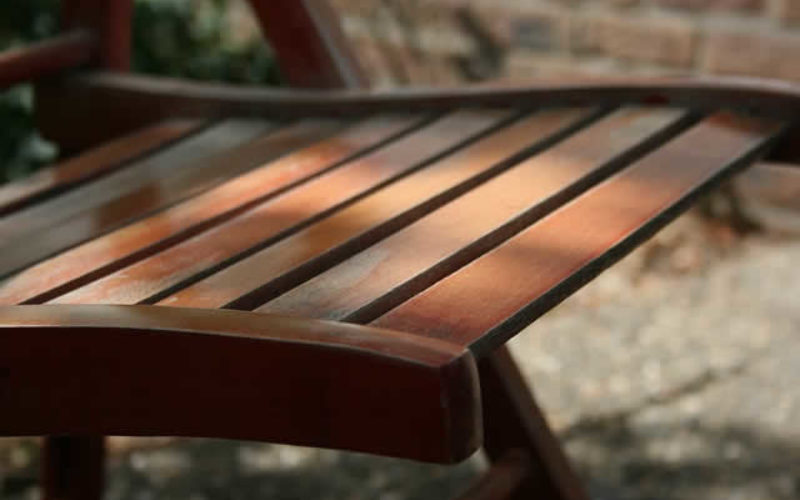
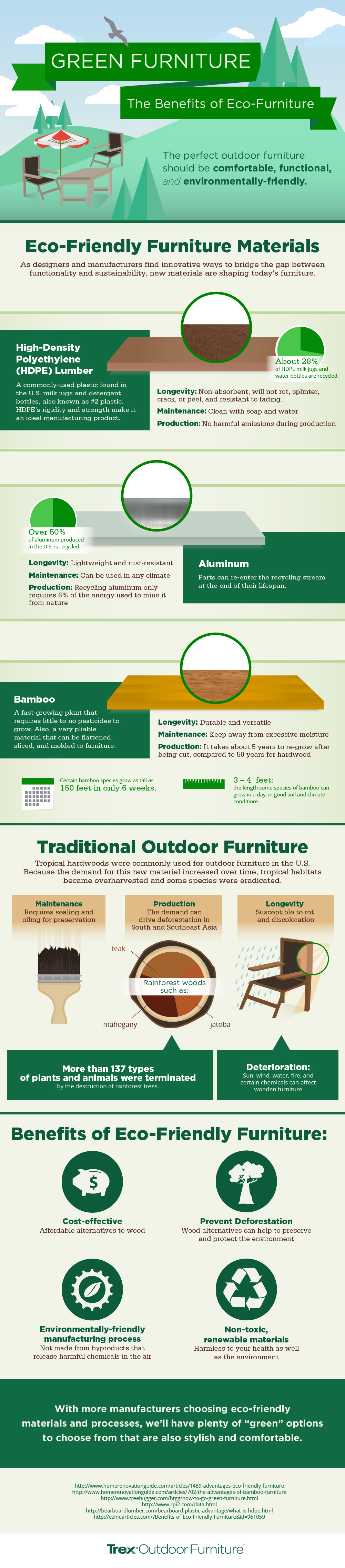
While the hardwoods of yesterday would deteriorate over time with extended exposure to the elements, today’s alternative materials have a better chance at longevity. For instance, high density polyethylene lumber, or HDPE, is non-absorbent. This results in creating outdoor furniture that does not rot, peel or splinter and resists the fading that comes along with years of being in the sun.
Other Alternative Sources
Aluminum is another alternative material that is extremely lightweight and is anti-corrosive. This means it is less likely to rust over time, which increases its life-span in most any climate. Although aluminum is mined, once it has been sourced it can enter and re-enter the recycling process at any point and will still maintain quality, reducing the need for renewed mining.
Bamboo, on the other hand, is sourced from a plant, but one that grows at the much faster pace of five years as opposed to the 50 years required for traditional hardwoods. In fact, some species take a mere six weeks to grow 150 feet.
Check out the following infographic to learn more about alternative materials used in design and manufacturing and the many benefits of eco-furniture.
Presented By Trex Outdoor Furniture
No products found.
|__________________________________________________________|
home remodeling surprise
find out where it might go - new win


Helpful article? Leave us a quick comment below.
And please share this article within your social networks.