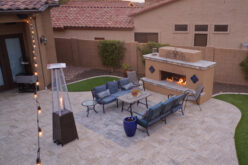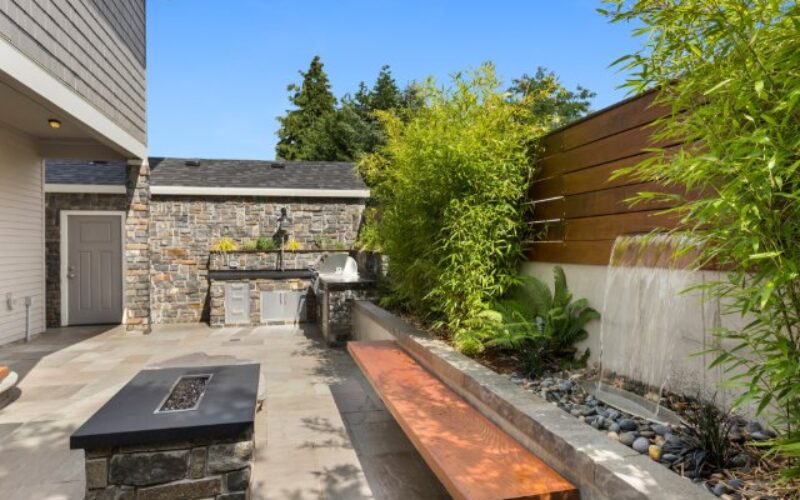

Patios and retaining walls help shape your yard, but too many hard surfaces can make the space feel cold and incomplete. When the paving stands out and the plants fade into the background, the yard loses its inviting feel.
If you want to soften a yard with too much hardscaping, you do not need to tear everything out. Instead, start by identifying the harshest spots when you look outside. In most cases, changing a few edges will balance the whole yard.
Break Up Long Hard Edges
Look for the longest edge of your patio or walkway. If it runs straight along the lawn, your eye will follow that line from end to end, which makes the paved area seem even bigger.
Adding a planting bed is an easy way to fix this.
You do not have to surround the whole patio with plants. Instead, focus on the spots you see most from your house or where you sit, and make sure the planting bed is deep enough for the plants to grow well later.
Choose Plants That Hold Their Own
Small plants often get lost next to a big paved area. For example, a plant that looks full in a nursery pot might seem tiny beside a wide patio. To avoid this, think about how big each plant will get before you buy it. Larger shrubs or ornamental grasses can help soften the hardscape, and you will not need as many plants, so the space will not feel crowded.
Give Everything Enough Room
Find out how wide each plant will grow. Otherwise, if you plant them too close, you will have to trim them all the time once they fill in. It’s tempting to add more plants, but you need to give shrubs and grasses enough space to grow into their natural shapes first.
Add Height Where the Yard Feels Flat
If your patio is between a flat lawn and a low fence, the yard can feel flat. To change things up, add some height. For example, plant a small tree near the patio edge to draw the eye and connect the paved area to the rest of the garden.
Tall grasses work well too, since they add height and movement without the commitment of a tree. Before you plant, think about how much space the plant will need as it grows. Remember to keep roots away from paving and branches away from the house.
Work With the Hardscape You Already Have
Before you start a big project, look at what already works in your yard. Keep your patio if it is in a good spot, and keep the path if it is useful. Focus on improving the areas around these features instead.
When planning landscaping around hard surfaces, think about how people move through the yard. Leave enough space near steps and entrances so everything is easy to use. Add a planting bed next to the patio so the paving does not take over.
Do not try to hide every hard surface! Instead, make the existing features feel like they belong in the yard, not like separate pieces.
Bring Plants Onto the Patio
If you don’t have space for planting beds next to the patio, use containers to bring plants right onto the patio. This makes it simple to add greenery.
Start with the empty corners. Place a large planter with one big plant for more impact than many small pots, then add planters near seating areas or entrances to define those spaces.
A simple setup could include:
- One large planter in an empty corner
- A medium pot beside your seating area
- A smaller container for seasonal color
- A planter near a door or gate
Make sure to keep your walkways clear. You want the plants to soften the patio, but not make it harder to get around.
Break Up Bare Walls and Fences
Hard surfaces are not just on the ground. A retaining wall or long stone boundary can make your yard feel just as rigid as a big patio. If a wall stands out on one side, plant greenery in front of it.
Try adding a climbing plant on a support or use taller shrubs to break up the wall. Both options help soften the boundary. Let some of the wall show so it still defines the yard, while the plants keep it from dominating the view.
Fill Those Awkward Gaps
Hardscaping can leave odd little spaces behind. You might have a narrow strip along a path or an empty spot near the steps that stands out because it is not connected to the rest of the yard.
Fill these areas with small, compact plants. Low groundcovers work well near paths because they add greenery without blocking the way. Near steps, keep plants low so you can walk easily.
Add Shade Where the Patio Feels Exposed
A large paved area can feel even harsher in direct sun. Notice where the sun hits during the times you use the yard most. These are the spots where adding shade will help the most.
Plant a tree to give natural shade as it grows. If you want shade sooner, put up a pergola or another shade structure to make the patio more comfortable while your plants grow in.
Adding overhead shade will make the patio feel less exposed and much more inviting.
Let the Yard Look a Little Looser
Hard surfaces already give your yard lots of structure, so your plants do not need to add more. Let grasses bend toward the patio edge. Give shrubs space to grow naturally, and let groundcovers soften the edges of planting beds.
To soften a yard with too much hardscape, focus on balancing the paving instead of hiding it. Let your patio and paths serve their purpose, but connect them to the rest of the garden.
You might find the hardscape wasn’t really the problem. It just needed more plants and life around it. Let that balance make the yard feel finished, softer, and more inviting.
|__________________________________________________________|
home remodeling surprise
find out where it might go - new win


Helpful article? Leave us a quick comment below.
And please share this article within your social networks.