Quick Answer:
The most effective way to light a driveway without overwhelming your landscape is to layer three elements: low-voltage path lights for safe navigation, gentle uplighting to highlight trees or architecture, and wall or post-mounted fixtures for functional glow near entry points. Warm-toned LED bulbs (2700K–3000K) keep the look soft and inviting rather than stark.
The good news is that you don’t need floodlights or a dramatic overhaul to fix this. A thoughtful driveway lighting plan does double duty: it keeps you, your family, and your guests safe while quietly boosting the overall character of your home’s exterior.
According to Grand View Research, the global landscape lighting market is growing at a compound annual rate of 8.9% through 2031, a reflection of just how many households are recognizing this value (Grand View Research, 2024).
This guide walks through the techniques that make the biggest difference, from accent uplighting to the latest energy-efficient LED technology, so you can create a driveway that feels like an extension of your home rather than an afterthought.
- post content
- Why Driveway Lighting Matters
- Uplighting And Accent Techniques
- Path And Step Lighting Solutions
- Wall And Post-Mounted Options
- Energy-Efficient LED Technology
- conclusion: Bringing Warmth To The Path Home
- FAQs
- view table:content summary
- view notes:collective tips
- view analysis: 4 Solutions for Outdoor Lighting
- view ideas:latest remodeling analysis
Why Driveway Lighting Matters
Before choosing fixtures, it helps to understand what good driveway lighting actually accomplishes. First and foremost, it’s about safety. A well-lit driveway reduces the chance of trips, missed steps, or fender benders in the dark, especially around curves, slopes, or uneven pavement.
Lighting also plays a quiet but meaningful role in home security; well-illuminated entry points are simply less appealing to anyone looking to go unnoticed.
Beyond safety, there’s a genuine emotional payoff. A softly lit driveway tells visitors, and yourself, that this is a home that’s cared for.
Industry data backs up what many homeowners already sense intuitively: the global outdoor lighting market reached roughly $15.22 billion in 2024 and is projected to climb to $23.8 billion by 2030, driven largely by homeowners investing in exactly this kind of exterior upgrade (Statista, 2024).
On average, U.S. homeowners spend around $3,250 on landscape lighting projects, a worthwhile investment considering how much nighttime curb appeal contributes to a home’s first impression (LawnStarter, cited in KELVIN Landscape Lighting, 2025).

Uplighting And Accent Techniques
Uplighting is one of the gentlest ways to add drama to a driveway without making it feel like a stage. The technique involves placing a small fixture at the base of a tree, shrub, or architectural feature and angling the beam upward.
For trees, position the light about 6 to 12 inches from the trunk; smaller specimens need only a soft wash of light, while larger trees may call for a slightly stronger beam to reach the canopy.
-
Choosing The Right Glow
Warmer color temperatures, generally in the 2700K to 3000K range, have become the clear favorite among landscape designers in 2025 because they mimic candlelight and feel far more natural against brick, stone, and greenery than cooler, bluish tones (KELVIN Landscape Lighting, 2025).
Wall-washing and grazing techniques, where light is directed across a textured surface rather than straight up, can also bring out the character of stone or masonry walls that border a driveway, adding depth without a single extra fixture feeling out of place.
more info below
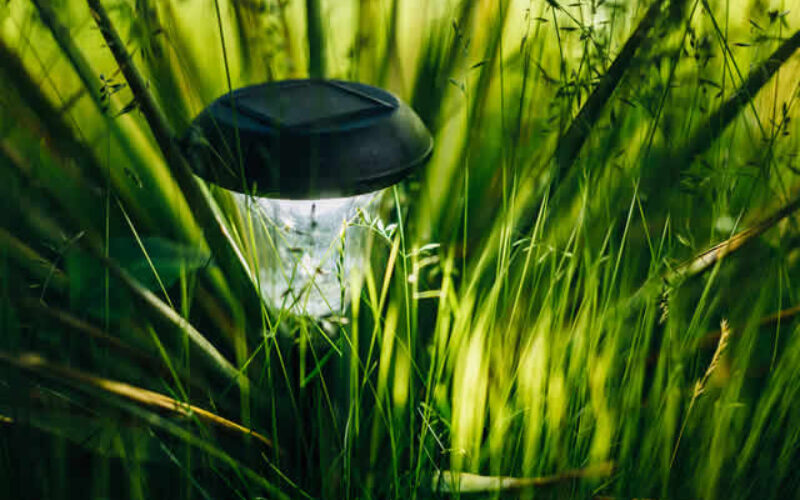
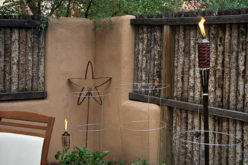
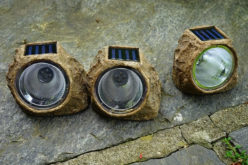
4 Solutions for Outdoor Lighting
Finding solutions for outdoor lighting can be tricky work. It can either be decorative lighting or something more practical, such as security.
Path And Step Lighting Solutions
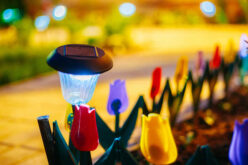
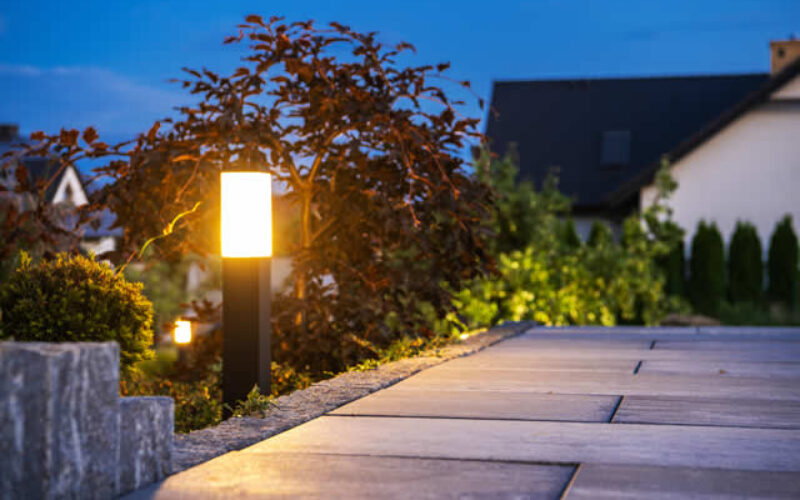
Low-voltage path lights remain the workhorse of driveway lighting because they’re unobtrusive during the day and quietly effective at night.
For driveways specifically, spacing fixtures roughly 10 to 15 feet apart keeps the lit path even without flooding the area in brightness, while a staggered rather than mirrored layout tends to look more natural (Alba Lights, 2026).
Aim for fixtures in the 100 to 200 lumen range; anything brighter risks glare that can actually make it harder for drivers to see clearly at night.
If your driveway includes steps or a grade change, dedicated step lighting is worth the small investment. Installing a low-output fixture, generally 50 to 150 lumens, on the vertical face of each step rather than the tread itself sends light downward in a way that illuminates the walking surface cleanly, without creating a glare hazard for anyone approaching.
Wall And Post-Mounted Options
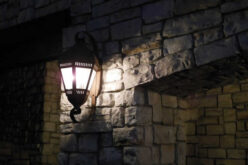
For driveways bordered by a fence, garage wall, or entry pillar, wall-mounted sconces and post lights offer both function and polish. These fixtures work especially well near the point where a driveway meets the street or garage, giving arriving guests a clear visual cue of where to go.
Because they stay fixed to a structure rather than the ground, they’re also less likely to be disturbed by snow removal, lawn care, or seasonal landscaping changes.
The best results come from matching the fixture’s finish and silhouette to your home’s existing architecture.
A craftsman-style home calls for a different post light than a modern farmhouse, and getting this detail right is often what separates driveway lighting that looks intentional from lighting that feels like an afterthought.
Energy-Efficient LED Technology
Nearly every driveway lighting recommendation in 2025 and 2026 points back to one technology: LED. LED fixtures use up to 80 to 90 percent less energy than traditional incandescent bulbs and last roughly 25 times longer, often reaching 25,000 to 50,000 hours of use compared to just 1,000 to 2,000 hours for older bulbs (LumarySmart, 2025).
Over the life of a fixture, a single LED bulb can save a household around $80 in electricity costs; scaled across a 35-fixture landscape lighting project, that translates to savings of roughly $3,000 (LumarySmart, 2025).
Smart LED systems take this a step further. IoT-enabled fixtures with built-in photocontrol can deliver up to 50 percent additional energy savings through adaptive dimming and scheduling, meaning your driveway lights can brighten automatically at dusk and dim gradually as the evening winds down (Long-Join, 2025).
For most homeowners, this means less time thinking about the lighting at all and more time simply enjoying the result.
Bringing Warmth To The Path Home
A driveway doesn’t need to be dramatically transformed to feel more welcoming after dark. Layering a few thoughtful elements, soft path lighting to guide the way, gentle uplighting on a favorite tree, and a wall-mounted fixture near the entry, can shift the entire feel of your home’s exterior without a major renovation.
Start with one area, perhaps the stretch closest to your front door, and build outward as you see what works for your space. The results tend to be felt immediately: a safer walk to the car, a warmer welcome for guests, and a home that simply feels more cared for once the sun goes down.
Frequently Asked Questions
-
How far apart should driveway lights be spaced?
Most landscape designers recommend spacing driveway fixtures about 10 to 15 feet apart. This spacing keeps the lit path even and continuous without creating overly bright pools of light or leaving long dark gaps between fixtures.
-
What color temperature works best for driveway lighting?
Warm white tones between 2700K and 3000K are the preferred choice for residential driveways. They create a soft, candlelight-like glow that feels welcoming rather than clinical, and they tend to complement brick, stone, and greenery more naturally than cooler, bluer light.
-
Are LED lights worth the extra upfront cost?
Yes, for most homeowners. LED fixtures use up to 90 percent less energy than traditional bulbs and last roughly 25 times longer, which means the higher initial price is typically recovered through lower electricity bills and far fewer replacements over time.
-
Can I install driveway lighting myself?
Many low-voltage path and accent lights are designed for straightforward DIY installation, particularly kits that run on a single transformer. Wall-mounted fixtures that require wiring into your home’s electrical system are generally better suited to a licensed electrician.
-
How many lumens do I need for driveway lighting?
Path lights along a driveway typically perform well at 100 to 200 lumens, while step lights only need 50 to 150 lumens. Brighter isn’t always better; fixtures that are too intense can create glare that actually makes nighttime visibility worse.
-
Does driveway lighting improve home security?
It can. Well-lit entry points and driveways are generally less appealing to anyone looking to avoid being seen, and consistent lighting around a property’s perimeter is a commonly cited factor in home security planning.
-
What is uplighting and when should I use it?
Uplighting involves placing a fixture at ground level and aiming it upward toward a tree, wall, or architectural feature. It works best when you want to add depth and visual interest to a specific focal point along your driveway rather than lighting the entire area evenly.
-
Should I choose solar-powered or wirde driveway lights?
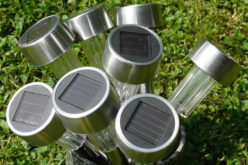
Solar lights are a good fit for driveways that receive consistent direct sunlight and where running wiring isn’t practical. Wired low-voltage systems tend to offer more consistent brightness, especially in shaded or cloudy conditions, and allow for smart scheduling features.
-
How do I avoid glare from driveway lights at night?
Keep fixtures low to the ground and angle them downward or toward a feature rather than outward toward eye level. Choosing path lights in the 100 to 200 lumen range, rather than high-output floodlights, also helps prevent harsh glare for drivers and pedestrians.
-
Can smart lighting systems reduce my energy costs further?
Yes. Smart LED systems with built-in photocontrol and scheduling can deliver up to 50 percent additional energy savings compared to standard LED setups, since they adjust brightness automatically based on the time of day and ambient light conditions.
home improvement ideas to consider (complete directory – new win):

| Question | Answer | Key Details |
|---|---|---|
| How far apart should driveway lights be spaced? | 10 to 15 feet apart | Keeps an even and continuous path of light without creating dark gaps or overly bright pools. |
| What color temperature works best for driveway lighting? | 2700K to 3000K | Warm white tones create a candlelight-like welcoming glow and complement natural materials. |
| Are LED lights worth the extra upfront cost? | Yes | LEDs use up to 90% less energy, last 25 times longer, and reduce replacements and bills over time. |
| Can I install driveway lighting myself? | Sometimes | Low-voltage lights suit DIY, but wiring wall-mounted fixtures may require a licensed electrician. |
| How many lumens do I need for driveway lighting? | 100 to 200 lumens | Path lights work well at this range; step lights need only 50 to 150 lumens for clean illumination. |
| Does driveway lighting improve home security? | Yes | Well-lit driveways and entry points make a property less appealing for unwanted intrusions. |
| What is uplighting and when should I use it? | Ground-level lighting aimed upward | Best for adding depth and feature emphasis on trees, walls, or architectural elements. |
| Should I choose solar-powered or wired driveway lights? | Depends | Solar suits sunny areas with no wiring. Wired lights offer consistent brightness and smart features. |
| How do I avoid glare from driveway lights at night? | Position and lumen choice | Angle fixtures downward, use 100-200 lumens, and avoid directing lights at eye level. |
| Can smart lighting systems reduce my energy costs further? | Yes | Smart LED systems with photocontrol and scheduling deliver up to 50% additional energy savings. |

Find Electrical Services Electricians Lighting Design Fans Generators Electronics Home Security top-rated, pre-screened local contractors FREE: download contractor selection enter zip code – powered by HomeAdvisor ™


Image credit: driveway lighting ideas by envato.com
end of post … please share it!
| more photo remodeling |
Jump Over to Our Photo Analysis Center for Ideas on
"Renovating Home"
|__________________________________________________________|
home remodeling surprise
find out where it might go - new win


Helpful article? Leave us a quick comment below.
And please share this article within your social networks.