Quick Answer:
Wood decks cost less upfront ($2–$8/sq ft for materials) but require $450–$850/year in maintenance and typically last 10–15 years. Composite decks cost more initially ($8–$18/sq ft) but need minimal upkeep, last 25–30 years, and often deliver lower total ownership costs within five years—making composite the better long-term investment for most homeowners.
The good news is that this decision becomes much clearer once you understand what each material actually delivers over time.
Wood and composite decks both have a place in the market, but they serve different homeowners with different priorities. This guide walks you through the real differences so you can build—or rebuild—with confidence.
- post content
- Wood Decks: The Classic Choice
- Composite Decks: The Modern Alternative
- Durability and Longevity Compared
- Maintenance Requirements: Which Demands Less Work
- Cost Analysis: Initial Investment and Long-Term Expenses
- Aesthetic Appeal and Design Options
- Environmental Considerations
- Should You Switch From Wood to Composite?
- Making the Decision That’s Right for You
- FAQs
- view table:content summary
- view notes:collective tips
- view analysis:Ways to Add a Pergola for Garden Décor or Shade
- view ideas:latest remodeling analysis
Wood Decks: The Classic Choice
Wood has served as the default decking material for generations, and its appeal is easy to understand. Natural wood offers warmth, texture, and an organic character that no manufactured product can fully replicate.
It feels familiar, works with virtually any home style, and gives homeowners the freedom to customize with stains and finishes.
The most common wood species used in deck construction each carry distinct trade-offs. Pressure-treated pine is the most affordable and widely available option, resisting rot and insects through chemical treatment.
Cedar brings natural oils that make it inherently moisture-resistant and visually appealing, while redwood offers similar benefits at a higher price point.
For homeowners willing to invest significantly upfront, exotic hardwoods like ipe can deliver exceptional durability and striking aesthetics—though they demand consistent care to maintain their appearance.

Composite Decks: The Modern Alternative

Composite decking is an engineered material, typically combining wood fibers and recycled plastic polymers into boards that mimic the look of real wood.
Modern manufacturing has improved dramatically over early-generation composites, which were often criticized for looking artificial or fading unevenly.
Today’s premium composite products—such as those from Trex, TimberTech, and MoistureShield—feature a protective outer shell that resists UV damage, moisture, and staining.
What sets composite apart from wood at a fundamental level is that it is designed rather than grown.
The material’s properties are controlled during manufacturing, which means consistent color, predictable performance, and resistance to the biological forces—rot, insects, moisture absorption—that gradually break down natural lumber.
Durability and Longevity Compared
This is where the differences between wood and composite become most consequential for homeowners thinking long-term.
According to the International Association of Certified Home Inspectors, pressure-treated pine deck boards generally last 10 to 15 years.
A carefully maintained wood deck using higher-quality species can extend that range to 20 or even 25 years, but that longevity depends entirely on consistent upkeep.
Without it, wood loses structural integrity faster—particularly at connection points like ledger boards and joists, where moisture tends to concentrate.
Composite decking, by contrast, carries an average service life of 25 to 50 years, depending on the product. Many leading manufacturers back their boards with warranties ranging from 25 to 50 years, covering fading, staining, and structural performance.
That warranty gap alone tells a meaningful story about how each material is expected to perform over time.
Maintenance Requirements: Which Demands Less Work
For many homeowners, maintenance is the deciding factor—and the difference here is significant.
Wood decks require annual cleaning, staining or sealing every one to two years, and periodic board replacement as wear accumulates.
Skipping this routine doesn’t just affect appearance; it accelerates structural decline and can create safety hazards. Over the life of a wood deck, maintenance becomes a genuine time and financial commitment.
Composite decks require soap and water cleaning two to three times per year. No sanding, no sealing, no staining.
According to data from Trex, composite deck upkeep averages less than $20 per year in cleaning costs—compared to an estimated $400 or more annually for a wood deck when staining, sealing, and minor repairs are factored in. For busy households, that difference in time and effort carries real value.
Cost Analysis: Initial Investment and Long-Term Expenses
Wood decking typically costs $40 to $80 or more per square foot installed, depending on the species and project complexity. Composite decking runs $50 to $100 or more per square foot installed, according to HomeGuide’s 2025 cost data.
For a 300-square-foot deck, that means wood averages $12,000 to $24,000, while composite averages $15,000 to $30,000.
Those upfront numbers favor wood—but the long-term picture reverses the advantage. Trex estimates that wood deck owners spend between $15,000 and $43,000 on maintenance and repairs over 25 years. Composite decks, in the same period, cost approximately $5,000 in total upkeep.
The 2025 UNECE life-cycle analysis reinforced this finding, reporting that wood-plastic composite decking delivers a 12% lower 20-year net present cost than treated softwood, largely due to its longer service life and elimination of annual coatings.
On resale value, the Journal of Light Construction’s Cost vs. Value Report found that wood deck additions recoup approximately 83% of their cost, while composite additions recoup around 68%—worth considering if a near-term home sale is part of your planning.
Aesthetic Appeal and Design Options
Natural wood offers something composite cannot fully duplicate: genuine grain variation, depth, and the ability to be completely refinished.
Homeowners who love the warmth of real wood—and who enjoy the process of maintaining it—often find that no composite product satisfies them in the same way. Wood can be stained any color, sanded back to bare material, and reimagined over time.
Composite decks offer consistency that wood cannot match. Every board arrives uniform in color and dimension, which simplifies installation and ensures a clean finished look.
Modern composite products are available in a wide range of colors and realistic wood-grain textures. One practical limitation: composite decking manufactured after 2010 cannot be effectively stained or painted, so the color you choose at installation is the color you keep.
making shade over the deck
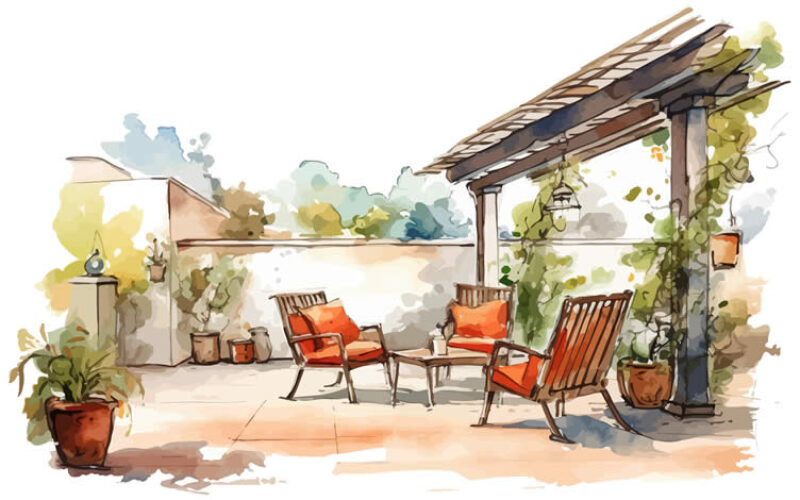
6 Brilliant Ways to Add a Pergola for Garden Décor or Shade
These open-frame structures have graced gardens since medieval Italy, and today’s homeowners are rediscovering just how transformative they can be.
Environmental Considerations
The environmental comparison between wood and composite is more nuanced than it first appears. Wood is a renewable resource, and sustainably sourced lumber carries a lower carbon footprint during production.
However, the treatments, coatings, and relatively shorter service life can increase its cumulative environmental impact over time.
Composite decking incorporates recycled materials—most boards contain between 50% and 95% recycled plastic and wood fiber content—which diverts waste from landfills. T
he 2025 UNECE life-cycle analysis found that wood-plastic composite decking delivers 22% lower total CO₂ equivalent emissions than treated softwood over its service life, a meaningful advantage driven primarily by its longer lifespan and reduced need for chemical coatings.
Neither material is without environmental trade-offs, but composite’s longer service life and use of recycled content give it an edge for homeowners prioritizing sustainability.
Should You Switch From Wood to Composite?
If your existing wood deck is showing advanced rot, persistent splinters, or structural issues at the joists and ledger board, replacement is likely more cost-effective than repair.
The cost to replace wood deck boards with composite runs approximately $15 to $25 per square foot, according to Decks.com—but the total project cost depends heavily on whether the underlying substructure can be retained.
Before committing to a switch, assess the condition of your frame. If the joists and beams are sound, you may be able to replace only the surface boards. If rot has reached the substructure, a full rebuild is typically necessary.
Homeowners who plan to stay in their homes for ten or more years generally find that composite’s maintenance savings and extended lifespan justify the higher replacement investment.
Making the Decision That’s Right for You
Wood and composite decks each make sense for different homeowners. Wood is the better fit for those who value authentic natural beauty, prefer a lower upfront cost, enjoy hands-on maintenance, or plan to sell within the next five to ten years.
Composite suits homeowners who want minimal ongoing upkeep, plan to stay in their home for the long term, live in climates with significant moisture or temperature swings, or prioritize a consistently clean appearance without annual refinishing.
The right choice comes down to what you value most: the character and flexibility of natural wood, or the durability and low-maintenance convenience of a composite.
Both materials can create a beautiful, functional outdoor space—but only one of them will feel right for how you actually want to spend your time at home.
Creating a Bird-Friendly Backyard
Creating a bird-friendly backyard is a wonderful way to connect with nature and enjoy the beauty of wildlife right outside your door.
By incorporating bird feeders, planting native flora, and providing fresh water sources, you can create a safe and inviting environment for various bird species to visit and thrive.
Additionally, reducing the use of pesticides and adding natural shelter like shrubs or nesting boxes can help support their well-being, offering you the joy of observing their vibrant colors and melodic songs year-round.
view ideas: Welcome To My Backyard (new win)

Frequently Asked Questions
-
Is composite decking always more expensive than wood?
Composite decking costs more upfront—typically $8 to $18 per square foot for materials versus $2 to $8 for pressure-treated wood.
However, when 10-year maintenance and replacement costs are factored in, composite frequently costs less overall. The financial crossover point typically occurs around year five of ownership.
-
How long does composite decking last compared to wood?
Composite decking generally lasts 25 to 30 years with minimal maintenance. Premium lines from brands like TimberTech carry warranties of up to 50 years.
Pressure-treated wood typically requires replacement after 10 to 15 years, even with regular maintenance.
-
Can I install composite decking over my existing wood deck frame?
Yes, in many cases. If your existing substructure is structurally sound and meets current building codes, composite boards can be installed directly over the old frame.
A professional inspection of the framing is recommended before proceeding.
-
What maintenance does composite decking actually require?
Composite decking requires no staining, sealing, or painting. Routine care involves sweeping debris and washing with mild soap and water two to three times per year.
Annual checks of board spacing help ensure proper drainage.
-
Which decking material is better for resale value?
Both materials offer comparable returns. Wood decks deliver an ROI of approximately 70 to 83%, while composite decks return 60 to 77%.
In some markets, composite decking is specifically cited as a selling feature—one analysis found that 25% of DC metro area homes highlighted Trex decks in listings.
-
Is composite decking environmentally friendly?
Composite decking uses significant recycled content—Trex incorporates the equivalent of roughly 2,250 plastic bags per 16-foot board—and reduces deforestation pressure.
The primary environmental limitation is that composite is non-biodegradable, though manufacturer take-back recycling programs are increasingly available.
Compared to virgin wood, composite generally has a lower environmental impact when total lifecycle is considered.
-
Which decking material performs better in cold climates?
Composite decking outperforms wood in cold climates. Its engineered composition resists moisture absorption, preventing the freeze-thaw cycle damage that causes wood to crack, split, and warp over time.
home improvement ideas to consider (complete directory – new win):

| Category | Wood Decks | Composite Decks |
|---|---|---|
| Material Characteristics |
Wood offers warmth, texture, and an organic character. It includes pressure-treated pine for affordability and resistance, cedar for moisture resistance and visual appeal, and exotic hardwoods like ipe for durability and aesthetics. |
Composite decking combines wood fibers and recycled plastics, mimicking real wood with consistent color, UV resistance, and low moisture absorption due to its engineered properties. |
| Durability and Longevity |
Wood decks last 10-15 years for pressure-treated pine, extending to 20-25 years with proper maintenance. However, neglect accelerates decline, especially at moisture-prone areas. |
Composite decks average a service life of 25-50 years and often come with warranties of similar lengths, ensuring better long-term performance with minimal maintenance. |
| Maintenance |
Wood requires annual cleaning, staining, sealing, and occasional board replacement. Maintenance is both time-intensive and costly over the deck’s lifespan. |
Composite needs simple soap and water cleaning a few times per year. It eliminates the need for sanding, staining, or sealing, significantly reducing time and financial commitment. |
| Cost Analysis |
Wood decking costs $40-$80 or more per square foot installed, with annual maintenance costing $15,000-$43,000 over 25 years. Wood decks recoup around 83% of their cost in resale value. |
Composite decking costs $50-$100 or more per square foot installed. Maintenance costs approximately $5,000 over 25 years, with composite decks recouping about 68% of their cost upon resale. |
| Aesthetic Appeal |
Wood offers natural grain, depth, and the ability to be refinished or restained. Its authenticity is unmatched for many homeowners. |
Composite provides consistent color and dimension, with a range of colors and wood-grain textures. However, its color cannot be changed once installed. |
| Environmental Considerations | Wood is renewable and sustainably sourced but has higher cumulative environmental impact due to treatments and shorter lifespan. | Composite utilizes recycled materials and has a lower CO₂ footprint over its service life due to reduced maintenance needs and durability. |

Find Decks n’ Patio Services Decks Patio Fences Landscape Design top-rated, pre-screened local contractors FREE: download contractor selection enter zip code – powered by HomeAdvisor ™


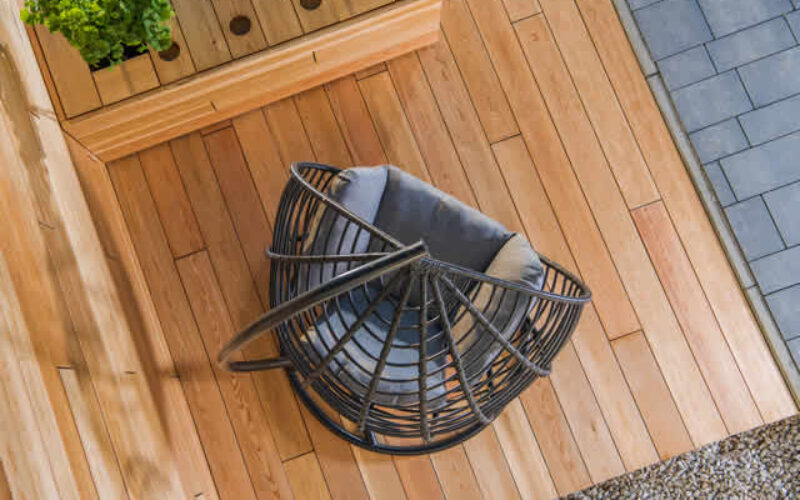
Image credit: wood deck vs composite deck by envato.com
end of post … please share it!
| more photo remodeling |
Jump Over to Our Photo Analysis Center for Ideas on
"Renovating Home"
|__________________________________________________________|
home remodeling surprise
find out where it might go - new win


Helpful article? Leave us a quick comment below.
And please share this article within your social networks.