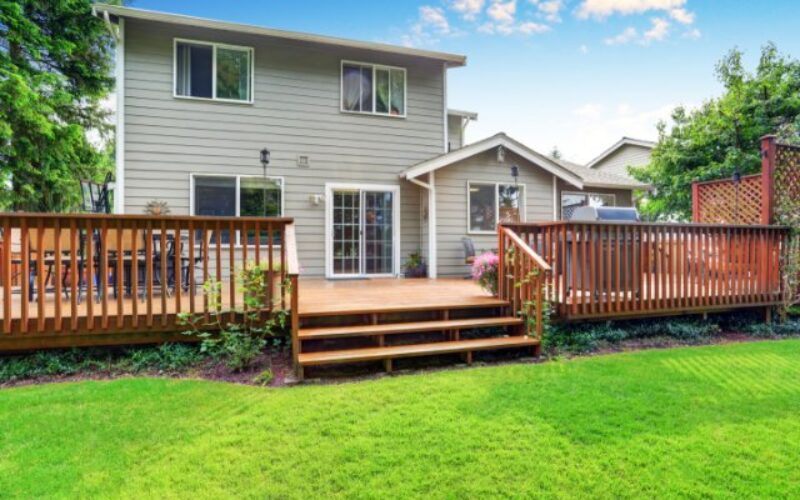
While all decks will inevitably show signs of age, some optional add-on features can reduce the damage and keep the structure in better condition for longer.
Post Sleeves
Deck post sleeves can both beautify and protect your deck. Post sleeves are hollow coverings that slide over your existing structural posts, hiding rough or weathered wood underneath. They’re made of materials like PVC or composite that resist moisture, insects, and UV fading. This means your posts stop absorbing water at the base, which is one of the most common places deck posts start to rot.
Under-Deck Drainage Systems
Water that drips through the gaps in your deck boards has to go somewhere. Without a barrier, it pools on the ground underneath, creating a damp environment where mold and mildew grow. An under-deck drainage system captures that runoff and channels it away through a gutter-like structure installed beneath the joists. This keeps the space under your deck dry enough to use for storage or seating, and it stops moisture from sitting against the underside of your boards.
Composite Decking Boards
Wood decking needs regular sealing to resist water damage, but composite boards are built from a blend of wood fibers and plastic that doesn’t absorb moisture the same way. Composite resists splintering, warping, and insect damage without annual staining. Because the color runs through the material instead of sitting on top as a coating, scratches and wear don’t expose a different shade underneath the way they can with painted or stained wood.
Deck Sealant and Waterproofing
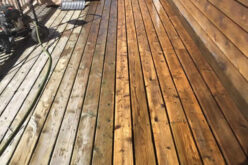
If you’re sticking with wood boards, sealant creates a barrier between the wood and the weather. A quality waterproofing product fills the wood’s pores so rain beads up and runs off instead of soaking in. UV-resistant formulas also slow down the graying and fading that unprotected wood develops after a summer in direct sun. Reapplying sealant every one to two years keeps that barrier active instead of letting it wear away unnoticed.
Railing Baluster Caps
The tops of railing balusters take a beating from rain and sun because they’re flat, exposed surfaces with nowhere for water to run off. Baluster caps cover those exposed tops with a sloped or rounded surface that sheds water instead of letting it pool. This small addition prevents the wood underneath from staying wet for extended periods, which is exactly the condition that leads to cracking and rot.
Fascia Boards
Fascia boards cover the exposed rim joist along the edge of your deck, hiding the raw cut ends of the structural lumber. Those cut ends are more porous than the rest of the board because the cutting process exposes the wood grain directly to weather. A fascia board acts as a shield over that vulnerable edge, and it also gives the deck’s perimeter a finished look instead of showing bare framing lumber.
Deck Skirting
Skirting closes off the open space between the bottom of your deck and the ground. Left open, that gap lets rain splash up onto the underside of your joists and invites pests to nest underneath. Lattice or solid panel skirting blocks that splashback and keeps animals from making a home in the crawl space below. It also stops debris like leaves and branches from piling up where you can’t easily reach them.
Gutter and Downspout Extensions
If your roof gutters empty out near your deck, that runoff can end up soaking the ground right next to your support posts every time it rains. Extending your downspouts to redirect that water further away reduces how much moisture builds up around the base of your deck. Less water sitting near the foundation means less risk of rot working its way up from the posts and footings.
Shade Structures
Constant UV exposure breaks down the finish on deck boards faster than almost anything else, fading color and drying out the wood fibers until they crack. A pergola, awning, or retractable canopy reduces the number of hours your deck sits in direct sunlight each day. Less sun exposure means your stain or sealant lasts longer between applications, and the boards underneath stay more stable instead of drying out unevenly.
Snow and Ice Guards
In colder climates, snow load and ice buildup put repeated stress on deck boards and railings throughout the winter. Ice guards or specialized flashing installed along the edges help control where snowmelt drains instead of letting it refreeze on the deck surface. This reduces the freeze-thaw cycle that causes wood to expand, contract, and eventually crack after repeated winters.
Post Cap Lighting
Uncapped posts leave the end grain of the wood exposed at the very top, which is where water soaks in fastest because the grain runs vertically and pulls moisture downward. Post cap lights cover that exposed end grain with a solar-powered or hardwired fixture that doubles as a water barrier. Rain runs off the sloped cap instead of pooling on bare wood, and the added light means less strain on your railings and stairs after dark.
Corner and Edge Guards
The corners of deck boards and stair treads take more physical impact than any other part of the surface, from foot traffic to furniture being dragged across them. Metal or composite corner guards wrap around these high-impact points and absorb the chipping and splintering that raw wood edges develop over time. Protecting corners this way also slows down water intrusion, since splintered wood exposes more surface area for moisture to seep into.
Keeping Your Deck in Shape for the Long Run
None of these add-ons stop weather from reaching your deck completely, but each one reduces a specific type of damage before it starts. Post sleeves and fascia boards protect exposed wood edges. Drainage systems and skirting manage water and pests underneath. Sealant, shade structures, and ice guards each address a different way sun and moisture wear down the surface over time.
Picking the right combination depends on your climate, your deck’s design, and how much maintenance you want to take on each year. Even one or two of these additions can extend the time between repairs and keep your deck looking better through each season it faces.
Image Credentials: Iriana Shiyan, 118596987
end of post … please share it!
|__________________________________________________________|
home remodeling surprise
find out where it might go - new win


Helpful article? Leave us a quick comment below.
And please share this article within your social networks.