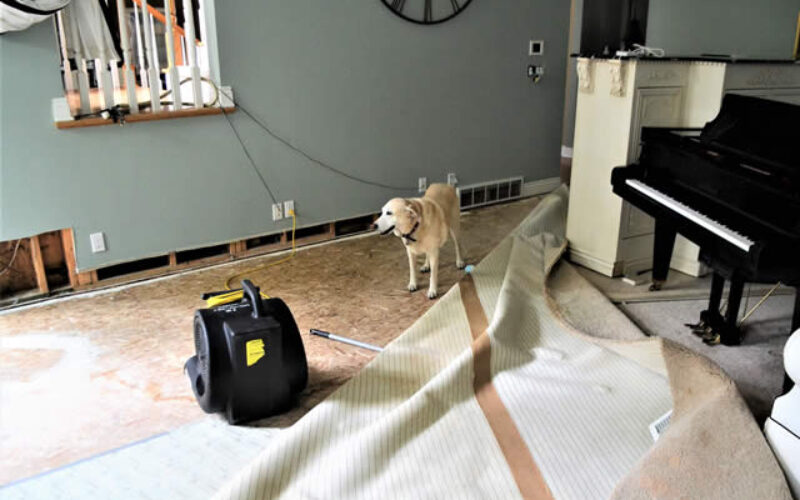
Flood damage restoration is an essential service that will help you address internal damages as well as save your property from further destruction due to mold and mildew growth.
Knowing where to start when it comes to repairing water damage can be challenging, so our team of experts have compiled the top five steps you should take if you need assistance with flood damage restoration today!
Assess the Damage and Contact a Water Damage Restoration Service
When you encounter water damage, it’s important to assess the situation and contact a water damage restoration service as soon as possible. The longer you wait to take action, the more damage that can occur.
The first step is to identify the source of the water damage and determine the scope of the damage. It’s important to know if the water is still present and if the affected area is still wet.

Once you’ve identified the source of the water damage and determined the scope of the damage, it’s time to call a water damage restoration service. A professional reconstruction service will assess the damage and provide solutions for repair and restoration.
They will have specialized equipment and experience in restoring water-damaged homes and businesses, so they can quickly and effectively prevent further damage.
The water damage restoration team will inspect the damaged area and evaluate the severity of the damage. They will then provide a plan of action for repair and restoration, which may include removal of standing water, drying out the affected area, repairs and replacements, and cleaning and sanitizing.
In addition to repairs and restorations, the water damage restoration service will also provide advice on how to prevent future water damage. They may suggest solutions such as proper maintenance of pipes and appliances, waterproofing, and installation of flood sensors.
By assessing the damage and contacting a water damage restoration service as soon as possible, you can prevent further damage and save time and money in the long run. Taking proactive steps to protect your home or business from water damage will ensure that your property is safe and secure for years to come.
Prepare for Removal of Damaged Materials, Furniture, and Other Items
When it comes to preparing for the removal of damaged materials or furniture, proper preparation is key. Taking the time to properly prepare for the removal of damaged items is important to ensure that everything goes as smoothly as possible.
The first step in the removal process is to identify what items need to be removed. This includes anything that has been damaged beyond repair, broken furniture, and any other items that need to be taken away.
Once the items have been identified, it’s important to prepare the area for removal. This includes clearing away any clutter or debris that could be in the way, as well as putting down tarps or other materials to protect the flooring and walls from damage.
Next, it’s important to protect yourself. Wearing protective clothing, such as gloves and a face mask, can help protect against any hazardous materials or dust that may be present.
Additionally, it’s important to make sure the area is well-ventilated, as some materials can give off fumes or dust that could be hazardous if not properly ventilated.

Before beginning the removal process, it’s important to create a plan for how the items will be removed.
This plan should include how many people will be needed for the job, how the items will be moved, where they will be taken, and how they will be disposed of. It’s also important to think about how the items will be transported, as some items may be too large or heavy to be safely carried by hand.
Finally, once the items have been removed, it’s important to clean up the area. This includes sweeping up any debris or dust that may have been left behind, and disposing of any hazardous materials in the appropriate manner.
Taking the time to properly prepare for the removal of damaged materials, furniture, and other items can help ensure that everything goes as smoothly as possible.
Create an Inventory of Damaged Items to Help With Insurance Claims
Creating an inventory of damaged items is a crucial step towards filing a successful insurance claim. An accurate inventory will provide concrete proof of the items that were damaged and their condition. It also serves as a reminder to the insurance company of what was lost and the amount of compensation due.
Creating an inventory can seem like a daunting task, but it doesn’t have to be. The most important thing to remember is to be as detailed as possible.
Start by photographing or videotaping the damaged items in order to provide visual evidence of their condition. It is also important to note any identifying characteristics or numbers associated with the item.
other related articles of interest:
In addition to photographing and documenting the damaged items, it is also important to include an estimate of the value of each item. This may require researching the current market value of the item or speaking with a professional appraiser.
Finally, it is important to include any information about the events leading up to the damage. This includes things like dates, times, and locations of the incident.
This information helps to provide context for the damage that occurred and can be used by the insurance company to make an informed decision about the claim.
Creating an inventory of damaged items can seem like a tedious task, but it is a necessary step in the insurance claims process.
It is important to be thorough and accurate when creating an inventory in order to ensure maximum compensation for the damaged item
Find Professional Services Abatement Services Junk Removal Site Preparation Recovery Services top-rated, pre-screened local contractors FREE: download contractor selection enter zip code – powered by HomeAdvisor ™


Image credit: flood damage restoration by envato.com
end of post … please share it!
|__________________________________________________________|
home remodeling surprise
find out where it might go - new win


Helpful article? Leave us a quick comment below.
And please share this article within your social networks.