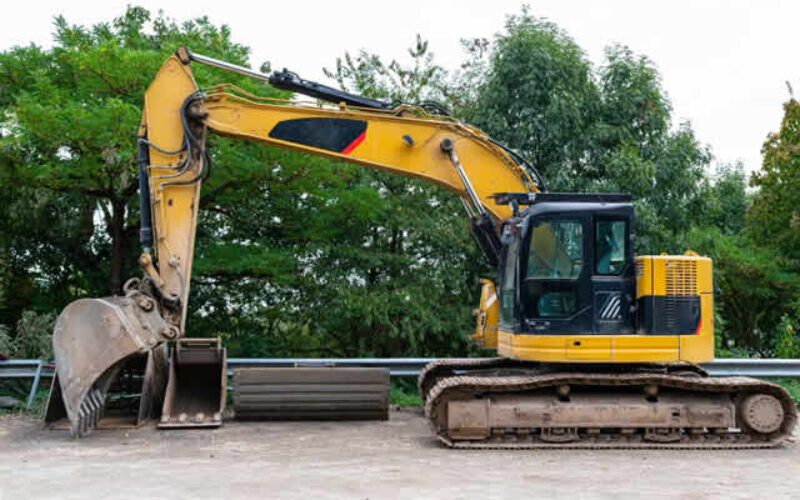
Here are the top five types you should know.
Crawler Excavator for General Purpose-Construction
Also known as the standard excavator, it is the most recognizable earthmoving attachments for general-purpose construction. It has two chain-wheel tracks and a cab that can rotate through an angle of 360 degrees.
Even though the tracks make it slower, a crawler is the best for maneuvering on hilly terrain. They exert low ground pressure, which gives the machine traction when working on soft soils.
Crawler excavators are used for landscape grading, digging trenches, and excavating the foundation. You can adjust the bucket and boom for different construction applications.
Wheeled Excavators for Asphalt and Concrete Surfaces
Wheeled excavators are similar to crawler excavators, but they have wheels instead of tracks. Wheels allow you to move the machine to an off-site location.
As such, wheeled excavators are ideal for public works and road building. The wheels are suitable for maneuvering on a hard and flat surface with concrete or asphalt.
Its principal disadvantage is that it gets stuck on mud or soft soils and is unsuitable for some applications. A lot of businesses use outriggers to keep the machinery stable during construction.







Ideas for Renovating Home
Home Remodeling Ideas addressing renovation planning, budgeting, ideas for kitchen-bath-attic and more. Collect ideas on how to plan and manage your home renovation.
Backhoe Excavator for Moving Large Volumes of Materials
Backhoe excavators are often confused with general-purpose excavators. But it has a backhoe bucket at the front and an excavator boom at the rear.
The action of the backhoe attachment allows the machine to clear large volumes of materials. Backhoe excavators are suitable for soil grading, demolitions, and snow removal.
They can also move on flat roads, making them ideal for off-site construction jobs.
Skid Steers for Tight Spaces
Skid Steers are compact construction machines with the boom and bucket at the vehicle’s rare. The design allows skid steers to maneuver in tight spaces.
Their maneuverability makes them suitable for applications such as digging the pool or moving materials from the site. It allows for many different attachments like a snowblower, stump grinder, pallet forks, and angle broom.
Long-Reach Excavators for Hazardous Projects
As the name suggests, the excavator has an extended arm that can reach between 40 and 100 feet horizontally. They are ideal for applications where the machine cannot get too close to the site.
Therefore, long arm excavators are suitable for hazardous construction jobs. They are effective for demolition projects, but not in areas with tight spaces.
Conclusively, excavators are indispensable machines for many types of construction jobs. Consider leasing to manage the cost of acquiring an excavator for your project.
Find Professional Services Site Preparation Junk Removal Environment Prep Recovery Services top-rated, pre-screened local contractors FREE: download contractor selection enter zip code – powered by HomeAdvisor ™

Image credit: types of excavators by twenty20.com
end of post … please share it!
@import url(https://www.letsrenovate.com/ideas/wp-content/themes/novomag-theme/css/responsive/menu.css)
|__________________________________________________________|
home remodeling surprise
find out where it might go - new win


Helpful article? Leave us a quick comment below.
And please share this article within your social networks.