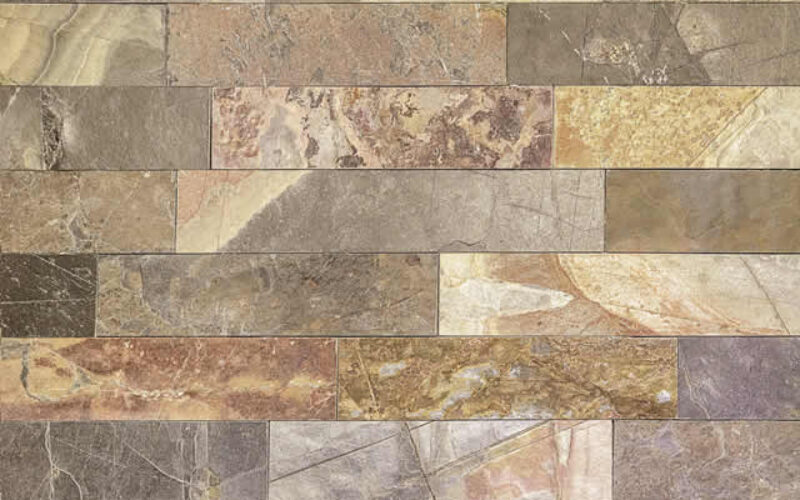
Here are some recent trends in natural stone flooring, many of its benefits, and a few maintenance tips:
Trends
Floor installation companies have long carried natural stone such as granite, limestone, onyx, slate, and travertine, but have reported an uptick in customers now interested in quartzite. Quartzite, not unlike granite, performs well in high-traffic areas and is pretty much resistant to acids.
Of course, marble is a mainstay on the flooring circuit. Some white marble is even denser than quartzite and granite, and the white Statuary and Carrara marble is still a favorite.
As a matter of fact, neutrals like white, black, and gray are used to fashion traditional flooring as well as styles that are more contemporary, such as mosaic inlays cut from larger slabs. Many of these feature patterns or borders.
Matte finishes that are less slippery are now also becoming more common, as are brushed and honed finishes. High polish is not as desirable as it once was, especially in bathrooms.
Benefits
There are many established benefits to installing natural stone flooring. First, it lasts a long time because it is strong and sturdy, and it is also pretty resistant to staining. Another reason is that it is lovely and unique.
Its aesthetics are unmatched due to the sheer amount of patterns and hues that it comes in. Stone is a natural phenomenon, so each piece will also be completely unique. That said, if a portion does crack by mistake, pieces can be easily replaced due to the existing “mix-and-match” nature of the style.
Maintenance
In order to preserve the elegance of a natural stone floor, it must be cared for consistently. How you care for your floor, of course, depends on the finish that it has, though there are certain chemicals that you should stay away from no matter what.
Most of those are acidic, like grout, tub, tile, and bathroom cleaners. Natural acids like lemon juice and vinegar are also widely discouraged. Human abrasion can also be caused by using a vacuum cleaner, or soft or dry abrasive cleansers.

some stone styles to consider
The best way to care for your floor is to dust mop it daily, and to wash the surface with a specially-made stone soap or mild detergent. Then just rinse and dry the floor with clear water. Deep cleaning will only be required every once in a while.
When you have stone tiles, cleaning the grout is another important aspect of maintenance. You can go long in between deep cleans if you use a steam mop on your floors on a regular basis. Still, especially if your grout is a light color, it is likely to stain over time.
other related articles of interest:
Some Good Reasons to Use Limestone Tiles
Set in Stone: 5 Designs to Consider When Remodeling Your Home
However, there are a few ways to remove these stains and keep it looking clean. Try scrubbing the grout lines with a stiff-bristled brush using baking soda and vinegar. If that doesn’t cut it, you can also try hydrogen peroxide or oxygen bleach for extra cleaning power.
In conclusion, natural stone floors are tough, beautiful, and simple to care for. They also match nearly any décor. You really couldn’t ask for a better alternative.
Find Walls & Ceiling Services (opens new win) Drywall Installation Ceilings Painting & Texturing Tile top-rated, pre-screened local contractors Wallcoverings Ceilings – Fans Walls – Exterior Walls – Interior FREE: download contractor selection enter zip code – powered by HomeAdvisor ™

Image credit: natural stone tiles by Pixabay
end of post … please share it!
@import url(https://www.letsrenovate.com/ideas/wp-content/themes/novomag-theme/css/responsive/menu.css)
|__________________________________________________________|
home remodeling surprise
find out where it might go - new win


Helpful article? Leave us a quick comment below.
And please share this article within your social networks.