copyright image by Pixabay | Pixabay
What to know about perennial hydrangea –
Notes:
-
About Hydrangea Flowers:
Hydrangeas are one of the most popular perennial flowering plants to have in your garden. It tolerates many different growing zones and are low-maintenance. Hydrangea flowers grow from early spring to late autumn with flowerheads blooming most often at the ends of the stems.
- Typically the flowerheads contain two types of flowers: small non-showy flowers in the center or interior of the flowerhead; and large, showy flowers with large colorful sepals that look like snow balls.
- Hydrangea is a genus of 70–75 species of flowering plants native to Asia and the Americas. Most hydrangeas are shrubs that grow as high from 3-9 feet; some species grow as small trees. Hydrangea colors are white, with some varieties in blue, red, pink, light purple, and dark purple.
- The flowers on a hydrangea shrub can change from blue to pink or from pink to blue from one season to the next depending on the acidity level of the soil.
- REFERENCE: information lifted from wikipedia
INFO: all about hydrangeas -
Where to Grow Hydrangea:
The most common hydrangeas are the shrub like hydrangea that grows from 4-6 feet high on old wood stems. These are the classic blue hydrangea that produce blue-snowball flowers depending on the pH level of the soil; the more acidic level gives the blue color; the less acidic level gives a pink flower.
- Hydrangeas are popular shrubs to use as hedge plants along the sides of homes, decks, and border plantings. They do best with morning sun and afternoon shade with good drainage. Give them plenty of spacing when planting for growing to maturity.
- As mentioned, the color of the hydrangea bloom will depend on the pH levels of soil:
- Blue: soil pH 5.0 to 5.5[view color]
- Pink: soil pH 6.0 to 6.5[view color]
- Purple: soil pH 5.5 to 6.5[view color]
- INFO: how to plant and grow hydrangea
INFO: types of hydrangeas
INFO: chemistry guide for hydrangeas -
Garden Planning With Hydrangeas:
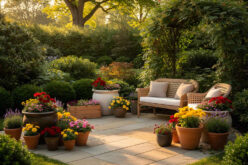
- Hydrangeas are a shrub like plant with stem flowers and large leaves. They make great fillers in garden beds, bordering plants between beds, forming pathways, fillers around elevated decks and along sides of houses and sheds.
- They do best in morning sun with afternoon shade. You can find some varieties that will tolerate full sun – but most hydrangeas will wilt when exposed to hot, afternoon sun. Best to combine hydrangeas with other shade-tolerant, annual flowers such as impatience and lobelia and/or shade-tolerant perennial flowers such as foxglove and Siberian Iri. But many gardens have them bundled together to form a perennial hedge.
- If working in a sunny garden spots, hydrangeas can be positioned where a tree or other structure provides shade during the afternoon sun.
- IMAGES: garden planning with hydrangeas
IMAGES: using hydrangeas as borders - INFO: landscaping with hydrangeas
INFO: plant combination with hydrangeas -
Care and Pruning Hydrangea:
Hydrangeas are low maintenance perennials – they just need plenty of water in the morning, some mulch to retain moisture, and fertilizer with pH levels to maximize color and blooms. Healthy hydrangeas are mostly pest and disease free. But they can become disease and pest prone if the plant becomes distressed.
- You can deadhead the flower before it wilts for continued blooming throughout the summer. Hydrangeas make great cut flowers for display and drying. So snipping a flower from the plant will encourage new growth.
- Most hydrangea plants can be left alone, except for removing dead wood from the plant. Some are best pruned on an annual basis when the new leaf buds begin to appear.
- If hydrangeas are not pruned regularly however, the bush will become very ‘leggy’; growing upwards until the weight of the stems is greater than their strength. Depending on the variety, you need to understand how to prune hydrangea to avoid cutting to low on old wood that produces the flower.
- Hydrangeas can be harvested by cutting a new stem from the plant and transplanting it to another area of the garden. You can also harvest hydrangea flower seed for planting.
- Hydrangeas are not edible and can can poisonous if ingested by small children and animals.
- INFO: pruning hydrangeas
INFO: cut hydrangea flower guide - YOUTUBE: growing tips & FAQ
YOUTUBE: pruning & fertilizing hydrangeas
YOUTUBE: hydrangea cuttings rooting like crazy -
Hydrangea Summary:
Light: full sun, part sun, shade
Soil: any soil with pH acidic, slightly acidic to neutral
Height: 1-3 feet (low), 3-8 feet (medium), 8 to 20 feet (tall)
Width: from 2-12 feet
Flower: blue, green, pink, purple, red, white
Foliage: blue/green, gold
Season: summer, fall
Features: low maintenance, good for containers, cut flowers, attracts butterflies
Propagation: seed, leaf cuttings, stem cuttings
Zones: 3,4,5,6,7,8,9
INFO: view growing zones - What comments can you share?
| Supporting Resources (opens new win) | |
| ABOUT: growing hydrangeas | |
| INFO: hydrangea care guide | |
| PINTEREST: designing hydrangea garden | |
| YOUTUBE: get most hydrangea blooms | |
| YOUTUBE: how cut dry hydrangea | |
| Shopping Hydrangea (opens new win) | |
| AMAZON: live hydrangea plants | |
| AMAZON: hydrangea seeds | |
| AMAZON: flower planting tools | |
Find Landscaping/Maintenance Landscape Design Landscape Maintenance Pest Control Sprinkler Systems Tree & Shrubs Water Features top-rated, pre-screened local contractors FREE: download contractor selection enter zip code – powered by HomeAdvisor ™


Part-Sun Perennials
 links open new win
Shade Perennials
links open new win
or simply search by entering perennial flower name or other gardening need

planning your summer flower garden:
other related garden landscaping:
planting Vegetable Gardenyummy fruit orchardusing Ornamental Grasseslandscaping with shrubstypes of shade trees
Cover image credit: phlox perennial flowers pixabay
end of post … please share it!
Nice pic idea? Leave us a quick comment below.
And please share this pic idea within your social networks.