Quick Answer:
The right dining room table depends on your room size, household needs, and entertaining habits. Rectangular tables suit larger families and longer rooms, round and square tables work best in compact or intimate spaces, and extendable or pedestal designs add flexibility.Matching shape, style, material, and size to your lifestyle makes daily meals and hosting effortless.
Summary Outline –
A dining table does more than hold plates and glasses. It’s where homework gets finished, where birthdays are celebrated, where quiet weeknight dinners happen alongside boisterous holiday gatherings.
Getting the choice right means thinking about your room’s dimensions, how many people you typically feed, the style that feels like home, and the materials that will hold up to real life.
This guide walks through every major decision point, from shape and style to function, material, and sizing, so you can shop with confidence rather than guesswork. By the end, you’ll know exactly what to look for and why it matters for your specific space.
- post content … analysis/ dining room table

first “dining room table” idea

AI generated image by 123rf.com
Section 1: Understanding Dining Room Table Shapes
Notes:
-
The shape of your dining table impacts far more than just aesthetics; it defines how your space feels and functions. From determining how many people can sit comfortably, to influencing the way people move around the room, table shape plays a pivotal role in creating a dining area that works seamlessly for your needs.
Before selecting a finish or falling for a particular style, it’s essential to begin with the table’s shape—this choice sets the groundwork for what will ultimately fit your space, both visually and practically.
Below, we explore the most common shapes and their defining characteristics to guide your decision.

-
Rectangle Dining Tables[ view]
Rectangular tables are the most popular choice, and for good reason. Their long, narrow shape fits well in most standard dining rooms and easily accommodates larger groups.
These tables typically seat between four to ten people, depending on their length, making them ideal for both family dinners and entertaining guests.
According to Anabei (2026), a rectangular table for six typically measures around 36 by 72 inches, while a table seating eight runs closer to 42 by 84 inches and generally requires a room of at least 14 by 16 feet.
With their linear form, rectangular tables often pair well with benches for casual settings, or upholstered chairs to add a touch of formal elegance. It’s important to ensure adequate clearance—around three feet of space on all sides—to allow for comfortable movement.
-
Square Dining Tables[ view]
Square tables create a sense of balance and intimacy, making them well-suited for smaller dining spaces or square-shaped rooms. They work best for groups of four to six people, fostering easy conversation since everyone is equidistant. us
A square dining table for four typically measures about 36 by 36 inches, offering a cozy yet functional space. For gatherings of eight, choose a table closer to 60 by 60 inches so there’s room for place settings and easy movement.
Square tables work best in rooms with balanced dimensions, with at least three feet of clearance on all sides to avoid a cramped feel.
While space-saving in more compact areas, square tables can also make a dramatic statement in larger rooms by centering them with equally proportionate lighting or décor. If flexibility is a priority, look for square tables with extendable leaves that convert to rectangular shapes when hosting larger groups.
-
Round Dining Tables[ view]
Round tables encourage closeness and conversation, making them ideal for smaller gatherings and family meals. They are particularly versatile in rooms with limited space, as their absence of sharp corners makes navigation easier.
For small dining rooms under 120 square feet, a round table between 36 and 48 inches in diameter tends to work well, while medium-sized rooms can accommodate rounds up to 60 inches (Anabei, 2026).
These tables come in various sizes, with options for drop-leaf designs to save even more space when not in use. Larger round tables may include a lazy Susan feature for convenient serving, but keep in mind that very large round tables can make it difficult for guests to reach across. For anything above six seats, consider an oval table for better functionality.
-
Oval Dining Tables[ view]
Oval tables combine the intimacy of round shapes with the seating capacity of rectangular designs. Their curved edges soften the look of a room while still offering ample seating for large gatherings. They are ideal for rooms that are narrow but still need to accommodate many chairs.
For comfortable dining, a six-person oval table typically measures 36 to 42 inches wide and 72 to 84 inches long. For eight, aim for 42 to 48 inches wide and 84 to 96 inches long.
Your dining room should ideally be at least 13 by 15 feet, leaving space for chairs and easy movement. The rounded edges also soften the room and save a little space compared to rectangular designs.
Oval tables shine in transitional spaces, blending versatility with a sense of elegance. They are also popular for open-concept layouts, where their organic shape can help delineate the dining area without overpowering the flow of adjoining spaces.
More Supporting Information
(click to view sample images, summary table, and useful ideas – or scroll to side note and next topic)
Table Shape Characteristics Ideal Dimensions Additional Notes Rectangle The most popular shape, perfect for larger groups.
Long and narrow, suits most standard dining rooms.
A table for six measures around 36 x 72 inches; for eight, approximately 42 x 84 inches.
Requires at least 3 feet clearance on all sides.
Pairs well with benches for casual settings or upholstered chairs for formal elegance. Square Creates balance and intimacy, ideal for smaller spaces or square-shaped rooms.
Encourages easy conversation.
A four-person table measures about 36 x 36 inches; for eight, closer to 60 x 60 inches. Works well with extendable leaves to increase seating when needed.
Best suited for rooms with balanced dimensions.
Round Encourages closeness and conversation, suitable for smaller gatherings.
Easy navigation due to absence of sharp corners.
For small rooms under 120 sq. ft., a diameter of 36-48 inches works well; medium rooms can fit up to 60 inches. Larger options may include a lazy Susan.
Consider oval tables for seating beyond six people for better functionality.
Oval Combines round intimacy with rectangular seating capacity.
Softens the appearance of a narrow room.
A six-person table measures 36-42 inches wide and 72-84 inches long; for eight, 42-48 inches wide and 84-96 inches long. Blends versatility and elegance.
Ideal for open-concept layouts, helping delineate dining areas without disrupting flow.


copyright image by 123rf.com
A Table for Every Holiday Moment
The holiday season invites us to pause and savor the simple joys of life—sharing meals, laughter, and memories with loved ones, free from the pull of daily routines.
It’s during these cherished moments that your dining table becomes the centerpiece of connection.

From festive feasts to cozy conversations, it’s more than just a table—it’s a gathering space for all the special occasions that make the holidays unforgettable.
view ideas: Elevate Your Dining Experience(new win)

-
Scroll up to directory … or scroll to next section about popular dining room table styles …


… home remodeling and improvement

second “photo remodeling” idea
AI generated image by 123rf.com
Section 2: Popular Dining Style Types
Notes:
-
Once you’ve chosen the shape of your dining table, the next exciting step is selecting a style that reflects your personal taste and enhances the ambiance of your home.
Dining table styles today are incredibly versatile, offering options to complement a wide variety of shapes, materials, and interior designs. From timeless tradition to sleek modernity, there’s a style that speaks to every preference while functioning beautifully within your space.
Below are some popular styles to consider when making your decision:
-
Traditional[ view]
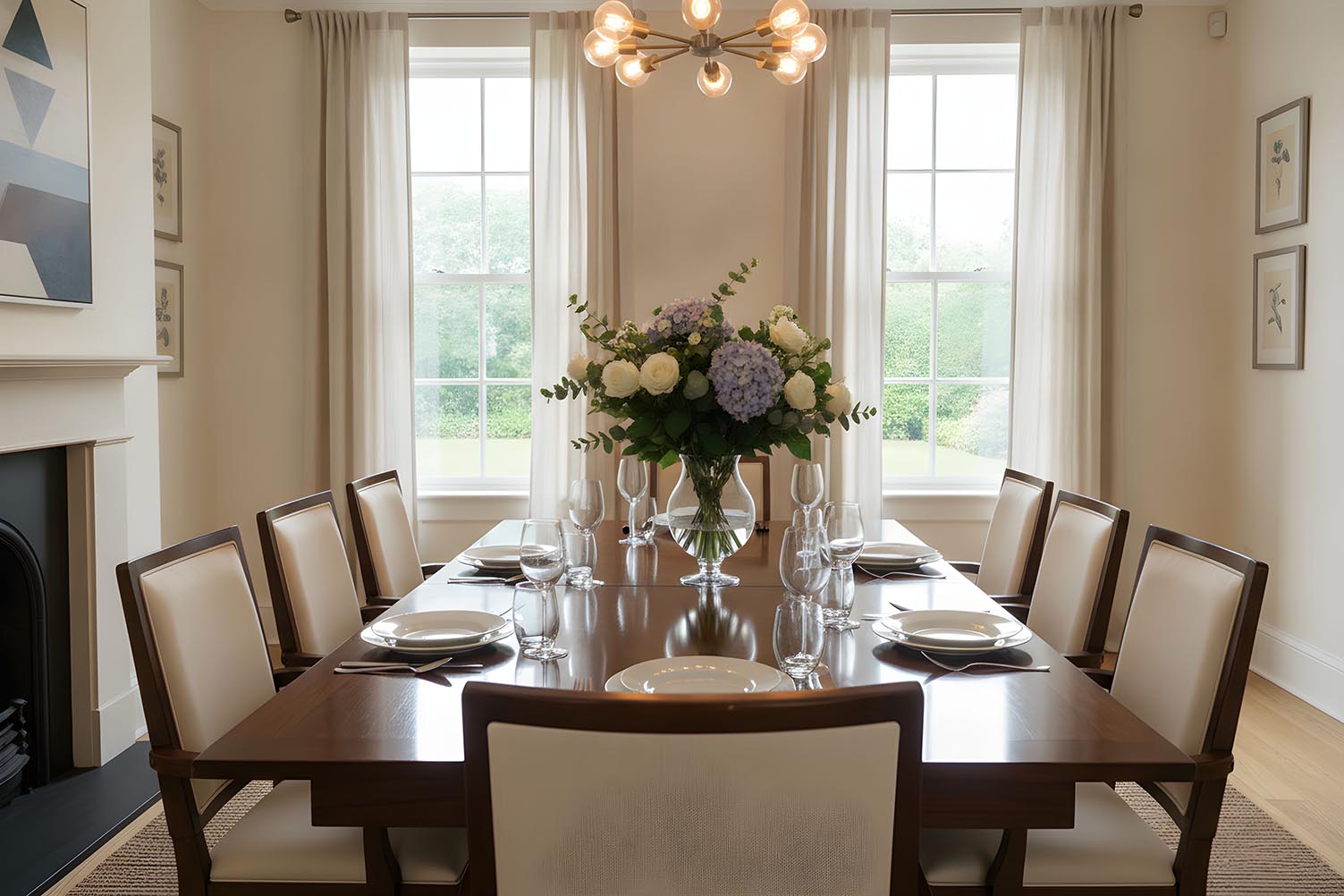
For those who appreciate timeless elegance, traditional dining tables often feature rich woods like walnut, mahogany, cherry, or oak. These tables are known for their formal silhouettes and intricate details, such as carved legs or pedestal bases.
A traditional table adds a sense of sophistication and enduring charm to any dining space, creating an inviting atmosphere for memorable gatherings.
-
Farmhouse[ view]
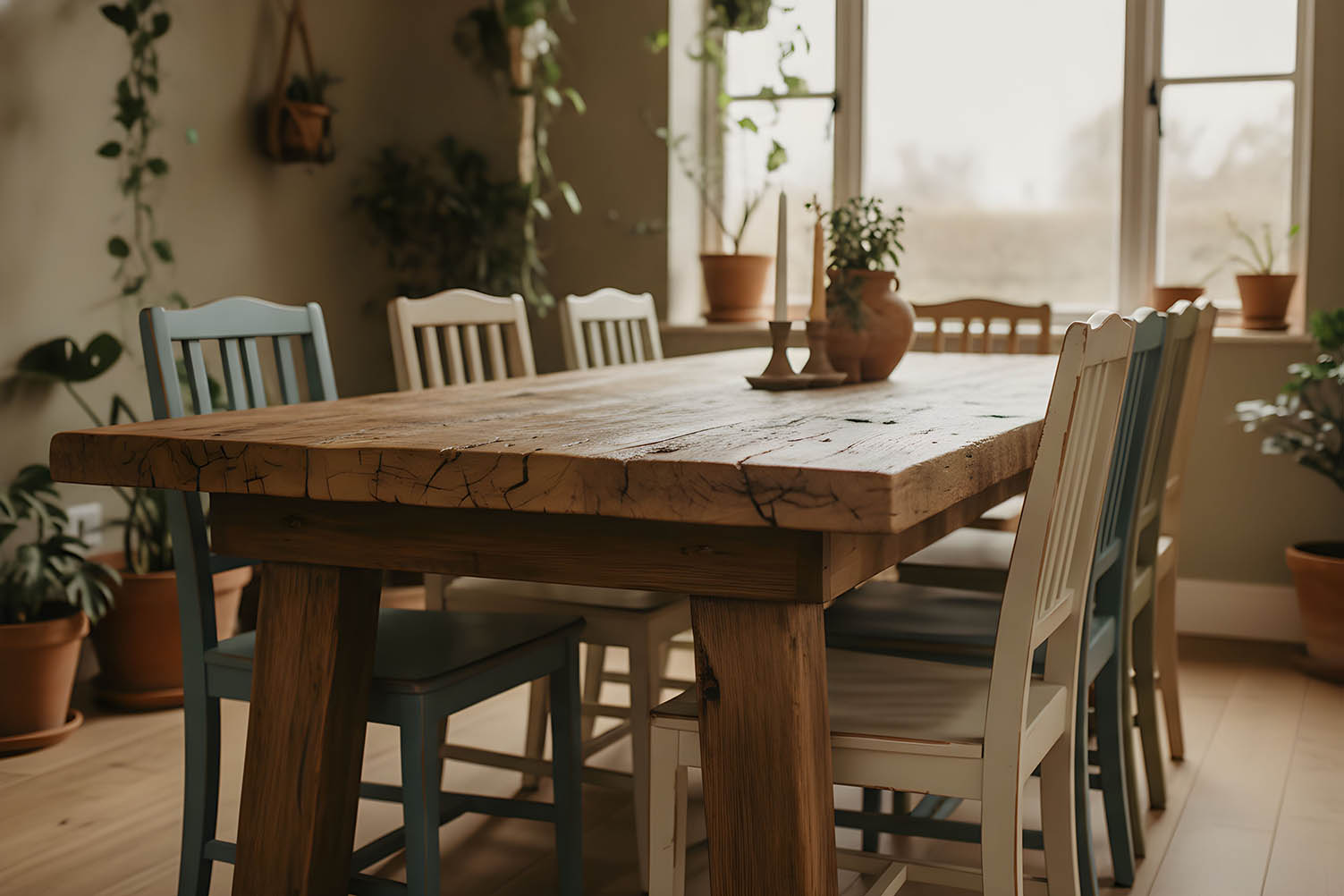
Farmhouse tables evoke a sense of coziness and rustic simplicity. With chunky wooden tops, visible grain, and sturdy legs, they bring a warm, casual feel to your dining area.
Whether paired with mismatched chairs for a welcoming vibe or bench seating for communal dining, farmhouse tables are perfect for fostering a relaxed, family-friendly atmosphere.
-
Rustic[ view]
Rustic dining tables highlight the natural beauty of wood with reclaimed or rough-hewn finishes, visible knots, and imperfections that add character.
These tables bring texture and history to your home, making them a wonderful choice for spaces aiming to create a connection to raw, organic materials.
-
Modern/Contemporary[ view]
For a streamlined and polished look, modern dining tables feature clean lines and minimal ornamentation.
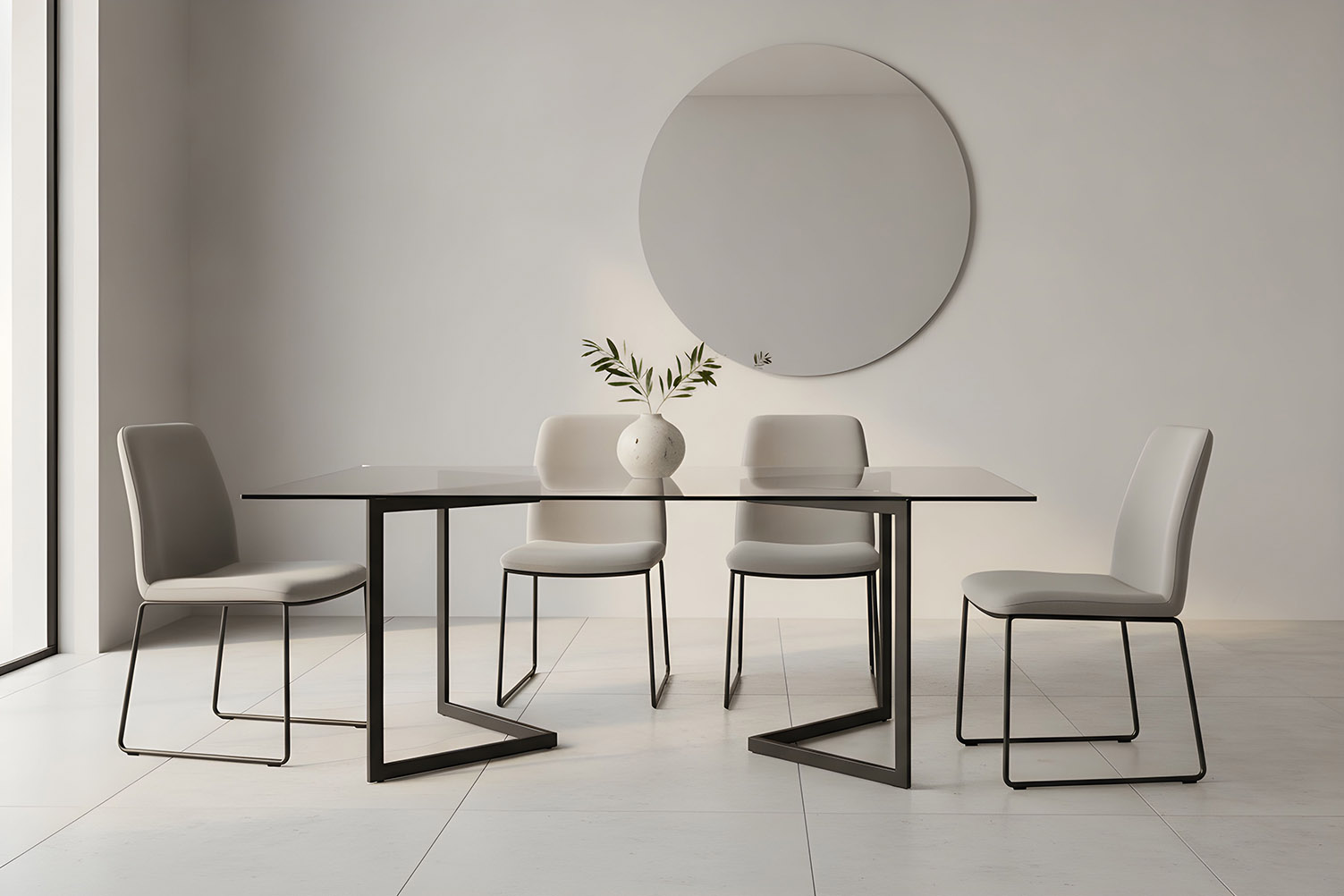
Often crafted from materials like tempered glass, metal, or matte-finished wood, these tables prioritize simplicity and functionality, making them ideal for a sleek, uncluttered aesthetic.
-
Mid-Century Modern[ view]
Mid-century modern dining tables blend vintage inspiration with contemporary simplicity. With their smooth surfaces, sleek profiles, and signature splayed legs, these tables strike a perfect balance between retro charm and modern practicality.
They work seamlessly in homes where subtle, timeless design is key.
-
Transitional[ view]
A transitional dining table marries the warmth of traditional styles with the clean lines of modern design.
This versatile style often incorporates materials like wood, metal accents, or glass details, offering the perfect mix of comfort and sophistication for those who enjoy a balanced, harmonious approach to decor.
-
Industrial[ view]
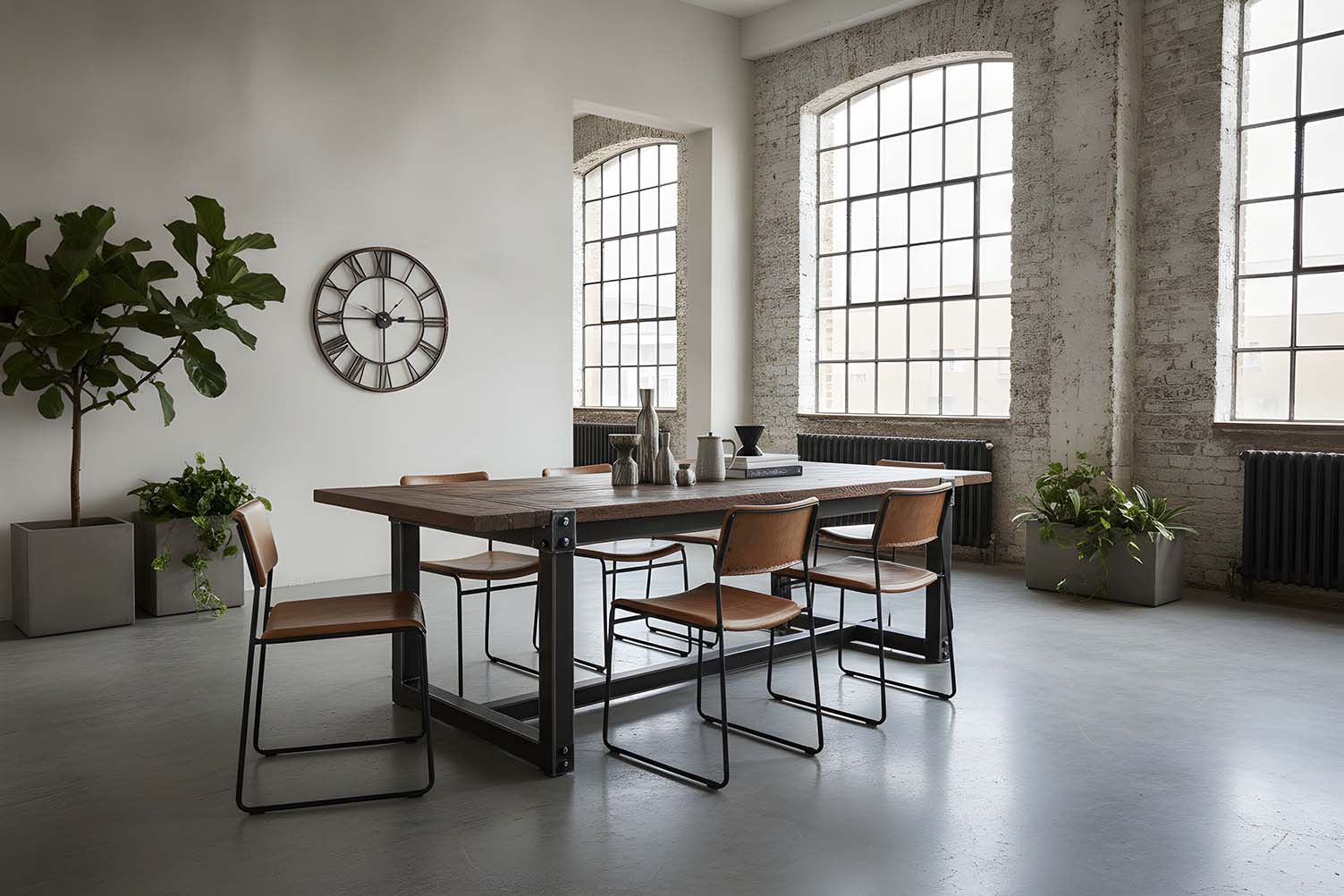
Industrial tables blend ruggedness and practicality, making them stand out in loft-inspired or eclectic interiors. Think metal frames paired with wooden tops, concrete-like surfaces, or exposed hardware.
The combination of raw, utilitarian elements gives these tables a cool, urban edge.
-
Scandinavian[ view]
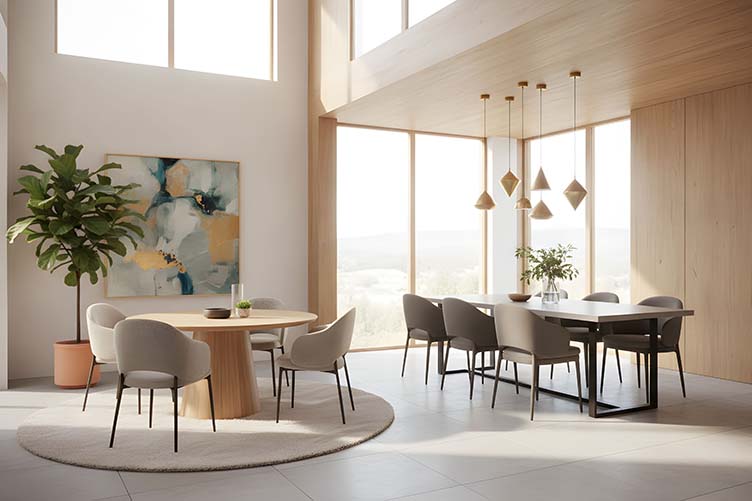
Scandinavian dining tables emphasize simplicity, lightness, and functionality. With pale, light woods, clean geometry, and an airy feel, these tables are well-suited for uncluttered spaces that prioritize warmth and modern minimalism.
They’re perfect if you seek harmony and serenity in your dining area.
By exploring these style types, you can find a dining table that not only serves its practical purpose but also becomes a reflection of your personal style and enhances the overall mood of your home.
More Supporting Information
(click to view sample images, summary table, and useful ideas – or scroll to side note and next topic)
Style Description Key Features Traditional Timeless elegance with formal silhouettes and intricate details. Often crafted from rich woods like walnut, mahogany, cherry, or oak. Carved legs, pedestal bases, sophisticated and enduring charm. Farmhouse Rustic simplicity and coziness. Designed with chunky wooden tops and sturdy legs, offering a warm and casual feel. Visible grain, bench seating, family-friendly ambiance. Rustic Highlights natural beauty with reclaimed or rough-hewn finishes. Showcases visible knots and imperfections for added character. Texture, organic materials, connection to nature. Modern/Contemporary Sleek and polished with clean lines and minimal ornamentation. Typically made from tempered glass, metal, or matte-finished wood. Streamlined design, simplicity, uncluttered aesthetic. Mid-Century Modern Blends vintage charm with contemporary simplicity. Features smooth surfaces, sleek profiles, and signature splayed legs. Subtle, retro-inspired design, timeless and practical. Transitional Combines warmth of traditional styles with modern clean lines. Incorporates materials like wood, metal accents, or glass details. Balanced, harmonious styling, versatile for any decor. Industrial Rugged and utilitarian with a cool, urban edge. Combines metal frames with wooden tops, concrete-like surfaces, or exposed hardware. Raw elements, loft-inspired interiors, eclectic appeal. Scandinavian Focuses on simplicity, lightness, and functionality. Uses pale woods, clean geometry, and an airy, uncluttered aesthetic. Warm and minimalist, emphasizes harmony and serenity. 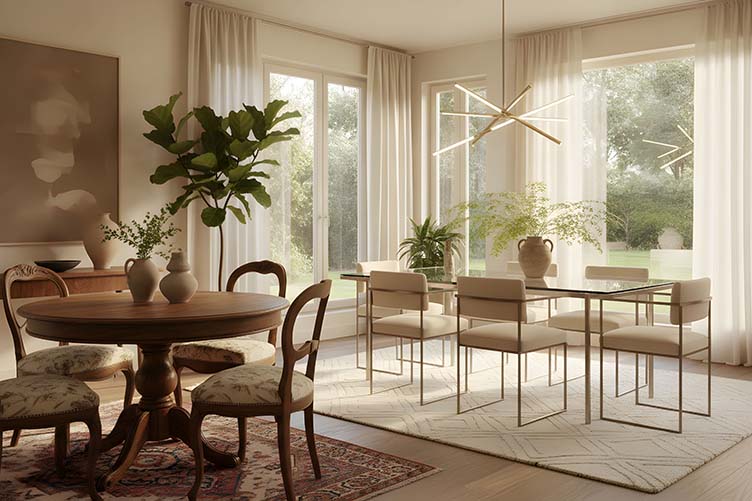
copyright image by 123rf.com
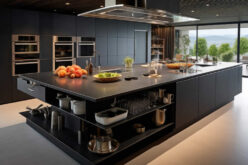
Everyday Charm of a Situp Kitchen Island
The dining table has its moments, but for the quick, casual occasions, a situp kitchen island is unbeatable.
Whether it’s your morning coffee, a quick breakfast bite, or sharing pastries with a friend, this space is the ultimate hub for spontaneous meals and relaxed conversation.
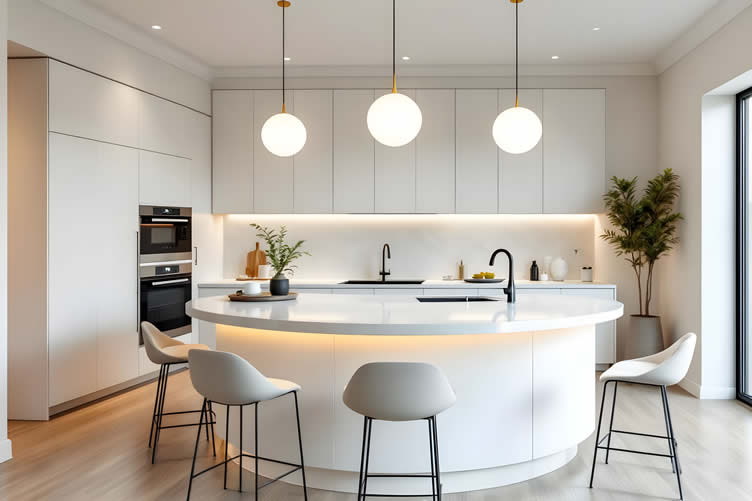
Stylish yet functional, it blends seamlessly into your kitchen while offering a welcoming spot to sit, snack, and savor life’s everyday moments.
view ideas: Guide to Kitchen Island Styles(new win)
-
Scroll up to directory … or scroll to next section about functional dining tables …

Tackling home upgrades and fulfilling all your home improvement needs …
… save this curated directory of ideas for future reference.

… remodeling decisions
May We Suggest Other Photo Remodeling Ideas About Other
“Interior Room Needs …” (new win)
third “photo remodeling” idea
AI generated image by 123rf.com
Section 3: Functional Dining Table Types
Notes:
-
Shape and style get most of the attention, but function is where a dining table really earns its keep day to day.
Think about how your household actually uses the space: Do you need flexibility for guests? Is floor space at a premium? Will the table double as a workspace?
These questions point you toward the right functional design.
-
Fixed Tables[ view]
Fixed dining tables maintain a consistent size without adjustable parts, offering a stable and reliable surface for everyday meals and gatherings alike.
Fixed tables are a hallmark of simplicity and stability. These tables are ideal for those who have consistent seating needs and want a sturdy, reliable option without moving parts.
Thanks to their straightforward design, fixed tables tend to be more affordable than other styles, making them an excellent choice for first-time buyers or minimalist spaces.
Their solid construction is often aligned with long-term durability, providing a trustworthy centerpiece for your dining area.
-
Extendable Tables[ view]
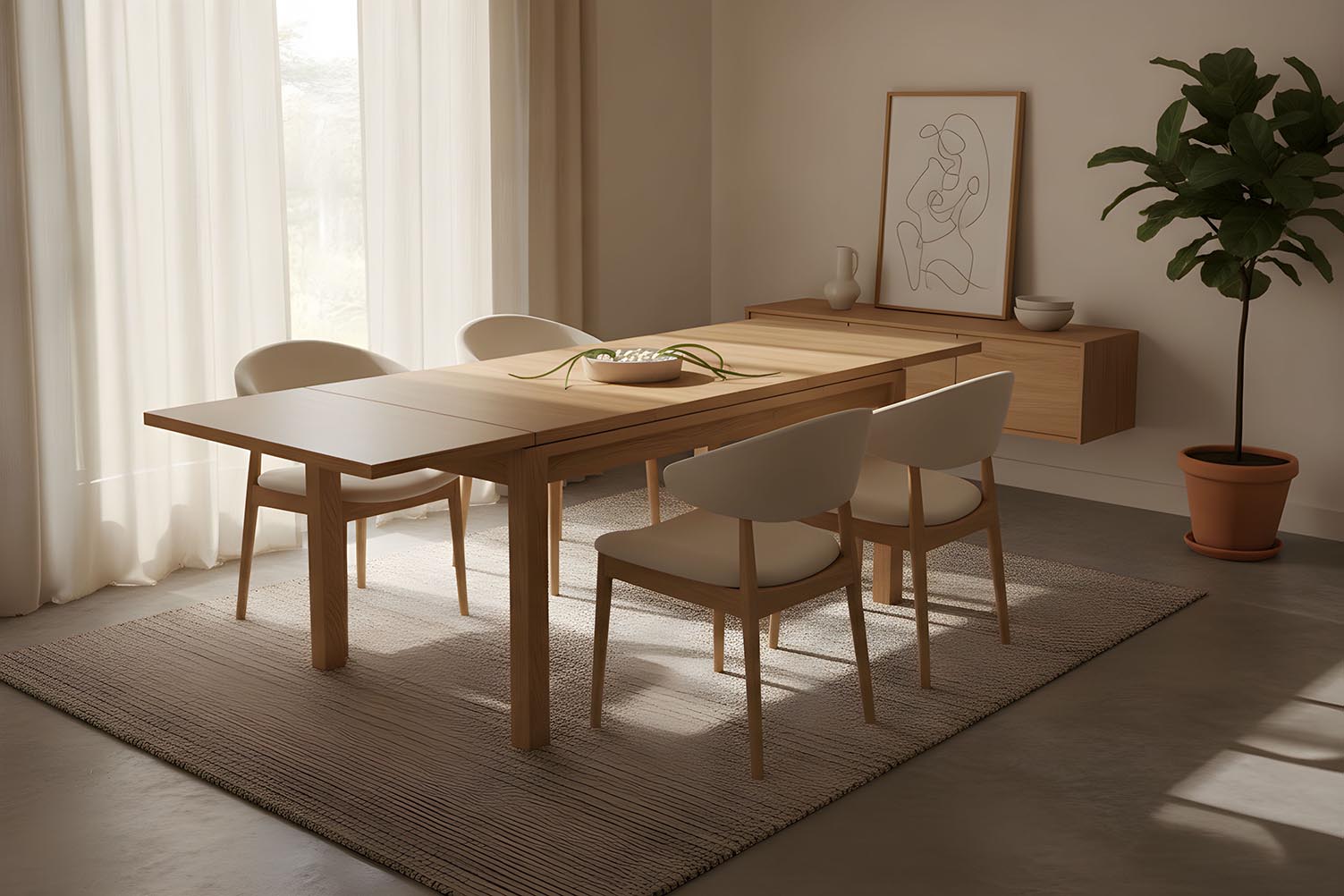
Extendable tables use leaves or panels that can be added or removed, allowing the table to expand for entertaining and contract for everyday use.
When closed, they offer a compact footprint for daily use, but their expandable leaves or panels allow you to accommodate additional guests with ease.
Perfect for gatherings or holiday feasts, these tables strike an ideal balance between practicality and flexibility, making them a go-to for homes that host varying group sizes. Look for designs with sturdy mechanisms to ensure smooth operation and long-lasting performance.
-
Drop-Leaf Tables[ view]
Drop-leaf tables feature hinged sides that fold down when not in use, making them a smart choice for smaller homes or apartments where floor space matters.
Drop-leaf tables are a space-saving marvel for smaller dining areas. With hinged sides that fold down when not in use, they convert seamlessly from a compact surface to a fully functional dining table.
Their adaptable design is particularly suited to apartments or multipurpose rooms where conserving space is a top priority. When expanded, they provide a cozy and practical surface for meals, projects, or casual conversations.
-
Folding Tables[ view]
Folding tables feature a collapsible design, allowing the table to fold down for compact storage and unfold to provide a sturdy surface when needed.
Highly portable and easy to store, folding tables are a smart solution for occasional dining needs or multi-use spaces.
While they may not offer the stability of fixed or pedestal tables, their lightweight construction and compact nature make them invaluable for small gatherings or temporary setups.
Modern folding table designs often incorporate streamlined aesthetics and thoughtful materials, making them more than just a utilitarian choice.
-
Pedestal Tables[ view]
Pedestal tables use a central support instead of four corner legs, which increases legroom and makes seating arrangements more flexible.
These tables are favored for their elegance and flexibility. Instead of corner legs, a central support provides structural balance, allowing for easier movement around the table and increased legroom for diners.
These tables are highly versatile, often appearing in round or oval shapes that foster intimacy and conversation. Their design works well in both traditional and modern interiors, offering visual appeal without compromising functionality.
-
Trestle Tables[ view]
Trestle dining tables use a sturdy central support beam, allowing for ample seating room and versatile design suited to both casual gatherings and formal settings.
For those who need substantial surface space, trestle tables provide exceptional support and style. With a base connected beneath the tabletop, these tables are particularly popular in larger rectangular designs suited to accommodating larger gatherings.
Their robust construction is often associated with rustic or farmhouse aesthetics, though contemporary trestle tables can also align with more modern tastes.
-
Storage Tables[ view]
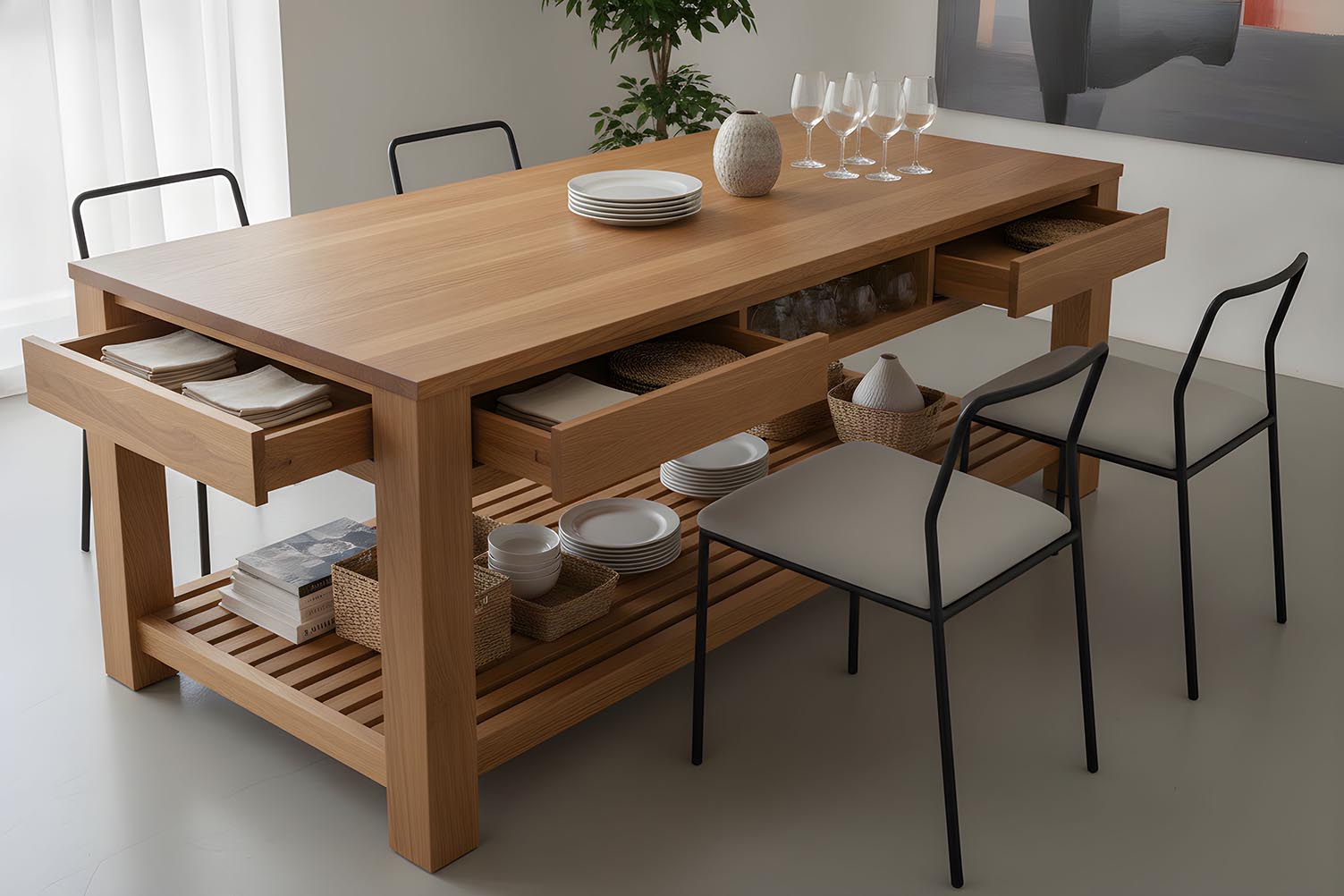
Storage dining tables feature built-in compartments or drawers, providing discreet spaces to store tableware and essentials, keeping your dining area organized and clutter-free.
Storage tables cater to practical homeowners looking for efficiency without sacrificing style. Featuring built-in drawers, cubbies, or lower shelves, these tables provide much-needed space for storing items like linens, placemats, or serving essentials.
Ideal for those who entertain or seek to organize their dining room better, storage tables seamlessly combine function with thoughtful design.
-
Multifunction Tables[ view]
Multifunctional dining tables adapt to your needs, featuring extendable panels or convertible surfaces that effortlessly transition between everyday meals and hosting larger gatherings.
Modern living often requires dining areas to serve multiple purposes, and multifunction tables meet this demand beautifully.
Doubling as workspaces, craft areas, or prep stations, these designs suit open-plan homes or spaces without dedicated rooms for these activities. Whether used for homework, remote work, or sharing meals, these tables excel at adapting to the demands of your household.
More Supporting Information
(click to view sample images, summary table, and useful ideas – or scroll to side note and next topic)
Table Type Key Features Ideal Use Cases Fixed Tables Maintain a consistent size without adjustable parts, offering stability and reliability. Simpler design makes them more affordable and durable. Best for consistent seating needs in minimalist spaces or for first-time buyers looking for a sturdy, long-term option. Extendable Tables Use leaves or panels to expand for entertaining and contract for daily use. Sturdy mechanisms ensure smooth operation and longevity. Perfect for entertaining, gatherings, or homes where group sizes vary frequently. Drop-Leaf Tables Hinged sides that fold down when not in use, offering compact storage and functional expansion for dining. Ideal for apartments, smaller homes, or multipurpose rooms where saving space is essential. Folding Tables Collapsible design allows for compact storage and portability, with easy unfolding to provide a sturdy surface when needed. Great for temporary dining needs, small gatherings, or spaces requiring high portability. Pedestal Tables Central support instead of corner legs provides increased legroom and flexible seating arrangements. Often designed in elegant, round, or oval shapes. Favored for fostering intimacy and conversation, suitable for traditional or modern interiors with varied seating needs. Trestle Tables Sturdy central support beam below the tabletop allows for ample seating and larger surface space, often associated with rustic or modern aesthetics. Best for larger gatherings and substantial surface needs in spaces aiming for style and functionality. Storage Tables Built-in compartments or drawers provide discreet storage for tableware, linens, and essentials, keeping the space organized and clutter-free. Ideal for homeowners looking to combine dining with storage efficiency and practical elegance. Multifunction Tables Adaptable designs featuring extendable panels or convertible surfaces to serve varied purposes such as dining, working, or crafting. Suited for open-plan homes and spaces that serve multiple functions, offering flexibility for evolving household needs. 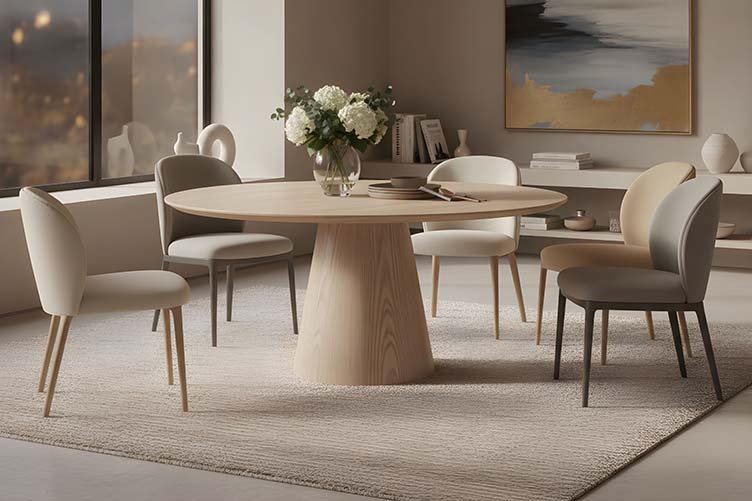
copyright image by 123rf.com
Multi-Functional for a Smarter Home
When it comes to functionality, incorporating multi-functional furniture into other areas of your home can be a game-changer.
Pieces like storage ottomans, convertible sofas, or beds with built-in drawers not only save space but also help keep your household organized.
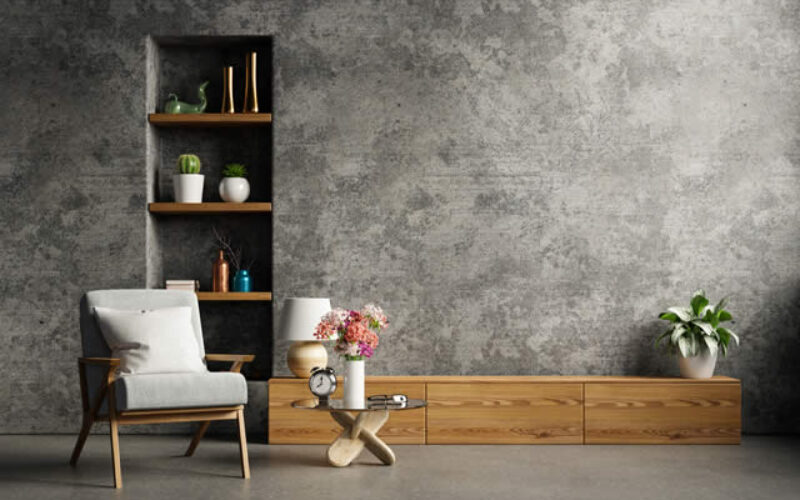
These versatile designs manage to balance style with utility, making them ideal for maintaining a tidy and efficient living space without sacrificing aesthetics.
view ideas: Multifunctional Furniture for Your Home(new win)
-
Scroll up to directory … or scroll to next section: dining room table materials …
… view our home remodeling guides and steps
fourth “photo remodeling” idea
AI generated image by 123rf.com
Section 4: Dining Table Materials And Durability
Notes:
-
Material choice affects everything from how a table looks to how much maintenance it demands over the years.
The right material for your household depends on your lifestyle, your tolerance for upkeep, and how much daily wear and tear the table will realistically face.
-
Wood[ view]
Wood remains the most traditional and versatile dining table material. According to a market report cited by Povison (2026), wood accounts for over 64 percent of the global home furniture market by material, a testament to its enduring popularity.
Solid wood options vary widely: oak tends to be light and sturdy, walnut offers a darker and richer tone, rubberwood provides a budget-friendly alternative, and acacia brings dramatic, distinctive grain patterns.
Wood can scratch, stain, and react to humidity over time, but it can also be sanded and refinished, giving it a typical lifespan of 10 to 20-plus years with normal indoor use.
- Best For:
Wooden dining tables are ideal for those seeking warmth, character, and durability in their space. They suit both casual and formal dining areas, blending seamlessly with various decor styles. - Tradeoff:
While offering timeless appeal, wood requires occasional maintenance to prevent scratches, stains, and moisture damage. It’s also heavier than other materials, making it less portable for frequent rearrangements.
- Best For:
-
Engineered Wood/Veneer[ view]
Engineered wood and veneer furniture offer an affordable, versatile alternative to solid wood. Engineered wood is made by binding wood fibers, particles, or veneers together, creating a strong, stable material that resists warping and cracking.
Veneer layers a thin sheet of real wood over an engineered core, giving you the look of solid wood at a fraction of the cost. These materials may not last as long as solid wood, but they’re lighter, budget-friendly, and easier to maintain.
With proper care, they can last significantly longer, making them a practical choice for stylish, functional homes.
- Best for:
Homes seeking affordable yet stylish dining tables that mimic the look of solid wood, while offering lighter, more versatile options for smaller spaces or frequent re-arranging. - Tradeoff:
While more budget-friendly, engineered wood and veneer may not match the lifetime durability of solid wood and require mindful care to prevent surface wear or water damage.
- Best for:
-
Glass[ view]
Glass dining tables bring a light, airy quality that works particularly well in smaller rooms, since the transparent surface visually opens up the space. Glass tops are easy to wipe clean but do show fingerprints more readily than other materials.
Tabletops should be tempered glass, typically around 8 to 12 millimeters thick, and keep in mind that chips or cracks are not repairable. Glass tables generally last 8 to 15 years with reasonable care.
- Best For:
Small spaces or modern interiors where a sleek, open look is desired. The transparency helps create a sense of airiness and light. - Tradeoff:
Requires regular cleaning to manage fingerprints and smudges, and damage like chips or cracks cannot be repaired.
- Best For:
-
Marble And Stone[ view]
Marble brings an elegant, high-end look and a sense of permanence to a dining room, but it does require some care.
Natural marble is calcium carbonate stone, which means acids from lemon juice, wine, vinegar, and tomato-based foods can cause etching over time (Povison, 2026).
Sealing helps slow staining but does not prevent etching, so periodic resealing, roughly every 6 to 12 months, is recommended to keep the surface protected. Natural marble tables are also notably heavy; a 60-inch round top can weigh between 280 and 380 pounds.
For households wanting the stone look with less maintenance, sintered stone is a compelling alternative.
It’s non-porous, requires no sealing, and offers significantly higher scratch resistance than natural marble, making it a practical pick for families, frequent entertainers, and anyone using the table as a workspace.
- Best For:
Natural marble dining tables are ideal for those who value timeless elegance and unique veining patterns, perfect for more formal dining spaces or as statement pieces. Sintered stone tables, on the other hand, suit practical households that prioritize durability and easy upkeep, especially for families or multi-purpose use. - Tradeoff:
While marble offers unmatched luxury and character, it requires regular sealing and careful maintenance to avoid stains or damage. Sintered stone sacrifices some of the organic charm of natural stone but delivers exceptional scratch resistance, durability, and a maintenance-free experience.
- Best For:
-
Metal And Mixed Materials[ view]
Metal dining tables bring a strong, modern look to a room, though a fully solid metal surface can feel cold to the touch and may make a clangy sound when plates, glasses, and cutlery are set down. If that sounds like a concern, mixed-material designs offer a thoughtful middle ground.
A wood or stone top paired with a slim metal base, for example, brings together the warmth and durability of natural materials with the sleek lines of metal.
Slender metal frames also leave more room for legs underneath, which makes everyone seated around the table a little more comfortable.
- Best For:
Metal dining tables excel in modern or industrial-style spaces, offering a sleek and durable option that’s easy to clean. Mixed-material tables, on the other hand, are ideal for creating a cozy, balanced aesthetic that combines practicality with a touch of natural charm. - Tradeoff:
While metal tables are long-lasting and low maintenance, they can feel cold or stark in some settings. Mixed-material designs bring warmth and versatility but may require additional care to maintain the wood or stone surface over time.
- Best For:
-
Matching Material To Lifestyle
Choosing the right material ultimately comes down to how your household lives day to day. Busy families with children often do well with ceramic or sintered stone surfaces, or a quality veneer or laminate that resists damage without demanding constant care (Povison, 2026).
Those who host often and don’t mind a bit of maintenance may prefer solid oak, walnut, or marble paired with simple coaster habits.
Smaller apartments or frequent movers often benefit from lighter engineered wood or glass tables on slim bases, since these options are easier to relocate and tend to be more budget-friendly.
More Supporting Information
(click to view sample images, summary table, and useful ideas – or scroll to side note and next topic)
Material Key Features Best For Tradeoffs Wood Wood is a traditional, versatile material available in options like oak, walnut, rubberwood, and acacia.
It offers warmth, character, and durability but requires occasional maintenance to prevent scratches, stains, and humidity damage.
Ideal for those seeking timeless appeal and a blend of casual and formal dining spaces that match various decor styles. Requires occasional upkeep and is heavier than other materials, making it less portable for frequent rearrangements. Engineered Wood/Veneer Engineered wood and veneer provide an affordable, versatile alternative to solid wood.
They mimic the look of wood while being lighter and easier to maintain, with significant durability under proper care.
Best for value-conscious households needing stylish, functional pieces that fit smaller or frequently rearranged spaces. May not last as long as solid wood and needs mindful care to prevent surface wear or water damage. Glass Glass dining tables bring a light, airy feel to a room and work well in smaller spaces.
Tempered glass is durable and easy to clean, but it is prone to showing fingerprints and cannot be repaired if chipped or cracked.
Most suitable for modern interiors and small rooms where a sense of openness and light is desired. Requires regular cleaning for smudges and fingerprints, and damage such as chips or cracks is irreversible. Marble and Stone Marble offers high-end visual appeal and unique veining but demands sealing every 6–12 months to prevent etching and stains.
Sintered stone is maintenance-free, non-porous, and highly scratch-resistant, making it durable and practical.
Marble is perfect for formal dining spaces or statement pieces, while sintered stone suits families and those prioritizing durability and easy upkeep for multi-purpose use. Marble requires careful maintenance and resealing, while sintered stone, though durable, lacks the organic charm of natural stone. Metal and Mixed Materials Metal offers a modern, durable option and pairs well with warmth by combining metal bases with wood or stone tops.
Solid metal can feel cold, while mixed materials balance aesthetics and practicality.
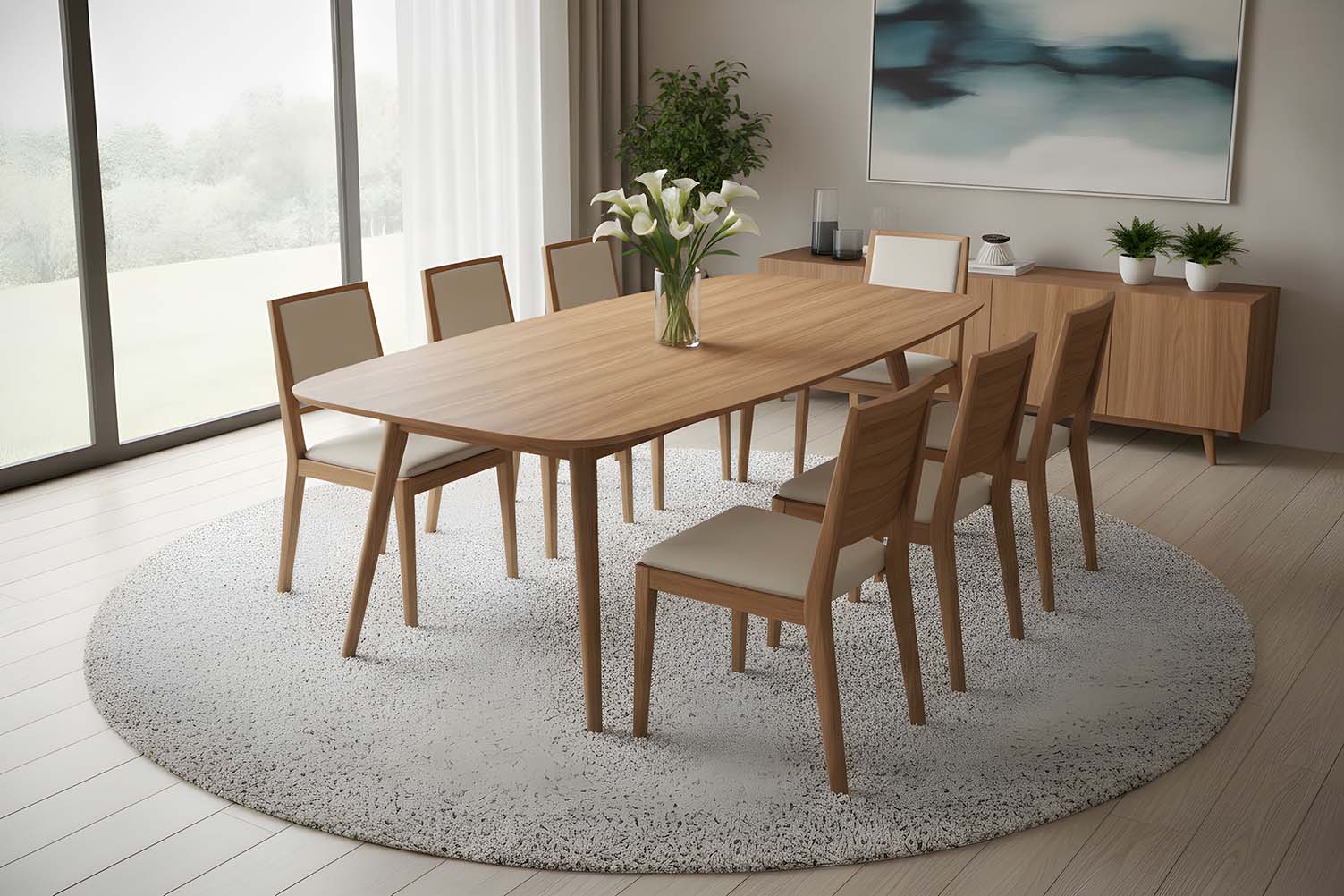
Excellent for modern or industrial-style spaces requiring sleek durability, or for creating cozy, balanced designs with mixed materials. Metal tables can feel stark or cold. Mixed-material designs require care to maintain natural materials like wood or stone. 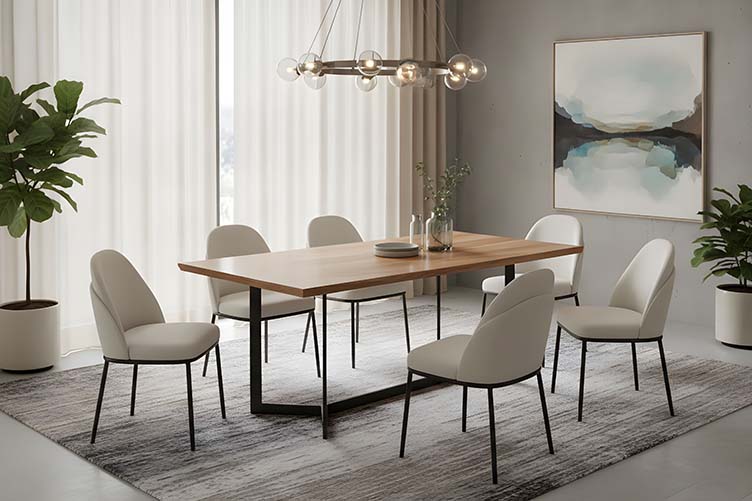
copyright image by 123rf.com
From Forest to Furniture
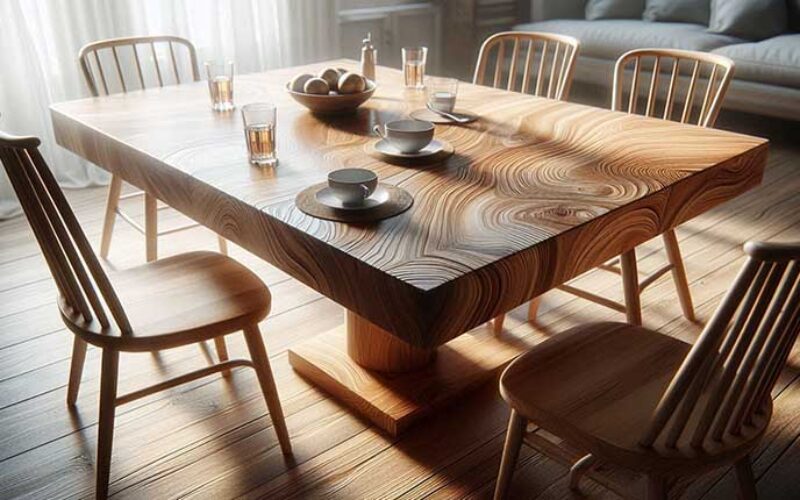
Wood has been the preferred material for dining tables, desks, and other furniture for centuries, praised for its durability, versatility, and natural beauty.
Transforming raw timber into stunning tables begins with carefully sourcing high-quality trees, followed by skilled craftsmanship to cut, shape, and refine the wood.

The process includes sanding for a smooth finish, applying protective coatings, and sometimes pairing the wood with stylish accents like metal or glass.
The result is a timeless piece that brings warmth and functionality to any space.
view ideas: Transforming Trees Into Tables(new win)
-
Scroll up to directory … or scroll to next section about how to choose your dining room table …
SHARE IT ..! Someone in your network might benefit from this insightful guide on selecting the perfect dining room table. Feel free to share it on Facebook, X (formally Twitter), LinkedIn, or Pinterest!



Download this PDF for a concise summary of what to know about how to …?

fifth “photo remodeling” idea

AI generated image by 123rf.com
Section 5: How To Choose Your Dining Table
Notes:
-
With shape, style, function, and material in mind, the final step is translating those preferences into a table that actually fits your room and your life. This is where measuring tape and a little planning go a long way toward avoiding a costly mismatch.
This guide will walk you through the key considerations in picking a table that’s both functional and timeless, helping you make a confident and informed choice.
-
Start by Measuring Your Space[ view]
Before making any decisions, measure the dimensions of your dining area carefully. The table needs to fit comfortably while allowing enough space for chairs to be pulled out and for people to move freely around the room.
- As a general rule, leave about 36 inches between the table’s edge and the nearest wall or furniture. Aim for 42 to 48 inches if you entertain often or have kids moving through the space.
- Povison (2026) similarly recommends about 44 inches of clearance wherever people need to walk behind seated diners.
- In smaller rooms, this may mean choosing a more compact table or a space-saving option, such as an extendable model.
-
Consider Seating Needs for Everyday and Guests[ view]
Think about how many people will use the table on a daily basis, then factor in guests who may join on special occasions.
If your hosting capacity exceeds your everyday seating needs, an extendable table can be a versatile and practical solution. These tables provide flexibility, expanding when needed and contracting to save space when company isn’t over.
By aligning the size of the table with the number of users, you can ensure both comfort and functionality without crowding or unused space.
- Guidance on table width per person varies somewhat by source, generally falling in a range of about 22 to 26 inches per seated guest (Anabei, 2026)
-
Match the Table Shape to Your Room Layout[ view]
The shape of your dining table plays a crucial role in defining how well it fits the room and accommodates users.
Rectangular tables are ideal for longer or narrower rooms and provide ample seating capacity. Meanwhile, round and square tables work better in compact areas or more symmetrical layouts, creating a cozier and more inclusive dining experience.
Choosing the shape that complements your room helps maintain balance while meeting practical needs.
- Small Dining Rooms:
under 120 square feet suit round tables between 36 and 48 inches or rectangular tables up to about 36 by 60 inches; - Medium Dining Rooms:
between 120 and 200 square feet can accommodate rectangular tables around 42 by 72 inches or round tables up to 60 inches; - Larger Dining Rooms:
over 200 square feet can comfortably fit tables 48 by 96 inches or larger
- Small Dining Rooms:
-
Choose a Material That Suits Your Lifestyle
The material of your table should reflect both your functional requirements and your aesthetic preferences.
Families with young children often benefit from durable surfaces such as solid wood, laminate, or sintered stone, which can resist scratches and stains. For a more design-forward approach, materials like glass, marble, or high-gloss finishes bring sophistication but may require more careful maintenance.
Understanding your day-to-day use of the table is key to selecting a material that looks great and performs well over time.
-
Prioritize Functionality and Adaptability
Modern dining tables often come with features designed to enhance usability, whether that’s hidden storage, wheels for easy mobility, or built-in extension leaves to adjust size.
If your table also doubles as a workspace or crafting area, ensure its surface and stability support these extra functions. Selecting a table with thoughtful features can transform it into a multifunctional centerpiece that adapts seamlessly to your routine.
-
Coordinate Without Perfectly Matching
A dining table should work in harmony with its surroundings but doesn’t need to match the cabinetry, flooring, or other furniture exactly. Instead, look for complementary colors, textures, and finishes that balance the overall aesthetic of the space.
For instance, a warm wood table can soften modern, minimalist decor, or a glass-top table can provide a sleek contrast to rustic elements. This approach ensures the table enhances the design of the room without feeling overly coordinated or rigid.
By considering these factors in your decision-making process, you’ll find a dining room table that fits your space, supports your lifestyle, and stands as a central feature in both everyday moments and special gatherings.
Always reference trusted sources, such as Interior Design Trends Magazine (2023) and Reviews in Functional Living (2024), to verify details on materials, durability, and design trends, ensuring an investment that serves your needs for years to come.
More Supporting Information
(click to view sample images, summary table, and useful ideas – or scroll to side note and next topic)
Key Consideration Details Additional Notes Measuring Your Space Measure the dining area dimensions carefully to ensure the table fits comfortably.
Allow at least 36 inches between the table’s edge and walls or furniture, or 44 to 48 inches if entertaining frequently or for high-traffic areas.
Compact spaces may benefit from extendable tables; prioritize room for chairs and movement. Seating Needs Determine the number of daily users and account for extra seating during special occasions.
Extendable tables offer flexibility by expanding for guests and contracting for everyday use.
Guidelines suggest 22 to 26 inches of width per person for comfortable seating. Table Shape Choose a shape that complements the room layout.
Rectangular tables suit long or narrow rooms, while round or square tables work well in compact or symmetrical spaces.
Small rooms (<120 sq. ft.): round tables (36-48 in.) or rectangular tables (max 36x60 in.); Medium rooms (120-200 sq. ft.): rectangular (42x72 in.) or round (<60 in.); Large rooms (>200 sq. ft.): tables 48×96 in. or larger. Table Material Select durable materials like solid wood, laminate, or sintered stone for families with kids.
For a more elegant look, consider glass, marble, or high-gloss finishes, though these require more maintenance.
Match material with functional and aesthetic needs for a lasting investment. Functionality and Features Look for features like hidden storage, built-in extension leaves, or wheels for mobility.
Consider the table’s stability and surface if it doubles as a workspace.
Thoughtful features increase adaptability, making the table versatile for various uses. Coordinating with Decor A table should complement the surrounding space without perfectly matching it.
Seek harmony in colors, textures, and finishes to balance the room’s look.
Examples include warm wood for softening modern decor or glass tops for contrasting rustic elements. 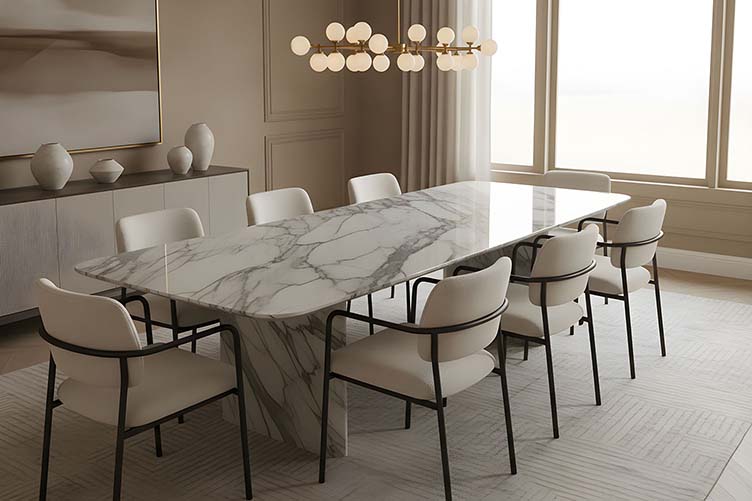
copyright image by 123rf.com
Choosing the Perfect Dining Table
The key to selecting the right dining table lies in accurately measuring dimensions that match both your needs and your space.
From ensuring the table fits comfortably in the room to leaving enough space for chairs and movement, measurements are everything.

But it doesn’t stop there—other essential home dimensions, such as countertop heights or hallway widths, can influence your choices too.
For a handy guide, we’ve compiled all these critical measurements into a concise PDF, making your home decisions easier than ever.
view ideas: home design dimensions(new win)
-
Scroll up to directory … or scroll to next section: dining room table buying list …
Find Interior Design Services Decorators Interior Designers Furniture Painting & Staining top-rated, pre-screened local contractors FREE: download contractor selection enter zip code – powered by HomeAdvisor ™
Quick Contractor Guides selecting negotiating working with inspecting

sixth “photo remodeling” idea
AI generated image by 123rf.com
Section 6: Dining Room Table Buying Checklist
Notes:
-
Finding the perfect dining room table is not just about looks—it’s about creating a space where meals, memories, and connections can flourish. Here’s a checklist to guide your decision:
- Budget:
Set a comfortable price range that balances quality with affordability. - Household Size:
Choose a table that accommodates everyone in your home with extra space for growth or unexpected guests. - Entertaining Frequency:
If you frequently host gatherings, consider expandable tables or larger designs to fit your entertaining needs. - Maintenance:
Select materials and finishes that suit your lifestyle—opt for easy-to-clean surfaces if you have kids or host casual meals often. - Décor Compatibility:
Ensure the table blends seamlessly with your dining room’s color scheme, style, and overall décor for a harmonious fit.
This thoughtful approach ensures that the table you bring home serves as both a functional centerpiece and a cherished hub for your everyday life.
More Supporting Information
(click to view summary table and useful ideas – or scroll to side note and conclusion)
Checklist Item Description Considerations Budget Set a comfortable price range that balances quality with affordability. Ensure the table meets your needs without exceeding your financial limits. Household Size Choose a table that accommodates everyone in your home. Consider additional space for growth or unexpected guests. Entertaining Frequency Opt for expandable tables or larger designs if you frequently host gatherings. Evaluate your entertaining habits to select the right size and design. Maintenance Select materials and finishes that suit your lifestyle. Prioritize easy-to-clean surfaces if you have kids or host casual meals often. Décor Compatibility Ensure the table blends with your dining room’s color scheme and style. Focus on creating a harmonious fit within the space’s overall décor. 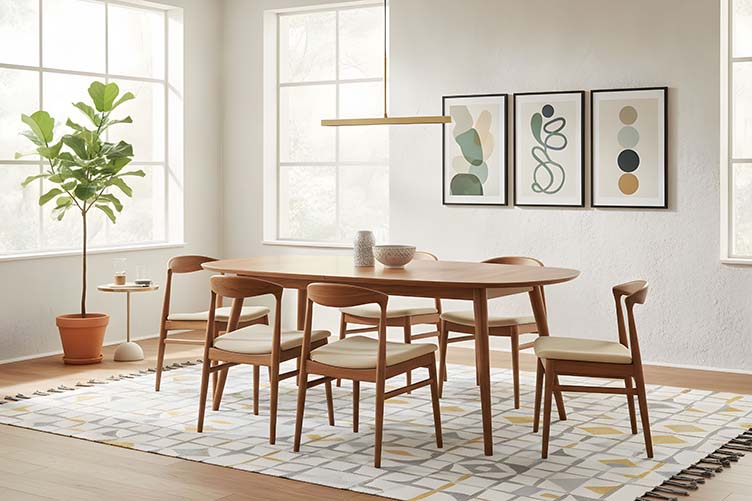
copyright image by 123rf.com
Choosing the Perfect Table Without Regret
Feeling overwhelmed by the endless options for dining tables?
From shapes and styles to materials that balance durability and elegance, making the right investment can feel like a daunting task.
You want something that not only elevates your space but also stands the test of time—without second-guessing your choice.
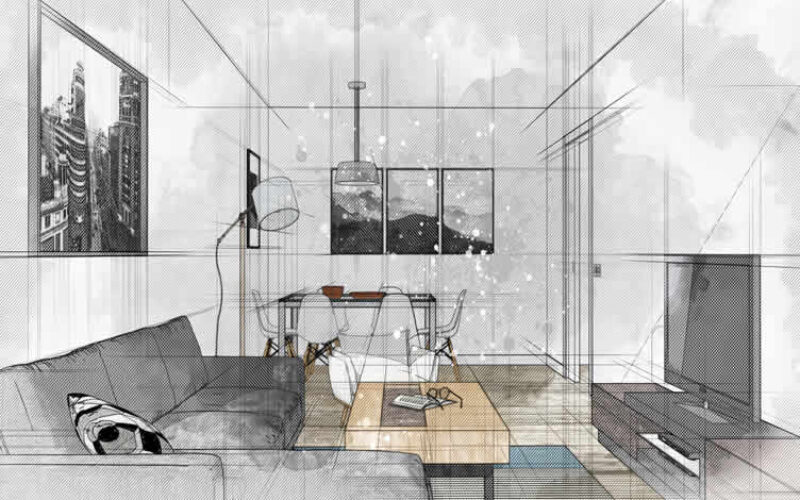
This is where a professional furniture decorator can step in to guide you.
Their expertise ensures that your new dining table fits perfectly into your space, matches your lifestyle, and reflects your taste with confidence.
LetsRenovate has partnered with HomeAdvisor (Angi)™, a renowned provider of highly-rated, carefully-vetted local furniture and decorating contractors. Start your search here by choosing the type of contractor you need and entering your zip code to find local professionals.
view ideas: Interior Designer vs. Decorator(new win)
Scroll up to directory … or scroll to next section about: frequently asked questions …
- Budget:

Budgeting Worksheet For Costing Home Remodeling and Home Improvement Decisions
 File Type (excel)
seventh “photo remodeling” idea
AI generated image by 123rf.com
Section 7: Frequently Asked Questions
Notes:
-
-
What is the standard height for a dining table?
Standard dining table height typically falls between 28 and 30 inches, which pairs well with standard dining chairs that have seat heights around 18 to 20 inches (Anabei, 2026). Counter-height tables run 34 to 36 inches, and bar-height tables are generally 40 to 42 inches.
-
How much space should I leave around a dining table?
Plan for at least 36 inches of clearance between the table’s edge and the nearest wall or furniture, and consider 42 to 48 inches if you entertain often or have children moving through the space regularly (Anabei, 2026; Povison, 2026).
-
How many people can a dining table seat?
Seating capacity depends on shape and size. A 36-by-48-inch rectangle or a 36- to 42-inch round table typically seats four people comfortably, a 36-by-72-inch rectangle or 48- to 54-inch round table seats six, and a 42-by-84-inch rectangle or 60-inch round table seats eight (Anabei, 2026).
-
Is marble a good material for a dining table?
Marble offers an elegant, high-end look but requires regular care, since it’s prone to etching from acidic foods and needs resealing roughly every six to twelve months (Povison, 2026). Sintered stone is a lower-maintenance alternative that mimics the marble aesthetic with greater scratch and stain resistance.
-
What’s the difference between a pedestal table and a four-leg table?
Pedestal tables use a single central support, which increases legroom and allows more flexible chair placement, making them especially well suited to round and oval tops. Four-leg tables generally offer more classic stability and simpler construction (Povison, 2026).
-
Are extendable dining tables worth it?
Extendable tables are a practical choice if your everyday seating needs differ from your entertaining needs. They let you keep a smaller footprint day to day while expanding easily when guests arrive, offering flexibility that fixed tables can’t match.
-
What dining table material is easiest to maintain?
Sintered stone and quality laminate or veneer surfaces tend to require the least maintenance, resisting scratches and stains without regular sealing (Povison, 2026). Solid wood requires more care but can be sanded and refinished over time, extending its usable life considerably.
-
How do I choose the right dining table shape for a small room?
For small dining rooms under 120 square feet, round tables between 36 and 48 inches in diameter or rectangular tables up to about 36 by 60 inches tend to work best, since they minimize bulk while preserving comfortable clearance (Anabei, 2026).
More Supporting Information
(click to view summary table and useful ideas – or scroll to side note and conclusion)
Question Answer What is the standard height for a dining table? Standard dining table height typically falls between 28 and 30 inches, which pairs well with standard dining chairs that have seat heights around 18 to 20 inches.
Counter-height tables run 34 to 36 inches, and bar-height tables are generally 40 to 42 inches.
How much space should I leave around a dining table? Plan for at least 36 inches of clearance between the table’s edge and the nearest wall or furniture, and consider 42 to 48 inches if you entertain often or have children moving through the space regularly. How many people can a dining table seat? Seating capacity depends on shape and size. A 36-by-48-inch rectangle or a 36- to 42-inch round table typically seats four people comfortably, a 36-by-72-inch rectangle or 48- to 54-inch round table seats six, and a 42-by-84-inch rectangle or 60-inch round table seats eight. Is marble a good material for a dining table? Marble offers an elegant, high-end look but requires regular care, since it’s prone to etching from acidic foods and needs resealing roughly every six to twelve months.
Sintered stone is a lower-maintenance alternative that mimics the marble aesthetic with greater scratch and stain resistance.
What’s the difference between a pedestal table and a four-leg table? Pedestal tables use a single central support, which increases legroom and allows more flexible chair placement, making them especially well suited to round and oval tops.
Four-leg tables generally offer more classic stability and simpler construction.
Are extendable dining tables worth it? Extendable tables are a practical choice if your everyday seating needs differ from your entertaining needs.
They let you keep a smaller footprint day to day while expanding easily when guests arrive, offering flexibility that fixed tables can’t match.
What dining table material is easiest to maintain? Sintered stone and quality laminate or veneer surfaces tend to require the least maintenance, resisting scratches and stains without regular sealing.
Solid wood requires more care but can be sanded and refinished over time, extending its usable life considerably.
How do I choose the right dining table shape for a small room? For small dining rooms under 120 square feet, round tables between 36 and 48 inches in diameter or rectangular tables up to about 36 by 60 inches tend to work best, since they minimize bulk while preserving comfortable clearance. 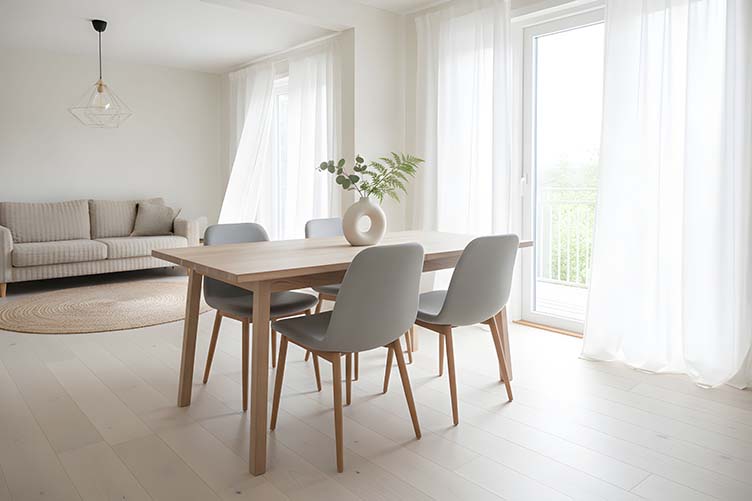
copyright image by 123rf.com
The Dining Table’s True Purpose
A dining table isn’t just furniture—it’s a stage for your culinary skills.
Sure, takeout can fill the void, but the essence of a true dining experience lies in gathering around a beautifully set table, sharing a meal you’ve created.

Inviting guests to a meal you’ve cooked transforms your table into more than just a surface; it becomes a space of connection, creativity, and pride.
Cooking for others is an act of generosity, and your dining table gives you the perfect opportunity to showcase it.
view ideas: Beginner’s Guide to Cooking(new win)
-
Scroll up to directory … or scroll to conclusion and references …
-
Conclusion:
… finding a table that fits your life
The best dining table isn’t necessarily the largest, the trendiest, or the most expensive option on the showroom floor. It’s the one that fits your room’s proportions, supports the rhythms of your daily life, and makes hosting feel effortless rather than stressful.
Whether that means a compact round table tucked into a cozy breakfast nook or a generously sized extendable rectangle ready for holiday gatherings, the right choice comes from understanding your space and your household, not just following a trend.
Take the time to measure your room, think honestly about how you’ll use the table day to day, and choose materials that match your lifestyle rather than an idealized version of it.
When shape, style, function, and material all align with how you actually live, your new dining table will feel less like a purchase and more like the natural heart of your home.
References
- Anabei Editorial Team. “Dining Room Furniture Tips: Smart Sizes, Heights & Clearances in Inches.” Anabei, March 24, 2026. https://anabei.com/blogs/tips-tricks/dining-room-furniture-tips-smart-sizes-heights-clearances-in-inches
- Povison (Charles). “Marble Dining Tables: Worth It in 2026?” POVISON Blog, May 26, 2026. https://www.povison.com/blog/buying-guide/marble-dining-tables-worth-it-2026.html
- Povison (Hana). “Dining Table Materials Compared: Wood, Stone, Glass & More.” POVISON Blog, February 13, 2026. https://www.povison.com/blog/buying-guide/dining-table-materials-guide.html
- Povison (Charles). “Pedestal vs 4-Leg Dining Table: Which Is Better?” POVISON Blog, May 19, 2026. https://www.povison.com/blog/dining-room/pedestal-vs-4-leg-dining-table.html
- Povison. “How Much Space Should I Leave Around A Dining Table?” POVISON Blog, 2026. https://www.povison.com/blog/dining-room/how-much-space-around-dining-table.html
Scroll up to directory … or scroll to more home interior-related topics …
- What comments can you share about
dining room table ideas?

Calendar For:
Home Maintenance
File Type:
… view our sharing links below for a quick "share the knowledge"
Cover image credit: dining room table by 123rf.com
end of post … please share it!
 |
did you find these tips on choosing the right dining room table helpful? If so, please share the article with your friends and family! |
Nice pic idea? Leave us a quick comment below.
And please share this pic idea within your social networks.
Amazon Affiliate Disclosure: LetsRenovate.com is a participant in the Amazon Services LLC Associates Program, an affiliate advertising program designed to provide a means for sites to earn advertising fees by advertising and linking to Amazon.com. The commission earnings are used to defray our cost of operation.
View our FTC Disclosure for other affiliate information.